Vokabulare

Englisches Vokabelwörterbuch | Wortbedeutungen, Definitionen & Beispiele

extant definition card — visual illustration of the meaning
adjective C2
/ˈɛkstənt/
现存 (xiàncún)

Still in existence; surviving.

"Only a few manuscripts from the ancient library are extant."

"只有几份古老图书馆的手稿仍然存在。" (Zhǐyǒu jǐ fèn gǔlǎo túshūguǎn de shǒugǎo réngrán cúnzài.)
extemporaneous definition card — visual illustration of the meaning
adjective C2
/ɪkˌstɛmpəˈreɪniəs/
没有准备的讲话或行为 (mei you zhun bei de jiang hua huo xing wei)

Spoken or done without preparation.

"He gave an extemporaneous speech at the meeting."

"他在会议上发表了即兴演讲。" (Ta zai hui yi shang fa biao le ji xing yan jiang.)
adverb C2
/ɪkˈstɛmpəri/
即兴 (jixing)

Spoken or done without preparation; impromptu.

"She recited the poem extempore in class."

"她在课堂上即兴朗诵了诗歌。" (Ta zai kètáng shàng jìxìng lǎngsòngle shīgē.)
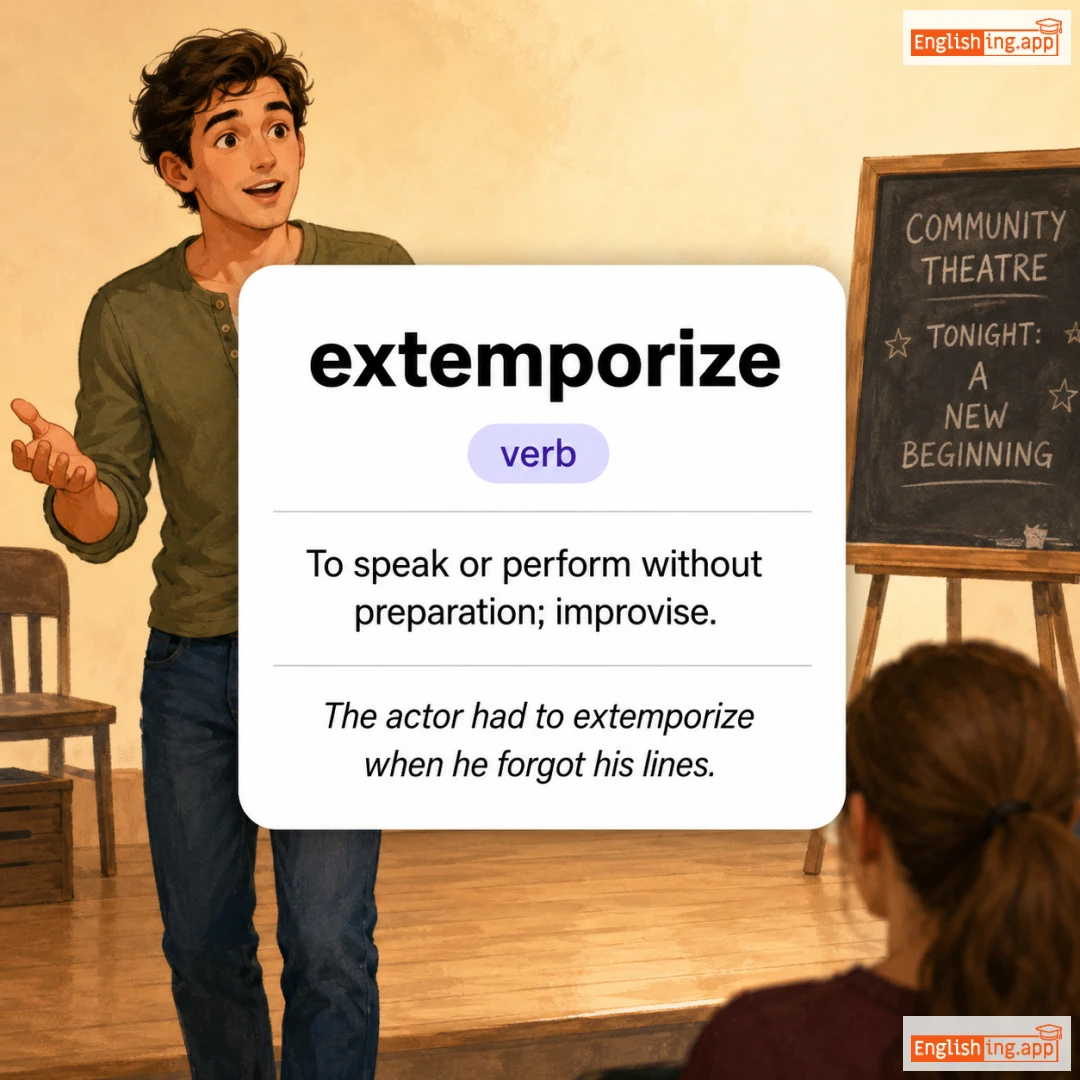
extemporize definition card — visual illustration of the meaning
verb C2
/ɪkˈstɛmpəraɪz/
即兴表演 (jíxìng biǎoyǎn)

To speak or perform without preparation; improvise.

"The actor had to extemporize when he forgot his lines."

"当演员忘记台词时,他不得不即兴表演。" (Dāng yǎnyuán wàngjì táicí shí, tā bùdé bù jíxìng biǎoyǎn.)
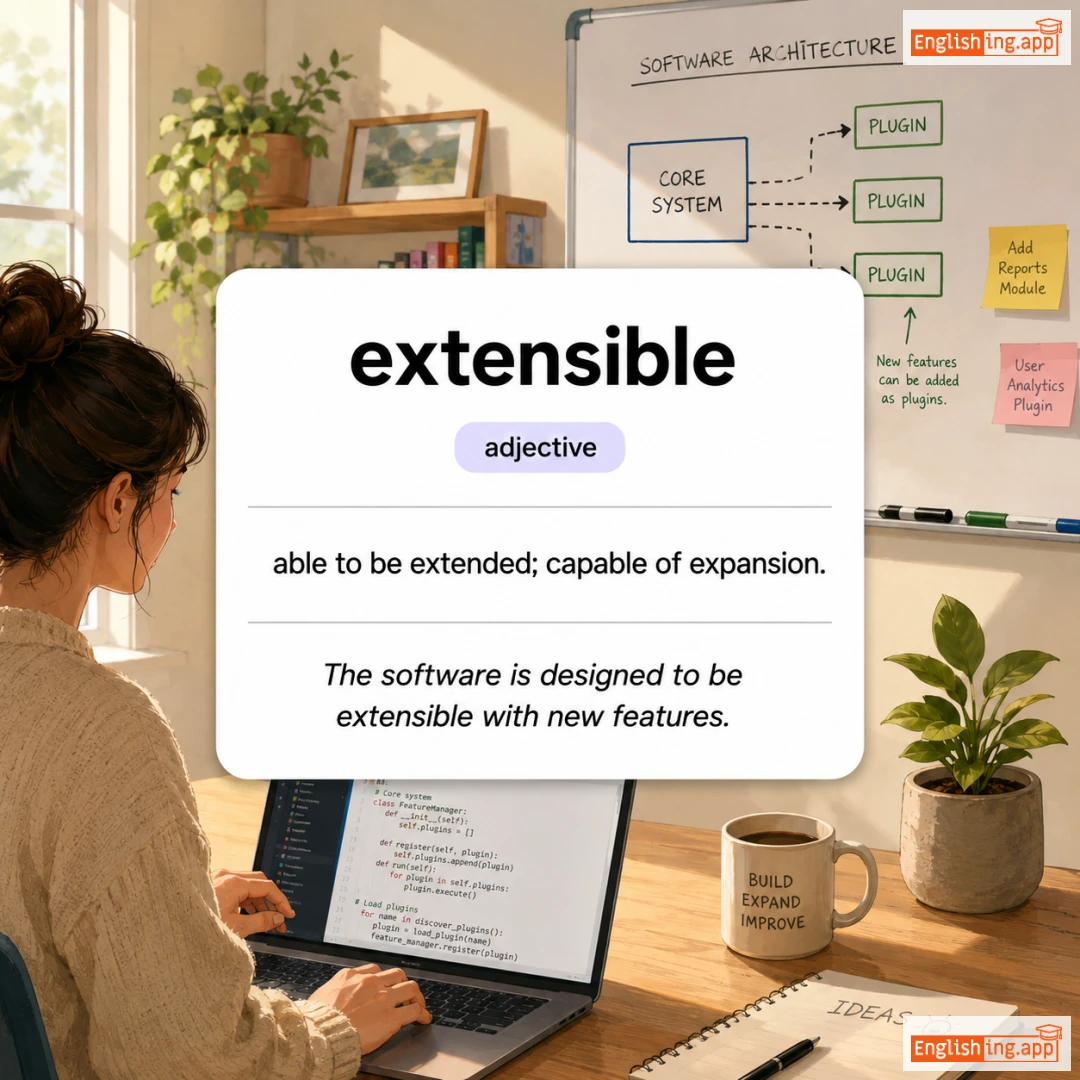
extensible definition card — visual illustration of the meaning
adjective C2
/ɪkˈstɛnsəbl/
可扩展的 (kě kuò zhǎn de)

able to be extended; capable of expansion.

"The software is designed to be extensible with new features."

"该软件设计为可以通过新功能扩展。" (Gāi ruǎnjiàn shèjì wèi kě yǐ tōngguò xīn gōngnéng kuò zhǎn.)
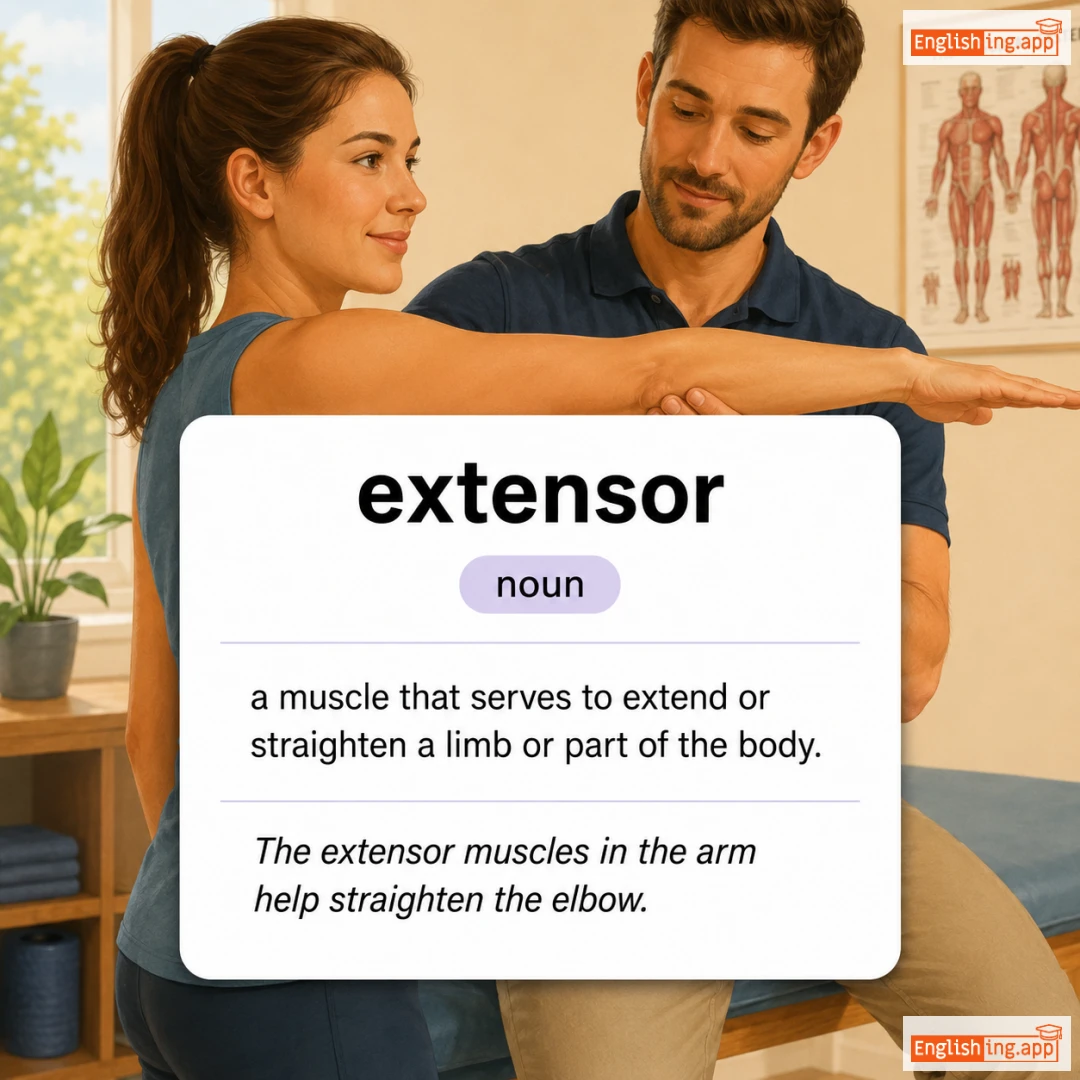
extensor definition card — visual illustration of the meaning
noun C2
/ɪkˈstɛnsər/
伸肌 (shēn jī)

a muscle that serves to extend or straighten a limb or part of the body.

"The extensor muscles in the arm help straighten the elbow."

"手臂的伸肌帮助伸直肘部。" (Shǒubì de shēn jī bāngzhù shēnzhí zhǒubù.)
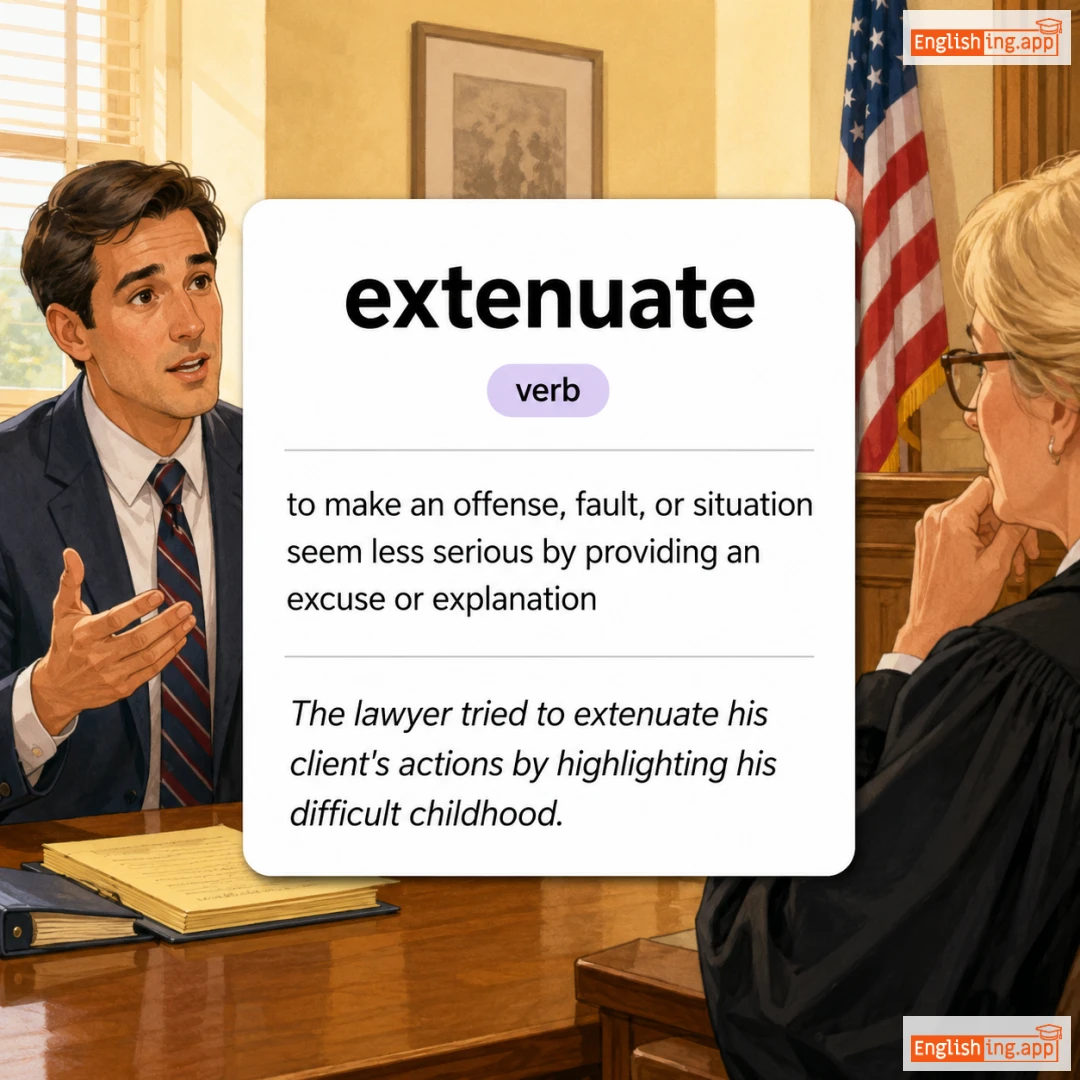
extenuate definition card — visual illustration of the meaning
verb C2
/ɪkˈstɛnjueɪt/
减轻 (jianqing)

to make an offense, fault, or situation seem less serious by providing an excuse or explanation

"The lawyer tried to extenuate his client's actions by highlighting his difficult childhood."

"律师通过强调客户的艰难童年,试图减轻他的行为。" (Lüshi tongguo qiangdiao kehu de jiannan tongnian, shitu jianqing tā de xíngwéi.)
extirpate definition card — visual illustration of the meaning
verb C2
/ˈek.stər.peɪt/
根除 (gēnchú)

to completely remove or destroy something unwanted

"The government launched a program to extirpate corruption from public offices."

"政府启动了一个旨在清除公共部门腐败的项目。" (Zhèngfǔ qǐdòngle yīgè zhǐ zài qīngchú gōnggòng bùmén fǔbài de xiàngmù.)
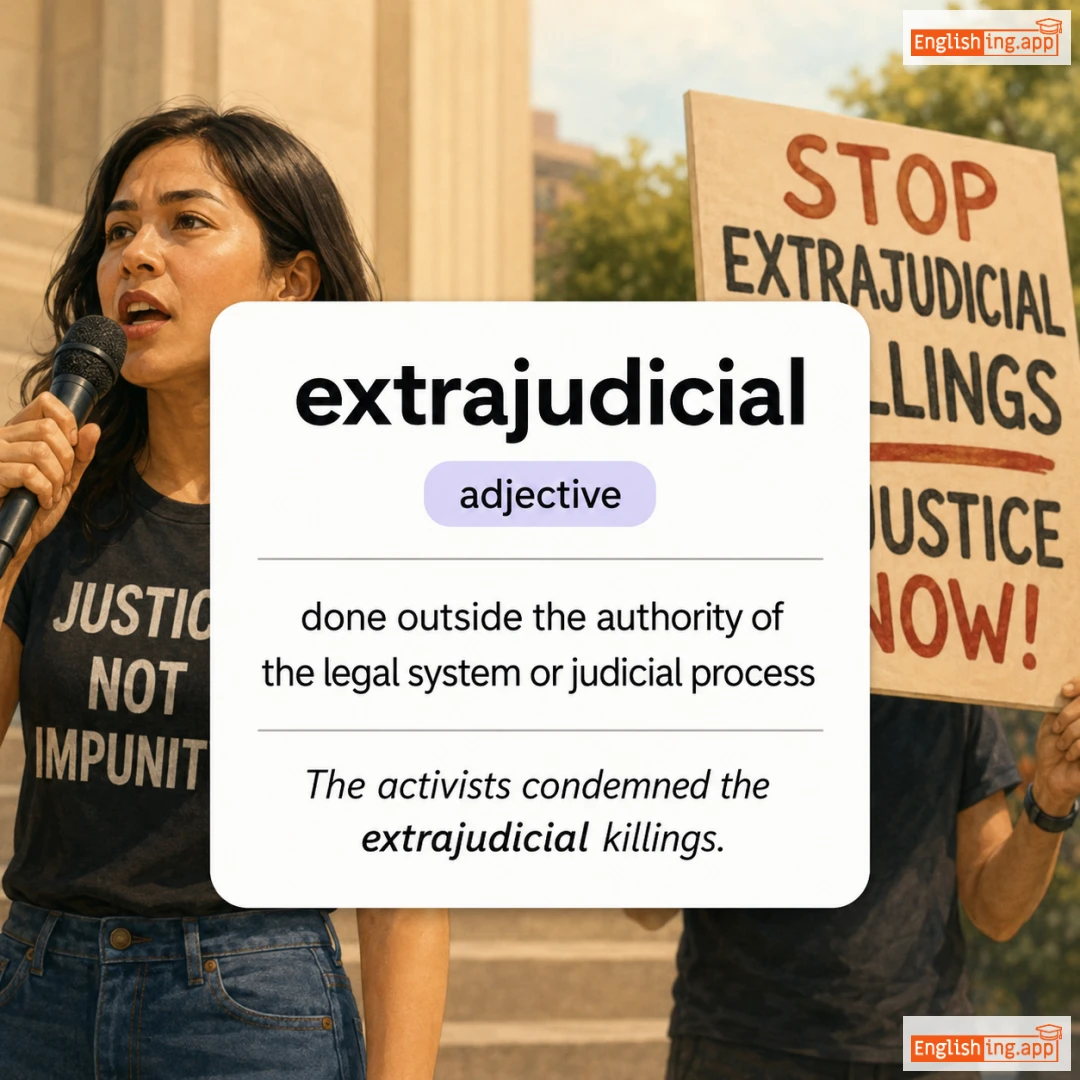
extrajudicial definition card — visual illustration of the meaning
adjective C2
/ˌɛkstrəˌdʒuːˈdɪʃəl/
非司法的 (fei si fa de)

done outside the authority of the legal system or judicial process

"The activists condemned the extrajudicial killings."

"活动家谴责了非司法的谋杀。" (Huódòngjiā qiǎnzéle fēi sīfǎ de móushā.)
extrinsic definition card — visual illustration of the meaning
adjective C2
/ɛkˈstrɪnzɪk/
外在 (wàizài)

Not part of the essential nature of someone or something; coming from outside.

"His motivation was largely extrinsic, driven by rewards and recognition."

"他的动力主要是外在的,受到奖励和认可的驱动。" (Tā de dònglì zhǔyào shì wàizài de, shòudào jiǎnglì hé rènkě de qūdòng.)
verb C2
/ɪkˈstruːd/
挤出 (jichu)

to force something out through a small opening; to shape by pushing material through a mold

"The factory extrudes plastic pipes using modern machines."

"工厂使用现代机器挤出塑料管。" (Gongchang shiyong xiandai jiqi jichu su liao guan.)
exult definition card — visual illustration of the meaning
verb C2
/ɪɡˈzʌlt/
欢呼 (huān hū)

to show or feel great joy, often as a result of success

"The fans exulted after their team won the championship."

"球迷们在他们的球队赢得冠军后欢呼雀跃。" (Qiúmí men zài tāmen de qiúduì yíngdé guànjūn hòu huān hū què yuè.)
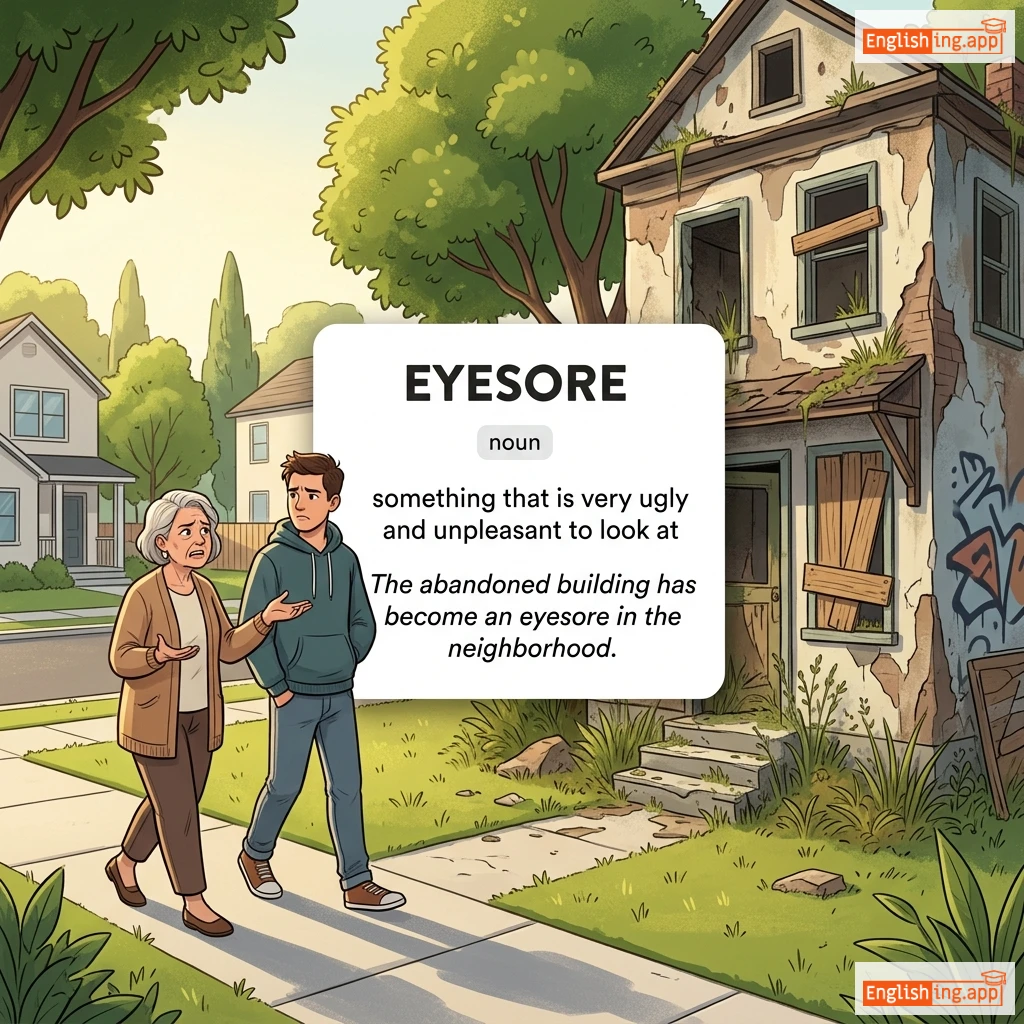
Eyesore definition card — visual illustration of the meaning
noun C2
/ˈaɪ.sɔːr/
令人不悦的视觉效果; 恶心的景象 (lìng rén bù yuè de shìjué xiàoguǒ; èxīn de jǐngxiàng)

something that is very ugly and unpleasant to look at

"The abandoned building has become an eyesore in the neighborhood."

"废弃的建筑已成为社区中的眼中钉。" (Fèiqì de jiànzhú yǐ chéngwéi shèqū zhōng de yǎnzhōng dīng.)
noun C2
/ˈɪəri/
鹰巢 (ying chao)

the nest of a bird of prey, such as an eagle, typically built high on a cliff or tree

"The eagle’s eyrie was perched high on the mountain cliff."

"鹰巢位于山崖的顶端。" (Ying chao wei yu shan ya de ding duan.)
noun C2
/ˈɪəri/
猛禽巢 (měngqín cháo)

an alternative spelling of eyrie; a nest of a bird of prey

"The falcon guarded its eyry fiercely."

"猎鹰猛烈地守护着它的巢。" (Lièyīng měngliè de shǒuhùzhe tā de cháo.)