Vokabulare

Englisches Vokabelwörterbuch | Wortbedeutungen, Definitionen & Beispiele

adjective C1
/səˈtɪrɪk/
皮肉な (hinikuna)

Relating to or using satire.

"The novel takes a satiric view of urban life."

"その小説は都市生活を皮肉な視点で描いています。" (Sono shōsetsu wa toshi seikatsu o hinikuna shiten de egaiteimasu.)
adjective C1
/səˈtɪrɪkəl/
風刺的 (fūshiteki)

containing or using satire to criticize or mock

"The satirical cartoon mocked the government's new policy."

"その風刺的な漫画は政府の新しい政策を嘲笑しました。" (Sono fūshiteki na manga wa seifu no atarashī seisaku o chōshō shimashita.)
verb C1
/ˈsætəˌraɪz/
風刺する (fūshi suru)

to mock or criticize something using satire

"The play satirizes the greed of modern corporations."

"その劇は現代の企業の貪欲さを風刺しています。" (Sono geki wa gendai no kigyō no dōyoku-sa o fūshi shiteimasu.)
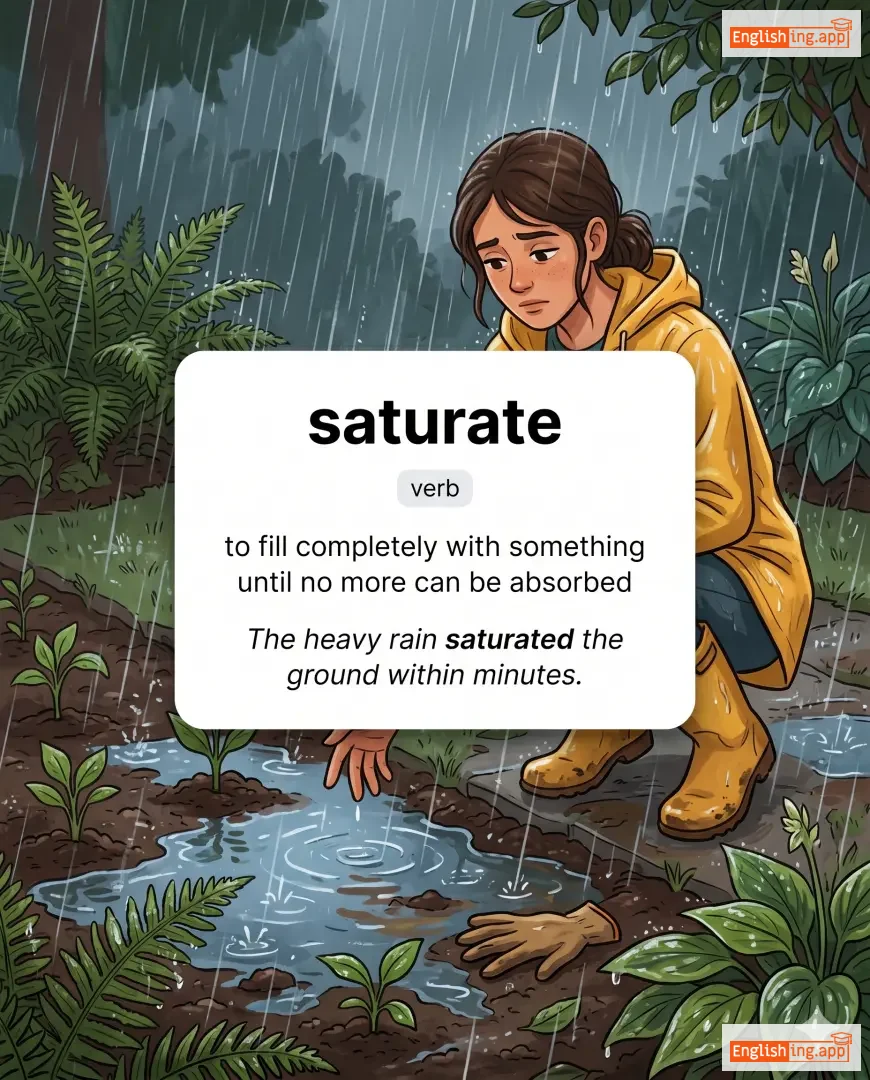
saturate definition card — visual illustration of the meaning
verb C1
/ˈsætʃəˌreɪt/

to fill completely with something until no more can be absorbed

"The heavy rain saturated the ground within minutes."

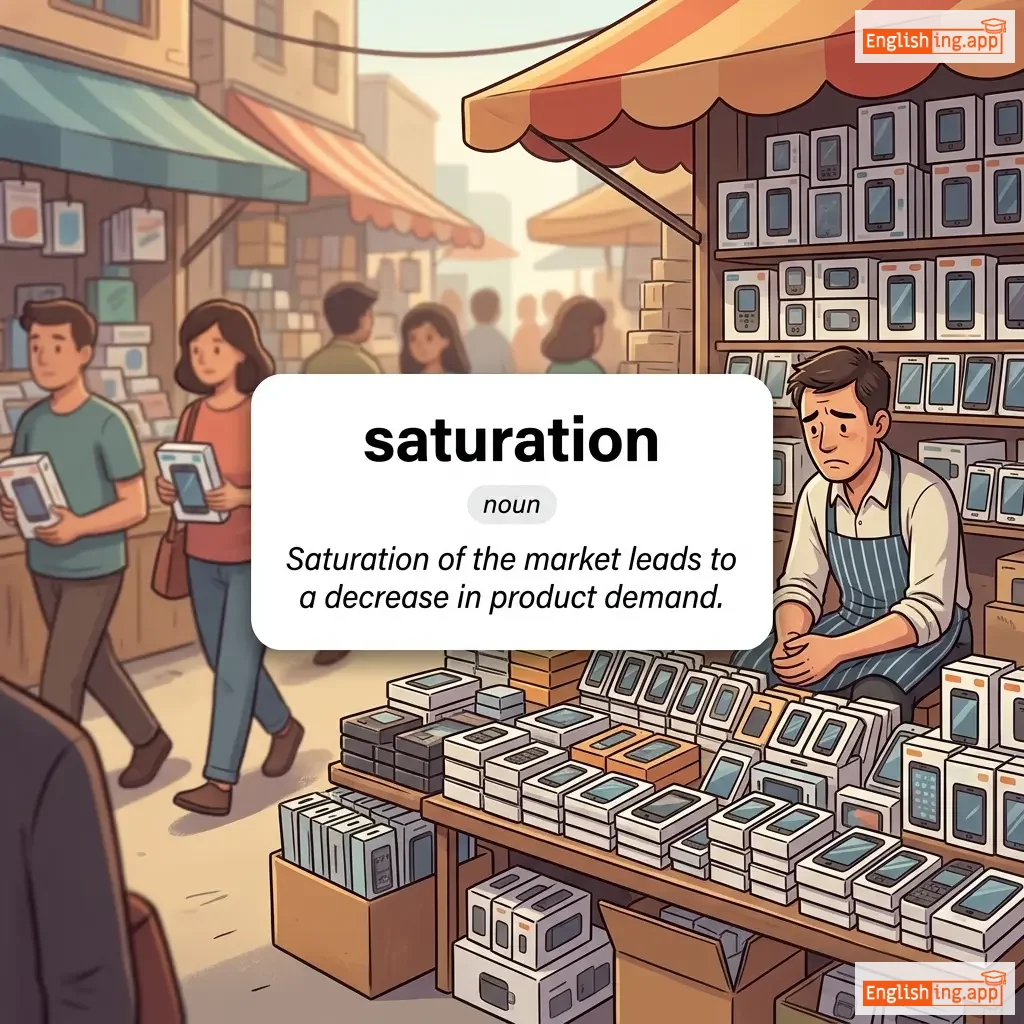
saturation definition card — visual illustration of the meaning
noun C1
/ˌsætʃəˈreɪʃən/
飽和 (hōwa)

The state or process that occurs when no more of something can be absorbed, combined with, or added.

"Saturation of the market leads to a decrease in product demand."

"市場の飽和は製品の需要の減少を引き起こします。" (Shijō no hōwa wa seihin no juyō no genshō o hikiokoshimasu.)
adjective C1
/ˈsɔːsi/
生意気な (namaiki na)

Boldly rude, cheeky, or playfully disrespectful.

"The child gave a saucy reply to his teacher."

"その子は先生に生意気な返事をした。" (Sono ko wa sensei ni namaiki na henji o shita.)
verb C1
/ˈsɔːntər/

to walk in a slow, relaxed manner without hurry or effort

"We sauntered along the riverside, stopping now and then to watch the boats."

noun C1
/səˈvænə/
サバンナ(散在する木々がある草原) (saban'na (sanzai suru kigi ga aru sōgen))

a grassy plain with scattered trees, typical of tropical and subtropical regions

"Giraffes browsed on acacia trees across the wide savanna."

"キリンは広いサバンナでアカシアの木の葉を食べていました。" (Kirin wa hiroi sabanna de akashia no ki no ha o tabete imashita.)
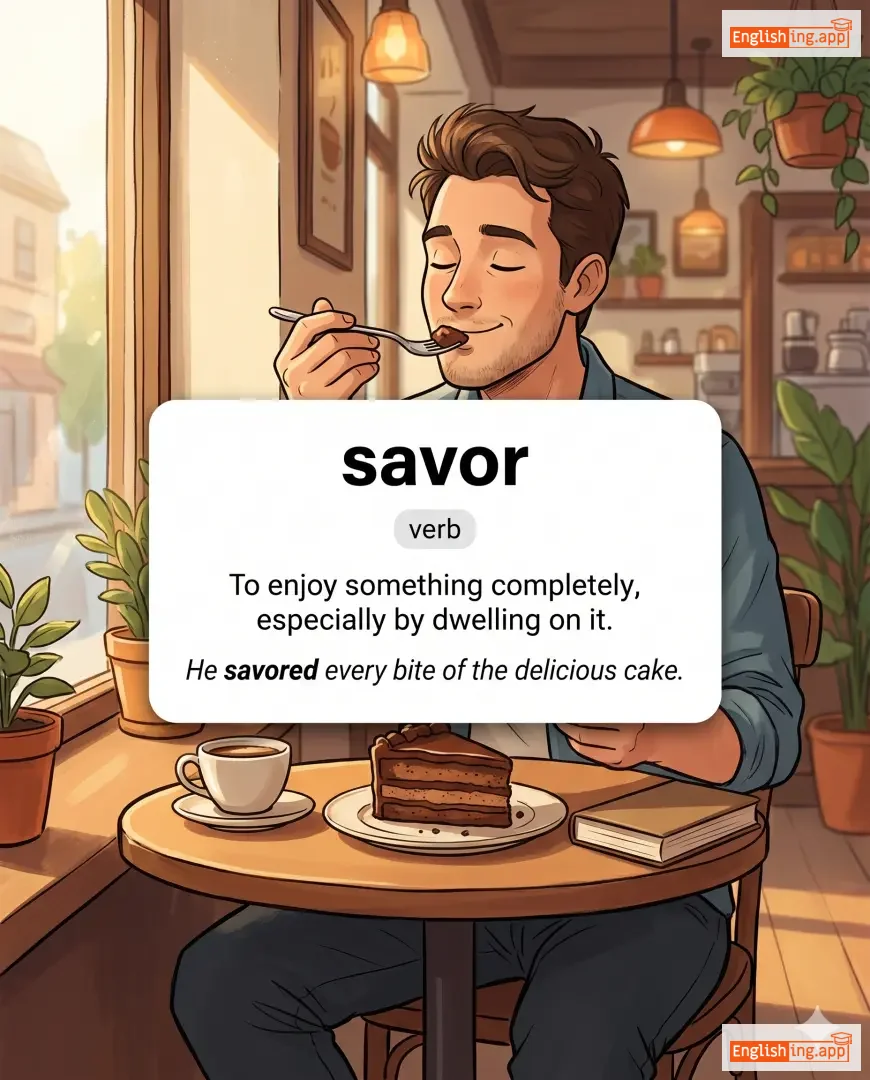
savor definition card — visual illustration of the meaning
verb C1
/ˈseɪ.vər/
味わう (ajiwau)

To enjoy something completely, especially by dwelling on it.

"He savored every bite of the delicious cake."

"彼はおいしいケーキの一口一口を味わった。" (Kare wa oishii kēki no hitokuchi hitokuchi o ajiwatta.)
adjective C1
/ˈseɪ.vər.i/
風味のある(塩辛いまたは辛い) (fūmi no aru (shiokarai mata wa karai))

Having a pleasant salty or spicy taste; morally acceptable.

"The restaurant serves a variety of savory dishes."

"そのレストランはさまざまな風味のある料理を提供しています。" (Sono resutoran wa samazama na fūmi no aru ryōri o teikyō shiteimasu.)
adjective C1
/ˈsæv.i/
賢い, 熟練した (kashikoi, jukuren shita)

Having practical knowledge and the ability to make good judgments.

"She is a tech-savvy entrepreneur."

"彼女はテクノロジーに詳しい起業家です。" (Kanojo wa tekunorojī ni kuwashī kigyōka desu.)
noun C1
/ˈsɔː.dʌst/
木屑 (mokusesu)

The tiny particles of wood produced by sawing or sanding.

"The floor was covered with sawdust from the carpentry work."

"床は大工仕事からの木屑で覆われていました。" (Yuka wa daiku shigoto kara no mokusesu de ōwarete imashita.)
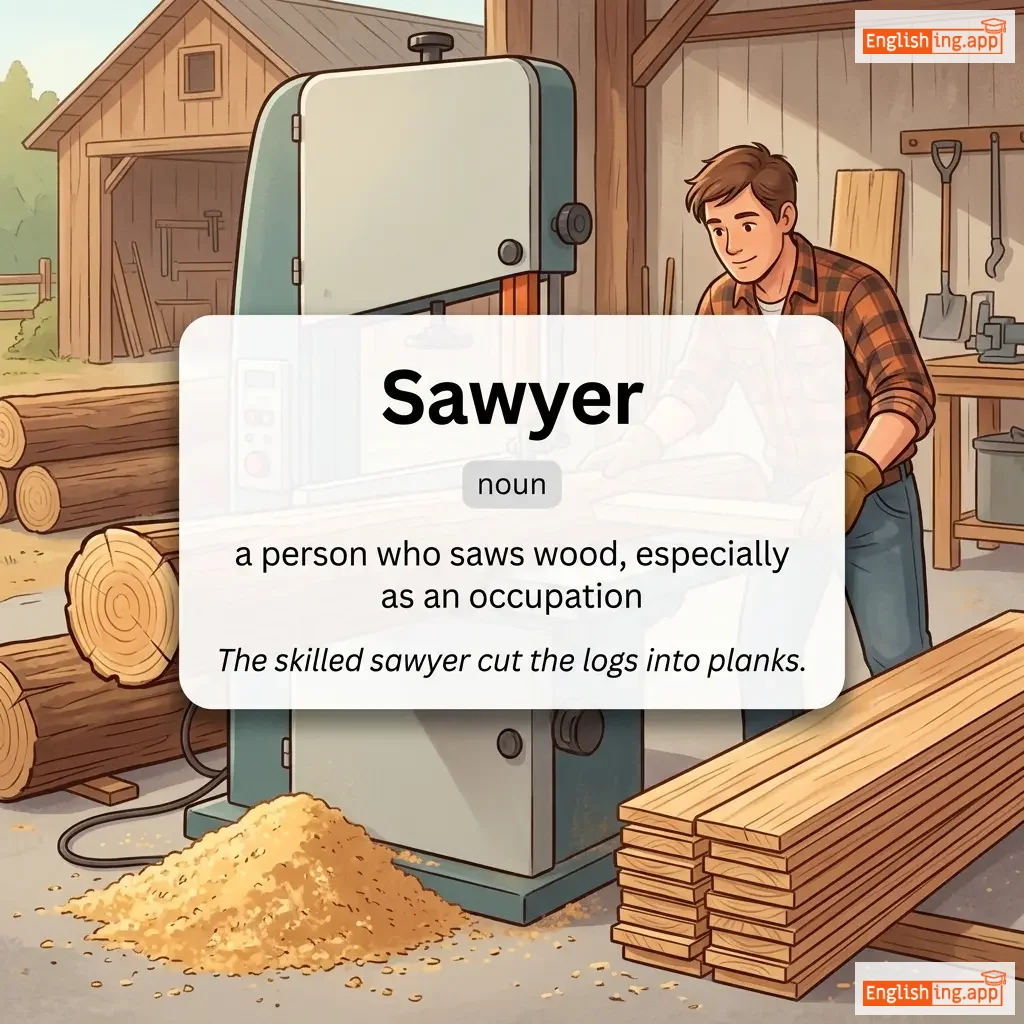
Sawyer definition card — visual illustration of the meaning
noun C1
/ˈsɔːjər/
材木職人 (zaimoku shokunin)

a person who saws wood, especially as an occupation

"The skilled sawyer cut the logs into planks."

"熟練した材木職人は丸太を板に切りました。" (Jukuren shita zaimoku shokunin wa maruta wo ita ni kirimashita)
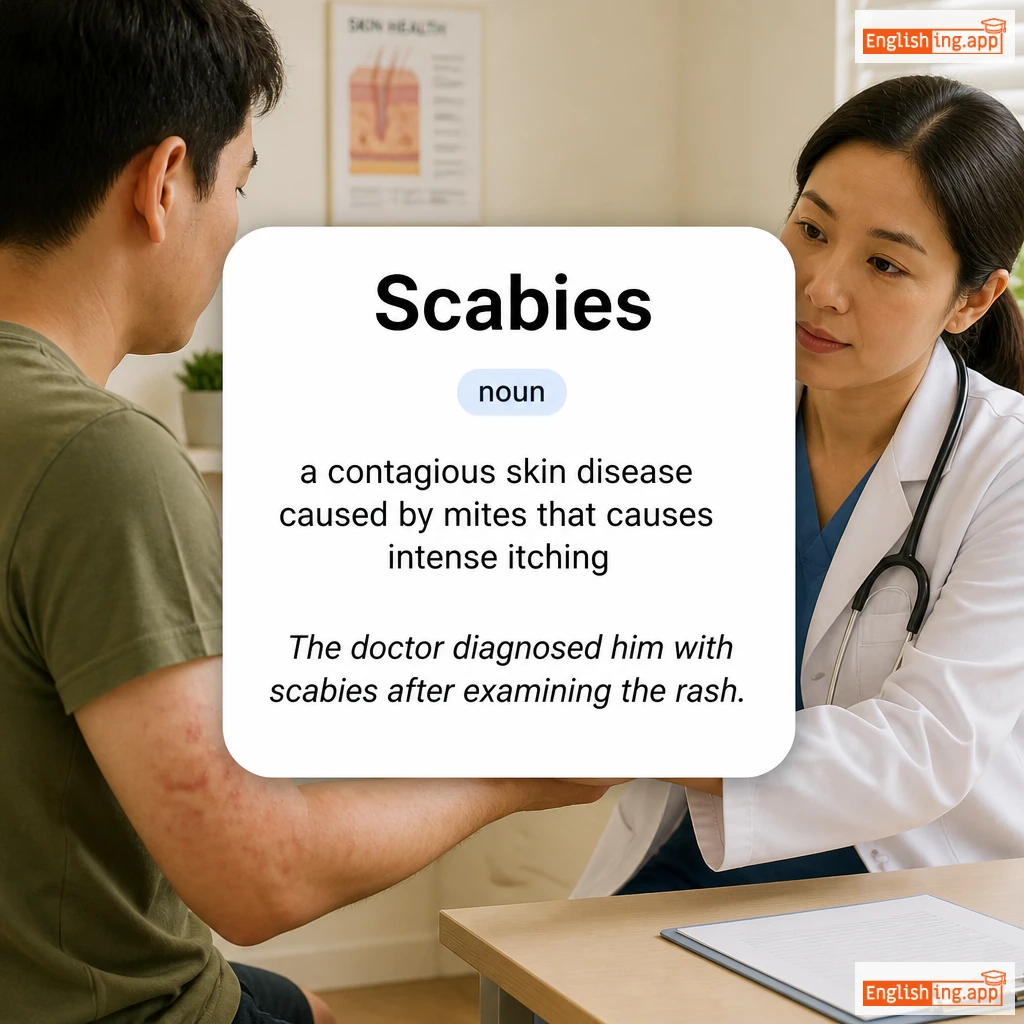
Scabies definition card — visual illustration of the meaning
noun C1
/ˈskeɪ.biːz/
疥癬 (kaisen)

a contagious skin disease caused by mites that causes intense itching

"The doctor diagnosed him with scabies after examining the rash."

"医師は発疹を調べた後、彼に疥癬と診断した。" (Ishi wa hasshin o shirabeta ato, kare ni kaisen to shindan shita.)
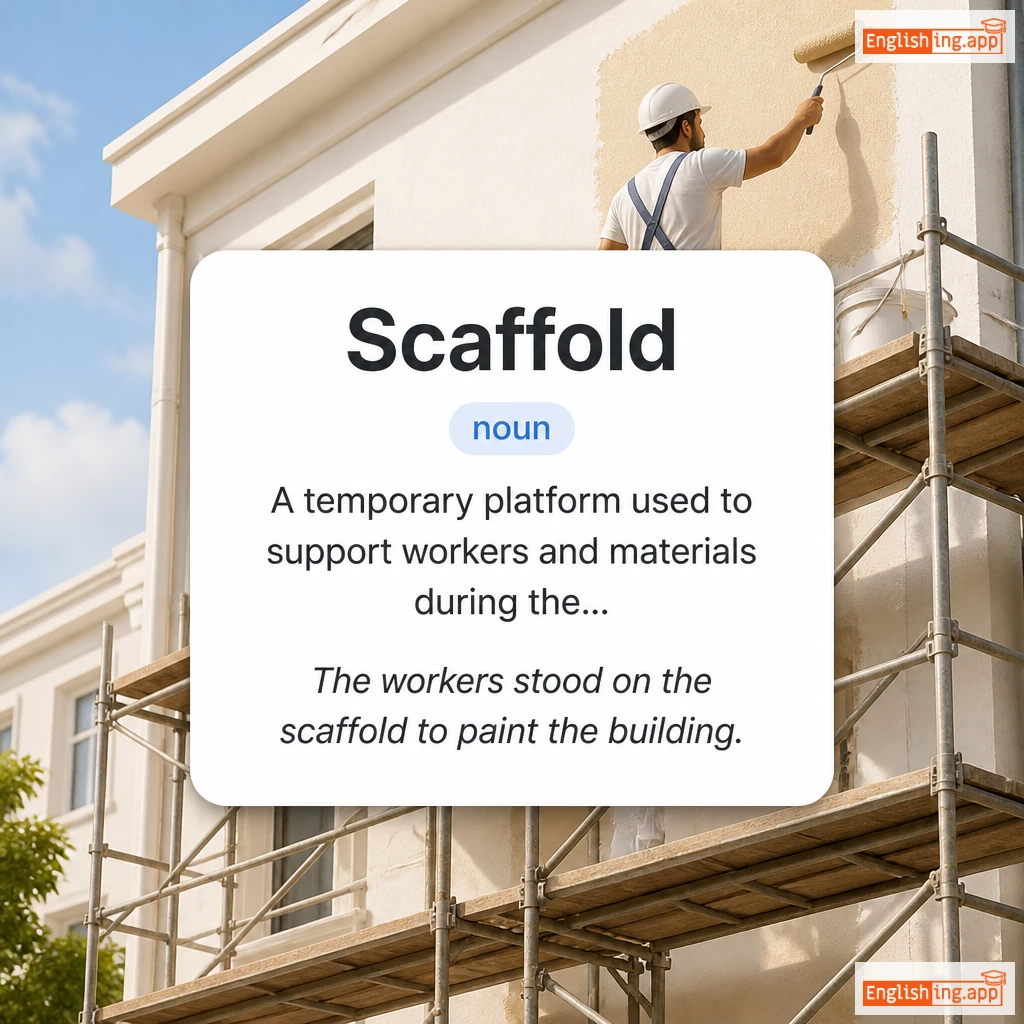
Scaffold definition card — visual illustration of the meaning
noun C1
/ˈskæf.əʊld/
足場 (ashiba)

A temporary platform used to support workers and materials during the construction or repair of a building.

"The workers stood on the scaffold to paint the building."

"作業員は建物を塗装するために足場に立っていました。" (Sagyō-in wa tatemono o tosō suru tame ni ashiba ni tatte imashita.)
scalability definition card — visual illustration of the meaning
noun C1
/ˌskeɪ.ləˈbɪl.ə.ti/
スケーラビリティ (sukearabiriti)

The ability to expand to larger scales while maintaining efficiency

"The startup focused on scalability to handle future growth."

"スタートアップは、将来の成長を処理するためにスケーラビリティに注力しました。" (Sutaatappu wa, shourai no seichou wo shori suru tame ni sukeerabiriti ni chūryoku shimashita.)
noun C1
/ˈskælpəl/
メス (mesu)

A small and extremely sharp bladed instrument used for surgery and dissection.

"The surgeon carefully used a scalpel to make the first incision."

"外科医は慎重にメスを使って最初の切開を行いました。" (Geka-i wa shinchō ni mesu o tsukatte saisho no sekkai o okonaimashita.)
adjective C1
/ˈskeɪ.li/
鱗状の (uroko-jou no)

covered with scales; having a rough surface like scales

"The fish has scaly skin."

"その魚はうろこ状の皮膚を持っています。" (Sono sakana wa urokogata no hifu o motteimasu.)
adjective C1
/skænt/
乏しい (mushii)

Barely sufficient or inadequate in amount, degree, or quantity.

"There was scant evidence to support the claim."

"その主張を支持する証拠はほとんどなかった。" (Sono shuchou o shiji suru shōko wa hotondo nakatta.)
adjective C1
/ˈskænti/
乏しい (toboshii)

Small in quantity; insufficient or meager.

"The refugees survived on scanty food supplies."

"難民は乏しい食料で生き延びました。" (Nanmin wa toboshii shokuryou de ikinobimashita.)
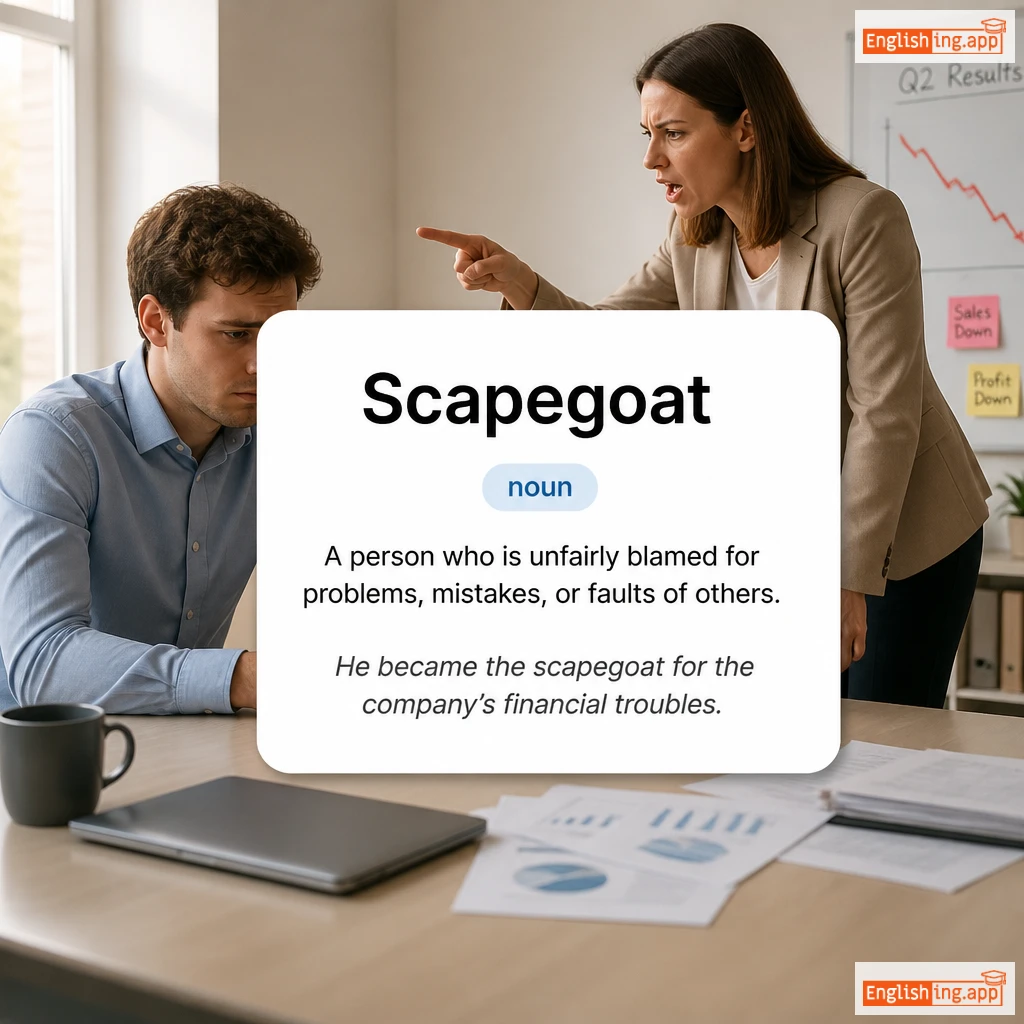
Scapegoat definition card — visual illustration of the meaning
noun C1
/ˈskeɪpˌɡoʊt/
スケープゴート (sukēpugōto)

A person who is unfairly blamed for problems, mistakes, or faults of others.

"He became the scapegoat for the company’s financial troubles."

"彼は会社の財政問題のスケープゴートになった。" (Kare wa kaisha no zaisei mondai no sukēpugōto ni natta.)
adjective C1
/ˈskeɪðɪŋ/
辛辣な批評 (sinratsu na hihyō)

severely critical; harshly scornful

"The critic wrote a scathing review of the movie."

"批評家は映画について辛辣な批評を書いた。" (Hihyōka wa eiga ni tsuite sinratsu na hihyō o kaita.)
verb C1
/ˈskævɪndʒ/
ゴミの中から探す (gomi no naka kara sagasu)

to search through waste or discarded material to find useful items

"The children scavenged for food in the garbage dump."

"子供たちはゴミ捨て場で食べ物を探していました。" (Kodomotachi wa gomisuteba de tabemono o sagashite imashita.)
noun C1
/ˈskævɪndʒər/
死肉食者 / ゴミ収集者 (shiniku shokusha / gomi shūshūsha)

an animal or person that feeds on dead or discarded material

"Vultures are natural scavengers that clean up the environment."

"ハゲワシは自然のスカベンジャーで、環境をきれいにします。" (hagewashi wa shizen no scavenger de, kankyō o kirei ni shimasu.)
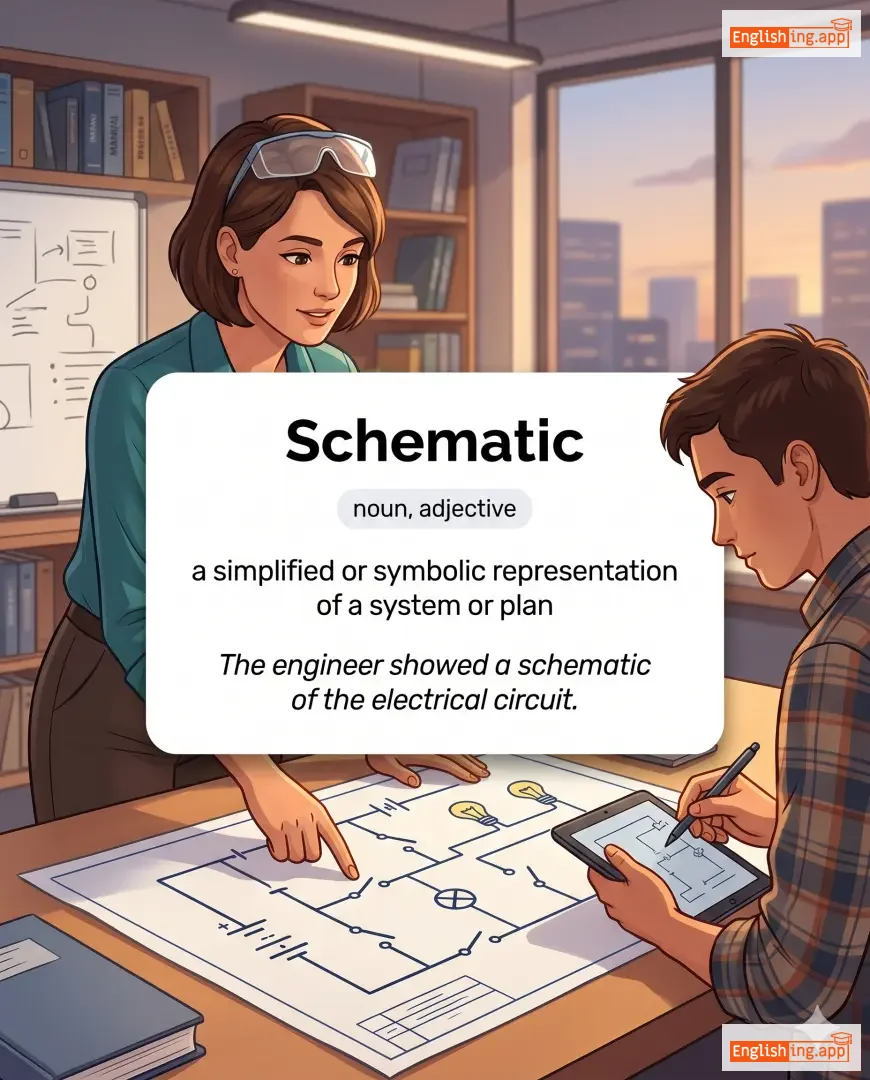
Schematic definition card — visual illustration of the meaning
noun, adjective C1
/skiːˈmætɪk/
回路図 (kairozu)

a simplified or symbolic representation of a system or plan

"The engineer showed a schematic of the electrical circuit."

"エンジニアは電気回路の回路図を示しました。" (Enjinia wa denki kairo no kairozu o shimeshimashita.)
adjective C1
/skəˈlæstɪk/
学問的な (gakumontekina)

Relating to schools, education, or academic learning.

"The school organizes scholastic competitions every year."

"学校は毎年学問的な競技を開催します。" (Gakkō wa mainen gakumonteki na kyōgi o kaisai shimasu.)
adjective C1
/ˈsɪn.tɪ.leɪ.tɪŋ/
きらめく (kirameku)

brilliantly clever, exciting, or sparkling

"Her scintillating conversation kept everyone entertained."

"彼女のきらめく会話は皆を楽しませた。" (Kanojo no kirameku kaiwa wa minna o tanoshimaseta.)
noun C1
/ˈsaɪ.ən/
子孫 (shison)

a descendant of a wealthy, aristocratic, or influential family

"He is the scion of a wealthy industrialist family."

"彼は裕福な実業家の家族の子孫です。" (Kare wa yūfuku na jitsugyōka no kazoku no shison desu.)
verb C1
/skɒf/
嘲笑する (chosho suru)

to speak about something in a mocking or dismissive way

"He scoffed at the idea of moving abroad."

"彼は海外に引っ越すというアイデアを嘲笑しました。" (Kare wa kaigai ni hikkosu to iu aidea o chosho shimashita.)
verb C1
/skɔːrtʃ/
焦がす (kogasu)

to burn the surface of something slightly

"The fire scorched the walls of the building."

"火事が建物の壁を焦がした。" (Kaji ga tatemono no kabe o kogashita.)
adjective C1
/ˈskɔːrnfəl/
軽蔑的な (keibetsuteki na)

showing contempt or disdain; expressing scorn

"She gave him a scornful look when he made the rude comment."

"彼が無礼なコメントをしたとき、彼女は軽蔑の目で彼を見た。" (Kare ga burei na komento o shita toki, kanojo wa keibetsu no me de kare o mita.)
verb/noun C1
/skɒtʃ/
終わらせる / スコッチウイスキー (owaraseru / scotch whiskey)

to put an end to something; also a type of whisky

"The report scotched the rumors of a merger."

"報告書は合併の噂を終わらせました。" (Houkokusho wa gappei no uwasa o owarasemashita.)
noun C1
/ˈskaʊndrəl/
悪党 (akutou)

a dishonest or unscrupulous person; a villain

"That scoundrel cheated the old man out of his savings."

"その悪党は老人から貯金を騙し取った。" (Sono akutou wa rōjin kara chokin o damashitotta.)
verb C1
/ˈskaʊər/
磨く / 徹底的に探す (migaku / tetteiteki ni sagasu)

to clean or brighten the surface of something by scrubbing; to search thoroughly

"She scoured the kitchen until it shone."

"彼女はキッチンを磨いて、ピカピカにしました。" (Kanojo wa kicchin o migaite, pikapika ni shimashita.)
noun/verb C1
/skɜːrdʒ/

A source of great pain or punishment; to whip or inflict suffering on someone.

"Disease and poverty remain a scourge in many regions."

verb/noun C1
/skaʊl/
しかめっ面をする (shikametsura suru)

To frown in an angry or bad-tempered way.

"She scowled when she heard the unfair remark."

"彼女は不公平なコメントを聞いてしかめっ面をした。" (Kanojo wa fukōhei na komento o kiite shikametsura o shita.)
adjective C1
/ˈskræpi/
戦闘的 / 散らかった (sentōteki / chirakatta)

Determined and willing to fight or argue; also messy or disorganized.

"Despite being small, he was a scrappy fighter."

"小さくても、彼は戦闘的な戦士でした。" (Chīsakute mo, kare wa sentōteki na senshi deshita.)
verb C1
/skrɔːl/
急いで乱雑に書く (isoide ranzatsu ni kaku)

to write or draw something quickly and carelessly, making it hard to read

"He scrawled his signature at the bottom of the page."

"彼はページの下部に署名をスクロールした。" (Kare wa pēji no kafu ni shomei o sukūrōru shita.)
adjective C1
/ˈskrɔːni/
痩せ細った (yasesotta)

very thin and bony, often looking unhealthy

"The scrawny boy could barely lift the heavy bag."

"その痩せ細った少年は重いバッグをほとんど持ち上げることができなかった。" (Sono yasesotta shōnen wa omoi baggu o hotondo mochiageru koto ga dekinakatta.)
noun C1
/skraɪb/
書記 (shoki)

a person who writes documents, especially in ancient times; a professional copyist

"In ancient Egypt, scribes recorded important events."

"古代エジプトでは、スクライブは重要な出来事を記録しました。" (Kodai Ejiputo dewa, sukuraibu wa jūyōna dekigoto o kiroku shimashita.)
noun C1
/ˈskrɪmɪdʒ/
練習試合 (renshū shiai)

A practice game or informal match, often in sports, especially football.

"The team had a scrimmage before the official season started."

"チームは公式シーズンが始まる前に練習試合を行いました。" (Chīmu wa kōshiki shīzun ga hajimaru mae ni renshū shiai o okonaimashita.)
adjective C1
/ˈskrɪptʃərəl/
聖書に関連する (seisho ni kanren suru)

Relating to or contained in the scriptures or holy writings.

"The priest gave a scriptural reference during the sermon."

"牧師は説教中に聖書の参照をしました。" (Bokusha wa sekkyou-chuu ni seisho no sanshou o shimashita.)
scrolling addiction definition card — visual illustration of the meaning
noun C1
স্ক্রোলিং অ্যাডিকশন
スクロール依存症 (sukurōru izonshō)

A compulsive need to continuously scroll through content on digital devices, particularly smartphones and social media platforms.

"Scrolling addiction is a growing concern among smartphone users."

"スクロール依存症はスマートフォンユーザーの間で増加している懸念事項です。" (Sukurōru izonshō wa sumātofon yūzā no aida de zōka shite iru kenentekina shikō desu.)
adjective C1
/ˈskrʌfi/
乱雑または不潔な外見; 汚れたしぼんだ (ranzatsu matawa fuketsu na gaiken; yogoreta shibonda)

untidy or unkempt in appearance; shabby and worn

"The scruffy old dog wandered through the streets looking for food."

"そのみすぼらしい老犬は、食べ物を探して通りをさまよっていました。" (Sono misuborashii rōken wa, tabemono o sagashite tōri o samayotte imashita.)
adjective C1
/ˈskrʌmpʃəs/
美味しい (oishii)

extremely tasty or delicious

"She baked a scrumptious chocolate cake for the party."

"彼女はパーティーのために美味しいチョコレートケーキを焼きました。" (Kanojo wa pātī no tame ni oishii chokorēto kēki o yakimashita.)
noun C1
/ˈskruːpəl/
良心の呵責 (ryōshin no kashaku)

A moral or ethical consideration that restrains actions.

"He had no scruples about lying to get ahead."

"彼は前進するために嘘をつくことに対して良心の呵責を感じていなかった。" (Kare wa zenshin suru tame ni uso o tsuku koto ni taishite ryōshin no kashaku o kanjite inakatta.)
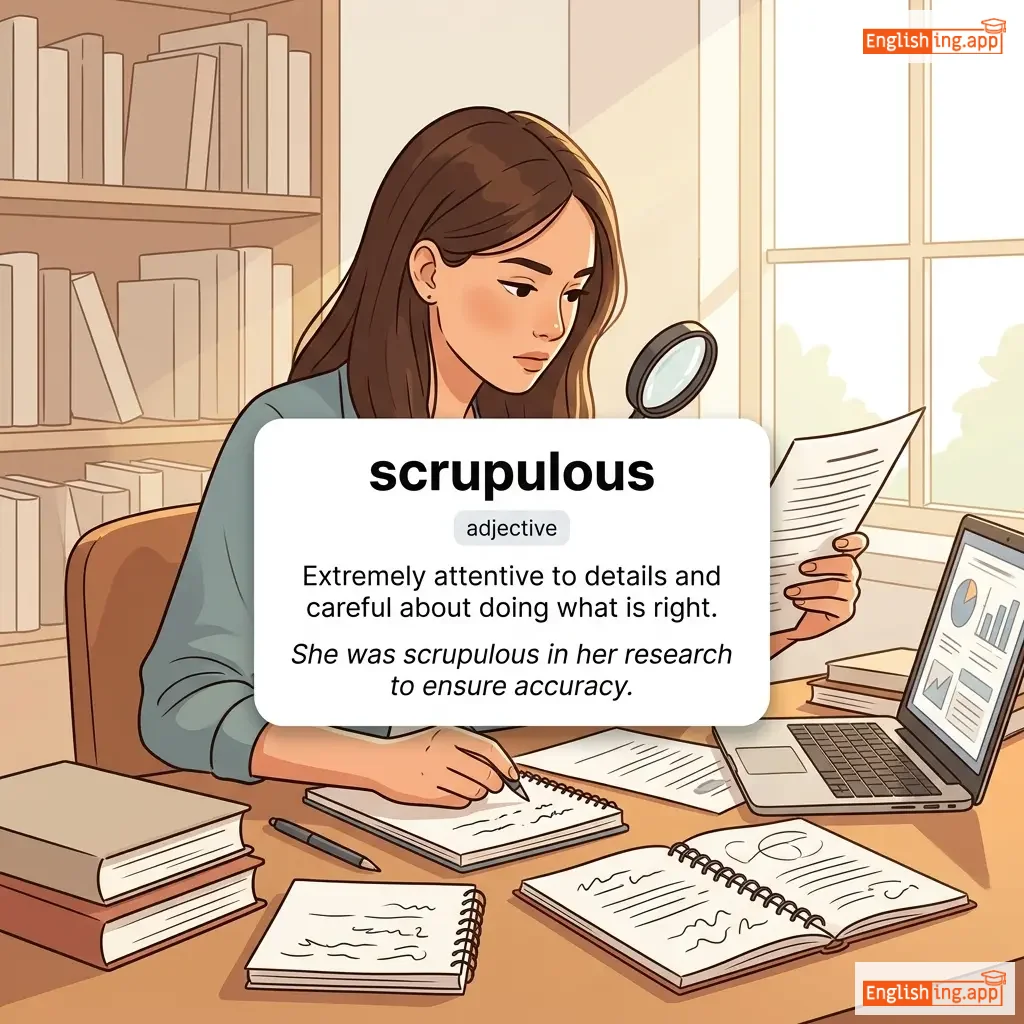
scrupulous definition card — visual illustration of the meaning
adjective C1
/ˈskruːpjələs/
几帳面 (kichoumen)

Extremely attentive to details and careful about doing what is right.

"She was scrupulous in her research to ensure accuracy."

"彼女は研究の中で正確さを確保するために几帳面だった。" (Kanojo wa kenkyuu no naka de seikaku-sa wo kakuho suru tame ni kichoumen datta.)
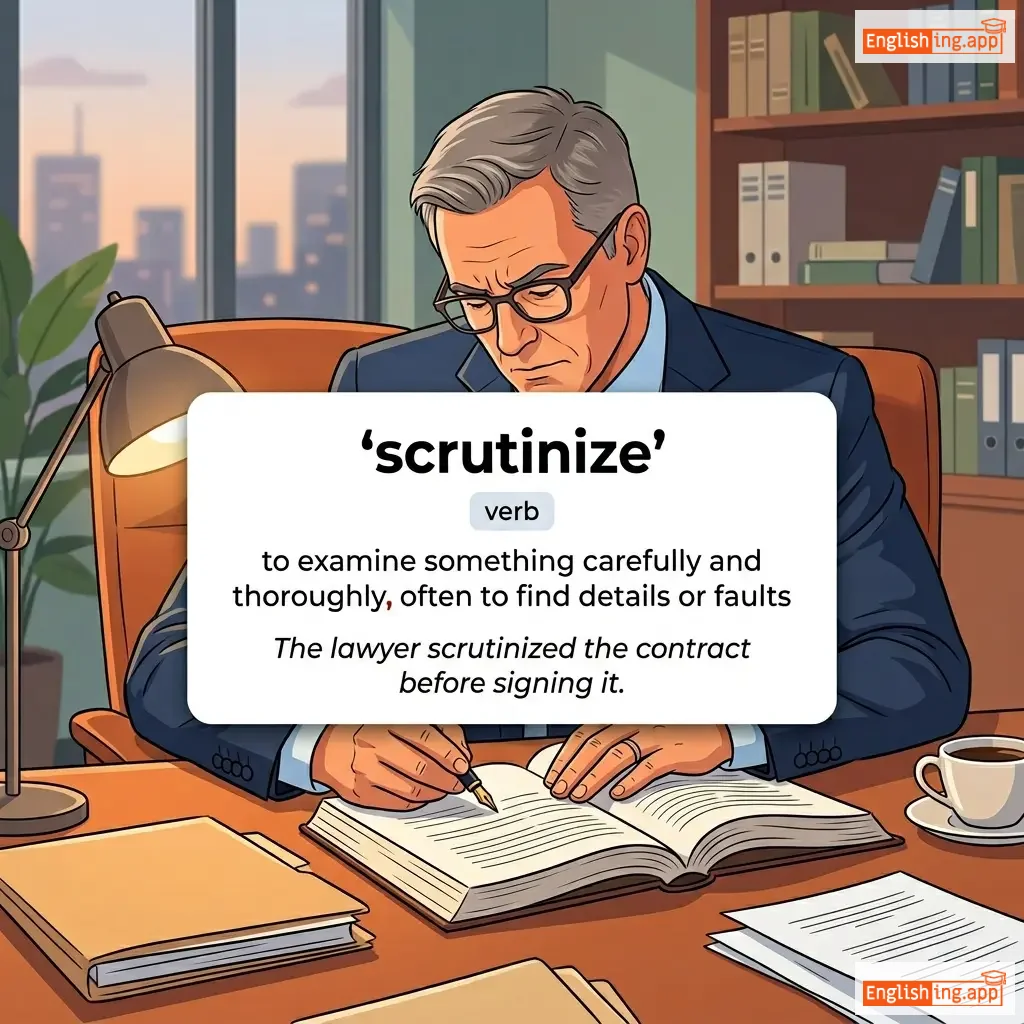
scrutinize definition card — visual illustration of the meaning
verb C1
/ˈskruː.tɪ.naɪz/

to examine something carefully and thoroughly, often to find details or faults

"The lawyer scrutinized the contract before signing it."

verb C1
/skʌf/
擦り傷 (surikizu)

to mark or scratch the surface of something by rubbing

"He scuffed his shoes on the pavement."

"彼は歩道で靴を擦り傷をつけた。" (Kare wa hodou de kutsu o surikizu o tsuketa.)
noun, verb C1
/ˈskʌf.əl/
乱闘 (rantou)

a short, confused fight or struggle; to engage in such a fight

"Two players scuffled on the field after the foul."

"ファウルの後、二人の選手がフィールドで殴り合った。" (Fauru no ato, futari no senshu ga fiirudo de naguriatta.)