Vokabulare

Englisches Vokabelwörterbuch | Wortbedeutungen, Definitionen & Beispiele

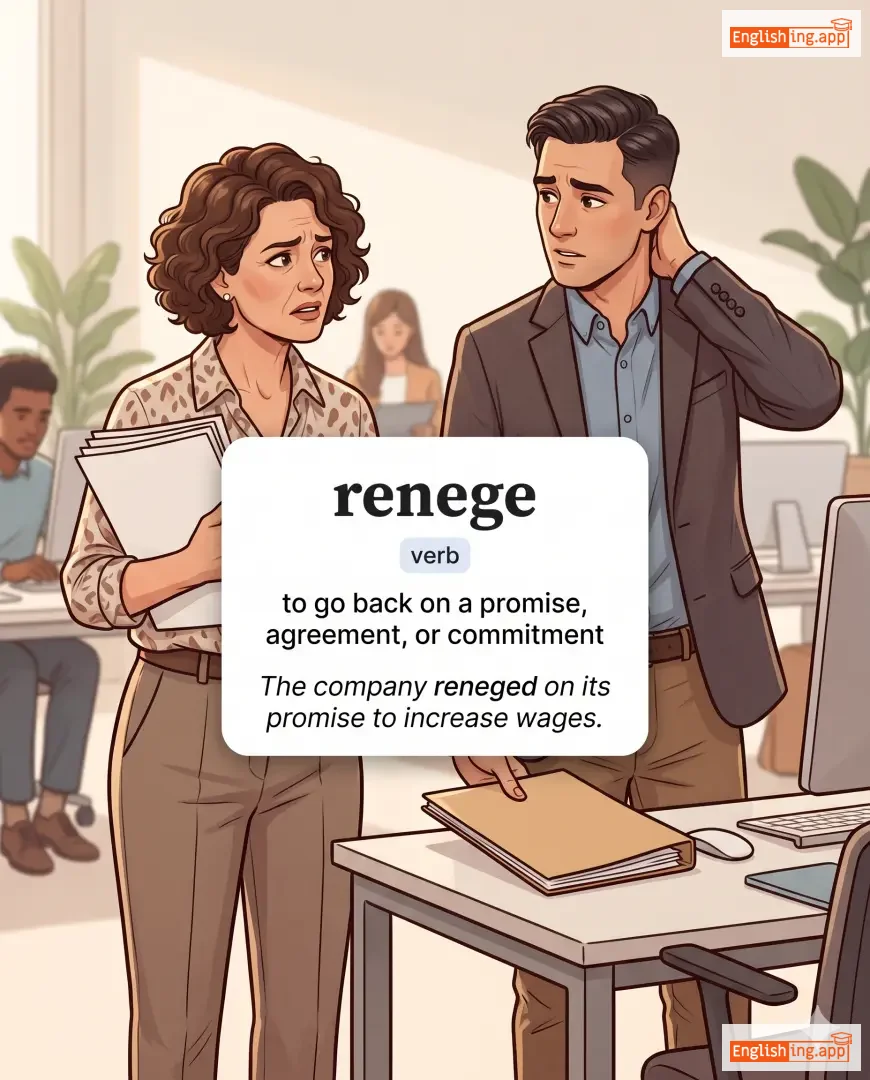
renege definition card — visual illustration of the meaning
verb C1
/rɪˈnɛɡ/
romper un compromiso (romper un compromiso)

to go back on a promise, agreement, or commitment

"The company reneged on its promise to increase wages."

"La empresa rompió su promesa de aumentar los salarios." (La empresa rompió su promesa de aumentar los salarios.)
🙅‍♂️

renounce (renáuns)

verb C1
/rɪˈnaʊns/
renunciar (renunciar)

to formally declare rejection of something, such as a claim, belief, or way of life

"She renounced her citizenship to move abroad permanently."

"Ella renunció a su ciudadanía para mudarse al extranjero permanentemente." (Ella renunció a su ciudadanía para mudarse al extranjero permanentemente.)
Renown definition card — visual illustration of the meaning
noun C1
/rɪˈnaʊn/
renombre (renombre)

the condition of being widely known and highly respected

"The scientist gained international renown for his groundbreaking research."

"El científico ganó renombre internacional por su investigación innovadora." (El cientifico gano renombre internacional por su investigacion innovadora.)
adjective C1
/rɪˈper.ə.bəl/
reparable (reparable)

able to be fixed or mended; capable of being repaired

"The broken phone is repairable with the right parts."

"El teléfono roto se puede reparar con las piezas adecuadas." (El telefono roto se puede reparar con las piezas adecuadas.)
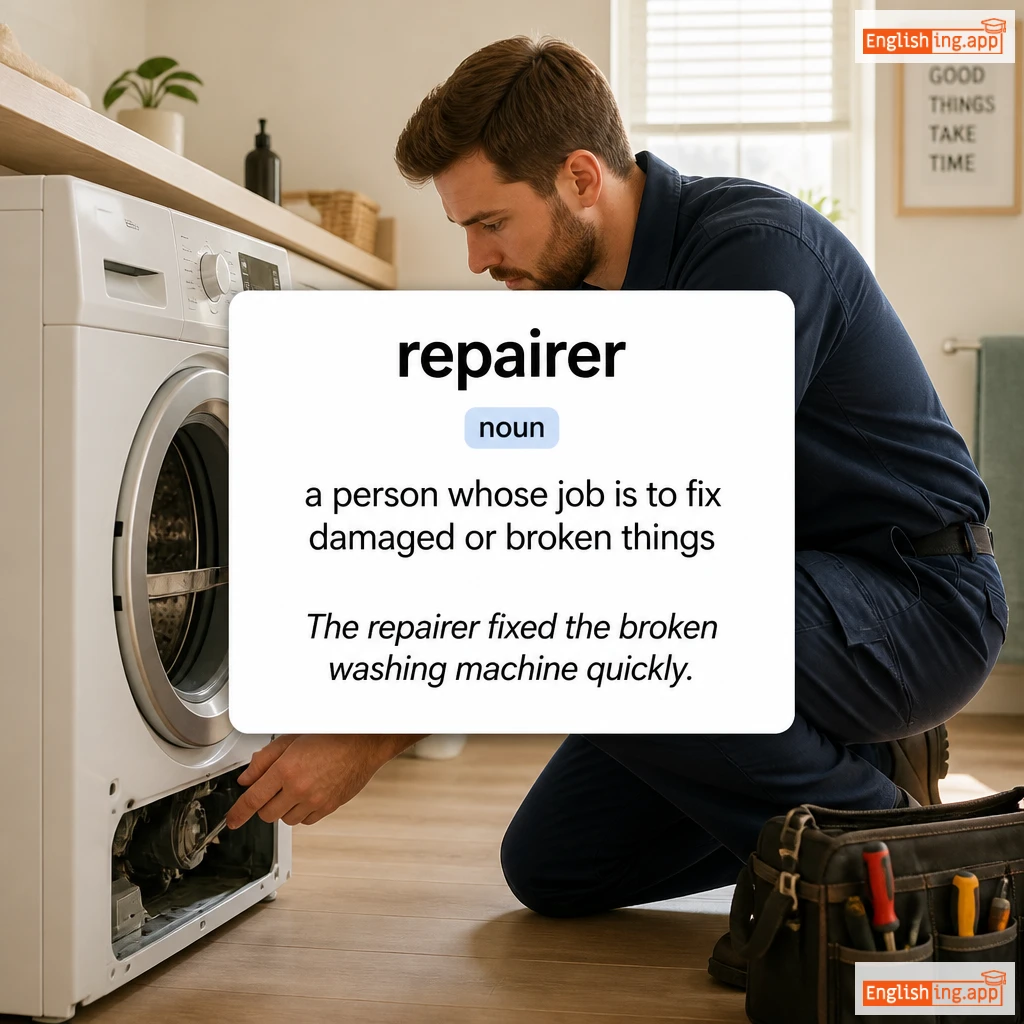
repairer definition card — visual illustration of the meaning
noun C1
/rɪˈpɛərə/
reparador (reparador)

a person whose job is to fix damaged or broken things

"The repairer fixed the broken washing machine quickly."

"El reparador arregló la lavadora rota rápidamente." (el reparador arreglo la lavadora rota rapidamente)
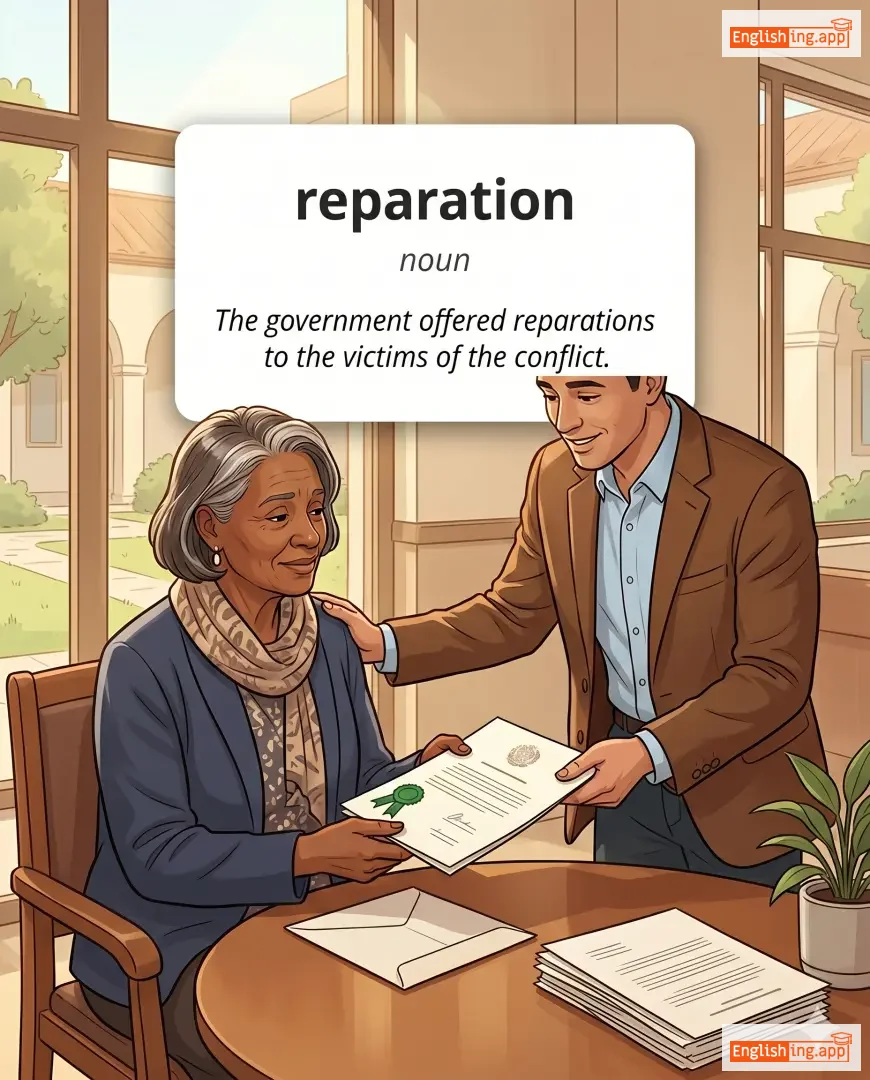
reparation definition card — visual illustration of the meaning
noun C1
/ˌrɛpəˈreɪʃən/
reparación (reparacion)

the making of amends for a wrong done by paying money or helping those who were wronged

"The government offered reparations to the victims of the conflict."

"El gobierno ofreció reparaciones a las víctimas del conflicto." (El gobierno ofreció reparaciones a las víctimas del conflicto.)
verb C1
/riːˈpeɪ.tri.eɪt/
repatriar (repatriar)

To return someone to their own country, often after war or imprisonment.

"The government worked to repatriate the refugees safely."

"El gobierno trabajó para repatriar a los refugiados de manera segura." (El gobierno trabajó para repatriar a los refugiados de manera segura.)
verb C1
/rɪˈpiːl/
derogar (derogar)

To officially cancel or revoke a law or decision.

"The government decided to repeal the outdated law."

"El gobierno decidió derogar la ley obsoleta." (El gobierno decidió derogar la ley obsoleta.)
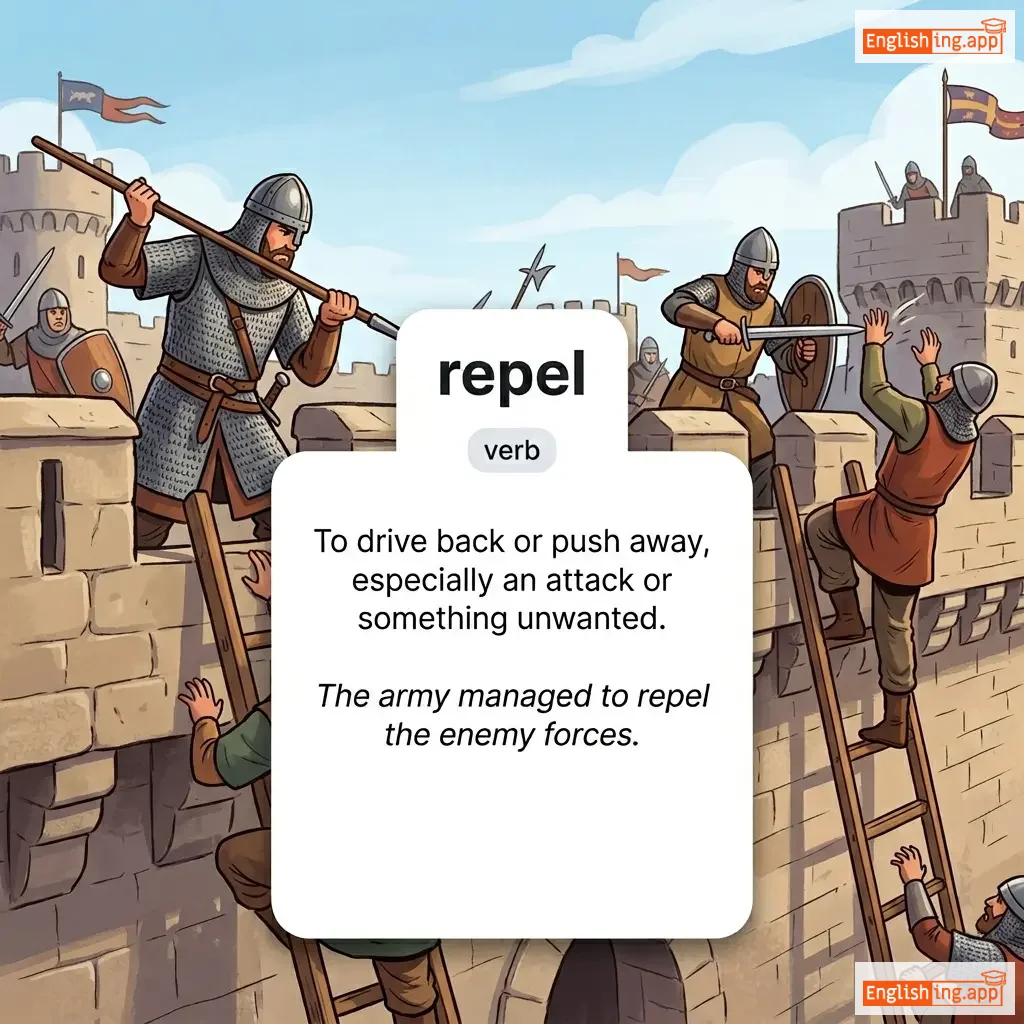
repel definition card — visual illustration of the meaning
verb C1
/rɪˈpɛl/
repeler (repeler)

To drive back or push away, especially an attack or something unwanted.

"The army managed to repel the enemy forces."

"El ejército logró repeler las fuerzas enemigas." (El ejército logró repeler las fuerzas enemigas.)
adjective C1
/rɪˈpɛlənt/
repelente (repelente)

Able to drive away something, especially insects or unpleasant things; causing disgust or distaste.

"This cream is highly effective as a mosquito repellent."

"Esta crema es muy efectiva como repelente de mosquitos." (Esta crema es muy efectiva como repelente de mosquitos.)
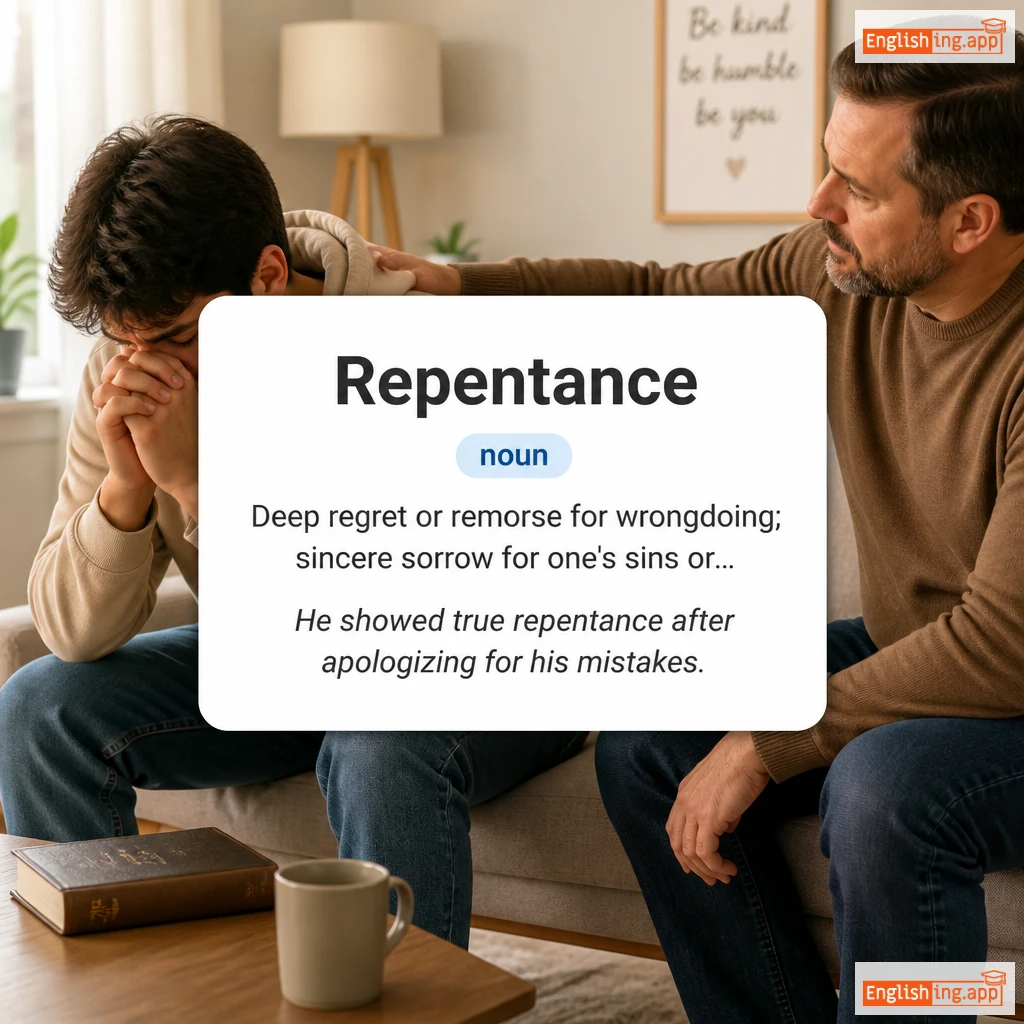
Repentance definition card — visual illustration of the meaning
noun C1
/rɪˈpɛntəns/
arrepentimiento (arrepentimiento)

Deep regret or remorse for wrongdoing; sincere sorrow for one's sins or mistakes.

"He showed true repentance after apologizing for his mistakes."

"Él mostró verdadero arrepentimiento después de disculparse por sus errores." (Él mostró verdadero arrepentimiento después de disculparse por sus errores.)
adjective C1
/rɪˈpen.tənt/
arrepentido; lamentoso; contrito (arrepentido; lamentoso; contrito)

feeling or expressing sincere regret and remorse; sorry for one's actions

"The repentant thief returned the stolen money."

"El ladrón arrepentido devolvió el dinero robado." (El ladron arrepentido devolvió el dinero robado.)
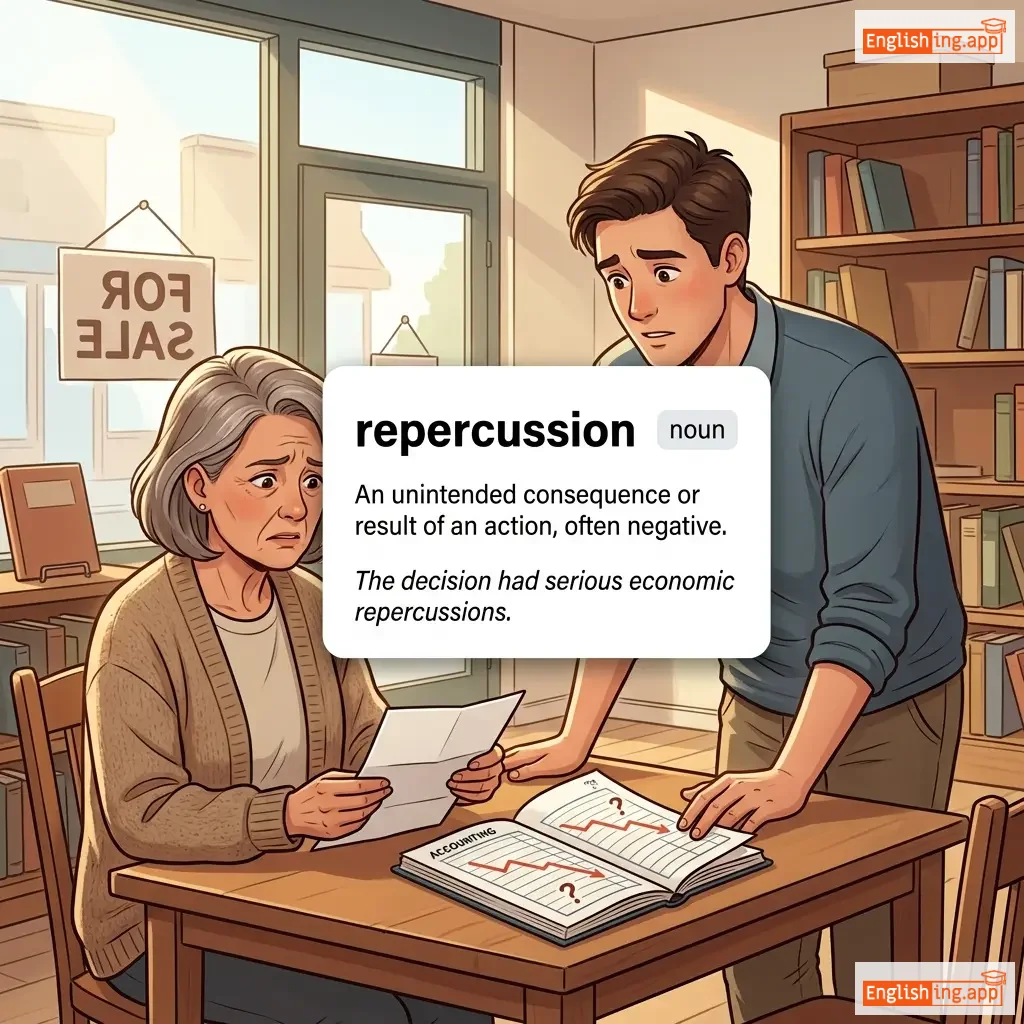
repercussion definition card — visual illustration of the meaning
noun C1
/ˌriːpərˈkʌʃən/
repercusión (repercusion)

An unintended consequence or result of an action, often negative.

"The decision had serious economic repercussions."

"La decisión tuvo repercusiones económicas serias." (La decision tuvo repercusiones economicas serias)
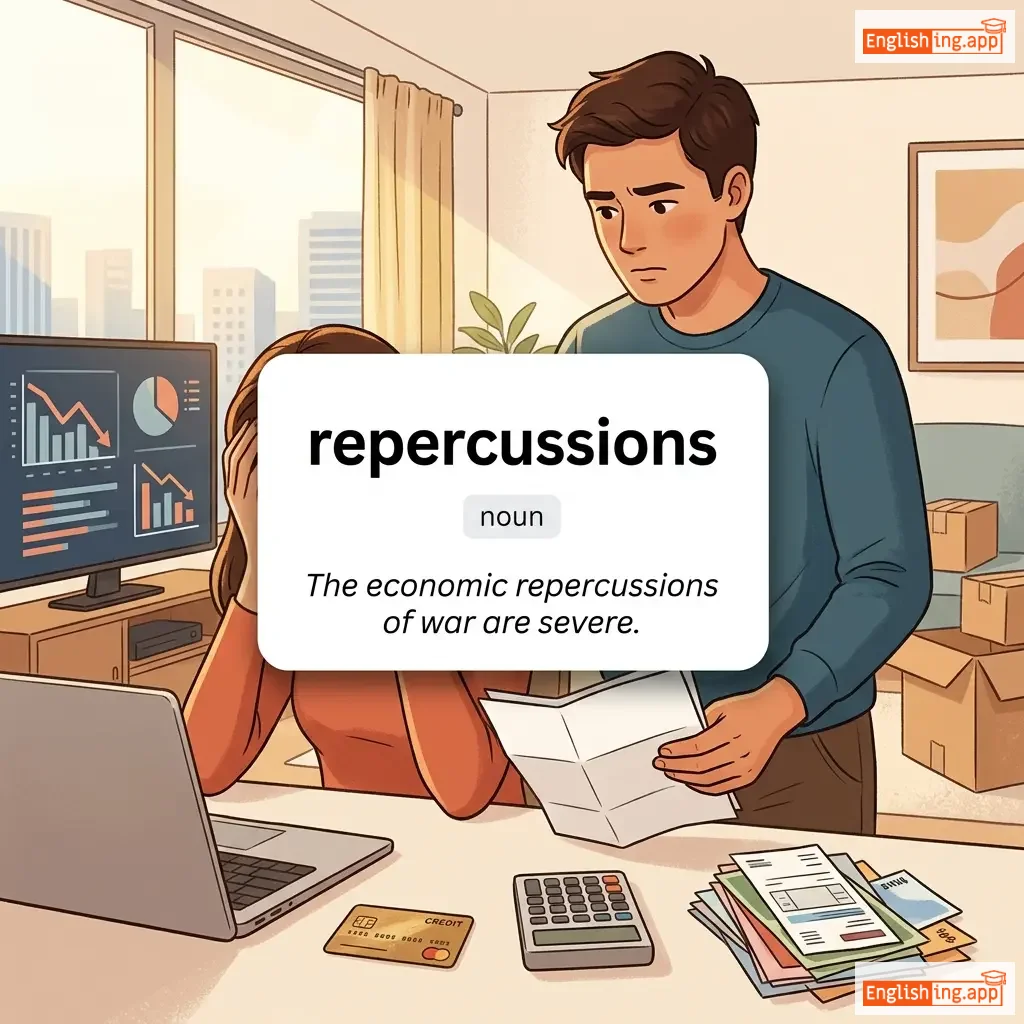
repercussions definition card — visual illustration of the meaning
noun C1
/ˌriː.pəˈkʌʃ.ənz/
repercusiones (repercusiones)

An unintended consequence occurring some time after an event or action; the effects or results of something.

"The economic repercussions of war are severe."

"Las repercusiones económicas de la guerra son graves." (Las repercusiones economicas de la guerra son graves.)
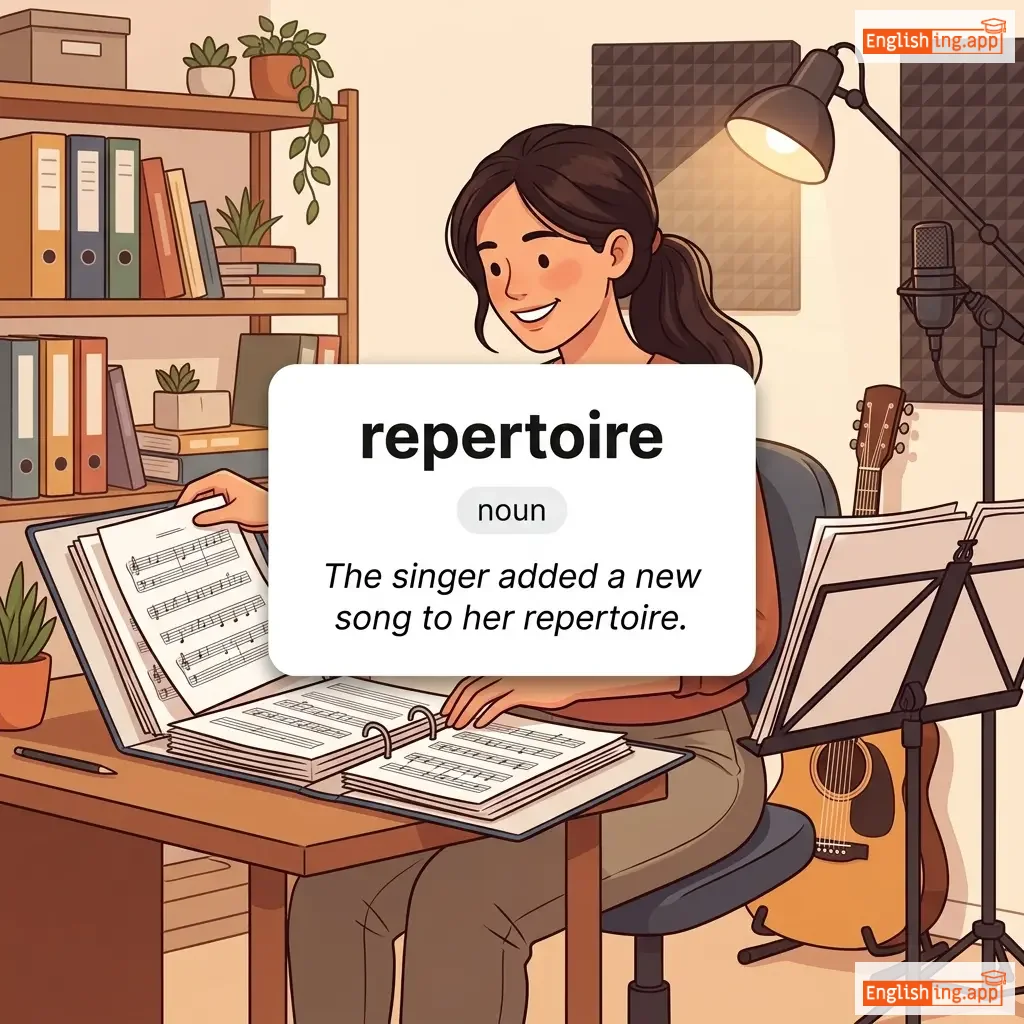
repertoire definition card — visual illustration of the meaning
noun C1
/ˈrɛpərˌtwɑːr/
repertorio (repertorio)

The entire range of skills, works, or pieces that a person or group is prepared to perform or use.

"The singer added a new song to her repertoire."

"La cantante añadió una nueva canción a su repertorio." (La cantante añadió una nueva canción a su repertorio.)
noun C1
/ˈrɛpərˌtɔːri/
repertorio (repertorio)

A collection of works that a company, performer, or institution regularly performs; also a storehouse of information or skills.

"The theater has a repertory of classic plays."

"El teatro tiene un repertorio de obras clásicas." (El teatro tiene un repertorio de obras clasicas.)
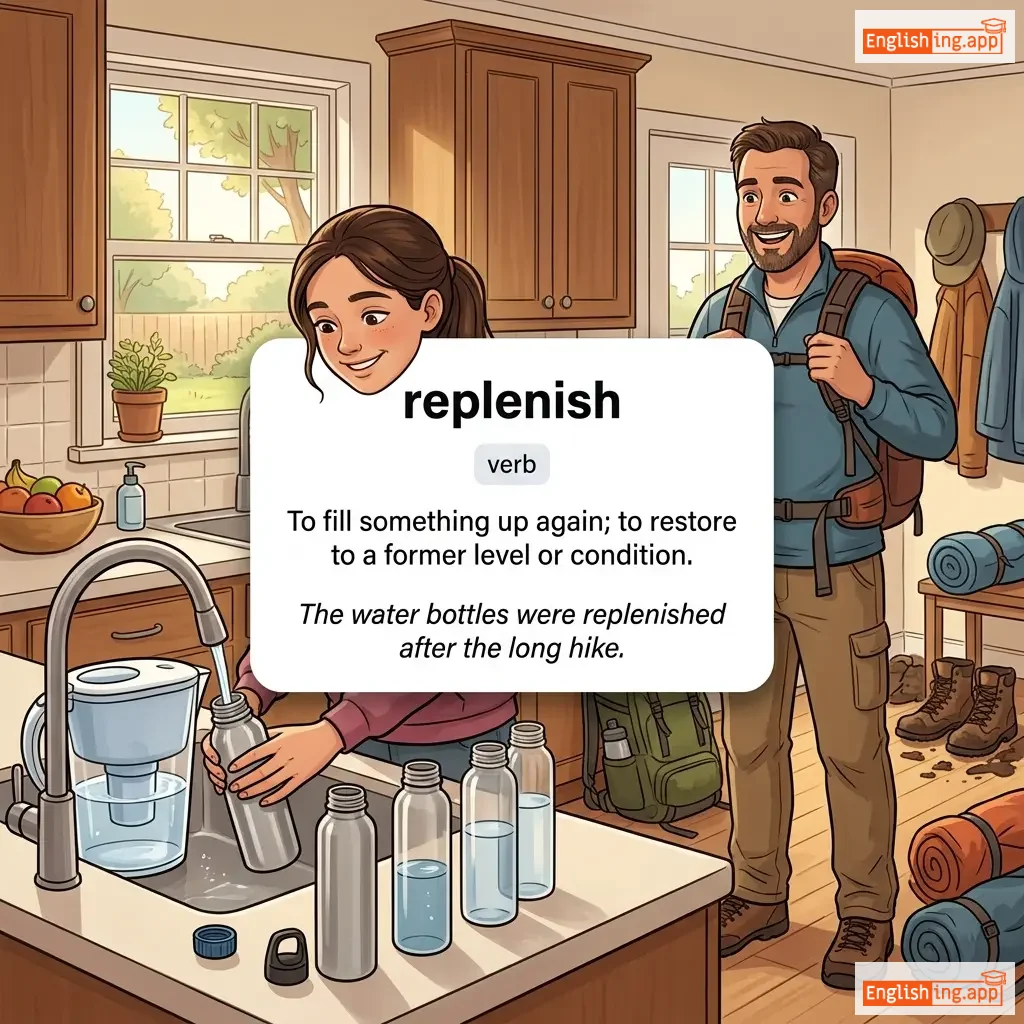
replenish definition card — visual illustration of the meaning
verb C1
/rɪˈplɛnɪʃ/
reponer (reponer)

To fill something up again; to restore to a former level or condition.

"The water bottles were replenished after the long hike."

"Las botellas de agua fueron reabastecidas después de la larga caminata." (Las botellas de agua fueron reabastecidas despues de la larga caminata.)
adjective C1
/rɪˈpliːt/
repleto (repleto)

Filled or well-supplied with something; abundantly full.

"The book is replete with fascinating historical details."

"El libro está repleto de fascinantes detalles históricos." (El libro está repleto de fascinantes detalles históricos.)
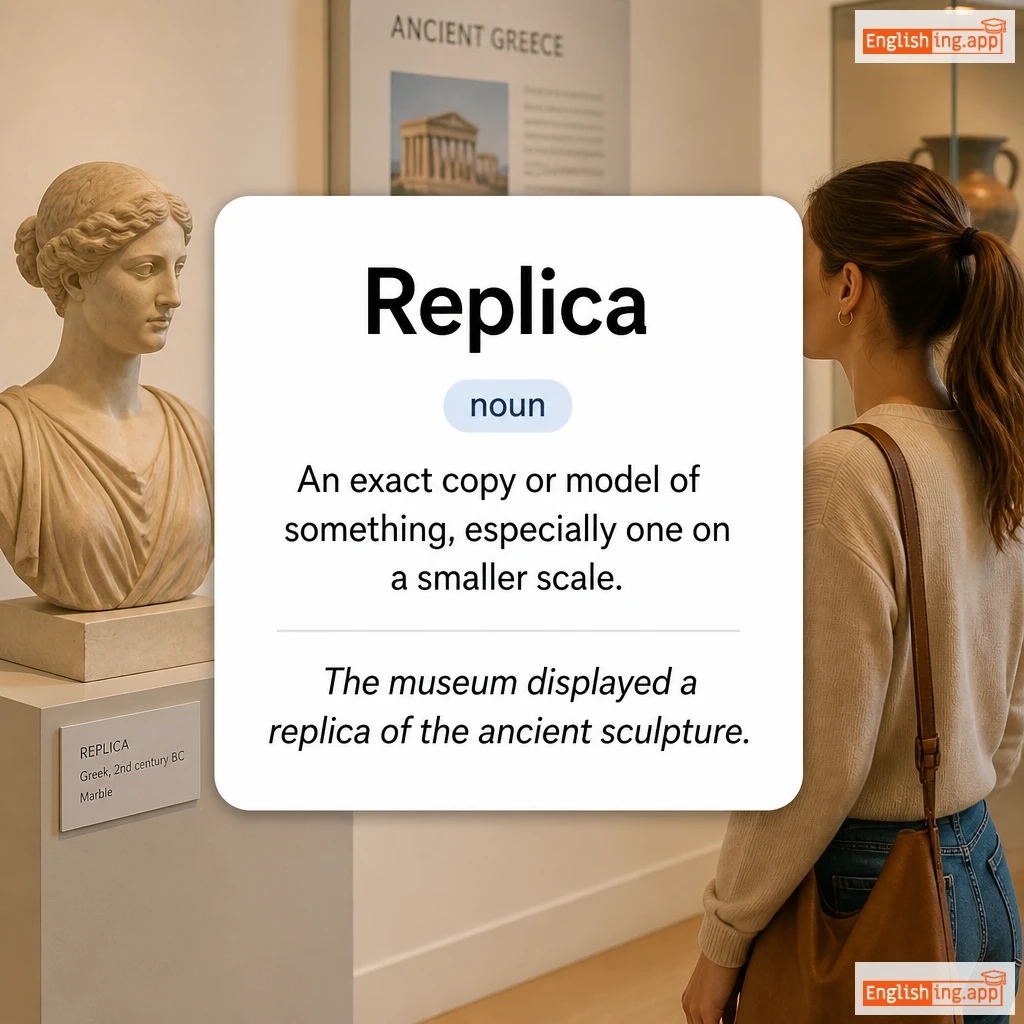
Replica definition card — visual illustration of the meaning
noun C1
/ˈrɛplɪkə/
réplica (replika)

An exact copy or model of something, especially one on a smaller scale.

"The museum displayed a replica of the ancient sculpture."

"El museo mostró una réplica de la antigua escultura." (El museo mostró una réplica de la antigua escultura.)
verb C1
/ˈrɛplɪkeɪt/
replicar (replicar)

to copy, reproduce, or duplicate something exactly

"The scientist tried to replicate the experiment for accuracy."

"El científico intentó replicar el experimento para mayor precisión." (El cientifico intento replicar el experimento para mayor precision.)
noun C1
/rɪˈpɔːrtɪʒ/
reportaje (reportaje)

the act of reporting news or describing events in the media

"The magazine is known for its detailed reportage of political issues."

"La revista es conocida por su detallado reportaje de temas políticos." (La revista es conocida por su detallado reportaje de temas políticos.)
noun/verb C1
/rɪˈpoʊz/
reposo (reposo)

a state of rest, sleep, or tranquility; to rest or lie in a peaceful position

"After the long journey, she sought repose in the quiet garden."

"Después del largo viaje, ella buscó reposo en el jardín tranquilo." (Despuéz del largo viaje, ella busco reposo en el jardin tranquilo.)
noun C1
/rɪˈpɑːzɪtɔːri/
repositorio (repositorio)

a place where things are stored or kept for safekeeping

"The library serves as a repository of knowledge."

"La biblioteca sirve como un repositorio de conocimiento." (La biblioteca sirve como un repositorio de conocimiento.)
adjective C1
/ˌrɛprɪˈhɛnsəbl̩/
reprensible (reprensible)

Deserving strong criticism or blame.

"His dishonest actions were truly reprehensible."

"Sus acciones deshonestas fueron realmente reprensibles." (Sus acciones deshonestas fueron realmente reprensibles.)
adjective C1
/ˌrɛprɪzɛnˈteɪʃənl̩/
representacional (representacional)

Relating to or depicting something in a realistic or symbolic way.

"The artist preferred a representational style of painting."

"El artista prefería un estilo representacional de pintura." (El artista prefería un estilo representacional de pintura.)
verb C1
/rɪˈprɛs/
reprimir (reprimir)

To restrain, suppress, or keep under control, especially emotions or desires.

"He tried to repress his anger during the meeting."

"Él intentó reprimir su ira durante la reunión." (El intentó reprimir su ira durante la reunión.)
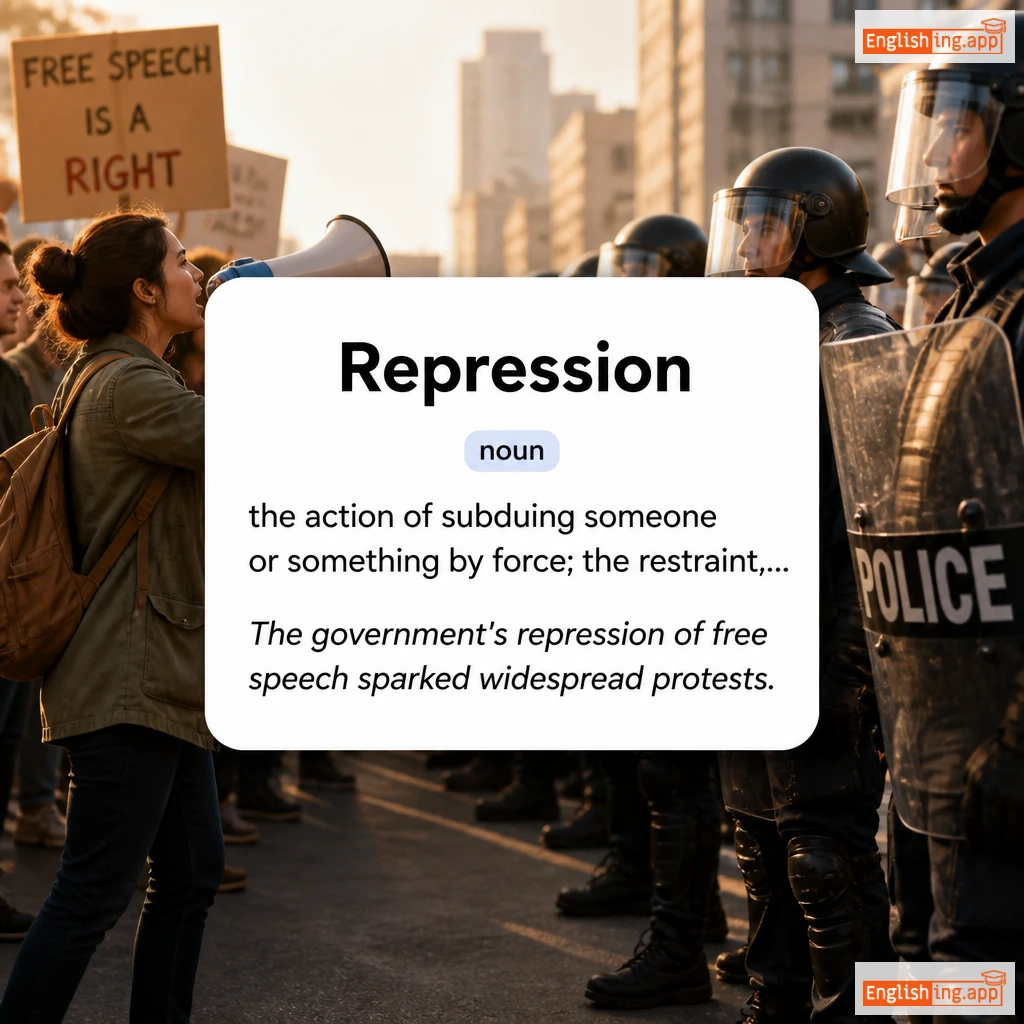
Repression definition card — visual illustration of the meaning
noun C1
/rɪˈpreʃən/
represión (represion)

the action of subduing someone or something by force; the restraint, prevention, or inhibition of a feeling, impulse, etc.

"The government's repression of free speech sparked widespread protests."

"La represión del gobierno contra la libertad de expresión provocó protestas generalizadas." (La represion del gobierno contra la libertad de expresion provoco protestas generalizadas.)
adjective C1
/rɪˈpres.ɪv/
represivo (represivo)

restraining freedom or preventing self-expression; oppressive

"The repressive government banned all forms of protest."

"El gobierno represivo prohibió todas las formas de protesta." (El gobierno represivo prohibió todas las formas de protesta.)
noun/verb C1
/rɪˈpriːv/
retraso temporal / perdón de castigo (retraso temporal / perdon de castigo)

A temporary relief or delay from something unpleasant; to postpone or cancel punishment.

"The prisoner was granted a last-minute reprieve from execution."

"El prisionero recibió un perdón de último minuto de la ejecución." (El prisionero recibio un perdon de ultimo minuto de la ejecucion.)
noun/verb C1
/ˈrɛprɪˌmænd/
reprensión (reprehsion)

A formal expression of disapproval; to scold or criticize someone officially.

"The teacher reprimanded the student for being late."

"El maestro reprendió al estudiante por llegar tarde." (El maestro reprendió al estudiante por llegar tarde.)
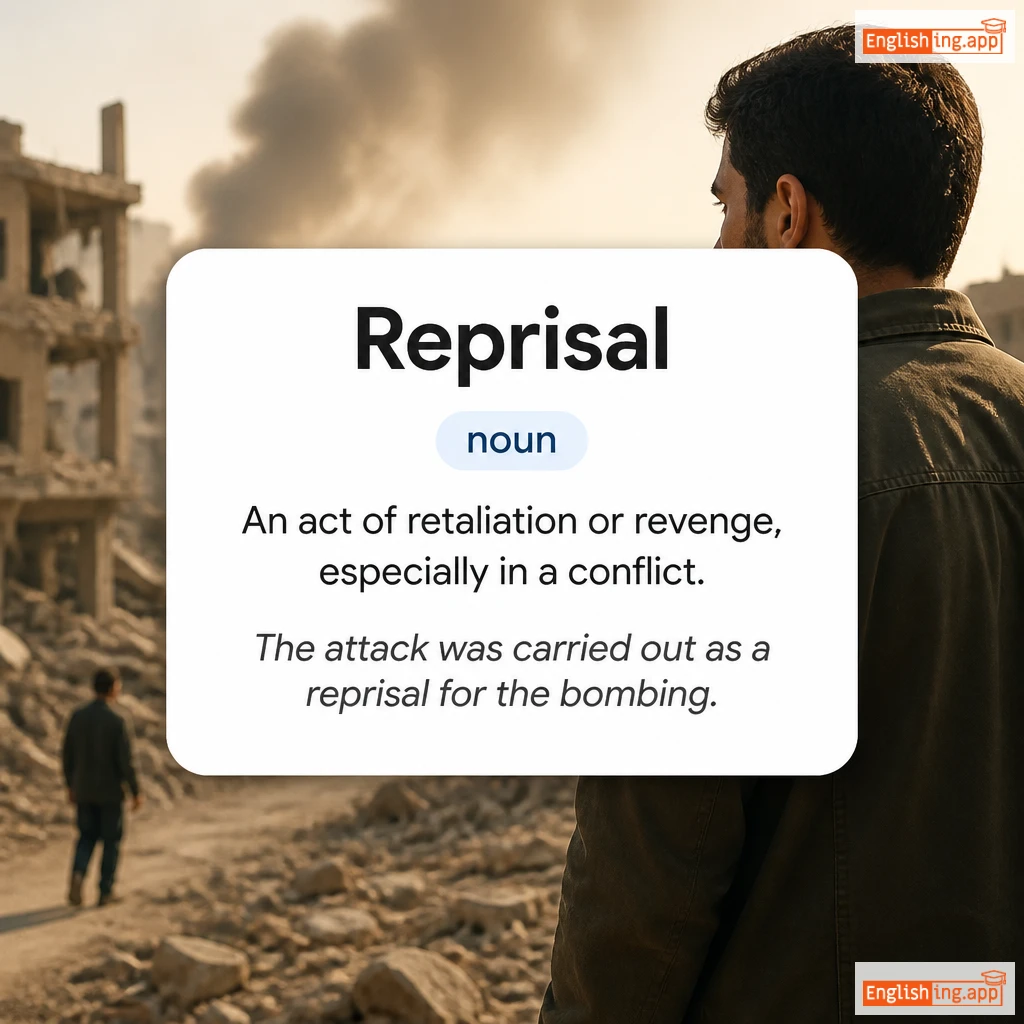
Reprisal definition card — visual illustration of the meaning
noun C1
/rɪˈpraɪzəl/
represalia (represalia)

An act of retaliation or revenge, especially in a conflict.

"The attack was carried out as a reprisal for the bombing."

"El ataque se llevó a cabo como represalia por el bombardeo." (El ataque se llevó a cabo como represalia por el bombardeo.)
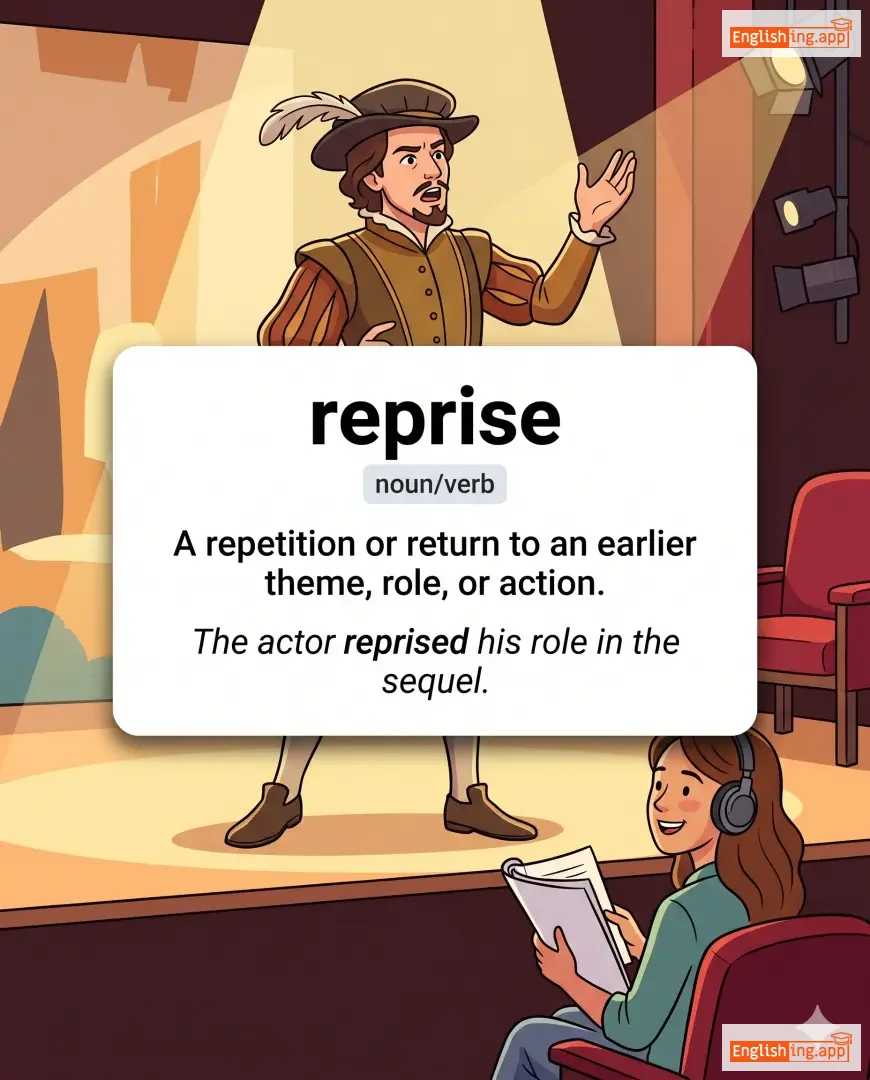
reprise definition card — visual illustration of the meaning
noun/verb C1
/rɪˈpriːz/
repetición (repeticion)

A repetition or return to an earlier theme, role, or action.

"The actor reprised his role in the sequel."

"El actor repitió su papel en la secuela." (El actor repitio su papel en la secuela.)
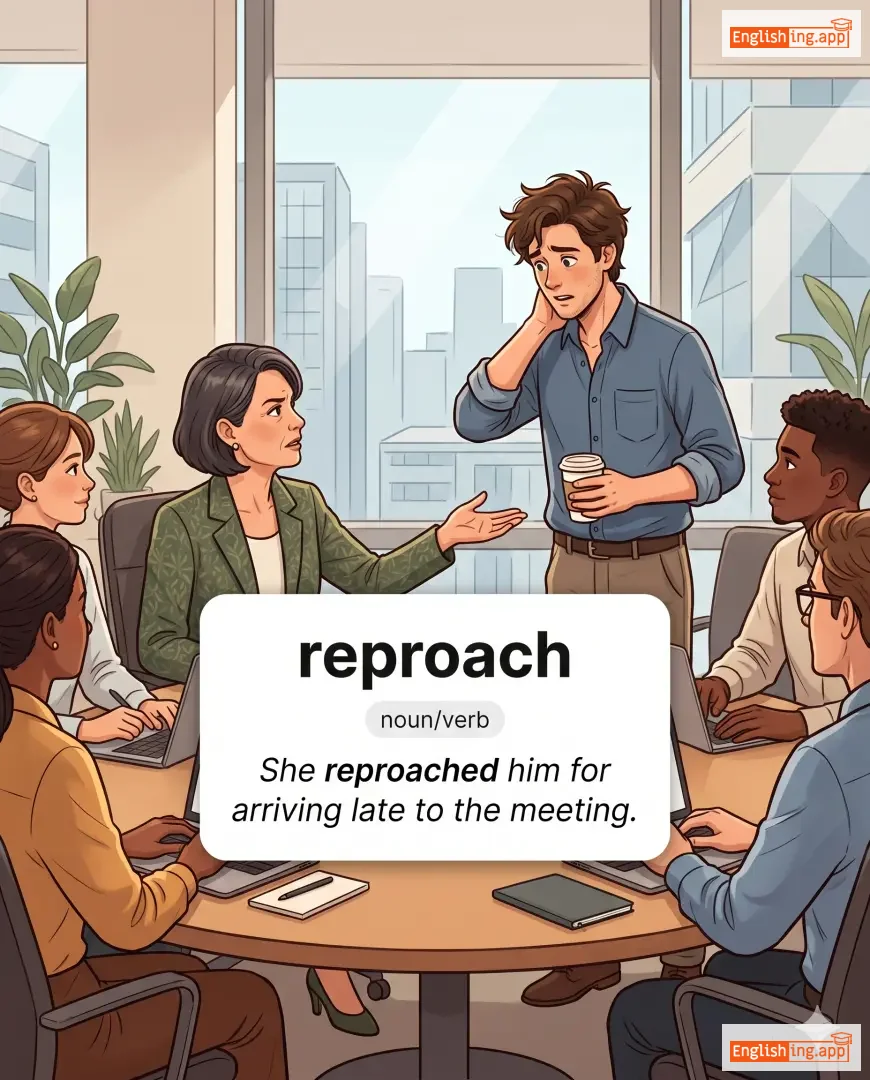
reproach definition card — visual illustration of the meaning
noun/verb C1
/rɪˈproʊtʃ/
reproche / crítica (reproche / critica)

An expression of disapproval or disappointment; to criticize someone for doing wrong.

"She reproached him for arriving late to the meeting."

"Ella le reprochó por llegar tarde a la reunión." (Ella le reprochó por llegar tarde a la reunión.)
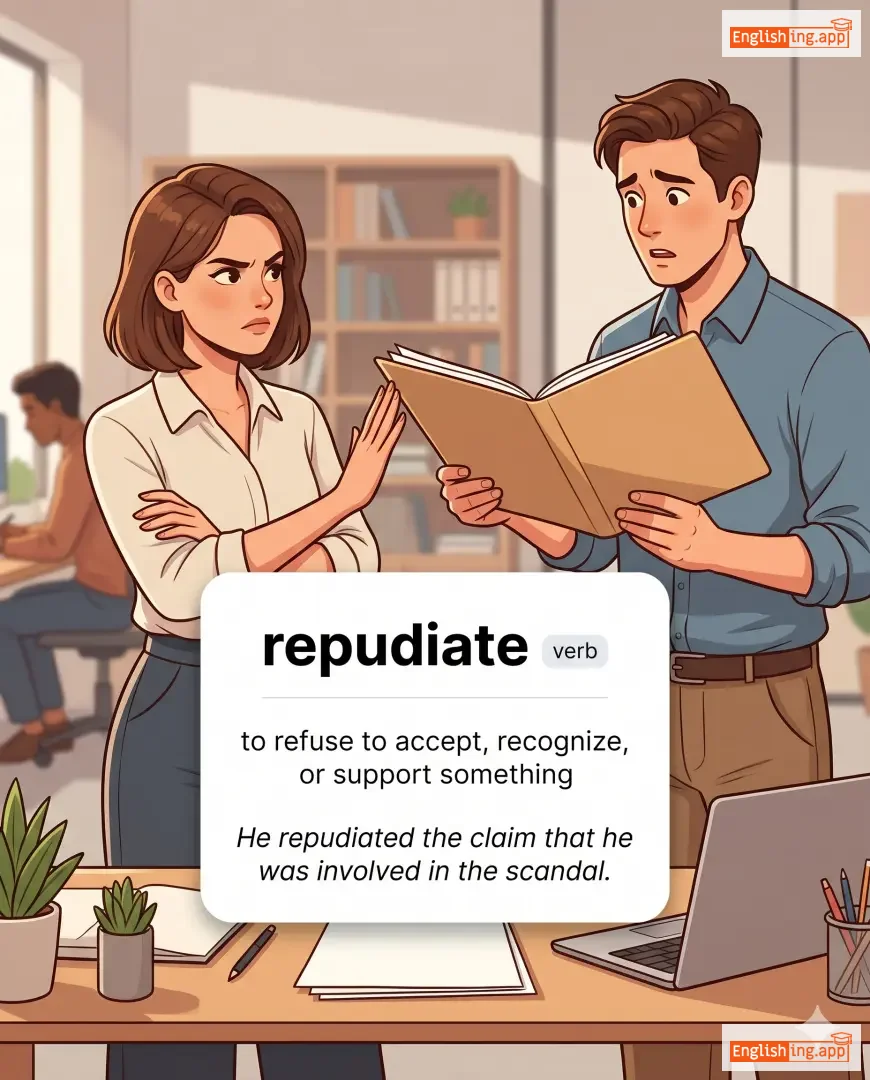
repudiate definition card — visual illustration of the meaning
verb C1
/rɪˈpjuː.di.eɪt/
repudiar (repudiar)

to refuse to accept, recognize, or support something

"He repudiated the claim that he was involved in the scandal."

"Él repudió la afirmación de que estuvo involucrado en el escándalo." (Él repudió la afirmación de que estuvo involucrado en el escándalo.)
adjective C1
/rɪˈpʌɡ.nənt/
repugnante (repugnante)

causing strong dislike, disgust, or opposition

"The idea of cheating was repugnant to him."

"La idea de hacer trampa le parecía repugnante." (La idea de hacer trampa le parecía repugnante.)
verb C1
/rɪˈpʌls/
repeler / provocar desagrado (repeler / provocar desagrado)

to drive back an attack or attacker by force; to cause intense dislike or disgust

"The army managed to repulse the enemy attack."

"El ejército logró repeler el ataque enemigo." (El ejército logró repeler el ataque enemigo.)
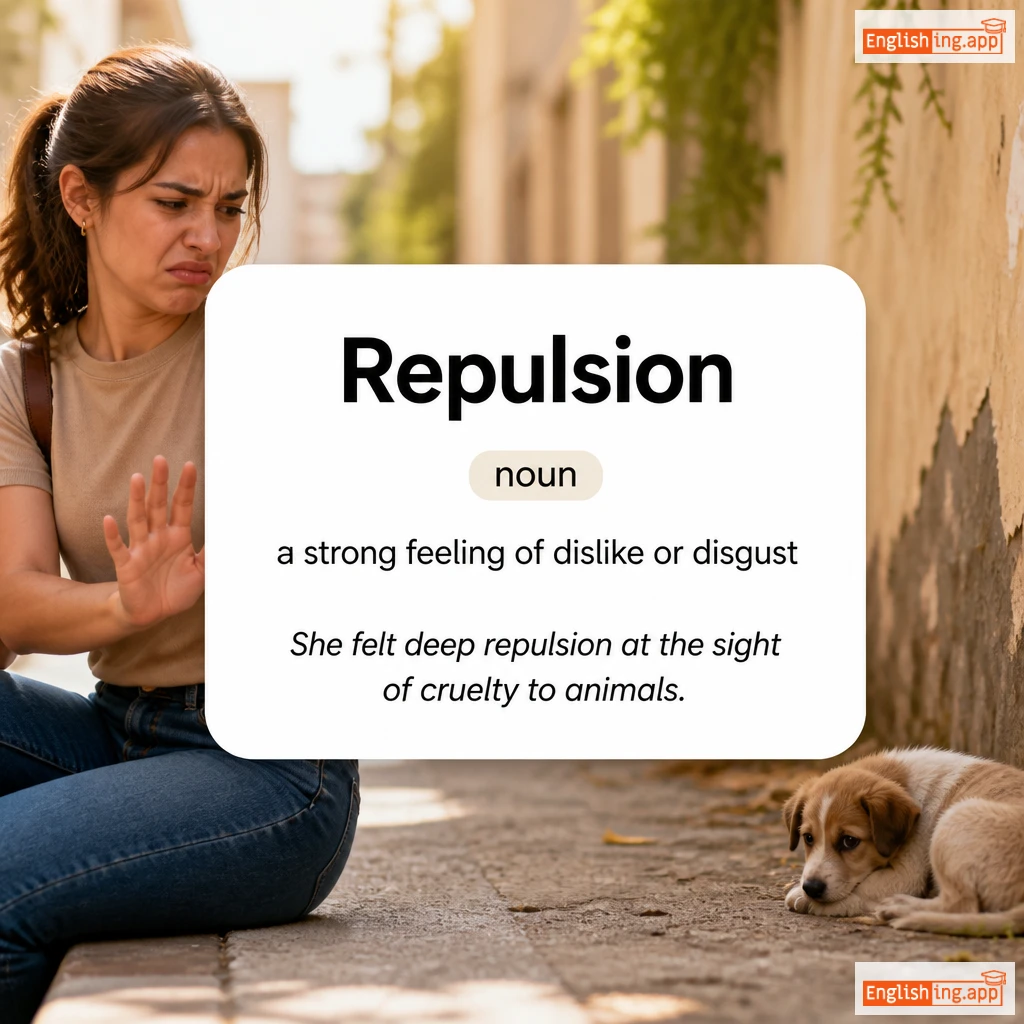
Repulsion definition card — visual illustration of the meaning
noun C1
/rɪˈpʌlʃən/

a strong feeling of dislike or disgust

"She felt deep repulsion at the sight of cruelty to animals."

adjective C1
/rɪˈpʌlsɪv/
repulsivo (repulsivo)

arousing intense distaste or disgust

"The garbage gave off a repulsive smell."

"La basura dio un olor repulsivo." (La basura dio un olor repulsivo.)
adjective C1
/ˈrɛpjətəbəl/
respetable (respetable)

having a good reputation; respected

"They chose a reputable company to handle their finances."

"Eligieron una empresa de buena reputación para manejar sus finanzas." (Eligieron una empresa de buena reputación para manejar sus finanzas.)
noun C1
/rɪˈpjuːt/
reputación (reputacion)

the opinion generally held of someone or something; reputation

"He is a scholar of great repute in his field."

"Él es un académico de gran reputación en su campo." (El es un academico de gran reputacion en su campo.)
adjective C1
/rɪˈpjuːtɪd/
reputado (reputado)

Generally considered or believed to be something, often based on reputation rather than certainty.

"He is a reputed expert in financial management."

"Él es un experto reputado en gestión financiera." (Él es un experto reputado en gestión financiera.)
adjective C1
/ˈrɛkwɪzɪt/
requisito (requisito)

Made necessary by particular circumstances or regulations; required.

"A passport is a requisite document for international travel."

"Un pasaporte es un requisito para viajar internacionalmente." (Un pasaporte es un requisito para viajar internacionalmente.)
noun C1
/ˌrɛkwɪˈzɪʃən/
requisición (requisicion)

An official order laying claim to the use of property or materials; a formal demand or request.

"The manager submitted a requisition for new office supplies."

"El gerente presentó una requisición para nuevos suministros de oficina." (El gerente presentó una requisición para nuevos suministros de oficina.)
verb C1
/ˌriːˈsiːt/
reubicar (reubicar)

to seat someone again or to fit something back into its place

"The usher had to reseat the guests after the interruption."

"El acomodador tuvo que reubicar a los invitados después de la interrupción." (El acomodador tuvo que reubicar a los invitados después de la interrupción.)
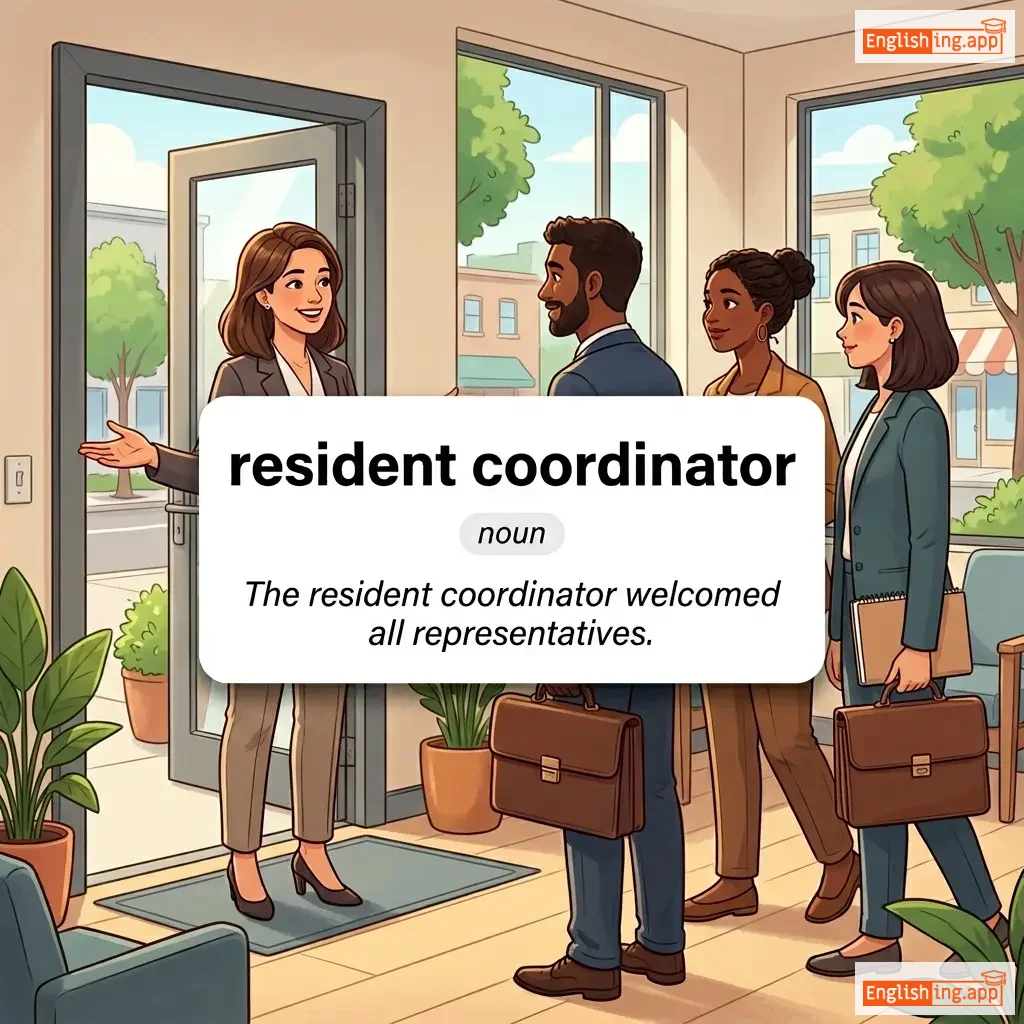
resident coordinator definition card — visual illustration of the meaning
noun C1
/ˈrez.ɪ.dənt ˈkəʊ.ɔː.dɪ.neɪ.tər/
coordinador residente (coordinador residente)

A local administrator or official who coordinates activities in a specific region.

"The resident coordinator welcomed all representatives."

"El coordinador residente dio la bienvenida a todos los representantes." (El coordinador residente dio la bienvenida a todos los representantes.)
adjective C1
/rɪˈzɪdjuəl/
residual (residual)

Remaining after the greater part has gone.

"The patient experienced residual pain after the surgery."

"El paciente experimentó dolor residual después de la cirugía." (El paciente experimento dolor residual despues de la cirugia.)
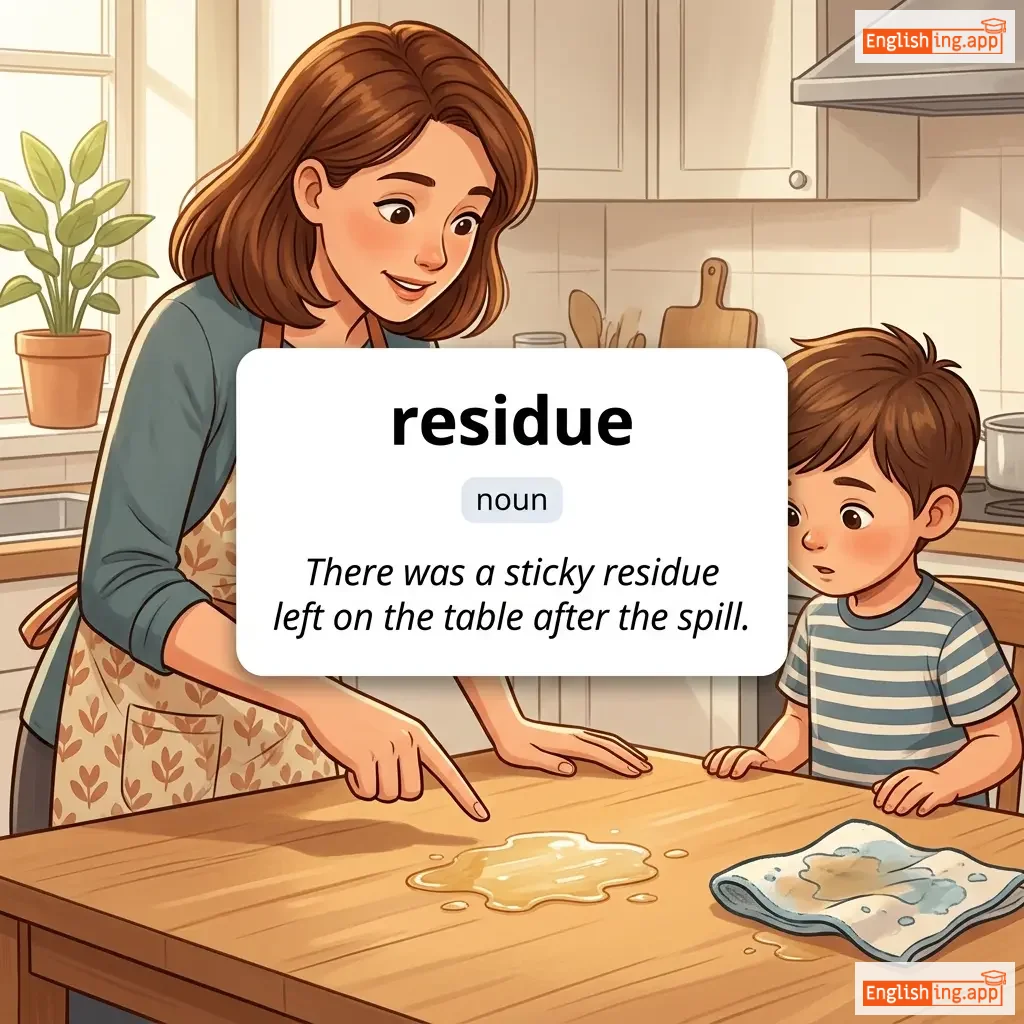
residue definition card — visual illustration of the meaning
noun C1
/ˈrɛzɪdjuː/
residuo (residuo)

A small amount of something that remains after the main part has been removed or used.

"There was a sticky residue left on the table after the spill."

"Quedó un residuo pegajoso sobre la mesa después del derrame." (Quedo un residuo pegajoso sobre la mesa despues del derrame.)
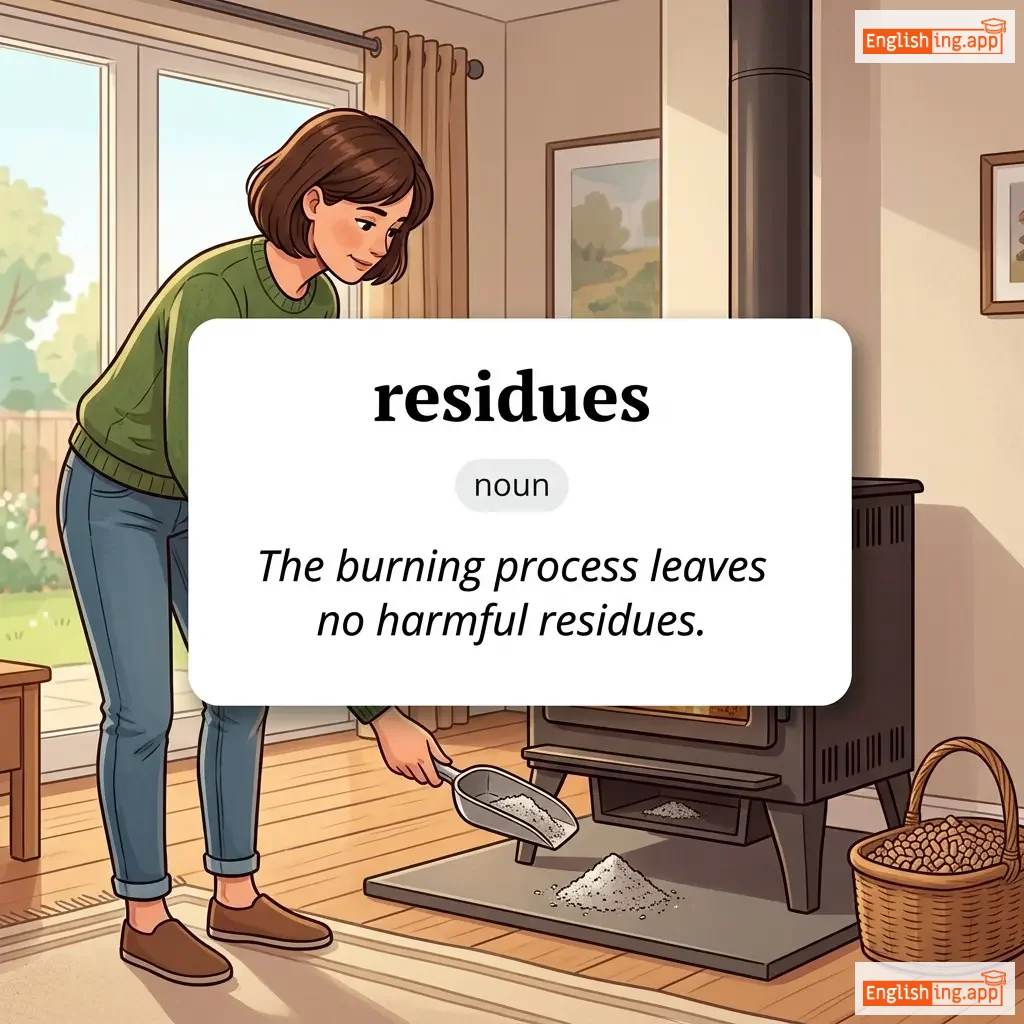
residues definition card — visual illustration of the meaning
noun C1
ˈrez.ɪ.djuːz
restos (restos)

A small amount of something that remains after the main part has gone or been taken or used.

"The burning process leaves no harmful residues."

"El proceso de combustión no deja residuos dañinos." (El proceso de combustion no deja residuos daninos.)
noun C1
/ˈrɛzɪn/
resina (resina)

a sticky organic substance, usually secreted by plants, often used in varnishes or plastics

"The craftsman used natural resin to make the sculpture shine."

"El artesano usó resina natural para hacer que la escultura brillara." (El artesano uso resina natural para hacer que la escultura brillara.)
adjective C1
/rɪˈzɪstɪv/
resistivo (resistivo)

tending to resist or oppose; in physics, relating to electrical resistance

"The material has resistive properties that slow down current flow."

"El material tiene propiedades resistivas que desaceleran el flujo de corriente." (El material tiene propiedades resistivas que desaceleran el flujo de corriente.)