Vokabulare

Englisches Vokabelwörterbuch | Wortbedeutungen, Definitionen & Beispiele

noun C1
/ˈpʌntʃ laɪn/
remate (remate)

The final part of a joke or story that makes it funny.

"Everyone laughed loudly at the punch line of his joke."

"Todos se rieron fuertemente con el remate de su chiste." (Todos se rieron fuertemente con el remate de su chiste.)
noun C1
/ˈpʌndɪt/
experto (experto)

An expert in a particular subject or field who is frequently called upon to give opinions to the public.

"Political pundits debated the election results on television."

"Los pundits políticos debatieron sobre los resultados de las elecciones en la televisión." (Los pundits políticos debatieron sobre los resultados de las elecciones en la televisión.)
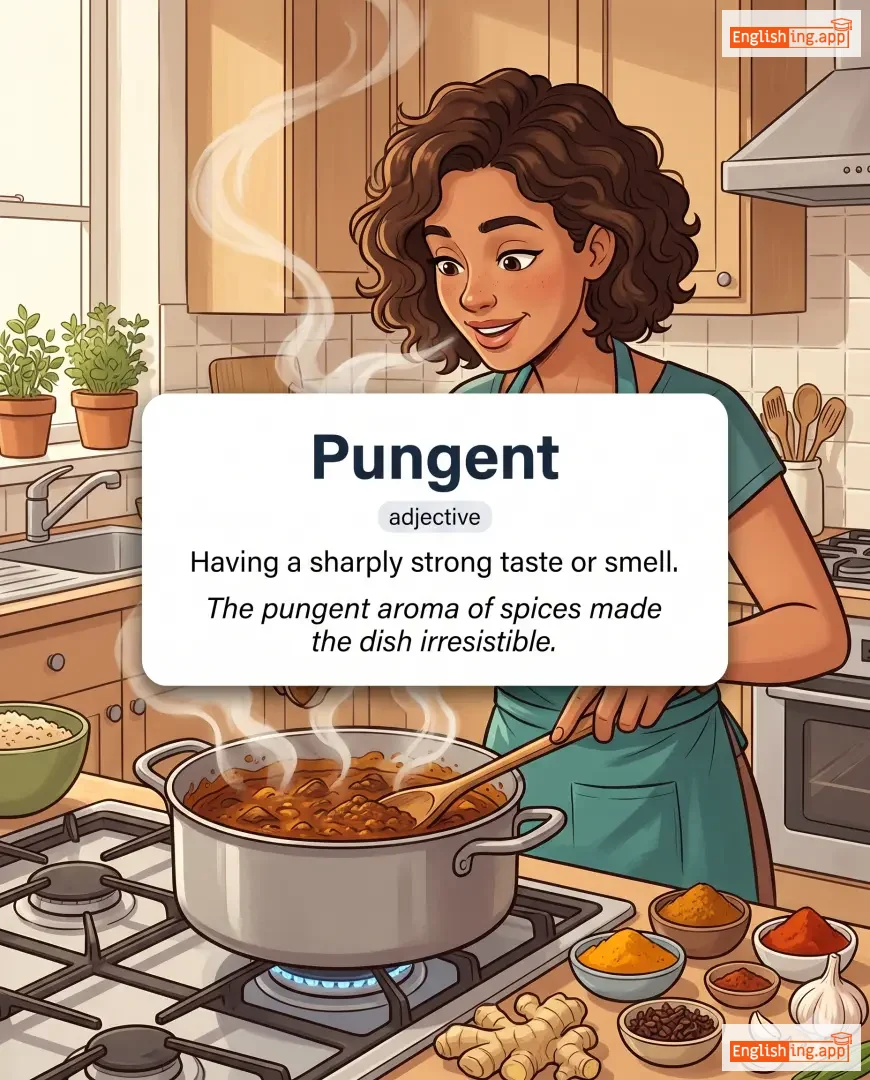
Pungent definition card — visual illustration of the meaning
adjective C1
/ˈpʌndʒənt/
fuerte olor o sabor (fuerte olor o sabor)

Having a sharply strong taste or smell.

"The pungent aroma of spices made the dish irresistible."

"El fuerte aroma de las especias hizo que el plato fuera irresistible." (El fuerte aroma de las especias hizo que el plato fuera irresistible.)
adjective C1
/ˈpjuː.nɪ.tɪv/
punitivo (punitivo)

Inflicting or intended as punishment.

"The company faced punitive measures for violating the law."

"La empresa enfrentó medidas punitivas por violar la ley." (La empresa enfrento medidas punitivas por violar la ley.)
noun C1
/pʌnˈdʒɑː.bi/
punyabi (punyabi)

a traditional long shirt worn in South Asia, typically loose-fitting

"He wore a white punjabi for the festival celebration."

"Él usó un punyabi blanco para la celebración del festival." (El uso un punyabi blanco para la celebración del festival.)
adjective C1
/ˈpjuː.ni/
débiles (debiles)

Small, weak, or insignificant.

"He felt puny compared to his stronger classmates."

"Se sentía débil comparado con sus compañeros de clase más fuertes." (Se sentia debil comparado con sus companeros de clase mas fuertes.)
noun C1
/ˈpɜːrɡəˌtɔːri/
un lugar o estado de sufrimiento habitado por las almas de los pecadores que expían sus pecados antes de ir al cielo (un lugar o estado de sufrimiento habitado por las almas de los pecadores que expían sus pecados antes de ir al cielo)

A place or state of suffering inhabited by the souls of sinners who are expiating their sins before going to heaven; a temporary condition of torment or suffering.

"After the accident, the long recovery felt like a kind of purgatory."

"Después del accidente, la larga recuperación se sintió como una especie de purgatorio." (Después del accidente, la larga recuperación se sintió como una especie de purgatorio.)
verb C1
/pɜːrdʒ/
purificar (purificar)

To remove unwanted feelings, people, or things; to cleanse or purify.

"The new leader promised to purge corruption from the government."

"El nuevo líder prometió purgar la corrupción del gobierno." (El nuevo líder prometió purgar la corrupción del gobierno.)
verb C1
/ˈpɜːrpɔːrt/
pretender (pretender)

to claim or profess something, often falsely

"The document purports to be an official government report."

"El documento pretende ser un informe oficial del gobierno." (El documento pretende ser un informe oficial del gobierno.)
adjective C1
/pərˈpɔːrtɪd/
presunto (presunto)

alleged or claimed to be true, often without proof

"The purported evidence was later proven false."

"La evidencia presunta fue más tarde probada como falsa." (La evidencia presunta fue más tarde probada como falsa.)
noun C1
/pərˈveɪər/
proveedor (proveedor)

a person or business that supplies goods, services, or information

"He is a well-known purveyor of fine wines."

"Es un conocido proveedor de vinos finos." (Es un conocido proveedor de vinos finos)
adjective C1
/ˈpʊʃi/
insistente (insistente)

excessively assertive or aggressive, often annoyingly so

"The salesperson was too pushy, which drove customers away."

"El vendedor era demasiado insistente, lo que alejó a los clientes." (El vendedor era demasiado insistente, lo que alejó a los clientes.)
adjective C1
/ˈpjuːtrɪd/
podrido (podrido)

decayed and emitting a foul smell

"The garbage smelled putrid after days in the sun."

"La basura olía a podrido después de varios días al sol." (La basura olía a podrido después de varios días al sol.)
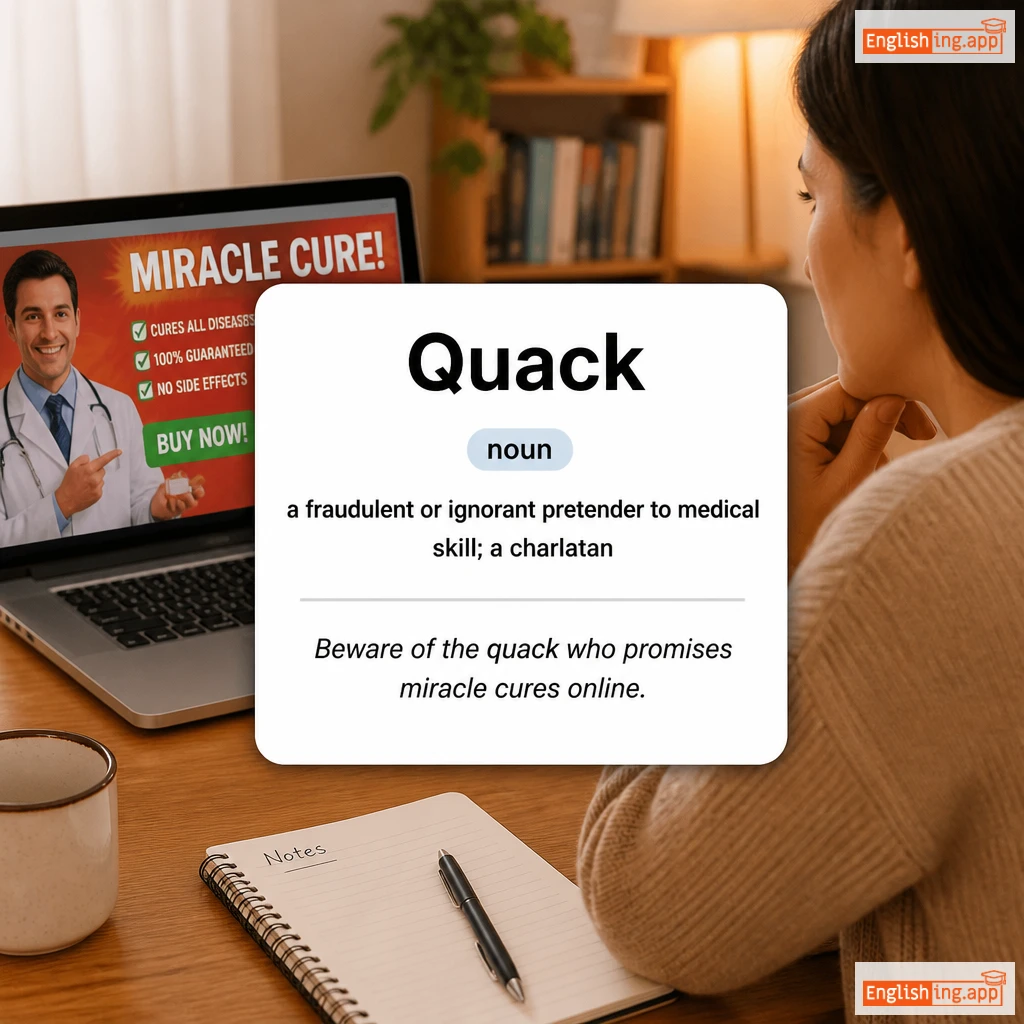
Quack definition card — visual illustration of the meaning
noun C1
/kwæk/
médico falso (medico falso)

a fraudulent or ignorant pretender to medical skill; a charlatan

"Beware of the quack who promises miracle cures online."

"Cuidado con el médico falso que promete curas milagrosas en línea." (Cuidado con el medico falso que promete curas milagrosas en linea)
verb C1
/kwɒˈdruːpəl/
cuadruplicar (cuadruplicar)

to increase or make something four times as much or as many

"Within a year, the startup quadrupled its user base through aggressive partnerships."

"En un año, la startup cuadruplicó su base de usuarios a través de asociaciones agresivas." (En un año, la startup cuadruplicó su base de usuarios a través de asociaciones agresivas.)
noun C1
/ˈkwæɡˌmaɪər/
pantano, embrollo (pantano, embrollo)

a soft, wet area of land that gives way underfoot; a complex or dangerous situation

"The hikers were trapped in a political quagmire."

"Los excursionistas quedaron atrapados en un embrollo político." (Los excursionistas quedaron atrapados en un embrollo politico.)
verb, noun C1
/kweɪl/
atemorizarse; un pájaro pequeño de cola corta (atemorizarse; un pajaro pequeno de cola corta)

verb: to feel or show fear; noun: a small, short-tailed bird

"She quailed at the sight of the approaching storm."

"Ella se acobardó al ver la tormenta que se acercaba." (Ella se acobardo al ver la tormenta que se acercaba.)
adjective C1
/kweɪnt/
antiguo y pintoresco (antiguo y pintoresco)

attractively unusual or old-fashioned

"They stayed in a quaint little cottage by the sea."

"Ellos se alojaron en una cabaña pintoresca junto al mar." (Ellos se alojaron en una cabaña pintoresca junto al mar.)
noun C1
/kwɑːm/
duda (duda)

a feeling of doubt, worry, or fear about something

"She had no qualm about speaking her mind."

"Ella no tuvo duda en decir lo que pensaba." (Ella no tuvo duda en decir lo que pensaba.)
noun (plural) C1
/kwɑːmz/
dudas (dudas)

feelings of doubt, worry, or uneasiness

"He had serious qualms about accepting the offer."

"Él tenía serias dudas sobre aceptar la oferta." (El tenía serias dudas sobre aceptar la oferta.)
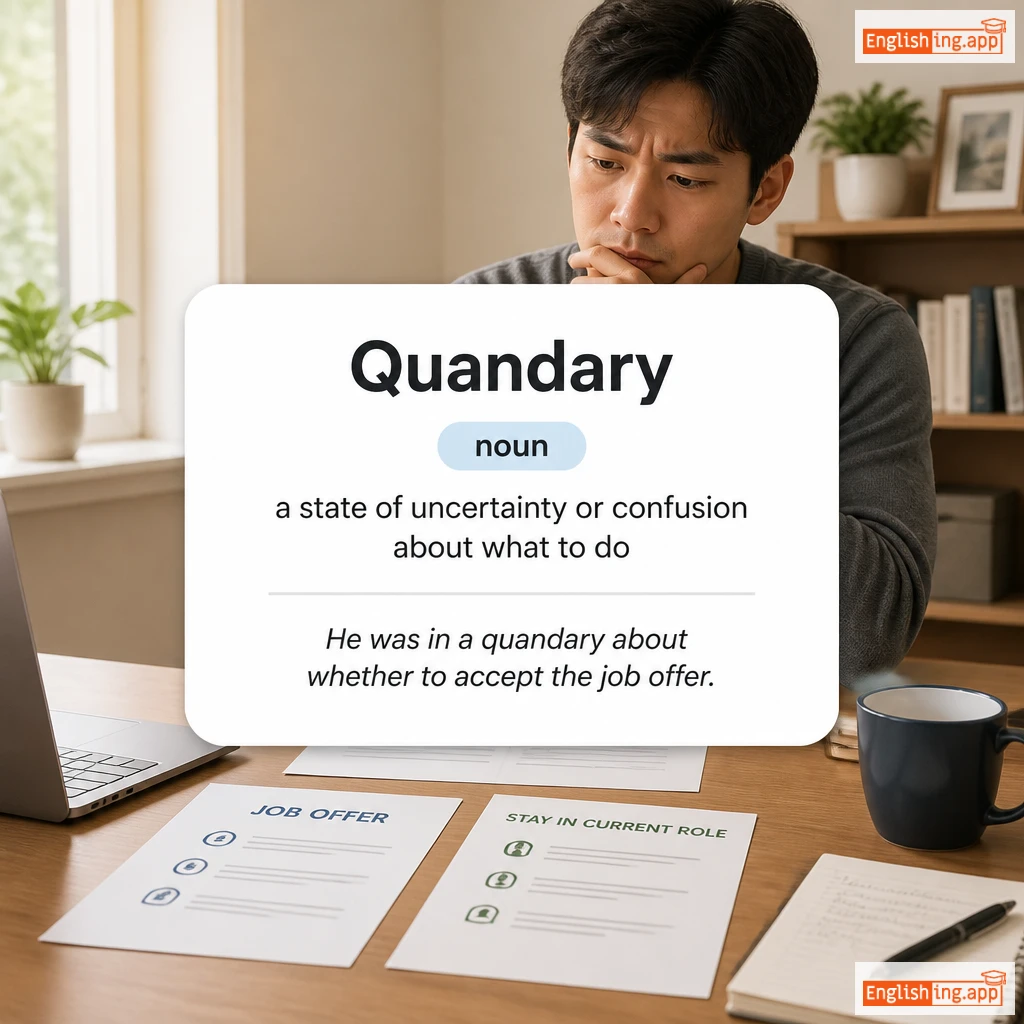
Quandary definition card — visual illustration of the meaning
noun C1
/ˈkwɒndəri/

a state of uncertainty or confusion about what to do

"He was in a quandary about whether to accept the job offer."

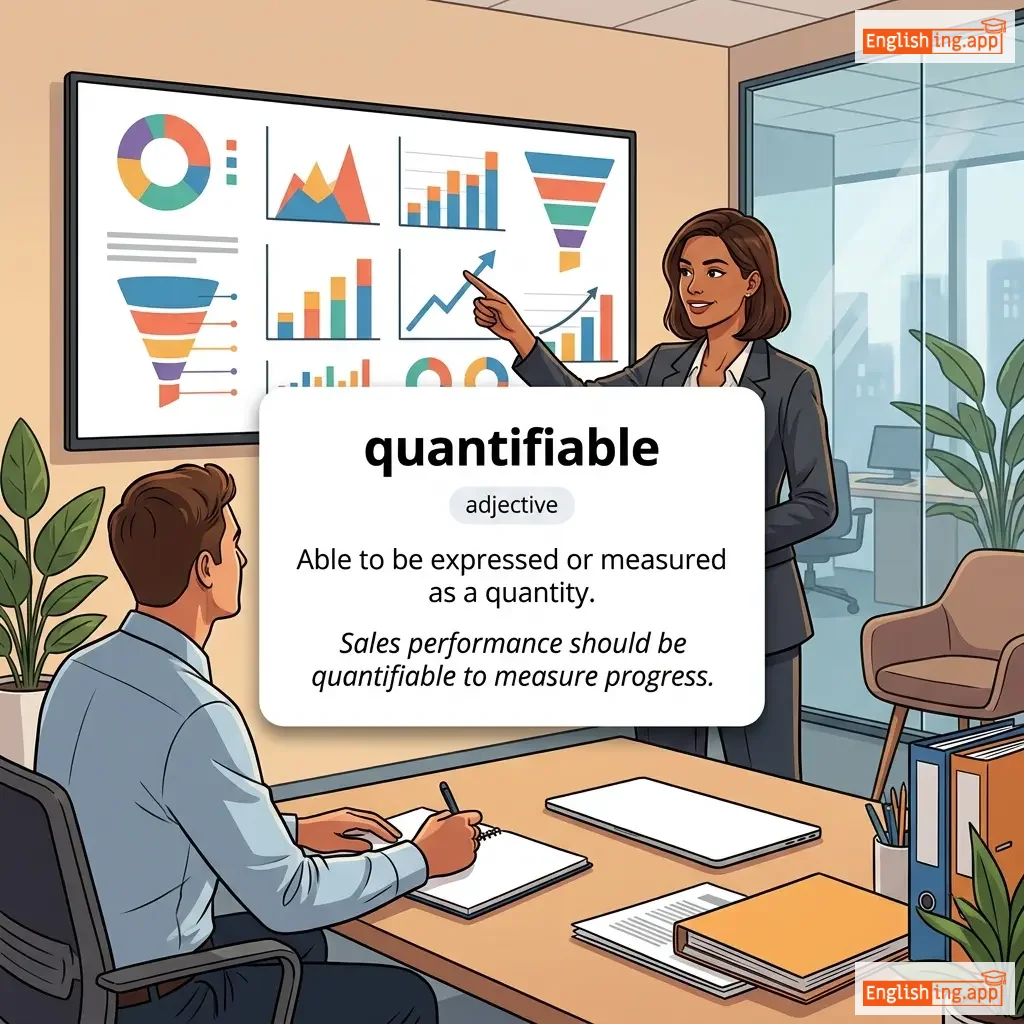
quantifiable definition card — visual illustration of the meaning
adjective C1
ˈkwɒn.tɪ.faɪ.ə.bəl
cuantificable (kwon ti fai bul)

Able to be expressed or measured as a quantity.

"Sales performance should be quantifiable to measure progress."

"El rendimiento de las ventas deberia ser cuantificable para medir el progreso." (El rendimiento de las ventas deveria ser cuantificable para medir el progreso.)
adjective C1
/ˈkwɒr.əl.səm/
pendenciero (pendenciero)

Inclined to argue or fight.

"He became quarrelsome after losing the game."

"Se volvió pendenciero después de perder el juego." (Se volvió pendenciero después de perder el juego.)
noun/verb C1
/ˈkwɒr.i/
cantera / presa (cantera / presa)

A place where stone or minerals are extracted; also means prey when hunted.

"The workers quarried limestone from the hill."

"Los trabajadores extrajeron piedra caliza de la colina." (Los trabajadores extrajeron piedra caliza de la colina.)
noun C1
/kwɔːrˈtɛt/
cuarteto (cuarteto)

A group of four people playing music or singing together.

"The string quartet performed beautifully at the concert."

"El cuarteto de cuerdas actuó maravillosamente en el concierto." (El cuarteto de cuerdas actuó maravillosamente en el concierto.)
verb C1
/kwɑːʃ/
anular (anular)

To reject or void something legally or to put an end to something forcefully.

"The court quashed the decision due to lack of evidence."

"El tribunal anuló la decisión debido a la falta de pruebas." (El tribunal anuló la decisión debido a la falta de pruebas.)
noun C1
/kiː/
muelle (muelle)

A platform lying alongside or projecting into water for loading and unloading ships.

"The cargo was unloaded at the quay."

"La carga fue descargada en el muelle." (La carga fue descargada en el muelle.)
adjective C1
/ˈkwiːzi/
mareado (mareado)

Feeling sick to one's stomach; nauseated.

"She felt queasy after the long boat ride."

"Ella se sintió mal después del largo paseo en bote." (Ella se sintió mal después del largo paseo en bote.)
adjective C1
/kwɪər/
extraño (extrano)

Strange, odd, or unusual.

"He had a queer feeling that something was wrong."

"Él tenía una sensación extraña de que algo estaba mal." (Él tenía una sensación extraña de que algo estaba mal.)
verb C1
/kwɛl/
sofocar (sofocar)

To suppress or put an end to something, usually by force.

"The police were called to quell the violent protest."

"La policía fue llamada para sofocar la protesta violenta." (La policía fue llamada para sofocar la protesta violenta.)
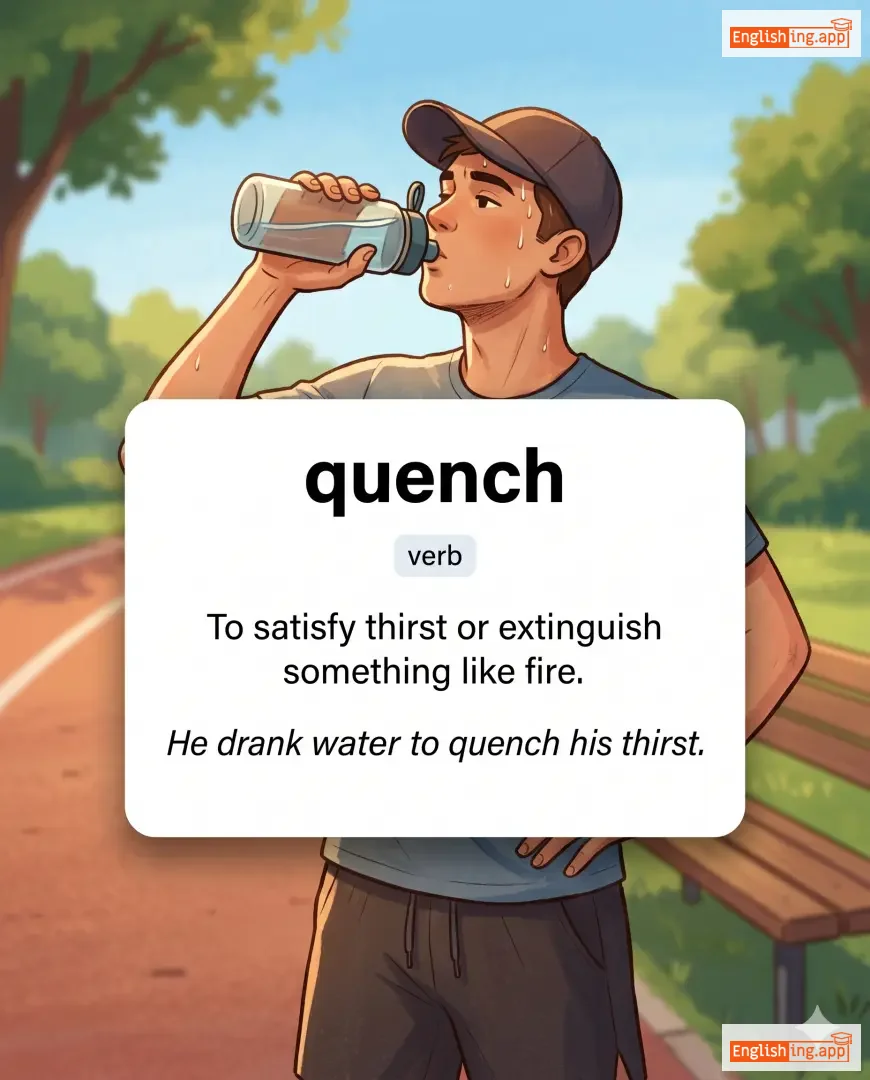
quench definition card — visual illustration of the meaning
verb C1
/kwɛntʃ/
saciar (saciar)

To satisfy thirst or extinguish something like fire.

"He drank water to quench his thirst."

"Él bebió agua para saciar su sed." (Él bebió agua para saciar su sed.)
verb C1
/ˈkwentʃɪŋ/
saciar / apagar (saciar / apagar)

The act of satisfying thirst or extinguishing something like fire.

"Drinking cold water was quenching her thirst."

"Beber agua fría estaba saciando su sed." (Beber agua fría estaba saciando su sed.)
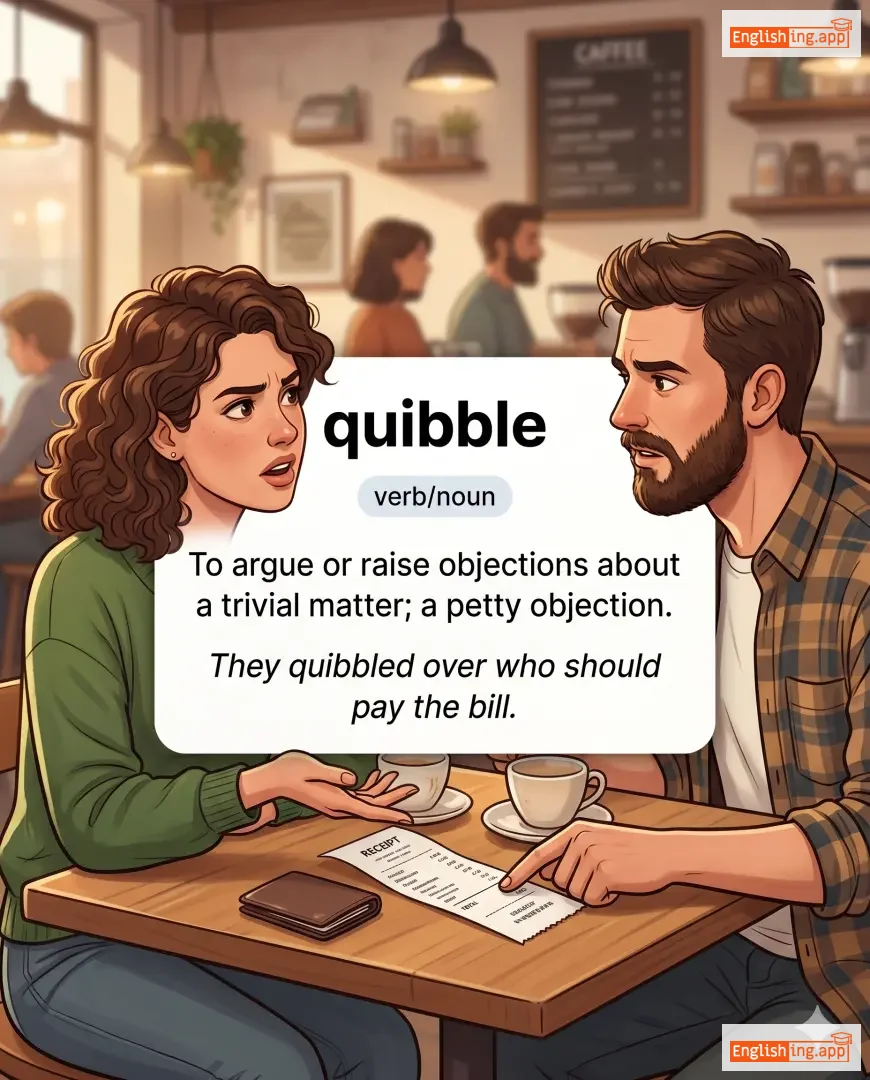
quibble definition card — visual illustration of the meaning
verb/noun C1
/ˈkwɪbəl/
discutir sobre algo trivial (discutir sobre algo trivial)

To argue or raise objections about a trivial matter; a petty objection.

"They quibbled over who should pay the bill."

"Ellos discutieron sobre quién debía pagar la cuenta." (Ellos discutieron sobre quién debía pagar la cuenta.)
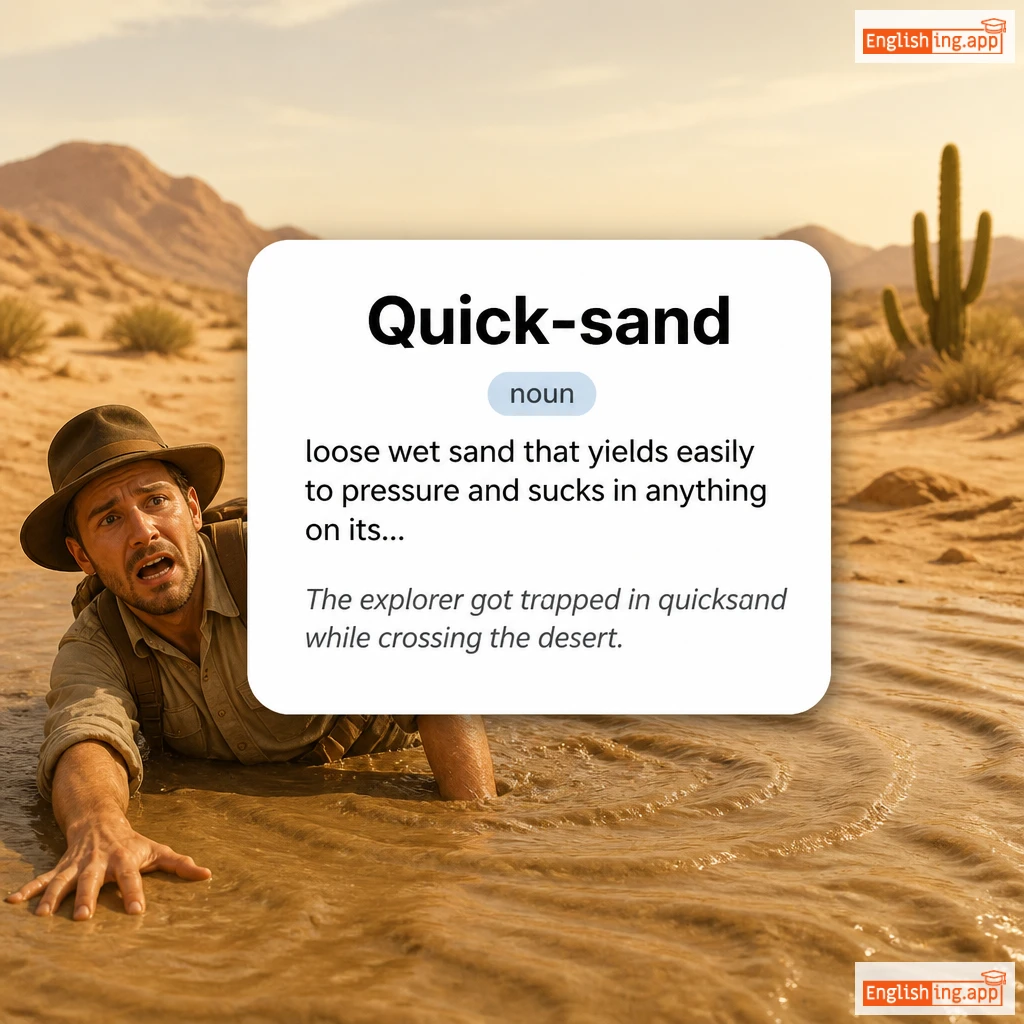
Quick-sand definition card — visual illustration of the meaning
noun C1
/ˈkwɪk.sænd/
arena movediza (arena movediza)

loose wet sand that yields easily to pressure and sucks in anything on its surface

"The explorer got trapped in quicksand while crossing the desert."

"El explorador quedó atrapado en la arena movediza mientras cruzaba el desierto." (El explorador quedo atrapado en la arena movediza mientras cruzaba el desierto)
verb C1
/ˈkwɪkən/
acelerar (acelerar)

to make or become faster; to accelerate

"His pulse began to quicken as he approached the finish line."

"Su pulso empezó a acelerarse a medida que se acercaba a la meta." (Su pulso empezo a acelerarse a medida que se acercaba a la meta.)
noun C1
/kwɪnˈtɛsəns/
la quintaesencia (la quintesencia)

The purest or most perfect example of something.

"She is the quintessence of elegance."

"Ella es la quintaesencia de la elegancia." (Ella es la quintesencia de la elegancia.)
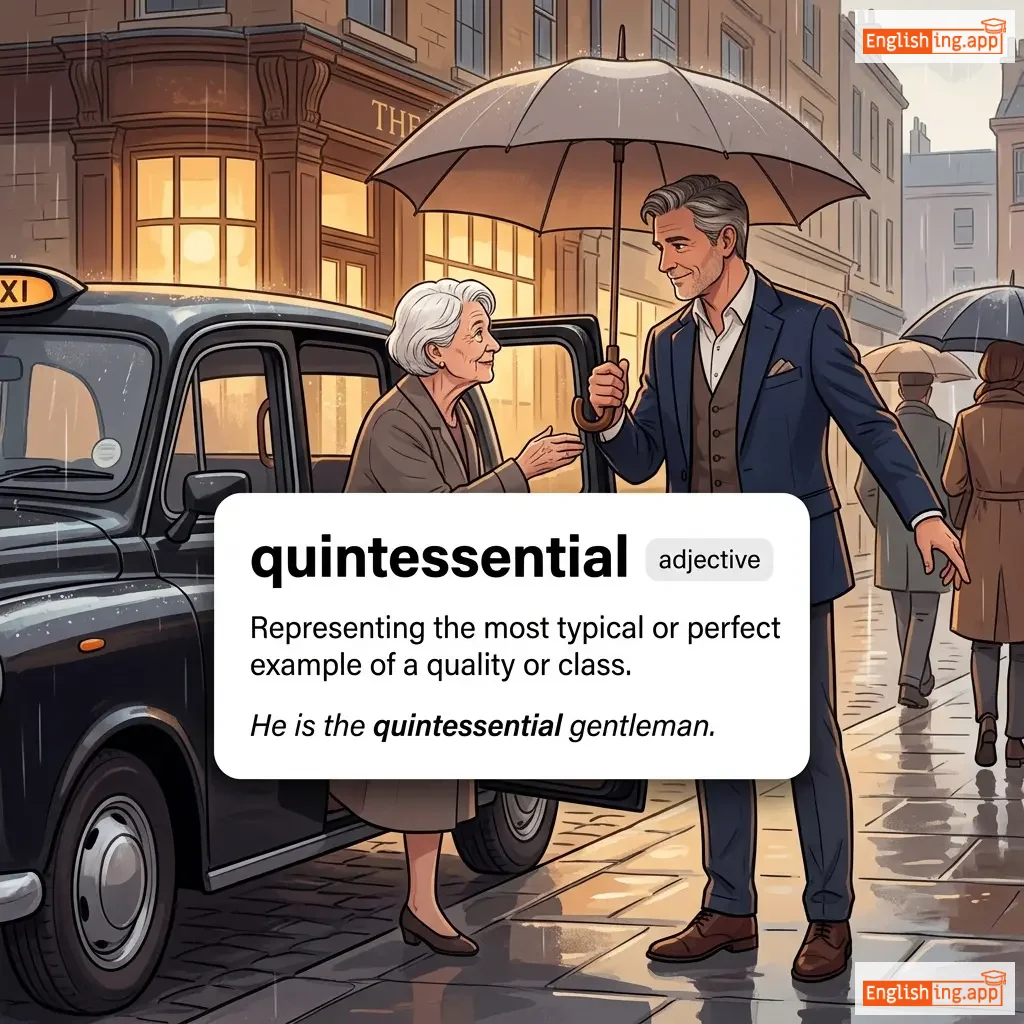
quintessential definition card — visual illustration of the meaning
adjective C1
/ˌkwɪntɪˈsɛnʃəl/
ejemplo perfecto (ejemplo perfecto)

Representing the most typical or perfect example of a quality or class.

"He is the quintessential gentleman."

"Él es el ejemplo perfecto de un caballero." (El es el ejemplo perfecto de un caballero.)
noun C1
/kwɪnˈtɛt/
quinteto (quinteto)

A group of five people or things, especially musicians.

"The jazz quintet performed beautifully."

"El quinteto de jazz tocó maravillosamente." (El quinteto de jazz tocó maravillosamente.)
noun/verb C1
/kwɪp/
comentario ingenioso (comentario ingenioso)

A witty remark; to make a witty or clever comment.

"She quipped about the weather during the meeting."

"Ella hizo un comentario ingenioso sobre el clima durante la reunión." (Ella hizo un comentario ingenioso sobre el clima durante la reunión.)
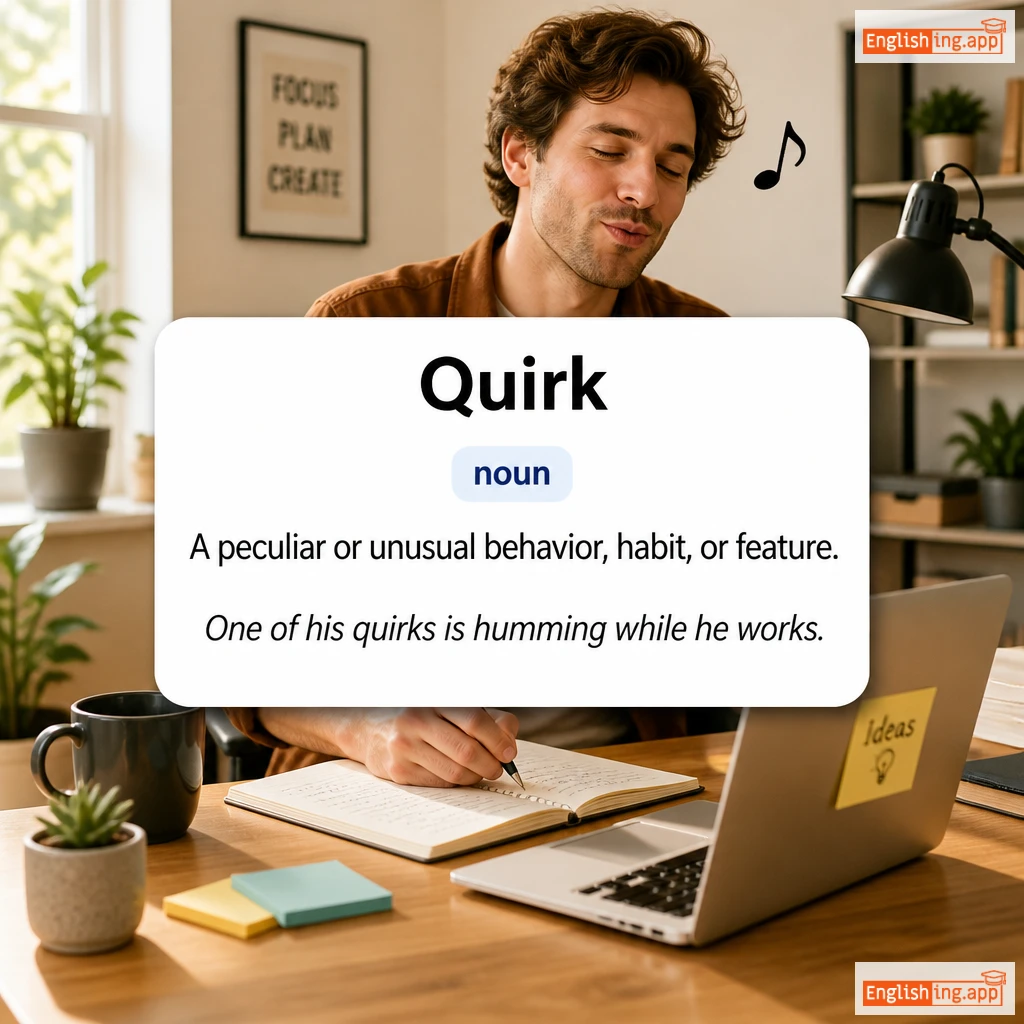
Quirk definition card — visual illustration of the meaning
noun C1
/kwɜːrk/
peculiaridad (peculiaridad)

A peculiar or unusual behavior, habit, or feature.

"One of his quirks is humming while he works."

"Una de sus peculiaridades es tararear mientras trabaja." (Una de sus peculiaridades es tararear mientras trabaja.)
verb C1
/ˈkwɪvər/
temblar (temblar)

To tremble or shake with slight but rapid motion.

"Her lips began to quiver as she tried not to cry."

"Sus labios comenzaron a temblar mientras trataba de no llorar." (Sus labios comenzaron a temblar mientras trataba de no llorar.)
adjective C1
/ˈkwɪzɪkəl/
desconcertado, inquisitivo (desconcertado, inquisitivo)

Expressing mild or amused puzzlement.

"She gave him a quizzical look when he made the strange comment."

"Ella le dio una mirada desconcertada cuando él hizo el comentario extraño." (Ella le dio una mirada desconcertada cuando él hizo el comentario extraño.)
noun C1
/kwoʊ/
estado (estado)

The existing state of affairs or situation, often used in the phrase 'status quo'.

"He wanted to maintain the status quo at work."

"Quería mantener el estado actual en el trabajo." (Quería mantener el estado actual en el trabajo.)
noun C1
/ˈkwɔːrəm/
quórum (quorum)

The minimum number of members needed to conduct official business in a meeting.

"The board meeting was postponed because there was no quorum."

"La reunión de la junta fue pospuesta porque no había quórum." (La reunion de la junta fue pospuesta porque no habia quorum.)
adjective C1
/ˈræb.ɪd/
rabioso (rabioso)

Having extreme or fanatical support for something; relating to or suffering from rabies.

"He was a rabid fan of the football team."

"Era un fan rabioso del equipo de fútbol." (Era un fan rabioso del equipo de futbol.)
noun C1
/ˈreɪ.biːz/
rabia (rabia)

A viral disease that causes inflammation of the brain in humans and other mammals, usually transmitted through animal bites.

"The dog was vaccinated against rabies."

"El perro fue vacunado contra la rabia." (El perro fue vacunado contra la rabia.)
adjective C1
/ˈreɪ.si/
picante (picante)

Lively, entertaining, or slightly shocking (especially in a sexual way).

"The novel was full of racy dialogues."

"La novela estaba llena de diálogos picantes." (La novela estaba llena de diálogos picantes.)
noun C1
/ˈreɪdiəns/
radiancia (radiancia)

the quality of shining with bright light; a glowing or beaming quality

"Her face was filled with radiance after hearing the good news."

"Su rostro se llenó de radiancia después de escuchar las buenas noticias." (Su rostro se llenó de radiancia después de escuchar las buenas noticias.)
adjective C1
/ˈreɪdiənt/
radiante (radiante)

Shining brightly; expressing great happiness.

"She looked radiant in her wedding dress."

"Ella se veía radiante con su vestido de novia." (Ella se veía radiante con su vestido de novia.)
verb C1
/ˈreɪdieɪt/
irradiar (irradiar)

to emit energy or light; to spread out from a center

"The fireplace radiates warmth throughout the room."

"La chimenea irradia calor por toda la habitación." (La chimenea irradia calor por toda la habitacion.)