Vokabulare

Englisches Vokabelwörterbuch | Wortbedeutungen, Definitionen & Beispiele

verb C1
/præns/
marcher avec arrogance (marcher avec arrogance)

To move with high, springy steps, often to show off or attract attention.

"The horse pranced around the field gracefully."

"Le cheval marchait fièrement autour du champ." (Le cheval marchait fièrement autour du champ.)
verb C1
/priːˈɛmpt/
prévenir à l'avance (prevenir a l'avance)

to act in advance to prevent an anticipated event from happening; forestall

"The government moved to pre-empt a crisis by introducing new policies."

"Le gouvernement a agi pour prévenir une crise en introduisant de nouvelles politiques." (Le gouvernement a agi pour prevenir une crise en introduisant de nouvelles politiques.)
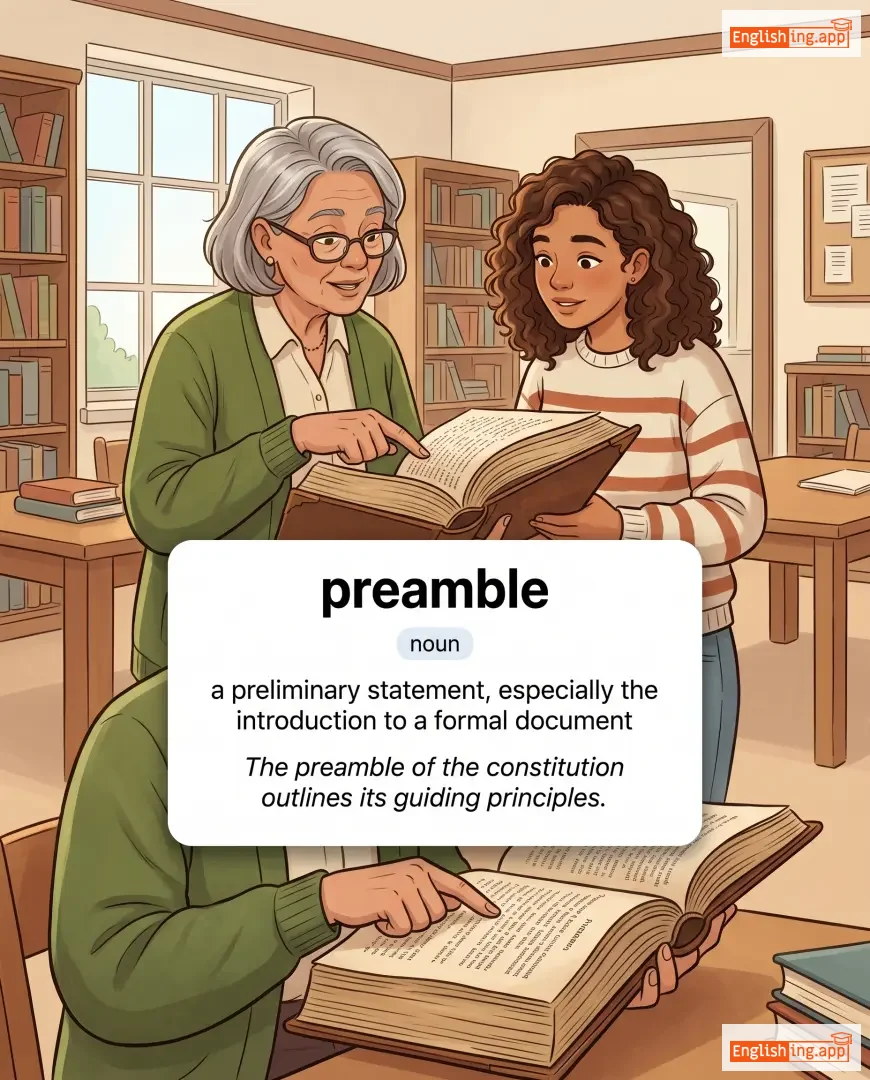
preamble definition card — visual illustration of the meaning
noun C1
/ˈpriːˌæmbəl/
préambule (preambule)

a preliminary statement, especially the introduction to a formal document

"The preamble of the constitution outlines its guiding principles."

"Le préambule de la constitution expose ses principes directeurs." (Le preambule de la constitution expose ses principes directeurs.)
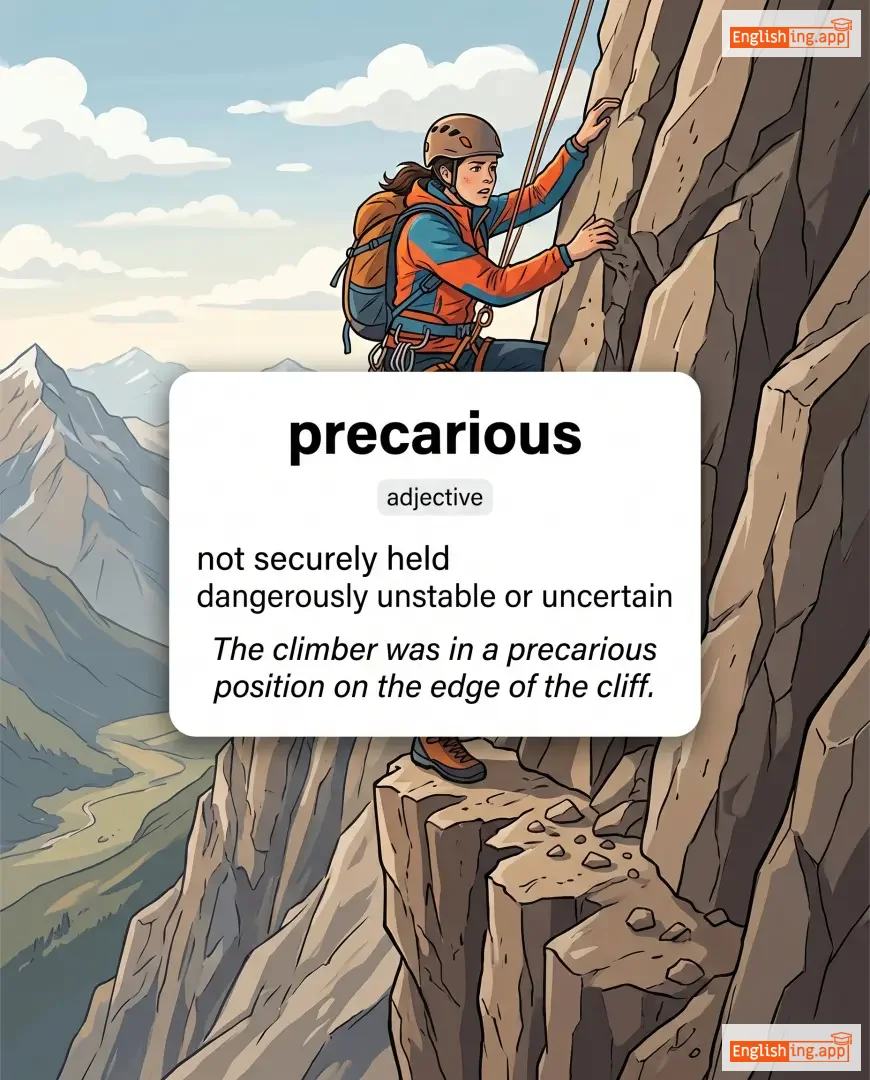
precarious definition card — visual illustration of the meaning
adjective C1
/prɪˈkɛəriəs/
précaire / dangereux (precaire / dangereux)

not securely held; dangerously unstable or uncertain

"The climber was in a precarious position on the edge of the cliff."

"L'escaladeur était dans une position précaire au bord de la falaise." (L'escaladeur était dans une position precaire au bord de la falaise.)
noun C1
/ˈprɛsɪdəns/ or /prɪˈsiːdəns/
prédominance (predominance)

the condition of being considered more important than someone or something else; priority

"Safety takes precedence over speed in this factory."

"La sécurité prime sur la vitesse dans cette usine." (La securite prime sur la vitesse dans cette usine.)
noun C1
/ˈpriːsɪŋkt/
arrondissement (arrondissement)

A district or area within the boundaries of a city, often for police or electoral purposes.

"She went to vote at her local precinct."

"Elle est allée voter dans son arrondissement local." (Elle est allee voter dans son arrondissement local.)
noun C1
/ˈprɛsɪpɪs/
précipice (precipice)

A very steep cliff or a situation of great danger.

"The hikers stood at the edge of the precipice, gazing into the valley below."

"Les randonneurs étaient debout au bord du précipice, regardant la vallée en bas." (Les randonneurs étaient debout au bord du précipice, regardant la vallée en bas.)
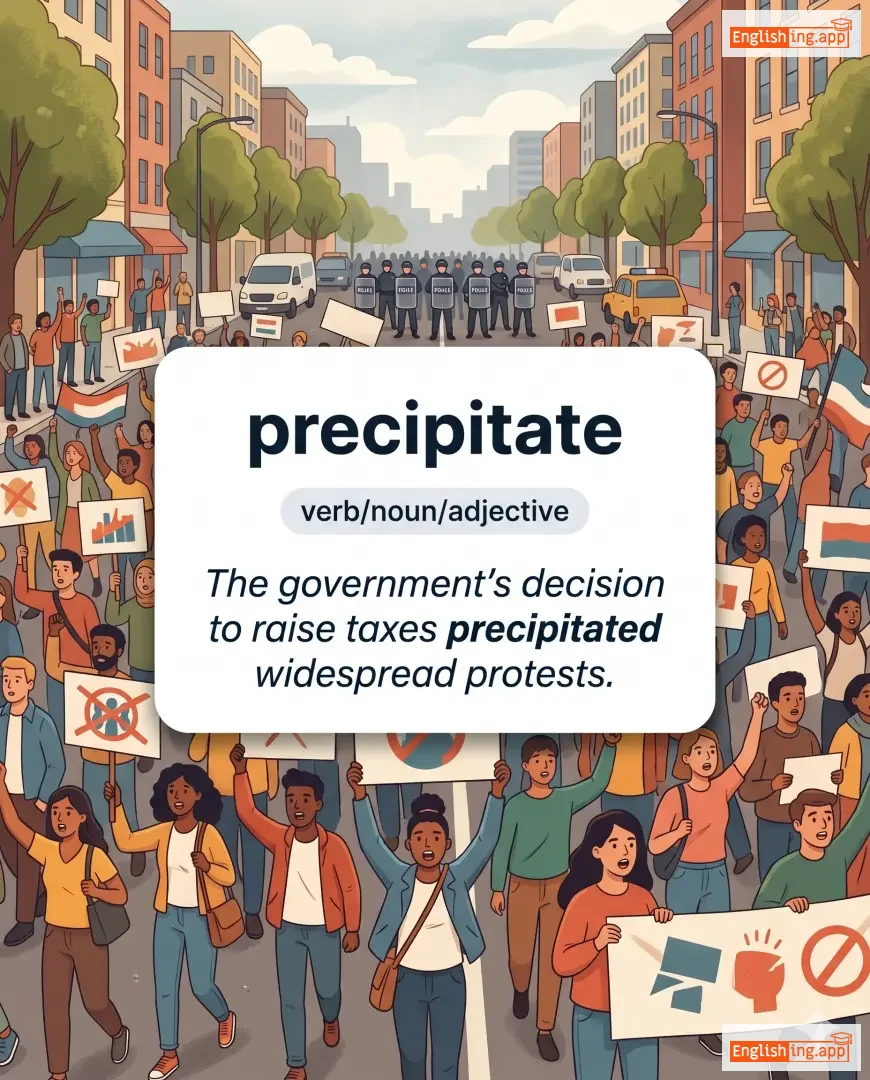
precipitate definition card — visual illustration of the meaning
verb/noun/adjective C1
/prɪˈsɪpɪteɪt/
précipiter / accélérer (précipiter / accélérer)

As a verb: to cause an event or situation, often suddenly or prematurely; as a noun: a solid formed in a chemical solution; as an adjective: done hastily.

"The government's decision to raise taxes precipitated widespread protests."

"La décision du gouvernement d'augmenter les taxes a précipité des manifestations à grande échelle." (La décision du gouvernement d'augmenter les taxes a précipité des manifestations à grande échelle.)
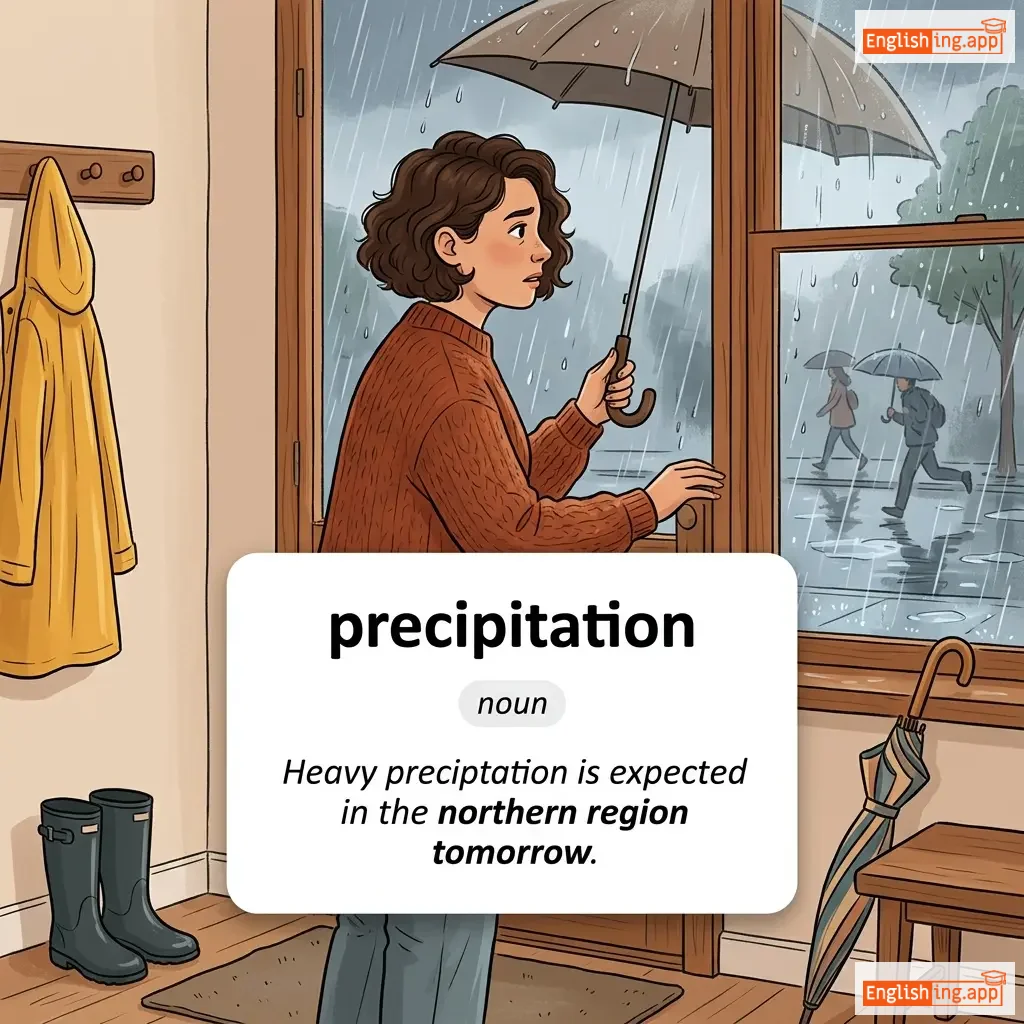
precipitation definition card — visual illustration of the meaning
noun C1
/prɪˌsɪpɪˈteɪʃən/
précipitation (precipitation)

Moisture that falls from the atmosphere as rain, snow, sleet, or hail; or the process of being precipitated.

"Heavy precipitation is expected in the northern region tomorrow."

"De fortes précipitations sont attendues dans la région nord demain." (De fortes precipitations sont attendues dans la region nord demain.)
adjective C1
/prɪˈsɪpɪtəs/
pentu ou soudain (pentu ou soudain)

Extremely steep or sudden; done quickly without careful consideration.

"The hikers struggled to climb the precipitous slope."

"Les randonneurs ont eu du mal à grimper la pente pentue." (Les randonneurs ont eu du mal à grimper la pente pentue.)
noun C1
/ˈpreɪsiː/
résumé (resume)

a short summary of a text or speech

"She wrote a précis of the lecture for her classmates."

"Elle a écrit un résumé de la conférence pour ses camarades de classe." (Elle a écrit un résumé de la conférence pour ses camarades de classe.)
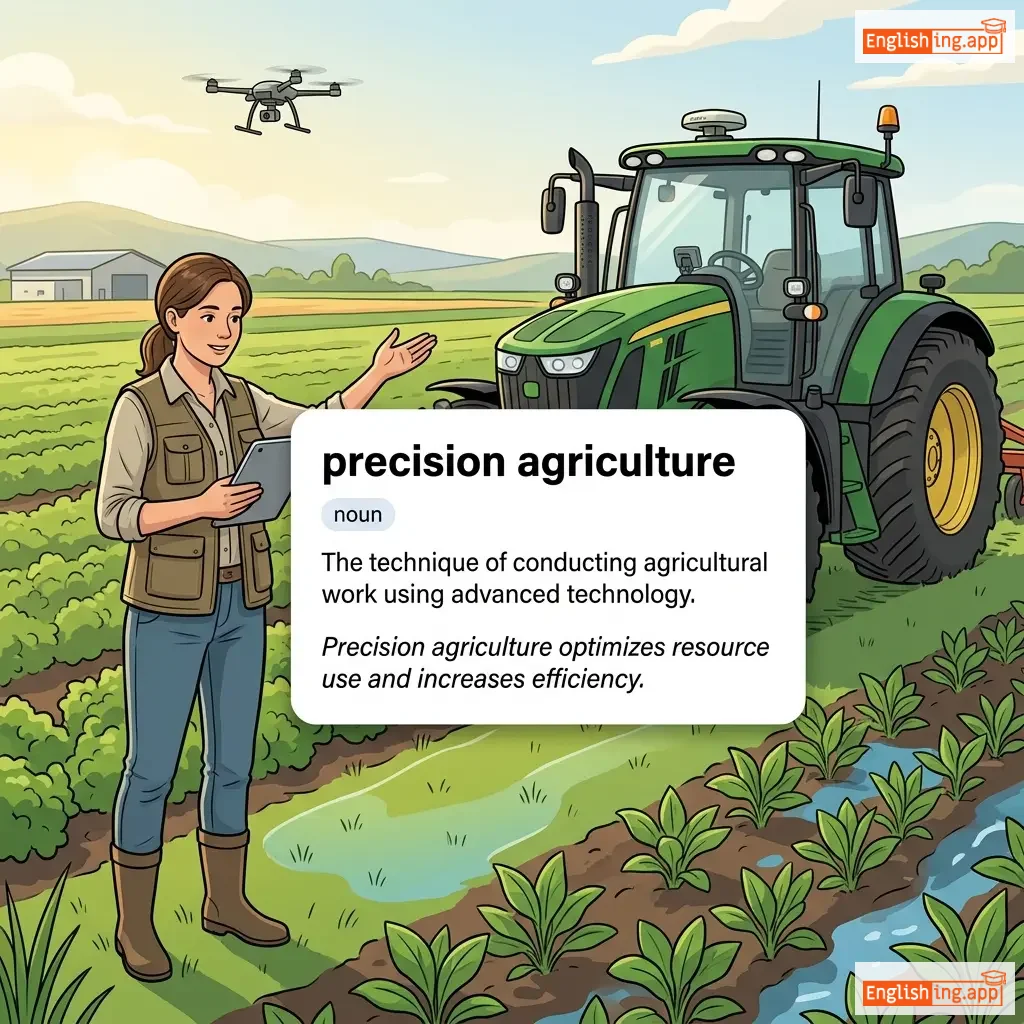
precision agriculture definition card — visual illustration of the meaning
noun C1
prɪˈsɪʒ.ən ˈæɡ.rɪ.kʌl.tʃər
agriculture de précision (agriculture de precision)

The technique of conducting agricultural work using advanced technology.

"Precision agriculture optimizes resource use and increases efficiency."

"L'agriculture de précision optimise l'utilisation des ressources et augmente l'efficacité." (L'agriculture de precision optimise l'utilisation des ressources et augmente l'efficacite.)
verb C1
/prɪˈkluːd/
empêcher (empecher)

To prevent something from happening; to make impossible.

"Heavy rain precluded the possibility of a picnic."

"La forte pluie a empêché la possibilité d'un pique-nique." (La forte pluie a empêche la possibilité d'un pique-nique.)
adjective C1
/prɪˈkoʊʃəs/
prématuré (premature)

Showing advanced development or maturity at an unusually early age.

"The precocious child was reading novels at the age of five."

"L'enfant prématuré lisait des romans à l'âge de cinq ans." (L'enfant prématuré lisait des romans à l'âge de cinq ans.)
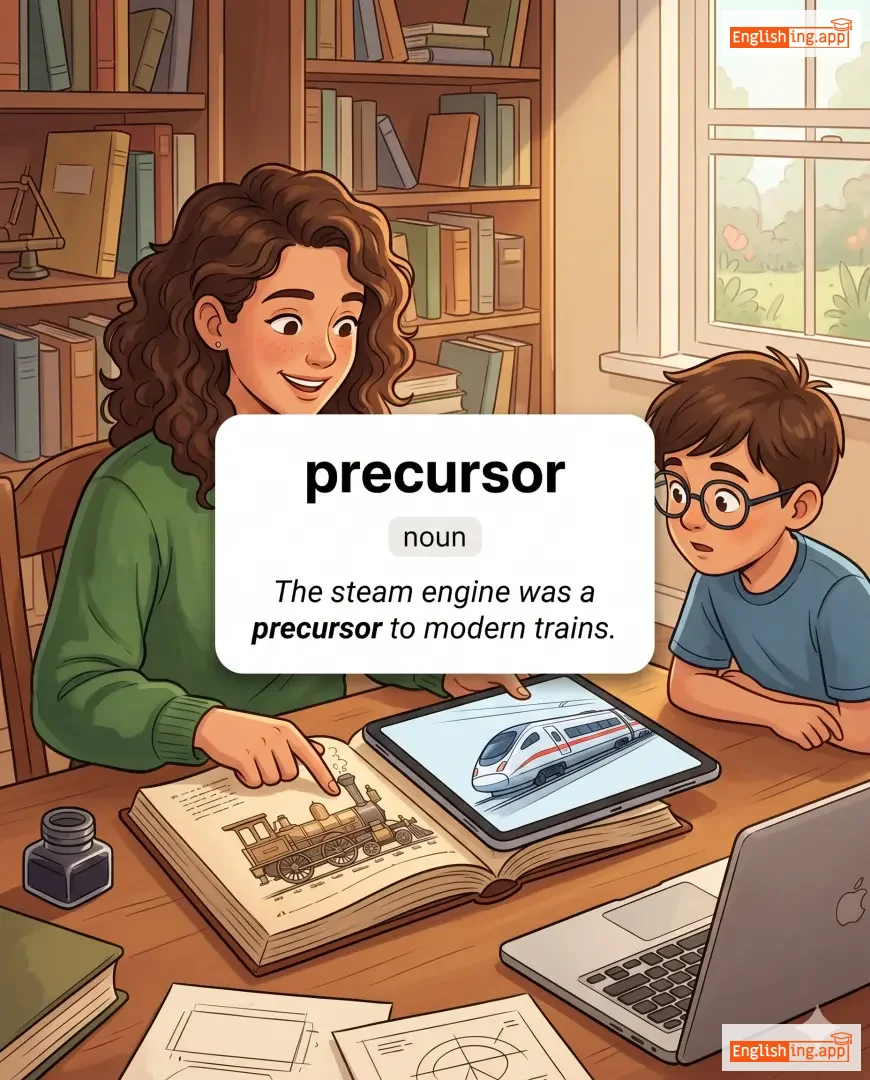
precursor definition card — visual illustration of the meaning
noun C1
/ˈpriːˌkɜrsər/
précurseur (precurseur)

Something or someone that comes before another and indicates the approach of something else.

"The steam engine was a precursor to modern trains."

"La locomotive à vapeur était un précurseur des trains modernes." (La locomotive à vapeur était un précurseur des trains modernes.)
adjective C1
/ˈprɛdəˌtɔri/
prédateur/exploitant (predateur/exploitant)

Relating to animals that prey on others; exploiting or victimizing others for personal gain.

"The predatory bird swooped down on its prey."

"L'oiseau prédateur s'est précipité sur sa proie." (L'oiseau predateur s'est precipite sur sa proie.)
verb C1
/ˌpriːdɪˈtɜːrmɪn/
prédéterminer (predeterminer)

to establish or decide something in advance

"The outcome of the match seemed predetermined."

"Le résultat du match semblait prédéterminé." (Le résultat du match semblait prédéterminé.)
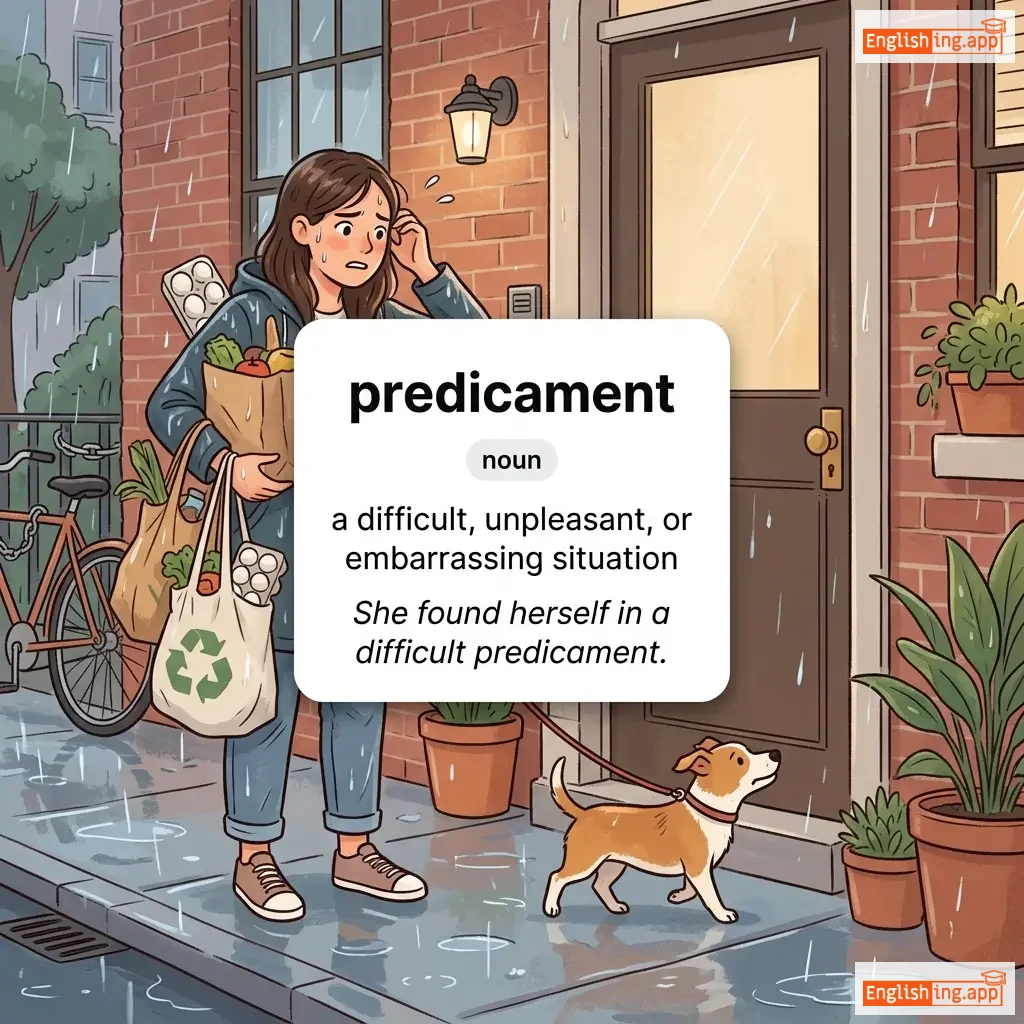
predicament definition card — visual illustration of the meaning
noun C1
/prɪˈdɪkəmənt/
situation difficile (situation difficile)

a difficult, unpleasant, or embarrassing situation

"She found herself in a difficult predicament."

"Elle s'est retrouvée dans une situation difficile." (Elle s'est retrouvee dans une situation difficile.)
noun/verb C1
/ˈprɛdɪkət/ (noun), /ˈprɛdɪkeɪt/ (verb)
prédicat / fonder sur (prédicat / fonder sur)

noun: the part of a sentence that tells something about the subject; verb: to base or establish something on a particular idea

"His theory is predicated on sound research."

"Sa théorie est fondée sur des recherches solides." (Sa theorie est fondee sur des recherches solides.)
verb C1
/ˌpriːdɪˈspoʊz/
prédisposer (predisposer)

To make someone more likely to behave in a certain way or be affected by something.

"His genetics may predispose him to diabetes."

"Ses gènes peuvent le rendre plus susceptible au diabète." (Ses gènes peuvent le rendre plus susceptible au diabète.)
adjective C1
/ˌpriːdɪˈspoʊzd/
prédisposé (predispose)

Likely or inclined to be affected by something in advance.

"She is predisposed to trust people easily."

"Elle est encline à faire confiance facilement aux gens." (Elle est encline à faire confiance facilement aux gens.)
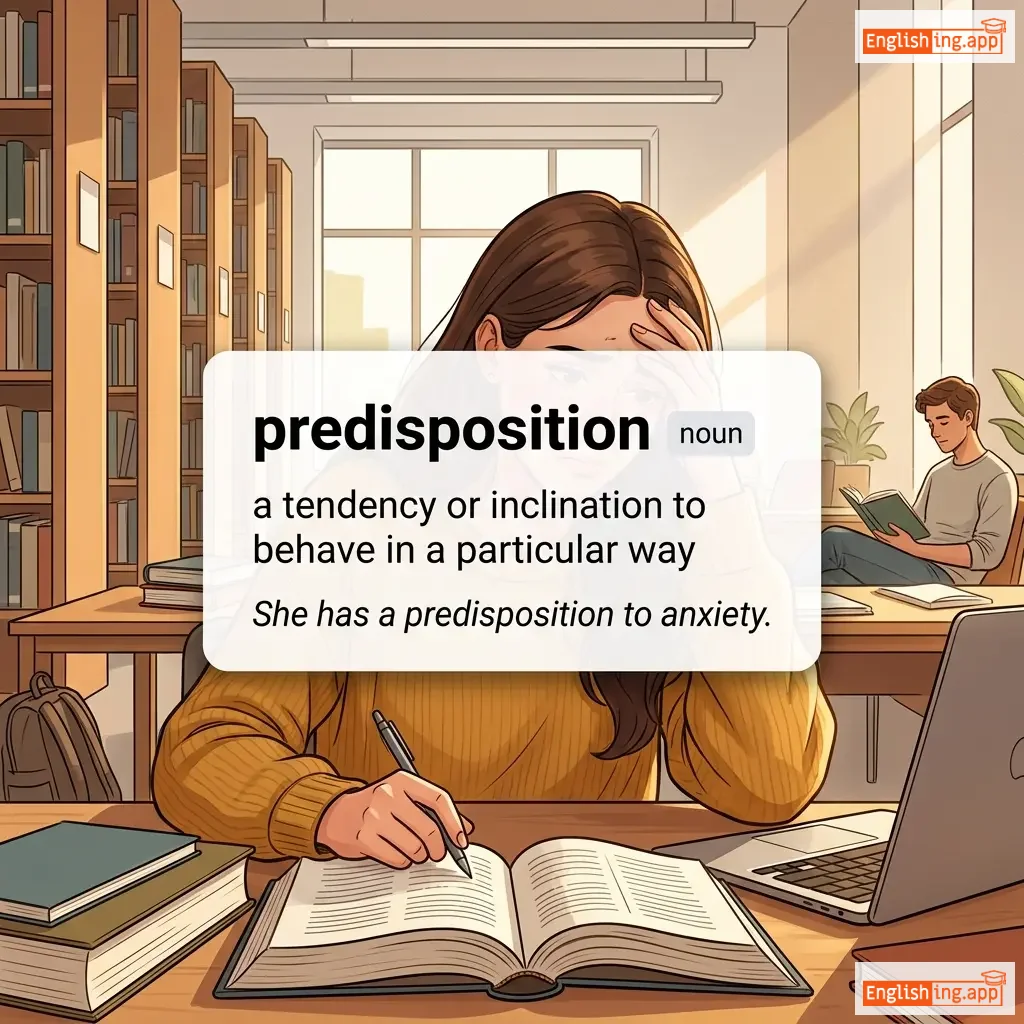
predisposition definition card — visual illustration of the meaning
noun C1
/ˌpriːdɪspəˈzɪʃən/
prédisposition (predisposition)

a tendency or inclination to behave in a particular way

"She has a predisposition to anxiety."

"Elle a une prédisposition à l'anxiété." (Elle a une predisposition a l'anxiete.)
noun C1
/prɪˈdɒmɪnəns/
prépondérance (preponderance)

The state of being greater in number, strength, or importance.

"The predominance of online shopping has changed retail forever."

"La prépondérance des achats en ligne a changé le commerce de détail à jamais." (La preponderance des achats en ligne a change le commerce de detail a jamais.)
verb C1
/prɪˈdɒmɪneɪt/
prédominer (predominer)

To be the strongest, most common, or most influential element.

"Traditional values still predominate in the community."

"Les valeurs traditionnelles prédominent encore dans la communauté." (Les valeurs traditionnelles prédominent encore dans la communauté.)
adjective C1
/priːˈɛmɪnənt/
prééminent (preeminent)

Surpassing all others; very distinguished in some way.

"She is a preeminent scientist in the field of genetics."

"Elle est une scientifique prééminente dans le domaine de la génétique." (Elle est une scientifique preeminente dans le domaine de la genetique.)
verb C1
/priːˈɛmpt/
prévenir (prevenir)

To take action in order to prevent something from happening; to take the place of something.

"The government acted quickly to preempt a financial crisis."

"Le gouvernement a agi rapidement pour prévenir une crise financière." (Le gouvernement a agi rapidement pour prévenir une crise financière.)
adjective C1
/priˈɛmptɪv/
préventif (preventif)

Serving or intended to prevent something by taking action first.

"The government took preemptive measures to control inflation."

"Le gouvernement a pris des mesures préventives pour contrôler l'inflation." (Le gouvernement a pris des mesures préventives pour contrôler l'inflation.)
verb C1
/priːn/
se préparer (se preparer)

To groom or dress oneself with care; to show pride in one's appearance.

"She preened in front of the mirror before leaving for the party."

"Elle se préparait devant le miroir avant de partir pour la fête." (Elle se préparait devant le miroir avant de partir pour la fête.)
adjective C1
/ˌprɛfəˈrɛnʃəl/
privilégié (privilégie)

showing or giving advantage to one over others

"Members receive preferential treatment at the club."

"Les membres bénéficient d'un traitement préférentiel au club." (Les membres bénéficient d'un traitement préférentiel au club.)
noun C1
/ˈprɛljuːd/
prélude (prelude)

An action, event, or statement that serves as an introduction to something more important.

"The small fight was only a prelude to a bigger conflict."

"La petite bagarre n'était qu'un prélude à un plus grand conflit." (La petite bagarre n'etait qu'un prelude a un plus grand conflit.)
verb C1
/ˌpriːˈmɛdɪteɪt/
préméditer (premediter)

to think about and plan something (especially a crime) beforehand

"The suspect was accused of premeditating the crime."

"Le suspect a été accusé d'avoir prémédité le crime." (Le suspect a été accusé d'avoir prémédité le crime.)
adjective C1
/ˌpriːˈmɛdɪˌteɪtɪd/
prémédité (premedite)

planned in advance; done deliberately

"The crime was clearly premeditated."

"Le crime était clairement prémédité." (Le crime était clairement prémédité.)
noun C1
/ˌpriːməˈnɪʃən/ or /ˌprɛm-/
prémonition (pre-moni-syon)

a strong feeling that something is about to happen, often something negative

"She had a premonition of danger before the trip."

"Elle avait une prémonition de danger avant le voyage." (Elle avait une premonition de danger avant le voyage.)
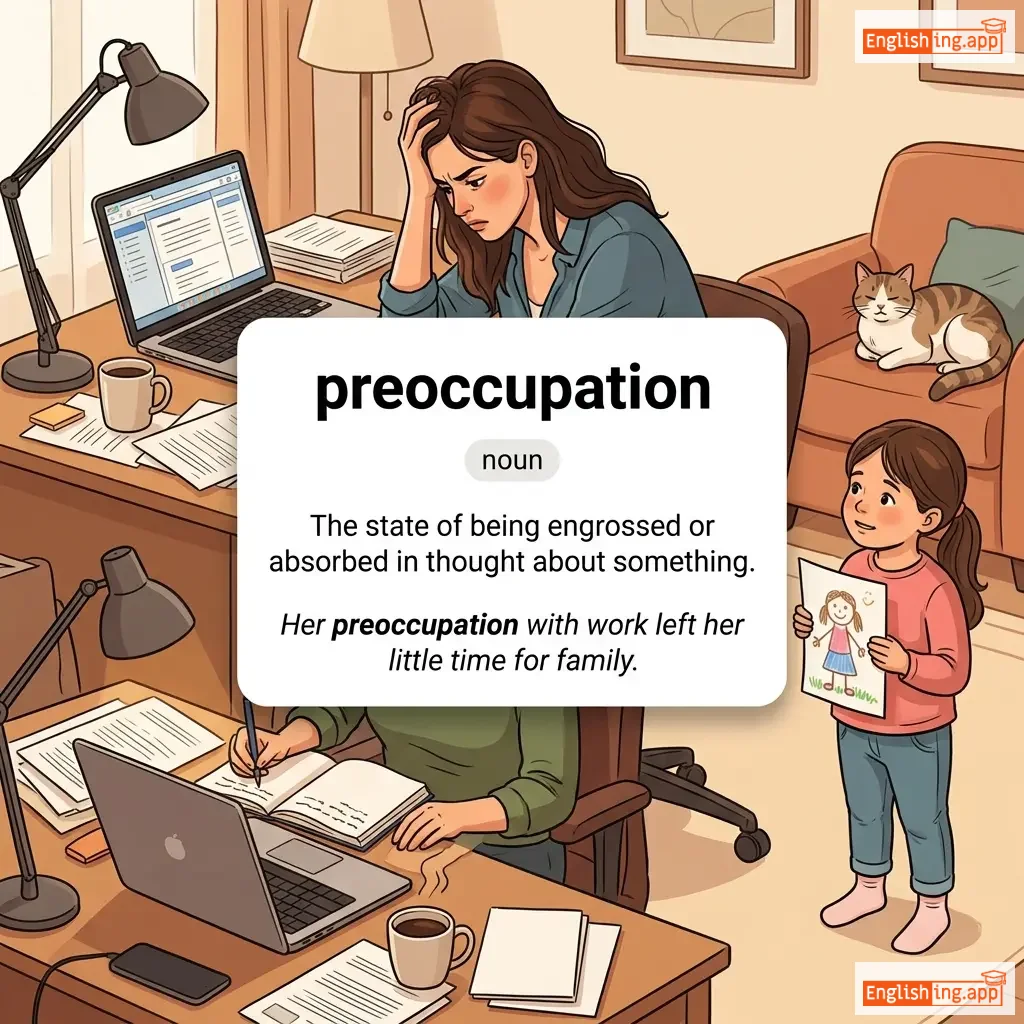
preoccupation definition card — visual illustration of the meaning
noun C1
/priːˌɒkjuˈpeɪʃən/
préoccupation, concentration (preoccupation, concentration)

The state of being engrossed or absorbed in thought about something.

"Her preoccupation with work left her little time for family."

"Sa préoccupation pour le travail lui laissait peu de temps pour la famille." (Sa preoccupation pour le travail lui laissait peu de temps pour la famille.)
verb C1
/priːˈɒkjʊpaɪ/
préoccuper (preoccuper)

To dominate or engross the mind of someone to the exclusion of other thoughts.

"Worries about the future preoccupy him constantly."

"Les préoccupations concernant l'avenir l'occupent constamment." (Les préoccupations concernant l'avenir l'occupent constamment.)
adjective C1
/prɪˈpɒstərəs/
absurde, ridicule (absurde, ridicule)

completely ridiculous or absurd; contrary to reason or common sense

"The idea that pigs could fly is preposterous."

"L'idée que les cochons puissent voler est absurde." (L'idee que les cochons puissent voler est absurde.)
noun C1
/prɪˈrɒɡətɪv/
privilège (privilège)

a special right or privilege exclusive to a particular person or group

"It is the manager’s prerogative to make the final decision."

"C'est le privilège du manager de prendre la décision finale." (C'est le privilège du manager de prendre la décision finale.)
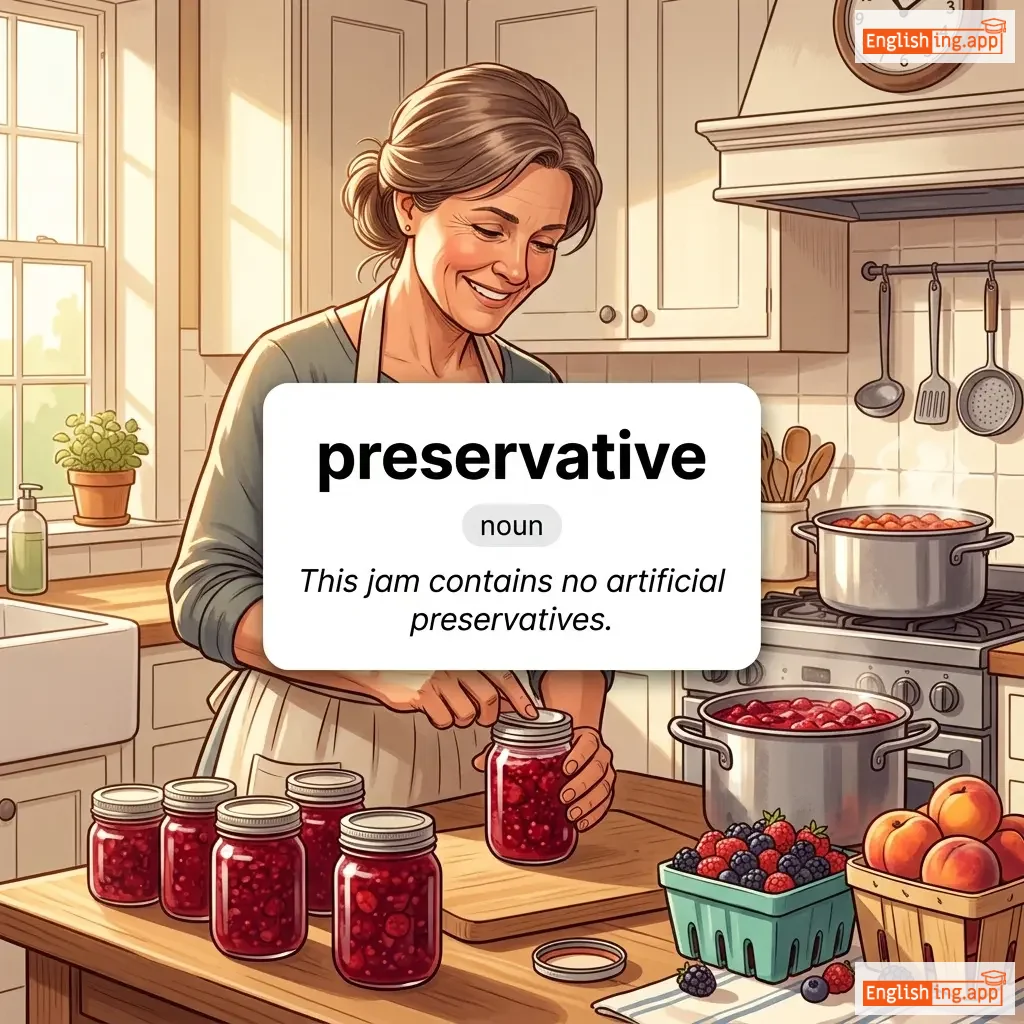
preservative definition card — visual illustration of the meaning
noun C1
/prɪˈzɜːrvətɪv/
conservateur (conservateur)

A substance used to prevent decay, spoilage, or deterioration in food or other materials.

"This jam contains no artificial preservatives."

"Cette confiture ne contient pas de conservateurs artificiels." (Cette confiture ne contient pas de conservateurs artificiels.)
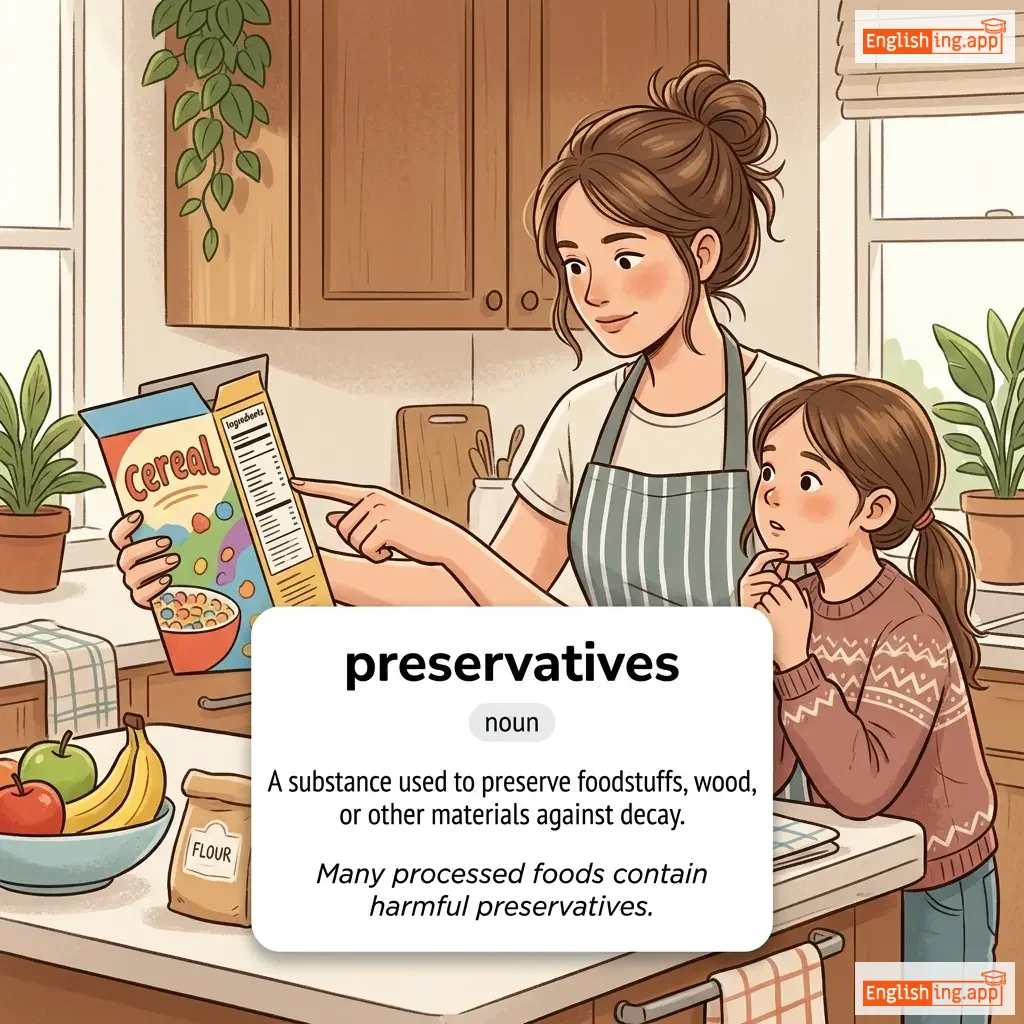
preservatives definition card — visual illustration of the meaning
noun C1
prɪˈzɜː.və.tɪvz
conservateurs (conservateurs)

A substance used to preserve foodstuffs, wood, or other materials against decay.

"Many processed foods contain harmful preservatives."

"De nombreux aliments transformés contiennent des conservateurs nuisibles." (De nombreux aliments transformés contiennent des conservateurs nuisibles.)
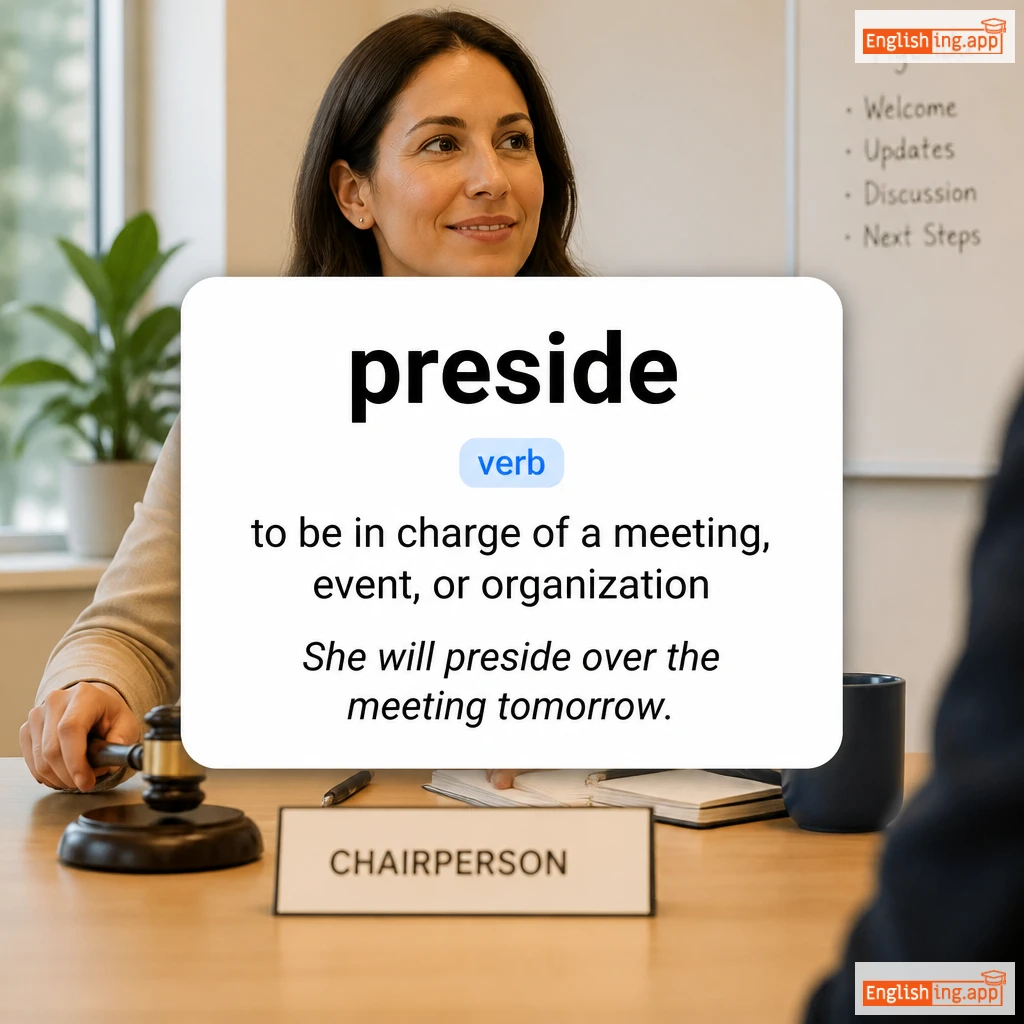
preside definition card — visual illustration of the meaning
👩‍⚖️

preside (prɛzaɪd)

verb C1
/prɪˈzaɪd/
présider (présider)

to be in charge of a meeting, event, or organization

"She will preside over the meeting tomorrow."

"Elle présidera la réunion demain." (Elle présidera la réunion demain.)
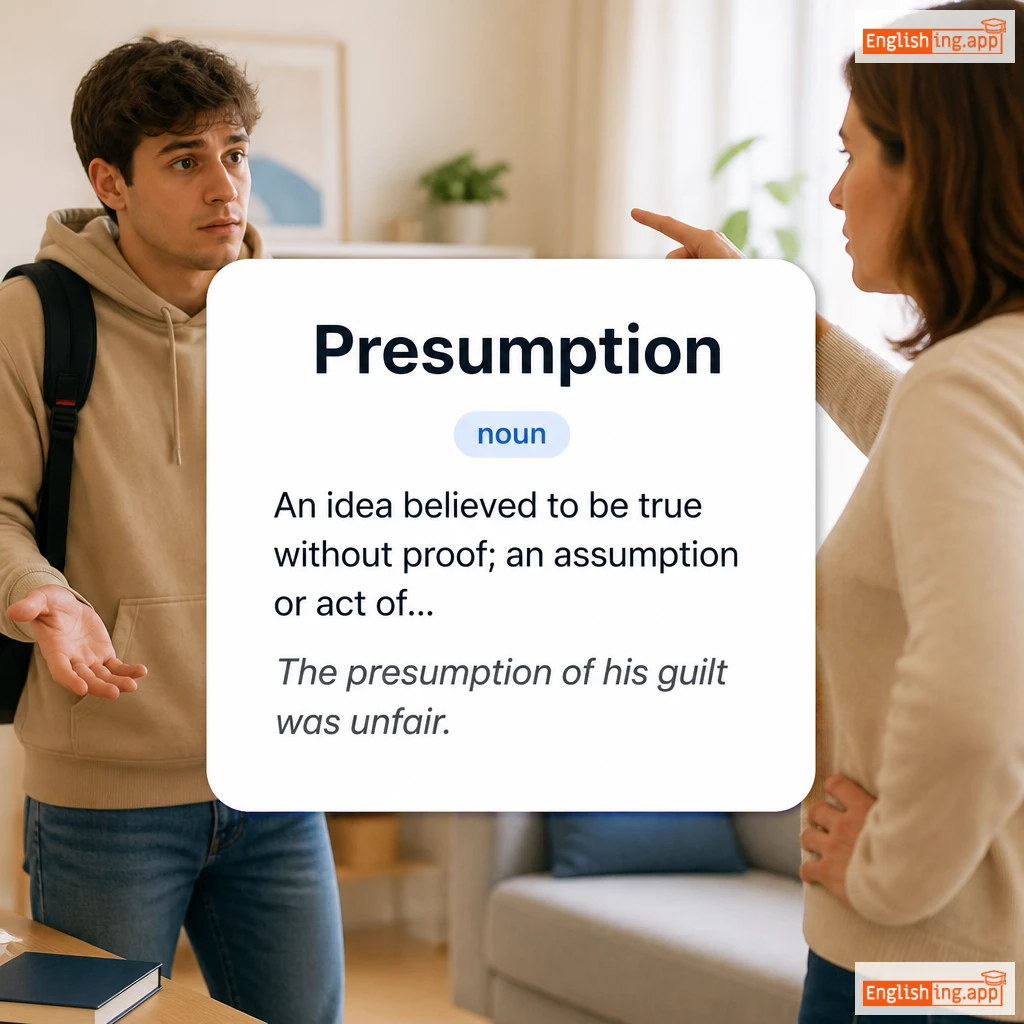
Presumption definition card — visual illustration of the meaning
noun C1
/prɪˈzʌmpʃən/
présomption (presomption)

An idea believed to be true without proof; an assumption or act of overconfidence.

"The presumption of his guilt was unfair."

"La présomption de sa culpabilité était injuste." (La presomption de sa culpabilite etait injuste.)
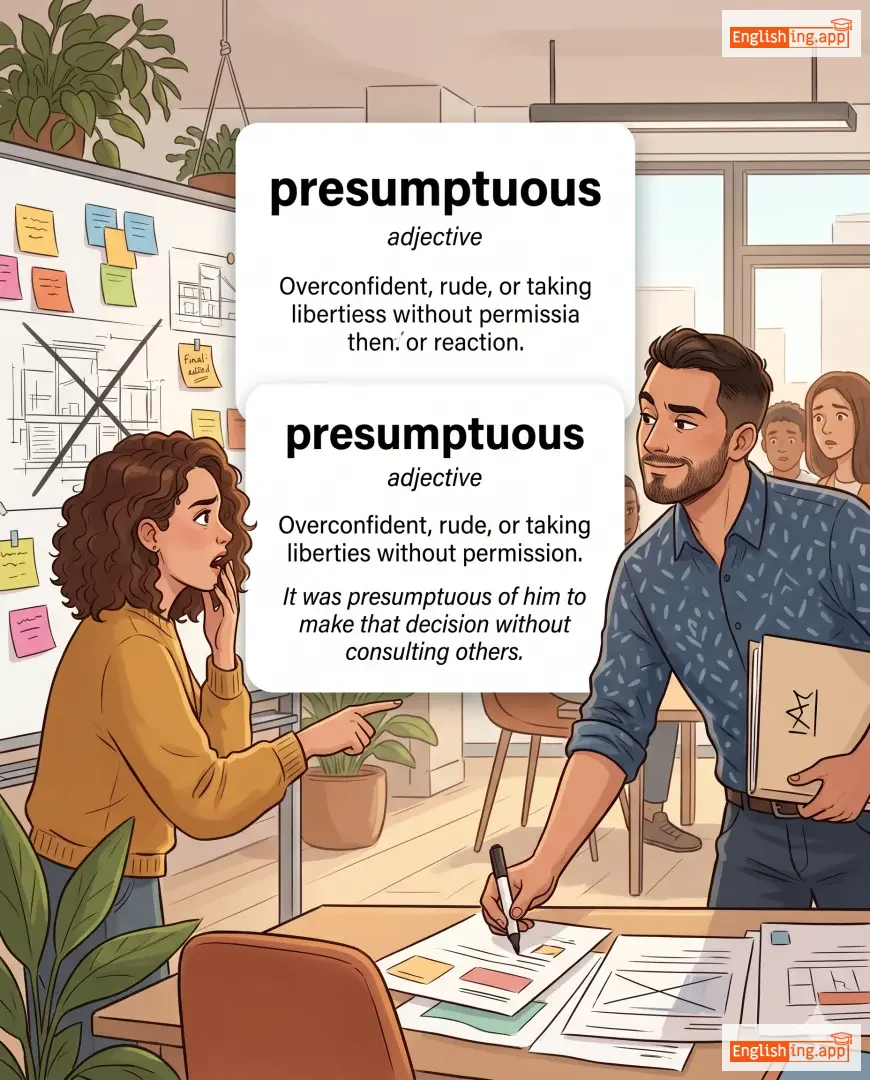
presumptuous definition card — visual illustration of the meaning
adjective C1
/prɪˈzʌmp.tʃu.əs/
prétentieux (pretentieux)

Overconfident, rude, or taking liberties without permission.

"It was presumptuous of him to make that decision without consulting others."

"Il a été présomptueux de sa part de prendre cette décision sans consulter les autres." (Il a ete presumptueux de sa part de prendre cette decision sans consulter les autres.)
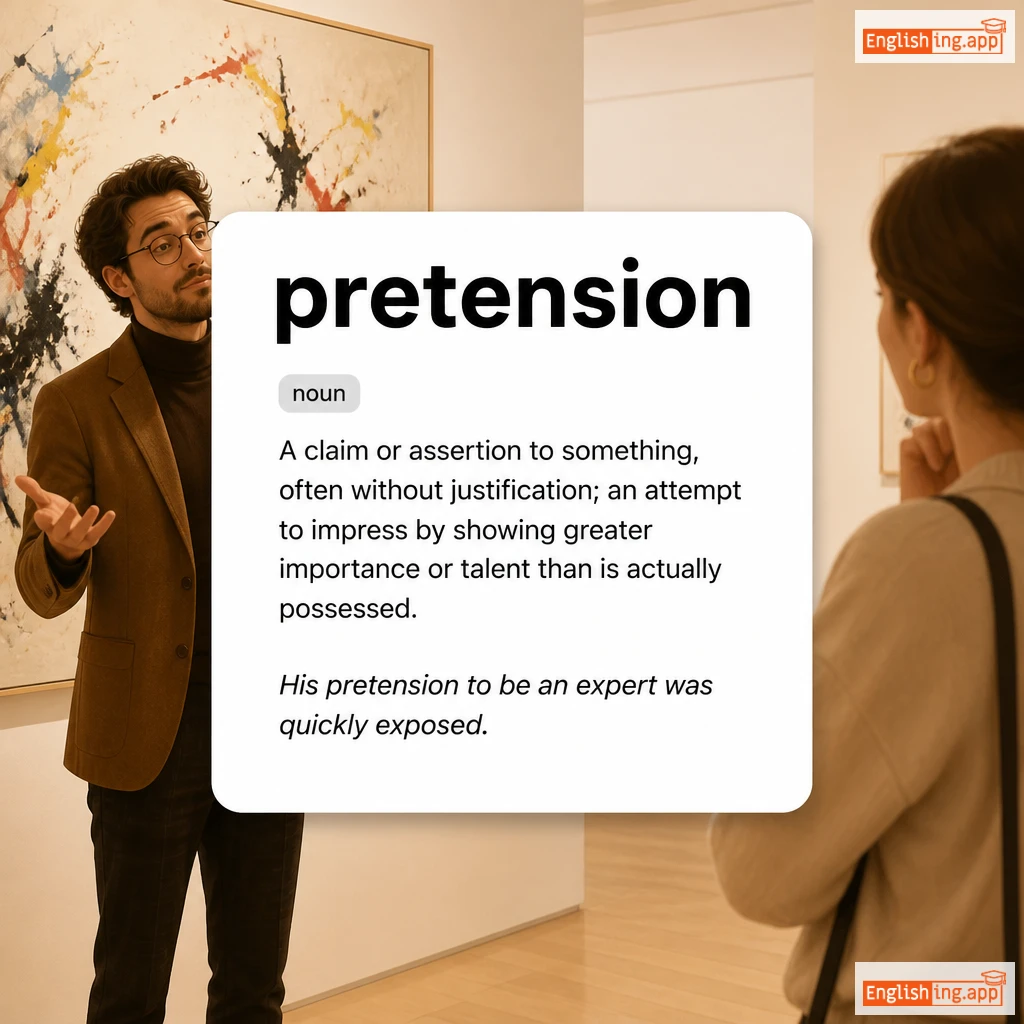
pretension definition card — visual illustration of the meaning
noun C1
/prɪˈtɛnʃən/
prétention, fausse apparence (pretention, fausse apparence)

A claim or assertion to something, often without justification; an attempt to impress by showing greater importance or talent than is actually possessed.

"His pretension to be an expert was quickly exposed."

"Sa prétention à être un expert a été rapidement exposée." (sa pretention a etre un expert a ete rapidement exposee.)
adjective C1
/prɪˈtɛnʃəs/
prétentieux (pretentieux)

Attempting to impress by affecting greater importance, talent, culture, etc., than is actually possessed.

"The restaurant was stylish but far too pretentious for my taste."

"Le restaurant était élégant mais bien trop prétentieux pour mon goût." (Le restaurant était élégant mais bien trop prétentieux pour mon goût.)
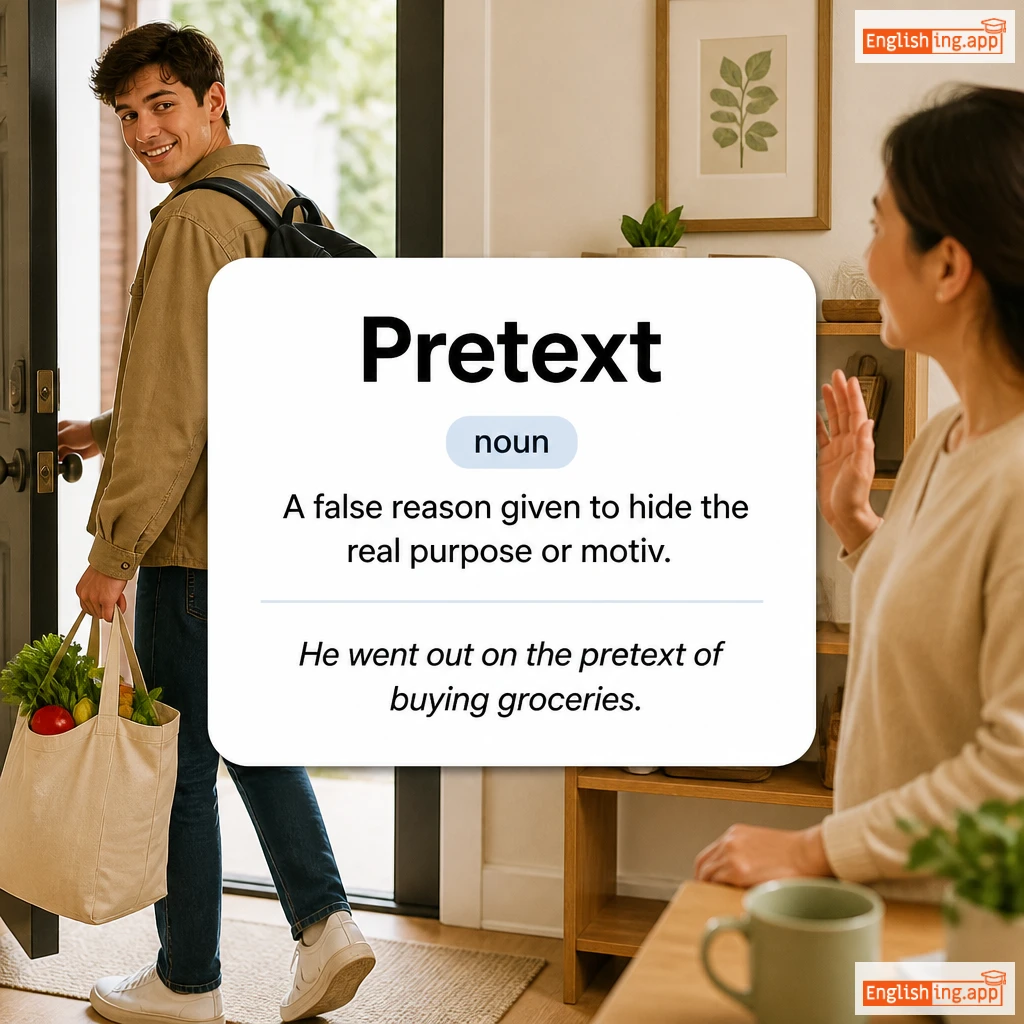
Pretext definition card — visual illustration of the meaning
noun C1
/ˈpriːtɛkst/
prétexte, excuse mensongère (pretexte, excuse mensongère)

A false reason given to hide the real purpose or motive.

"He went out on the pretext of buying groceries."

"Il est sorti sous le prétexte d'acheter des courses." (Il est sorti sous le prétexte d'acheter des courses.)
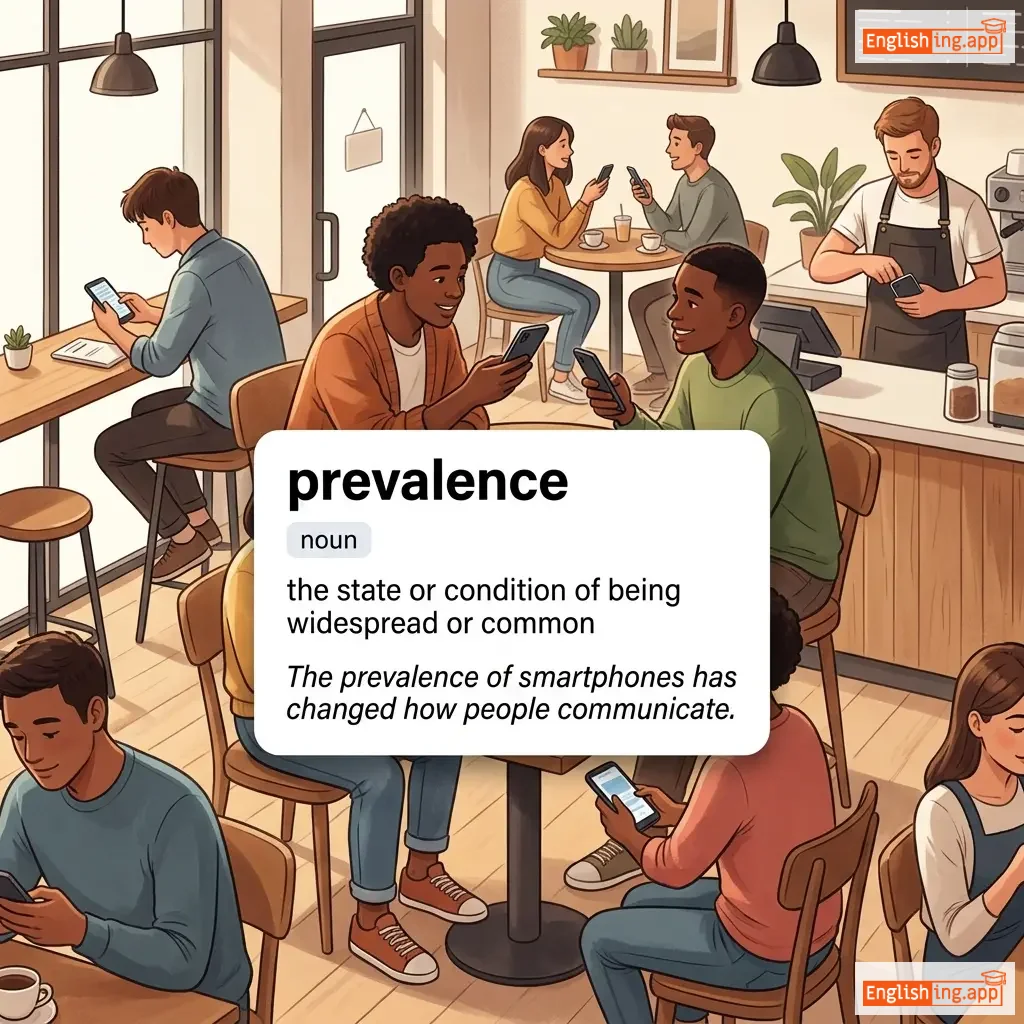
prevalence definition card — visual illustration of the meaning
noun C1
/ˈprɛvələns/
prévalence (prevalence)

the state or condition of being widespread or common

"The prevalence of smartphones has changed how people communicate."

"La prévalence des smartphones a changé la manière dont les gens communiquent." (La prevalence des smartphones a change la maniere dont les gens communiquent.)
adjective C1
/ˈprɛvələnt/
prédominant (predominant)

widespread or commonly occurring

"Flu is prevalent during the winter season."

"La grippe est prédominante pendant la saison hivernale." (La grippe est prédominante pendant la saison hivernale.)
verb C1
/ˈprɪkəl/
picoter (picoter)

to cause a slight stinging or tingling sensation on the skin

"Her skin began to prickle in the cold wind."

"Sa peau a commencé à picoter avec le vent froid." (Sa peau a commence a picoter avec le vent froid.)
adjective C1
/prɪm/
excessivement formel ou correct (excessivement formel ou correct)

stiffly formal and proper in appearance or behavior

"She looked prim in her neatly pressed dress."

"Elle avait l'air prim dans sa robe soigneusement repassée." (Elle avait l'air prim dans sa robe soigneusement repassée.)
adjective C1
/ˈpriːmə/
principal, excellent (principal, excellent)

first or most important; excellent

"She was treated as the prima ballerina of the troupe."

"Elle a été traitée comme la prima ballerina de la troupe." (Elle a été traitée comme la prima ballerina de la troupe.)