Vokabulare

Englisches Vokabelwörterbuch | Wortbedeutungen, Definitionen & Beispiele

verb C1
/ˌoʊvərˈθroʊ/
幸福 (xìng fú)

To remove a leader or government from power, often by force.

"The rebels planned to overthrow the corrupt regime."

"她在收到奖项时无法掩饰她的幸福感。" (Tā zài shōu dào jiǎng xiàng shí wú fǎ yǎn shì tā de xìng fú gǎn.)
noun C1
/ˈoʊvərˌtoʊn/
微妙的含义 (wēi miào de hán yì)

A subtle quality, implication, or additional meaning beyond the obvious.

"His speech had political overtones that were hard to ignore."

"他的演讲具有政治性含义,难以忽视。" (tā de yǎn jiǎng jù yǒu zhèng zhì xìng hán yì, nán yǐ hū shì.)
noun C1
/ˈoʊvərˌtʊr/
序曲 / 提议 (xùqǔ / tíyì)

An introduction to something more substantial; a proposal or preliminary action.

"The peace overture was welcomed by both nations."

"和平提议得到了两个国家的欢迎。" (Hépíng tíyì dédàole liǎng gè guójiā de huānyíng.)
adjective C1
/ˌoʊvərˈrɔt/
焦虑 / 过度紧张 (jiaolü / guòdù jǐnzhāng)

extremely agitated or nervous; excessively elaborate

"She was too overwrought to speak clearly after the accident."

"她在事故后太焦虑,无法清楚地讲话。" (Tā zài shìgù hòu tài jiāolü, wúfǎ qīngchǔ de jiǎnghuà.)
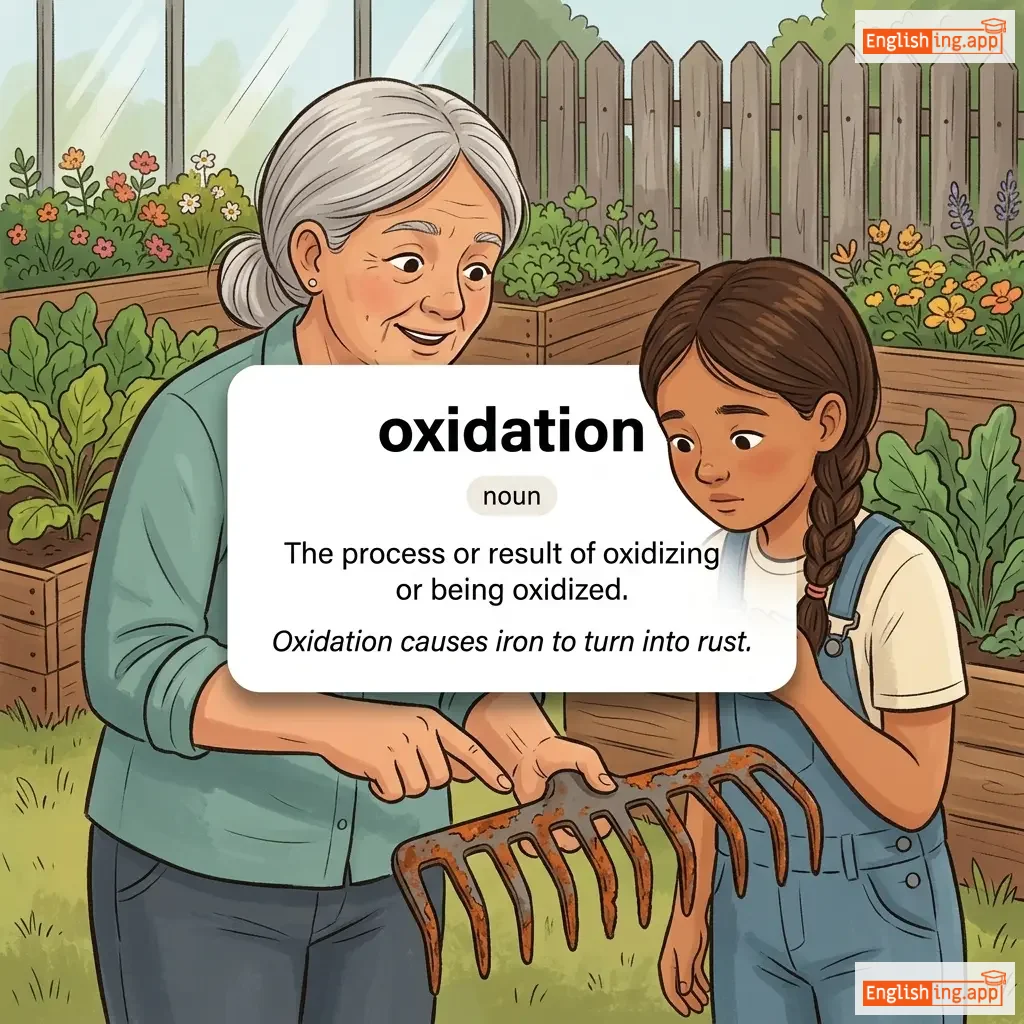
oxidation definition card — visual illustration of the meaning
noun C1
/ˌɒk.sɪˈdeɪ.ʃən/
氧化 (yanghua)

The process or result of oxidizing or being oxidized.

"Oxidation causes iron to turn into rust."

"氧化会导致铁变成锈。" (Yanghua hui daozhi tie bian cheng xiu.)
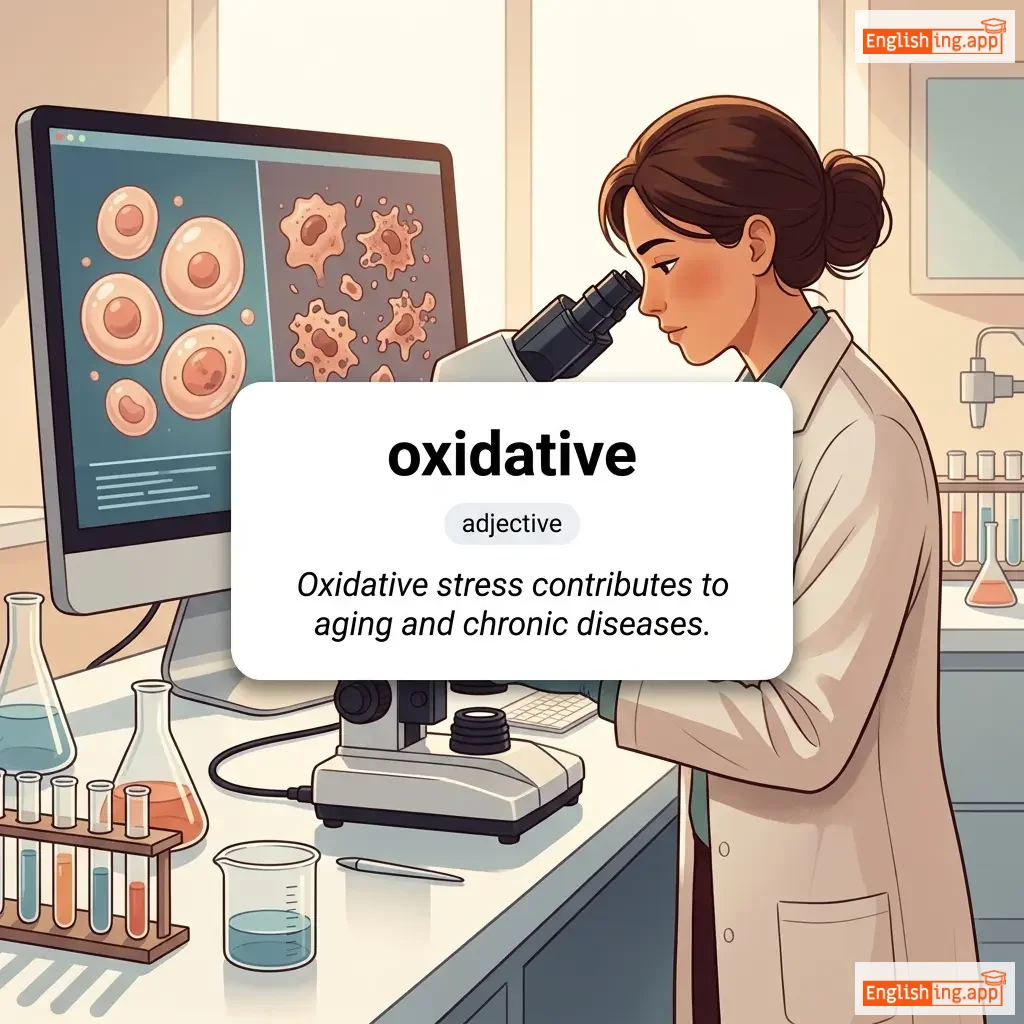
oxidative definition card — visual illustration of the meaning
adjective C1
/ˈɒk.sɪ.də.tɪv/
氧化性的 (yǎng huà xìng de)

Relating to or involving oxidation, particularly processes that can cause cellular damage through free radical formation.

"Oxidative stress contributes to aging and chronic diseases."

"氧化应激有助于衰老和慢性疾病。" (Yǎng huà yìng jī yǒu zhù yú shuāi lǎo hé màn xìng jí bìng.)
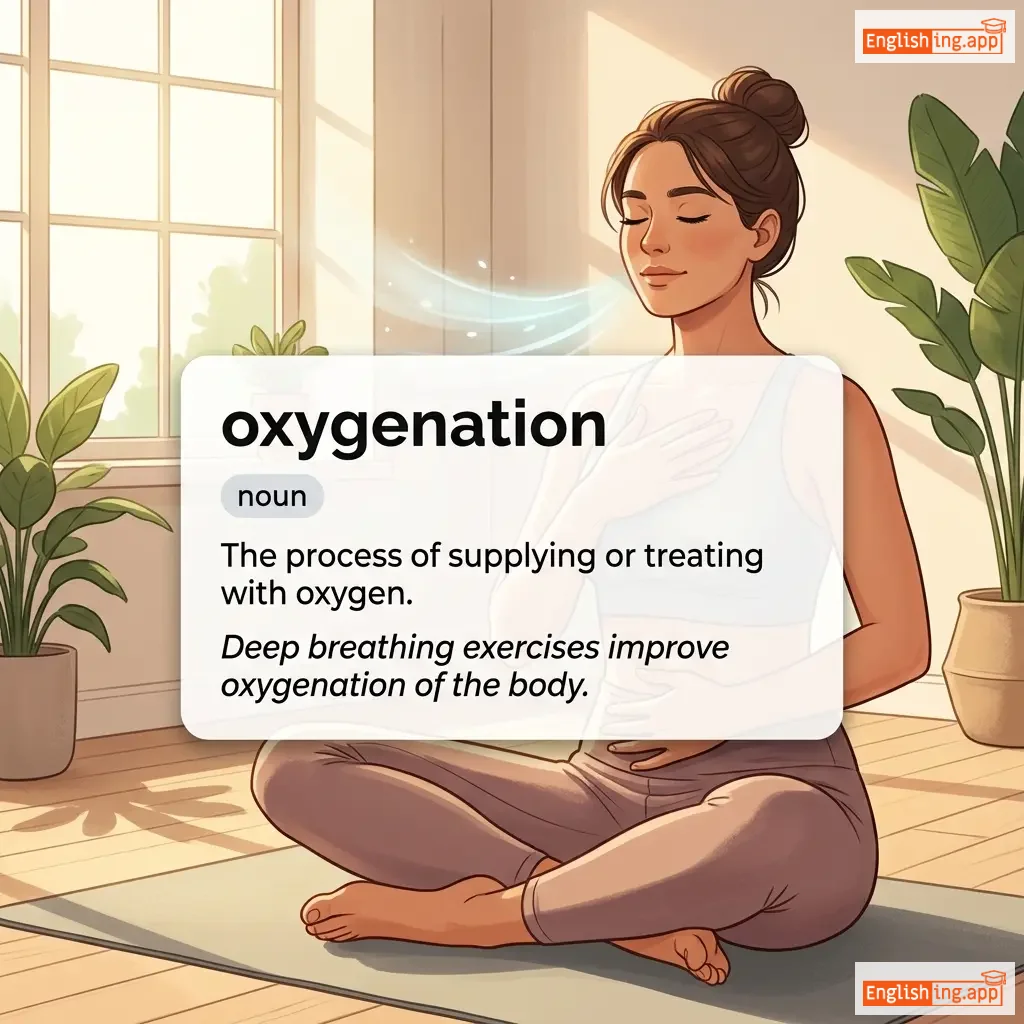
oxygenation definition card — visual illustration of the meaning
noun C1
/ˌɒk.sɪ.dʒɪˈneɪ.ʃən/
供氧或氧气治疗 (gong yang huo yangqi zhiliao)

The process of supplying or treating with oxygen.

"Deep breathing exercises improve oxygenation of the body."

"深呼吸练习有助于改善身体的供氧。" (Shen huxi lianxi you zhu yu gaishan shenti de gongyang.)
noun C1
/ˌɑːk.sɪˈmɔːr.ɒn/
矛盾修饰法 (máodùn xiūshì fǎ)

a figure of speech where two contradictory terms are combined

"The phrase 'deafening silence' is a classic oxymoron."

"短语 '震耳欲聋的寂静' 是一个经典的矛盾修饰法。" (duǎnyǔ 'zhèn ěr yù lóng de jìjìng' shì yīgè jīngdiǎn de máodùn xiūshì fǎ.)
noun C1
/ˈpæs.ɪ.fɪst/
和平主义者 (hépíng zhǔyì zhě)

a person who believes in peace and opposes war or violence

"She is a committed pacifist who campaigns against armed conflict."

"她是一个坚定的和平主义者,致力于反对武装冲突。" (Tā shì yīgè jiāndìng de hépíng zhǔyì zhě, zhìlì yú fǎnduì wǔzhuāng chōngtú.)
pacify definition card — visual illustration of the meaning
verb C1
/ˈpæs.ɪ.faɪ/
安抚 (ānfǔ)

to calm someone down; to bring peace to a situation

"The mother tried to pacify the crying baby."

"母亲试图安抚哭泣的婴儿。" (Mǔqīn shìtú ānfǔ kūqì de yīng'ér.)
Pact definition card — visual illustration of the meaning
noun C1
/pækt/
协议 (xieyi)

a formal agreement or promise between parties

"The two countries signed a peace pact."

"两国签署了和平协议。" (Liang guo qianshu le heping xieyi.)
noun C1
/ˈpæd.ək/
马或其他动物的围场 (mǎ huò qítā dòngwù de wéichǎng)

a small enclosed field where horses or other animals are kept

"The horses were grazing in the paddock."

"马群在围场里吃草。" (Mǎqún zài wéichǎng lǐ chī cǎo.)
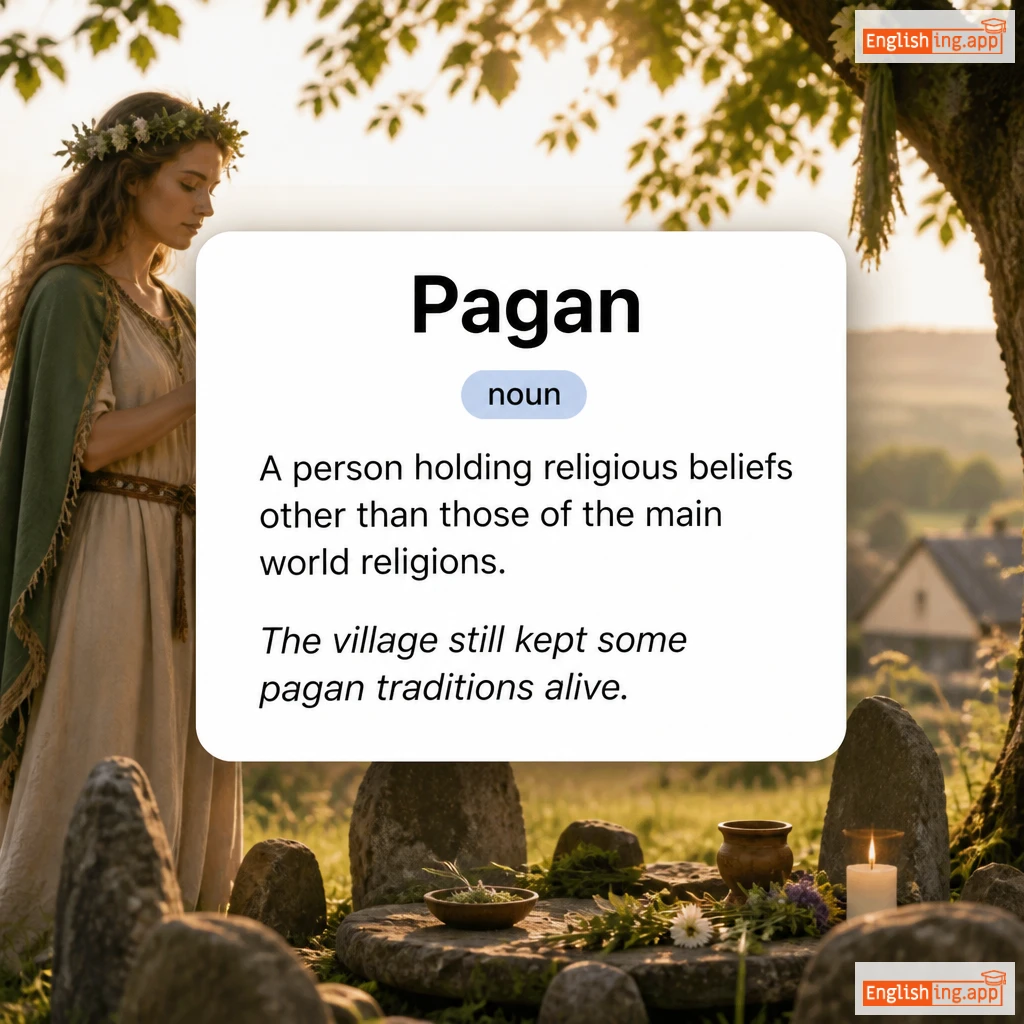
Pagan definition card — visual illustration of the meaning
noun C1
/ˈpeɪɡən/
异教徒 (yìjiàotú)

A person holding religious beliefs other than those of the main world religions.

"The village still kept some pagan traditions alive."

"这个村庄仍然保持着一些异教传统。" (Zhège cūnzhuāng réngrán bǎochí zhe yīxiē yìjiào chuántǒng.)
noun C1
/ˈpædʒənt/
选美比赛 (xuǎnměi bǐsài)

A public entertainment consisting of a procession of people in elaborate costumes, or a beauty contest.

"She won first place in the beauty pageant."

"她在选美比赛中赢得了第一名" (tā zài xuǎnměi bǐsài zhōng yíngdéle dì yī míng)
adjective C1
/ˈpeɪnzˌteɪkɪŋ/
非常小心 (fēicháng xiǎoxīn)

Done with great care and thoroughness.

"The artist completed the project with painstaking detail."

"艺术家以极其细致的方式完成了这个项目。" (Yìshùjiā yǐ jíqí xìzhì de fāngshì wánchéngle zhège xiàngmù.)
adjective C1
/ˈpæl.ə.tə.bəl/
可口的 (kěkǒu de)

pleasant or acceptable to the taste, mind, or feelings

"The meal was simple but quite palatable."

"这顿饭很简单,但相当可口。" (Zhè dùn fàn hěn jiǎndān, dàn xiāngdāng kěkǒu.)
Palatable meat definition card — visual illustration of the meaning
noun C1
/ˈpæl.ə.tə.bəl miːt/
美味的肉类 (měiwèi de ròulèi)

Meat that is pleasant to taste; appetizing meat dish

"The chef prepared palatable meat dishes for the dinner party."

"厨师为晚宴准备了美味的肉类菜肴。" (Chúshī wèi wǎnyàn zhǔnbèile měiwèi de ròulèi cài yáo.)
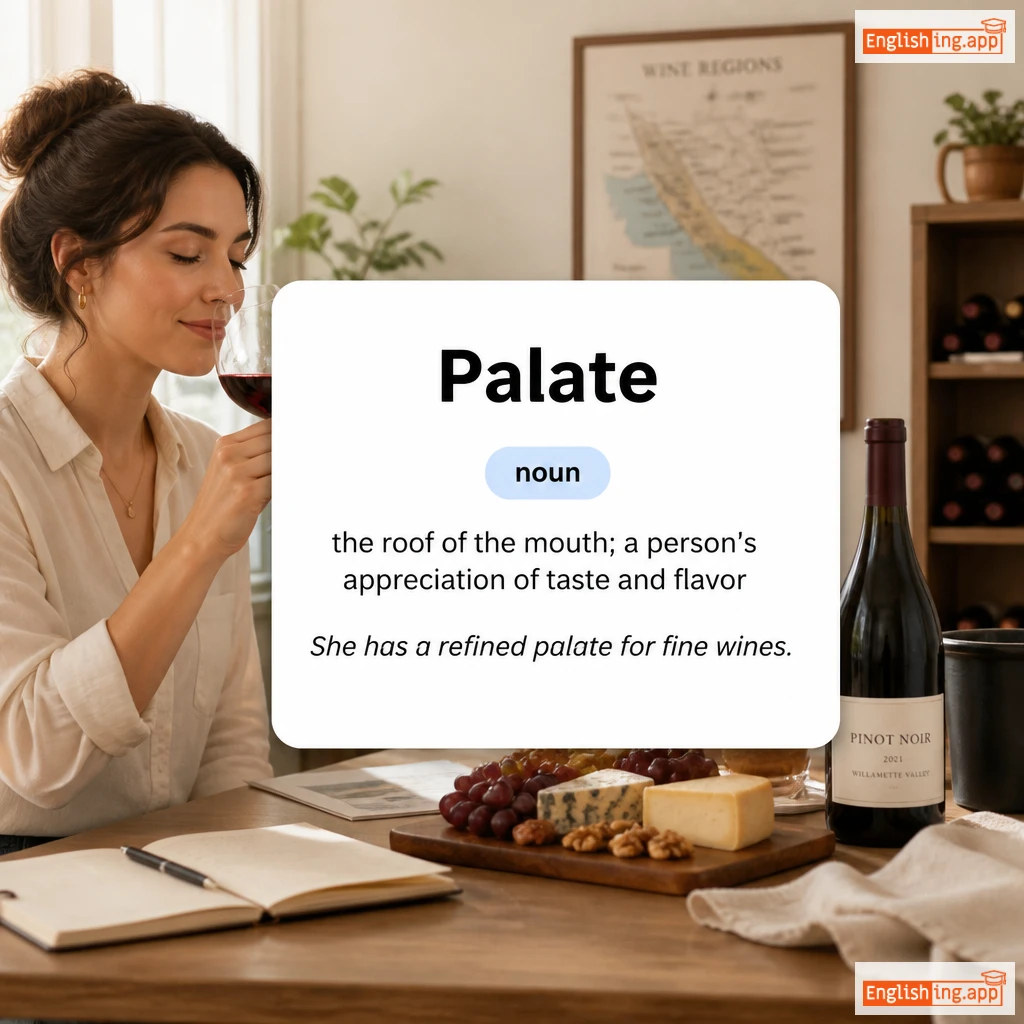
Palate definition card — visual illustration of the meaning
noun C1
/ˈpæl.ət/
上颚 (shàng è)

the roof of the mouth; a person's appreciation of taste and flavor

"She has a refined palate for fine wines."

"她对美酒有着精致的品味。" (Tā duì měi jiǔ yǒu zhe jīng zhì de pǐn wèi.)
adjective C1
/pəˈleɪ.ʃəl/
宫殿般 (gongdian ban)

resembling a palace in being spacious and splendid

"They stayed in a palatial hotel during their vacation."

"他们在度假时住在一间宫殿般的酒店里。" (Tāmen zài dùjià shí zhù zài yī jiàn gōngdiàn bān de jiǔdiàn lǐ.)
noun C1
/ˌpeɪ.li.ɒnˈtɒl.ə.dʒi/
古生物学 (gǔshēngwùxué)

the branch of science concerned with fossil animals and plants

"She decided to study paleontology at university."

"她决定在大学学习古生物学。" (Tā juédìng zài dàxué xuéxí gǔshēngwùxué.)
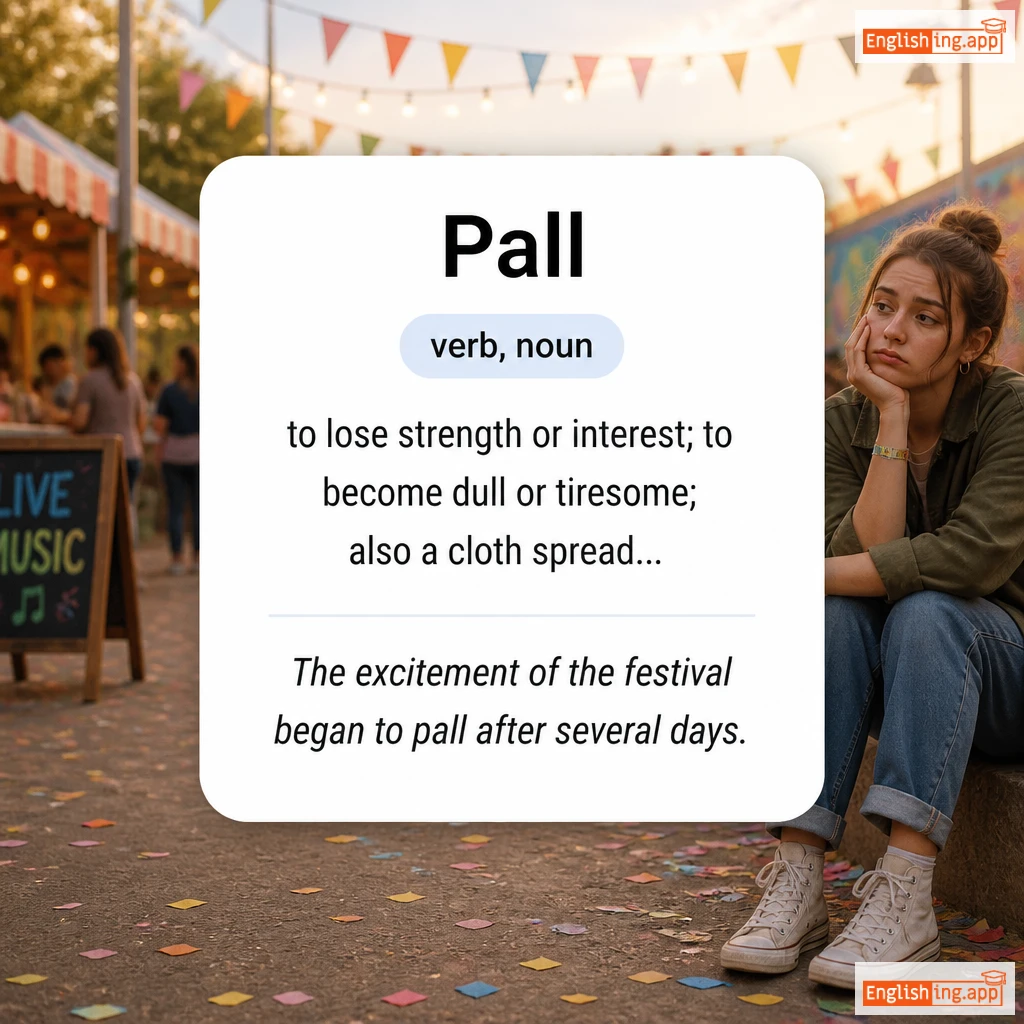
Pall definition card — visual illustration of the meaning
⚰️

Pall

verb, noun C1
/pɔːl/

to lose strength or interest; to become dull or tiresome; also a cloth spread over a coffin

"The excitement of the festival began to pall after several days."

noun C1
/ˈpælɪt/
平台 (pingtai)

a flat wooden platform used for moving or storing goods; also a makeshift bed

"The boxes were stacked on a wooden pallet for easy transport."

"箱子被堆放在木托盘上以便于运输。" (Xiāngzi bèi duīfàng zài mù tuōpán shàng yǐ biànyú yùnshū.)
adjective C1
/ˈpælɪd/
苍白 (cāngbái)

pale, typically because of poor health or lack of vitality

"The patient looked pallid after weeks of illness."

"病人在生病几周后看起来很苍白。" (Bìngrén zài shēngbìng jǐ zhōu hòu kàn qǐlái hěn cāngbái.)
adjective C1
/ˈpælpəbl̩/
幸福 (xingfu)

easily perceived or felt; so intense as to seem almost tangible

"There was a palpable sense of excitement in the room."

"当她收到奖项时,她无法隐藏自己的幸福感。" (Dang ta shoudao jiangxiang shi, ta wufa yinchang ziji de xingfugan.)
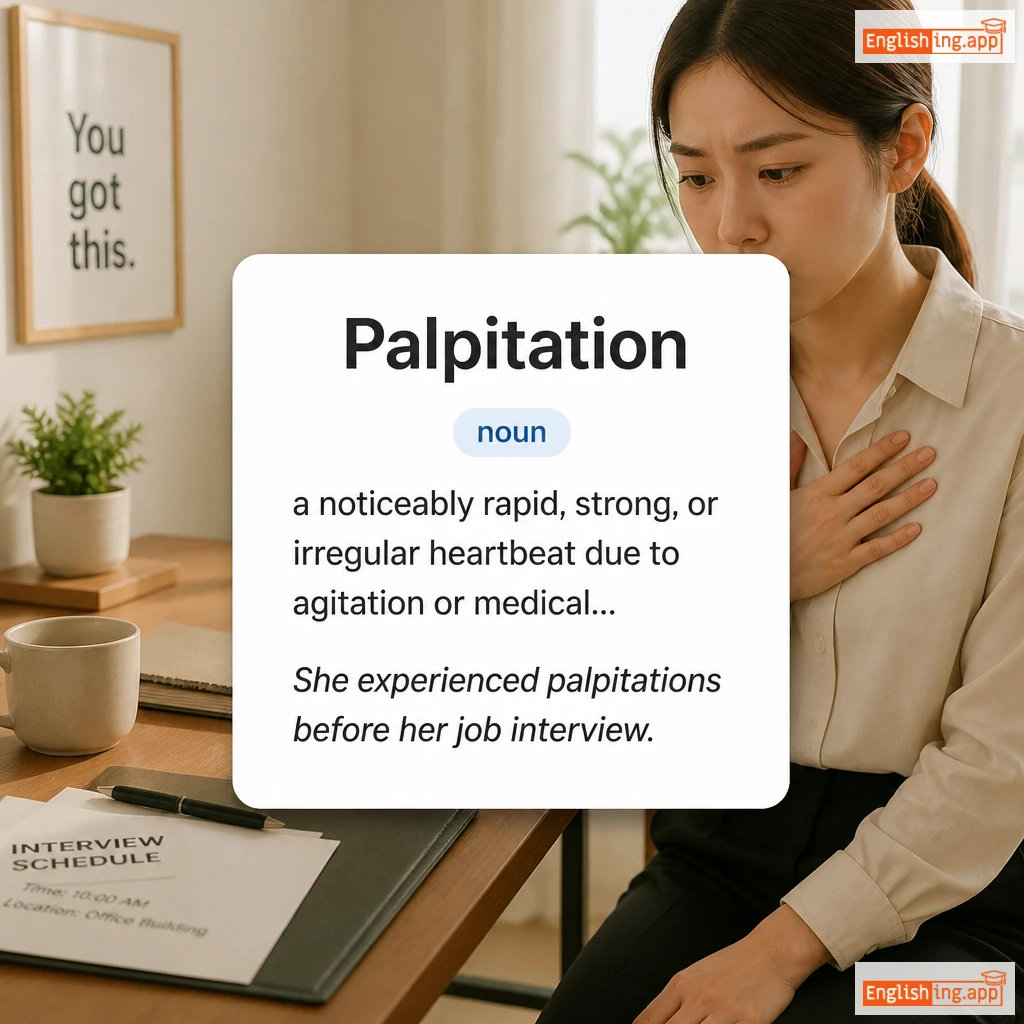
Palpitation definition card — visual illustration of the meaning
noun C1
/ˌpæl.pɪˈteɪ.ʃən/
由于激动或医学状况引起的明显快速、强烈或不规则的心跳 (yóu yú jīdòng huò yīxué zhuàngkuàng yǐnqǐ de míngxiǎn kuàisù, qiángliè huò bù guīzé de xīntiào)

a noticeably rapid, strong, or irregular heartbeat due to agitation or medical condition

"She experienced palpitations before her job interview."

"她在面试前感受到了心悸。" (Tā zài miànshì qián gǎnshòu dàole xīnjì.)
adjective C1
/ˈpɔːltri/
微不足道, 微小 (wēi bù zú dào, wēi xiǎo)

small or meager; lacking in value or importance

"They offered him a paltry sum for his work."

"他们为他的工作提供了微不足道的报酬。" (Tāmen wèi tā de gōngzuò tígōngle wēi bù zú dào de bàochóu.)
verb C1
/ˈpæmpər/
溺爱 / 宠爱 (nì'ài / chǒng'ài)

to treat with excessive care and attention; to spoil

"Parents often pamper their first child."

"父母常常溺爱他们的第一个孩子。" (Fùmǔ chángcháng nì'ài tāmen de dì yī gè háizi.)
adjective C1
/ˌpæn.əˈmer.ɪ.kən/
泛美洲的 (fàn měi zhōu de)

relating to all the countries of North, Central, and South America

"The Pan-American Games bring together athletes from across the continent."

"泛美洲运动会将整个大陆的运动员汇聚在一起。" (Fàn měi zhōu yùndòng huì jiāng zhěnggè dàlù de yùndòngyuán huìjù zài yīqǐ.)
noun C1
/ˌpænəˈsiːə/
万灵药 (wàn líng yào)

A solution or remedy for all difficulties or diseases.

"Education is often seen as a panacea for social problems."

"教育通常被视为社会问题的万能药。" (Jiàoyù tōngcháng bèi shì wéi shèhuì wèntí de wànnéng yào.)
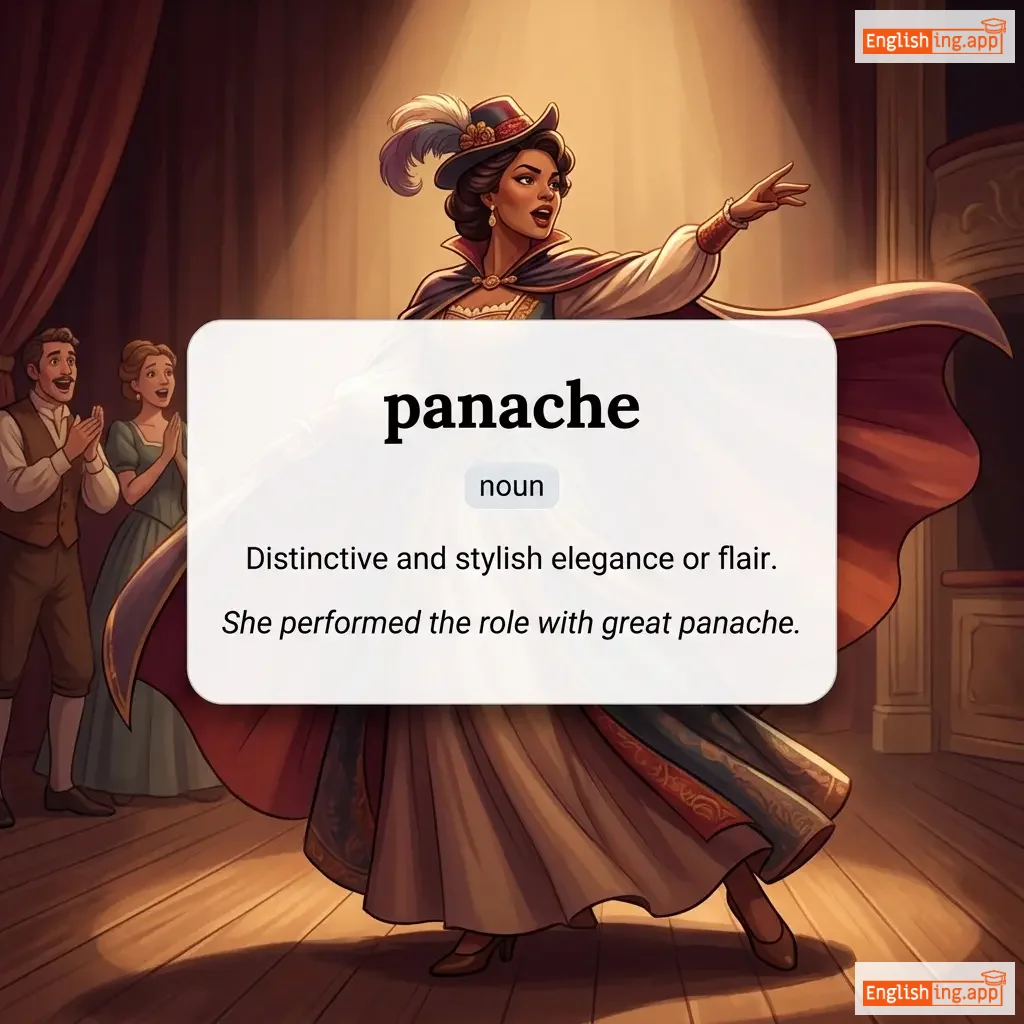
panache definition card — visual illustration of the meaning
noun C1
/pəˈnæʃ/
独特的优雅 (dútè de yōuyǎ)

Distinctive and stylish elegance or flair.

"She performed the role with great panache."

"她以极大的潘纳什演绎了这个角色。" (Tā yǐ jí dà de pánàshī yǎnyì le zhège juésè.)
noun C1
/ˈpæŋkriəs/
胰腺 (yixian)

A gland in the abdomen that produces insulin and digestive enzymes.

"The pancreas plays a vital role in digestion and blood sugar regulation."

"胰腺在消化和血糖调节中发挥着重要作用。" (Yixian zài xiāohuà hé xuètáng tiáojié zhōng fāhuī zhuó zhòngyào zuòyòng.)
noun C1
/ˌpændəˈmoʊniəm/
混乱 (hùnluàn)

Wild and noisy disorder or confusion; uproar.

"When the concert was canceled, pandemonium broke out among the crowd."

"当音乐会被取消时,混乱在观众中爆发。" (Dāng yīnyuè huì bèi qǔxiāo shí, hùnluàn zài guānzhòng zhōng bàofā.)
verb C1
/ˈpændər/
迎合, 奉承 (yínghé, fèngchéng)

to indulge or exploit the weaknesses, desires, or immoral tendencies of others

"The politician was accused of pandering to voters' fears."

"政治家被指控迎合选民的恐惧。" (Zhèngzhìjiā bèi zhǐkòng yínghé xuǎnmín de kǒngjù.)
noun C1
/pæŋ/
突如其来的剧烈疼痛或情绪痛苦 (tū rú qí lái de jù liè téng tòng huò qíng xù tòng kǔ)

a sudden sharp feeling of pain or emotional distress

"She felt a pang of guilt after the argument."

"她在争论后感到一阵内疚的疼痛。" (Tā zài zhēng lùn hòu gǎn dào yí zhèn nèi jiù de téng tòng.)
noun C1
/ˌpæn.əˈræm.ə/
全景视图 (quánjǐng shìtú)

An unbroken view of the whole region surrounding an observer.

"From the hilltop, we enjoyed a breathtaking panorama of the city."

"从山顶,我们欣赏到城市的壮丽全景。" (cóng shāndǐng, wǒmen xīnshǎng dào chéngshì de zhuànglì quánjǐng.)
adjective C1
/ˌpæn.əˈræm.ɪk/
全景视图 (quanjing shitu)

Giving a wide view of an extensive area in all directions.

"The hotel offers panoramic views of the ocean."

"酒店提供海洋的全景视野。" (Jiudian tigong haiyang de quanjing shiya.)
noun C1
/ˈpæn.θi.ən/
所有神明,献给所有神明的庙宇 (suǒyǒu shénmíng, xiàn gěi suǒyǒu shénmíng de miàoyu)

All the gods of a religion collectively; a building dedicated to all gods.

"The Roman Pantheon is one of the best-preserved ancient temples."

"罗马的万神殿是最完好保存的古代神庙之一。" (Luómǎ de wàn shéndiàn shì zuì wánhǎo bǎocún de gǔdài shénmiào zhī yī.)
noun C1
/ˈpæntəmaɪm/
哑剧 (yaju)

A type of theatrical performance using gestures and movements without spoken words; in Britain, a musical comedy play for families performed at Christmas.

"The children enjoyed the Christmas pantomime at the local theater."

"孩子们在当地剧院观看了圣诞哑剧。" (haizimen zai dangdi juyuan guankan le Shengdan yaju.)
noun C1
/pəˈpaɪrəs/
纸莎草 (zhǐ shā cǎo)

An ancient writing material made from the pith of the papyrus plant; also refers to the plant itself.

"The ancient scroll was written on papyrus."

"古老的卷轴是用纸莎草写的。" (Gǔlǎo de juǎnzhóu shì yòng zhǐ shā cǎo xiě de.)
noun C1
/ˈpærəbl/
寓言 (yùyán)

A simple story used to illustrate a moral or spiritual lesson.

"Jesus often taught using a parable to convey deeper truths."

"耶稣常常用寓言教导深刻的真理。" (Yēsū chángcháng yòng yùyán jiàodǎo shēn kè de zhēnlǐ.)
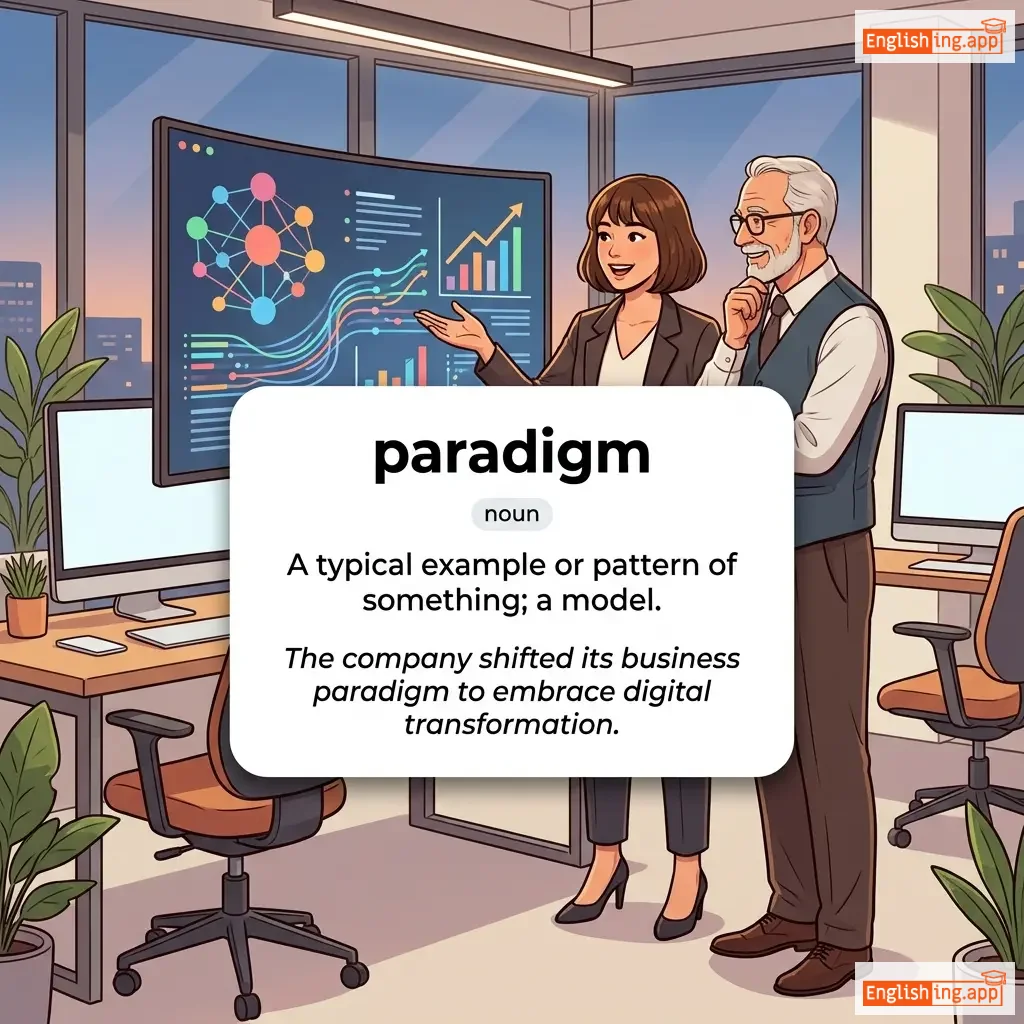
paradigm definition card — visual illustration of the meaning
noun C1
/ˈpærədaɪm/
模式 (moshi)

A typical example or pattern of something; a model.

"The company shifted its business paradigm to embrace digital transformation."

"公司改变了其商业模式,以适应数字化转型。" (Gongsi gaibian le qi shangye moshi, yi shiying shuzihua zhuanxing.)
adjective C1
/ˌpærəˈdɒksɪkəl/
矛盾的 (máodùn de)

Seemingly contradictory or opposed to common sense, yet possibly true.

"It is paradoxical that standing is often more tiring than walking."

"站立常常比走路更累,这很矛盾。" (Zhànlì chángcháng bǐ zǒulù gèng lèi, zhè hěn máodùn.)
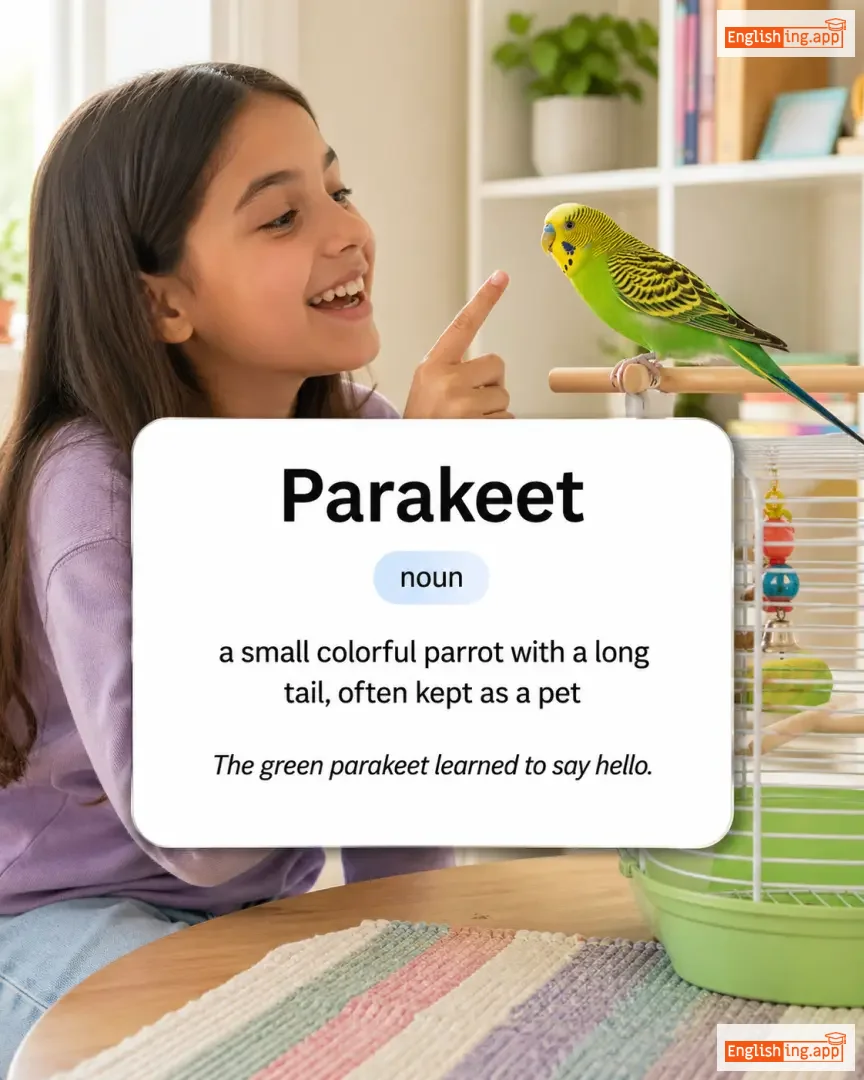
Parakeet definition card — visual illustration of the meaning
noun C1
/ˈpær.ə.kiːt/
鹦鹉 (yīngwǔ)

a small colorful parrot with a long tail, often kept as a pet

"The green parakeet learned to say hello."

"绿色鹦鹉学会了说你好。" (Lǜsè yīngwǔ xuéhuìle shuō nǐ hǎo.)
noun C1
/ˈpærəˌlɛlɪzəm/
平行主义 (pingxing zhuyi)

The state of being parallel or similar; in literature, the use of components in a sentence that are grammatically the same or similar in construction.

"The writer used parallelism to give rhythm to his prose."

"作家使用平行主义为他的散文增添了节奏。" (Zuojia shiyong pingxing zhuyi wei tade sanwen zengtian le jiezou.)
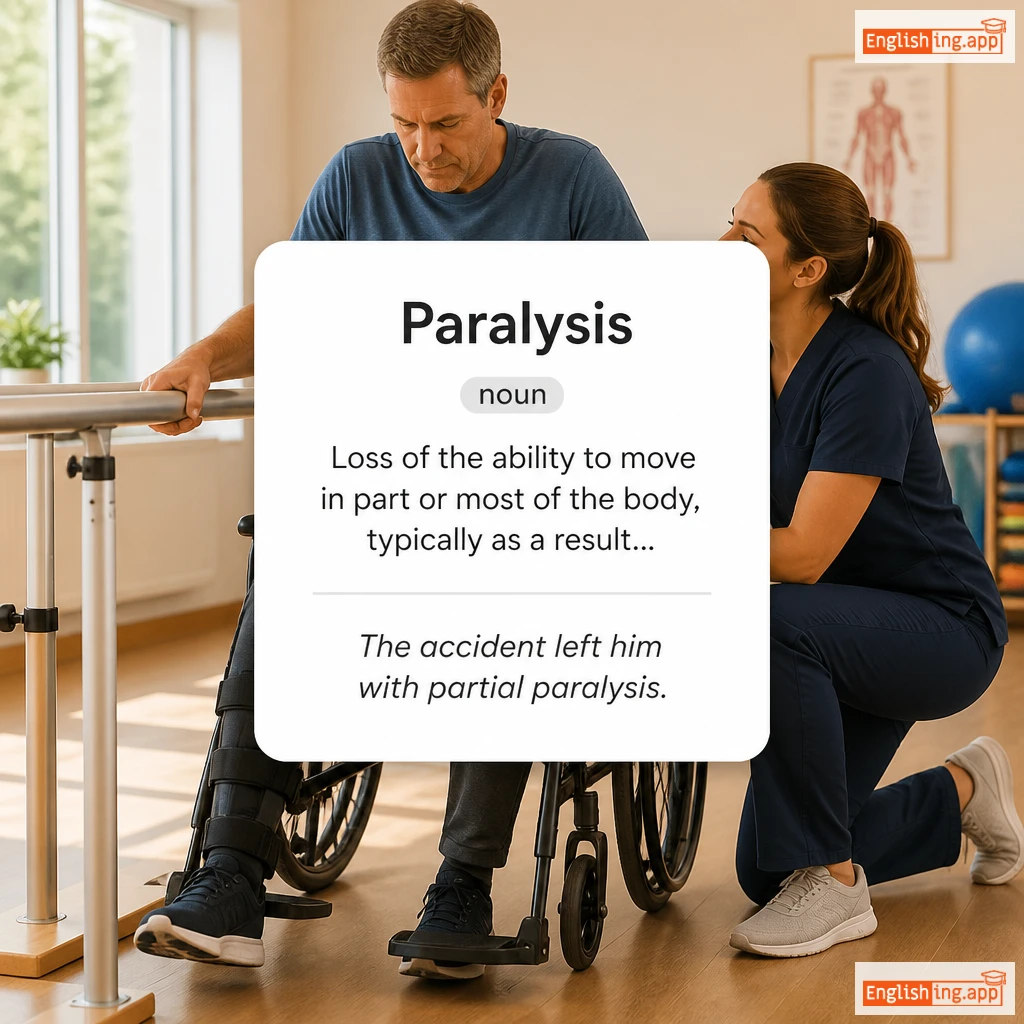
Paralysis definition card — visual illustration of the meaning
noun C1
/pəˈræləsɪs/
麻痹 (mábì)

Loss of the ability to move in part or most of the body, typically as a result of illness or injury.

"The accident left him with partial paralysis."

"事故使他部分瘫痪。" (Shìgù shǐ tā bùfen tānhuàn.)
verb C1
/ˈpærəlaɪz/
麻痹 (mábì)

to cause someone or something to lose the ability to move or function normally

"The sudden shock seemed to paralyze him."

"突如其来的冲击似乎使他麻痹。" (Túrúqílái de chōngjí shìhū shǐ tā mábì.)
adjective C1
/ˈpærəmaʊnt/
至关重要 (zhì guān zhòng yào)

more important than anything else; supreme

"Safety is of paramount importance in this factory."

"在这家工厂里,安全至关重要。" (Zài zhè jiā gōngchǎng lǐ, ānquán zhì guān zhòng yào.)
noun C1
/ˌpærəˈnɔɪə/
一种不合理且持续的感觉,认为别人想要伤害你或一直在监视你 (yī zhǒng bù hé lǐ qiě chí xù de gǎn jué, rèn wéi bié rén xiǎng yào shāng hài nǐ huò yī zhí zài jiān shì nǐ)

an irrational and persistent feeling that people are 'out to get you' or are constantly watching you

"His constant paranoia made it hard for him to trust anyone."

"他不断的偏执让他很难信任任何人。" (Tā bù duàn de piān zhí ràng tā hěn nán xìn rèn rèn hé rén.)
adjective C1
/ˈpær.ə.nɔɪd/
对他人有不合理的恐惧或怀疑 (duì tārén yǒu bù hé lǐ de kǒngjù huò huáiyí)

having an unreasonable fear or suspicion of others

"She became paranoid after hearing strange noises outside."

"她在听到外面奇怪的声音后变得偏执。" (Tā zài tīngdào wàimiàn qíguài de shēngyīn hòu biàn dé piānzhí.)
noun C1
/ˌpærəfəˈneɪliə/
设备 (shebei)

Miscellaneous articles, especially equipment needed for a particular activity.

"The fisherman carried all his fishing paraphernalia in a large box."

"渔夫把所有钓鱼设备放在一个大盒子里。" (Yufu ba suoyou diaoyu shebei fang zai yige da hezi li.)