Vokabulare

Englisches Vokabelwörterbuch | Wortbedeutungen, Definitionen & Beispiele

adjective C1
/ˌmɪsəˈleɪniəs/
雑多な (zattana)

Consisting of a variety of different items or types.

"The drawer was filled with miscellaneous objects."

"引き出しはさまざまな物でいっぱいだった。" (Hikidashi wa samazama na mono de ippai datta.)
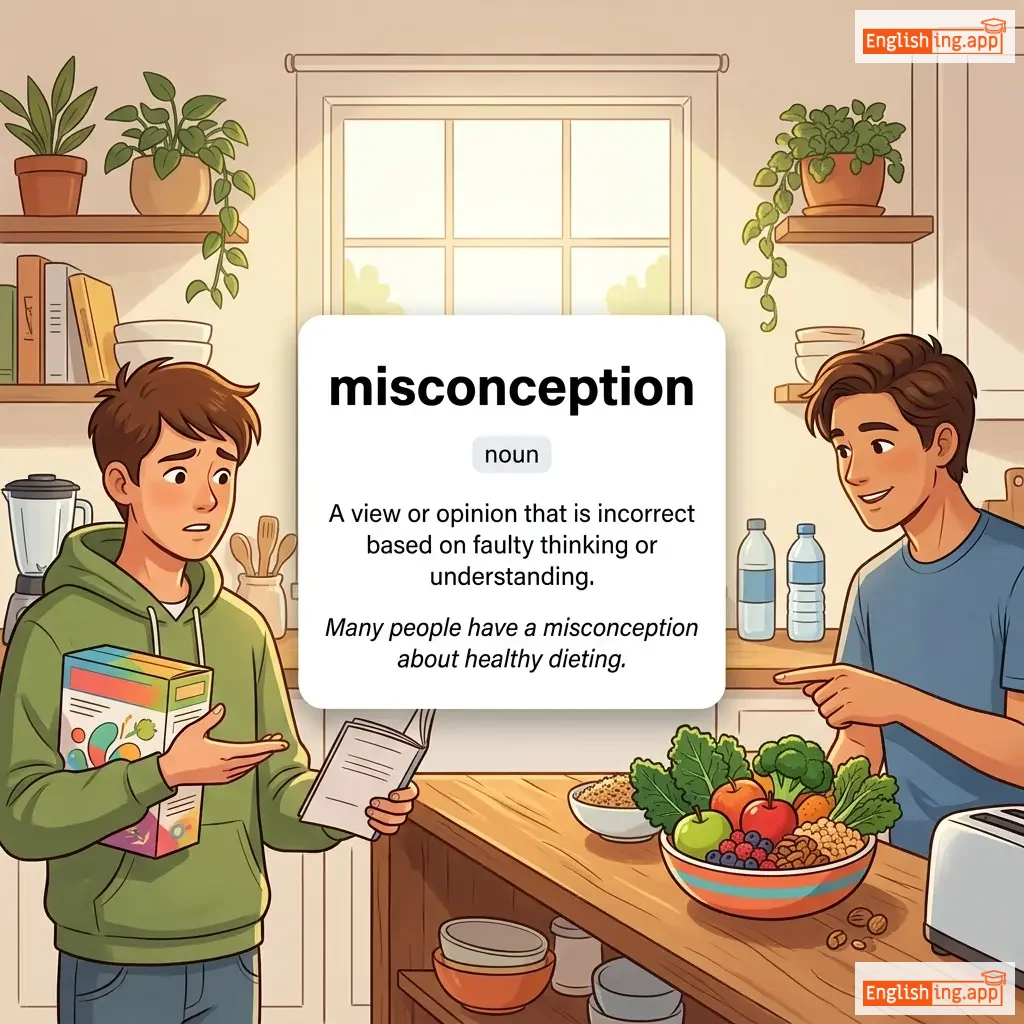
misconception definition card — visual illustration of the meaning
noun C1
/ˌmɪs.kənˈsep.ʃən/
誤解、間違った理解 (gokai, machigatta rikai)

A view or opinion that is incorrect based on faulty thinking or understanding.

"Many people have a misconception about healthy dieting."

"多くの人々は健康的な食事について誤解しています。" (Ōku no hitobito wa kenko-teki na shokuji ni tsuite gokai shiteimasu.)
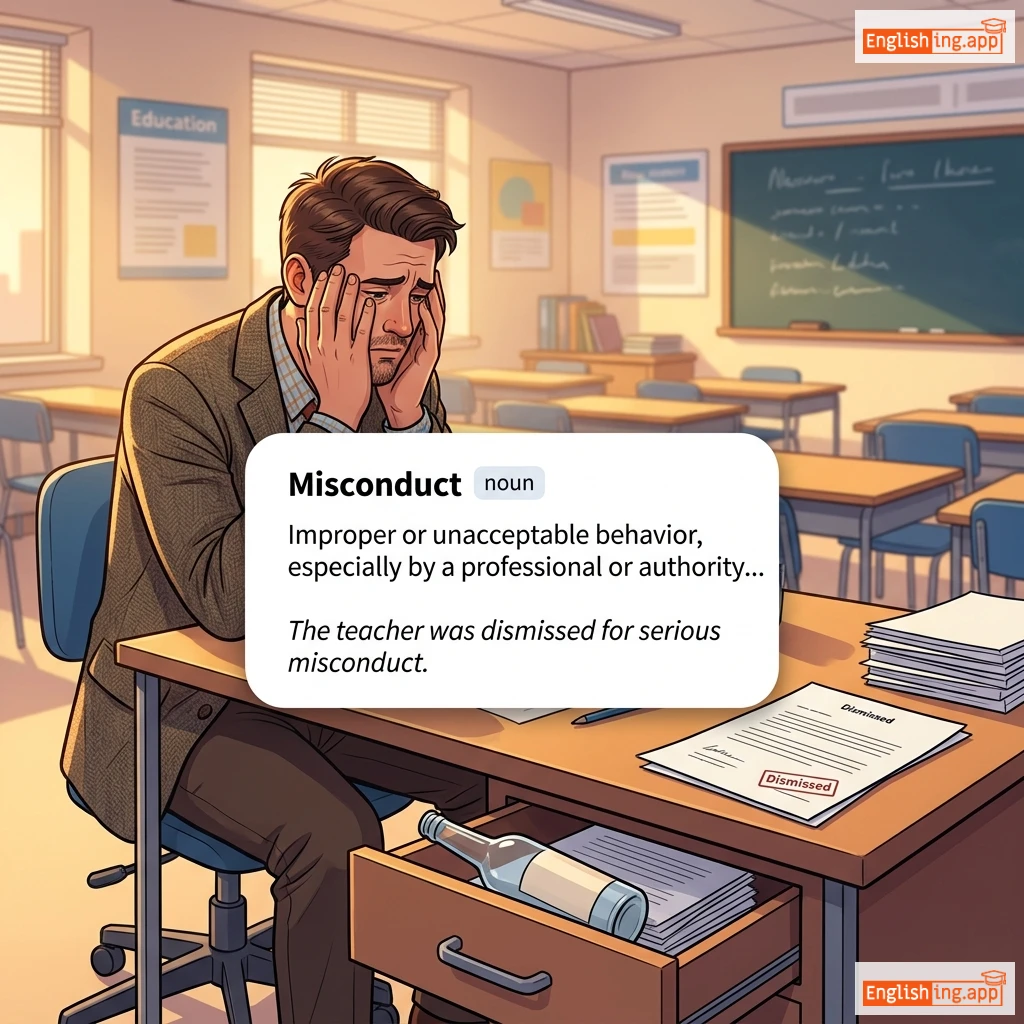
Misconduct definition card — visual illustration of the meaning
noun C1
/ˌmɪsˈkɒndʌkt/
不正行為 (fuseikoui)

Improper or unacceptable behavior, especially by a professional or authority figure.

"The teacher was dismissed for serious misconduct."

"教師は重大な不正行為のため解雇されました。" (Kyoushi wa juudaina fuseikoui no tame kaiko saremashita.)
verb C1
/ˌmɪsˈkaʊnt/
間違えて数える (machigaete kazoeru)

To count wrongly or inaccurately.

"He miscounted the number of chairs in the hall."

"彼はホールの椅子の数を間違えて数えました。" (Kare wa hōru no isu no kazu o machigaete kazoemashita.)
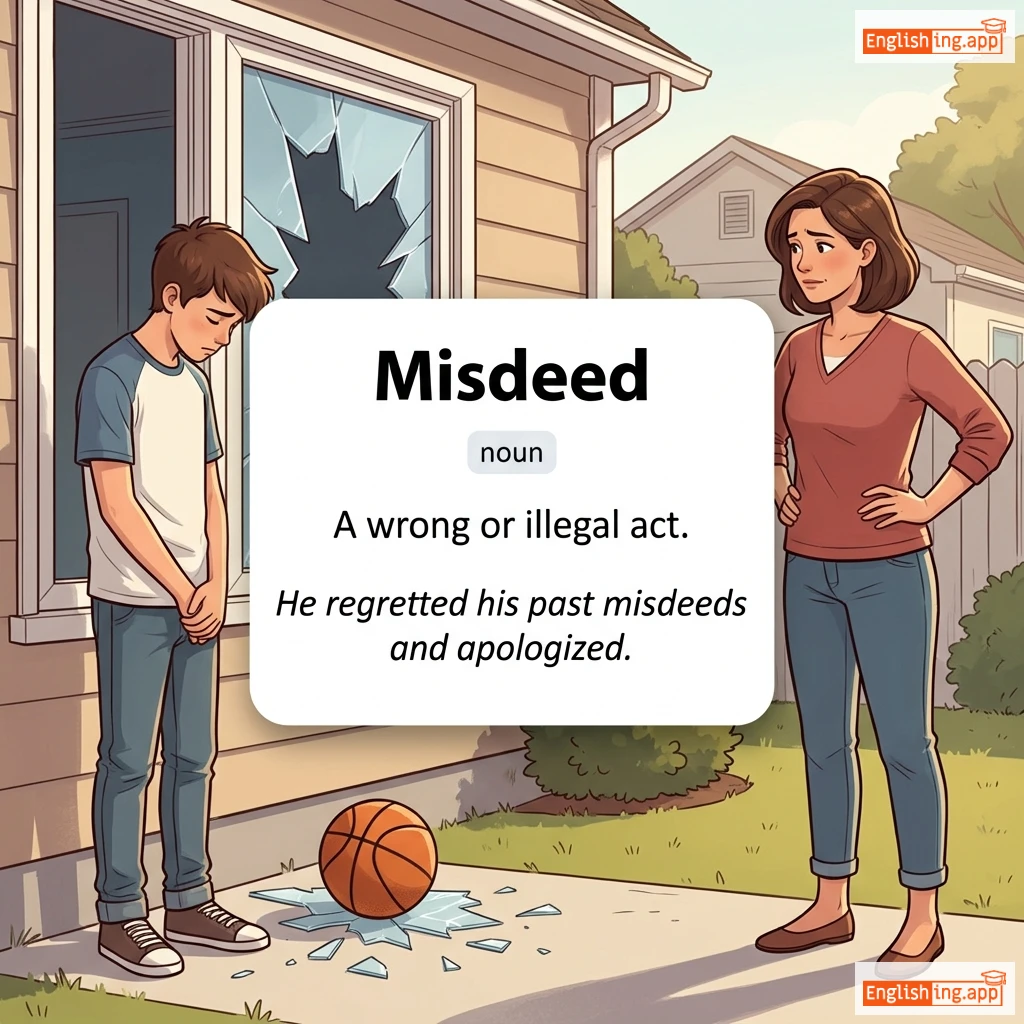
Misdeed definition card — visual illustration of the meaning
noun C1
/ˌmɪsˈdiːd/
不正行為 (fusei koui)

A wrong or illegal act.

"He regretted his past misdeeds and apologized."

"彼は自分の過去の悪行を後悔し、謝罪しました。" (Kare wa jibun no kako no akugyou o koukai shi, shazai shimashita.)
noun C1
/ˌmɪsdɪˈmiːnər/
軽犯罪 (keihanzai)

A minor wrongdoing or criminal offense that is less serious than a felony.

"He was fined for a misdemeanor involving public disturbance."

"公共の秩序に関わる軽犯罪で罰金を科された。" (Kōkyō no chitsujo ni kakawaru keihanzai de bakkin o kasareta.)
noun C1
/ˈmaɪzər/
けちん坊 (kechinbō)

A person who hoards wealth and spends as little money as possible.

"The old miser refused to donate even a penny to charity."

"その古いけちん坊は慈善団体に1ペニーも寄付することを拒否した。" (Sono furui kechinbō wa jizen dantai ni 1 penī mo kifu suru koto o kyohi shita.)
adjective C1
/ˈmaɪzərli/
けちな (kechina)

Unwilling to spend money; stingy.

"She lived a miserly life, refusing to buy anything new."

"彼女はけちな生活を送り、新しいものを買うことを拒んでいた。" (Kanojo wa kechina seikatsu o okuri, atarashī mono o kau koto o kobandeita.)
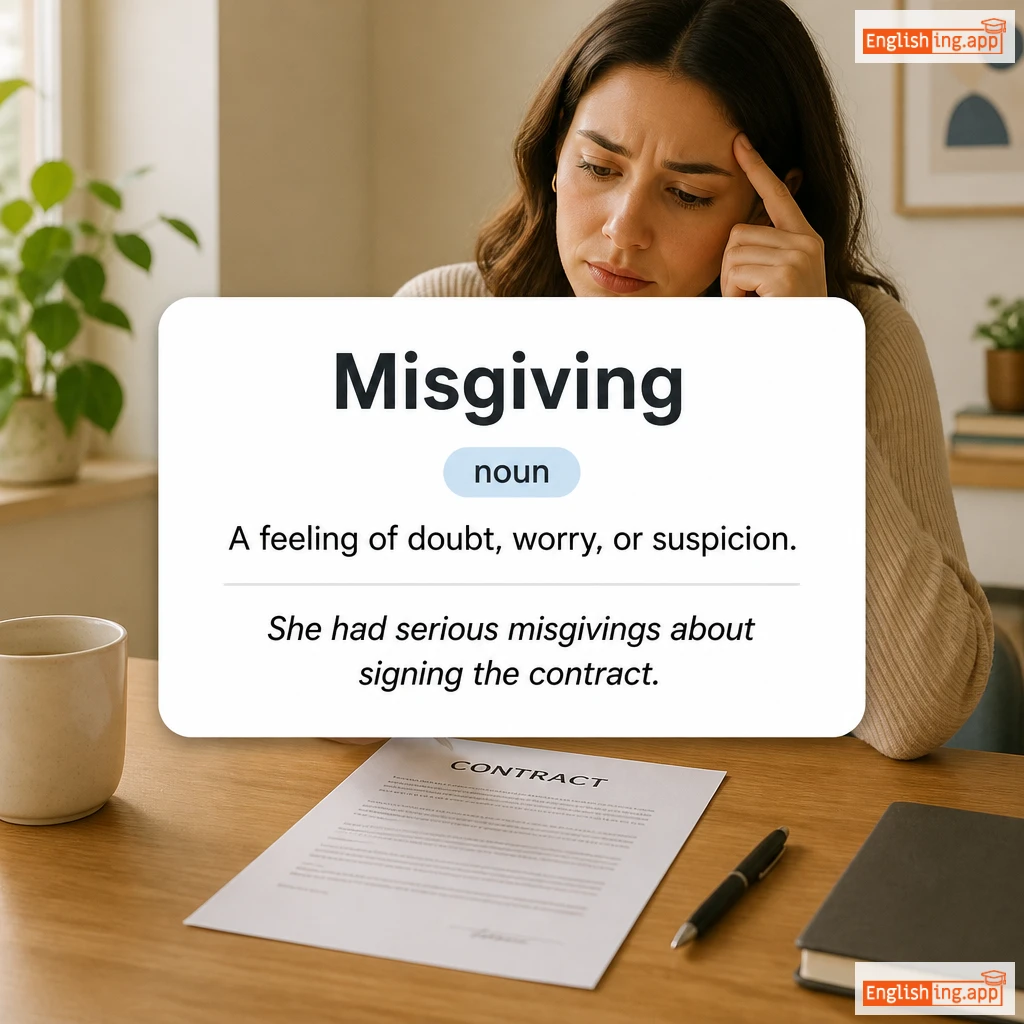
Misgiving definition card — visual illustration of the meaning
noun C1
/ˌmɪsˈɡɪvɪŋ/
疑念 (ginen)

A feeling of doubt, worry, or suspicion.

"She had serious misgivings about signing the contract."

"彼女は契約書にサインすることに対して真剣な疑念を抱いていた。" (Kanojo wa keiyakusho ni sain suru koto ni taishite shinken na ginen o daite ita.)
noun C1
/mɪsˈɡɪvɪŋz/
疑念、不安 (ginen, fuan)

feelings of doubt or concern about the outcome or propriety of something

"She had serious misgivings about signing the contract."

"彼女は契約書にサインすることに対して深刻な疑念を抱いていた。" (Kanojo wa keiyaku-sho ni sain suru koto ni taishite shinkoku na ginen o idaite ita.)
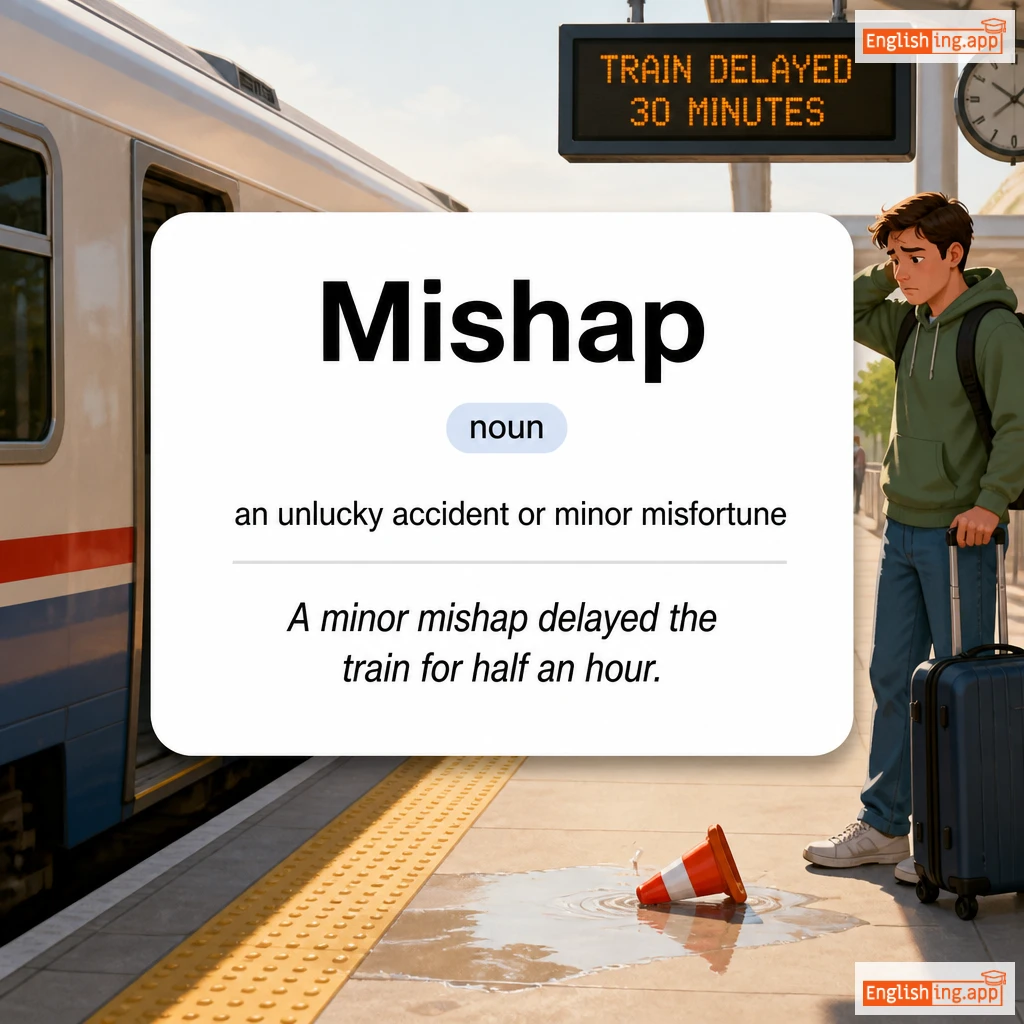
Mishap definition card — visual illustration of the meaning
noun C1
/ˈmɪshæp/
不運, 小さな事故 (fuun, chiisana jiko)

an unlucky accident or minor misfortune

"A minor mishap delayed the train for half an hour."

"小さな事故で電車は30分遅れました。" (Chiisana jiko de densha wa 30-pun okuremashita.)
verb C1
/ˌmɪsɪnˈtɜːrprɪt/
誤解する (gokai suru)

to understand or explain something wrongly

"He misinterpreted her silence as agreement."

"彼は彼女の沈黙を同意と誤解した。" (Kare wa kanojo no chinmoku o dōi to gokai shita.)
verb C1
/ˌmɪsˈmænɪdʒ/

to handle or control something badly or inefficiently

"The company went bankrupt because it was mismanaged for years."

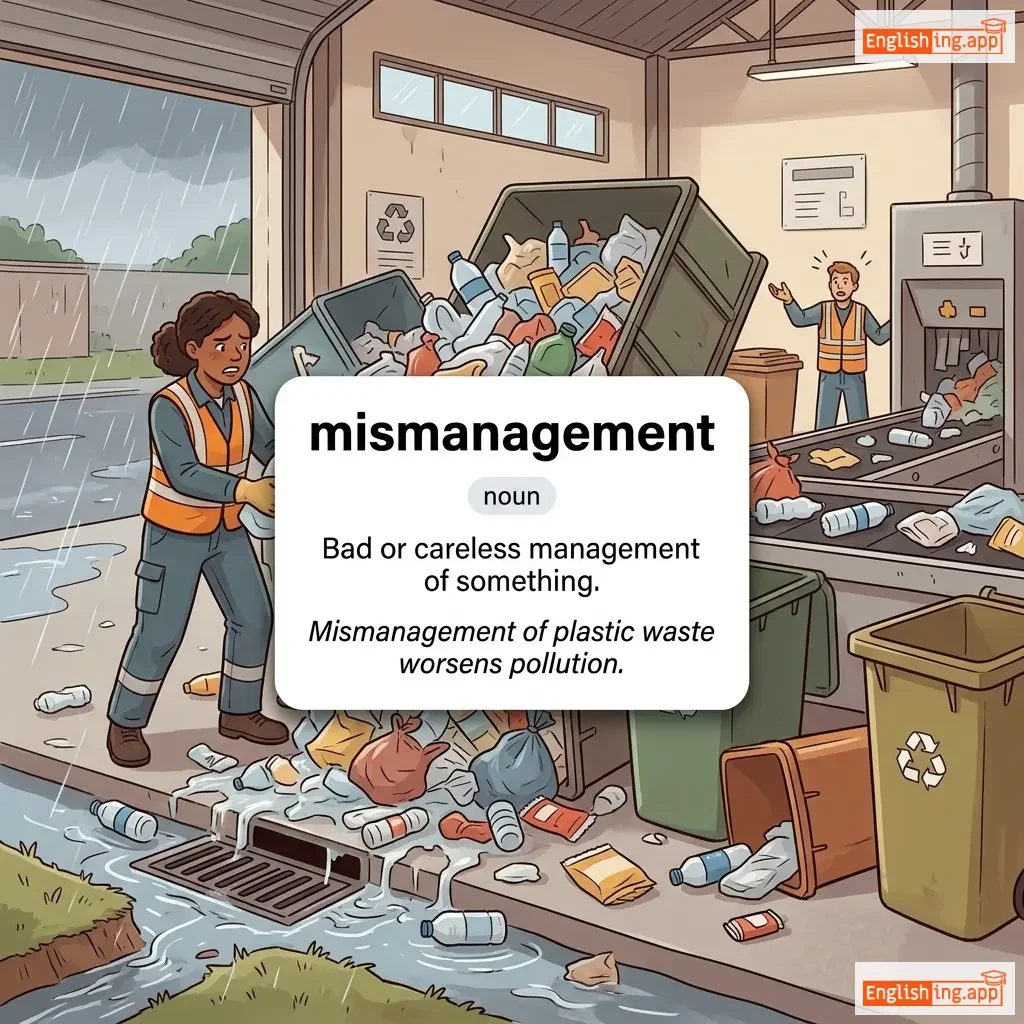
mismanagement definition card — visual illustration of the meaning
noun C1
ˌmɪsˈmænɪdʒmənt
不適切な管理 (futekisetsu na kanri)

Bad or careless management of something.

"Mismanagement of plastic waste worsens pollution."

"プラスチックごみの不適切な管理が汚染を悪化させます。" (Purasutikku gomi no futekisetsu na kanri ga osen o akka sasemasu.)
noun C1
/mɪˈsɑːdʒəni/
女性嫌悪 (josei ken'o)

Hatred of, contempt for, or prejudice against women.

"The novel has been criticized for promoting misogyny."

"その小説は女性嫌悪を助長すると批判された。" (Sono shōsetsu wa josei ken'o o jochō suru to hihan sareta.)
verb C1
/ˌmɪsˈpleɪs/
間違った場所に置く (machigatta basho ni oku)

To put something in the wrong location and temporarily lose it.

"I often misplace my keys when I am in a hurry."

"急いでいるとき、よく鍵を間違った場所に置いてしまいます。" (Isoide iru toki, yoku kagi o machigatta basho ni oite shimaimasu.)
verb C1
/ˌmɪsˈriːd/
誤って読む (ayamatte yomu)

to read something incorrectly or interpret wrongly

"He misread the instructions and built the shelf incorrectly."

"彼は指示を誤読して棚を間違って作った。" (Kare wa shiji o godoku shite tana o machigatte tsukutta.)
verb C1
/ˌmɪsˌrɛprɪˈzɛnt/

to give a false or misleading account of something

"The lawyer accused the witness of trying to misrepresent the facts."

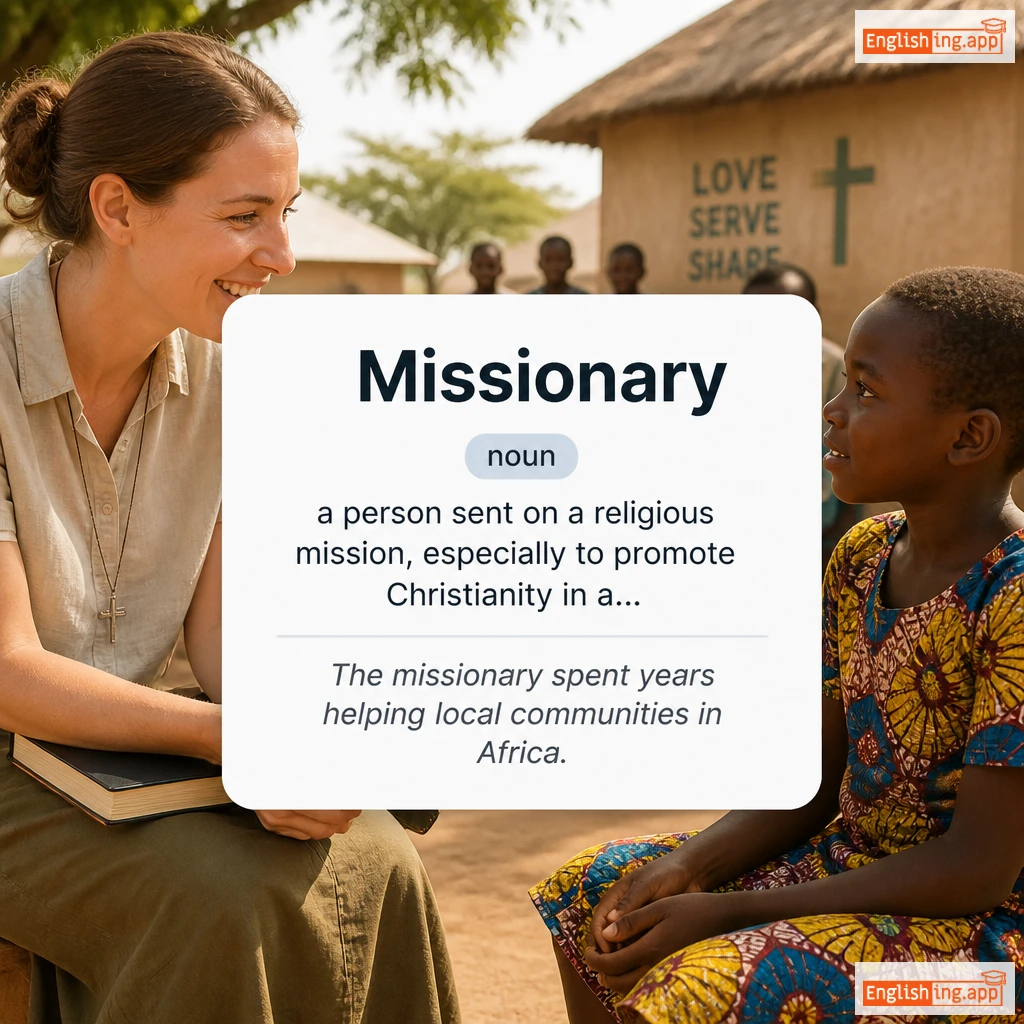
Missionary definition card — visual illustration of the meaning
noun C1
/ˈmɪʃəneri/
宣教師 (senkyōshi)

a person sent on a religious mission, especially to promote Christianity in a foreign country

"The missionary spent years helping local communities in Africa."

"その宣教師はアフリカで地元のコミュニティを支援するために何年も費やしました。" (Sono senkyōshi wa Afurika de jimoto no komyuniti o shien suru tame ni nannen mo tsuiyashimashita.)
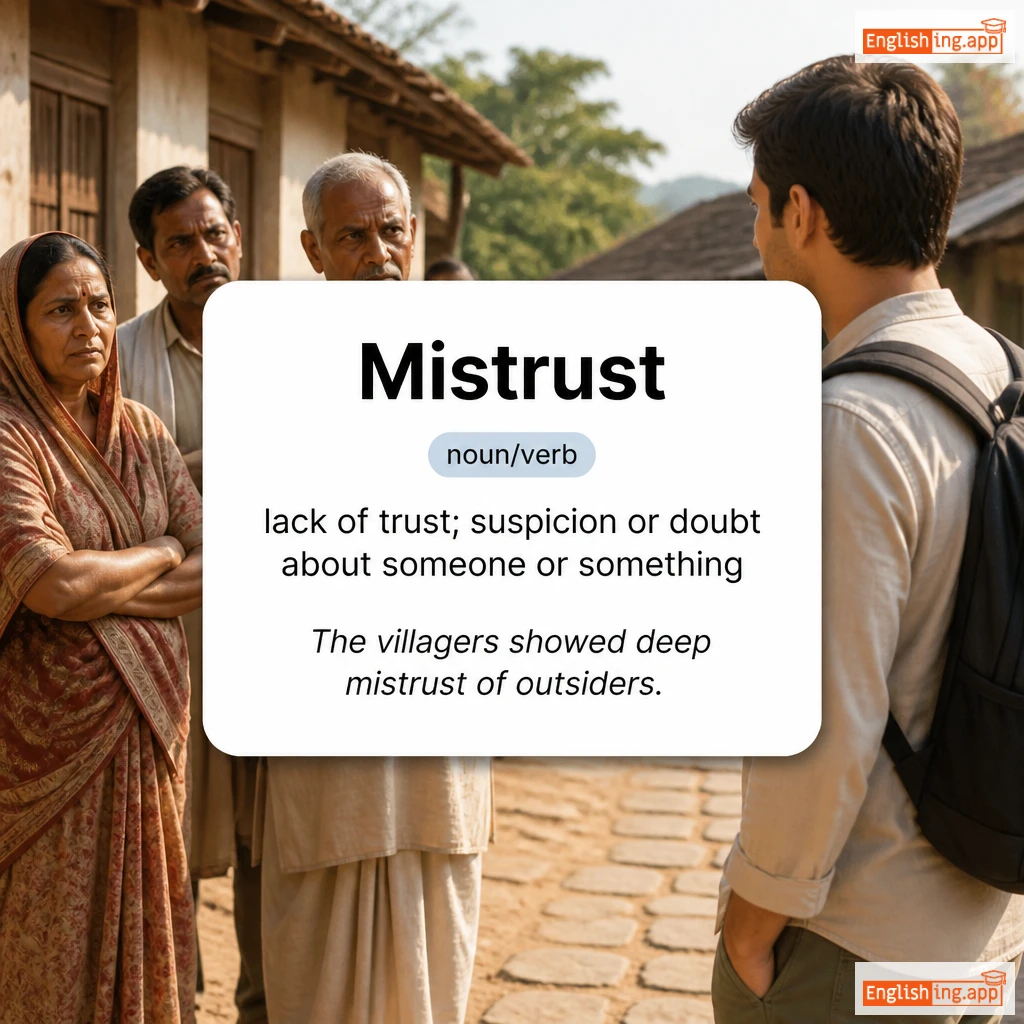
Mistrust definition card — visual illustration of the meaning
noun/verb C1
/ˌmɪsˈtrʌst/
不信 (fushin)

lack of trust; suspicion or doubt about someone or something

"The villagers showed deep mistrust of outsiders."

"村人たちは外部の人々に深い不信を示しました。" (Murabito-tachi wa gaibu no hitobito ni fukai fushin o shimashita.)
noun C1
/maɪt/
ダニ (dani)

a very small creature, often a tiny arachnid; also used to mean a very small amount

"The mattress was infested with dust mites."

"マットレスはホコリのダニに感染していました。" (Mattoresu wa hokori no dani ni kansen shite imashita.)
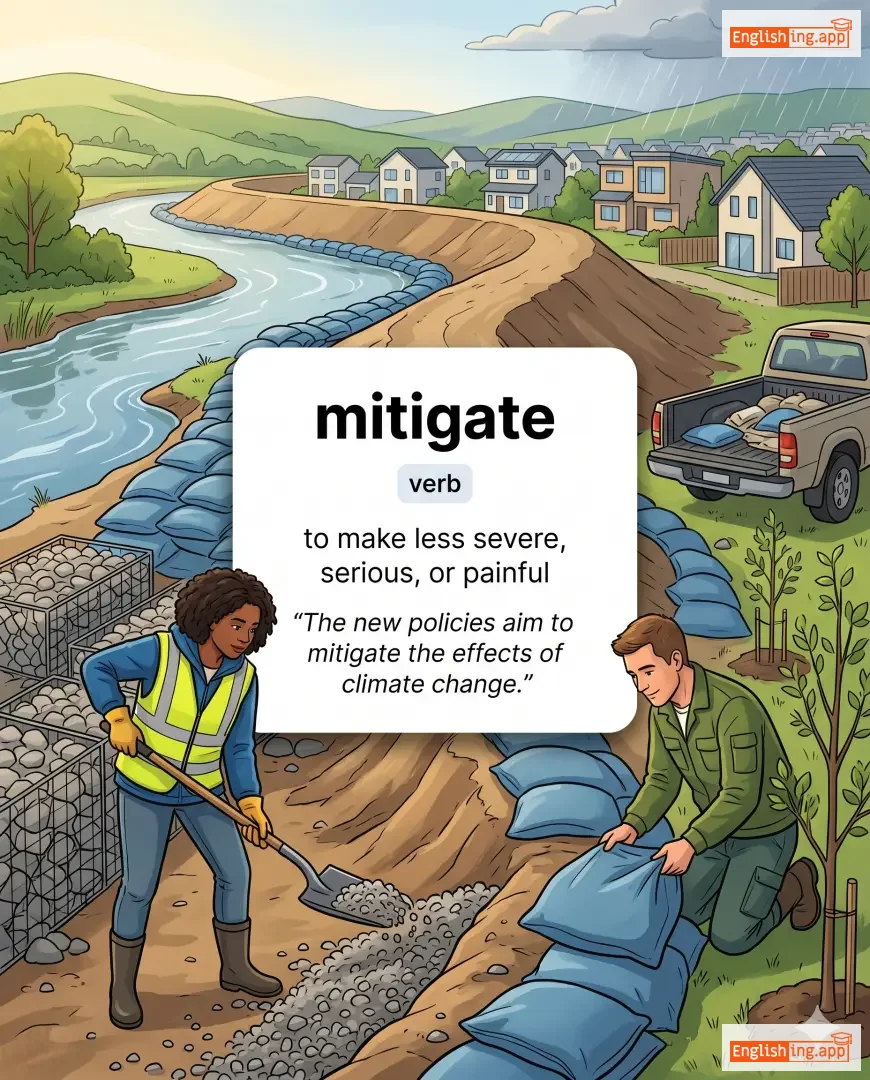
mitigate definition card — visual illustration of the meaning
verb C1
/ˈmɪtɪˌɡeɪt/
軽減する (keigen suru)

to make less severe, serious, or painful

"The new policies aim to mitigate the effects of climate change."

"新しい政策は気候変動の影響を軽減することを目指しています。" (Atarashii seisaku wa kikō hendō no eikyō o keigen suru koto o mezashiteimasu.)
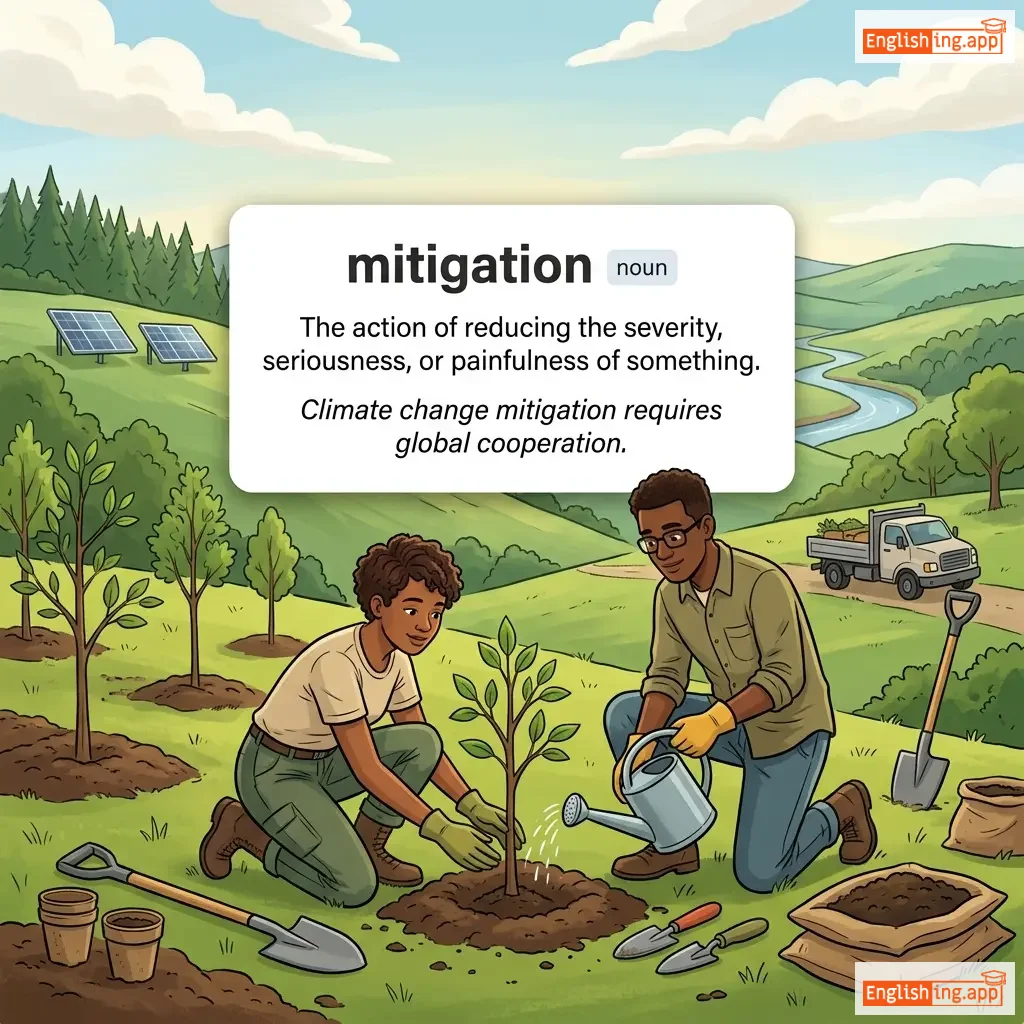
mitigation definition card — visual illustration of the meaning
noun C1
ˌmɪt.ɪˈɡeɪ.ʃən
緩和 (kanwa)

The action of reducing the severity, seriousness, or painfulness of something.

"Climate change mitigation requires global cooperation."

"気候変動の緩和には、世界的な協力が必要です。" (Kikō hendō no kanwa ni wa, sekaiteki na kyōryoku ga hitsuyō desu.)
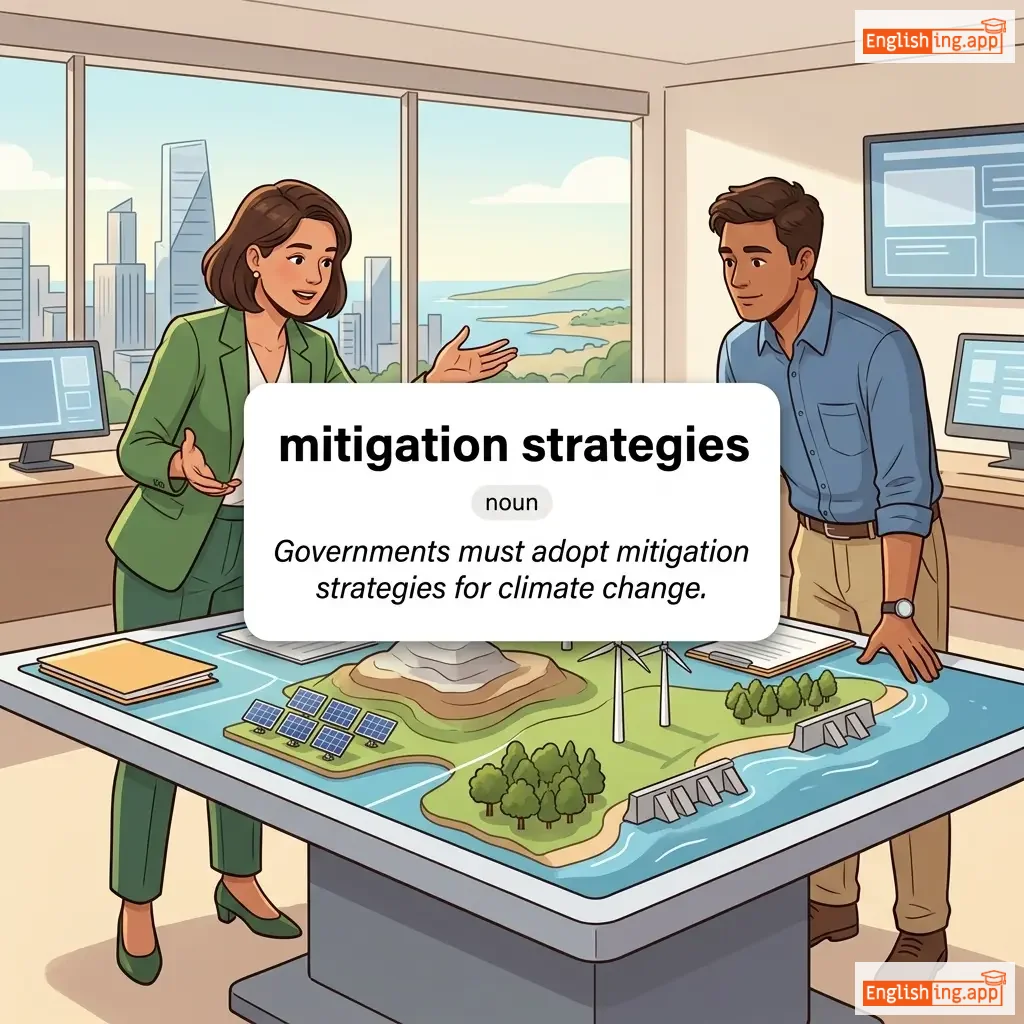
mitigation strategies definition card — visual illustration of the meaning
noun C1
ˌmɪtɪˈɡeɪʃən ˈstrætədʒiz
緩和戦略 (kanwa senryaku)

Plans and actions designed to reduce the severity or impact of problems or risks.

"Governments must adopt mitigation strategies for climate change."

"政府は気候変動に対処するための緩和戦略を採用する必要があります。" (Seifu wa kikō hendō ni taisho suru tame no kanwa senryaku o saiyō suru hitsuyō ga arimasu.)
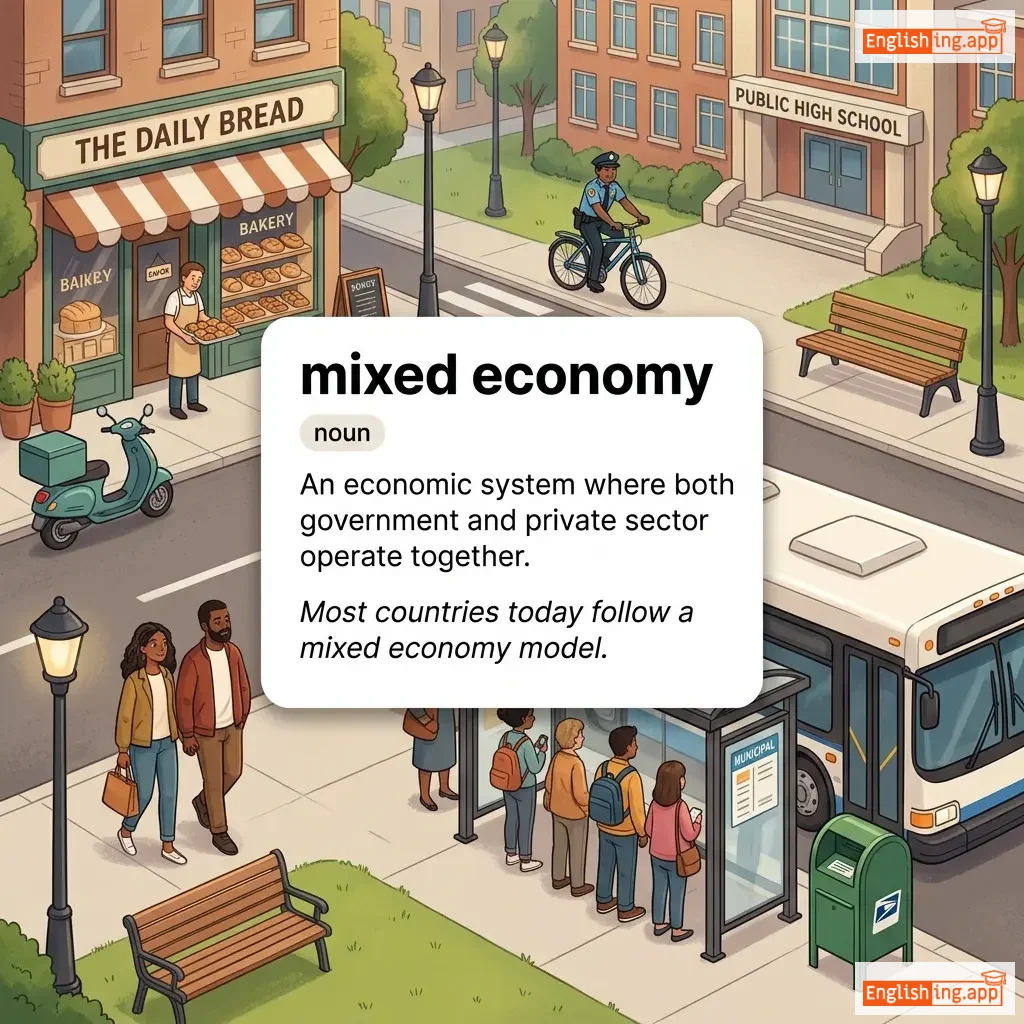
mixed economy definition card — visual illustration of the meaning
noun C1
/mɪkst ɪˈkɒn.ə.mi/
混合経済 (kongō keizai)

An economic system where both government and private sector operate together.

"Most countries today follow a mixed economy model."

"現在、ほとんどの国が混合経済モデルを採用しています。" (Genzai, hotondo no kuni ga kongō keizai moderu o sai-yō shiteimasu.)
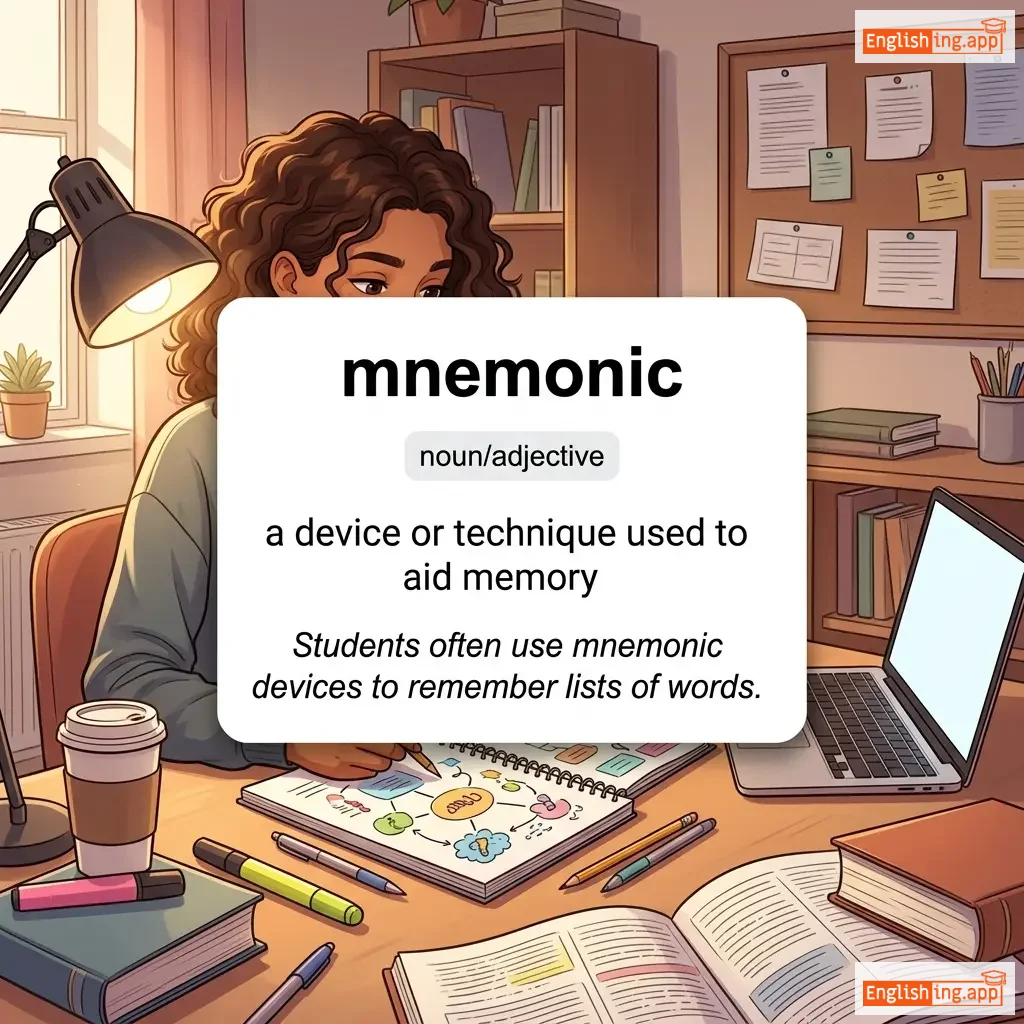
mnemonic definition card — visual illustration of the meaning
noun/adjective C1
/nɪˈmɒnɪk/

a device or technique used to aid memory

"Students often use mnemonic devices to remember lists of words."

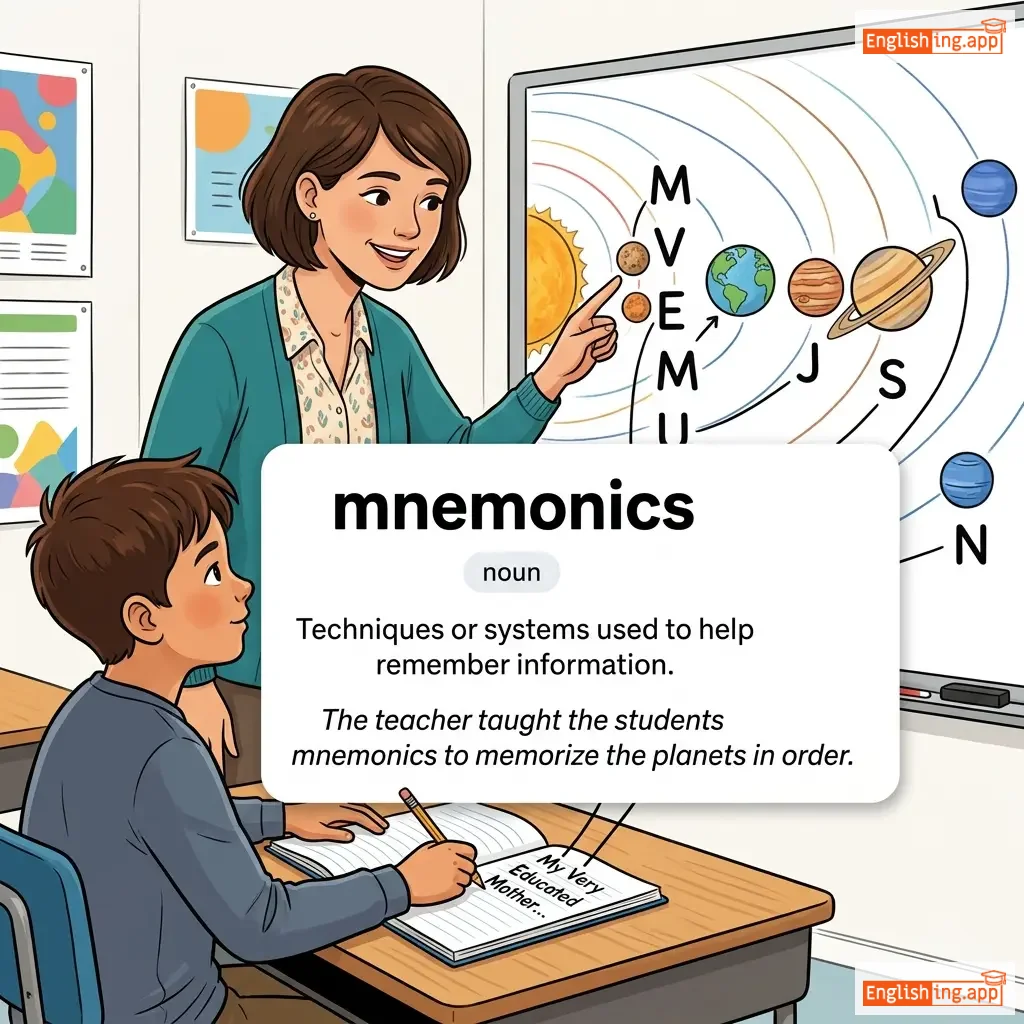
mnemonics definition card — visual illustration of the meaning
noun C1
/nɪˈmɒnɪks/
記憶術 (kiokujutsu)

Techniques or systems used to help remember information.

"The teacher taught the students mnemonics to memorize the planets in order."

"先生は生徒たちに惑星を順番に覚えるための記憶法を教えました。" (Sensei wa seito-tachi ni wakusei o junban ni oboeru tame no kioku-hō o oshiemashita.)
noun C1
/moʊt/
(hori)

A deep, wide ditch surrounding a castle or town, often filled with water, for defense.

"The castle was protected by a wide moat filled with water."

"城は水で満たされた広い堀によって守られていました。" (Shiro wa mizu de mitasareta hiroi hori ni yotte mamorarete imashita.)
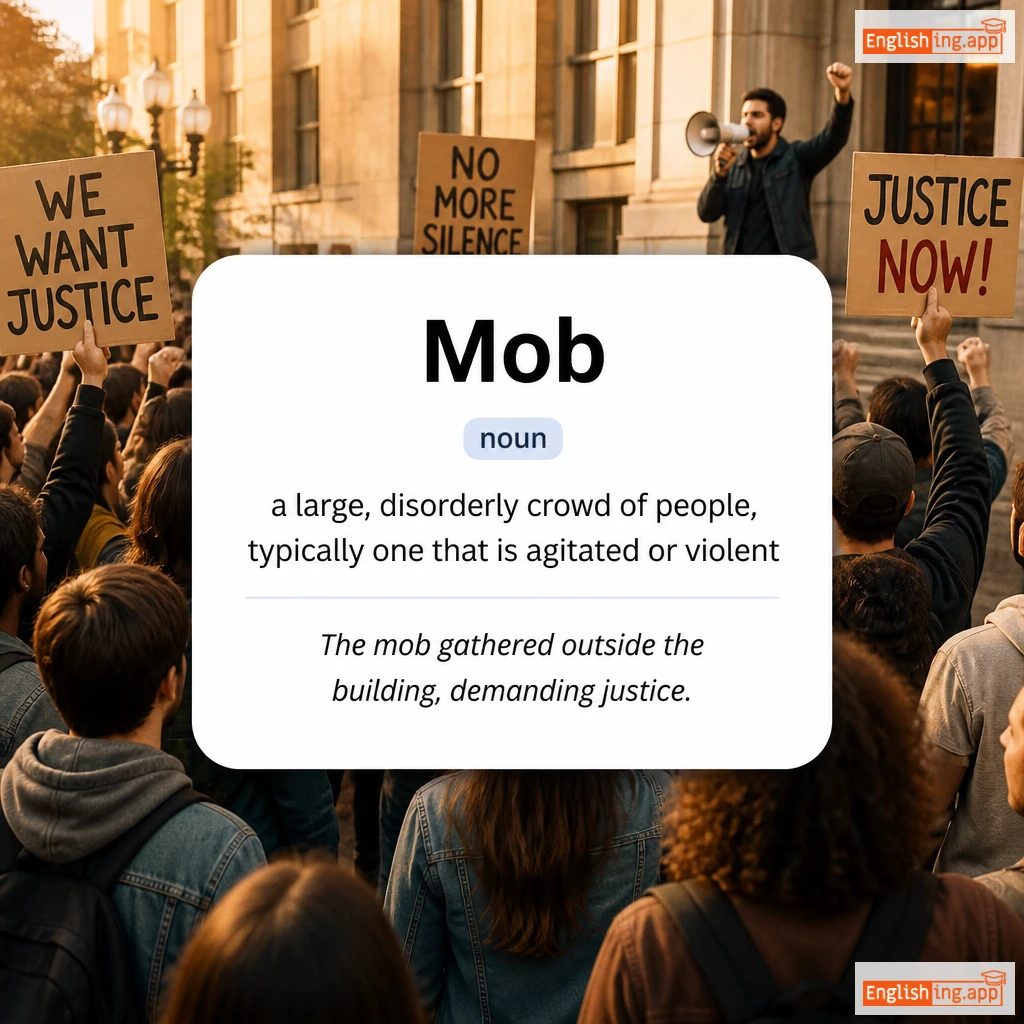
Mob definition card — visual illustration of the meaning
noun C1
/mɒb/
群衆 (gunshuu)

a large, disorderly crowd of people, typically one that is agitated or violent

"The mob gathered outside the building, demanding justice."

"群衆は建物の外に集まり、正義を求めていた。" (Gunshuu wa tatemono no soto ni atsumari, seigi o motomete ita.)
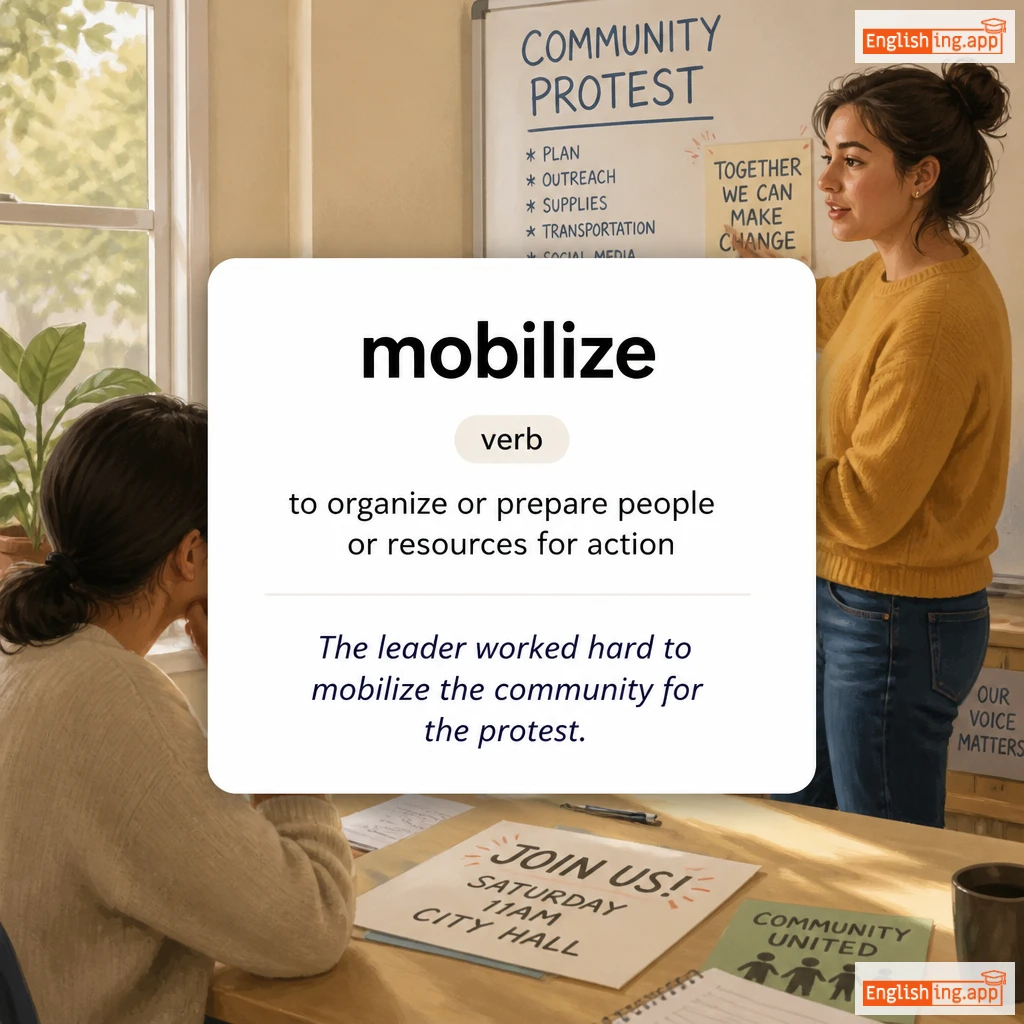
mobilize definition card — visual illustration of the meaning
verb C1
/ˈməʊbɪlaɪz/
動員する (douin suru)

to organize or prepare people or resources for action

"The leader worked hard to mobilize the community for the protest."

"リーダーは抗議のためにコミュニティを動員するために一生懸命働きました。" (Rīdā wa kōgi no tame ni komyuniti o dōin suru tame ni isshōkenmei hatarakimashita.)
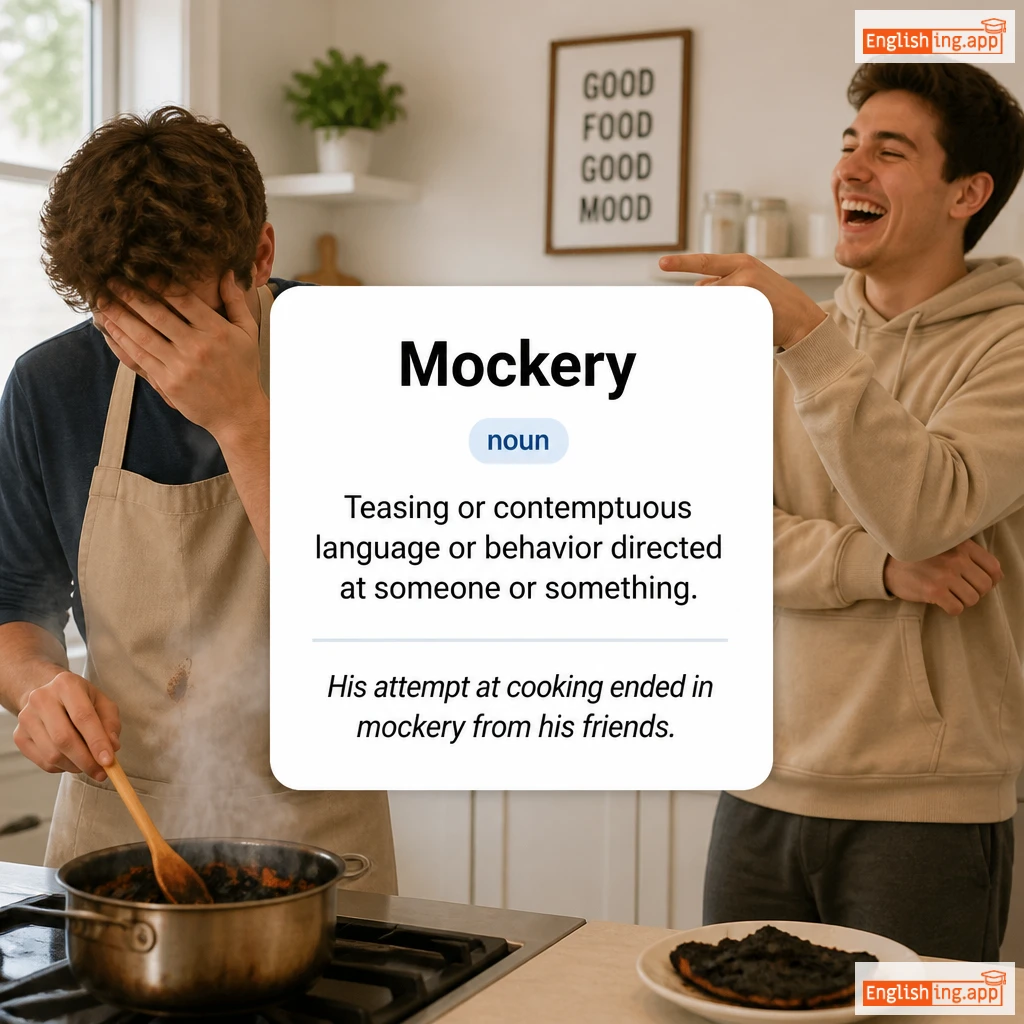
Mockery definition card — visual illustration of the meaning
noun C1
/ˈmɒkəri/
嘲笑、冷笑 (chōshō, reisō)

Teasing or contemptuous language or behavior directed at someone or something.

"His attempt at cooking ended in mockery from his friends."

"彼の料理の試みは友達の嘲笑で終わった。" (Kare no ryōri no kokoromi wa tomodachi no chōshō de owatta.)
noun C1
/məˈdɜːrnəti/
現代性 (gendai-sei)

The quality or condition of being modern; up-to-date ideas, practices, or style.

"The city’s architecture reflects both tradition and modernity."

"その都市の建築は、伝統と現代性の両方を反映しています。" (Sono toshi no kenchiku wa, dentou to gendai-sei no ryōhō o han'ei shiteimasu.)
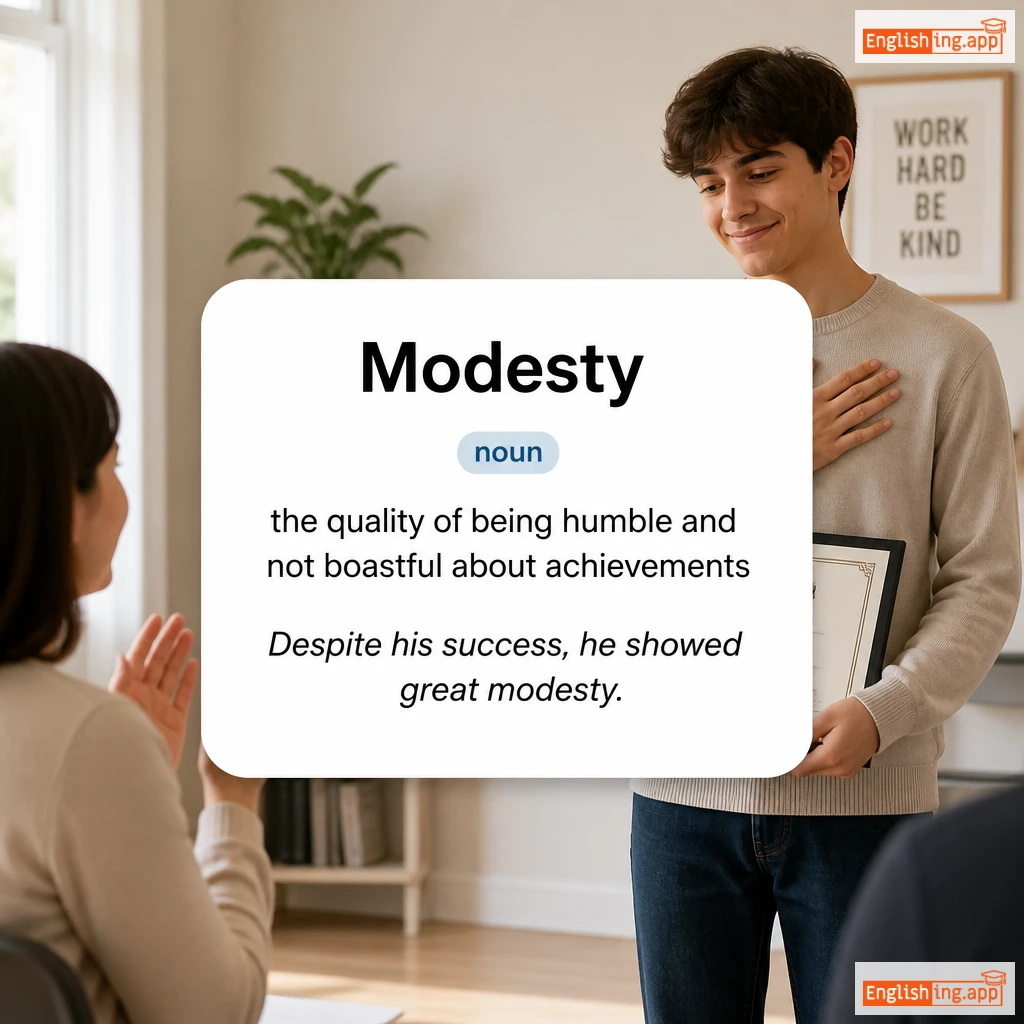
Modesty definition card — visual illustration of the meaning
noun C1
/ˈmɒd.ə.sti/
謙虚さ; 謙遜 (kenkyosa; kenson)

the quality of being humble and not boastful about achievements

"Despite his success, he showed great modesty."

"成功にもかかわらず、彼は偉大な謙虚さを示しました。" (Seikou ni mo kakawarazu, kare wa idaina kenkyosa wo shimashita.)
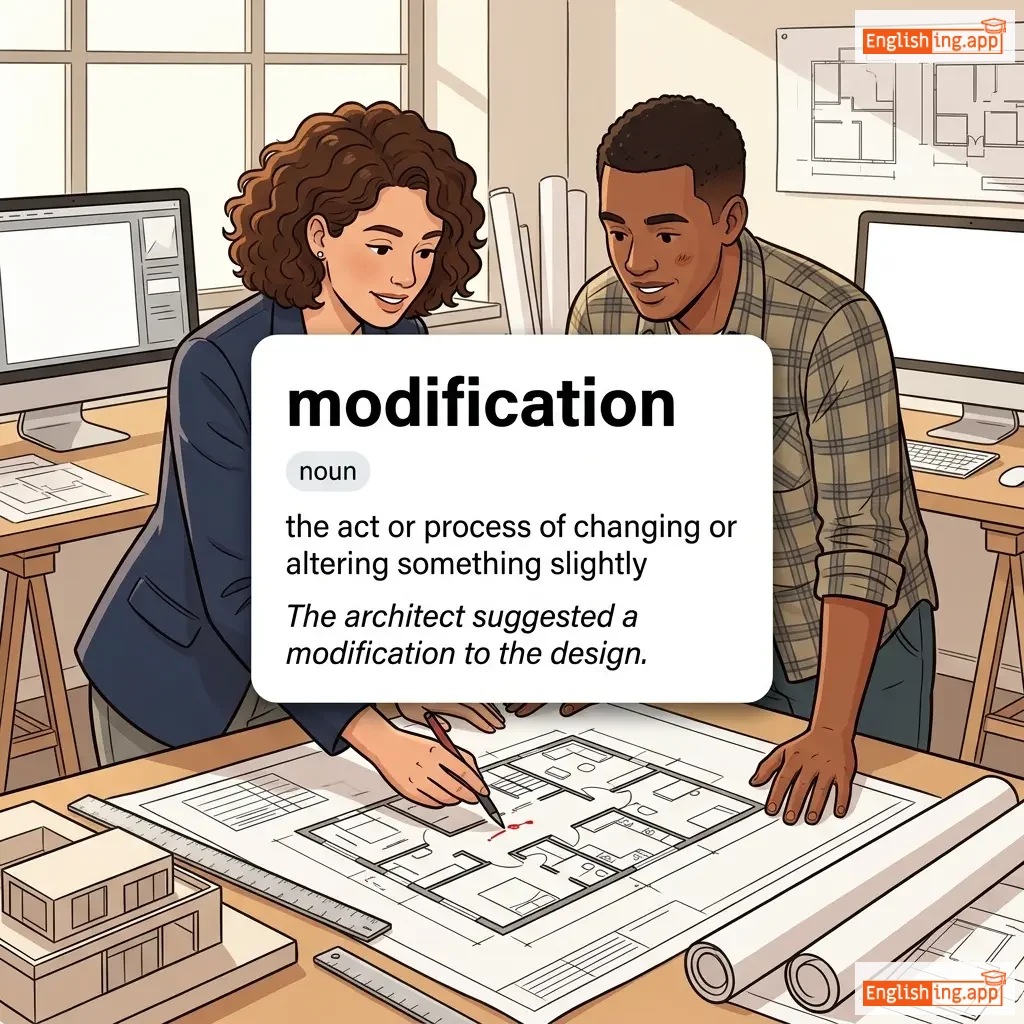
modification definition card — visual illustration of the meaning
noun C1
/ˌmɒdɪfɪˈkeɪʃən/
修正 (shūsei)

the act or process of changing or altering something slightly

"The architect suggested a modification to the design."

"建築家はデザインの修正を提案しました。" (Kenchikuka wa dezain no shūsei o teian shimashita.)
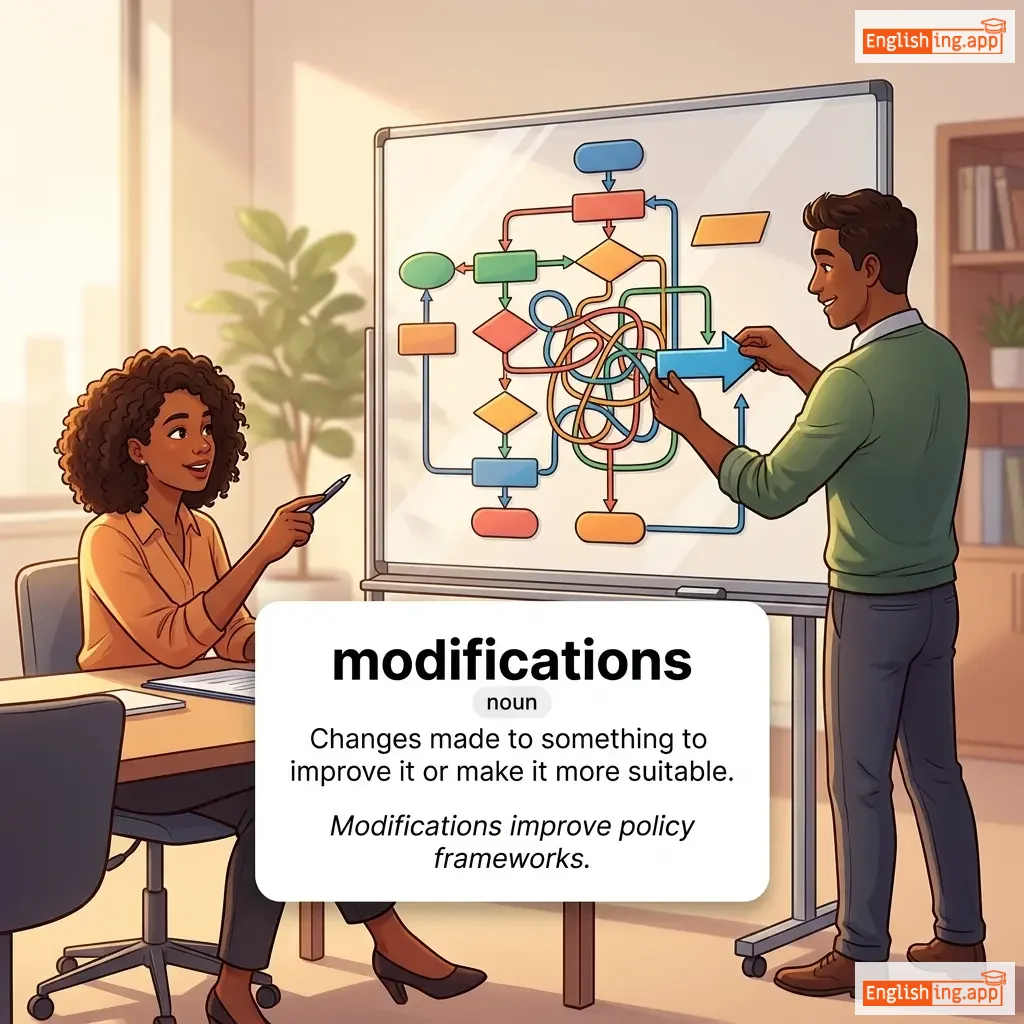
modifications definition card — visual illustration of the meaning
noun C1
ˌmɒd.ɪ.fɪˈkeɪ.ʃənz
変更 (henkou)

Changes made to something to improve it or make it more suitable.

"Modifications improve policy frameworks."

"変更は政策フレームワークを改善します。" (Henkou wa seisaku fureemuwaaku o kaizen shimasu.)
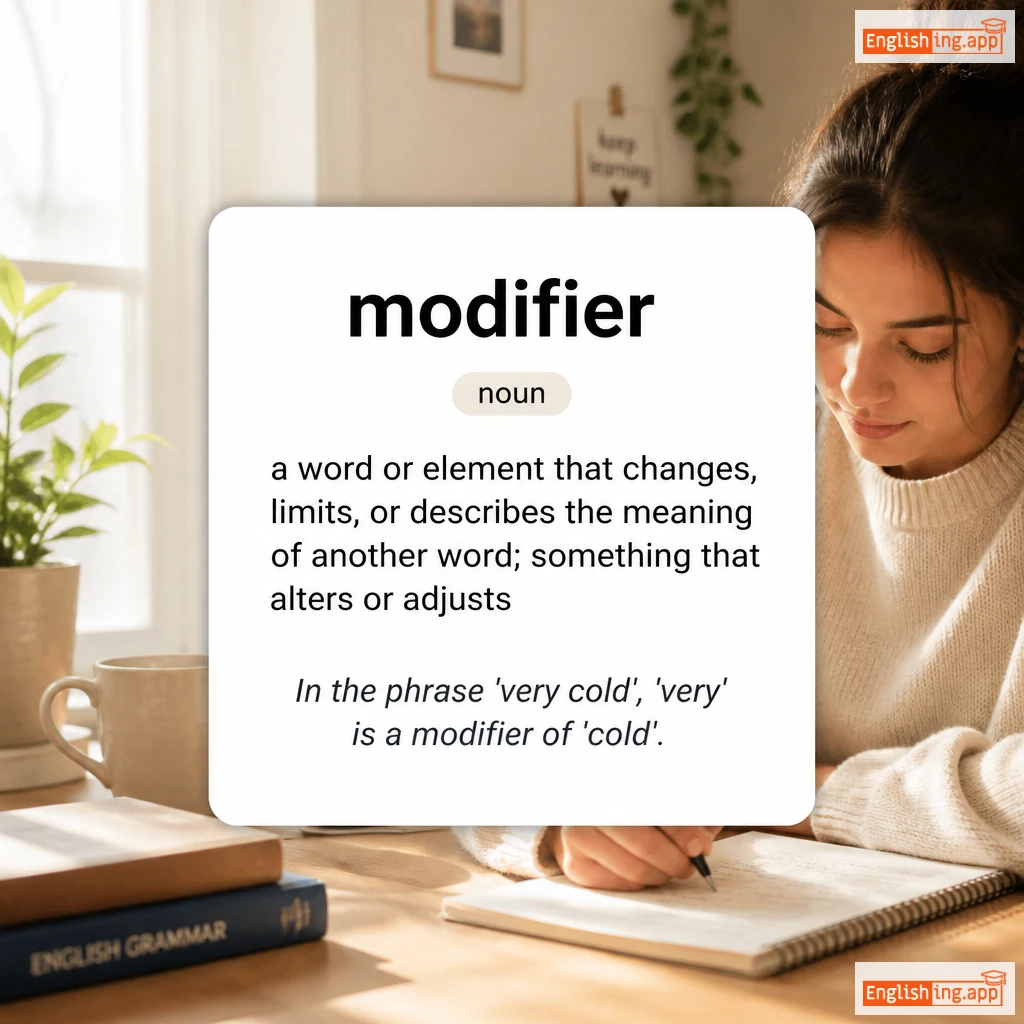
modifier definition card — visual illustration of the meaning
noun C1
/ˈmɒdɪfaɪər/
修飾語 (shuushokugo)

a word or element that changes, limits, or describes the meaning of another word; something that alters or adjusts

"In the phrase 'very cold', 'very' is a modifier of 'cold'."

"「very cold」という句では、「very」は「cold」を修飾する語です。" (very cold to iu ku dewa very wa cold o shuushoku suru go desu)
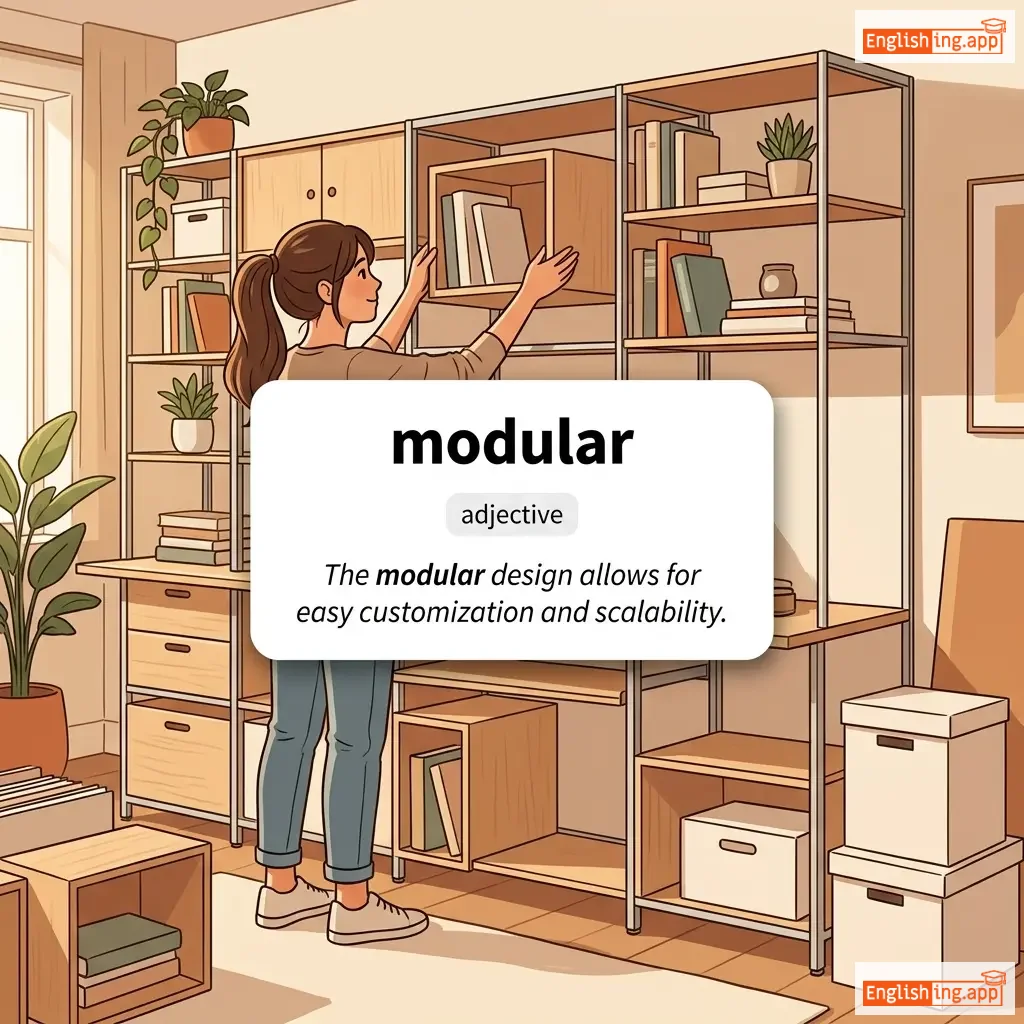
modular definition card — visual illustration of the meaning
adjective C1
/ˈmɒdʒʊlər/
モジュラー (mojuraa)

Employing or involving a module or modules as the basis of design or construction.

"The modular design allows for easy customization and scalability."

"モジュラー設計は簡単なカスタマイズとスケーラビリティを提供します。" (Mojuraa sekkei wa kantan na kasutamaizu to sukeerabiriti o teikyō shimasu.)
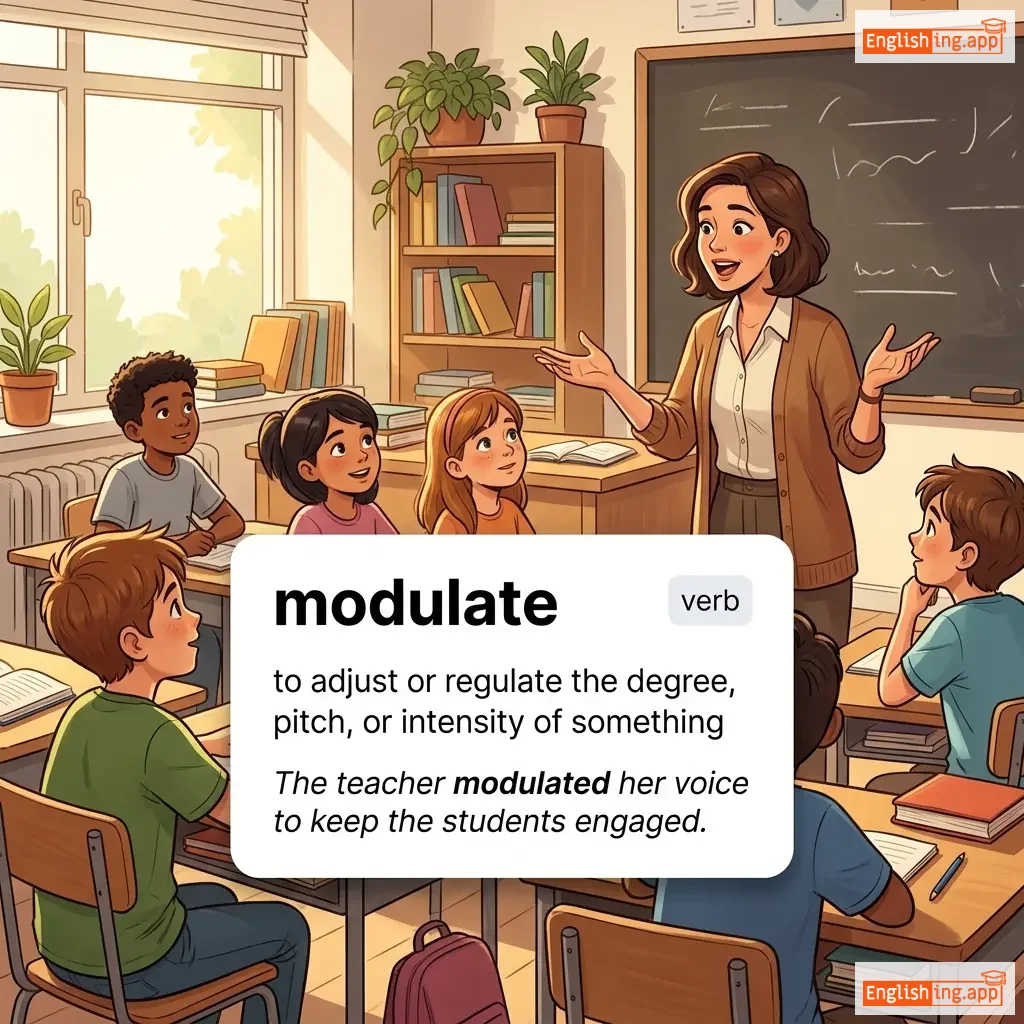
modulate definition card — visual illustration of the meaning
verb C1
/ˈmɒdjʊleɪt/
調整する (chōsei suru)

to adjust or regulate the degree, pitch, or intensity of something

"The teacher modulated her voice to keep the students engaged."

"教師は生徒を引きつけるために声を調整しました。" (Kyōshi wa seito o hikitsukeru tame ni koe o chōsei shimashita.)
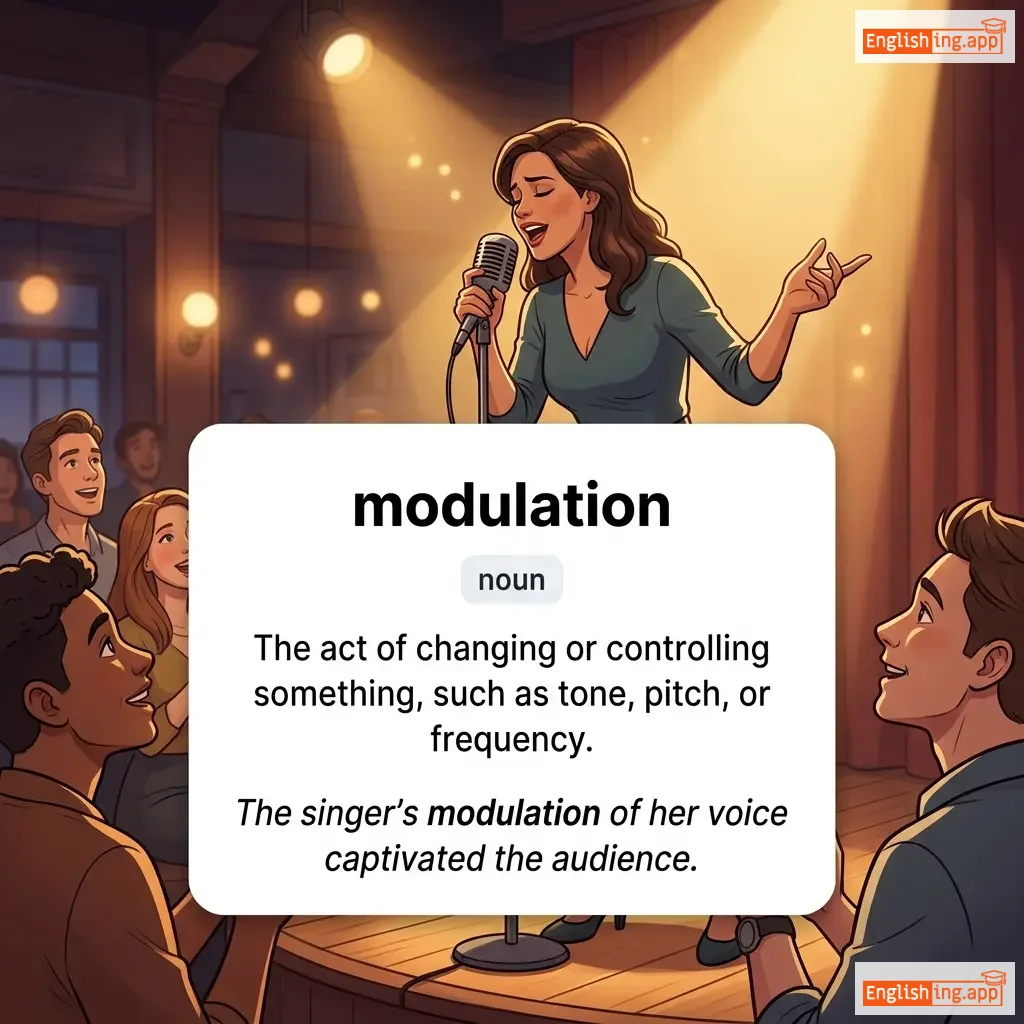
modulation definition card — visual illustration of the meaning
noun C1
/ˌmɒdjʊˈleɪʃən/
音の制御や周波数の調整 (on no seigyo ya shūhasū no chōsei)

The act of changing or controlling something, such as tone, pitch, or frequency.

"The singer’s modulation of her voice captivated the audience."

"歌手の声のモジュレーションが観客を魅了した。" (Kashu no koe no mojurēshon ga kankyaku o miryō shita.)
noun C1
/ˈmoʊɡəl/
大物 (ōmono)

A powerful or influential person, especially in business or media.

"He became a tech mogul by founding a billion-dollar company."

"彼は10億ドルの会社を創業してテクノロジーの大物になった。" (Kare wa 10 oku-doru no kaisha o sōgyō shite tekunorojī no ōmono ni natta.)
noun C1
/ˈmoʊldɪŋ/
装飾モールディング (sōshoku mōrudingu)

A decorative strip or design, often used on walls, ceilings, or furniture.

"The wooden molding gave the room a classic look."

"木製のモールディングが部屋にクラシックな印象を与えました。" (Mokusei no mōrudingu ga heya ni kurashikku na inshō o ataemashita.)
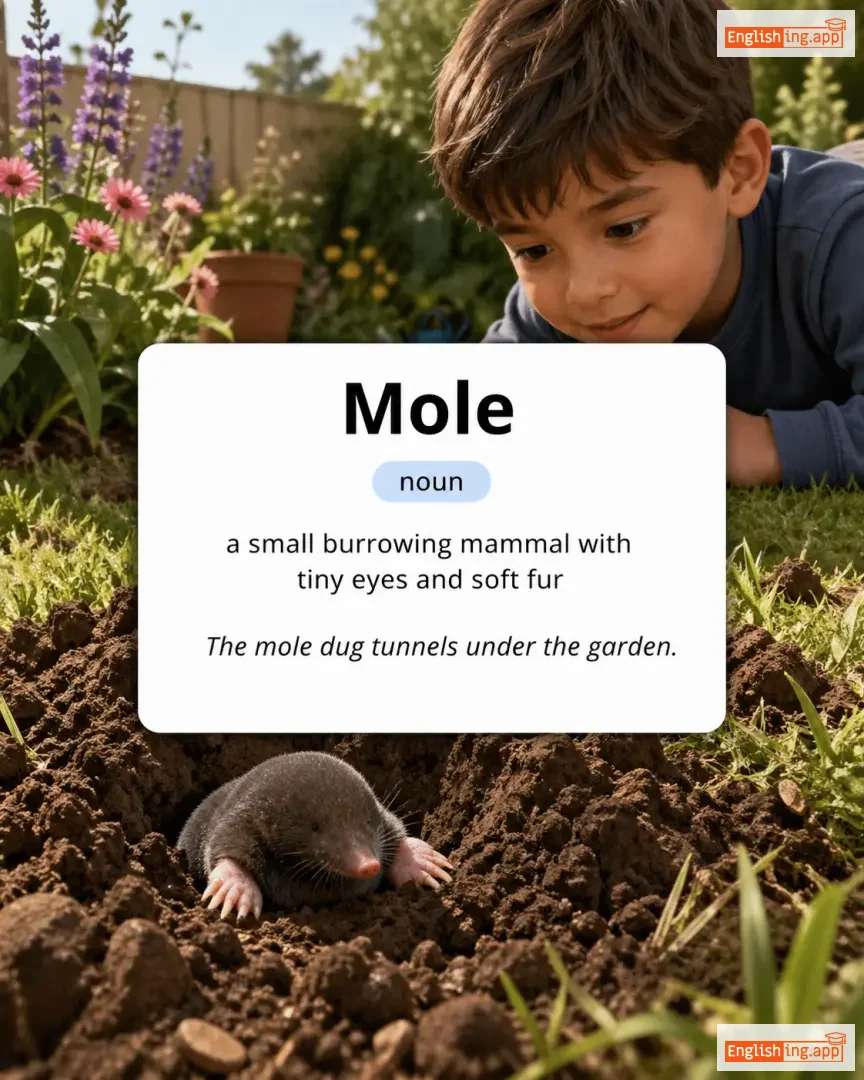
Mole definition card — visual illustration of the meaning
noun C1
/moʊl/
モグラ (mogura)

a small burrowing mammal with tiny eyes and soft fur

"The mole dug tunnels under the garden."

"モグラは庭の下にトンネルを掘った。" (Mogura wa niwa no shita ni tonneru o hotta.)
verb C1
/məˈlɛst/
嫌がらせ / 性的虐待 (iyagarase / seiteki gyakutai)

to assault or abuse someone, especially in a sexual or physical way

"The criminal was arrested for attempting to molest a child."

"犯罪者は子供を誘惑しようとしたため逮捕されました。" (Hanzaisha wa kodomo o yuuwaku shiyou to shita tame taiho saremashita.)
adjective C1
/ˈməʊltən/
溶けた (toketa)

Made into liquid by heat; melted.

"The blacksmith poured molten metal into the mold."

"鍛冶屋は型に溶けた金属を注ぎました。" (Kajiya wa kata ni toketa kinzoku o sosogimashita.)
adjective C1
/ˈmoʊmənˌteri/
一瞬の (isshun no)

Lasting for only a short time.

"There was a momentary silence in the room."

"部屋の中に一瞬の静けさがあった。" (Heya no naka ni isshun no shizukesa ga atta.)
adjective C1
/moʊˈmɛntəs/
重要な (jūyōna)

Of great importance or significance, especially in its effect on the future.

"The signing of the agreement was a momentous event."

"契約の署名は重要な出来事でした。" (Keiyaku no shomei wa jūyōna dekigoto deshita.)
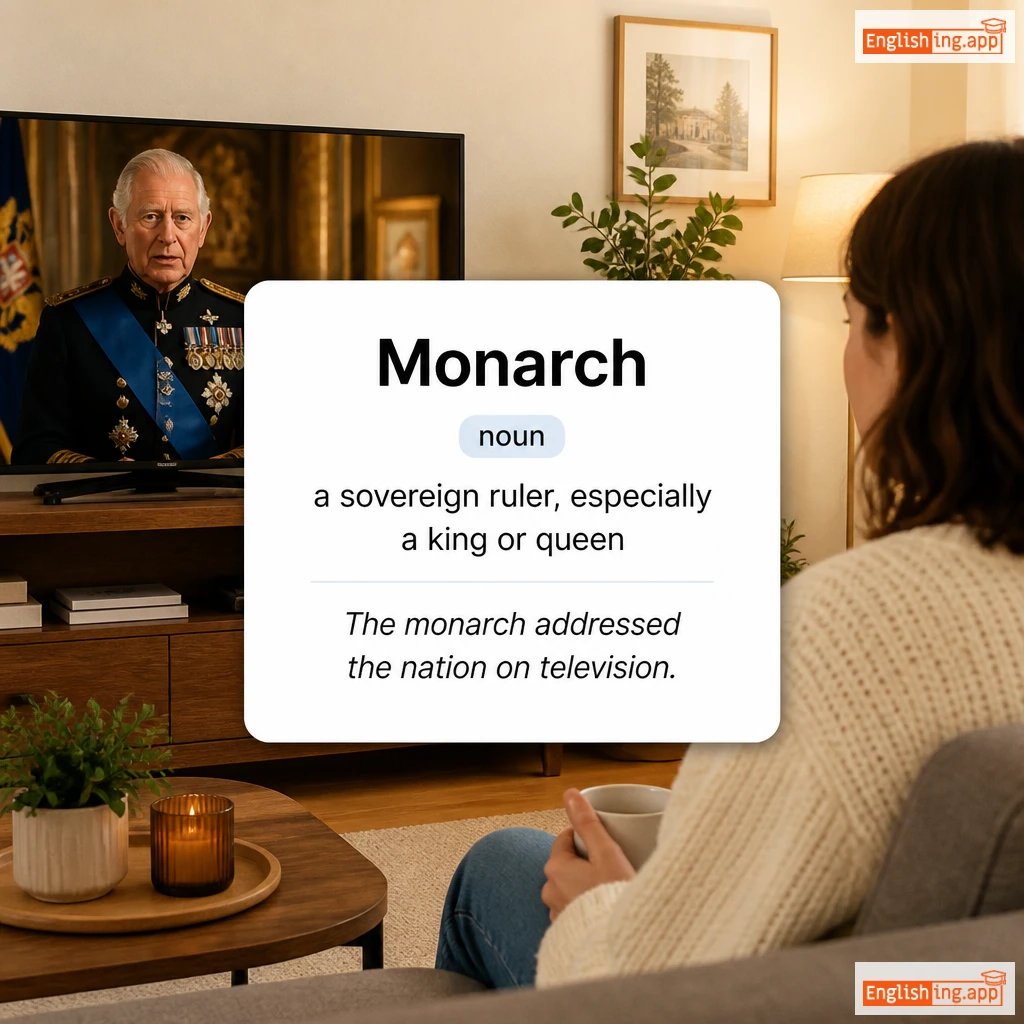
Monarch definition card — visual illustration of the meaning
noun C1
/ˈmɒn.ɑːk/
君主 (kunshu)

a sovereign ruler, especially a king or queen

"The monarch addressed the nation on television."

"モナークはテレビで国民に演説を行いました。" (Monāku wa terebi de kokumin ni enzetsu o okonai mashita.)
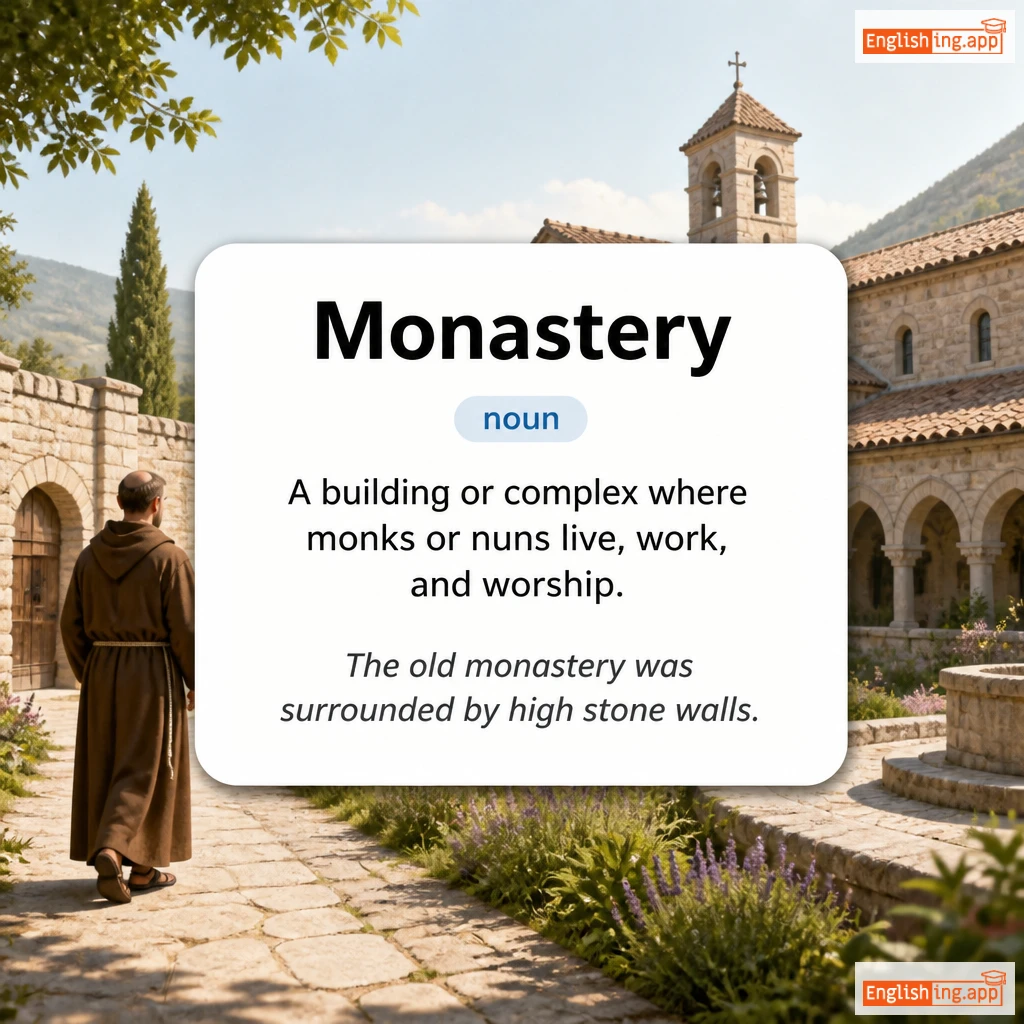
Monastery definition card — visual illustration of the meaning
noun C1
/ˈmɒnəstɛri/

A building or complex where monks or nuns live, work, and worship.

"The old monastery was surrounded by high stone walls."

adjective C1
/məˈnæstɪk/
修道的な (shuudou teki na)

Relating to monks, monasteries, or a life of religious seclusion.

"He chose to live a monastic life away from the city."

"彼は都市から離れた修道的な生活を選んだ。" (Kare wa toshi kara hanareta shuudou teki na seikatsu wo eranda.)
monetization definition card — visual illustration of the meaning
noun C1
/ˌmɒn.ɪ.taɪˈzeɪ.ʃən/
マネタイズ (manetaizu)

The process of converting assets or services into money, involving commercialization, profit generation, and revenue creation.

"The monetization of digital content has created new income streams."

"デジタルコンテンツのマネタイズは新しい収入源を生み出しました。" (Dejitaru kontentsu no manetaizu wa atarashī shūnyūgen o umidashimashita.)