Vokabulare

Englisches Vokabelwörterbuch | Wortbedeutungen, Definitionen & Beispiele

noun C1
/təˈlɛpəθi/

the supposed communication of thoughts or ideas by means other than the known senses

"The twins claimed to share telepathy with each other."

noun C1
/təˈlɛfəni/
電話技術 (denwa gijutsu)

the technology and systems for transmitting voice over distances by telephone

"Modern telephony has evolved to include internet-based calls."

"現代のテレフォニーはインターネットベースの通話を含むように進化しました。" (Gendai no terefonī wa intānetto bēsu no tsūwa o fukumu yō ni shinka shimashita.)
adjective C1
/ˈtɛlˌteɪl/
明白な (meihaku na)

Revealing something that is usually hidden; giving away a secret or clue.

"The telltale signs of fatigue were visible on his face."

"疲労の明白な兆候が彼の顔に現れていた。" (Hirou no meihaku na choukou ga kare no kao ni arawarete ita.)
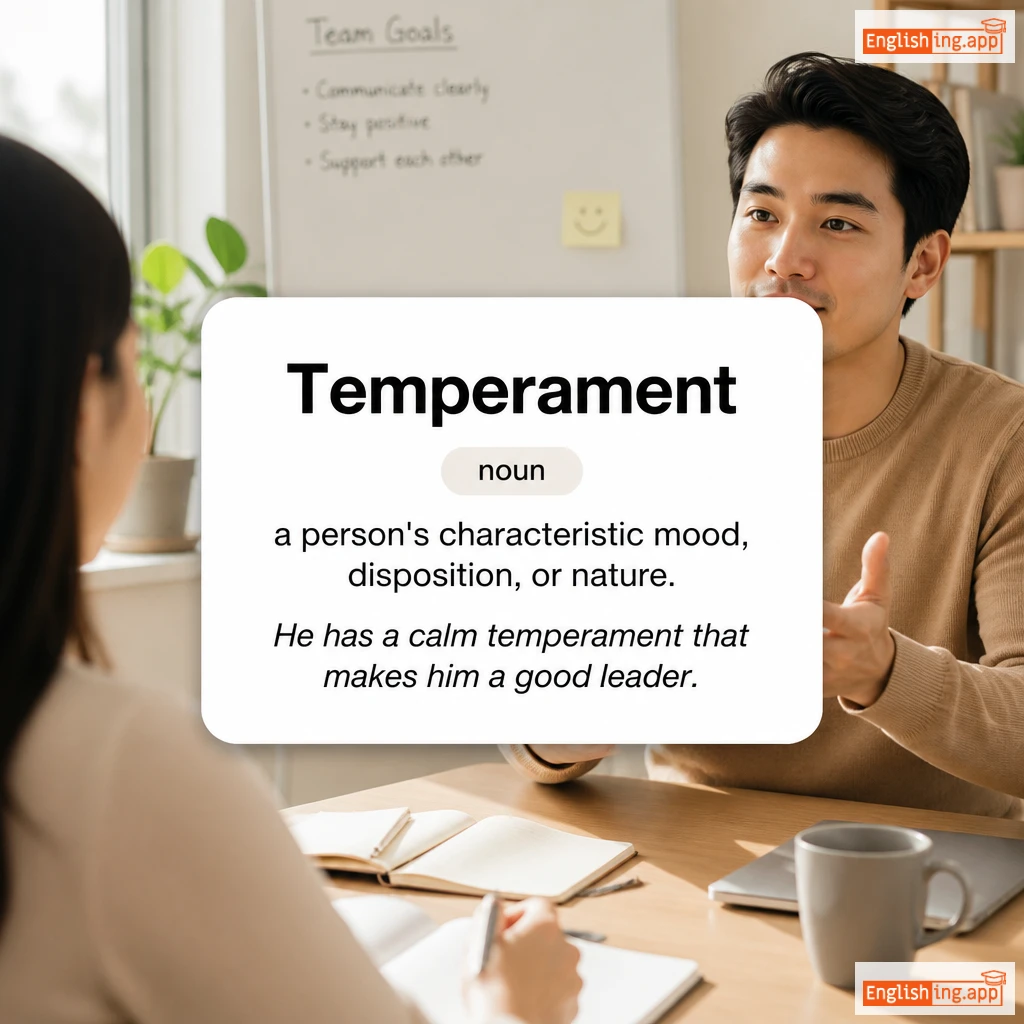
Temperament definition card — visual illustration of the meaning
noun C1
/ˈtɛmpərəmənt/
気質 (kishitsu)

a person's characteristic mood, disposition, or nature.

"He has a calm temperament that makes him a good leader."

"彼は落ち着いた気質を持っており、それが彼を優れたリーダーにしています。" (Kare wa ochitsuita kishitsu o motte ori, sore ga kare o sugureta rīdā ni shiteimasu.)
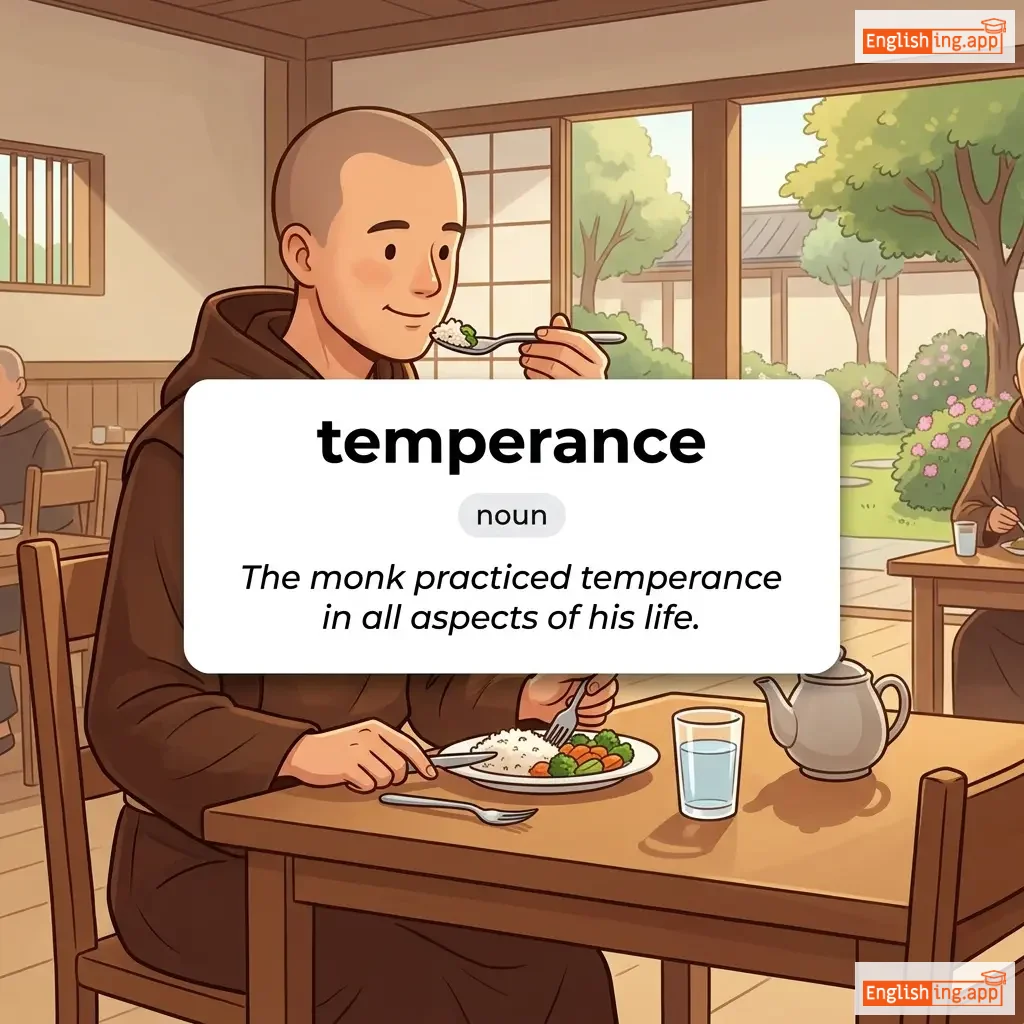
temperance definition card — visual illustration of the meaning
noun C1
/ˈtɛmpərəns/
節制 (sessai)

moderation in action, thought, or feeling; restraint, especially regarding alcohol.

"The monk practiced temperance in all aspects of his life."

"修道士は彼の生活のあらゆる面で節制を実践していました。" (Shuudoushi wa kare no seikatsu no arayuru men de sessai o jissen shite imashita.)
adjective C1
/ˈtɛmpərət/
温和な (onga na)

showing moderation or self-restraint; also describing mild climate.

"He is known for his temperate behavior even in stressful situations."

"彼はストレスの多い状況でも温和な行動で知られています。" (Kare wa sutoresu no ooi joukyou demo onga na koudou de shirareteimasu.)
adjective C1
/ˈtɛmpərd/
調整された (chousei sareta)

having a specified temper or disposition; strengthened or moderated.

"She gave a tempered response to the criticism."

"彼女は批判に調整された反応を示しました。" (Kanojo wa hihan ni chōsei sareta hannō o shimashita.)
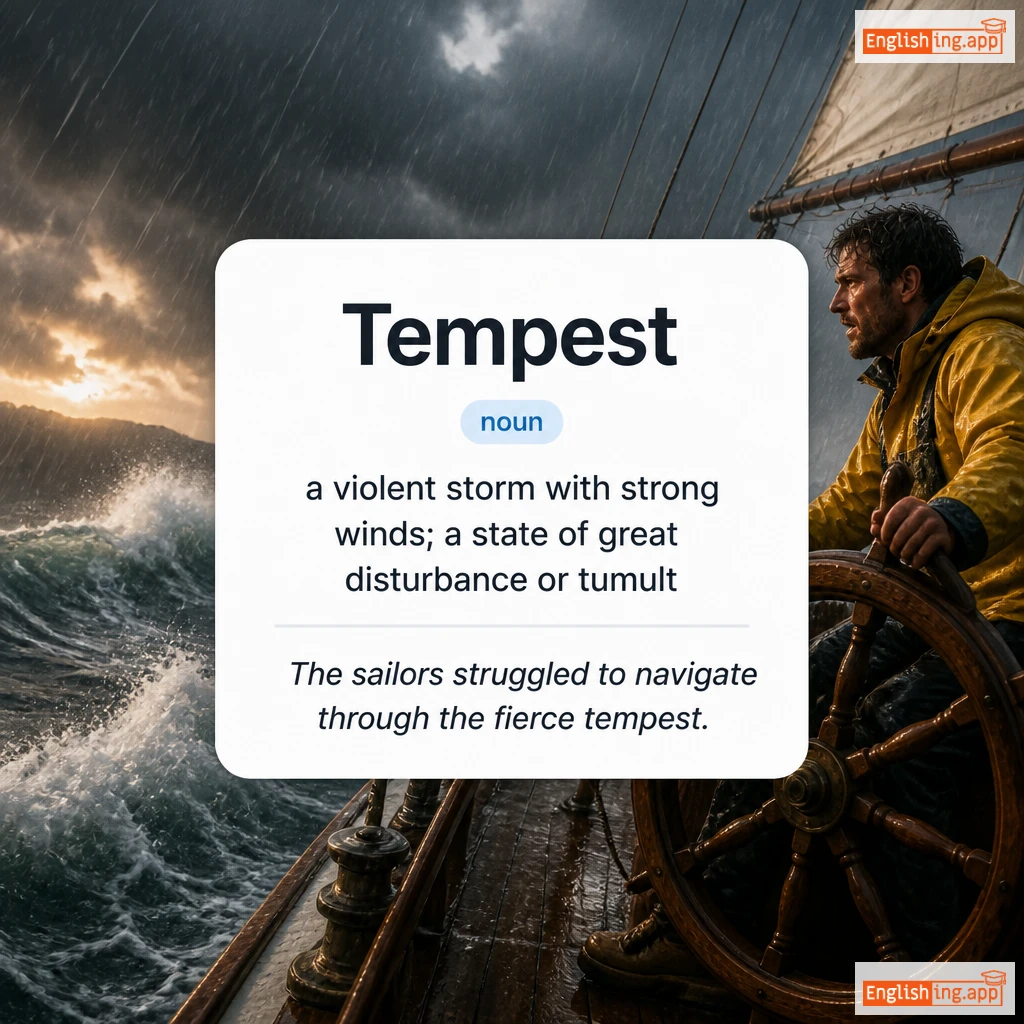
Tempest definition card — visual illustration of the meaning
noun C1
/ˈtem.pɪst/
(arashi)

a violent storm with strong winds; a state of great disturbance or tumult

"The sailors struggled to navigate through the fierce tempest."

"船員たちは激しい嵐を乗り越えようと戦った。" (Sen'in-tachi wa hageshī arashi o norikoeyō to tatakatta.)
adjective C1
/tɛmˈpɛstjuəs/

Characterized by strong and turbulent emotions or stormy conditions.

"Their tempestuous relationship often swung between love and anger."

adjective C1
/ˈtɛmpərəl/
世俗的な、時間的な (sesokuteki na, jikan teki na)

Relating to worldly affairs or to time rather than spiritual matters.

"The monk gave up his temporal possessions to live a simple life."

"僧侶は彼の世俗的な所有物を放棄して、簡素な生活を送りました。" (Sōryo wa kare no sesokuteki na shoyūbutsu o hōki shite, kanso na seikatsu o okurimashita.)
noun C1
/ˈtɛmptər/
誘惑者 (yūwaku-sha)

a person or thing that entices someone into doing something wrong

"The tempter whispered false promises into his ear."

"誘惑者は彼の耳に嘘の約束をささやいた。" (Yūwaku-sha wa kare no mimi ni uso no yakusoku o sasayaita.)
adjective C1
/ˈtɛnəbl/
防御可能な (bōgyo kanō na)

able to be defended or maintained against attack or objection

"His argument was strong and tenable in court."

"彼の主張は強力で、法廷で防御可能だった。" (Kare no shuchō wa kyōryoku de, hōtei de bōgyo kanō datta.)
tenacious definition card — visual illustration of the meaning
adjective C1
/təˈneɪʃəs/
粘り強い (nebarizuyoi)

holding firmly to something; persistent and determined

"She was tenacious in pursuing her goals."

"彼女は目標を追求するのに粘り強かった。" (Kanojo wa mokuhyou wo tsuikyuu suru no ni nebarizuyokatta.)
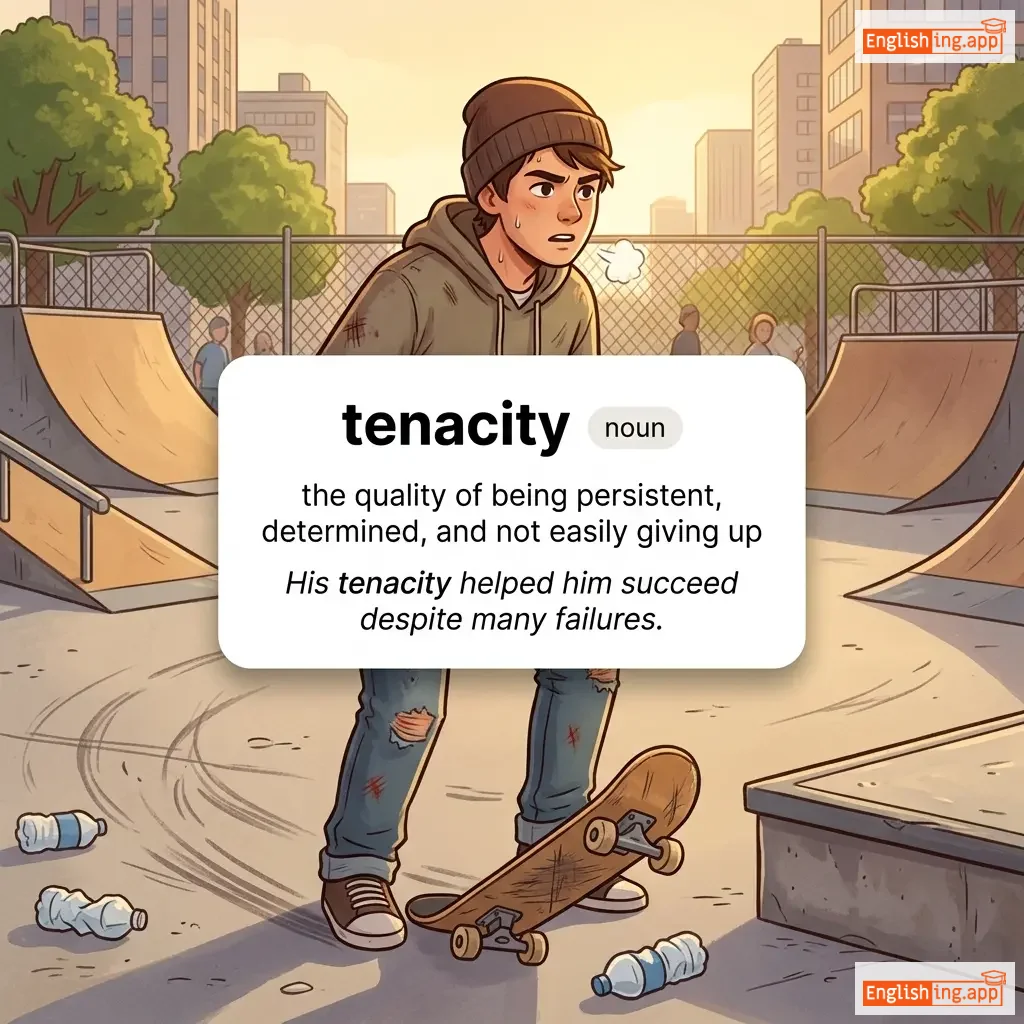
tenacity definition card — visual illustration of the meaning
noun C1
/təˈnæsəti/
粘り強さ (nebarizuyosa)

the quality of being persistent, determined, and not easily giving up

"His tenacity helped him succeed despite many failures."

"彼の粘り強さが、数々の失敗を乗り越え成功に導いた。" (Kare no nebarizuyosa ga, kazukazu no shippai o norikoete seikou ni michibita.)
noun C1
/ˈtɛnəmənt/
アパートメント (apātomento)

a large building divided into separate apartments, often in poor condition

"The family lived in a crowded tenement in the city."

"その家族は街の混雑したアパートメントに住んでいました。" (Sono kazoku wa machi no konzatsu shita apātomento ni sunde imashita.)
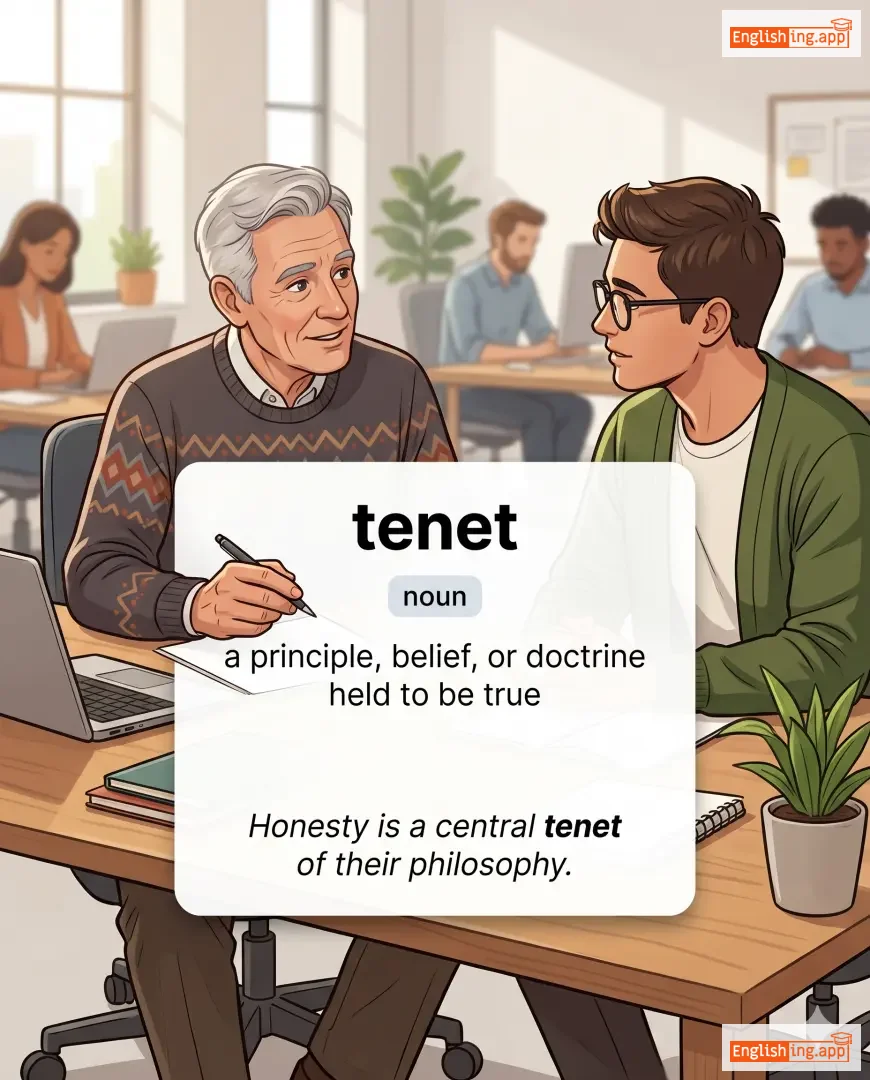
tenet definition card — visual illustration of the meaning
noun C1
/ˈtɛnɪt/
原則 (gensoku)

a principle, belief, or doctrine held to be true

"Honesty is a central tenet of their philosophy."

"誠実は彼らの哲学の中心的な原則です。" (Seijitsu wa karera no tetsugaku no chūshin-tekina gensoku desu.)
noun C1
/ˈtɛnər/
テノール / 一般的なトーン (tenooru / ippantekina toon)

the general meaning, drift, or character of something; a male singing voice between baritone and alto

"The overall tenor of his speech was hopeful and reassuring."

"彼のスピーチの全体的なトーンは希望に満ち、安心感を与えるものでした。" (Kare no supīchi no zentaiteki na tōn wa kibō ni michi, anshinkan o ataeru mono deshita.)
adjective C1
/ˈtɛn.tə.tɪv/
仮の (kari no)

Not certain or fixed; done without confidence.

"She gave a tentative smile before agreeing."

"彼女は同意する前に仮の笑顔を見せた。" (Kanojo wa dōi suru mae ni kari no egao o miseta.)
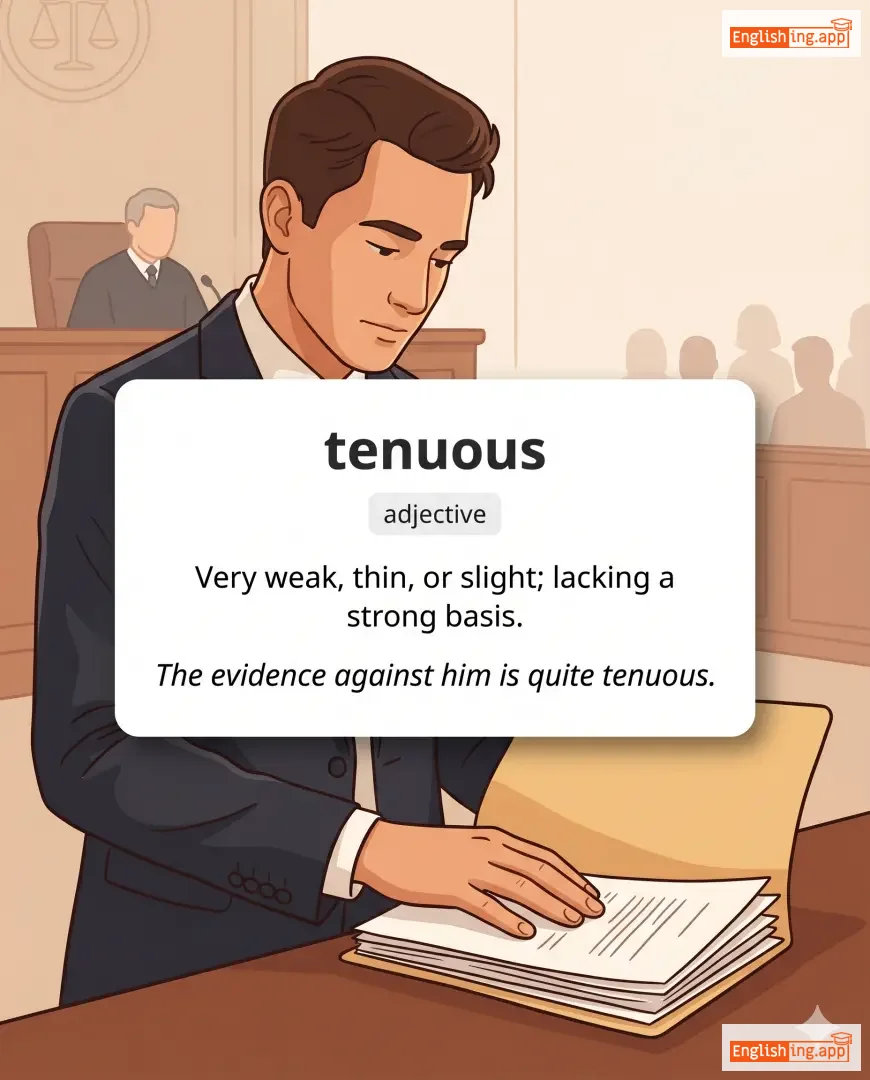
tenuous definition card — visual illustration of the meaning
adjective C1
/ˈtɛn.ju.əs/
弱い / 薄い (yowai / usui)

Very weak, thin, or slight; lacking a strong basis.

"The evidence against him is quite tenuous."

"彼に対する証拠はかなり弱いです。" (Kare ni taisuru shōko wa kanari yowai desu.)
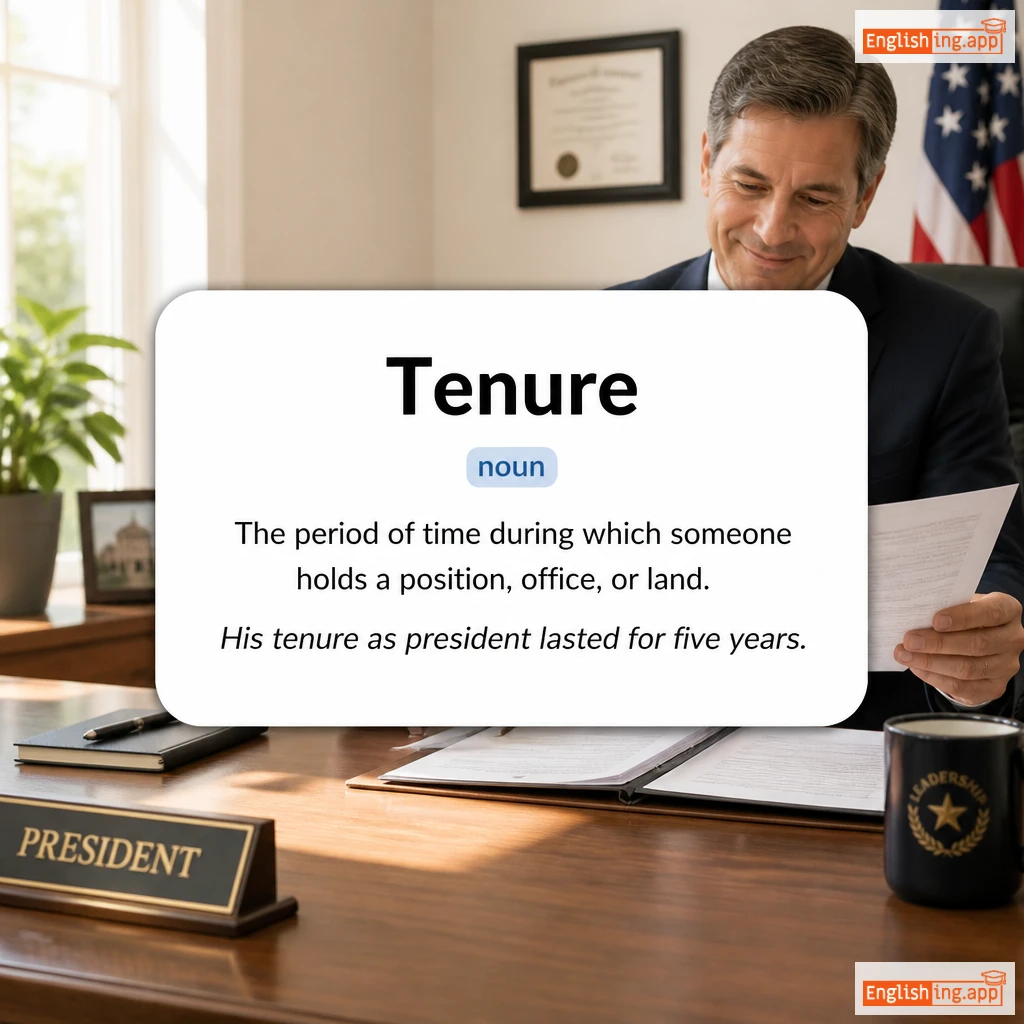
Tenure definition card — visual illustration of the meaning
noun C1
/ˈtɛnjər/
任期 (ninki)

The period of time during which someone holds a position, office, or land.

"His tenure as president lasted for five years."

"彼の大統領としての任期は5年間続きました。" (Kare no daitōryō toshite no ninki wa 5-nenkan tsuzukimashita.)
adjective C1
/ˈtɛpɪd/
ぬるい, 無関心 (nurui, mukanshin)

Lukewarm; showing little enthusiasm or force.

"His speech received only a tepid response from the audience."

"彼のスピーチは観客からただのぬるい反応しか受けなかった。" (Kare no supīchi wa kankyaku kara tada no nurui hannō shika ukenakatta.)
noun C1
/ˈtɜːrmɪnəs/
終点 (shūten)

the final point or end of something, especially the final station on a railway line

"The train finally arrived at the terminus after a long journey."

"長い旅の後、電車はついに終点に到着しました。" (Nagai tabi no ato, densha wa tsuini shūten ni tōchaku shimashita.)
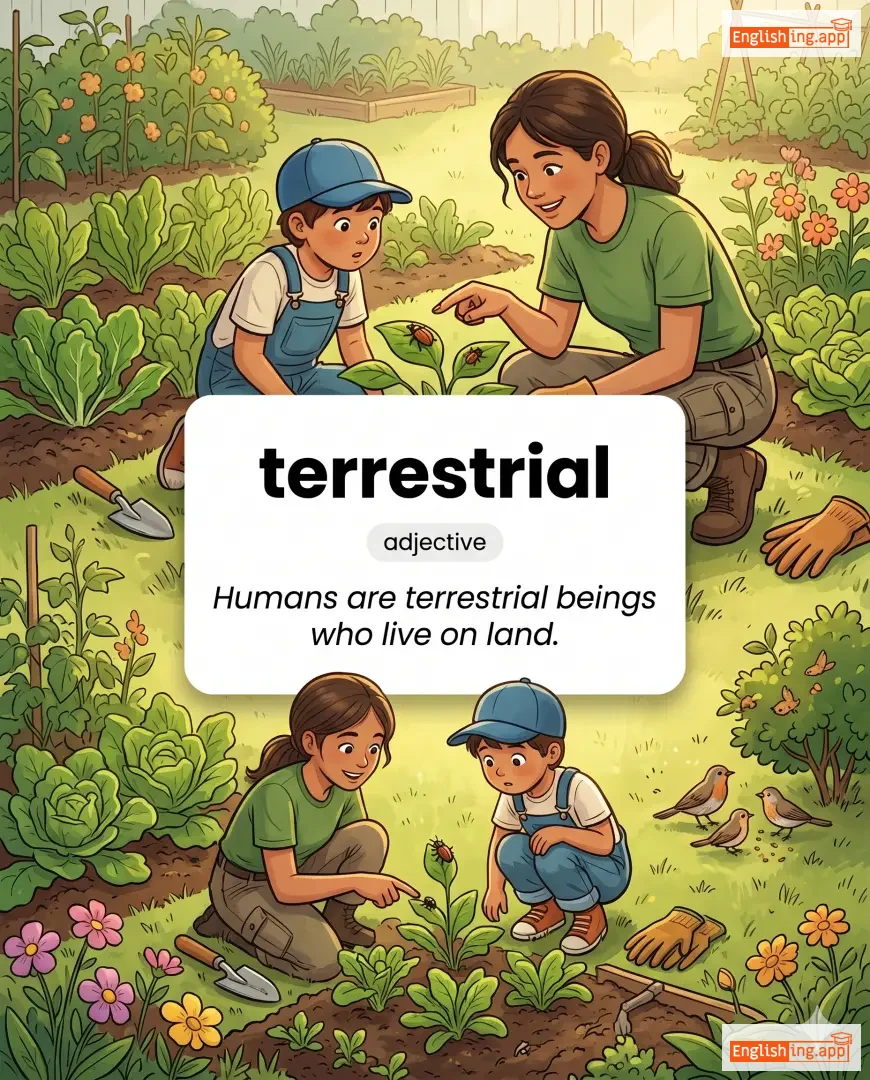
terrestrial definition card — visual illustration of the meaning
adjective C1
/təˈrɛstriəl/
陸生 (rikusei)

Relating to the Earth or land as opposed to the sea or air; living or growing on land.

"Humans are terrestrial beings who live on land."

"人間は陸上で生きる陸生の生物です。" (Ningen wa rikujō de ikiru rikusei no seibutsu desu.)
adjective C1
/tɜːrs/
簡潔 (kanketsu)

brief and to the point; sparing in the use of words

"His reply was terse and ended the conversation quickly."

"彼の返答は簡潔で、すぐに会話を終わらせた。" (kare no hentou wa kanketsu de, sugu ni kaiwa o owaraseta.)
3️⃣

tertiary

adjective C1
/ˈtɜːrʃieri/

third in order, rank, or level

"He is pursuing his tertiary education at the university."

noun C1
/ˈtɛstəmənt/
遺言 / 証拠 (igon / shouko)

a person's will; or strong evidence of something

"His success is a testament to his hard work and dedication."

"彼の成功は彼の努力と献身の証です。" (kare no seikou wa kare no doryoku to kenshin no shouko desu.)
Testimonial definition card — visual illustration of the meaning
noun C1
/ˌtɛstɪˈmoʊniəl/
推薦状 (suishenjō)

A formal statement testifying to someone's character, qualifications, or the quality of a product or service.

"The company shared a glowing testimonial from a satisfied customer."

"その会社は満足した顧客からの輝かしい推薦状を共有しました。" (Sono kaisha wa manzoku shita kokyaku kara no kagayakashī suishenjō o kyōyū shimashita.)
testimonials definition card — visual illustration of the meaning
noun C1
/ˌtɛstɪˈməʊnɪəlz/
推薦状, 証言 (suishenjou, shougen)

Written or spoken statements of praise or recommendation from clients or customers.

"Positive testimonials can enhance a company's reputation."

"ポジティブなテスティモニアルは企業の評判を高めることができます。" (Pojitibu na tesutimoniaru wa kigyou no hyouban wo takameru koto ga dekimasu.)
adjective C1
/ˈtɛsti/
イライラした (iraira shita)

Easily irritated or annoyed.

"He became testy when asked the same question repeatedly."

"同じ質問を繰り返し聞かれると、彼はイライラしてきた。" (Onaji shitsumon o kurikaeshi kikareru to, kare wa iraira shite kita.)
verb C1
/ˈtɛðər/
繋ぐ (tsunagu)

To tie an animal with a rope or chain so it cannot move far.

"The farmer tethered the goat to a post."

"農夫はヤギを柱に繋ぎました。" (Nōfu wa yagi o hashira ni tsunagimashita.)
adjective C1
/θiːˈmætɪk/
テーマ的 (tēmateki)

Relating to or based on a theme.

"The book is organized into thematic chapters."

"その本はテーマごとに章が整理されています。" (Sono hon wa tēma goto ni shō ga seiri sareteimasu.)
theological definition card — visual illustration of the meaning
adjective C1
/ˌθiːəˈlɒdʒɪkl/
神学的 (shingakuteki)

Relating to the study of theology or religious belief.

"He wrote a theological paper on the concept of divine justice."

"彼は神の正義の概念についての神学的な論文を書いた。" (Kare wa kami no seigi no gainen ni tsuite no shingakuteki na ronbun o kaita.)
theology definition card — visual illustration of the meaning
noun C1
/θiˈɒlədʒi/
神学 (shingaku)

The study of the nature of God and religious beliefs.

"She is pursuing a degree in theology at the university."

"彼女は大学で神学の学位を取得しています。" (Kanojo wa daigaku de shingaku no gakui o shutsudō shiteimasu.)
verb C1
/ˈθiːəraɪz/
理論化する (rironkasuru)

To form a theory or set of ideas to explain something.

"Scientists often theorize about the origins of the universe."

"科学者たちはしばしば宇宙の起源について理論化します。" (Kagakusha-tachi wa shibashiba uchuu no kigen ni tsuite rironka shimasu.)
adverb C1
/ˌðɛrəˈbaʊt/
おおよそ (ooyoso)

Approximately or around that place, amount, or time.

"The repairs will cost five hundred dollars or thereabout."

"修理費は約五百ドルになるでしょう。" (Shuurihi wa yaku gohyaku doru ni naru deshou.)
adverb C1
/ˈðɛərfɔːr/
それに対して (sore ni taishite)

For that or for it.

"He received payment and gave a receipt therefor."

"彼は支払いを受け取り、それに対する領収書を渡しました。" (Kare wa shiharai o uketori, sore ni taishite ryoushuusho o watashimashita.)
adverb C1
/ˌðɛərˈɪn/
その中に; (sono naka ni)

in that place; in that respect

"The box contains many treasures, and therein lies its value."

"箱には多くの宝物があり、その中にその価値がある。" (Hako ni wa ōku no hōmotsu ga ari, sono naka ni sono kachi ga aru.)
adverb C1
/ˌðɛərˈʌv/
それによって (sore ni yotte)

of that; from that

"The contract and all amendments thereof must be signed."

"契約とそのすべての修正はそれによって署名される必要があります。" (Keiyaku to sono subete no shūsei wa sore ni yotte shomei sareru hitsuyō ga arimasu.)
adverb C1
/ˌðɛərˈtu/
それとともに; (sore to tomoni)

to that; in addition to that

"The house and the garden attached thereto were sold."

"家とそれに付随する庭が売却されました。" (Ie to sore ni fuzui suru niwa ga baikyaku saremashita.)
adverb C1
/ˌðeərəˈpɒn/
その後すぐに; (sono ato sugu ni)

immediately after that; following that event

"He finished his speech and thereupon left the stage."

"彼はスピーチを終え、その後すぐにステージを離れました。" (Kare wa supīchi o oe, sono ato sugu ni sutēji o hanaremashita.)
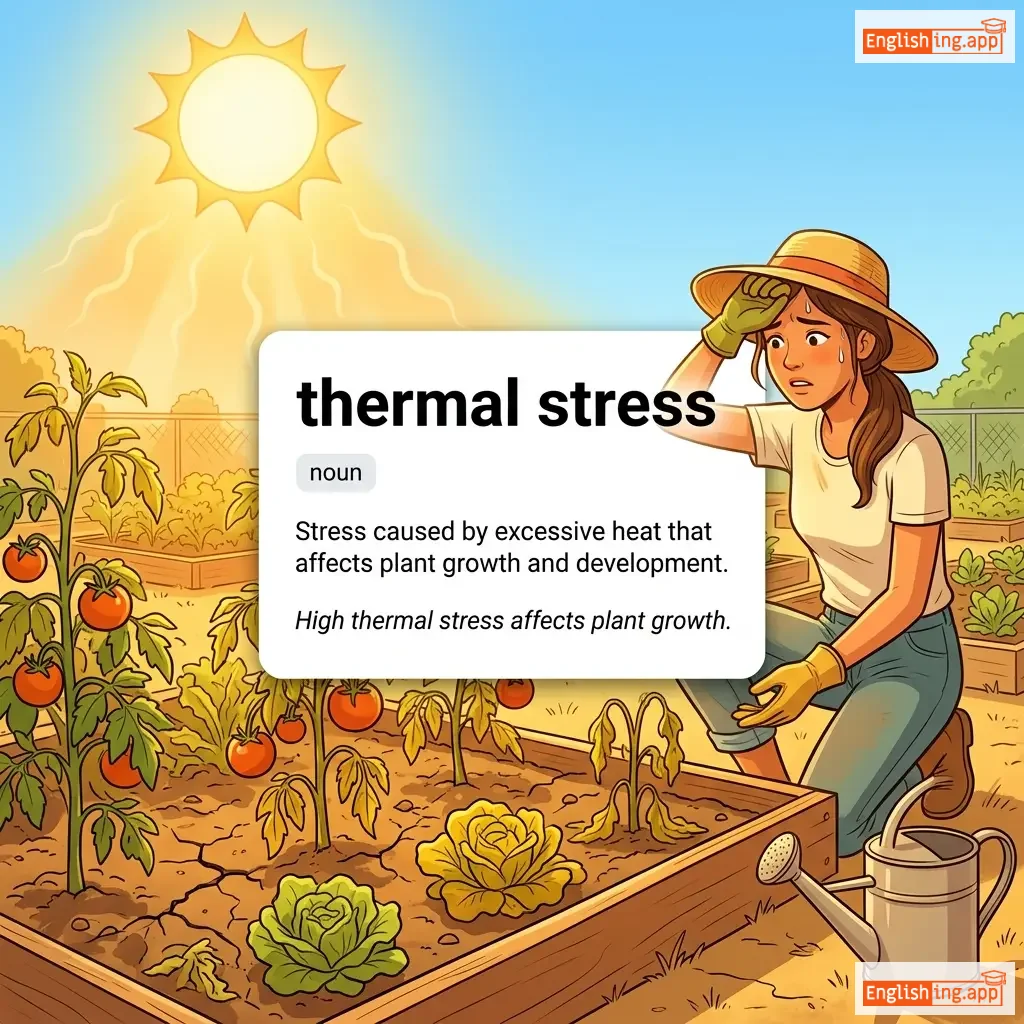
thermal stress definition card — visual illustration of the meaning
noun C1
ˈθɜː.məl stres
熱応力 (netsu ōryoku)

Stress caused by excessive heat that affects plant growth and development.

"High thermal stress affects plant growth."

"高い熱的ストレスは植物の成長に影響を与えます。" (Takai netsuteki sutoresu wa shokubutsu no seichō ni eikyō o ataemasu.)
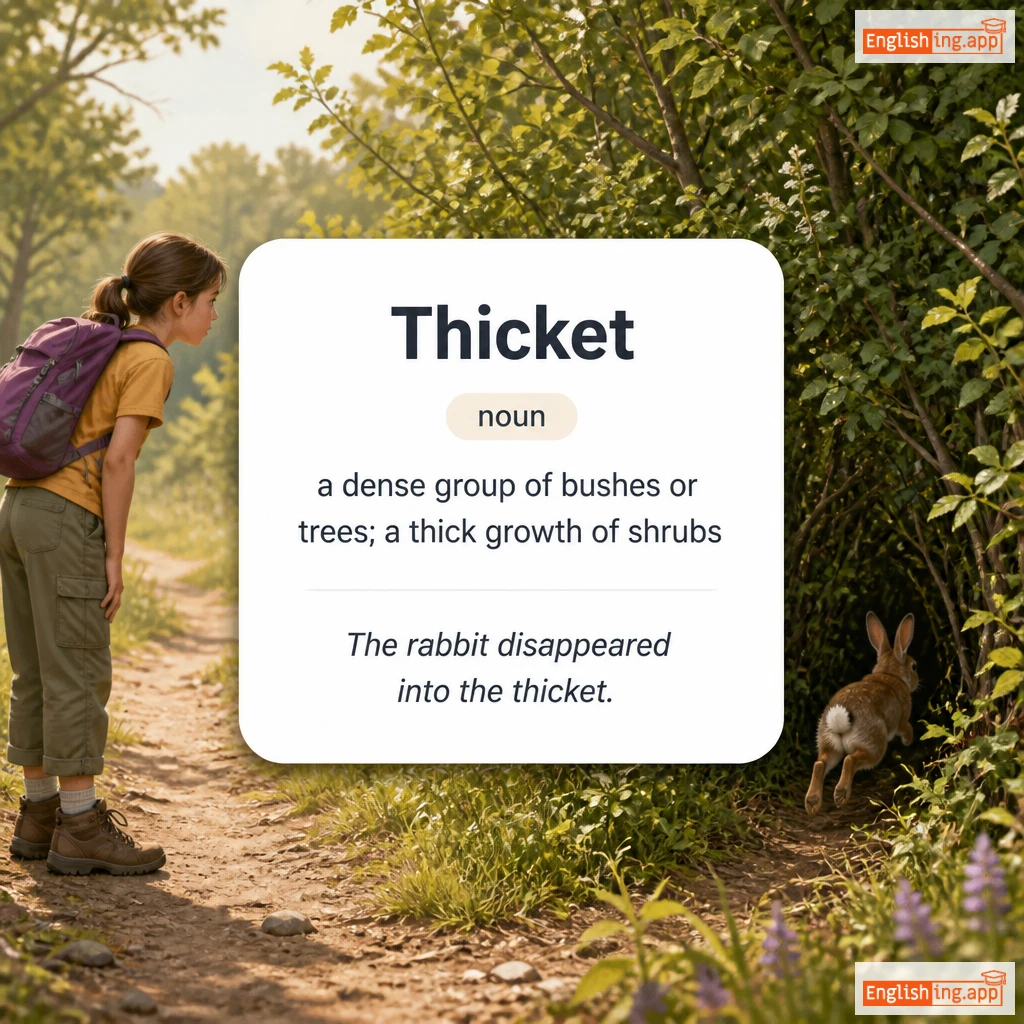
Thicket definition card — visual illustration of the meaning
noun C1
/ˈθɪk.ɪt/
茂み; 低木の成長 (thiket)

a dense group of bushes or trees; a thick growth of shrubs

"The rabbit disappeared into the thicket."

"ウサギは茂みに消えました。" (Usagi wa shigemi ni kiemashita.)
thinkable definition card — visual illustration of the meaning
adjective C1
/ˈθɪŋ.kə.bəl/
考えられる (kangaerareru)

Capable of being imagined or conceived; possible to consider or believe

"It is hard to believe that such an outcome is even thinkable."

"そのような結果が考えられるとは信じがたい。" (Sono you na kekka ga kangaerareru to wa shinjigatai)
noun C1
/ˈθʌroʊˌbrɛd/
純血種の馬 (jun ketsu-shu no uma)

a horse of pure and recognized breed; a person of good breeding or education

"The jockey rode a fast thoroughbred in the race."

"ジョッキーはレースで速いサラブレッドに乗った。" (jokkī wa rēsu de hayai sarabureddo ni notta.)
noun C1
/ˈθʌroʊˌfɛr/
大通り (ōdōri)

a main road or public highway that goes through a place

"The new mall is located along the main thoroughfare."

"新しいショッピングモールは大通り沿いにあります。" (atarashī shoppingu mōru wa ōdōri soi ni arimasu.)
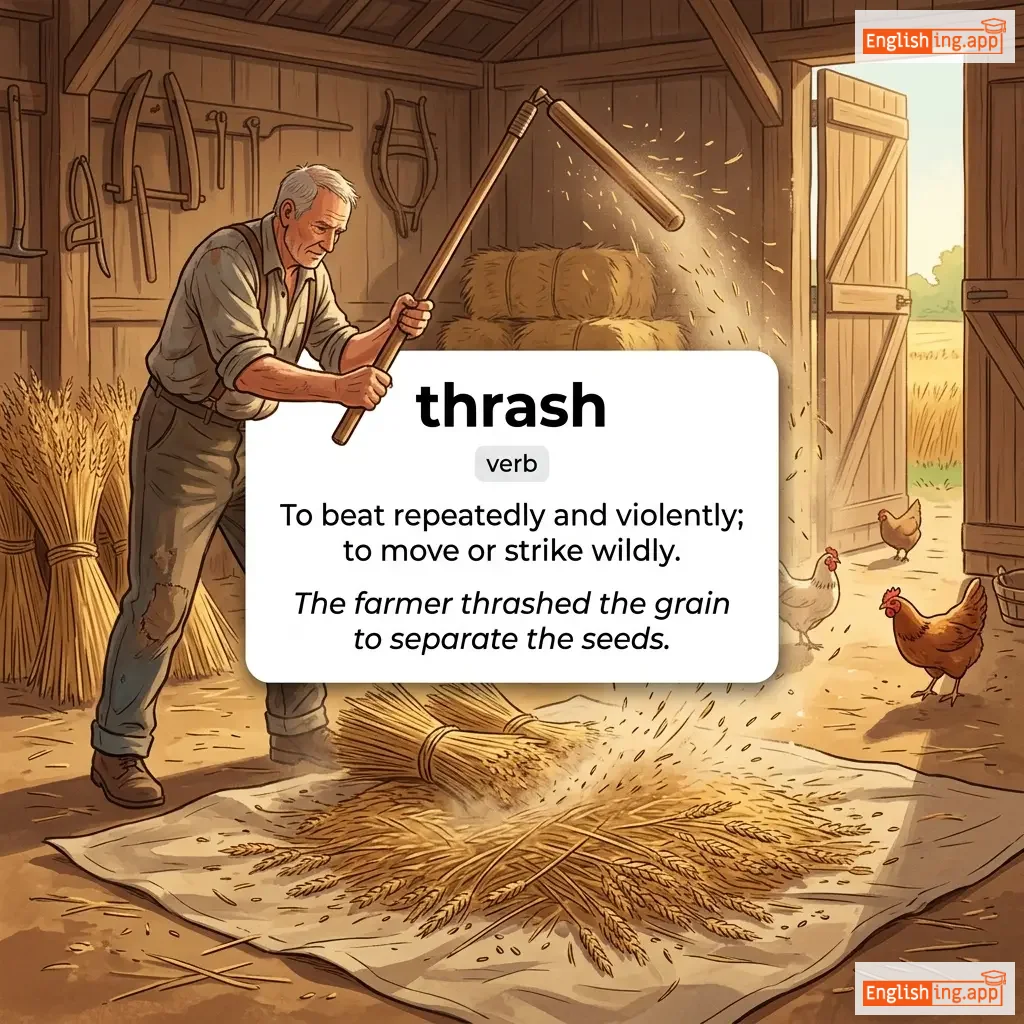
thrash definition card — visual illustration of the meaning
verb C1
/θræʃ/
叩く, 激しく打つ (tataku, hageshiku utsu)

To beat repeatedly and violently; to move or strike wildly.

"The farmer thrashed the grain to separate the seeds."

"農夫は種を分けるために穀物を叩きました。" (Nōfu wa tane o wakeru tame ni kokumotsu o tatakimashita.)
adjective C1
/ˈθrɪfti/
倹約的 (ken'yakuteki)

using money and resources carefully and not wastefully

"She is very thrifty and always saves money for the future."

"彼女は非常に倹約的で、いつも将来のためにお金を貯めています。" (Kanojo wa hijou ni ken'yakuteki de, itsumo shourai no tame ni okane o tameteimasu.)
verb C1
/θrɒb/
脈打つ (myakuutsu)

to beat or pulse strongly, often with pain

"His head began to throb after the long day."

"長い一日の後、彼の頭が脈打ち始めた。" (Nagai ichinichi no ato, kare no atama ga myakuuchi hajimeta.)
noun/verb C1
/θrɒŋ/

A large, densely packed crowd of people or animals; to fill or be present in a place in large numbers.

"Tourists thronged the streets during the festival."

verb/noun C1
/ˈθrɒt.əl/
絞める/速度を制御する (shimeru/sokudo wo seigyo suru)

To choke or strangle; to control the flow of fuel or power in an engine.

"The driver throttled the engine to slow down the car."

"運転手は車を減速させるためにエンジンのスロットルを調整した。" (Untenshu wa kuruma wo gensoku saseru tame ni enjin no surotoru wo chōsei shita.)