Vokabulare

Englisches Vokabelwörterbuch | Wortbedeutungen, Definitionen & Beispiele

adjective C1
/rɪˈmoʊtɪd/
远程的 (yuǎnchéng de)

placed at a distance; made remote

"The system was remoted to a secure location."

"系统已被远程到一个安全的地方。" (Xitong yi bei yuancheng dao yige anquan de difang.)
verb C1
/rɪˈmjuːnəreɪt/
支付 (zhī fù)

To pay someone for services or work done.

"The company will remunerate employees fairly for their overtime."

"公司将公平地支付员工的加班费。" (Gōngsī jiāng gōngpíng de zhīfù yuángōng de jiābān fèi.)
Remuneration definition card — visual illustration of the meaning
noun C1
/rɪˌmjuːnəˈreɪʃən/
报酬 (baochou)

Money paid for work or a service.

"The remuneration for this job is quite generous."

"这份工作的报酬相当慷慨。" (Zhe fen gongzuo de baochou xiangdang kangkai.)
noun C1
/ˈrɒndɪvuː/
约会 (yuēhuì)

a meeting or appointment at an agreed time and place

"They arranged a secret rendezvous at the café."

"他们在咖啡馆安排了一次秘密的会面。" (Tāmen zài kāfēiguǎn ānpái le yīcì mìmì de huìmiàn.)
noun C1
/rɛnˈdɪʃən/
演绎 (yǎn yì)

a performance or interpretation of a piece of art, music, or text

"The singer gave a moving rendition of the classic song."

"歌手献上了一场感人的经典歌曲演绎。" (Gēshǒu xiàn shàng le yī chǎng gǎn rén de jīngdiǎn gēqǔ yǎn yì.)
noun C1
/ˈrɛnɪˌɡeɪd/
叛徒 (pantu)

a person who deserts or betrays an organization, country, or principles

"He was labeled a renegade after leaving the party and criticizing its policies."

"他在离开党派并批评其政策后被贴上了叛徒的标签。" (Ta zai likai dangpai bing piping qi zhengce hou bei tie shang le pantu de biaoqian.)
renege definition card — visual illustration of the meaning
verb C1
/rɪˈnɛɡ/
违约 (wéiyuē)

to go back on a promise, agreement, or commitment

"The company reneged on its promise to increase wages."

"公司违背了他们提高工资的承诺。" (Gōngsī wéibèi le tāmen tígāo gōngzī de chéngnuò.)
verb C1
/rɪˈnaʊns/
放弃 (fàngqì)

to formally declare rejection of something, such as a claim, belief, or way of life

"She renounced her citizenship to move abroad permanently."

"她放弃了国籍以便永久定居国外。" (Tā fàngqì le guójí yǐbiàn yǒngjiǔ dìngjū guówài.)
Renown definition card — visual illustration of the meaning
noun C1
/rɪˈnaʊn/
声誉 (shengyu)

the condition of being widely known and highly respected

"The scientist gained international renown for his groundbreaking research."

"这位科学家因其开创性的研究而获得了国际声誉。" (Zhe wei kexuejia yin qi kaichuangxing de yanjiu er huodele guoji shengyu.)
adjective C1
/rɪˈper.ə.bəl/
可修复的 (ke xiufu de)

able to be fixed or mended; capable of being repaired

"The broken phone is repairable with the right parts."

"坏掉的手机可以用正确的部件修复。" (Huai diao de shouji keyi yong zhengque de bujian xiufu.)
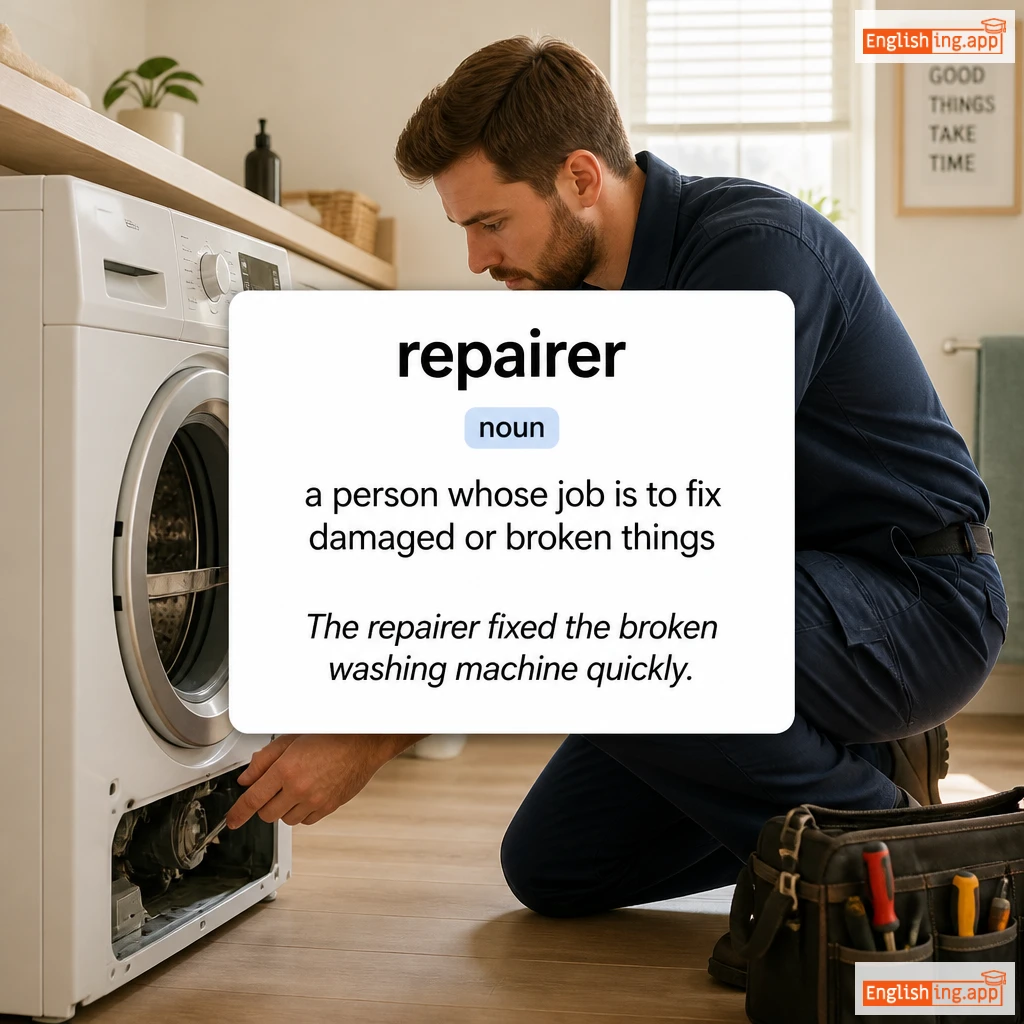
repairer definition card — visual illustration of the meaning
noun C1
/rɪˈpɛərə/
修理工 (xiuligong)

a person whose job is to fix damaged or broken things

"The repairer fixed the broken washing machine quickly."

"修理工很快修好了坏掉的洗衣机。" (xiuligong hen kuai xiu hao le huai diao de xiyiji)
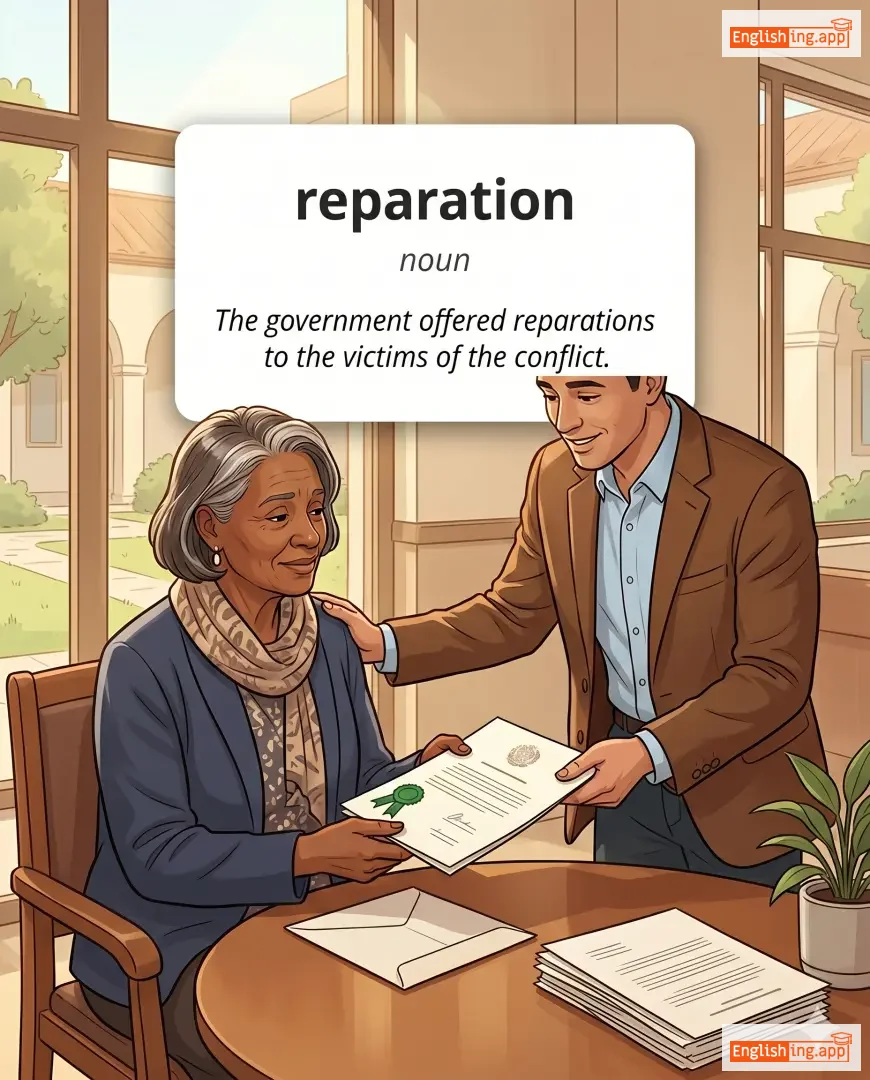
reparation definition card — visual illustration of the meaning
noun C1
/ˌrɛpəˈreɪʃən/
赔偿 (peichang)

the making of amends for a wrong done by paying money or helping those who were wronged

"The government offered reparations to the victims of the conflict."

"政府向冲突受害者提供了赔偿。" (Zhengfu xiang chongtu shouhaizhe tigongle peichang.)
verb C1
/riːˈpeɪ.tri.eɪt/
遣返 (qianfan)

To return someone to their own country, often after war or imprisonment.

"The government worked to repatriate the refugees safely."

"政府努力确保安全地将难民遣返回国。" (Zhengfu nuli quebao anquan de jiang nanmin qianfan hui guo.)
📜❌

repeal

verb C1
/rɪˈpiːl/

To officially cancel or revoke a law or decision.

"The government decided to repeal the outdated law."

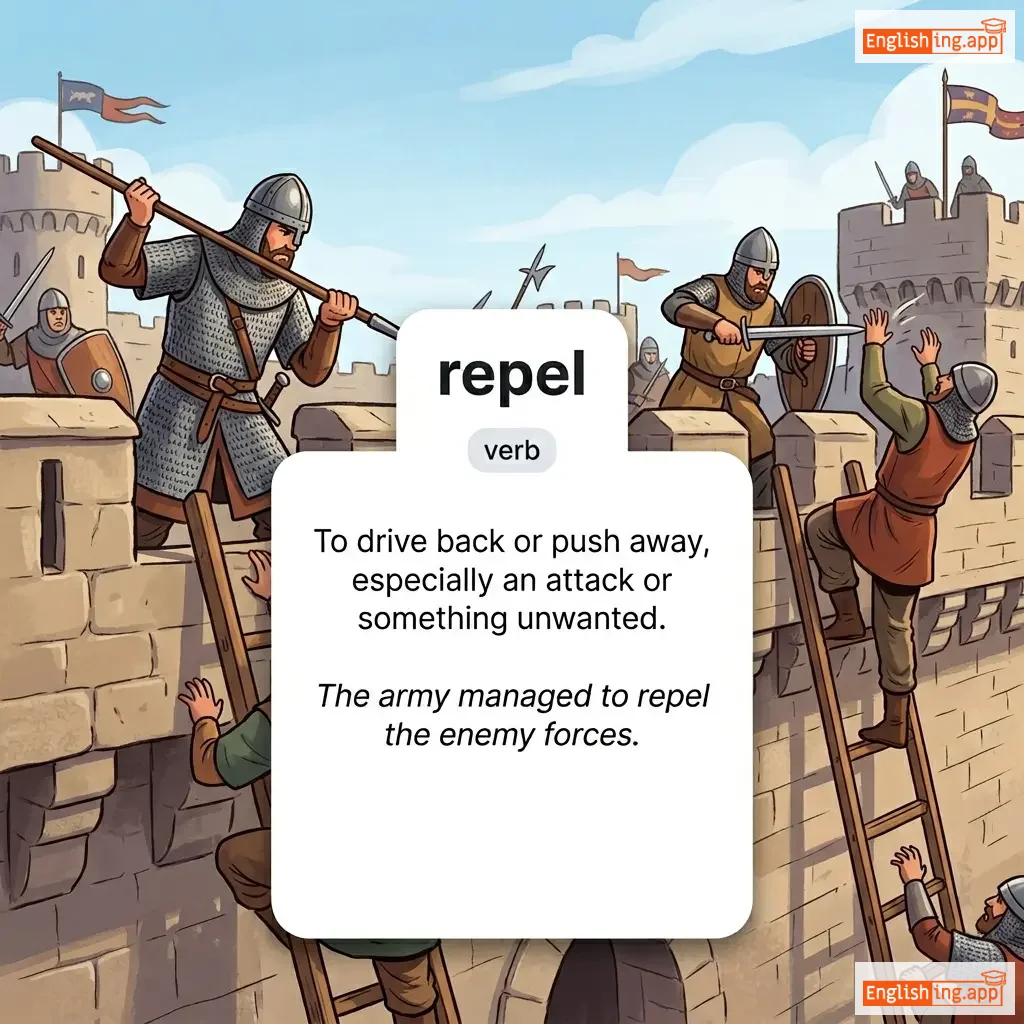
repel definition card — visual illustration of the meaning
verb C1
/rɪˈpɛl/
击退 (jī tuì)

To drive back or push away, especially an attack or something unwanted.

"The army managed to repel the enemy forces."

"军队成功地击退了敌军。" (Jūnduì chénggōng de jī tuì le dí jūn.)
adjective C1
/rɪˈpɛlənt/
驱虫剂 (qūchóng jì)

Able to drive away something, especially insects or unpleasant things; causing disgust or distaste.

"This cream is highly effective as a mosquito repellent."

"这款乳霜在防蚊方面非常有效。" (Zhè kuǎn rǔshuāng zài fáng wén fāngmiàn fēicháng yǒuxiào.)
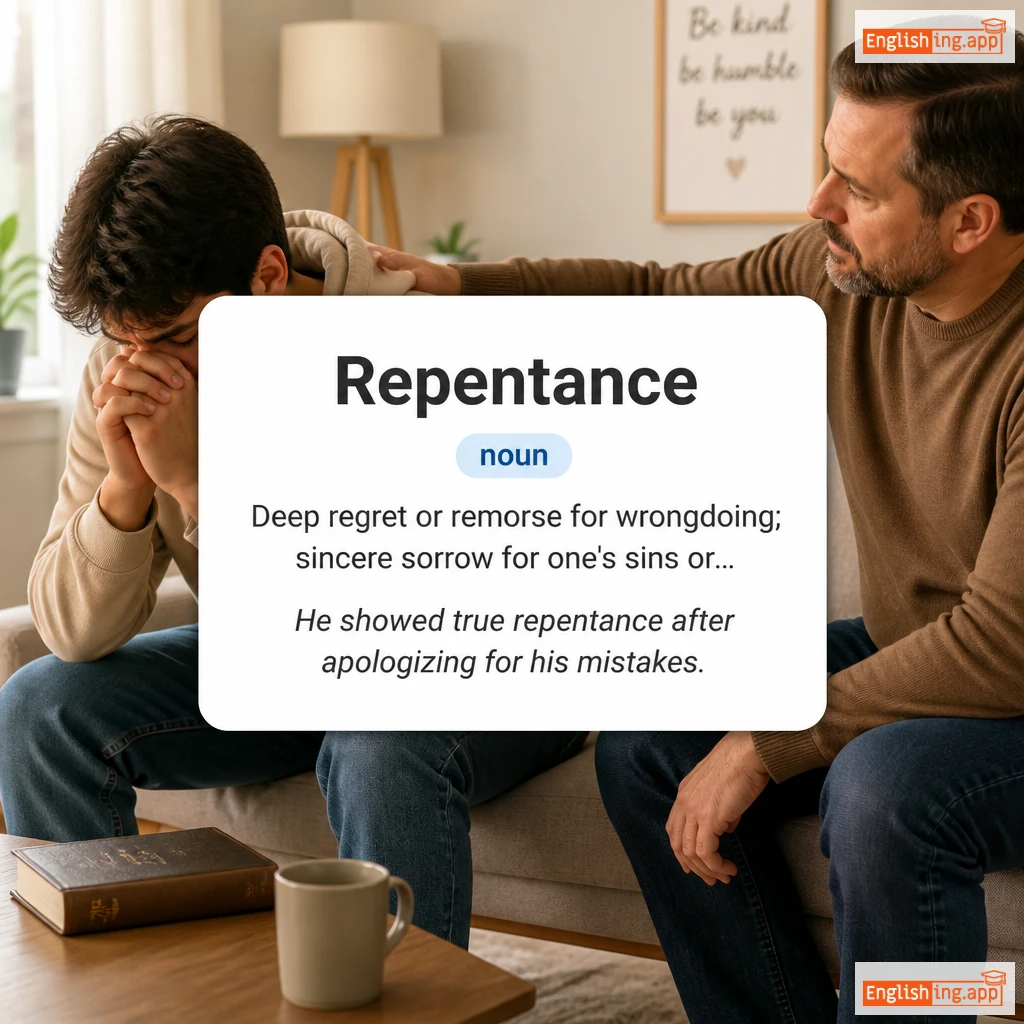
Repentance definition card — visual illustration of the meaning
noun C1
/rɪˈpɛntəns/
忏悔 (chanhui)

Deep regret or remorse for wrongdoing; sincere sorrow for one's sins or mistakes.

"He showed true repentance after apologizing for his mistakes."

"他在为自己的错误道歉后表现出了真正的忏悔。" (Tā zài wèi zìjǐ de cuòwù dàoqiàn hòu biǎoxiàn chūle zhēnzhèng de chànhuǐ.)
adjective C1
/rɪˈpen.tənt/
悔过的; 懊悔的; 后悔的 (huǐguò de; àohuǐ de; hòuhuǐ de)

feeling or expressing sincere regret and remorse; sorry for one's actions

"The repentant thief returned the stolen money."

"悔过的窃贼归还了被盗的钱。" (Huǐguò de qièzéi guīhuán le bèi dào de qián.)
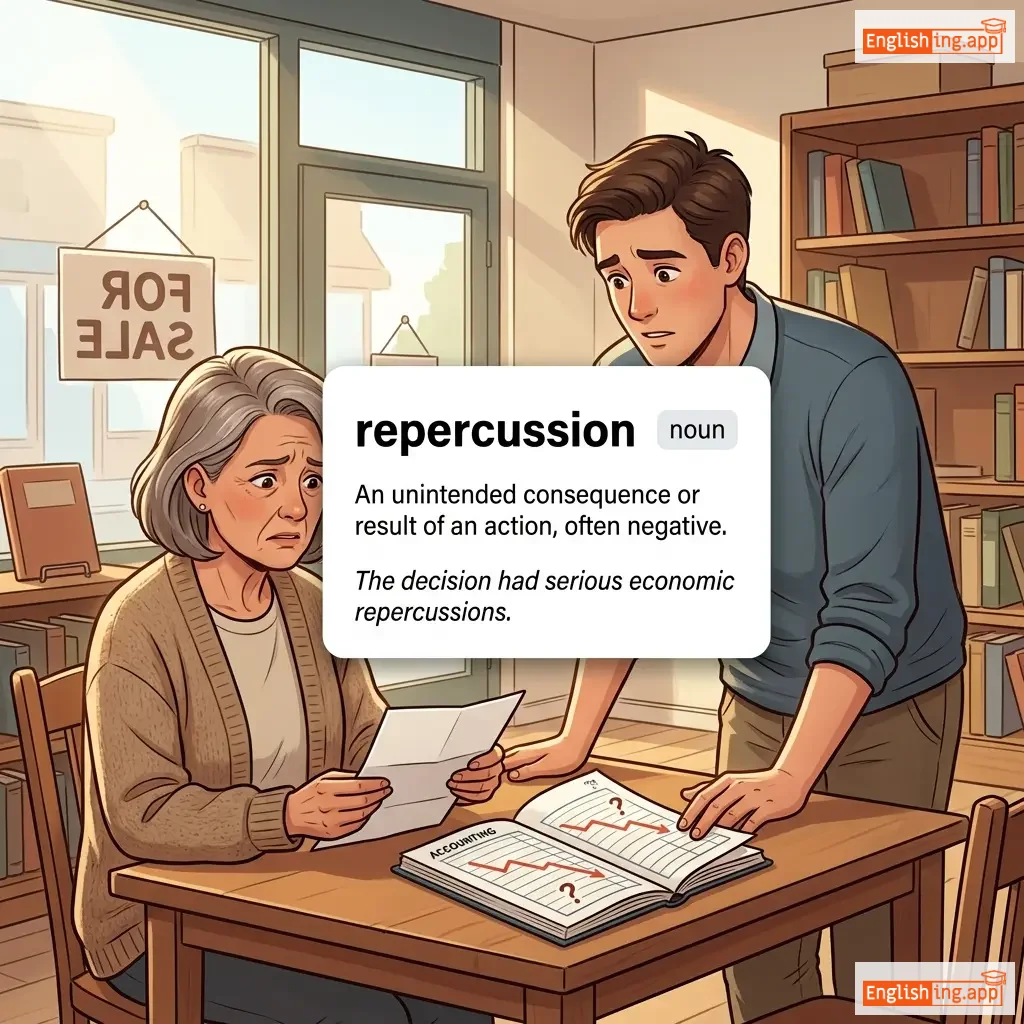
repercussion definition card — visual illustration of the meaning
noun C1
/ˌriːpərˈkʌʃən/

An unintended consequence or result of an action, often negative.

"The decision had serious economic repercussions."

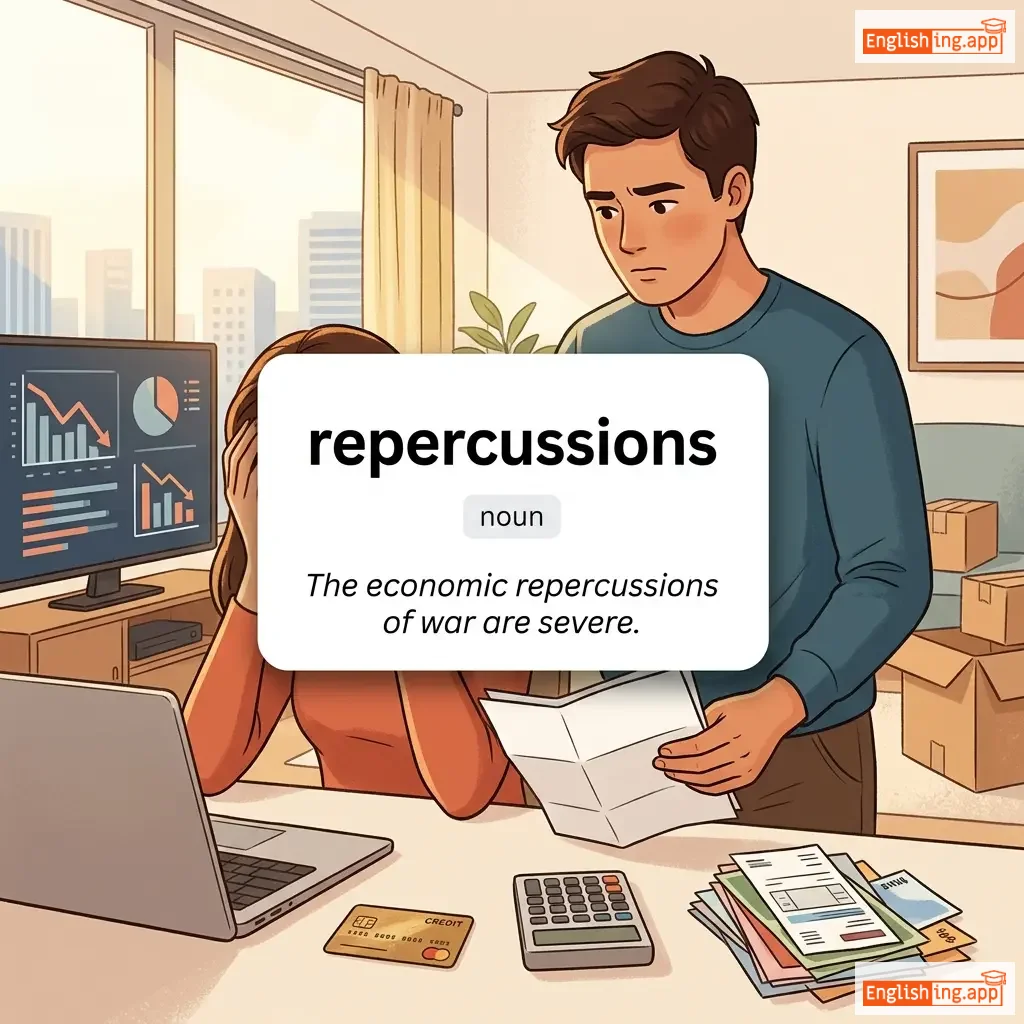
repercussions definition card — visual illustration of the meaning
noun C1
/ˌriː.pəˈkʌʃ.ənz/
后果 (houguo)

An unintended consequence occurring some time after an event or action; the effects or results of something.

"The economic repercussions of war are severe."

"战争的经济后果是严重的。" (Zhànzhēng de jīngjì hòuguǒ shì yánzhòng de.)
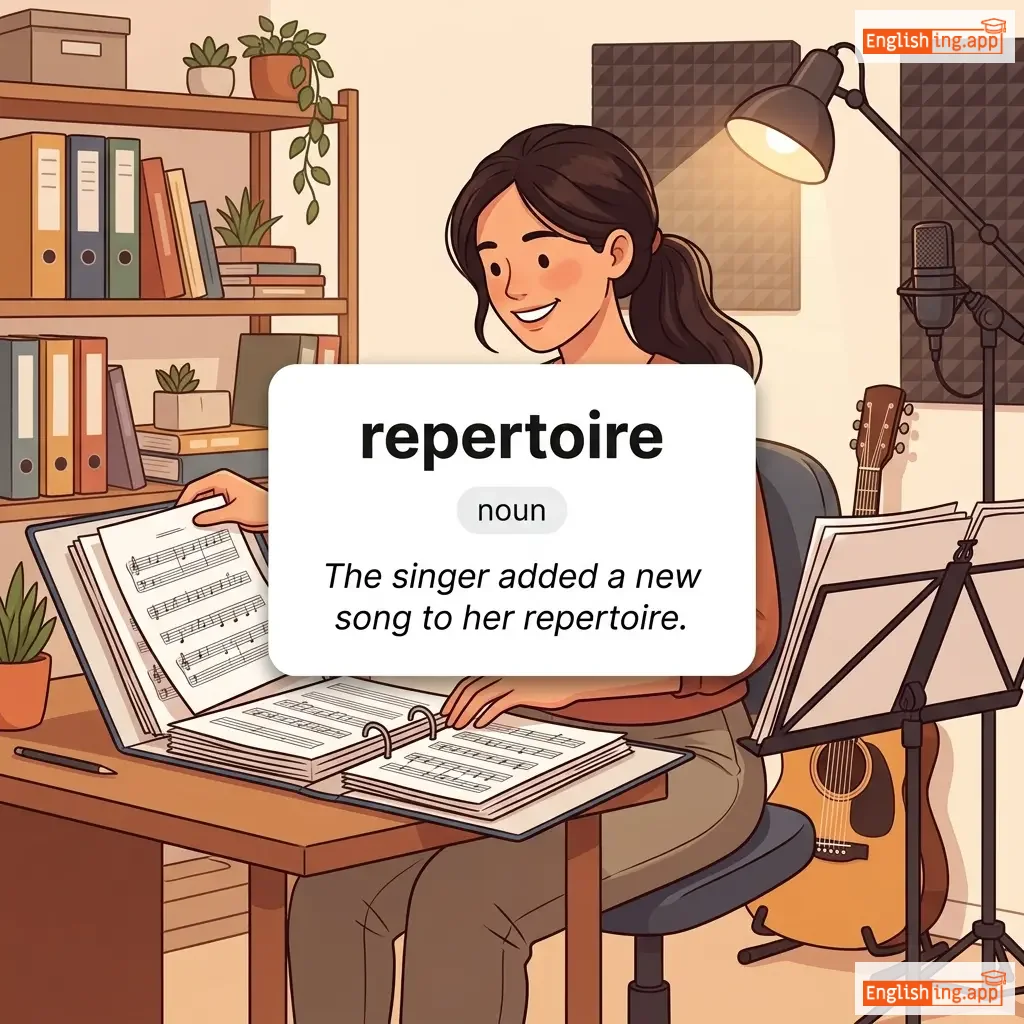
repertoire definition card — visual illustration of the meaning
noun C1
/ˈrɛpərˌtwɑːr/
曲目 (qumu)

The entire range of skills, works, or pieces that a person or group is prepared to perform or use.

"The singer added a new song to her repertoire."

"这位歌手将一首新歌加入了她的曲目。" (Zhè wèi gēshǒu jiāng yī shǒu xīn gē jiārùle tā de qǔmù.)
noun C1
/ˈrɛpərˌtɔːri/
剧目 (jumu)

A collection of works that a company, performer, or institution regularly performs; also a storehouse of information or skills.

"The theater has a repertory of classic plays."

"剧院有一系列经典剧目的演出。" (Juyuan you yi xilie jingdian jumuke de yanchu.)
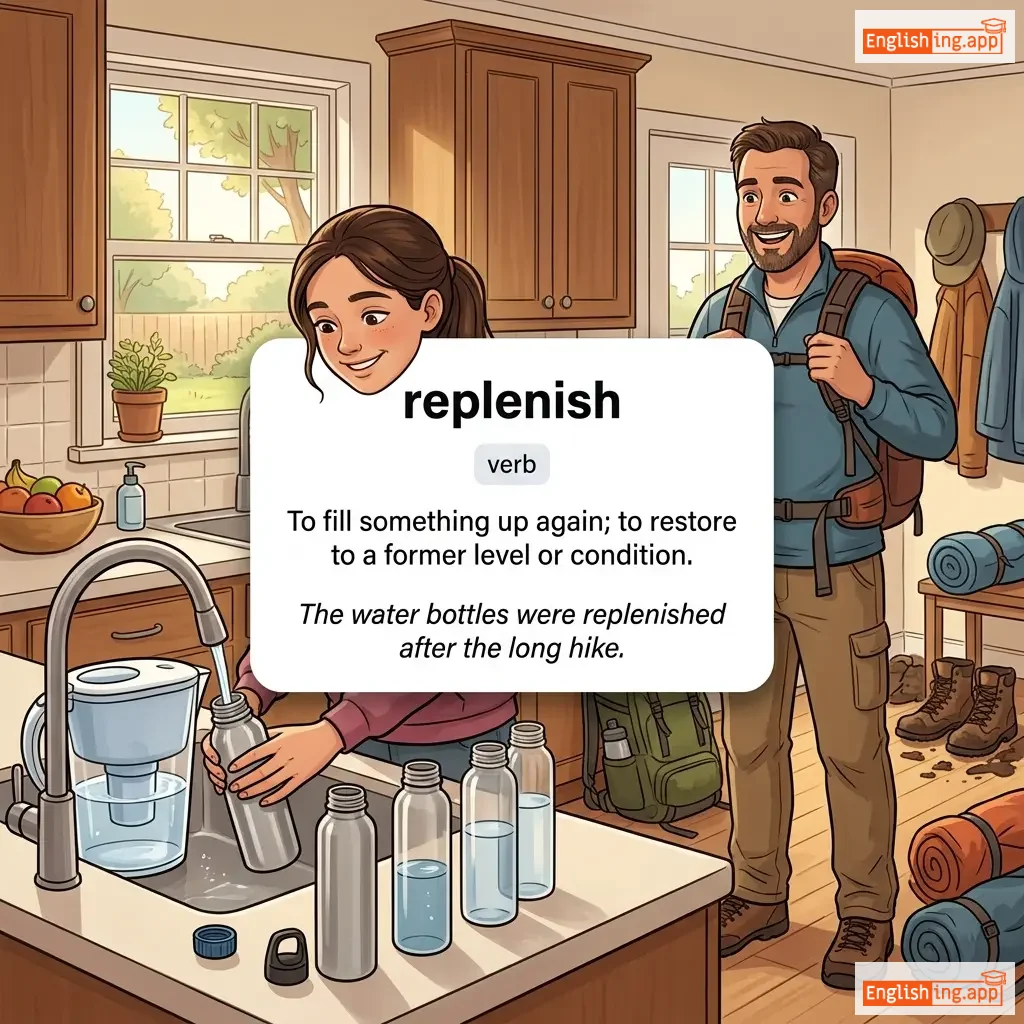
replenish definition card — visual illustration of the meaning
verb C1
/rɪˈplɛnɪʃ/
补充 (buchong)

To fill something up again; to restore to a former level or condition.

"The water bottles were replenished after the long hike."

"长时间徒步后,水瓶已重新补充。" (Chang shi jian tu bu hou, shui ping yi chong xin bu chong.)
adjective C1
/rɪˈpliːt/
充满 (chongman)

Filled or well-supplied with something; abundantly full.

"The book is replete with fascinating historical details."

"这本书充满了迷人的历史细节。" (Zhe ben shu chongman le mi ren de li shi xi jie.)
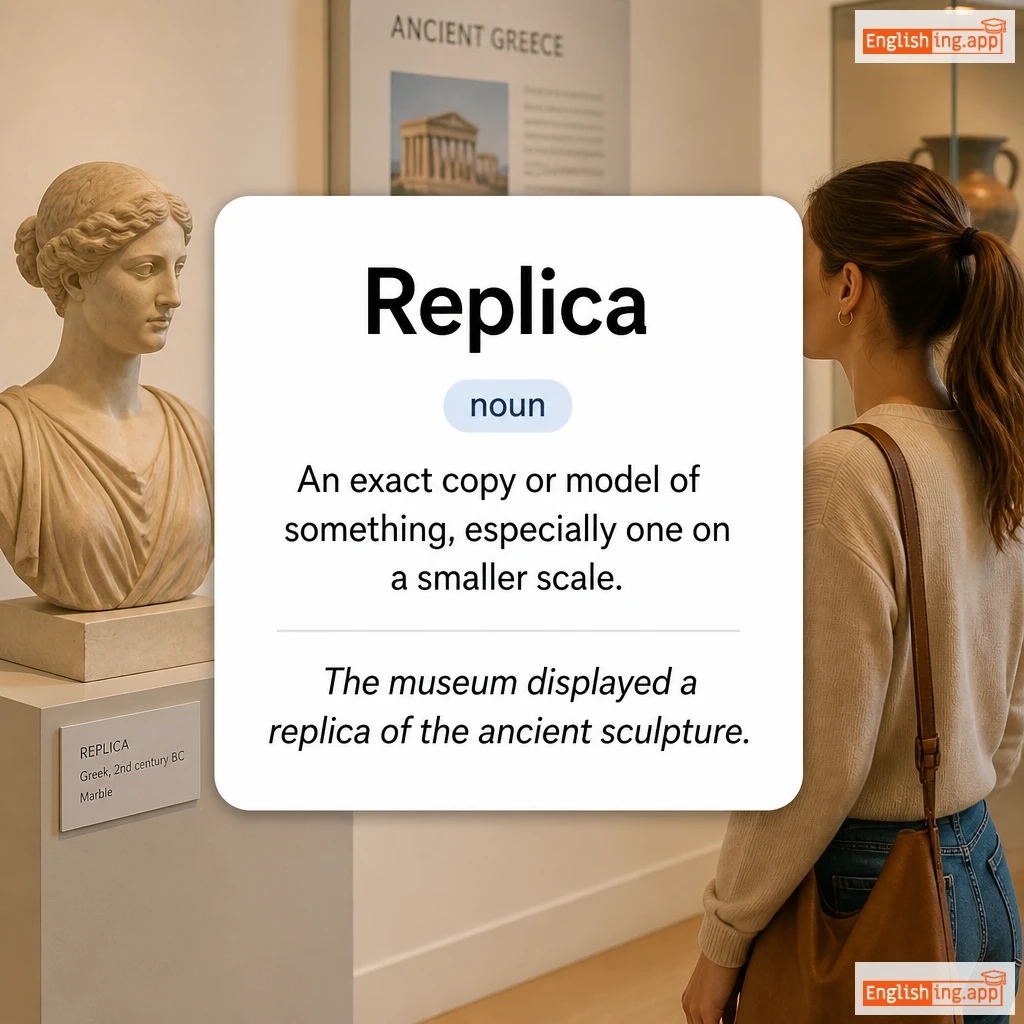
Replica definition card — visual illustration of the meaning
noun C1
/ˈrɛplɪkə/
复制品 (fùzhì pǐn)

An exact copy or model of something, especially one on a smaller scale.

"The museum displayed a replica of the ancient sculpture."

"博物馆展示了古代雕塑的复制品。" (Bówùguǎn zhǎnshìle gǔdài diāosù de fùzhì pǐn.)
verb C1
/ˈrɛplɪkeɪt/
复制 (fuzhi)

to copy, reproduce, or duplicate something exactly

"The scientist tried to replicate the experiment for accuracy."

"科学家尝试复制实验以确保准确性。" (Kexuejia changshi fuzhi shiyan yi quebao zhunquexing.)
noun C1
/rɪˈpɔːrtɪʒ/
报道 (baodao)

the act of reporting news or describing events in the media

"The magazine is known for its detailed reportage of political issues."

"这本杂志以其对政治问题的详细报道而闻名。" (Zhe ben zazhi yi qi dui zhengzhi wenti de xiangxi baodao er wenming.)
noun/verb C1
/rɪˈpoʊz/
休息 (xiuxi)

a state of rest, sleep, or tranquility; to rest or lie in a peaceful position

"After the long journey, she sought repose in the quiet garden."

"长途旅行后,她在安静的花园里寻求休息。" (Changtu lvxing hou, ta zai anjing de huayuan li xunqiu xiuxi.)
noun C1
/rɪˈpɑːzɪtɔːri/
仓库 (cāngkù)

a place where things are stored or kept for safekeeping

"The library serves as a repository of knowledge."

"图书馆作为知识的仓库。" (Túshūguǎn zuòwéi zhīshì de cāngkù.)
adjective C1
/ˌrɛprɪˈhɛnsəbl̩/
可耻的 (kěchǐ de)

Deserving strong criticism or blame.

"His dishonest actions were truly reprehensible."

"他的不诚实行为真是可耻的。" (Tā de bù chéngshí xíngwéi zhēnshi kěchǐ de.)
adjective C1
/ˌrɛprɪzɛnˈteɪʃənl̩/
表现性 (biaoxianxing)

Relating to or depicting something in a realistic or symbolic way.

"The artist preferred a representational style of painting."

"艺术家更喜欢表现主义的绘画风格。" (Yishu jia geng xihuan biaoxianshuzhu de huihua fengge.)
verb C1
/rɪˈprɛs/

To restrain, suppress, or keep under control, especially emotions or desires.

"He tried to repress his anger during the meeting."

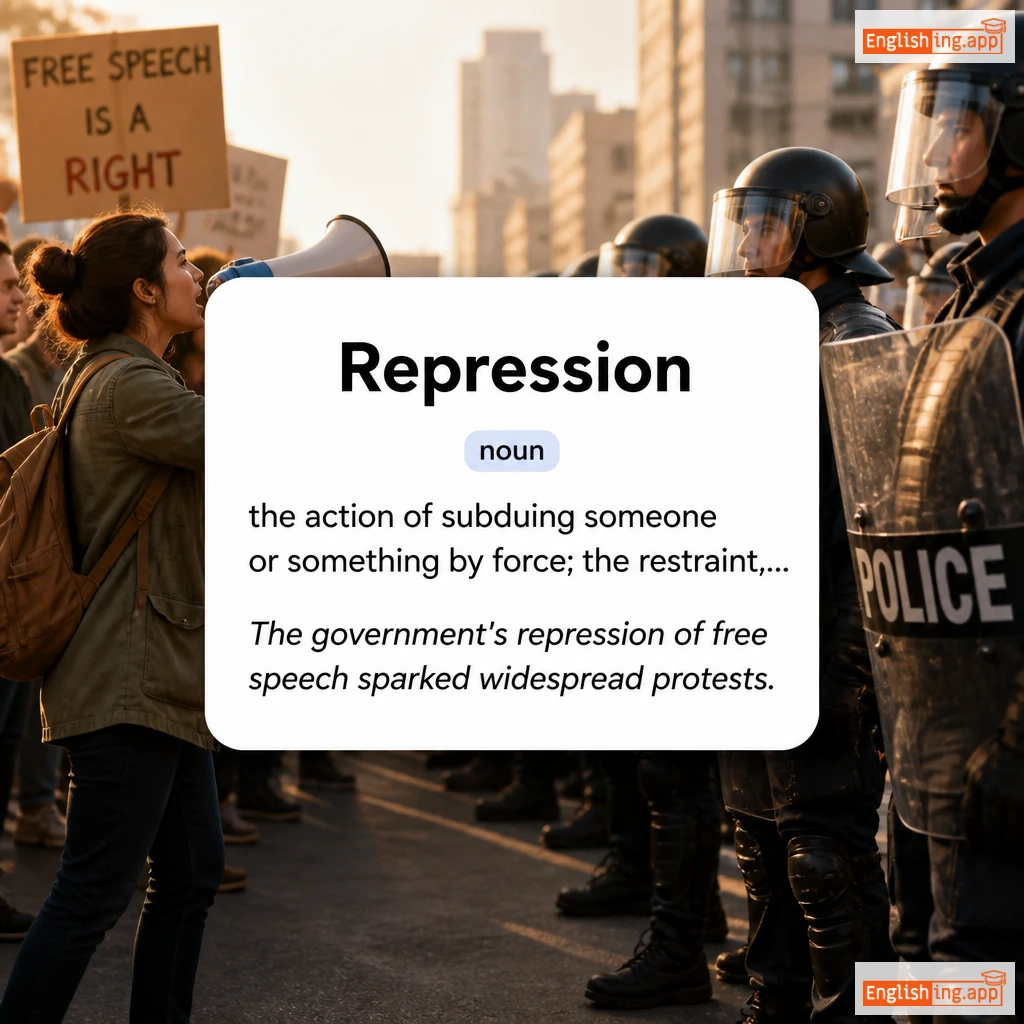
Repression definition card — visual illustration of the meaning
noun C1
/rɪˈpreʃən/
压制 (li pu rui shen)

the action of subduing someone or something by force; the restraint, prevention, or inhibition of a feeling, impulse, etc.

"The government's repression of free speech sparked widespread protests."

"政府对言论自由的压制引发了广泛的抗议。" (zheng fu dui yan lun zi you de ya zhi yin fa le guang fan de kang yi)
adjective C1
/rɪˈpres.ɪv/
压制性的 (yāzhìxìng de)

restraining freedom or preventing self-expression; oppressive

"The repressive government banned all forms of protest."

"压制性的政府禁止了所有形式的抗议。" (yāzhìxìng de zhèngfǔ jìnzhǐle suǒyǒu xíngshì de kàngyì)
noun/verb C1
/rɪˈpriːv/

A temporary relief or delay from something unpleasant; to postpone or cancel punishment.

"The prisoner was granted a last-minute reprieve from execution."

noun/verb C1
/ˈrɛprɪˌmænd/

A formal expression of disapproval; to scold or criticize someone officially.

"The teacher reprimanded the student for being late."

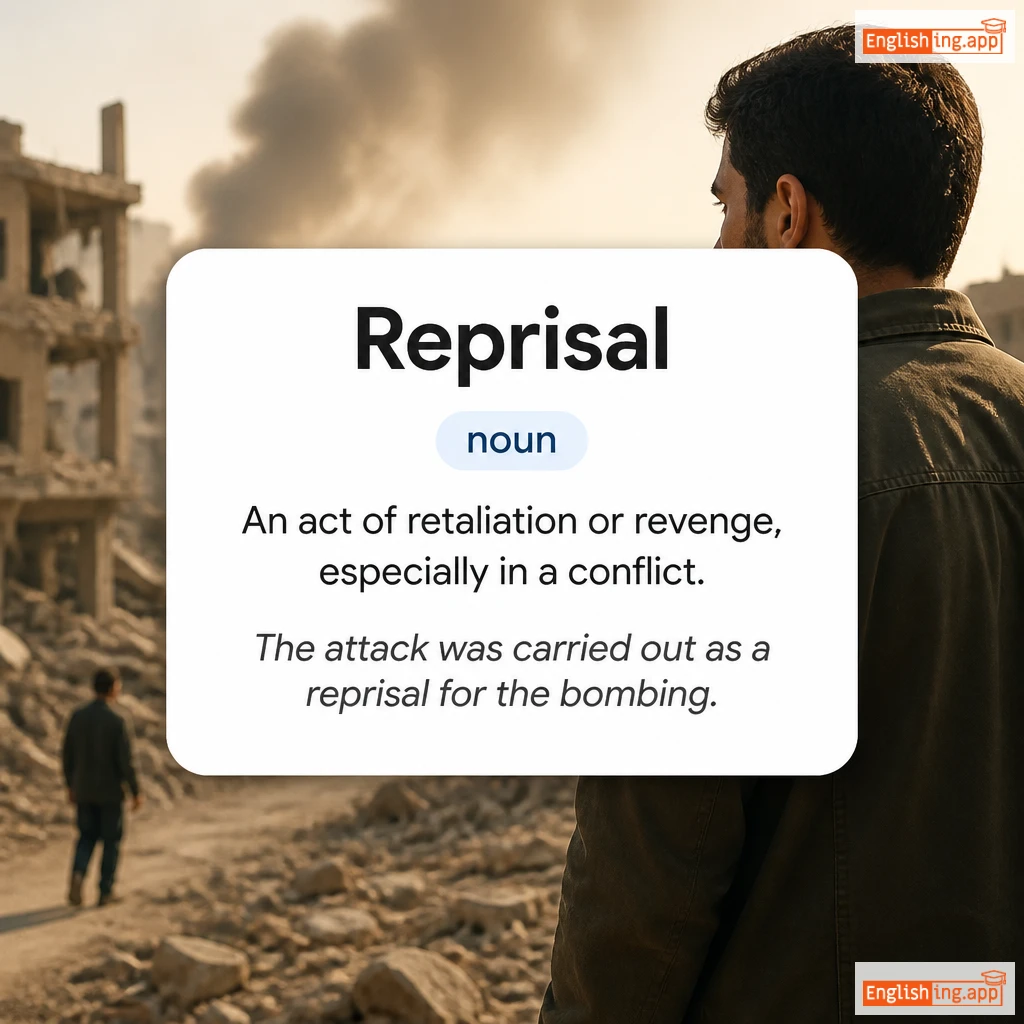
Reprisal definition card — visual illustration of the meaning
noun C1
/rɪˈpraɪzəl/
报复 (baofu)

An act of retaliation or revenge, especially in a conflict.

"The attack was carried out as a reprisal for the bombing."

"攻击是作为对轰炸的报复而进行的。" (Gongji shi zuo wei dui hongzha de baofu er jinxing de.)
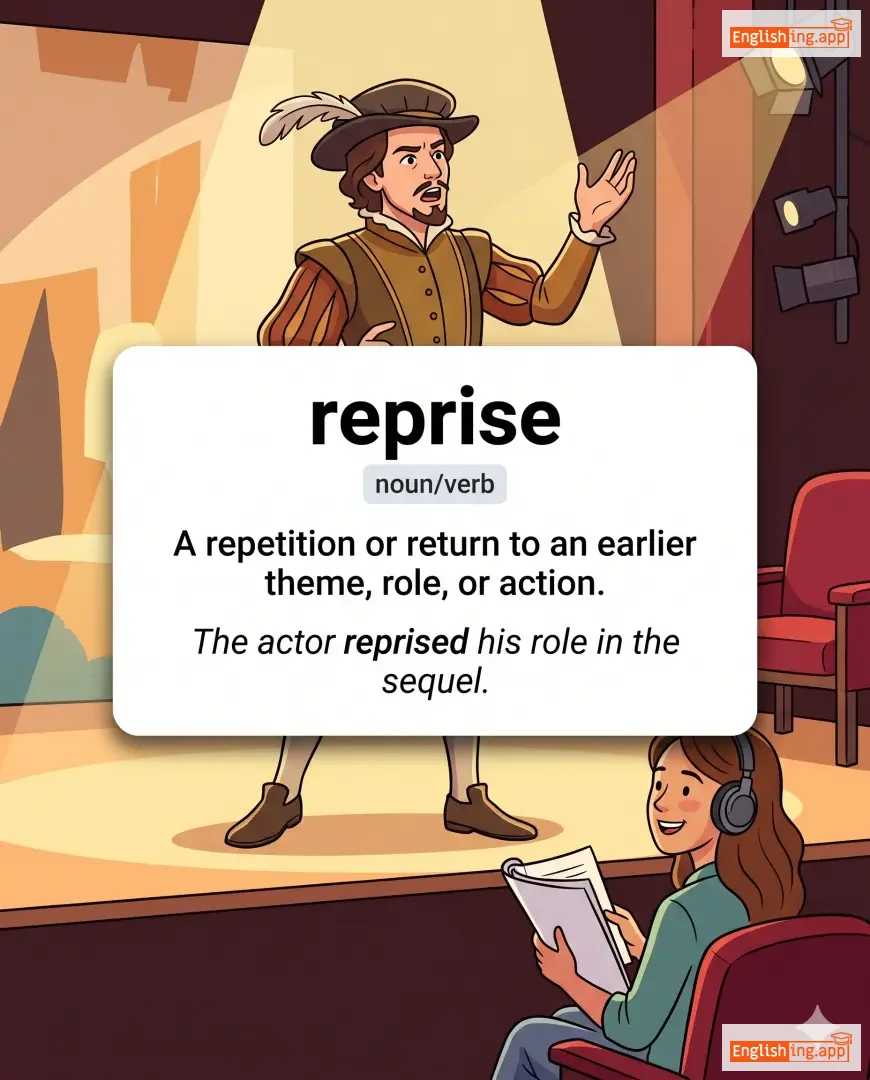
reprise definition card — visual illustration of the meaning
noun/verb C1
/rɪˈpriːz/
重现 (chongxian)

A repetition or return to an earlier theme, role, or action.

"The actor reprised his role in the sequel."

"演员在续集中重新扮演了他的角色。" (Yǎnyuán zài xùjí zhōng chóngxīn bàn yǎnle tā de juésè.)
reproach definition card — visual illustration of the meaning
noun/verb C1
/rɪˈproʊtʃ/
指责 / 批评 (zhize / piping)

An expression of disapproval or disappointment; to criticize someone for doing wrong.

"She reproached him for arriving late to the meeting."

"她因迟到而责备了他。" (Ta yin chidao er zhebei le ta.)
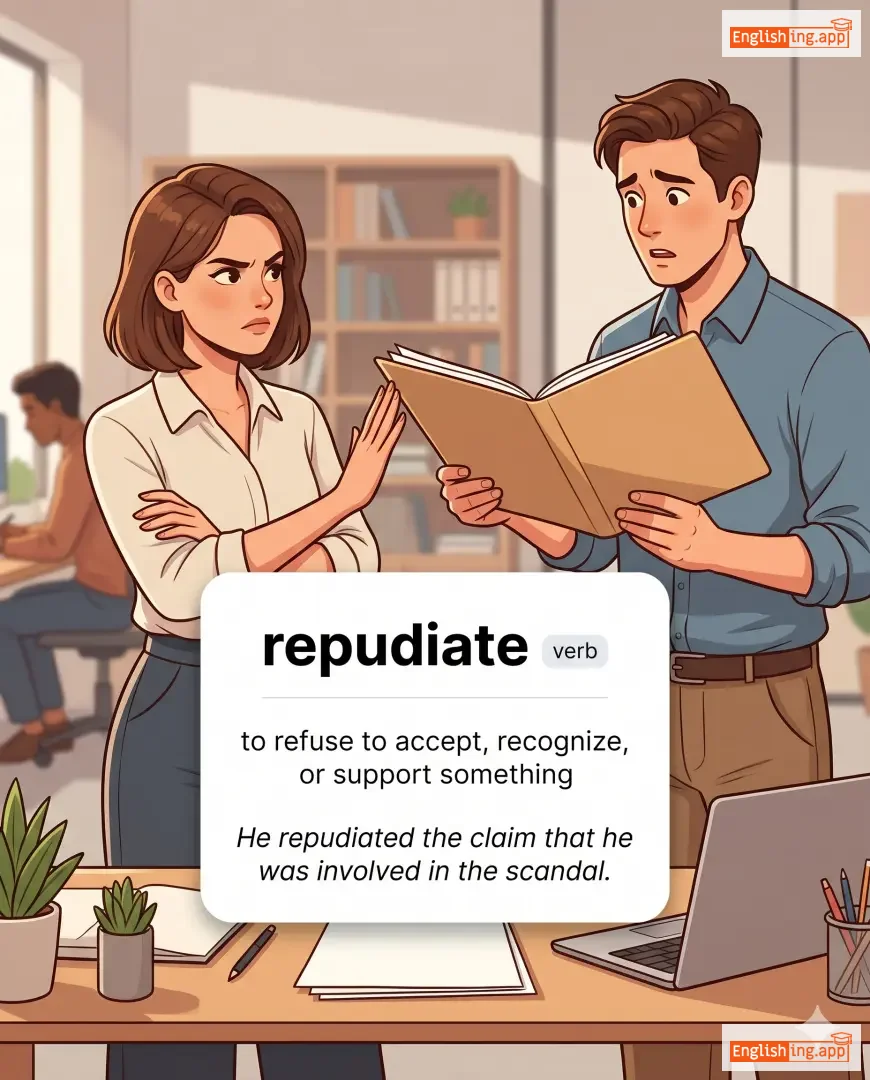
repudiate definition card — visual illustration of the meaning
verb C1
/rɪˈpjuː.di.eɪt/
拒绝 (jujue)

to refuse to accept, recognize, or support something

"He repudiated the claim that he was involved in the scandal."

"他拒绝了他参与丑闻的说法。" (Ta jujue le ta canyu chouwen de shuofa.)
adjective C1
/rɪˈpʌɡ.nənt/
令人厌恶的 (lìng rén yànwù de)

causing strong dislike, disgust, or opposition

"The idea of cheating was repugnant to him."

"作弊的想法让他感到令人厌恶。" (zuòbì de xiǎngfǎ ràng tā gǎndào lìng rén yànwù.)
verb C1
/rɪˈpʌls/
击退 / 激起反感 (jì tuì / jī qǐ fǎn gǎn)

to drive back an attack or attacker by force; to cause intense dislike or disgust

"The army managed to repulse the enemy attack."

"军队成功地击退了敌人的进攻。" (Jūn duì chéng gōng de jī tuì le dí rén de jìn gōng.)
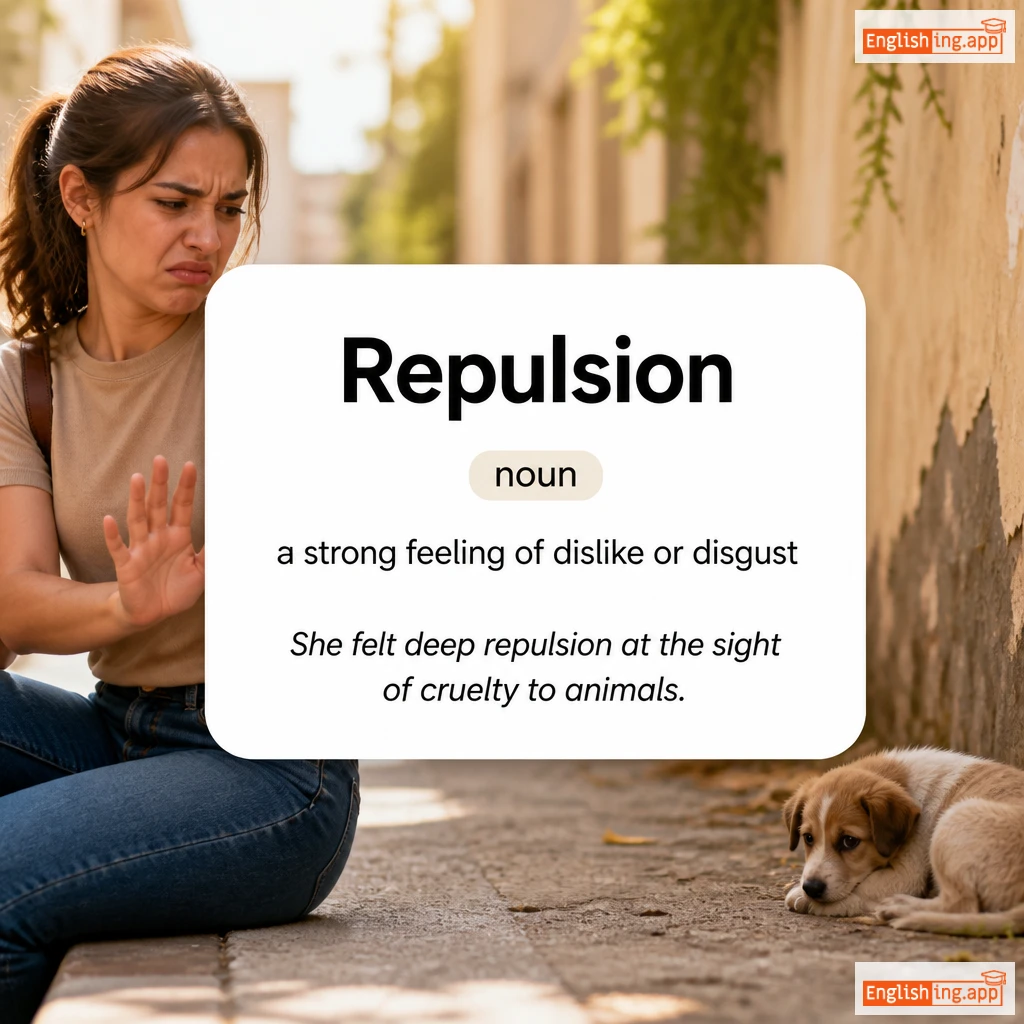
Repulsion definition card — visual illustration of the meaning
noun C1
/rɪˈpʌlʃən/

a strong feeling of dislike or disgust

"She felt deep repulsion at the sight of cruelty to animals."

adjective C1
/rɪˈpʌlsɪv/
令人反感的 (lìng rén fǎn gǎn de)

arousing intense distaste or disgust

"The garbage gave off a repulsive smell."

"垃圾散发出令人厌恶的气味。" (Laji sanfa chu ling ren fangan de qiwei.)
adjective C1
/ˈrɛpjətəbəl/
声誉良好的 (shengyu lianghao de)

having a good reputation; respected

"They chose a reputable company to handle their finances."

"他们选择了一家有声誉的公司来处理他们的财务。" (Tāmen xuǎnzéle yījiā yǒu shēngyù de gōngsī lái chǔlǐ tāmen de cáiwù.)
noun C1
/rɪˈpjuːt/
名誉 (mingyu)

the opinion generally held of someone or something; reputation

"He is a scholar of great repute in his field."

"他在他的领域享有很高的名誉。" (Ta zai ta de lingyu xiangyou hen gao de mingyu.)
adjective C1
/rɪˈpjuːtɪd/
有声望的 (yǒu shēngwàng de)

Generally considered or believed to be something, often based on reputation rather than certainty.

"He is a reputed expert in financial management."

"他是金融管理方面的有声望的专家。" (Tā shì jīnróng guǎnlǐ fāngmiàn de yǒu shēngwàng de zhuānjiā.)
adjective C1
/ˈrɛkwɪzɪt/
必要的 (bìyào de)

Made necessary by particular circumstances or regulations; required.

"A passport is a requisite document for international travel."

"护照是国际旅行所需的必要文件。" (Hùzhào shì guójì lǚxíng suǒ xū de bìyào wénjiàn.)
noun C1
/ˌrɛkwɪˈzɪʃən/
要求 (yaoqiu)

An official order laying claim to the use of property or materials; a formal demand or request.

"The manager submitted a requisition for new office supplies."

"经理提交了新的办公室用品的要求。" (Jingli tijiao le xin de bangongshi yongpin de yaoqiu.)
verb C1
/ˌriːˈsiːt/
重新安排 (chongxin anpai)

to seat someone again or to fit something back into its place

"The usher had to reseat the guests after the interruption."

"引座员在干扰后不得不重新安排宾客。" (Yinzuo yuan zai ganrao hou budebu chongxin anpai binke.)