Vokabulare

Englisches Vokabelwörterbuch | Wortbedeutungen, Definitionen & Beispiele

noun C1
/miːlˈjuː/
环境 (huanjing)

A person's social environment or surroundings.

"She grew up in an artistic milieu."

"她在艺术的环境中长大。" (Tā zài yìshù de huánjìng zhōng zhǎng dà.)
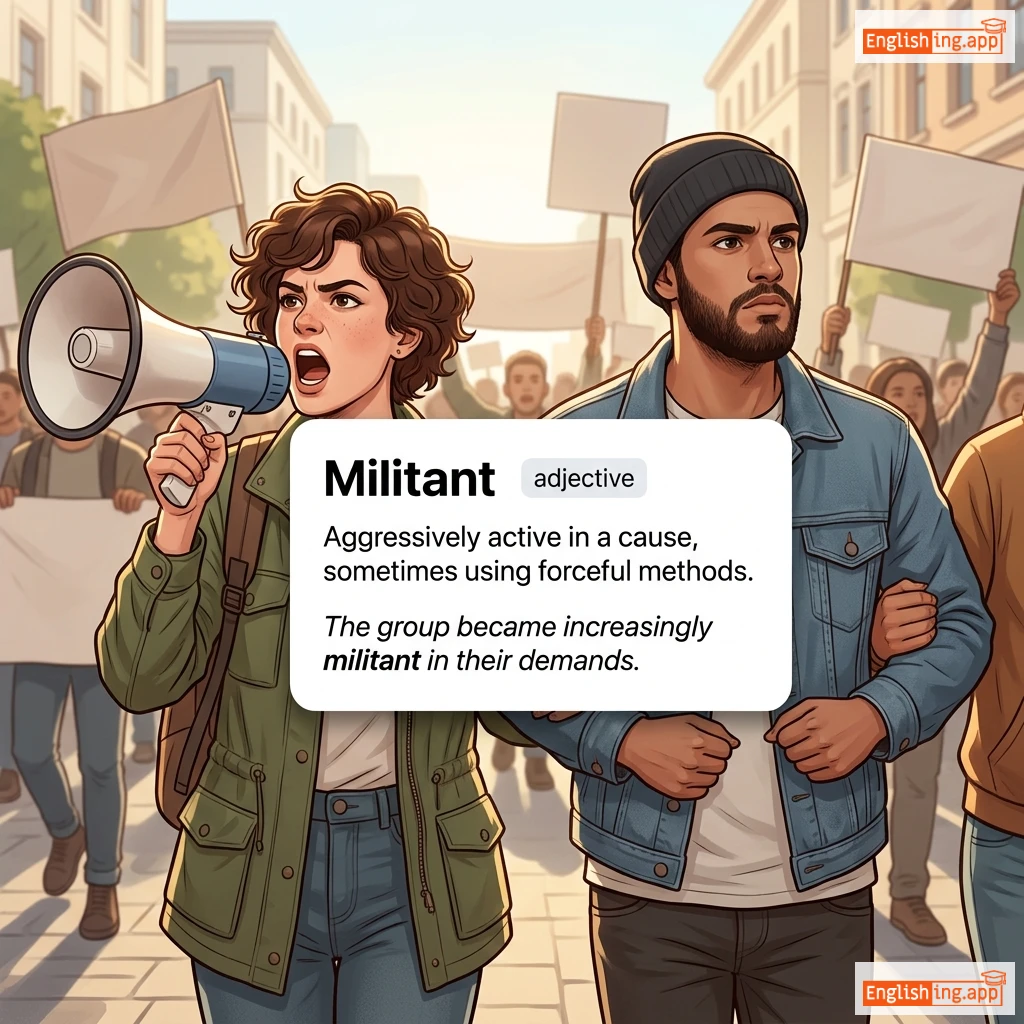
Militant definition card — visual illustration of the meaning
adjective C1
/ˈmɪlɪtənt/
激进的 (jijin de)

Aggressively active in a cause, sometimes using forceful methods.

"The group became increasingly militant in their demands."

"该组织在他们的要求中变得越来越激进。" (Gai zuzhi zai tamen de yaoqiu zhong biande yuelaiyue jijin.)
noun C1
/ˈmɪlɪtəˌrɪzəm/
军事主义 (junshizhuyi)

The belief in maintaining a strong military and using it aggressively to defend or promote national interests.

"The rise of militarism in the region caused tension among neighboring countries."

"该地区军事主义的兴起引发了邻国之间的紧张局势。" (Gai diqu junshizhuyi de xingqi yinfa le lingguo zhi jian de jinzhang ju shi.)
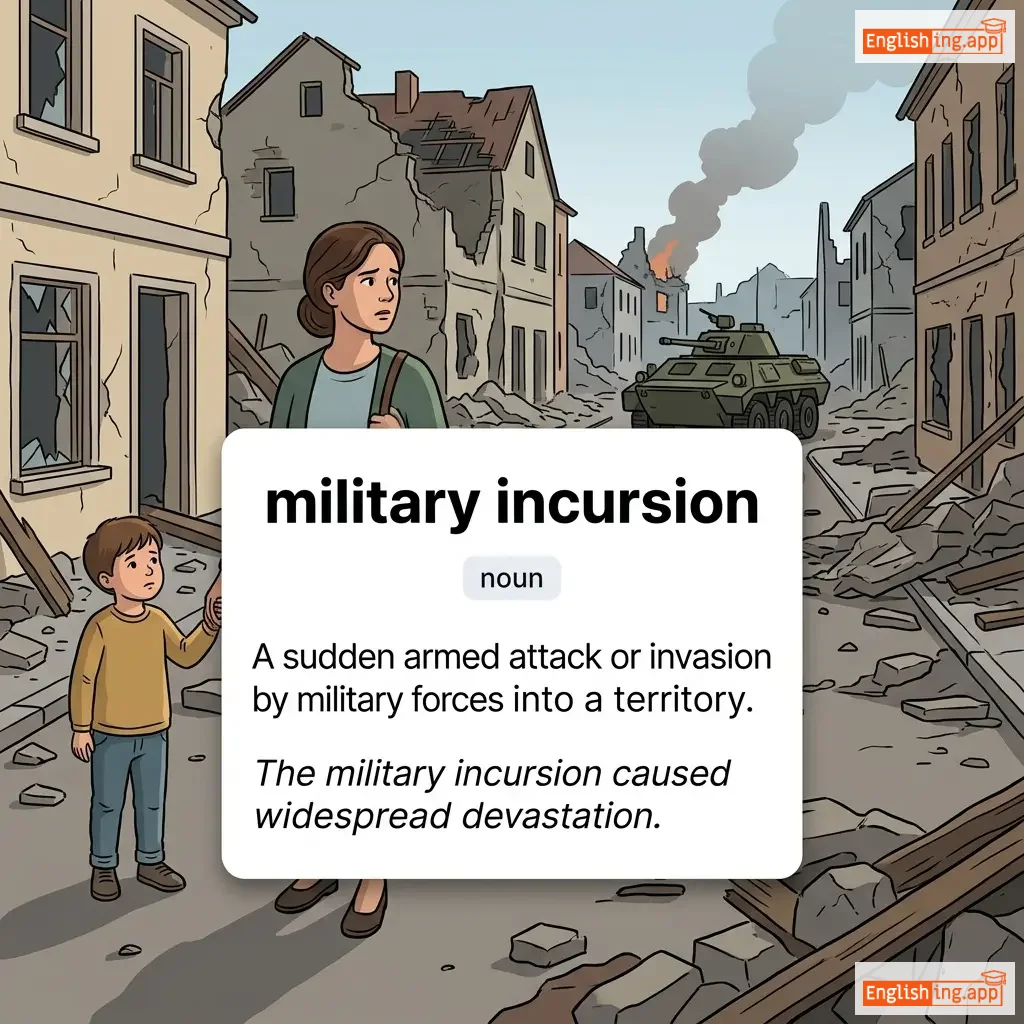
military incursion definition card — visual illustration of the meaning
noun C1
ˈmɪl.ɪ.tər.i ɪnˈkɜː.ʃən
军事入侵 (junshi rùqīn)

A sudden armed attack or invasion by military forces into a territory.

"The military incursion caused widespread devastation."

"军事入侵造成了广泛的破坏。" (Jūnshì rùqīn zàochéngle guǎngfàn de pòhuài.)
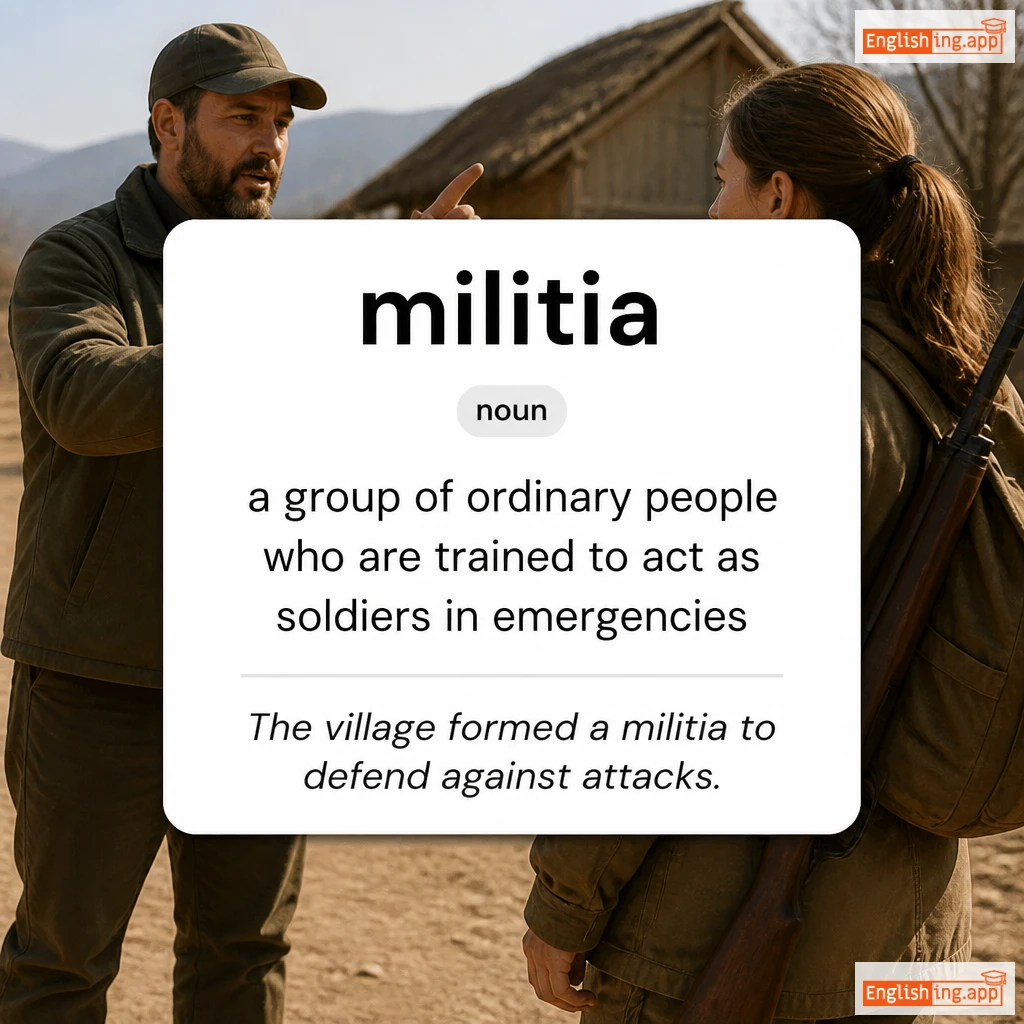
militia definition card — visual illustration of the meaning
noun C1
/mɪˈlɪʃə/
民兵 (minbing)

a group of ordinary people who are trained to act as soldiers in emergencies

"The village formed a militia to defend against attacks."

"村庄组成了一支民兵,以防范攻击。" (Cun zhuang zu cheng le yi zhi minbing, yi fangfan gongji.)
noun C1
/mɪˈlɛniəm/
千年 (qiān nián)

a period of one thousand years; often used to mark an anniversary

"The year 2000 was celebrated as the beginning of a new millennium."

"2000年被庆祝为新千年的开始。" (2000 nián bèi qìngzhù wéi xīn qiānnián de kāishǐ.)
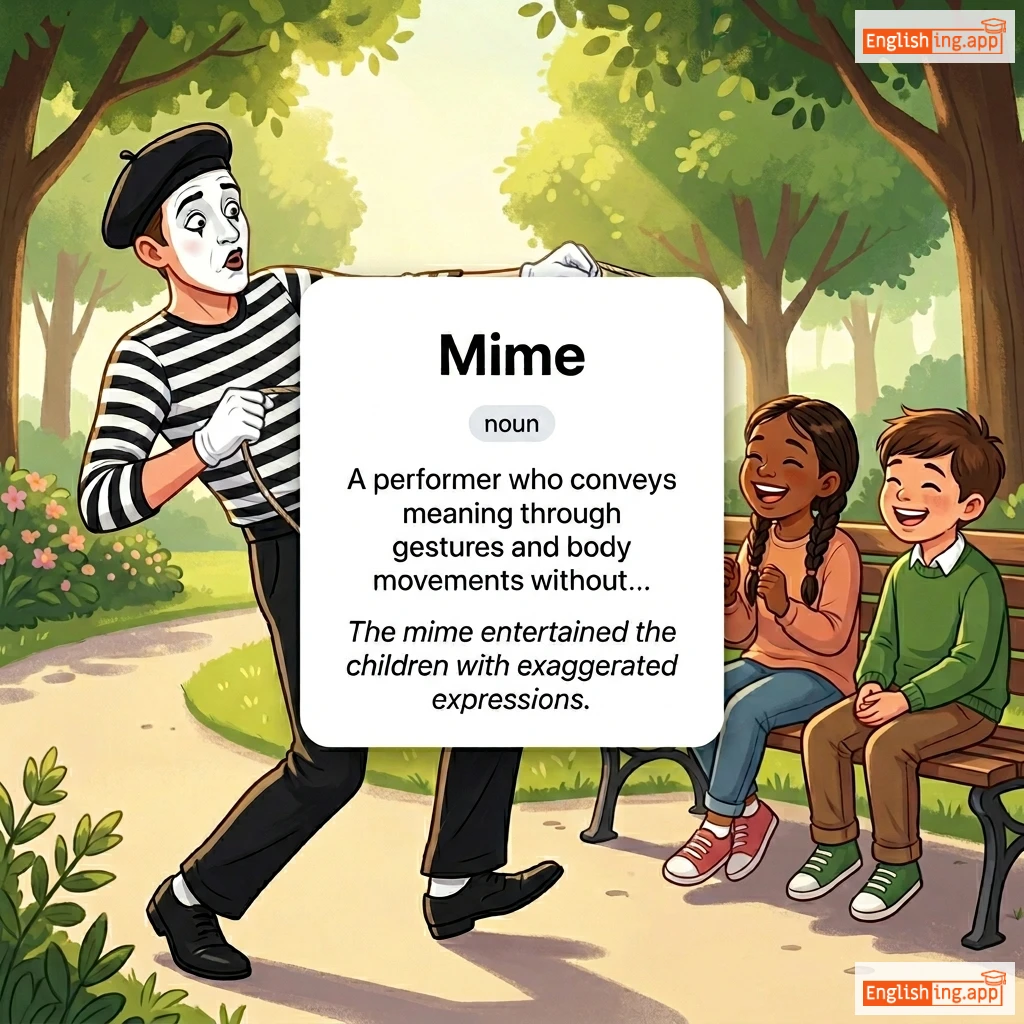
Mime definition card — visual illustration of the meaning
noun C1
/maɪm/
哑剧演员 (yǎ jù yǎn yuán)

A performer who conveys meaning through gestures and body movements without speech.

"The mime entertained the children with exaggerated expressions."

"这个哑剧演员用夸张的表情娱乐孩子们。" (Zhège yǎ jù yǎn yuán yòng kuā zhāng de biǎo qíng yú lè hái zǐ men.)
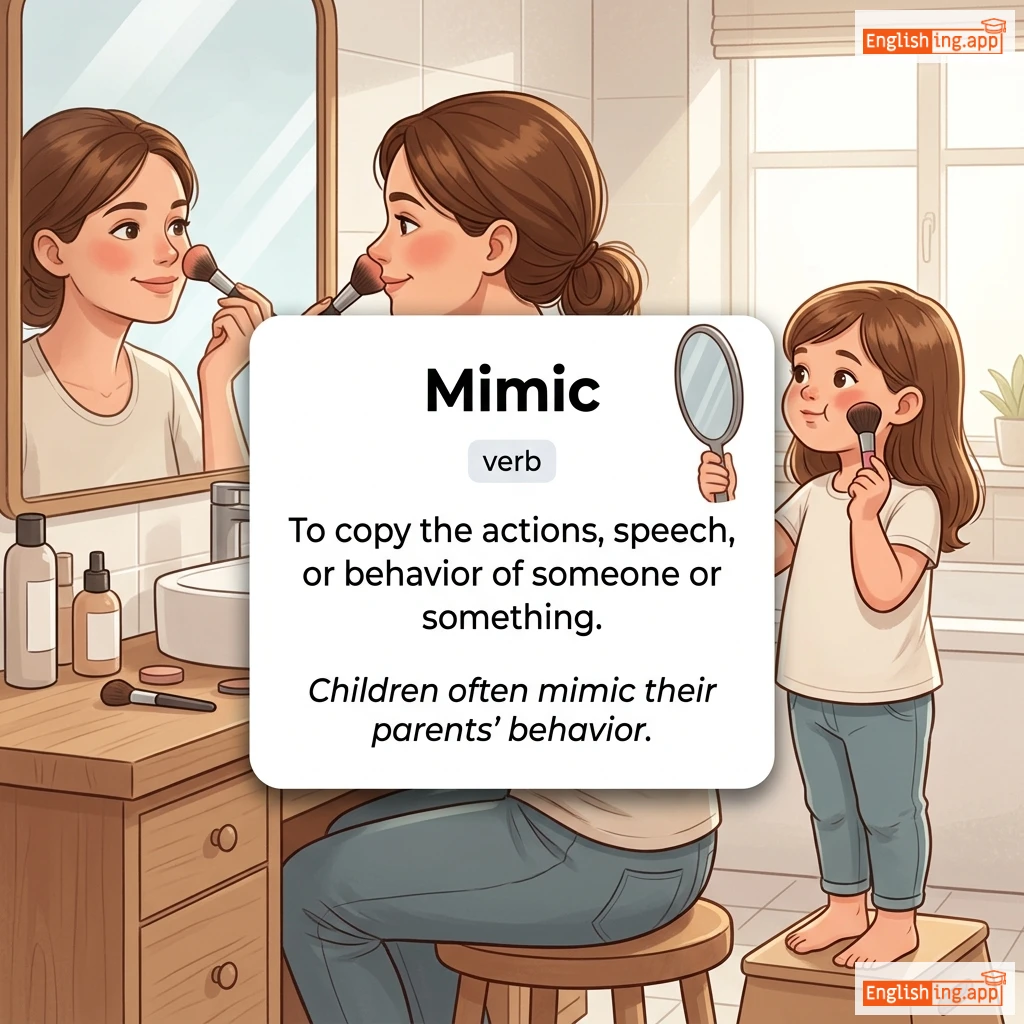
Mimic definition card — visual illustration of the meaning
🦜

Mimic

verb C1
/ˈmɪmɪk/

To copy the actions, speech, or behavior of someone or something.

"Children often mimic their parents' behavior."

noun C1
/ˈmɪmɪkri/
模仿 (mofang)

The act of imitating someone or something, often for humor or learning.

"The comedian’s mimicry of celebrities made the audience laugh."

"喜剧演员通过模仿名人让观众捧腹大笑。" (Xǐjù yǎnyuán tōngguò mófǎng míngrén ràng guānzhòng pěngfù dàxiào.)
mince definition card — visual illustration of the meaning
verb C1
/mɪns/
切碎 (qiē suì)

to cut food, especially meat, into very small pieces; to speak in an affectedly delicate or refined way

"She minced the garlic before adding it to the sauce."

"她在将大蒜加入酱料之前切碎了它。" (Tā zài jiāng dàsuàn jiārù jiàngliào zhīqián qiē suì le tā.)
adjective C1
/ˈmaɪndləs/
无意义的 (wú yìyì de)

without thought or intelligence; done without consideration

"He was bored by the mindless tasks at work."

"他对工作中无意义的任务感到无聊。" (Tā duì gōngzuò zhōng wú yìyì de rènwù gǎndào wúliáo.)
verb C1
/ˈmɪŋɡl/

to mix or combine; to move among people and engage socially

"Guests mingled at the party, chatting and laughing together."

adjective C1
/ˈmɪnəskjuːl/
微小 (weixiao)

extremely small in size or importance

"She made only a minuscule contribution to the project."

"她对这个项目的贡献微乎其微。" (Ta dui zhege xiangmu de gongxian weihuqiwei.)
adverb C1
/maɪˈnjuːtli/
仔细地 (zǐxì de)

in very small detail; extremely carefully

"The detective examined the evidence minutely."

"侦探仔细地检查了证据。" (Zhēntàn zǐxì de jiǎnchále zhèngjù.)
adjective C1
/mɪˈrækjələs/
奇迹般的 (qíjì bān de)

Extraordinarily wonderful or unusual, as if by a miracle.

"Her recovery after the accident was truly miraculous."

"她在事故后的康复真的是奇迹般的。" (Tā zài shìgù hòu de kāngfù zhēn de shì qíjì bān de.)
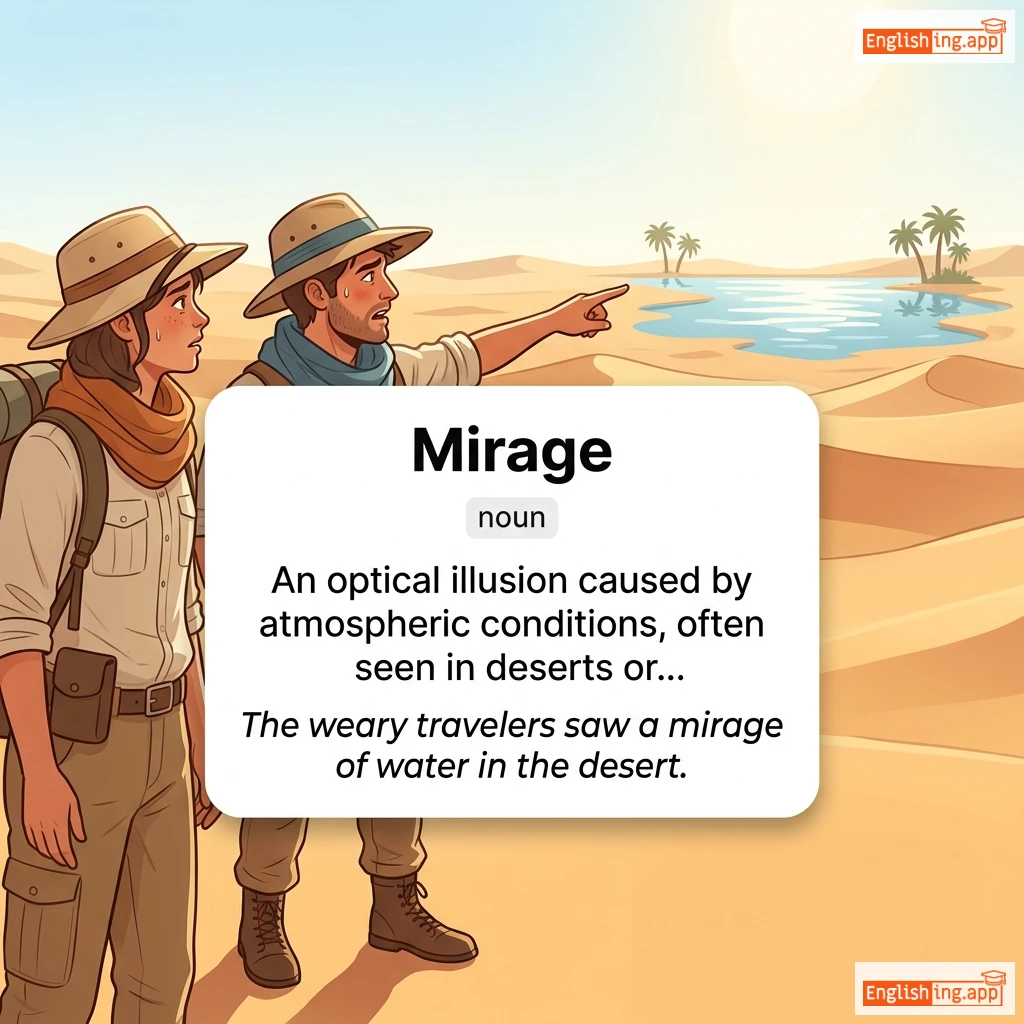
Mirage definition card — visual illustration of the meaning
noun C1
/məˈrɑːʒ/
海市蜃楼 (haishi shenglou)

An optical illusion caused by atmospheric conditions, often seen in deserts or hot roads, where water or objects appear to exist but do not.

"The weary travelers saw a mirage of water in the desert."

"疲惫的旅行者在沙漠中看到了水的海市蜃楼。" (Pibei de luxingzhe zai shamo zhong kandao le shui de haishi shenglou.)
adjective, verb (past tense/participle of mire) C1
/ˈmaɪərd/
困境中 (kùnjìng zhōng)

Trapped or entangled in something, typically a difficult situation.

"The politician was mired in scandal."

"这位政治家陷入了丑闻中。" (Zhè wèi zhèngzhìjiā xiànrùle chǒuwén zhōng.)
noun C1
/mɜːrθ/
欢乐 (huanle)

Great joy, amusement, or laughter.

"The festival was full of mirth and laughter."

"这个节日充满了欢乐和笑声。" (Zhège jiérì chōngmǎnle huānlè hé xiàoshēng.)
adjective C1
/ˌmɪsəˈleɪniəs/
杂项 (záxiàng)

Consisting of a variety of different items or types.

"The drawer was filled with miscellaneous objects."

"抽屉里装满了杂物。" (Chōutì lǐ zhuāngmǎnle záwù.)
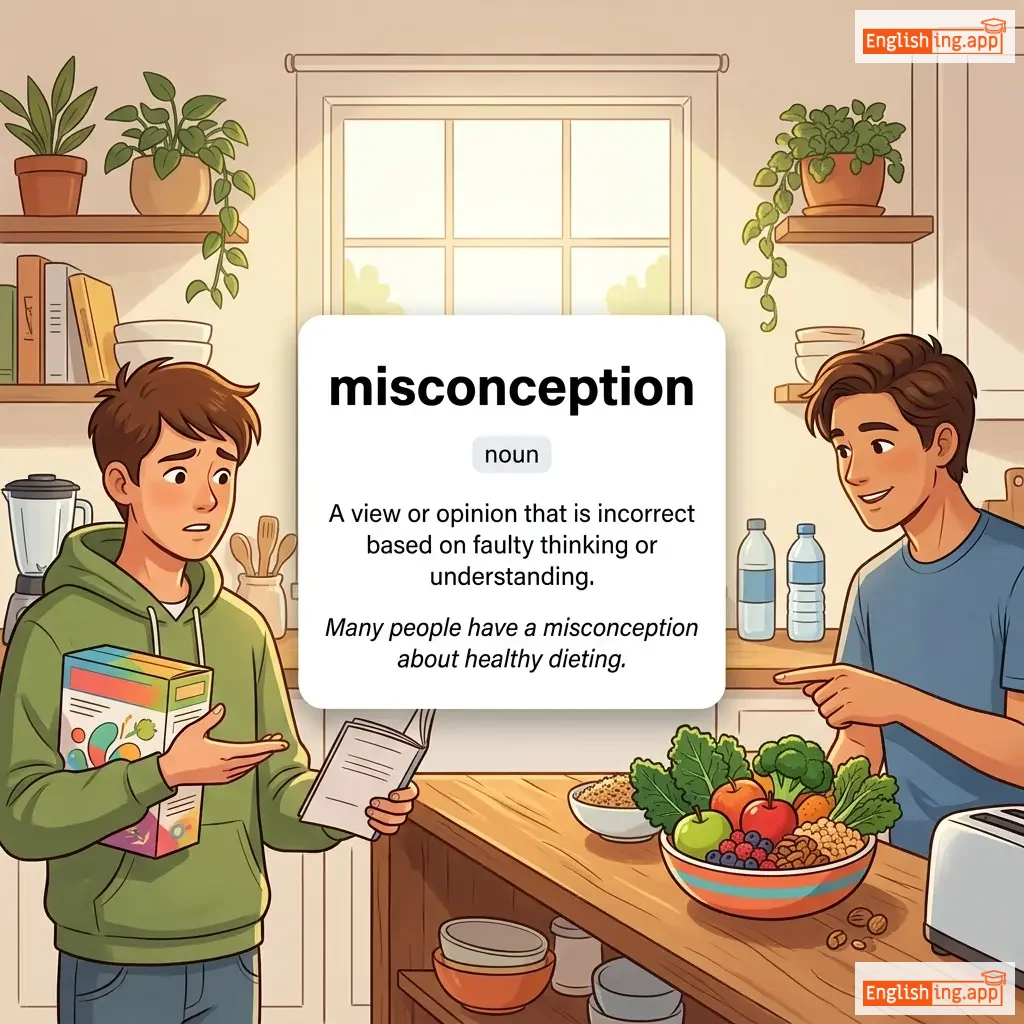
misconception definition card — visual illustration of the meaning
noun C1
/ˌmɪs.kənˈsep.ʃən/
误解,错觉 (wùjiě, cuòjué)

A view or opinion that is incorrect based on faulty thinking or understanding.

"Many people have a misconception about healthy dieting."

"许多人对健康饮食有误解。" (Xǔduō rén duì jiànkāng yǐnshí yǒu wùjiě.)
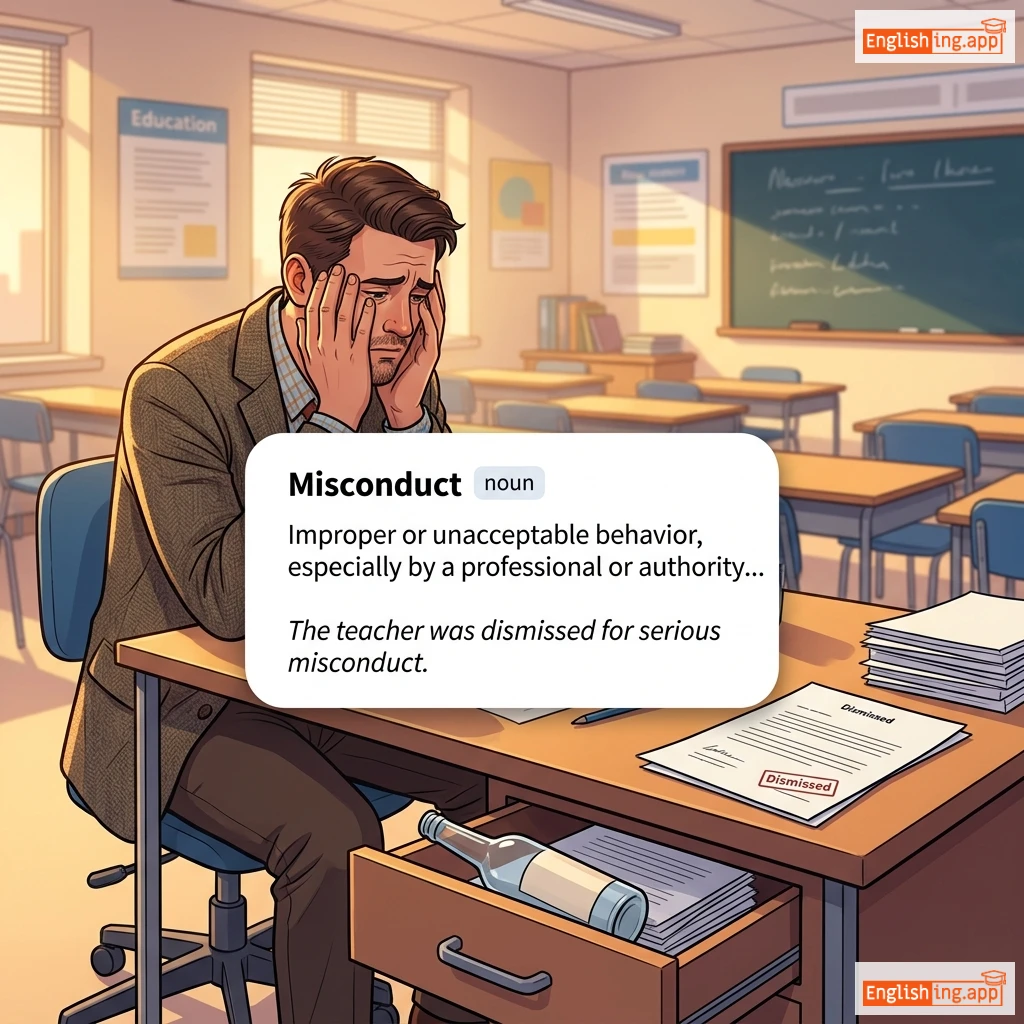
Misconduct definition card — visual illustration of the meaning
noun C1
/ˌmɪsˈkɒndʌkt/
不当行为 (butang xingwei)

Improper or unacceptable behavior, especially by a professional or authority figure.

"The teacher was dismissed for serious misconduct."

"老师因严重的不当行为被解雇。" (Laoshi yin yanzhong de butang xingwei bei jiegou.)
verb C1
/ˌmɪsˈkaʊnt/
算错 (suàn cuò)

To count wrongly or inaccurately.

"He miscounted the number of chairs in the hall."

"他错算了大厅里的椅子数量。" (Tā cuò suàn le dàtīng lǐ de yǐzi shùliàng.)
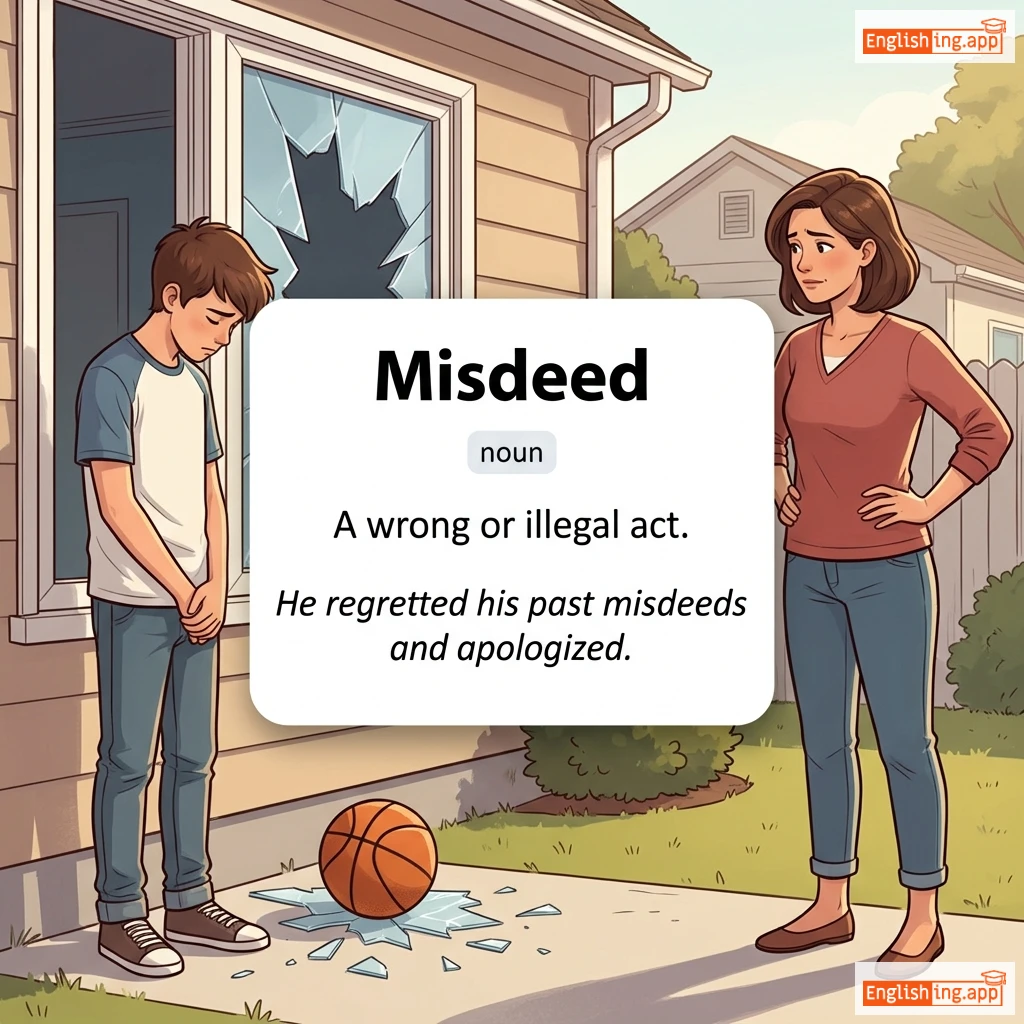
Misdeed definition card — visual illustration of the meaning
noun C1
/ˌmɪsˈdiːd/
恶行 (èxíng)

A wrong or illegal act.

"He regretted his past misdeeds and apologized."

"他对自己过去的恶行感到后悔,并道歉。" (Tā duì zìjǐ guòqù de èxíng gǎndào hòuhuǐ, bìng dàoqiàn.)
noun C1
/ˌmɪsdɪˈmiːnər/
轻罪 (qīngzuì)

A minor wrongdoing or criminal offense that is less serious than a felony.

"He was fined for a misdemeanor involving public disturbance."

"他因公共扰乱而被罚款,犯了轻罪。" (Tā yīn gōnggòng rǎoluàn ér bèi fákuǎn, fànle qīngzuì.)
noun C1
/ˈmaɪzər/
吝啬鬼 (lìn sè guǐ)

A person who hoards wealth and spends as little money as possible.

"The old miser refused to donate even a penny to charity."

"那个老吝啬鬼甚至不愿意捐赠一分钱给慈善。" (Nàgè lǎo lìnsè guǐ shènzhì bù yuànyì juānzèng yī fēn qián gěi císhàn.)
adjective C1
/ˈmaɪzərli/
吝啬 (lìnsè)

Unwilling to spend money; stingy.

"She lived a miserly life, refusing to buy anything new."

"她过着吝啬的生活,拒绝购买任何新东西。" (Tā guòzhe lìnsè de shēnghuó, jùjué gòumǎi rènhé xīn dōngxi.)
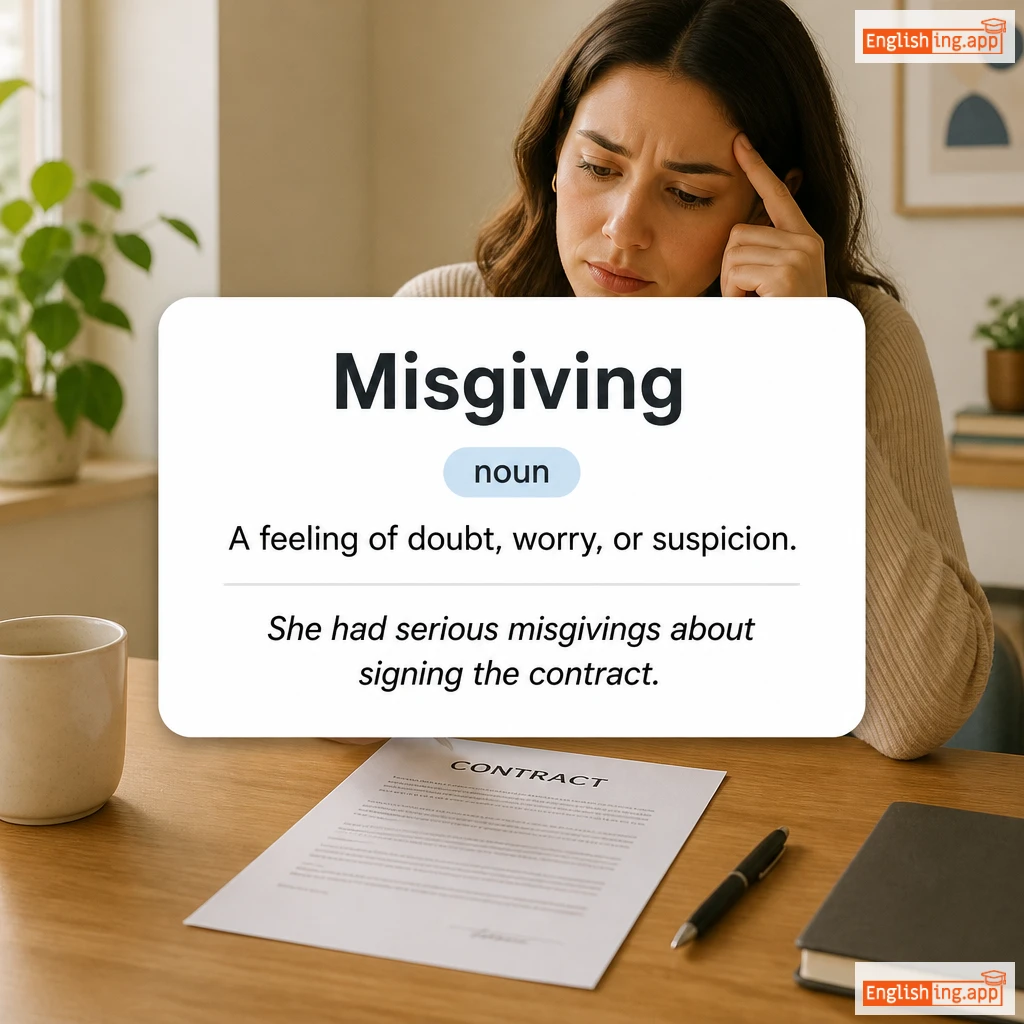
Misgiving definition card — visual illustration of the meaning
noun C1
/ˌmɪsˈɡɪvɪŋ/
怀疑 (huáiyí)

A feeling of doubt, worry, or suspicion.

"She had serious misgivings about signing the contract."

"她在签署合同之前有严重的怀疑。" (Tā zài qiānshǔ hé tóng zhīqián yǒu yánzhòng de huáiyí.)
noun C1
/mɪsˈɡɪvɪŋz/
疑虑,担忧 (yílǜ, dānyōu)

feelings of doubt or concern about the outcome or propriety of something

"She had serious misgivings about signing the contract."

"她对签署合同有严重的疑虑。" (Tā duì qiānshǔ hé tóng yǒu yánzhòng de yílǜ.)
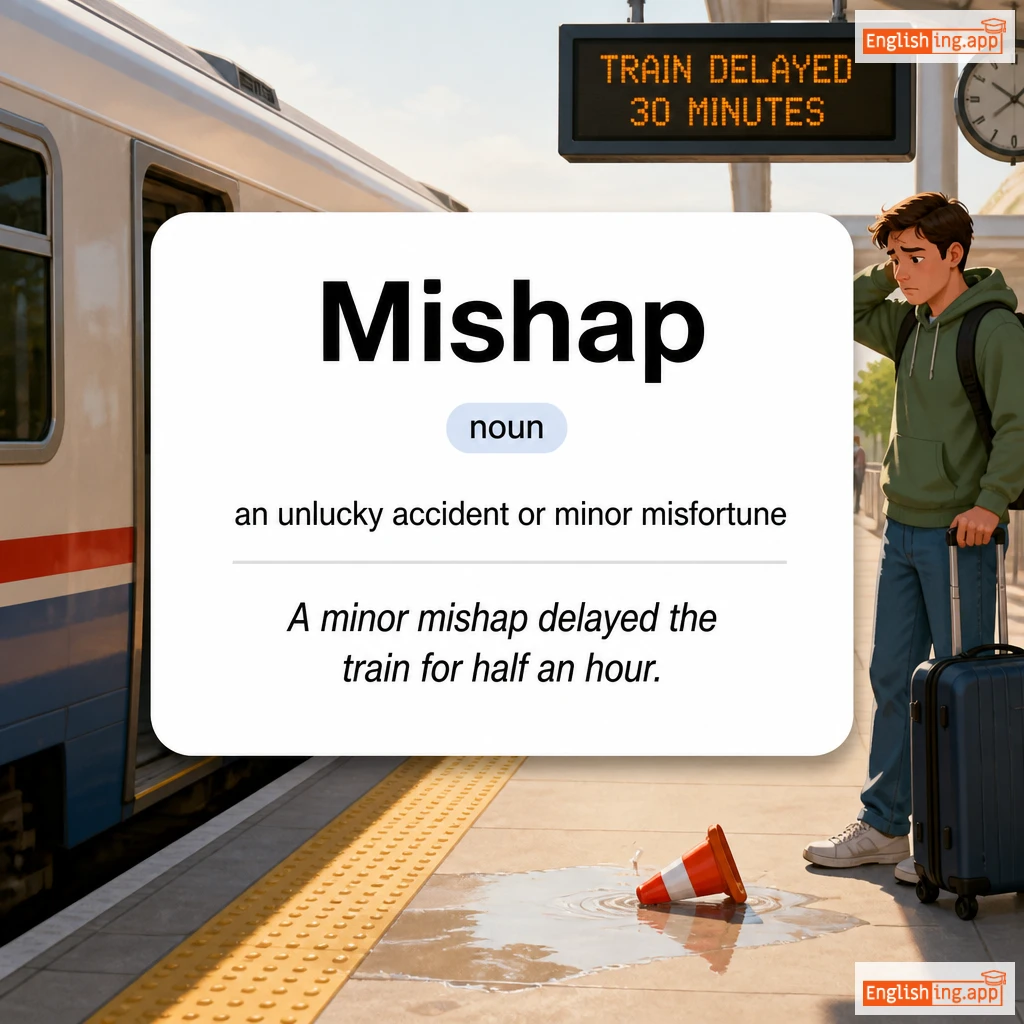
Mishap definition card — visual illustration of the meaning
noun C1
/ˈmɪshæp/
不幸, 小事故 (bùxìng, xiǎo shìgù)

an unlucky accident or minor misfortune

"A minor mishap delayed the train for half an hour."

"一个小事故让火车迟到了半小时。" (Yīgè xiǎo shìgù ràng huǒchē chídào le bàn xiǎoshí.)
verb C1
/ˌmɪsɪnˈtɜːrprɪt/
误解 (wùjiě)

to understand or explain something wrongly

"He misinterpreted her silence as agreement."

"他错误地将她的沉默解读为同意。" (Tā cuòwù de jiāng tā de chénmò jiědú wéi tóngyì.)
verb C1
/ˌmɪsˈmænɪdʒ/

to handle or control something badly or inefficiently

"The company went bankrupt because it was mismanaged for years."

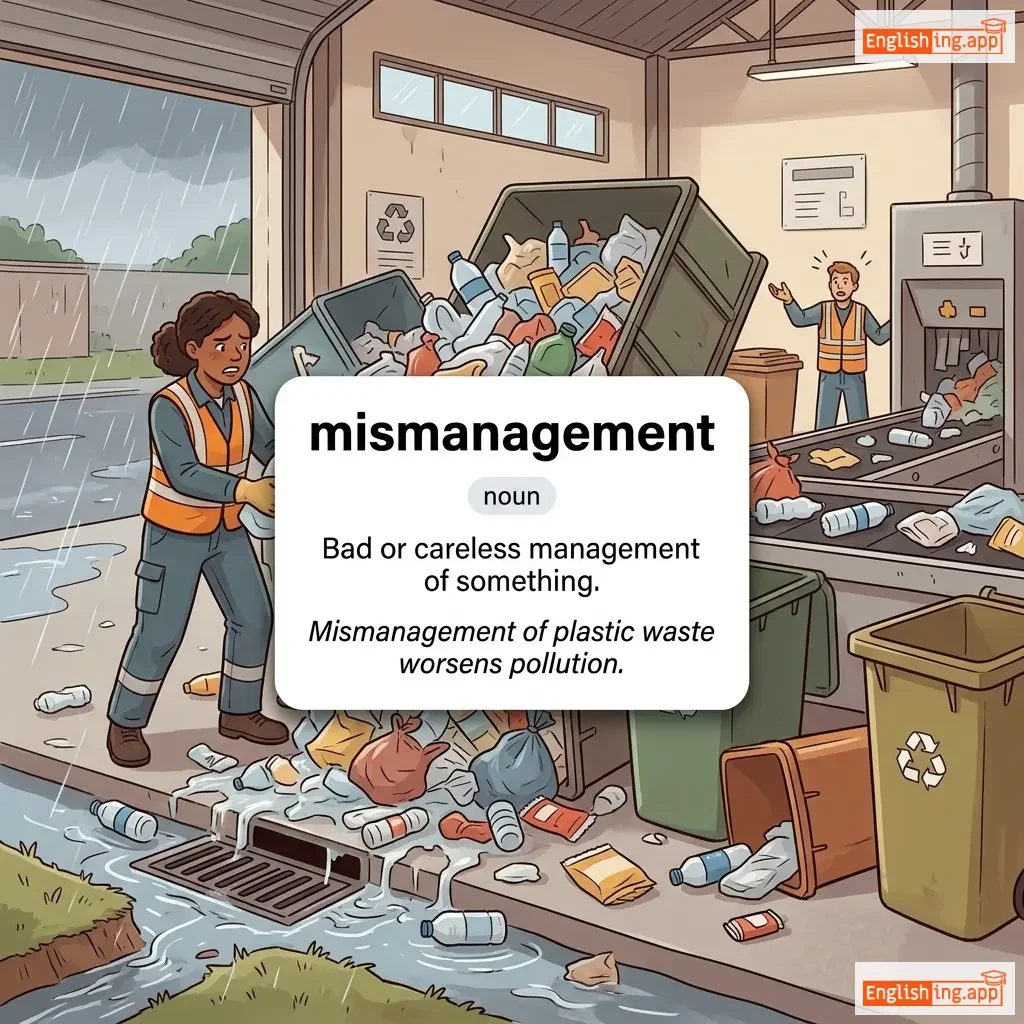
mismanagement definition card — visual illustration of the meaning
noun C1
ˌmɪsˈmænɪdʒmənt
管理不善 (guanli bushan)

Bad or careless management of something.

"Mismanagement of plastic waste worsens pollution."

"塑料废物的管理不善加剧了污染。" (Suliaofeiwu de guanli bushan jiaju le wuran.)
noun C1
/mɪˈsɑːdʒəni/
厌恶女性 (yànwù nǚxìng)

Hatred of, contempt for, or prejudice against women.

"The novel has been criticized for promoting misogyny."

"这本小说因宣扬厌恶女性而遭到批评。" (Zhè běn xiǎoshuō yīn xuānyáng yànwù nǚxìng ér zāodào pīpíng.)
verb C1
/ˌmɪsˈpleɪs/
放错地方 (fàng cuò dìfāng)

To put something in the wrong location and temporarily lose it.

"I often misplace my keys when I am in a hurry."

"我经常在匆忙中把钥匙放错地方。" (Wǒ jīngcháng zài cōngmáng zhōng bǎ yàoshi fàng cuò dìfāng.)
verb C1
/ˌmɪsˈriːd/
误读 (wù dú)

to read something incorrectly or interpret wrongly

"He misread the instructions and built the shelf incorrectly."

"他误读了指示,结果错误地建造了架子。" (Tā wù dú le zhǐ shì, jié guǒ cuò wù de jiàn zào le jià zi.)
verb C1
/ˌmɪsˌrɛprɪˈzɛnt/

to give a false or misleading account of something

"The lawyer accused the witness of trying to misrepresent the facts."

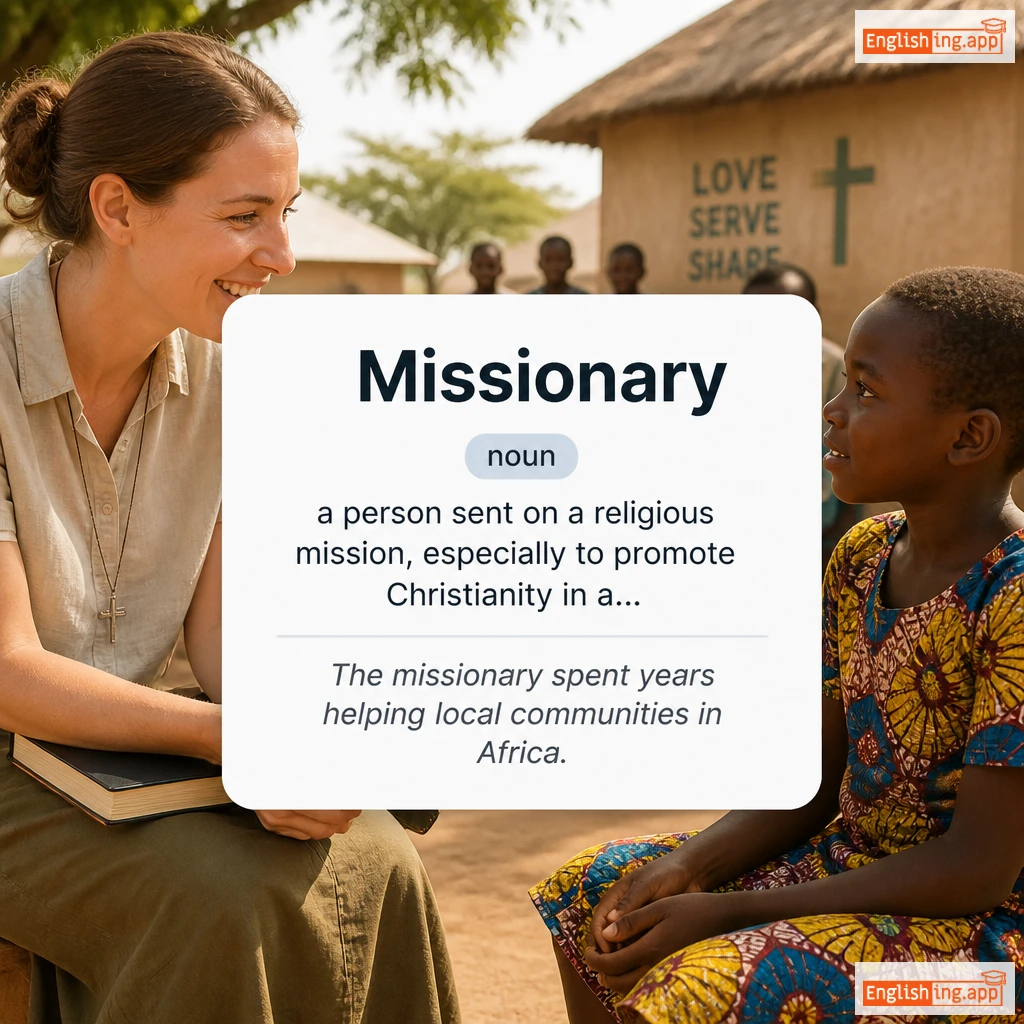
Missionary definition card — visual illustration of the meaning
noun C1
/ˈmɪʃəneri/
传教士 (chuán jiào shì)

a person sent on a religious mission, especially to promote Christianity in a foreign country

"The missionary spent years helping local communities in Africa."

"传教士花了多年时间在非洲帮助当地社区。" (Chuán jiào shì huāle duōnián shíjiān zài fēizhōu bāngzhù dāngdì shèqū.)
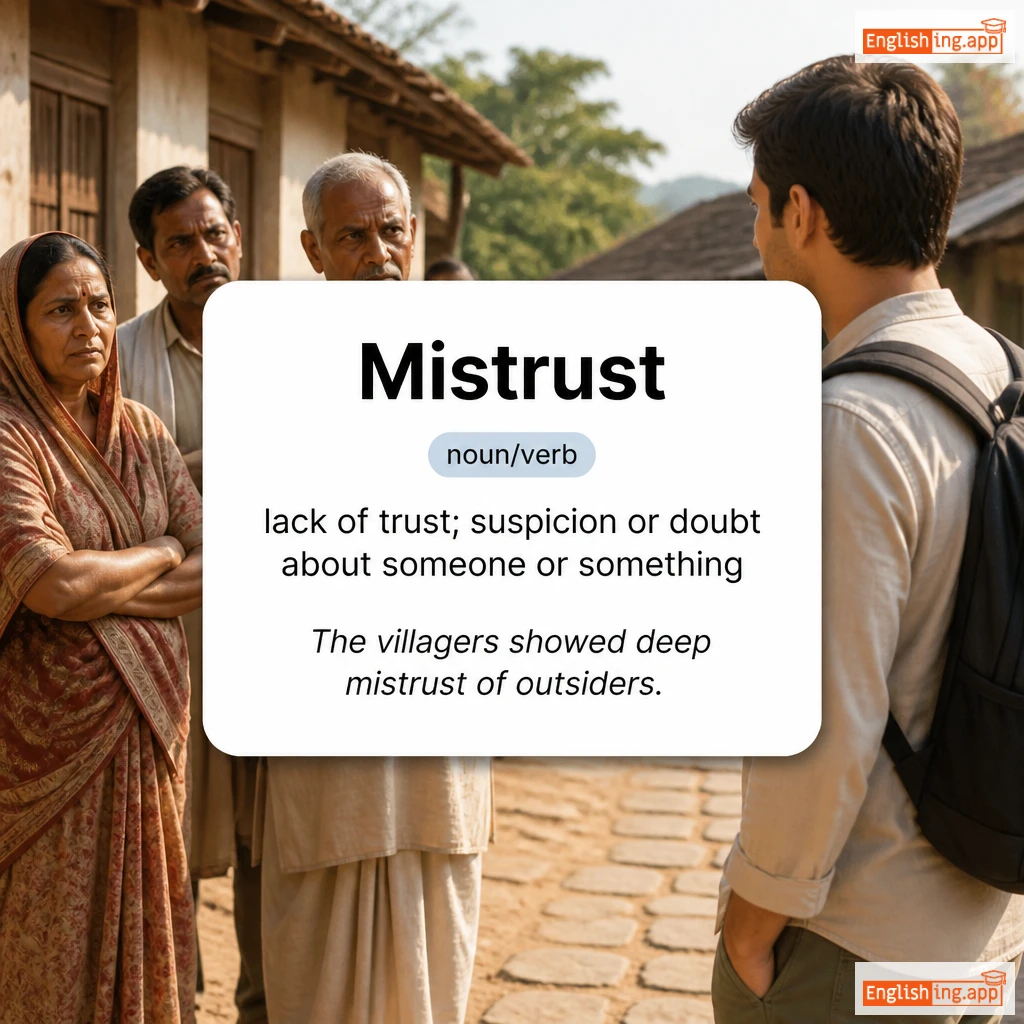
Mistrust definition card — visual illustration of the meaning
noun/verb C1
/ˌmɪsˈtrʌst/
不信任 (buxinren)

lack of trust; suspicion or doubt about someone or something

"The villagers showed deep mistrust of outsiders."

"村民们对外来者表现出了深深的不信任。" (Cūnmín men duì wàilái zhě biǎoxiàn chūle shēn shēn de bùxìnrèn.)
noun C1
/maɪt/
螨虫 (manchong)

a very small creature, often a tiny arachnid; also used to mean a very small amount

"The mattress was infested with dust mites."

"床垫里有尘螨。" (chuangdian li you chenman.)
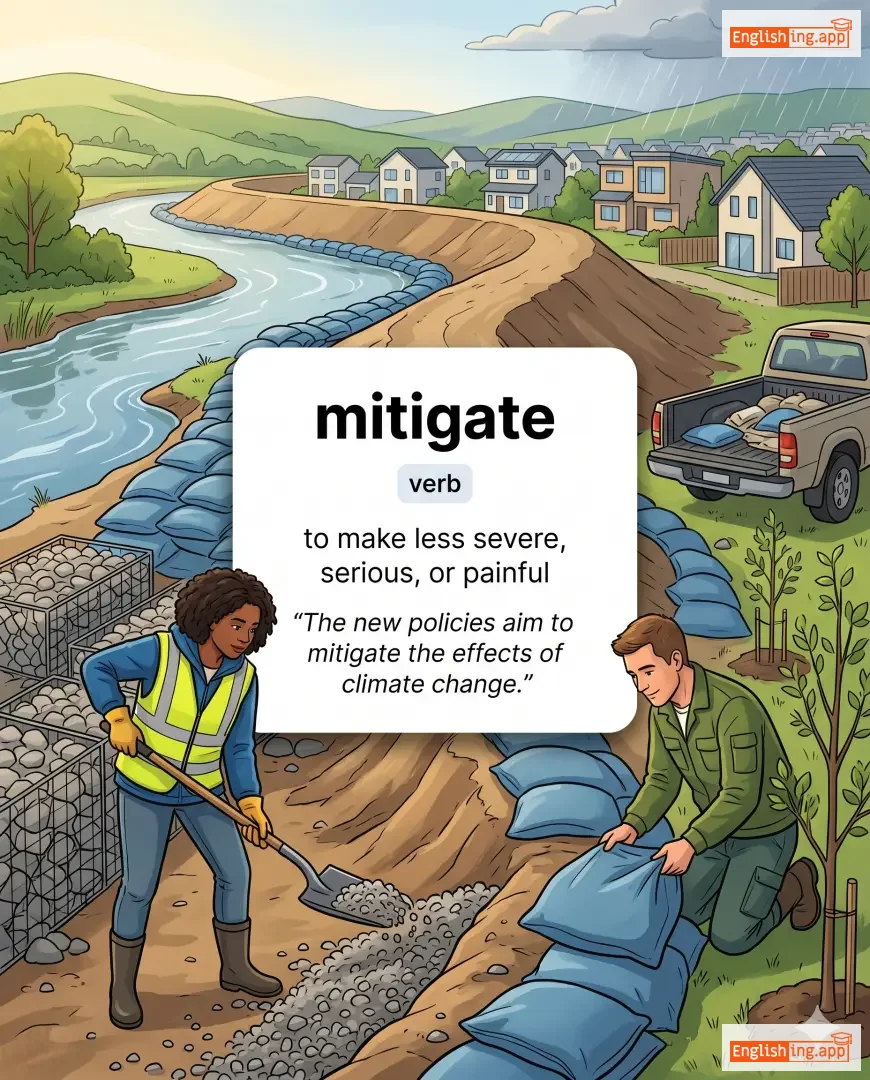
mitigate definition card — visual illustration of the meaning
verb C1
/ˈmɪtɪˌɡeɪt/
减轻 (jianqīng)

to make less severe, serious, or painful

"The new policies aim to mitigate the effects of climate change."

"新政策旨在减缓气候变化的影响。" (Xin zhengce zhi zai jianhuan qihou bianhua de yingxiang.)
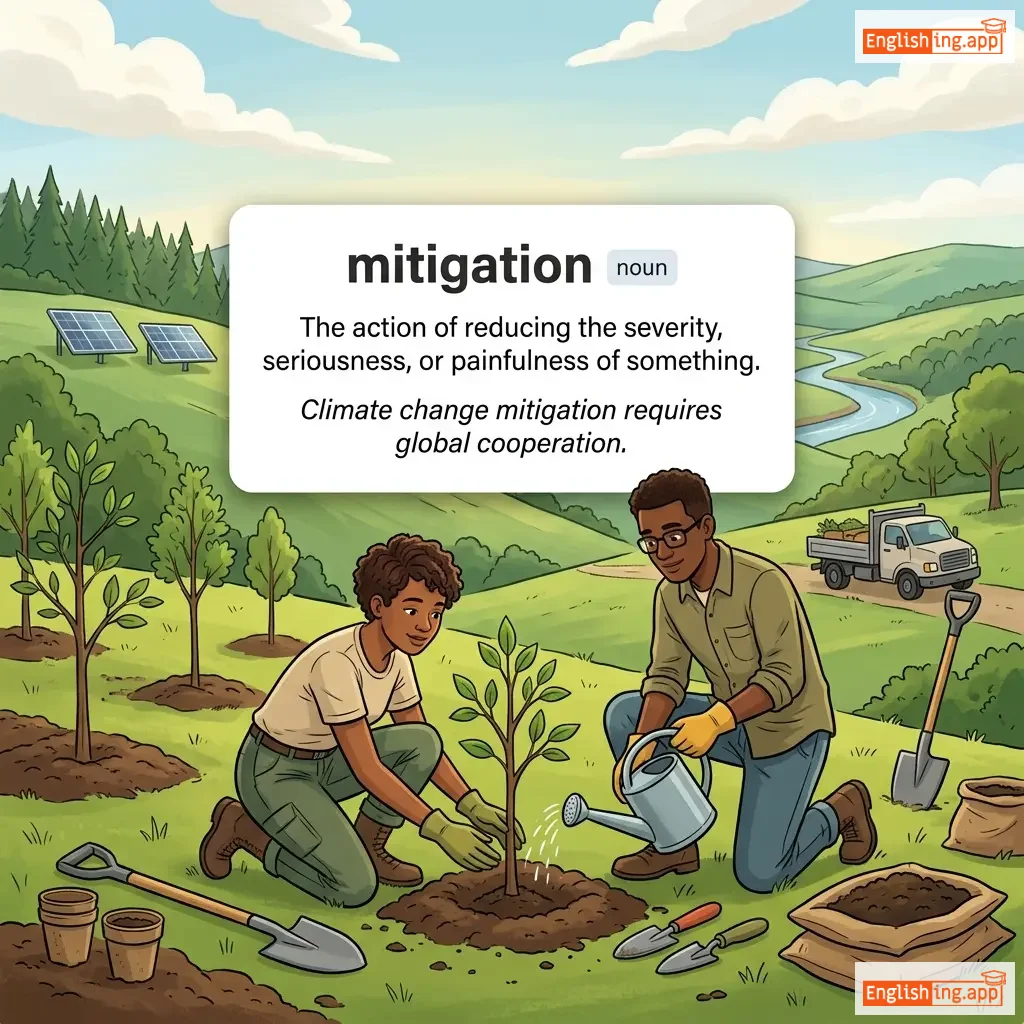
mitigation definition card — visual illustration of the meaning
noun C1
ˌmɪt.ɪˈɡeɪ.ʃən
缓解 (huǎnjiě)

The action of reducing the severity, seriousness, or painfulness of something.

"Climate change mitigation requires global cooperation."

"气候变化减缓需要全球合作。" (Qìhòu biànhuà jiǎnhuǎn xūyào quánqiú hézuò.)
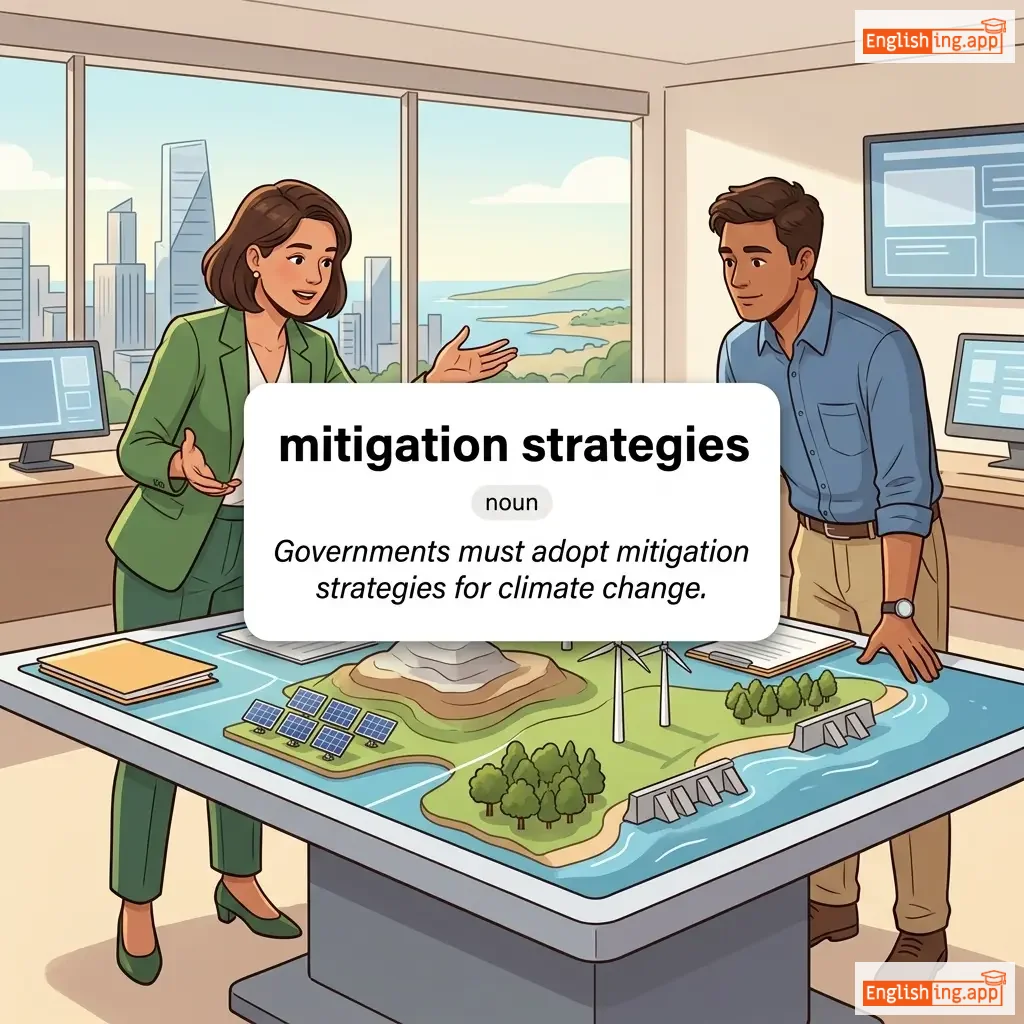
mitigation strategies definition card — visual illustration of the meaning
noun C1
ˌmɪtɪˈɡeɪʃən ˈstrætədʒiz
缓解策略 (huanjie zhengce)

Plans and actions designed to reduce the severity or impact of problems or risks.

"Governments must adopt mitigation strategies for climate change."

"政府必须为气候变化采取缓解策略。" (Zhengfu bixi wei qihou bianhua caiqu huanjie zhengce.)
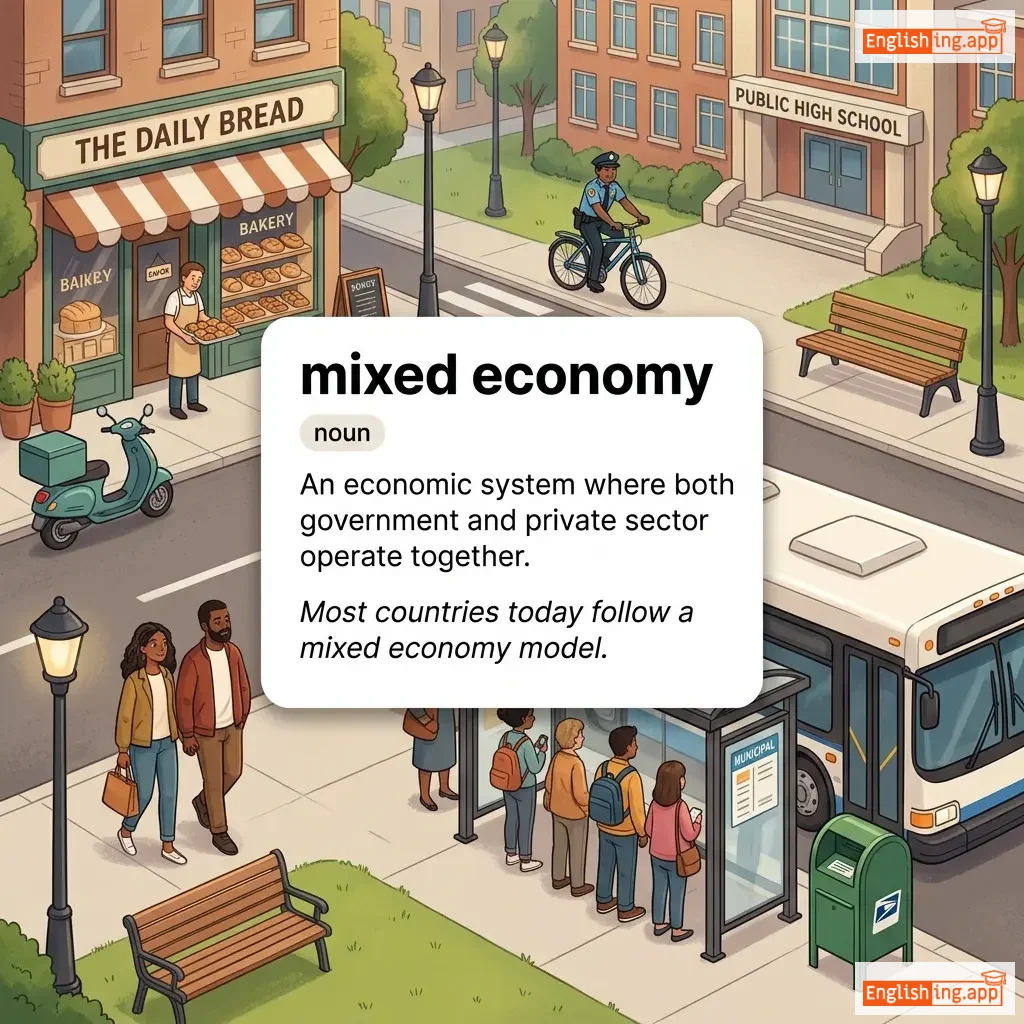
mixed economy definition card — visual illustration of the meaning
noun C1
/mɪkst ɪˈkɒn.ə.mi/
混合经济 (hunhe jingji)

An economic system where both government and private sector operate together.

"Most countries today follow a mixed economy model."

"如今,大多数国家遵循混合经济模式。" (Rújīn, dàduōshù guójiā zūnxún hùn hé jīngjì móshì.)
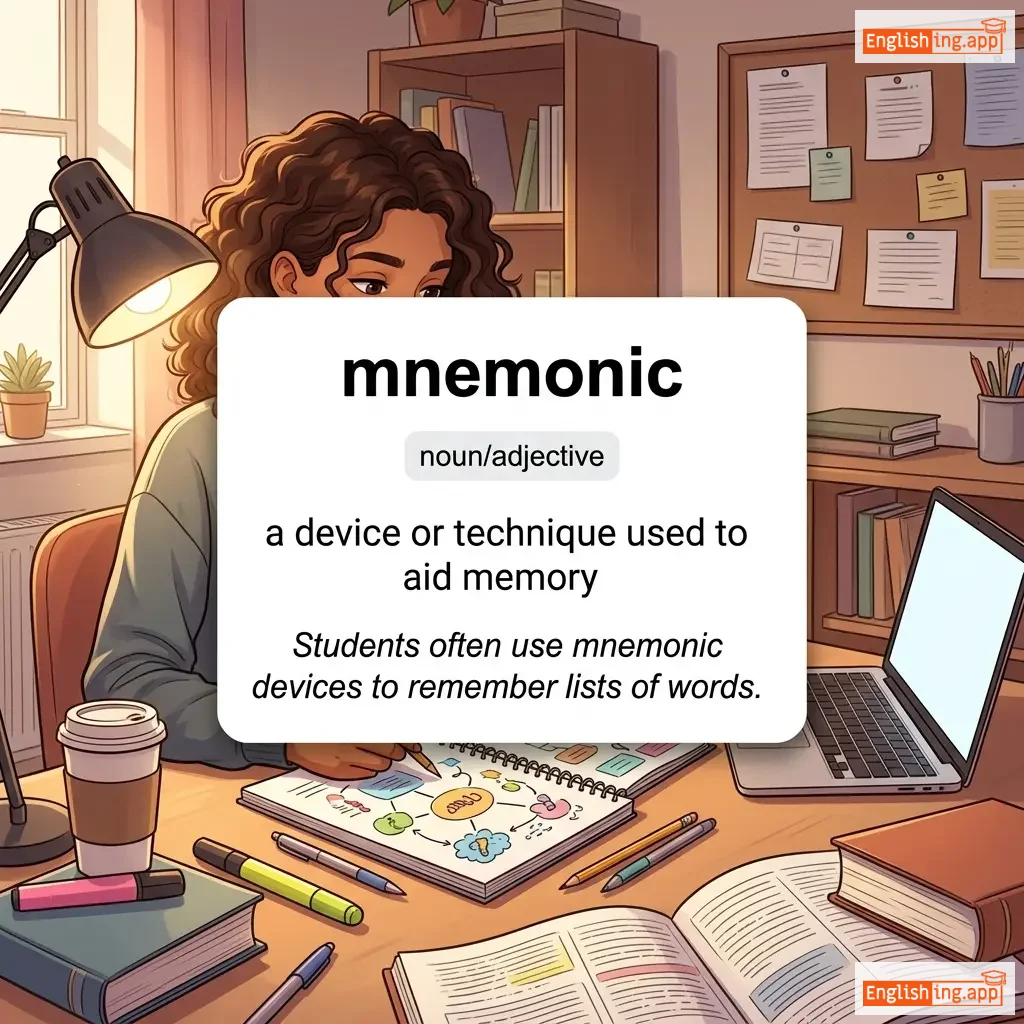
mnemonic definition card — visual illustration of the meaning
noun/adjective C1
/nɪˈmɒnɪk/

a device or technique used to aid memory

"Students often use mnemonic devices to remember lists of words."

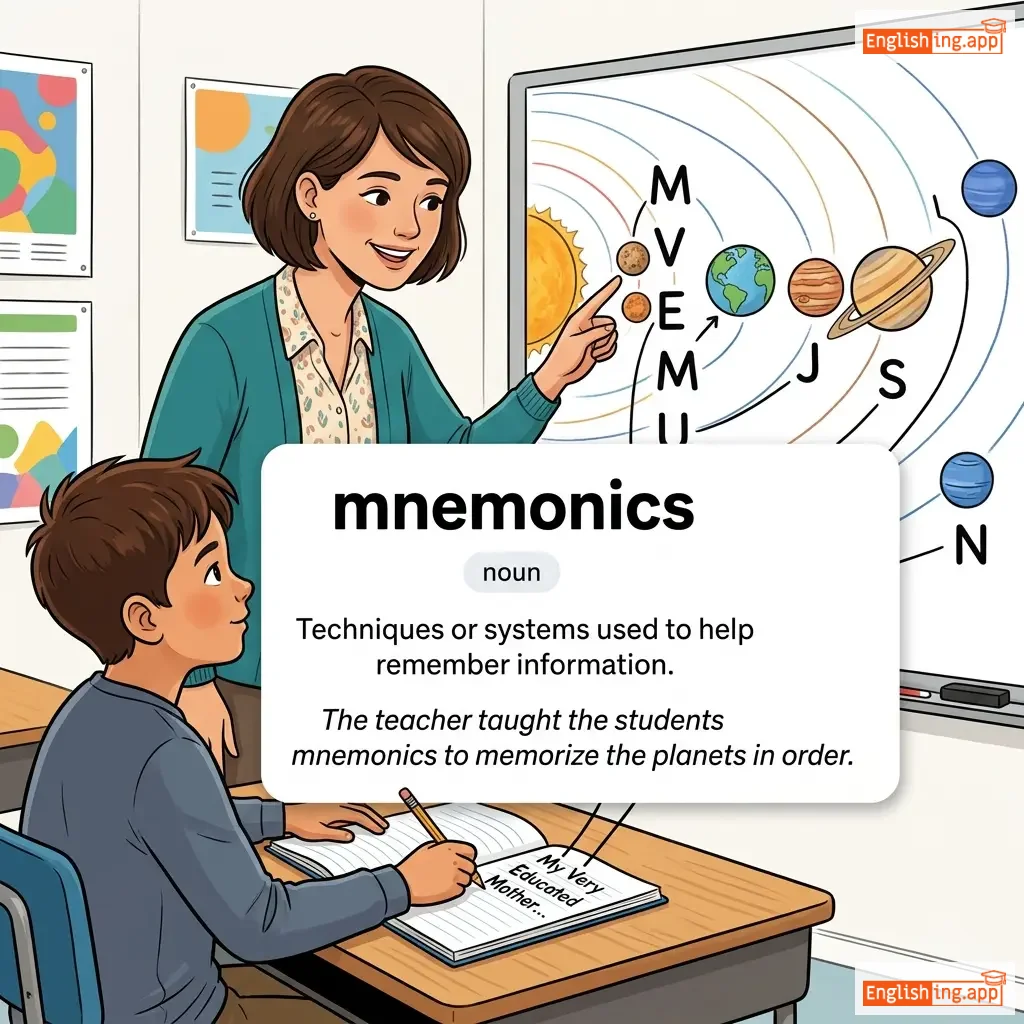
mnemonics definition card — visual illustration of the meaning
noun C1
/nɪˈmɒnɪks/
记忆法 (jìyì fǎ)

Techniques or systems used to help remember information.

"The teacher taught the students mnemonics to memorize the planets in order."

"老师教学生们使用记忆法按顺序记住行星。" (Lǎoshī jiào xuéshēngmen shǐyòng jìyì fǎ àn shùnxù jì zhù xíngxīng.)
noun C1
/moʊt/
护城河 (hù chéng hé)

A deep, wide ditch surrounding a castle or town, often filled with water, for defense.

"The castle was protected by a wide moat filled with water."

"城堡被一条充满水的宽护城河保护着。" (Chéng bǎo bèi yī tiáo chōng mǎn shuǐ de kuān hù chéng hé bǎo hù zhe.)
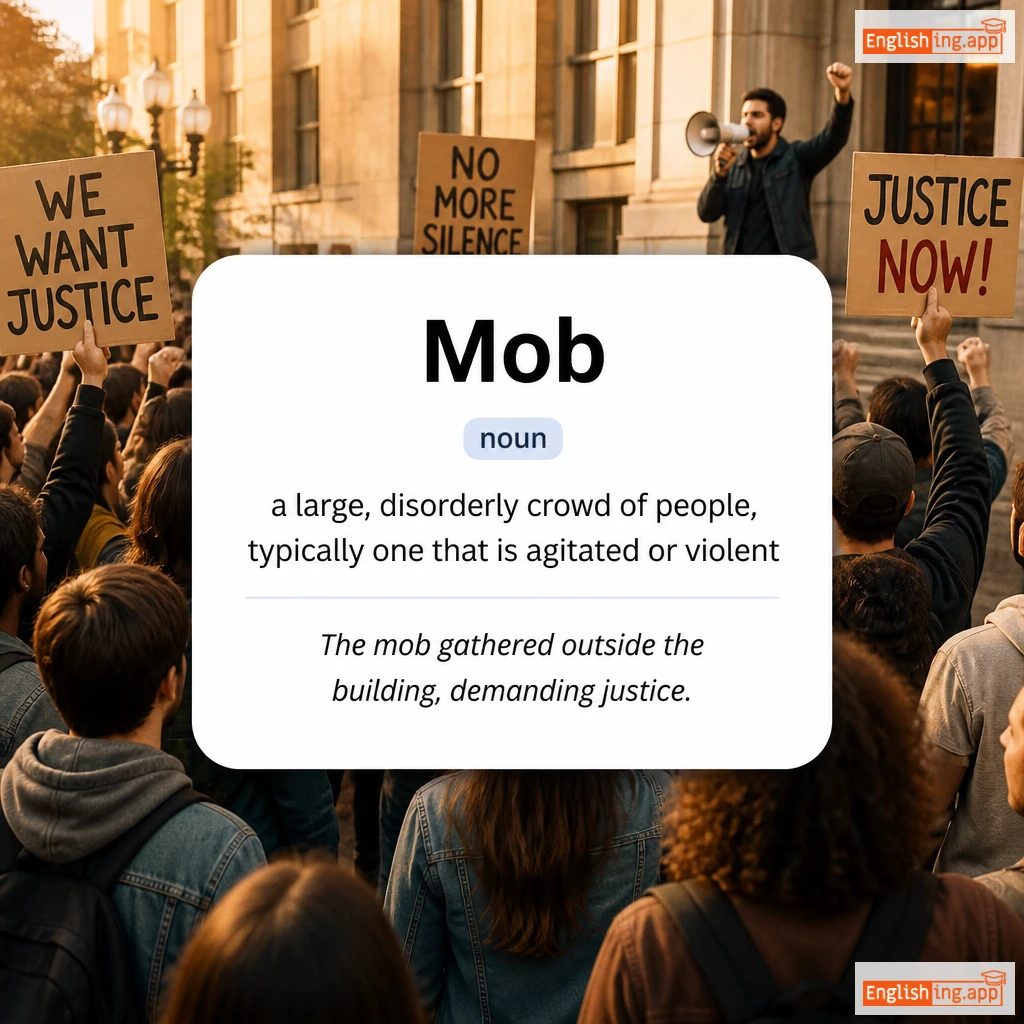
Mob definition card — visual illustration of the meaning
noun C1
/mɒb/
人群 (renqun)

a large, disorderly crowd of people, typically one that is agitated or violent

"The mob gathered outside the building, demanding justice."

"人群聚集在建筑物外,要求正义。" (Renqun juzhi zai jianzhu wu wai, yaoqiu zhengyi.)
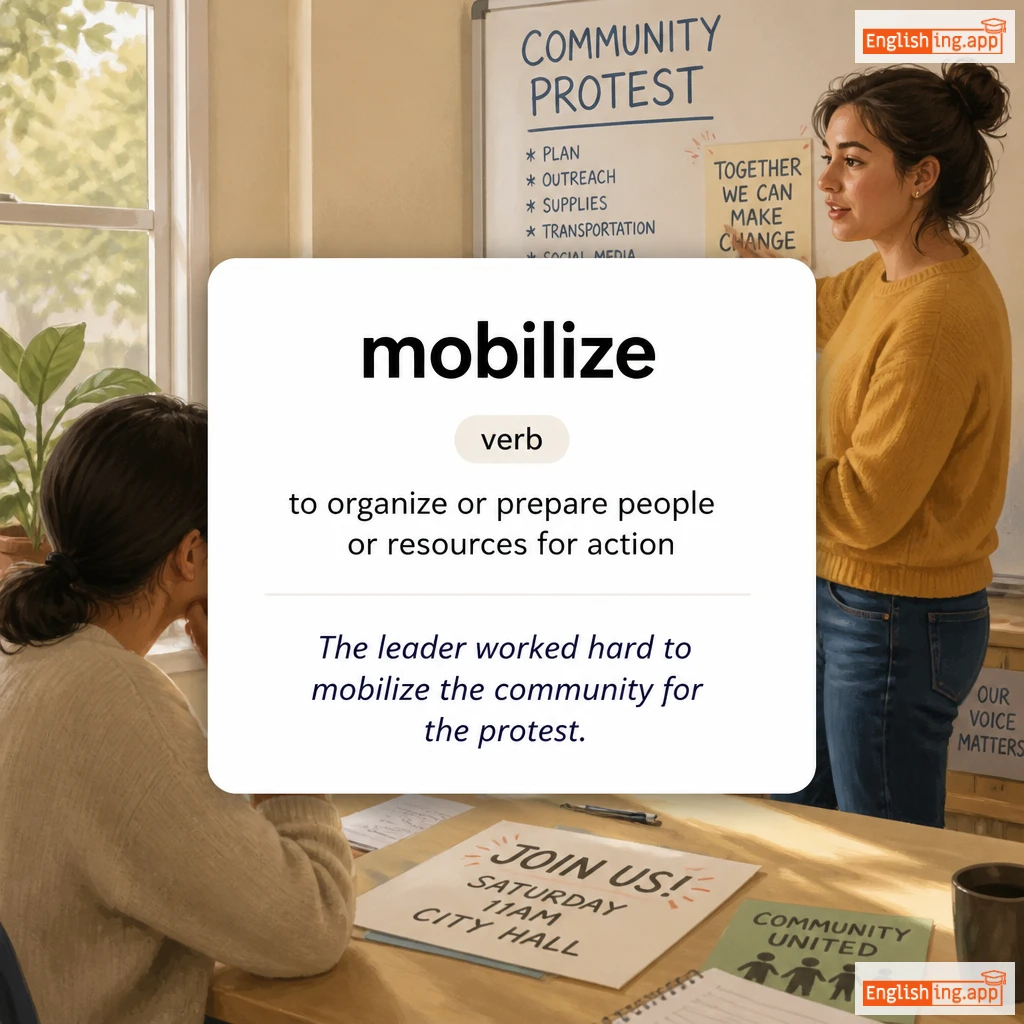
mobilize definition card — visual illustration of the meaning
verb C1
/ˈməʊbɪlaɪz/
动员 (dongyuan)

to organize or prepare people or resources for action

"The leader worked hard to mobilize the community for the protest."

"领导者努力动员社区参与抗议。" (Lingdaozhe nuli dongyuan shequ canyu kangyi.)
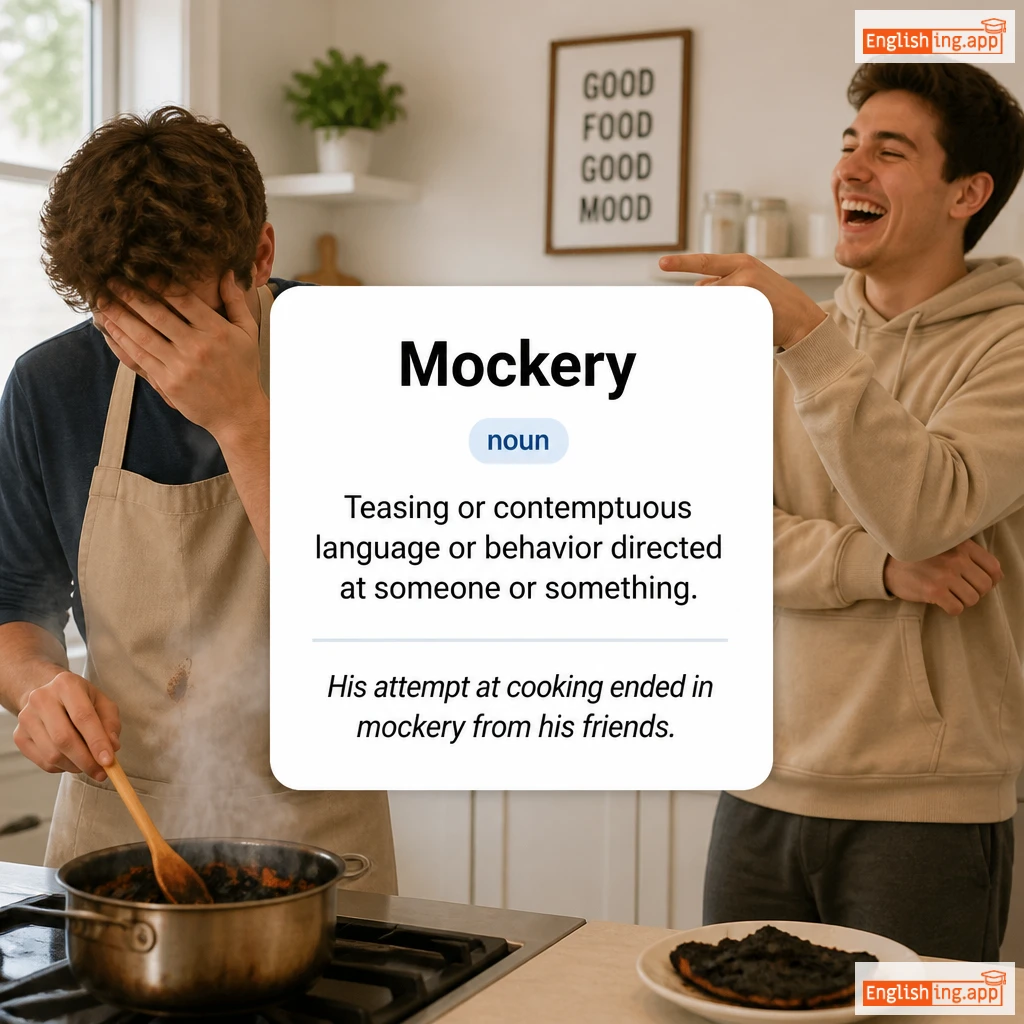
Mockery definition card — visual illustration of the meaning
noun C1
/ˈmɒkəri/
嘲笑,讥讽 (cháoxiào, jīfěng)

Teasing or contemptuous language or behavior directed at someone or something.

"His attempt at cooking ended in mockery from his friends."

"他烹饪的尝试以朋友们的嘲笑告终。" (Tā pēngrèn de chángshì yǐ péngyǒumen de cháoxiào gàozhōng.)
noun C1
/məˈdɜːrnəti/
现代性 (xiandai xing)

The quality or condition of being modern; up-to-date ideas, practices, or style.

"The city’s architecture reflects both tradition and modernity."

"这座城市的建筑反映了传统与现代性的结合。" (Zhe zuo chengshi de jianzhu fanying le chuantong yu xiandaixing de jiehe.)