Vokabulare

Englisches Vokabelwörterbuch | Wortbedeutungen, Definitionen & Beispiele

adjective C1
/ˌɪnɪkˈsplɪkəbl/
无法解释 (wúfǎ jiěshì)

Impossible to explain or understand.

"The sudden disappearance of the file was inexplicable."

"文件的突然消失是无法解释的。" (Wénjiàn de túrán xiāoshī shì wúfǎ jiěshì de.)
adjective C1
/ɪnˈfæləbl̩/
无懈可击 (wú xiè kě jī)

incapable of making mistakes or being wrong

"Her judgment seemed infallible in matters of finance."

"她的判断在财务问题上似乎无懈可击。" (Tā de pànduàn zài cáiwù wèntí shàng shìhū wúxiè kě jī.)
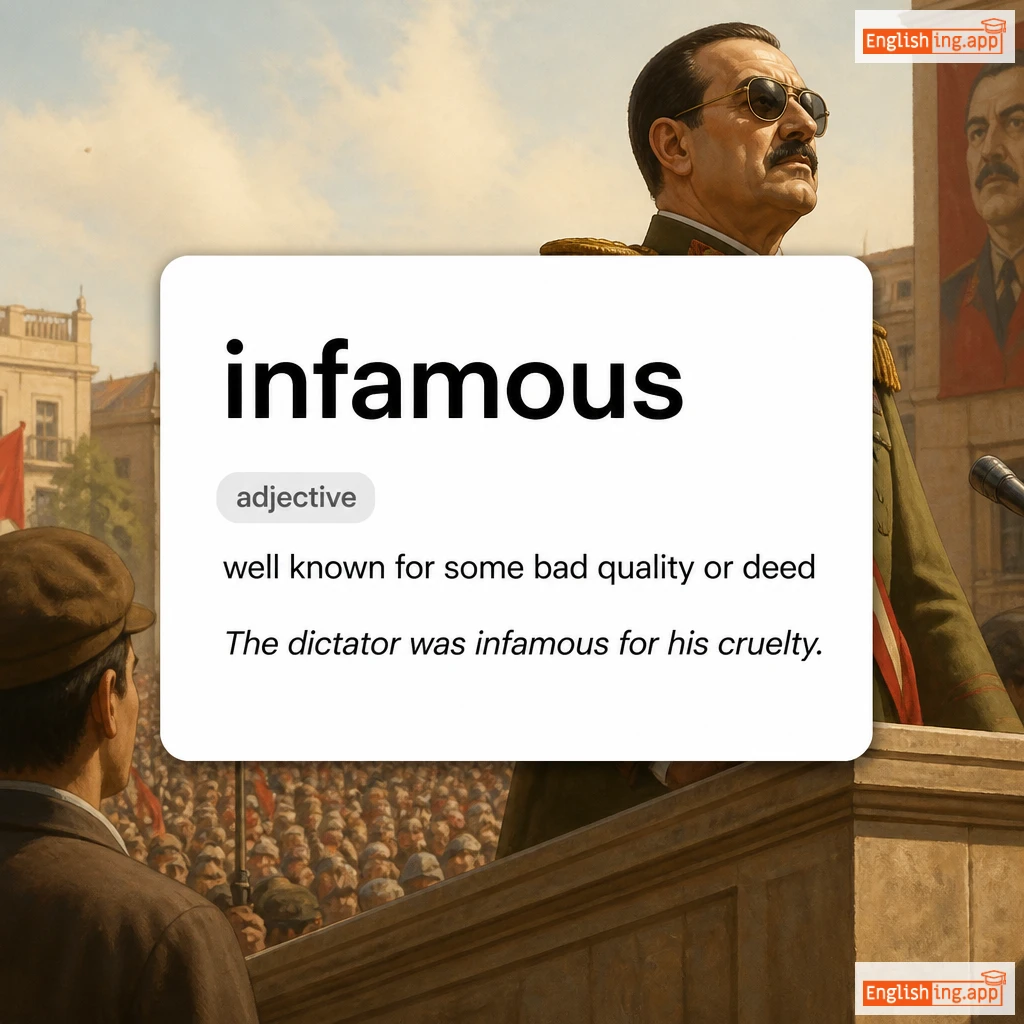
infamous definition card — visual illustration of the meaning
adjective C1
/ˈɪnfəməs/
臭名昭著 (chòumíng zhāozhù)

well known for some bad quality or deed

"The dictator was infamous for his cruelty."

"这位独裁者因其残忍而臭名昭著。" (Zhè wèi dúcáizhě yīn qí cánrěn ér chòumíng zhāozhù.)
Infantry definition card — visual illustration of the meaning
noun C1
/ˈɪn.fən.tri/
步兵 (bù bīng)

soldiers marching or fighting on foot; foot soldiers collectively

"The infantry advanced across the battlefield on foot."

"步兵在战场上走路前进。" (bù bīng zài zhànchǎng shàng zǒulù qiánjìn.)
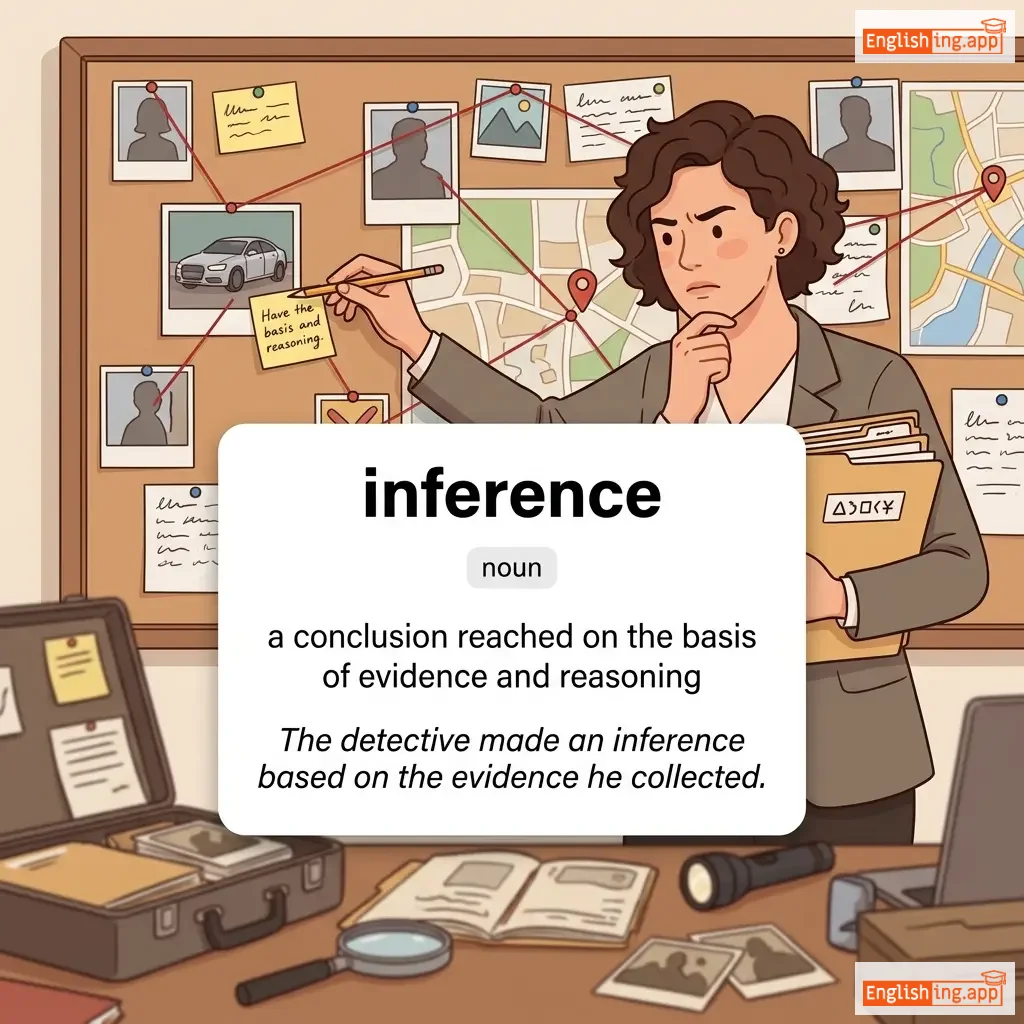
inference definition card — visual illustration of the meaning
noun C1
/ˈɪnfərəns/
推论 (tuilun)

a conclusion reached on the basis of evidence and reasoning

"The detective made an inference based on the evidence he collected."

"侦探根据他收集的证据做出了推论。" (zhēntàn gēnjù tā shōují de zhèngjù zuò chū le tuīlùn.)
noun C1
/ɪnˈfɜːrnoʊ/
火灾 (huǒzāi)

a large, intense fire that is dangerously out of control

"The building turned into an inferno within minutes."

"这座建筑在几分钟内变成了火灾。" (Zhè zuò jiànzhú zài jǐ fēnzhōng nèi biàn chéngle huǒzāi.)
verb C1
/ɪnˈfɛst/
感染 (gǎn rǎn)

to overrun in large numbers, especially so as to cause damage or discomfort

"The old house was infested with rats."

"老房子被老鼠感染。" (Lǎo fángzi bèi lǎoshǔ gǎn rǎn.)
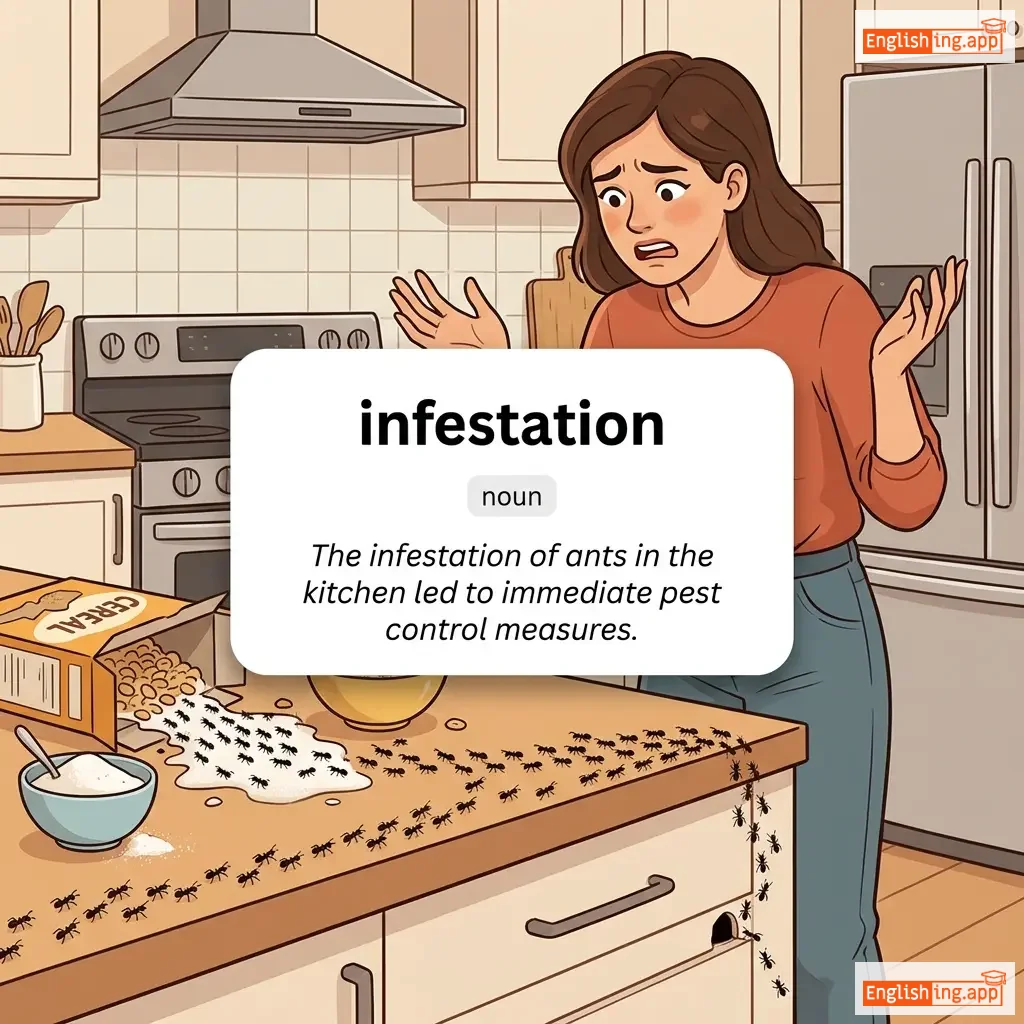
infestation definition card — visual illustration of the meaning
noun C1
ˌɪnfɛsˈteɪʃən
侵扰, 在某个地方出现异常大量的昆虫或动物 (qinrao, zai mou ge difang chuxian yichang daliao de kunchong huo dongwu)

The presence of an unusually large number of insects or animals in a place, causing damage or disease.

"The infestation of ants in the kitchen led to immediate pest control measures."

"厨房里蚂蚁的侵扰导致了立即采取害虫控制措施。" (Chufang li mayi de qinrao daozhi le liji caitiao haichong kongzhi cuoshi.)
noun C1
/ˌɪnfɪˈdɛləti/
不忠 (bù zhōng)

the act of being unfaithful to a spouse or partner

"Their marriage ended due to his infidelity."

"他们的婚姻因他的不忠而结束。" (Tāmen de hūnyīn yīn tā de bù zhōng ér jiéshù.)
verb C1
/ˈɪnfɪltreɪt/
渗透 (shèntòu)

to secretly enter or gain access to a place or group

"The spies managed to infiltrate the enemy base."

"间谍们设法渗透敌人基地。" (Jiàndiémén shèfǎ shèntòu dírén jīdì.)
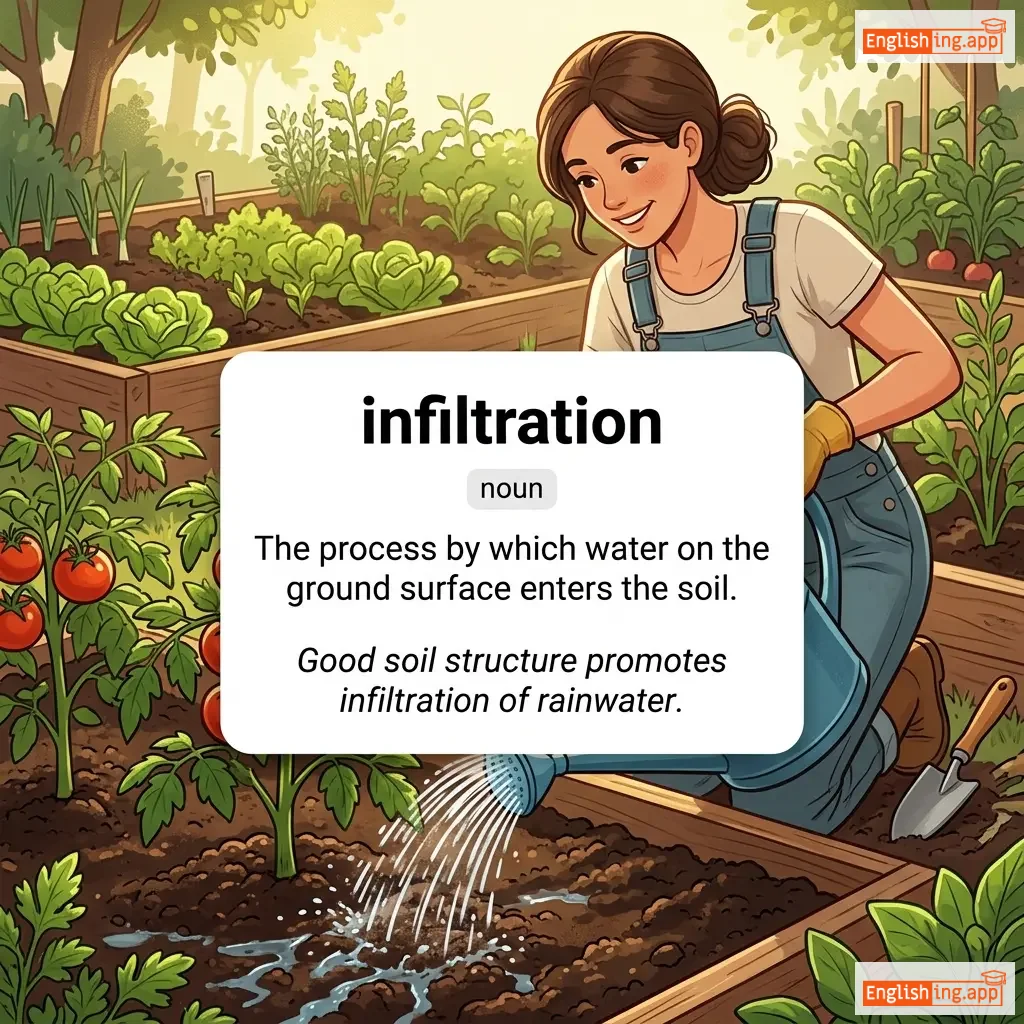
infiltration definition card — visual illustration of the meaning
noun C1
/ˌɪn.fɪlˈtreɪ.ʃən/
入渗 (infiltration)

The process by which water on the ground surface enters the soil.

"Good soil structure promotes infiltration of rainwater."

"良好的土壤结构促进雨水渗透到土壤中。" (liang hao de turang jiegou cujin yushui shentou dao turang zhong)
adjective C1
/ɪnˈfɜːm/
虚弱 (xūruò)

Weak, especially due to old age or illness.

"The infirm old man needed assistance to walk."

"那位虚弱的老人需要帮助才能走路。" (Nà wèi xūruò de lǎorén xūyào bāngzhù cáinéng zǒulù.)
noun C1
/ɪnˈfɜːməri/
医务室 (yīwùshì)

A hospital or place where the sick or injured are cared for.

"The school had an infirmary for minor injuries."

"学校为轻微受伤提供了医务室。" (Xuéxiào wèi qīngwéi shòushāng tígōngle yīwùshì.)
Infirmity definition card — visual illustration of the meaning
noun C1
/ɪnˈfɜːməti/
虚弱 (xuruo)

Physical or mental weakness, especially from old age.

"Despite his infirmity, he remained cheerful."

"尽管他虚弱,他仍然保持乐观。" (Jǐnguǎn tā xūruò, tā réngrán bǎochí lèguān.)
verb C1
/ɪnˈfleɪm/
激起 (jīqǐ)

to arouse strong feelings or provoke anger; to cause inflammation in the body

"The politician's remarks served to inflame public opinion."

"政治家的言论激起了公众舆论的愤怒。" (Zhèngzhì jiā de yánlùn jīqǐ le gōngzhòng yúlùn de fènnù.)
adjective C1
/ɪnˈflæməbl/
易燃 (yì rán)

easily set on fire; easily excited or angered

"This material is highly inflammable and should be kept away from heat."

"此材料极易燃,应远离热源。" (Cǐ cáiliào jí yì rán, yīng yuǎnlí rè yuán.)
adjective C1
/ɪnˈflæməˌtɔːri/
幸福 (xìng fú)

causing inflammation in the body; arousing anger, hostility, or strong emotion

"His inflammatory speech triggered protests across the city."

"她在收到奖项时无法隐藏自己的幸福感。" (Tā zài shōu dào jiǎng xiàng shí wú fǎ yǐn cáng zì jǐ de xìng fú gǎn.)
inflate definition card — visual illustration of the meaning
verb C1
/ɪnˈfleɪt/
充气;抬高 (chongqi; taigao)

to fill with air or gas so it expands; to increase excessively or artificially

"The mechanic inflated the tire to the correct pressure."

"技工把轮胎充到了正确的气压。" (Jigong ba luntai chongdao le zhengque de qiya)
adjective C1
/ɪnˈfleɪtɪd/
膨胀 (péngzhàng)

excessively increased in size, value, or importance; filled with air or gas

"The company faced criticism for its inflated prices."

"公司因其膨胀的价格而遭受批评。" (Gōngsī yīn qí péngzhàng de jiàgé ér zāoshòu pīpíng.)
inflationary definition card — visual illustration of the meaning
adjective C1
/ɪnˈfleɪ.ʃə.ner.i/
通货膨胀的 (tōnghuò péngzhàng de)

Causing or characterized by inflation of prices.

"Excessive money supply can lead to an inflationary economy."

"过量的货币供应可能导致通货膨胀经济。" (Guòliàng de huòbì gōngyìng kěnéng dǎozhì tōnghuò péngzhàng jīngjì.)
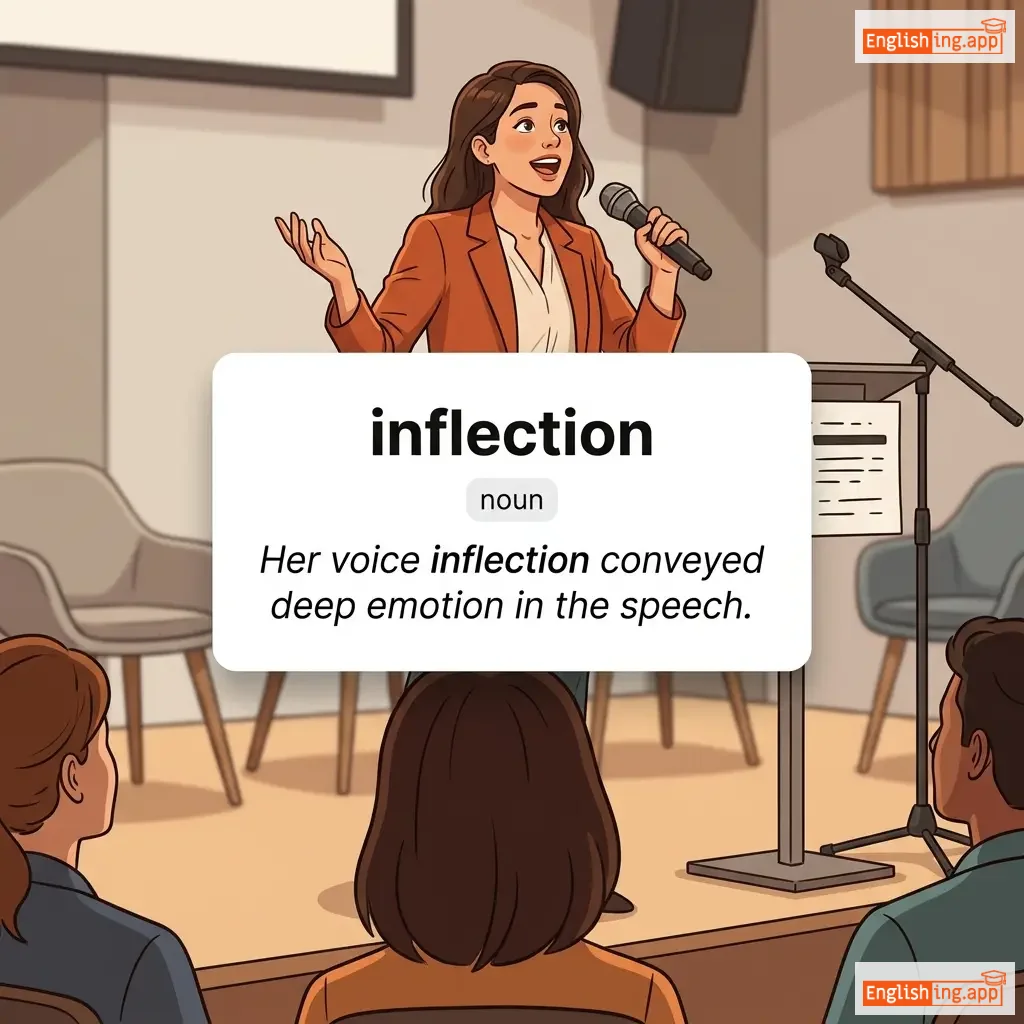
inflection definition card — visual illustration of the meaning
noun C1
/ɪnˈflɛk.ʃən/
语调变化或音调 (yǔdiào biànhuà huò yīntiáo)

A change in the tone or pitch of the voice when speaking, which helps convey meaning and emotion.

"Her voice inflection conveyed deep emotion in the speech."

"她的声音的音调变化在演讲中传达了深刻的情感。" (Tā de shēngyīn de yīndiào biànhuà zài yǎnjiǎng zhōng chuándá le shēnkè de qínggǎn.)
inflexibility definition card — visual illustration of the meaning
noun C1
/ˌɪnflɛksɪˈbɪlɪti/
缺乏灵活性 (quefa linghuoxing)

the quality of being rigid or unwilling to change; lack of adaptability

"The inflexibility of the rules caused unnecessary delays."

"规则的缺乏灵活性导致了不必要的延误。" (Guize de quefa linghuoxing daozhile bu biyai de yanyu)
inflexible definition card — visual illustration of the meaning
adjective C1
/ɪnˈflɛksəbl/
不灵活 (bu linghuo)

Not able to bend or change; unwilling to change ideas or behavior.

"His inflexible attitude made negotiations difficult."

"他那不灵活的态度使谈判变得困难。" (Tā nà bù línghuó de tàidù shǐ tánpàn biàn dé kùnnán.)
noun C1
/ˈɪn.floʊ/
流入 (liú rù)

The movement of things such as money, people, or water into a place.

"The inflow of tourists boosted the local economy."

"游客的流入促进了当地经济的发展。" (Yóukè de liúrù cùjìnle dāngdì jīngjì de fāzhǎn.)
noun C1
/ˈɪnflʌks/
涌入 (yǒngrù)

A large arrival or flow of people or things.

"The city experienced an influx of tourists during the festival."

"这座城市在节日期间经历了大量游客的涌入。" (Zhè zuò chéngshì zài jiérì qījiān jīnglìle dàliàng yóukè de yǒngrù.)
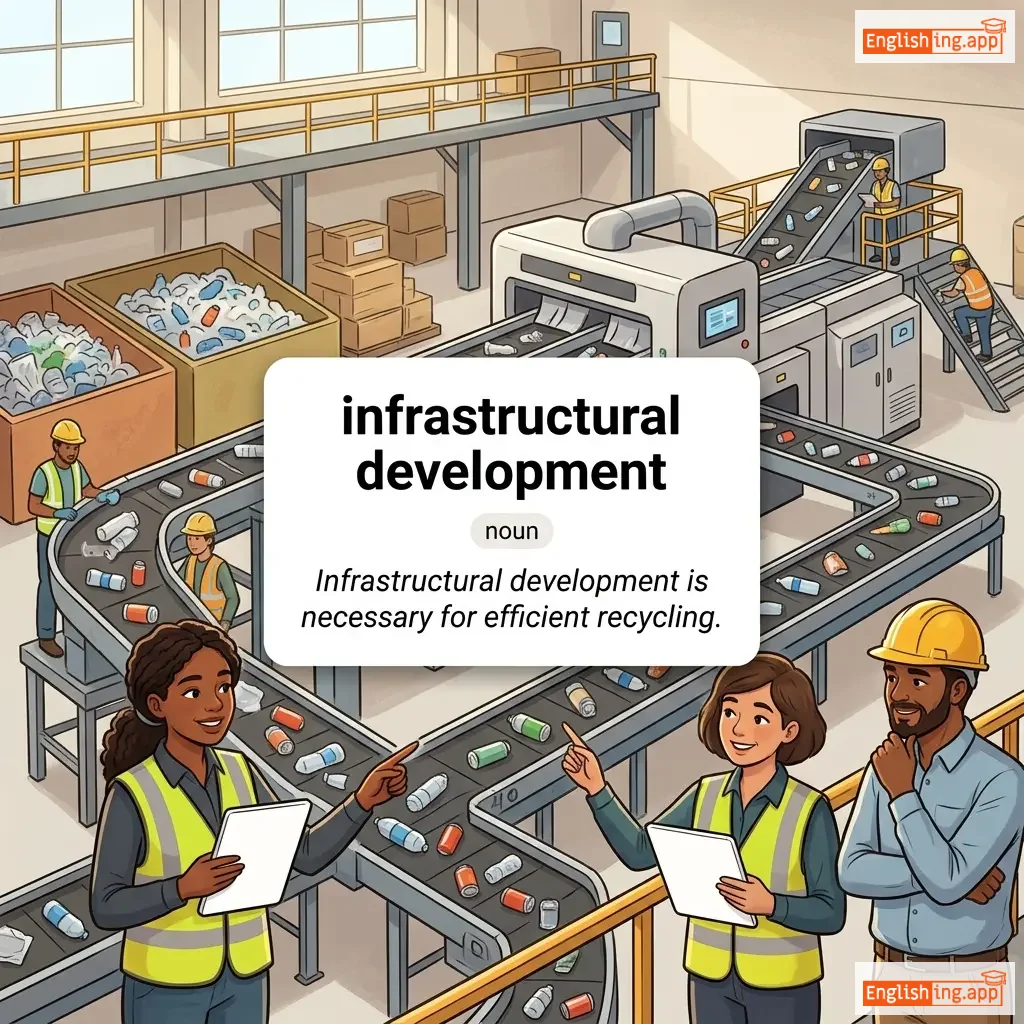
infrastructural development definition card — visual illustration of the meaning
noun C1
ˌɪnfrəˈstrʌktʃərəl dɪˈveləpmənt
基础设施发展 (jichu sheshi fazhan)

The process of building and improving the basic physical and organizational structures and facilities needed for the operation of a society or enterprise.

"Infrastructural development is necessary for efficient recycling."

"基础设施发展对高效的回收至关重要。" (Jichu sheshi fazhan dui gaoxiao de huishou zhiguan zhongyao.)
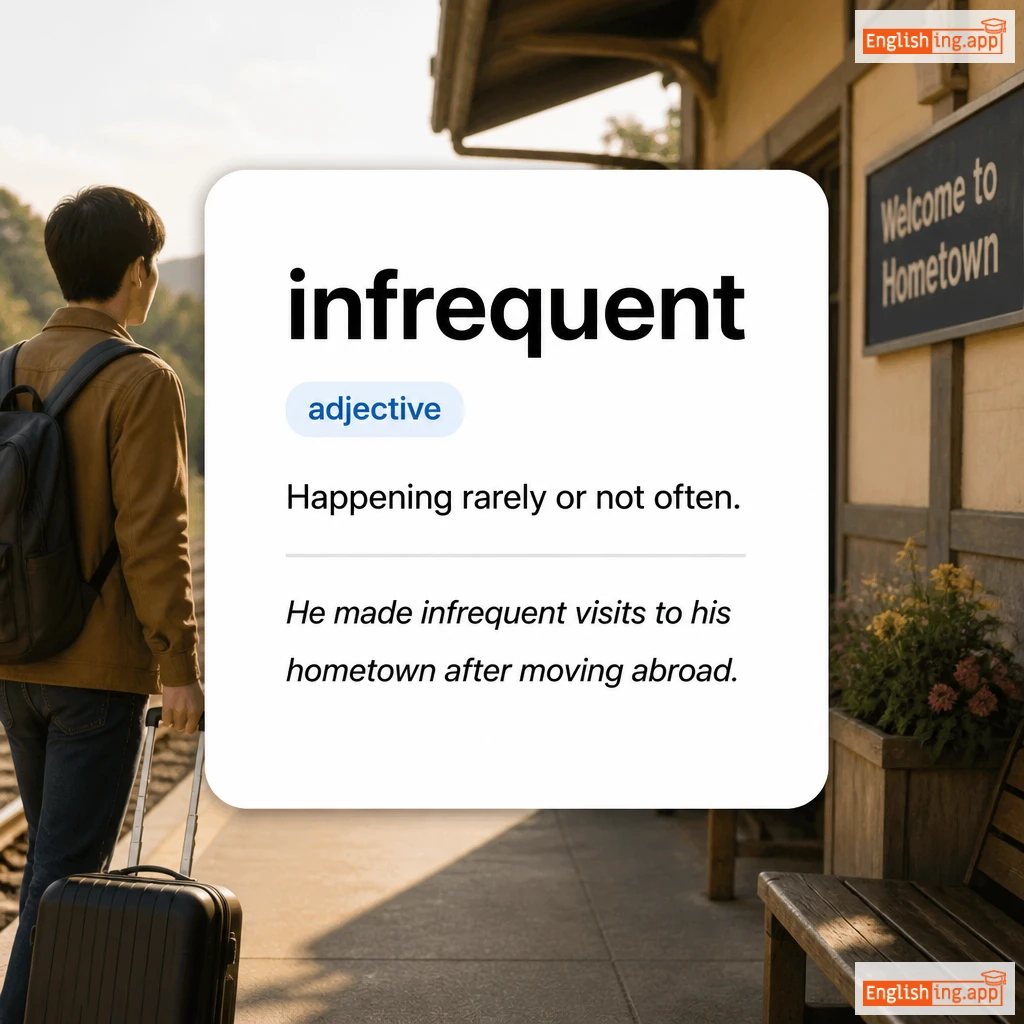
infrequent definition card — visual illustration of the meaning
adjective C1
/ɪnˈfriːkwənt/
不频繁 (bu pinfan)

Happening rarely or not often.

"He made infrequent visits to his hometown after moving abroad."

"他在搬到国外后,偶尔才回家乡。" (Ta zai ban dao guowai hou, ouer cai hui jiaxiang.)
verb C1
/ɪnˈfrɪndʒ/
侵犯 (qīnfàn)

To actively break the terms of a law, agreement, or right.

"Copying this software without permission will infringe copyright laws."

"未經許可複製此軟件將侵犯版權法。" (wèijīng xǔkě fùzhì cǐ ruǎnjiàn jiāng qīnfàn bǎnquán fǎ.)
verb C1
/ɪnˈfjʊərieɪt/
激怒 (jin nu)

To make someone extremely angry.

"His careless remarks infuriated the entire team."

"他的不小心评论让整个团队生气。" (Ta de bu xiaoxin pinglun rang zhengge tuandui shengqi.)
verb C1
/ɪnˈfjuːz/

to fill or spread through something; to instill a quality, idea, or feeling

"The teacher tried to infuse her students with a love for reading."

noun C1
/ɪnˈfjuːʒən/
草药注入 (caoyao zhurù)

the act of introducing something into another; a drink made by steeping leaves or herbs in liquid

"She prepared a calming infusion of chamomile tea."

"她准备了一杯舒缓的洋甘菊茶注入。" (Ta zhunbei le yi bei shuhuan de yangganju cha zhurù.)
ingenious definition card — visual illustration of the meaning
adjective C1
/ɪnˈdʒiːniəs/
巧妙 (qiǎo miào)

very clever and inventive; showing creativity in problem-solving

"The engineer came up with an ingenious solution to the problem."

"工程师找到了解决问题的巧妙方法。" (gōngchéngshī zhǎodàole jiějué wèntí de qiǎo miào fāngfǎ.)
ingenuity definition card — visual illustration of the meaning
noun C1
/ˌɪndʒəˈnjuːɪti/
独创性 (du chuang xing)

the quality of being clever, original, and inventive

"The project was completed on time thanks to the ingenuity of the team."

"这个项目按时完成,多亏了团队的独创性。" (Zhe ge xiang mu an shi wan cheng, duo kui le tuan dui de du chuang xing.)
adjective C1
/ɪnˈɡreɪnd/
根深蒂固 (gen shen di gu)

Firmly fixed or established; deeply rooted and difficult to change.

"His ingrained habits were hard to break."

"他的根深蒂固的习惯很难改变。" (Tā de gēn shēn dì gù de xíguàn hěn nán gǎibiàn.)
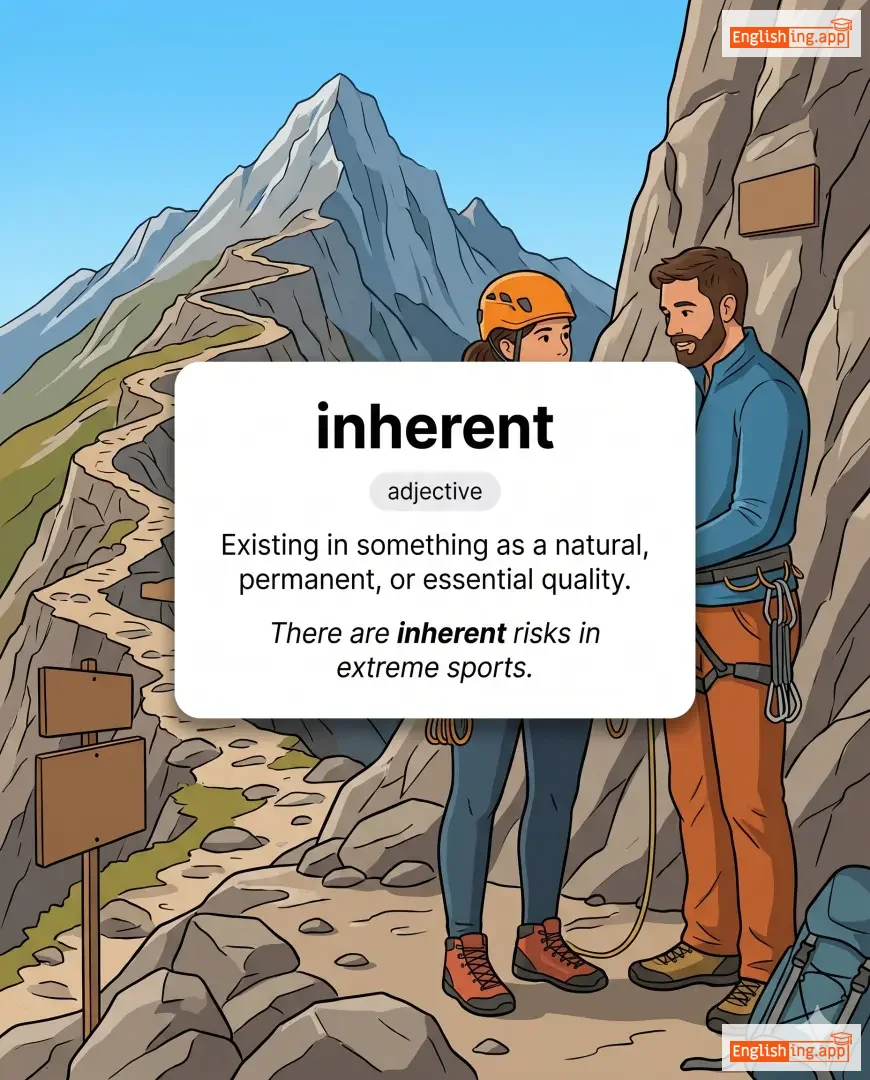
inherent definition card — visual illustration of the meaning
adjective C1
/ɪnˈhɛrənt/
固有的 (gùyǒu de)

Existing in something as a natural, permanent, or essential quality.

"There are inherent risks in extreme sports."

"极限运动中存在固有的风险。" (jíxiàn yùndòng zhōng cúnzài gùyǒu de fēngxiǎn.)
noun C1
/ɪnˈhɛrɪtər/
继承人 (jichengren)

a person who receives money, property, or a title when someone dies

"She became the inheritor of her family's estate."

"她成为了家族财产的继承人。" (Ta chengwei le jiazu caichan de jichengren.)
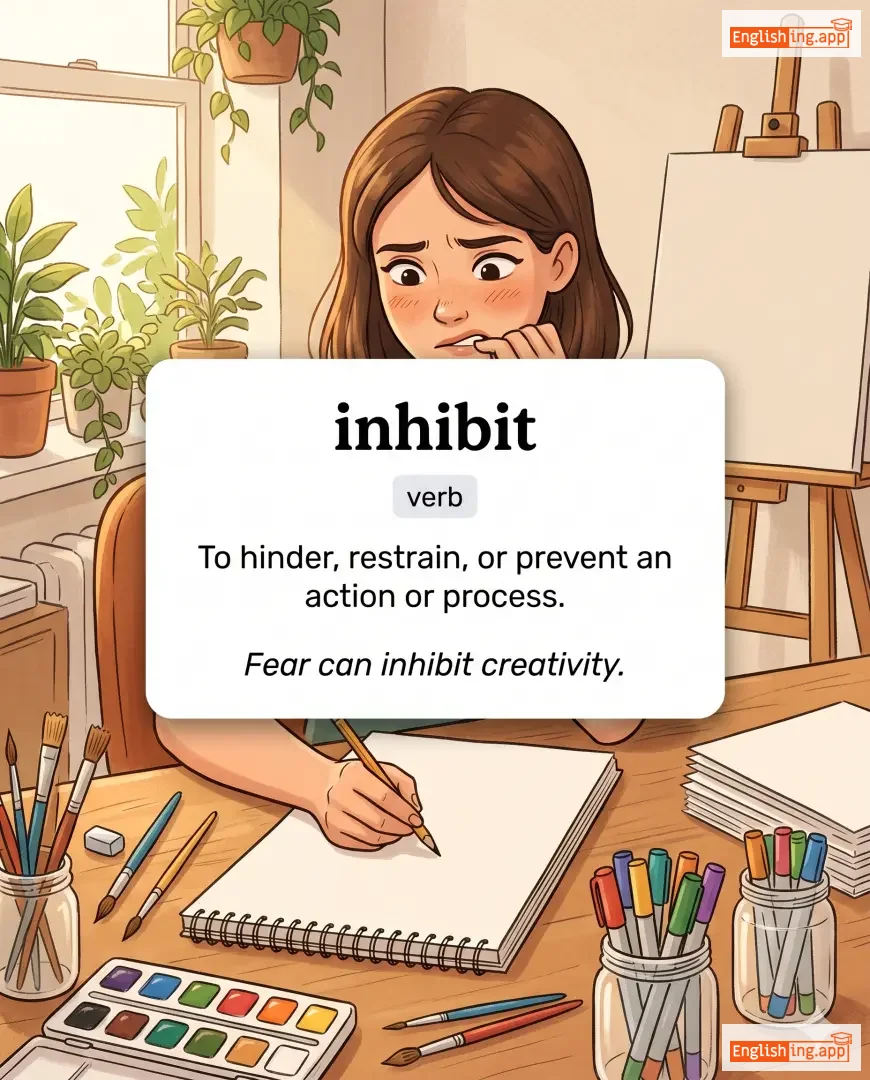
inhibit definition card — visual illustration of the meaning
verb C1
/ɪnˈhɪbɪt/
抑制 (yìzhì)

To hinder, restrain, or prevent an action or process.

"Fear can inhibit creativity."

"恐惧可能会抑制创造力。" (Kǒngjù kěnéng huì yìzhì chuàngzàolì.)
adjective C1
/ɪnˈhɪbɪtɪd/
抑制的 (yì zhì de)

Unable to act in a relaxed and natural way, especially due to self-consciousness or restraint.

"He was too inhibited to express his true feelings."

"他太抑制自己,无法表达真实的感受。" (Tā tài yì zhì zìjǐ, wúfǎ biǎodá zhēnshí de gǎnshòu.)
adjective C1
/ˌɪnhɒˈspɪtəbl/
不适宜居住的 (bù shì yí jū zhù de)

Harsh and difficult to live in; unfriendly or unwelcoming to guests.

"The desert is an inhospitable environment for most plants."

"沙漠是大多数植物无法生存的环境。" (Shāmò shì dà duōshù zhíwù wúfǎ shēngcún de huánjìng.)
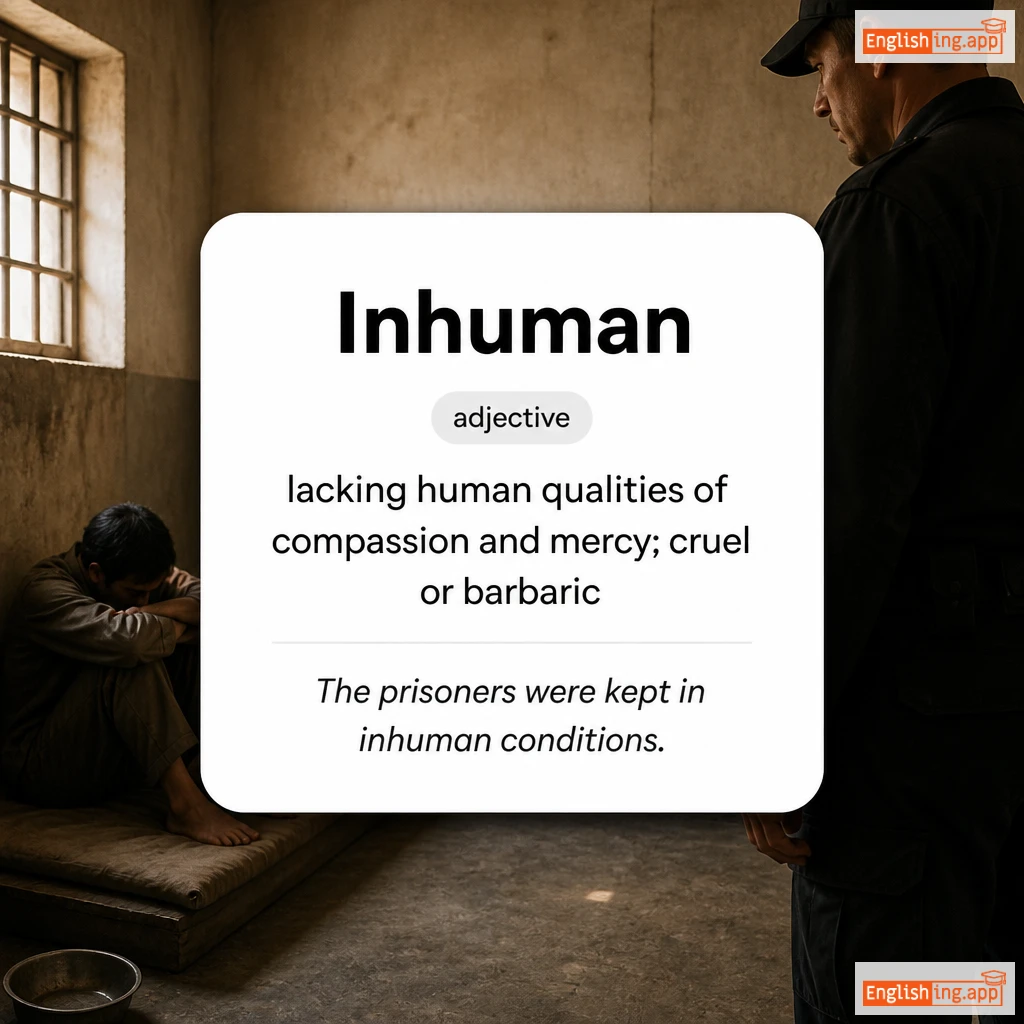
Inhuman definition card — visual illustration of the meaning
adjective C1
/ɪnˈhjuːmən/
不人道 (bù rén dào)

lacking human qualities of compassion and mercy; cruel or barbaric

"The prisoners were kept in inhuman conditions."

"囚犯被关押在不人道的条件下。" (qiú fàn bèi guān yā zài bù rén dào de tiáo jiàn xià.)
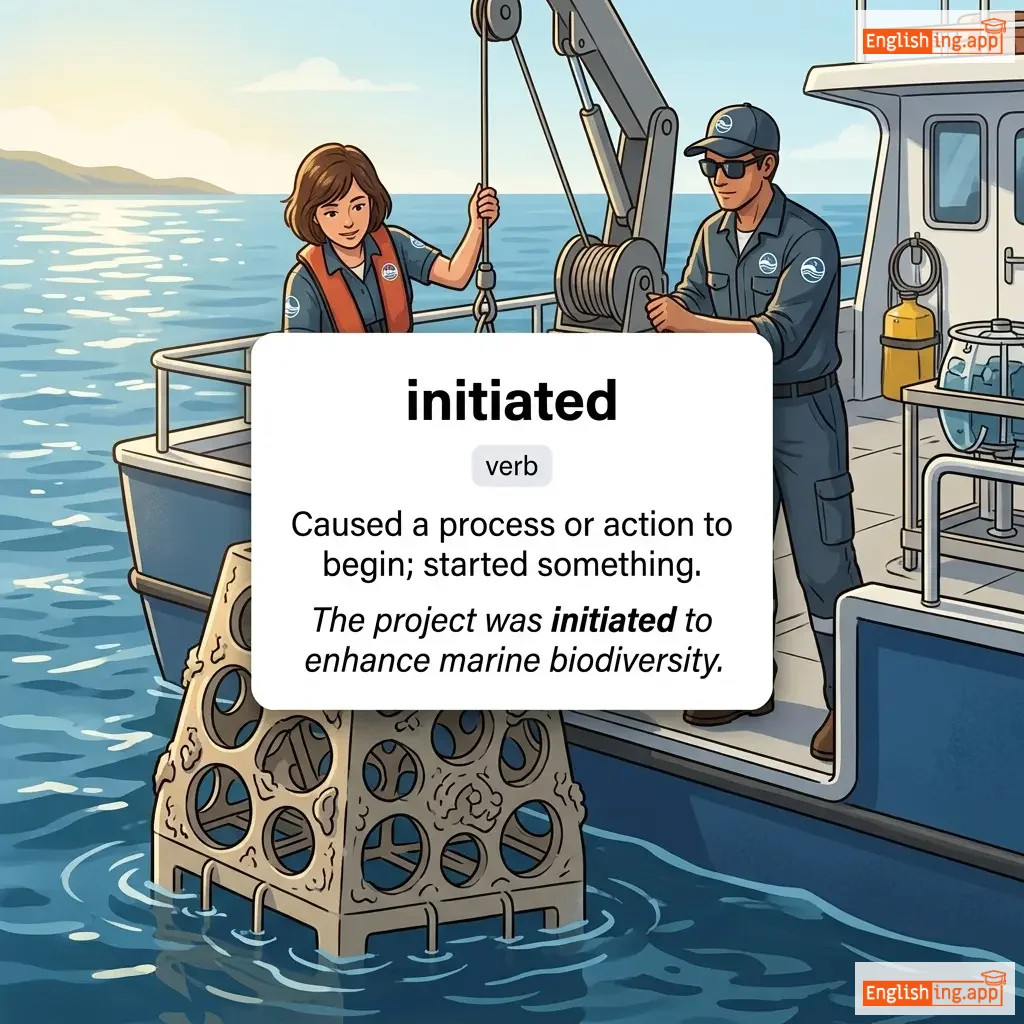
initiated definition card — visual illustration of the meaning
verb C1
ɪˈnɪʃɪeɪtɪd
启动 (qǐdòng)

Caused a process or action to begin; started something.

"The project was initiated to enhance marine biodiversity."

"该项目已启动以促进海洋生物多样性。" (Gāi xiàngmù yǐ qǐdòng yǐ cùjìn hǎiyáng shēngwù duōyàngxìng.)
noun C1
/ɪnˈdʒʌŋkʃən/
禁令 (jinling)

A judicial order restraining a person from an action or compelling a certain act.

"The court issued an injunction to stop the company from polluting the river."

"法院发布了一项禁令,阻止公司污染河流。" (Fayuan fabu le yi xiang jinling, zuzhi gongsi wuran heliu.)
adjective C1
/ɪnˈdʒʊəriəs/
有害的 (youhai de)

Causing or likely to cause harm or damage.

"Smoking is injurious to health."

"吸烟对健康有害。" (Xiyan dui jiankang youhai.)
noun C1
/ˈɪŋklɪŋ/
预感 (yùgǎn)

A slight idea, hint, or suspicion about something.

"She had an inkling that he was planning a surprise."

"她有一个预感,他正在计划一个惊喜。" (Tā yǒu yī gè yùgǎn, tā zhèngzài jìhuà yī gè jīngxǐ.)
Inland definition card — visual illustration of the meaning
adjective C1
/ˈɪnlənd/
内陆 (neilu)

Situated away from the coast; towards the interior of a country.

"They decided to travel further inland to explore the countryside."

"他们决定更深入内陆,探索乡村。" (Tamen jueding geng shenru neilu, tansuo xiangcun.)
noun C1
/ˈɪnlɛt/
水道口 (shuǐdàokǒu)

A small arm of the sea, a lake, or a river; an opening or passage for entry.

"The boat entered a narrow inlet along the coast."

"船只进入了沿海的一条狭窄的水道口。" (Chuánzhī jìnrùle yán hǎi de yītiáo xiázhǎi de shuǐdàokǒu.)
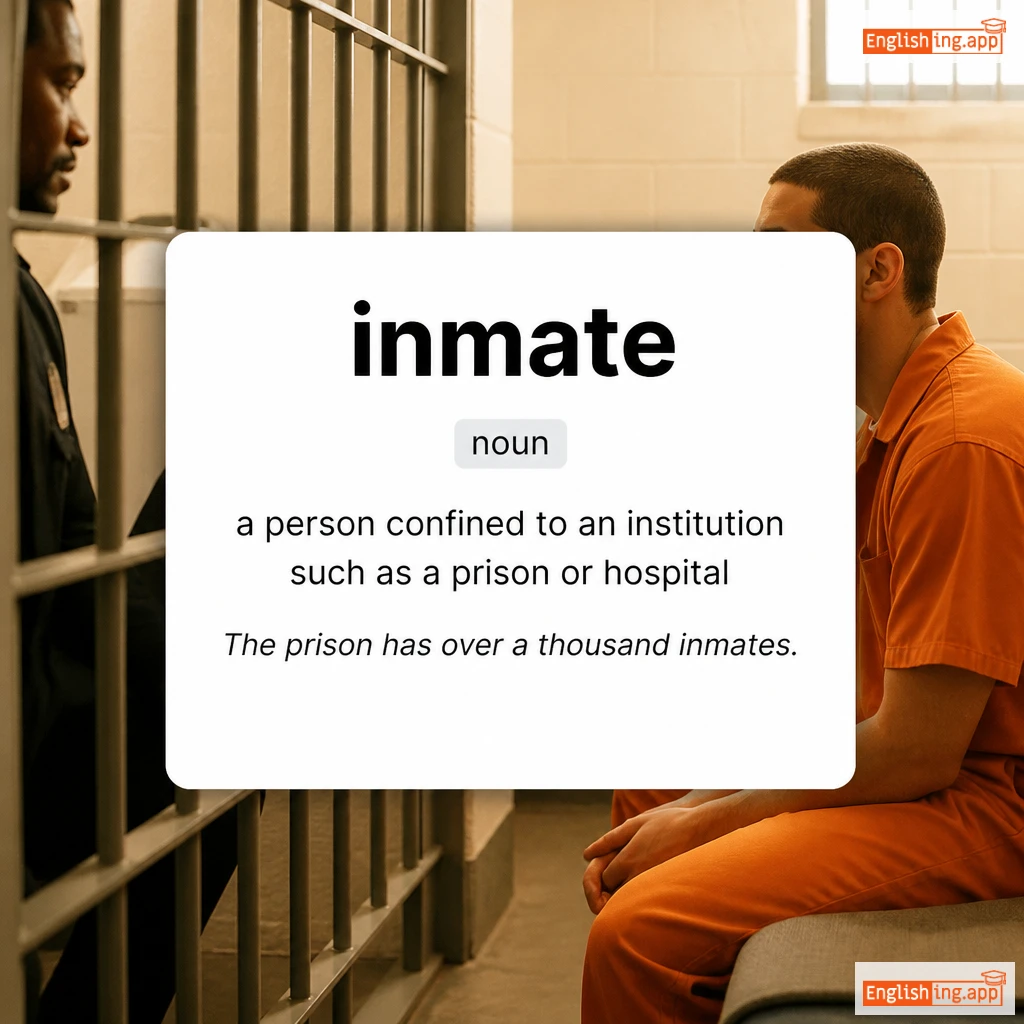
inmate definition card — visual illustration of the meaning
noun C1
/ˈɪnˌmeɪt/
囚犯 (qiufan)

a person confined to an institution such as a prison or hospital

"The prison has over a thousand inmates."

"监狱里有超过一千名囚犯。" (Jianyu li you chao guo yi qian ming qiufen.)
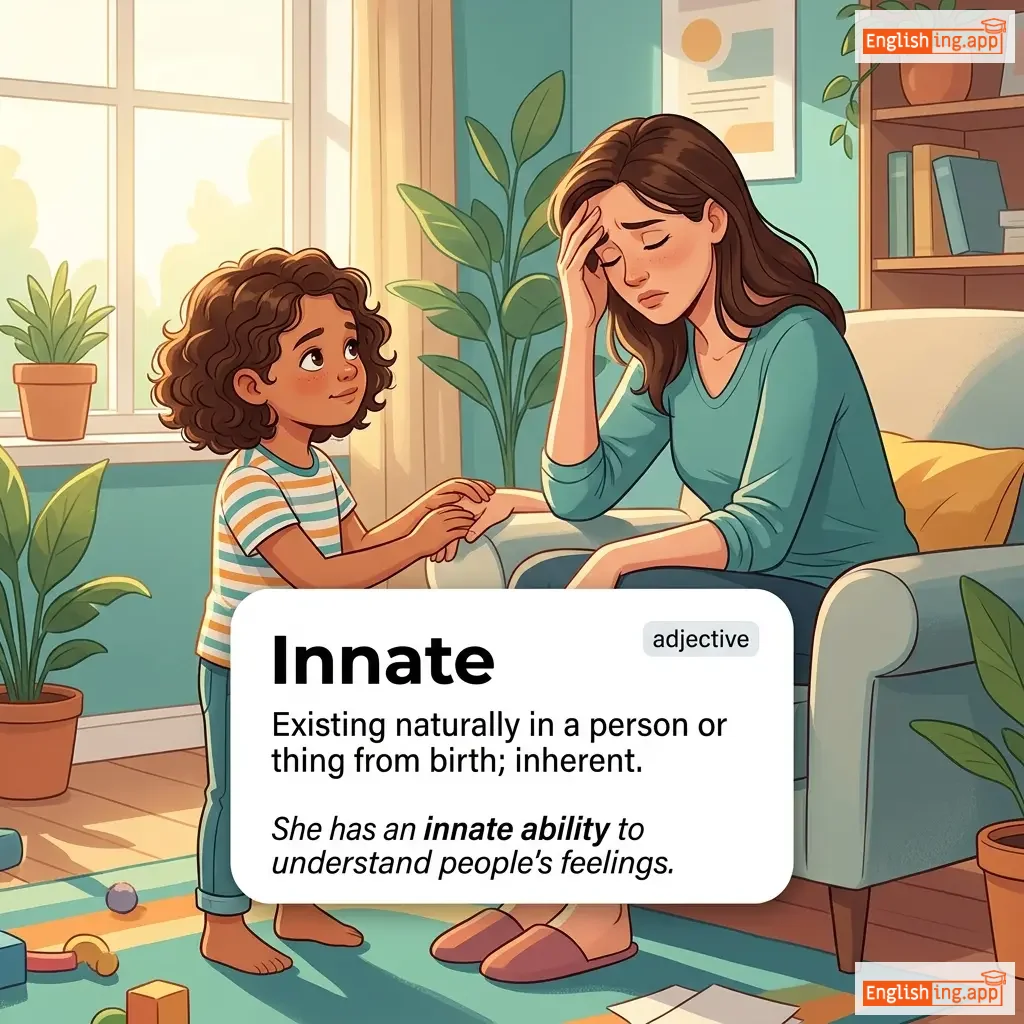
Innate definition card — visual illustration of the meaning
adjective C1
/ɪˈneɪt/
天生的 (tiānshēng de)

Existing naturally in a person or thing from birth; inherent.

"She has an innate ability to understand people's feelings."

"她有与生俱来的理解他人感受的能力。" (Tā yǒu yǔ shēng jù lái de lǐjiě tārén gǎnshòu de nénglì.)
adjective C1
/ˈɪnərmoʊst/
最深的; 最个人的 (zui shen de; zui ge ren de)

most private and secret; deepest; most personal

"She shared her innermost feelings with her closest friend."

"她与最亲密的朋友分享了她最深的感受。" (Tā yǔ zuì qīnmì de péngyǒu fēnxiǎngle tā zuì shēn de gǎnshòu.)
innocuous definition card — visual illustration of the meaning
adjective C1
/ɪˈnɒkjuəs/
无害的 (wúhài de)

Not harmful or offensive.

"His remark was completely innocuous and not meant to offend anyone."

"他的评论完全无害,并且没有冒犯任何人的意思。" (Tā de pínglùn wánquán wúhài, bìngqiě méiyǒu màofàn rènhé rén de yìsi.)