ভোকাবুলারিসমূহ

ইংরেজি শব্দের বাংলা অর্থ | English to Bangla Word Meaning Dictionary

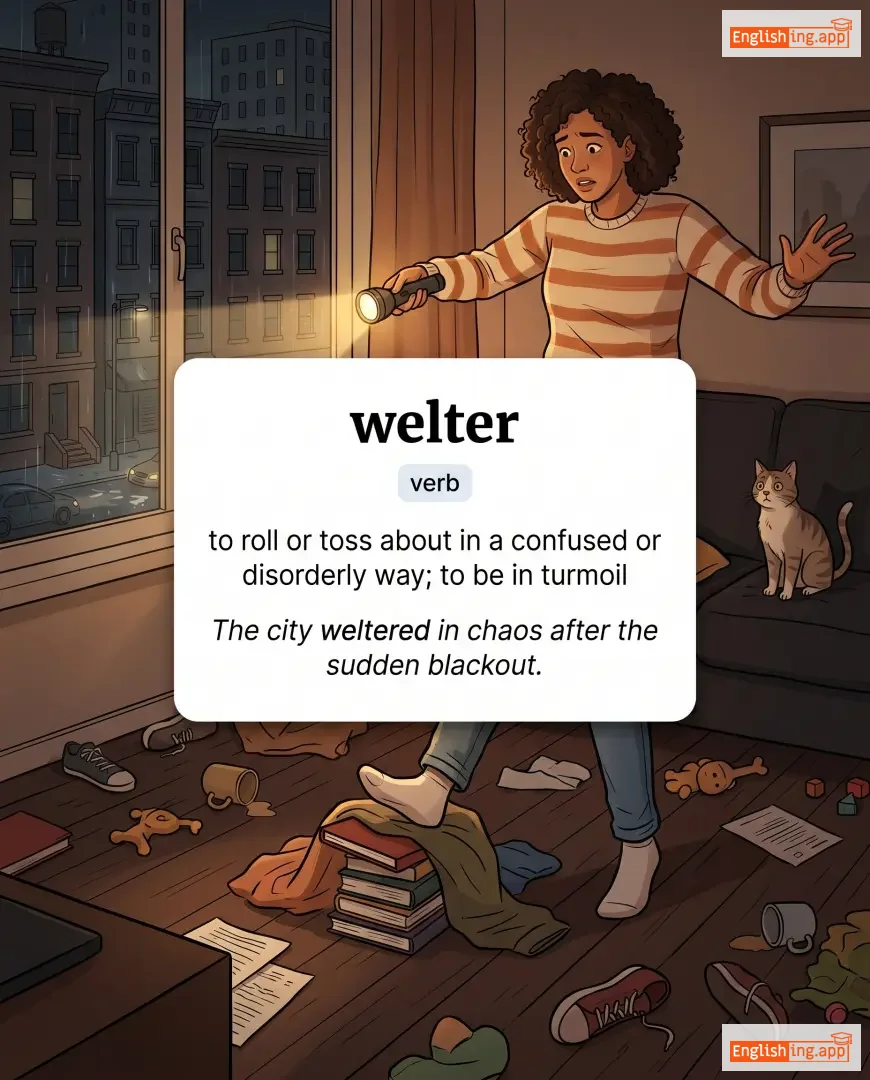
welter definition card — visual illustration of the meaning
verb C2
/ˈwɛltər/
混乱の中で転がる (konran no naka de korogaru)

to roll or toss about in a confused or disorderly way; to be in turmoil

"The city weltered in chaos after the sudden blackout."

"突然の停電後、都市は混乱の中に沈んだ。" (Totsuzen no teiden go, toshi wa konran no naka ni shizunda.)
verb C2
/ˈwiːdəl/
お世辞で説得する (oseshi de settoku suru)

to persuade or coax someone by using flattery or smooth talk

"She managed to wheedle extra pocket money from her father."

"彼女は父親から追加の小遣いを得ることに成功した。" (Kanojo wa chichioya kara tsuika no kozutsukai wo eru koto ni seikou shita.)
noun C2
/wɛlp/
子犬 (koinu)

a young offspring of a dog or other carnivorous mammal; sometimes used to mean an impudent young person

"The farmer found a wolf whelp hiding near the barn."

"農夫は小屋の近くで隠れている狼の子犬を見つけました。" (Nōfu wa koya no chikaku de kakurete iru ōkami no koinu o mitsukemashita.)
adverb, noun C2
/ˈwɛə.wɪð/
手段 (shudan)

With which; the means or resources needed for something.

"He lacked the money wherewith to buy a new house."

"彼は新しい家を買うためのお金がなかった。" (Kare wa atarashī ie o kau tame no okane ga nakatta.)
verb C2
/ˈwɪni/
いななき (inanaki)

to make the high-pitched sound a horse makes

"The horse whinnied when it saw its rider."

"馬は騎手を見たときにいななきました。" (Uma wa kishu wo mita toki ni inanakimashita.)
noun C2
/wɪt/
ほんの少し (honno sukoshi)

a very small part or amount

"He doesn't care a whit about the outcome."

"彼は結果について少しも気にしない。" (Kare wa kekka ni tsuite sukoshi mo ki ni shinai.)
noun C2
/wɜːrl/
渦巻き (uzumaki)

A pattern of spirals or concentric circles, often found in fingerprints, shells, or flowers.

"The fingerprint displayed a clear whorl pattern."

"指紋に明確な渦巻きのパターンが表示されていました。" (Shimon ni meikaku na uzumaki no patān ga hyōji sareteimashita.)
noun C2
/waɪl/
策略, 欺瞞 (satoraku, kiman)

A trick or clever scheme meant to deceive or outwit someone.

"He used every wile to win her trust."

"彼は彼女の信頼を勝ち取るためにあらゆる策略を使った。" (Kare wa kanojo no shinrai o kachitoru tame ni arayuru satoraku o tsukatta.)
adjective C2
/ˈwɪloʊi/
しなやかで細く、しなやかな柳のような (shinayaka de hosoku, shinayakana yanagi no yōna)

Gracefully tall, slender, and flexible, like a willow tree.

"She moved with a willowy elegance across the stage."

"彼女はステージをウィロウィなエレガンスで移動した。" (kanojo wa suteeji o uirooi na eregansu de idou shita)
noun C2
/ˈwɪndbæɡ/
おしゃべりな人 (oshaberi na hito)

a person who talks too much, especially in a boring or boastful way

"Everyone avoided the windbag at the party because he never let anyone else speak."

"パーティーでみんなはそのおしゃべりな人を避けた、なぜなら彼は他の誰にも話す機会を与えなかったから。" (Pātī de minna wa sono oshaberi na hito o saketa, nazenara kare wa hoka no dare ni mo hanasu kikai o ataenakatta kara.)
verb C2
/ˈwɪn.oʊ/
選別する;もみ殻から穀物を分ける (senbetsu suru; momigara kara kokumotsu wo wakeru)

to remove the less desirable parts from a group; originally, to separate grain from chaff by blowing air

"The committee will winnow the list of applicants to ten finalists."

"委員会は応募者のリストを10人のファイナリストに絞り込む予定です。" (Iinkai wa oubosha no risuto wo 10nin no fainarisuto ni shiborikomu yotei desu.)
adjective C2
/ˈwɪnsəm/
魅力的 (miryokuteki)

pleasant and attractive in a fresh, innocent, or charming way

"Her winsome smile instantly put the nervous guests at ease."

"彼女の魅力的な笑顔は、緊張していたゲストをすぐに安心させました。" (Kanojo no miryokuteki na egao wa, kinchou shite ita gesuto wo sugu ni anshin sasemashita.)
adjective C2
/ˈwɪspi/
細くて儚い (hosokute hakanai)

Thin, delicate, and weak in appearance or form.

"Her wispy hair blew gently in the breeze."

"彼女の細い髪は風にそっと舞っていた。" (Kanojo no hosoi kami wa kaze ni sotto matte ita.)
adjective C2
/ˈwɪtləs/
愚かな (orokana)

lacking intelligence or good sense

"It was a witless decision to leave the door unlocked."

"ドアを解除したままにするのは愚かな決断だった。" (Doa o kaijo shita mama ni suru no wa orokana ketsudan datta.)
noun C2
/ˈwɪtlɪŋ/
馬鹿 / 偽の賢い人 (baka / nise no kashikoi hito)

a person who has little wit or pretends to be witty

"He acted like a witling among scholars."

"彼は学者たちの中で馬鹿のように振る舞った。" (Kare wa gakusha-tachi no naka de baka no yō ni furumatta.)
noun C2
/ˈwɪtɪˌsɪzəm/
機知に富んだ言葉 / 冗談 (kichi ni tondan kotoba / joudan)

a clever or funny remark

"Her witticism made everyone laugh during the meeting."

"彼女の機知に富んだ言葉は会議中、みんなを笑わせた。" (Kanojo no kichi ni tondan kotoba wa kaigi chuu, minna o warawase ta.)
adverb C2
/ˈwɪtɪŋli/
意図的に (itoteki ni)

Consciously and intentionally; on purpose.

"He wittingly withheld information from the police."

"彼は意図的に警察に情報を隠した。" (Kare wa itoteki ni keisatsu ni jōhō o kakushita.)
verb C2
/ˈwɪzn/
しおれる (shioreru)

To become dry, shrunken, and wrinkled.

"The flowers began to wizen after days without water."

"花は数日間水なしでしおれ始めました。" (Hana wa suūjitsukann mizu nashi de shiore hajimemashita.)
adjective C2
/ˈwɪzn feɪst/
乾燥ししわだらけの顔 (kansou shi shiwadarake no kao)

Having a dry, wrinkled, and withered face.

"A wizen-faced old man sat quietly in the corner."

"乾燥ししわだらけの顔をした老人が静かに隅に座っていた。" (Kansou shi shiwadarake no kao o shita rōjin ga shizuka ni sumi ni suwatte ita.)
adjective C2
/ˈwɪznd/
しわくちゃな (shiwakuchana)

Shriveled, wrinkled, or withered, often due to age.

"The wizened tree stood in the field for centuries."

"そのしわくちゃな木は何世代にもわたって野原に立っていた。" (Sono shiwakuchana ki wa nan-sedai ni mo watatte nohara ni tatte ita.)
adjective C2
/woʊnt/ or /wɔːnt/
習慣 (shūkan)

accustomed or used to doing something

"She rose early, as she was wont to do."

"彼女は早く起きました、彼女がするのが習慣だったように。" (Kanojo wa hayaku okimashita, kanojo ga suru no ga shūkan datta yō ni.)
adjective C2
/ˈwɜːkmənˌlaɪk/
職人仕事 (shokunin shigoto)

Showing efficient, competent, and practical skill, but without flair or creativity.

"The carpenter delivered a workmanlike performance on the project."

"大工はプロジェクトで職人仕事のようなパフォーマンスを発揮しました。" (Daiku wa purojekuto de shokunin shigoto no yōna pafōmansu o hakki shimashita.)
noun C2
/reɪθ/
幽霊 (yūrei)

A ghost or ghostlike image of someone, especially seen shortly before or after their death.

"A wraith appeared in the fog near the old castle."

"古い城の近くの霧の中に幽霊が現れました。" (Furui shiro no chikaku no kiri no naka ni yūrei ga arawaremashita.)
noun C2
/ˈræŋɡlər/
牧畜者 (bokuchusha)

a person who argues noisily; or someone who takes care of livestock on a ranch

"The cowboy worked as a wrangler on the ranch."

"カウボーイはランチでレングラーとして働いた。" (Kaubōi wa ranchi de rengurā toshite hataraita.)
verb C2
/rɛst/
力づくで奪う (rikidukude ubau)

to forcibly pull something from a person's grasp; to seize with effort or struggle

"The police had to wrest the weapon from the suspect's hand."

"警察は容疑者の手から武器を引き離さなければならなかった。" (Keisatsu wa yōgisha no te kara buki o hikihanasanakereba naranakatta.)
noun C2
/rɛtʃ/
不幸な人 (fukouna hito)

an unfortunate or miserable person; a despicable or contemptible person

"The poor wretch was left out in the cold with no shelter."

"貧しい不幸な人は避難所なしで寒さの中に放置された。" (Mazushii fukou na hito wa hinanjo nashi de samusa no naka ni houchi sareta.)
adjective C2
/ˌrɒŋˈhɛd.ɪd/
誤った考え方 (ayamatta kangaekata)

Having or showing bad judgment or stubbornly holding to wrong ideas.

"The policy was considered wrongheaded and harmful."

"その政策は誤った考え方で有害だと見なされた。" (Sono seisaku wa ayamatta kangaekata de yuugai da to minasa reta.)
noun C2
/ˈjɪərlɪŋ/
1歳の動物、特に馬 (1-sai no dōbutsu, tokuni uma)

an animal that is one year old, especially a horse

"The farmer sold the yearling at the livestock market."

"農夫はそのイヤーリングを家畜市場で売りました。" (Nōfu wa sono yearling o kachiku shijō de urimashita.)
noun C2
/ˈjoʊmən/
農民 / 忠実な従業員 (nōmin / chūjitsu na jūgyōin)

A farmer who cultivates his own land; also used to describe someone performing loyal, useful service.

"He did yeoman service in completing the project on time."

"彼はプロジェクトを時間通りに完了させるために忠実にサービスを提供しました。" (Kare wa purojekuto o jikan dōri ni kanryō saseru tame ni chūjitsu ni sābisu o teikyō shimashita.)
noun C2
/ˈjoʊkəl/
田舎者 (inakamono)

An uneducated and unsophisticated person from the countryside; a bumpkin.

"The city folks laughed at the yokel's simple ways."

"都会の人々は田舎者の簡単な方法を笑った。" (Tōkai no hitobito wa inakamono no kantan na hōhō o waratta.)
noun C2
/jɔːr/
過去 (kako)

Time long past; bygone days.

"Legends of yore still inspire people today."

"過去の伝説は今でも人々に影響を与え続けています。" (Kako no densetsu wa ima demo hitobito ni eikyou o ataetsuzukemasu.)
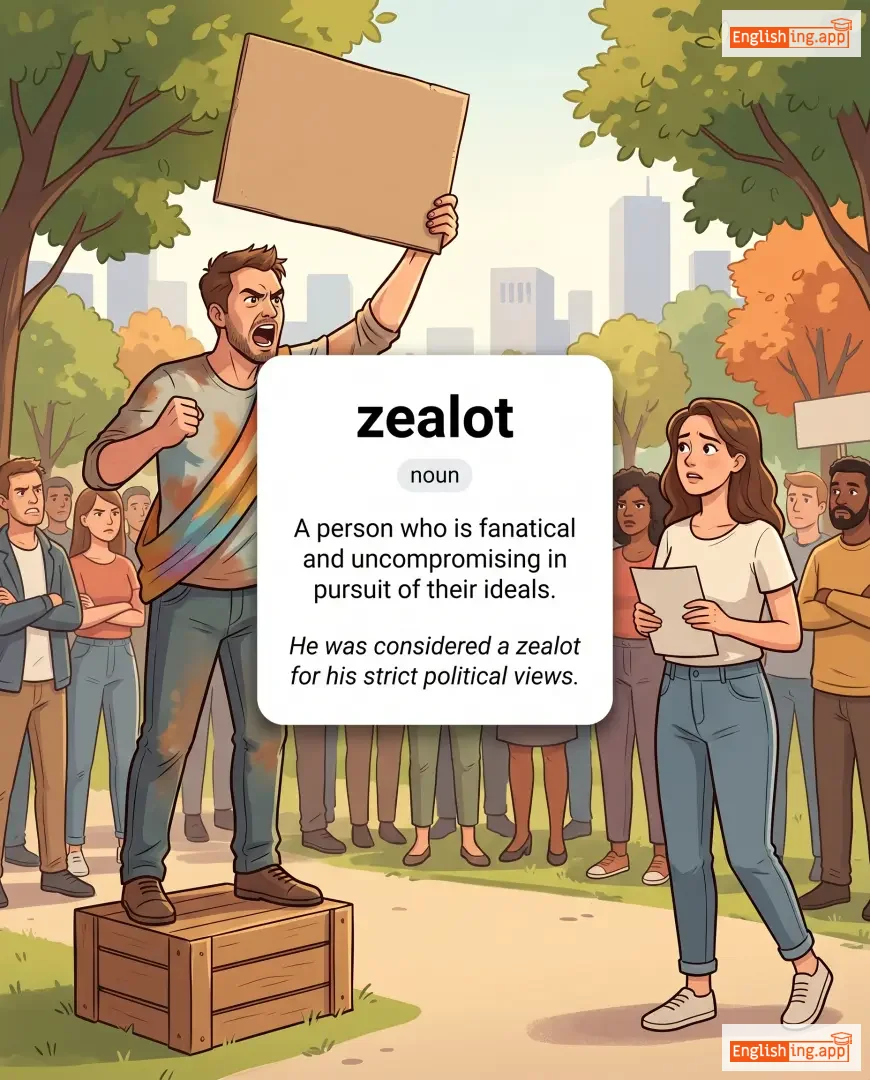
zealot definition card — visual illustration of the meaning
noun C2
/ˈzel.ət/
狂信者 (kyoushinsha)

A person who is fanatical and uncompromising in pursuit of their ideals.

"He was considered a zealot for his strict political views."

"彼は厳格な政治的見解のため、狂信者と見なされていました。" (Kare wa genkaku na seijiteki kenkai no tame, kyoushinsha to minasa rete imashita.)
noun C2
/ˈzaɪtɡaɪst/
時代精神 (jidai seishin)

The defining spirit or mood of a particular period of history as shown by the ideas and beliefs of the time.

"The novel perfectly captures the zeitgeist of the 1960s."

"その小説は1960年代の時代精神を完璧に捉えています。" (Sono shōsetsu wa 1960 nendai no jidai seishin o kanpeki ni toraeteimasu.)
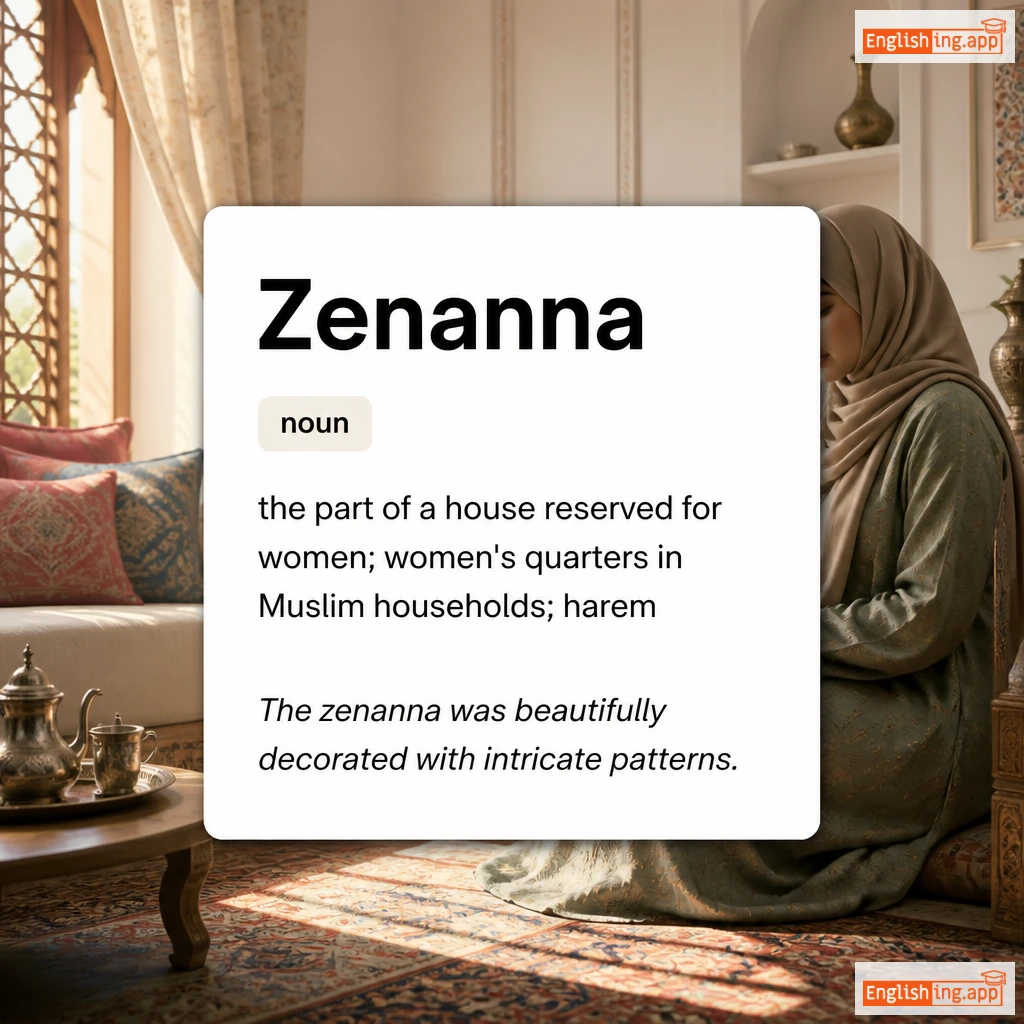
Zenanna definition card — visual illustration of the meaning
noun C2
/zɪˈnɑːnə/
ゼナンナ (zenanna)

the part of a house reserved for women; women's quarters in Muslim households; harem

"The zenanna was beautifully decorated with intricate patterns."

"ゼナンナは複雑な模様で美しく飾られていました。" (Zenanna wa fukuzatsu na moyō de utsukushiku kazatta remashita.)
noun C2
/ˈzɛfər/
やわらかな風 (yawaraka na kaze)

A soft gentle breeze.

"A warm zephyr blew through the valley."

"温かいやわらかな風が谷を吹き抜けました。" (Atatakai yawaraka na kaze ga tani o fukinukemashita.)
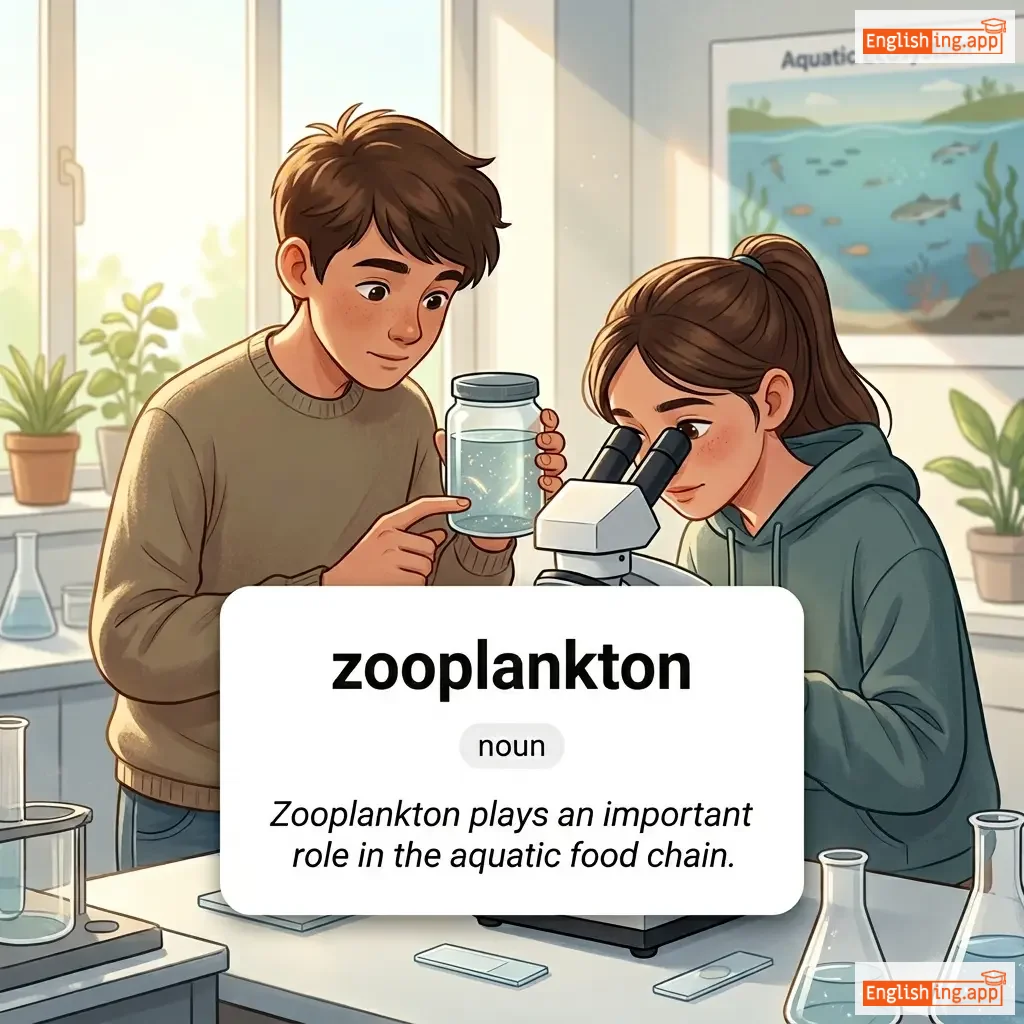
zooplankton definition card — visual illustration of the meaning
noun C2
/ˈzuːəʊˌplæŋktən/
動物プランクトン (dōbutsu purankuton)

Microscopic aquatic animals that drift in water bodies and form an essential part of the aquatic food chain, serving as food for fish and other marine organisms.

"Zooplankton plays an important role in the aquatic food chain."

"動物プランクトンは水生食物連鎖で重要な役割を果たします。" (Dōbutsu purankuton wa suisei shokumotsu rensa de jūyō na yakuwari o hatashimasu.)