ভোকাবুলারিসমূহ

ইংরেজি শব্দের বাংলা অর্থ | English to Bangla Word Meaning Dictionary

noun C2
/pərˈsɪpiəns/
洞察力 (dousatsuryoku)

The ability to perceive, understand, or notice things quickly.

"His percipience in reading people made him a great negotiator."

"人々を読む彼の洞察力は、彼を素晴らしい交渉者にしました。" (Hitobito o yomu kare no dousatsuryoku wa, kare o subarashii koushousha ni shimashita.)
adjective C2
/pərˈsɪpiənt/
鋭い洞察力を持つ (surudoi dōsatsuryoku o motsu)

Having good understanding or insight; able to perceive things clearly.

"As a percipient critic, she recognized the deeper meaning of the play."

"鋭い洞察力を持つ批評家として、彼女は劇の深い意味を認識しました。" (Surudoi dōsatsuryoku o motsu hihyōka toshite, kanojo wa geki no fukai imi o ninshiki shimashita.)
noun C2
/pərˈdɪʃən/
幸福 (kōfuku)

A state of eternal spiritual ruin, often referring to hell or damnation.

"The preacher warned that greed would lead to perdition."

"彼女は賞を受け取ったとき、自分の幸福を隠すことができなかった。" (Kanojo wa shō o uketotta toki, jibun no kōfuku o kakusu koto ga dekinakatta.)
verb C2
/ˈpɛrəɡrɪˌneɪt/
幸福 (kōfuku)

To travel or wander from place to place.

"He loved to peregrinate across the countryside during summer."

"彼女は賞を受け取ったとき、自分の幸福を隠せませんでした。" (Kanojo wa shō o uketotta toki, jibun no kōfuku o kakusemasen deshita.)
noun C2
/ˌpɛrəɡrɪˈneɪʃən/
(tabi)

A long journey or wandering, especially on foot.

"Their peregrination across Asia lasted two years."

"彼らのアジア横断の旅は2年間続いた。" (Karera no Ajia ōdan no tabi wa 2-nenkan tsuzita.)
adjective C2
/pəˈrɛmptəri/
強制的な (kyōseitekina)

Insisting on immediate attention or obedience, especially in a commanding way.

"The officer gave a peremptory order to evacuate the building."

"その警官は建物を避難させるために強制的な命令を出した。" (Sono keikan wa tatemono o hinansaseru tame ni kyōseitekina meirei o dashita.)
adjective C2
/pərˈfɛktəbl/
完璧にできる (kanpeki ni dekiru)

capable of being made perfect or improved

"Human nature is imperfect but perfectible."

"人間の本性は不完全だが、完璧にできる。" (Ningen no honsei wa fukanzen da ga, kanpeki ni dekiru.)
adjective C2
/pərˈfɜrvɪd/
非常に熱心な (hijō ni nesshin na)

intensely passionate or fervent

"She gave a perfervid speech in defense of human rights."

"彼女は人権擁護のために非常に熱心なスピーチをしました。" (Kanojo wa jinken yōgo no tame ni hijō ni nesshin na supīchi o shimashita.)
adjective C2
/pərˈfɪdiəs/
裏切りの (uragiri no)

deceitful and untrustworthy

"The spy was executed for his perfidious actions."

"スパイは裏切りの行動で処刑されました。" (Supai wa uragiri no kōdō de shokei sare mashita.)
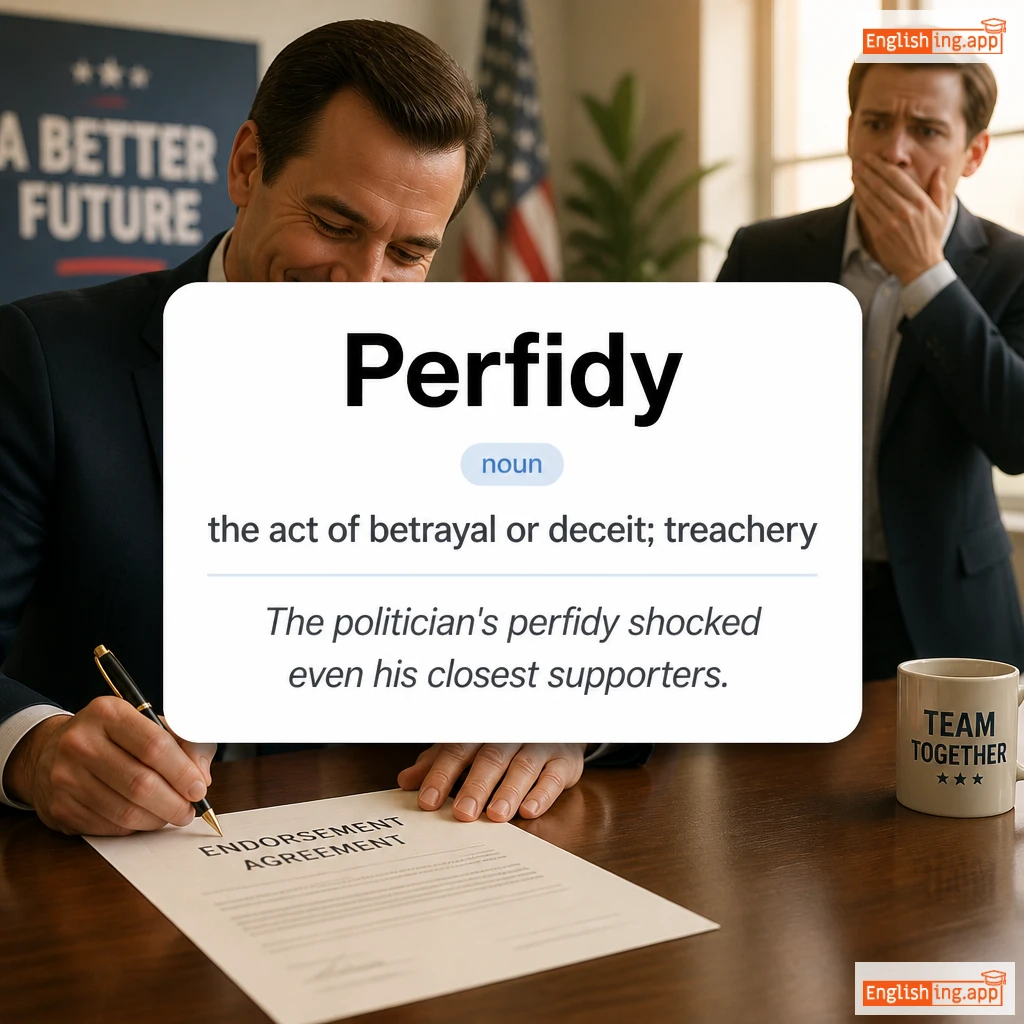
Perfidy definition card — visual illustration of the meaning
noun C2
/ˈpɜrfɪdi/
裏切り (uragiri)

the act of betrayal or deceit; treachery

"The politician's perfidy shocked even his closest supporters."

"その政治家の裏切りは、最も近い支持者たちをも驚かせました。" (Sono seijika no uragiri wa, mottomo chikai shiji-sha-tachi o mo odorokasemashita.)
verb C2
/ˈpɜː.fə.reɪt/
穴を開ける (ana o akeru)

to make a hole or holes through something

"The machine can perforate sheets of paper for easy tearing."

"その機械は紙を簡単に引き裂くために穴を開けることができます。" (Sono kikai wa kami o kantan ni hikisaku tame ni ana o akeru koto ga dekimasu.)
adverb C2
/pəˈfɔːs/
避けられない (sakerarenai)

by necessity; inevitably

"He had to perforce accept the decision."

"彼は避けられない形で決定を受け入れなければならなかった。" (Kare wa sakerarenai katachi de kettei wo ukeirenakereba naranakatta.)
noun C2
/ˈper.ɪ.dʒiː/
月または衛星の軌道で地球に最も近い点 (tsuki matawa eisei no kidō de chikyū ni mottomo chikai ten)

the point in the orbit of the moon or a satellite at which it is nearest to the Earth

"The moon appeared much larger during its perigee."

"月はそのペリジーの際にかなり大きく見えました。" (Tsuki wa sono perijī no sai ni kanari ōkiku miemashita.)
noun C2
/ˌpɪəriəˈdɪsɪti/
周期性 (shuukisei)

The quality or state of being regular or recurring at intervals.

"The periodicity of the moon’s phases has fascinated humans for centuries."

"月の位相の周期性は何世紀にもわたって人々を魅了してきた。" (tsuki no isou no shuukisei wa naseiki ni mo watatte hitobito o miryou shite kita.)
adjective C2
/ˌpɛrɪpəˈtɛtɪk/
ノマド (nomado)

Traveling from place to place, especially for work or based on lifestyle.

"He led a peripatetic life as a traveling teacher."

"彼は旅行教師としてノマドの生活を送っていました。" (Kare wa ryokou kyoushi toshite nomado no seikatsu o okutte imashita.)
noun C2
/ˈpɛrɪstaɪl/
柱で囲まれた回廊 (hashira de kakomareta kairō)

A continuous porch formed by a row of columns surrounding the perimeter of a building or courtyard.

"The Roman villa featured a beautiful peristyle garden."

"ローマの別荘には美しいペリスタイル庭園がありました。" (Rōma no bessō ni wa utsukushī perisutairu teien ga arimashita.)
verb C2
/ˈpɜːrdʒər/
偽証する (gisō suru)

To knowingly tell a lie in a court of law after swearing to tell the truth.

"He was accused of trying to perjure himself during the trial."

"彼は裁判中に偽証しようとしたとして告発されました。" (Kare wa saiban-chū ni gisō shiyou to shita to shite kokuhatsu saremashita.)
noun C2
/ˌperəˈreɪʃən/
結びの演説 (musubi no enzetsu)

The concluding part of a speech, often intended to inspire or persuade.

"The politician's peroration left the audience applauding enthusiastically."

"政治家のペロレーションは、観客を熱狂的に拍手させました。" (Seijika no perorēshon wa, kankyaku o nekkyō-teki ni hakushu sasemashita.)
perpetuity definition card — visual illustration of the meaning
noun C2
ˌpɜː.pɪˈtʃuː.ɪ.ti
永続性、永遠、継続性 (eizokusei, eien, keizokusei)

Permanence, eternity, continuity.

"The contract ensures payments in perpetuity."

"契約は永続的な支払いを保証します。" (Keiyaku wa eizokuteki na shiharai o hoshō shimasu.)
Perquisite definition card — visual illustration of the meaning
noun C2
/ˈpɜːrkwɪzɪt/
特典 (tokuten)

a special privilege or benefit attached to a position or job

"A company car is one of the perquisites of the job."

"会社の車はこの仕事の特典の1つです。" (Kaisha no kuruma wa kono shigoto no tokuten no hitotsu desu.)
noun C2
/ˈpɜːrkwɪzɪt raɪt/
職務に関連した特典の権利 (shokumu ni kanrenshita tokuten no kenri)

a legal right to certain benefits or privileges associated with a job or office

"The judge enjoyed certain perquisite rights attached to his position."

"裁判官は自分の職位に関連した特典を享受していた。" (Saibankan wa jibun no shokui ni kanrenshita tokuten o kyōju shite ita.)
noun C2
/ˈpɜːrsɪflɑːʒ/
軽い皮肉 (karui hiniku)

light and slightly contemptuous mockery or banter

"Their conversation was full of persiflage and jokes."

"彼らの会話は軽い皮肉とジョークでいっぱいだった。" (Karera no kaiwa wa karui hiniku to jooku de ippai datta.)
noun C2
/ˈpɜːrsənɪdʒ/
重要人物 (jūyō jinbutsu)

an important or famous person

"He is considered a great personage in the world of literature."

"彼は文学の世界で偉大な人物と見なされています。" (Kare wa bungaku no sekai de idaina jinbutsu to minasareteimasu.)
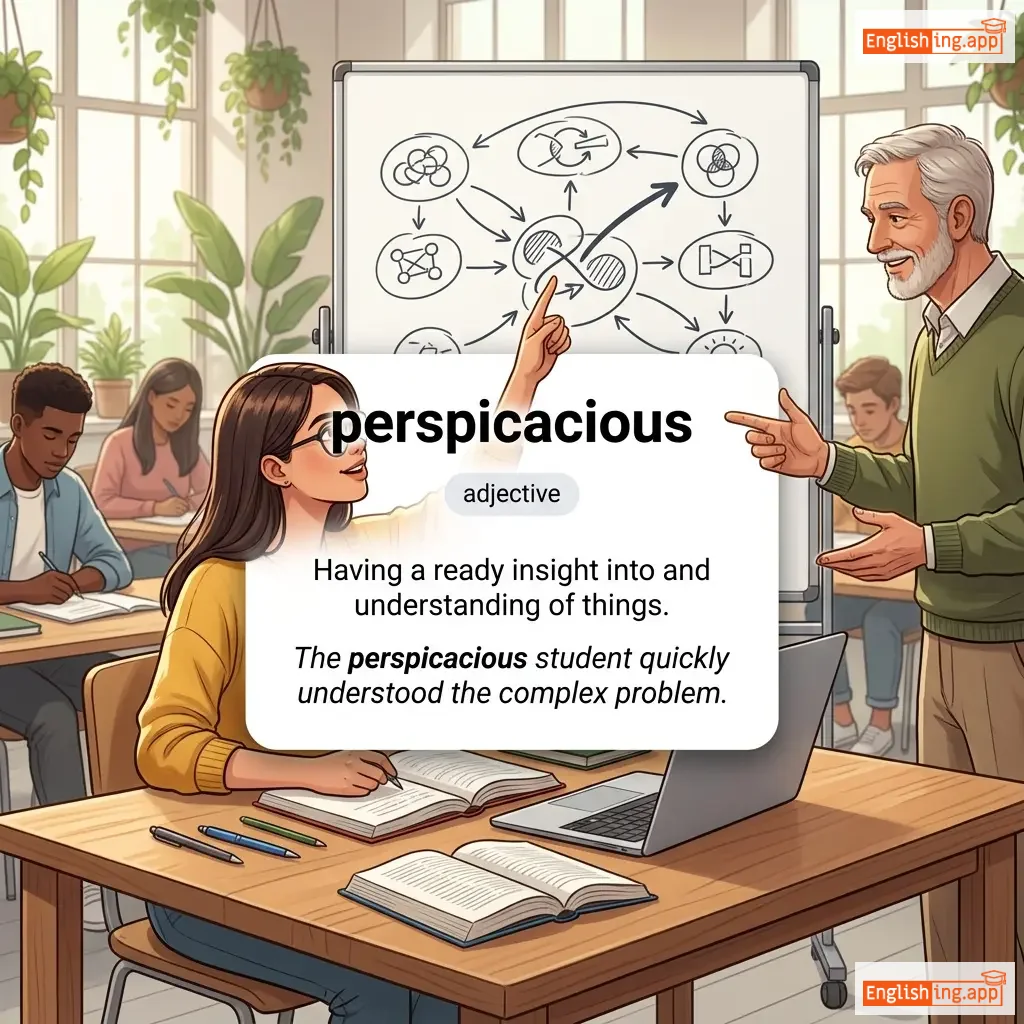
perspicacious definition card — visual illustration of the meaning
adjective C2
/ˌpɜːrspɪˈkeɪʃəs/
洞察力のある (dōsatsuryoku no aru)

Having a ready insight into and understanding of things.

"The perspicacious student quickly understood the complex problem."

"その洞察力のある学生は、複雑な問題をすぐに理解した。" (Sono dōsatsuryoku no aru gakusei wa, fukuzatsu na mondai o sugu ni rikai shita.)
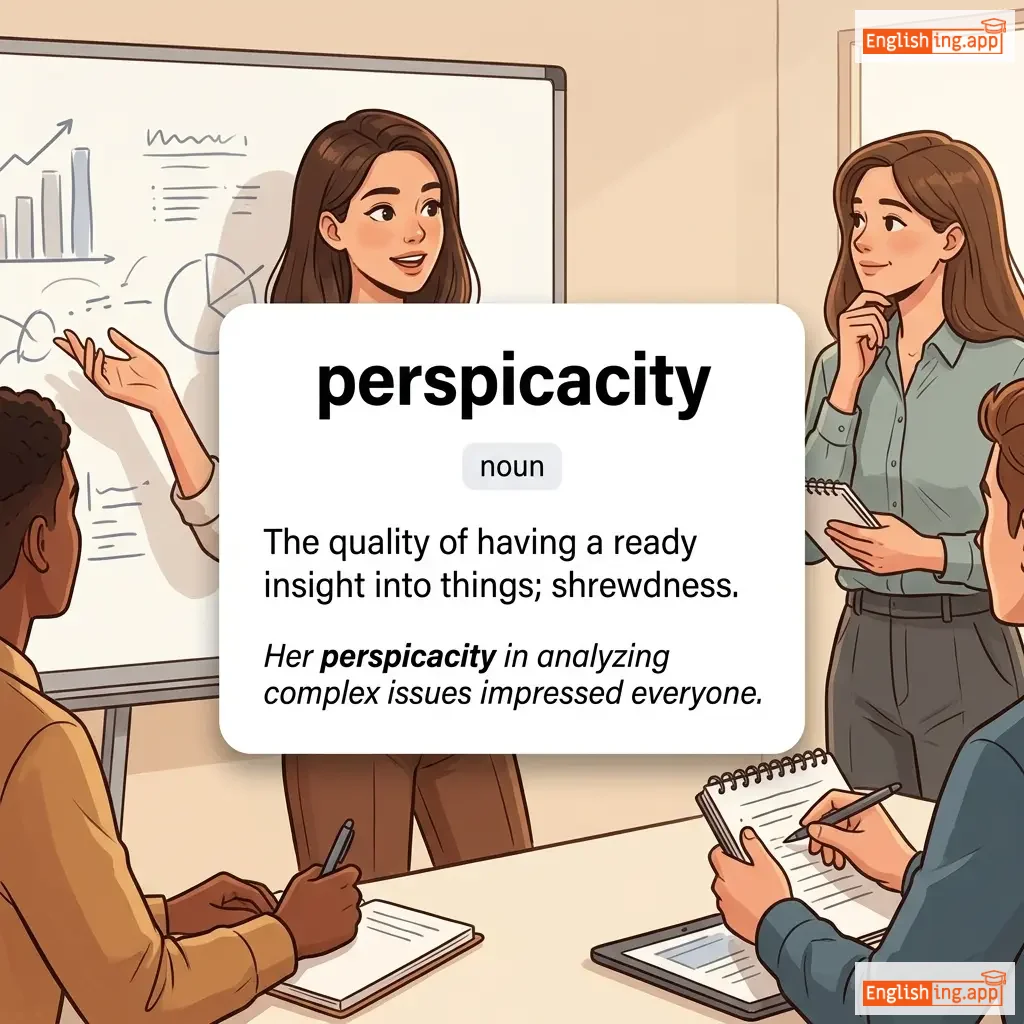
perspicacity definition card — visual illustration of the meaning
noun C2
/ˌpɜːrspɪˈkæsəti/
洞察力 (dōsatsuryoku)

The quality of having a ready insight into things; shrewdness.

"Her perspicacity in analyzing complex issues impressed everyone."

"彼女の複雑な問題を分析する鋭い洞察力は、誰にでも印象を与えました。" (Kanojo no fukuzatsu na mondai o bunseki suru surudoi dōsatsuryoku wa, dare ni demo inshō o ataemashita.)
noun C2
/ˌpɜːrspɪˈkjuːəti/
明瞭さ (meiryousa)

Clarity and ease in speech or writing; the quality of being clearly expressed.

"The perspicuity of his lecture made it easy for students to understand complex topics."

"彼の講義の明瞭さは、学生が複雑なトピックを理解するのを容易にしました。" (Kare no kougi no meiryou sa wa, gakusei ga fukuzatsu na topikku o rikai suru no o youi ni shimashita.)
adjective C2
/pərˈspɪkjuəs/
明確 (meikaku)

Clearly expressed and easily understood; lucid.

"The teacher gave a perspicuous explanation of the theory."

"先生は理論について明確な説明をしました。" (Sensei wa riron ni tsuite meikaku na setsumei o shimashita.)
adjective C2
/ˌpɜːrtɪˈneɪʃəs/
頑固な (ganko na)

holding firmly to an opinion, purpose, or course of action; stubbornly persistent

"The pertinacious lawyer refused to give up the case."

"頑固な弁護士は事件を諦めることを拒否しました。" (Ganko na bengoshi wa jiken o akirameru koto o kyohi shimashita.)
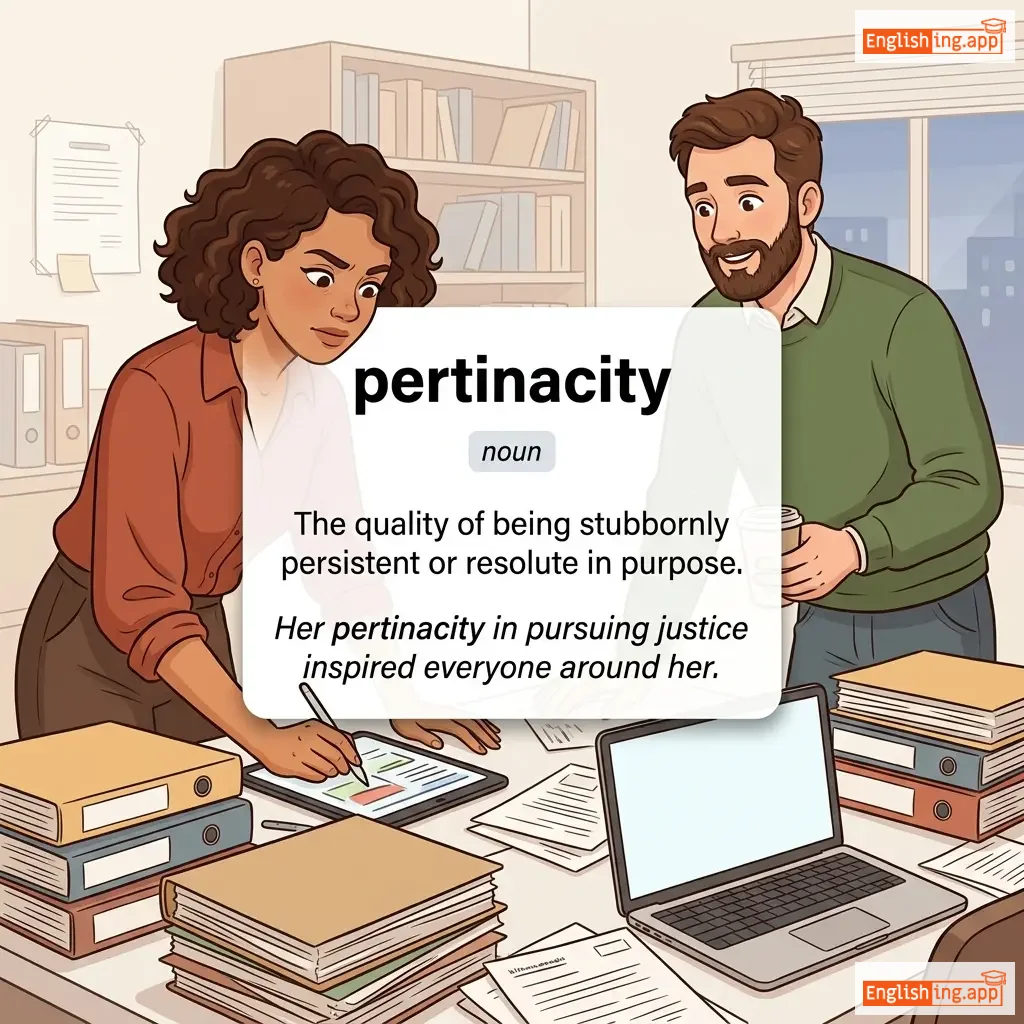
pertinacity definition card — visual illustration of the meaning
noun C2
/ˌpɜːrtɪˈnæsɪti/
執拗さ (shitsuyosa)

The quality of being stubbornly persistent or resolute in purpose.

"Her pertinacity in pursuing justice inspired everyone around her."

"正義を追求する彼女の執拗さは、周囲の皆を鼓舞した。" (seigi o tsuikyu suru kanojo no shitsuyosa wa, shui no mina o kobu shita)
noun C2
/ˈpɜːrtnəs/
生意気 (namakiki)

boldness or forwardness in speech or behavior; sauciness

"Her pertness during the meeting surprised everyone."

"会議中の彼女の生意気さは、みんなを驚かせた。" (Kaigi-chū no kanojo no namakiki-sa wa, minna o odorokaseta.)
noun C2
/ˌpɜːrtərˈbeɪʃn/
混乱 (konran)

A state of anxiety, disturbance, or disorder.

"The announcement caused a perturbation in the financial markets."

"発表は金融市場に混乱を引き起こしました。" (Happyō wa kin'yū shijō ni konran o hikiokoshimashita.)
noun C2
/pəˈruːzl/
慎重な読書 (shinchou na dokusho)

The action of reading or examining something carefully.

"The contract was given to the lawyer for perusal."

"契約書は弁護士に慎重な読書のために渡されました。" (Keiyaku-sho wa bengoshi ni shinchou na dokusho no tame ni watasaremashita.)
noun C2
/pəˈveɪʒən/
蔓延 (man'en)

the act of spreading through or being present everywhere in something

"There was a pervasion of hope throughout the community."

"コミュニティ全体に希望の広がりがあった。" (Komyuniti zentai ni kibou no hirogari ga atta.)
adjective C2
/ˈpɜːrviəs/
透水性の (tōsuisei no)

Allowing water, air, or other substances to pass through; permeable.

"The soil here is pervious to rainwater."

"ここでは土壌が雨水を通すことができます。" (Koko de wa dojo ga ame mizu o tōsu koto ga dekimasu.)
noun C2
/ˈpɛstɪləns/
ペスト (pesuto)

A deadly or virulent epidemic disease that spreads rapidly.

"The medieval city was devastated by a pestilence."

"中世の都市はペストで荒廃した。" (Chūsei no toshi wa pesuto de kōhai shita.)
adjective C2
/ˈpɛstɪlənt/
有害 (yūgai)

Causing or tending to cause death or destruction; harmful or pernicious.

"The pestilent atmosphere of the swamp made people sick."

"沼地の有害な雰囲気が人々を病気にさせた。" (Numachi no yūgai na fun'iki ga hitobito o byōki ni saseta.)
adjective C2
/ˌpɛstɪˈlɛnʃəl/
疫病の (ekibyou no)

Relating to or causing pestilence; very harmful, troublesome, or dangerous.

"The pestilential smell of the garbage filled the street."

"ゴミのペスティレンシャルな匂いが通りを満たした。" (Gomi no pesutirensharuna nioi ga toori o mitashita.)
noun C2
/ˈpɛtrəˌɡræf/
岩石の説明 (ganseki no setsumei)

a description or representation of rocks, especially in detailed scientific writing

"The scientist studied the petrograph to understand the rock composition."

"科学者は岩石の組成を理解するためにペトログラフを研究しました。" (Kagakusha wa ganseki no kousei wo rikai suru tame ni petorogurafu wo kenkyuu shimashita.)
verb C2
/ˈpɛtɪˌfɒɡ/
些細なことで議論する (sasaina koto de giron suru)

to argue or quibble over trivial matters; to engage in petty, dishonest practices

"The lawyer was accused of trying to pettifog instead of addressing the real issue."

"弁護士は本当の問題に取り組む代わりに、些細なことで議論していると非難されました。" (Bengoshi wa hontō no mondai ni torikumu kawari ni, sasaina koto de giron shite iru to hinan saremashita.)
noun C2
/ˈpɛtjʊləns/
気難しさ (kimuzukashisa)

The quality of being childishly sulky or bad-tempered.

"His petulance during the meeting annoyed everyone."

"会議中の彼のペチュランスはみんなをイライラさせた。" (Kaigi chū no kare no pechuransu wa minna o iraira saseta.)
noun C2
/ˈfeɪlæŋks/
ファランクス (farankusu)

A group of people or things arranged in a compact, close formation; also an ancient Greek military formation.

"A phalanx of reporters waited outside the courthouse."

"報道陣のファランクスが裁判所の外で待っていた。" (Hōdōjin no farankusu ga saibansho no soto de matte ita.)
noun C2
/ˈfænˌtæzəm/
幽霊 (yuurei)

an illusion, ghost, or figment of the imagination

"The child claimed to see a phantasm in the old house."

"子供は古い家で幽霊を見たと主張した。" (Kodomo wa furui ie de yuurei o mita to shuchou shita.)
adjective C2
/ˌfæntæzməˈɡɒrɪkəl/
幻想的な (gensō-teki na)

Having a fantastic, dreamlike, or surreal appearance, often shifting or illusory.

"The movie created a phantasmagorical vision of another world."

"映画はもう一つの世界の幻想的なビジョンを作り出しました。" (Eiga wa mō hitotsu no sekai no gensō-teki na bijon o tsukuridashimashita.)
adjective C2
/ˌfærɪˈseɪɪkəl/
偽善的な (gizenteki na)

Excessively concerned with formal rules or outward show of morality, often in a hypocritical way.

"His pharisaical behavior made people doubt his sincerity."

"彼の偽善的な行動は、彼の誠実さに疑問を投げかけた。" (Kare no gizenshūteki na kōdō wa, kare no seijitsusa ni gimon o nagekakemashita.)
noun C2
/ˈfærɪsiː/
偽善者 (gizen-sha)

A member of an ancient Jewish sect; by extension, a self-righteous or hypocritical person.

"He acted like a pharisee, judging others while ignoring his own faults."

"彼はファリサイ人のように振る舞い、他の人々を裁きながら自分の欠点を無視していました。" (Kare wa Farisai-jin no yō ni furu mai, hoka no hitobito o sabaki nagara jibun no ketten o mushi shiteimashita.)
noun C2
/ˌfɑːrməkəˈpiːə/
薬典 (yakuten)

An official book listing medicinal drugs, their effects, and directions for use.

"The doctor referred to the pharmacopoeia to check the drug's proper dosage."

"医師は薬典を参照して、薬の適切な用量を確認しました。" (Ishi wa yakuten o sanshou shite, kusuri no tekisetsuna youryou o kakunin shimashita.)
noun C2
/ˈfaɪəl/
小さなガラス瓶 (chiisana garasu bin)

a small glass container for liquids, especially medicines

"The doctor gave her a phial of medicine."

"医者は彼女に薬の小瓶を渡しました。" (Isha wa kanojo ni kusuri no kobin o watashimashita.)
verb C2
/fɪˈlændər/
浮気をする (uwaki o suru)

to engage in casual or frivolous romantic or sexual relationships

"He was known to philander with many women in town."

"彼は町で多くの女性と浮気をしていることで知られていた。" (Kare wa machi de ōku no josei to uwaki o shite iru koto de shirarete ita.)
noun C2
/fɪˈlændərər/
女たらし (otoko tarashi)

a man who habitually engages in casual romantic or sexual affairs

"The politician was exposed as a notorious philanderer."

"その政治家は有名な女たらしとして暴露されました。" (Sono seijika wa yūmei na otoko tarashi toshite bakuro saremashita.)
noun C2
/fɪˈlæt.əl.ɪst/
切手収集家 (kitte shūshūka)

a person who collects or studies postage stamps

"The philatelist spent years building a rare stamp collection."

"そのフィラテリストは、希少な切手コレクションを作るために何年も費やしました。" (Sono firaterisuto wa, kishōna kitte korekushon o tsukuru tame ni nannen mo tsuiyashimashita.)