ভোকাবুলারিসমূহ

ইংরেজি শব্দের বাংলা অর্থ | English to Bangla Word Meaning Dictionary

noun C2
/ˌmjuːlˈtɪər/
荷馬使い (kebamatsukai)

a person who drives or takes care of mules

"The muleteer guided the animals safely across the mountain path."

"荷馬使いは動物を安全に山道を案内しました。" (Kebamatsukai wa dōbutsu o anzen ni yamamichi o annai shimashita.)
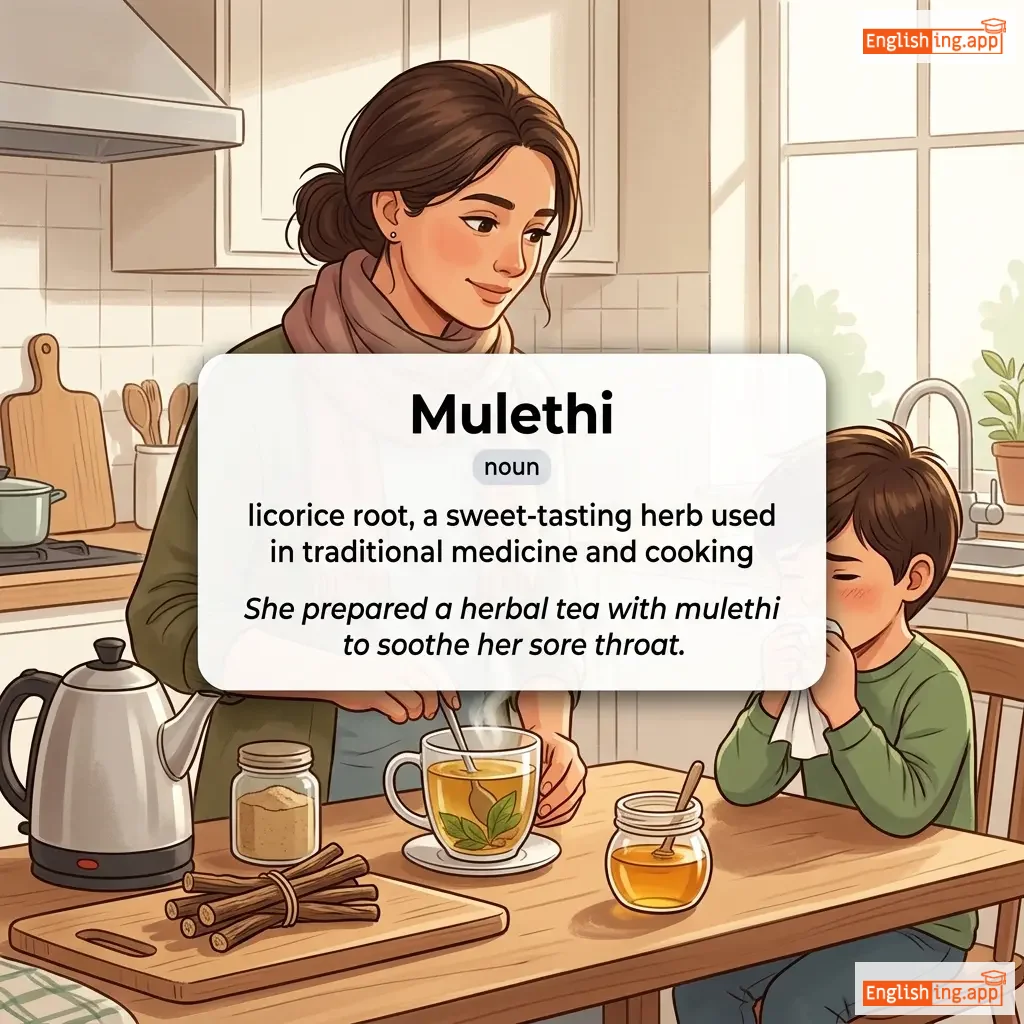
Mulethi definition card — visual illustration of the meaning
noun C2
/muˈleθi/
甘草の根 (kansou no ne)

licorice root, a sweet-tasting herb used in traditional medicine and cooking

"She prepared a herbal tea with mulethi to soothe her sore throat."

"彼女はムレティでハーブティーを作り、喉の痛みを和らげました。" (Kanojo wa mureti de haabu tee o tsukuri, nodo no itami o yawaragemashita.)
adjective C2
/ˈmjuːlɪʃ/

extremely stubborn or unwilling to change

"She remained mulish despite all the convincing arguments."

multifaceted information frameworks definition card — visual illustration of the meaning
noun C2
ˌmʌltɪˈfæsɪtɪd ˌɪnfərˈmeɪʃən ˈfreɪmwɜːrks
多面的情報フレームワーク (tōmen no jōhō furēmuwāku)

Complex, comprehensive structures for organizing and managing information that have multiple aspects or dimensions.

"Digital literacy involves building multifaceted information frameworks."

"デジタルリテラシーは多面的な情報フレームワークの構築を含んでいます。" (Dejitaru riterashī wa tōmen-teki na jōhō furēmuwāku no kōchiku o fukundeimasu.)
adjective C2
/ˌmʌltɪˈfɛərɪəs/
多様な (tayōna)

having many different parts, elements, or kinds

"The museum displayed a multifarious collection of artifacts."

"博物館は様々な種類の遺物を展示しました。" (Hakubutsukan wa samazama na shurui no ibutsu o tenji shimashita.)
adjective C2
/ˈmʌltɪfɔːrm/
多様な (tayou na)

Having many different forms or appearances.

"The festival was a multiform celebration of art, music, and culture."

"その祭りは、芸術、音楽、文化の多様な祝典でした。" (Sono matsuri wa, geijutsu, ongaku, bunka no tayou na shukuten deshita.)
mundanity definition card — visual illustration of the meaning
noun C2
mʌnˈdeɪ.nɪ.ti
平凡 (heibon)

The quality of being ordinary, routine, or lacking excitement.

"The mundanity of office life can be exhausting."

"オフィスの生活の平凡さは疲れることがあります。" (Ofisu no seikatsu no heibon-sa wa tsukareru koto ga arimasu.)
noun C2
/mjuːˈnɪfəsəns/
寛大さ (kandaisa)

great generosity or lavish giving

"The hospital was built thanks to the munificence of a wealthy donor."

"病院は裕福な寄付者の寛大さのおかげで建てられました。" (Byouin wa yuufukuna kifu-sha no kandaisa no okage de tateraremashita.)
adjective C2
/mjuːˈnɪfɪsənt/
寛大な (kandai na)

extremely generous; giving freely and abundantly

"She made a munificent donation to the orphanage."

"彼女は孤児院に寛大な寄付をしました。" (Kanojo wa kojiin ni kandai na kifu o shimashita.)
noun C2
/ˈmɜːkinəs/
濁り (nigori)

The quality of being dark, gloomy, or unclear.

"The murkiness of the water made it hard to see the fish."

"水の濁りが魚を見るのを難しくしました。" (Mizu no nigori ga sakana o miru no o muzukashiku shimashita.)
noun C2
/ˈmʌrɪn/
家畜の伝染病 (kachiku no densenbyou)

An infectious disease that affects cattle and other animals, often fatal.

"The farmer lost many cows during the outbreak of murrain."

"農家はムレインの流行中に多くの牛を失いました。" (Nōka wa Muren no ryūkō-chū ni ōku no ushi o ushinai mashita.)
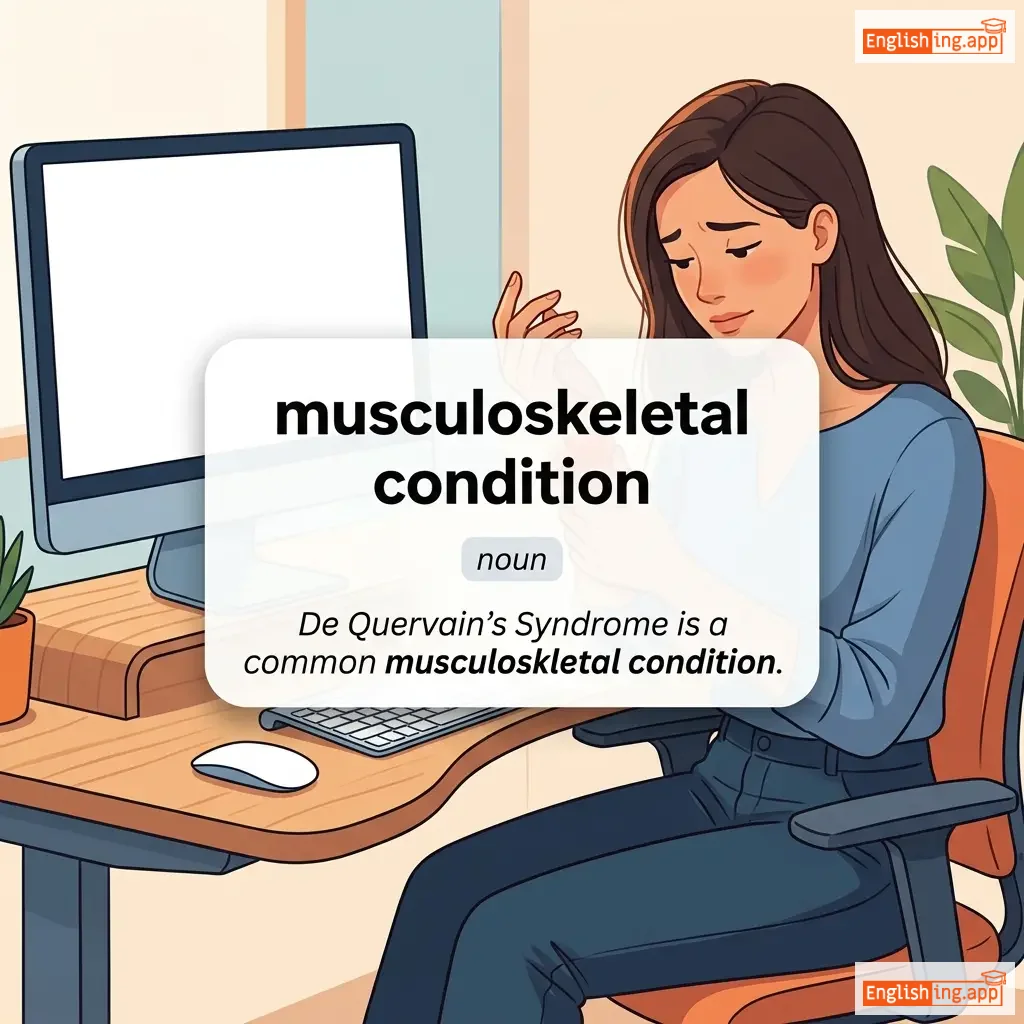
musculoskeletal condition definition card — visual illustration of the meaning
noun C2
মাসকুলোস্কেলেটাল কন্ডিশন
筋骨格障害 (kinkokkaku shougai)

A disorder that affects the muscles, bones, joints, tendons, ligaments, or other structures that support the limbs, neck, and back.

"De Quervain's Syndrome is a common musculoskeletal condition."

"デ・クヴェルヴァン症候群は一般的な筋骨格障害です。" (De Quervain shoukougun wa ippanteki na kinkokkaku shougai desu.)
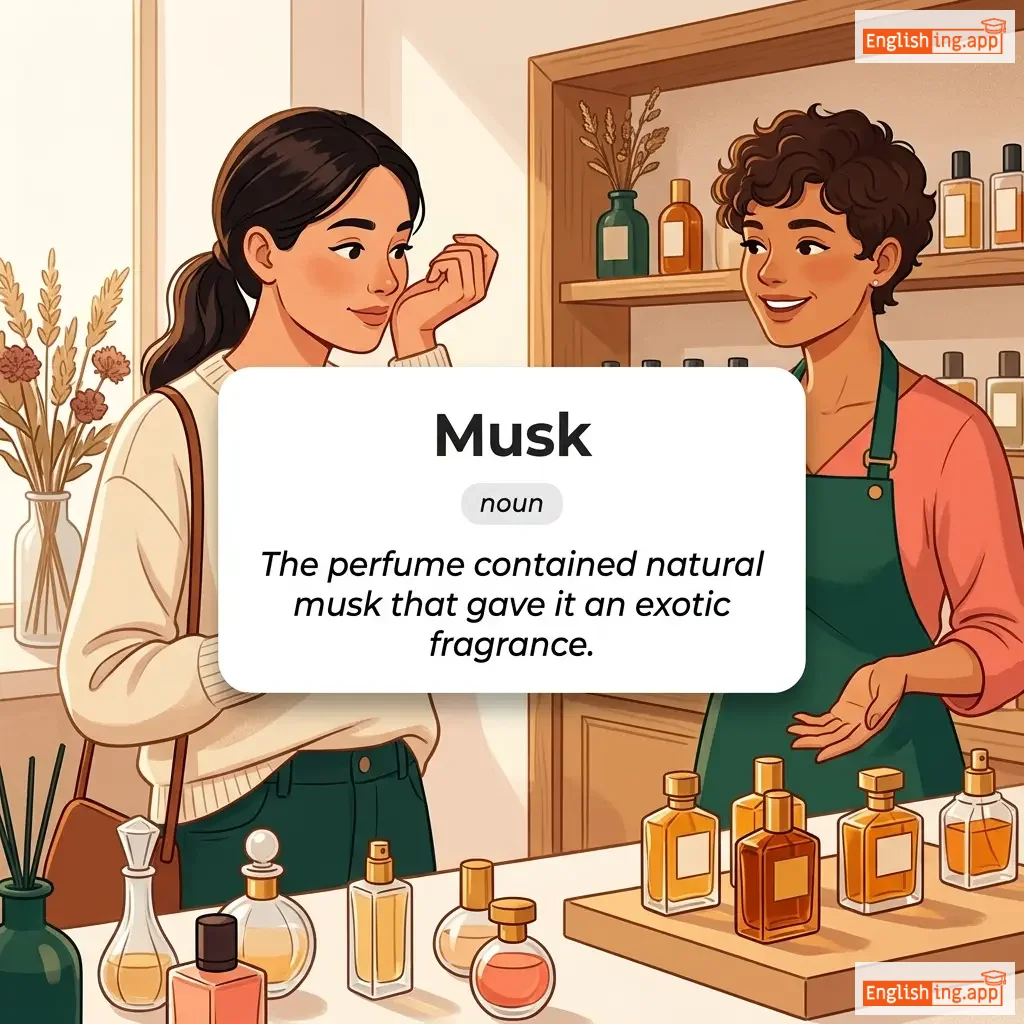
Musk definition card — visual illustration of the meaning
noun C2
/mʌsk/
ムスク (musuku)

a strong-smelling substance secreted by certain animals, used in perfumes and traditional medicine

"The perfume contained natural musk that gave it an exotic fragrance."

"その香水には天然のムスクが含まれており、エキゾチックな香りを与えました。" (Sono kōsui ni wa ten'nen no musuku ga fukumarete ori, ekizochikku na kaori o ataemashita.)
noun C2
/ˈmʌskɪt/
古いタイプの銃 (furui taipu no jū)

a type of long gun used in the past, especially by infantry soldiers

"The soldiers carried muskets into the battlefield."

"兵士たちは戦場にマスケットを持ち込んだ。" (Heishitachi wa senjō ni masuketto o mochikonda.)
adjective C2
/ˈmʌski/
ムスクのような (musuku no yōna)

having a strong, sweet, earthy smell like musk

"The perfume had a musky fragrance."

"その香水はムスクのような香りがしました。" (Sono kōsui wa musuku no yōna kaori ga shimashita.)
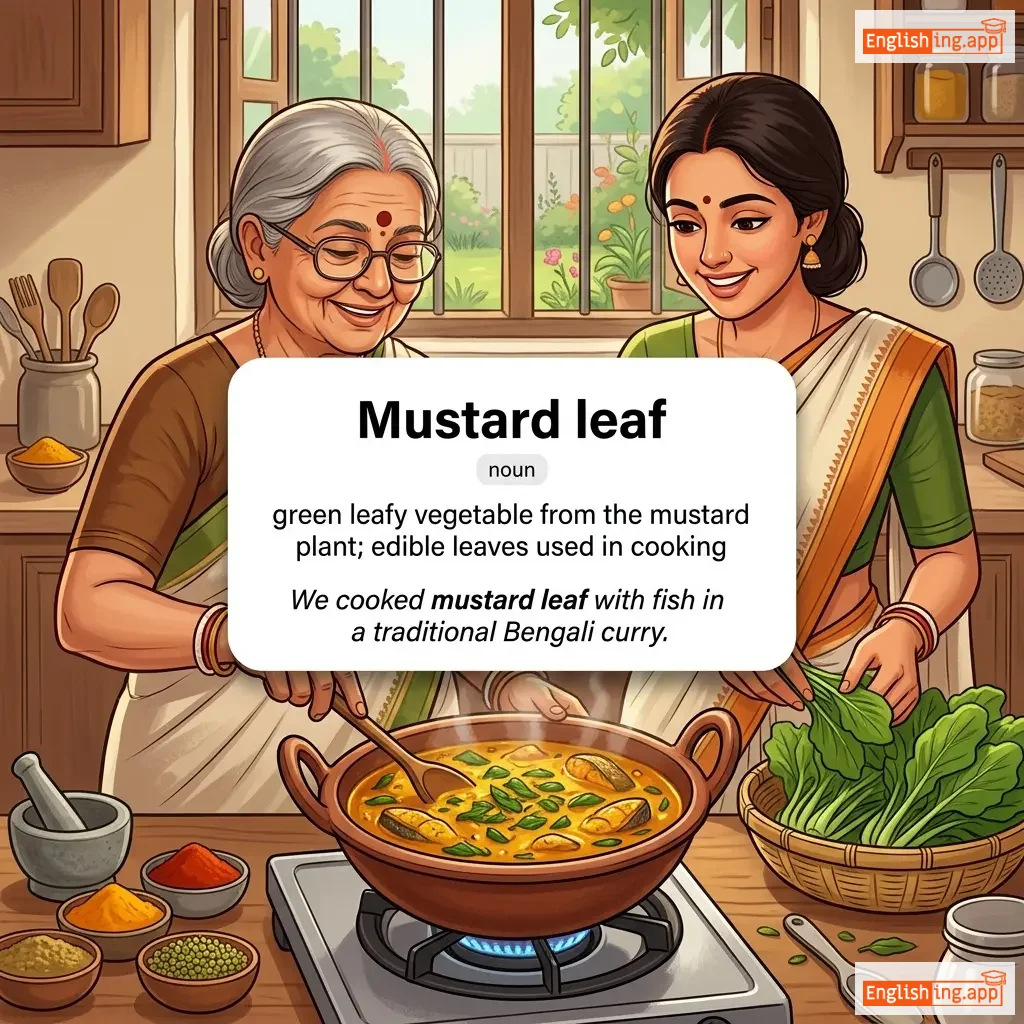
Mustard leaf definition card — visual illustration of the meaning
noun C2
/ˈmʌs.tərd liːf/
マスタードの葉 (masutādo no ha)

green leafy vegetable from the mustard plant; edible leaves used in cooking

"We cooked mustard leaf with fish in a traditional Bengali curry."

"私たちは伝統的なベンガルカレーで魚と一緒にマスタードリーフを料理しました。" (Watashitachi wa dentō-teki na bengaru karē de sakana to issho ni masutādo rīfu o ryōri shimashita.)
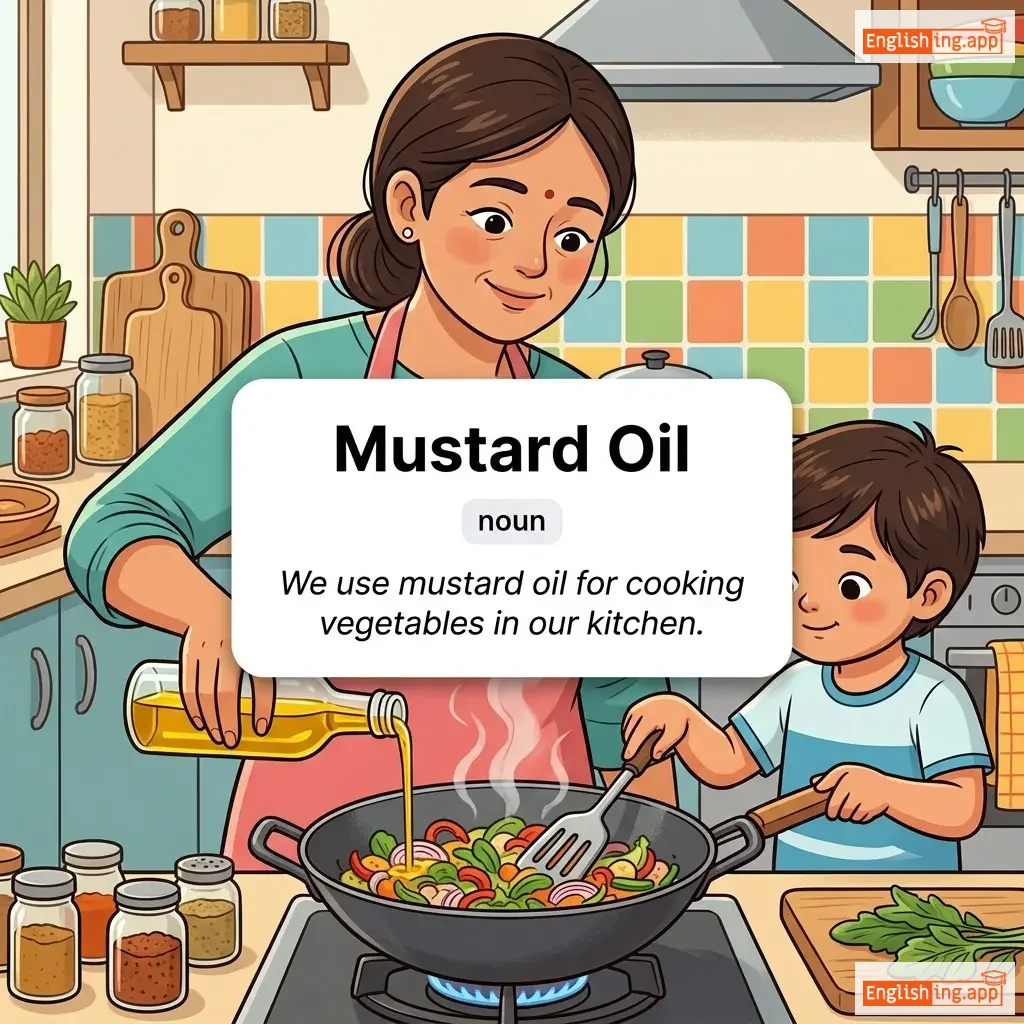
Mustard Oil definition card — visual illustration of the meaning
noun C2
/ˈmʌstərd ɔɪl/
マスタードオイル (masutādo oiru)

oil extracted from mustard seeds, commonly used for cooking and medicinal purposes

"We use mustard oil for cooking vegetables in our kitchen."

"私たちはキッチンで野菜を調理するためにマスタードオイルを使います。" (Watashitachi wa kicchin de yasai o chōri suru tame ni masutādo oiru o tsukaimasu.)
adjective C2
/ˈmʌsti/
湿っぽい、カビ臭いまたは湿気のある匂い (shimeppoi, kabikusai mata wa shikke no aru nioi)

having a stale, moldy, or damp smell

"The old books had a musty odor."

"古い本にはカビ臭い匂いがあった。" (Furui hon ni wa kabikusai nioi ga atta.)
noun C2
/ˌmjuːtəˈbɪləti/
変動性 (hendousei)

The quality of being changeable or capable of change.

"The mutability of fashion trends makes it hard to keep up."

"ファッションのトレンドの可変性は、それについていくのを難しくします。" (Fasshon no torendo no kahensei wa, sore ni tsuiteiku no o muzukashiku shimasu.)
adjective C2
/ˈmjuːtəbl/
可変の (kaken no)

Capable of change or alteration.

"Human emotions are mutable and can shift rapidly."

"人間の感情は可変的で、迅速に変わることがあります。" (Ningen no kanjō wa kahen-teki de, jinsoku ni kawaru koto ga arimasu.)
noun C2
/ˌmjuːtəˈbɪləti/
変化性(綴り間違い) (henkasei (tsudzuri machigai))

A misspelled form of 'mutability', meaning the quality of being changeable.

"The document contained the misspelled word 'mutablility' instead of 'mutability'."

"その文書には 'mutability' の代わりに 'mutablility' の綴り間違いがありました。" (Sono bunsho ni wa 'mutability' no kawari ni 'mutablility' no tsudzuri machigai ga arimashita.)
verb C2
/ˈmjuːtɪleɪt/
損傷する (sonshou suru)

to inflict serious damage on something, often by cutting or tearing

"The ancient manuscript was mutilated by careless handling."

"古代の写本は不注意な取り扱いで損傷しました。" (Kodai no shahon wa fuchuui na toriatsukai de sonshou shimashita.)
adjective C2
/ˈmjuːtɪnəs/
反乱者 (hanransha)

refusing to obey authority; rebellious

"The soldiers grew mutinous after months without pay."

"兵士たちは数ヶ月間給料がなくて反乱者になった。" (Heishitachi wa suukagetsu kan kyūryō ga nakute hanransha ni natta.)
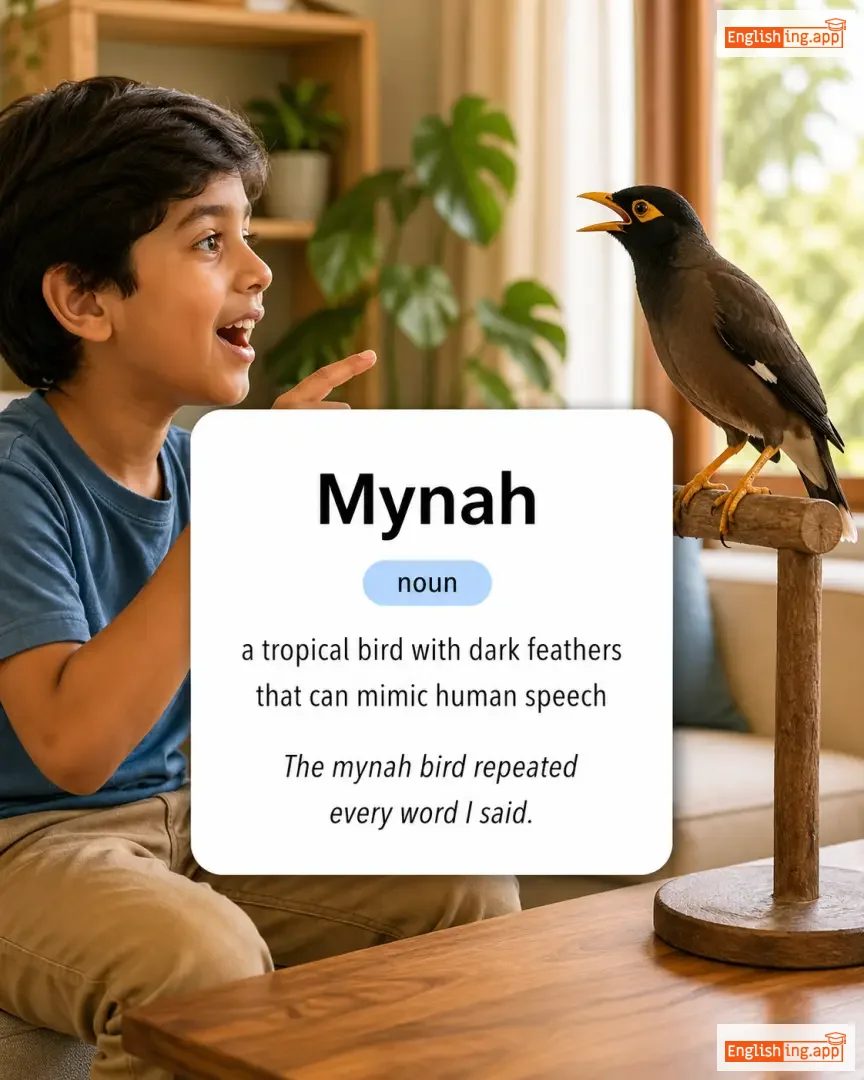
Mynah definition card — visual illustration of the meaning
noun C2
/ˈmaɪ.nə/
マイナ (maina)

a tropical bird with dark feathers that can mimic human speech

"The mynah bird repeated every word I said."

"マイナの鳥は私が言ったすべての言葉を繰り返しました。" (Maina no tori wa watashi ga itta subete no kotoba o kurikaeshimashita.)
noun C2
/ˌmɪstɪfɪˈkeɪʃən/
困惑, 神秘化 (konwaku, shinpi-ka)

the act of making something unclear or confusing; a state of being puzzled or bewildered

"The audience watched in mystification as the magician performed his tricks."

"観客はマジシャンが手品を披露する間、困惑して見ていた。" (Kankyaku wa majishan ga tejin o hirou suru aida, konwaku shite mite ita.)
⬇️

nadir

noun C2
/ˈneɪdɪər/

The lowest point of a situation or condition.

"The company reached its nadir during the financial crisis."

noun C2
/ˈnæfθə/
ナフタ (nafuta)

A flammable oil containing hydrocarbons, obtained from petroleum or coal tar, used as fuel or solvent.

"The factory stored barrels of naphtha for industrial use."

"工場は工業用途のためにナフタの樽を保管していました。" (Koujou wa kougyou youto no tame ni nafuta no taru wo hokan shiteimashita.)
noun C2
/nɑːrˈsɪsəs/
ナルシスの花 (narushisu no hana)

A type of flowering plant with yellow or white blooms, often associated with self-love from Greek mythology.

"A narcissus bloomed in the garden during spring."

"春に、庭でナルシスの花が咲きました。" (Haru ni, niwa de narushisu no hana ga sakimashita.)
adjective C2
/ˈneɪtl/
出生に関連する (shussei ni kanren suru)

Relating to birth or the place of birth.

"She returned to her natal village after many years."

"彼女は何年も経った後、故郷の村に帰りました。" (Kanojo wa nannen mo tatta ato, kokyou no mura ni kaerimashita.)
noun C2
/næˈteɪʃən/
水泳 (suiei)

The act or sport of swimming.

"She took lessons in natation to improve her swimming skills."

"彼女は泳ぎの技術を向上させるために水泳のレッスンを受けました。" (Kanojo wa oyogi no gijutsu o kōjōsaseru tame ni suiei no ressun o ukemashita.)
adjective C2
/ˈnæti/
おしゃれ (oshare)

Neat, stylish, and fashionable in appearance.

"He looked very natty in his new suit."

"彼は新しいスーツでとてもおしゃれに見えた。" (Kare wa atarashī sūtsu de totemo oshare ni mietta.)
verb C2
/ˈnɔːzieɪt/
吐き気を催す (hakike o moyasu)

To make someone feel sick, with an inclination to vomit.

"The spoiled food nauseated him quickly."

"腐った食べ物は彼をすぐに吐き気を催させました。" (Kusatta tabemono wa kare o sugu ni hakike o moyosase mashita.)
noun C2
/neɪv/
教会の中央部 (kyoukai no chuoubu)

the central part of a church building intended to accommodate the congregation

"The choir sang beautifully in the church nave."

"合唱団は教会のネイヴで美しく歌いました。" (Gasshoudan wa kyoukai no neivu de utsukushiku utaimashita.)
noun C2
/ˈneɪˌseɪ.ɪŋ/
否定的な発言 (hiteiteki na hatsugen)

The act of expressing negative or pessimistic views.

"His constant naysaying discouraged the team."

"彼の絶え間ない否定的な発言はチームをがっかりさせました。" (Kare no taemanai hiteiteki na hatsugen wa chiimu wo gakkari saseshimashita.)
noun C2
/ˌɛn.biː.esˈpiː/
ノンブレイキングスペース (non breaking space)

a non-breaking space character in HTML used to prevent an automatic line break at its position

"Use   in HTML to add a space that won't break into a new line."

"HTMLで改行しないスペースを追加するために を使用します。" (HTML de kaigyō shinai supēsu o tsuika suru tame ni  o shiyō shimasu.)
noun C2
/niːp/
小潮 (shōchō)

A tide just after the first or third quarters of the moon when the difference between high and low tide is least.

"During a neap tide, the water level change is minimal."

"ニープタイドの間、水位の変化は最小限です。" (Nīpu taido no aida, suii no henka wa saishōgen desu.)
adjective C2
/ˈnɛbjələs/
曖昧な (aimaina)

Unclear, vague, or ill-defined; resembling a cloud or haze.

"His plan for the future was still nebulous and hard to understand."

"彼の未来に対する計画はまだ曖昧で、理解するのが難しかった。" (Kare no mirai ni taisuru keikaku wa mada aimai de, rikai suru no ga muzukashikatta.)
noun C2
/nɪˈkrɒlədʒi/
訃報 (fuhou)

An obituary notice or a list of people who have recently died.

"The newspaper published a necrology of notable figures who passed away that year."

"その新聞は、その年に亡くなった著名な人物のネクロロジーを発表しました。" (Sono shinbun wa, sono toshi ni nakunatta chomei na jinbutsu no nekuroji o happyō shimashita.)
🧙‍♂️

necromancer

noun C2
/ˈnɛkrəˌmænsər/

a person who practices necromancy; a wizard or magician who claims to communicate with the dead

"The villagers feared the old necromancer who lived at the edge of the forest."

noun C2
/ˈnɛkrəˌmænsi/
死霊術 (shireijutsu)

the practice of communicating with the dead, often to predict the future

"Ancient texts described rituals of necromancy performed by priests."

"古代の文献には、神父たちによって行われた死霊術の儀式が記述されています。" (Kodai no bunken ni wa, shinputa-tachi ni yotte okonawareta shireijutsu no gishiki ga kijutsusareteimasu.)
noun C2
/nəˈkrɒpəlɪs/
古代の墓地 (kodai no bochi)

a large ancient cemetery with elaborate tombs

"The archaeologists discovered artifacts in the necropolis of the ancient city."

"考古学者たちは古代都市のネクロポリスで遺物を発見しました。" (Kōkogakushatachi wa kodai toshi no nekuroposu de ibutsu o hakken shimashita.)
noun C2
/nɛˈkroʊsɪs/
壊死 (kaishi)

the death of body tissue due to disease, injury, or lack of blood supply

"The doctor explained that the patient’s wound showed signs of necrosis."

"医師は、患者の傷が壊死の兆候を示していると説明しました。" (Ishi wa, kanja no kizu ga kaishi no choukou wo shimeshiteiru to setsumei shimashita.)
adjective C2
/nɪˈfɛəriəs/
邪悪な、犯罪者、または道徳的に悪い (jaaku na, hanzai-sha, matawa doutokuteki ni warui)

Wicked, criminal, or morally bad.

"The police uncovered a nefarious plot to cheat investors."

"警察は投資家を欺こうとする邪悪な陰謀を暴露しました。" (Keisatsu wa toushika wo azamikaou to suru jaaku na inbou wo bakuro shimashita.)
noun C2
/ˌnɛɡlɪˈʒeɪ/
軽いシルクの寝間着 (karui shiruku no nemaki)

A woman's light dressing gown, often made of thin or silky material.

"She wore a silk negligee before going to bed."

"彼女は寝る前にシルクのネグリジェを着ていました。" (Kanojo wa neru mae ni shiruku no negurije o kiteimashita.)
noun C2
/ˌniːoʊˈdɑːrwɪnɪzəm/
ネオダーウィニズム (neodaawinizumu)

A modern interpretation of Darwin's theory of evolution, integrating genetics and natural selection.

"Neo-Darwinism combines Darwin’s theory of natural selection with modern genetics."

"ネオダーウィニズムはダーウィンの自然選択説と現代遺伝学を組み合わせています。" (Neo-Darwinism wa Darwin no shizen sentaku setsu to gendai idengaku o kumiawase teimasu.)
noun C2
/ˌniːoʊˈlætɪn/
ネオラテン (neo raten)

The use of Latin language for scholarly, scientific, and literary purposes after the medieval period.

"Many scientific names are derived from Neo-Latin."

"多くの科学的な名前はネオラテンから派生しています。" (Ōku no kagakuteki na namae wa neo raten kara hassei shiteimasu.)
noun C2
/niːˈɒkrəsi/
未熟なまたは新しい官僚によって運営される政府 (Mijuku na mata wa atarashī kanryō ni yotte un'ei sareru seifu)

A government or leadership run by inexperienced or new officials.

"The sudden revolution led to a neocracy with inexperienced leaders."

"突然の革命は未経験のリーダーたちによるネオクラシーを生み出した。" (Totsuzen no kakumei wa mikeiken no rīdā-tachi ni yoru neokurashī o umidashita.)
noun C2
/niːˈɒlədʒɪzəm/
新造語 (shinzōgo)

A newly coined word or expression.

"The internet has given rise to many neologisms like 'selfie' and 'hashtag'."

"インターネットは「セルフィー」や「ハッシュタグ」などの多くの新造語を生み出しました。" (Intānetto wa 'serufī' ya 'hasshutagu' nado no ōku no shinzōgo o umidashimashita.)
noun C2
/niˈɒlədʒi/
新しい言葉の使用またはその起源の研究 (atarashii kotoba no shiyou matawa sono kigen no kenkyuu)

The use of new words or the study of their origin.

"The professor specialized in neology, studying the creation of modern slang."

"教授はネオロジーを専門とし、現代のスラングの創造を研究しました。" (Kyouju wa neorojī o senmon to shi, gendai no surangu no souzou o kenkyuu shimashita.)
noun C2
/ˌniːoʊˈpeɪɡənɪzəm/
ネオペイガニズム (neopeiganizumu)

Modern religious movements influenced by or claiming to be derived from the various historical pagan beliefs of pre-modern Europe.

"Neopaganism has gained popularity as people seek spiritual alternatives to mainstream religions."

"ネオペイガニズムは、人々が主流の宗教に代わる精神的な選択肢を探しているため、人気を集めています。" (Neopeiganizumu wa, hitobito ga shuryū no shūkyō ni kawaru seishinteki na sentakushi o sagashite iru tame, ninki o atsumeています。)