ভোকাবুলারিসমূহ

ইংরেজি শব্দের বাংলা অর্থ | English to Bangla Word Meaning Dictionary

verb C2
/məˈrɔːd/
略奪する (ryakudatsu suru)

to roam in search of things to steal or attack

"The bandits marauded through the village at night."

"バンディットたちは夜に村を略奪しました。" (Banditto-tachi wa yoru ni mura o ryakudatsu shimashita.)
noun C2
/məˈrɔː.dər/
略奪者 (ryakudatsusha)

a person who roams around in search of things to steal or people to attack

"Villagers feared the marauders who raided their homes."

"村人たちは自分たちの家を襲った略奪者を恐れていた。" (Murabito-tachi wa jibun-tachi no ie o osotta ryakudatsusha o osorete ita.)
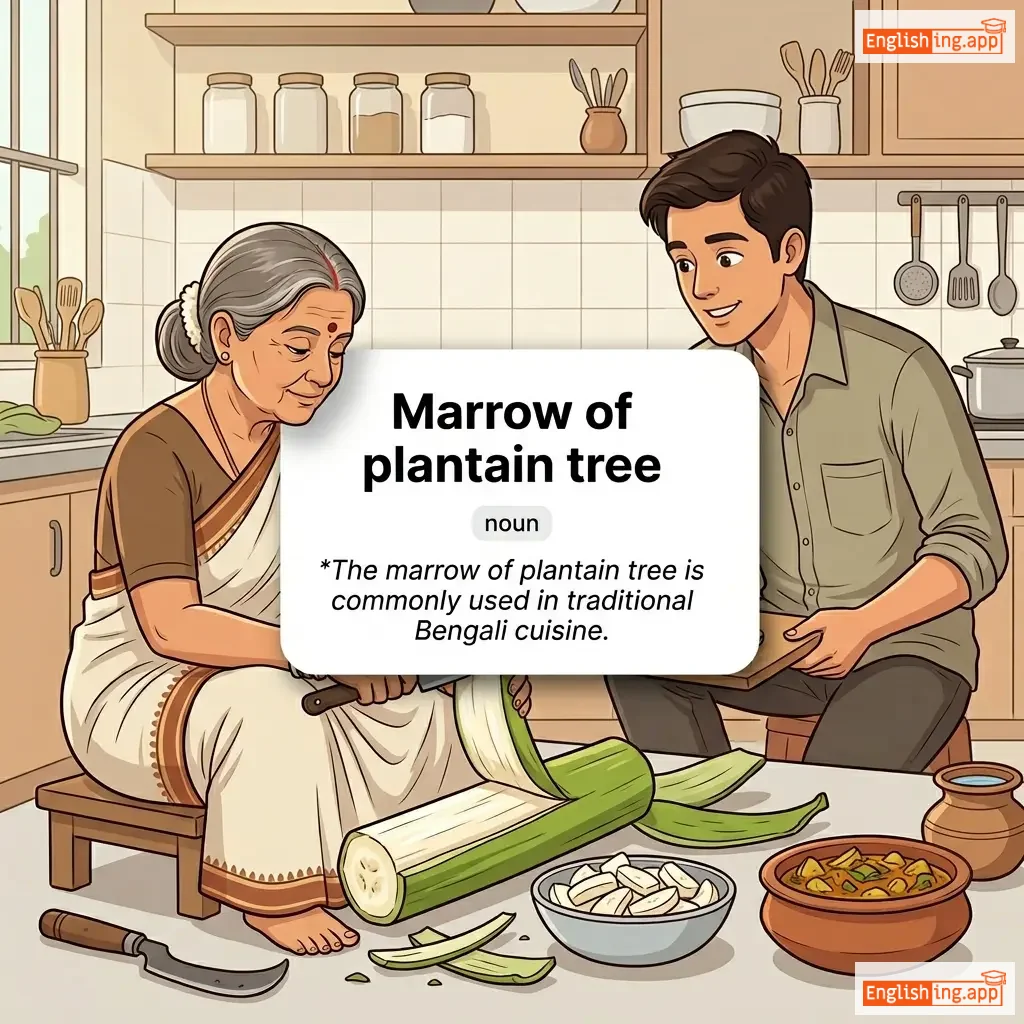
Marrow of plantain tree definition card — visual illustration of the meaning
noun C2
/ˈmær.oʊ ʌv ˈplæn.tɪn triː/
プランテンツリーの髄 (Puranten tsurī no zui)

the soft inner part of the banana plant stem that is used as a vegetable in cooking

"The marrow of plantain tree is commonly used in traditional Bengali cuisine."

"プランテンツリーの髄は、伝統的なベンガル料理で一般的に使用されます。" (Puranten tsurī no zui wa, dentō-teki na bengaru ryōri de ippanteki ni shiyō saremasu.)
noun C2
/ˌmɑːrtəˈnɛt/
厳格な規律の指導者 (gengaku na kiritsu no shidōsha)

A strict disciplinarian who demands rigid adherence to rules.

"The new manager was such a martinet that even minor infractions were punished."

"新しいマネージャーはマルティネットのようで、些細な違反も処罰されました。" (Atarashī manējā wa marutinetto no yō de, sasaina ihan mo shobatsu saremashita.)
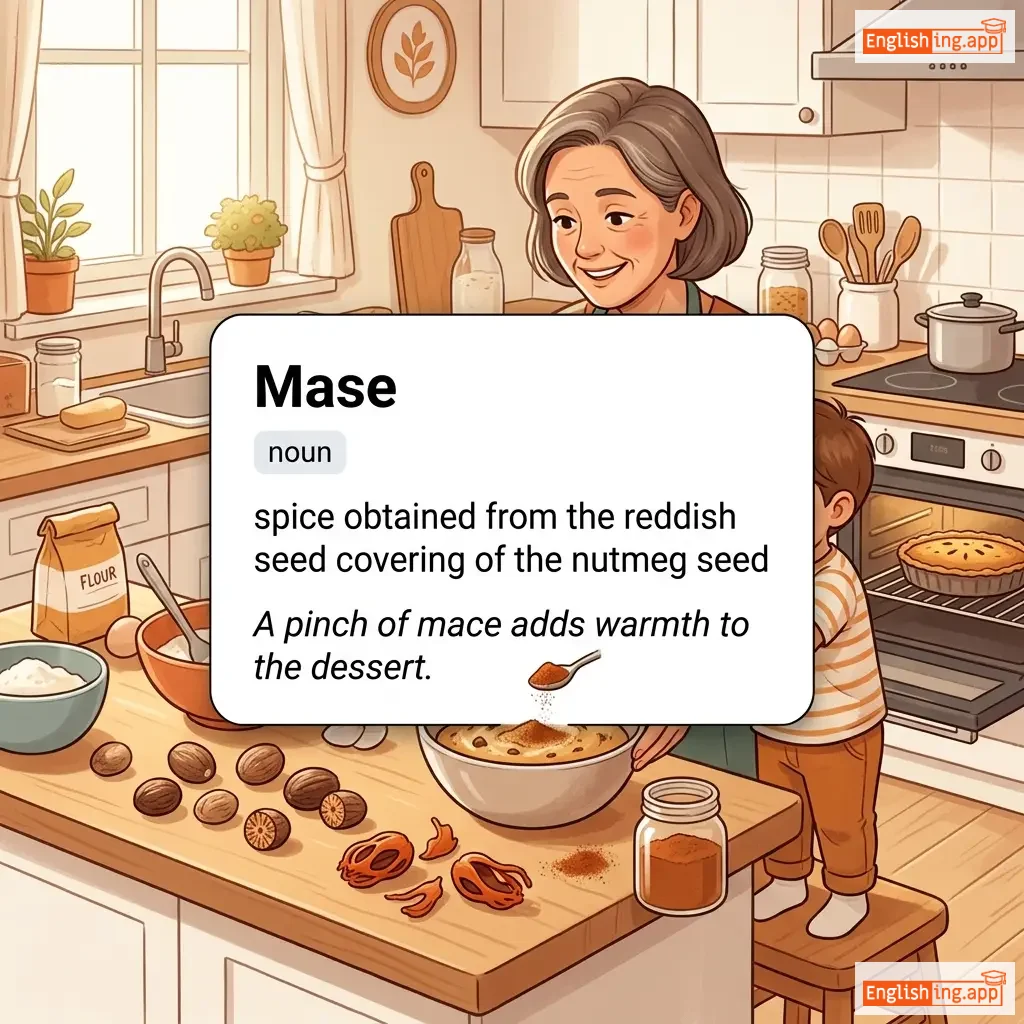
Mase definition card — visual illustration of the meaning
noun C2
/meɪs/
ナツメグの花 (natsumegu no hana)

spice obtained from the reddish seed covering of the nutmeg seed

"A pinch of mace adds warmth to the dessert."

"一 pinch ナツメグの花 デザートに温かみを加える。" (I pinch natsumegu no hana dezāto ni atatakai wo kuwaeru.)
noun C2
/ˈmæsəkɪst/
マゾヒスト (mazohisuto)

a person who derives pleasure from their own pain or humiliation

"He was called a masochist for enjoying tough challenges."

"彼は難しい挑戦を楽しんでいるため、マゾヒストと呼ばれました。" (Kare wa muzukashī chōsen o tanoshinde iru tame, mazo hisuto to yobaremashita.)
noun C2
/ˌmæskəˈreɪd/
人々が仮面と衣装を着て集まるパーティー (hitobito ga kamen to ishō o kite atsumaru pātī)

a party or gathering where people wear masks and costumes; a false outward show

"The charity event was held as a grand masquerade."

"チャリティイベントは大きなマスカレードとして開催されました。" (Chariti ibento wa ōkina masukarēdo to shite kaisai saremashita.)
verb C2
/ˈmæstɪkeɪt/
噛む (kamu)

to chew food thoroughly before swallowing

"He slowly masticated the bread before swallowing."

"彼はゆっくりとパンを噛んで飲み込んだ。" (Kare wa yukkuri to pan wo kande nomikonda.)
noun C2
/ˈmætrɪˌsaɪd/
母親殺し (hahaoyakoro)

The act of killing one's own mother.

"The crime of matricide shocked the entire town."

"母親殺しの犯罪は街全体を驚かせた。" (Hahaoyakoroshi no hanzai wa machi zentai o odorokaseta.)
verb C2
/məˈtrɪkjʊˌleɪt/

To enroll as a student in a college or university.

"She matriculated at Oxford University last year."

adjective C2
/ˈmɔːdlɪn/
過度に感傷的な (kadoni kanshōteki na)

Overly sentimental, often tearfully or weakly emotional.

"He became maudlin after a few drinks."

"彼は数杯飲んだ後、感傷的になった。" (Kare wa suuhai nonda ato, kanshōteki ni natta.)
verb C2
/ˈmɔːndər/
無駄に話す (mudani hanasu)

To speak or move aimlessly and incoherently.

"He maundered on about his old memories."

"彼は古い思い出について無駄に話していました。" (Kare wa furui omoide ni tsuite mudani hanashite imashita.)
noun C2
/ˌmɔːzəˈliːəm/
霊廟 (reibyō)

A large stately building that houses a tomb or several tombs.

"The king was buried in a grand mausoleum."

"王は壮大な霊廟に埋葬されました。" (Ō wa sōdaina reibyō ni maisō saremashita.)
noun C2
/ˈmeɪvən/
専門家 (senmonka)

an expert or connoisseur in a particular field

"He is a tech maven who always knows the latest trends."

"彼は最新のトレンドをいつも知っているテック専門家です。" (Kare wa saishin no torendo o itsumo shitte iru tekku senmonka desu.)
adjective C2
/ˈmɔːkɪʃ/
過度に感傷的 (kado ni kanshō-teki)

excessively sentimental, often to the point of being sickly

"The movie was criticized for its mawkish sentimentality."

"その映画は過度に感傷的だとして批判されました。" (Sono eiga wa kado ni kanshō-teki da to shite hihan saremashita.)
noun C2
/miːd/
ミード酒 (mīdo-shu)

An alcoholic drink made from fermented honey and water.

"The Vikings were known to drink large amounts of mead during feasts."

"ヴァイキングは宴会で大量のミードを飲むことで知られていました。" (Vaikingu wa enkai de tairyo no mīdo o nomu koto de shirarete imashita.)
adjective C2
/ˈmiːli ˌmaʊðd/
うわべだけの (uwabe dake no)

Unwilling to speak directly and honestly; insincere or evasive in speech.

"The manager gave a mealy-mouthed excuse instead of admitting the mistake."

"マネージャーは間違いを認める代わりに、うわべだけの言い訳をしました。" (Manējā wa machigai o mitomeru kawari ni, uwabe dake no iiwake o shimashita.)
adjective C2
/ˈmiːliˌmaʊðd/
言い逃れをする (ii nagare o suru)

not willing to speak directly and honestly; evasive in speech

"The politician gave a mealymouthed response to the tough question."

"その政治家は難しい質問に対して言い逃れをした。" (Sono seijika wa muzukashii shitsumon ni taishite ii nagare o shita.)
adjective C2
/ˈmiːzli/
取るに足らない (toruni taranai)

contemptibly small or insignificant

"He was paid a measly sum for the hard work."

"彼はその辛い仕事に対して取るに足らない金額を支払われました。" (Kare wa sono tsurai shigoto ni taishite toruni taranai kingaku o shiharawaremashita.)
noun C2
/məˈdæliən/
メダリオン (medarion)

a large medal or decorative piece, often worn as jewelry or used in architecture

"She wore a gold medallion around her neck."

"彼女は首に金のメダリオンをつけていました。" (Kanojo wa kubi ni kin no medarion o tsuketeimashita.)
adjective C2
/ˈmɛdəlsəm/
干渉好きな (kanshō suki na)

fond of interfering in other people’s affairs

"She found her neighbor to be meddlesome and annoying."

"彼女は隣人が干渉的で迷惑だと感じた。" (Kanojo wa rinjin ga kanshō-teki de meiwaku da to kanjita.)
adjective C2
/ˈmiː.di.əl/
内側 (uchigawa)

Situated in or pertaining to the middle; located toward the midline of the body or structure.

"The medial side of the knee is more prone to injury."

"膝の内側は怪我をしやすい。" (Hiza no uchigawa wa kega o shiyasui.)
mediative definition card — visual illustration of the meaning
adjective C2
/ˈmiː.di.eɪ.tɪv/
仲裁に関連する (chūsai ni kanren suru)

Related to mediation, helping to resolve conflicts through diplomatic means.

"His mediative skills helped resolve the conflict."

"彼の仲裁スキルは紛争を解決するのに役立った。" (Kare no chūsai sukiru wa funsō o kaiketsu suru no ni yakudatta.)
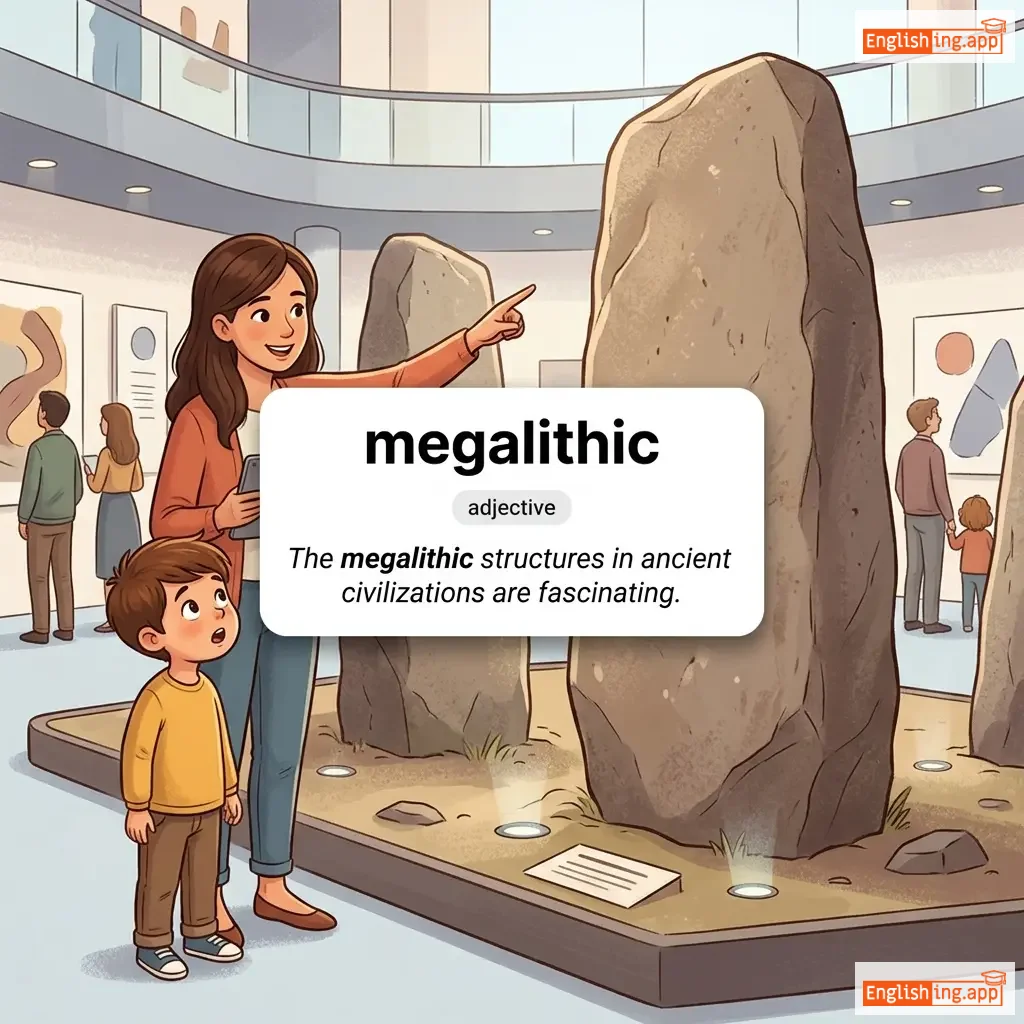
megalithic definition card — visual illustration of the meaning
adjective C2
ˌmɛɡəˈlɪθɪk
巨石 (kyoseki)

Relating to or denoting prehistoric monuments made of or containing large stones.

"The megalithic structures in ancient civilizations are fascinating."

"古代文明の巨石構造物は魅力的です。" (Kodai bunmei no kyoseki kouzou-butsu wa miryokuteki desu.)
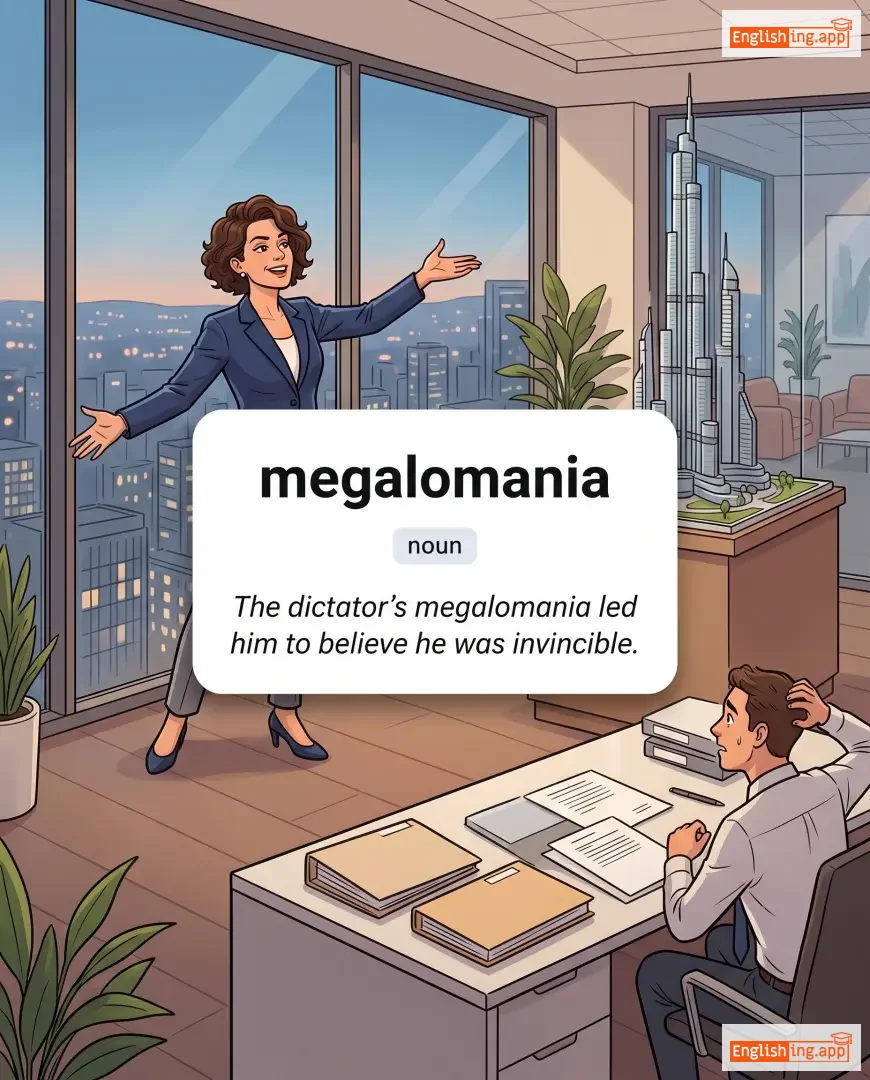
megalomania definition card — visual illustration of the meaning
noun C2
/ˌmɛɡələˈmeɪniə/
権力、富、または全能の幻想 (kenryoku, tomi, matawa zennou no gensou)

A condition characterized by delusional fantasies of power, wealth, or omnipotence.

"The dictator’s megalomania led him to believe he was invincible."

"独裁者のメガロマニアは彼に自分が無敵だと信じさせました。" (Dokusai-sha no megaromania wa kare ni jibun ga muteki da to shinjisasemashita.)
noun C2
/meɪˈlɑːnʒ/
混合 (kongo)

A mixture of different things or styles.

"The festival offered a melange of music, food, and art."

"そのフェスティバルでは、音楽、食べ物、アートの混合が提供されました。" (Sono fesutibaru de wa, ongaku, tabemono, āto no kongou ga teikyō saremashita.)
noun C2
/ˈmeɪleɪ/
騒乱の戦い (souran no tatakai)

A noisy, confused fight or crowd situation.

"A melee broke out during the football match."

"サッカーの試合中に騒乱の戦いが起きました。" (Sakkaa no shiaichuu ni souran no tatakai ga okimashita.)
verb C2
/ˈmiːliəˌreɪt/
改善する (kaizen suru)

To make something better or improve a condition.

"The new policies aim to meliorate the living conditions of the poor."

"新しい政策は貧しい人々の生活条件を改善することを目指しています。" (Atarashī seisaku wa mazushī hitobito no seikatsu jōken o kaizen suru koto o mezashiteimasu.)
noun C2
/ˈmiːliərɪzəm/
改良主義 (kairyō shugi)

The belief that the world tends to improve and that humans can aid its betterment.

"Her philosophy of meliorism kept her hopeful during difficult times."

"彼女の改良主義的な哲学は、困難な時期に彼女を希望に満ちた状態に保ちました。" (kanojo no kairyō shugi-teki na tetsugaku wa, kon'nan'na jiki ni kanojo o kibō ni michita jōtai ni tamochimashita.)
adjective C2
/məˈlɪfluəs/
甘美な (kanbina)

Sweet or musical; pleasant to hear.

"The singer’s mellifluous voice enchanted the audience."

"歌手の甘美な声が観客を魅了した。" (Kashu no kanbina koe ga kankyaku o miryō shita.)
verb C2
/məˈmɔːriəlaɪz/
記念する (kinen suru)

to preserve the memory of a person or event, often through a ceremony, monument, or record

"The city decided to memorialize the hero with a statue in the central square."

"その都市は中央広場に英雄の像を立てて英雄を記念することに決めました。" (Sono toshi wa chuou hiroba ni eiyuu no zou o tatete eiyuu o kinen suru koto ni kimemashita.)
noun C2
/məˈnæʒəri/
野生動物のコレクション (yasei dōbutsu no korekushon)

a collection of wild animals kept for exhibition; a diverse or strange group of people or things

"The circus had a menagerie of exotic animals."

"サーカスには異国的な動物のコレクションがありました。" (Sākasu ni wa ikokuteki na dōbutsu no korekushon ga arimashita.)
mendacious definition card — visual illustration of the meaning
adjective C2
/mɛnˈdeɪʃəs/
虚偽の (kyogi no)

not telling the truth; lying

"The politician was known for his mendacious statements."

"その政治家は嘘の発言で知られていました。" (Sono seijika wa uso no hatsugen de shirarete imashita.)
noun C2
/mɛnˈdæsəti/
虚偽 (kyogi)

the tendency to be untruthful; dishonesty

"The journalist exposed the mendacity of the officials."

"ジャーナリストは役人たちの虚偽を暴露しました。" (Jānarisuto wa yakunin-tachi no kyogi o bakuro shimashita.)
noun C2
/ˈmɛndɪkənt/
乞食 (koshiki)

a beggar; a person who lives by asking for alms

"The mendicant asked for food at the monastery gate."

"乞食は修道院の門で食べ物を求めた。" (Koshiki wa shūdōin no mon de tabemono o motometa.)
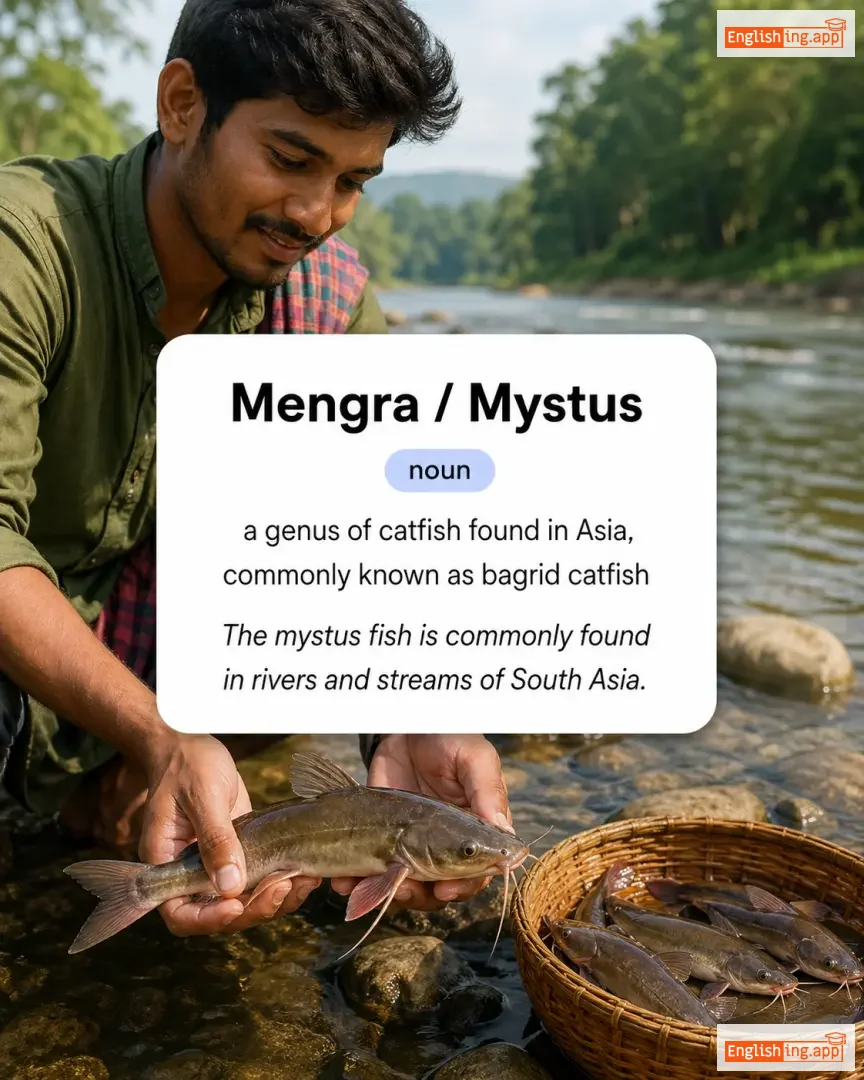
Mengra / Mystus definition card — visual illustration of the meaning
noun C2
/ˈmɪstəs/
ミスタス属 (misutasu zoku)

a genus of catfish found in Asia, commonly known as bagrid catfish

"The mystus fish is commonly found in rivers and streams of South Asia."

"ミスタス属の魚は南アジアの川や小川によく見られます。" (misutasu zoku no sakana wa minami ajia no kawa ya ogawa ni yoku mirarerumasu)
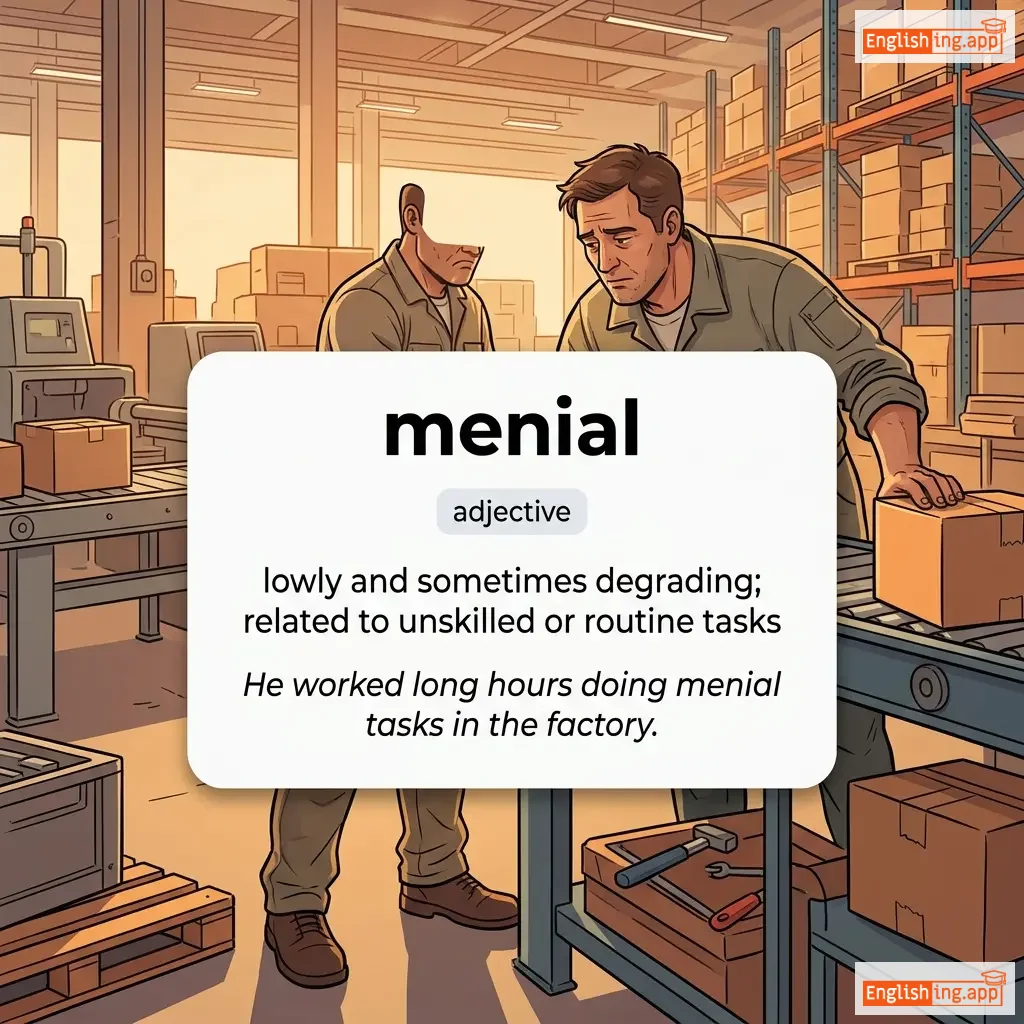
menial definition card — visual illustration of the meaning
adjective C2
/ˈmiːniəl/
つまらない仕事 (tsumaranai shigoto)

lowly and sometimes degrading; related to unskilled or routine tasks

"He worked long hours doing menial tasks in the factory."

"彼は工場でつまらない仕事を長時間行っていました。" (Kare wa kōjō de tsumaranai shigoto o chōjikan okonatte imashita.)
adjective C2
/ˈmɜːrkəntaɪl/
商業的 (shōgyō-teki)

related to trade or commerce

"The city grew rapidly due to its mercantile activities."

"この都市は商業活動のおかげで急速に成長しました。" (Kono toshi wa shōgyō katsudō no okage de kyūsoku ni seichō shimashita.)
adjective C2
/mɜːrˈkjʊriəl/
気まぐれな (kimagurena)

subject to sudden or unpredictable changes of mood or mind.

"She is known for her mercurial temperament."

"彼女は気まぐれな気質で知られています。" (Kanojo wa kimagurena kishitsu de shirareteimasu.)
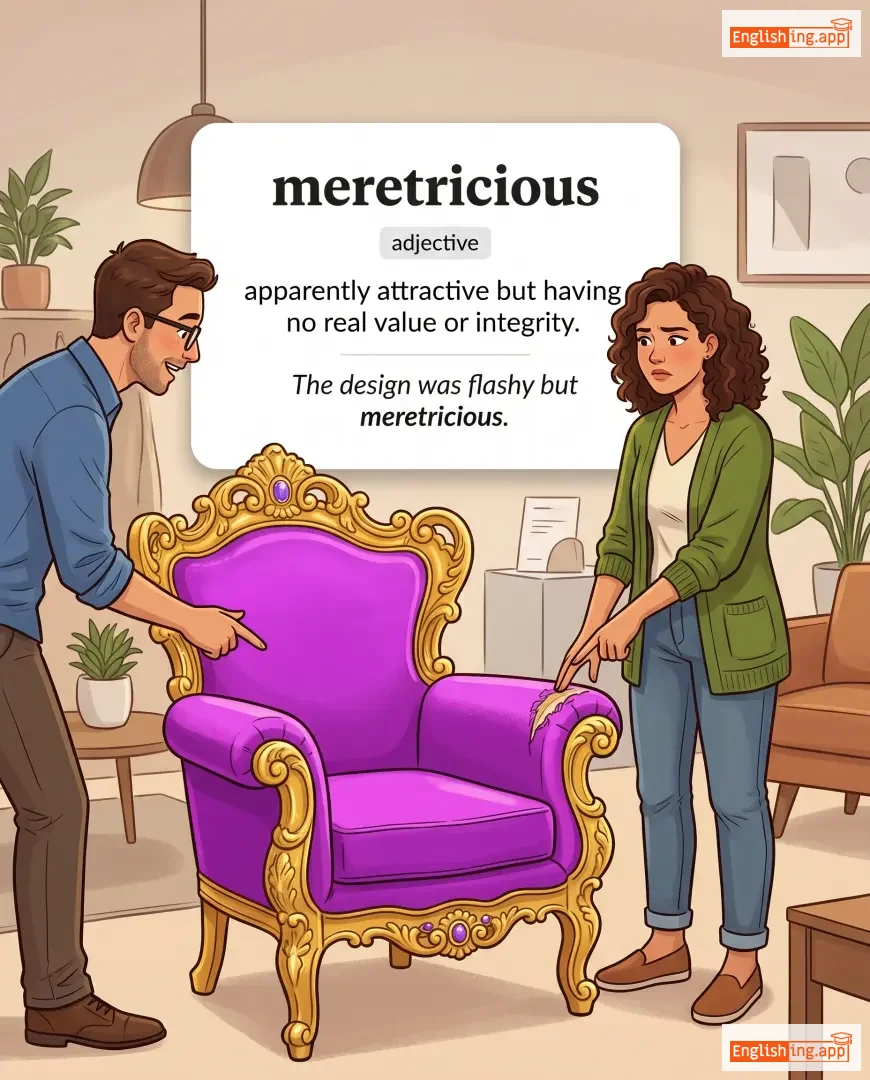
meretricious definition card — visual illustration of the meaning
adjective C2
/ˌmɛrəˈtrɪʃəs/
虚偽的 (kyogi-teki)

apparently attractive but having no real value or integrity.

"The design was flashy but meretricious."

"デザインは華やかだったが、虚偽的だった。" (Dezain wa hanayakatta ga, kyogi-teki datta.)
noun C2
/ˈmeɪsə/
メサ (mesa)

An isolated flat-topped hill with steep sides, found in arid regions.

"The hikers stopped to admire the mesa rising above the desert floor."

"ハイカーたちは砂漠の床から突き出たメサを賞賛するために立ち寄りました。" (Haikā-tachi wa sabaku no yuka kara tsukideta mesa o shōsan suru tame ni tachiyorimashita.)
noun C2
/ˈmɛzməˌrɪzəm/
催眠術 (saiminjutsu)

A state of fascination or hypnotism.

"The magician held the audience in a state of mesmerism."

"マジシャンは観客を催眠状態に保っていた。" (Majishan wa kankyaku wo saimin joutai ni tamotteita.)
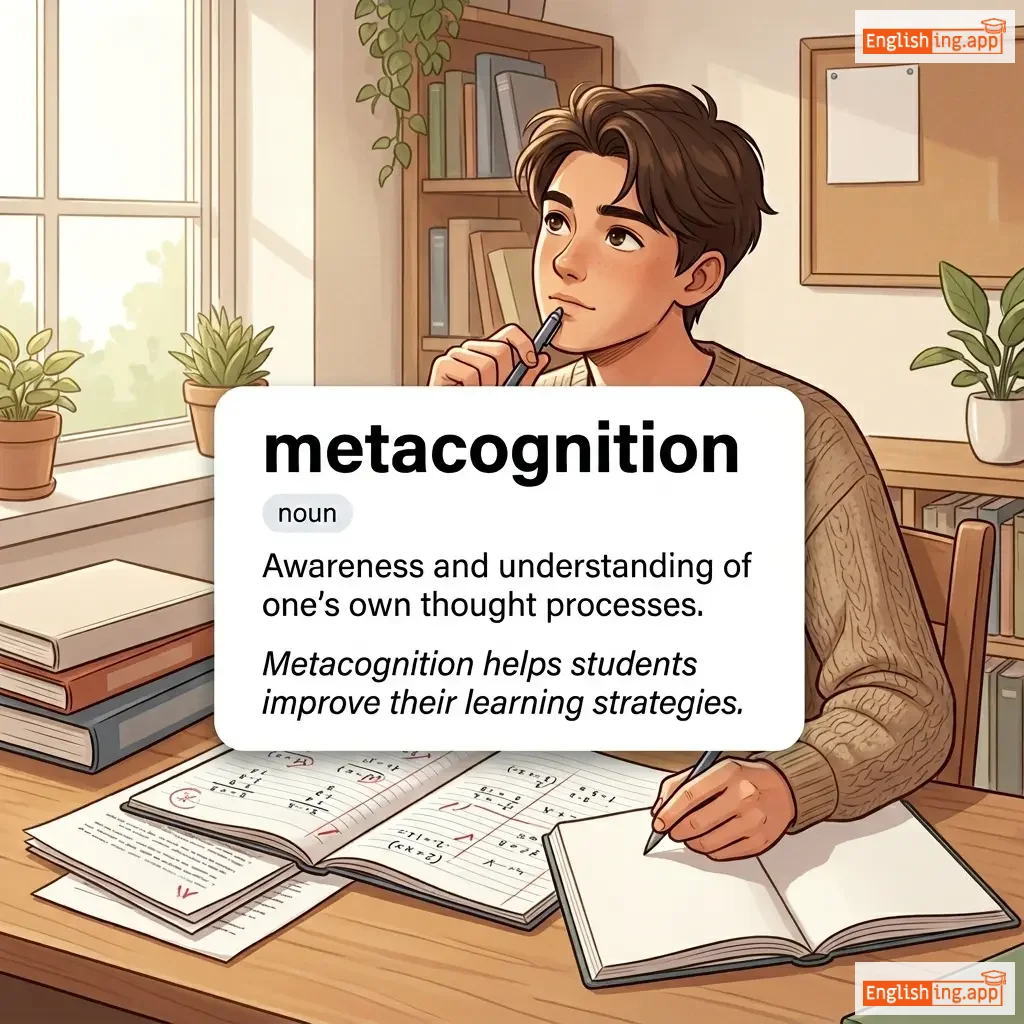
metacognition definition card — visual illustration of the meaning
noun C2
ˌmɛt.ə.kɒɡˈnɪʃ.ən
メタ認知 (meta ninchi)

Awareness and understanding of one's own thought processes.

"Metacognition helps students improve their learning strategies."

"メタ認知は学生が学習戦略を改善するのに役立ちます。" (Meta ninchi wa gakusei ga gakushuu senryaku wo kaizen suru no ni yakudachimasu.)
adjective C2
/ˌmɛtəˈlɜrdʒɪkəl/
冶金の (yakin no)

Relating to metallurgy or the branch of science concerned with the properties of metals and their production.

"He studied metallurgical engineering at the university."

"彼は大学で冶金工学を学びました。" (kare wa daigaku de yakin kogaku o manabimashita.)
noun C2
/ˈmɛtələ(r)dʒi/
冶金学 (yakin-gaku)

The science and technology of metals, including their extraction from ores and their processing.

"Metallurgy plays a vital role in industrial development."

"冶金学は産業の発展において重要な役割を果たします。" (Yakin-gaku wa sangyō no hatten ni oite jūyōna yakuwari o hatashimasu.)
verb C2
/ˌmɛtəˈmɔrfoʊz/
変態する (hentai suru)

To change in form, structure, or substance; to transform completely.

"The caterpillar metamorphosed into a butterfly."

"キャタピラは蝶に変態した。" (Kyatapira wa chō ni hentaishita.)
noun C2
/ˈmɛtəfɔːrm/
隠喩の形 (in'yu no katachi)

A coined or rare term sometimes used to describe a hybrid form of metaphor and form in literature or art.

"The poet introduced a metaphorm to blend imagery with structure."

"詩人はイメージと構造を結びつけるためにメタフォームを導入しました。" (Shijin wa imēji to kōzō o musubitsukeru tame ni metafōmu o dōnyū shimashita.)
adjective C2
/ˌmɛtəˈfɪzɪkəl/
形而上学的 (keijou shougakuteki)

Relating to the branch of philosophy that deals with the fundamental nature of reality and existence.

"He spent years studying metaphysical questions about life and being."

"彼は人生と存在に関する形而上学的な問題を何年も研究しました。" (Kare wa jinsei to sonzai ni kansuru keijou shougakuteki na mondai o nannen mo kenkyuu shimashita.)
noun C2
/ˌmɛtəfɪˈzɪʃən/
形而上学者 (keijou-gakusha)

A person who studies or is an expert in metaphysics.

"The metaphysician debated the essence of reality with his peers."

"形而上学者は現実の本質について仲間たちと議論した。" (Keijou-gakusha wa genjitsu no honshitsu ni tsuite nakamatachi to giron shita.)
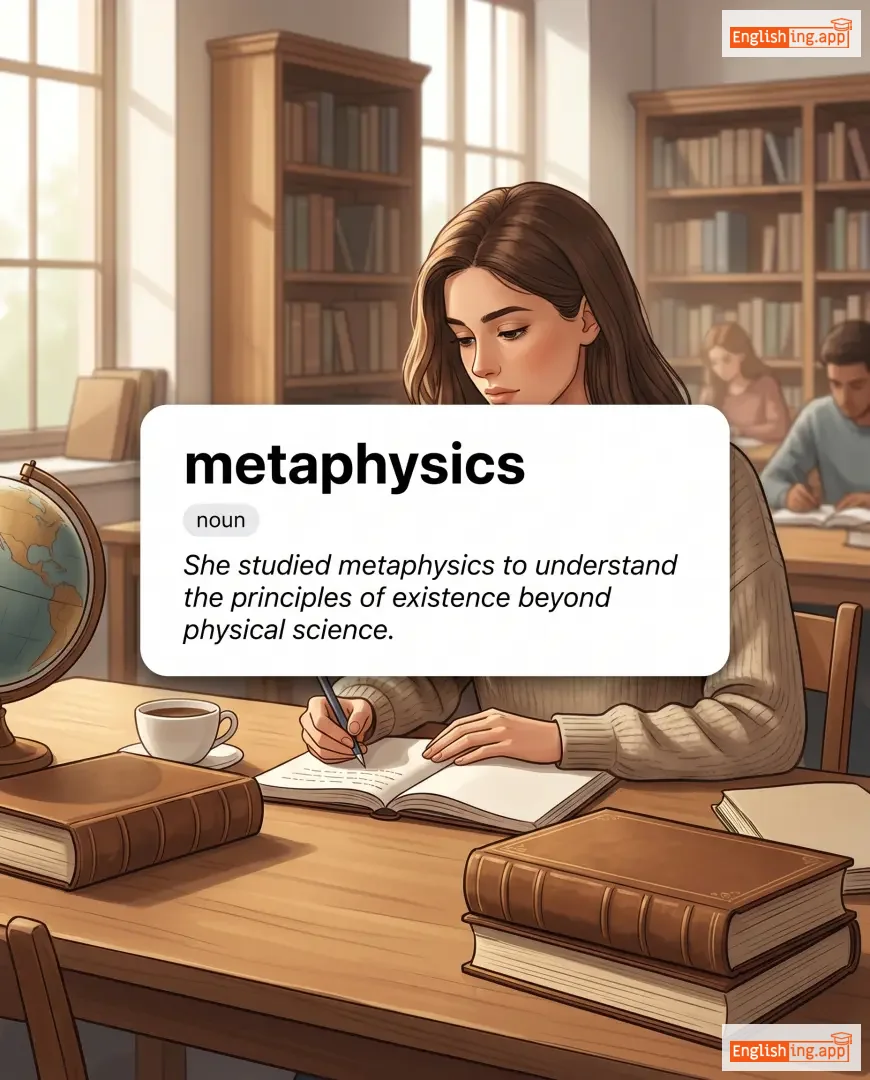
metaphysics definition card — visual illustration of the meaning
noun C2
/ˌmɛtəˈfɪzɪks/
形而上学 (kējōgaku)

The branch of philosophy that deals with the fundamental nature of reality, existence, and the relationship between mind and matter.

"She studied metaphysics to understand the principles of existence beyond physical science."

"彼女は物理学を超えた存在の原理を理解するために形而上学を学びました。" (Kanojo wa butsurigaku o koeta sonzai no genri o rikai suru tame ni kējōgaku o manabimashita.)