ভোকাবুলারিসমূহ

ইংরেজি শব্দের বাংলা অর্থ | English to Bangla Word Meaning Dictionary

noun C2
/ɪnˈfrækʃən/
infracción (infraccion)

A violation or breach of a rule, law, or agreement.

"The student was punished for a minor infraction of the school rules."

"El estudiante fue castigado por una infracción menor de las reglas escolares." (El estudiante fue castigado por una infraccion menor de las reglas escolares.)
noun C2
/ɪnˈfriːkwəns/
infrecuencia (infrecuencia)

The state of occurring rarely or at long intervals.

"The infrequence of their meetings made it hard to maintain close ties."

"La infrecuencia de sus reuniones hacía difícil mantener vínculos cercanos." (La infrecuencia de sus reuniones hacía difícil mantener vínculos cercanos.)
noun C2
/ˈænʒənuː/
jovencita inocente (jovencita inocente)

an innocent, naïve young woman, especially as represented in literature or theater

"She played the role of the ingénue in the play with great charm."

"Ella interpretó el papel de la jovencita inocente en la obra con gran encanto." (Ella interpreto el papel de la jovencita inocente en la obra con gran encanto.)
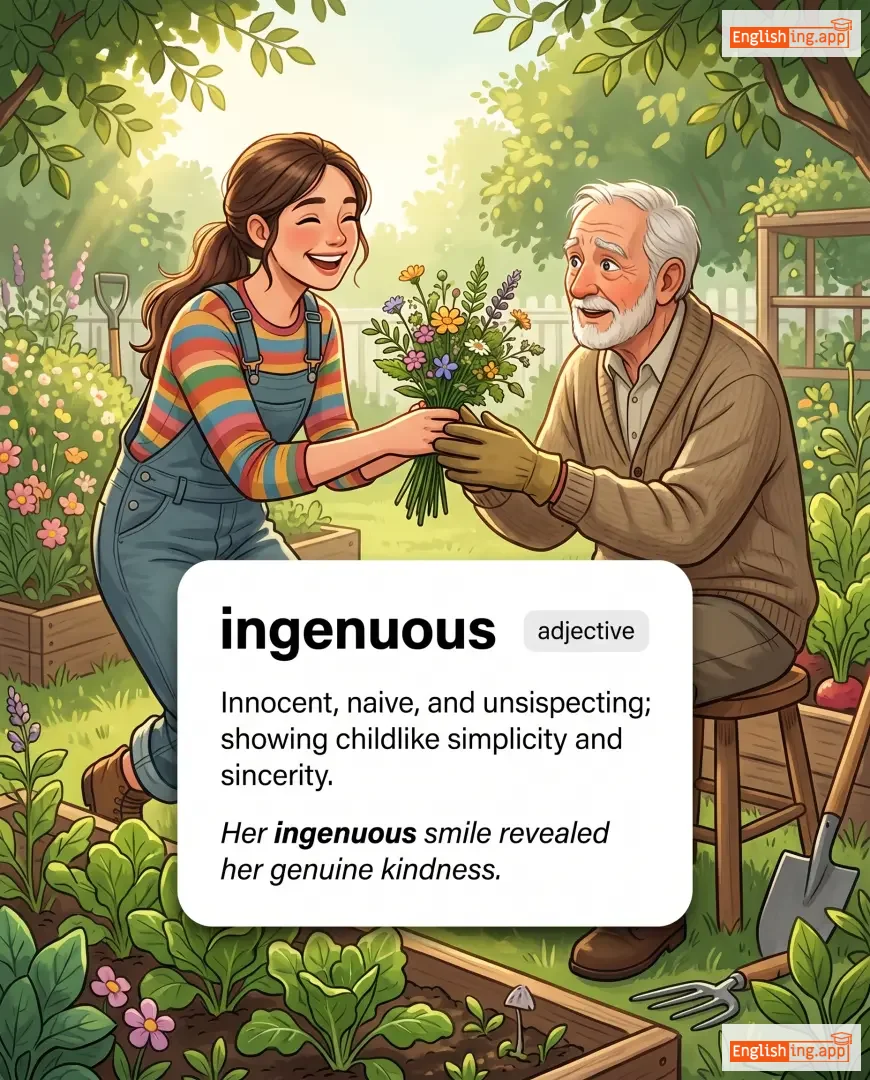
ingenuous definition card — visual illustration of the meaning
adjective C2
/ɪnˈdʒɛnjuəs/
ingenuo (ingenuo)

Innocent, naive, and unsuspecting; showing childlike simplicity and sincerity.

"Her ingenuous smile revealed her genuine kindness."

"Su sonrisa ingenua reveló su genuina amabilidad." (Su sonrisa ingenua reveló su genuina amabilidad.)
verb C2
/ɪnˈdʒɛst/
ingerir (ingerir)

To take food, drink, or another substance into the body, usually by swallowing.

"The patient must ingest the medicine with water."

"El paciente debe ingerir el medicamento con agua." (El paciente debe ingerir el medicamento con agua.)
adjective C2
/ɪnˈɡlɔːriəs/
deshonroso (deshonroso)

Causing shame or disgrace; not bringing honor or glory.

"The army suffered an inglorious defeat."

"El ejército sufrió una derrota deshonrosa." (El ejército sufrió una derrota deshonrosa.)
verb C2
/ɪnˈɡrɑːft/
implantar (implantar)

To implant or fix deeply, often used in the sense of grafting an idea or quality.

"The teacher tried to ingraft good manners in the students."

"El maestro trató de implantar buenos modales en los estudiantes." (El maestro trató de implantar buenos modales en los estudiantes.)
noun C2
/ˈɪnˌɡreɪt/
ingrato (ingrate)

An ungrateful person; someone who shows no appreciation.

"He worked hard for his friend, but the ingrate never thanked him."

"Trabajó duro para su amigo, pero el ingrato nunca le dio las gracias." (Trabajo duro para su amigo pero el ingrato nunca le dio las gracias)
verb C2
/ɪnˈɡreɪʃiˌeɪt/
ganarse el favor de (ganarse el favor de)

To gain favor or approval by deliberate effort, often in a flattering way.

"She tried to ingratiate herself with her boss by complimenting him often."

"Ella intentó ingraciarse con su jefe al elogiarlo con frecuencia." (Ella intentó ingraciarse con su jefe al elogiarlo con frecuencia.)
adjective C2
/ɪnˈɡreɪʃiˌeɪtɪŋ/
adulador (adulador)

Charming or flattering in a way intended to gain favor.

"His ingratiating smile made everyone trust him quickly."

"Su sonrisa aduladora hizo que todos confiaran en él rápidamente." (Su sonrisa aduladora hizo que todos confiaran en él rápidamente.)
noun C2
/ɪnˈɡrætɪˌtjuːd/
ingratitud (ingratitud)

Lack of gratitude; failure to show thanks or appreciation.

"His ingratitude hurt her feelings after all she had done for him."

"Su ingratitud le dolió después de todo lo que ella había hecho por él." (Su ingratitud le dolió después de todo lo que ella había hecho por él.)
adjective C2
/ɪnhɑːrˈmoʊniəs/
desarmónico (desarmonico)

lacking harmony; discordant in sound; not in tune

"The inharmonious sounds from the broken piano made everyone cover their ears."

"Los sonidos desarmónicos del piano roto hicieron que todos se cubrieran los oídos." (Los sonidos desarmonicos del piano roto hicieron que todos se cubrieran los oidos.)
noun C2
/ɪnˈhɪərəns/
inherencia (inherencia)

The state of being an essential or permanent part of something.

"The inherence of risk is part of every business venture."

"La inherencia del riesgo es parte de cada aventura empresarial." (La inherencia del riesgo es parte de cada aventura empresarial.)
verb C2
/ɪnˈhjuːm/
inhumar (inhumar)

to bury a dead body in the ground

"They inhumed the warrior with full honors."

"Ellos inhumaron al guerrero con todos los honores." (Ellos inhumaron al guerrero con todos los honores.)
adjective C2
/ɪˈnɪmɪkəl/
hostil / adverso (hostil / adverso)

tending to obstruct or harm; unfriendly or hostile

"The policy was inimical to the country's economic growth."

"La política era hostil al crecimiento económico del país." (La política era hostil al crecimiento económico del país.)
inimitable definition card — visual illustration of the meaning
adjective C2
/ɪˈnɪmɪtəbəl/
inimitable (inimitable)

so good or unusual as to be impossible to copy; unique

"Her inimitable style made her stand out in the fashion industry."

"Su estilo inimitable la hizo destacar en la industria de la moda." (Su estilo inimitable la hizo destacar en la industria de la moda.)
adjective C2
/ɪˈnɪkwɪtəs/
iniquo (iniquo)

grossly unfair and morally wrong

"Slavery was one of the most iniquitous practices in history."

"La esclavitud fue una de las prácticas más iniquas de la historia." (La esclavitud fue una de las prácticas más iniquas de la historia.)
noun C2
/ɪˈnɪkwɪti/
iniquidad (iniquidad)

Immoral or grossly unfair behavior.

"The dictator's regime was marked by corruption and iniquity."

"El régimen del dictador estuvo marcado por la corrupción y la iniquidad." (El regimen del dictador estuvo marcado por la corrupcion y la iniquidad.)
adjective C2
/ˈɪnmoʊst/
más profundo (mas profundo)

Situated at the very heart or deepest part; most private or secret.

"She revealed her inmost thoughts to her closest friend."

"Ella reveló sus pensamientos más profundos a su amigo más cercano." (Ella reveló sus pensamientos más profundos a su amigo más cercano.)
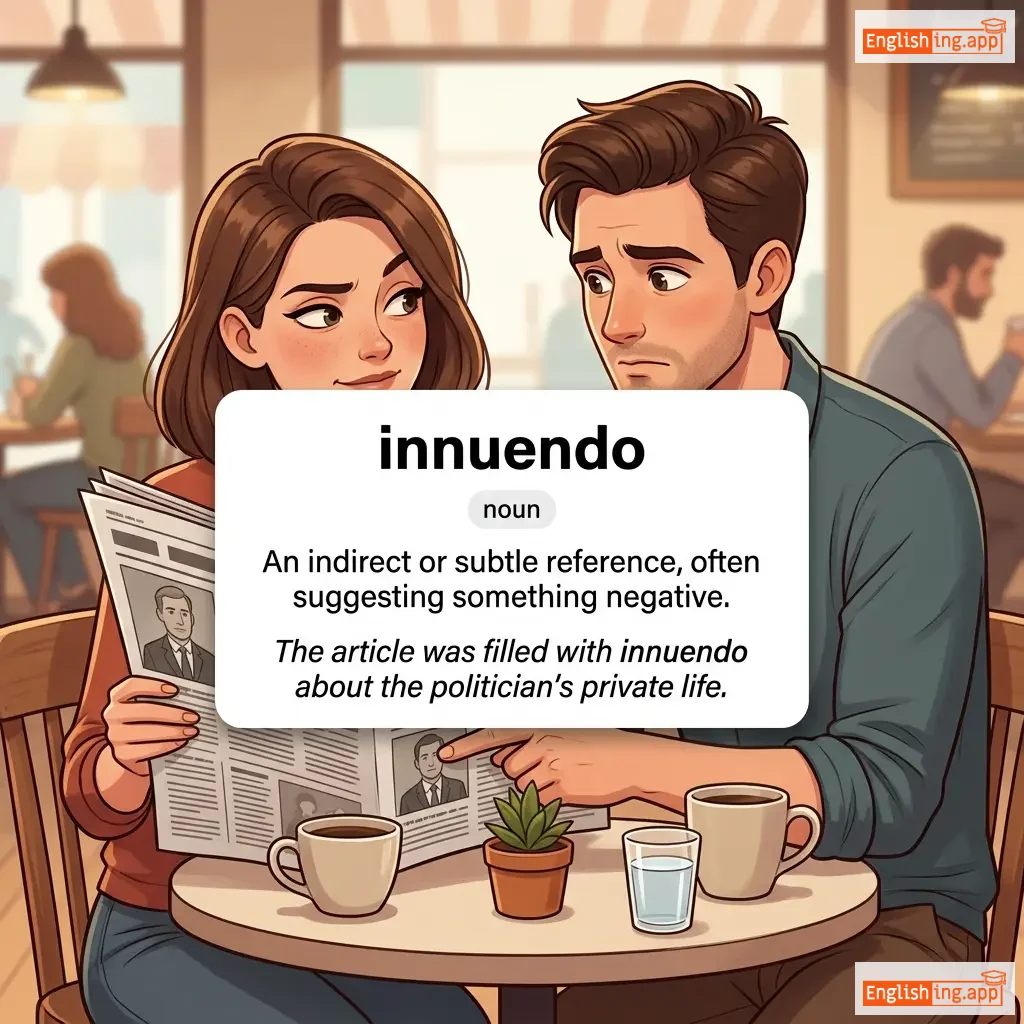
innuendo definition card — visual illustration of the meaning
noun C2
/ˌɪnjuˈɛndoʊ/
insinuación (insinuacion)

An indirect or subtle reference, often suggesting something negative.

"The article was filled with innuendo about the politician's private life."

"El artículo estaba lleno de insinuaciones sobre la vida privada del político." (El articulo estaba lleno de insinuaciones sobre la vida privada del politico.)
adjective C2
/ˌɪnˌɑːpərˈtuːn/
momento inoportuno (momento inoportuno)

Happening at a bad or inconvenient time.

"His call came at the most inopportune moment."

"Su llamada llegó en el momento más inoportuno." (Su llamada llegó en el momento más inoportuno.)
noun C2
/ɪnˈkwɪzɪtər/
inquisidor (inquisidor)

A person who asks many questions, often in an official or harsh manner.

"The inquisitor demanded detailed answers from the witness."

"El inquisidor exigió respuestas detalladas del testigo." (El inquisidor exigió respuestas detalladas del testigo.)
noun C2
/ˈɪnroʊd/
progreso (progreso)

An advance or significant progress, often at the expense of something else.

"The company made significant inroads into the mobile market."

"La compañía hizo avances significativos en el mercado móvil." (La compañía hizo avances significativos en el mercado móvil.)
adjective C2
/ˌɪnsəˈluːbriəs/
insalubre (insalubre)

Unhealthy or not conducive to well-being.

"They moved out of the insalubrious neighborhood for the sake of their health."

"Se mudaron del vecindario insalubre por el bien de su salud" (Se mudaron del vecindario insalubre por el bien de su salud)
adjective C2
/ɪnˈseɪʃiət/
insaciable (insaciable)

impossible to satisfy; always wanting more

"He had an insatiate desire for power."

"Él tenía un deseo insaciable de poder." (El tenía un deseo insaciable de poder.)
adjective C2
/ɪnˈskruːtəbl̩/
felicidad (felicidad)

impossible to understand or interpret

"His inscrutable expression made it hard to know what he was thinking."

"No pudo esconder su felicidad cuando recibió el premio." (No pudo esconder su felicidad cuando recibió el premio.)
adjective C2
/ɪnˈsɛnseɪt/
insensible (insensible)

lacking physical sensation or empathy; without feeling or sensitivity

"The dictator's insensate cruelty shocked the world."

"La crueldad insensible del dictador sorprendió al mundo." (La crueldad insensible del dictador sorprendió al mundo.)
adjective C2
/ɪnˈsɛnʃənt/
insensible (insensible)

Lacking perception, consciousness, or sensation.

"The rock is an insentient object with no awareness."

"La roca es un objeto insensible sin conciencia." (La roca es un objeto insensible sin conciencia.)
noun C2
/ɪnˈsɪɡniə/
insignia (insignia)

A badge or symbol that shows rank, position, or membership.

"The soldier proudly wore the insignia of his regiment."

"El soldado llevaba orgulloso la insignia de su regimiento." (El soldado llevaba orgulloso la insignia de su regimiento.)
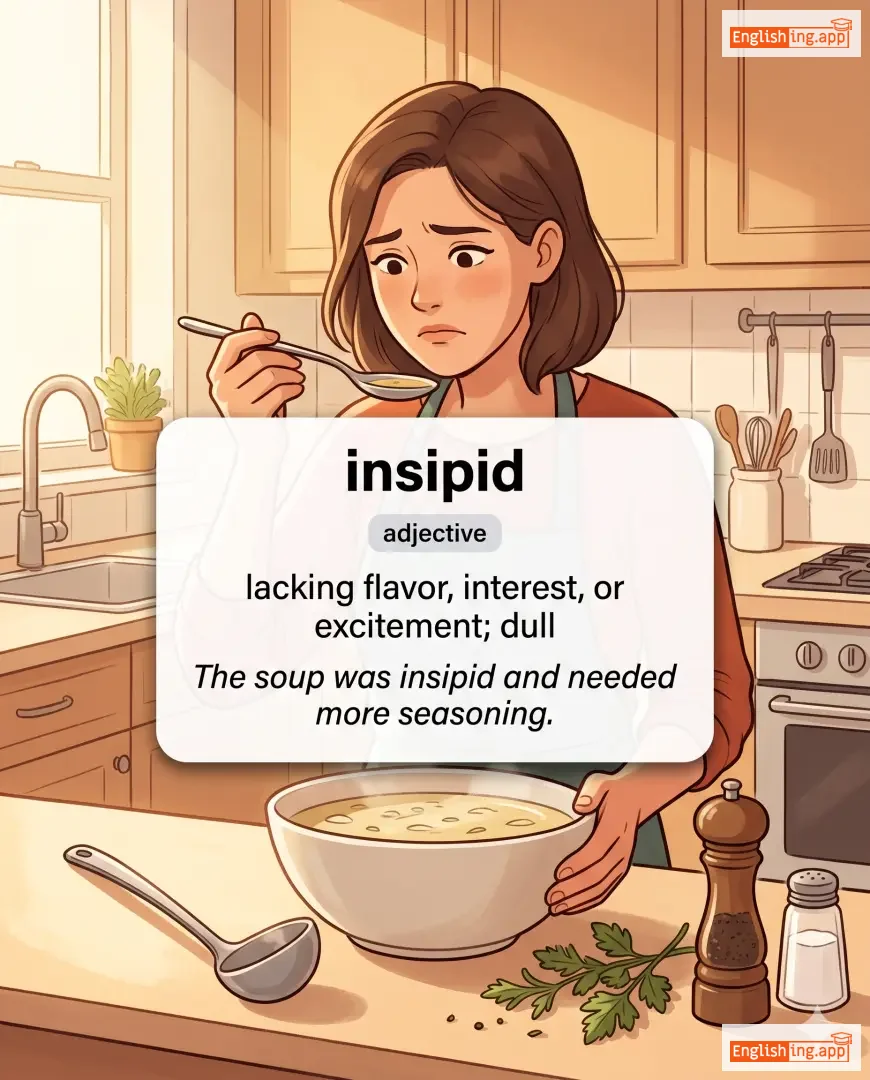
insipid definition card — visual illustration of the meaning
adjective C2
/ɪnˈsɪpɪd/
insípido (insipido)

lacking flavor, interest, or excitement; dull

"The soup was insipid and needed more seasoning."

"La sopa estaba insípida y necesitaba más condimentos." (La sopa estaba insípida y necesitaba más condimentos.)
noun C2
/ˈɪnsələns/
insolencia (insolencia)

rude or disrespectful behavior

"The teacher was shocked by the student's insolence."

"El maestro se sorprendió por la insolencia del estudiante." (El maestro se sorprendió por la insolencia del estudiante.)
adverb C2
/ˌɪnsəʊˈmʌtʃ/
tanto (tanto)

to such an extent

"He was insomuch tired that he could hardly stand."

"Estaba tan cansado que apenas podía mantenerse en pie." (Estaba tan cansado que apenas podía mantenerse en pie.)
noun C2
/ɪnˈsuːsiəns/
despreocupación (despreocupacion)

Casual lack of concern; indifference.

"She carried herself with an air of insouciance, unbothered by the challenges ahead."

"Ella caminaba con un aire de despreocupación, sin preocuparse por los desafíos que venían." (Ella caminaba con un aire de despreocupacion, sin preocuparse por los desafios que venian.)
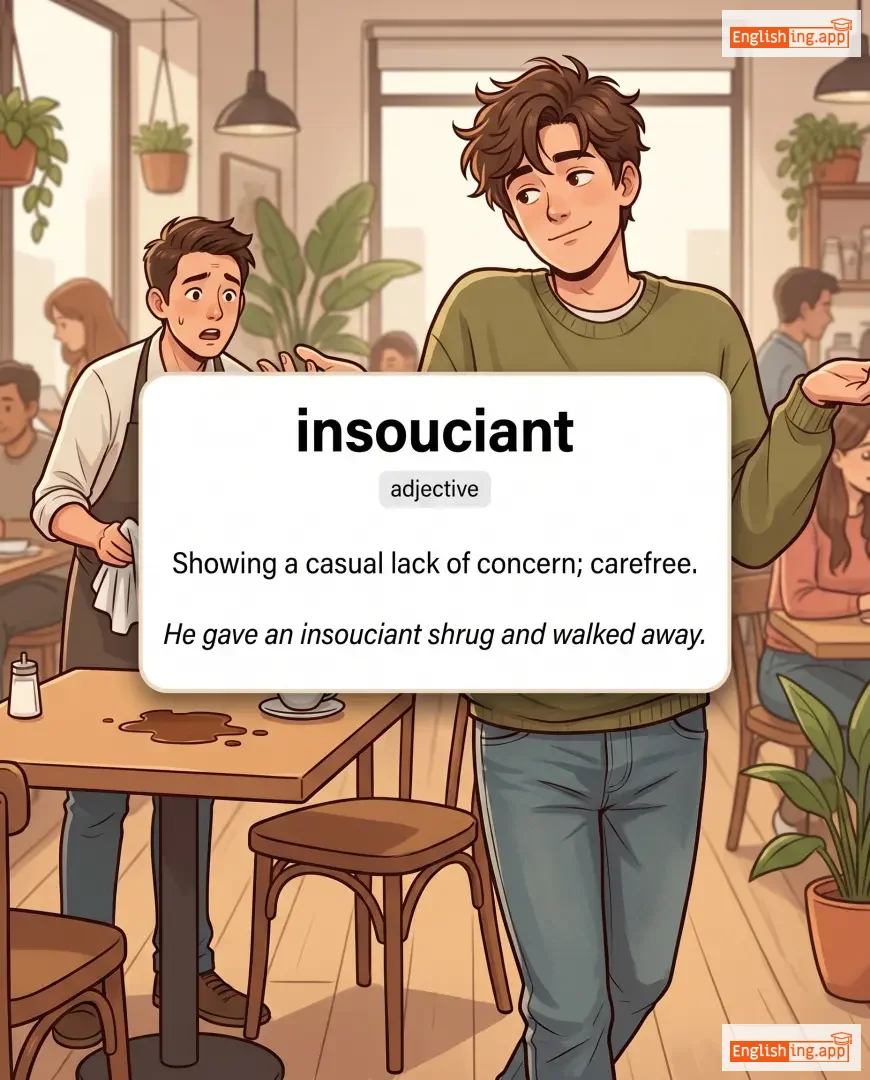
insouciant definition card — visual illustration of the meaning
adjective C2
/ɪnˈsuːsiənt/
despreocupado (despreocupado)

Showing a casual lack of concern; carefree.

"He gave an insouciant shrug and walked away."

"Hizo un encogimiento de hombros despreocupado y se alejó." (Hizo un encogimiento de hombros despreocupado y se alejó.)
verb C2
/ɪnˈsteɪt/
instaurar (instaurar)

To set up in position, office, or authority.

"The board decided to instate her as the new director."

"La junta decidió instatarla como la nueva directora." (La junta decidió instatarla como la nueva directora.)
noun C2
/ˌɪn.strəˈmɛn.təl.ɪst/
instrumentista (instrumentista)

A person who plays a musical instrument.

"The instrumentalist played a beautiful solo on the violin."

"El instrumentista tocó un hermoso solo en el violín." (El instrumentista tocó un hermoso solo en el violín.)
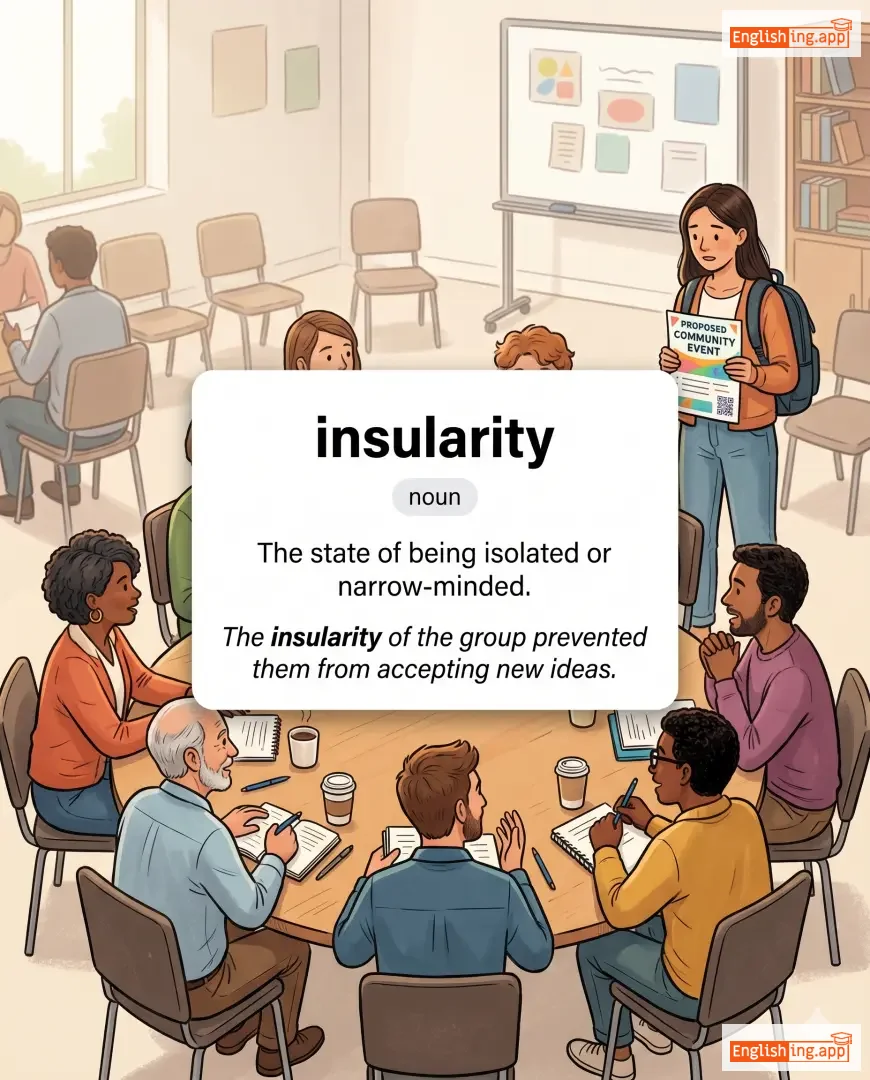
insularity definition card — visual illustration of the meaning
noun C2
/ˌɪnsjəˈlærəti/
insularidad (insularidad)

The state of being isolated or narrow-minded.

"The insularity of the group prevented them from accepting new ideas."

"La insularidad del grupo les impidió aceptar nuevas ideas." (La insularidad del grupo les impidió aceptar nuevas ideas.)
insuperable definition card — visual illustration of the meaning
adjective C2
/ɪnˈsuːpərəbl/
insuperable (insuperable)

Impossible to overcome or surpass.

"The team faced insuperable challenges during the expedition."

"El equipo enfrentó desafíos insuperables durante la expedición." (El equipo enfrento desafios insuperables durante la expedicion.)
adjective C2
/ˌɪnsəˈpɔːrtəbl̩/
insuportable (insuportable)

Too extreme or difficult to be endured.

"The heat was insupportable during the long journey."

"El calor era insoportable durante el largo viaje." (El calor era insoportable durante el largo viaje.)
adjective C2
/ˌɪnsəˈprɛsəbl/
irreprimible (irreprimible)

That cannot be suppressed or restrained.

"She had an insuppressible urge to laugh during the ceremony."

"Ella tenía un impulso irreprimible de reír durante la ceremonia." (Ella tenía un impulso irreprimible de reír durante la ceremonia.)
noun C2
/ˌɪnsəˈrɛkʃən/
insurrección (insurreccion)

A violent uprising against an authority or government.

"The army was called in to suppress the insurrection."

"El ejército fue llamado para sofocar la insurrección." (El ejercito fue llamado para sofocar la insurreccion.)
integrative diplomacy definition card — visual illustration of the meaning
noun C2
/ˈɪn.tɪ.ɡreɪ.tɪv dɪˈpləʊ.mə.si/
diplomacia integradora (diplomacia integradora)

A diplomatic approach that seeks to combine or coordinate different elements, interests, or parties into a unified whole.

"Integrative diplomacy strengthens alliances."

"La diplomacia integradora fortalece las alianzas." (La diplomacia integradora fortalece las alianzas.)
noun C2
/ɪnˈtɛɡ.jʊ.mənt/
cobertura externa (cobertura externa)

A natural outer covering, such as skin, shell, or rind.

"The snake sheds its integument as it grows."

"La serpiente pierde su cobertura externa a medida que crece." (La serpiente pierde su cobertura externa a medida que crece.)
noun C2
/ɪnˌtɛl.ɪˈdʒɛntsi.ə/
intelectuales (intelectuales)

The group of people engaged in intellectual and cultural pursuits in a society.

"The intelligentsia played a key role in shaping public opinion."

"Los intelectuales jugaron un papel clave en la formación de la opinión pública." (Los intelectuales jugaron un papel clave en la formación de la opinión pública.)
noun C2
/ɪnˈtɛmpərəns/
intemperancia (intemperancia)

Lack of moderation or self-control, especially with drinking or eating.

"His intemperance in drinking ruined his health."

"Su intemperancia al beber arruinó su salud." (Su intemperancia al beber arruinó su salud.)
adjective C2
/ɪnˈtɛmpərət/
intemperante (intemperante)

Lacking self-control; immoderate, especially in indulgence.

"The politician's intemperate remarks caused controversy."

"Los comentarios intemperantes del político causaron controversia." (Los comentarios intemperantes del político causaron controversia.)
noun C2
/ɪnˈtɛnʃən/
contenido interno (contenido interno)

The internal content of a concept; the set of attributes implied by a word or phrase.

"The intension of the word 'dog' includes being a mammal and domesticated."

"La intensión de la palabra 'perro' incluye ser un mamífero y ser domesticado." (La intension de la palabra 'perro' incluye ser un mamífero y ser domesticado.)
verb C2
/ɪnˈtɜːr/
enterrar (enterrar)

To bury a dead body in the ground.

"They decided to inter the soldier with full honors."

"Ellos decidieron enterrar al soldado con todos los honores." (Ellos decidieron enterrar al soldado con todos los honores.)
verb C2
/ˌɪntərˈsiːd/
interceder (interceder)

to act or plead on behalf of someone in difficulty or trouble; to intervene between parties to help resolve a dispute

"She interceded with the teacher to give her brother another chance."

"Ella intercedió con el maestro para darle otra oportunidad a su hermano." (Ella intercedió con el maestro para darle otra oportunidad a su hermano.)
noun C2
/ˌɪntərˈsɛʃən/
intercesión (intercesion)

the act of intervening or pleading on behalf of another person

"The prisoner was released due to the intercession of influential leaders."

"El prisionero fue liberado gracias a la intercesión de líderes influyentes." (El prisionero fue liberado gracias a la intercesión de líderes influyentes.)