ভোকাবুলারিসমূহ

ইংরেজি শব্দের বাংলা অর্থ | English to Bangla Word Meaning Dictionary

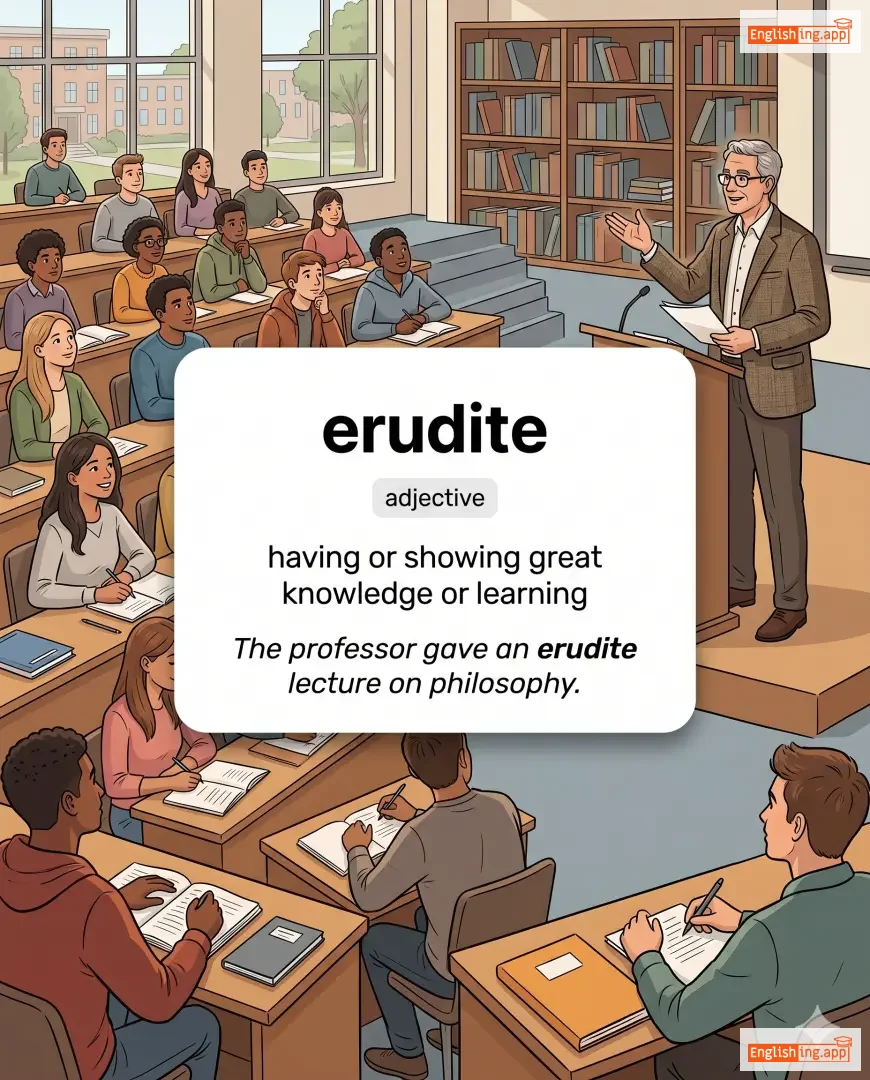
erudite definition card — visual illustration of the meaning
adjective C2
/ˈɛrjʊˌdaɪt/
博識 (hakushiki)

having or showing great knowledge or learning

"The professor gave an erudite lecture on philosophy."

"教授は哲学について博識な講義をしました。" (Kyouju wa tetsugaku ni tsuite hakushiki na kougi o shimashita.)
erudition definition card — visual illustration of the meaning
noun C2
/ˌɛrjʊˈdɪʃən/
博識 (hakushiki)

extensive knowledge acquired through reading and study

"Her erudition was evident in her detailed analysis of the text."

"彼女の博識はテキストの詳細な分析に明らかに現れていた。" (Kanojo no hakushiki wa tekisuto no shousai na bunseki ni akirakani arawarete ita.)
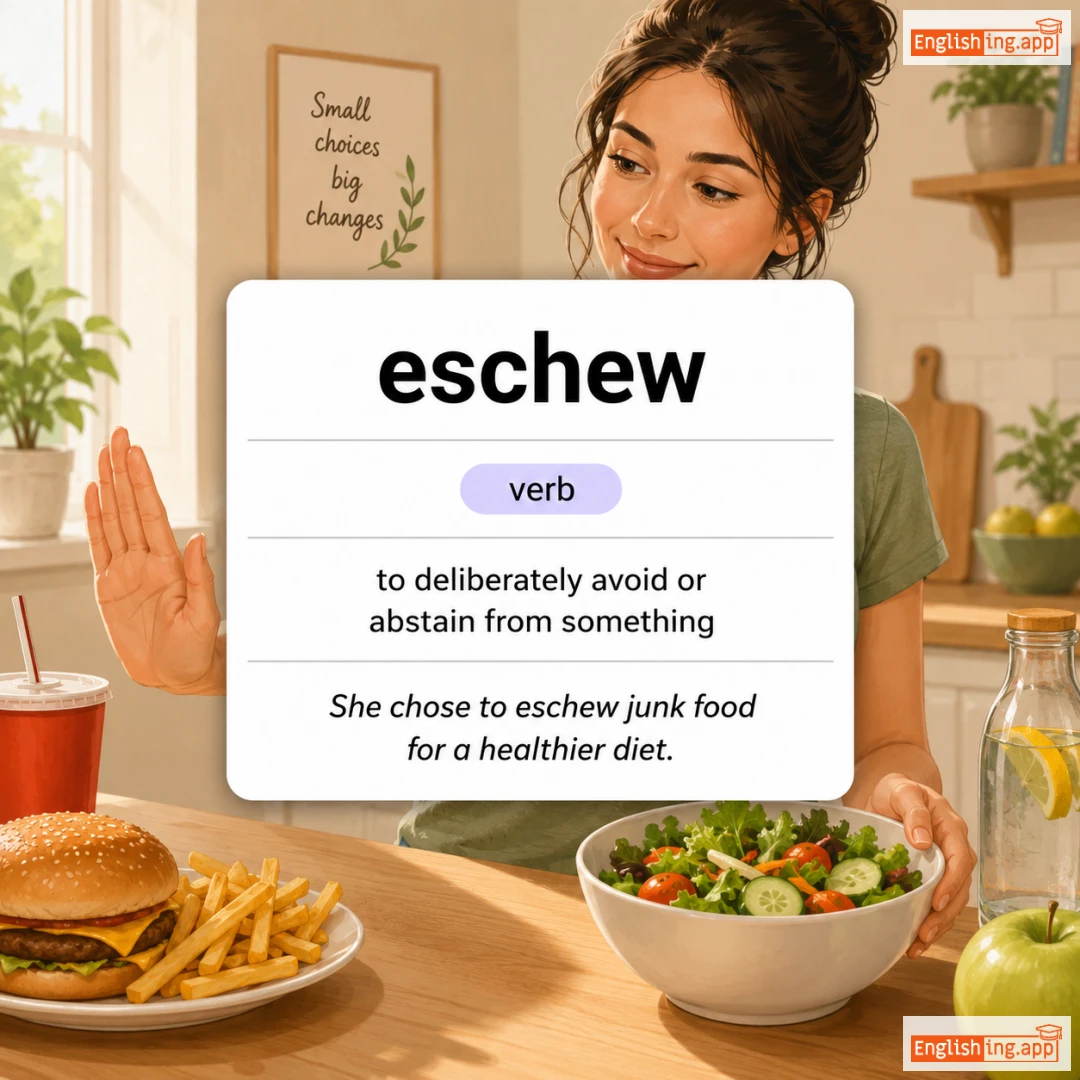
eschew definition card — visual illustration of the meaning
verb C2
/ɪsˈtʃuː/
避ける (sakeru)

to deliberately avoid or abstain from something

"She chose to eschew junk food for a healthier diet."

"彼女は健康的な食事のためにジャンクフードを避けることを選びました。" (Kanojo wa kenko-teki na shokuji no tame ni janku fudo o sakeru koto o erabimashita.)
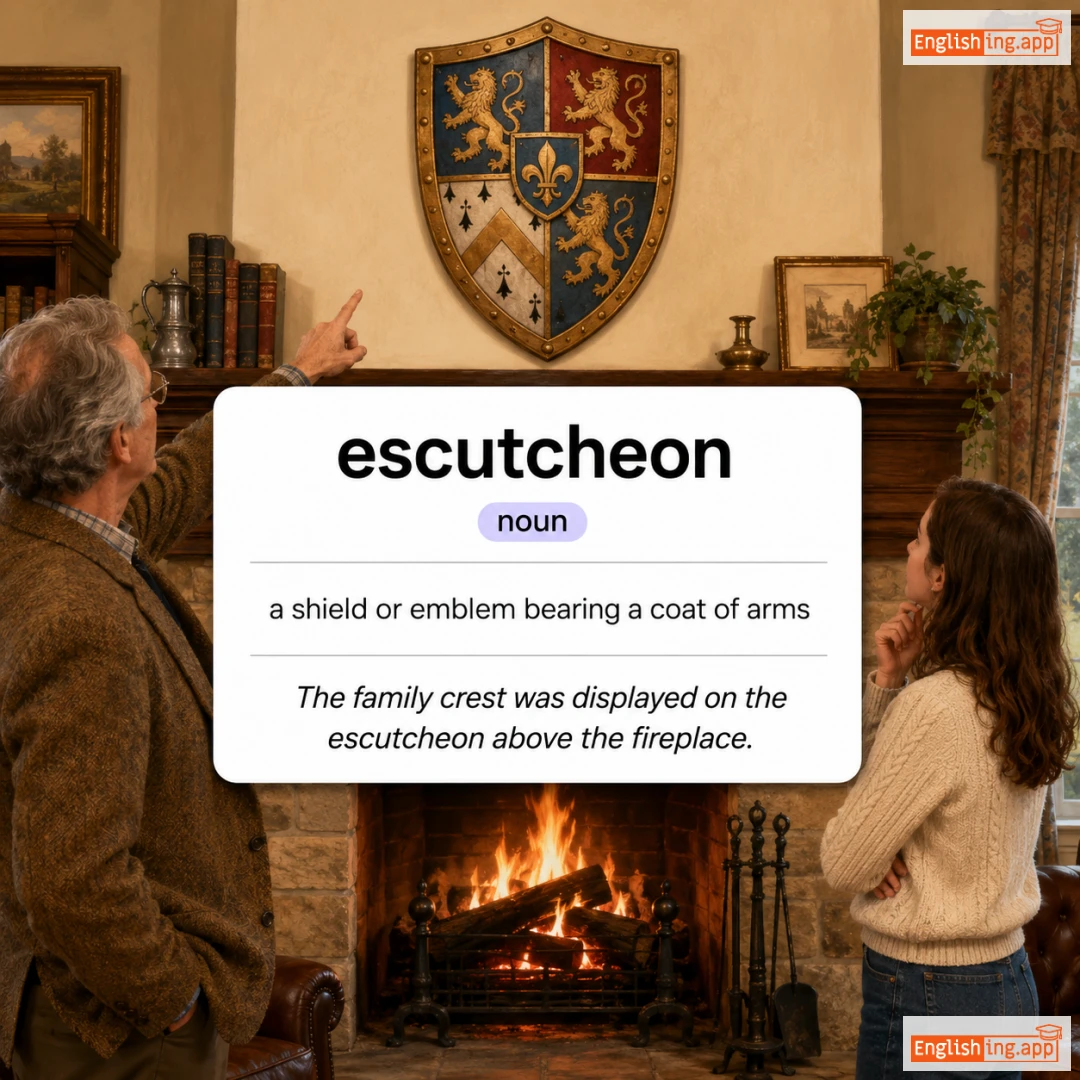
escutcheon definition card — visual illustration of the meaning
noun C2
/ɪˈskʌtʃən/
家族の紋章が描かれた盾 (kazoku no monshō ga egakareta tate)

a shield or emblem bearing a coat of arms

"The family crest was displayed on the escutcheon above the fireplace."

"家族の紋章は暖炉の上の盾に展示されていた。" (Kazoku no monshō wa danro no ue no tate ni tenji sarete ita.)
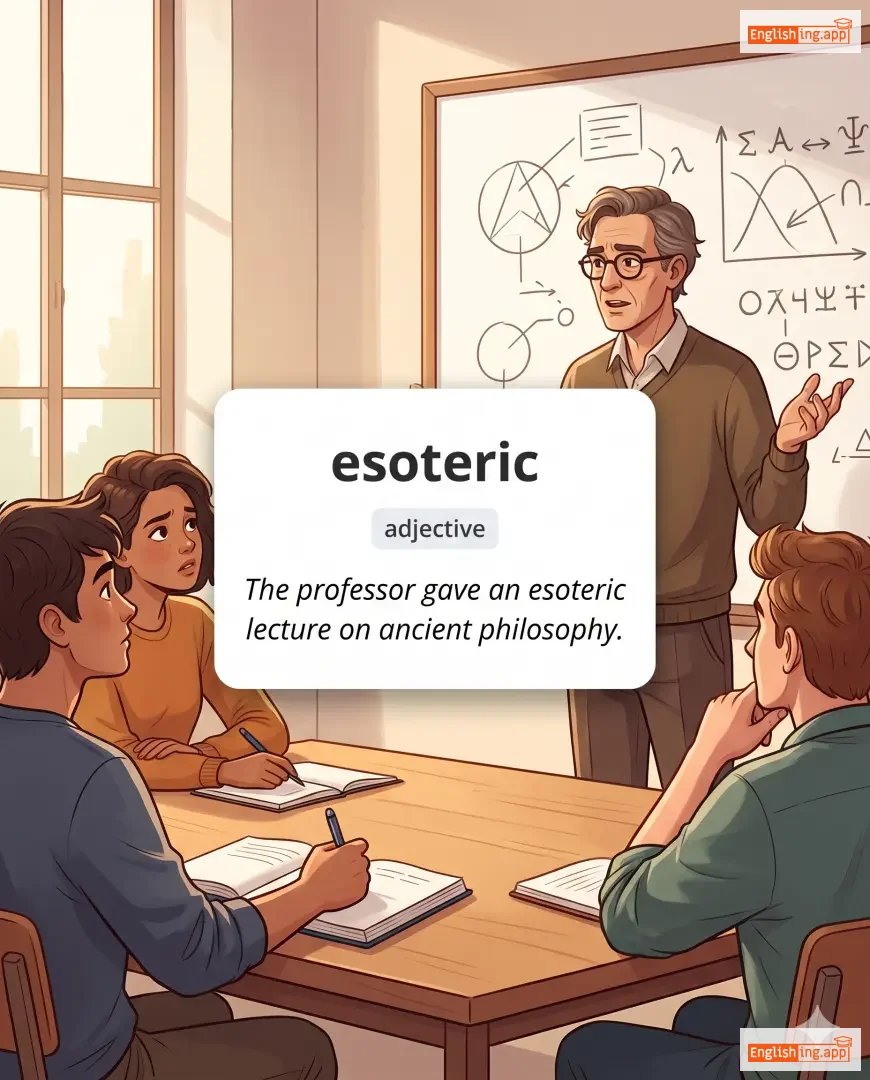
esoteric definition card — visual illustration of the meaning
adjective C2
/ˌɛsəˈtɛrɪk/
秘教的 (hikyou teki)

intended for or understood by only a small number of people with special knowledge

"The professor gave an esoteric lecture on ancient philosophy."

"教授は古代哲学に関する秘教的な講義を行いました。" (Kyouju wa kodai tetsugaku ni kansuru hikyou teki na kougi wo okonai mashita.)
esprit de corps definition card — visual illustration of the meaning
noun C2
/ɛˌspriː də ˈkɔːr/
チームスピリット (chīmusupiritto)

A feeling of pride, fellowship, and loyalty shared by members of a group.

"The team's esprit de corps was evident in their cooperative effort."

"チームのスピリットは、彼らの協力的な努力に明らかに現れていた。" (Chīmu no supiritto wa, karera no kyōryokuteki na doryoku ni akiraka ni arawarete ita.)
verb C2
/ɪˈspaɪ/
見る (miru)

To catch sight of or notice something, especially from a distance.

"From the hilltop, she espied a small village in the valley."

"丘の頂上から、彼女は谷間に小さな村を見つけました。" (Oka no chōjō kara, kanojo wa tani ma ni chiisana mura o mitsukemashita.)
noun C2
/ˈɛskwaɪər/
エスクワイア (esukuwia)

A title of respect often used after a man's name, especially for lawyers in the United States.

"John Smith, Esquire, will be representing the client in court."

"ジョン・スミス、エスクワイア、は法廷でクライアントを代表する予定です。" (Jon Sumisu, Esukuwia, wa hōtei de kuraianto o daihyō suru yotei desu.)
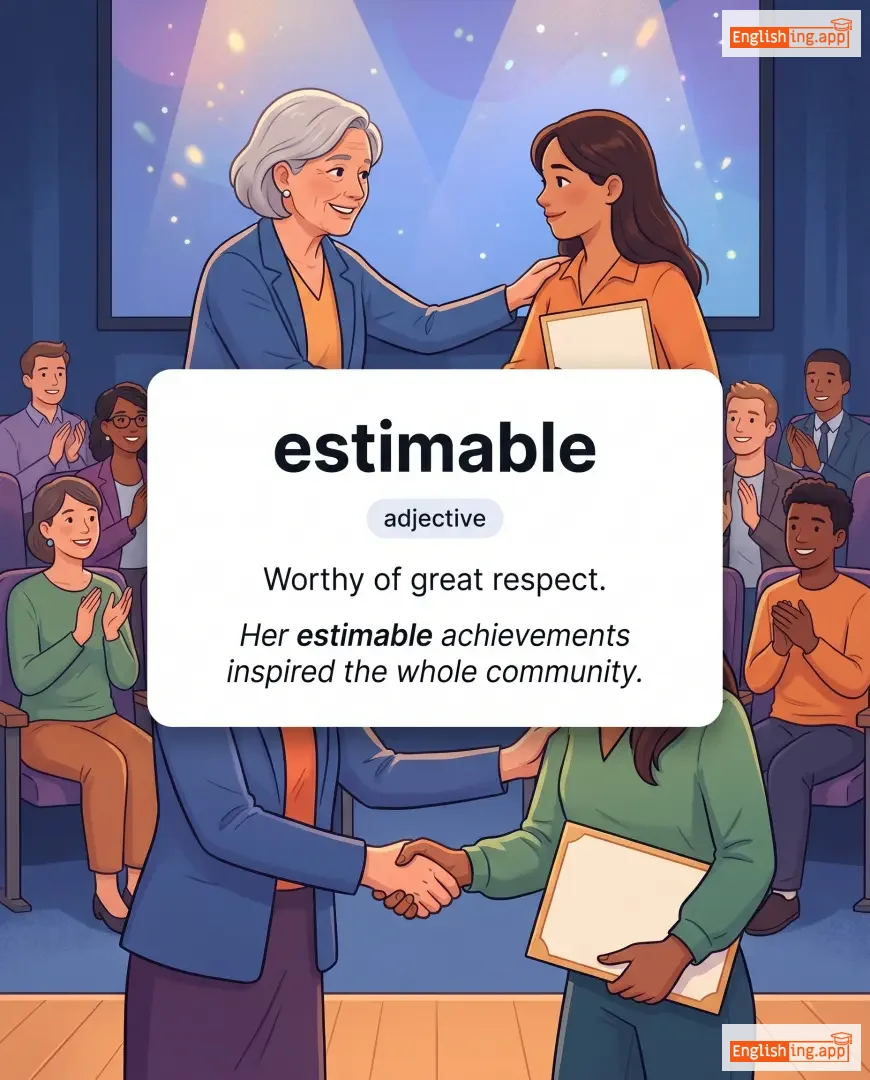
estimable definition card — visual illustration of the meaning
adjective C2
/ˈɛstɪməbl/
尊敬すべき (sonkei subeki)

Worthy of great respect.

"Her estimable achievements inspired the whole community."

"彼女の尊敬に値する業績はコミュニティ全体にインスピレーションを与えました。" (Kanojo no sonkei subeki gyōseki wa komyuniti zentai ni insupirēshon o ataemashita.)
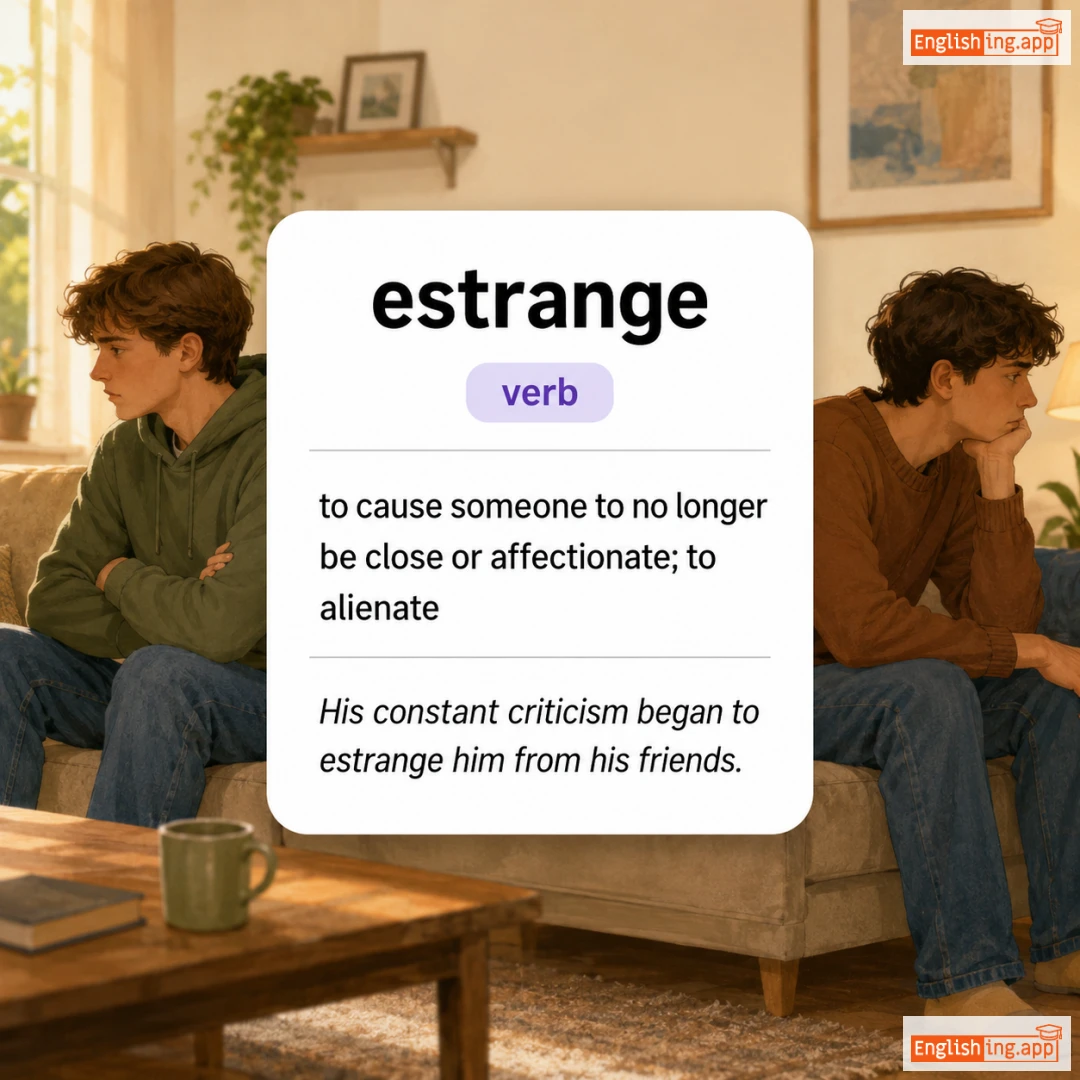
estrange definition card — visual illustration of the meaning
verb C2
/ɪˈstreɪndʒ/

to cause someone to no longer be close or affectionate; to alienate

"His constant criticism began to estrange him from his friends."

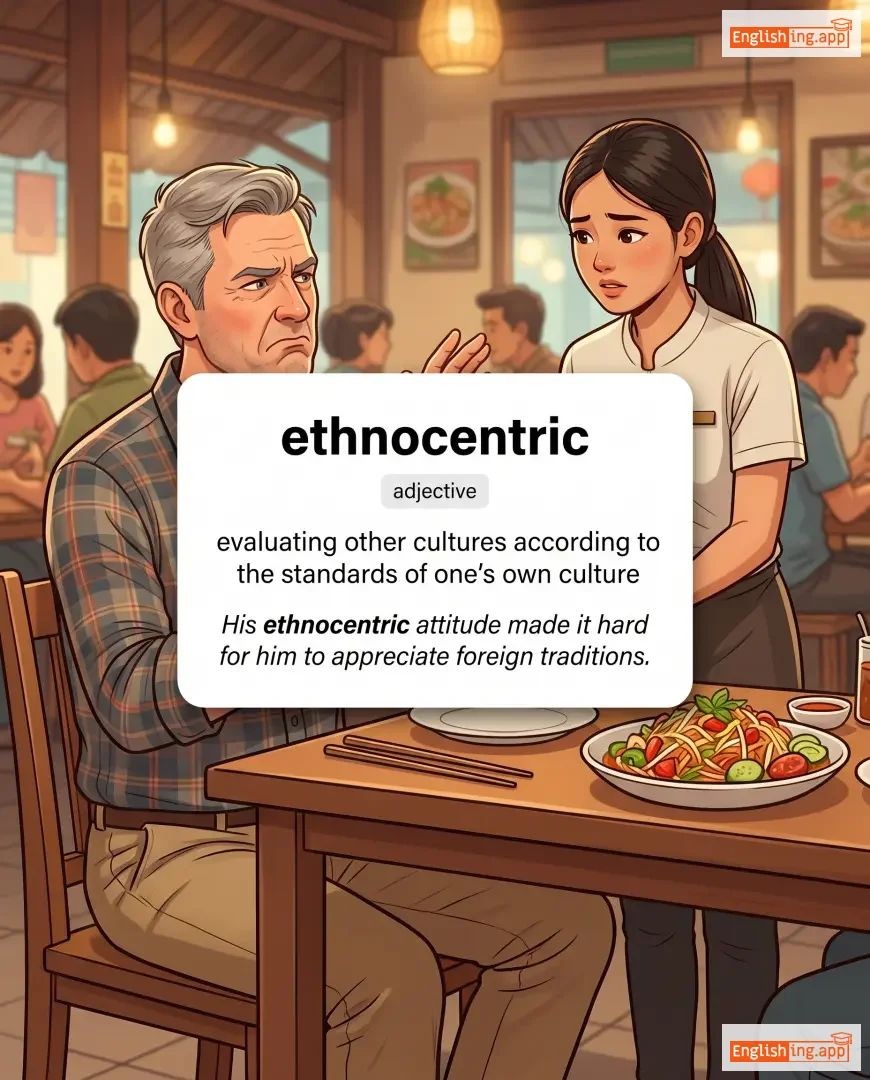
ethnocentric definition card — visual illustration of the meaning
adjective C2
/ˌeθ.noʊˈsen.trɪk/
エスノセントリック (esunosentorikku)

evaluating other cultures according to the standards of one's own culture

"His ethnocentric attitude made it hard for him to appreciate foreign traditions."

"彼のエスノセントリックな態度は、外国の伝統を評価するのを難しくしました。" (Kare no esunosentorikku na taido wa, gaikoku no dentō o hyōka suru no o muzukashiku shimashita.)
noun C2
/ɛθˈnɒlədʒi/
民族学 (minzokugaku)

the study of the characteristics of different peoples and the differences and relationships between them

"She specialized in ethnology to better understand cultural diversity."

"彼女は文化的多様性をよりよく理解するために民族学を専門にしていた。" (Kanojo wa bunkateki tayōsei o yori yoku rikai suru tame ni minzokugaku o senmon ni shite ita.)
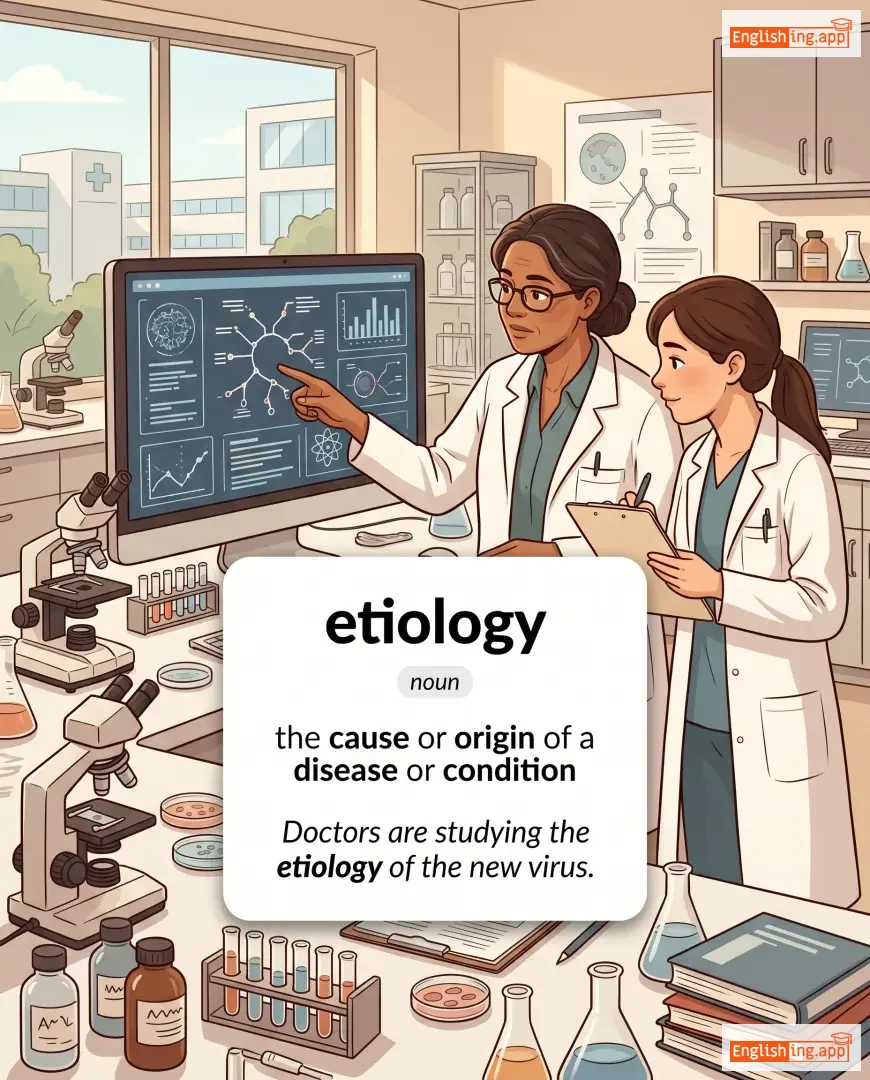
etiology definition card — visual illustration of the meaning
noun C2
/ˌiː.tiˈɒ.lə.dʒi/
病因学 (byōingaku)

the cause or origin of a disease or condition

"Doctors are studying the etiology of the new virus."

"医師たちは新しいウイルスの病因学を研究しています。" (Ishitachi wa atarashī uirusu no byōingaku o kenkyū shiteimasu.)
adjective C2
/juːˈdʒɛnɪk/
優生学的 (yūseigakuteki)

Relating to or aiming at improving the genetic quality of a population.

"In the early 20th century, some scientists supported eugenic policies."

"20世紀初頭、一部の科学者は優生学的な政策を支持した。" (20 seiki shotō, ichibu no kagakusha wa yūseigakuteki na seisaku o shiji shita.)
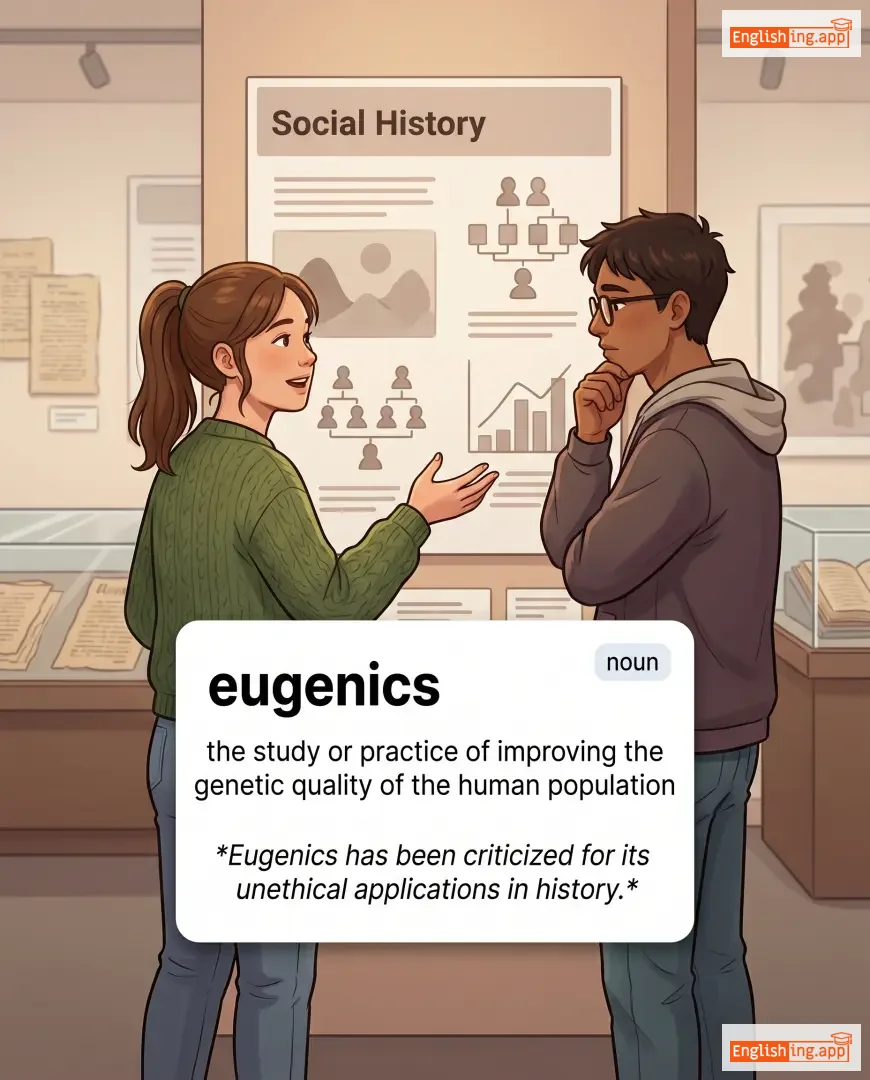
eugenics definition card — visual illustration of the meaning
noun C2
/juːˈdʒen.ɪks/
優生学 (yūseigaku)

the study or practice of improving the genetic quality of the human population

"Eugenics has been criticized for its unethical applications in history."

"優生学は歴史的にその非倫理的な応用について批判されてきました。" (Yūseigaku wa rekishiteki ni sono hinrinteki na ōyō ni tsuite hihan sarete kimashita.)
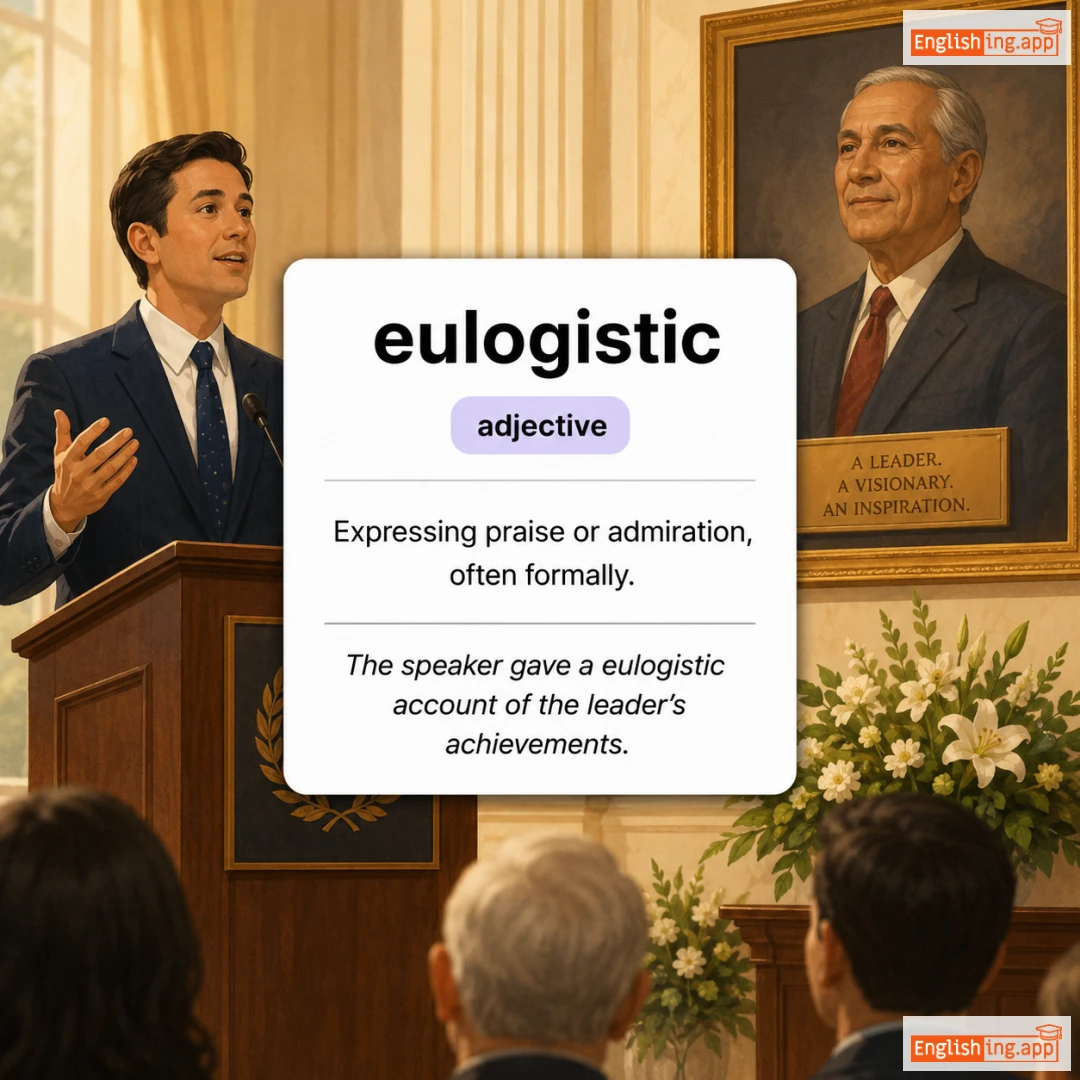
eulogistic definition card — visual illustration of the meaning
adjective C2
/ˌjuːləˈdʒɪstɪk/
賛辞の (sanchi no)

Expressing praise or admiration, often formally.

"The speaker gave a eulogistic account of the leader’s achievements."

"スピーカーはリーダーの業績について賛辞の言葉を述べました。" (Supīkā wa rīdā no gyōseki ni tsuite sanchi no kotoba o nobemashita.)
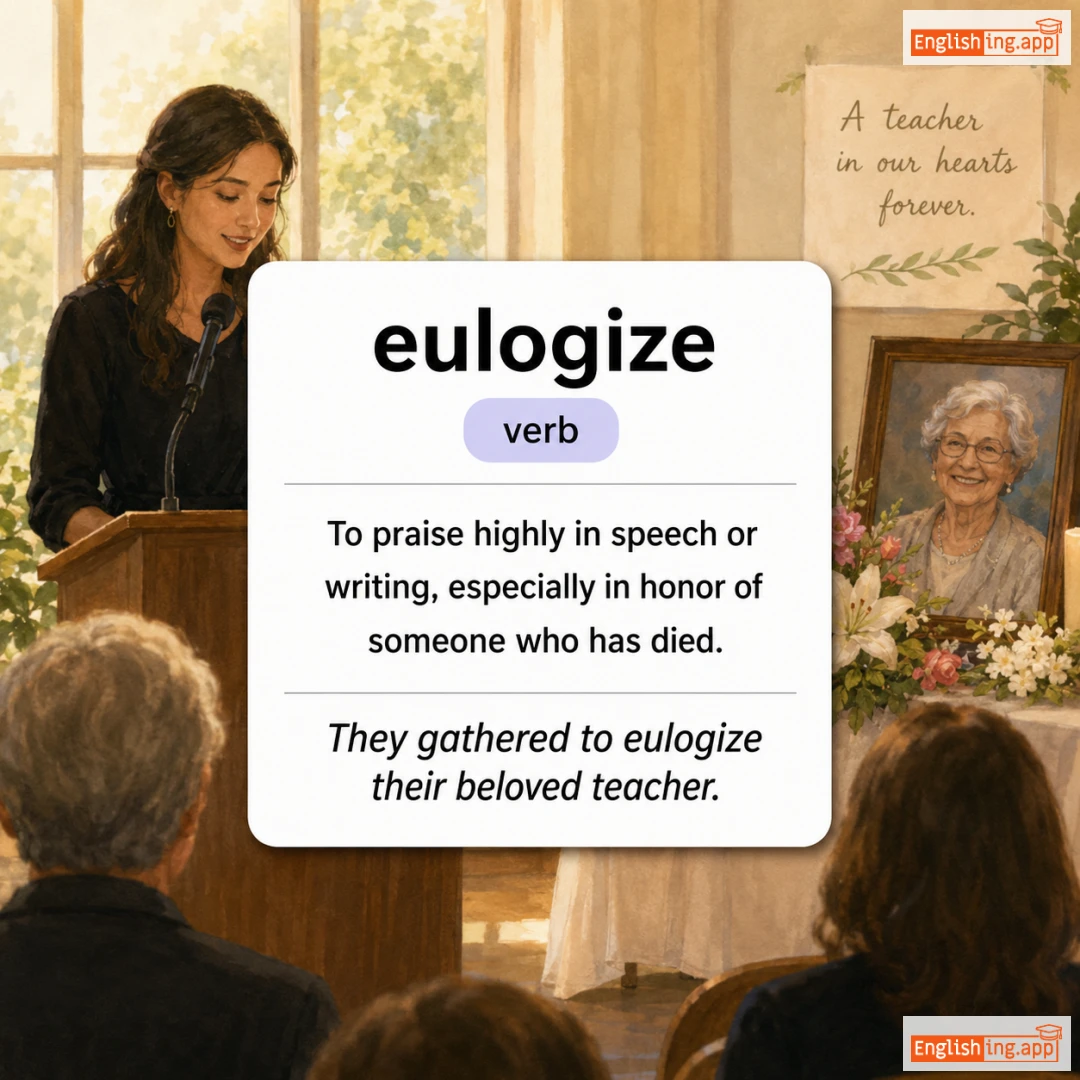
eulogize definition card — visual illustration of the meaning
verb C2
/ˈjuːləˌdʒaɪz/
讃える (tataeru)

To praise highly in speech or writing, especially in honor of someone who has died.

"They gathered to eulogize their beloved teacher."

"彼らは愛する先生を称賛するために集まりました。" (Karera wa aisuru sensei o tataeru tame ni atsumarimashita.)
adjective C2
/juːˈfoʊniəs/
耳に心地よい音 (mimi ni kokochi yoi oto)

Pleasing to the ear; having a sweet sound.

"The poet's euphonious language made the verse a delight to read."

"詩人のユーフォニアスな言葉は詩を読む喜びに変えました。" (Shijin no yūfoniasu na kotoba wa shi o yomu yorokobi ni kaemashita.)
noun C2
/ˈjuːfəni/
ユーフォニー (yuufonii)

The quality of being pleasing to the ear, especially through harmonious combination of words.

"The orator's speech was full of euphony and rhythm."

"演説者のスピーチはユーフォニーとリズムで満ちていた。" (Enzetsusha no supīchi wa yuufonii to rizumu de michite ita.)
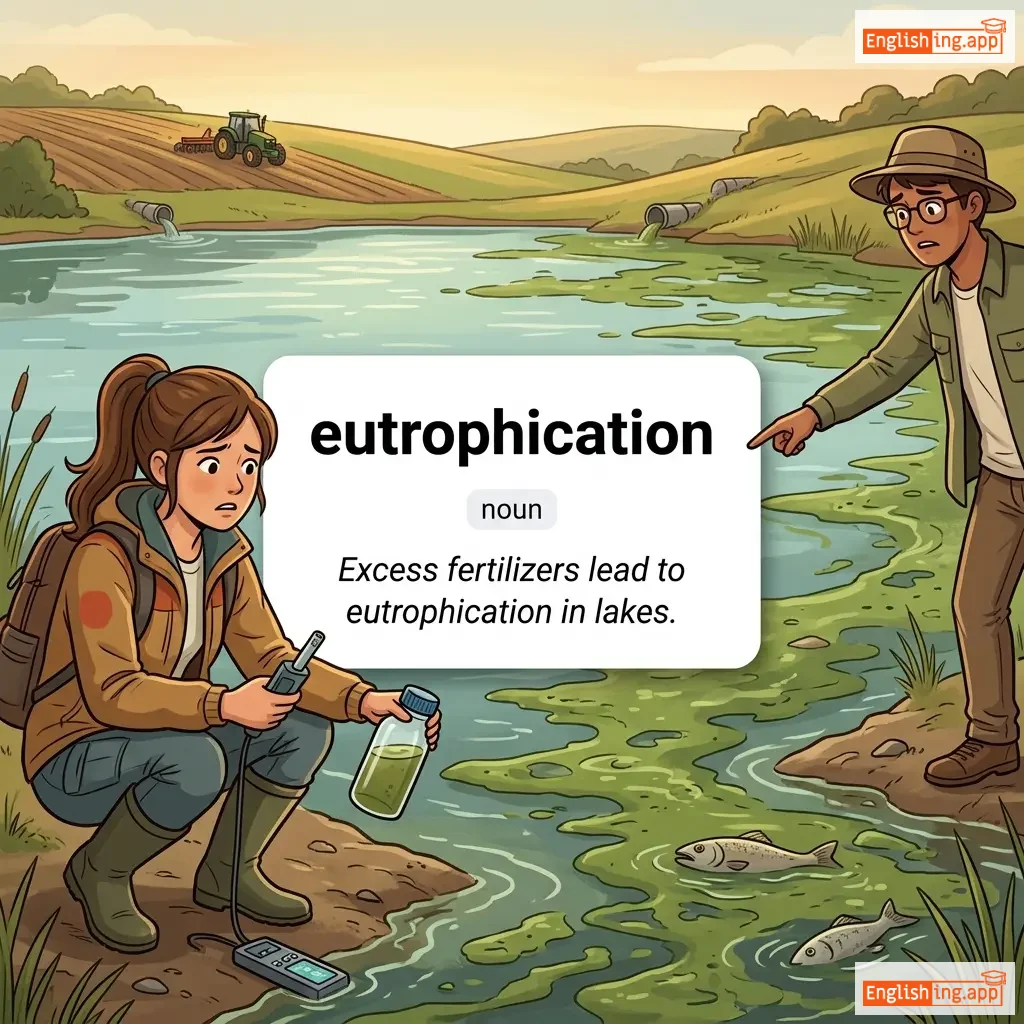
eutrophication definition card — visual illustration of the meaning
noun C2
/juːˌtrɑː.fɪˈkeɪ.ʃən/
湖やその他の水域における栄養素の過剰 (mizuumi ya sonota no suiiki ni okeru eiyōso no kajō)

Excessive richness of nutrients in a lake or other body of water, frequently due to runoff from the land, which causes a dense growth of plant life and death of animal life from lack of oxygen.

"Excess fertilizers lead to eutrophication in lakes."

"過剰な肥料は湖におけるユートロフィケーションを引き起こします。" (Kajōna hiryō wa mizuumi ni okeru yūtorofikēshon o hikiokoshimasu.)
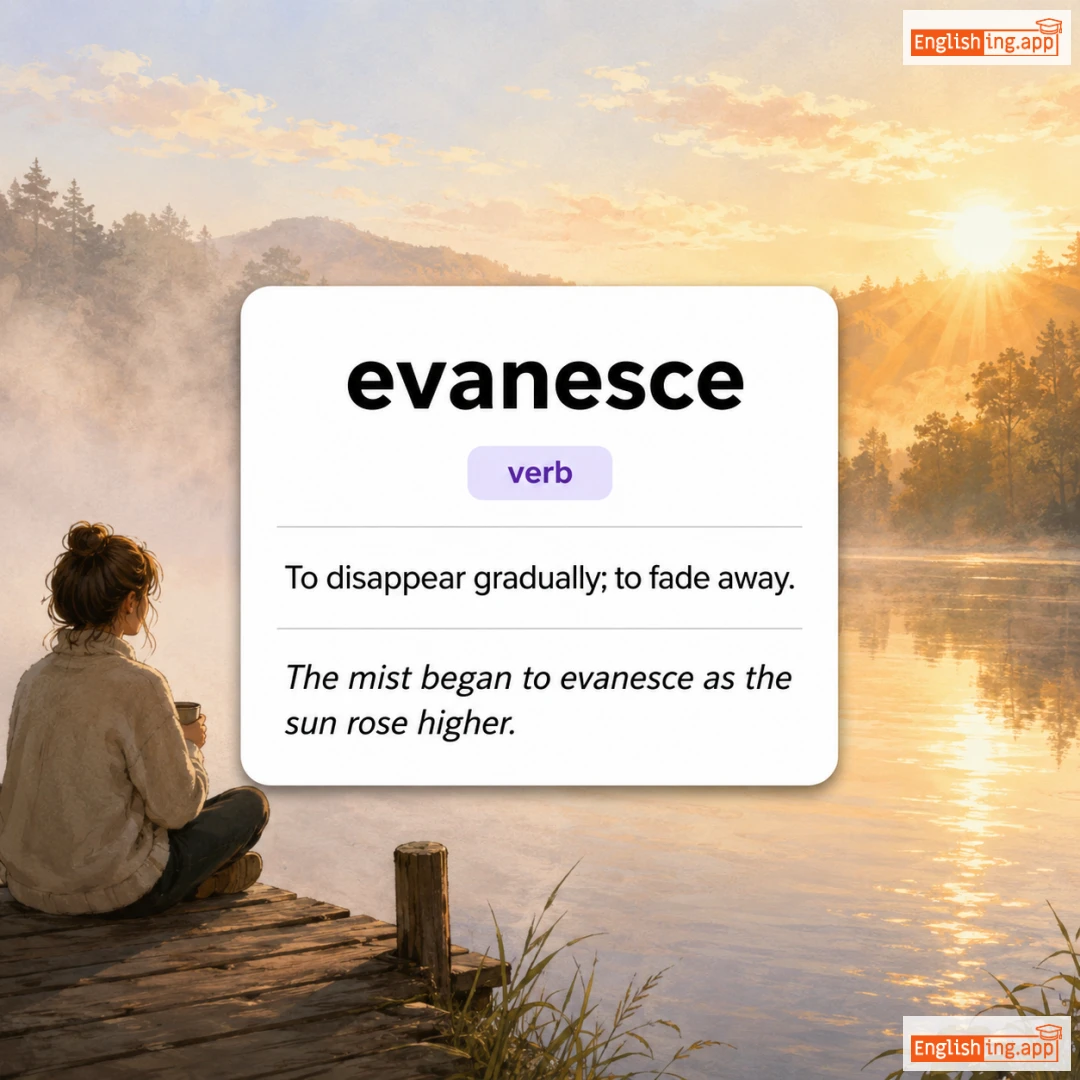
evanesce definition card — visual illustration of the meaning
verb C2
/ˌɛvəˈnɛs/
消える (kieru)

To disappear gradually; to fade away.

"The mist began to evanesce as the sun rose higher."

"霧は太陽が高く昇るにつれて消え始めた。" (Kiri wa taiyō ga takaku noboru ni tsurete kiehajimeta.)
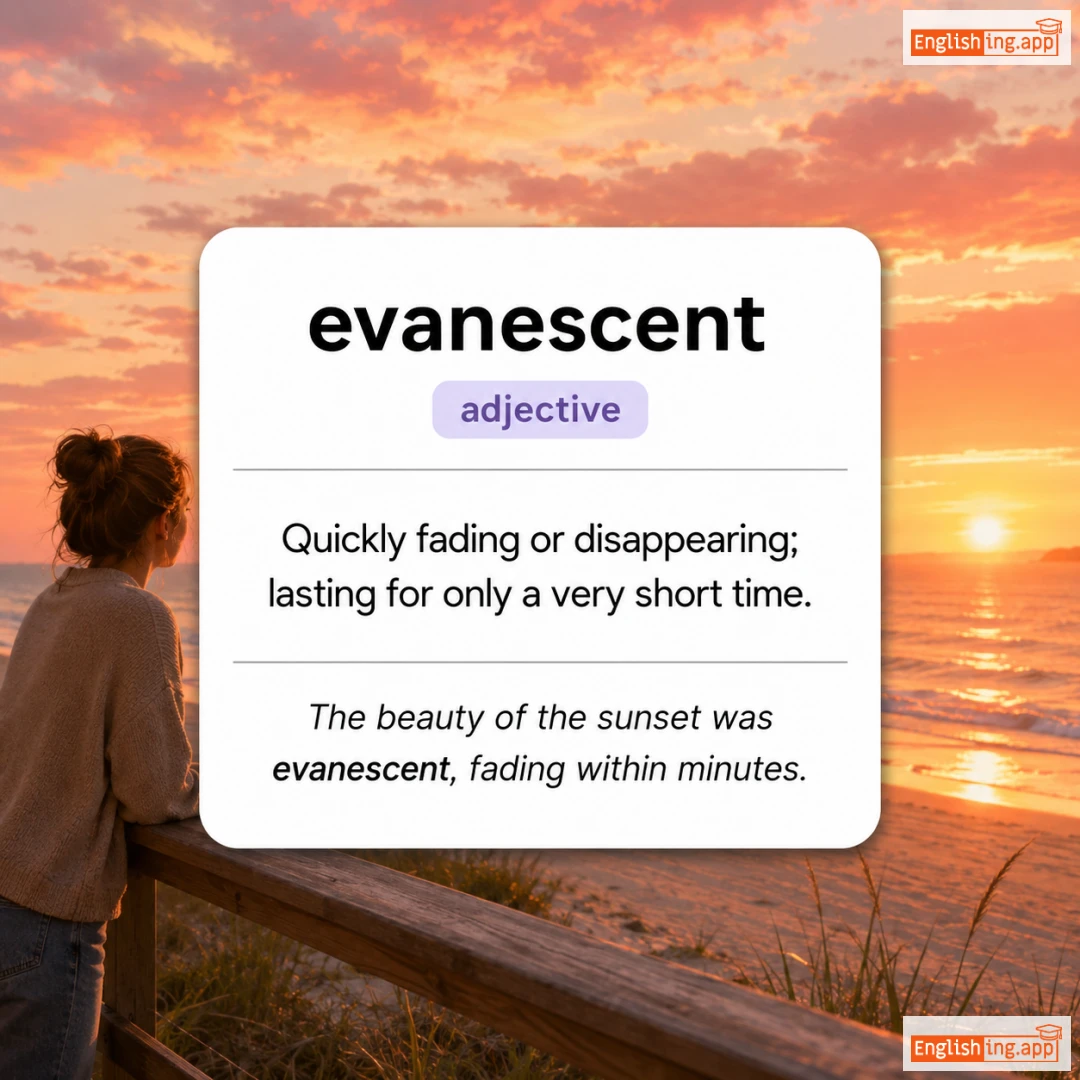
evanescent definition card — visual illustration of the meaning
adjective C2
/ˌɛvəˈnɛsənt/
儚い (hakanai)

Quickly fading or disappearing; lasting for only a very short time.

"The beauty of the sunset was evanescent, fading within minutes."

"夕日の美しさは儚く、数分で消えてしまった。" (Yūhi no utsukushisa wa hakanaku, sūfun de kiete shimatta.)
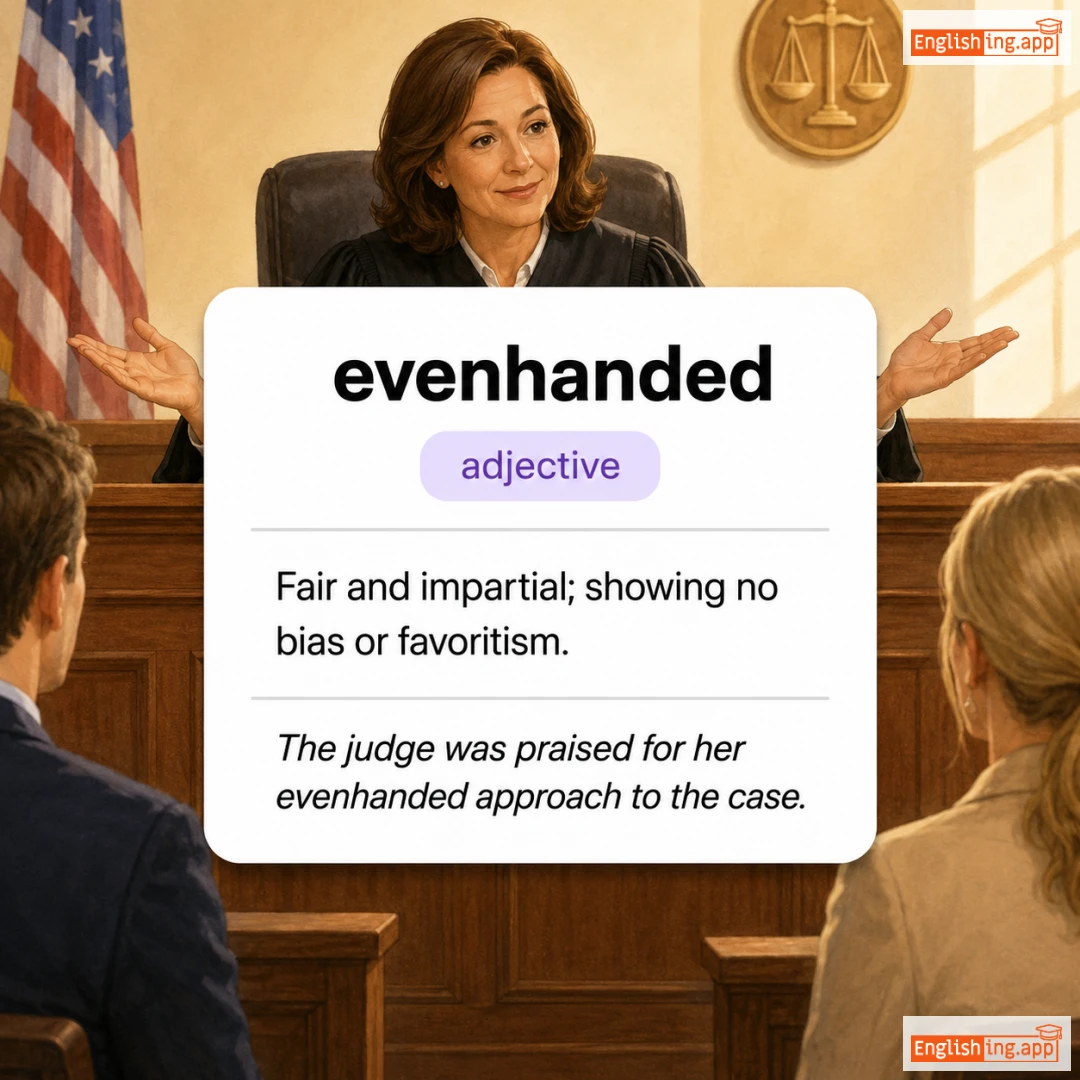
evenhanded definition card — visual illustration of the meaning
adjective C2
/ˌiːvənˈhændɪd/
公平な (kouhei na)

Fair and impartial; showing no bias or favoritism.

"The judge was praised for her evenhanded approach to the case."

"その裁判官は、公平なアプローチでその事件を扱ったことで称賛されました。" (Sono saiban-kan wa, kouhei na apurouchi de sono jiken wo atsukatta koto de shousan saremashita.)
verb C2
/ɪˈvɜːrt/
外向きにひっくり返す (soto-muki ni hikkurikaesu)

To turn inside out or outward.

"The surgeon had to evert the eyelid during the procedure."

"外科医は手術中にまぶたをひっくり返さなければなりませんでした。" (Geka-i wa shujutsu-chū ni mabuta o hikkurikasanakereba narimasen deshita.)
adjective C2
/ˌɛvɪˈdɛnʃəl/
証拠の (shōko no)

relating to or providing evidence

"The lawyer presented evidential support for her claims."

"弁護士は彼女の主張に対する証拠のサポートを提供しました。" (Bengoshi wa kanojo no shuchō ni taisuru shōko no sapōto o teikyō shimashita.)
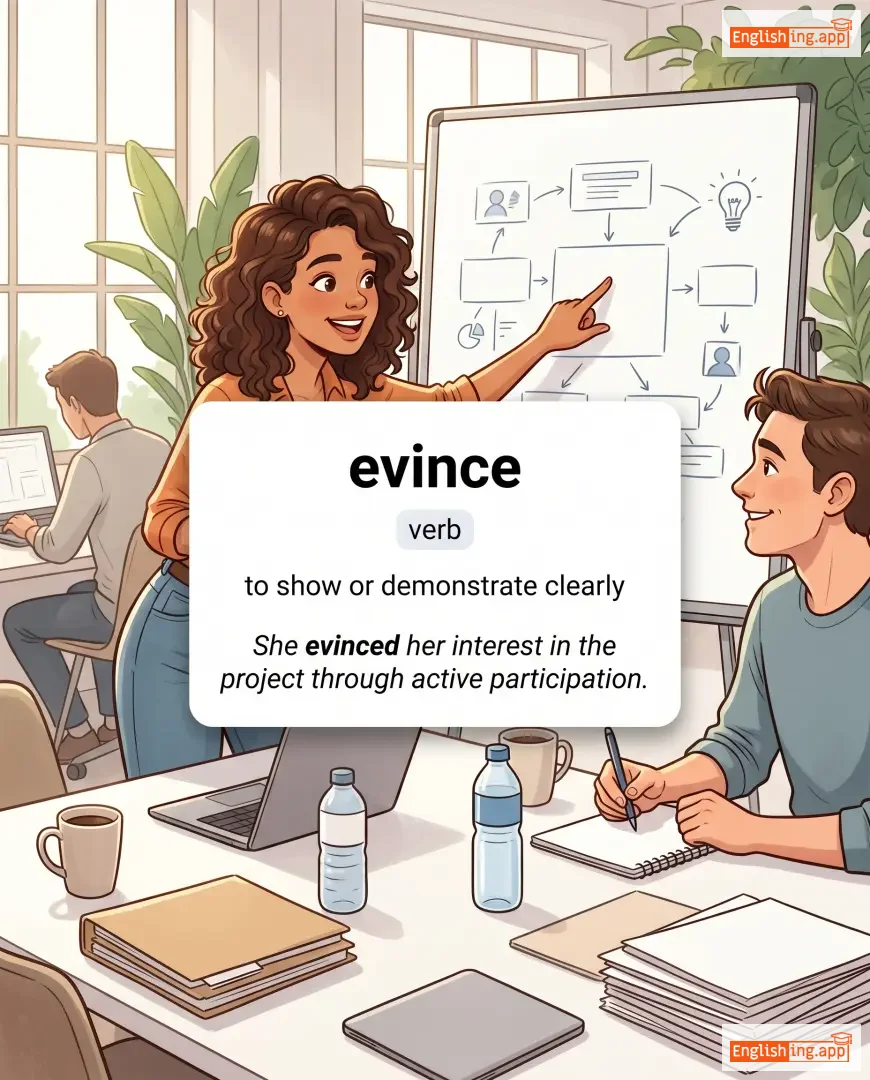
evince definition card — visual illustration of the meaning
verb C2
/ɪˈvɪns/
示す (shimesu)

to show or demonstrate clearly

"She evinced her interest in the project through active participation."

"彼女は積極的な参加を通じてそのプロジェクトに対する関心を示した。" (Kanojo wa sekkyokuteki na sanka wo toshite sono purojekuto ni taisuru kanshin wo shimeshita.)
verb C2
/ɪˈvɪsəˌreɪt/
臓器を取り除く、破壊する (zōki o torinozoku, hakai suru)

to remove the internal organs of; to deprive of essential content

"The critics eviscerated the movie for its weak storyline."

"批評家たちはその映画の弱いストーリーラインに対して破壊しました。" (Hihyōka-tachi wa sono eiga no yowai sutōrīrain ni taishite hakai shimashita.)
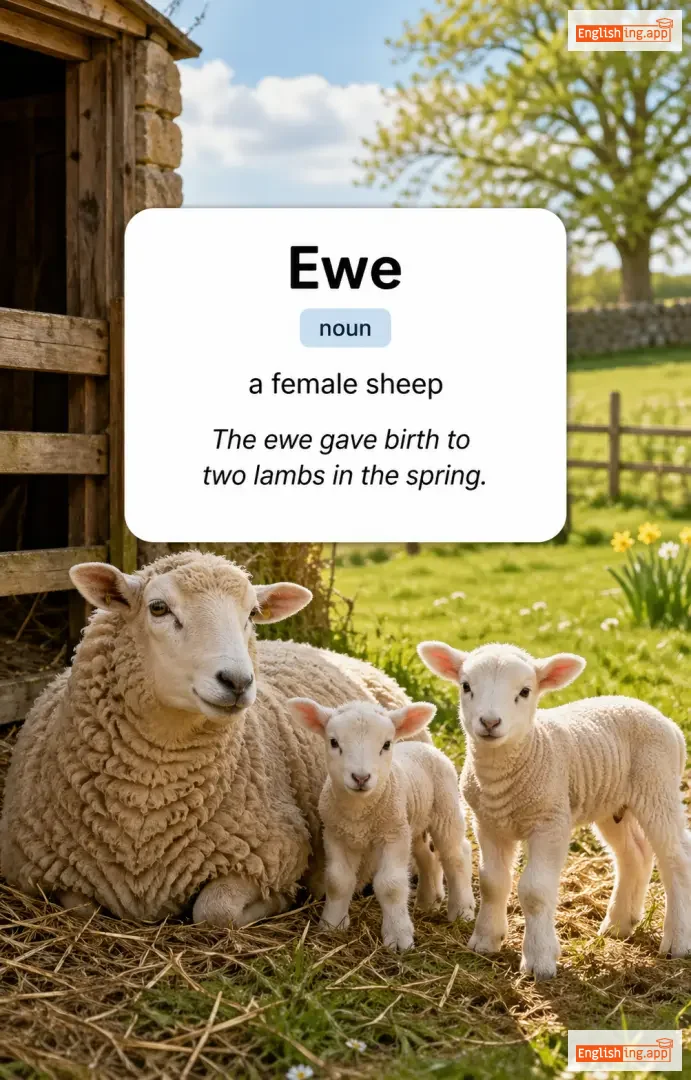
Ewe definition card — visual illustration of the meaning
noun C2
/juː/
雌羊 (mesu hitsuji)

a female sheep

"The ewe gave birth to two lambs in the spring."

"その雌羊は春に二匹の子羊を産みました。" (Sono mesu hitsuji wa haru ni nihiki no kohitsuji o umimashita.)
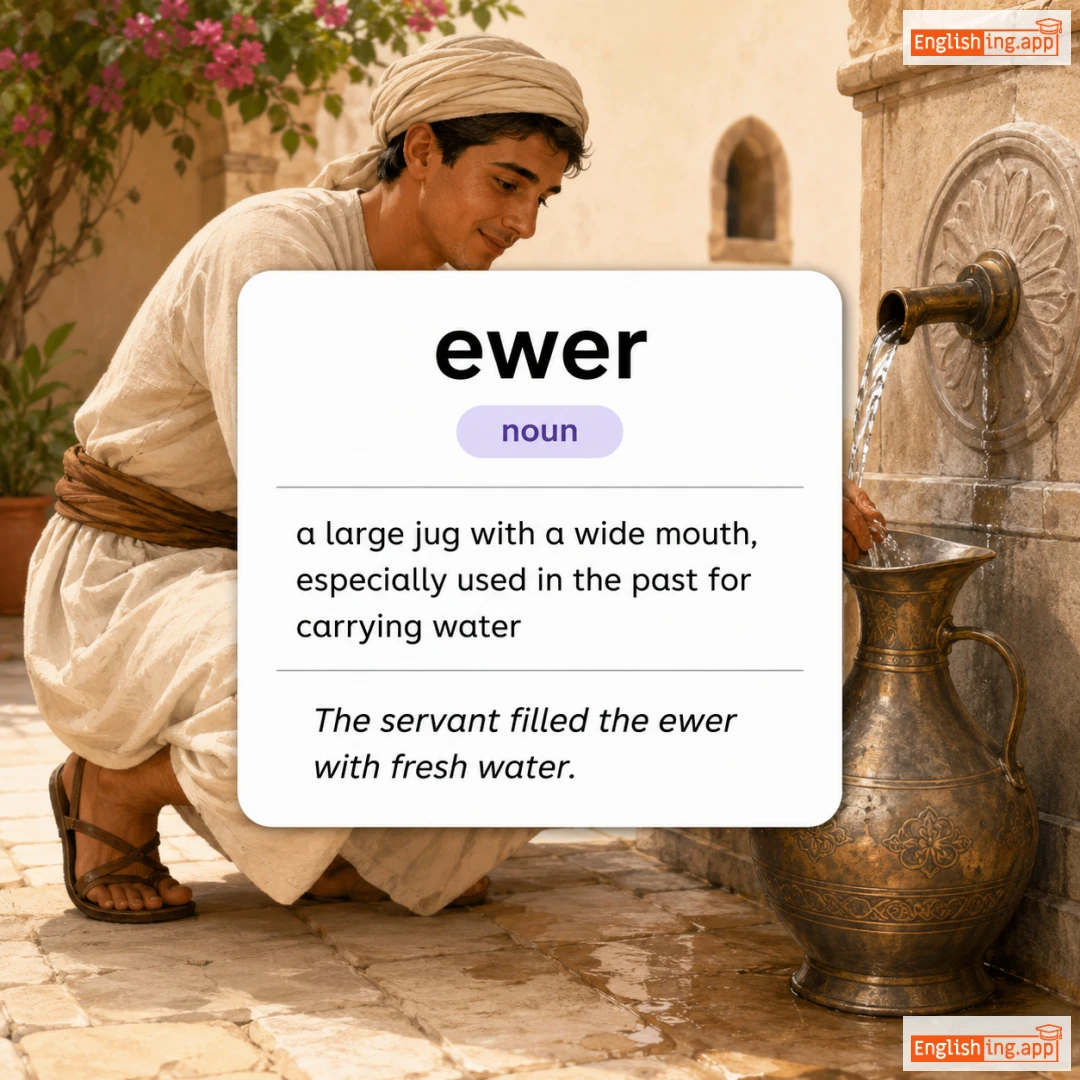
ewer definition card — visual illustration of the meaning
noun C2
/ˈjuːər/
水差し (misashi)

a large jug with a wide mouth, especially used in the past for carrying water

"The servant filled the ewer with fresh water."

"使用人は水差しに新鮮な水を注ぎました。" (Shiyōnin wa misashi ni shinsen na mizu o sosogimashita.)
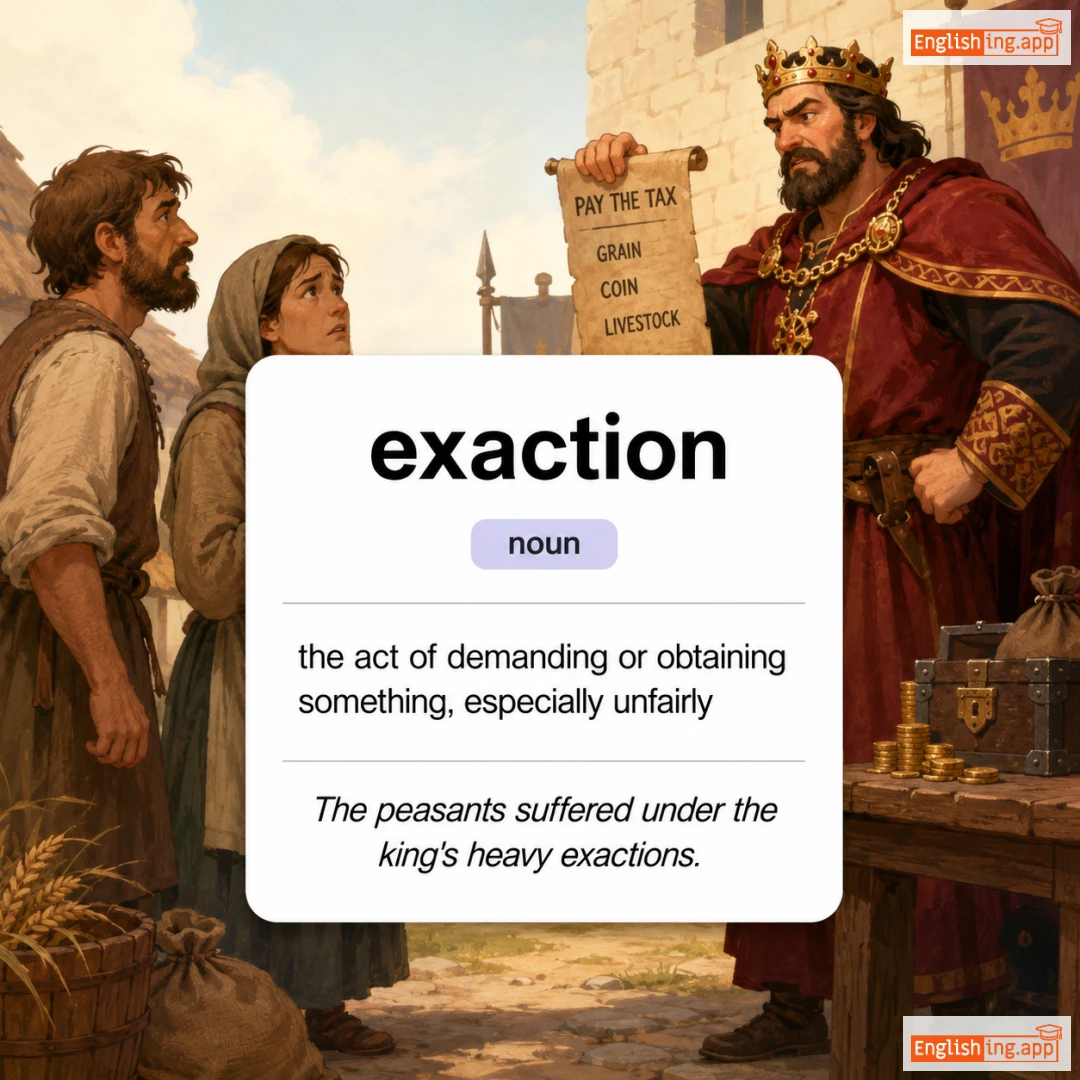
exaction definition card — visual illustration of the meaning
noun C2
/ɪɡˈzækʃən/
強制徴収 (kyousei choushuu)

the act of demanding or obtaining something, especially unfairly

"The peasants suffered under the king's heavy exactions."

"農民たちは王の重い強制徴収の下で苦しんだ。" (Noumintachi wa ou no omoi kyousei choushuu no shita de kurushinda.)
adjective C2
/ɪkˈsɛpʃənəbl/
受け入れられない (ukeirarenai)

Open to objection; causing disapproval.

"His rude remarks were considered exceptionable by everyone present."

"彼の無礼な発言は、出席していた全員にとって不適切だと見なされた。" (Kare no burei na hatsugen wa, shusseki shite ita zen'in ni totte futekisetsu da to minasareta.)
noun C2
/ɪksˈtʃɛkər/
国庫 (koku-ko)

The treasury of a state or country.

"The government announced new measures to improve the exchequer."

"政府は国庫を改善するための新しい措置を発表しました。" (seifu wa kokko wo kaizen suru tame no atarashī sochi wo happyou shimashita.)
noun C2
/ɪkˈsɪʒən/
切除 (seshu)

the act of cutting something out, especially by surgical removal

"The excision of the infected tissue prevented further complications."

"感染した組織の切除により、さらなる合併症が防止されました。" (Kansen shita soshiki no seshu ni yori, sara naru gappeishou ga boushi saremashita.)
noun C2
/ˌɛksaɪˈteɪʃən/
興奮 (kōfun)

a state of great excitement or the process of stimulating activity

"The news created great excitation among the fans."

"そのニュースはファンの間で大きな興奮を引き起こしました。" (Sono nyūsu wa fan no aida de ōkina kōfun o hikiokoshimashita.)
verb C2
/ɛkˈskɔːrieɪt/
厳しく批判する (kibishiku hihan suru)

To strongly criticize someone; to denounce severely.

"The critic excoriated the film for its poor script."

"批評家はその映画の悪い脚本を厳しく批判しました。" (Hihyōka wa sono eiga no warui kyakuhon o kibishiku hihan shimashita.)
noun C2
/ɪkˈskrɛsəns/
異常な成長 (ijō na seichō)

An abnormal outgrowth or lump, often considered unattractive.

"The building was considered an excrescence on the landscape."

"その建物は風景の中で異常な成長と見なされました。" (Sono tatemono wa fūkei no naka de ijō na seichō to minasaremashita.)
verb C2
/ɪkˈskruːʃieɪt/
苦しめる (kurushimeru)

to cause intense pain or suffering

"The injury excruciated him with unbearable pain."

"その怪我は彼を耐え難い痛みに苦しめました。" (Sono kega wa kare wo taegatai itami ni kurushimemashita.)
exculpate definition card — visual illustration of the meaning
verb C2
/ˈɛkskʌlpeɪt/
免罪する (menzai suru)

to show or declare that someone is not guilty of wrongdoing

"The lawyer worked hard to exculpate his client."

"弁護士はクライアントを無罪にするために懸命に働いた。" (Bengoshi wa kuraianto o muzai ni suru tame ni kenmei ni hataraita.)
adjective C2
/ɪkˈskɜːsɪv/
逸脱した (itsudatsu shita)

Tending to digress or wander; moving away from the main subject.

"His excursive lecture left the students confused about the main topic."

"彼の逸脱した講義は、学生たちを主題について混乱させました。" (Kare no itsudatsu shita kougi wa, gakuseitachi wo shudai ni tsuite konran sasemashita.)
execrable definition card — visual illustration of the meaning
adjective C2
/ˈeksɪkrəbl/
ひどい (hidoi)

Extremely bad or unpleasant.

"The movie was so execrable that many people left the theater early."

"その映画はひどすぎて、多くの人々が早く映画館を出て行きました。" (Sono eiga wa hido sugite, ōku no hitobito ga hayaku eigakan o dete ikimashita.)
verb C2
/ˈeksɪkreɪt/
憎む (nikumu)

To feel or express great loathing or hatred for something.

"The community execrated the corrupt politician."

"コミュニティは腐敗した政治家を憎んだ。" (Komyuniti wa fuhai shita seijika o nikunda.)
noun C2
/ˌɛksɪˈkreɪʃən/
呪い (noroi)

An act of cursing or denouncing someone or something with hatred.

"The dictator’s name was spoken with execration after his fall."

"独裁者の名前は、彼の転落後に呪いの言葉と共に言われました。" (Dokusai-sha no namae wa, kare no tenraku-go ni noroi no kotoba to tomoni iwaremashita.)
noun C2
/ˌɛksəˈdʒiːsɪs/
注解 (chūkai)

A critical explanation or interpretation of a text, especially a religious scripture.

"The professor gave a detailed exegesis of the biblical passage."

"教授は聖書の一節の詳細な注解を提供した。" (Kyojū wa seisho no issetsu no shōsai na chūkai o teikyō shita.)
noun C2
/ɪɡˈzɛmplɑːr/
模範 (mohan)

A model or pattern to be copied or imitated.

"She is an exemplar of kindness and generosity."

"彼女は親切と寛大さの模範です。" (Kanojo wa shinsetsu to kandai sa no mohan desu.)
adjective C2
/ɪɡˈzɔːstɪbəl/
使い果たせる (tsukaihataseru)

able to be used up completely; not infinite

"Coal and oil are exhaustible resources."

"石炭と石油は使い果たせる資源です。" (Sekitan to sekiyu wa tsukaihataseru shigen desu.)
verb C2
/ɪɡˈzɪləreɪt/
興奮させる (koufun saseru)

To make someone feel very happy, animated, or excited.

"The mountain view exhilarated the travelers."

"山の景色は旅行者を興奮させました。" (Yama no keshiki wa ryokō-sha o kōfun sasemashita.)
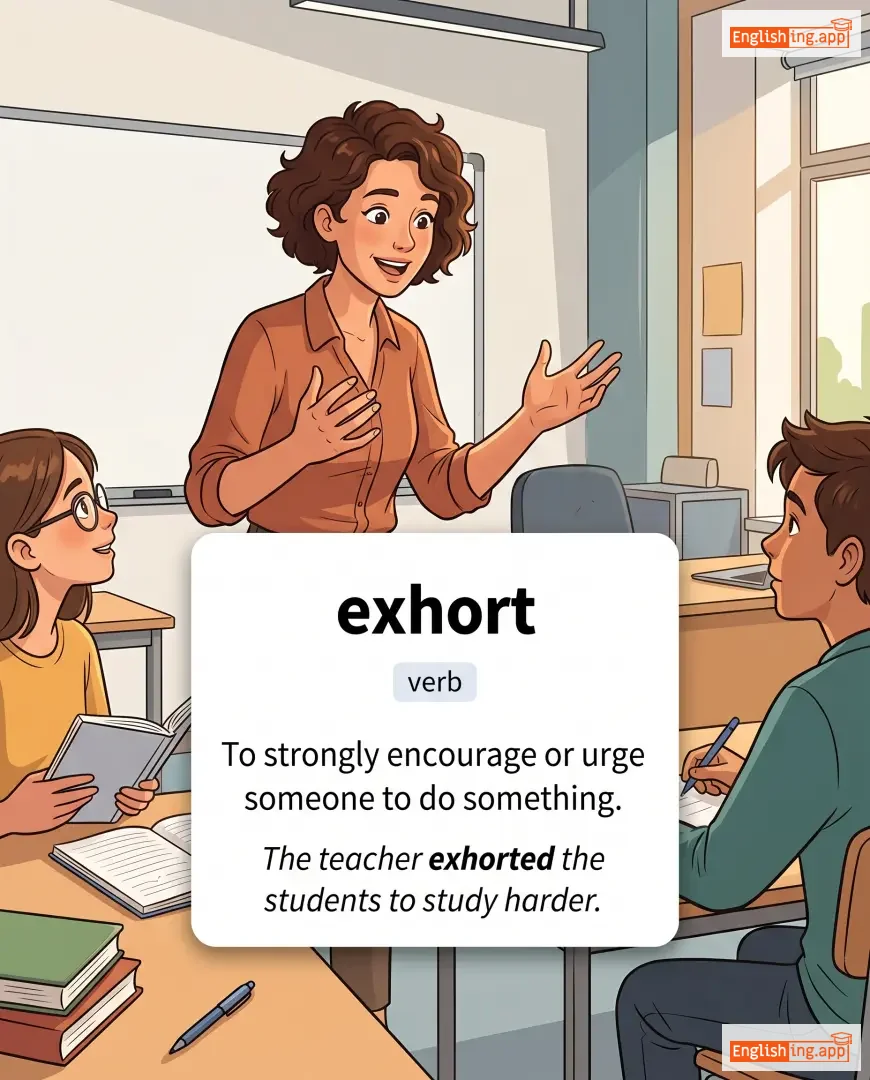
exhort definition card — visual illustration of the meaning
verb C2
/ɪɡˈzɔːrt/
促す (unagasu)

To strongly encourage or urge someone to do something.

"The teacher exhorted the students to study harder."

"教師は学生にもっと一生懸命勉強するように促しました。" (Kyoushi wa gakusei ni motto isshoukenmei benkyou suru you ni unagashimashita.)
verb C2
/ɛksˈhjuːm/
発掘する (hakkutsu suru)

to dig out something buried, especially a body from the ground

"The archaeologists decided to exhume the ancient remains."

"考古学者たちは古代の遺物を発掘することに決めました。" (Kōkogakusha-tachi wa kodai no ibutsu o hakkutsu suru koto ni kimemashita.)
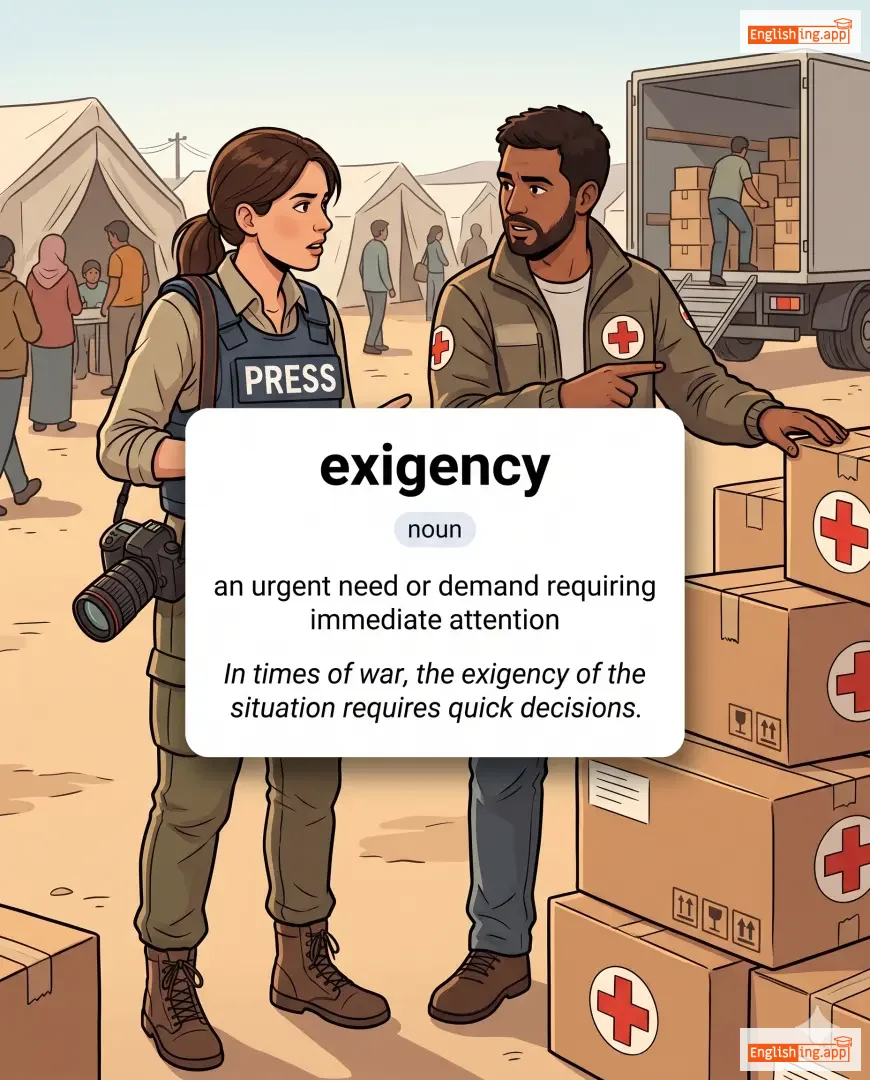
exigency definition card — visual illustration of the meaning
noun C2
/ˈɛksɪdʒənsi/
緊急の必要性 (kinkyu no hitsuyosei)

an urgent need or demand requiring immediate attention

"In times of war, the exigency of the situation requires quick decisions."

"戦争の時、状況の緊急の必要性は迅速な決定を要求する。" (Sensō no toki, jōkyō no kinkyu no hitsuyōsei wa jinsoku na kettei o yōkyū suru.)
adjective C2
/ˈɛksɪdʒənt/
緊急 (kinkyuu)

demanding immediate action or attention; urgent

"The patient’s exigent condition required immediate surgery."

"患者の緊急状態は即時の手術を必要としました。" (Kanja no kinkyuu joutai wa sokushi no shujutsu wo hitsuyou to shimashita.)