ভোকাবুলারিসমূহ

ইংরেজি শব্দের বাংলা অর্থ | English to Bangla Word Meaning Dictionary

verb C2
/dɪˈspɒnd/
沮丧 (jǔsàng)

to lose confidence or hope; to become dejected

"After repeated failures, he began to despond."

"在多次失败后,他开始感到沮丧。" (Zài duō cì shībài hòu, tā kāishǐ gǎndào jǔsàng.)
adjective C2
/dɛˈspɒtɪk/
专制 (zhuān zhì)

exercising power in a cruel, oppressive, or authoritarian way

"The king’s despotic rule left the people in misery."

"国王的专制统治使人民陷入了痛苦。" (Guowang de zhuanzhi tongzhi shi renmin xianru le tongku.)
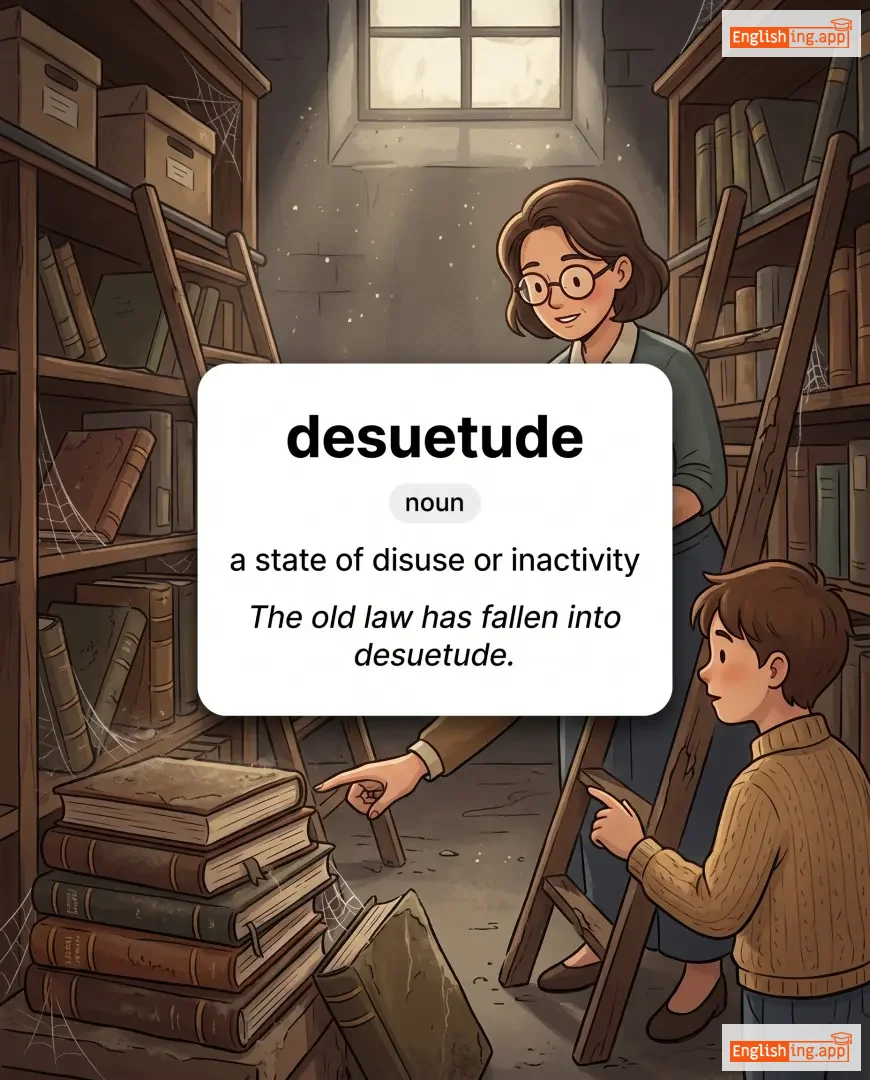
desuetude definition card — visual illustration of the meaning
noun C2
/ˈdɛswɪˌtuːd/
废弃 (feiqi)

a state of disuse or inactivity

"The old law has fallen into desuetude."

"旧法律已经废弃。" (Jiù fǎlǜ yǐjīng fèiqì.)
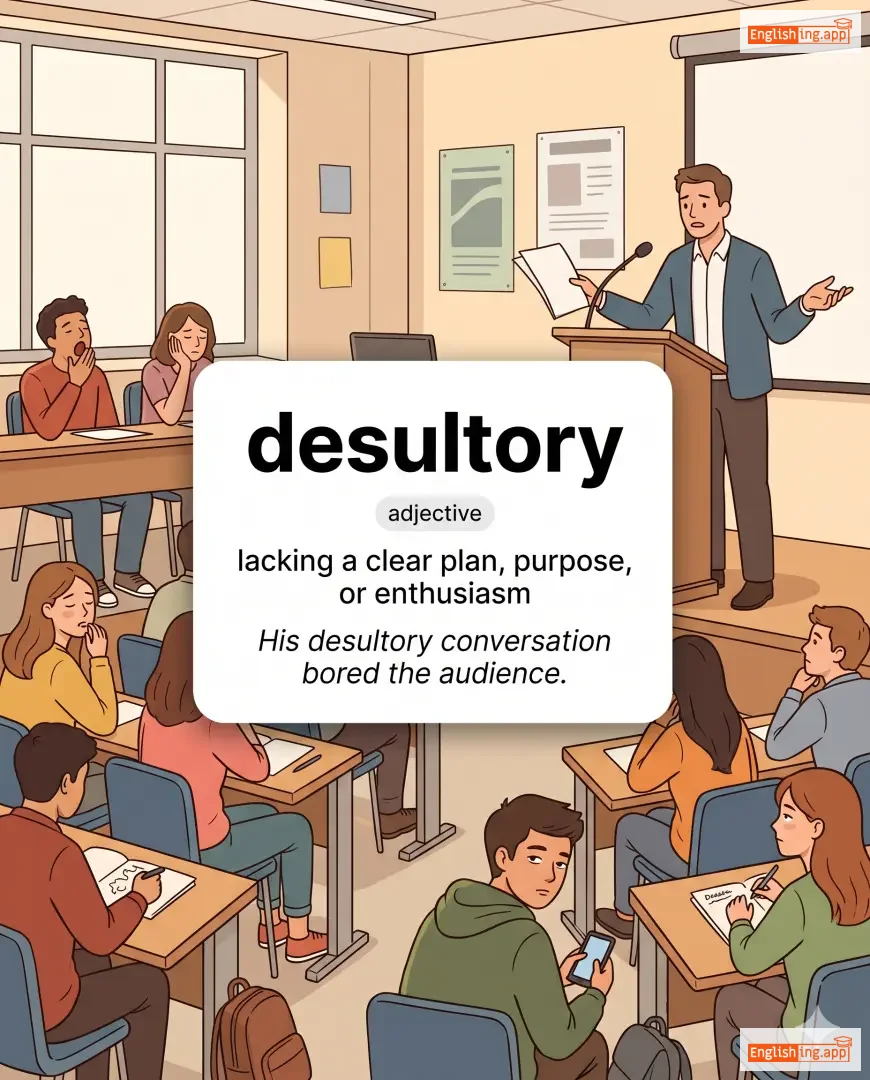
desultory definition card — visual illustration of the meaning
adjective C2
/ˈdɛsəlˌtɔːri/
杂乱无章 (záluàn wúzhāng)

lacking a clear plan, purpose, or enthusiasm

"His desultory conversation bored the audience."

"他那杂乱无章的谈话让观众感到无聊。" (Tā nà záluàn wúzhāng de tánhuà ràng guānzhòng gǎndào wúliáo.)
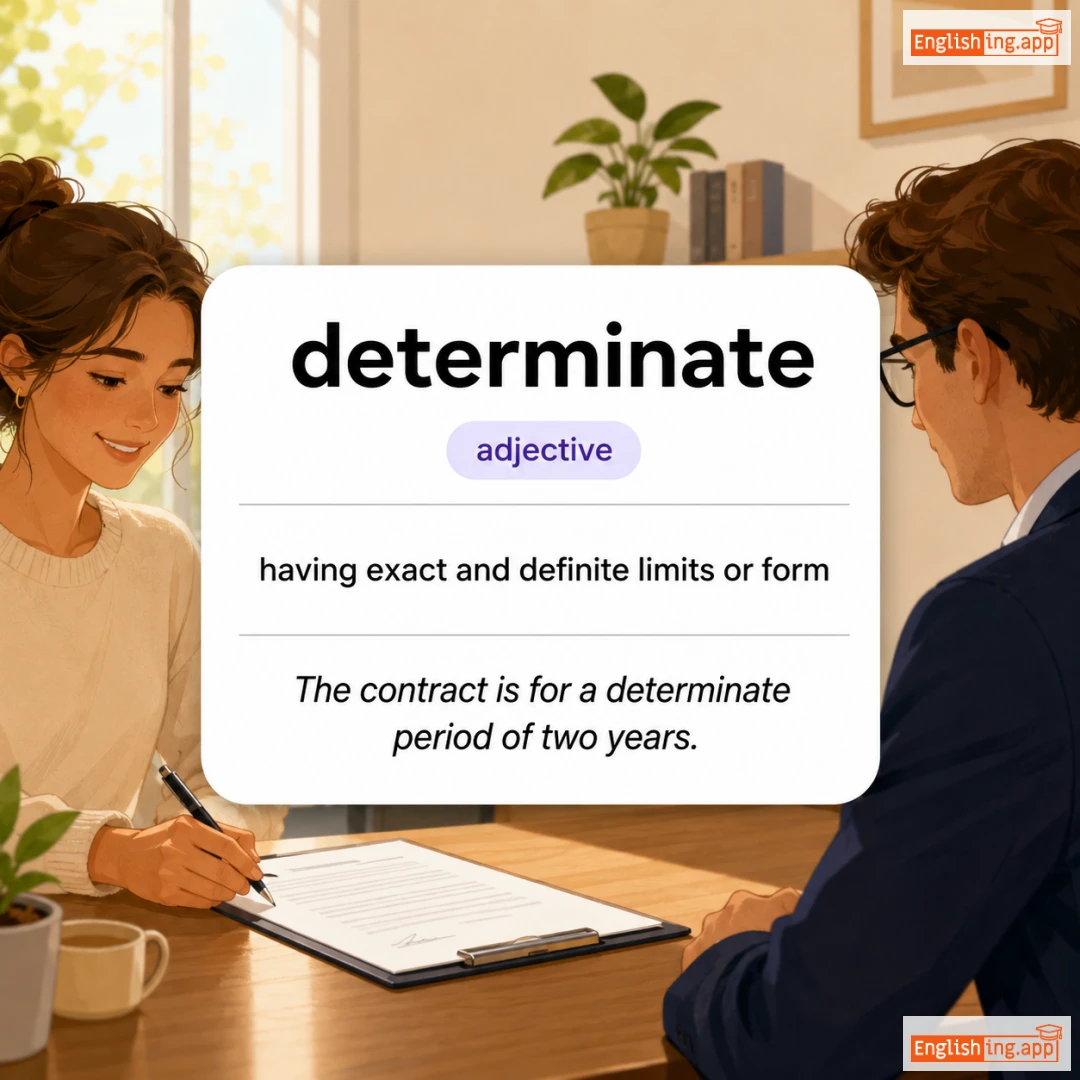
determinate definition card — visual illustration of the meaning
adjective C2
/dɪˈtɜːrmɪnət/
确定的 (quèdìng de)

having exact and definite limits or form

"The contract is for a determinate period of two years."

"合同是为期两年的确定期限。" (Hétóng shì wéiqī liǎng nián de quèdìng qīxiàn.)
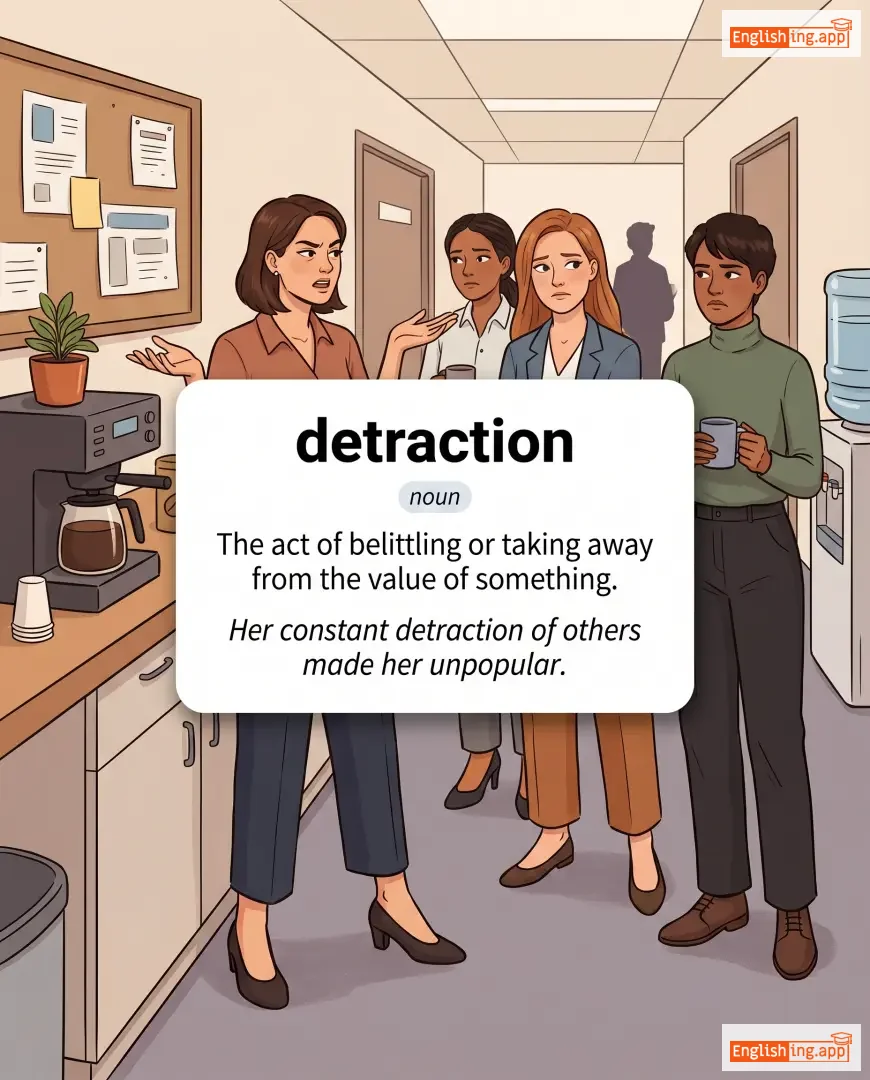
detraction definition card — visual illustration of the meaning
noun C2
/dɪˈtrækʃən/
贬低 (biǎn dī)

The act of belittling or taking away from the value of something.

"Her constant detraction of others made her unpopular."

"她对他人的不断贬低使她变得不受欢迎。" (Tā duì tārén de bùduàn biǎndī shǐ tā biàn dé bù shòu huānyíng.)
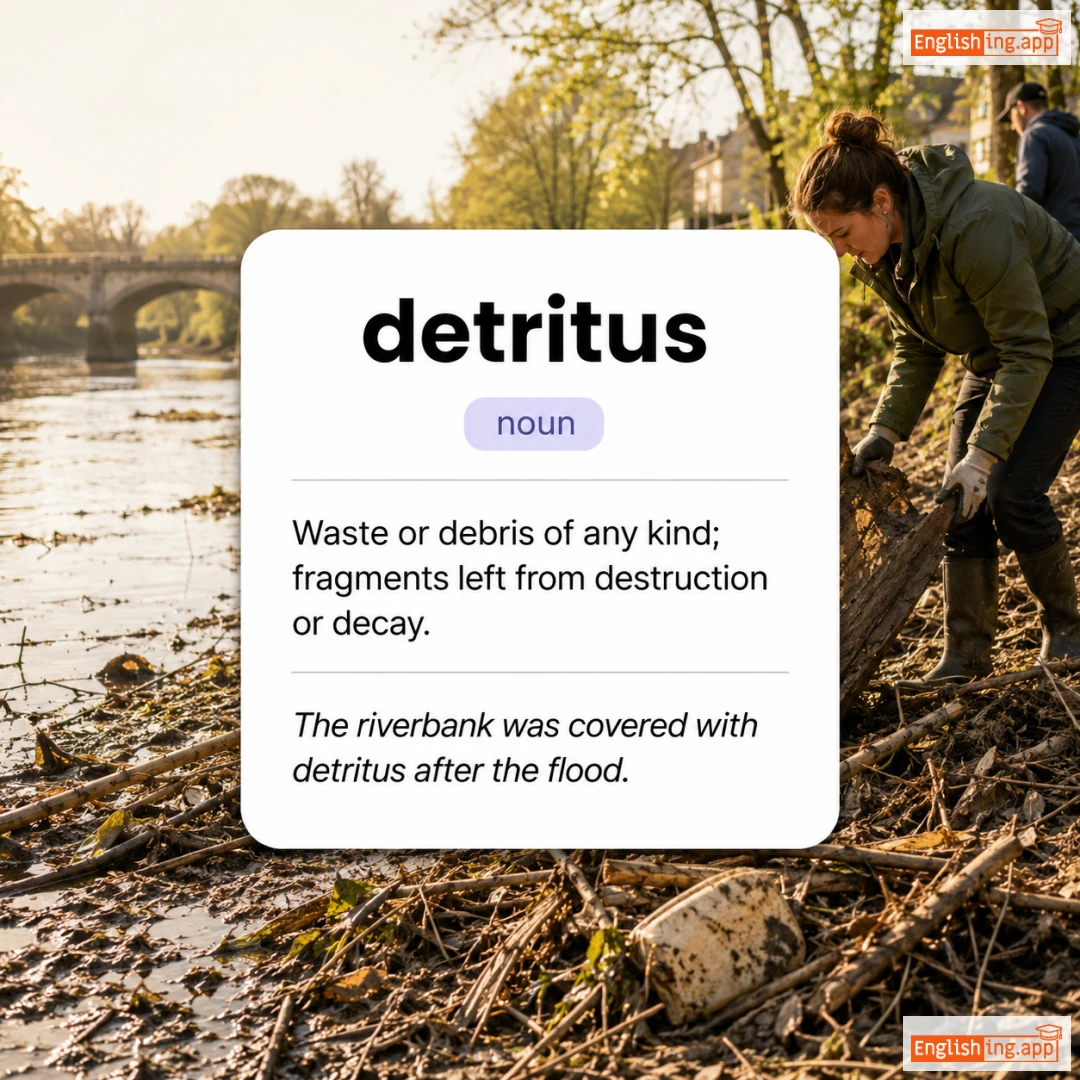
detritus definition card — visual illustration of the meaning
noun C2
/dɪˈtraɪtəs/
碎屑 (suìxiè)

Waste or debris of any kind; fragments left from destruction or decay.

"The riverbank was covered with detritus after the flood."

"洪水后,河岸被碎屑覆盖。" (Hóngshuǐ hòu, hé'àn bèi suìxiè fùgài.)
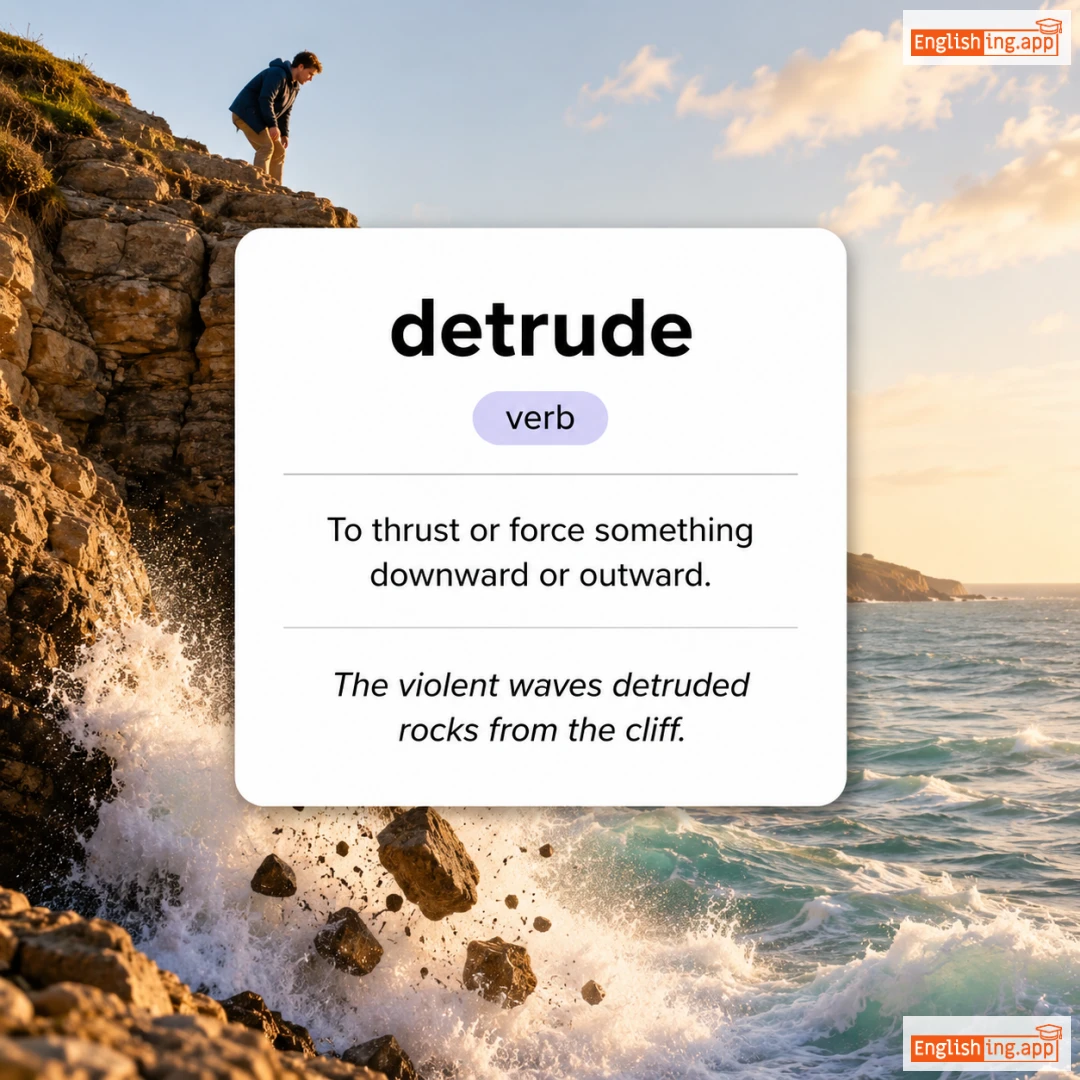
detrude definition card — visual illustration of the meaning
verb C2
/dɪˈtruːd/
推向下或推向外面 (tuī xiàng xià huò tuī xiàng wàimiàn)

To thrust or force something downward or outward.

"The violent waves detruded rocks from the cliff."

"暴力的海浪把岩石从悬崖上推了下来。" (Bàolì de hǎilàng bǎ yánshí cóng xuán yá shàng tuī le xiàlái.)
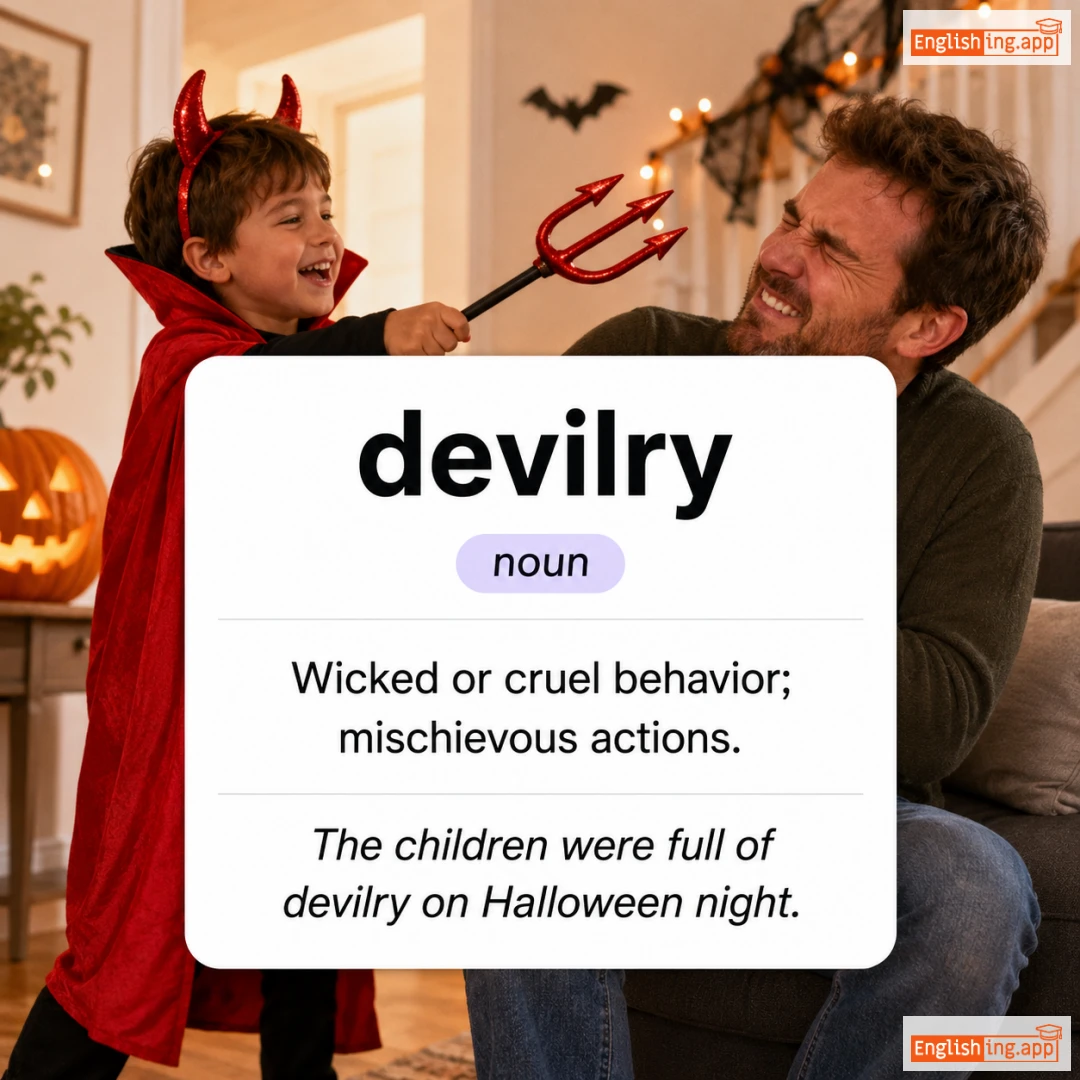
devilry definition card — visual illustration of the meaning
noun C2
/ˈdɛvɪlri/
恶作剧 (èzuòjù)

Wicked or cruel behavior; mischievous actions.

"The children were full of devilry on Halloween night."

"万圣节那天,孩子们充满了恶作剧。" (Wànshèngjié nàtiān, háizimen chōngmǎnle èzuòjù.)
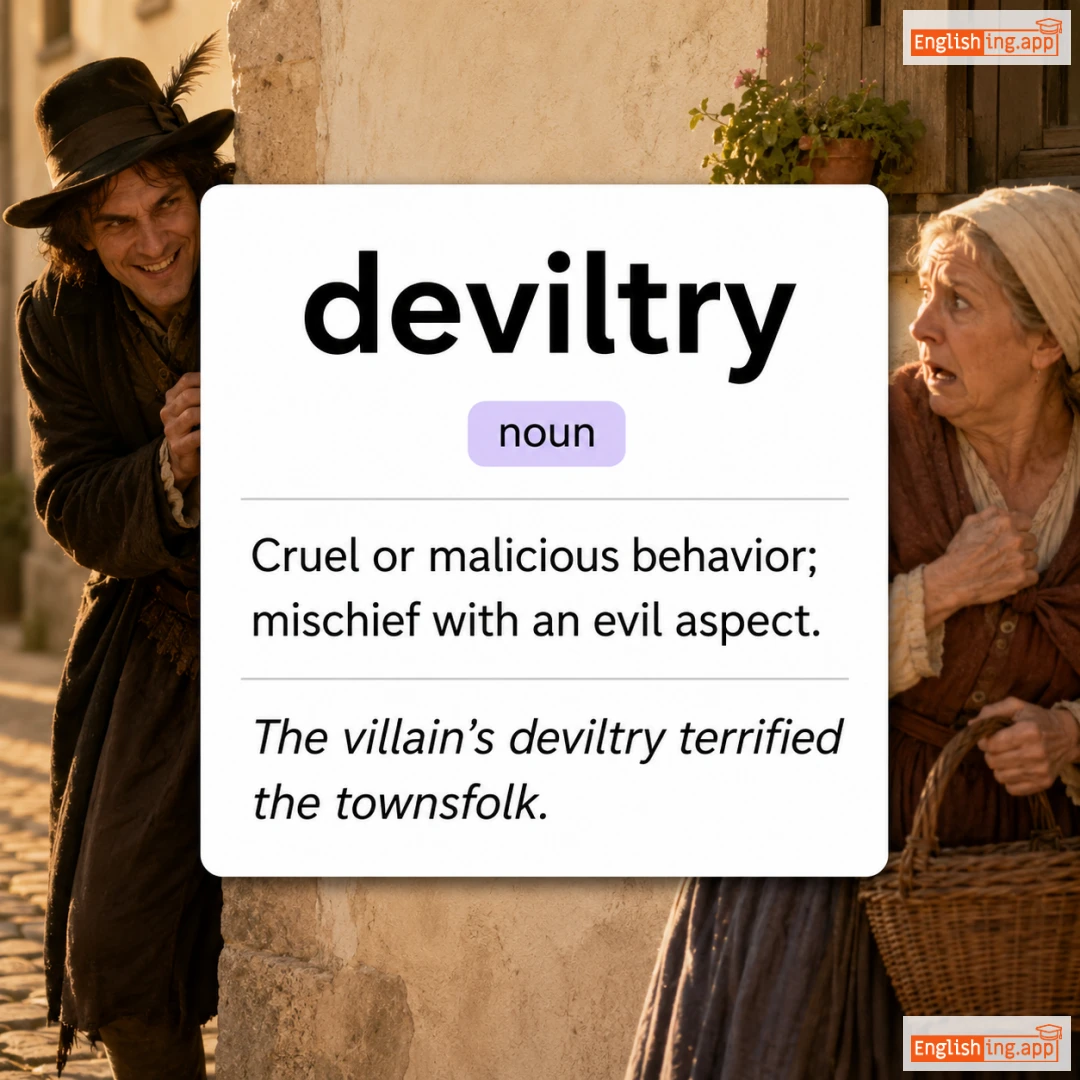
deviltry definition card — visual illustration of the meaning
noun C2
/ˈdɛvɪltrɪ/
恶魔的诡计 (è mó de guǐ jì)

Cruel or malicious behavior; mischief with an evil aspect.

"The villain’s deviltry terrified the townsfolk."

"恶棍的恶作剧吓坏了镇上的人。" (Ègùn de èzuòjù xià huàile zhèn shàng de rén.)
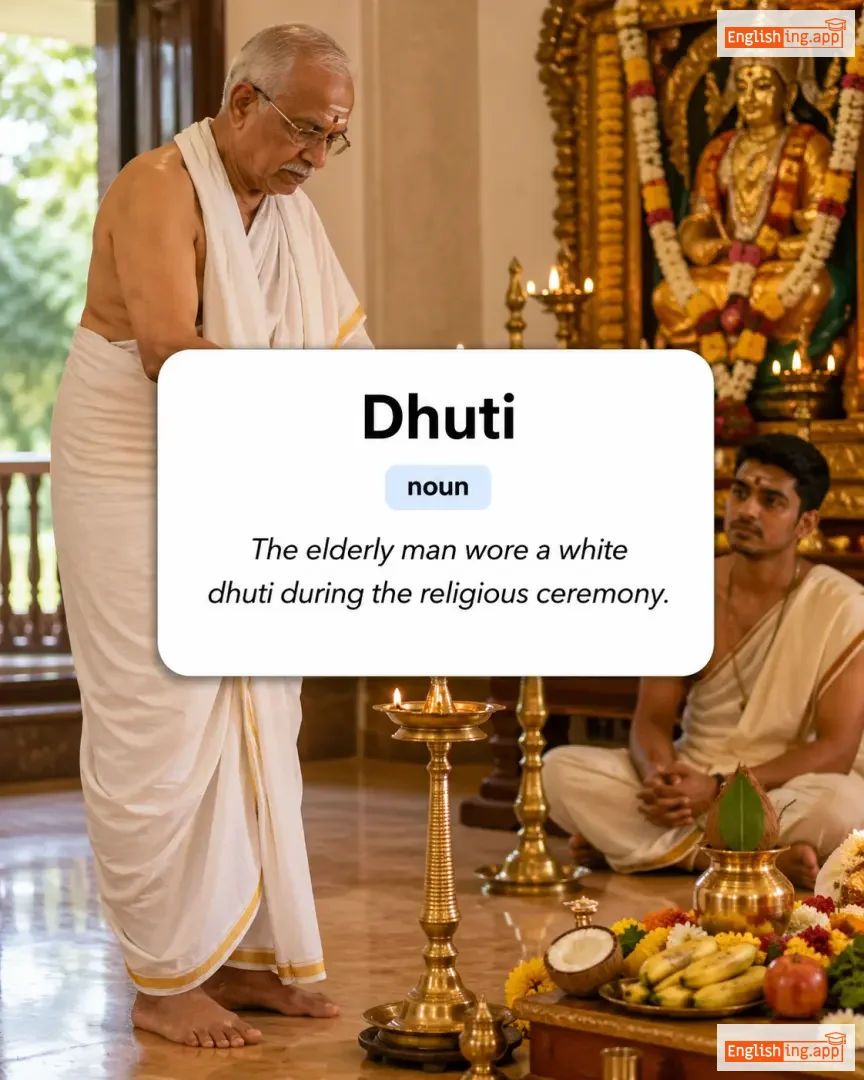
Dhuti definition card — visual illustration of the meaning
👳‍♂️

Dhuti (杜提)

noun C2
/ˈduːti/
杜提 (dhuti)

a traditional Indian garment for men consisting of a piece of unstitched cloth worn around the waist and legs

"The elderly man wore a white dhuti during the religious ceremony."

"老人穿着白色杜提参加宗教仪式。" (Lǎorén chuānzhuó báisè dùtí cānjiā zōngjiào yíshì.)
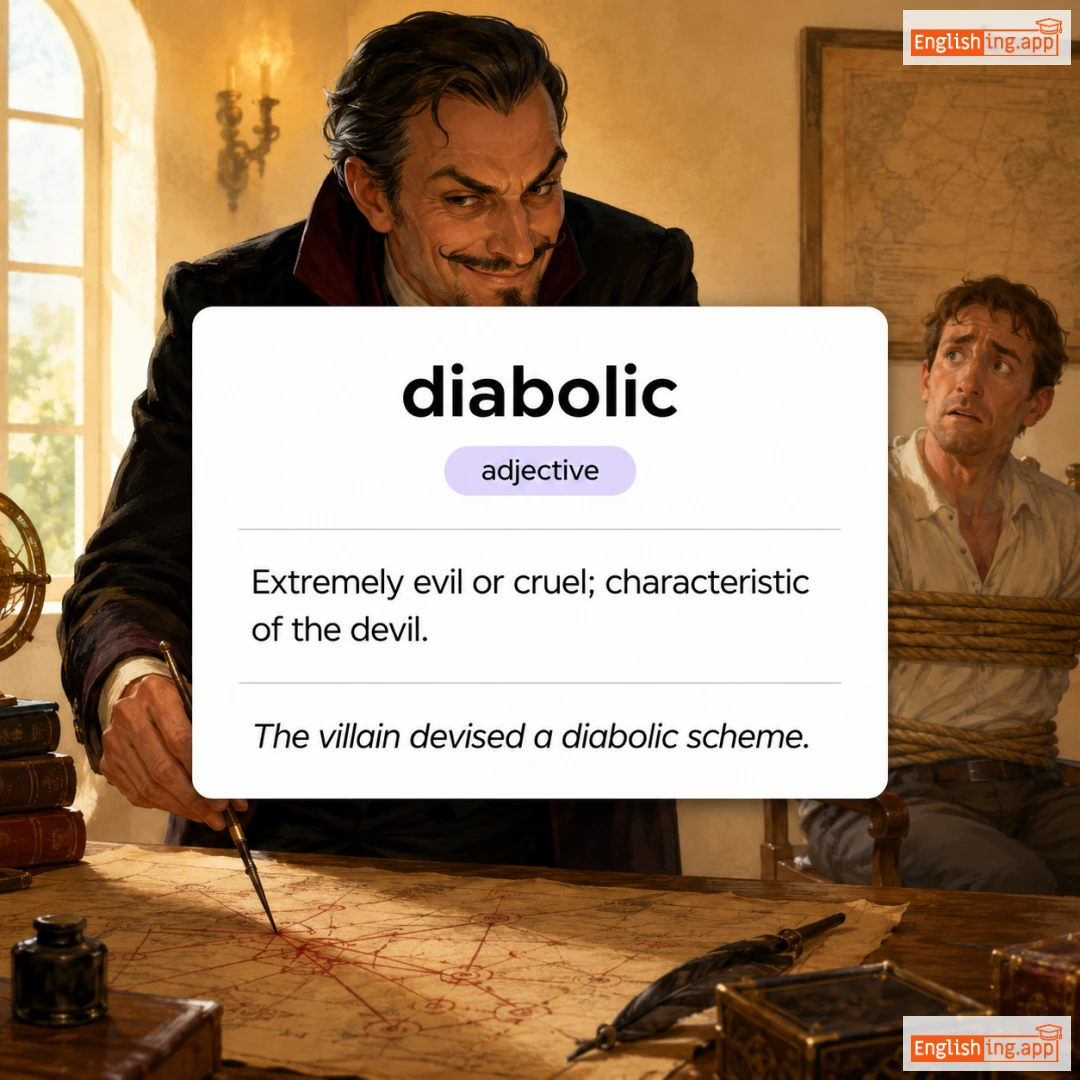
diabolic definition card — visual illustration of the meaning
adjective C2
/ˌdaɪəˈbɒlɪk/
魔鬼的 (mogui de)

Extremely evil or cruel; characteristic of the devil.

"The villain devised a diabolic scheme."

"反派设计了一个魔鬼的计划。" (Fǎnpài shèjìle yīgè móguǐ de jìhuà.)
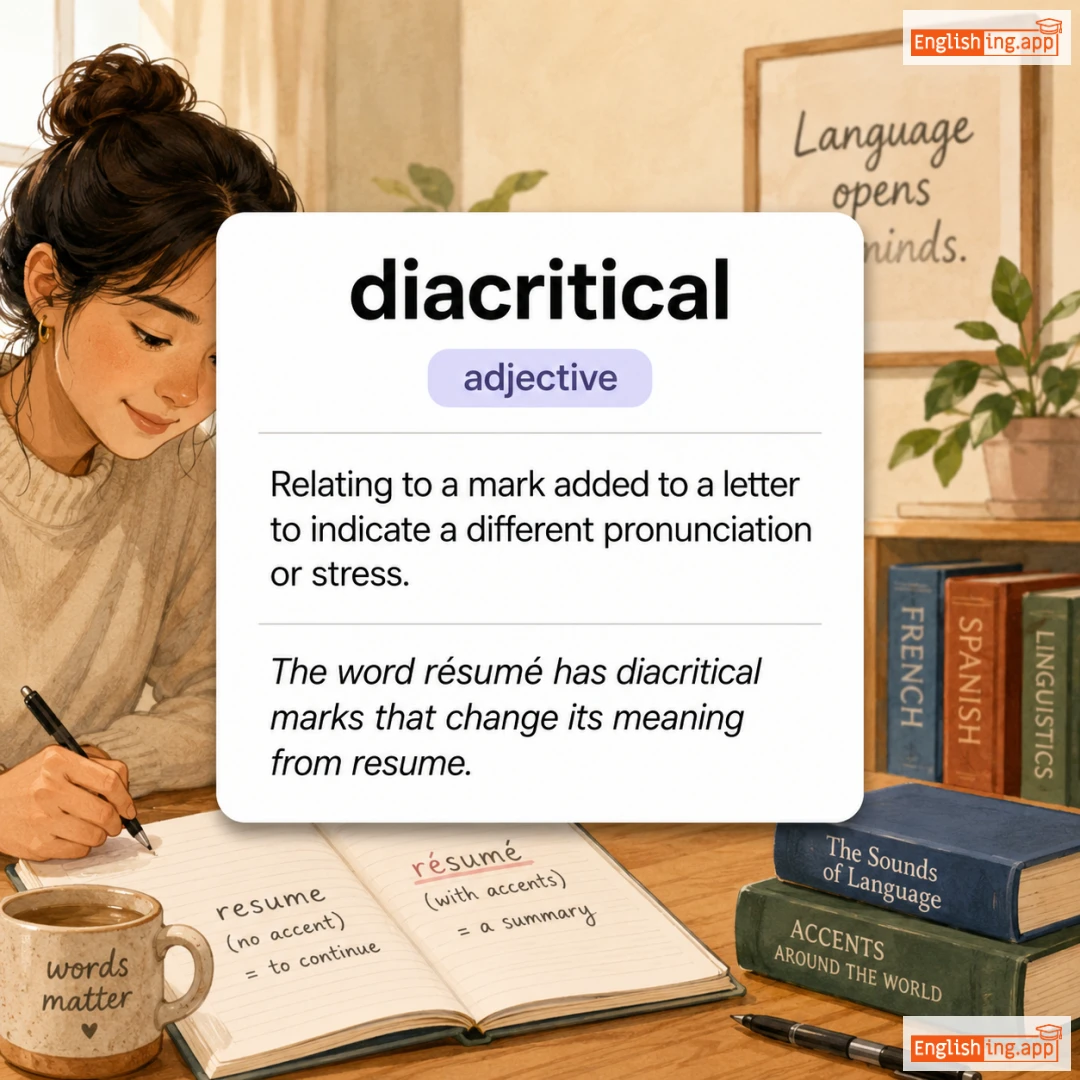
diacritical definition card — visual illustration of the meaning
adjective C2
/ˌdaɪəˈkrɪtɪkəl/
变音符号 (bianyinfuhao)

Relating to a mark added to a letter to indicate a different pronunciation or stress.

"The word résumé has diacritical marks that change its meaning from resume."

"‘简历’一词有变音符号,它改变了‘简历’的意思。" ('Jianli' yi ci you bianyinfuhao, ta gaibianle 'jianli' de yisi.)
noun C2
/ˈdaɪəˌdɛm/
冕冠 (mian guan)

A crown or headband worn as a symbol of royalty or authority.

"The queen wore a glittering diadem at the coronation."

"女王在加冕仪式上戴着闪闪发光的王冠。" (Nv wang zai jiamian yishi shang daizhe shanshan faguan de wangguan.)
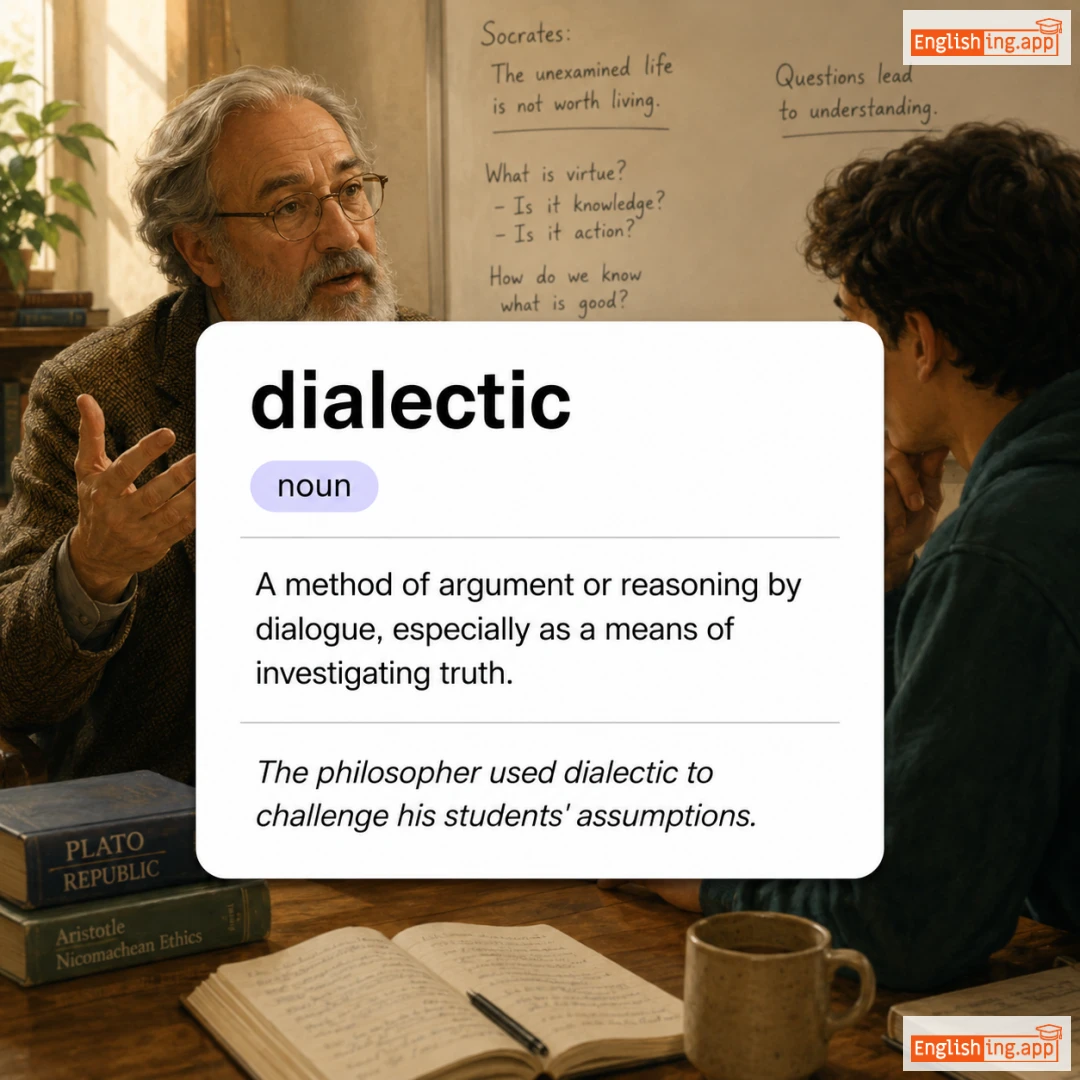
dialectic definition card — visual illustration of the meaning
noun C2
/ˌdaɪəˈlɛktɪk/

A method of argument or reasoning by dialogue, especially as a means of investigating truth.

"The philosopher used dialectic to challenge his students' assumptions."

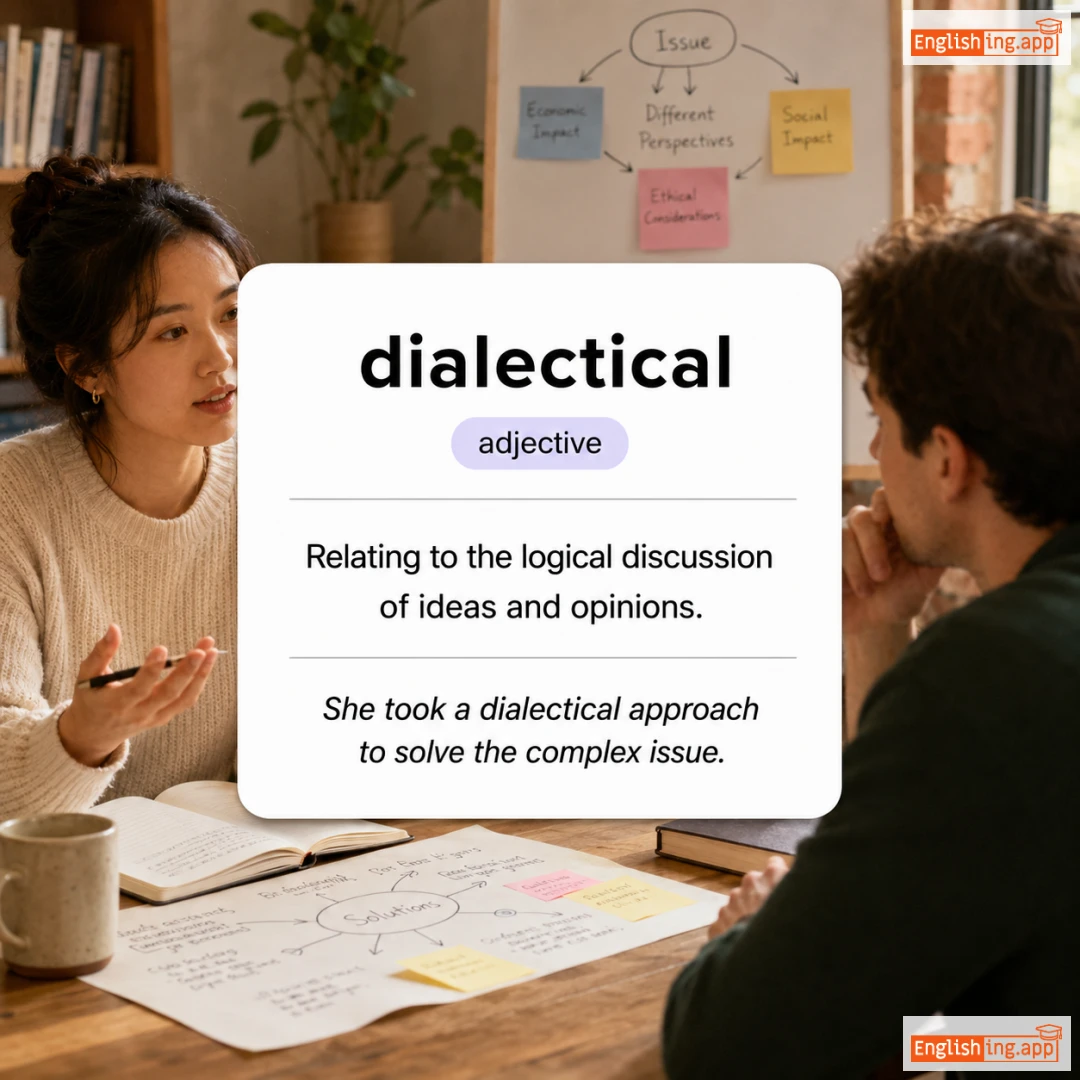
dialectical definition card — visual illustration of the meaning
adjective C2
/ˌdaɪəˈlɛktɪkəl/
辩证 (bianzheng)

Relating to the logical discussion of ideas and opinions.

"She took a dialectical approach to solve the complex issue."

"她采取了辩证的方法来解决这个复杂的问题。" (Ta caiqu le bianzheng de fangfa lai jiejue zhege fuza de wenti.)
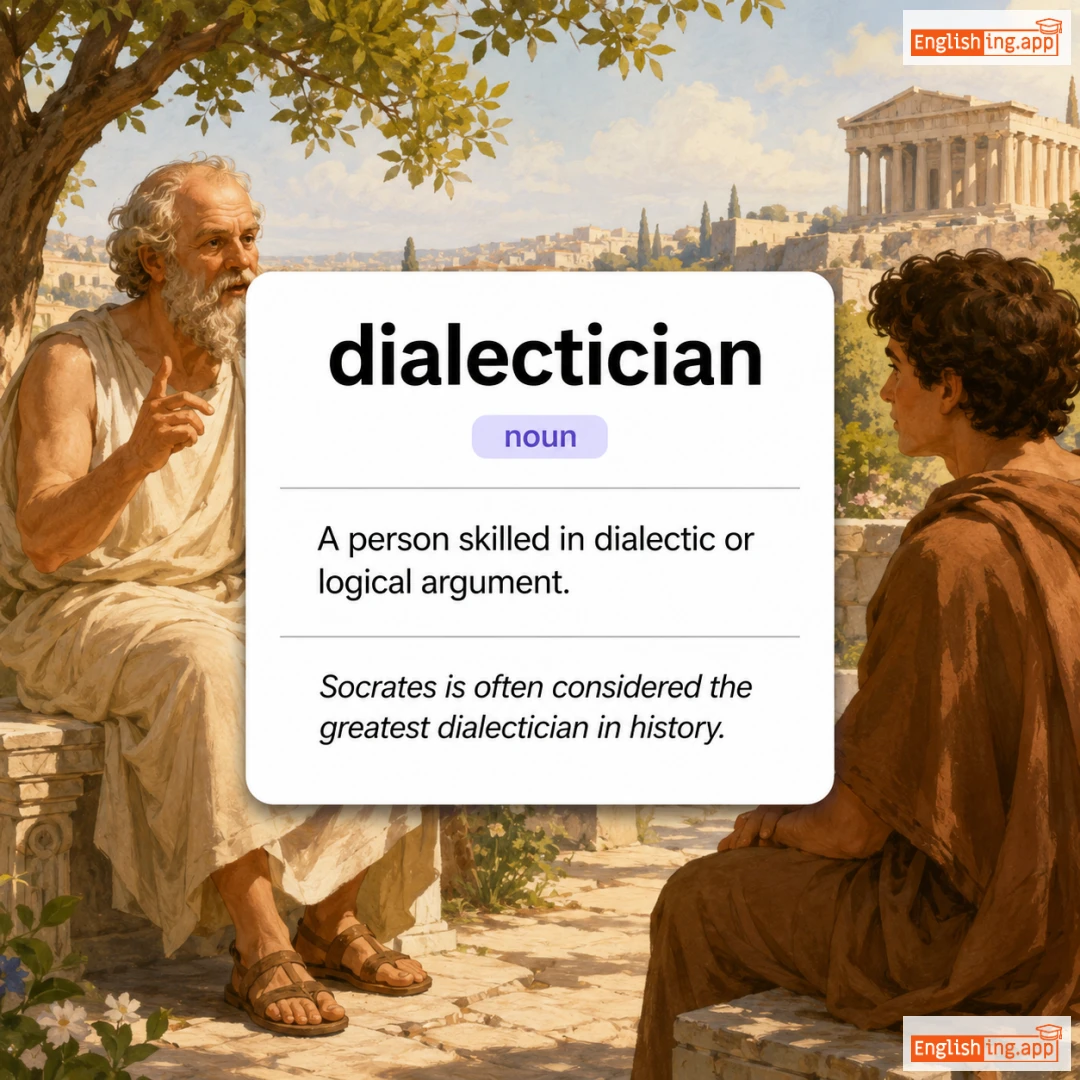
dialectician definition card — visual illustration of the meaning
noun C2
/ˌdaɪələˈtɪʃən/
辩证法专家 (bian zheng fa zhuan jia)

A person skilled in dialectic or logical argument.

"Socrates is often considered the greatest dialectician in history."

"苏格拉底常被认为是历史上最伟大的辩证法专家。" (Su ge la di chang bei ren wei shi li shang zui wei da de bian zheng fa zhuan jia.)
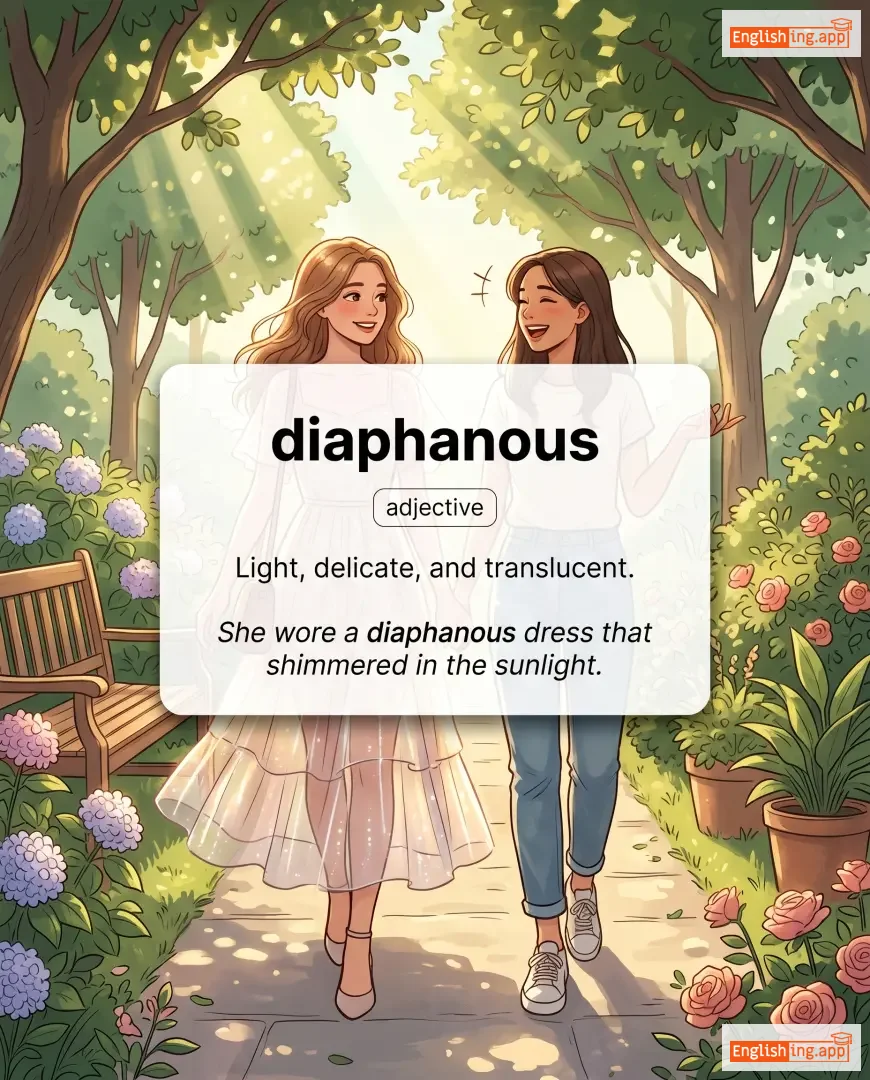
diaphanous definition card — visual illustration of the meaning
adjective C2
/daɪˈæfənəs/
透明的 (touming de)

Light, delicate, and translucent.

"She wore a diaphanous dress that shimmered in the sunlight."

"她穿着一件透明的裙子,在阳光下闪闪发光。" (Ta chuanzhuo yi jian touming de qunzi, zai yangguang xia shanshan faguang.)
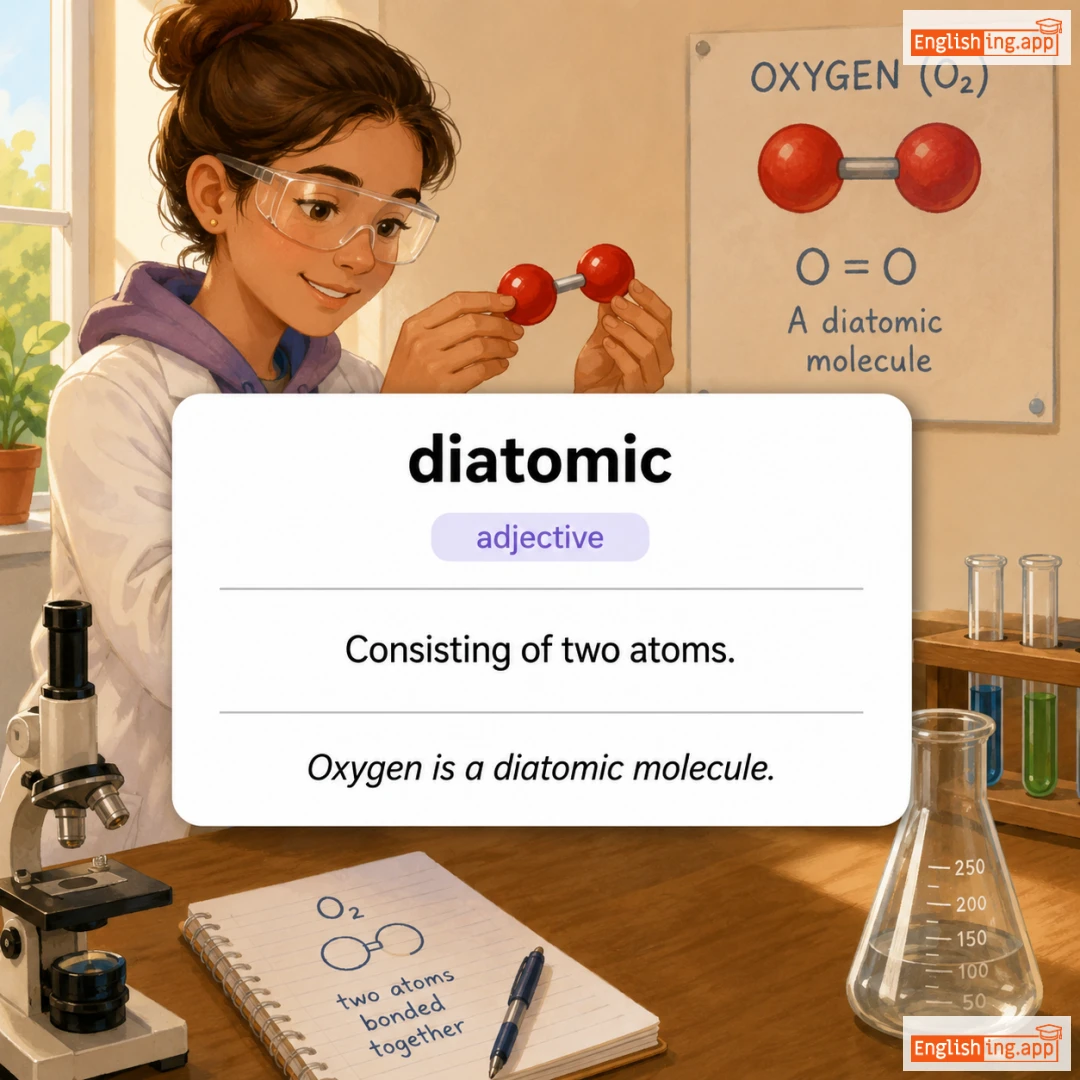
diatomic definition card — visual illustration of the meaning
adjective C2
/ˌdaɪəˈtɒmɪk/
双原子 (shuang yuánzǐ)

Consisting of two atoms.

"Oxygen is a diatomic molecule."

"氧气是双原子分子。" (Yǎngqì shì shuāng yuánzǐ fēnzǐ.)
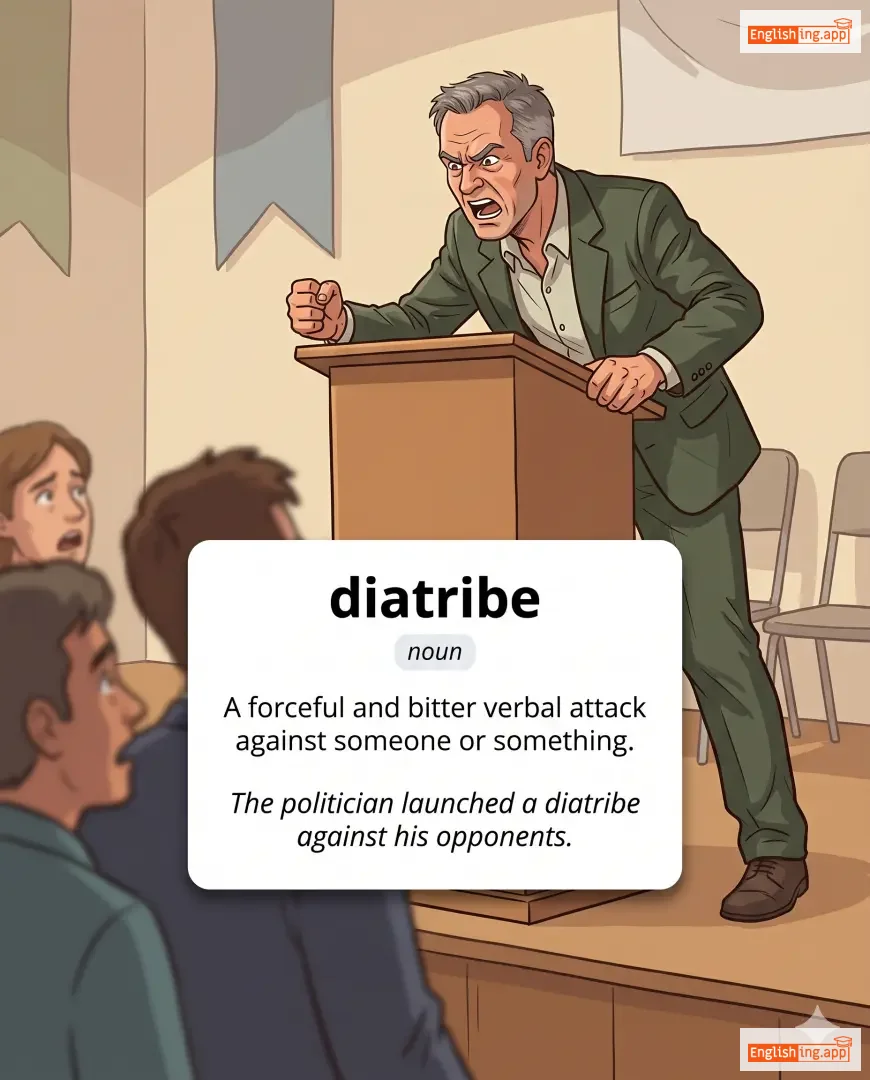
diatribe definition card — visual illustration of the meaning
noun C2
/ˈdaɪətraɪb/
激烈的抨击 (jīliè de pēngjí)

A forceful and bitter verbal attack against someone or something.

"The politician launched a diatribe against his opponents."

"这位政治家对他的对手发起了激烈的抨击。" (Zhè wèi zhèngzhìjiā duì tā de duìshǒu fāqǐle jīliè de pēngjí.)
noun C2
/ˈdɪktəm/
格言 (géyán)

A formal pronouncement, authoritative statement, or maxim.

"The judge’s dictum clarified the principle of equality before the law."

"法官的格言澄清了法律面前人人平等的原则。" (Fǎguān de géyán chéngqīngle fǎlǜ miànqián rén rén píngděng de yuánzé.)
adjective C2
/daɪˈdæktɪk/
教学的 (jiaoxue de)

Intended to teach, often with a moral lesson.

"The novel is not just entertaining but also didactic in nature."

"这本小说不仅仅是娱乐性,还有教学性质。" (Zhe ben xiaoshuo bu jin jin shi yulexing, hai you jiaoxue xingzhi.)
differentia definition card — visual illustration of the meaning
noun C2
/ˌdɪfəˈrɛnʃə/
区分特征 (qufen tezheng)

A distinguishing characteristic that sets one thing apart from another.

"The differentia of humans is their ability to reason abstractly."

"人类的区分特征是他们的抽象思维能力。" (Renlei de qufen tezheng shi tamen de chousiang siwei nengli.)
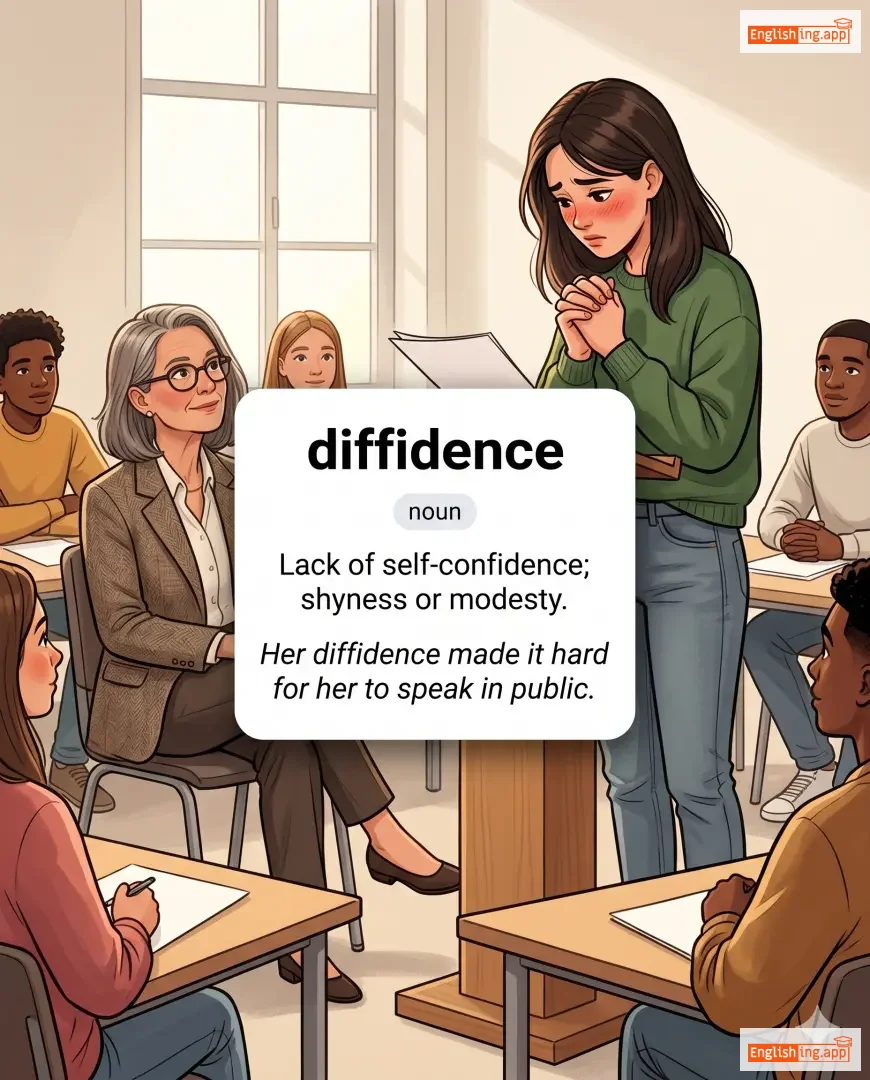
diffidence definition card — visual illustration of the meaning
noun C2
/ˈdɪfɪdəns/
缺乏自信 (quefa zixin)

Lack of self-confidence; shyness or modesty.

"Her diffidence made it hard for her to speak in public."

"她的缺乏自信让她很难在公众面前发言。" (Ta de quefa zixin rang ta hen nan zai gongzhong mianqian fayan.)
adjective C2
/ˈdɪfɪdənt/

Shy or lacking confidence in one's own abilities.

"He was too diffident to ask a question in class."

adjective C2
/dɪˈfjuːzəbl/
可扩散的 (ke kuosan de)

able to spread or be spread through a medium

"Oxygen is diffusible through cell membranes."

"氧气可以通过细胞膜扩散。" (Yangqi keyi tongguo xibao mo kuosan.)
noun C2
/ˈdaɪɡræf/
双字母组合 (shuangzimuzuhe)

A pair of letters representing a single sound, such as 'sh' in 'ship'.

"In the word 'phone', the letters 'ph' form a digraph."

"'电话'一词中的'ph'字母组成一个双字母组合。" ('dianhua' yici zhong de 'ph' zimu zucheng yige shuangzimuzuhe.)
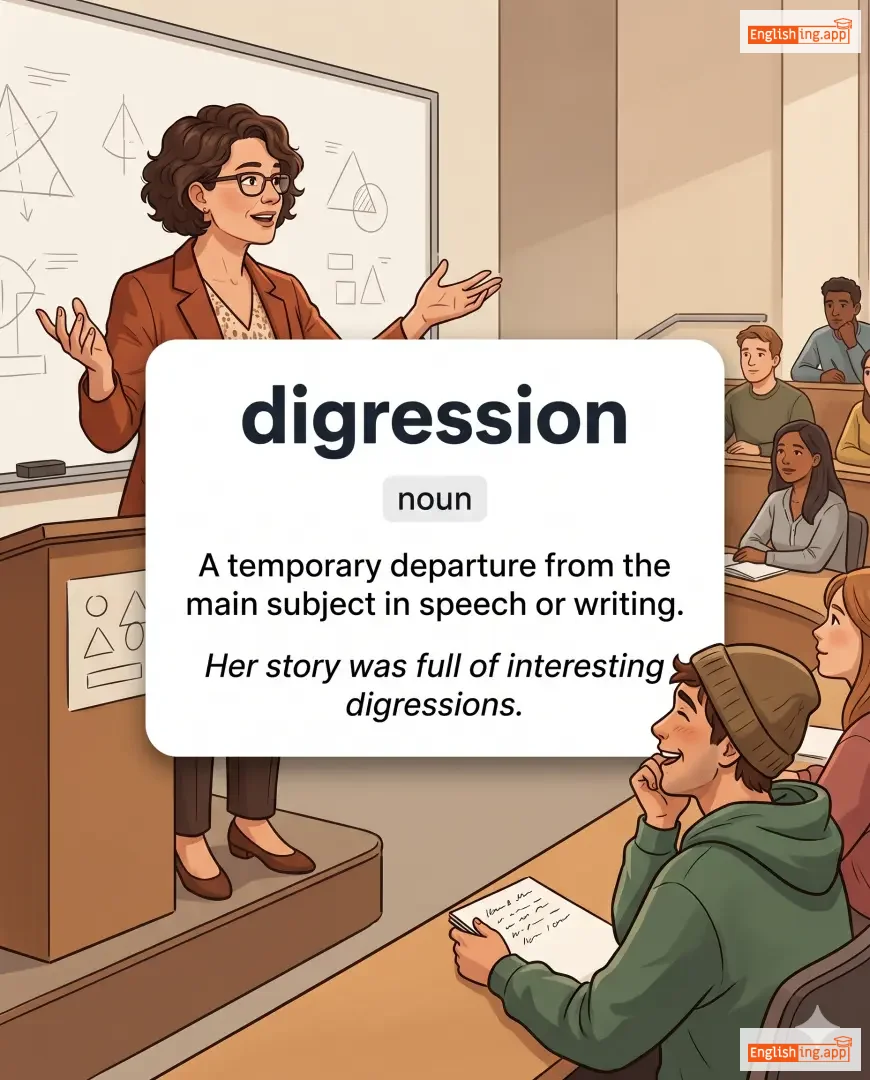
digression definition card — visual illustration of the meaning
noun C2
/daɪˈɡrɛʃən/
离题 (lítí)

A temporary departure from the main subject in speech or writing.

"Her story was full of interesting digressions."

"她的故事充满了有趣的离题部分。" (Tā de gùshì chōngmǎnle yǒuqù de lítí bùfen.)
adjective C2
/daɪˈɡrɛsɪv/
偏离主要话题的倾向 (pianli zhuyao huati de qingxiang)

Tending to depart from the main subject in speech or writing.

"The speaker's digressive style made the lecture difficult to follow."

"演讲者的偏离主题的风格使得听讲变得困难。" (Yǎnjiǎng zhě de piānlí zhǔtí de fēnggé shǐdé tīngjiǎng biàndé kùnnán.)
verb C2
/dɪˈlæpɪdeɪt/
衰败 (shuāibài)

To cause something, especially a building, to fall into ruin or disrepair.

"The abandoned house began to dilapidate over the years."

"那座废弃的房子在多年的时间里开始衰败。" (Nà zuò fèiqì de fángzi zài duōnián de shíjiān lǐ kāishǐ shuāibài.)
noun C2
/dɪˌlæpɪˈdeɪʃən/
破败 (pobai)

The state of disrepair or ruin as a result of neglect.

"The old temple was in a state of dilapidation."

"这座古老的寺庙处于破败状态。" (Zhe zuo gulao de simiao chu yu pobai zhuangtai.)
adjective C2
/ˈdɪlətɔːri/
拖延的 (tuōyán de)

Tending to cause delay; slow to act.

"The committee was criticized for its dilatory response to the crisis."

"该委员会因其在危机中的拖延反应而受到批评。" (Gāi wěiyuánhuì yīn qí zài wēijī zhōng de tuōyán fǎnyìng ér shòudào pīpíng.)
noun C2
/ˌdɪləˈtænt/
外行 (wai hang)

A person who takes up an art, activity, or subject merely for amusement, especially in a superficial way.

"He was dismissed as a dilettante in the art world because he lacked formal training."

"他在艺术界被视为外行,因为他缺乏正式的训练。" (Tā zài yìshù jiè bèi shì wéi wài háng, yīnwèi tā quēfá zhèngshì de xùnliàn.)
noun C2
/dɪnt/
努力,撞击痕迹 (nǔlì, zhuàngjī hénjì)

an impression or hollow made by a blow; force or power

"By dint of hard work, he achieved success."

"通过努力工作,他取得了成功。" (Tōngguò nǔlì gōngzuò, tā qǔdéle chénggōng.)
adjective C2
/daɪˈɒsɪsən/
与教区相关 (yu jiaoqu xiangguan)

relating to a diocese or the district under the supervision of a bishop in the Christian Church

"The diocesan council met to discuss church affairs."

"教区委员会聚集在一起讨论教会事务。" (Jiaoqu weiyuanhui juji zai yiqi taolun jiaohui shiwuwu.)
noun C2
/ˈdɪfθɒŋ/
双元音 (shuang yuán yīn)

A complex vowel sound that begins with one vowel and glides into another within the same syllable.

"The word 'coin' contains a diphthong."

"单词 'coin' 包含一个双元音。" (Danci 'coin' baohan yi ge shuang yuanyin.)
noun C2
/dɪˈpləʊmətɪst/
外交官 (waijiaoguan)

A person skilled in diplomacy; another word for diplomat.

"The diplomatist handled the negotiations with great tact."

"外交官以极大的技巧处理了谈判。" (Waijiaoguan yi jida de jiqiao chuli le tanpan.)
noun C2
/ˌdɪpsəˈmeɪniæk/
酒鬼 (jiǔguǐ)

A person with an uncontrollable craving for alcoholic drinks.

"The novel portrayed the tragic downfall of a dipsomaniac who lost everything to alcohol."

"这本小说描绘了一位酒鬼的悲惨堕落,他因酒精失去了一切。" (Zhè běn xiǎoshuō miáohuìle yī wèi jiǔguǐ de bēicǎn duòluò, tā yīn jiǔjīng shīqùle yīqiè.)
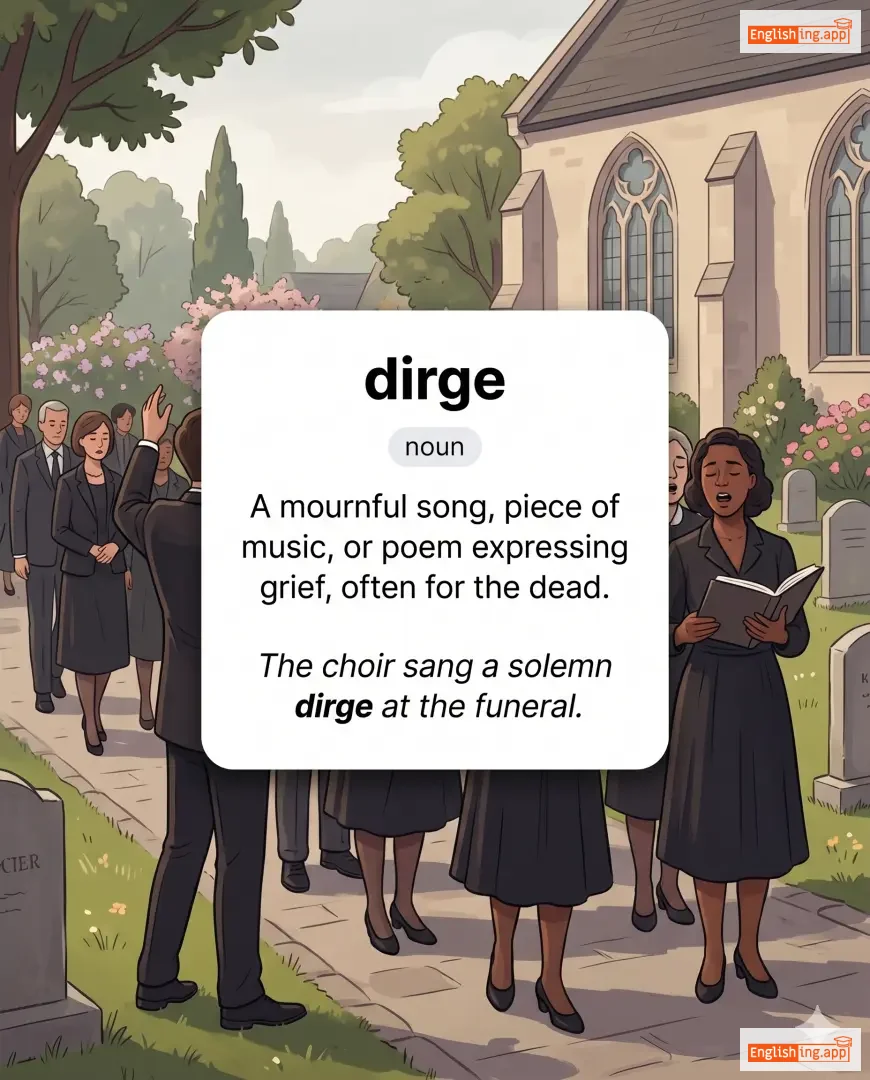
dirge definition card — visual illustration of the meaning
noun C2
/dɜːrdʒ/
挽歌 (wǎngē)

A mournful song, piece of music, or poem expressing grief, often for the dead.

"The choir sang a solemn dirge at the funeral."

"合唱团在葬礼上唱了一首庄严的挽歌。" (Hé chàng tuán zài zànglǐ shàng chàngle yī shǒu zhuāngyán de wǎngē.)
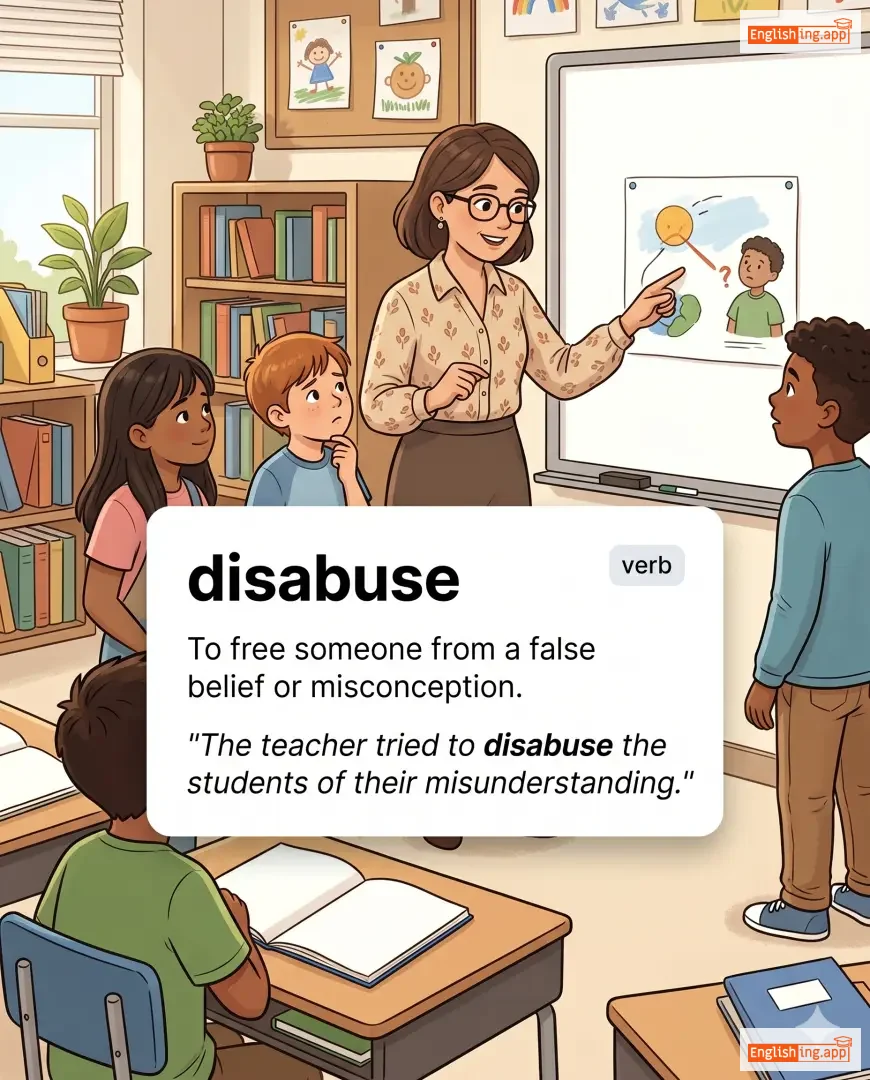
disabuse definition card — visual illustration of the meaning
verb C2
/ˌdɪsəˈbjuːz/
使觉醒 (shi juexing)

To free someone from a false belief or misconception.

"The teacher tried to disabuse the students of their misunderstanding."

"老师试图让学生摆脱他们的误解。" (Laoshi shitu rang xuesheng baituo tamen de wu jie.)
adjective C2
/ˌdɪsəˈfɛktɪd/
不满的 (buman de)

Dissatisfied and rebellious, especially against authority or leadership.

"The reforms were introduced to calm the disaffected youth."

"改革是为了平息不满的青年。" (Gaige shi weile pingxi bumai de qingnian.)
noun C2
/ˌdɪsæprəˈbeɪʃən/
强烈反对 (qianglie fandui)

strong disapproval, typically on moral grounds

"The policy was met with widespread disapprobation."

"该政策遭遇了广泛的反对。" (Gai zhengce zao yu le guangfan de fandui.)
verb C2
/ˌdɪsəˈreɪndʒ/
弄乱 (nongluan)

to disturb the order or arrangement of something

"The wind disarranged her hair."

"风把她的头发弄乱了。" (Feng ba ta de toufa nongluan le.)
verb C2
/ˌdɪsəˈvaʊ/
否认 (fǒu rèn)

to deny responsibility for or connection with something

"He disavowed any involvement in the scandal."

"他否认参与了丑闻。" (Tā fǒu rèn cān yù le chǒu wén.)
noun C2
/ˌdɪsəˈvaʊəl/
否认 (fǒurèn)

the denial of any responsibility, connection, or support

"The politician issued a firm disavowal of the controversial remarks."

"该政治家对有争议的言论发表了强烈的否认。" (Gāi zhèngzhìjiā duì yǒu zhēngyì de yánlùn fābiǎo le qiángliè de fǒurèn.)
verb C2
/dɪsˈbɑːr/
正式将律师从法律职业中除名 (zhèngshì jiāng lǜshī cóng fǎlǜ zhíyè zhōng chúmíng)

to officially remove a lawyer from the legal profession

"The corrupt lawyer was disbarred for unethical conduct."

"腐败的律师因不道德行为而被除名。" (Fǔbài de lǜshī yīn bù dàodé xíngwéi ér bèi chúmíng.)
verb C2
/dɪsˈbɜːrdən/
减轻负担 (jianqing fudan)

to relieve someone of a burden or load

"She disburdened herself of worries by sharing them with her friend."

"她通过与朋友分享担忧,解除了自己的负担。" (Tā tōngguò yǔ péngyǒu fēnxiǎng dānyōu, jiěchúle zìjǐ de fùdān.)
verb C2
/dɪsˈbɜːrs/
分配 (fēnpèi)

to pay out money, especially from a fund

"The organization will disburse the funds to the affected families."

"该组织将把资金分配给受影响的家庭。" (Gāi zǔzhī jiāng bǎ zījīn fēnpèi gěi shòu yǐngxiǎng de jiātíng.)
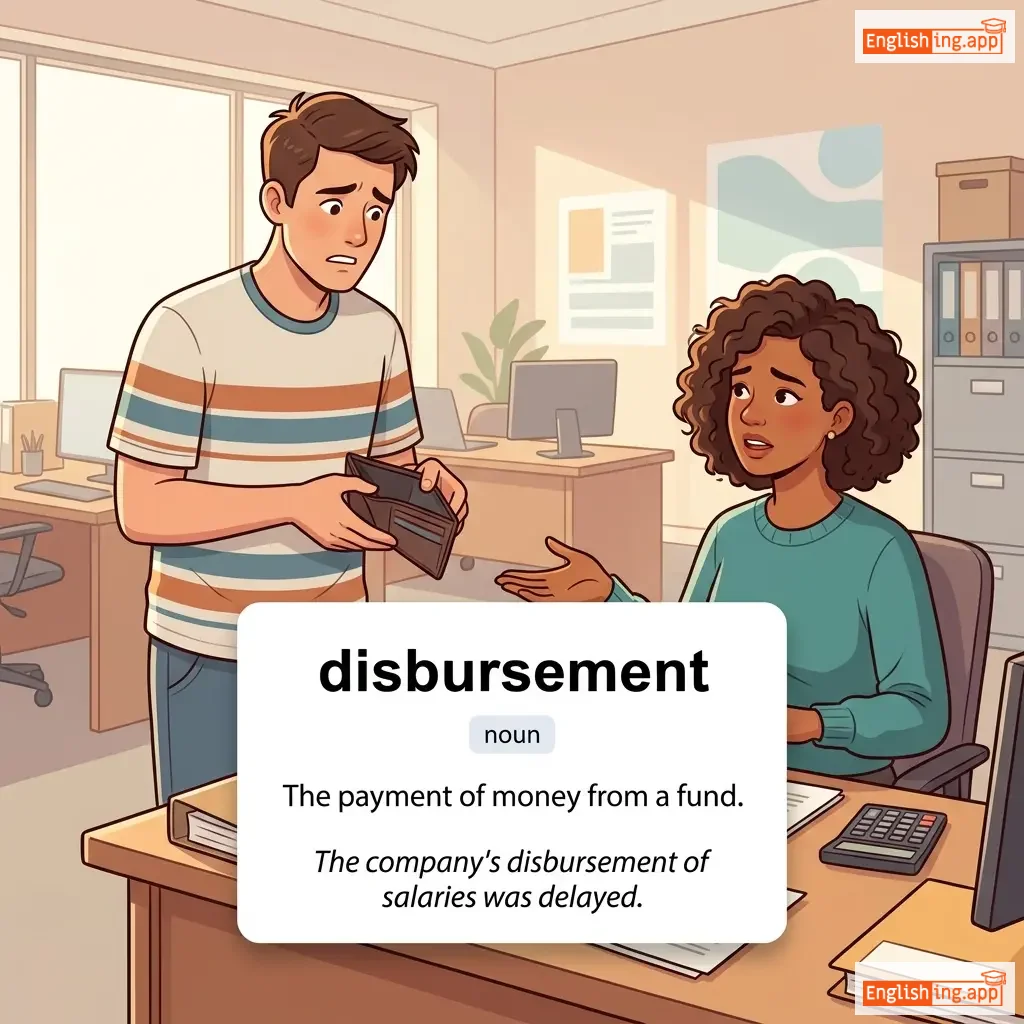
disbursement definition card — visual illustration of the meaning
noun C2
dɪsˈbɜːs.mənt
支付 (zhifu)

The payment of money from a fund.

"The company's disbursement of salaries was delayed."

"公司的工资支付被延迟了。" (Gongsi de gongzi zhifu bei yanchi le.)
verb C2
/ˌdɪskəmˈbɑːbjuleɪt/
困惑 (kùn huò)

to confuse or disconcert; to upset the normal order

"The sudden question seemed to discombobulate him."

"突如其来的问题似乎让他感到困惑。" (Tū rú qí lái de wèn tí shì hū ràng tā gǎn dào kùn huò.)