ভোকাবুলারিসমূহ

ইংরেজি শব্দের বাংলা অর্থ | English to Bangla Word Meaning Dictionary

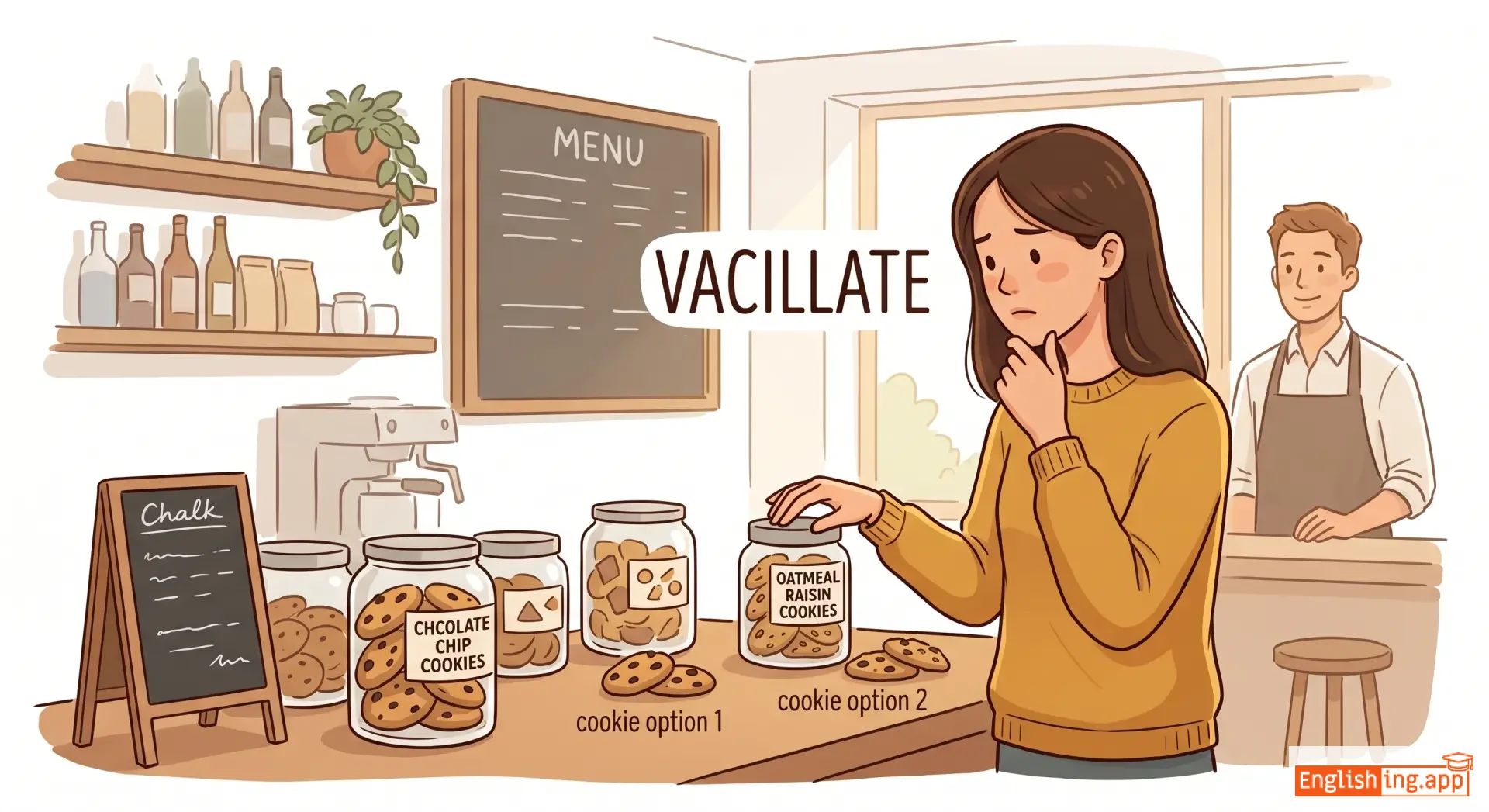
vacillate definition card — visual illustration of the meaning
verb C2
/ˈvæsɪleɪt/
幸せ (shiawase)

to waver between different opinions or actions; be indecisive

"He vacillated between studying law and becoming a writer."

"彼女は賞を受け取ったとき、自分の幸せを隠すことができませんでした。" (Kanojo wa shō o uketotta toki, jibun no shiawase o kakusu koto ga dekimasen deshita.)
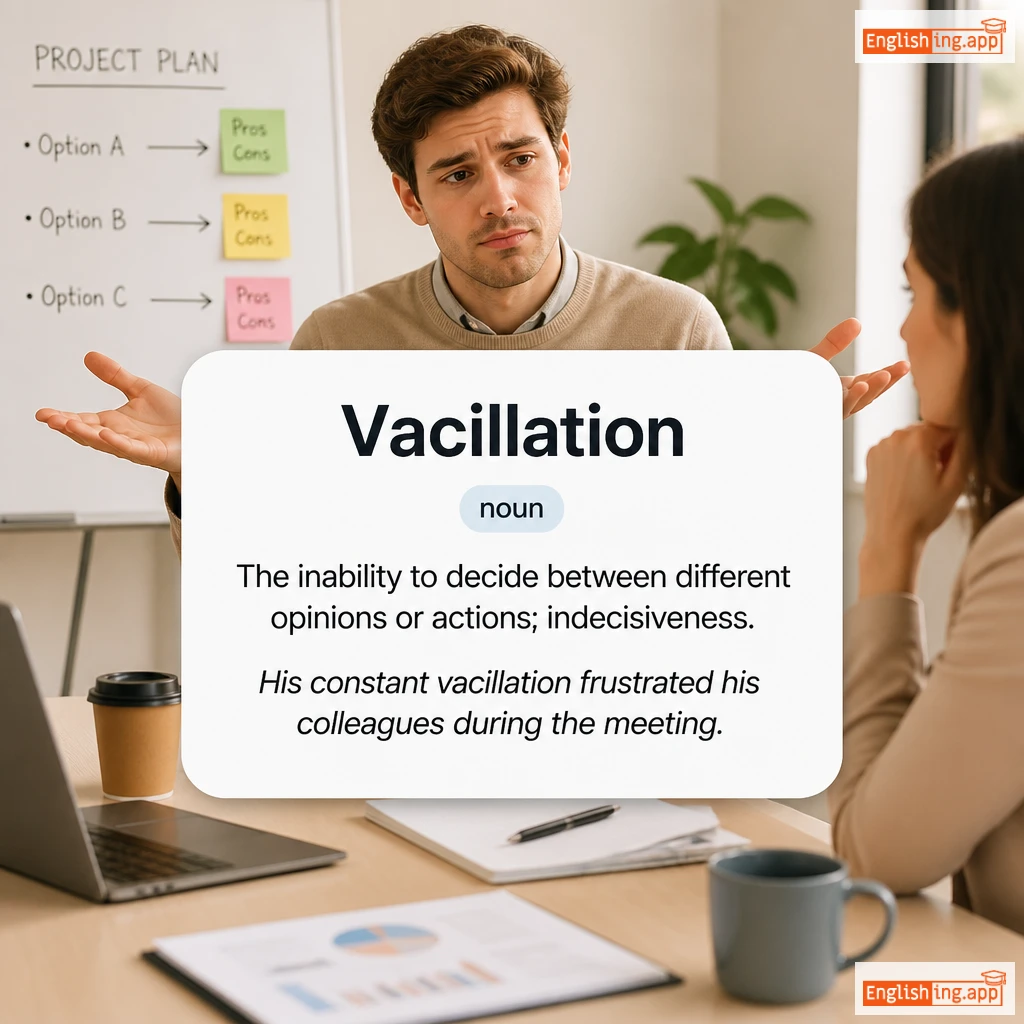
Vacillation definition card — visual illustration of the meaning
noun C2
/ˌvæsɪˈleɪʃən/
揺れ動き (yuredoki)

The inability to decide between different opinions or actions; indecisiveness.

"His constant vacillation frustrated his colleagues during the meeting."

"彼の絶え間ない揺れ動きは会議中、同僚たちを苛立たせた。" (Kare no taemai yuredoki wa kaigichuu, doryou-tachi o iradataseta.)
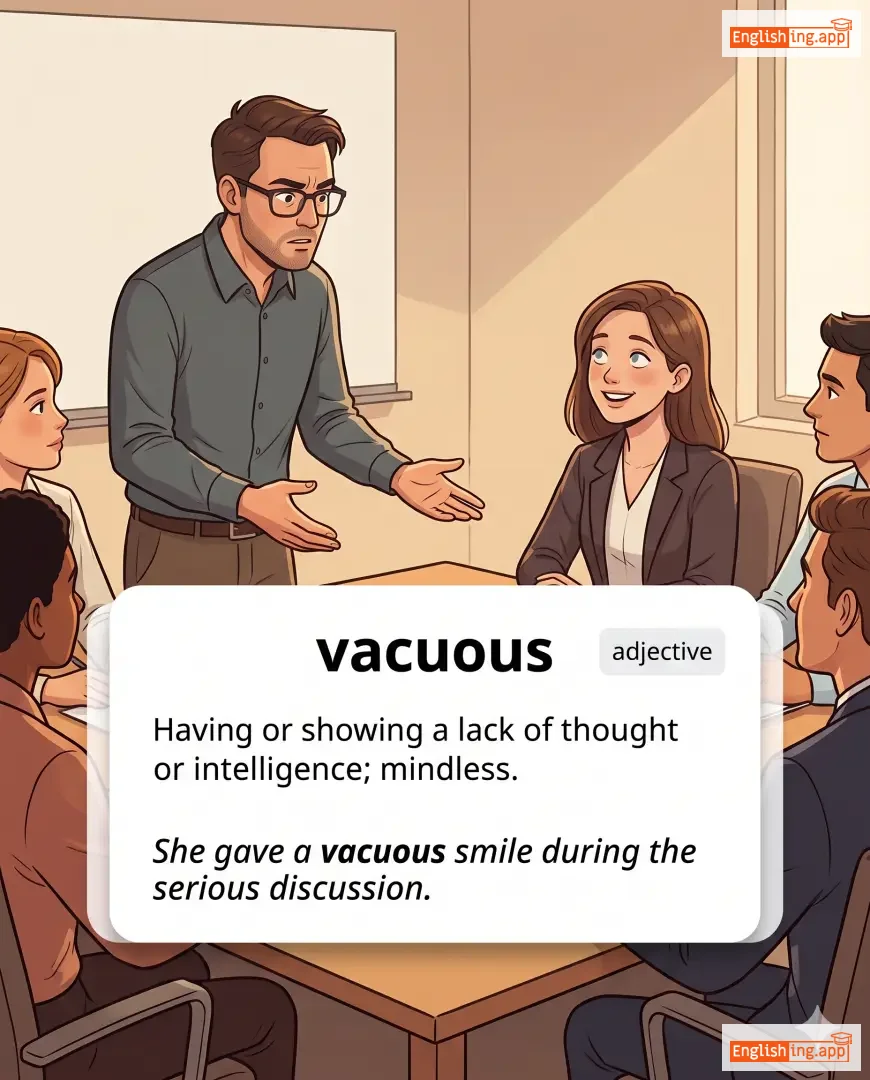
vacuous definition card — visual illustration of the meaning
adjective C2
/ˈvækjuəs/
空虚 (kūkyō)

Having or showing a lack of thought or intelligence; mindless.

"She gave a vacuous smile during the serious discussion."

"彼女は真剣な議論の中で空虚な笑顔を見せた。" (Kanojo wa shinken na giron no naka de kūkyō na egao o miseta.)
noun C2
/ˈveɪɡəri/
予測できない変化 (yosoku dekinai henka)

An unexpected and inexplicable change in a situation or someone's behavior.

"The vagaries of the weather made planning difficult."

"天気の不規則な変化で計画が難しくなった。" (tenki no fukisoku na henka de keikaku ga muzukashiku natta.)
adjective C2
/veɪnˈɡlɔːriəs/
うぬぼれた (unoboreta)

Excessively proud of oneself or one’s achievements; boastful.

"The vainglorious leader boasted about his minor achievements."

"その自惚れたリーダーは自分の些細な成果を自慢していた。" (Sono unoboreta rīdā wa jibun no sasaina seika o jimanshite ita.)
noun C2
/ˈveɪnɡlɔːri/
虚栄心 (kyoueishin)

Excessive vanity or boastfulness about one's achievements.

"His speech was filled with vainglory and self-praise."

"彼のスピーチは虚栄心と自己賛美で満ちていた。" (Kare no supīchi wa kyoeishin to jikosanbi de michite ita.)
noun C2
/ˈvæləns/
装飾用バランス (sōshokuyō baransu)

A decorative drapery hung across the top of a window or bed.

"She chose a floral valance to match the curtains in her bedroom."

"彼女は寝室のカーテンに合うように花柄のバランスを選びました。" (Kanojo wa shinshitsu no kāten ni au yō ni hanagara no baransu o erabimashita.)
noun C2
/ˌvælɪˈdɪkʃən/
別れの言葉 (wakare no kotoba)

The act of saying farewell; a formal goodbye.

"The professor gave a touching valediction at his retirement ceremony."

"教授は退職式で感動的な別れの言葉を述べました。" (Kyōju wa taishoku-shiki de kandō-teki na wakare no kotoba o nobemashita.)
noun C2
/ˌvælədɪkˈtɔːriən/
最優秀学生 (sai yūshū gakusei)

The student with the highest academic achievements in a graduating class, often chosen to give the farewell speech.

"She was honored as the valedictorian of her class."

"彼女はクラスの最優秀学生として表彰されました。" (Kanojo wa kurasu no sai yūshū gakusei to shite hyōshō saremashita.)
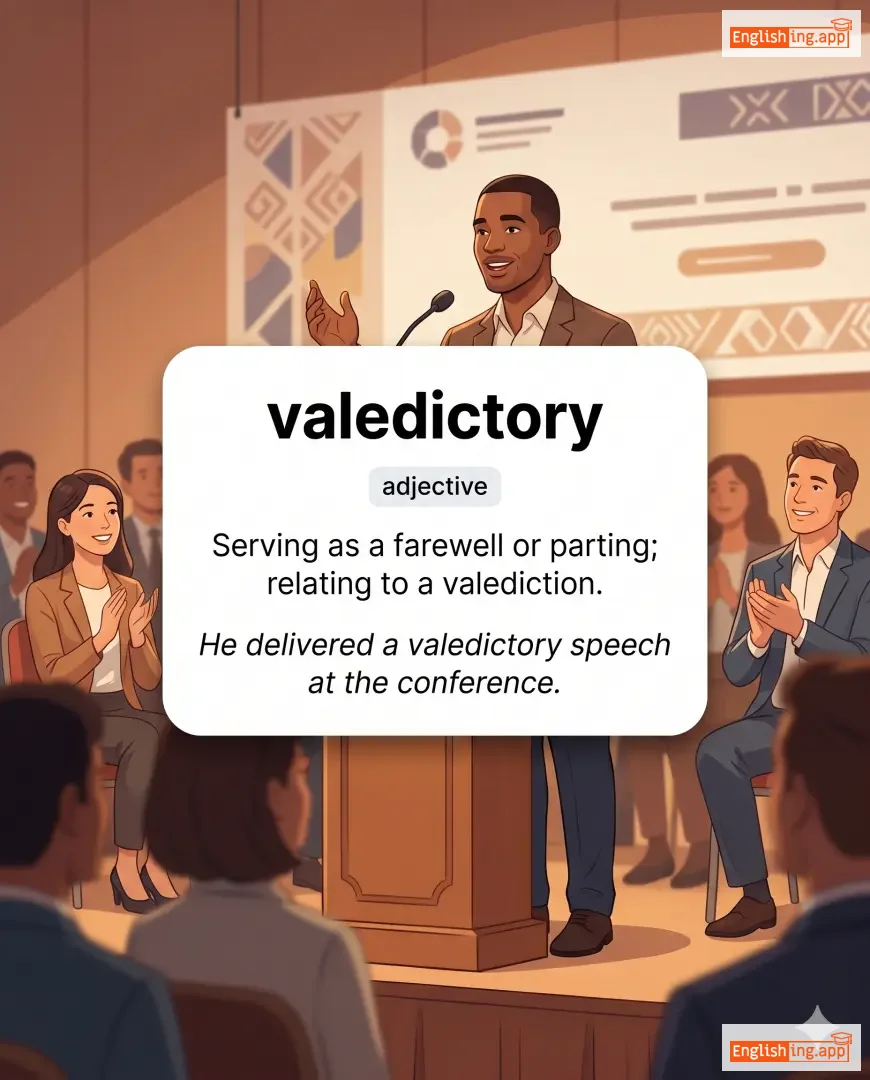
valedictory definition card — visual illustration of the meaning
adjective C2
/ˌvælɪˈdɪktəri/
送別の (soubetsu no)

Serving as a farewell or parting; relating to a valediction.

"He delivered a valedictory speech at the conference."

"彼は会議で送別のスピーチを行った。" (Kare wa kaigi de soubetsu no supīchi o okonatta.)
noun C2
/ˌvælɪˌtjuːdɪˈnɛəriən/
健康気にしすぎな人 (kenkou ki ni shisugi na hito)

A person who is unduly anxious about their health or constantly concerned with minor ailments.

"He was regarded as a valetudinarian, always worrying about his health."

"彼は健康気にしすぎな人として知られていた。" (Kare wa kenkou ki ni shisugi na hito toshite shirarete ita.)
adjective C2
/ˈvælərəs/
勇敢な (yūkan na)

showing great courage and bravery

"The valorous soldier led his troop into battle without hesitation."

"勇敢な兵士はためらうことなく部隊を戦いに導いた。" (Yūkan na heishi wa tamerau koto naku butai o tatakai ni michibita.)
adjective C2
/ˈvæpɪd/
退屈な (taikutsuna)

lacking liveliness, flavor, or interest; dull and uninspired

"The lecture was so vapid that half the audience fell asleep."

"講義は退屈すぎて、観客の半分が寝てしまった。" (Kōgi wa taikutsu sugite, kankyaku no hanbun ga nete shimatta.)
adjective C2
/ˈveɪpərəs/
蒸気のような; 曖昧な (jōki no yō na; aimaina)

consisting of vapor; vague or insubstantial

"The morning air was filled with vaporous mist."

"朝の空気は蒸気のような霧で満たされていました。" (Asa no kūki wa jōki no yō na kiri de mitasarete imashita.)
verb C2
/ˈvɛəriəˌɡeɪt/
多様化する (tayōka suru)

To diversify or mark with different colors or patterns.

"The artist used different shades to variegate the design."

"アーティストはデザインを多様化するために異なる色合いを使いました。" (Ātisuto wa dezain o tayōka suru tame ni kotonaru iroai o tsukaimashita.)
adjective C2
/ˈvɛəriəˌɡeɪtɪd/
まだらの (madara no)

Having different colors, especially in irregular patches or streaks.

"The garden was full of variegated plants."

"庭はまだらの植物でいっぱいでした。" (niwa wa madara no shokubutsu de ippai deshita)
noun C2
/ˌvɛəriəˈɡeɪʃən/
変色 (henshoku)

The appearance of differently colored zones in the leaves, flowers, or stems of plants.

"Variegation makes the foliage look more attractive."

"変化は植物の葉をより魅力的に見せます。" (Henshoku wa shokubutsu no ha o yori miryokuteki ni misemasu.)
noun C2
/ˈvæsəl/
家来 (kerai)

A person or country in a subordinate position to another, especially in feudal times under a lord.

"The king granted land to his vassal in return for loyalty and service."

"王は忠誠と奉仕の見返りに家来に土地を与えた。" (Ō wa chūsei to hōshi no mikaeri ni kerai ni tochi o ataeta.)
noun C2
/ˈvɔːdəvɪl/
ボードヴィル (boodoviru)

A type of entertainment popular in the early 20th century, featuring a mixture of comedy, song, dance, and variety acts.

"The vaudeville show included comedians, magicians, and dancers."

"ボードヴィルショーにはコメディアン、マジシャン、ダンサーが含まれていました。" (Boodoviru shou ni wa komedian, majishian, dansa ga fukumarete imashita.)
📢

vaunt

verb C2
/vɔːnt/

to boast or brag about something, especially in an excessive way

"He would often vaunt his achievements in front of his colleagues."

adjective C2
/ˈvɔːntɪd/
過度に称賛された (kadoni shōsan sareta)

praised or boasted about, especially excessively

"The vaunted technology failed to deliver the expected results."

"過度に称賛された技術は期待された結果を提供できませんでした。" (Kadoni shōsan sareta gijutsu wa kitai sareta kekka o teikyō dekimasen deshita.)
adjective C2
/ˈvɛdʒɪtəl/
植物性の (shokubutsusei no)

relating to or consisting of plants or vegetation

"The soup had a distinct vegetal flavor."

"スープには独特の植物性の味がありました。" (Sūpu ni wa dokutoku no shokubutsusei no aji ga arimashita.)
verb C2
/ˈvɛdʒɪteɪt/
無為に過ごす (mui ni sugosu)

to live in a dull, inactive, or unchallenging way, often with little physical or mental effort

"He spent his vacation vegetating on the couch in front of the TV."

"彼はソファでテレビの前に座って、休暇を過ごしました。" (Kare wa sofa de terebi no mae ni suwatte, kyūka o sugoshimashita.)
noun C2
/vəˈliːɪti/
弱い願望 (yowai ganbō)

A wish or inclination not strong enough to lead to action.

"His interest in painting never grew beyond a mere velleity."

"絵画への彼の興味は単なる弱い願望に過ぎなかった。" (Kaiga e no kare no kyōmi wa tan'naru yowai ganbō ni suginakatta.)
noun C2
/ˈvɛləm/
パーチメント (pāchimento)

a fine parchment made originally from the skin of a calf, used for writing or printing

"The ancient manuscript was written on vellum."

"古代の写本はパーチメントに書かれていました。" (Kodai no shahon wa pāchimento ni kakarete imashita.)
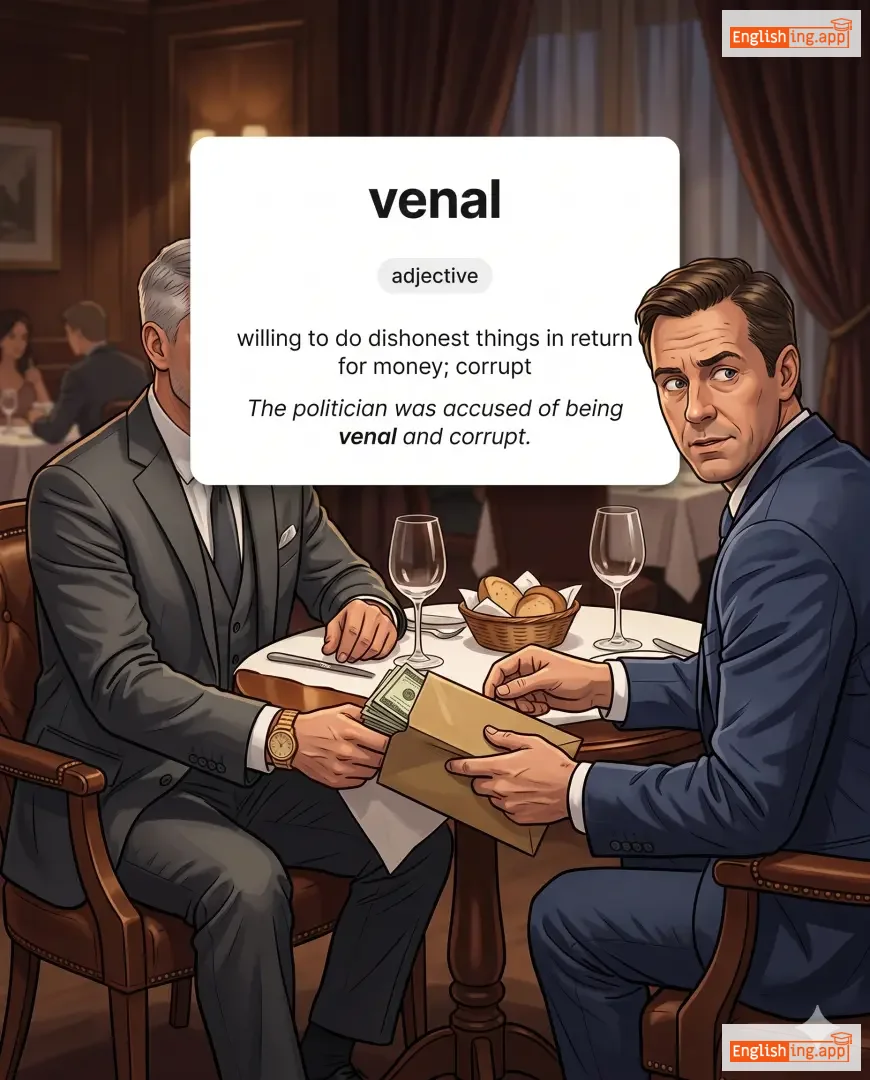
venal definition card — visual illustration of the meaning
adjective C2
/ˈviːnəl/
売国的 (baikokuteki)

willing to do dishonest things in return for money; corrupt

"The politician was accused of being venal and corrupt."

"その政治家は、売国的で腐敗していると非難されました。" (Sono seijika wa, baikokuteki de fuhai shite iru to hinan saremashita.)
noun C2
/viːˈnæləti/
贈賄 (zōkai)

the quality of being open to bribery or corruption

"The scandal revealed the venality of several senior officials."

"スキャンダルは、何人かの高官の贈賄を明らかにした。" (Sukyandaru wa, nannin ka no kōkan no zōkai o akiraka ni shita.)
adjective C2
/ˈvɛndɪbəl/
販売可能な (hanbai kanō na)

Capable of being sold; marketable.

"Only vendible products were displayed at the trade fair."

"販売可能な商品だけが展示会に出展されました。" (Hanbai kanō na shōhin dake ga tenjikai ni shutsuten saremashita.)
noun C2
/vɛnˈdɪʃən/
販売 (hanbai)

The act of selling; sale.

"The auction was a formal vendition of the estate's assets."

"オークションは不動産の資産の正式な販売でした。" (Ōkushon wa fudōsan no shisan no seishiki na hanbai deshita.)
adjective C2
/vəˈnɪəriəl/
性病の (seibyo no)

relating to sexual intercourse or sexually transmitted diseases

"Doctors warn about the dangers of venereal diseases."

"医師は性病の危険について警告しています。" (Ishi wa seibyo no kiken ni tsuite keikoku shiteimasu.)
adjective C2
/ˈviːniəl/
許容される (kyoyō sareru)

forgivable, not seriously wrong

"Forgetting to call was a venial fault."

"電話をかけ忘れることは許される過ちでした。" (Denwa o kake wasureru koto wa kyoyō sareru ayamachi deshita.)
adjective C2
/ˈvɛntrəl/
腹側の (fukusoku no)

relating to the underside or abdominal part of an animal or organ

"The fish has a white ventral surface."

"その魚は白い腹側の表面を持っています。" (Sono sakana wa shiroi fukusoku no hyōmen o motteimasu.)
adjective C2
/ˈvɛntʃərəs/
冒険的な (bōkente-ki na)

Willing to take risks or try out new and exciting things; adventurous.

"The venturous explorers set out to cross the uncharted desert."

"冒険的な探検家たちは、未踏の砂漠を横断するために出発しました。" (Bōkente-ki na tankenka-tachi wa, mitō no sabaku o ōdan suru tame ni shuppatsu shimashita.)
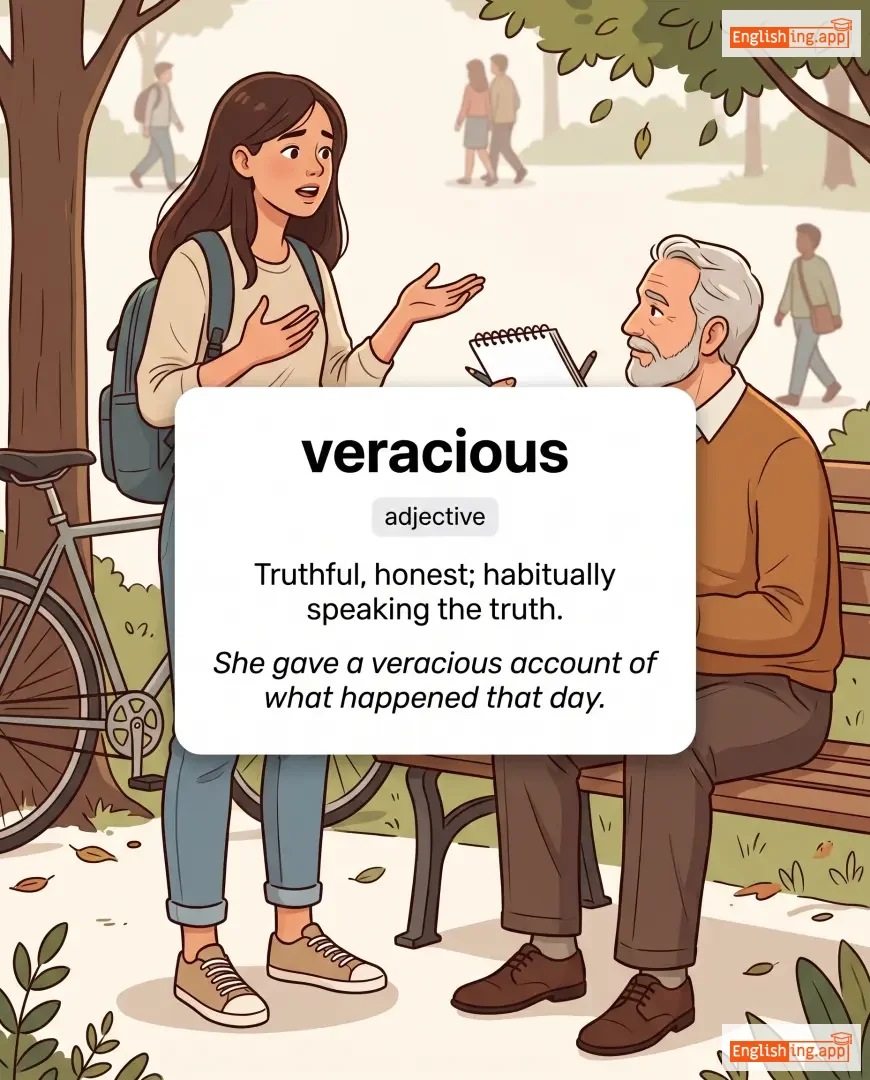
veracious definition card — visual illustration of the meaning
adjective C2
/vəˈreɪʃəs/
誠実な (seijitsuna)

Truthful, honest; habitually speaking the truth.

"She gave a veracious account of what happened that day."

"彼女はその日の出来事について誠実な説明をしました。" (Kanojo wa sono hi no dekigoto ni tsuite seijitsuna setsumei o shimashita.)
noun C2
/ˈvɜːrbiɪdʒ/
冗長な言葉 (jouchou na kotoba)

Excessive use of words, often with little content or meaning; wordiness.

"The contract was filled with unnecessary legal verbiage."

"契約は不要な法的冗長な言葉で満たされていた。" (Keiyaku wa fuyou na houteki jouchou na kotoba de mitasarete ita.)
adjective C2
/ˈvɜːrdənt/
緑豊かな (midori yutakana)

Green with grass or other rich vegetation; lush and fertile.

"The hills looked verdant after the monsoon rains."

"モンスーンの雨の後、丘は緑豊かに見えた。" (Monsūn no ame no ato, oka wa midori yutaka ni mieta.)
noun C2
/ˈvɜːrdɪɡriːs/
緑青 (ryokushou)

A green or bluish deposit that forms on copper, brass, or bronze surfaces due to oxidation.

"The old statue was covered in verdigris after years of exposure to the rain."

"古い像は長年の雨にさらされた後、緑青で覆われていた。" (Furui zou wa naganen no ame ni sarasareta ato, ryokushou de ouwarete ita.)
adverb C2
/ˈvɛrɪli/
本当に (hontou ni)

truly; certainly; without a doubt

"Verily, I say unto you, this is the truth."

"本当に、私はあなたに言います、これが真実です。" (Hontou ni, watashi wa anata ni iimasu, kore ga shinjitsu desu.)
adjective C2
/ˌvɛrɪˈsɪmɪlər/
真実に似ている (shinjitsu ni niteiru)

appearing to be true or real

"The story seemed verisimilar though it was entirely fictional."

"その話は真実に似ているように思えたが、完全に架空のものだった。" (Sono hanashi wa shinjitsu ni niteiru you ni omoeta ga, kanzen ni kakuu no mono datta.)
noun C2
/ˌvɛrɪsɪˈmɪlɪtjuːd/
真実味 (shinjitsumi)

the appearance of being true or real

"The movie was praised for its verisimilitude to actual events."

"その映画は実際の出来事に対する真実味で賞賛されました。" (Sono eiga wa jissai no dekigoto ni taisuru shinjitsumi de shousan saremashita.)
noun C2
/ˈvɛrɪti/
真実性 (shinjitsusei)

a true principle or belief; the state of being true

"The verity of his statement was confirmed by evidence."

"彼の声明の真実性は証拠によって確認されました。" (Kare no seimei no shinjitsusei wa shōko ni yotte kakunin saremashita.)
adjective C2
/vərˈmɪkjələr/
ミミズのような (mimizu no youna)

having a shape or appearance like a worm; worm-like

"The artist used a vermicular design to decorate the border of the manuscript."

"アーティストは手稿の縁をミミズのようなデザインで飾った。" (Ātisuto wa shukō no fuchi o mimizu no yōna dezain de kazatta.)
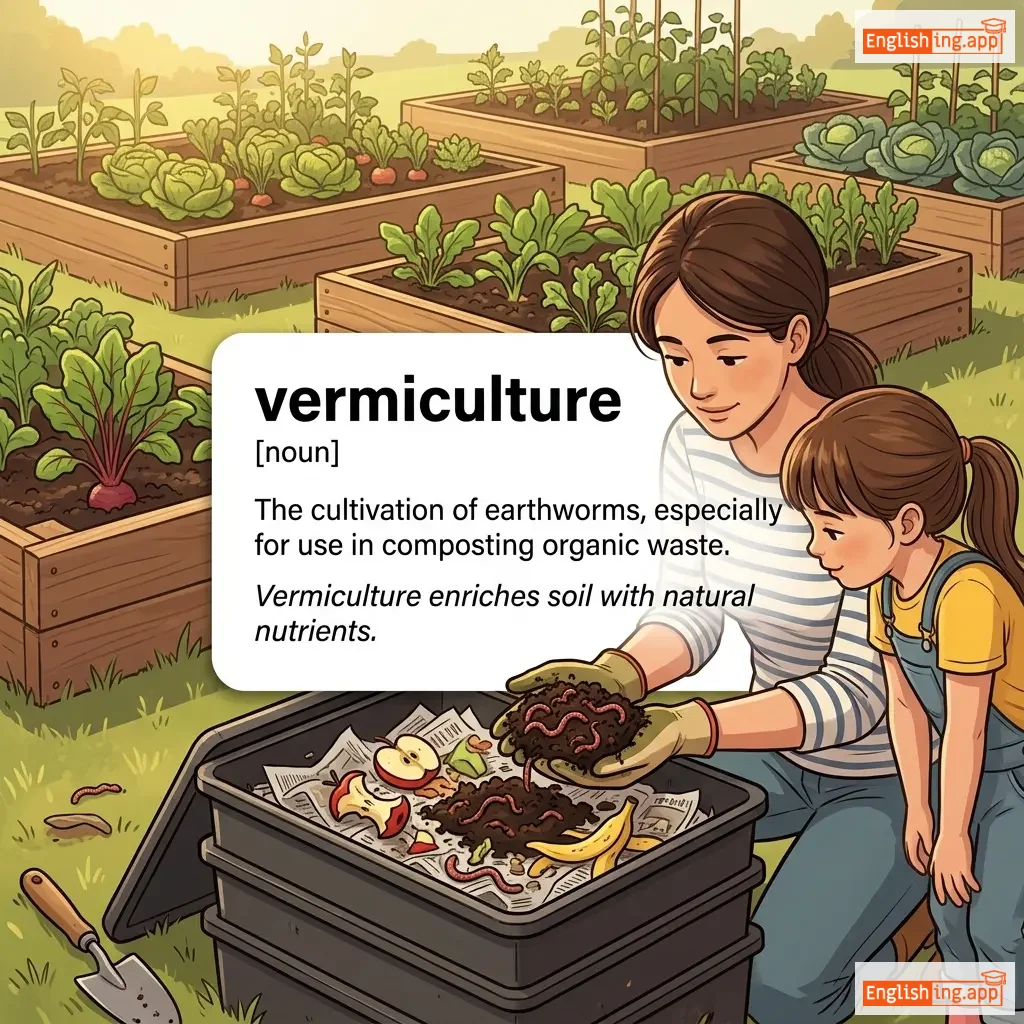
vermiculture definition card — visual illustration of the meaning
noun C2
ˈvɜː.mɪ.kʌl.tʃər
バーミカルチャー (bāmikarchā)

The cultivation of earthworms, especially for use in composting organic waste.

"Vermiculture enriches soil with natural nutrients."

"バーミカルチャーは土壌に自然な栄養素を提供します。" (Bāmikarchā wa dojō ni shizen na eiyōso o teikyō shimasu.)
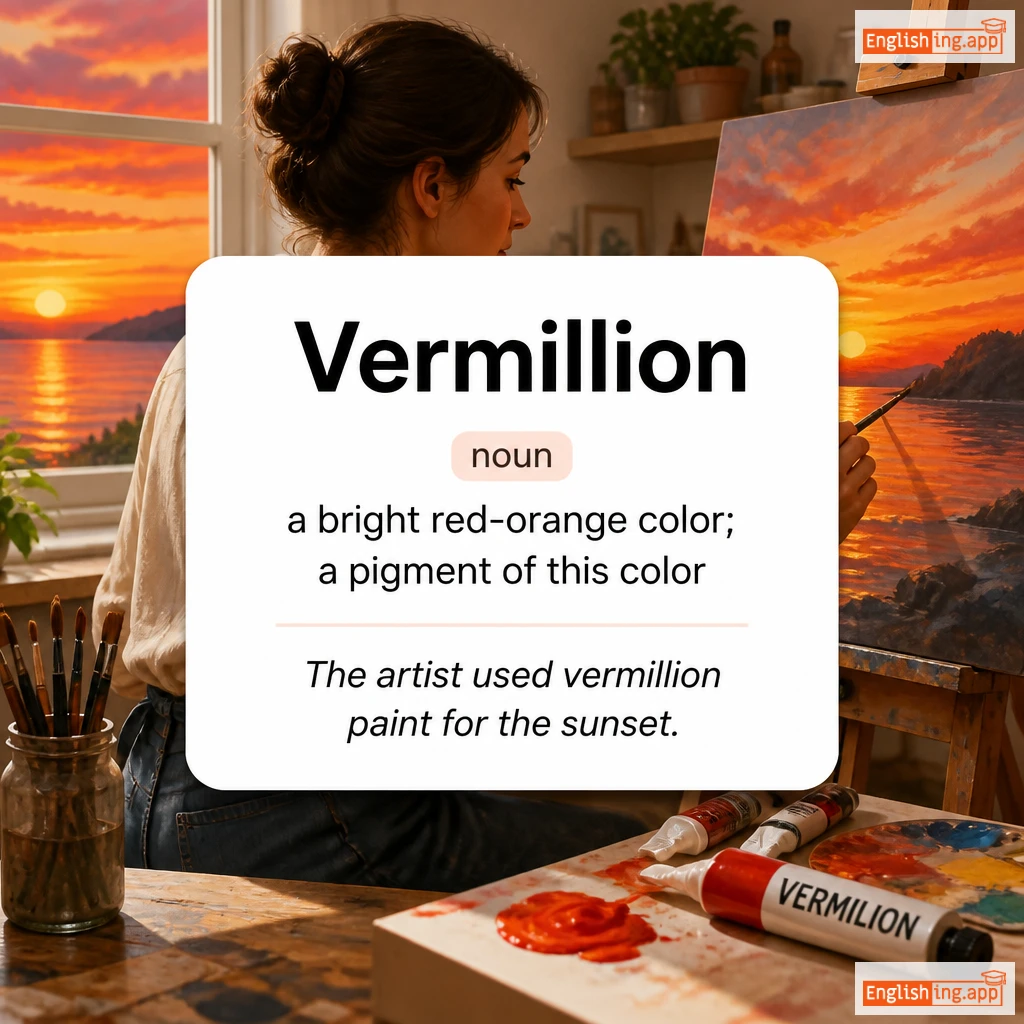
Vermillion definition card — visual illustration of the meaning
noun C2
/vərˈmɪl.jən/
鮮やかな赤橙色; この色の顔料 (vermillion)

a bright red-orange color; a pigment of this color

"The artist used vermillion paint for the sunset."

"アーティストは夕焼けのためにヴァーミリオンペイントを使用しました。" (Ātisuto wa yūyake no tame ni vāmirion peinto o shiyō shimashita.)
adjective C2
/ˈvɜːrnəl/
春の (haru no)

related to spring; fresh, youthful

"The garden was filled with vernal beauty after the long winter."

"長い冬の後、庭は春の美しさで満たされていました。" (Nagai fuyu no ato, niwa wa haru no utsukushisa de mitasarete imashita.)
adjective C2
/vɜːrˈtɪdʒɪnəs/
めまいを引き起こす (memai o hikiokosu)

Causing dizziness due to great height or steepness.

"The tourists looked down from the vertiginous cliffs with awe."

"観光客はめまいを引き起こす崖から下を見ていました。" (Kankōkyaku wa memai o hikiokosu gake kara shita o mite imashita.)
noun C2
/vɜːrv/
活力 (katsuryoku)

Great enthusiasm, spirit, or energy in expression or performance.

"The actor performed his role with remarkable verve."

"その俳優は素晴らしい活力で役を演じました。" (Sono haiyū wa subarashī katsuryoku de yaku o enjimashita.)
adjective C2
/vɛˈstɪdʒiəl/
遺物の (ibutsu no)

Relating to a small, undeveloped remnant of something that was once much larger or more functional.

"Humans have a vestigial tailbone that no longer serves its original purpose."

"人間にはもはや元の機能を果たさない遺物の尾骨があります。" (Ningen ni wa mo wa yō na moto no kinō o hatasanai ibutsu no bekotsu ga arimasu.)
noun C2
/ˈvɛstmənt/
宗教的な衣装 (shūkyō-teki na ishō)

a garment, especially a ceremonial or official robe worn during religious services

"The priest wore a golden vestment during the ceremony."

"司祭は儀式中に金色の聖衣を着ていた。" (Shisai wa gishiki-chū ni kin'iro no sei'i o kite ita.)
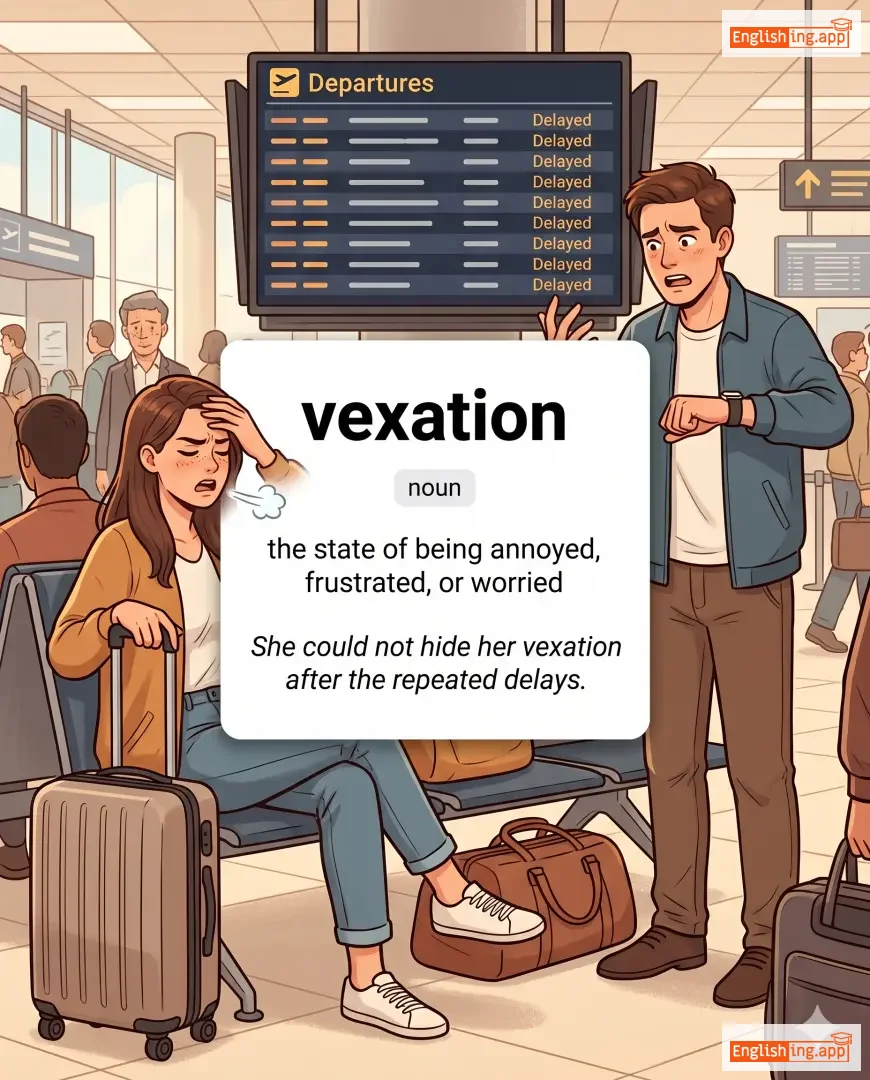
vexation definition card — visual illustration of the meaning
noun C2
/vɛkˈseɪʃən/
苛立ち (iradachi)

the state of being annoyed, frustrated, or worried

"She could not hide her vexation after the repeated delays."

"彼女は繰り返しの遅れの後、彼女の苛立ちを隠すことができませんでした。" (Kanojo wa kurikaeshi no okure no ato, kanojo no iradachi o kakusu koto ga dekimasen deshita.)