ভোকাবুলারিসমূহ

ইংরেজি শব্দের বাংলা অর্থ | English to Bangla Word Meaning Dictionary

adjective C2
/ˌfoʊtoʊɪˈlɛktrɪk/
光电 (guangdian)

relating to the emission of electrons or other free carriers when light shines on a material

"The photoelectric effect is fundamental in solar panels."

"光电效应在太阳能板中是基础。" (Guangdian xiaoying zai taiyangneng ban zhong shi jichu.)
noun C2
/ˌfoʊˈtɑːmɪtər/
光度计 (guangduji)

an instrument for measuring the intensity of light

"The scientist used a photometer to measure the light in the laboratory."

"科学家在实验室里使用光度计来测量光线。" (Kēxuéjiā zài shíyànshì lǐ shǐyòng guāngdùjì lái cèliàng guāngxiàn.)
noun C2
/foʊˈtɑːmɪtri/
光测量科学 (guang ce liang ke xue)

the science of measuring visible light in terms of its perceived brightness to human eyes

"Photometry helps in designing efficient lighting systems."

"光度测量学帮助设计高效的照明系统。" (Guang du ce liang xue bang zhu she ji gao xiao de zhao ming xi tong.)
photosensitivity definition card — visual illustration of the meaning
noun C2
/ˌfəʊ.təʊ.sen.sɪˈtɪv.ɪ.ti/
光敏感性 (guang min gan xing)

Sensitivity to light, especially abnormal sensitivity that may cause discomfort or damage.

"Overrubbing can increase photosensitivity."

"过度摩擦可能增加光敏感性。" (Guo du mo ca ke neng zeng jia guang min gan xing.)
noun C2
/ˈfaɪləm/
生物分类中的主要类别,高于类,低于界 (shengwu fenlei zhong de zhuyao leibie, gao yu lei, di yu jie)

a primary category in the biological classification of organisms, above class and below kingdom

"Humans belong to the phylum Chordata."

"人类属于脊索动物门。" (Renlei shuyu jisuodongwumen.)
noun C2
/ˌfɪzɪˈɑːkrəsi/
地权主义 (dì quán zhǔ yì)

an economic theory that land and its natural products are the source of wealth

"Physiocracy emphasized the importance of agriculture in national wealth."

"地权主义强调农业在国家财富中的重要性。" (Dì quán zhǔ yì qiángdiào nóngyè zài guójiā cáifù zhōng de zhòngyào xìng.)
noun C2
/ˌfɪziˈɒnəmi/
面部特征分析 (miànbù tèzhēng fēnxī)

the study of facial features to judge character or personality

"He believed in physiognomy and tried to read people's personalities from their faces."

"他相信面相学,并试图通过人的面部来解读他们的个性。" (Tā xiāngxìn miànxìang xué, bìng shìtú tōngguò rén de miànbù lái jiědú tāmen de gèxìng.)
noun C2
/ˌfɪziˈɑːɡrəfi/
地貌学 (dimàoxué)

the study of the physical features of the earth's surface

"He specialized in physiography to understand the landscape of the region."

"他专攻地貌学,以了解该地区的景观。" (Tā zhuān gōng dimàoxué, yǐ liǎojiě gāi dìqū de jǐngguān.)
phytochemicals definition card — visual illustration of the meaning
noun C2
/ˌfaɪ.təʊˈkem.ɪ.kəlz/
植物化学物质 (zhíwù huàxué wùzhì)

Natural chemical compounds produced by plants that provide health benefits beyond basic nutrition, often having antioxidant properties.

"Phytochemicals in green tea help reduce inflammation."

"绿茶中的植物化学物质有助于减少炎症。" (Lǜchá zhōng de zhíwù huàxué wùzhì yǒu zhù yú jiǎnshǎo yánzhèng.)
phytonutrient definition card — visual illustration of the meaning
noun C2
ˈfaɪ.təʊˌnjuː.tri.ənt
植物营养素 (zhíwù yíngyǎngsù)

Chemical compounds produced by plants that are beneficial to human health but not essential nutrients.

"Broccoli is rich in phytonutrients that enhance immunity."

"西兰花富含植物营养素,有助于增强免疫力。" (Xīlánhuā fùhán zhíwù yíngyǎngsù, yǒu zhù yú zēngqiáng miǎnyìlì.)
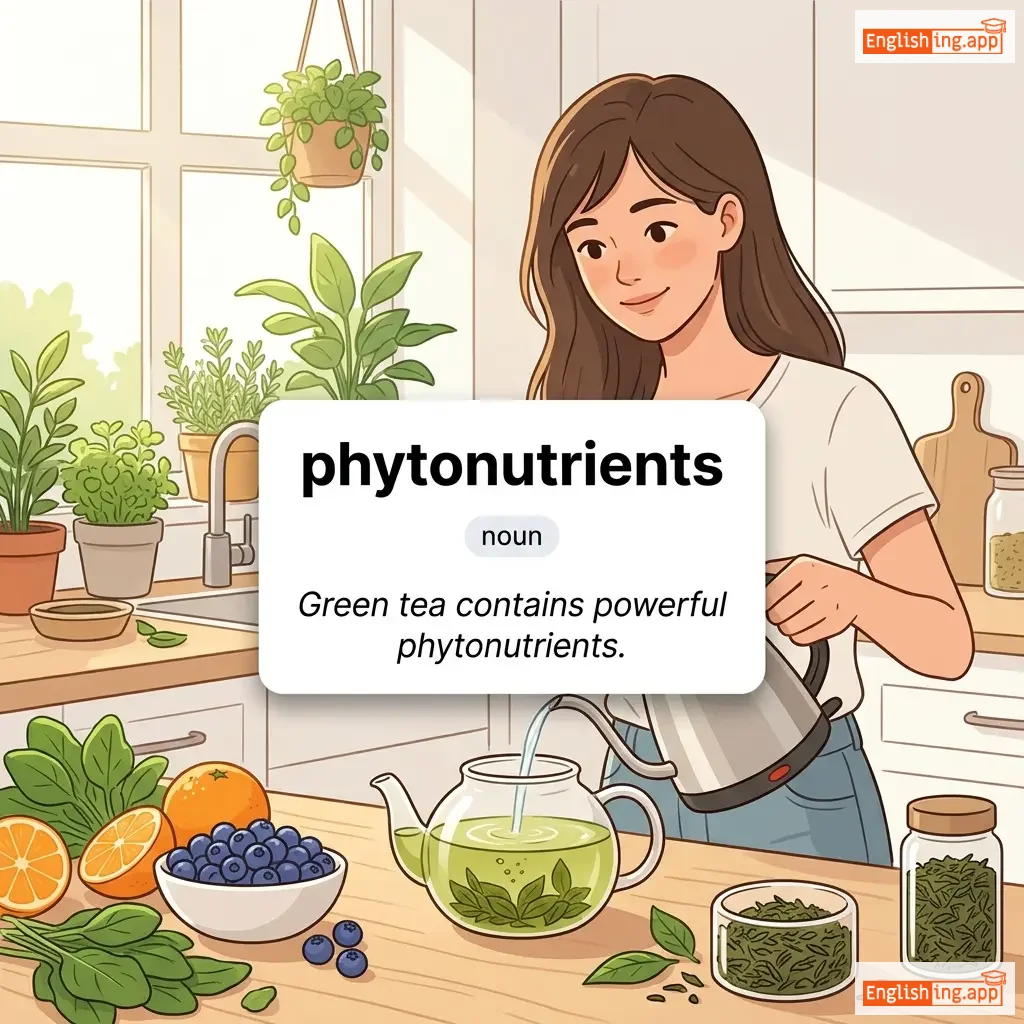
phytonutrients definition card — visual illustration of the meaning
noun C2
ˈfaɪ.təʊˌnjuː.tri.ənts
植物营养素 (zhíwù yíngyǎngsù)

Bioactive compounds found in plants that have health benefits beyond basic nutrition.

"Green tea contains powerful phytonutrients."

"绿茶含有强大的植物营养素。" (Lǜchá hányǒu qiángdà de zhíwù yíngyǎngsù.)
adjective C2
/ˌpɪkəˈrɛsk/
流氓英雄的故事 (liumang yingxiong de gushi)

relating to a style of fiction depicting the adventures of a roguish hero

"The novel is a picaresque tale of a clever vagabond."

"这本小说是一个聪明流浪汉的皮卡雷斯克故事。" (Zhe ben xiaoshuo shi yige congming liulanghan de picaresque gushi.)
adjective C2
/ˌpɪkəˈjuːn/
微不足道的, 琐碎的 (wēi bù zú dào de, suǒ suì de)

of little value or importance; trivial

"He complained about the picayune details of the contract."

"他抱怨合同中的琐碎细节。" (Tā bàoyuàn hé tong zhōng de suǒ suì xìjié.)
noun C2
/ˈpɪkəloʊ/
小长笛 (xiao changdi)

a small flute, higher in pitch than the regular flute

"She played a lively tune on the piccolo during the concert."

"她在音乐会期间吹奏了生动的皮科洛旋律。" (Ta zai yinyuehui qijian chuizou le shengdong de pikkolo xuanlü.)
adjective C2
/ˈpɪdlɪŋ/
微不足道, 琐碎 (wēi bù zú dào, suǒ suì)

trivial or insignificant; very small

"He made a piddling amount of money from that deal."

"他从那笔交易中赚了一笔微不足道的金额。" (Tā cóng nà bǐ jiāoyì zhōng zhuànle yī bǐ wēi bù zú dào de jīn'é.)
adjective C2
/ˈpaɪbɔːld/
双色斑点 (shuāngsè bāndiǎn)

having irregular patches of two colors, especially black and white

"The farmer owns a piebald horse with black and white spots."

"农夫有一匹带有黑白斑点的双色马。" (Nóngfū yǒu yī pī dài yǒu hēi bái bāndiǎn de shuāngsè mǎ.)
Piece-goods definition card — visual illustration of the meaning
noun C2
/ˈpiːs ɡʊdz/
布料 (bù liào)

textiles or fabrics sold by the yard or meter; cloth materials

"The tailor bought piece-goods from the wholesale market to make custom dresses."

"裁缝从批发市场购买了布料来制作定制的衣服。" (cáiféng cóng pīfā shìchǎng gòumǎi le bù liào lái zhìzuò dìngzhì de yīfú.)
adjective C2
/paɪd/
花色的 (huā sè de)

having two or more different colors, typically in blotches

"The pied cat had black and white patches all over its body."

"这只斑猫身上有黑白色的斑点。" (Zhè zhī bān māo shēn shang yǒu hēi bái sè de bāndiǎn.)
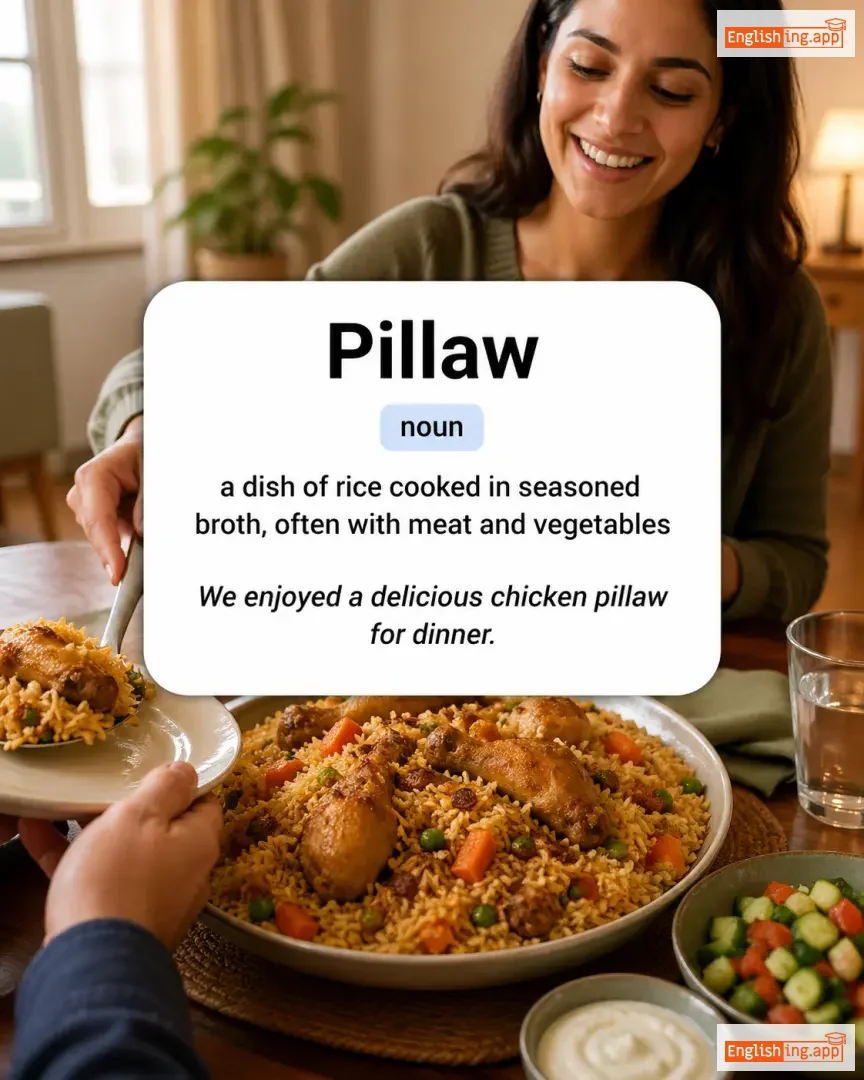
Pillaw definition card — visual illustration of the meaning
noun C2
/pɪˈlɑːf/
皮拉夫 (pilaf)

a dish of rice cooked in seasoned broth, often with meat and vegetables

"We enjoyed a delicious chicken pillaw for dinner."

"我们享用了美味的鸡肉皮拉夫作为晚餐。" (wǒmen xiǎngyòngle měiwèi de jīròu pílāf zuòwéi wǎncān.)
noun/verb C2
/ˈpɪləri/
公开惩罚装置 (gōngkāi chéngfá zhuāngzhì)

a device for publicly punishing someone / to expose to public ridicule

"The corrupt official was placed in the pillory for the town to jeer at."

"腐败的官员被放在皮洛里里让市民嘲笑。" (fǔbài de guānyuán bèi fàng zài pílùlǐ lǐ ràng shìmín cháoxiào.)
noun C2
/ˈpɪnjən/
一个小齿轮或鸟翅膀的外部部分;限制或使之不能动弹 (yīgè xiǎo chǐlún huò niǎo chìbǎng de wàibù bùfen; xiànzhì huò shǐ zhī bùnéng dòngtán)

a small gear or the outer part of a bird's wing; to restrain or immobilize

"The bird's pinion was injured, preventing it from flying."

"鸟的翅膀受伤,无法飞行。" (Niǎo de chìbǎng shòushāng, wúfǎ fēixíng.)
noun C2
/ˈpɪnəs/
小船 (xiaochuan)

a small boat, often carried by a larger ship

"The sailors used a pinnace to reach the shore."

"水手们用小船到达了岸边。" (Shuǐshǒu men yòng xiǎo chuán dào dá le àn biān.)
adjective C2
/pɪˈskætɔːrɪəl/
与捕鱼相关 (yu buting xiangguan)

relating to fishing or fishermen

"He has a deep knowledge of piscatorial techniques and fish species."

"他对捕鱼技术和鱼种有深刻的了解。" (Ta dui buting jishu he yuzhong you shenke de liaojie.)
noun C2
/pɪθ/
要点,精髓 (yaodian, jingsui)

the essential or central part of something

"The pith of his argument was that honesty matters most."

"他论点的要点是诚实最为重要。" (Ta lundian de yaodian shi chengshi zui wei zhongyao.)
adjective C2
/ˈplændʒənt/
悲伤或回响的声音 (bēi shāng huò huí xiǎng de shēng yīn)

having a loud, mournful sound; resonant

"The plangent toll of the church bell echoed through the village."

"教堂钟声的悲鸣回荡在村庄里。" (Jiàotáng zhōngshēng de bēi míng huídàng zài cūnzhuāng lǐ.)
noun C2
/ˈplænɪsfɪr/
星图仪 (xīng tú yí)

a rotating star chart used to display the visible stars for any time and date

"The astronomer used a planisphere to identify the constellations."

"天文学家使用星图仪来识别星座。" (Tiān wénxué jiā shǐyòng xīng tú yí lái shíbié xīngzuò.)
platitude definition card — visual illustration of the meaning
noun C2
/ˈplætɪtjuːd/
陈词滥调,空话 (chéncí làndiào, kōnghuà)

a remark or statement that is overused and unoriginal

"He kept repeating the same platitudes during the speech."

"他在演讲中不断重复相同的陈词滥调。" (Tā zài yǎnjiǎng zhōng bùduàn chóngfù xiāngtóng de chéncí làndiào.)
noun C2
/ˈplɔːdɪt/
赞扬 (zanyang)

an expression of praise or approval

"The actor received plaudit for his outstanding performance."

"演员因其出色的表现获得了赞扬。" (Yǎnyuán yīn qí chū sè de biǎoxiàn huò dé le zànyáng.)
noun C2
/ˈplɔːdɪts/
赞扬 (zànyáng)

expressions of praise or approval

"The scientist received plaudits from the international community."

"这位科学家得到了国际社会的赞扬。" (Zhè wèi kēxuéjiā dédàole guójì shèhuì de zànyáng.)
adjective, noun C2
/pləˈbiːən/
平民 (pingmin)

common, ordinary, or belonging to the lower social classes

"The festival was enjoyed by both plebeian and noble citizens."

"这个节日被平民和贵族市民共同享受。" (Zhe ge jie ri bei pingmin he guizu shimin gongtong xiangshou.)
adjective, noun C2
/pləˈbiːən/
普通的,平民的 (putong de, pingmin de)

alternate spelling of 'plebeian'; common or ordinary

"His tastes were rather plebian, favoring simple food and clothes."

"他的口味相当普通,喜欢简单的食物和衣服。" (Tā de kǒuwèi xiāngdāng pǔtōng, xǐhuān jiǎndān de shíwù hé yīfú.)
noun C2
/ˈplɛbɪsaɪt/
公民投票 (gongmin toupiao)

a direct vote by the electorate on an important public question

"The government held a plebiscite to decide on the new constitution."

"政府举行了公民投票,决定新的宪法。" (Zhengfu juxing le gongmin toupiao, jueding xin de xianfa.)
noun C2
/ˈplɛdʒiː/
被作为担保而给与某物的人 (bei zuòwéi dānbǎo ér gěi yǔ mǒu wù de rén)

a person to whom something is pledged or given as security

"The bank is the pledgee of the collateral until the loan is repaid."

"银行是担保品的债权人,直到贷款偿还为止。" (Yínháng shì dānbǎopǐn de zhàiquánrén, zhídào dàikuǎn chánghuán wéizhǐ.)
noun C2
/ˈplɛdʒɔːr/
担保人 (danbaoren)

a person who gives or offers a pledge or security

"The bank accepted the jewelry from the pledgeor as collateral for the loan."

"银行接受了担保人提供的珠宝作为贷款的担保。" (Yinhang jieshou le danbaoren tigong de zhubao zuo wei daikuan de danbao.)
adjective C2
/ˈpliːnəri/
全体的 (quántǐ de)

complete in every way; fully attended or absolute

"The committee held a plenary session to discuss all matters of importance."

"委员会召开了一个全体会议,讨论所有重要事项。" (Wěiyuánhuì zhàokāile yīgè quántǐ huìyì, tǎolùn suǒyǒu zhòngyào shìxiàng.)
noun C2
/ˌpliːnɪpəˈtɛnʃəri/
全权代表 (quánquán dàibiǎo)

a person invested with full power to act on behalf of another, especially in diplomacy

"The ambassador was a plenipotentiary sent to negotiate the treaty."

"大使是被派往谈判条约的全权代表。" (Dàshǐ shì bèi pài wǎng tánpàn tiáoyuē de quánquán dàibiǎo.)
noun C2
/ˈplɛnɪtjuːd/
丰富 (fēngfù)

the condition of being full or abundant; a great quantity

"The garden was a plenitude of flowers in spring."

"春天的花园充满了花卉的丰富性。" (Chūntiān de huāyuán chōngmǎnle huāhuì de fēngfùxìng.)
adjective C2
/ˈplɛntɪəs/
丰富 (fengfu)

existing in great quantity; abundant

"The harvest was plenteous, providing enough food for the entire village."

"收成丰富,为整个村庄提供了足够的食物。" (Shou cheng fengfu, wei zheng ge cun zhuang ti gong le zu gou de shi wu.)
noun C2
/ˈplɛntɪtjuːd/
丰富 (fengfu)

the condition of being full or abundant

"The garden offered a plentitude of flowers in spring."

"花园在春天提供了丰富的花卉。" (Huayuan zai chuntian tigong le fengfu de huahui.)
adjective C2
/ˌpluːˈpɜːrfɪkt/
过去完成时 (guòqù wánchéng shí)

a verb tense expressing an action completed before another past action

"By the time she arrived, he had finished his homework, showing the pluperfect tense."

"在她到达时,他已经完成了作业,展示了过去完成时。" (Zài tā dào dá shí, tā yǐjīng wánchéngle zuòyè, zhǎnshìle guòqù wánchéng shí.)
noun C2
/pluːˈtɒkrəsi/
富人统治 (fùrén tǒngzhì)

a system of government where the wealthy hold power

"The country was ruled as a plutocracy."

"这个国家是由富人统治的。" (Zhège guójiā shì yóu fùrén tǒngzhì de.)
adjective C2
/njuːˈmætɪk/
气动的 (qidong de)

operated by air or gas under pressure

"The factory uses pneumatic tools for assembly."

"工厂使用气动工具进行组装。" (Gongchang shiyong qidong gongju jinxing zuchuang.)
noun C2
/ˈpoʊ.ə.si/
诗意 (shi yi)

poetry; the art or composition of poems

"The anthology was filled with romantic poesy."

"这本选集充满了浪漫的诗意。" (Zhe ben xuanji chongman le langman de shiyi.)
noun C2
/ˈpoʊ.ɪˌtæs.tər/
一个劣质或琐碎的诗人 (yī gè liè zhì huò suǒ suì de shī rén)

an inferior or trivial poet

"He was mocked as a poetaster by the literary critics."

"他被文学评论家当作诗人废物嘲笑。" (Tā bèi wénxué pínglùn jiā dàngzuò shīrén fèiwù cháoxiào.)
noun C2
/pəˈlɛmɪk/
激烈的抨击 (jī liè de pēng jī)

a strong verbal or written attack on someone or something

"The article was a fierce polemic against the government's policies."

"这篇文章是对政府政策的激烈抨击。" (zhè piān wén zhāng shì duì zhèng fǔ zhèng cè de jī liè pēng jī.)
adjective C2
/pəˈlɛmɪkəl/
争议的 (zhengyi de)

relating to or involving strongly critical or controversial writing or speech

"She wrote a polemical article challenging traditional beliefs."

"她写了一篇挑战传统信仰的争议文章。" (Ta xie le yi pian tiaozhan chuantong xinyang de zhengyi wenzhang.)
noun C2
/pəˈlɛmɪks/
辩论 (biàn lùn)

the art or practice of engaging in controversial debate or dispute

"The conference was full of polemics on economic reforms."

"会议充满了关于经济改革的辩论。" (Huì yì chōng mǎn le guān yú jīng jì gǎi gé de biàn lùn.)
noun C2
/ˈpɒlɪti/
政治,政府形式 (zhèngzhì, zhèngfǔ xíngshì)

an organized society or form of government

"The ancient Greek polity had a system of city-states."

"古希腊的政治有一个城邦制度。" (Gǔ Xīlà de zhèngzhì yǒu yīgè chéngbāng zhìdù.)
adjective C2
/ˌpɒliˈæn.ɪ.ɪʃ/
过于乐观 (guo yu le guan)

overly or blindly optimistic

"Her pollyannaish attitude ignored the obvious problems."

"她的过于乐观的态度忽略了明显的问题。" (Ta de guo yu le guan de tai du hu lue le ming xian de wen ti.)
noun C2
/pəˈtruːn/
懦夫 (nuofu)

a cowardly person

"He acted like a poltroon during the crisis."

"他在危机中像个懦夫一样表现。" (Tā zài wéijī zhōng xiàng gè nuòfū yīyàng biǎoxiàn.)