ভোকাবুলারিসমূহ

ইংরেজি শব্দের বাংলা অর্থ | English to Bangla Word Meaning Dictionary

noun C2
/ˈpæk.ɪ.dɜːrm/
厚い皮膚を持つ大型哺乳動物 (atsui hifu wo motsu ōgata honyū dōbutsu)

a large mammal with thick skin, such as an elephant, rhinoceros, or hippopotamus

"The zoo had several pachyderms, including elephants and rhinos."

"動物園にはいくつかのパキダームがいて、象やサイが含まれていました。" (Dōbutsuen ni wa ikutsuka no pakidāmu ga ite, zō ya sai ga fukumarete imashita.)
noun C2
/ˈpɑːdreɪ/
神父 (shinpu)

A title for a priest, especially in the Roman Catholic Church; also used informally for 'father'.

"The soldiers attended mass led by the padre."

"兵士たちは神父が主催したミサに参加しました。" (Heishitachi wa shinpu ga shusai shita misa ni sanka shimashita.)
noun C2
/ˈpiːən/
賛美歌 (sanbika)

A song or piece of writing expressing great praise or triumph.

"The article was a paean to the beauty of nature."

"その記事は自然の美しさへの賛美歌でした。" (Sono kiji wa shizen no utsukushisa e no sanbika deshita.)
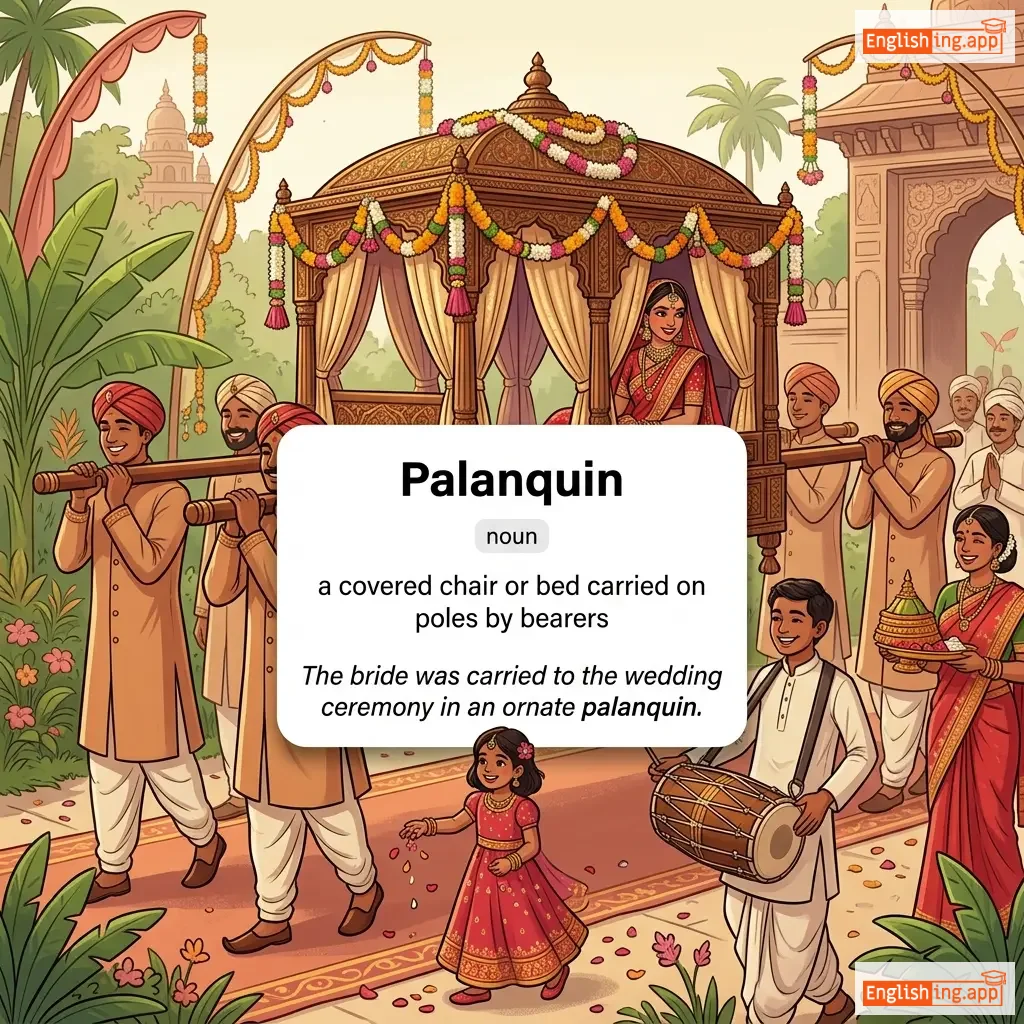
Palanquin definition card — visual illustration of the meaning
noun C2
/ˌpæl.ənˈkiːn/
花嫁用の車 (hanayomeyō no kuruma)

a covered chair or bed carried on poles by bearers

"The bride was carried to the wedding ceremony in an ornate palanquin."

"花嫁は装飾されたパランキンで結婚式に運ばれました。" (Hanayome wa sōshoku sareta parankin de kekkonshiki ni hakobaremashita.)
noun C2
/pəˈlæv.ər/
無駄な議論 / 騒動 (mudana giron / soudou)

prolonged and idle discussion; fuss or unnecessary talk

"After much palaver, they finally agreed on the plan."

"長時間無駄な議論の後、彼らは最終的に計画に同意しました。" (Choujikan mudana giron no ato, karera wa saishuuteki ni keikaku ni doui shimashita.)
noun C2
/ˈpælɪmpsɛst/
パリンプセスト (parimpsesuto)

a manuscript or document that has been written over but still bears traces of earlier writing; something reused or altered but still retaining traces of its earlier form

"The ancient manuscript was a palimpsest, showing faint traces of previous texts beneath the new writing."

"その古代の写本はパリンプセストであり、新しい文字の下に以前のテキストの微弱な痕跡が見られた。" (Sono kodai no shahon wa parimpsesuto de ari, atarashī moji no shita ni izen no tekisuto no bijaku na konseki ga mirarareta.)
noun C2
/ˈpælɪˌnoʊd/
後悔の詩 (kōkai no shi)

a poem or statement in which the writer retracts something said in an earlier work

"The poet wrote a palinode to apologize for his earlier harsh words."

"詩人は以前の厳しい言葉を謝罪するために後悔の詩を書きました。" (Shijin wa izen no kibishī kotoba o shazai suru tame ni kōkai no shi o kakimashita.)
verb C2
/ˈpælieɪt/
和らげる (yawarageru)

to make a disease, symptoms, or problem less severe without removing the cause

"The doctor prescribed medicine to palliate the patient's pain."

"医者は患者の痛みを和らげるために薬を処方しました。" (Isha wa kanja no itami wo yawarageru tame ni kusuri wo shohou shimashita.)
noun C2
/ˌpæliˈeɪʃən/
緩和 (kanwa)

relief of symptoms without curing the underlying disease or problem

"Palliation is often the focus of care for terminally ill patients."

"緩和ケアは終末期の患者の治療において重要な焦点となります。" (Kanwa kea wa shūmatsuki no kanja no chiryō ni oite jūyōna shōten to narimasu.)
adjective C2
/ˈpɑːmi/
繁栄 / 栄光 (han'ei / eikou)

prosperous, flourishing, or relating to palm trees

"He often reminisced about the palmy days of his youth."

"彼は若い頃の繁栄した日々をよく思い出していました。" (Kare wa wakai koro no han'ei shita hibi o yoku omoidashtemashita.)
verb C2
/ˈpælpɪˌteɪt/
速く脈打つ (hayaku myakuutsu)

to beat rapidly and strongly, often because of fear, excitement, or illness

"Her heart began to palpitate with fear."

"彼女は恐怖で心臓がパルピテイトし始めた。" (Kanojo wa kyōfu de shinzō ga parupiteitō shi hajimeta.)
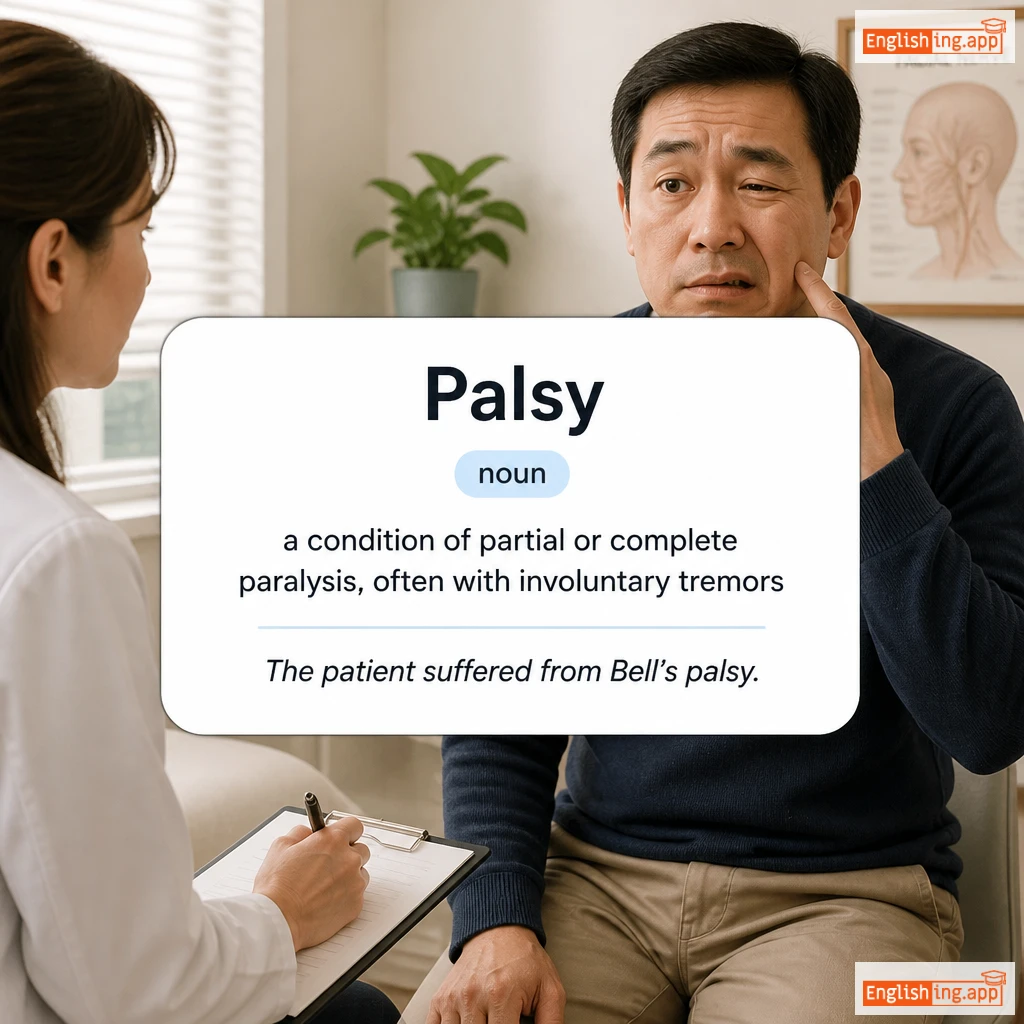
Palsy definition card — visual illustration of the meaning
noun C2
/ˈpɔːlzi/
麻痺 (mabi)

a condition of partial or complete paralysis, often with involuntary tremors

"The patient suffered from Bell’s palsy."

"患者はベル麻痺に苦しんでいました。" (Kanja wa Beru mabi ni kurushindeimashita.)
verb C2
/ˈpɔːltər/
あいまいに話す、騙す (aimai ni hanasu, damasu)

to act insincerely or deceitfully; to equivocate or lie

"He paltered when asked about his involvement in the deal."

"取引に関与しているか尋ねられたとき、彼は回避しました。" (Torihiki ni kan'yo shite iru ka tazunerareta toki, kare wa kaishi shimashita.)
adjective C2
/ˈpeɪli/
縞模様 (kamomoyou)

striped with different colors, usually used in heraldry

"The knight’s shield was decorated with paly stripes of red and gold."

"騎士の盾には赤と金の縞模様が飾られていた。" (Kishi no tate ni wa aka to kin no kamomoyou ga kazararete ita.)
noun, verb C2
/ˌpæm.fləˈtɪər/
パンフレットの著者 (panfuretto no chosha)

a person who writes or distributes pamphlets, often to promote a political or social cause

"In the 18th century, many pamphleteers influenced public opinion."

"18世紀には、多くのパンフレットの著者が公衆の意見に影響を与えました。" (18 seiki ni wa, ooku no panfuretto no chosha ga koushu no iken ni eikyou wo ataemashita.)
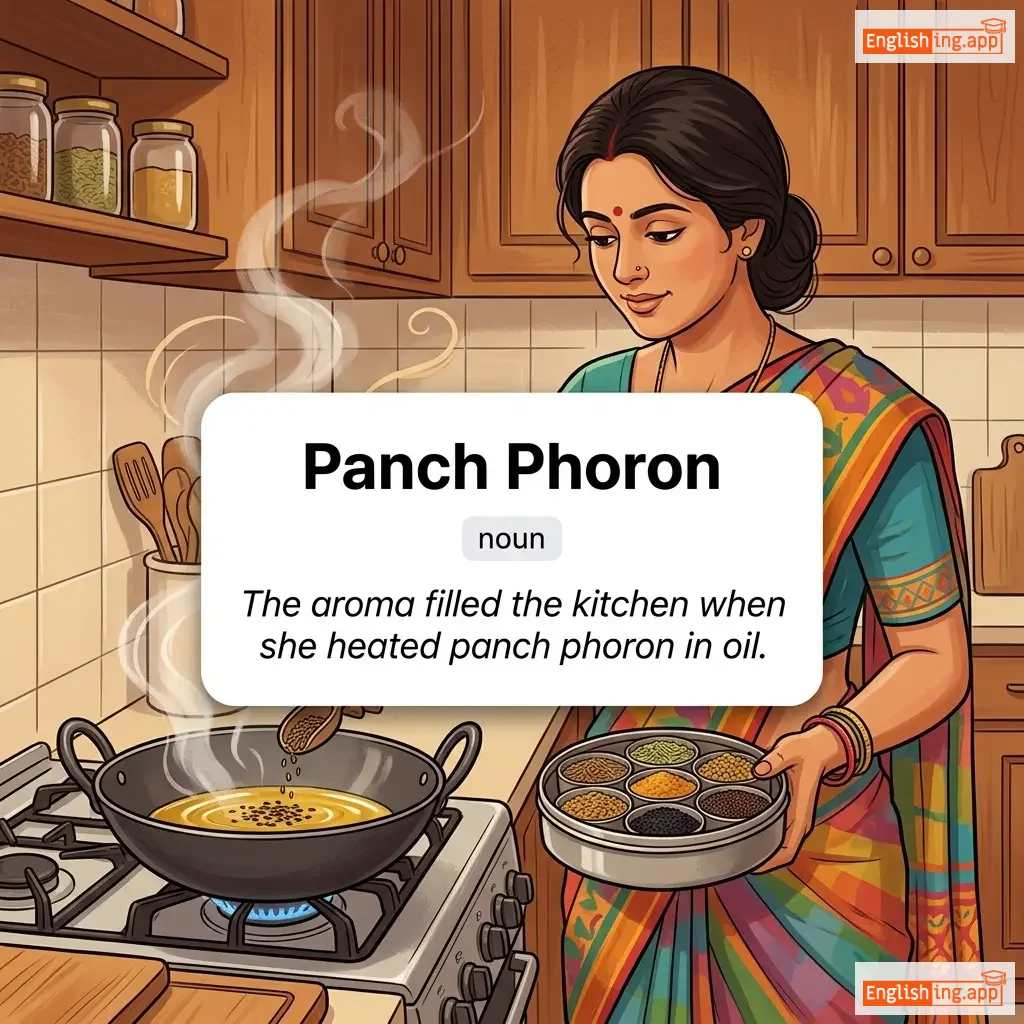
Panch Phoron definition card — visual illustration of the meaning
noun C2
/pʌntʃ ˈfoʊrən/
パンチ・フォロン (panchi foron)

a Bengali spice blend containing five whole spices: cumin, fennel, fenugreek, nigella, and mustard seeds

"The aroma filled the kitchen when she heated panch phoron in oil."

"彼女がオイルでパンチ・フォロンを加熱したとき、香りがキッチンを満たしました。" (kanojo ga oiru de panchi foron o kenetsu shita toki, kaori ga kicchin o mitashimashita.)
noun C2
/ˌpænəˈdʒɪrɪk/
賛辞, 賞賛 (sanchi, shōsan)

a formal speech or piece of writing in praise of someone or something

"The author wrote a panegyric on the bravery of the soldiers."

"著者は兵士たちの勇気についてのパネジリックを書いた。" (Chosha wa heishitachi no yūki ni tsuite no panejiriku o kaita.)
/ˈpæn.ə.pli/
全装備 (zen sōbi)

A complete or impressive collection of things; a full set of armor.

"The museum displayed a panoply of ancient weapons."

"博物館は古代の武器の全装備を展示しました。" (Hakubutsukan wa kodai no buki no zen sōbi o tenji shimashita.)
noun C2
/ˈpæn.θi.ɪ.zəm/
汎神論 (hanshinron)

The belief that God and the universe are identical, or that everything is a manifestation of God.

"Spinoza’s philosophy is often associated with pantheism."

"スピノザの哲学はしばしば汎神論と関連付けられます。" (Supinoza no tetsugaku wa shibashiba hanshinron to kanrenzukeraremasu.)
noun C2
/ˈpæntəˌskoʊp/
広範囲またはパノラマビューを提供する光学機器 (kouhanni matawa panorama byuu wo teikyousuru kougaku kiki)

An optical instrument that provides a wide or panoramic view.

"The scientist used a pantoscope to observe the entire horizon."

"科学者は全ての地平線を観察するためにパンタスコープを使用しました。" (Kagakusha wa subete no chiheisen wo kansatsu suru tame ni pantascope wo shiyou shimashita.)
noun C2
/ˈpeɪpəsi/
教皇職 (kyōkō shoku)

The office or authority of the Pope in the Roman Catholic Church.

"The papacy played a significant role in medieval European politics."

"教皇職は中世ヨーロッパの政治で重要な役割を果たした。" (Kyōkō shoku wa chūsei Yōroppa no seiji de jūyō na yakuwari o hatashita.)
adjective C2
/ˌpærəˈdɪɡmətɪk/
典型的な (tenkeiteki na)

Serving as a typical example or model of something.

"Her success story is paradigmatic of the opportunities education can provide."

"彼女の成功物語は、教育が提供できる機会の典型的な例です。" (Kanojo no seikō monogatari wa, kyōiku ga teikyō dekiru kikai no tenkeiteki na rei desu.)
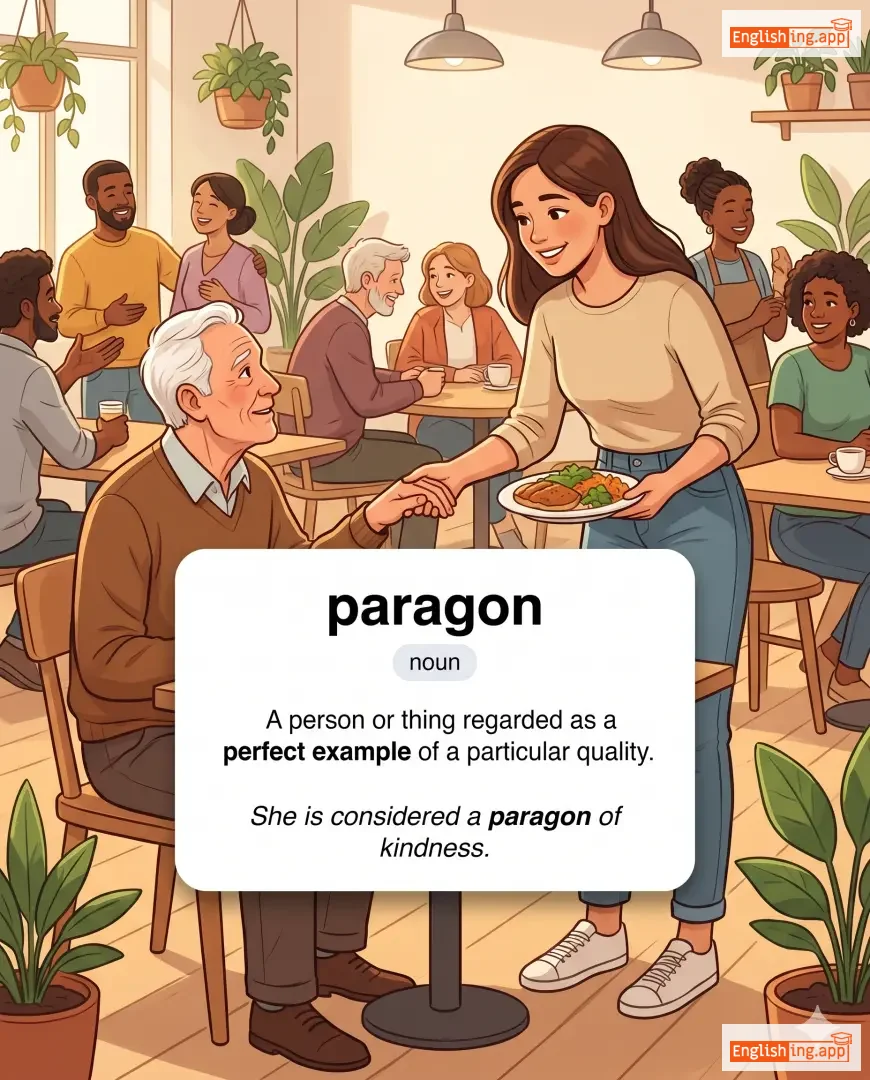
paragon definition card — visual illustration of the meaning
noun C2
/ˈpærəɡɒn/
模範 (mohan)

A person or thing regarded as a perfect example of a particular quality.

"She is considered a paragon of kindness."

"彼女は親切の模範と見なされています。" (Kanojo wa shinsetsu no mohan to minasareteimasu.)
noun C2
/ˈpærəmʊr/
愛人 (aijin)

a lover, especially an illicit one

"The secret paramour was finally revealed."

"秘密の愛人はついに明らかにされました。" (Himitsu no aijin wa tsuini akiraka ni saremashita.)
noun C2
/ˌpærəˈnɔɪæk/
パラノイア的な人 (paranoia-tekina hito)

A person who suffers from paranoia or exhibits extreme, irrational distrust and suspicion.

"The paranoiac refused to leave his house, fearing everyone was against him."

"そのパラノイア的な人は、みんなが自分に反対していると恐れて家を出ることを拒んだ。" (Sono paranoia-tekina hito wa, minna ga jibun ni hantai shite iru to osorete ie o deru koto o kobanda.)
noun C2
/ˈpærəpɛt/
防護壁 (bougobari)

A low protective wall along the edge of a roof, balcony, or bridge.

"The soldier hid behind the parapet for protection."

"兵士は防護壁の後ろに隠れて安全を守りました。" (Heishi wa bougobari no ushiro ni kakurete anzen o mamorimashita.)
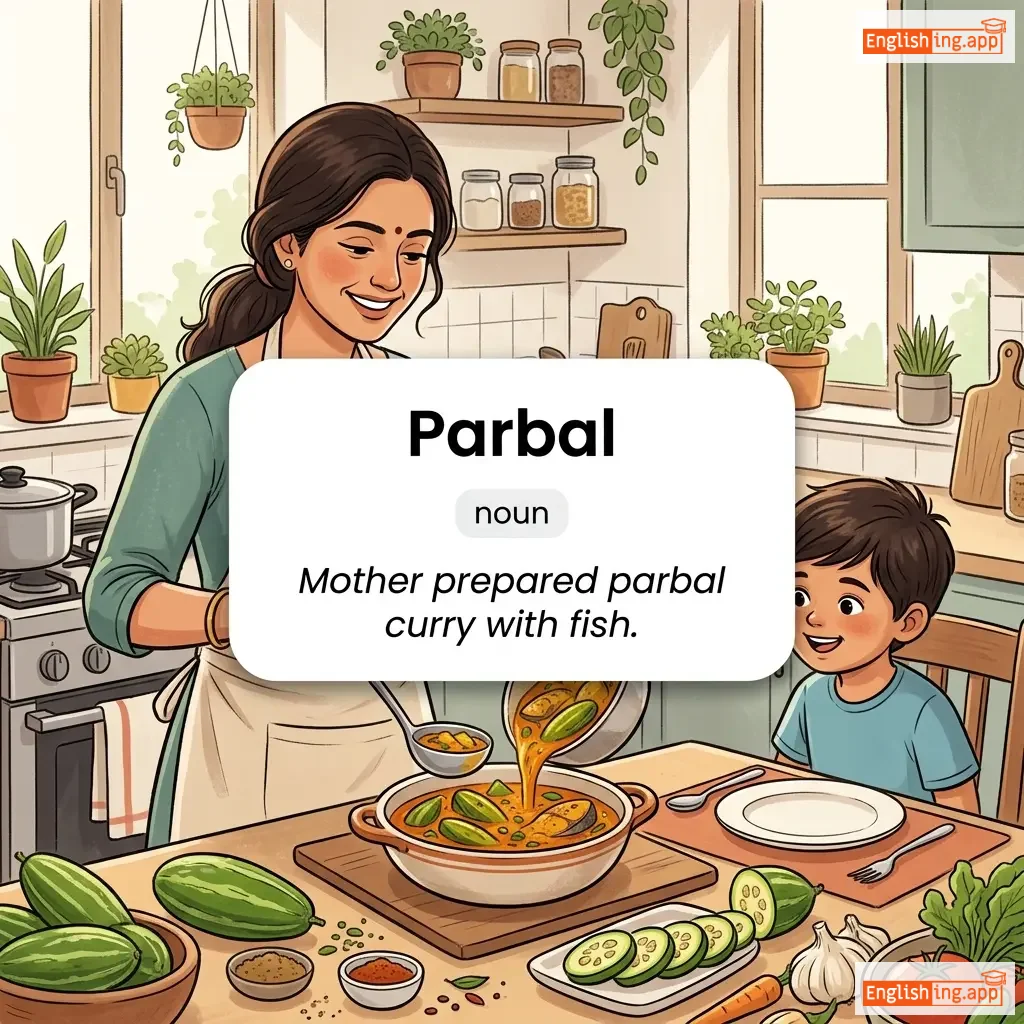
Parbal definition card — visual illustration of the meaning
noun C2
/ˈpɑr.bəl/
尖ったウリ (togatta uri)

A green vegetable also known as pointed gourd, commonly used in South Asian cuisine

"Mother prepared parbal curry with fish."

"母は魚と一緒に尖ったウリのカレーを作りました。" (Haha wa sakana to issho ni togattta uri no karē o tsukurimashita)
verb C2
/pɑːrtʃ/
乾かす (kawakasu)

to make something extremely dry, especially by exposure to heat

"The scorching sun began to parch the fields."

"焼けつくような太陽が畑を乾かし始めました。" (Yaketukuyouna taiyou ga hatake o kawakashi hajimemashita.)
noun C2
/ˌpærəˈɡɔːrɪk/
アヘンを含む薬 (ahen wo fukumu kusuri)

a medicine containing opium, once used to relieve pain and diarrhea

"Doctors once prescribed paregoric to treat diarrhea in children."

"医師はかつて子供の下痢を治療するためにパレゴリックを処方していた。" (Ishi wa katsute kodomo no geri wo chiryo suru tame ni paregoric wo shohou shite ita.)
adjective C2
/ˌpɛrənˈθɛtɪkəl/
括弧内のコメント (kakkonai no komento)

Relating to or expressed in parentheses; a side remark or digression.

"He added a parenthetical comment during the lecture."

"彼は講義中に括弧内のコメントを追加しました。" (Kare wa kōgijū ni kakkonai no komento o tsuika shimashita.)
noun C2
/ˈpɑːrləns/
専門用語 (senmon yougo)

a particular way of speaking or using words, common to a group

"In legal parlance, the term has a different meaning."

"法律用語では、この言葉は異なる意味を持っています。" (Hōritsu yōgo de wa, kono kotoba wa kotonaru imi o motteimasu.)
noun, verb C2
/ˈpɑːrli/
交渉 (koushou)

a discussion between opposing sides, especially to negotiate terms

"The generals met to parley over the terms of surrender."

"将軍たちは降伏条件について話し合うために会った。" (Shougun-tachi wa koufuku jouken ni tsuite hanashiau tame ni atta.)
adjective C2
/ˈpɑːrləs/
危険な (parlus)

Full of danger or risk; precarious.

"The company is in a parlous financial state."

"その会社は危険な財政状態にあります。" (Sono kaisha wa kiken na zaisei jōtai ni arimasu.)
adjective C2
/pəˈrɒnɪməs/
同義語 (dōgigo)

Words that are derived from the same root or sound alike.

"The words 'effect' and 'effective' are paronymous."

"‘Effect’ と ‘Effective’ は同義語です。" ('Effect' to 'Effective' wa dōgigo desu.)
noun C2
/ˈpær.əkˌsɪz.əm/
突然の爆発的な感情 (totsuzen no bakuhatsuteki na kanjō)

A sudden, violent outburst of emotion or activity.

"She was seized by a paroxysm of laughter."

"彼女は突然の笑いの爆発に襲われた。" (Kanojo wa totsuzen no warai no bakuhatsu ni osowareta.)
noun C2
/ˈpɑːr.kə.tri/
パーケットフローリングの技術 (pāketto furōringu no gijutsu)

The art or technique of laying parquet floors.

"The craftsman specialized in parquetry for luxury homes."

"職人は高級住宅のためにパーケット工芸を専門にしていました。" (Shokunin wa kōkyū jūtaku no tame ni pāketto kōgei o senmon ni shite imashita.)
noun C2
/ˈpær.ɪ.saɪd/
親殺し (oyagoroshi)

The act of killing one's father, mother, or other close relative.

"The court tried him for parricide after the tragic incident."

"悲劇的な事件の後、裁判所は彼を親殺しの罪で裁いた。" (Higeki-tekina jiken no ato, saiban-sho wa kare wo oyagoroshi no tsumi de sabaita.)
adjective C2
/ˌpɑːrsɪˈmoʊniəs/
けち (kechi)

unwilling to spend money or use resources; stingy

"The company was too parsimonious to invest in better equipment."

"その会社は良い設備に投資するにはあまりにもけちだった。" (Sono kaisha wa yoi setsubi ni tōshi suru ni wa amari ni mo kechi datta.)
noun C2
/ˈpɑːrsɪmoʊni/
けち (kechi)

extreme unwillingness to spend money or use resources

"His parsimony was evident in the way he avoided any unnecessary expenses."

"彼のけちは、どんな無駄な出費も避ける様子に表れていた。" (Kare no kechi wa, donna muda na shuppi mo sakeru yosu ni arawarete ita.)
adjective C2
/ˈpɑːrtəbl/
分割可能な (bunkatsu kanō na)

capable of being divided or separated

"The estate was partible among the heirs."

"その財産は相続人の間で分割可能でした。" (Sono zaisan wa sōzokunin no aida de bunkatsu kanō deshita.)
verb C2
/pərˈtɪkjələrˌaɪz/
詳細に述べる (shousai ni noberu)

to mention or describe something in detail

"The witness was asked to particularize the events of that night."

"証人はその夜の出来事を詳細に説明するように求められました。" (Shōnin wa sono yoru no dekigoto o shōsai ni setsumei suru yō ni motomeraremashita.)
noun C2
/ˌpɑːrtjʊˈrɪʃən/
分娩 (bunben)

The act of giving birth; childbirth.

"The doctor explained the stages of parturition to the students."

"医者は学生たちに分娩の段階を説明しました。" (Isha wa gakuseitachi ni bunben no dankai o setsumei shimashita.)
noun C2
/ˈpɑːrvənuː/
新興富裕層 (shinkō fuyūsō)

A person who has recently gained wealth or influence but is not yet accepted socially.

"He was seen as a parvenu who lacked refinement despite his riches."

"彼は、金持ちでありながら洗練されていないパルヴェヌとして見られていました。" (Kare wa, kanemochi de arinagara senren sarete inai parvenu to shite mirarete imashita.)
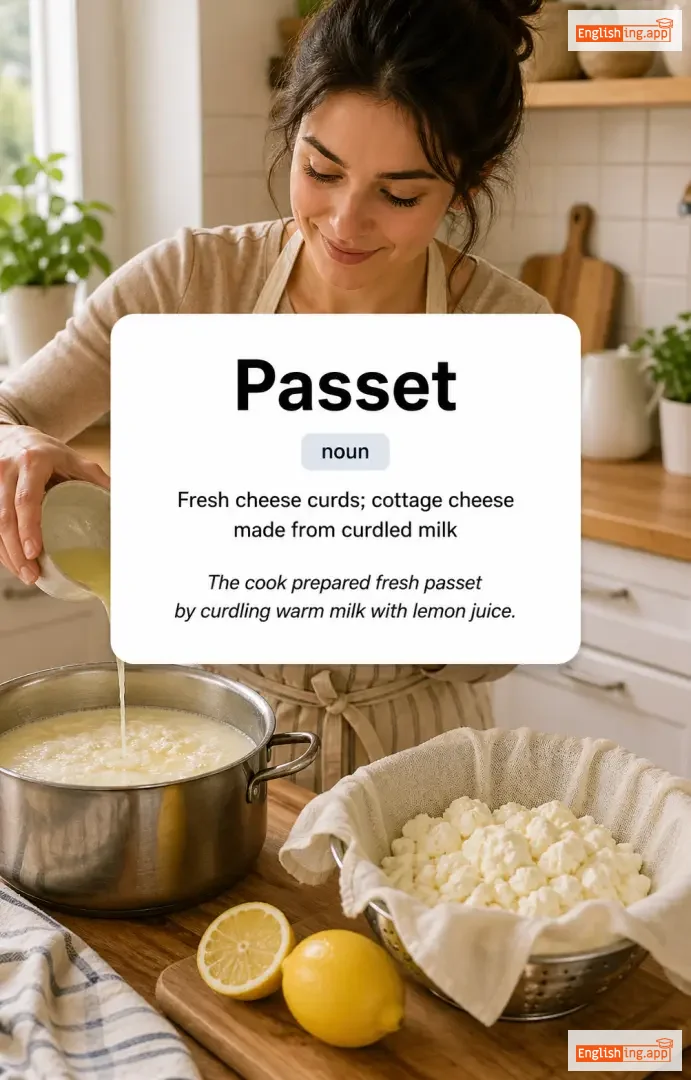
Passet definition card — visual illustration of the meaning
noun C2
/ˈpæsɪt/
カッテージチーズ (katteji chīzu)

Fresh cheese curds; cottage cheese made from curdled milk

"The cook prepared fresh passet by curdling warm milk with lemon juice."

"料理人は温かい牛乳にレモン汁を加えて新鮮なカッテージチーズを作りました。" (Ryōrinin wa atatakai gyūnyū ni remon jūsu o kuwaete shinsen na katteji chīzu o tsukurimashita.)
adjective C2
/ˈpæsɪbəl/
感じることができる; 苦しみに対して敏感 (kanjiru koto ga dekiru; kurushimi ni taishite binkan)

capable of feeling or suffering; susceptible to sensation or emotion (often theological)

"In some traditions, deities are described as passible, sharing human emotions."

"いくつかの伝統では、神々は感じることができるとされ、人間の感情を共有している。" (Ikutsuka no dentō de wa, kamigami wa kanjiru koto ga dekiru to sare, ningen no kanjō o kyōyū shite iru.)
noun C2
/pæˈstiːʃ/
パスティーシュ (pasutīshu)

a work of art, literature, or music that imitates the style of another artist, period, or genre

"The film was a clever pastiche of 1950s detective movies."

"その映画は1950年代の探偵映画の巧妙なパスティーシュでした。" (Sono eiga wa 1950 nendai no tantei eiga no kōmyō na pasutīshu deshita.)
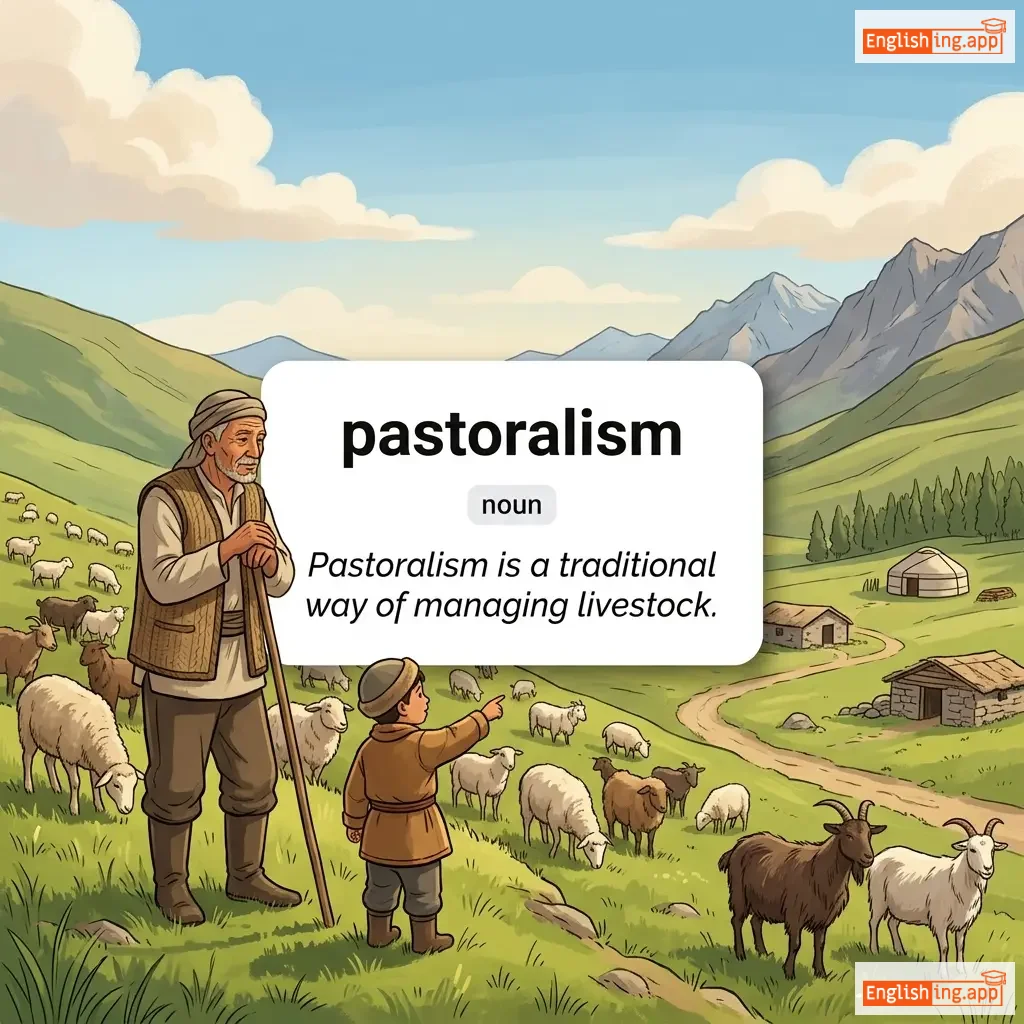
pastoralism definition card — visual illustration of the meaning
noun C2
ˈpɑː.stər.ə.lɪ.zəm
牧畜業, 草原放牧システム (boku chiku gyou, sougen houboku shisutemu)

A form of animal husbandry where domesticated animals are released onto large vegetated outdoor lands for grazing.

"Pastoralism is a traditional way of managing livestock."

"パストラリズムは伝統的な家畜管理方法です。" (Pastoralism wa dentō-teki na kachiku kanri hōhō desu.)
noun C2
/pəˈtiːnə/
金属、石、または木材の表面に年齢または使用によって形成される薄い膜または光沢; また、表面的な外観 (kinzoku, ishi, matawa mokuzai no hyōmen ni nenrei matawa shiyō ni yotte keisei sareru usui maku matawa kōtaku; mata, hyōmen-teki na gaikan)

a surface film or sheen on metal, stone, or wood due to age or use; also, a superficial appearance

"The bronze statue developed a green patina after years in the sea air."

"海風に数年さらされた後、青銅の像には緑色のパティナが形成されました。" (Kaikaze ni sūnen sarasareta ato, seidō no zō ni wa midori iro no patina ga keisei saremashita.)
noun C2
/ˈpætwɑː/
方言 (hōgen)

a regional or social dialect, especially one considered nonstandard or informal

"The guide slipped into local patois when chatting with the fishermen."

"ガイドは漁師と話すときに現地のパトワを使い始めました。" (gaido wa ryōshi to hanasu toki ni genchi no patoā o tsukai hajimemashita.)
noun, adjective C2
/pəˈtrɪʃən/
貴族 (kizoku)

A person of noble rank or high social standing; relating to aristocracy.

"The patrician families of Rome wielded great power in politics."

"ローマの貴族の家族は政治で大きな力を持っていた。" (Rōma no kizoku no kazoku wa seiji de ōkina chikara o motte ita.)