ভোকাবুলারিসমূহ

ইংরেজি শব্দের বাংলা অর্থ | English to Bangla Word Meaning Dictionary

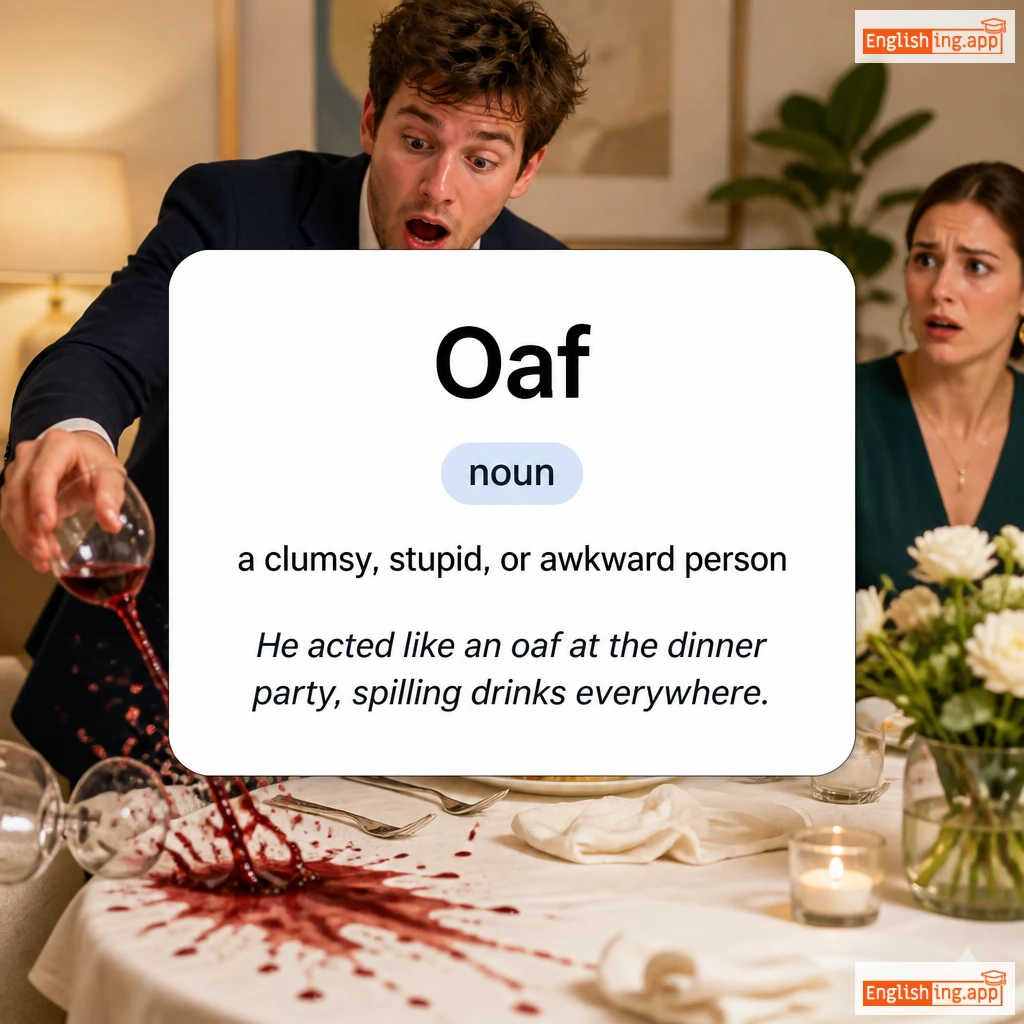
Oaf definition card — visual illustration of the meaning
noun C2
/oʊf/
неуклюжий или глупый человек (neuklyuzhiy ili glupyy chelovek)

a clumsy, stupid, or awkward person

"He acted like an oaf at the dinner party, spilling drinks everywhere."

"Он вел себя как неуклюжий на ужине, проливая напитки повсюду." (On vel sebya kak neuklyuzhiy na uzhine, prolivaya napitki povsyudu.)
adjective C2
/ˈoʊ.kən/
сделанный из дуба (sdelannyj iz duba)

made of or resembling oak wood

"The villagers gathered around the oaken table in the hall."

"Жители деревни собрались вокруг дубового стола в холле." (Zhiteli derevni sobralis' vokrug dubovogo stola v kholle.)
noun C2
/ˈoʊ.kəm/
волокна старых веревок (volokna starykh verëvok)

loose fibers obtained by untwisting old ropes, used for caulking ships

"The shipbuilders used oakum to seal the gaps in the wooden planks."

"Строители кораблей использовали окам, чтобы запечатать щели в деревянных досках." (Stroiteli korabley ispol'zovali okam, chtoby zapechatat' shcheli v derevyannykh doskakh.)
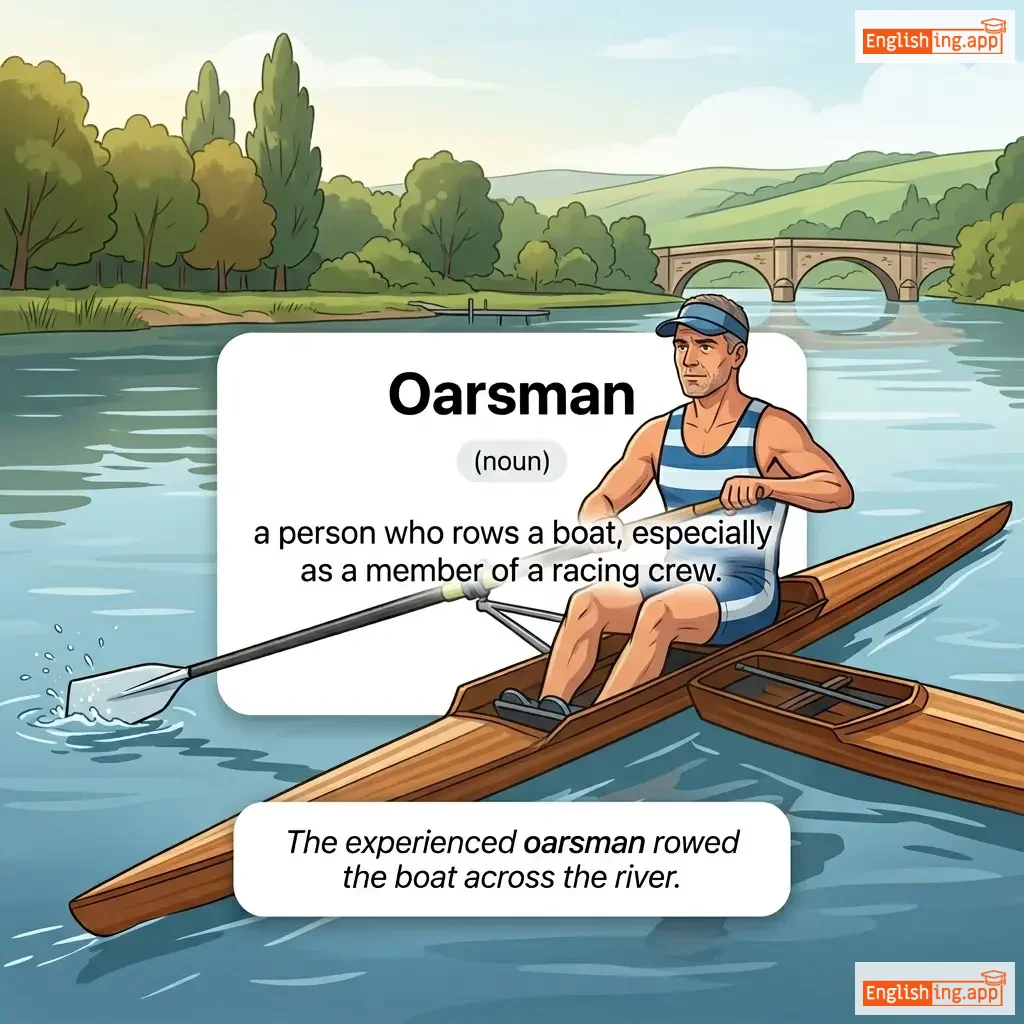
Oarsman definition card — visual illustration of the meaning
noun C2
/ˈɔːrzmən/
гребец (grebets)

a person who rows a boat, especially as a member of a racing crew

"The experienced oarsman rowed the boat across the river."

"Опытный гребец греб лодку через реку." (Opytniy grebets grebet lodku cherez reku)
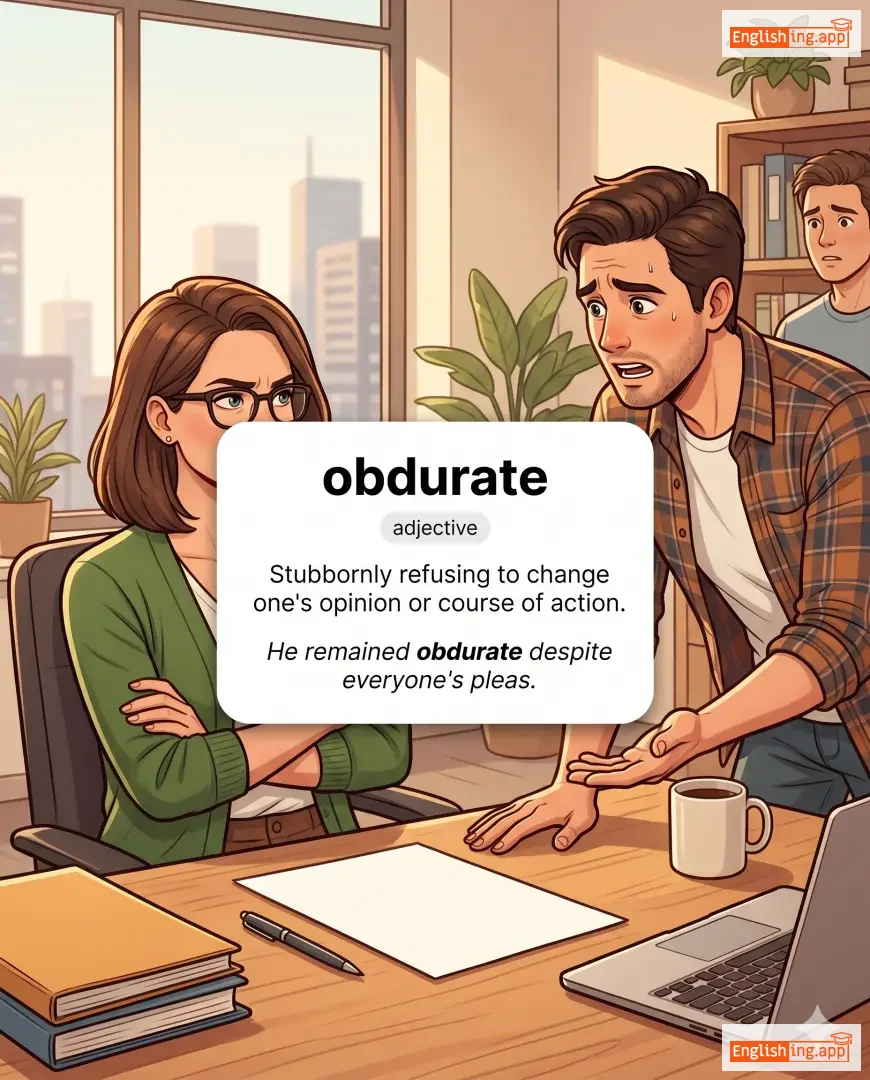
obdurate definition card — visual illustration of the meaning
adjective C2
/ˈɑːbdjʊrət/
упертый (upierty)

Stubbornly refusing to change one's opinion or course of action.

"He remained obdurate despite everyone's pleas."

"Он остался упертым, несмотря на просьбы всех." (On ostalsya upertym, nesmotrya na prosh'by vsekh.)
noun C2
/oʊˈbeɪsəns/
поклон (poklon)

A gesture of respect such as a bow or curtsy.

"They bowed in obeisance to the king."

"Они поклонились в знак почтения королю." (Oni poklonilis' v znak pochtitel'nosti korolyu.)
noun C2
/ˈɑːbəlɪsk/
обелиск (obelisk)

A tall, four-sided, narrow tapering monument with a pyramid-shaped top.

"The ancient Egyptians built obelisks to honor their gods."

"Древние египтяне строили обелиски, чтобы почтить своих богов." (Drevnie egiptyane stroili obeliskiy, chtoby pochtit' svoikh bogov.)
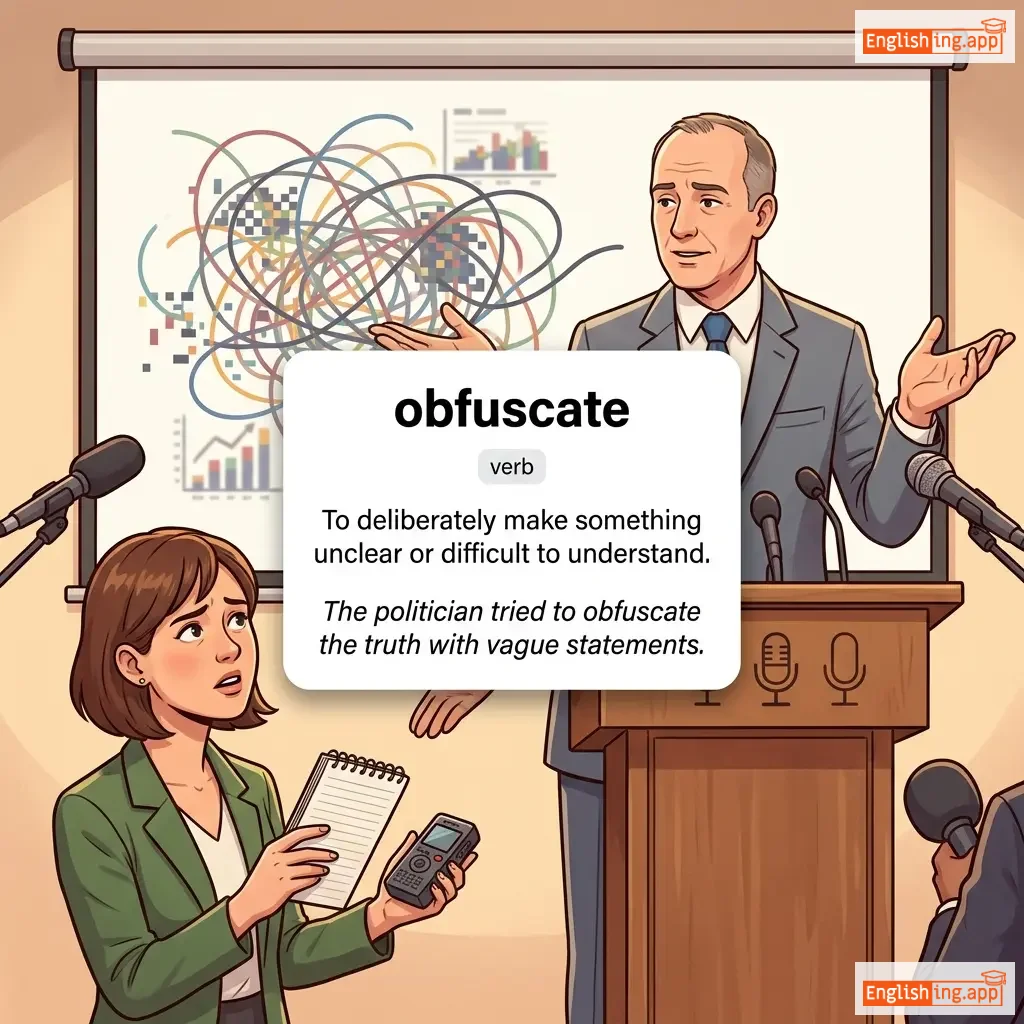
obfuscate definition card — visual illustration of the meaning
verb C2
/ˈɒbfʌskeɪt/
запутать (zaputat)

To deliberately make something unclear or difficult to understand.

"The politician tried to obfuscate the truth with vague statements."

"Политик пытался запутать правду с помощью неопределенных заявлений." (Politik pytalsya zaputat pravdu s pomoshch'yu neopredelennykh zayavleniy.)
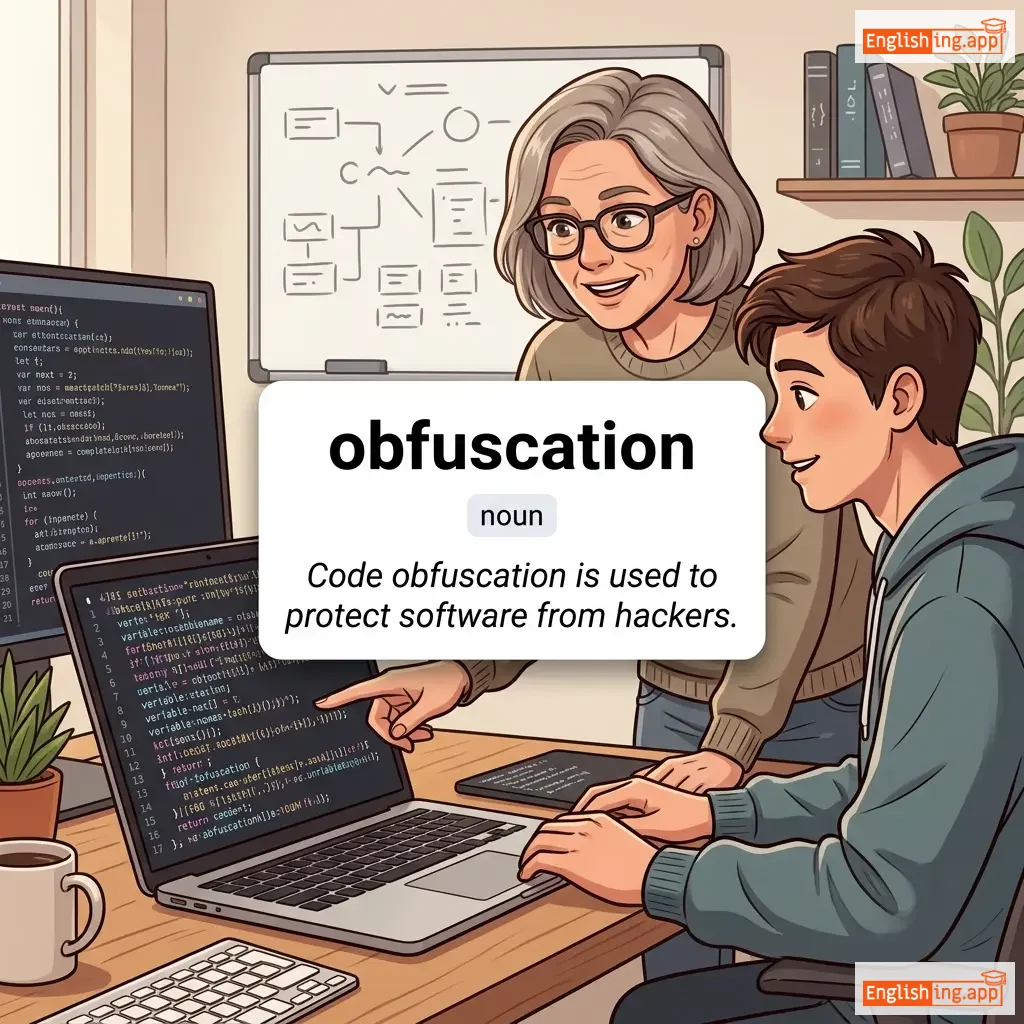
obfuscation definition card — visual illustration of the meaning
noun C2
/ˌɒb.fʌsˈkeɪ.ʃən/
намеренное создание путаницы или сложности в чем-либо (namerennoe sozdanie putanitsy ili slozhnosti v chem-libo)

Deliberately making information or code unclear to make it difficult to understand

"Code obfuscation is used to protect software from hackers."

"Обфускация кода используется для защиты программного обеспечения от хакеров." (Obfuskatsiya koda ispol'zuyetsya dlya zashchity programmnogo obespecheniya ot khakerov.)
verb C2
/ˈɑːbdʒərˌɡeɪt/
жестоко отчитывать (zhestoko otchityvat')

to scold or rebuke severely

"The teacher objurgated the student for being dishonest."

"Учитель сильно отчитал ученика за нечестность." (Uchitel' sil'no otchital uchenika za nechesotnost'.)
noun C2
/ˌɑːbdʒərˈɡeɪʃən/
строгий выговор (strogij vigovor)

a harsh scolding or strong rebuke

"His misconduct earned him a severe objurgation from the manager."

"Его проступок вызвал строгий выговор от менеджера." (Ego prostupok vyzval strogij vigovor ot menedzhera.)
noun C2
/oʊˈbleɪʃən/
жертвоприношение (zhertvoprinoshenie)

a religious offering, especially of bread or wine to God

"The priest placed the oblation on the altar during the ceremony."

"Священник положил жертвоприношение на алтарь во время церемонии." (Svyashchennik polozhil zhertvoprinoshenie na altar vo vremya tseremonii.)
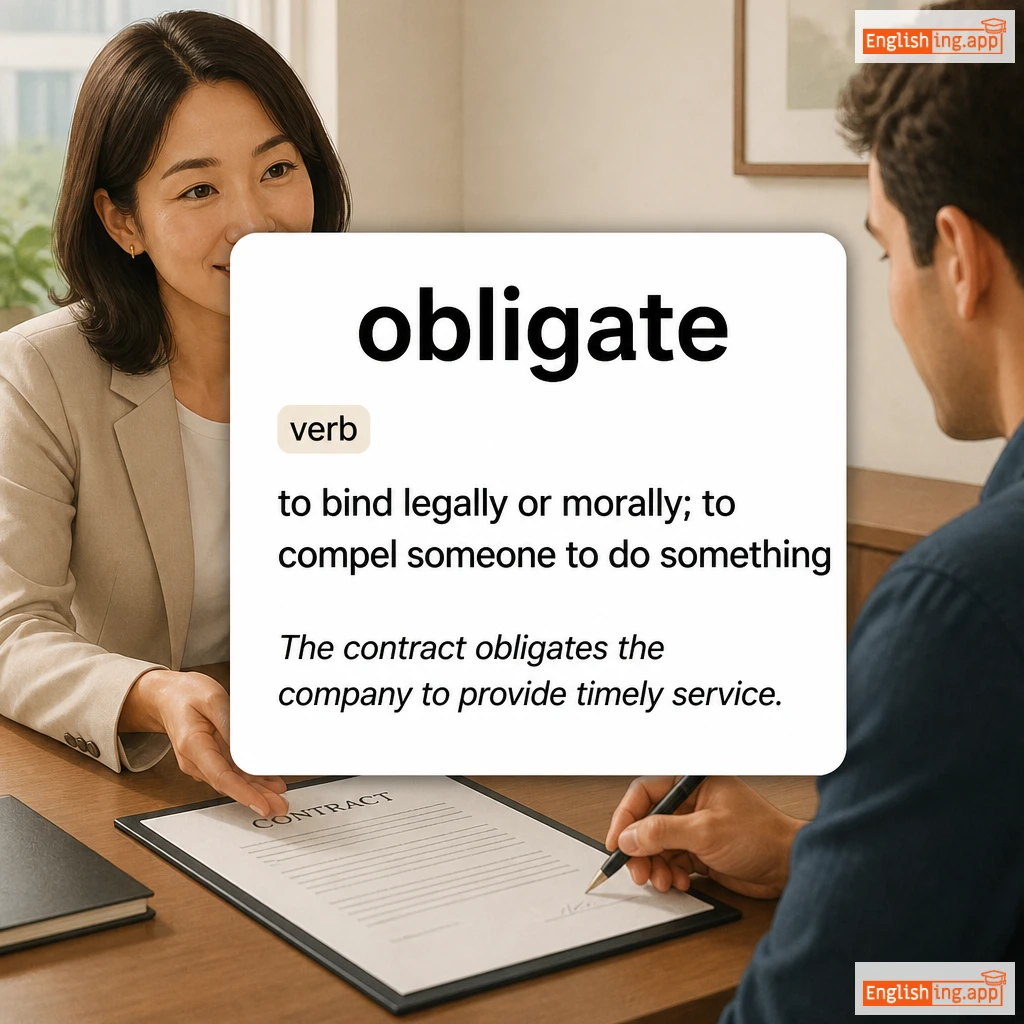
obligate definition card — visual illustration of the meaning
verb C2
/ˈɑːblɪˌɡeɪt/
обязывать (obyazyvat)

to bind legally or morally; to compel someone to do something

"The contract obligates the company to provide timely service."

"Контракт обязывает компанию предоставлять своевременное обслуживание." (Kontrakt obyayet kompaniyu predostavlyat' svoevremennoe obsluzhivanie.)
noun C2
/əˈblɪkwɪti/
кривизна (krivizna)

Deviation from moral or usual conduct; indirectness or lack of straightforwardness.

"The politician was criticized for the obliquity of his answers."

"Политика был критикован за кривизну его ответов." (Politika byl kritikovann za kriviznu ego otvetov.)
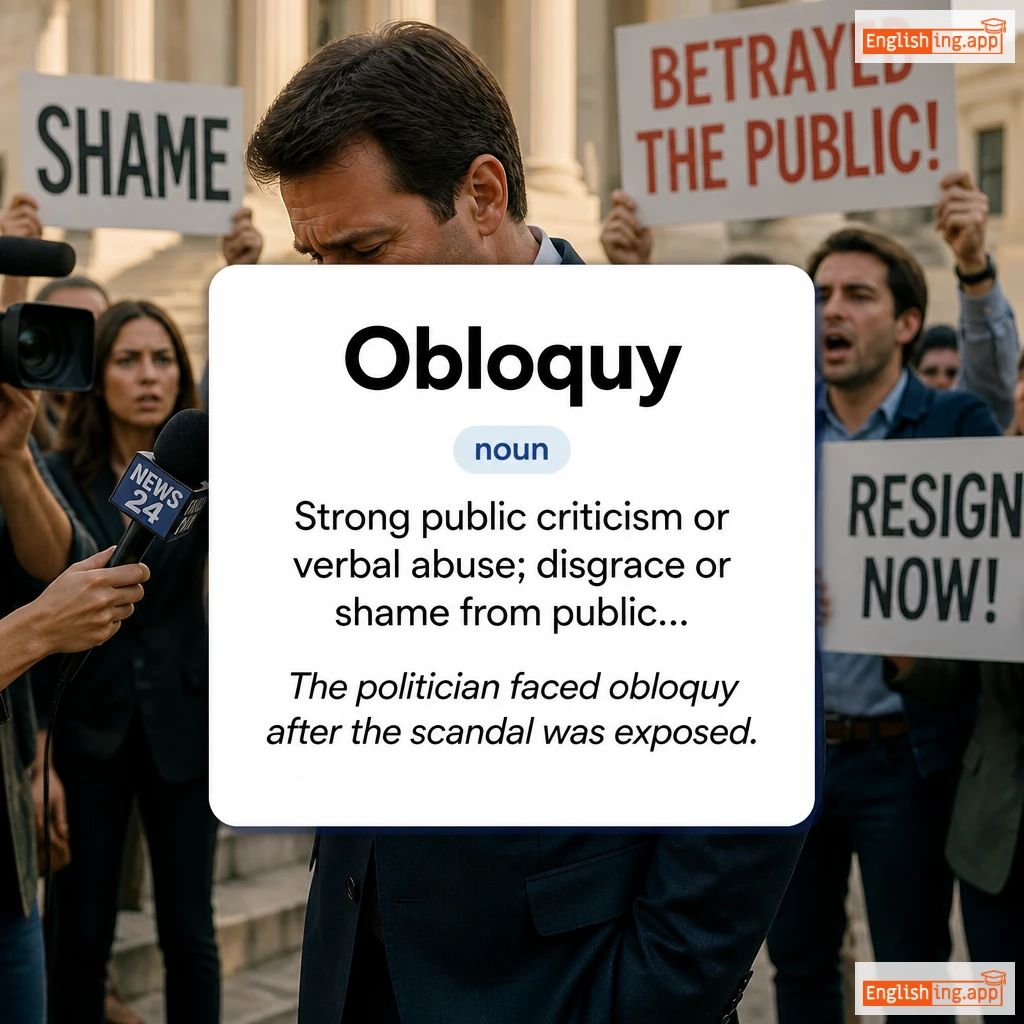
Obloquy definition card — visual illustration of the meaning
noun C2
/ˈɒbləkwɪ/
клевета (kleweta)

Strong public criticism or verbal abuse; disgrace or shame from public condemnation.

"The politician faced obloquy after the scandal was exposed."

"Политик столкнулся с клеветой после того, как был раскрыт скандал." (Politik stolknulsya s klevetoy posle togo, kak byl raskryt skandal.)
noun C2
/ˈɒbsɪkwiːz/
погребальные обряды (pogrebal'nye obryady)

Funeral rites or ceremonies.

"The obsequies for the late leader drew thousands of mourners."

"Погребальные обряды для покойного лидера привлекли тысячи скорбящих." (Pogrebal'nye obryady dlya pokoynogo lidera privlekli tysyachi skorbyashchikh.)
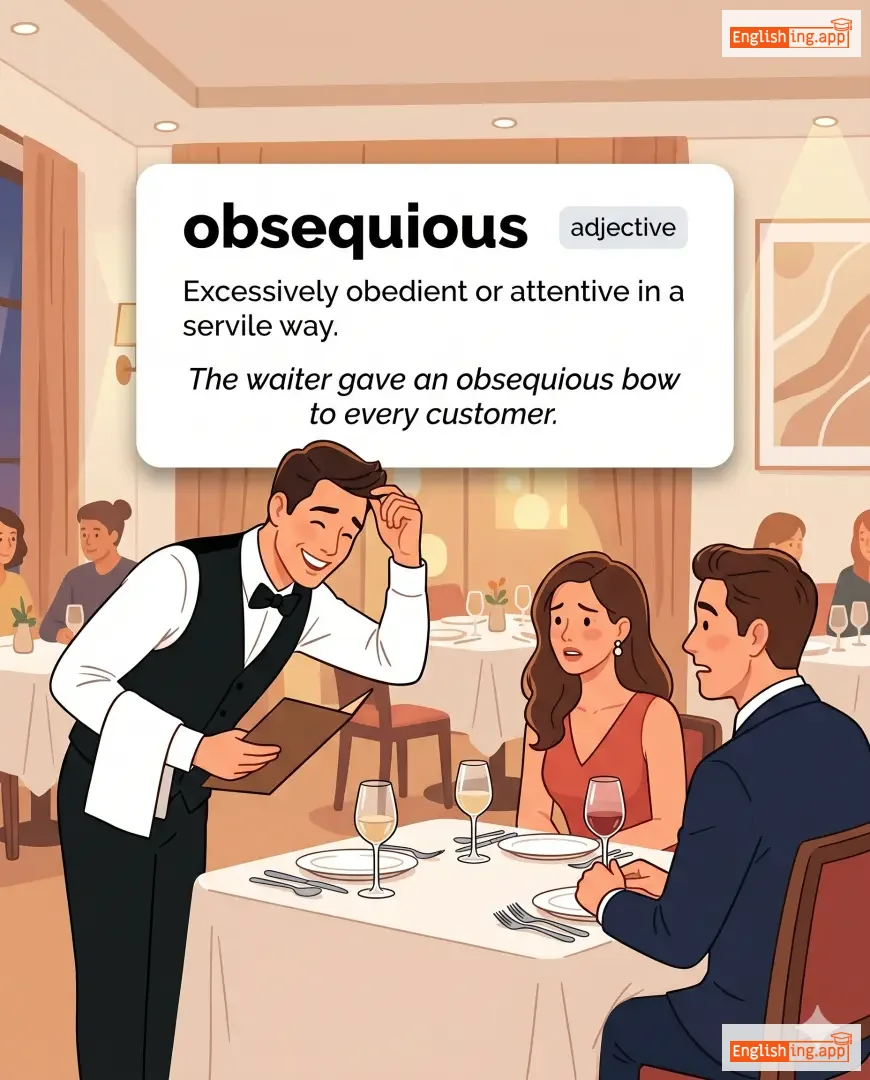
obsequious definition card — visual illustration of the meaning
adjective C2
/əbˈsiːkwɪəs/
угодливый (ugodlivyj)

Excessively obedient or attentive in a servile way.

"The waiter gave an obsequious bow to every customer."

"Официант сделал угодливый поклон каждому клиенту." (Oficiant sdelal ugodlivyj poklon kazhdomu klientu.)
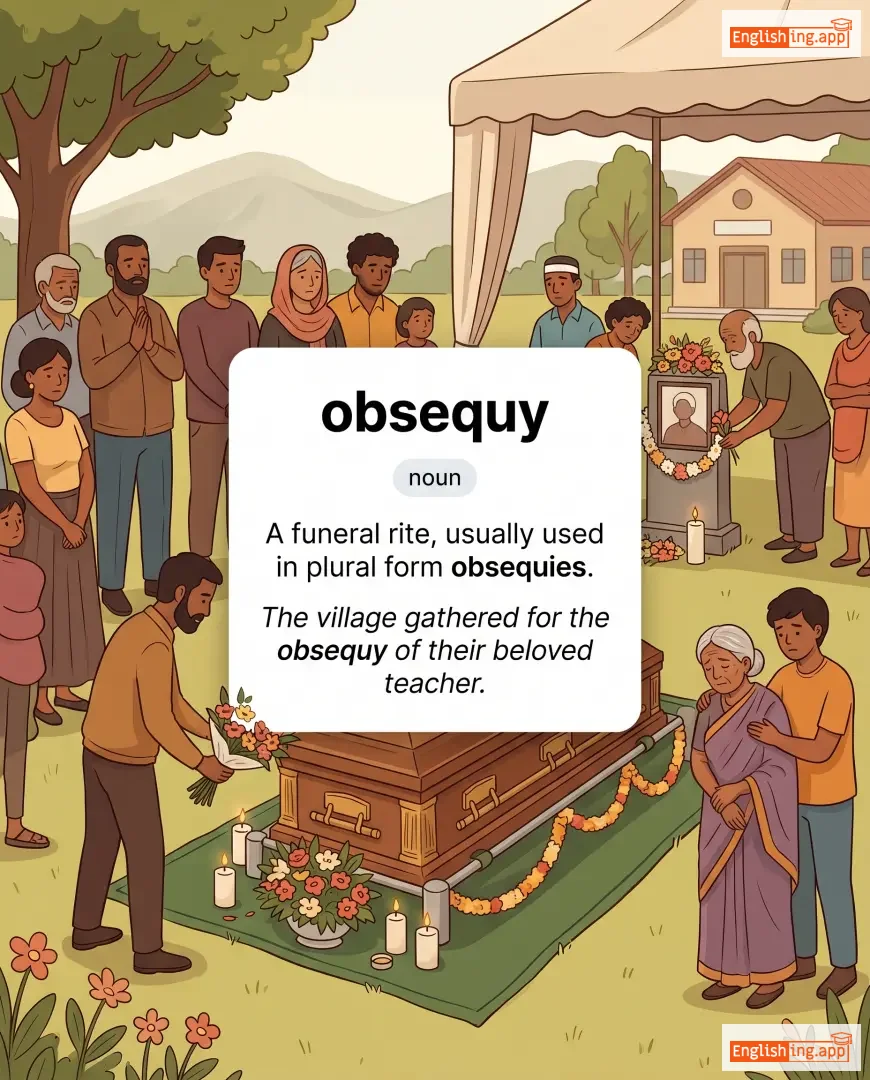
obsequy definition card — visual illustration of the meaning
noun C2
/ˈɒbsɪkwi/
похороны (pokhorony)

A funeral rite, usually used in plural form obsequies.

"The village gathered for the obsequy of their beloved teacher."

"Деревня собралась для похорон их любимого учителя." (Derevnya sobralas' dlya pokhoron ikh lyubimogo uchitelya.)
noun C2
/əbˈsɪdiən/
обсидиан (темная стекловидная вулканическая порода) (obsidian (temnaya steklovidnaya vulkanicheskaya poroda))

A hard, dark, glasslike volcanic rock formed by rapid solidification of lava.

"The knife was made from sharp obsidian."

"Нож был сделан из острого обсидиана." (Nozh byl sdelan iz ostrogo obsidiana.)
adjective C2
/ˌɒbsəˈlɛsnt/
устаревающий (ustarevayushchiy)

Becoming outdated or on the way to becoming obsolete.

"The obsolescent technology could not compete with modern devices."

"Устаревающая технология не могла конкурировать с современными устройствами." (Ustarevayushchaya tekhnologiya ne mogla konkurirovat' s sovremennymi ustroystvami.)
noun C2
/əbˈstɛtrɪks/
акушерство (akusherstvo)

The branch of medicine dealing with childbirth and care of women giving birth.

"She is studying obstetrics to become a specialist in childbirth."

"Она учится на акушерку, чтобы стать специалистом по родам." (Ona uchitsya na akusherku, chtoby stat' spetsialistom po rodam.)
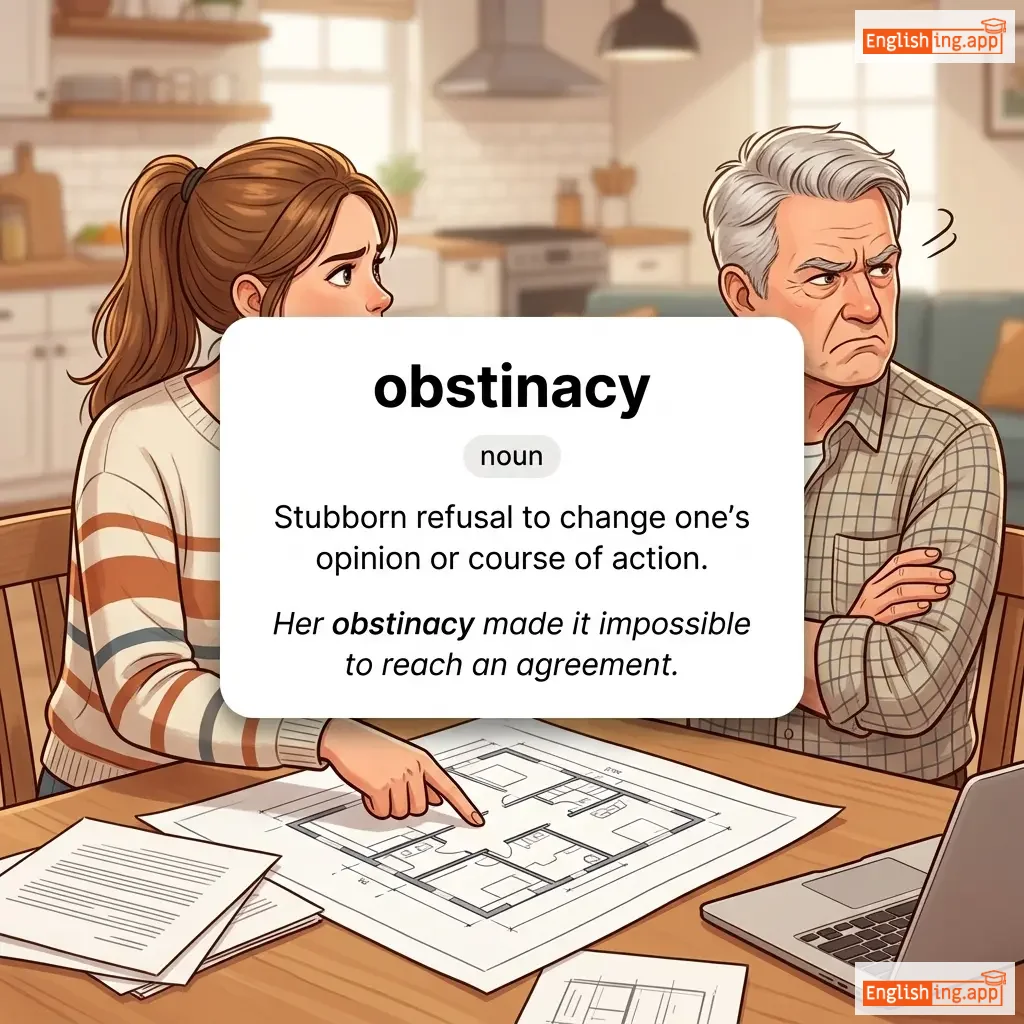
obstinacy definition card — visual illustration of the meaning
noun C2
/ˈɒbstɪnəsi/
упрямство (upryamstvo)

Stubborn refusal to change one’s opinion or course of action.

"Her obstinacy made it impossible to reach an agreement."

"Ее упрямство сделало невозможным достичь соглашения." (Eyo upryamstvo sdelalo nevozmozhnym dostich' soglasheniya.)
adjective C2
/əbˈstrɛpərəs/
шумный и трудный для контроля (shumnyy i trudnyy dlya kontrolya)

Noisy and difficult to control.

"The obstreperous students disrupted the class."

"Шумные студенты нарушили урок." (Shumnye studenty narushili urok.)
noun C2
/əbˈstrʌkʃənɪst/

a person who deliberately delays or prevents progress by being uncooperative or oppositional

"The obstructionist in the committee kept delaying the decision-making process."

verb C2
/əbˈtruːd/
вторгаться (vtorgatsya)

to force oneself or one's ideas into a situation uninvited or inappropriately

"He didn’t want to obtrude into their private conversation."

"Он не хотел вторгаться в их личный разговор." (On ne khotel vtorgatsya v ikh lichnyy razgovor.)
adjective C2
/əbˈtruːsɪv/
назойливый (nazoylivyy)

noticeable in an unpleasant or unwelcome way; intrusive

"The advertisement was so obtrusive that it ruined the user’s experience."

"Реклама была настолько назойливой, что испортила опыт пользователя." (Reklama byla nastol'ko nazoylivoy, chto isportila opyt pol'zovatelya.)
verb C2
/əbˈvɜːrt/
перевернуть (perevernut)

To turn something so as to face in a different direction; in logic, to convert a proposition by negating both subject and predicate.

"The teacher asked the students to obvert the statement for practice."

"Учитель попросил студентов преобразовать утверждение для практики." (Uchitel' poprosil studentov preobrazovat utverzhdenie dlya praktiki.)
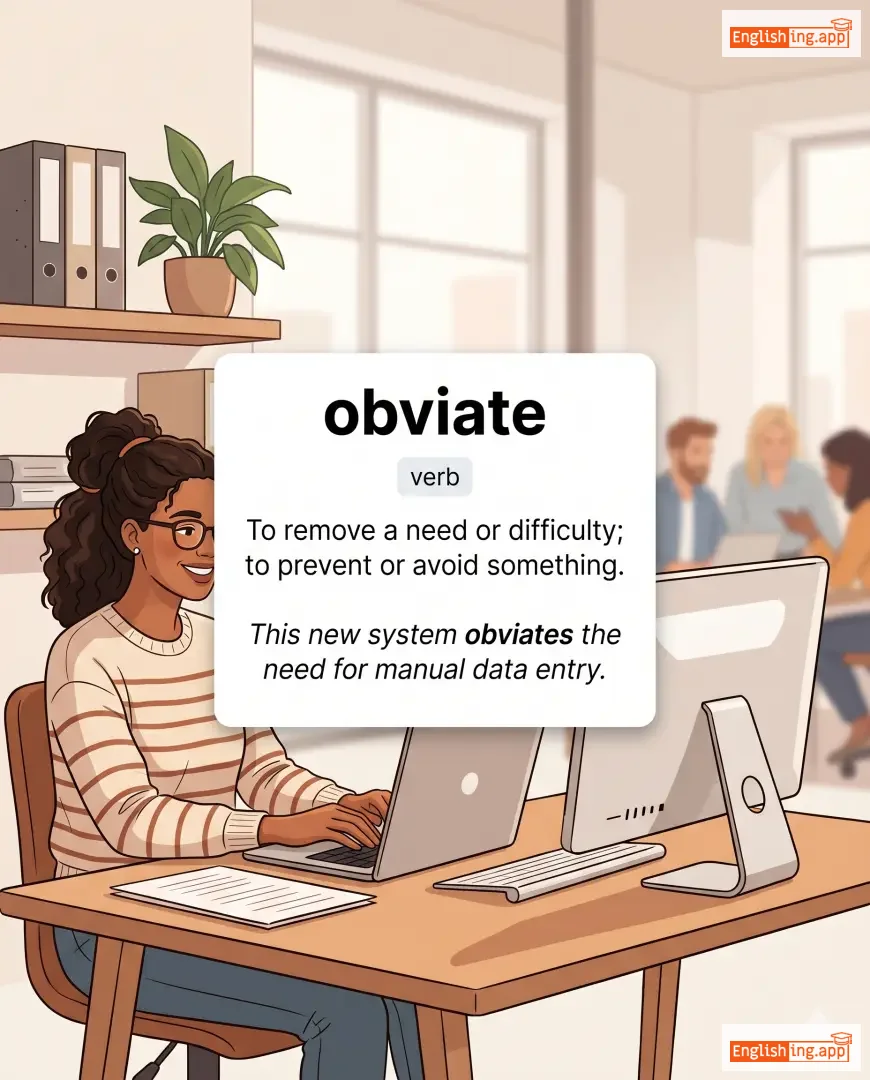
obviate definition card — visual illustration of the meaning
verb C2
/ˈɑːbvieɪt/
исключать (isklyuchat')

To remove a need or difficulty; to prevent or avoid something.

"This new system obviates the need for manual data entry."

"Эта новая система исключает необходимость вручную вводить данные." (Eta novaya sistema isklyuchayet neobkhodimost' vruchnuyu vvodit' dannye.)
noun C2
/ˈɒksɪdənt/
Запад (Západ)

The countries of the West, especially Europe and America.

"The Occident has a long history of philosophical thought."

"Запад имеет долгую историю философской мысли." (Západ imeet dolguyu istoriyu filosofskoy mysli.)
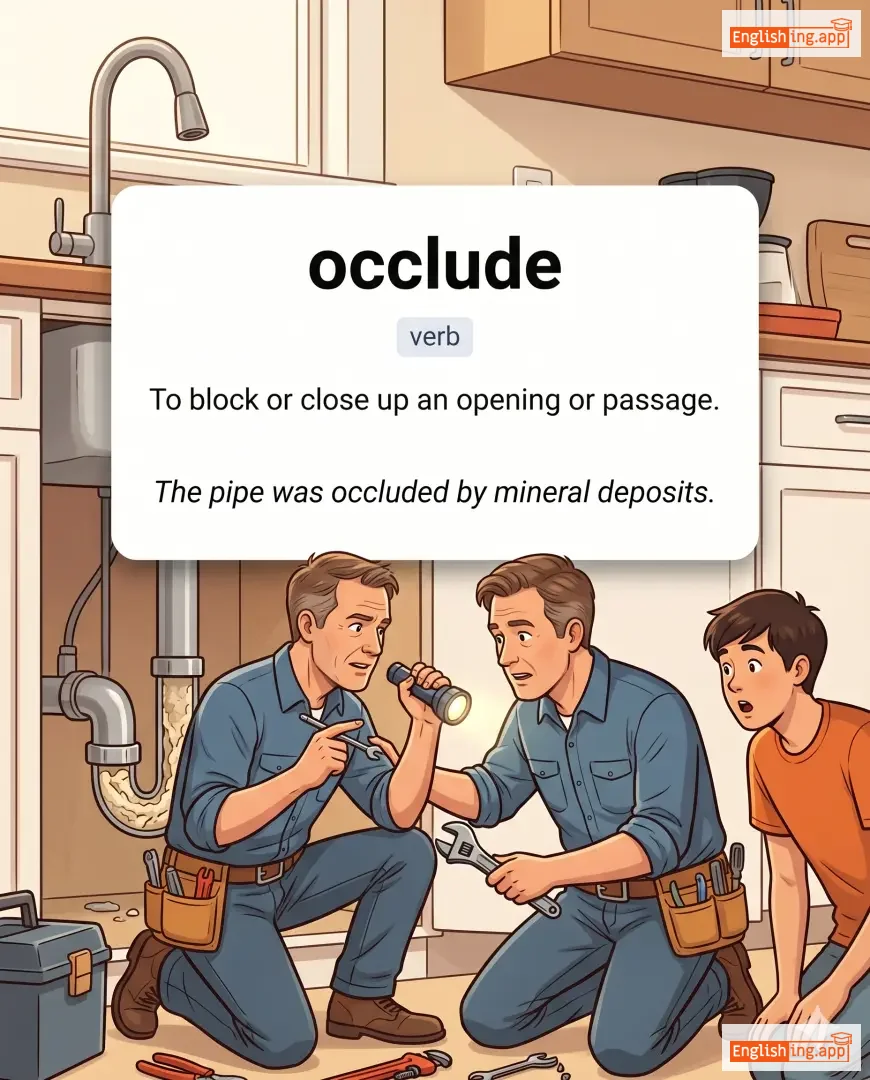
occlude definition card — visual illustration of the meaning
verb C2
/əˈkluːd/
закрывать (zakryvat)

To block or close up an opening or passage.

"The pipe was occluded by mineral deposits."

"Трубопровод был заблокирован минеральными отложениями." (Truboprovod byl zablokirovan mineral'nymi otlozheniyami.)
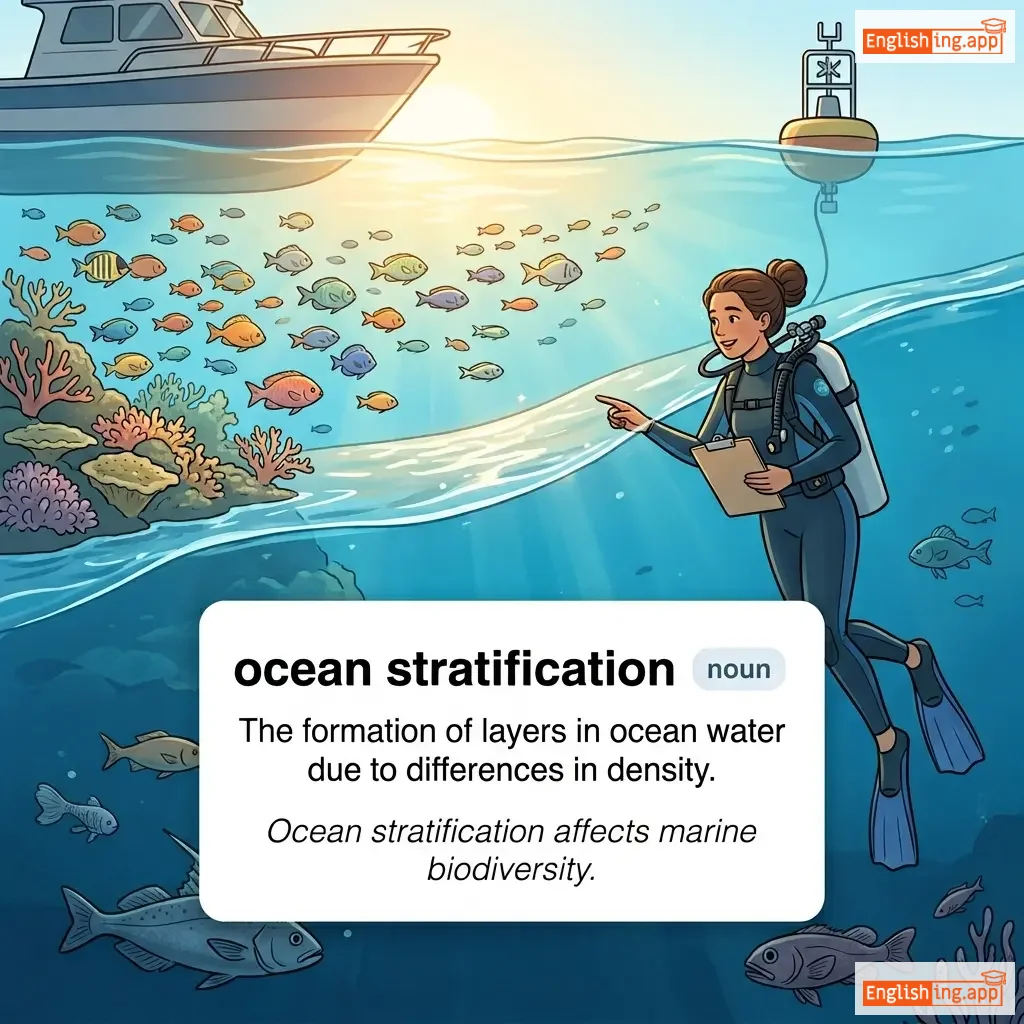
ocean stratification definition card — visual illustration of the meaning
noun C2
ˈoʊʃən ˌstrætɪfɪˈkeɪʃən
океанская стратификация (okeanskaya stratifikatsiya)

The formation of layers in ocean water due to differences in density.

"Ocean stratification affects marine biodiversity."

"Стратификация океана влияет на морское биоразнообразие." (Stratifikatsiya okeana vliyayet na morskoye bioraznoobrazie.)
noun C2
/ɒkˈteɪvoʊ/
октаво (размер книги, получаемый путем складывания листа бумаги в восемь частей) (oktavo)

A size of book page resulting from folding a sheet of paper into eight leaves (sixteen pages).

"The old library contained rare octavo editions of Shakespeare."

"Старая библиотека содержала редкие издания в октаве Шекспира." (Staraya biblioteka soderzhala redkie izdaniya v oktave Shekspira.)
noun C2
/ˌɒktədʒəˈnɛəriən/
октогенарий (oktogenariy)

A person who is between 80 and 89 years old.

"The octogenarian still jogs every morning to stay healthy."

"Октогенарий все еще бегает каждое утро, чтобы оставаться здоровым." (Oktogenariy vse eshche begayet kazhdoe utro, chtoby ostavatsya zdorovym.)
adjective C2
/ˈɒkjʊlər/
окулярный (okulyarnyy)

Relating to the eye or vision.

"The patient was referred to a specialist for ocular treatment."

"Пациент был направлен к специалисту для окулярного лечения." (Patsiyent byl napravlen k spetsialistu dlya okulyarnogo lecheniya.)
noun C2
/ˈɒkjʊlɪst/
окулист (okulist)

An old-fashioned term for an eye doctor or ophthalmologist.

"The village oculist was known for treating various eye diseases."

"Деревенский окулист был известен лечением различных заболеваний глаз." (Derevenskiy okulist byl izvesten lecheniyem razlichnykh zabolevaniy glaz.)
noun C2
/oʊd/
ода (oda)

a lyrical poem, often expressing praise or strong emotions

"The poet wrote an ode to the beauty of nature."

"Поэт написал оду о красоте природы." (Poet napisal odu o krasote prirody.)
adjective C2
/ˈoʊdiəs/
отвратительный (otvratitel'nyy)

extremely unpleasant or repulsive

"The dictator was remembered for his odious crimes."

"Диктатор запомнился своими отвратительными преступлениями." (Diktator zapomnilsya svoimi otvratitel'nymi prestupleniyami.)
noun C2
/ˈoʊdiəm/
презрение (prezrenie)

general or widespread hatred or disgust directed toward someone as a result of their actions

"The scandal brought public odium on the corrupt minister."

"Скандал принес общественное презрение к коррумпированному министру." (Skandal prines obshchestvennoye prezrenie k korrumpirovannomu ministru.)
adjective C2
/ˌoʊdəˈrɪfərəs/
ароматный (aromatny)

having or giving off a smell, especially a strong or pleasant one

"The garden was filled with odoriferous flowers."

"Сад был наполнен ароматными цветами." (Sad byl napolnen aromatnymi tsvetami.)
adjective C2
/ˈoʊdərəs/
вонючий (vonyuchiy)

having or giving off a smell, often unpleasant

"The odorous garbage had to be taken out immediately."

"Зловонный мусор нужно было вынести немедленно." (Zlovonnyy musor nuzhno bylo vynesti nemedlenno.)
adjective C2
/ˌɔːfˈkiː/
не в ноте (ne v note)

out of tune; not in accordance with expected standards

"The singer was slightly off-key during the performance."

"Певец был немного не в ноте во время выступления." (Pevets byl nemnogo ne v note vo vremya vystupleniya.)
noun C2
/ˈɔːfəl/
потроха (potrokha)

the internal organs and entrails of an animal used as food; waste parts

"The butcher prepared sausages using pork offal."

"Мясник приготовил колбасы, используя свиные потроха." (Myasnik prigotovil kolbasy, ispol'zuyushchie svinye potrokha.)
adjective C2
/ˈɒf.biːt/
необычный (neobychnyy)

Unusual, unconventional, or different from the norm.

"She has a very offbeat sense of humor."

"У неё очень необычное чувство юмора." (U nee ochen' neobychnoye chuvstvo yumora.)
noun C2
/ˈɒfərtɔːri/
приношение (prinoshenie)

The part of a religious service when offerings are collected; the offering itself.

"The offertory was taken during the Sunday service."

"Приношение было собрано во время воскресной службы." (Prinoshenie bylo sobrano vo vremya voskresnoy sluzhby.)
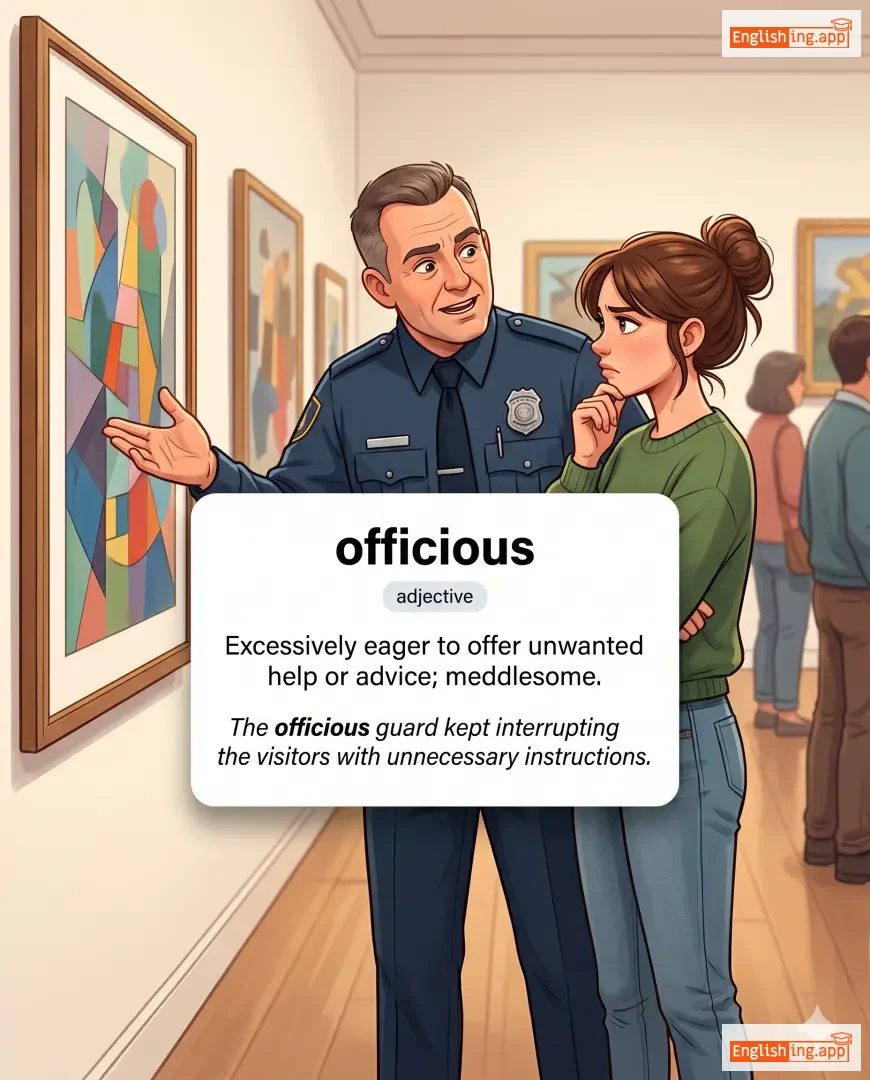
officious definition card — visual illustration of the meaning
adjective C2
/əˈfɪʃəs/
навязчивый (navyazchivyy)

Excessively eager to offer unwanted help or advice; meddlesome.

"The officious guard kept interrupting the visitors with unnecessary instructions."

"Навязчивый охранник постоянно перебивал посетителей ненужными инструкциями." (Navyazchivyy okhrannik postoyanno perebival posetiteley nenuzhnymi instruktsiyami.)
adjective C2
/ˈɒfɪʃ/
отчуждённый (otchuzhdenny)

Unfriendly, distant, or reserved in manner.

"He seemed offish at the party and avoided most conversations."

"Он казался отчуждённым на вечеринке и избегал большинства разговоров." (On kazalsya otchuzhdennym na vecherinke i izbegal bolshinstva razgovorov.)
verb C2
/ˈoʊɡəl/
пялиться (pyalit’sya)

To look at someone with obvious sexual interest.

"He kept ogling the models on the runway."

"Он продолжал пялиться на модели на подиуме." (On prodolzhal pyalit’sya na modeli na podiume.)
👹

ogre

noun C2
/ˈoʊɡər/

A mythical monster, often depicted as large, hideous, and cruel; metaphorically, a cruel or terrifying person.

"The villagers feared the ogre who lived in the dark forest."

Oilman definition card — visual illustration of the meaning
noun C2
/ˈɔɪl.mən/
нефтяник (neftyanik)

a person who works in the oil industry; someone who sells oil or petroleum products

"The oilman discovered a new oil field in the desert."

"Нефтяник обнаружил новое нефтяное месторождение в пустыне." (Neftyanik obnaruzhil novoe neftyanoe mestorozhdenie v pustyne.)
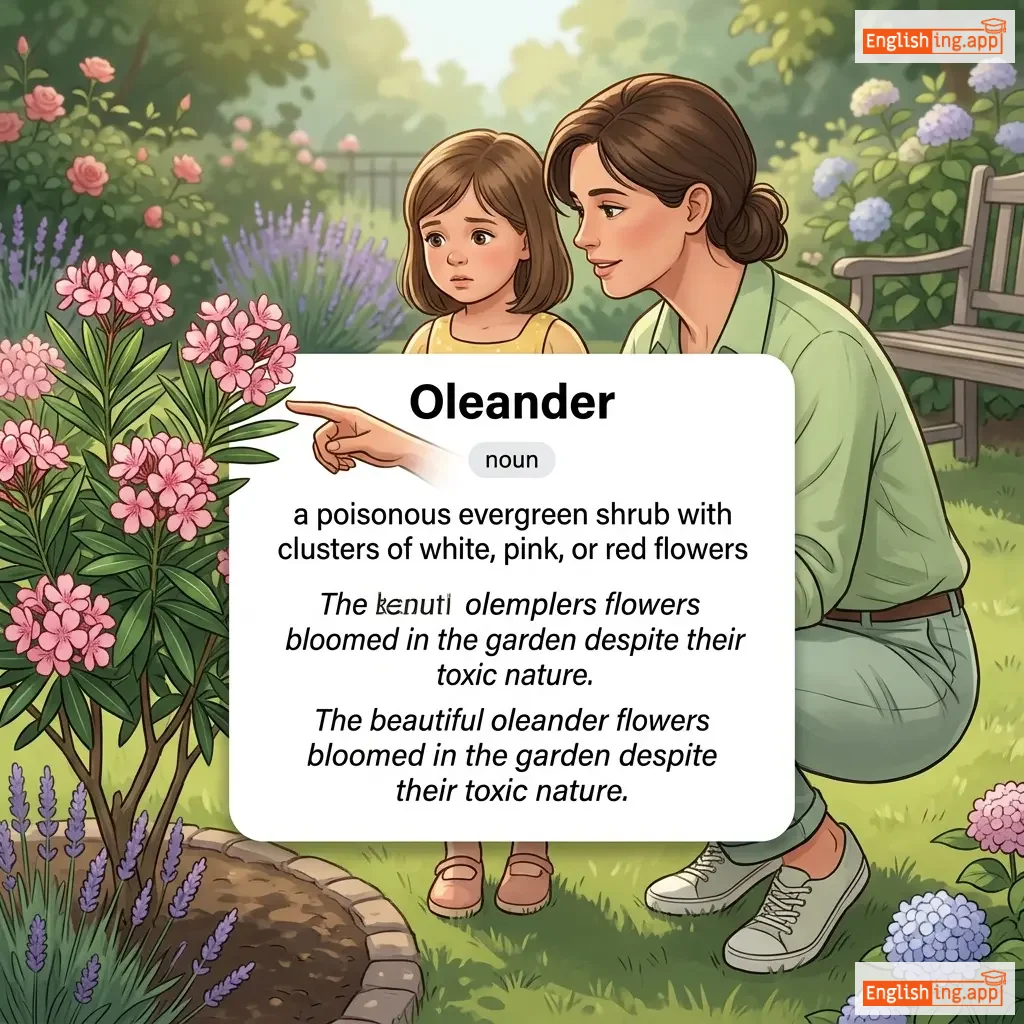
Oleander definition card — visual illustration of the meaning
noun C2
/oʊliˈændər/
олеандр (oleandr)

a poisonous evergreen shrub with clusters of white, pink, or red flowers

"The beautiful oleander flowers bloomed in the garden despite their toxic nature."

"Прекрасные цветы олеандра расцвели в саду, несмотря на их ядовитую природу." (Prekrasnye tsvety oleandra ratsveli v sadu, nesmotrya na ikh yadovityu prirodu.)