ভোকাবুলারিসমূহ

ইংরেজি শব্দের বাংলা অর্থ | English to Bangla Word Meaning Dictionary

⬇️

nadir

noun C2
/ˈneɪdɪər/

The lowest point of a situation or condition.

"The company reached its nadir during the financial crisis."

noun C2
/ˈnæfθə/
нафта (nafta)

A flammable oil containing hydrocarbons, obtained from petroleum or coal tar, used as fuel or solvent.

"The factory stored barrels of naphtha for industrial use."

"Фабрика хранила бочки с нафтой для промышленного использования." (Fabrika khranila bochki s naftoy dlya promyshlennogo ispol'zovaniya.)
noun C2
/nɑːrˈsɪsəs/
цветок нарцисса (tsvetok nartsissa)

A type of flowering plant with yellow or white blooms, often associated with self-love from Greek mythology.

"A narcissus bloomed in the garden during spring."

"Нарцисс распустился в саду весной." (Nartsiss raspustilsya v sadu vesnoy.)
adjective C2
/ˈneɪtl/
относящийся к рождению (otnosyashchijsya k rozhdeniyu)

Relating to birth or the place of birth.

"She returned to her natal village after many years."

"Она вернулась в свою родную деревню после многих лет." (Ona vernulas' v svoyu rodnuyu derevnyu posle mnogikh let.)
noun C2
/næˈteɪʃən/
плавание (plavanie)

The act or sport of swimming.

"She took lessons in natation to improve her swimming skills."

"Она взяла уроки плавания, чтобы улучшить свои навыки плавания." (Ona vzyala uroki plavaniya, chtoby uluchshit' svoi navyki plavaniya.)
adjective C2
/ˈnæti/
стильный (stil'nyy)

Neat, stylish, and fashionable in appearance.

"He looked very natty in his new suit."

"Он выглядел очень стильным в своем новом костюме." (On vyglyadel ochen' stil'nym v svoem novom kostyume.)
verb C2
/ˈnɔːzieɪt/
вызывать тошноту (vyzyvat toshnotu)

To make someone feel sick, with an inclination to vomit.

"The spoiled food nauseated him quickly."

"Порченая еда быстро вызвала у него тошноту." (Porchenaya yeda bystro vyzvala u nego toshnotu.)
noun C2
/neɪv/
главный неф церкви (glavny nef tserkvi)

the central part of a church building intended to accommodate the congregation

"The choir sang beautifully in the church nave."

"Хор прекрасно пел в нефе церкви." (Khor prekrasno pel v nefe tserkvi.)
noun C2
/ˈneɪˌseɪ.ɪŋ/
негативное высказывание (negativnoe vyskazivanie)

The act of expressing negative or pessimistic views.

"His constant naysaying discouraged the team."

"Его постоянное негативное высказывание разочаровывало команду." (Ego postoyannoe negativnoe vyskazivanie razocharovyvalo komandu.)
noun C2
/ˌɛn.biː.esˈpiː/
неразрывный пробел (nerazryvnyy probel)

a non-breaking space character in HTML used to prevent an automatic line break at its position

"Use   in HTML to add a space that won't break into a new line."

"Используйте   в HTML, чтобы добавить пробел, который не разрывает строку." (Ispol'zuyte   v HTML, chtoby dobavit' probel, kotoryy ne razryvayet stroku.)
noun C2
/niːp/
низкий прилив (nizkiy prilyv)

A tide just after the first or third quarters of the moon when the difference between high and low tide is least.

"During a neap tide, the water level change is minimal."

"Во время низкого прилива изменение уровня воды минимально." (Vo vremya nizkogo prilyva izmenenie urovnya vody minimalno.)
adjective C2
/ˈnɛbjələs/
туманный (tumannyy)

Unclear, vague, or ill-defined; resembling a cloud or haze.

"His plan for the future was still nebulous and hard to understand."

"Его план на будущее был всё ещё туманным и трудным для понимания." (Yego plan na budushcheye byl vse yeshchyo tumannym i trudnym dlya ponyatiya.)
noun C2
/nɪˈkrɒlədʒi/
некрология (nekrologiya)

An obituary notice or a list of people who have recently died.

"The newspaper published a necrology of notable figures who passed away that year."

"Газета опубликовала некролог известных личностей, которые умерли в этом году." (Gazeta opublikovala nekrolog izvestnykh lichnostey, kotorye umerli v etom godu.)
noun C2
/ˈnɛkrəˌmænsər/
некромант (nekromancer)

a person who practices necromancy; a wizard or magician who claims to communicate with the dead

"The villagers feared the old necromancer who lived at the edge of the forest."

"Жители деревни боялись старого некроманта, который жил на краю леса." (Zhiteli derevni boyalis starogo nekromanta, kotoryi zhil na kraju lesa.)
noun C2
/ˈnɛkrəˌmænsi/
некромантия (nekromantiya)

the practice of communicating with the dead, often to predict the future

"Ancient texts described rituals of necromancy performed by priests."

"Древние тексты описывают ритуалы некромантии, проводимые священниками." (Drevnie teksty opisyvayut ritualy nekromantii, provodimye svyashchennikami.)
noun C2
/nəˈkrɒpəlɪs/
некрополь (nekropol)

a large ancient cemetery with elaborate tombs

"The archaeologists discovered artifacts in the necropolis of the ancient city."

"Археологи обнаружили артефакты на некрополе древнего города." (Arheologi obnaruzhili artefakty na nekropole drevnego goroda.)
noun C2
/nɛˈkroʊsɪs/
некроз (nekroz)

the death of body tissue due to disease, injury, or lack of blood supply

"The doctor explained that the patient’s wound showed signs of necrosis."

"Врач объяснил, что рана пациента показала признаки некроза." (Vrach obyasnil, chto rana patsienta pokazala priznak nekroza.)
adjective C2
/nɪˈfɛəriəs/
злой, преступный или морально плохой (zloy, prestupnyy ili moral'no plokhoy)

Wicked, criminal, or morally bad.

"The police uncovered a nefarious plot to cheat investors."

"Полиция раскрыла зловещий заговор, чтобы обмануть инвесторов." (Politsiya raskryla zloveshchiy zagovor, chtoby obmanut' investorov.)
noun C2
/ˌnɛɡlɪˈʒeɪ/
легкий шелковый халат (legkiy shelkovyy khalat)

A woman's light dressing gown, often made of thin or silky material.

"She wore a silk negligee before going to bed."

"Она носила шелковый халат перед тем, как лечь спать." (Ona nosila shelkovyy khalat pered tem, kak lech' spat'.)
noun C2
/ˌniːoʊˈdɑːrwɪnɪzəm/
нео-дарвинизм (neo-darvinizm)

A modern interpretation of Darwin's theory of evolution, integrating genetics and natural selection.

"Neo-Darwinism combines Darwin’s theory of natural selection with modern genetics."

"Нео-дарвинизм сочетает теорию естественного отбора Дарвина с современной генетикой." (Neo-darvinizm sochetaet teoryyu estestvennogo otbora Darvina s sovremennoy genetiekoy.)
noun C2
/ˌniːoʊˈlætɪn/
нео-латин (neo-latin)

The use of Latin language for scholarly, scientific, and literary purposes after the medieval period.

"Many scientific names are derived from Neo-Latin."

"Многие научные названия происходят от нео-латинского." (Mnogie nauchnye nazvaniya proiskhodyat ot neo-latinskogo.)
noun C2
/niːˈɒkrəsi/
Правительство, возглавляемое неопытными или новыми чиновниками (Pravitel'stvo, vozglavlyaemoe neopitnymi ili novymi chinovnikami)

A government or leadership run by inexperienced or new officials.

"The sudden revolution led to a neocracy with inexperienced leaders."

"Внезапная революция привела к неократии с неопытными лидерами." (Vnezapnaya revolyutsiya privela k neokraty s neopitnymi liderami.)
noun C2
/niːˈɒlədʒɪzəm/
неологизм (neologizm)

A newly coined word or expression.

"The internet has given rise to many neologisms like 'selfie' and 'hashtag'."

"Интернет дал начало многим неологизмам, таким как 'селфи' и 'хэштег'." (Internet dal nachalo mnogim neologizmam, takim kak 'selfi' i 'kheshtheg'.)
noun C2
/niˈɒlədʒi/
использование новых слов или изучение их происхождения (ispol'zovaniye novykh slov ili izucheniye ikh proiskhozhdeniya)

The use of new words or the study of their origin.

"The professor specialized in neology, studying the creation of modern slang."

"Профессор специализировался на неологии, изучая создание современного сленга." (Professor spetsializirovalsya na neologii, izuchaya sozdanie sovremennogo slenga.)
noun C2
/ˌniːoʊˈpeɪɡənɪzəm/
неопаганизм (neopaganizm)

Modern religious movements influenced by or claiming to be derived from the various historical pagan beliefs of pre-modern Europe.

"Neopaganism has gained popularity as people seek spiritual alternatives to mainstream religions."

"Неопаганизм приобрел популярность, так как люди ищут духовные альтернативы основным религиям." (Neopaganizm priobrels populyarnost', tak kak lyudi ishchut dukhovnye al'ternativy osnovnym religiyam.)
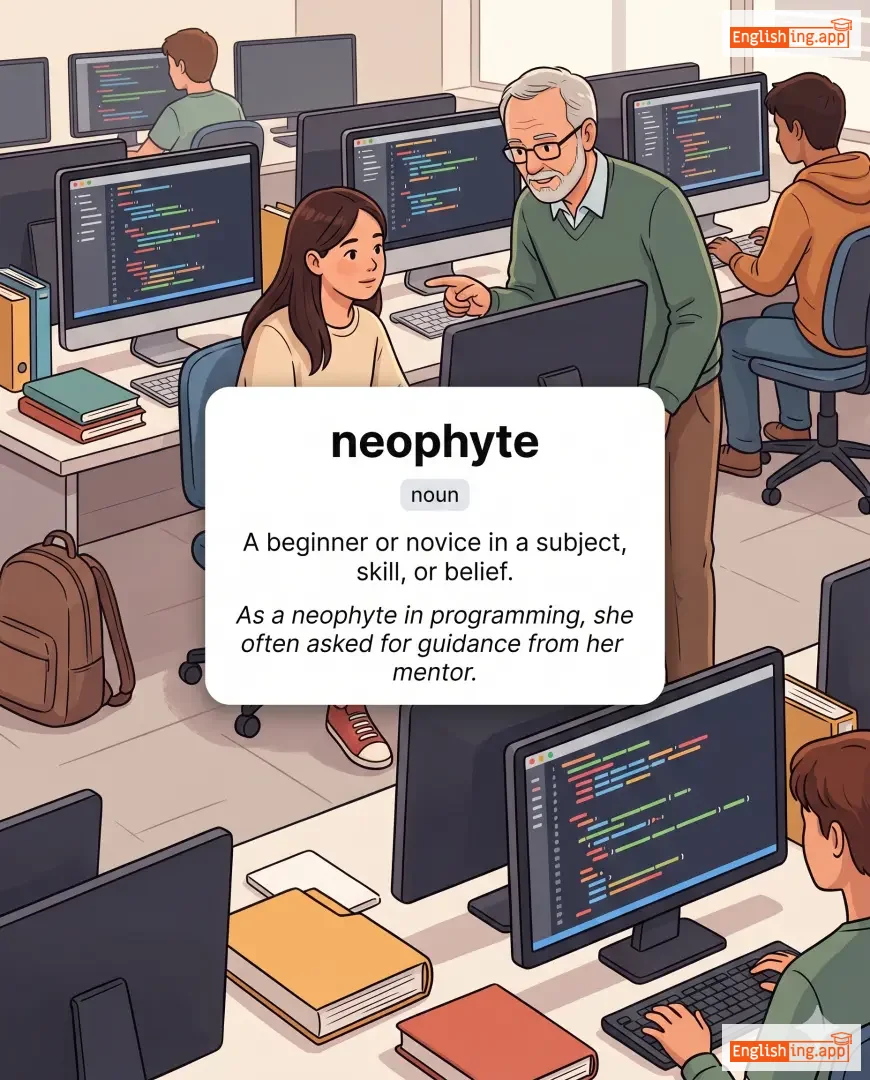
neophyte definition card — visual illustration of the meaning
noun C2
/ˈniːəˌfaɪt/
новичок (novichok)

A beginner or novice in a subject, skill, or belief.

"As a neophyte in programming, she often asked for guidance from her mentor."

"Будучи новичком в программировании, она часто просила советы у своего наставника." (Buduchi novichkom v programmirovanii, ona chasto prosila sovety u svoego nastavnika.)
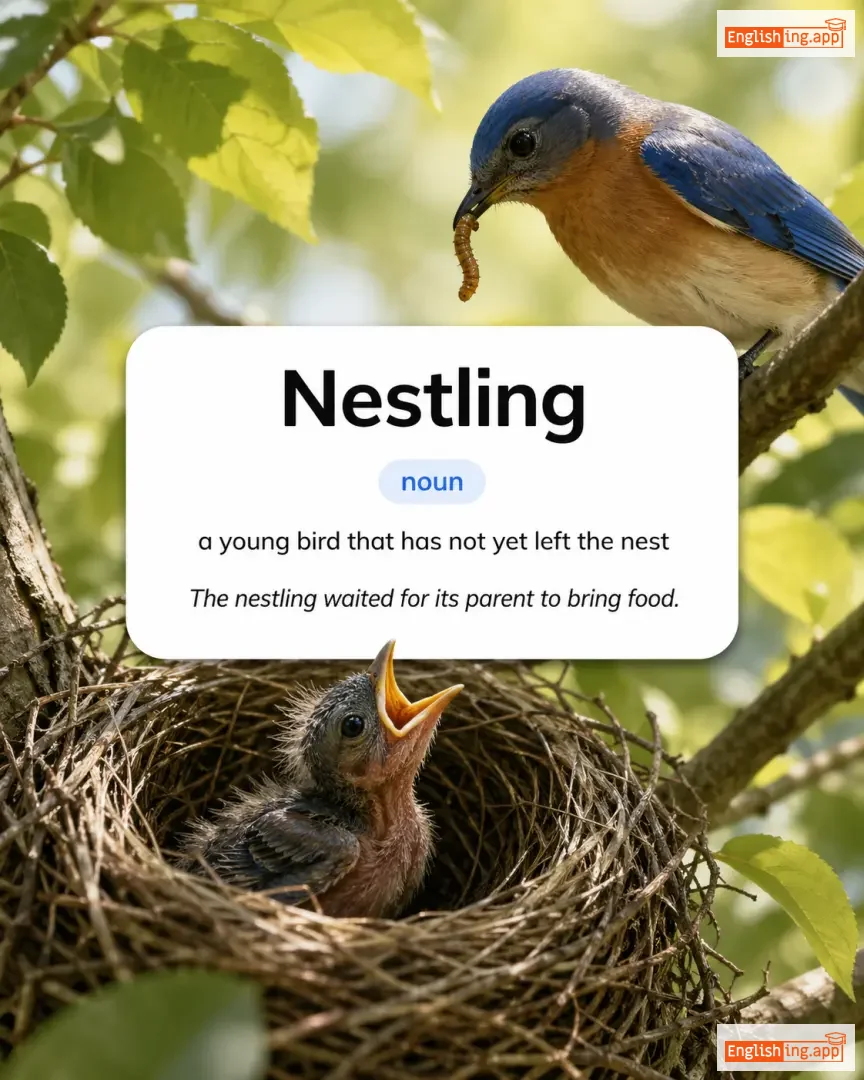
Nestling definition card — visual illustration of the meaning
noun C2
/ˈnɛslɪŋ/
птенец (ptenets)

a young bird that has not yet left the nest

"The nestling waited for its parent to bring food."

"Птенец ждал, когда его родители принесут еду." (Ptenets zhdal, kogda ego roditeli prinesut edu.)
adjective C2
/ˈnɛðər/
нижний (nizhniy)

situated down or below; lower

"They explored the nether regions of the cave."

"Они исследовали нижние регионы пещеры." (Oni issledovali nizhnie regiony peshchery.)
noun C2
/ˈnɛtl̩/
растение с жгучими волосками, которые вызывают раздражение при касании (rastenie s zhguchimi voloskami, kotorye vyzyvayut razdrazhenie pri kasanii)

a plant with stinging hairs that cause irritation when touched

"He accidentally brushed against the nettle and felt a sharp sting."

"Он случайно коснулся крапивы и почувствовал острое жжение." (On sluchayno kosnulsya krapivy i pochuvstvoval ostroye zhizhenie.)
adjective C2
/ˈnɛtlˌsʌm/
раздражающий (razdrazhayushchiy)

Causing irritation, annoyance, or difficulty.

"The nettlesome rules frustrated the workers."

"Раздражающие правила расстроили работников." (Razdrazhayushchie pravila rasstroili rabotnikov.)
noun C2
/njʊˈrældʒə/
нервная боль (nervnaya bol')

intense, often intermittent pain along a nerve pathway

"The patient suffers from neuralgia in her face."

"Пациент страдает от невралгии на лице." (Patsiyent stradayet ot nevralgii na litse.)
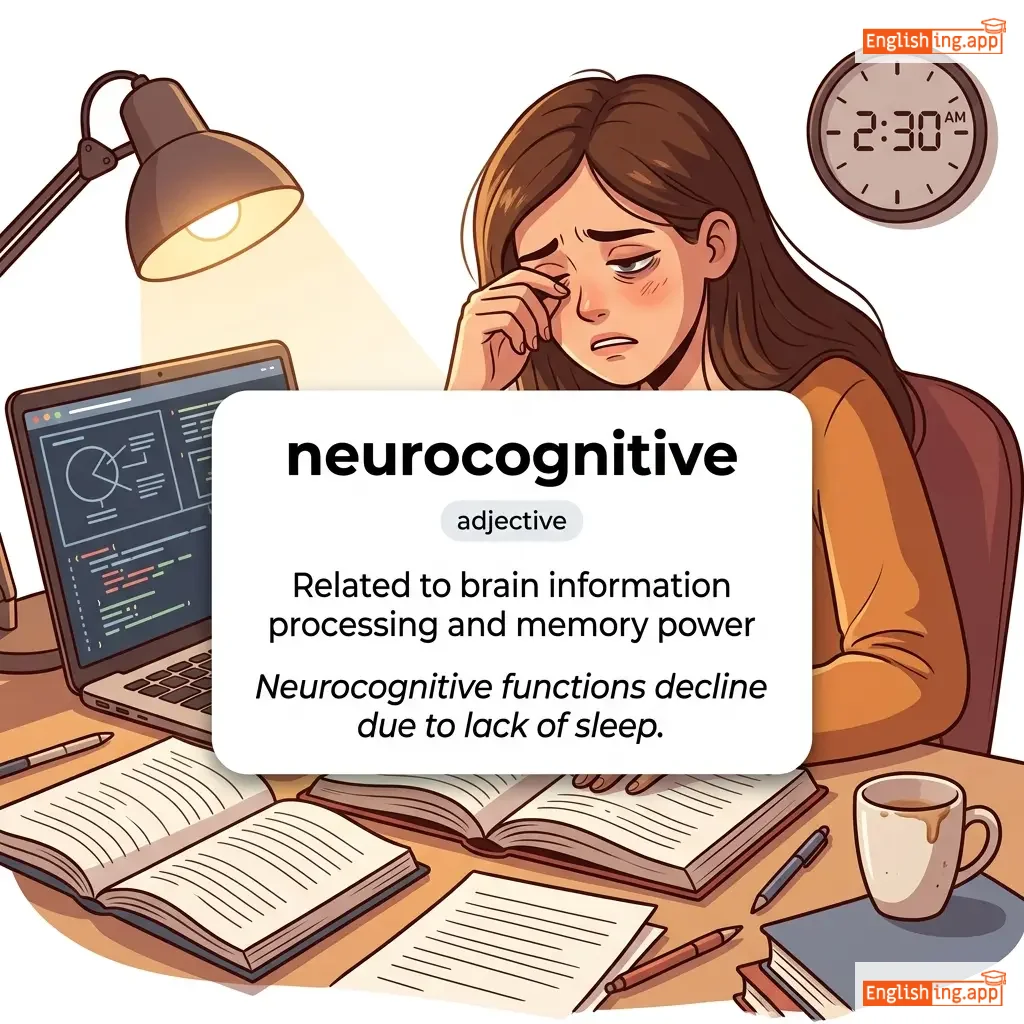
neurocognitive definition card — visual illustration of the meaning
adjective C2
ˌnjʊəroʊˈkɒɡnɪtɪv
нейрокогнитивный (neyrokognitivnyy)

Related to brain information processing and memory power

"Neurocognitive functions decline due to lack of sleep."

"Нейрокогнитивные функции ухудшаются из-за недостатка сна." (Neyrokognitivnye funktsii ukhudshtayutsya iz-za nedostatka sna.)
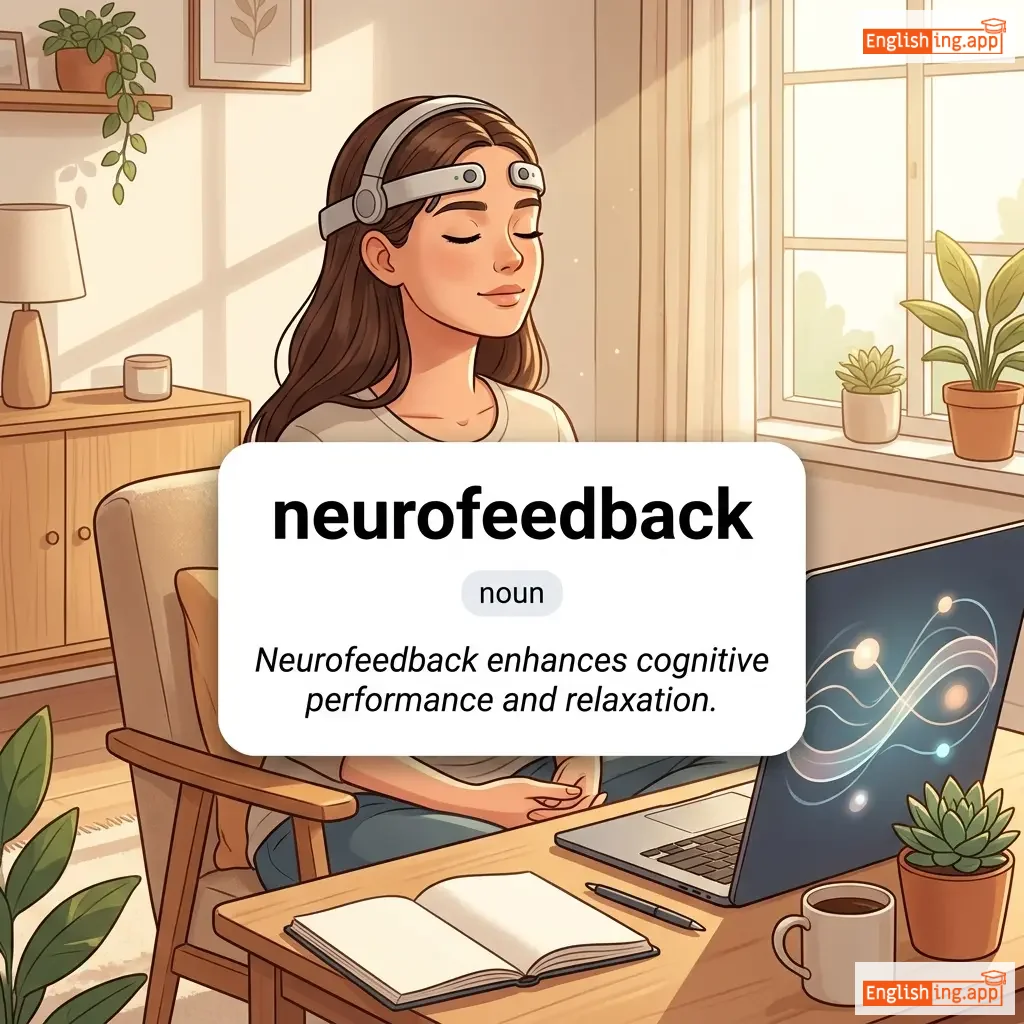
neurofeedback definition card — visual illustration of the meaning
noun C2
ˈnjʊə.rəʊ ˌfiːd.bæk
техника, использующая отображение активности мозга в реальном времени для обучения саморегуляции функции мозга (neyrofeedback)

A technique that uses real-time displays of brain activity to teach self-regulation of brain function.

"Neurofeedback enhances cognitive performance and relaxation."

"Нейрофидбек улучшает когнитивную активность и расслабление." (Neyrofeedback uluchshayut kognitivnuyu aktivnost' i rasslablenie.)
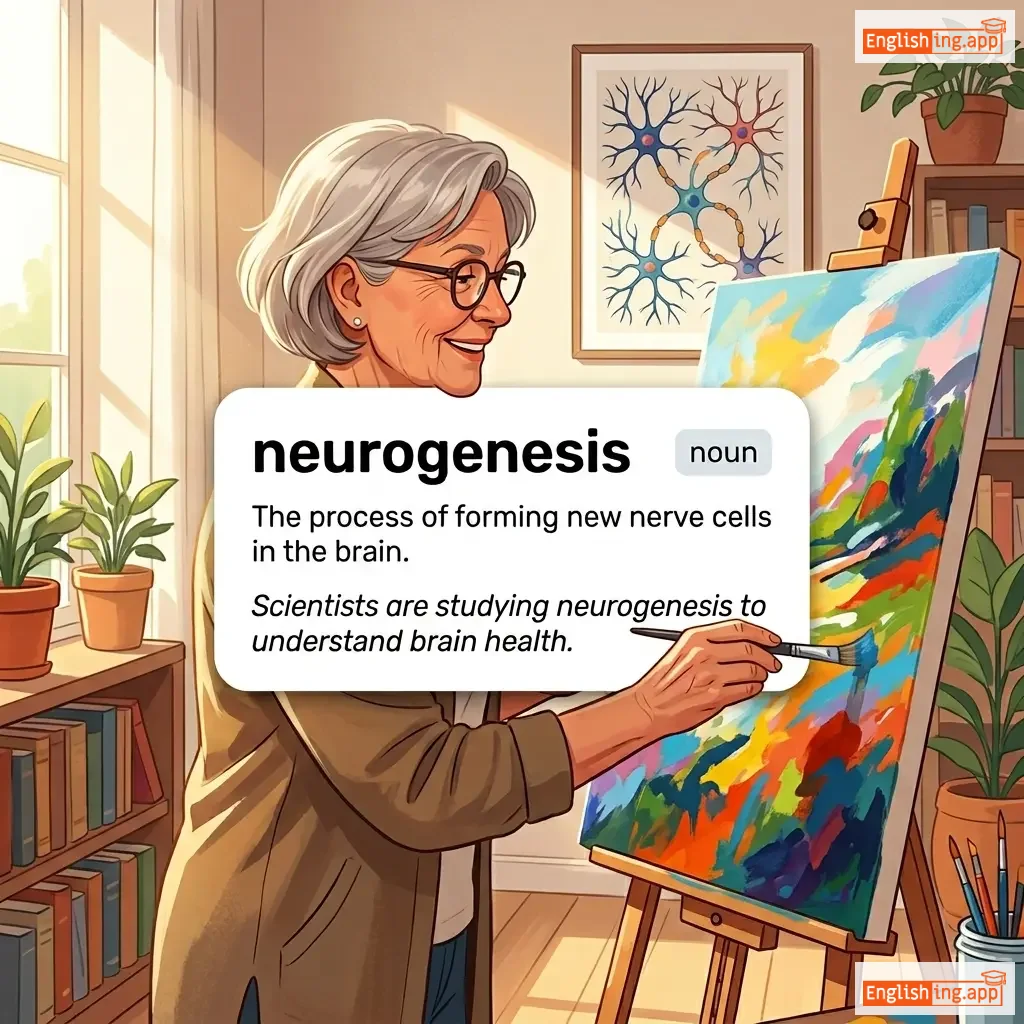
neurogenesis definition card — visual illustration of the meaning
noun C2
/ˌnjʊə.rəʊˈdʒɛn.ɪ.sɪs/
образование новых нервных клеток (obrazovanie novyh nervnyh kletok)

The process of forming new nerve cells in the brain.

"Scientists are studying neurogenesis to understand brain health."

"Ученые изучают нейрогенез, чтобы понять здоровье мозга." (Uchenye izuchayut neyrogenes, chtoby ponyat zdorovye mozga.)
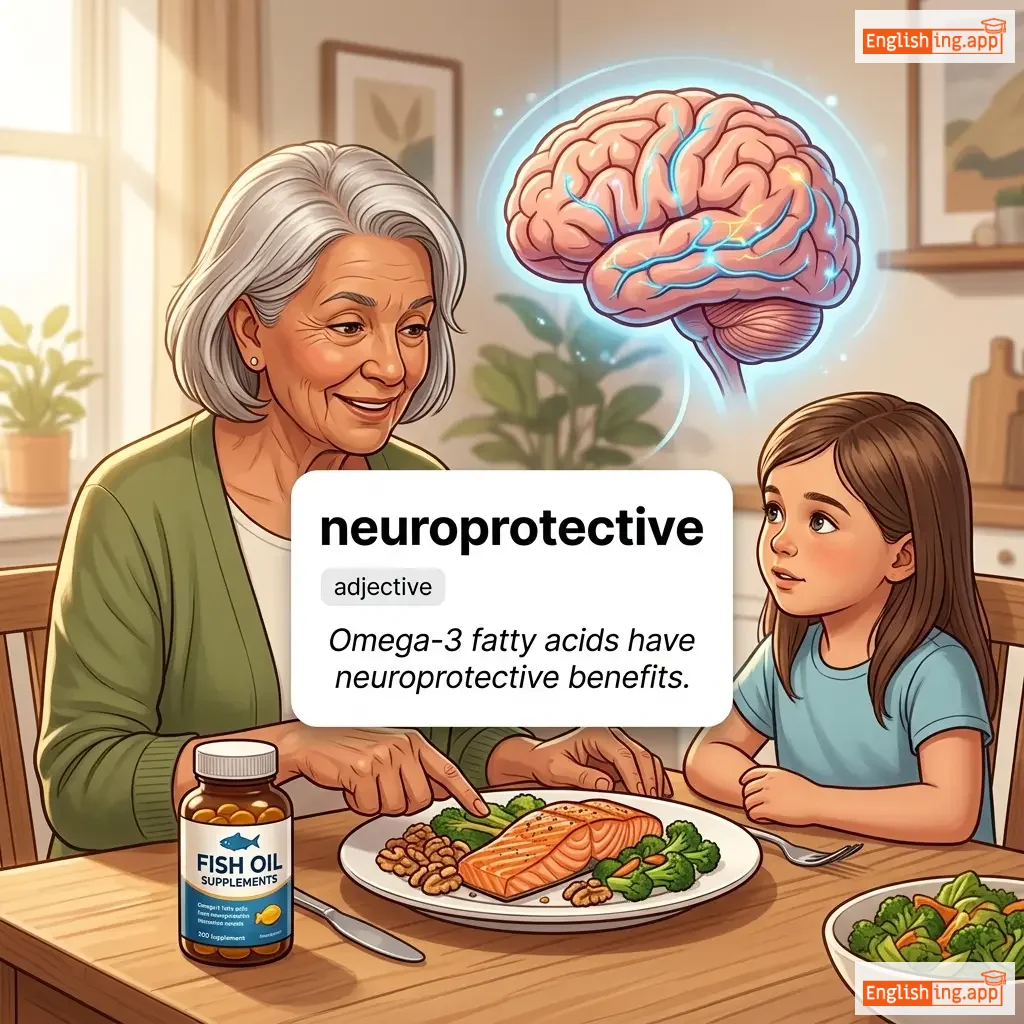
neuroprotective definition card — visual illustration of the meaning
adjective C2
ˌnjʊə.rəʊ.prəˈtek.tɪv
нейропротекторный (neyroprotektivny)

Having the ability to protect nerve cells from damage, degeneration, or impaired function.

"Omega-3 fatty acids have neuroprotective benefits."

"Омега-3 жирные кислоты обладают нейропротективными свойствами." (Omega-3 zhirnye kisloty obladayut neyroprotektivnymi svoystvami.)
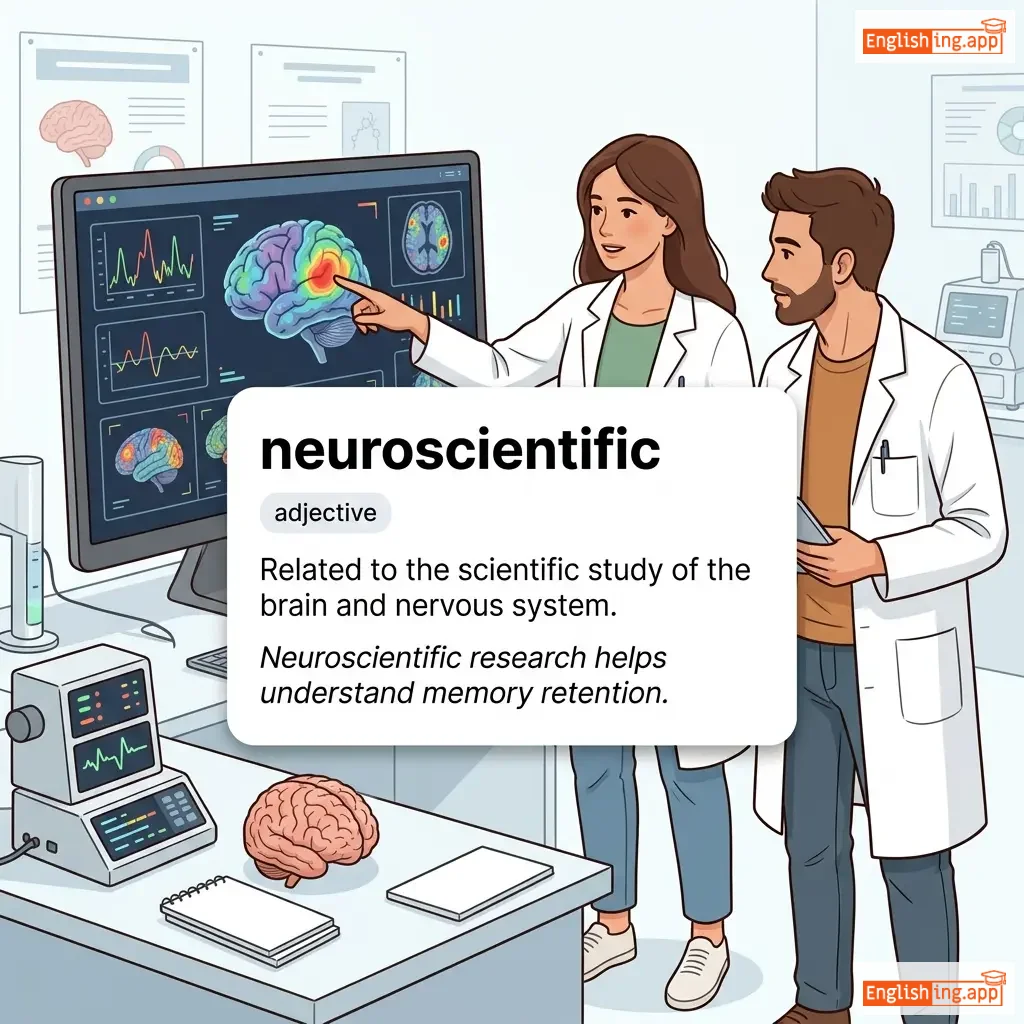
neuroscientific definition card — visual illustration of the meaning
adjective C2
ˌnjʊə.rəʊ.saɪənˈtɪ.fɪk
нейробиологический (neyrobiologicheskiy)

Related to the scientific study of the brain and nervous system.

"Neuroscientific research helps understand memory retention."

"Нейронаучные исследования помогают понять сохранение памяти." (Neyronauchnye issledovaniya pomogayut ponyat' sokhranenie pamyati.)
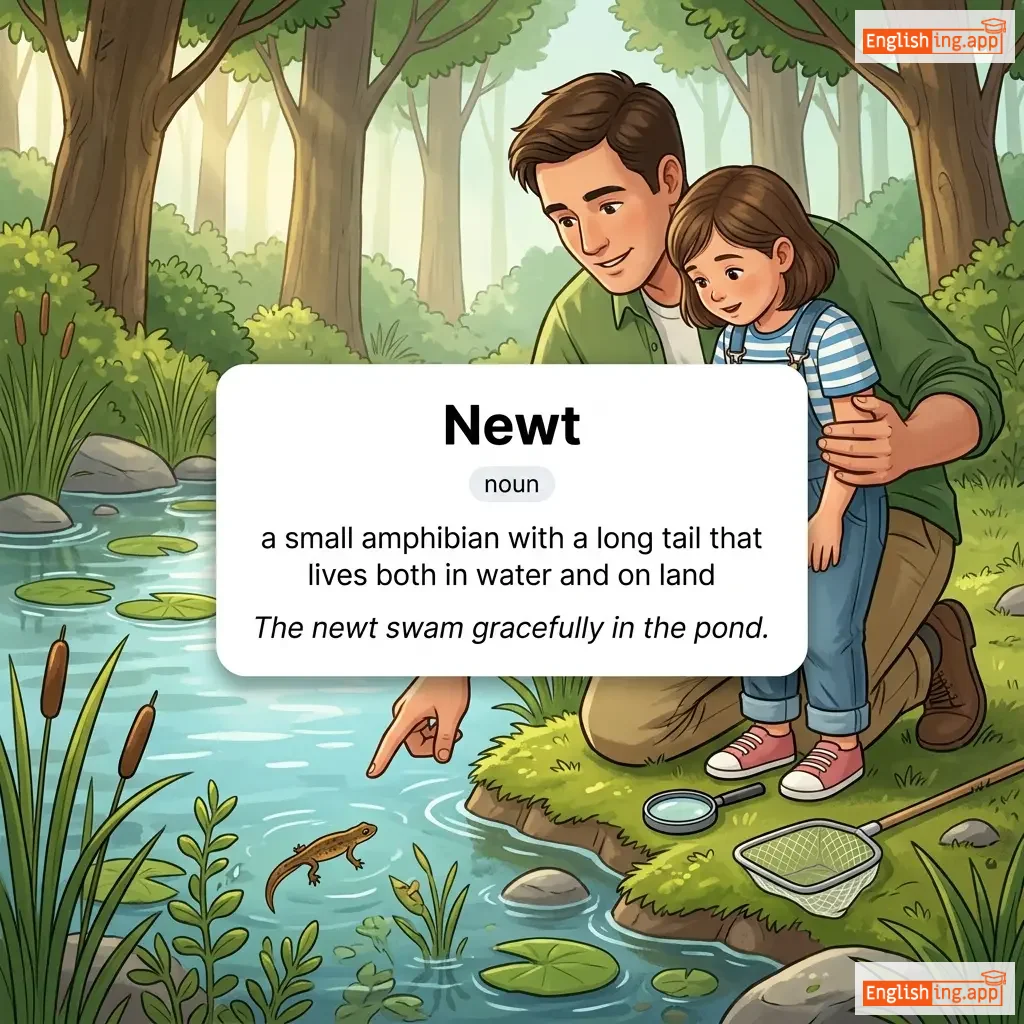
Newt definition card — visual illustration of the meaning
noun C2
/nuːt/
тритон (triton)

a small amphibian with a long tail that lives both in water and on land

"The newt swam gracefully in the pond."

"Тритон плавал грациозно в пруду." (Triton plaval gratsiozno v prudu)
adjective C2
/njuːˈtoʊniən/
относящийся к законам Ньютона (otnosyashchijsya k zakonam Nyutona)

relating to the laws of motion and gravitation formulated by Sir Isaac Newton

"The scientist explained the Newtonian laws of motion."

"Учёный объяснил законы движения Ньютона." (Uchyonij ob'jasnil zakony dviženiya Nyutona.)
noun C2
/nɪb/
кончик пера (konchik pera)

the pointed end of a pen used for writing or drawing

"He dipped the nib into the ink before writing."

"Он погрузил кончик пера в чернила перед тем, как писать." (On pogruzil konchik perа v chernila pered tem, kak pisat'.)
noun C2
/ˈnaɪsəti/
тонкость (tonkost)

a fine or subtle detail, or a refined, delicate aspect of something

"The lawyer explained the legal niceties of the case."

"Адвокат объяснил юридические тонкости дела." (Advokat ob'yasnil yuridicheskie tonkosti dela.)
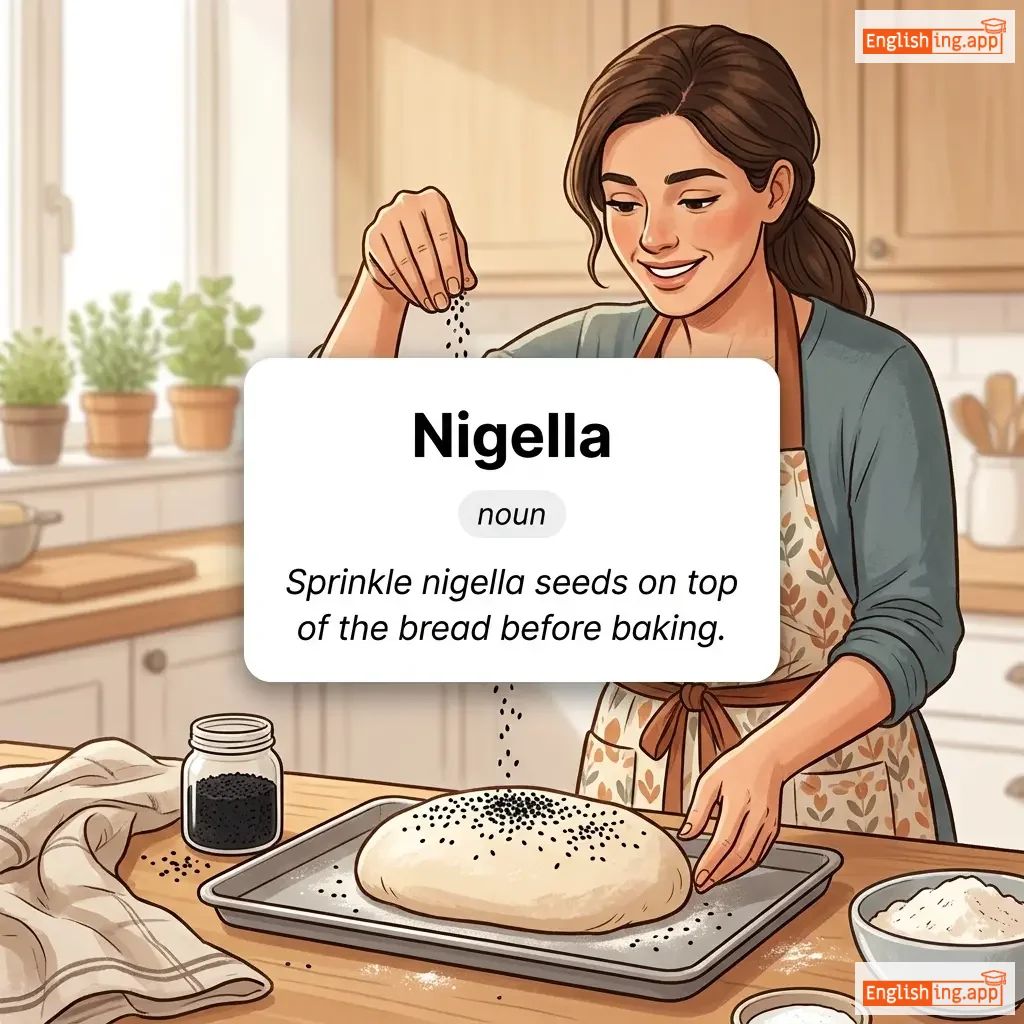
Nigella definition card — visual illustration of the meaning
noun C2
/naɪˈdʒel.ə/
черный тмин (chernyy tmin)

small black seeds with a nutty, slightly bitter flavor, also known as black cumin or black seed

"Sprinkle nigella seeds on top of the bread before baking."

"Посыпьте семена черного тмина на хлеб перед выпечкой." (Posyp'te semena chernogo tmina na khleb pered vypechkoj.)
adjective C2
/ˈnɪɡərdli/
скупой (skupoy)

unwilling to spend or give; stingy or miserly

"He was too niggardly to leave a decent tip."

"Он был слишком скуп, чтобы оставить нормальный чай." (On byl slishkom skup, chtoby ostavit' normal'nyy chay.)
verb C2
/ˈnɪɡəl/

to cause slight but persistent annoyance, discomfort, or worry

"A small doubt niggled at her mind."

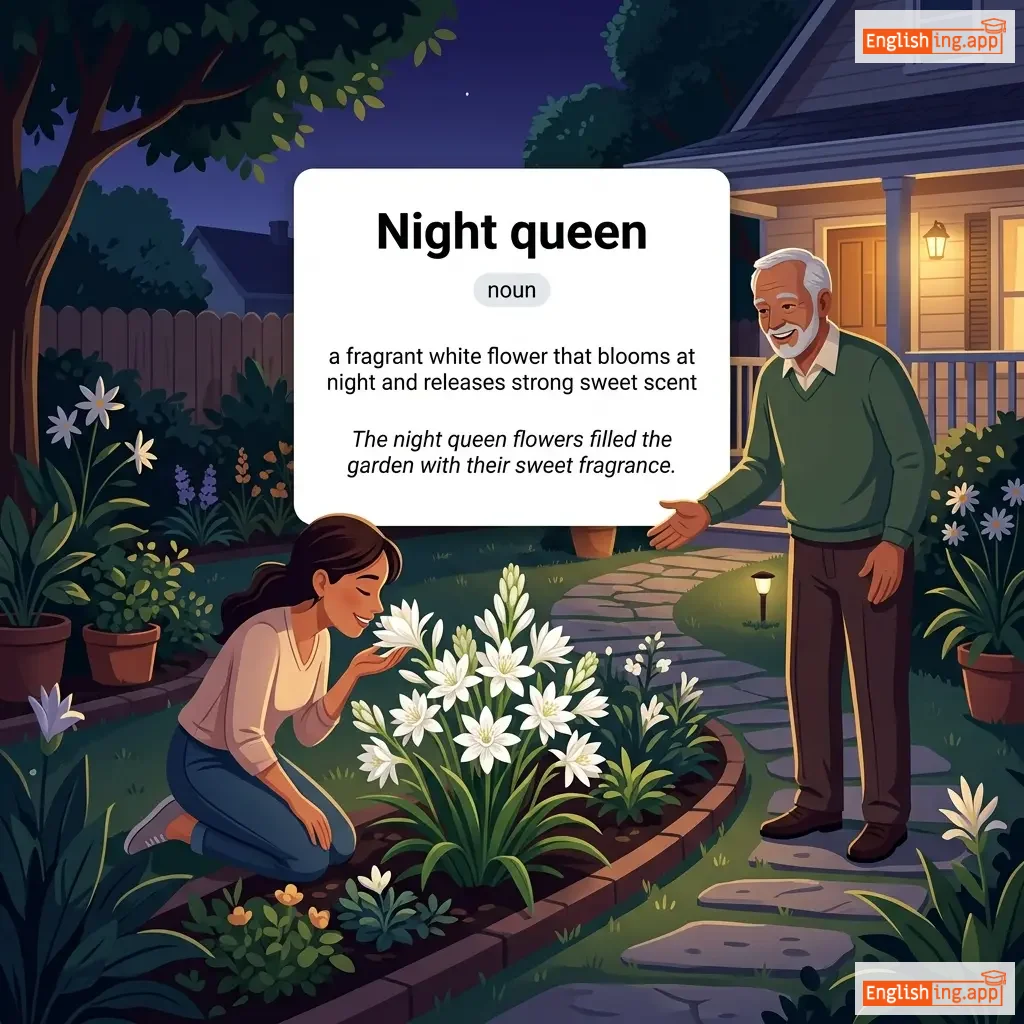
Night queen definition card — visual illustration of the meaning
noun C2
/naɪt kwiːn/
царица ночи (tsaritsa nochi)

a fragrant white flower that blooms at night and releases strong sweet scent

"The night queen flowers filled the garden with their sweet fragrance."

"Цветы царицы ночи наполнили сад своим сладким ароматом." (tsvety tsaritsy nochi napolnili sad svoim sladkim aromatom)
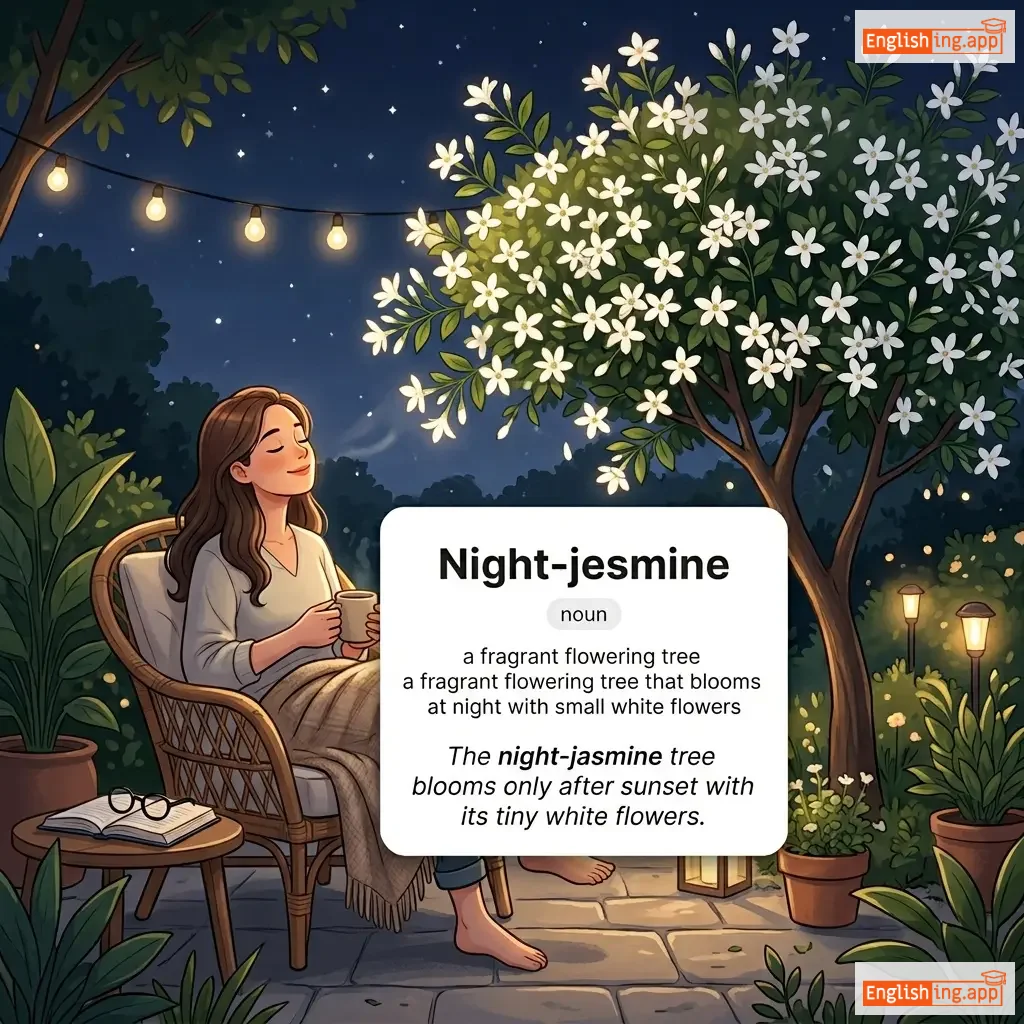
Night-jesmine definition card — visual illustration of the meaning
noun C2
/naɪt ˈdʒæz.mɪn/
ночной жасмин (nochnoy zhasmin)

a fragrant flowering tree that blooms at night with small white flowers

"The night-jasmine tree blooms only after sunset with its tiny white flowers."

"Дерево ночного жасмина цветет только после заката своими маленькими белыми цветами." (derevo nochnogo zhasmina tsvetet tolko posle zakata svoimi malen'kimi belymi tsvetami.)
noun C2
/ˈnaɪɪˌlɪzəm/
нихилизм (nihilizm)

The rejection of all religious and moral principles, often in the belief that life is meaningless.

"The philosopher was criticized for promoting nihilism."

"Философа раскритиковали за продвижение нигилизма." (Filosofa raskritikovali za prodvizhenie nigilizma.)
noun C2
/ˈnaɪəlɪst/
нигилист (nigilist)

A person who rejects all religious and moral principles, often believing that life is meaningless.

"He was called a nihilist for rejecting all social norms."

"Его называли нигилистом за отказ от всех социальных норм." (Ego nazyvali nigilistom za otkaz ot vsekh sotsial'nykh norm.)
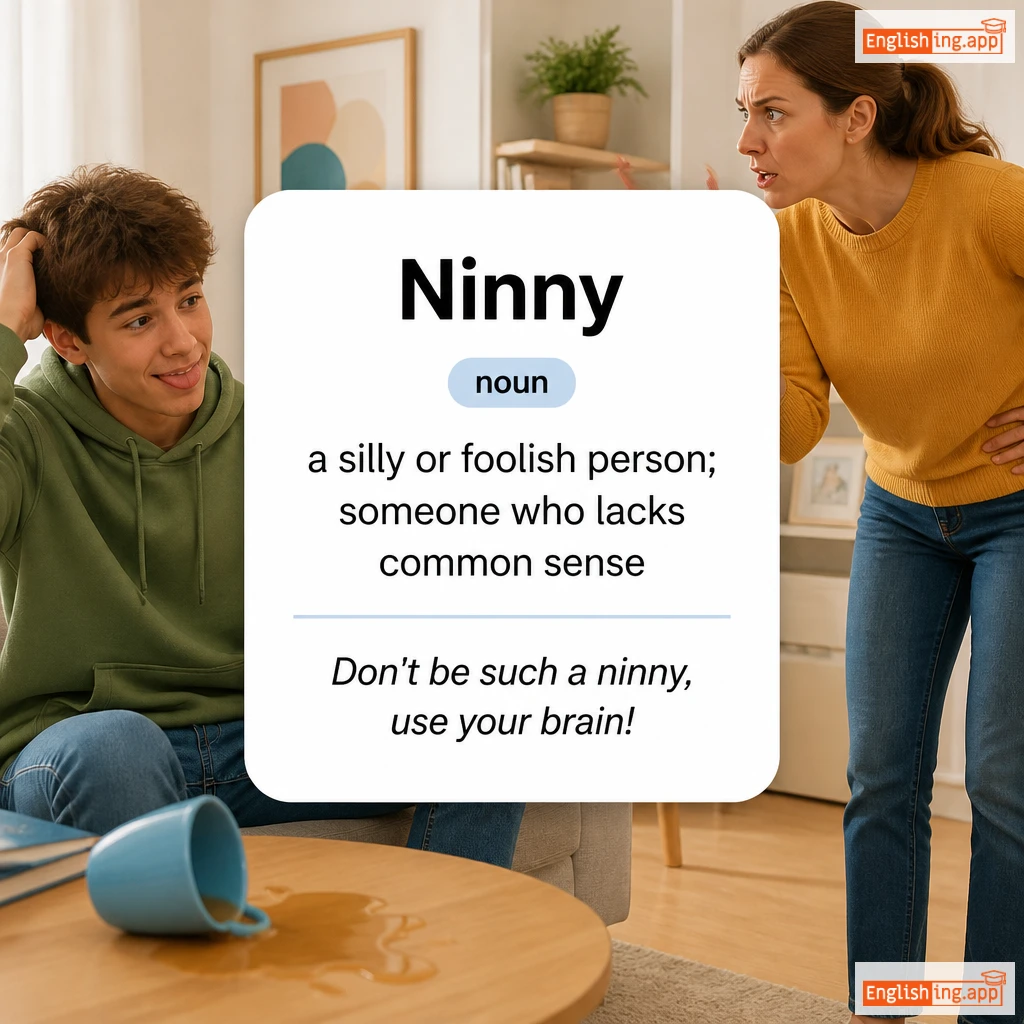
Ninny definition card — visual illustration of the meaning
noun C2
/ˈnɪn.i/
тупица (tupitsa)

a silly or foolish person; someone who lacks common sense

"Don't be such a ninny, use your brain!"

"Не будь таким тупицей, используй свой мозг!" (Ne bud' takim tupitsey, ispol'zuy svoy mozg!)
noun C2
/nɪt/
яйцо вшей (yaytso vshay)

The egg or young form of a louse or other parasitic insect.

"The teacher noticed nits in the child’s hair."

"Учитель заметил яйца вшей в волосах ребенка." (Uchitel' zametil yaytsa vshey v volosakh rebenka.)
verb C2
/ˈnɪtˌpɪk/

To find and criticize small or unimportant faults in someone or something.

"She tends to nitpick about every little detail."