ভোকাবুলারিসমূহ

ইংরেজি শব্দের বাংলা অর্থ | English to Bangla Word Meaning Dictionary

noun C2
/ˈmɛtələ(r)dʒi/
металлургия (metallurgiya)

The science and technology of metals, including their extraction from ores and their processing.

"Metallurgy plays a vital role in industrial development."

"Металлургия играет важную роль в промышленном развитии." (Metallurgiya igraet vazhnuyu rol' v promyshlennom razvitii.)
verb C2
/ˌmɛtəˈmɔrfoʊz/
метаморфозировать (metamorphozirovat')

To change in form, structure, or substance; to transform completely.

"The caterpillar metamorphosed into a butterfly."

"Гусеница метаморфозировала в бабочку." (Gusenitsa metamorfizirovala v babochku.)
noun C2
/ˈmɛtəfɔːrm/
форма метафоры (forma metafory)

A coined or rare term sometimes used to describe a hybrid form of metaphor and form in literature or art.

"The poet introduced a metaphorm to blend imagery with structure."

"Поэт представил метаформу, чтобы соединить образы с конструкцией." (Poet predstavil metaformu, chtoby soedinit' obrazy s konstrukciey.)
adjective C2
/ˌmɛtəˈfɪzɪkəl/
метафизический (metafizicheskiy)

Relating to the branch of philosophy that deals with the fundamental nature of reality and existence.

"He spent years studying metaphysical questions about life and being."

"Он провел годы, изучая метафизические вопросы о жизни и бытии." (On provel gody, izuchaya metafizicheskie voprosy o zhizni i bytiy.)
noun C2
/ˌmɛtəfɪˈzɪʃən/
метафизик (metafizik)

A person who studies or is an expert in metaphysics.

"The metaphysician debated the essence of reality with his peers."

"Метафизик обсуждал сущность реальности с коллегами." (Metafizik obshchuzhdal sushchnost' real'nosti s kollegami.)
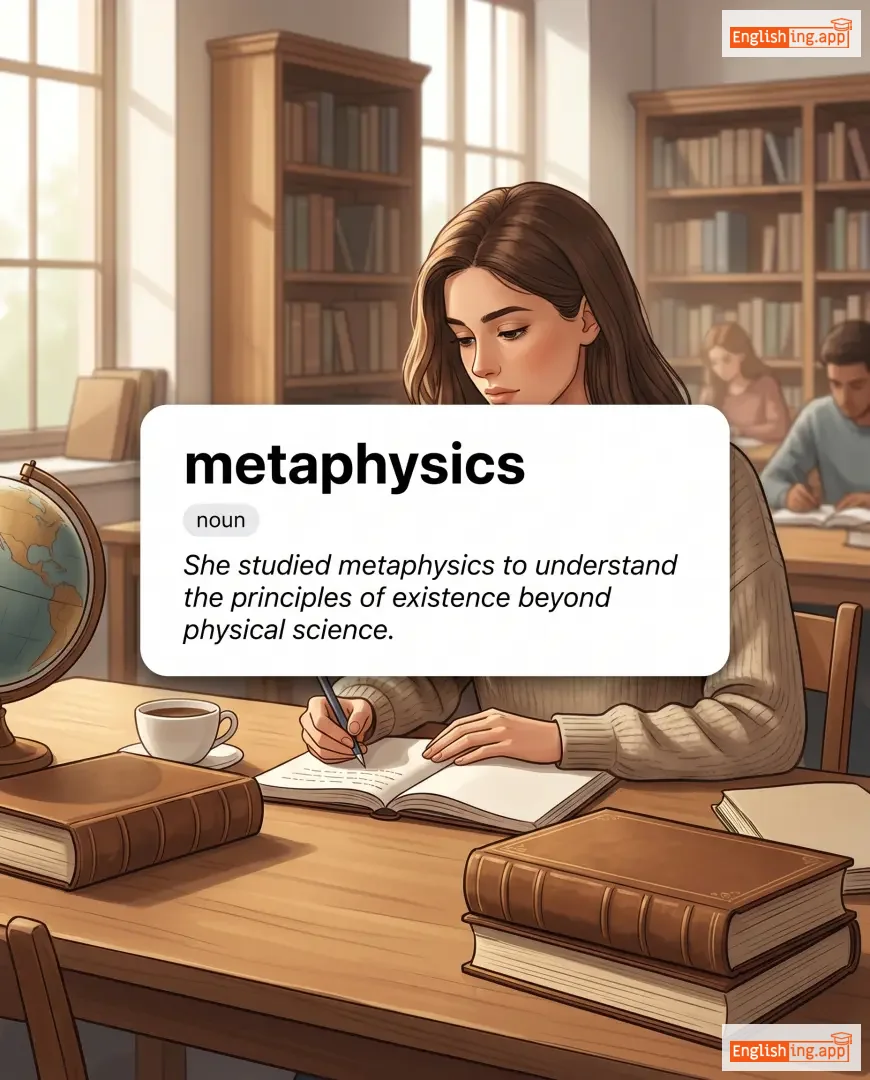
metaphysics definition card — visual illustration of the meaning
noun C2
/ˌmɛtəˈfɪzɪks/
метафизика (metafizika)

The branch of philosophy that deals with the fundamental nature of reality, existence, and the relationship between mind and matter.

"She studied metaphysics to understand the principles of existence beyond physical science."

"Она изучала метафизику, чтобы понять принципы существования, выходящие за пределы физической науки." (Ona izuchala metafiziku, chtoby ponyat' printsipy sushchestvovaniya, vykhodyashchie za predely fizicheskoy nauki.)
verb C2
/miːt/
назначать (naznachat)

To dispense or allot justice, punishment, or harsh treatment.

"The judge will mete out punishment according to the crime."

"Судья назначит наказание в соответствии с преступлением." (Sudya naznachit nakazanie v sootvetstvii s prestupleniem.)
noun C2
/ˌmɛtəmˌsaɪˈkoʊsɪs/
переселение души (pereselenie dushi)

The supposed transmigration of the soul, especially its reincarnation after death.

"Ancient philosophers often debated the idea of metempsychosis."

"Древние философы часто обсуждали переселение души." (Drevnie filosofy chasto obsuzhdali pereselenie dushi.)
noun C2
/mɪˈtɒnɪmi/
метонимия (metonimiya)

A figure of speech in which one word or phrase is substituted with another closely related word or concept.

"In the phrase 'the crown will decide,' 'crown' is a metonymy for monarchy."

"В фразе 'корона решит' 'корона' является метонимией для монархии." (V fraze 'korona reshit' 'korona' yavlyayetsya metonimiyey dlya monarkhii.)
adjective C2
/ˈmɛtrɪkəl/
метрический (metricheskiy)

Relating to or composed in a regular rhythmic pattern of beats or meter, especially in poetry.

"The poet carefully followed metrical rules in his verses."

"Поэт тщательно следовал метрическим правилам в своих стихах." (Poet tchatel'no sledoval metricheskim pravilam v svoikh stikhakh.)
noun C2
/ˈmɛtrəˌnoʊm/
метроном (metronom)

A device that produces regular ticks or beats to help musicians maintain tempo.

"She practiced the piano with a metronome to keep steady timing."

"Она тренировалась на пианино с метрономом, чтобы сохранить стабильное время." (Ona trenirovalas' na pianino s metronomom, chtoby sokhranit' stabil'noe vremya.)
noun C2
/ˈmɛtəl/
мужество (muzhestvo)

A person's ability to cope well with difficulties or to face demanding situations with courage.

"The young athlete showed his mettle in the final match."

"Молодой атлет проявил своё мужество в финальном матче." (Molodoy atlet proyavil svoyo muzhesctvo v final'nom matche.)
adjective C2
/ˈmɛtəlˌsʌm/
храбрый (khrabryy)

Full of courage and spirit; lively and spirited.

"The mettlesome young rider never backed down from a challenge."

"Храбрый молодой всадник никогда не отступал от вызова." (Khrabryy molodoy vsadnik nikogda ne otstupal ot vyzova.)
noun C2
/mjuːz/
переулок/узкая улица (pereulok/uzkaya ulitsa)

A row or street of houses or apartments that have been converted from stables or built to look like former stables.

"They rented a small flat in a quiet London mews."

"Они арендовали небольшую квартиру на тихом меусе в Лондоне." (Oni arendovali nebol'shuyu kvartiru na tikhom myuse v Londone.)
noun C2
/maɪˈæzmə/
затхлый воздух (zathlyy vozdukh)

An unpleasant or unhealthy smell or atmosphere.

"A miasma of decay hung over the abandoned house."

"Миазма разложения висела над заброшенным домом." (Miyazma razlozheniya visela nad zabroshennym domom.)
noun C2
/ˈmaɪkrəˌkɒzəm/
микрокосм (mikrokosm)

A small, representative system having analogies to a larger system; a miniature version of something.

"The small town is a microcosm of the entire nation."

"Маленький город — это микрокосм всей нации." (Malen'kiy gorod — eto mikrokosm vsey natsii.)
noun C2
/maɪˈkrɒmɪtər/
микрометр (mikrometr)

A device used for measuring small distances with great accuracy.

"The engineer used a micrometer to measure the thickness of the wire."

"Инженер использовал микрометр, чтобы измерить толщину проволоки." (Inzhener ispol'zoval mikrometr, chtoby izmerit' tolshchinu provoloki.)
noun C2
/maɪˈkrɑː.skə.pi/
микроскопия (mikroskopiya)

The use of a microscope to observe small objects or organisms.

"Microscopy revealed the structure of the cells."

"Микроскопия выявила структуру клеток." (Mikroskopiya vyyavila strukturu kletok.)
noun C2
/miːn/
выражение лица (vyrazhenie litsa)

A person's appearance or manner, especially as an indication of their character or mood.

"His serious mien made everyone fall silent."

"Его серьезное выражение лица заставило всех замолчать." (Ego ser'yeznoe vyrazhenie litsa zastavilo vsekh zamolet'sya.)
noun C2
/mɪf/
маленькая ссора (malenkaya ssora)

A petty quarrel or annoyance.

"They had a slight miff over the seating arrangement."

"Они поссорились из-за расположения сидений." (Oni possorilis' iz-za raspolozheniya sideniy.)
verb C2
/ˈmɪlɪˌteɪt/
препятствовать (prepyatstvovat')

to have a strong effect against something; to work as a powerful factor in preventing or influencing an outcome

"His lack of experience will militate against his promotion."

"Его недостаток опыта помешает его повышению." (Yego nedostatok opyta pomeshaet yego povysheniyu.)
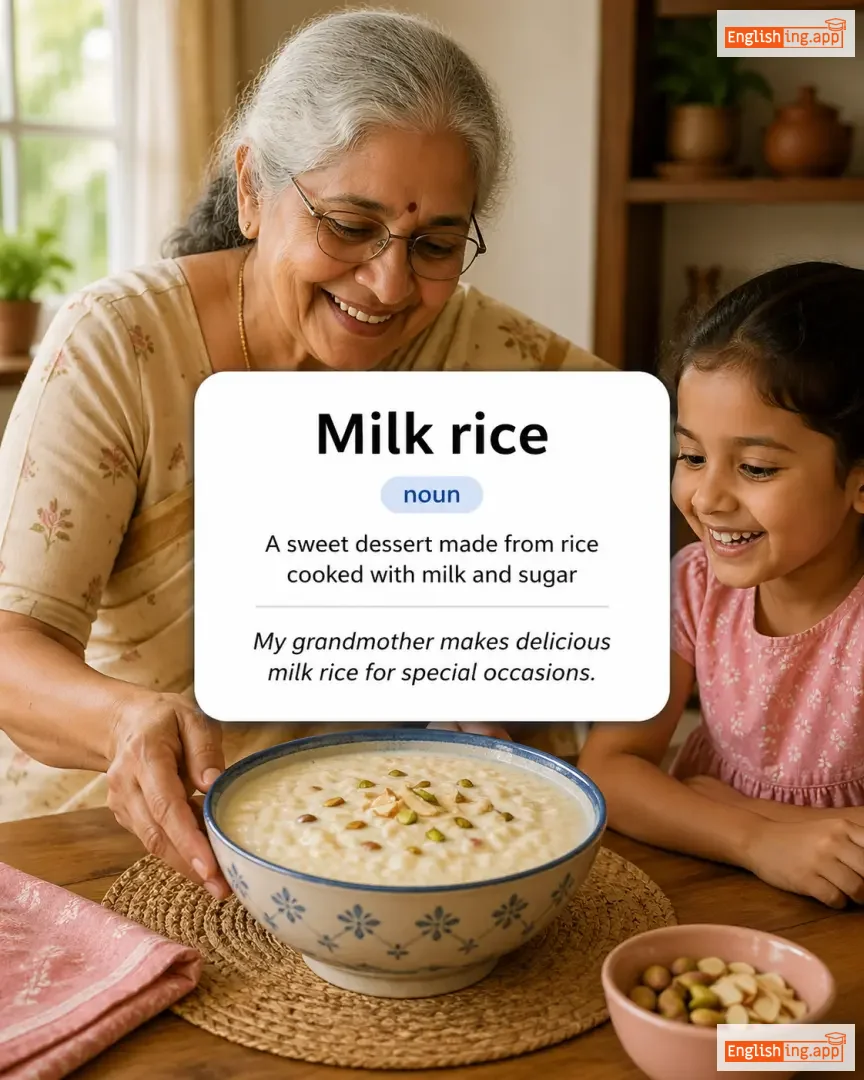
Milk rice definition card — visual illustration of the meaning
noun C2
/mɪlk raɪs/
молочная каша (molochnaya kasha)

A sweet dessert made from rice cooked with milk and sugar

"My grandmother makes delicious milk rice for special occasions."

"Моя бабушка готовит вкусный молочную кашу для особых случаев." (Moya babushka gotovit vkusnyy molochnuyu kashu dlya osobykh sluchayev.)
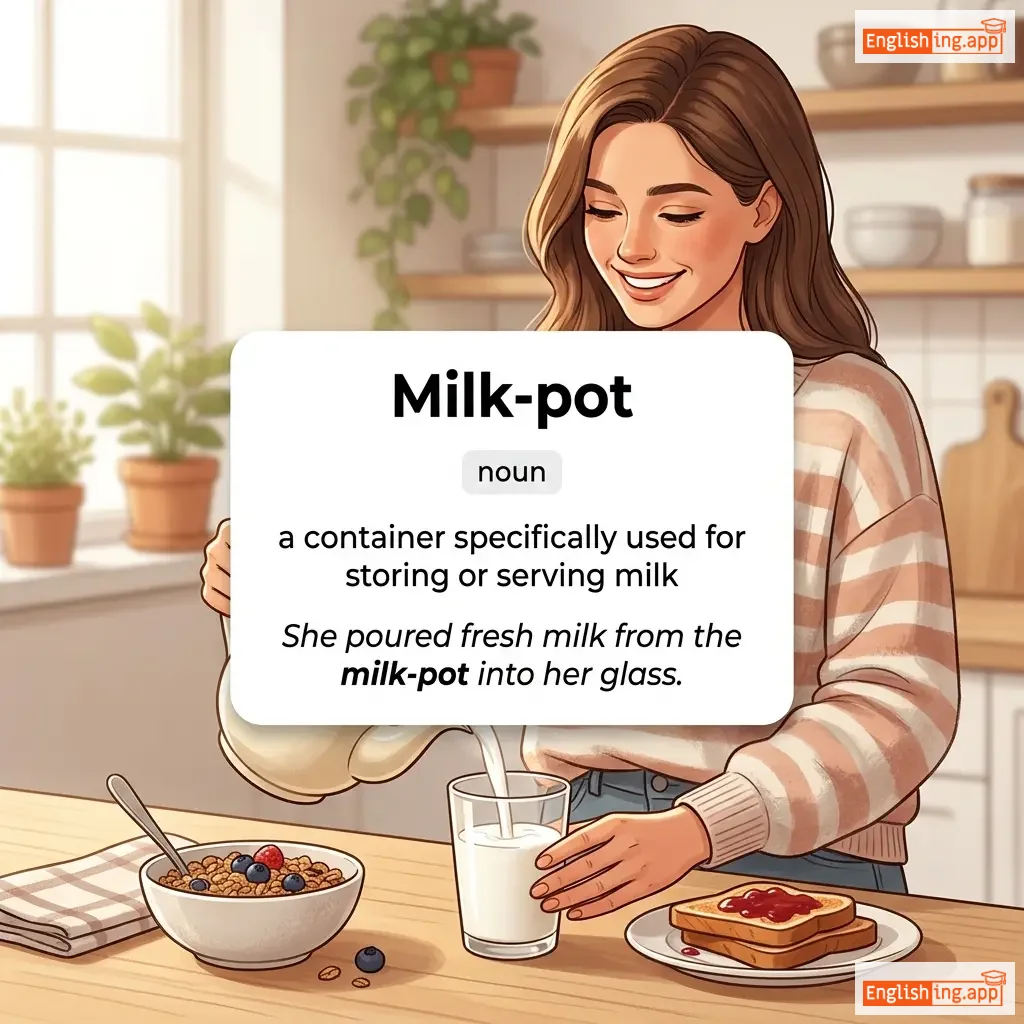
Milk-pot definition card — visual illustration of the meaning
noun C2
/ˈmɪlk pɒt/
молочник (molochnik)

a container specifically used for storing or serving milk

"She poured fresh milk from the milk-pot into her glass."

"Она налила свежее молоко из молочника в свой стакан." (Ona nalila svezhee moloko iz molochnika v svoy stakan)
noun C2
/ˈmɪlɪt/
просо (proso)

a small-seeded grass cultivated as a cereal crop

"Millet is often used as food in rural areas."

"Просо часто используется как пища в сельских районах." (Proso chasto ispol'zuyetsya kak pishcha v selskih rayonah.)
noun C2
/ˌmɪnəˈrɛt/
минарет (minaret)

A tall, slender tower of a mosque, from which the call to prayer is announced.

"The minaret of the mosque could be seen from miles away."

"Минорет мечети был виден с нескольких километров." (Minoret mecheti byl viden s neskol'kikh kilometrov.)
adjective C2
/ˈmɪnətɔːri/
угрожающий (ugrozhayushchiy)

Expressing a threat; menacing.

"The criminal gave the witness a minatory look."

"Преступник бросил на свидетеля угрожающий взгляд." (Prestuplik brosil na svidetelya ugrozhayushchiy vzglyad.)
adjective C2
/ˈmɪnsɪŋ/
изысканный (izyskannyi)

affectedly delicate, dainty, or refined in manner or movement

"He walked with mincing steps across the stage."

"Он шел с изысканными шагами по сцене." (On shel s izyskannymi shagami po stsene.)
adjective C2
/ˈmɪn.dʒi/
скупой; зажиточный (skupoy; zhazhitochniy)

mean or stingy; unwilling to spend money

"He is too mingy to spend money on anything but necessities."

"Он слишком скуп, чтобы тратить деньги на что-то, кроме необходимого." (On slishkom skup, chtoby tratit dengi na chto-to, krome neobkhodimogo.)
🧑‍🤝‍🧑

minion (минион)

noun C2
/ˈmɪn.i.ən/
приспешник (prispeshnik)

A follower or underling of a powerful person, especially a servile one.

"The dictator was surrounded by loyal minions who carried out his orders."

"Диктатор был окружен верными приспешниками, которые исполняли его приказы." (Diktator byl okruzhon vernymi prispeshnikami, kotorye ispolnyali ego prikazy.)
adjective C2
/ˈmɪn.ɪ.skjuːl/
крошечный (kroshechnyy)

Extremely small or tiny.

"The error was so miniscule that nobody noticed it."

"Ошибка была настолько крошечной, что никто её не заметил." (Oshibka byla nastol'ko kroshechnoy, chto nikto yey ne zametil.)
noun C2
/ˌmɪn.ɪˈstreɪ.ʃən/
служба (sluzhba)

The act of providing care, assistance, or religious service.

"She recovered thanks to the kind ministrations of the nurses."

"Она выздоровела благодаря добрым министрациям медсестер." (Ona vyzdorovela blagodarya dobrym ministratsiyam medsestry.)
noun C2
/maɪˈnjuːʃə/
мелочи (melochi)

a small or trivial detail of something

"He was bored by the minutia of office paperwork."

"Ему было скучно от мелочей офисной работы." (Emu bylo skuchno ot melochi ofisnoy raboty.)
noun (plural) C2
/maɪˈnjuːʃiiː/
мелочи (melochi)

the small, precise, or trivial details of something

"The lawyer focused on the minutiae of the contract."

"Адвокат сосредоточился на мелочах контракта." (Advokat sosredotochilsya na melochakh kontrakta.)
noun, verb C2
/ˈmaɪər/
болото (boloto)

A stretch of swampy or boggy ground; as a verb, to entangle or involve someone in a difficult situation.

"The car was stuck in the mire after the heavy rain."

"Автомобиль застрял в болоте после сильного дождя." (Avtomobil zastrial v bolote posle silnogo dozhdya)
noun C2
/ˌmɪsədˈvɛntʃər/
неудача (neudacha)

An unlucky accident, mishap, or unfortunate event.

"He broke his leg during a skiing misadventure."

"Он сломал ногу во время неудачи на лыжах." (On slomal nogu vo vremya neudachi na lyzhakh.)
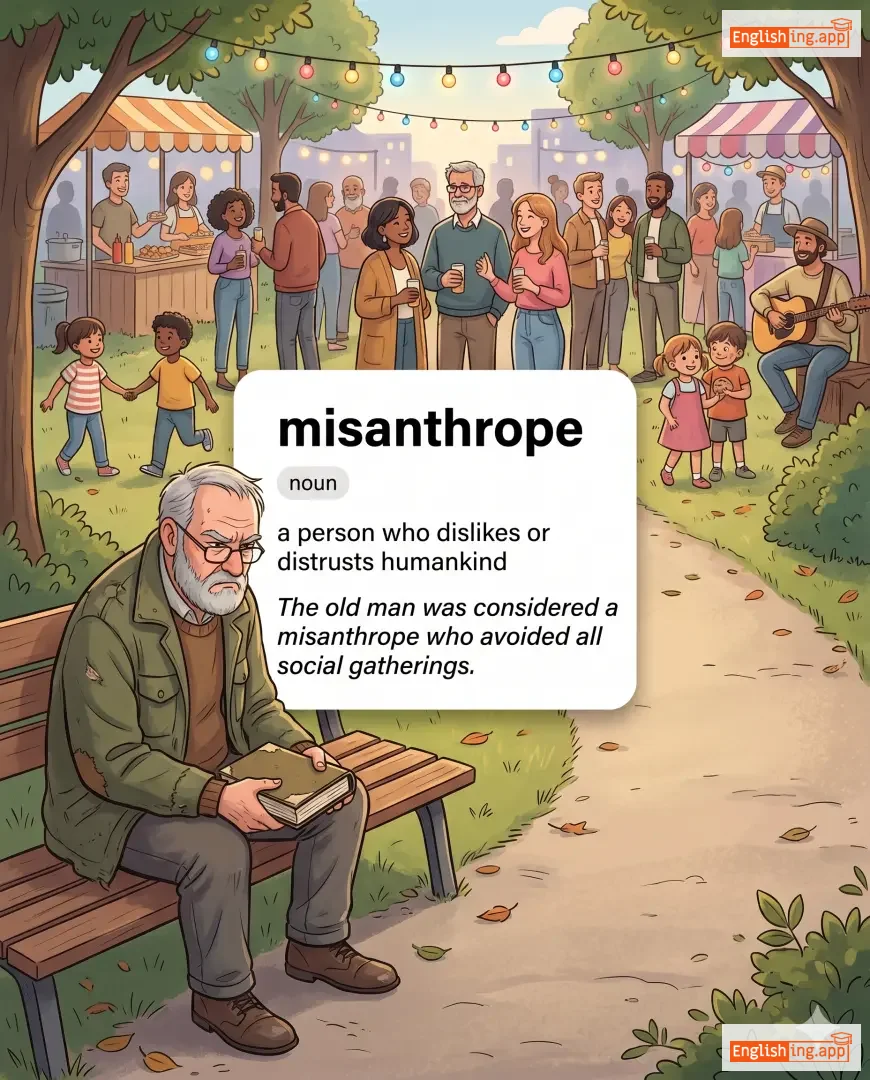
misanthrope definition card — visual illustration of the meaning
noun C2
/ˈmɪsənˌθroʊp/
мизантроп (mizanthrop)

a person who dislikes or distrusts humankind

"The old man was considered a misanthrope who avoided all social gatherings."

"Старик считался мизантропом, который избегал всех социальных собраний." (Starik schitalsya mizantropom, kotoryy izbegal vsekh sotsial'nykh sobraniy.)
adjective C2
/ˌmɪsənˈθrɑːpɪk/
мизантропический (mizanthropicheskiy)

having or showing a dislike of humankind

"His misanthropic attitude made it difficult for him to make friends."

"Его мизантропическое отношение затрудняло ему завести друзей." (Ego mizanthropicheskoe otnoshenie zatrudnyalo emu zavesti druzey.)
noun C2
/mɪˈsænθrəpi/
мизантропия (mizantropiya)

a general dislike, distrust, or hatred of humankind

"His misanthropy was evident in the way he avoided people."

"Его мизантропия была очевидна в том, как он избегал людей." (Ego mizantropiya byla ochevidna v tom, kak on izbegal lyudey.)
verb C2
/ˌmɪsæprɪˈhɛnd/
неправильно понять (nepravil'no ponyat')

to misunderstand or misinterpret something

"He misapprehended the teacher’s instructions and did the task incorrectly."

"Он неправильно понял указания учителя и выполнил задачу неверно." (On nepravil'no ponyal ukazaniya uchitelya i vypolnil zadachu neverno.)
noun C2
/ˌmɪsæprɪˈhɛnʃən/
недоразумение (nedorazumeniye)

a mistaken belief or misunderstanding

"There is a common misapprehension about the causes of the disease."

"Существует распространенное недоразумение относительно причин болезни." (Sushchestvuyet rasprostranennoye nedorazumeniye otnositel'no prichin bolezni.)
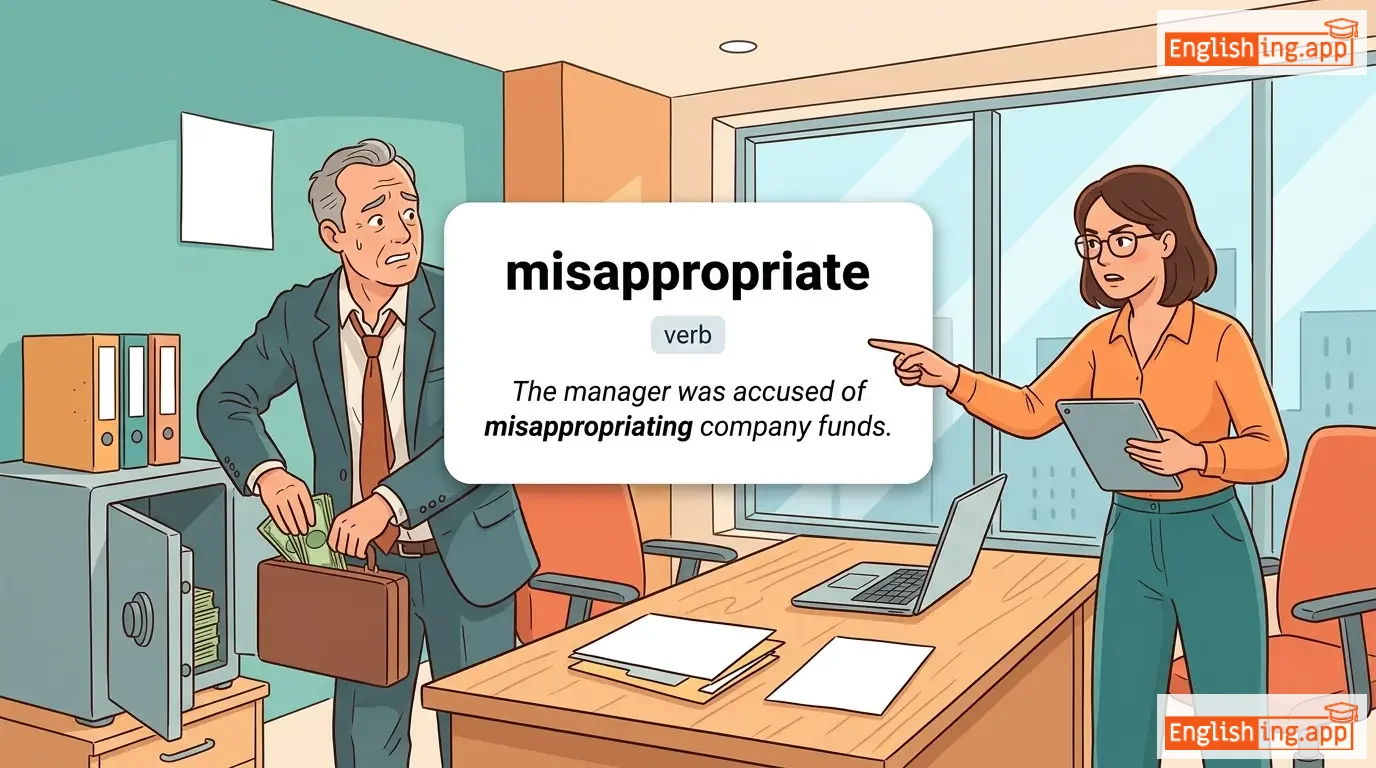
misappropriate definition card — visual illustration of the meaning
verb C2
/ˌmɪsəˈproʊprieɪt/
присваивать (prisyvayat)

to take or use something dishonestly, especially money or property, for one's own use

"The manager was accused of misappropriating company funds."

"Менеджера обвинили в присвоении средств компании." (Menedzhera obvinili v prisvoenii sredstv kompanii.)
verb C2
/ˌmɪs.əˈtrɪb.juːt/
неправильно приписывать (nepravil'no pripisyvat')

to incorrectly credit something, such as a work or remark, to the wrong person or source

"The quote was misattributed to Shakespeare."

"Цитата была ошибочно приписана Шекспиру." (Tsitata byla oshibochno pririsanna Shekspiru.)
noun C2
/mɪˌsɛdʒəˈneɪʃən/
межрасовые браки (mezhrasovyye braki)

the interbreeding of people considered to be of different racial types

"The law once prohibited miscegenation in many countries."

"Закон когда-то запрещал межрасовые браки в многих странах." (Zakon kogda-to zapreshchal mezhrasovyye braki v mnogikh stranakkh.)
noun C2
/ˈmɪsəleɪni/
смесь (smes)

A collection or mixture of various things.

"The book is a miscellany of essays and poems."

"Книга — это смесь эссе и стихотворений." (Kniga — eto smes' esse i stikhotvoreniy.)
noun C2
/ˌmɪsˈtʃæns/
несчастье (неудача) (mischance)

An unfortunate accident or event; bad luck.

"By mischance, he missed the last train home."

"По несчастью, он пропустил последний поезд домой." (Po neschastyu, on propustil posledniy poezd domoy.)
verb C2
/ˌmɪskənˈsiːv/
неправильно понять (nepravil'no ponyat')

To misunderstand or form an incorrect idea about something.

"He misconceived the purpose of the project."

"Он неверно понял цель проекта." (On neverno ponyal tsel' proyekta.)
verb C2
/ˌmɪskənˈstruː/
неправильно истолковать (nepravil'no istolkovat')

To interpret something wrongly or misunderstand the meaning.

"She misconstrued his silence as anger."

"Она неправильно истолковала его молчание как злость." (Ona nepravil'no istolkovala ego molchanie kak zlost'.)
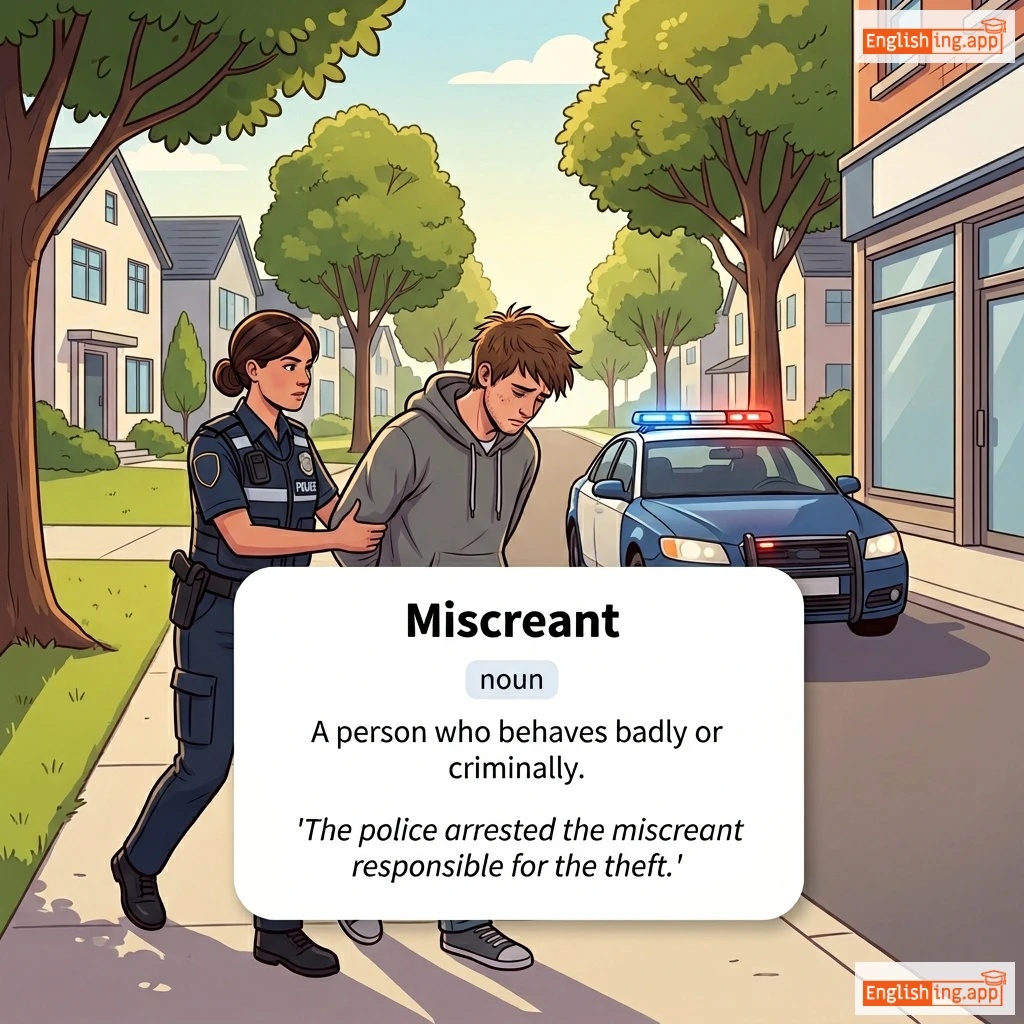
Miscreant definition card — visual illustration of the meaning
noun C2
/ˈmɪskriənt/
злодей (zlodéi)

A person who behaves badly or criminally.

"The police arrested the miscreant responsible for the theft."

"Полиция арестовала злодея, ответственного за кражу." (Politsiya arestovala zlodeya, otvetstvennogo za krazhu.)
verb C2
/ˌmɪsˈleɪ/
временно терять (vremenno teryat')

to lose something temporarily by putting it in the wrong place

"I must have mislaid my keys somewhere in the house."

"Должно быть, я временно потерял свои ключи где-то в доме." (Dolzhno byt', ya vremyenno poteryal svoi klyuchi gde-to v dome.)
noun C2
/ˌmɪsˈnoʊmər/
неправильное имя (nepravil'noe imya)

A wrong or inaccurate name or designation.

"Calling the tiny dog a 'giant' is a misnomer."

"Называть маленькую собаку 'гигантом' — это неправильное имя." (Nazyvat' malen'kuyu sobaku 'gigantom' — eto nepravil'noe imya.)