ভোকাবুলারিসমূহ

ইংরেজি শব্দের বাংলা অর্থ | English to Bangla Word Meaning Dictionary

adjective C2
/ˈɪnmoʊst/
最深的 (zui shen de)

Situated at the very heart or deepest part; most private or secret.

"She revealed her inmost thoughts to her closest friend."

"她向她最亲密的朋友透露了她最深的想法。" (Ta xiang ta zui qinmi de pengyou toulu le ta zui shen de xiangfa.)
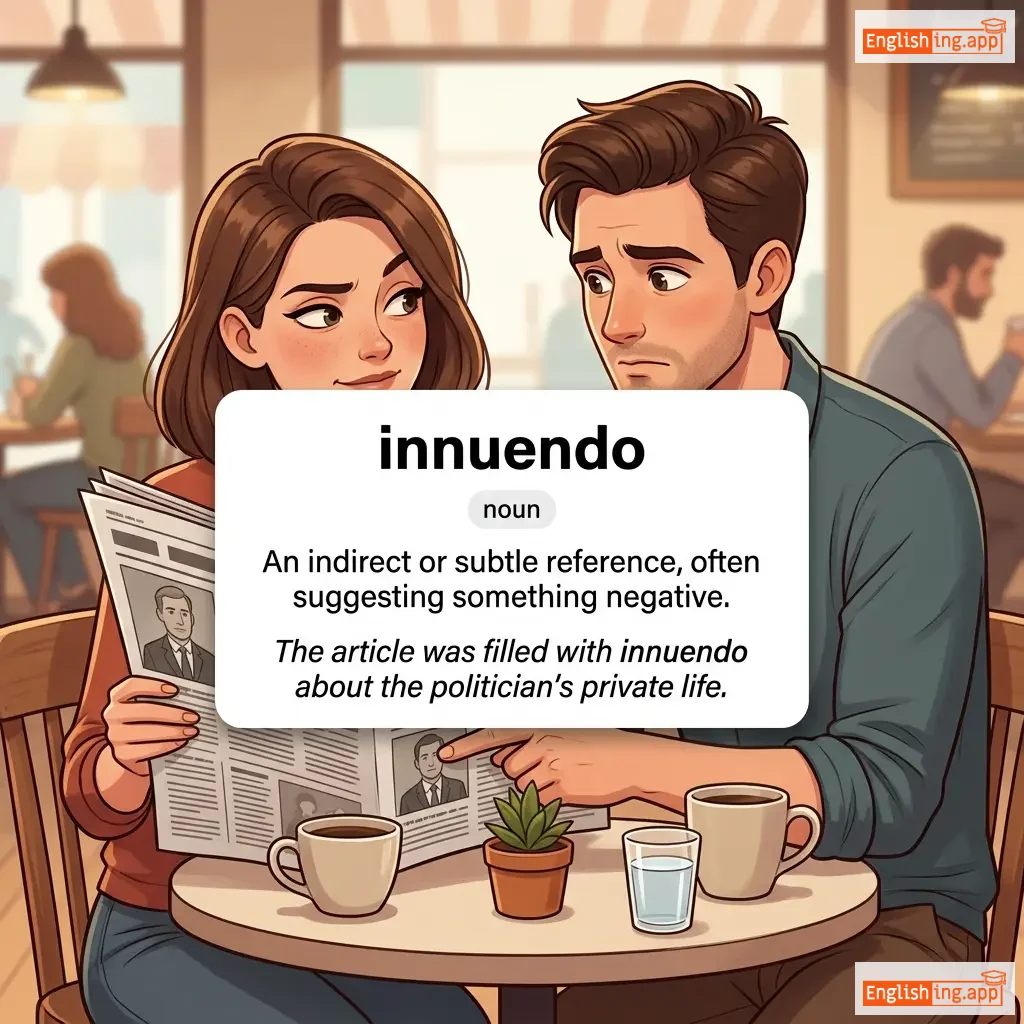
innuendo definition card — visual illustration of the meaning
noun C2
/ˌɪnjuˈɛndoʊ/
暗示 (anshi)

An indirect or subtle reference, often suggesting something negative.

"The article was filled with innuendo about the politician's private life."

"这篇文章充满了关于政治人物私人生活的暗示。" (Zhè piān wénzhāng chōngmǎnle guānyú zhèngzhì rénwù sīrén shēnghuó de ànshì.)
adjective C2
/ˌɪnˌɑːpərˈtuːn/
不合时宜的时刻 (bù hé shí yí de shí kè)

Happening at a bad or inconvenient time.

"His call came at the most inopportune moment."

"他的电话在最不合时宜的时刻打来。" (tā de diànhuà zài zuì bù hé shí yí de shí kè dǎ lái.)
noun C2
/ɪnˈkwɪzɪtər/
审问者 (shěnwèn zhě)

A person who asks many questions, often in an official or harsh manner.

"The inquisitor demanded detailed answers from the witness."

"审问者要求证人提供详细的答案。" (Shěnwèn zhě yāoqiú zhèngrén tígōng xiángxì de dá'àn.)
noun C2
/ˈɪnroʊd/
进展 (jinzhan)

An advance or significant progress, often at the expense of something else.

"The company made significant inroads into the mobile market."

"该公司在移动市场取得了显著进展。" (Gai gongsi zai yidong shichang qude le xian zhu jin zhan.)
adjective C2
/ˌɪnsəˈluːbriəs/
不健康 (bù jiànkāng)

Unhealthy or not conducive to well-being.

"They moved out of the insalubrious neighborhood for the sake of their health."

"他们为了健康搬出了不健康的社区" (Tāmen wèile jiànkāng bān chūle bù jiànkāng de shèqū)
adjective C2
/ɪnˈseɪʃiət/
无法满足 (wufa manzu)

impossible to satisfy; always wanting more

"He had an insatiate desire for power."

"他有一个无法满足的权力愿望。" (Ta you yige wufa manzu de quanli yuanwang.)
adjective C2
/ɪnˈskruːtəbl̩/
幸福 (xìngfú)

impossible to understand or interpret

"His inscrutable expression made it hard to know what he was thinking."

"她收到奖项时无法掩饰自己的幸福。" (Tā shōudào jiǎngxiàng shí wúfǎ yǎnshì zìjǐ de xìngfú.)
adjective C2
/ɪnˈsɛnseɪt/
无情的 (wu qing de)

lacking physical sensation or empathy; without feeling or sensitivity

"The dictator's insensate cruelty shocked the world."

"独裁者的无情残忍震惊了世界。" (Ducai zhe de wu qing canren zhenjing le shijie.)
adjective C2
/ɪnˈsɛnʃənt/
无感知的 (wú gǎnzhī de)

Lacking perception, consciousness, or sensation.

"The rock is an insentient object with no awareness."

"岩石是一个无感知的物体,没有意识。" (Yánshí shì yīgè wú gǎnzhī de wùtǐ, méiyǒu yìshí.)
noun C2
/ɪnˈsɪɡniə/
徽章 (huīzhāng)

A badge or symbol that shows rank, position, or membership.

"The soldier proudly wore the insignia of his regiment."

"士兵自豪地佩戴着他团的徽章。" (Shìbīng zìháo de pèidài zhe tā tuán de huīzhāng.)
insipid definition card — visual illustration of the meaning
adjective C2
/ɪnˈsɪpɪd/
乏味的 (fámèi de)

lacking flavor, interest, or excitement; dull

"The soup was insipid and needed more seasoning."

"汤无味,需要更多的调料。" (Tāng wúwèi, xūyào gèng duō de tiáoliào.)
noun C2
/ˈɪnsələns/
厚颜无耻 (hòu yán wú chǐ)

rude or disrespectful behavior

"The teacher was shocked by the student's insolence."

"老师对学生的厚颜无耻感到震惊。" (Lǎoshī duì xuéshēng de hòu yán wú chǐ gǎndào zhènjīng.)
adverb C2
/ˌɪnsəʊˈmʌtʃ/
如此 (ruci)

to such an extent

"He was insomuch tired that he could hardly stand."

"他累得几乎站不起来。" (Tā lèi dé jīhū zhàn bù qǐlái.)
noun C2
/ɪnˈsuːsiəns/
无忧无虑 (wú yōu wú lǜ)

Casual lack of concern; indifference.

"She carried herself with an air of insouciance, unbothered by the challenges ahead."

"她带着一副无忧无虑的样子走着,毫不担心前方的挑战。" (Tā dàizhe yī fù wú yōu wú lǜ de yàngzi zǒuzhe, háo bù dān xīn qián fāng de tiǎo zhàn.)
insouciant definition card — visual illustration of the meaning
adjective C2
/ɪnˈsuːsiənt/
无忧无虑 (wú yōu wú lǜ)

Showing a casual lack of concern; carefree.

"He gave an insouciant shrug and walked away."

"他无忧无虑地耸了耸肩,然后走开了。" (Tā wú yōu wú lǜ de sǒng le sǒng jiān, ránhòu zǒu kāi le.)
verb C2
/ɪnˈsteɪt/
任命 (rèn mìng)

To set up in position, office, or authority.

"The board decided to instate her as the new director."

"董事会决定任命她为新任总监。" (Dǒngshì huì juédìng rènmìng tā wéi xīnrèn zǒngjiān.)
noun C2
/ˌɪn.strəˈmɛn.təl.ɪst/
乐器演奏者 (yuèqì yǎnzòu zhě)

A person who plays a musical instrument.

"The instrumentalist played a beautiful solo on the violin."

"乐器演奏者在小提琴上演奏了一首美丽的独奏曲。" (Yuèqì yǎnzòu zhě zài xiǎotíqín shàng yǎnzòu le yī shǒu měilì de dúzòuqǔ.)
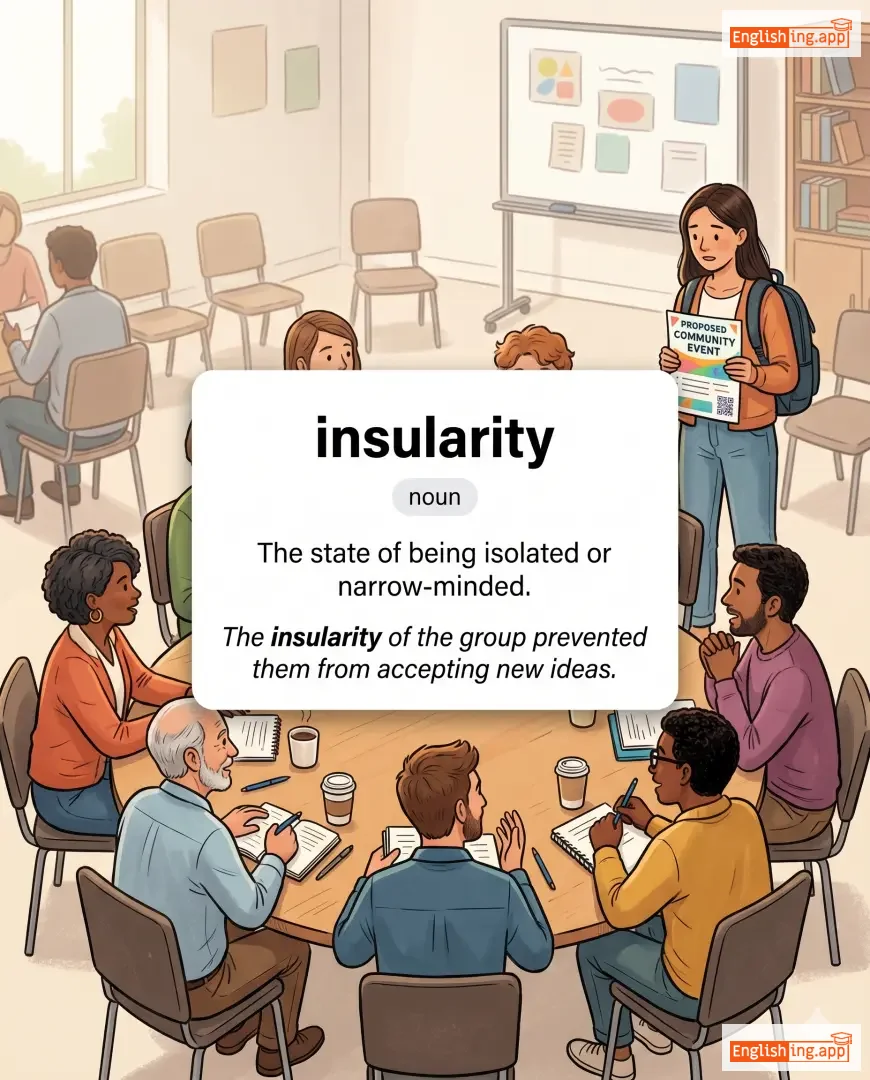
insularity definition card — visual illustration of the meaning
noun C2
/ˌɪnsjəˈlærəti/
岛屿性 (dǎoyǔ xìng)

The state of being isolated or narrow-minded.

"The insularity of the group prevented them from accepting new ideas."

"该小组的岛屿性使他们无法接受新的想法。" (Gāi xiǎozǔ de dǎoyǔ xìng shǐ tāmen wúfǎ jiēshòu xīn de xiǎngfǎ.)
insuperable definition card — visual illustration of the meaning
adjective C2
/ɪnˈsuːpərəbl/
不可逾越 (bukeyuyue)

Impossible to overcome or surpass.

"The team faced insuperable challenges during the expedition."

"团队在探险过程中面临了不可逾越的挑战。" (Tuandui zai tanxian guocheng zhong mianlin le bukeyuyue de tiaozhan.)
adjective C2
/ˌɪnsəˈpɔːrtəbl̩/
无法忍受的 (wufalirenxiu de)

Too extreme or difficult to be endured.

"The heat was insupportable during the long journey."

"长途旅行中,热度是无法忍受的。" (Changtu luxing zhong, reddu shi wufalirenxiu de.)
adjective C2
/ˌɪnsəˈprɛsəbl/
不可抑制的 (bù kě yì zhì de)

That cannot be suppressed or restrained.

"She had an insuppressible urge to laugh during the ceremony."

"她在仪式上有一种不可抑制的笑意。" (Tā zài yíshì shàng yǒu yī zhǒng bù kě yì zhì de xiàoyì.)
noun C2
/ˌɪnsəˈrɛkʃən/
起义 (qǐyì)

A violent uprising against an authority or government.

"The army was called in to suppress the insurrection."

"军队被召来镇压起义。" (Jūnduì bèi zhàolái zhènyā qǐyì.)
integrative diplomacy definition card — visual illustration of the meaning
noun C2
/ˈɪn.tɪ.ɡreɪ.tɪv dɪˈpləʊ.mə.si/
综合外交 (zonghe waijiao)

A diplomatic approach that seeks to combine or coordinate different elements, interests, or parties into a unified whole.

"Integrative diplomacy strengthens alliances."

"综合外交增强了联盟。" (Zonghe waijiao zengqiang le lianmeng.)
noun C2
/ɪnˈtɛɡ.jʊ.mənt/
外部覆盖物 (waibu fufeiwu)

A natural outer covering, such as skin, shell, or rind.

"The snake sheds its integument as it grows."

"蛇在生长过程中脱掉外部覆盖物。" (She zai shengchang guocheng zhong tuodiao waibu fufeiceng.)
noun C2
/ɪnˌtɛl.ɪˈdʒɛntsi.ə/
知识分子阶层 (zhīshi fènzǐ jiēcéng)

The group of people engaged in intellectual and cultural pursuits in a society.

"The intelligentsia played a key role in shaping public opinion."

"知识分子阶层在塑造公众舆论方面发挥了重要作用。" (Zhīshi fènzǐ jiēcéng zài sùzào gōngzhòng yúlùn fāhuīle zhòngyào zuòyòng.)
noun C2
/ɪnˈtɛmpərəns/
放纵 (fàngzòng)

Lack of moderation or self-control, especially with drinking or eating.

"His intemperance in drinking ruined his health."

"他的饮酒放纵毁了他的健康。" (tā de yǐnjiǔ fàngzòng huǐle tā de jiànkāng.)
adjective C2
/ɪnˈtɛmpərət/
失控的 (shikong de)

Lacking self-control; immoderate, especially in indulgence.

"The politician's intemperate remarks caused controversy."

"政治家的失控言论引发了争议。" (Zhengzhijia de shikong yanlun yinfa le zhengyi.)
noun C2
/ɪnˈtɛnʃən/
内涵 (neihan)

The internal content of a concept; the set of attributes implied by a word or phrase.

"The intension of the word 'dog' includes being a mammal and domesticated."

"'狗'这个词的内涵包括是哺乳动物和被驯养。" ('gou' zhe ge ci de neihan baokuo shi buru dongwu he bei xunyang.)
verb C2
/ɪnˈtɜːr/
埋葬 (mái zàng)

To bury a dead body in the ground.

"They decided to inter the soldier with full honors."

"他们决定以完全的荣誉埋葬那位士兵。" (Tāmen juédìng yǐ wánquán de róngyù máizàng nà wèi shìbīng.)
🕊️

intercede

verb C2
/ˌɪntərˈsiːd/

to act or plead on behalf of someone in difficulty or trouble; to intervene between parties to help resolve a dispute

"She interceded with the teacher to give her brother another chance."

noun C2
/ˌɪntərˈsɛʃən/
代祷 (dàidǎo)

the act of intervening or pleading on behalf of another person

"The prisoner was released due to the intercession of influential leaders."

"由于有影响力的领导人的代祷,囚犯被释放了。" (Yóuyú yǒu yǐngxiǎnglì de lǐngdǎo rén de dàidǎo, qiúfàn bèi shìfàng le.)
noun C2
/ˌɪntərˈsɛsər/
调解人 (tiaojieren)

a person who intervenes or pleads on behalf of another

"He acted as an intercessor to resolve the conflict between the two families."

"他作为调解人解决了两个家庭之间的冲突。" (Tā zuòwéi tiaojieren jiějuéle liǎng gè jiātíng zhī jiān de chōngtū.)
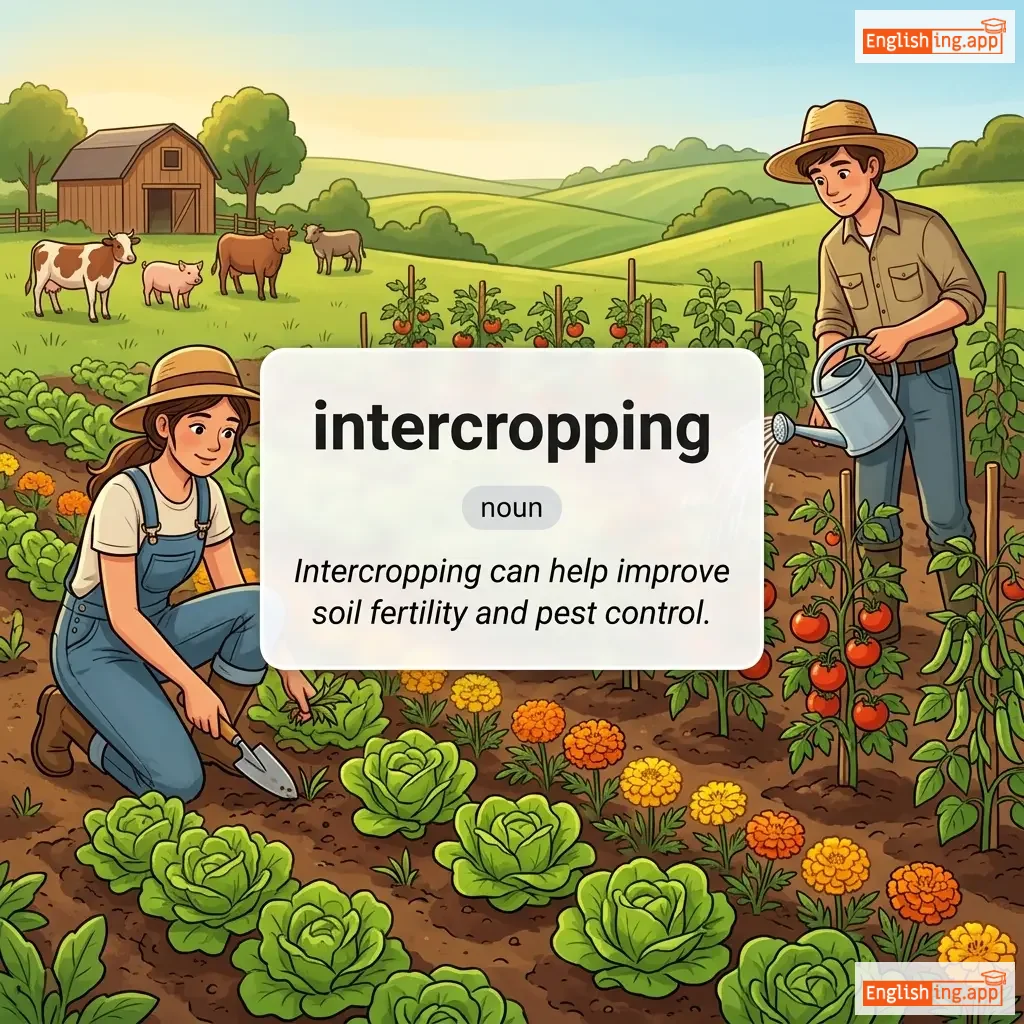
intercropping definition card — visual illustration of the meaning
noun C2
/ˈɪntəˌkrɒpɪŋ/
间作农业 (jianzuo nongye)

The agricultural practice of cultivating two or more crops simultaneously in the same field to maximize land use efficiency and improve soil health.

"Intercropping can help improve soil fertility and pest control."

"间作农业有助于改善土壤肥力和害虫控制。" (Jianzuo nongye you zhu yu gaishan turan feili he haichong kongzhi.)
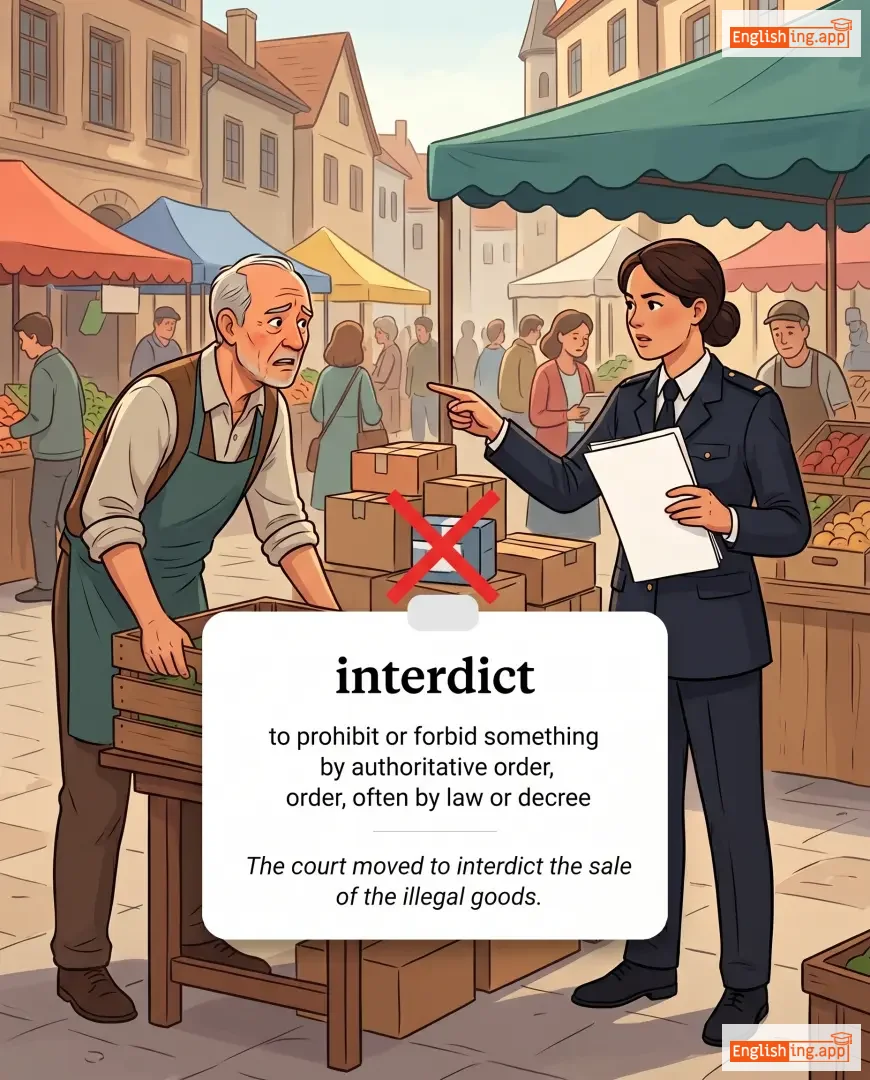
interdict definition card — visual illustration of the meaning
verb C2
/ˈɪntərˌdɪkt/
禁止 (jinzhi)

to prohibit or forbid something by authoritative order, often by law or decree

"The court moved to interdict the sale of the illegal goods."

"法院决定禁止销售非法商品。" (Fayuan jueding jinzhi xiaoshou feifa shangpin.)
verb C2
/ˌɪntərˈlɒk/
互锁 (hùsuǒ)

to fit or connect together securely so that two or more things are joined

"The gears interlock to ensure smooth movement of the machine."

"齿轮相互啮合,确保机器的平稳运行。" (Chǐlún xiānghù nièhé, quèbǎo jīqì de píngwěn yùnxíng.)
noun C2
/ˌɪntərˈlɒkjətər/
对话者 (duìhuà zhě)

a person who takes part in a conversation or dialogue

"She was a skilled interlocutor during the debate."

"她在辩论中是一个熟练的对话者。" (tā zài biànlùn zhōng shì yīgè shúliàn de duìhuà zhě.)
adjective C2
/ˌɪntərˈlɒkjətəri/
临时的 (linshide)

Given during the course of a legal action, not final but temporary or provisional.

"The judge issued an interlocutory order to maintain the status quo until the hearing."

"法官发布了临时命令,以保持听证会之前的现状。" (Faguan fabu le linshi mingling, yi baochi tingzhenghui zhiqian de xianzhuang.)
noun C2
/ˈɪntərˌloʊpər/
闯入者 (chuǎngrù zhě)

A person who becomes involved in a situation or place where they are not wanted.

"He felt like an interloper at the private family gathering."

"他在私人家庭聚会中感到像一个闯入者。" (Tā zài sīrén jiātíng jùhuì zhōng gǎndào xiàng yīgè chuǎngrù zhě.)
noun C2
/ɪnˈtɜːrmənt/
埋葬 (mái zàng)

The act of burying a dead body in a grave or tomb.

"The interment took place at the family cemetery."

"埋葬仪式在家庭墓地举行。" (Mái zàng yíshì zài jiātíng mùdì jǔxíng.)
verb C2
/ˌɪntərˈmɪt/
中断 (zhongduan)

To suspend or stop for a time; to pause intermittently.

"The rain would intermit and then start again."

"雨会暂停然后再开始。" (Yu hui zanting ranhou zai kaishi.)
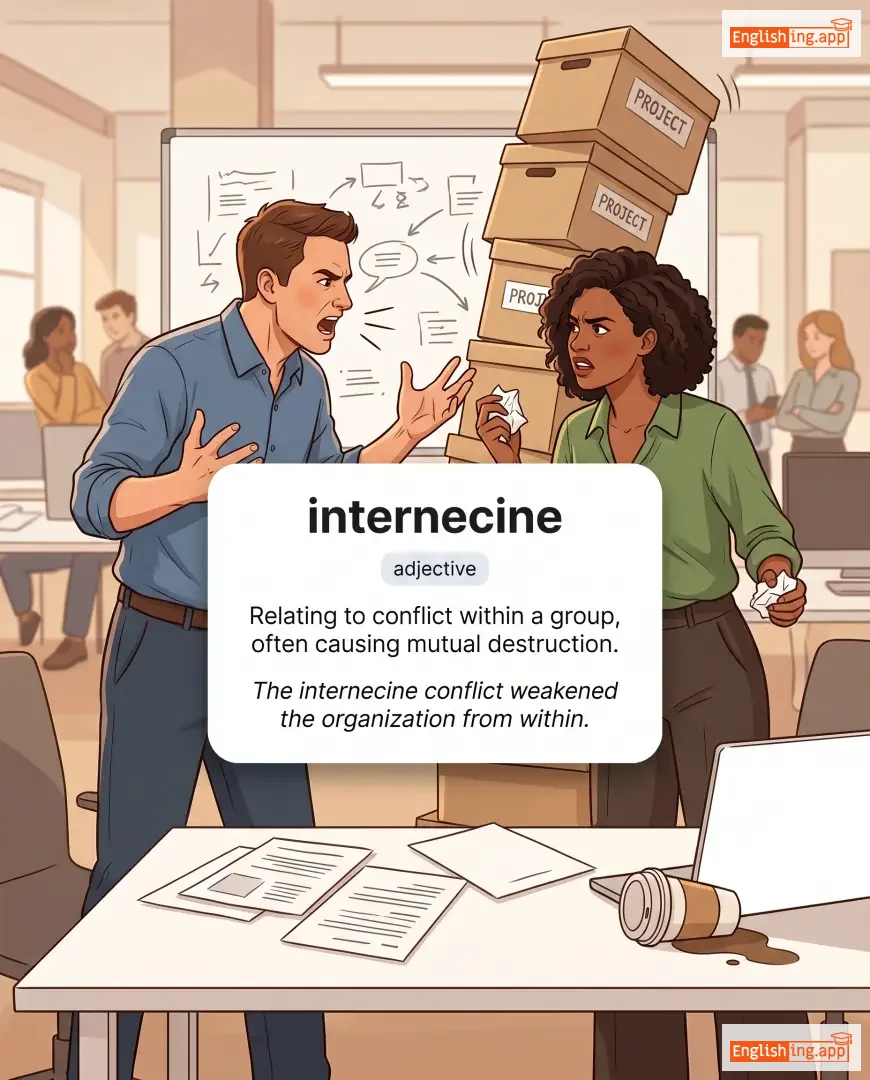
internecine definition card — visual illustration of the meaning
adjective C2
/ˌɪntərˈniːsaɪn/
内部冲突 (neibu chongtu)

Relating to conflict within a group, often causing mutual destruction.

"The internecine conflict weakened the organization from within."

"内部冲突削弱了组织内部的力量" (Neibu chongtu xueren le zuzhi neibu de liliang)
interpolate definition card — visual illustration of the meaning
verb C2
/ɪnˈtɜːrpəˌleɪt/
插入 (chārù)

To insert something, often words, into a text or conversation; to estimate values between known data points.

"The editor interpolated a missing paragraph into the manuscript."

"编辑在手稿中插入了一个缺失的段落。" (Biānjí zài shǒugǎo zhōng chārùle yīgè quēshī de duànluò.)
noun C2
/ɪnˌtɜːrpəˈleɪʃən/
插值 (chā zhí)

The act of inserting something into a text or estimating values within a sequence of data.

"The scientist used interpolation to predict the missing data points."

"科学家使用插值法来预测缺失的数据点。" (Kēxuéjiā shǐyòng chāzhí fǎ lái yùcè quēshī de shùjù diǎn.)
verb C2
/ˌɪntərˈpoʊz/

To place or insert between one thing and another; to intervene in a situation.

"He quickly interposed himself between the fighters to stop the quarrel."

noun C2
/ˌɪntərpəˈzɪʃən/
干预 (gānyù)

The act of intervening or coming between two things, often to influence or prevent an outcome.

"The manager’s interposition prevented a heated argument from escalating."

"经理的干预阻止了激烈争论的升级。" (Jīnglǐ de gānyù zǔzhǐle jīliè zhēnglùn de shēngjí.)
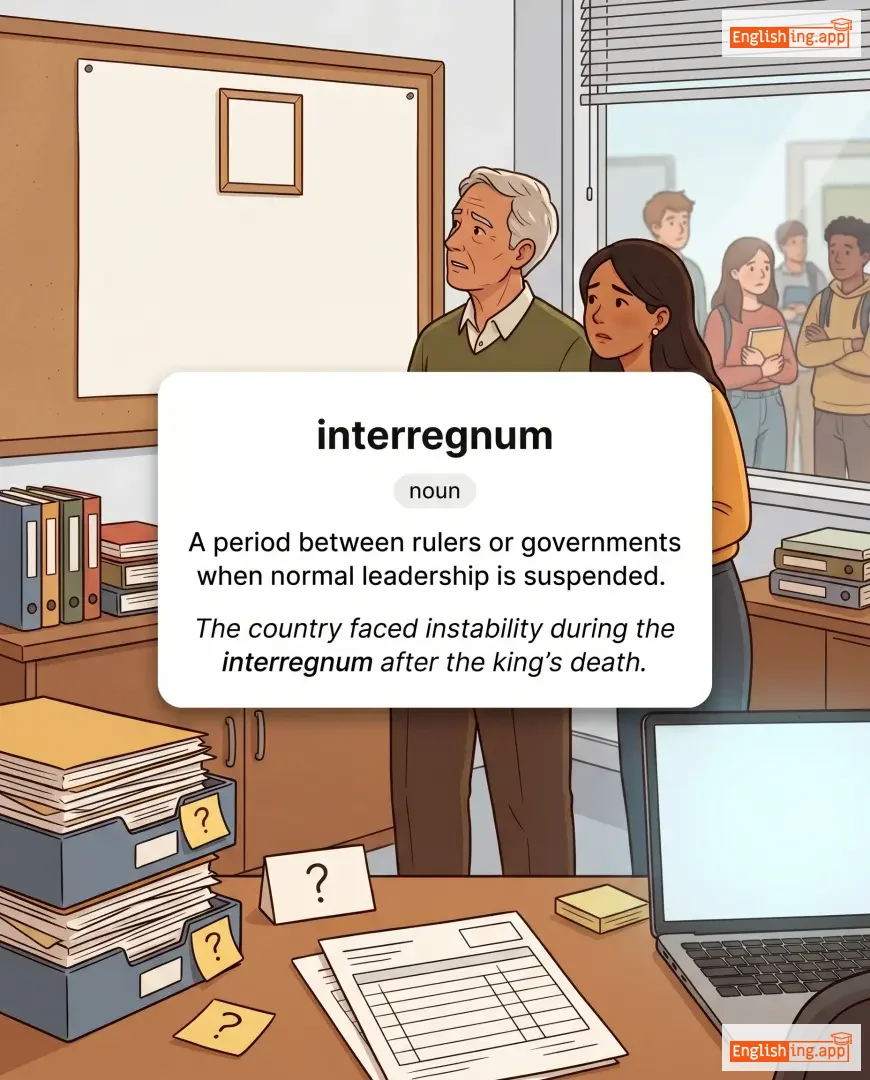
interregnum definition card — visual illustration of the meaning
noun C2
/ˌɪntərˈrɛɡnəm/
过渡期 (guòdùqī)

A period between rulers or governments when normal leadership is suspended.

"The country faced instability during the interregnum after the king’s death."

"在国王去世后的过渡期,该国经历了不稳定。" (Zài guówáng qùshì hòu de guòdùqī, gāi guó jīnglìle bù wěndìng.)
adjective C2
/ˌɪntəˈrɒɡətəri/
询问的 (xunwen de)

expressed in the form of a question; relating to questioning

"The lawyer’s interrogatory tone made the witness uncomfortable."

"律师的询问语气让证人感到不舒服。" (Lüshi de xunwen yuqi rang zhengren gandao bu shufu.)
noun C2
/ɪnˈtɜːrstɪs/
缝隙 (fengxi)

a small space that lies between things

"Light filtered through the narrow interstices of the wall."

"光线透过墙壁的狭窄缝隙照射进来。" (Guangxian touguo qiangbi de xiazhai fengxi zhaoshe jinlai.)
noun C2
/ˈɪntərˌveɪl/
沿河低洼的土地,通常肥沃而平坦 (yán hé dī wā de tǔdì, tōngcháng féi wò ér píng tǎn)

A low-lying tract of land along a river, usually fertile and flat.

"The farmers cultivated crops on the lush intervale by the river."

"农民在河边的肥沃土地上种植庄稼。" (Nóngmín zài hé biān de féi wò tǔdì shàng zhòngzhí zhuāngjià.)