ভোকাবুলারিসমূহ

ইংরেজি শব্দের বাংলা অর্থ | English to Bangla Word Meaning Dictionary

noun C2
/ˌɪnkænˈdɛsəns/
白炽光 (baichi guang)

the emission of light from a hot object; brilliance

"The incandescence of the candle filled the dark room."

"蜡烛的白炽光填满了黑暗的房间。" (Làzhú de báichì guāng tiánmǎnle hēi'àn de fángjiān.)
adjective C2
/ˌɪnkænˈdɛsənt/
白炽的 (baichi de)

emitting light as a result of being heated; extremely bright or passionate

"The incandescent lamp lit up the entire hall."

"白炽灯照亮了整个大厅。" (Baichi deng zhaoliang le zhengge dating.)
noun C2
/ˌɪnkænˈteɪʃən/
咒语 (zhòuyǔ)

a series of words used as a magic spell or charm

"The wizard chanted an incantation to summon the spirits."

"巫师念了一段咒语来召唤灵魂。" (Wūshī niànle yī duàn zhòuyǔ lái zhàohuàn línghún.)
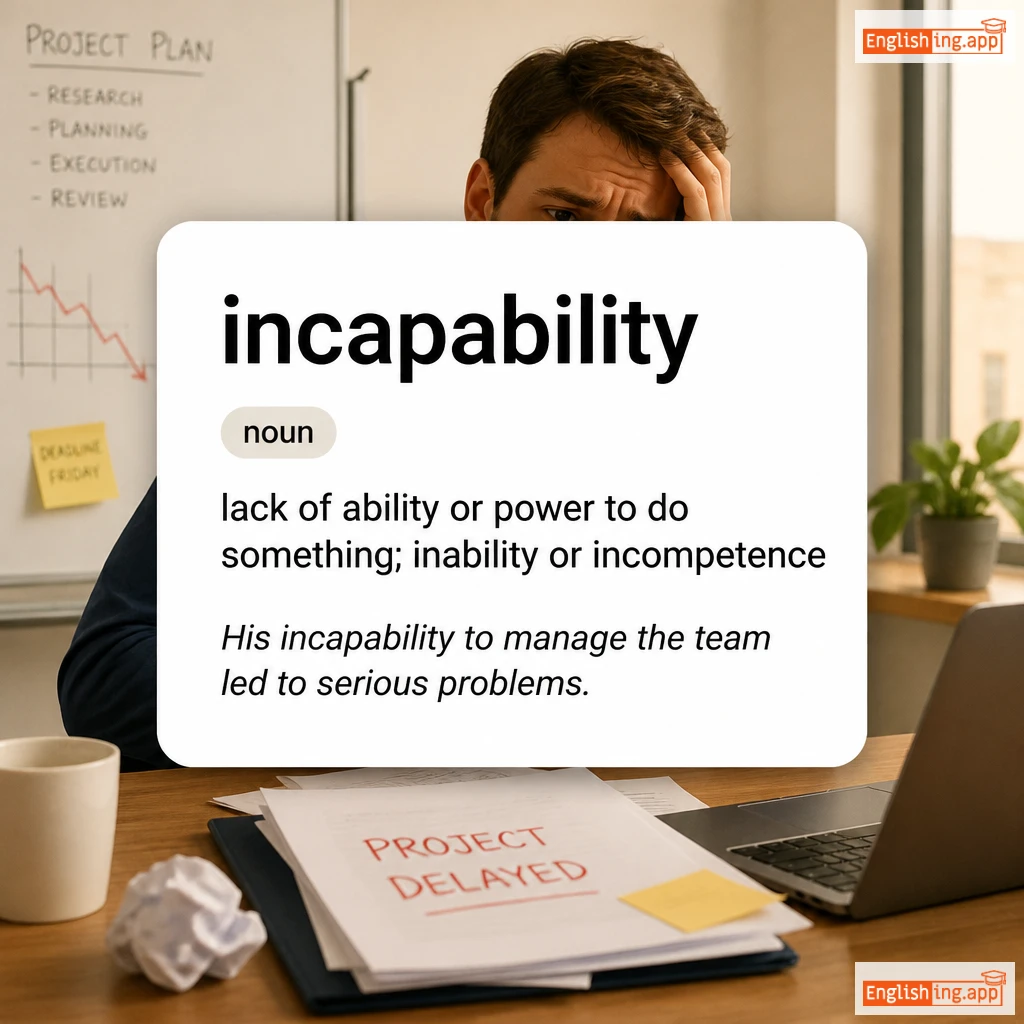
incapability definition card — visual illustration of the meaning
noun C2
/ˌɪnˌkeɪpəˈbɪləti/
无能力 (wu nengli)

lack of ability or power to do something; inability or incompetence

"His incapability to manage the team led to serious problems."

"他管理团队的无能力导致了严重的问题。" (ta guanli tuandui de wu nengli daozhile yanzhong de wenti)
verb C2
/ˌɪnkəˈpæsɪteɪt/
使无法运作 (shi wu fa yun zuo)

to deprive someone or something of the ability or strength to function

"The severe injury incapacitated the player for the rest of the season."

"重伤使球员在赛季剩余的时间内无法参赛。" (Zhong shang shi qiu yuan zai sai ji sheng yu de shi jian nei wu fa can sai.)
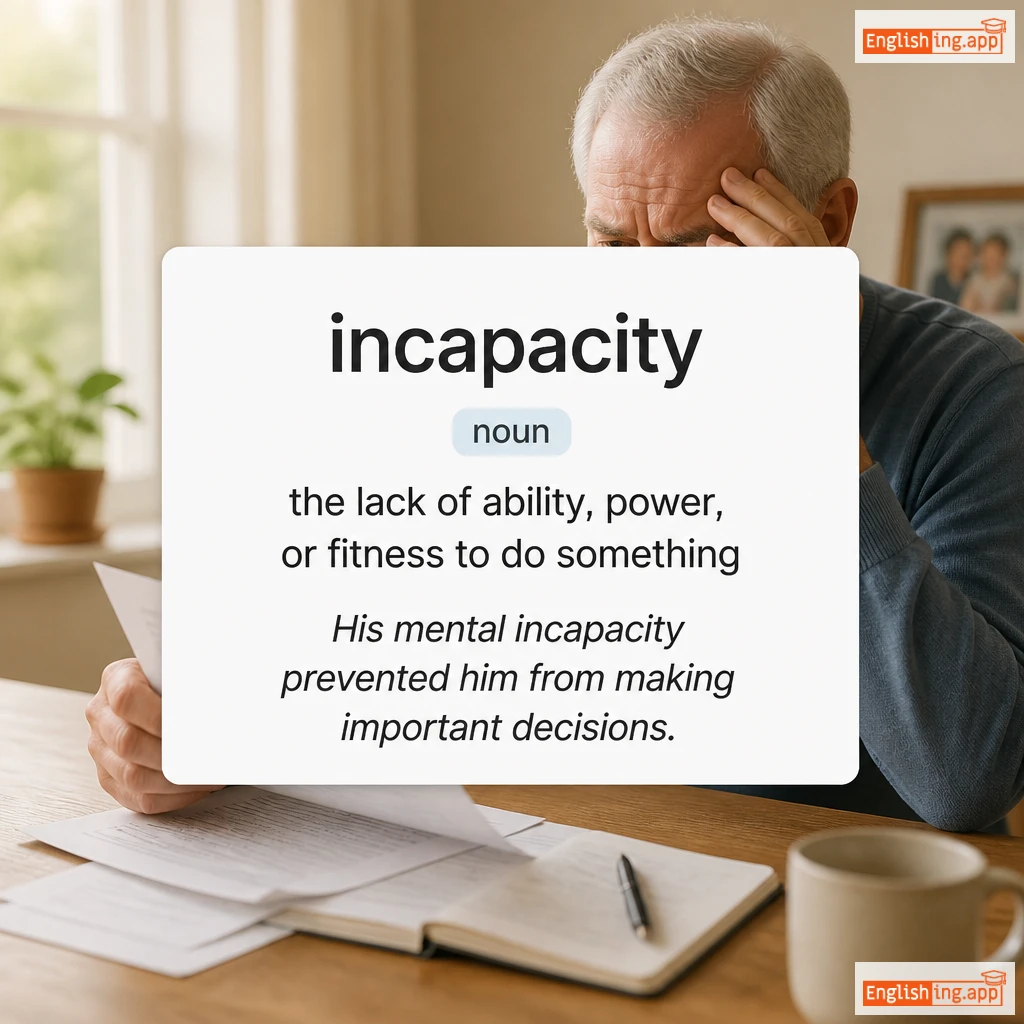
incapacity definition card — visual illustration of the meaning
noun C2
/ˌɪnkəˈpæsəti/
无能 (wú néng)

the lack of ability, power, or fitness to do something

"His mental incapacity prevented him from making important decisions."

"他的心理无能使他无法做出重要决策。" (Tā de xīnlǐ wú néng shǐ tā wú fǎ zuò chū zhòng yào jué cè.)
adjective/noun C2
/ɪnˈkɑːrnədiːn/
深红色 (shen hong se)

a bright crimson or pinkish-red color

"The sky turned incarnadine at sunset."

"夕阳下天空变成了深红色。" (Xiyangxia tiānkōng biàn chéngle shēn hóng sè.)
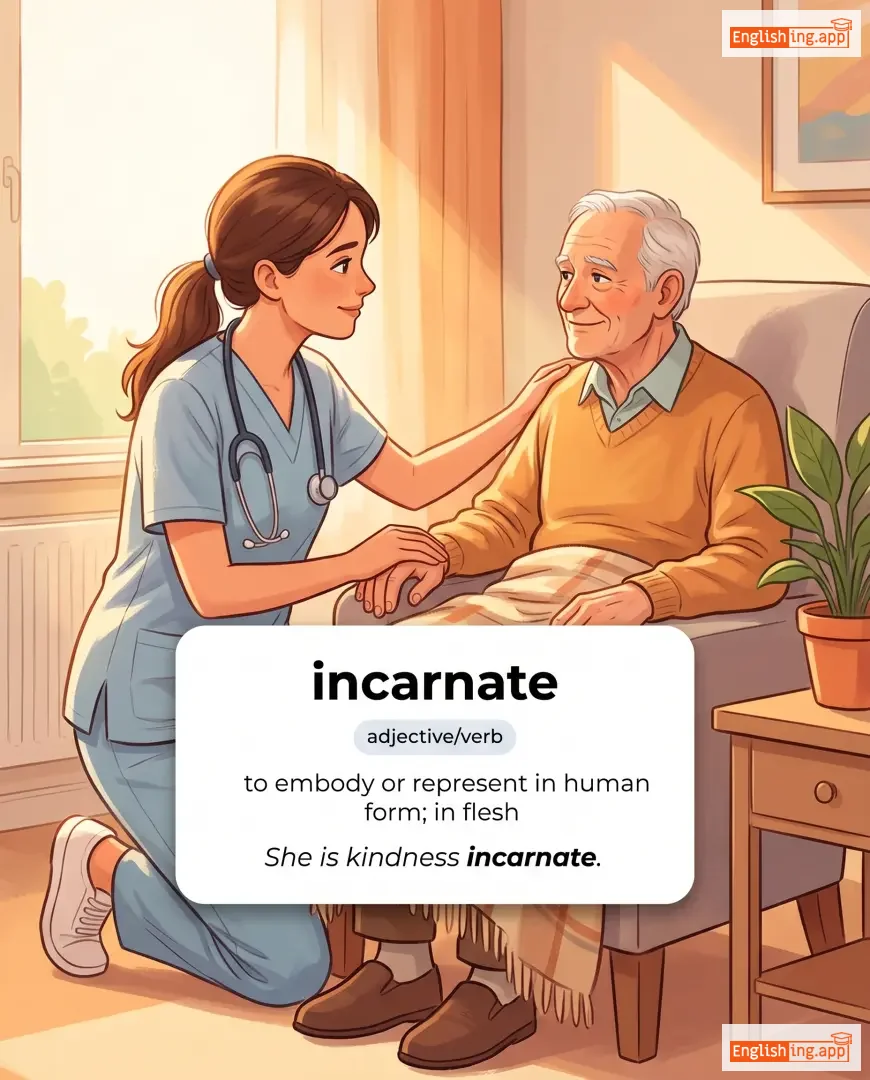
incarnate definition card — visual illustration of the meaning
adjective/verb C2
/ɪnˈkɑːrneɪt/
化身 (huàshēn)

to embody or represent in human form; in flesh

"She is kindness incarnate."

"她是善良的化身。" (Tā shì shànliáng de huàshēn.)
adjective C2
/ɪnˈsɛndiˌɛri/
煽动性的 / 挑衅的 (shāndòng xìng de / tiǎoxìn de)

designed to cause fires or stir up conflict

"The politician’s incendiary remarks angered the crowd."

"政治家的挑衅性言论激怒了人群。" (Zhèngzhìjiā de tiǎoxìn xìng yánlùn jī nù le rénqún.)
adjective C2
/ɪnˈsɛptɪv/
初始 (chushi)

Relating to or marking the beginning or initial stage of something.

"The inceptive phase of the project was marked by enthusiastic planning."

"项目的初始阶段是通过充满热情的规划来标志的。" (Xiangmu de chushi jieduan shi tongguo chongman reqing de guihua lai biaozhi de.)
adverb C2
/ˈɪntʃmiːl/
逐渐 (zhújiàn)

Gradually, little by little.

"The old castle fell inchmeal into ruin."

"那座古老的城堡逐渐变成废墟。" (Nà zuò gǔlǎo de chéngbǎo zhújiàn biàn chéng fèixū.)
inchoate definition card — visual illustration of the meaning
adjective C2
/ɪnˈkoʊ.ɪt/ or /ɪnˈkoʊ.eɪt/
未完成的 (wei wancheng de)

Just begun and not fully formed; rudimentary.

"His inchoate ideas needed more research to be developed."

"他的未完成的想法需要更多的研究才能发展。" (Tā de wèi wánchéng de xiǎngfǎ xūyào gèng duō de yánjiū cáinéng fāzhǎn.)
adjective C2
/ɪnˈkoʊətɪv/
初步的 (chubude)

relating to the beginning of something; in an initial stage

"The poet used inchoative expressions to depict the dawn of creation."

"诗人使用了初步的表达方式来描绘创世之初。" (Shiren shiyongle chubude de biaodafangshi lai miaohui chuangshi zhi chu.)
verb C2
/ɪnˈsɪnəˌreɪt/
焚烧 (fén shāo)

to burn something completely until it is reduced to ashes

"The city decided to incinerate the medical waste for safety."

"城市决定为安全起见销毁医疗废物。" (Chéngshì juédìng wèi ānquán qǐjiàn xiāohuǐ yīliáo fèiwù.)
noun C2
/ɪnˈsɪpiəns/
开始 (kaishi)

the beginning or initial stage of something

"The project was still in its incipience when funding was approved."

"当资金获得批准时,项目仍处于其开始阶段。" (Dang zijin huode pizhun shi, xiangmu reng chu yu qi kaishi jieduan.)
adjective C2
/ɪnˈsɪpiənt/
初期的 (chūqī de)

in an initial stage; beginning to develop

"The incipient storm made the sky turn dark and heavy."

"初期的风暴使天空变得阴暗而沉重。" (Chūqī de fēngbào shǐ tiānkōng biàn dé yīn'àn ér chénzhòng.)
noun C2
/ɪnˈsaɪzər/
切牙 (qie ya)

a narrow-edged tooth at the front of the mouth, adapted for cutting

"The dentist noted that his upper left incisor was chipped."

"牙医注意到他的上左切牙裂开了。" (Ya yi zhuyi dao ta de shang zuo qie ya lie kai le.)
adjective C2
/ɪnˈklɛmɛnt/
恶劣天气 (è liè tiān qì)

unpleasantly cold, wet, or stormy (usually weather)

"The match was canceled due to inclement weather."

"比赛因恶劣天气被取消了。" (Bǐ sài yīn è liè tiān qì bèi qǔ xiāo le.)
adjective C2
/ˌɪnkoʊˈɜːrsəbl̩/
无法强迫的 (wúfǎ qiángpò de)

Not capable of being forced, compelled, or restrained.

"Her incoercible spirit inspired others to fight for justice."

"她那无法强迫的精神激励了其他人争取正义。" (Tā nà wúfǎ qiángpò de jīngshén jīlì le qítārén zhēngqǔ zhèngyì.)
adjective C2
/ɪnˈkɑːdʒɪtənt/
缺乏思考 (quē fá sī kǎo)

Lacking thought; inconsiderate or thoughtless.

"It was incogitant of him to make such a rude comment."

"他做出如此粗鲁的评论是缺乏思考的。" (Tā zuòchū rúcǐ cūlǔ de pínglùn shì quē fá sī kǎo de.)
adjective C2
/ˌɪnkəmˈbʌstəbl/
不燃烧 (bu ranshao)

Not capable of catching fire or burning.

"This material is incombustible and safe for construction."

"这种材料是防火的,适合建筑使用。" (Zhè zhǒng cáiliào shì fánghuǒ de, shìhé jiànzhú shǐyòng.)
adjective C2
/ˌɪnkəˈməʊdiəs/
不舒服的 (bù shū fú de)

Uncomfortably small, cramped, or inconvenient.

"We had to stay in an incommodious room during the trip."

"我们在旅行期间不得不住在一个不舒服的房间里。" (Wǒmen zài lǚxíng qījiān bùdébù zhù zài yīgè bù shūfú de fángjiān lǐ.)
adjective C2
/ˌɪnkəmˈprɛsəbl/
不可压缩 (bù kě yā suō)

Not able to be pressed or squeezed into a smaller space.

"Liquids are generally considered incompressible."

"液体通常被认为是不可压缩的。" (yètǐ tōng cháng bèi rèn wéi shì bù kě yā suō de.)
adjective C2
/ɪnˈkɒŋɡruənt/
不一致的 (bù yīzhì de)

Not in harmony or keeping with the surroundings or other aspects.

"His casual outfit looked incongruent at the formal dinner."

"他穿的休闲装在正式晚宴上显得不一致。" (Tā chuān de xiūxián zhuāng zài zhèngshì wǎn yàn shàng xiǎndé bù yīzhì.)
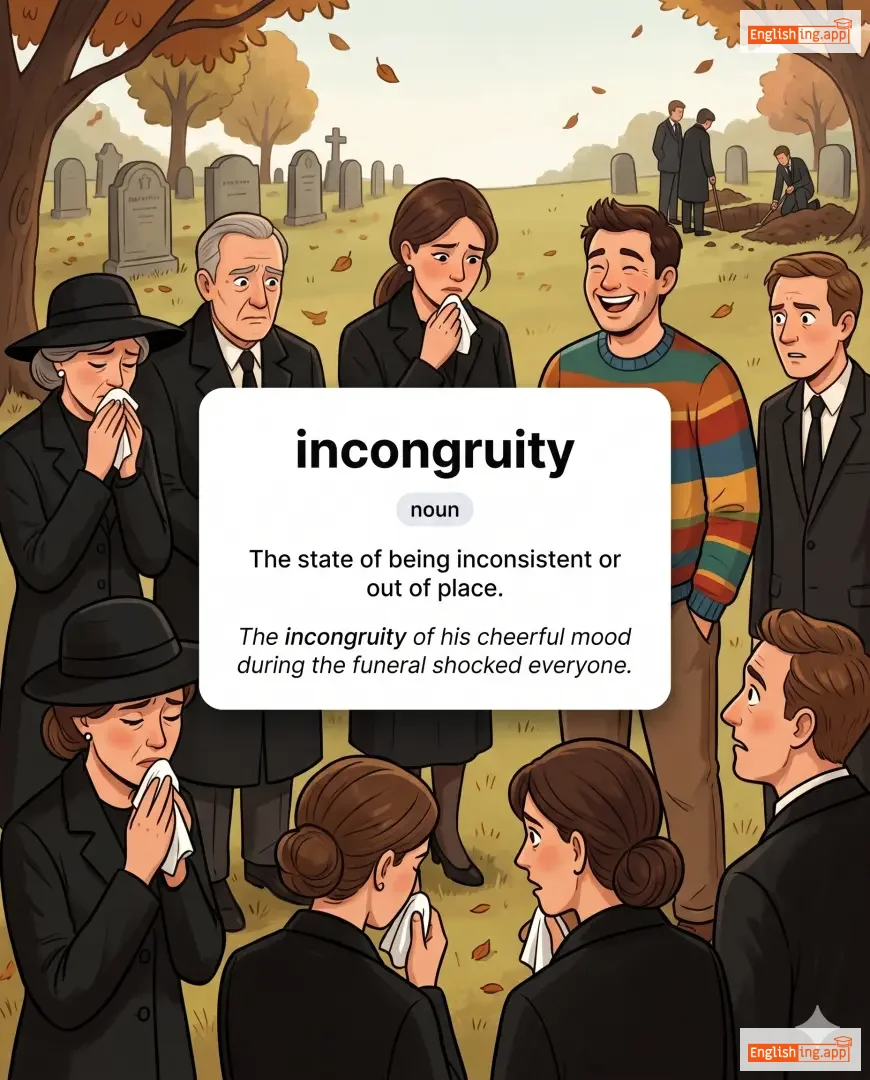
incongruity definition card — visual illustration of the meaning
noun C2
/ˌɪnkənˈɡruːəti/
不一致 (bù yīzhì)

The state of being inconsistent or out of place.

"The incongruity of his cheerful mood during the funeral shocked everyone."

"在葬礼上,他愉快的心情与情境的不一致让所有人都震惊了。" (Zài zànglǐ shàng, tā yúkuài de xīnqíng yǔ qíngjìng de bù yīzhì ràng suǒyǒu rén dōu zhènjīngle.)
adjective C2
/ˌɪnkənˈsɪdərəbl/
微不足道 (weibu zhu dao)

Too small or unimportant to be worth considering.

"The donation was not inconsiderable, though smaller than expected."

"这笔捐款并不微不足道,尽管比预期的小。" (Zhe bi juan kuan bing bu wei bu zhu dao, jin guan bi yuqi de xiao.)
noun C2
/ɪnˈkɒnstənsi/
不稳定性 (bù wěndìng xìng)

The quality of changing frequently or being unreliable.

"The inconstancy of the weather makes planning difficult."

"天气的不稳定性使得规划变得困难。" (Tiānqì de bù wěndìng xìng shǐdé guīhuà biàndé kùnnán.)
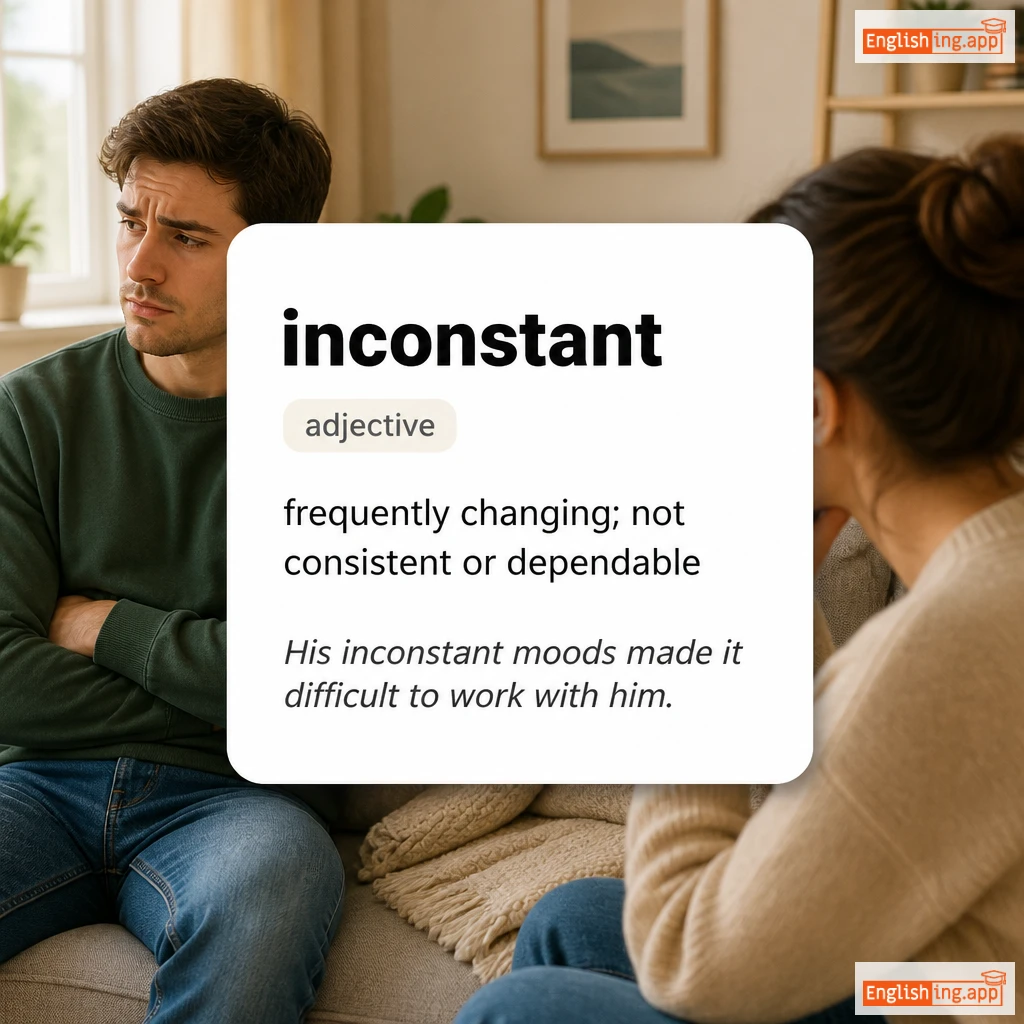
inconstant definition card — visual illustration of the meaning
adjective C2
/ɪnˈkɒnstənt/
不稳定的 (bù wěndìng de)

frequently changing; not consistent or dependable

"His inconstant moods made it difficult to work with him."

"他的情绪不稳定使得与他合作变得困难。" (Tā de qíngxù bù wěndìng shǐdé yǔ tā hézuò biàndé kùnnán.)
adjective C2
/ɪnˈkɒntɪnənt/
失禁 (shī jìn)

lacking control over urination or defecation; lacking self-restraint

"The patient was incontinent after surgery."

"病人在手术后失禁。" (Bìngrén zài shǒushù hòu shī jìn.)
adjective C2
/ˌɪnkɒntrəˈvɜːtəbl/
不可否认 (bù kě fǒu rèn)

impossible to deny or dispute; unquestionable

"The evidence was incontrovertible and proved his innocence."

"证据是不可否认的,并证明了他的清白。" (Zhèngjù shì bù kě fǒu rèn de, bìng zhèngmíngle tā de qīngbái.)
adjective C2
/ˌɪnkɔːrˈpɔːriəl/
无形的 (wuxing de)

lacking a physical body; not composed of matter; intangible

"Ghosts are often described as incorporeal beings."

"鬼魂常被描述为无形的存在。" (Guǐhún cháng bèi miáoshù wéi wúxíng de cúnzài.)
adjective C2
/ɪnˈkɒrɪdʒəbəl/
无法纠正的 (wúfǎ jiūzhèng de)

incapable of being corrected, improved, or reformed

"He is an incorrigible optimist who never loses hope."

"他是一个无法纠正的乐观主义者,从不放弃希望。" (Tā shì yīgè wúfǎ jiūzhèng de lèguān zhǔyì zhě, cóng bù fàngqì xīwàng.)
noun C2
/ˌɪnkrɪˈdjuːləti/
怀疑 (huaiyi)

the state of being unwilling or unable to believe something

"She looked at him with incredulity after hearing the strange story."

"在听到那个奇怪的故事后,她带着怀疑看着他。" (Zai tingdao nage qiguai de gushi hou, ta daizhe huaiyi kanzhe ta.)
noun C2
/ˌɪnkrʌˈsteɪʃən/
外壳 (wai ke)

a crust or hard coating formed on the surface of something

"The old pipes were blocked due to heavy incrustation of minerals."

"由于矿物质的重积附,旧管道被堵塞了。" (Youyu kuangwuzhi de zhong jifu, jiu guandao bei dushile.)
noun C2
/ˈɪŋkjʊbəs/
恶梦般的负担 (èmèng bān de fùdān)

An oppressive or nightmarish burden; in folklore, an evil spirit that lies upon sleeping people.

"Debt became an incubus that weighed heavily on the family."

"债务成了一个恶梦般的负担,沉重地压在这个家庭上。" (Zhàiwù chéngle yī gè è mèng bān de fù dān, chénzhòng de yā zài zhège jiātíng shàng.)
inculcate definition card — visual illustration of the meaning
verb C2
/ˈɪŋkʌlkeɪt/
灌输 (guànshū)

To teach or instill an idea, attitude, or habit persistently.

"Parents try to inculcate good manners in their children."

"父母尝试在孩子们身上灌输良好的行为举止。" (Fùmǔ chángshì zài háizimen shēnshang guànshū liánghǎo de xíngwéi jǔzhǐ.)
verb C2
/ˈɪŋkʌlpeɪt/
指责 (zhǐzé)

To blame or accuse someone of wrongdoing.

"The evidence seemed to inculpate the suspect in the crime."

"证据似乎将嫌疑犯牵连到这起犯罪中。" (Zhèngjù shìhū jiāng xiányí fàn qiānlián dào zhè qǐ fànzuì zhōng.)
adjective C2
/ɪnˈdɛkərəs/
不得体 (bùdétǐ)

Not in keeping with good taste and propriety; improper.

"His indecorous behavior shocked the audience."

"他的不得体行为让观众震惊。" (Tā de bùdétǐ xíngwéi ràng guānzhòng zhènjīng.)
adjective C2
/ˌɪndɪˈfætɪɡəbl̩/
不知疲倦 (bù zhī pījuàn)

persisting tirelessly; incapable of being fatigued

"Her indefatigable spirit kept the team motivated during the long project."

"她那不知疲倦的精神在漫长的项目中激励着团队。" (tā nà bù zhī pījuàn de jīngshén zài màncháng de xiàngmù zhōng jīlì zhe tuánduì.)
verb C2
/ɪnˈdɛmnɪfaɪ/

to compensate someone for harm or loss; to secure against future damage or cost

"The insurance company agreed to indemnify the client for the damages."

noun C2
/ˌɪndɛnˈteɪʃən/
缩进 (suō jìn)

A space left at the beginning of a line of text; a notch or deep recess on a surface.

"The teacher asked the students to use proper indentation in their essays."

"老师要求学生在他们的论文中使用正确的缩进。" (Lǎoshī yāoqiú xuéshēng zài tāmen de lùnwén zhōng shǐyòng zhèngquè de suōjìn.)
noun C2
/ɪnˈdɛntʃər/

A formal legal agreement, contract, or document, often relating to work or service.

"In the 18th century, many workers came under indenture to work overseas."

indeterminate definition card — visual illustration of the meaning
adjective C2
/ˌɪndɪˈtɜːrmənət/
不确定 (bu que ding)

Not exactly known, defined, or established; vague or uncertain.

"The project was delayed for an indeterminate amount of time."

"项目因不确定的时间被推迟。" (Xiangmu yin bu queding de shijian bei tuichi.)
noun C2
/ˈɪndɪkənt/
指示物 (zhǐshìwù)

Something that indicates or points to a fact or condition.

"High fever is often an indicant of infection."

"高烧通常是感染的指示物。" (Gāo shāo tōngcháng shì gǎnrǎn de zhǐshìwù.)
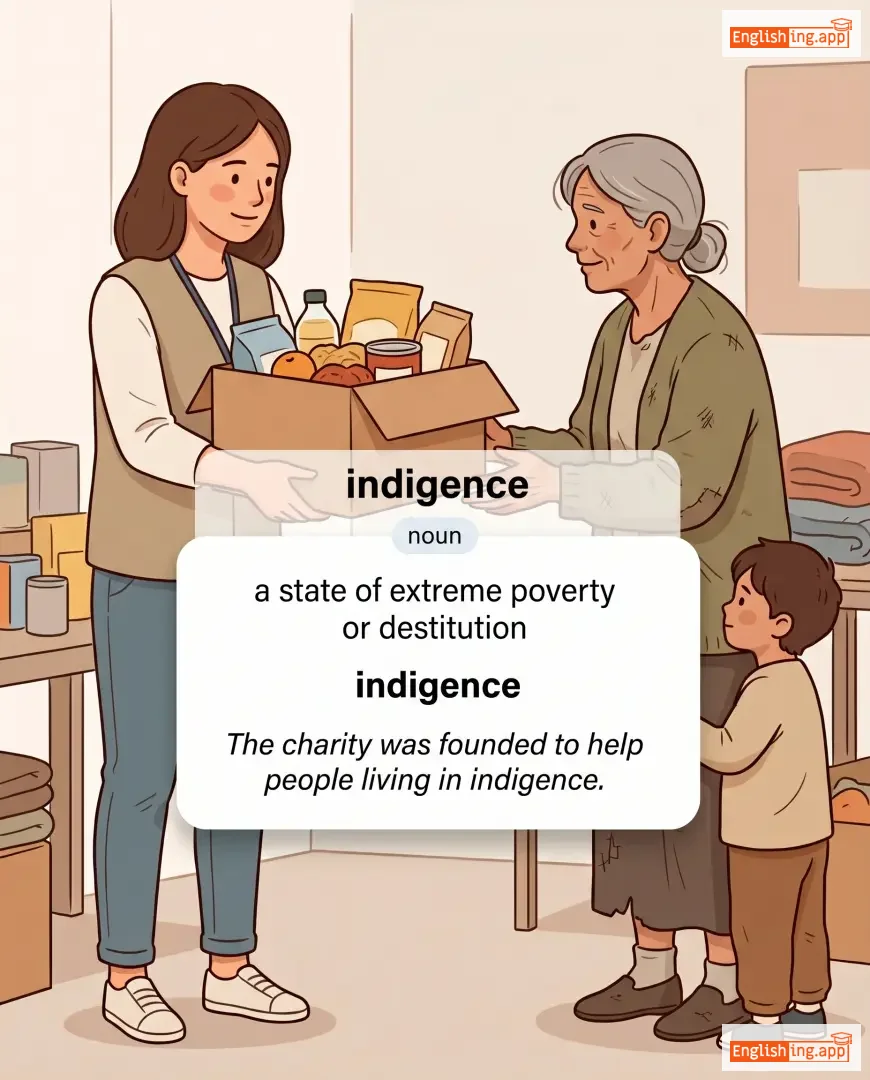
indigence definition card — visual illustration of the meaning
noun C2
/ˈɪn.dɪ.dʒəns/
贫困 (pínkùn)

a state of extreme poverty or destitution

"The charity was founded to help people living in indigence."

"这个慈善组织成立是为了帮助生活在贫困中的人们。" (Zhège cìshàn zǔzhī chénglì shì wèile bāngzhù shēnghuó zài pínkùn zhōng de rénmen.)
adjective C2
/ˈɪn.dɪ.dʒənt/
贫困 (pínkùn)

lacking the necessities of life due to poverty; very poor

"The hospital offers free care to indigent patients."

"医院为贫困患者提供免费护理。" (Yīyuàn wèi pínkùn huànzhě tígōng miǎnfèi hùlǐ.)
adjective C2
/ˌɪn.daɪˈdʒes.tə.bəl/
难以消化 (nán yǐ xiāo huà)

difficult or impossible to digest; hard to accept or understand

"The report was so long and detailed that it became almost indigestible."

"报告如此长且详细,以至于几乎变得难以消化。" (Baogao ruci chang qie xiangxi, yi zhi yu jihu biande nán yǐ xiāo huà.)
adjective C2
/ˌɪndɪˈsɜːrnəbl/
难以察觉的 (nanyi chaju de)

Impossible or difficult to see, notice, or distinguish.

"The difference between the two shades was almost indiscernible."

"这两种色调之间的差异几乎难以察觉。" (Zhe liang zhong se tiao zhi jian de chayi ji hu nanyi chaju.)
adjective C2
/ˌɪndɪˈsɒljʊbl/
不可分割的 (Bù kě fēngē de)

Unable to be destroyed, broken, or dissolved.

"Marriage was once considered an indissoluble bond."

"婚姻曾被视为不可分割的纽带。" (Hūnyīn céng bèi shì wéi bù kě fēngē de niǔdài.)
verb C2
/ɪnˈdaɪt/
创作 (chuangzuo)

To write or compose (literary or formal works).

"The poet indited a heartfelt sonnet."

"诗人创作了一首真挚的十四行诗。" (Shiren chuangzuo le yishou zhenzhi de shishixing shi.)