ভোকাবুলারিসমূহ

ইংরেজি শব্দের বাংলা অর্থ | English to Bangla Word Meaning Dictionary

noun C2
/ˈhen.ə/
हिना (hina)

a reddish-brown dye made from the powdered leaves of a tropical shrub, used to color hair and decorate skin

"The bride's hands were beautifully decorated with intricate henna patterns for her wedding ceremony."

"दुल्हन के हाथ उसकी शादी की रस्म के लिए जटिल हिना पैटर्न से सजे हुए थे।" (dulhan ke haath uski shaadi ki rasam ke liye jatil hina pattern se saje hue the.)
verb C2
/ˈhɛnˌpɛk/
पत्नी द्वारा लगातार आलोचना या दबाव डालने की स्थिति (patni dvara lagatar aalochana ya dabav dalne ki sthiti)

To continually criticize, nag, or dominate (especially a husband).

"He felt henpecked by his overly controlling wife."

"वह अपनी अत्यधिक नियंत्रणकारी पत्नी द्वारा बार-बार ताने मारने से परेशान था।" (vah apni atyadhik niyontrankari patni dvara baar-baar taane maarne se pareshan tha.)
noun C2
/ˈhɛptəˌɡɒn/
सप्तभुज (saptbhuj)

A polygon with seven sides and seven angles.

"The math teacher drew a heptagon on the board."

"गणित के शिक्षक ने बोर्ड पर एक सप्तभुज खींचा।" (Ganit ke shikshak ne board par ek saptbhuj kheenchha.)
noun C2
/ˈhɛptɑːrki/
सप्तशासन (saptashasan)

A group of seven rulers or governments, especially the seven Anglo-Saxon kingdoms in early England.

"The history book described the heptarchy of Anglo-Saxon England."

"इतिहास की किताब में एंग्लो-सैक्सन इंग्लैंड के सप्तशासन का विवरण दिया गया था।" (Itihas ki kitaab mein Anglo-Saxon England ke saptashasan ka vivaran diya gaya tha.)
adjective C2
/hɜːrˈbeɪʃəs/
हर्बेसियस (herbesiyas)

Relating to or resembling herbs; plants with soft, non-woody stems.

"The garden was filled with herbaceous plants that thrived in the summer."

"बग़ीचा हर्बेसियस पौधों से भरा हुआ था जो गर्मी में पनपे थे।" (Bagicha herbesiyas paudhon se bhara hua tha jo garmi mein panpe the.)
noun C2
/hɜːrˈbɛəriəm/
पौधों का संग्रहालय (paudhon ka sangrahalay)

A collection of preserved plant specimens and associated data used for scientific study.

"The university maintains a large herbarium for research and education."

"विश्वविद्यालय अनुसंधान और शिक्षा के लिए एक बड़ा पौधों का संग्रहालय बनाए रखता है।" (Vishwavidyalay anusandhan aur shiksha ke liye ek bada paudhon ka sangrahalay banaye rakhta hai.)
adjective C2
/ˌhɜːrkjʊˈliːən/
अत्यधिक कठिन (atyadhik kathin)

Requiring great strength or effort; very difficult to perform.

"It was a herculean task to rebuild the city after the disaster."

"आपदा के बाद शहर को फिर से बनाने का काम एक अत्यधिक कठिन कार्य था।" (Aapda ke baad shahar ko phir se banane ka kaam ek atyadhik kathin kaary tha.)
adjective C2
/həˈrɛtɪkəl/
धर्मविरोधी (dharmavirodhi)

Relating to or characterized by departure from accepted beliefs or standards, especially in religion.

"The priest condemned the book as heretical."

"पादरी ने पुस्तक को धर्मविरोधी के रूप में निंदा की।" (Paadri ne pustak ko dharmavirodhi ke roop mein ninda ki.)
hermetic definition card — visual illustration of the meaning
adjective C2
/hərˈmɛtɪk/
हवा बंद (hawa band)

Completely sealed, especially so that no air can enter or escape.

"The medicine was kept in a hermetic container."

"दवा को एक हवा बंद कंटेनर में रखा गया था।" (Dawa ko ek hawa band container mein rakha gaya tha.)
adverb C2
/hərˈmɛtɪkli/
हवादार तरीके से (havadar tareeke se)

In a way that is completely airtight or sealed off.

"The jars were hermetically sealed to preserve freshness."

"जारों को ताजगी बनाए रखने के लिए हवादार तरीके से सील किया गया था।" (Jaaron ko taazgi banaye rakhne ke liye havadar tareeke se seal kiya gaya tha.)
noun C2
/ˈhɜːrmɪtɪdʒ/
धर्मिक एकान्तवास (dharmik ekaantvaas)

A secluded residence or retreat, often for a hermit or religious recluse.

"The monk spent years in a hermitage deep in the forest."

"संन्यासी ने जंगल में एक हर्मिटेज में कई साल बिताए।" (sannyasi ne jangal mein ek hermitage mein kai saal bitaaye.)
noun C2
/ˌhɜːrpəˈtɒlədʒɪst/
सरीसृप और उभयचर प्राणीविज्ञानी (sarisrip aur ubhaychar praanivigyaani)

A scientist who studies reptiles and amphibians.

"The herpetologist discovered a new species of frog in the rainforest."

"हर्पेटोलॉजिस्ट ने वर्षावन में मेंढक की एक नई प्रजाति की खोज की।" (herpetologist ne varshavan mein mendhak ki ek nayi prajati ki khoj ki.)
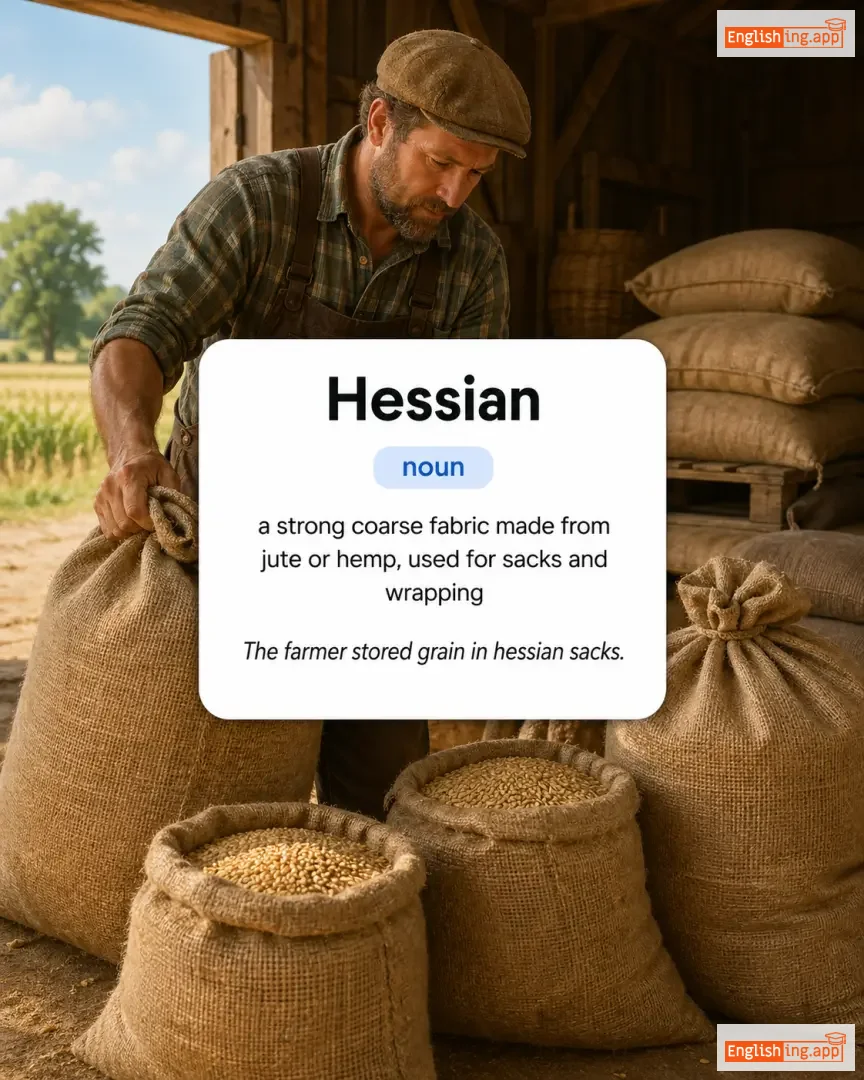
Hessian definition card — visual illustration of the meaning
noun C2
/ˈhɛʃ.ən/
हैसियन कपड़ा (hesian kapda)

a strong coarse fabric made from jute or hemp, used for sacks and wrapping

"The farmer stored grain in hessian sacks."

"किसान ने अनाज को हैसियन बोरियों में रखा।" (kisaan ne anaaj ko hesian boriya mein rakha.)
heterodox definition card — visual illustration of the meaning
adjective C2
/ˈhɛtərəˌdɒks/
विपरीत दृष्टिकोण (vipreet drishtikon)

not conforming with accepted or orthodox standards or beliefs

"The professor was known for his heterodox views on religion."

"प्रोफेसर अपने धर्म पर विपरीत दृष्टिकोण के लिए प्रसिद्ध थे।" (Professor apne dharm par vipreet drishtikon ke liye prasiddh the.)
noun C2
/ˌhɛtərəʤəˈniːɪti/
विविधता (vividhata)

the quality or state of being diverse in character or content

"The cultural heterogeneity of the city makes it vibrant and unique."

"शहर की सांस्कृतिक विविधता इसे जीवंत और अद्वितीय बनाती है।" (Shahar ki sanskritik vividhata ise jeevant aur advitiya banati hai.)
adjective C2
/ˌhɛtərəʊˈmɔːrfɪk/
विभिन्न रूपात्मक (vibhinn roopaatmak)

Having different forms or shapes, especially in the same species or organism.

"Butterflies are heteromorphic during their life cycle, changing forms from larva to adult."

"तितलियाँ अपने जीवन चक्र के दौरान विभिन्न रूपों में बदलती हैं, लार्वा से वयस्क में।" (Titliyaan apne jeevan chakra ke dauran vibhinn roopon mein badalti hain, larva se vayask mein.)
heuristic definition card — visual illustration of the meaning
adjective C2
hjʊəˈrɪs.tɪk
ह्यूरिस्टिक (heuristic)

Enabling a person to discover or learn something for themselves; using practical experience rather than theory.

"The scientist used a heuristic approach to solve the problem."

"वैज्ञानिक ने समस्या को हल करने के लिए एक ह्यूरिस्टिक तरीका अपनाया।" (Vaigyanik ne samasya ko hal karne ke liye ek heuristic tareeka apnaya.)
verb C2
/hjuː/
काटना (kaatna)

To chop or cut something, especially wood or stone, with a tool.

"The workers hewed logs to build the cabin."

"श्रमिकों ने झोपड़ी बनाने के लिए लकड़ी को काटा।" (Shramikon ne jhopdi banane ke liye lakdi ko kaata.)
adjective C2
/hɛkˈsæŋɡjələr/
हेक्सांगी (hexangi)

Having six angles or corners.

"The artist designed a hexangular frame for the mirror."

"कलाकार ने दर्पण के लिए एक हेक्सांगी फ्रेम डिज़ाइन किया।" (Kalakar ne darpan ke liye ek hexangi frame design kiya.)
noun C2
/ˈhɛksəˌpɒd/
हैक्सापोड (hexapod)

An insect or other organism with six legs.

"The scientist observed a hexapod crawling on the leaf."

"द वैज्ञानिक ने एक हेक्सापॉड को पत्ते पर रेंगते हुए देखा।" (Da vaigyanik ne ek hexapod ko patte par rengte hue dekha.)
noun C2
/ˈheɪ.deɪ/
सर्वश्रेष्ठ काल; सुनहरी अवधि; उत्कर्ष समय (sarvashreshth kaal; sunahari avadhi; utkars samay)

the period of a person's or thing's greatest success, popularity, or vigor; prime time

"During her heyday as a singer, she performed in sold-out concerts around the world."

"सिंगर के रूप में अपने सर्वश्रेष्ठ काल में, वह दुनिया भर में बिक चुके कॉन्सर्ट्स में प्रदर्शन करती थीं।" (Singer ke roop mein apne sarvashreshth kaal mein, wah duniya bhar mein bik chuke concerts mein pradarshan karti thin.)
adjective C2
/haɪˈbɜːrnəl/
शीतकालीन (haibernal)

Relating to or occurring in winter.

"The hibernal season is often harsh in the mountains."

"पहाड़ों में शीतकालीन मौसम अक्सर कठोर होता है।" (pahaadon mein sheetkaaleen mausam aksar kathor hota hai)
adjective/noun C2
/haɪˈbɜːrniən/
आयरिश (aayrish)

Relating to Ireland or the Irish.

"He enjoyed reading about Hibernian culture and history."

"उसे हाइबरनियन संस्कृति और इतिहास पढ़ना अच्छा लगता था।" (use hibernian sanskriti aur itihas padhna accha lagta tha.)
adjective C2
/hɪk/
देहाती; गंवार (dehati; ganwar)

unsophisticated person from a rural area; country bumpkin

"He had a hick accent from growing up in a small town."

"वह छोटे शहर में पला बढ़ा था, इसलिए उसकी देहाती लहजा था।" (vah chhote shahar mein pala badha tha, isliye uski dehati lahza tha.)
adjective C2
/ˈhaɪd.baʊnd/
रूढ़वादी (haidbound)

unwilling or unable to change because of tradition or convention

"He is too hidebound to accept new ideas."

"वह नए विचारों को स्वीकार करने के लिए बहुत रूढ़वादी है." (hi iz tu haidbound tu aksept nyu aidiyaz)
verb C2
/haɪ/
जल्दी जाना (jaldi jana)

to go quickly; hasten

"He hied to the station to catch the train."

"वह ट्रेन पकड़ने के लिए तेजी से स्टेशन गया।" (vah train pakadne ke liye tezi se station gaya.)
noun C2
/ˈhaɪərəˌɡlɪf/
हिरोग्लिफ (hiroglyph)

A picture or symbol used in ancient writing systems, especially Egyptian writing.

"The walls of the temple were covered in hieroglyphs."

"मंदिर की दीवारों पर हायरोग्लिफ थे।" (Mandir ki deewaron par hieroglyph the.)
adjective/noun C2
/ˌhaɪərəˈɡlɪfɪk/
चित्रलेखीय (chitralekhiya)

Relating to or written in hieroglyphs; symbols or writing that is difficult to understand.

"The archaeologists studied the hieroglyphic inscriptions carefully."

"पुरातत्वविदों ने हाइरोग्लिफ़िक शिलालेखों का अध्ययन सावधानीपूर्वक किया।" (Puratatvavidhon ne hieroglyphic shilalekhon ka adhyayan saavdhanipurvak kiya.)
adjective C2
/ˌhaɪ ˈfloʊn/
आडंबरपूर्ण (aadanbarpoorn)

Using fancy or pretentious language; lofty in style but often overblown.

"The politician gave a high-flown speech full of promises."

"राजनेता ने वादों से भरी एक आडंबरपूर्ण भाषण दिया।" (Raajneta ne vaadon se bhari ek aadanbarpoorn bhashan diya.)
adjective C2
/ˈhaɪˌbraʊ/
उच्च संस्कृतिमूलक (ucch sanskritimoolak)

intellectually superior or cultured; often describing art, literature, or activities appealing to intellectual tastes

"The museum is known for its highbrow exhibitions."

"संग्रहालय अपनी उच्च संस्कृतिमूलक प्रदर्शनियों के लिए जाना जाता है।" (Sangrahalay apni ucch sanskritimoolak pradarshaniyon ke liye jana jata hai.)
noun C2
/hɪˈlærɪti/
हंसी-खुशी (hansi-khushi)

Extreme amusement, especially when expressed by laughter.

"The movie caused great hilarity among the audience."

"फिल्म ने दर्शकों के बीच भारी हंसी-खुशी का माहौल बना दिया" (Film ne darshako ke beech bhaari hansi-khushi ka mahol bana diya)
noun C2
/ˈhɪlək/
टिल्ला (tilla)

A small hill or mound.

"The children climbed up the grassy hillock to watch the sunset."

"बच्चे सूर्योदय देखने के लिए घास से ढके टिल्ले पर चढ़ गए।" (Bacche suryoday dekhne ke liye ghaas se dhake tille par chadh gaye.)
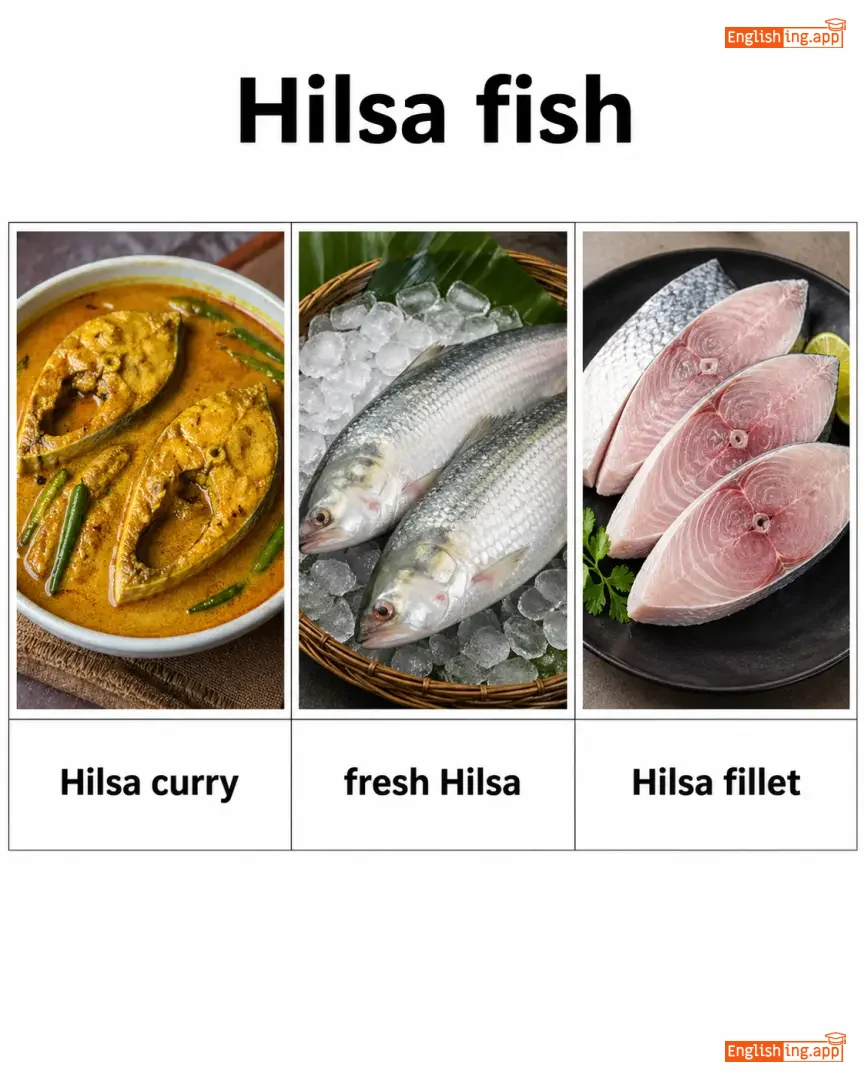
Hilsa fish definition card — visual illustration of the meaning
noun C2
/ˈhɪl.sə fɪʃ/
हिल्सा मछली (hilsā machhlī)

a popular fish species found in South Asian rivers, especially prized in Bengali cuisine

"Hilsa fish is considered a delicacy in Bengali culture."

"हिल्सा मछली को बंगाली संस्कृति में एक खास व्यंजन माना जाता है।" (Hilsā machhlī kō baṅgālī sanskr̥ti mēṁ ēk khās vyanjan mānā jātā hai.)
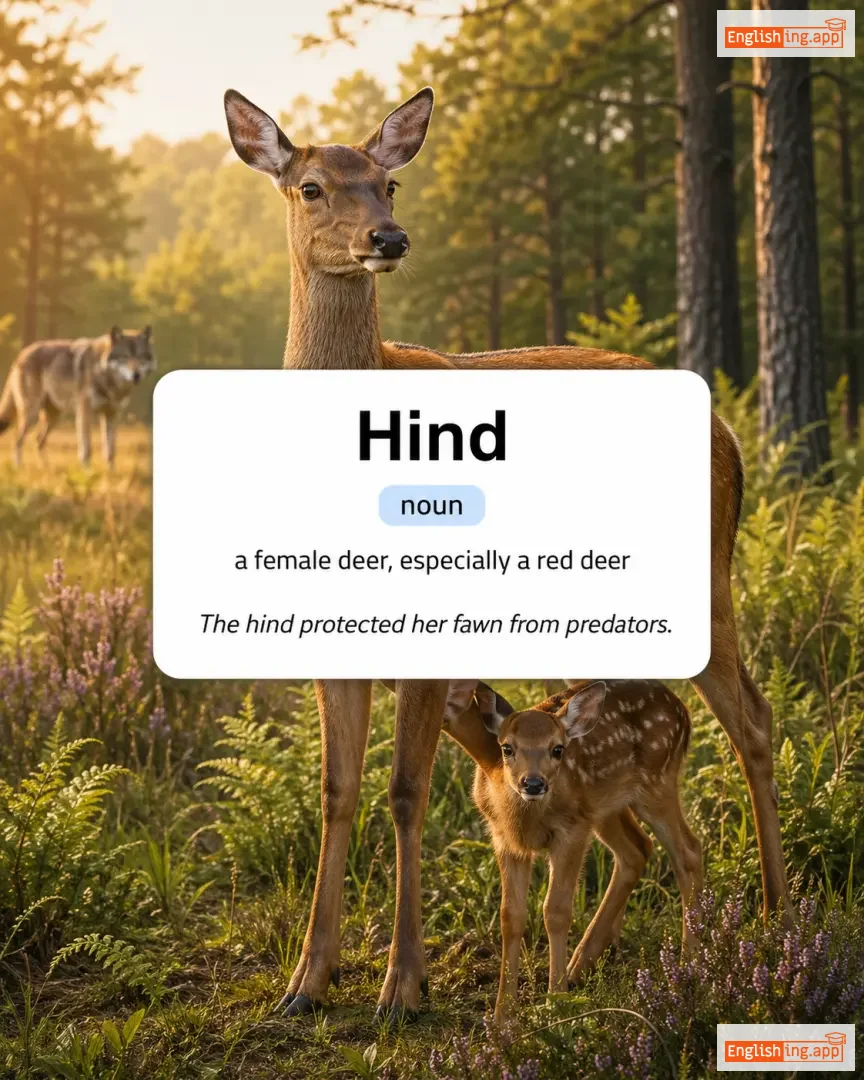
Hind definition card — visual illustration of the meaning
noun C2
/haɪnd/
हिरणी (hirani)

a female deer, especially a red deer

"The hind protected her fawn from predators."

"हिरणी ने अपने बछड़े को शिकारियों से बचाया।" (hirani ne apne bachhade ko shikariyon se bachaya.)
adjective C2
/ˈhaɪndmoʊst/
सबसे पिछला (sabse pichla)

Farthest back; last in position.

"The hindmost car in the convoy broke down first."

"कोंवॉय की सबसे पिछली कार पहले टूट गई।" (Convoy ki sabse pichhli car pehle toot gayi.)
noun C2
/ˈhaɪərlɪŋ/
मजदूरी करने वाला (majdoori karne wala)

A person who works for payment only, often with little loyalty or principle.

"The mercenary was dismissed as just a hireling with no real loyalty."

"मर्सेनरी को केवल एक हायरलिंग के रूप में बर्खास्त कर दिया गया था जिसमें कोई वास्तविक निष्ठा नहीं थी।" (Mercenary ko keval ek hireling ke roop mein barkhast kar diya gaya tha jisme koi vastavik nishtha nahi thi.)
hirsute definition card — visual illustration of the meaning
adjective C2
/ˈhɜːrsuːt/
घने बालों वाला (hirsoot)

Having a lot of hair, especially in an unusual place.

"The hirsute man stood out in the crowd with his long beard."

"घने बालों वाला आदमी अपनी लंबी दाढ़ी के कारण भीड़ में अलग-सा खड़ा रहा।" (Ghane balon wala aadmi apni lambi daadhi ke kaaran bheed mein alag-sa khada raha.)
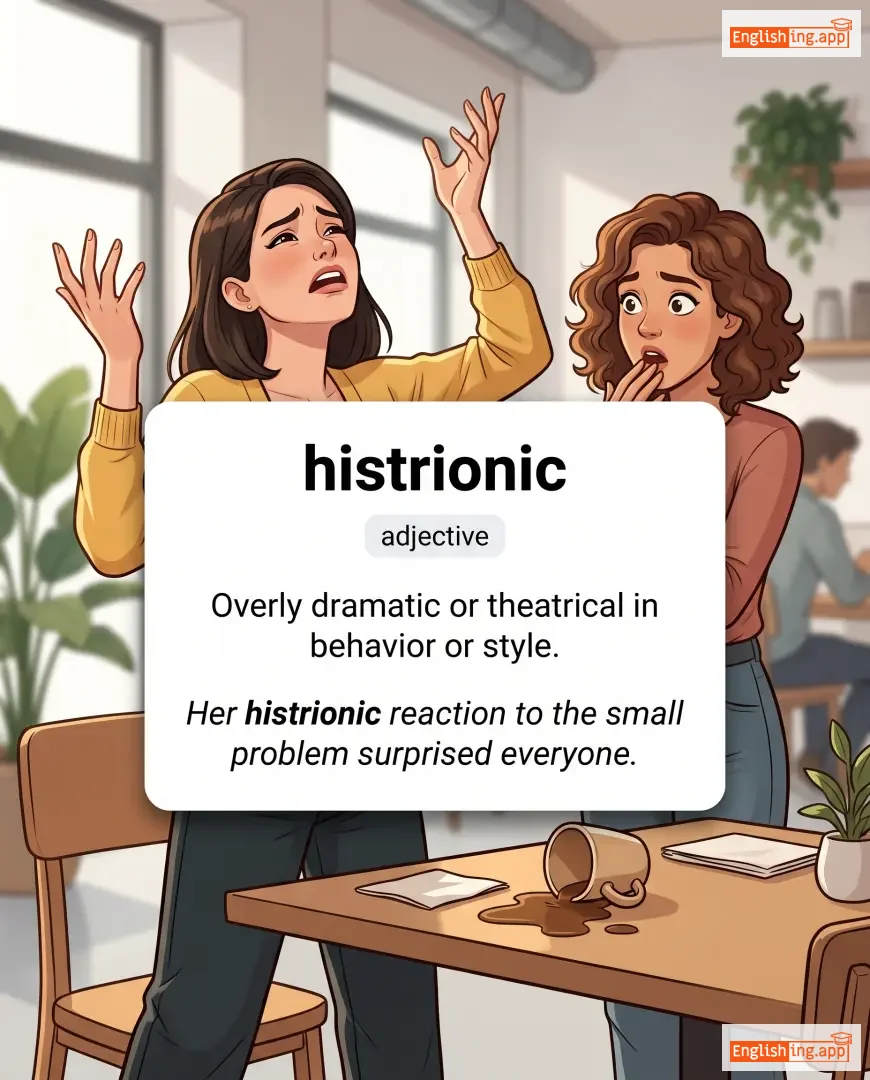
histrionic definition card — visual illustration of the meaning
adjective C2
/ˌhɪstriˈɒnɪk/
अत्यधिक नाटकीय (atyadhik natakiya)

Overly dramatic or theatrical in behavior or style.

"Her histrionic reaction to the small problem surprised everyone."

"उसकी हिस्ट्रीओनिक प्रतिक्रिया ने सभी को चौंका दिया।" (uski histrionic pratikriya ne sabhi ko chonka diya.)
adjective C2
/ˈhɔːri/
धूसर, प्राचीन (dhusar, prachin)

gray or white with age; very old and respected

"The hoary oak tree stood as a witness to centuries of history."

"धूसर ओक का पेड़ शताब्दियों के इतिहास का गवाह था।" (Dhusar oak ka ped shatabdiyon ke itihas ka gawah tha.)
verb C2
/ˈhɑːbəl/
लंगड़ा चलना (langda chalna)

to walk awkwardly with difficulty, usually due to injury

"He hobbled across the room after twisting his ankle."

"उसने अपनी एड़ी मरोड़ने के बाद कमरे में लंगड़ाते हुए कदम बढ़ाए।" (Usne apni edhi marodne ke baad kamre mein langdate hue kadam badhaye.)
noun C2
/ˈhɒdʒ.pɒdʒ/
असंबद्ध मिश्रण (asambaddh mishran)

A confusing mixture of different things; a jumble.

"The essay was a hodgepodge of unrelated ideas."

"निबंध एक असंबद्ध मिश्रण था।" (Nibandh ek asambaddh mishran tha.)
noun C2
/hoʊ/
कुदाल (kudal)

a gardening tool with a thin metal blade used for breaking up soil and removing weeds

"The farmer used a hoe to remove weeds from his vegetable garden."

"किसान ने अपने सब्जी के बग़ीचे से घास निकालने के लिए कुदाल का उपयोग किया।" (Kisan ne apne sabji ke bagiche se ghaas nikaalne ke liye kudal ka upyog kiya.)
noun C2
/hɔːɡ plʌm/
होग प्लम (hog plum)

tropical fruit with yellow skin and sour taste

"Hog plums are often used to make pickles and chutneys."

"हॉग प्लम्स का उपयोग अक्सर अचार और चटनी बनाने में किया जाता है।" (hog plums ka upyog aksar achar aur chatni banane mein kiya jata hai)
noun C2
/ˈhɒɡz.hɛd/
बड़ा बैरल (bada barrel)

A large cask or barrel, traditionally used for storing liquids like wine or beer.

"The cellar was filled with hogsheads of ale."

"तलघर में एले के बड़े बैरल भरे हुए थे।" (Talghar mein ale ke bade barrel bhare hue the.)
noun C2
/ˈhoʊl.stər/
होल्स्टर (holster)

A holder or case for carrying a gun, typically worn on a belt or shoulder.

"The sheriff kept his revolver in a leather holster."

"शेरिफ ने अपनी रिवॉल्वर को चमड़े के होल्स्टर में रखा था।" (Sherif ne apni revolver ko chamde ke holster mein rakha tha.)
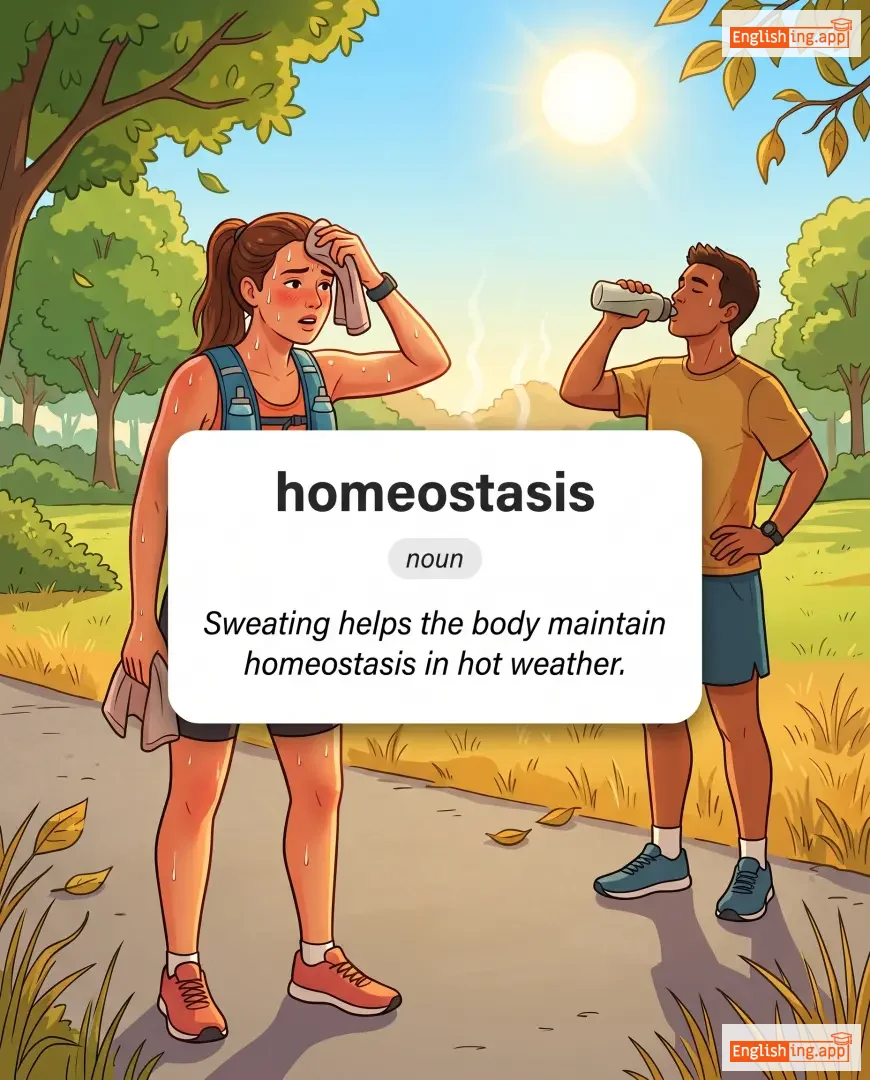
homeostasis definition card — visual illustration of the meaning
noun C2
/ˌhoʊmi.oʊˈsteɪsɪs/
गृहस्थिरता (grhasthirata)

The ability of a living system or organism to maintain internal stability despite changes in external conditions.

"Sweating helps the body maintain homeostasis in hot weather."

"पसीना आना शरीर को गर्म मौसम में होमियोस्टेसिस बनाए रखने में मदद करता है।" (paseena aana sharir ko garm mausam mein homeostasis banaye rakhne mein madad karta hai.)
adjective C2
/ˈhoʊm.spʌn/
घरेलू (gharelu)

Simple and unsophisticated; made at home rather than in a factory.

"She wore a homespun dress to the village festival."

"उसने गांव के मेले में एक घरेलू ड्रेस पहनी थी।" (Usne gaanv ke mele mein ek gharelu dress pehni thi.)
Homily definition card — visual illustration of the meaning
noun C2
/ˈhɑː.mə.li/
धार्मिक उपदेश (dharmik updesh)

A religious or moral lecture; a sermon.

"The priest delivered a touching homily on kindness."

"पादरी ने दया पर एक छूने वाला धार्मिक उपदेश दिया।" (paadri ne daya par ek chhoone wala dharmik updesh diya.)
noun C2
/ˌhoʊmə.dʒəˈniːəti/
समरूपता (samarupata)

The quality or state of being all the same or all of the same kind.

"The cultural homogeneity of the village made it feel unified."

"गांव की सांस्कृतिक समरूपता ने उसे एकजुट महसूस कराया।" (gaon ki sanskritik samarupata ne use ekjut mehsoos karaya.)
verb C2
/həˈmɑː.dʒə.naɪz/
समान बनाना (samaan banana)

To make uniform or similar by blending or mixing different elements.

"The company tried to homogenize its products across global markets."

"कंपनी ने अपने उत्पादों को वैश्विक बाजारों में समान बनाने की कोशिश की।" (Company ne apne utpadon ko vaishvik bazaron mein samaan banane ki koshish ki.)