ভোকাবুলারিসমূহ

ইংরেজি শব্দের বাংলা অর্থ | English to Bangla Word Meaning Dictionary

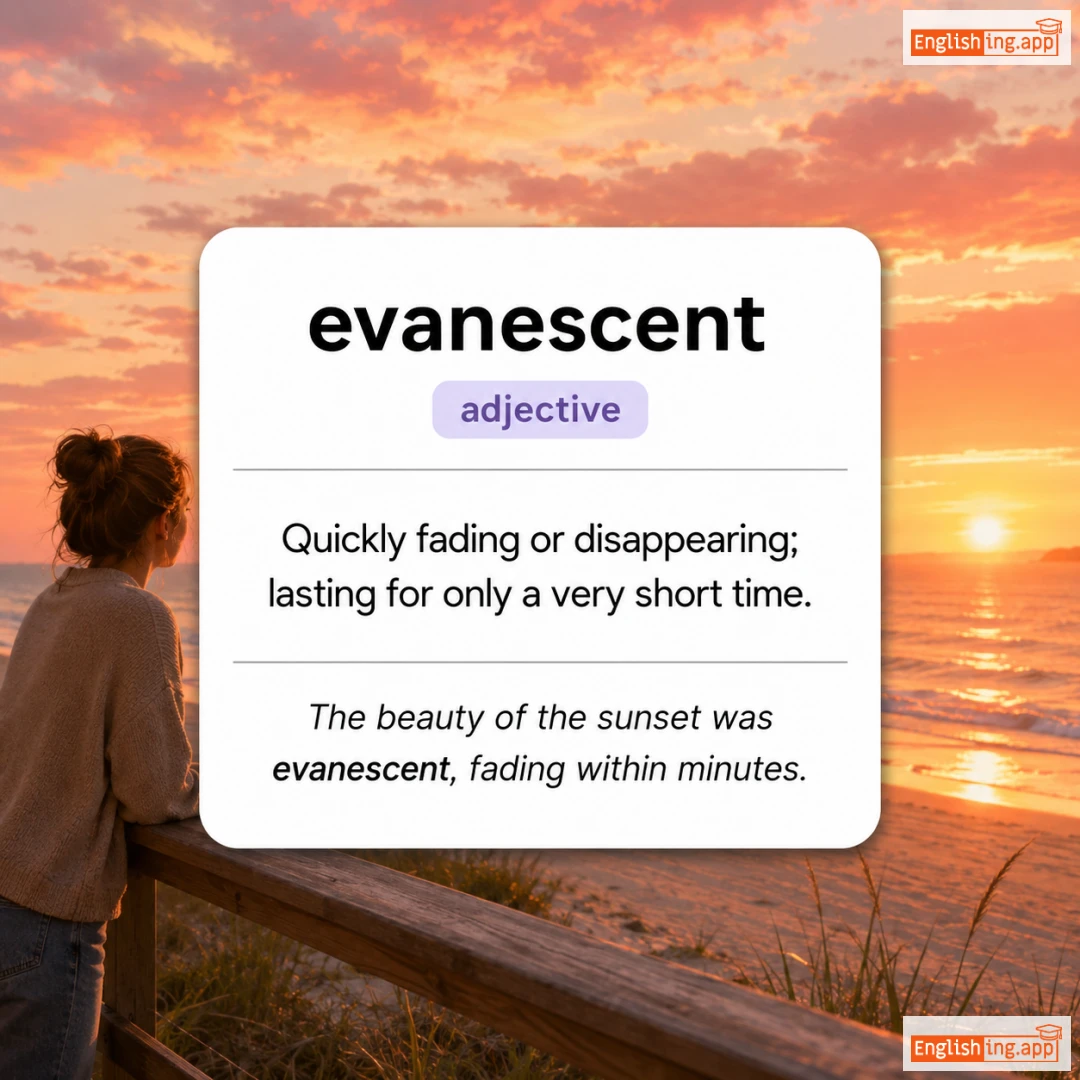
evanescent definition card — visual illustration of the meaning
adjective C2
/ˌɛvəˈnɛsənt/
儚い (hakanai)

Quickly fading or disappearing; lasting for only a very short time.

"The beauty of the sunset was evanescent, fading within minutes."

"夕日の美しさは儚く、数分で消えてしまった。" (Yūhi no utsukushisa wa hakanaku, sūfun de kiete shimatta.)
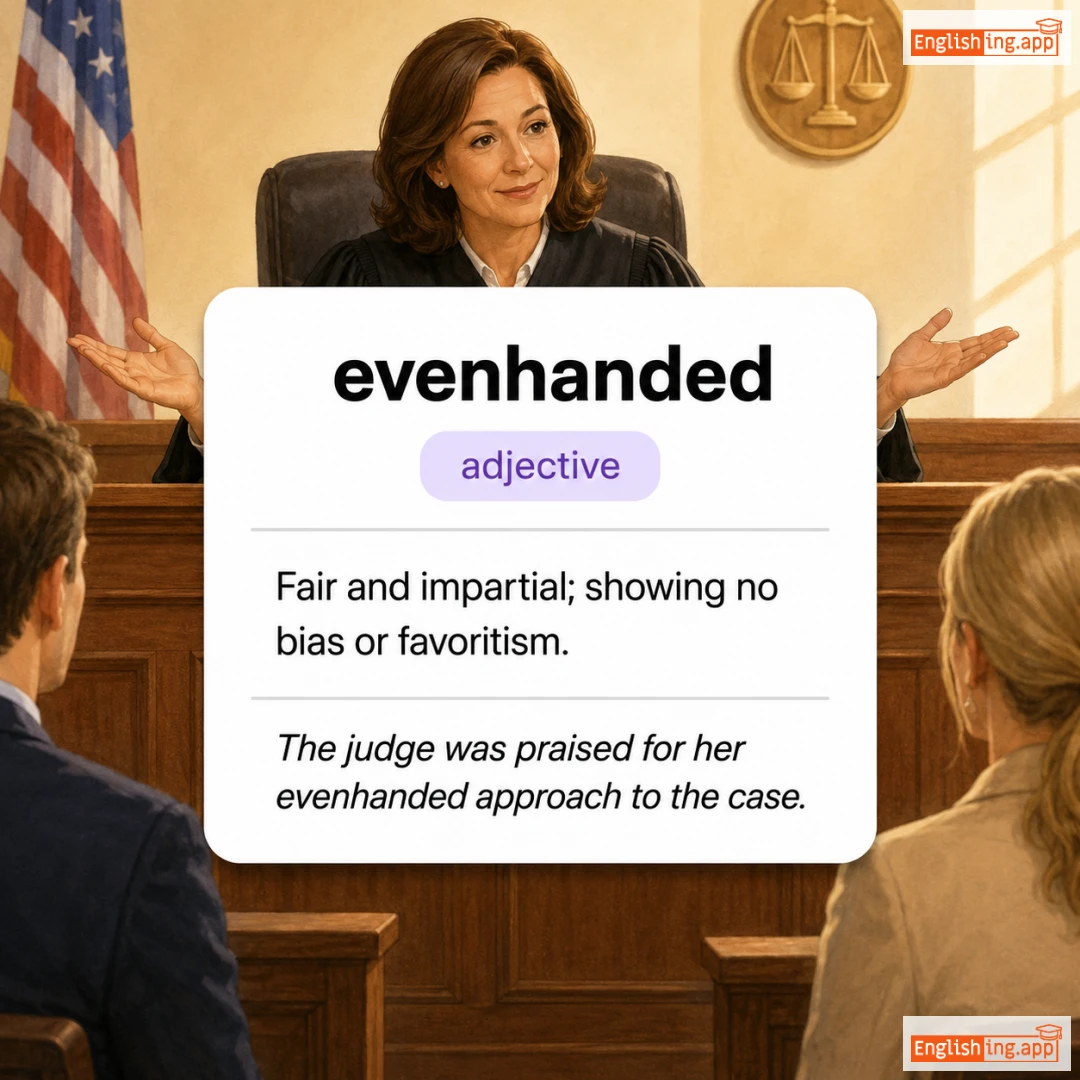
evenhanded definition card — visual illustration of the meaning
adjective C2
/ˌiːvənˈhændɪd/
公平な (kouhei na)

Fair and impartial; showing no bias or favoritism.

"The judge was praised for her evenhanded approach to the case."

"その裁判官は、公平なアプローチでその事件を扱ったことで称賛されました。" (Sono saiban-kan wa, kouhei na apurouchi de sono jiken wo atsukatta koto de shousan saremashita.)
verb C2
/ɪˈvɜːrt/
外向きにひっくり返す (soto-muki ni hikkurikaesu)

To turn inside out or outward.

"The surgeon had to evert the eyelid during the procedure."

"外科医は手術中にまぶたをひっくり返さなければなりませんでした。" (Geka-i wa shujutsu-chū ni mabuta o hikkurikasanakereba narimasen deshita.)
adjective C2
/ˌɛvɪˈdɛnʃəl/
証拠の (shōko no)

relating to or providing evidence

"The lawyer presented evidential support for her claims."

"弁護士は彼女の主張に対する証拠のサポートを提供しました。" (Bengoshi wa kanojo no shuchō ni taisuru shōko no sapōto o teikyō shimashita.)
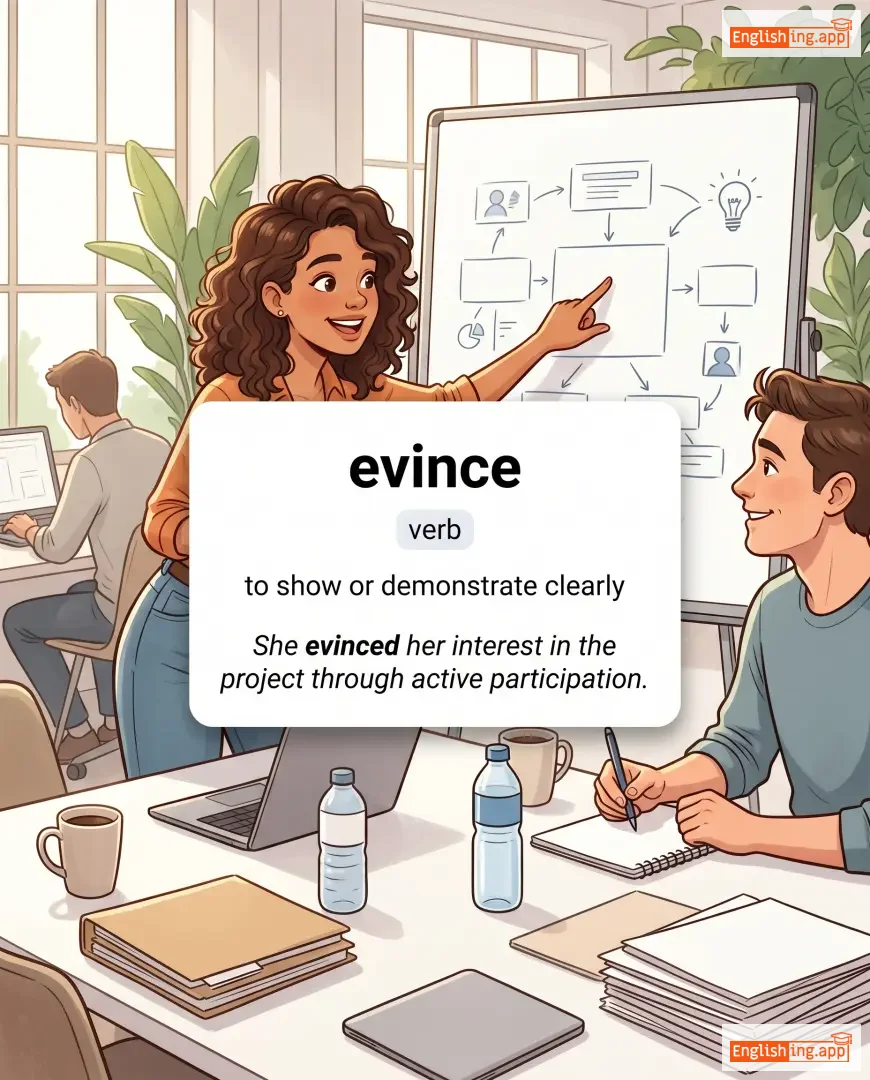
evince definition card — visual illustration of the meaning
verb C2
/ɪˈvɪns/
示す (shimesu)

to show or demonstrate clearly

"She evinced her interest in the project through active participation."

"彼女は積極的な参加を通じてそのプロジェクトに対する関心を示した。" (Kanojo wa sekkyokuteki na sanka wo toshite sono purojekuto ni taisuru kanshin wo shimeshita.)
verb C2
/ɪˈvɪsəˌreɪt/
臓器を取り除く、破壊する (zōki o torinozoku, hakai suru)

to remove the internal organs of; to deprive of essential content

"The critics eviscerated the movie for its weak storyline."

"批評家たちはその映画の弱いストーリーラインに対して破壊しました。" (Hihyōka-tachi wa sono eiga no yowai sutōrīrain ni taishite hakai shimashita.)
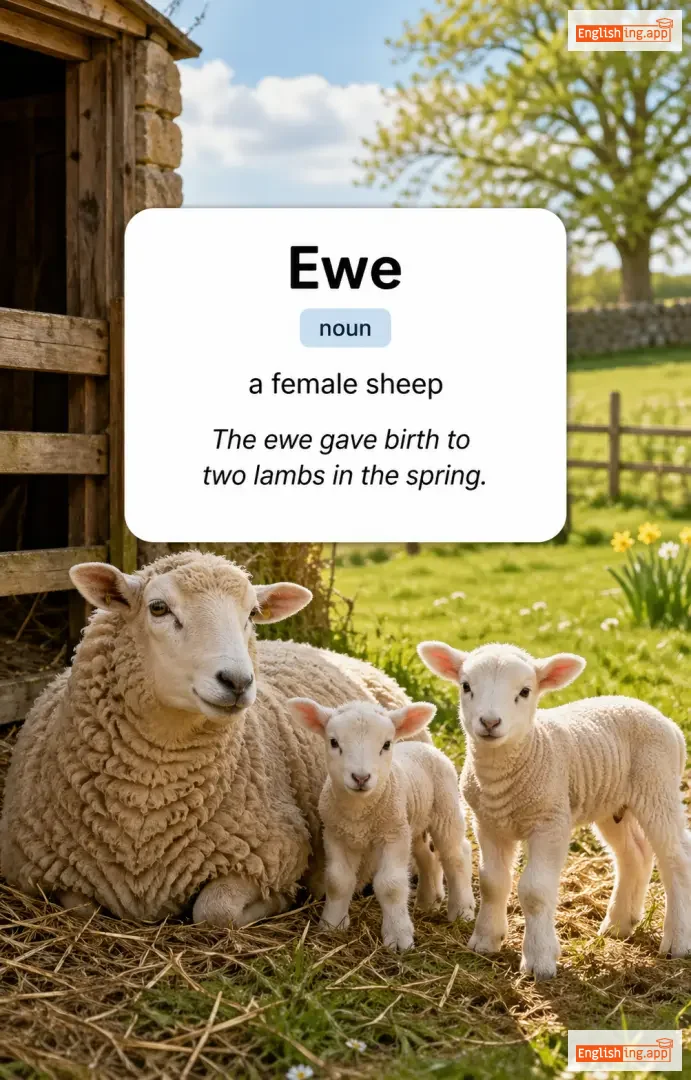
Ewe definition card — visual illustration of the meaning
noun C2
/juː/
雌羊 (mesu hitsuji)

a female sheep

"The ewe gave birth to two lambs in the spring."

"その雌羊は春に二匹の子羊を産みました。" (Sono mesu hitsuji wa haru ni nihiki no kohitsuji o umimashita.)
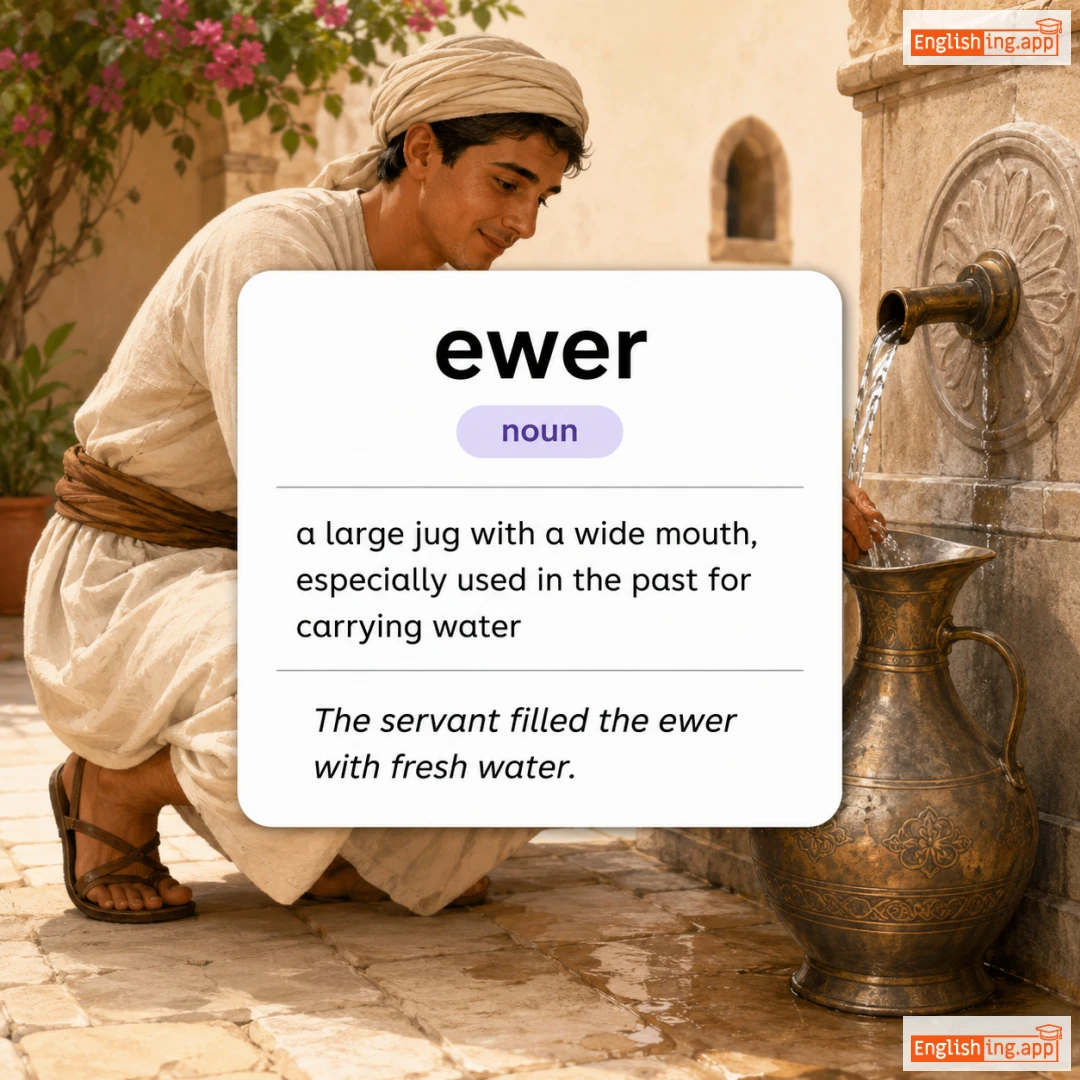
ewer definition card — visual illustration of the meaning
noun C2
/ˈjuːər/
水差し (misashi)

a large jug with a wide mouth, especially used in the past for carrying water

"The servant filled the ewer with fresh water."

"使用人は水差しに新鮮な水を注ぎました。" (Shiyōnin wa misashi ni shinsen na mizu o sosogimashita.)
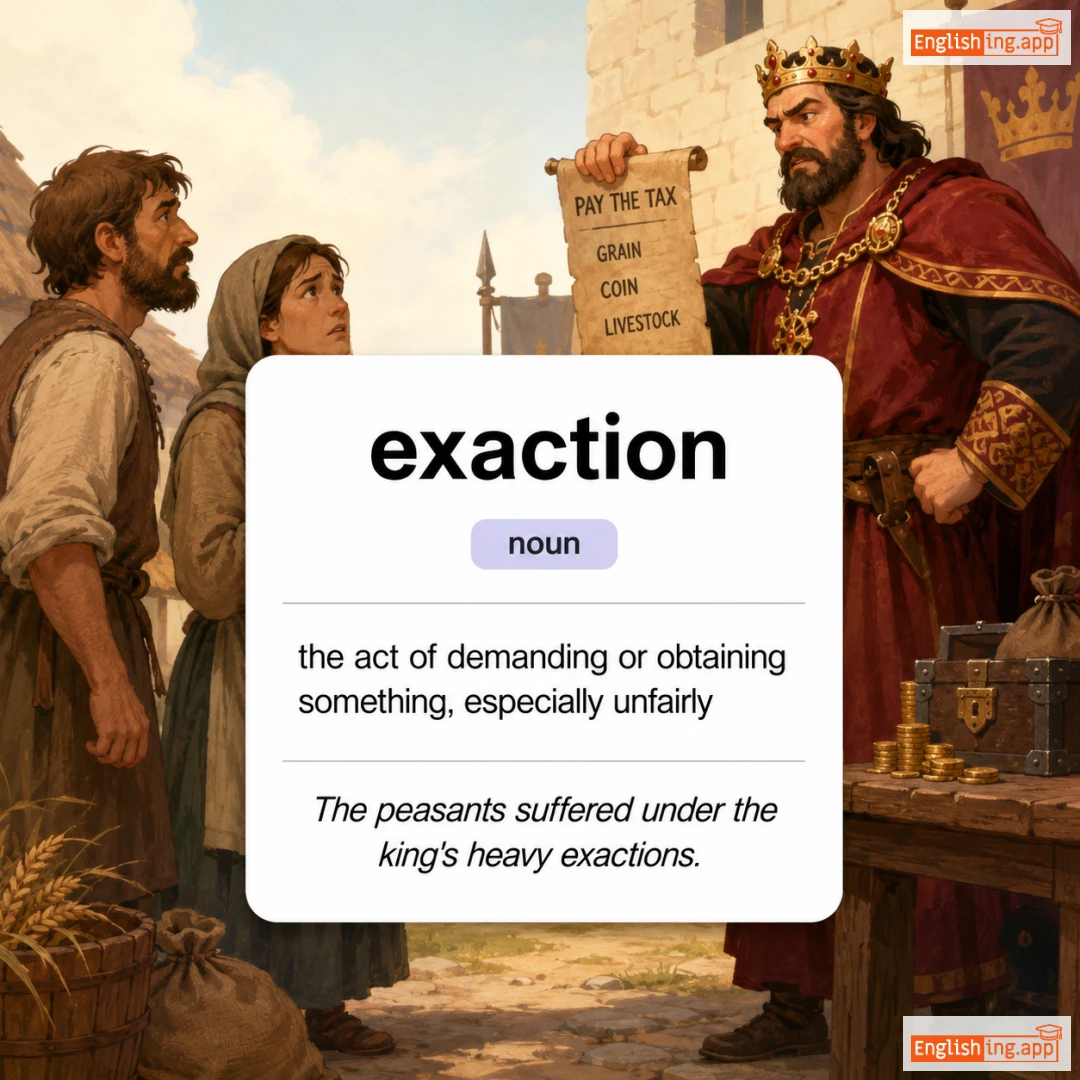
exaction definition card — visual illustration of the meaning
noun C2
/ɪɡˈzækʃən/
強制徴収 (kyousei choushuu)

the act of demanding or obtaining something, especially unfairly

"The peasants suffered under the king's heavy exactions."

"農民たちは王の重い強制徴収の下で苦しんだ。" (Noumintachi wa ou no omoi kyousei choushuu no shita de kurushinda.)
adjective C2
/ɪkˈsɛpʃənəbl/
受け入れられない (ukeirarenai)

Open to objection; causing disapproval.

"His rude remarks were considered exceptionable by everyone present."

"彼の無礼な発言は、出席していた全員にとって不適切だと見なされた。" (Kare no burei na hatsugen wa, shusseki shite ita zen'in ni totte futekisetsu da to minasareta.)
noun C2
/ɪksˈtʃɛkər/
国庫 (koku-ko)

The treasury of a state or country.

"The government announced new measures to improve the exchequer."

"政府は国庫を改善するための新しい措置を発表しました。" (seifu wa kokko wo kaizen suru tame no atarashī sochi wo happyou shimashita.)
noun C2
/ɪkˈsɪʒən/
切除 (seshu)

the act of cutting something out, especially by surgical removal

"The excision of the infected tissue prevented further complications."

"感染した組織の切除により、さらなる合併症が防止されました。" (Kansen shita soshiki no seshu ni yori, sara naru gappeishou ga boushi saremashita.)
noun C2
/ˌɛksaɪˈteɪʃən/
興奮 (kōfun)

a state of great excitement or the process of stimulating activity

"The news created great excitation among the fans."

"そのニュースはファンの間で大きな興奮を引き起こしました。" (Sono nyūsu wa fan no aida de ōkina kōfun o hikiokoshimashita.)
verb C2
/ɛkˈskɔːrieɪt/
厳しく批判する (kibishiku hihan suru)

To strongly criticize someone; to denounce severely.

"The critic excoriated the film for its poor script."

"批評家はその映画の悪い脚本を厳しく批判しました。" (Hihyōka wa sono eiga no warui kyakuhon o kibishiku hihan shimashita.)
noun C2
/ɪkˈskrɛsəns/
異常な成長 (ijō na seichō)

An abnormal outgrowth or lump, often considered unattractive.

"The building was considered an excrescence on the landscape."

"その建物は風景の中で異常な成長と見なされました。" (Sono tatemono wa fūkei no naka de ijō na seichō to minasaremashita.)
verb C2
/ɪkˈskruːʃieɪt/
苦しめる (kurushimeru)

to cause intense pain or suffering

"The injury excruciated him with unbearable pain."

"その怪我は彼を耐え難い痛みに苦しめました。" (Sono kega wa kare wo taegatai itami ni kurushimemashita.)
exculpate definition card — visual illustration of the meaning
verb C2
/ˈɛkskʌlpeɪt/
免罪する (menzai suru)

to show or declare that someone is not guilty of wrongdoing

"The lawyer worked hard to exculpate his client."

"弁護士はクライアントを無罪にするために懸命に働いた。" (Bengoshi wa kuraianto o muzai ni suru tame ni kenmei ni hataraita.)
adjective C2
/ɪkˈskɜːsɪv/
逸脱した (itsudatsu shita)

Tending to digress or wander; moving away from the main subject.

"His excursive lecture left the students confused about the main topic."

"彼の逸脱した講義は、学生たちを主題について混乱させました。" (Kare no itsudatsu shita kougi wa, gakuseitachi wo shudai ni tsuite konran sasemashita.)
execrable definition card — visual illustration of the meaning
adjective C2
/ˈeksɪkrəbl/
ひどい (hidoi)

Extremely bad or unpleasant.

"The movie was so execrable that many people left the theater early."

"その映画はひどすぎて、多くの人々が早く映画館を出て行きました。" (Sono eiga wa hido sugite, ōku no hitobito ga hayaku eigakan o dete ikimashita.)
verb C2
/ˈeksɪkreɪt/
憎む (nikumu)

To feel or express great loathing or hatred for something.

"The community execrated the corrupt politician."

"コミュニティは腐敗した政治家を憎んだ。" (Komyuniti wa fuhai shita seijika o nikunda.)
noun C2
/ˌɛksɪˈkreɪʃən/
呪い (noroi)

An act of cursing or denouncing someone or something with hatred.

"The dictator’s name was spoken with execration after his fall."

"独裁者の名前は、彼の転落後に呪いの言葉と共に言われました。" (Dokusai-sha no namae wa, kare no tenraku-go ni noroi no kotoba to tomoni iwaremashita.)
noun C2
/ˌɛksəˈdʒiːsɪs/
注解 (chūkai)

A critical explanation or interpretation of a text, especially a religious scripture.

"The professor gave a detailed exegesis of the biblical passage."

"教授は聖書の一節の詳細な注解を提供した。" (Kyojū wa seisho no issetsu no shōsai na chūkai o teikyō shita.)
noun C2
/ɪɡˈzɛmplɑːr/
模範 (mohan)

A model or pattern to be copied or imitated.

"She is an exemplar of kindness and generosity."

"彼女は親切と寛大さの模範です。" (Kanojo wa shinsetsu to kandai sa no mohan desu.)
adjective C2
/ɪɡˈzɔːstɪbəl/
使い果たせる (tsukaihataseru)

able to be used up completely; not infinite

"Coal and oil are exhaustible resources."

"石炭と石油は使い果たせる資源です。" (Sekitan to sekiyu wa tsukaihataseru shigen desu.)
verb C2
/ɪɡˈzɪləreɪt/
興奮させる (koufun saseru)

To make someone feel very happy, animated, or excited.

"The mountain view exhilarated the travelers."

"山の景色は旅行者を興奮させました。" (Yama no keshiki wa ryokō-sha o kōfun sasemashita.)
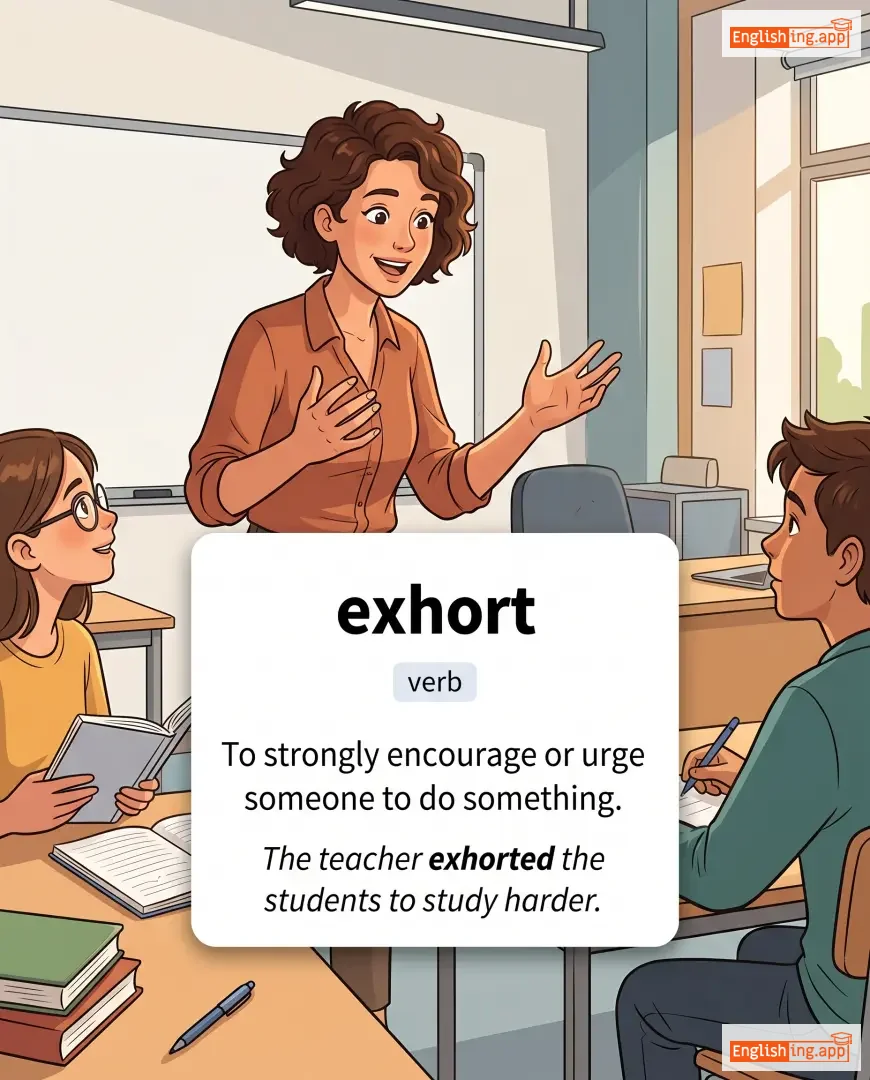
exhort definition card — visual illustration of the meaning
verb C2
/ɪɡˈzɔːrt/
促す (unagasu)

To strongly encourage or urge someone to do something.

"The teacher exhorted the students to study harder."

"教師は学生にもっと一生懸命勉強するように促しました。" (Kyoushi wa gakusei ni motto isshoukenmei benkyou suru you ni unagashimashita.)
verb C2
/ɛksˈhjuːm/
発掘する (hakkutsu suru)

to dig out something buried, especially a body from the ground

"The archaeologists decided to exhume the ancient remains."

"考古学者たちは古代の遺物を発掘することに決めました。" (Kōkogakusha-tachi wa kodai no ibutsu o hakkutsu suru koto ni kimemashita.)
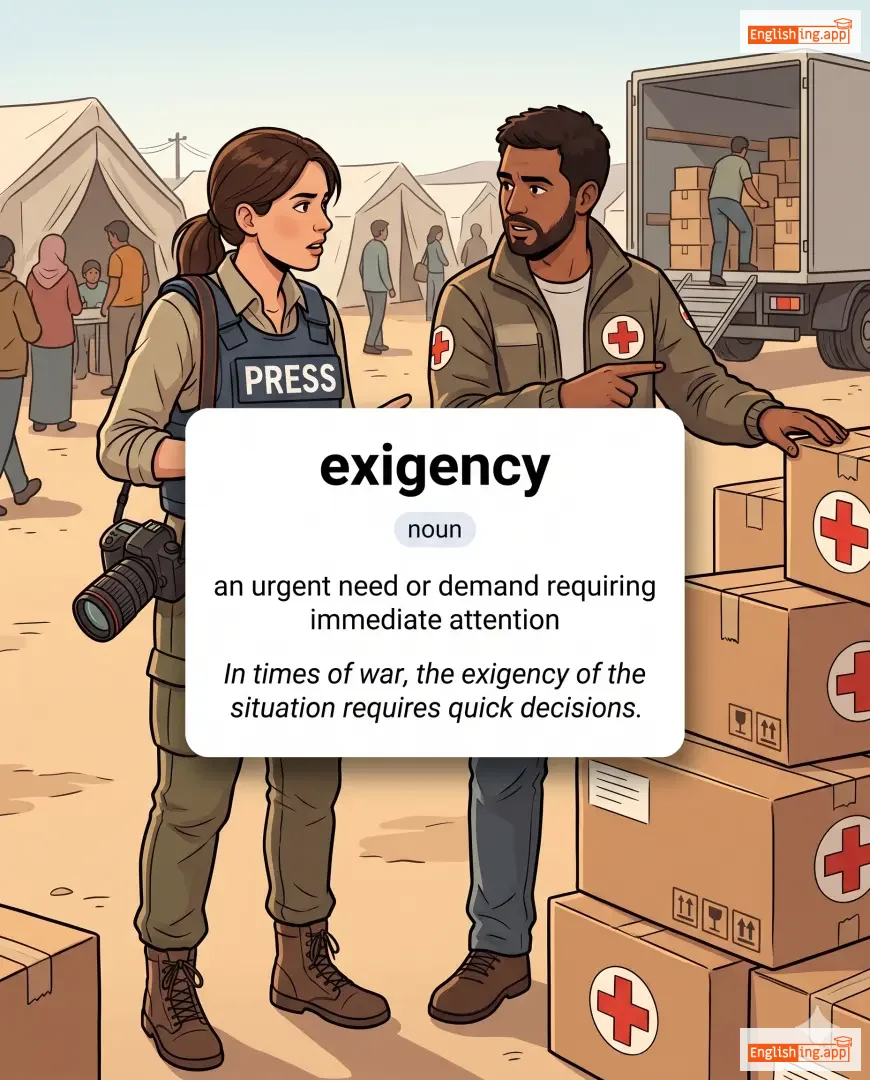
exigency definition card — visual illustration of the meaning
noun C2
/ˈɛksɪdʒənsi/
緊急の必要性 (kinkyu no hitsuyosei)

an urgent need or demand requiring immediate attention

"In times of war, the exigency of the situation requires quick decisions."

"戦争の時、状況の緊急の必要性は迅速な決定を要求する。" (Sensō no toki, jōkyō no kinkyu no hitsuyōsei wa jinsoku na kettei o yōkyū suru.)
adjective C2
/ˈɛksɪdʒənt/
緊急 (kinkyuu)

demanding immediate action or attention; urgent

"The patient’s exigent condition required immediate surgery."

"患者の緊急状態は即時の手術を必要としました。" (Kanja no kinkyuu joutai wa sokushi no shujutsu wo hitsuyou to shimashita.)
noun C2
/ˌɛksɪˈɡjuːɪti/
不足 (fusoku)

the quality of being scanty or meager in amount

"The exiguity of resources made the project difficult to complete."

"資源の不足がプロジェクトを完了するのを難しくしました。" (Shigen no fusoku ga purojekuto o kanryō suru no o muzukashiku shimashita.)
adjective C2
/ɛɡˈzɪɡjuəs/
乏しい (moshī)

small in amount; scanty or inadequate

"They survived on exiguous rations during the journey."

"彼らは旅行中、乏しい配給で生き延びました。" (Karera wa ryokō-chū, moshī haikyū de ikinobimashita.)
noun C2
/ɪɡˈzɔːrbɪtəns/
過剰 (kajou)

The quality of being excessive, unreasonable, or going beyond proper limits.

"The exorbitance of the hotel's prices shocked the tourists."

"ホテルの価格の過剰さに観光客は驚いた。" (Hoteru no kakaku no kajou-sa ni kankōkyaku wa odoroita.)
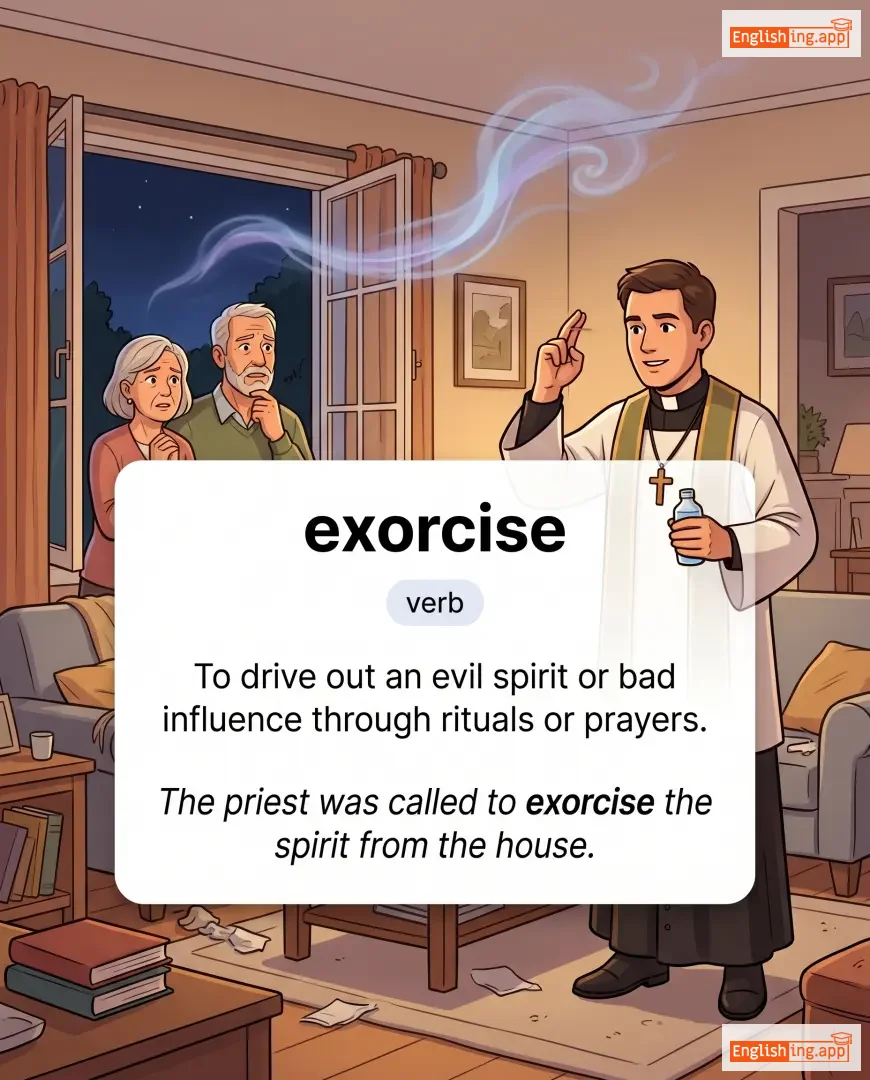
exorcise definition card — visual illustration of the meaning
verb C2
/ˈeksɔːrsaɪz/

To drive out an evil spirit or bad influence through rituals or prayers.

"The priest was called to exorcise the spirit from the house."

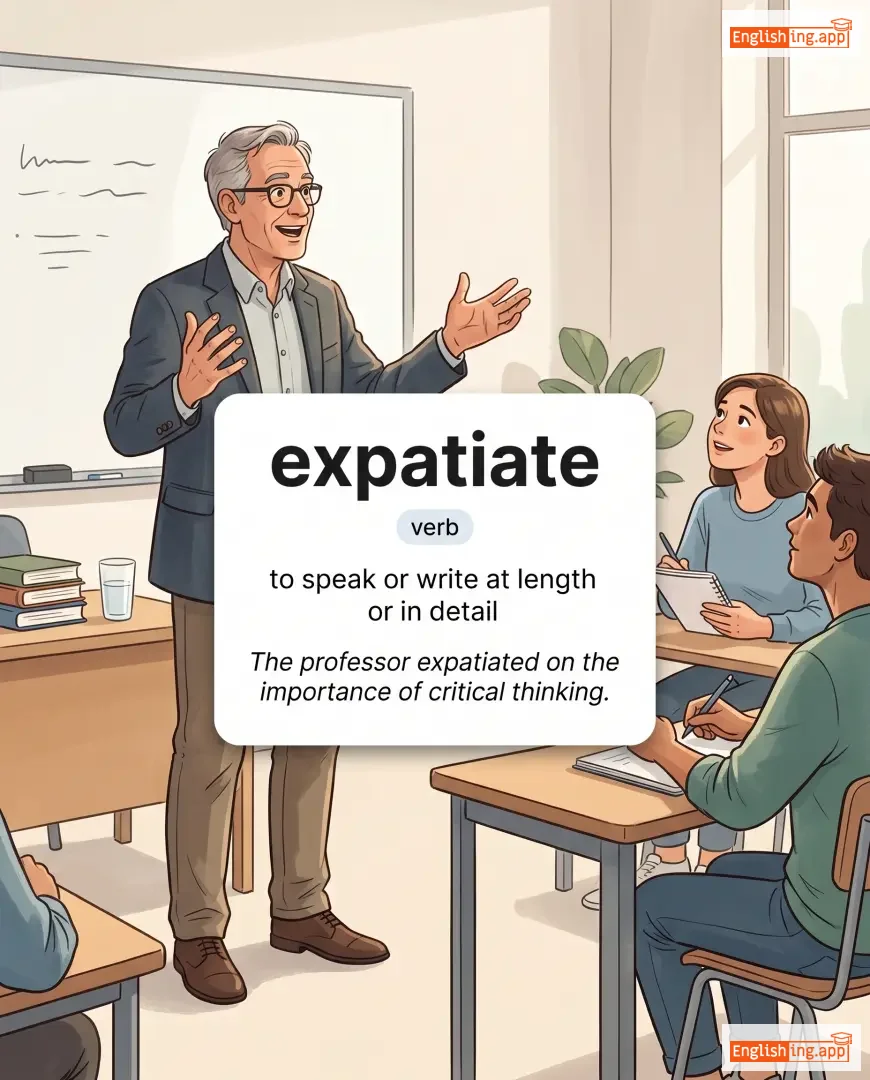
expatiate definition card — visual illustration of the meaning
verb C2
/ɪkˈspeɪʃiˌeɪt/
詳細に話すまたは書く (shousai ni hanasu mata wa kaku)

to speak or write at length or in detail

"The professor expatiated on the importance of critical thinking."

"教授は批判的思考の重要性について詳細に説明しました。" (Kyouju wa hihanteki shikou no juuyousei ni tsuite shousai ni setsumei shimashita.)
verb C2
/ɪkˈspɛktəreɪt/
痰を吐く (tama wo haku)

to cough up and spit out mucus from the throat or lungs

"The patient began to expectorate thick mucus."

"患者は濃い粘液を吐き始めました。" (Kanja wa koi nen'eki wo haki hajimemashita.)
noun C2
/ɪkˈspiːdiənsi/
便宜主義 (ben'gi shugi)

the quality of being convenient and practical despite possibly being improper or immoral

"He acted out of political expediency rather than principle."

"彼は原則ではなく政治的便宜主義から行動した。" (Kare wa gensoku de wa naku seijiteki ben'gi shugi kara kōdō shita.)
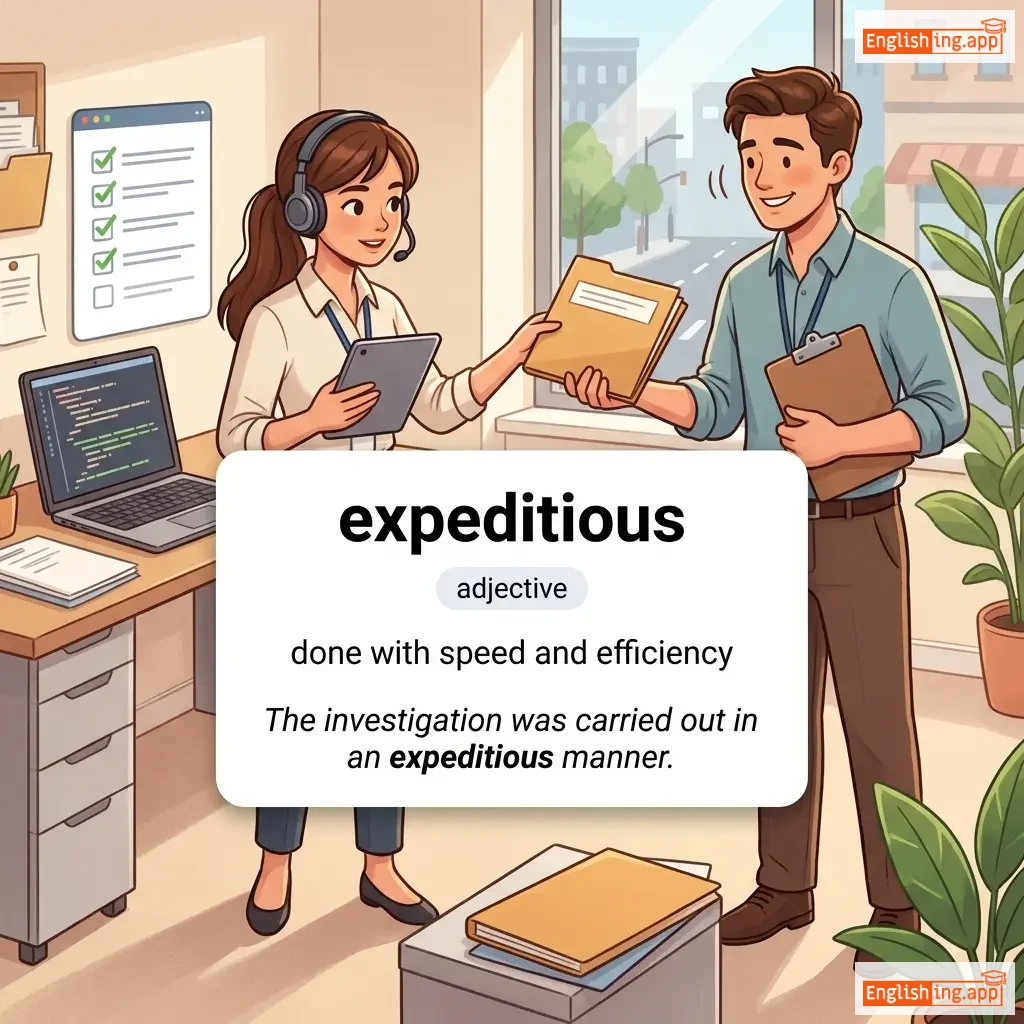
expeditious definition card — visual illustration of the meaning
adjective C2
/ˌɛkspəˈdɪʃəs/
迅速かつ効率的 (jinsoku katsu kōritsuteki)

done with speed and efficiency

"The investigation was carried out in an expeditious manner."

"調査は迅速かつ効率的に行われました。" (Chōsa wa jinsoku katsu kōritsuteki ni okonawaremashita.)
adverb C2
/ˌɛkspəˈdɪʃəsli/
迅速かつ効率的に (jinsoku katsu kōritsutekini)

in a quick and efficient manner

"The application was processed expeditiously."

"申請は迅速かつ効率的に処理されました。" (Shinsei wa jinsoku katsu kōritsuteki ni shori saremashita.)
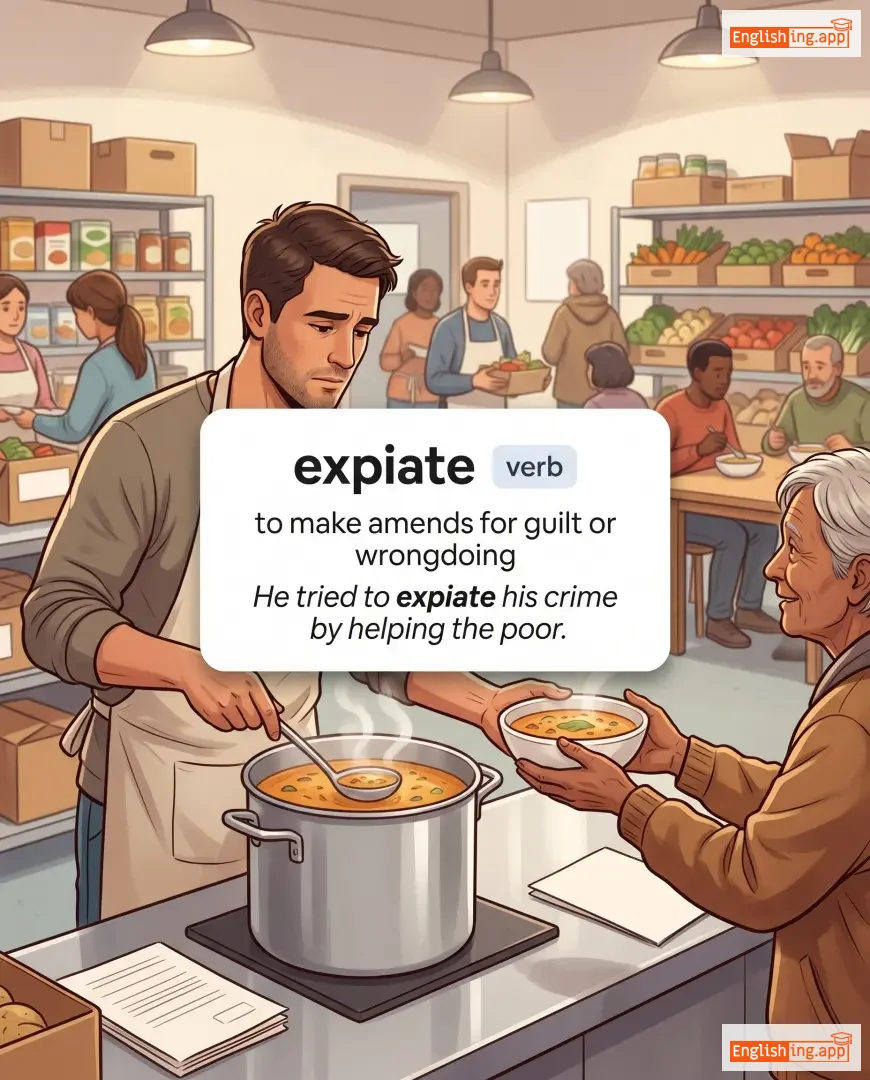
expiate definition card — visual illustration of the meaning
verb C2
/ˈɛkspieɪt/

to make amends for guilt or wrongdoing

"He tried to expiate his crime by helping the poor."

noun C2
/ˈɛksplətɪv/
罵声 (bakei)

a word or phrase used as an exclamation, often offensive or profane

"He shouted an expletive when he dropped the hammer on his foot."

"彼はハンマーを足に落としたときに罵声をあげました。" (Kare wa hanmā o ashi ni otoshita toki ni bakei o agemashita.)
adjective C2
/ˈɛksplɪkəbəl/
説明可能な (setsumei kanō na)

able to be explained or understood

"His sudden anger was explicable given the stressful situation."

"彼の突然の怒りは、ストレスの多い状況を考慮すれば説明可能だった。" (Kare no totsuzen no ikari wa, sutoresu no ōi jōkyō o kōryo sureba setsumei kanō datta.)
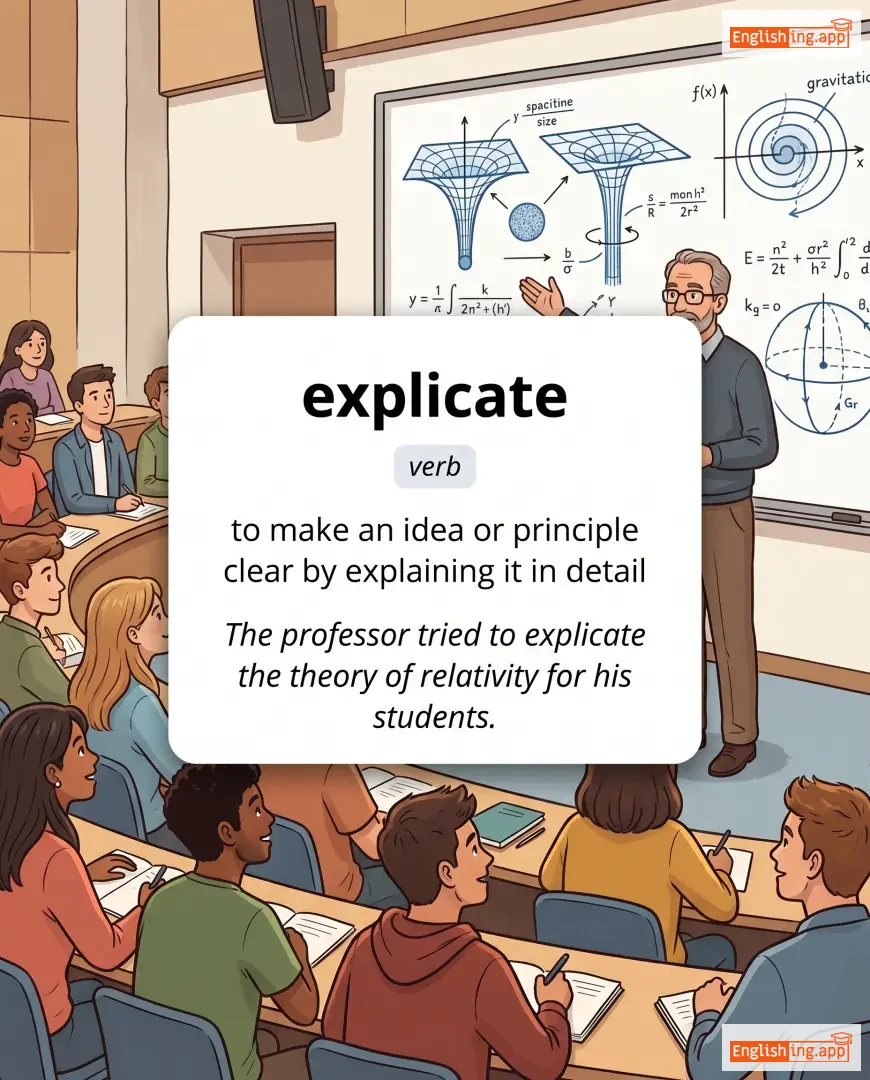
explicate definition card — visual illustration of the meaning
verb C2
/ˈɛksplɪkeɪt/
説明する (setsumei suru)

to make an idea or principle clear by explaining it in detail

"The professor tried to explicate the theory of relativity for his students."

"教授は学生たちに相対性理論を説明しようとしました。" (Kyōju wa gakusei-tachi ni sōtaisei riron o setsumei shiyō to shimashita.)
noun C2
/ˈɛksplɪkeɪtər/
解説者 (kaisetsusha)

a person who explains or interprets something in detail

"The critic served as an explicator of the poet’s complex works."

"批評家は詩人の複雑な作品の解説者として務めました。" (Hihyōka wa shijin no fukuzatsu na sakuhin no kaisetsusha toshite tsutomemashita.)
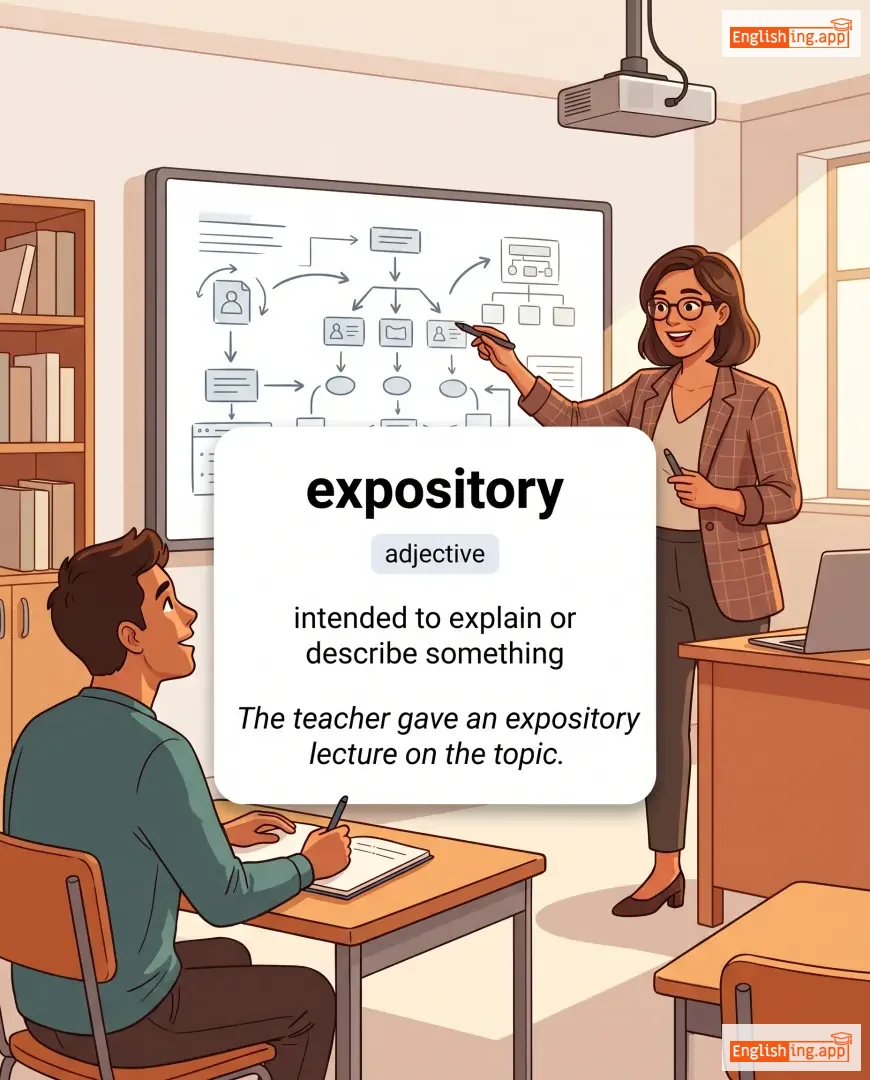
expository definition card — visual illustration of the meaning
adjective C2
/ɪkˈspɒzɪtəri/
説明的 (setsumeiteki)

intended to explain or describe something

"The teacher gave an expository lecture on the topic."

"先生はそのトピックについて説明的な講義をしました。" (Sensei wa sono topikku ni tsuite setsumeiteki na kōgi o shimashita.)
verb C2
/ɪkˈspɒstjʊleɪt/
反対する (hantai suru)

to express strong disapproval or disagreement

"She expostulated with her friend about the risky decision."

"彼女は友人に対してリスクのある決定について反対しました。" (Kanojo wa yūjin ni taishite risuku no aru kettei ni tsuite hantai shimashita.)
noun C2
/ɪkˌspɒstjʊˈleɪʃən/
抗議 (kōgi)

the act of expressing protest or disagreement

"His expostulation against the unfair rules was ignored."

"不公平なルールに対する彼の抗議は無視されました。" (Fukōhei na rūru ni taisuru kare no kōgi wa mushi saremashita.)
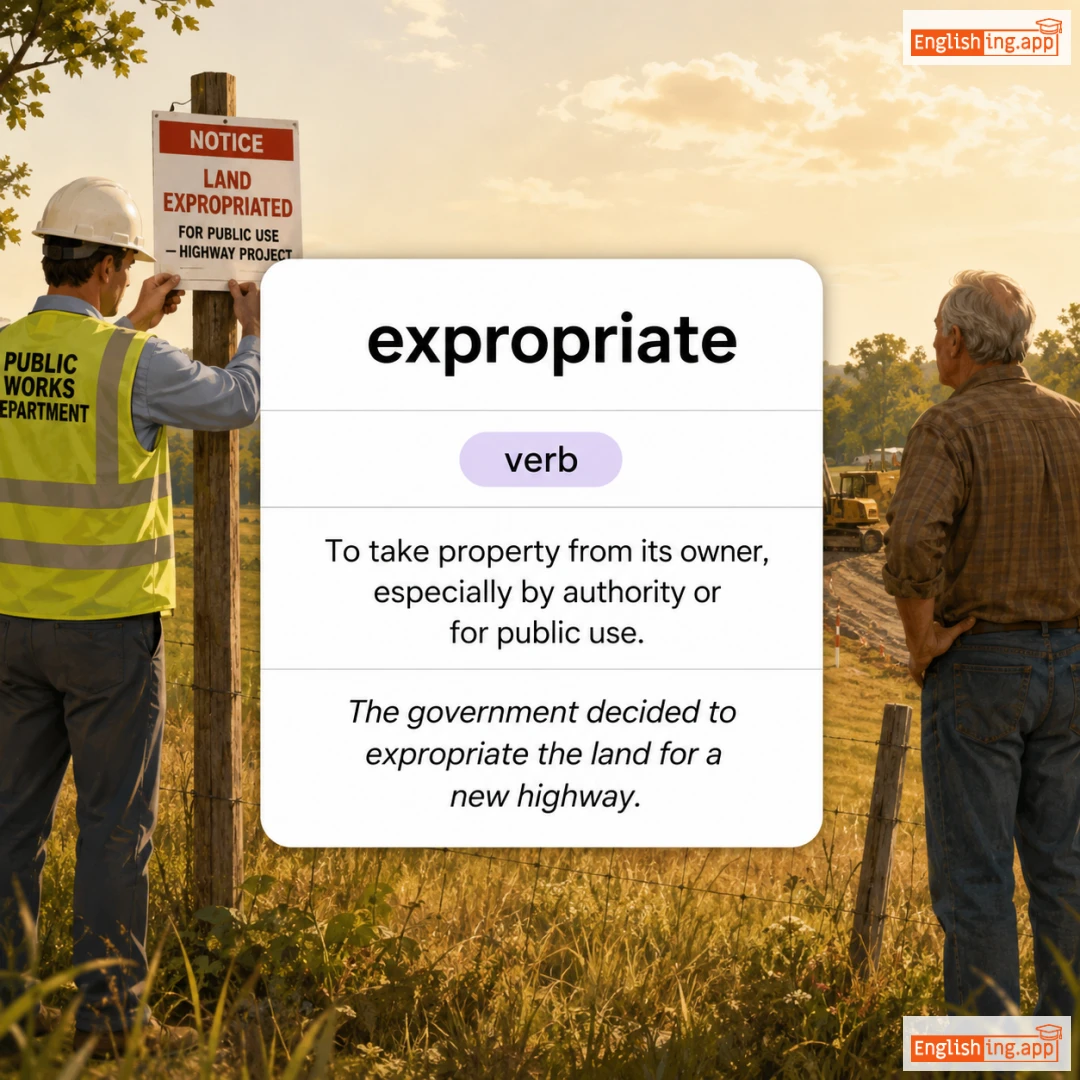
expropriate definition card — visual illustration of the meaning
verb C2
/ɛksˈproʊprieɪt/
収用する (shūyō suru)

To take property from its owner, especially by authority or for public use.

"The government decided to expropriate the land for a new highway."

"政府は新しい高速道路のために土地を収用することを決定した。" (Seifu wa atarashī kōsokudōro no tame ni tochi o shūyō suru koto o kettei shita.)
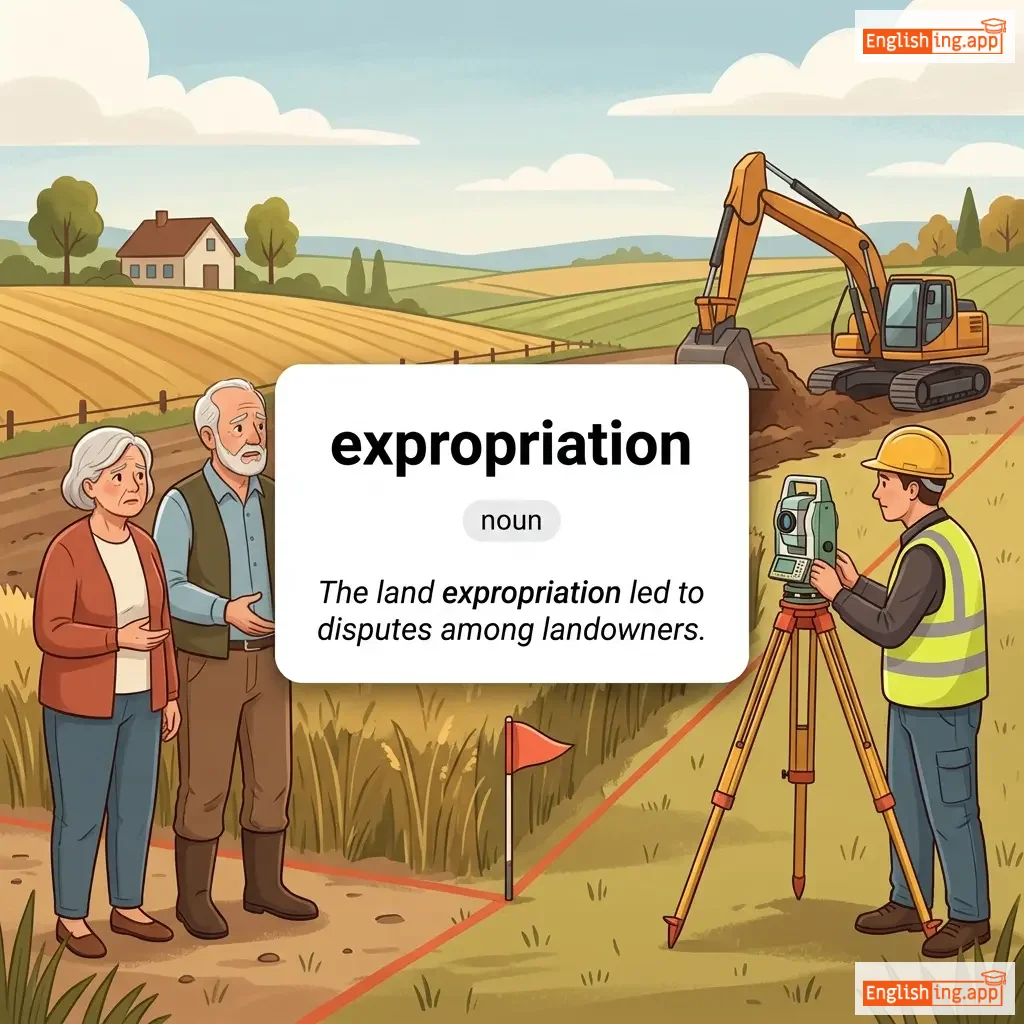
expropriation definition card — visual illustration of the meaning
noun C2
/ɪkˌsprəʊ.priˈeɪ.ʃən/
収用 (shūyō)

The act of government taking private property, also known as confiscation, nationalization, or seizure.

"The land expropriation led to disputes among landowners."

"土地の収用は土地所有者間で争いを引き起こしました。" (Tochi no shūyō wa tochi shoyūsha kan de arasoi o hikiokoshimashita.)
verb C2
/ɪkˈspʌndʒ/
削除 (sakujo)

To erase or remove completely, often something unwanted.

"He managed to expunge the embarrassing memory from his mind."

"彼は恥ずかしい記憶を心から消し去ることに成功しました。" (Kare wa hazukashī kioku o kokoro kara keshi-saru koto ni seikō shimashita.)
verb C2
/ˈekspərˌɡeɪt/
削除する (sakujosuru)

To remove offensive or objectionable parts from a text or speech.

"The publisher decided to expurgate the novel before reprinting it."

"出版社は再版前に小説を削除することにした。" (shuppansha wa saihan mae ni shosetsu o sakujosuru koto ni shita)