ভোকাবুলারিসমূহ

ইংরেজি শব্দের বাংলা অর্থ | English to Bangla Word Meaning Dictionary

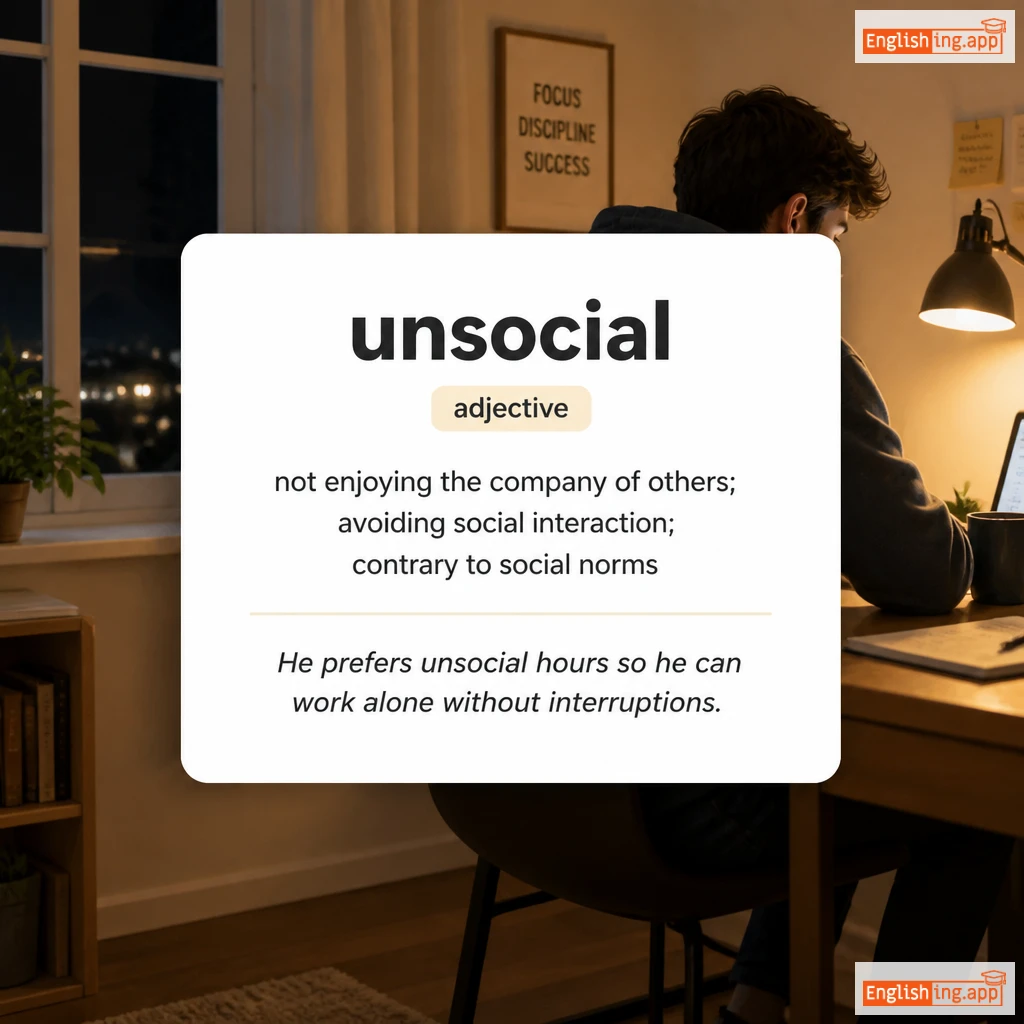
unsocial definition card — visual illustration of the meaning
adjective C1
/ʌnˈsəʊʃəl/
非社交的な (hi shakouteki na)

not enjoying the company of others; avoiding social interaction; contrary to social norms

"He prefers unsocial hours so he can work alone without interruptions."

"彼は一人で働くために非社交的な時間を好む。" (kare wa hitori de hataraku tame ni hi shakouteki na jikan o konomu)
unsold definition card — visual illustration of the meaning
adjective C1
/ʌnˈsoʊld/
未販売の (mihambai no)

not sold; remaining without a buyer

"The unsold goods were returned to the warehouse."

"未販売の商品は倉庫に戻されました。" (mihambai no shouhin wa souko ni modosaremashita)
adjective C1
/ˌʌnsəˈfɪstɪˌkeɪtɪd/
未洗練 (misairen)

Lacking worldly experience, refinement, or complexity.

"The villagers led an unsophisticated but happy life."

"村人たちは未洗練だが、幸せな生活を送っていた。" (Murabito-tachi wa misairen daga, shiawase na seikatsu wo okutte ita.)
adjective C1
/ʌnˈspiːkəbl/
言葉では表現できない (kotoba de wa hyougen dekinai)

too bad or shocking to be expressed in words

"The survivors endured unspeakable horrors during the war."

"生存者は戦争中に言葉では表現できない恐怖に耐えました。" (Seizon-sha wa sensou-chuu ni kotoba de wa hyougen dekinai kyoufu ni taemashita.)
adjective C1
/ʌnˈsteɪtɪd/
未表明 (mihyoumei)

not expressed directly in words; implied or left unsaid

"The contract included several unstated expectations."

"契約にはいくつかの未表明の期待が含まれていました。" (Keiyaku ni wa ikutsuka no mihyoumei no kitai ga fukumarete imashita.)
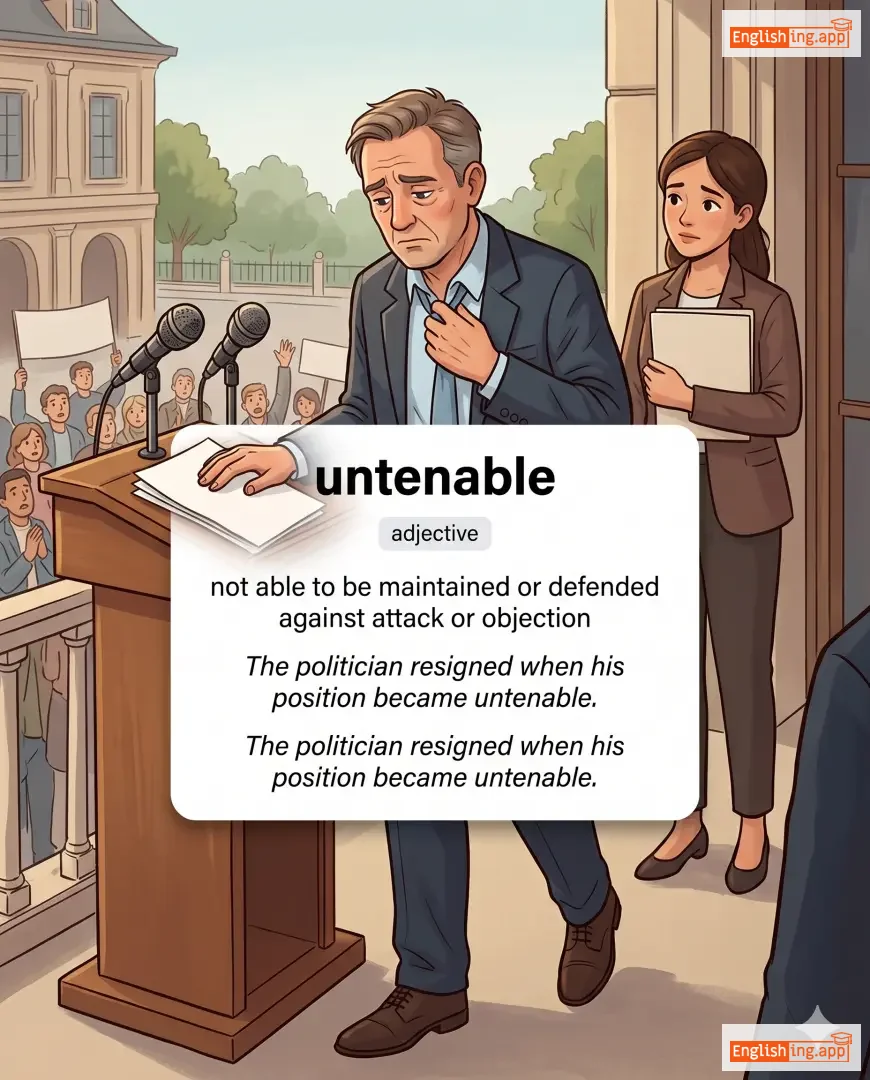
untenable definition card — visual illustration of the meaning
adjective C1
/ʌnˈtɛnəbl/
維持できない (ijidekinai)

not able to be maintained or defended against attack or objection

"The politician resigned when his position became untenable."

"政治家は彼の立場が維持できなくなったときに辞職しました。" (Seijika wa kare no tachiba ga iji dekinakunatta toki ni jishoku shimashita.)
unthinking definition card — visual illustration of the meaning
adjective C1
/ʌnˈθɪŋkɪŋ/
軽率な (keisotsu na)

done without careful thought; automatic or thoughtless

"His unthinking remark hurt her feelings."

"彼の軽率な発言は彼女の気持ちを傷つけた。" (kare no keisotsu na hatsugen wa kanojo no kimochi o kizutsuketa)
adjective C1
/ʌnˈtaɪmli/
時期尚早 (jiki shōsō)

Happening or done at an unsuitable or premature time.

"His untimely death shocked the entire community."

"彼の時期尚早な死はコミュニティ全体を驚かせました。" (Kare no jiki shōsō na shi wa komyuniti zentai o odorokasemashita.)
adjective C1
/ʌnˈtaɪərɪŋ/
不屈の; 絶え間ない; 疲れを知らない (fuketsu no; taemai nai; tsukare o shiranai)

continuing without stopping; persistent; tireless

"Her untiring efforts finally led to success."

"彼女の不屈の努力は最終的に成功に繋がった。" (Kanojo no fuketsu no doryoku wa saishūteki ni seikō ni tsunagatta.)
adjective C1
/ʌnˈtoʊld/
数えきれない (kazoekirenai)

Too great or numerous to be described or counted.

"The project caused untold stress for everyone involved."

"そのプロジェクトは関係者全員に数えきれないストレスを引き起こしました。" (Sono purojekuto wa kankeisha zen'in ni kazoekirenai sutoresu o hikiokoshimashita.)
adjective C1
/ʌnˈtʌtʃəbəl/
触れられない; 批判や攻撃を受けない (furerarenai; hihan ya kōgeki o ukenai)

not able to be touched or affected; beyond criticism or attack

"The CEO seemed untouchable despite the scandal."

"CEOはスキャンダルにもかかわらず、アンタッチャブルのように見えた。" (CEO wa sukyandaru ni mo kakawarazu, antatchaburu no yō ni mieta.)
adjective C1
/ʌnˈvaɪəbl/
実現不可能 (jitsugen fukanou)

Not capable of working successfully; not feasible or practical.

"The project was deemed unviable due to high costs."

"高額なコストのため、このプロジェクトは実現不可能と見なされました。" (Kougaku na kosuto no tame, kono purojekuto wa jitsugen fukanou to minasa remashita.)
adjective C1
/ʌnˈvɔɪst/
未表現 (mihyougen)

not expressed in speech; in phonetics, a sound produced without vocal cord vibration

"The student kept her opinion unvoiced during the meeting."

"学生は会議中に自分の意見を未表現のままにしておいた。" (Gakusei wa kaigi-chuu ni jibun no iken wo mihyougen no mama ni shite oita.)
unwarranted definition card — visual illustration of the meaning
adjective C1
/ʌnˈwɒrəntɪd/
不当 (futou)

Not justified or authorized; lacking good reason.

"The employee faced unwarranted criticism from his manager."

"従業員はマネージャーから不当な批判を受けました。" (Jūgyōin wa manējā kara futōna hihan o ukemashita.)
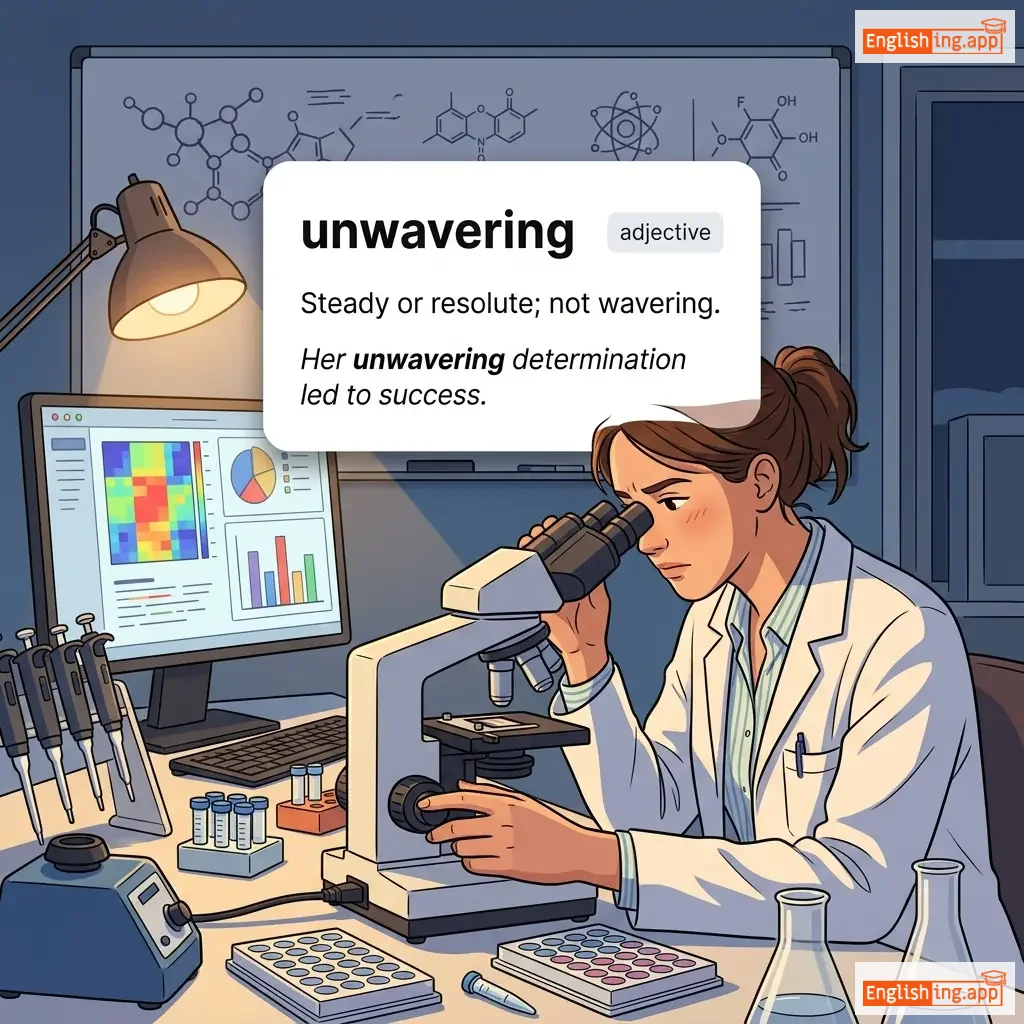
unwavering definition card — visual illustration of the meaning
adjective C1
/ʌnˈweɪ.vər.ɪŋ/
揺るぎない, 堅固な, 決意 (yuruginai, kengona, ketsui)

Steady or resolute; not wavering.

"Her unwavering determination led to success."

"彼女の揺るぎない決意が成功へと導いた。" (Kanojo no yuruginai ketsui ga seikou e to michibiita.)
adjective C1
/ʌnˈwɪtɪŋ/
無自覚 (muzikaku)

Not aware of what is happening; done without realizing.

"She became an unwitting participant in the scam."

"彼女は詐欺の無自覚な参加者になった。" (Kanojo wa sagi no muzikaku na sankasha ni natta.)
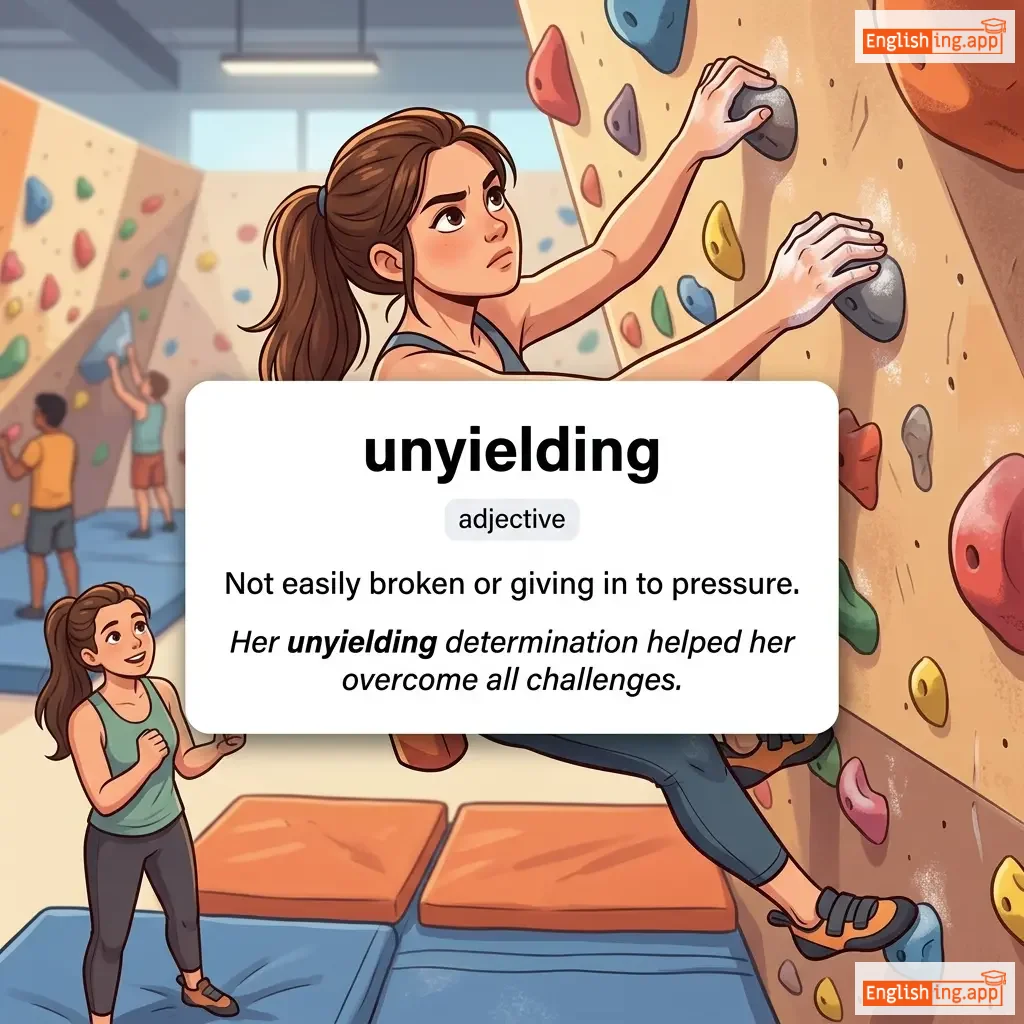
unyielding definition card — visual illustration of the meaning
adjective C1
ʌnˈjiːl.dɪŋ
揺るぎないまたは堅い (yuruginai matawa katai)

Not easily broken or giving in to pressure.

"Her unyielding determination helped her overcome all challenges."

"彼女の揺るぎない決意が彼女をすべての挑戦を乗り越えさせました。" (Kanojo no yuruginai ketsui ga kanojo o subete no chōsen o norikoesasemashita.)
noun C1
/ʌpˈhiːvəl/
激変 (geihen)

a violent or sudden change or disruption to something

"The company faced a major upheaval after the sudden resignation of its CEO."

"その会社は、CEOの突然の辞任後、大きな激変を経験しました。" (Sono kaisha wa, CEO no totsuzen no jinin go, ookina geihen o keiken shimashita.)
adjective C1
/ˈʌpərˌmoʊst/
最上 (saijou)

situated at the highest place or most important

"Her family's safety was uppermost in her mind during the crisis."

"危機の間、彼女の心の中で最も重要なのは家族の安全でした。" (Kiki no aida, kanojo no kokoro no naka de mottomo juuyou na no wa kazoku no anzen deshita.)
Uprightness definition card — visual illustration of the meaning
noun C1
/ˈʌp.raɪt.nəs/
誠実; 正直 (seijitsu; shoujiki)

the quality of being honest and morally correct; integrity

"His uprightness in business dealings earned him great respect."

"彼のビジネスでの正直さは、彼に大きな尊敬をもたらした。" (Kare no bijinesu de no shoujikisa wa, kare ni ookina sonkei o motarashita.)
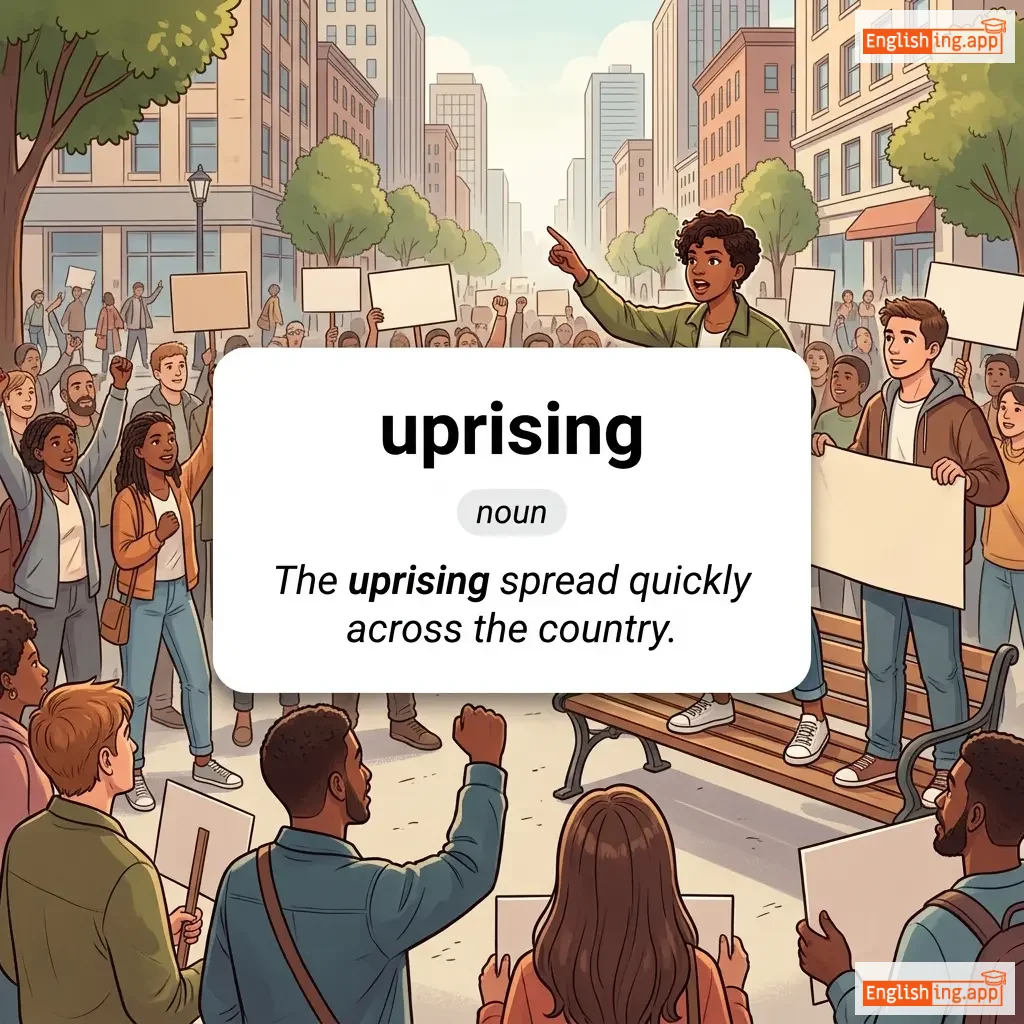
uprising definition card — visual illustration of the meaning
noun C1
/ˈʌpraɪzɪŋ/
反乱 (hanran)

An act of resistance or rebellion; an attempt to overthrow authority or government.

"The uprising spread quickly across the country."

"反乱は国全体に急速に広がった。" (Hanran wa kuni zentai ni kyūsoku ni hirogatta.)
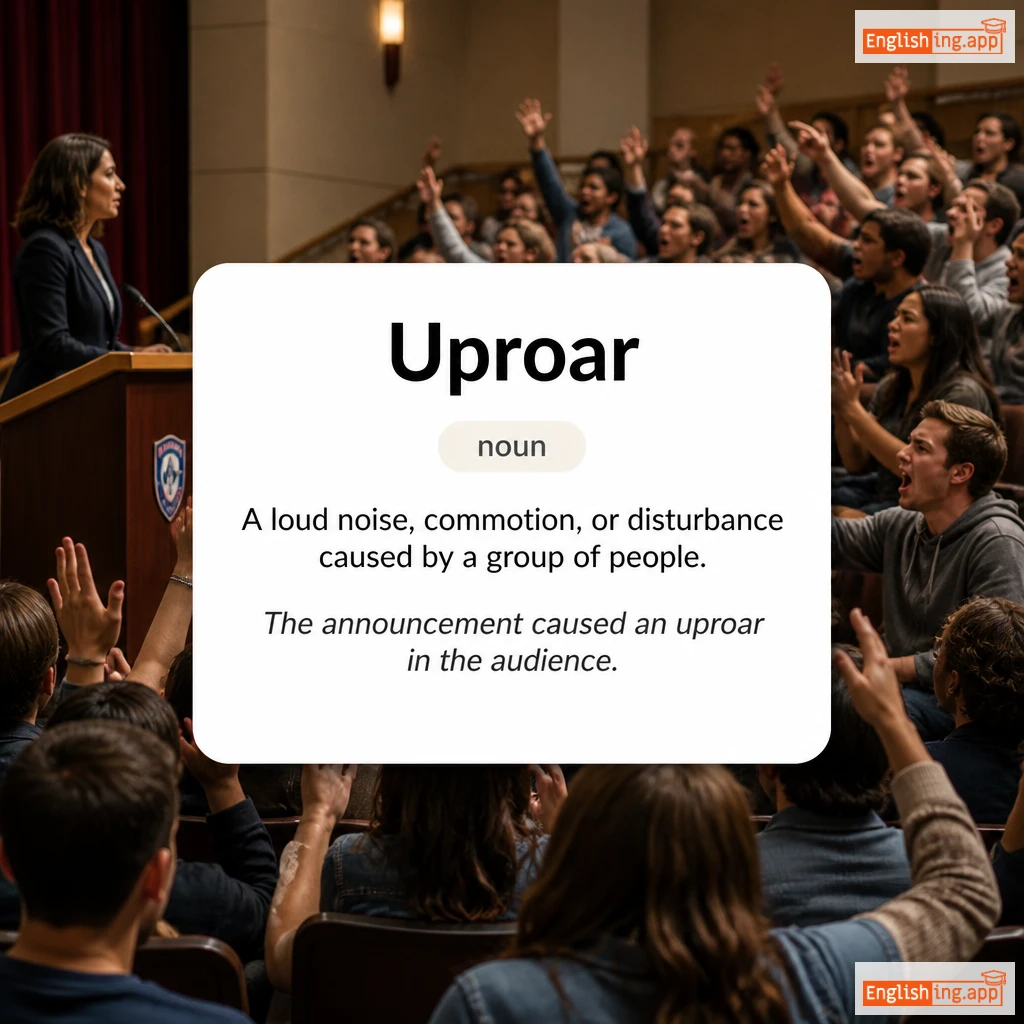
Uproar definition card — visual illustration of the meaning
noun C1
/ˈʌp.rɔːr/
騒動 (soudou)

A loud noise, commotion, or disturbance caused by a group of people.

"The announcement caused an uproar in the audience."

"その発表は観客の中で騒動を引き起こした。" (Sono happyou wa kankyaku no naka de soudou wo hikiokoshita.)
verb C1
/ʌpˈruːt/
引き抜く (hikinuku)

To pull something out of the ground; to remove or displace completely.

"They uprooted the old tree from the garden."

"彼らは庭から古い木を引き抜いた。" (Karera wa niwa kara furui ki o hikinuita.)
Upshot definition card — visual illustration of the meaning
noun C1
/ˈʌp.ʃɒt/
結果 (kekka)

The final result or outcome of a process or situation.

"The upshot of the meeting was that the plan was postponed."

"会議の結果は、計画が延期されたことでした。" (Kaigi no kekka wa, keikaku ga enki sareta koto deshita.)
noun C1
/ˈʌp.tɜːn/
改善 (kaizen)

An improvement or upward trend in a situation, especially in business or economy.

"The company experienced an upturn in sales last quarter."

"その会社は先月、売上の改善を経験しました。" (Sono kaisha wa sengetsu, uriage no kaizen o keiken shimashita.)
adjective C1
/ˌjuːtɪlɪˈtɛəriən/

Designed to be useful or practical rather than attractive; relating to the doctrine that actions are right if they are useful or for the benefit of a majority.

"The building had a simple utilitarian design."

noun C1
/juːˈtoʊpiə/
ユートピア (yūtopia)

An imagined perfect society or place where everything is ideal.

"Many philosophers dreamed of creating a utopia for humanity."

"多くの哲学者は人類のためにユートピアを作る夢を見ていました。" (ōku no tetsugakusha wa jinrui no tame ni yūtopia o tsukuru yume o mite imashita.)
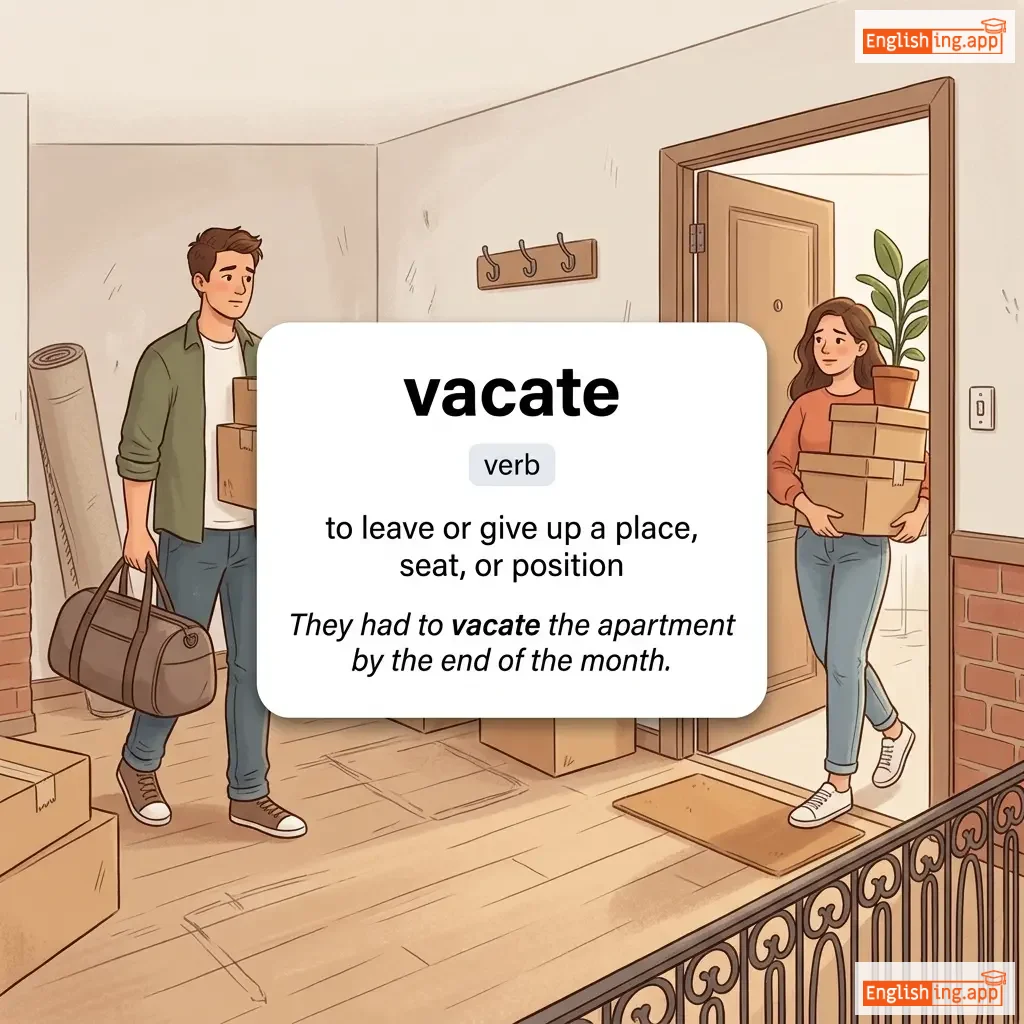
vacate definition card — visual illustration of the meaning
verb C1
/vəˈkeɪt/
退去する (taikyo suru)

to leave or give up a place, seat, or position

"They had to vacate the apartment by the end of the month."

"彼らは月末までにアパートを退去しなければなりませんでした。" (Karera wa getsumatsu made ni apāto o taikyo shinakereba narimasen deshita.)
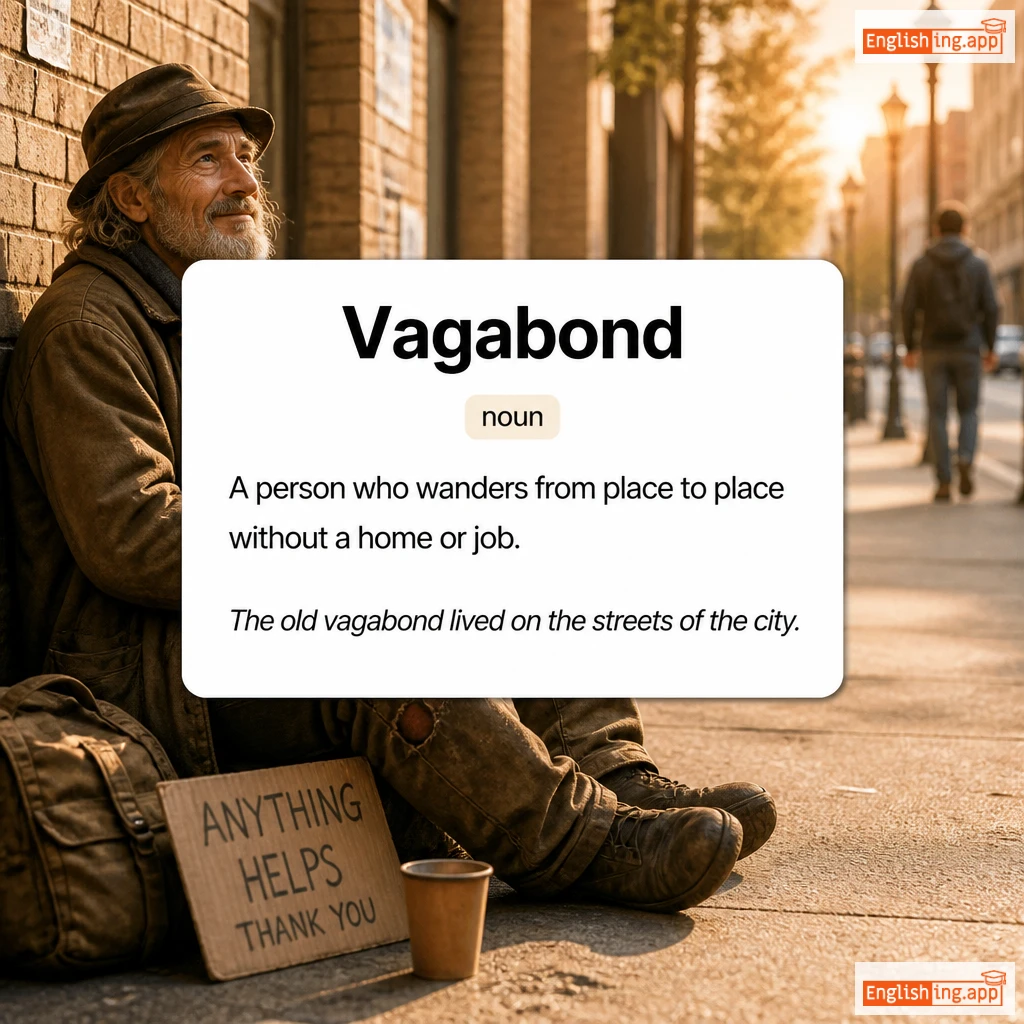
Vagabond definition card — visual illustration of the meaning
noun C1
/ˈvæɡəbɒnd/
浮浪者 (furōsha)

A person who wanders from place to place without a home or job.

"The old vagabond lived on the streets of the city."

"その古い浮浪者は街の通りに住んでいた。" (sono furui furōsha wa machi no tōri ni sunde ita.)
noun C1
/ˈveɪɡrənt/
放浪者 (hōrōsha)

A person without a settled home or regular work who wanders from place to place.

"The police offered shelter to a vagrant sleeping on the street."

"警察は通りで寝ていた放浪者に避難所を提供しました。" (Keisatsu wa tōri de neteita hōrōsha ni hinanjo o teikyō shimashita.)
noun C1
/veɪl/
(tani)

A valley, often used in a poetic or literary sense.

"The village lay hidden in a quiet green vale."

"村は静かな緑の谷に隠れていました。" (Mura wa shizukana midori no tani ni kakurete imashita.)
adjective C1
/ˈvæliənt/
勇敢 (yūkan)

Showing courage, determination, and bravery.

"The firefighters made a valiant effort to save the building."

"消防士たちは建物を救うために勇敢な努力をしました。" (Shōbōshi-tachi wa tatemono o sukuu tame ni yūkan na doryoku o shimashita.)
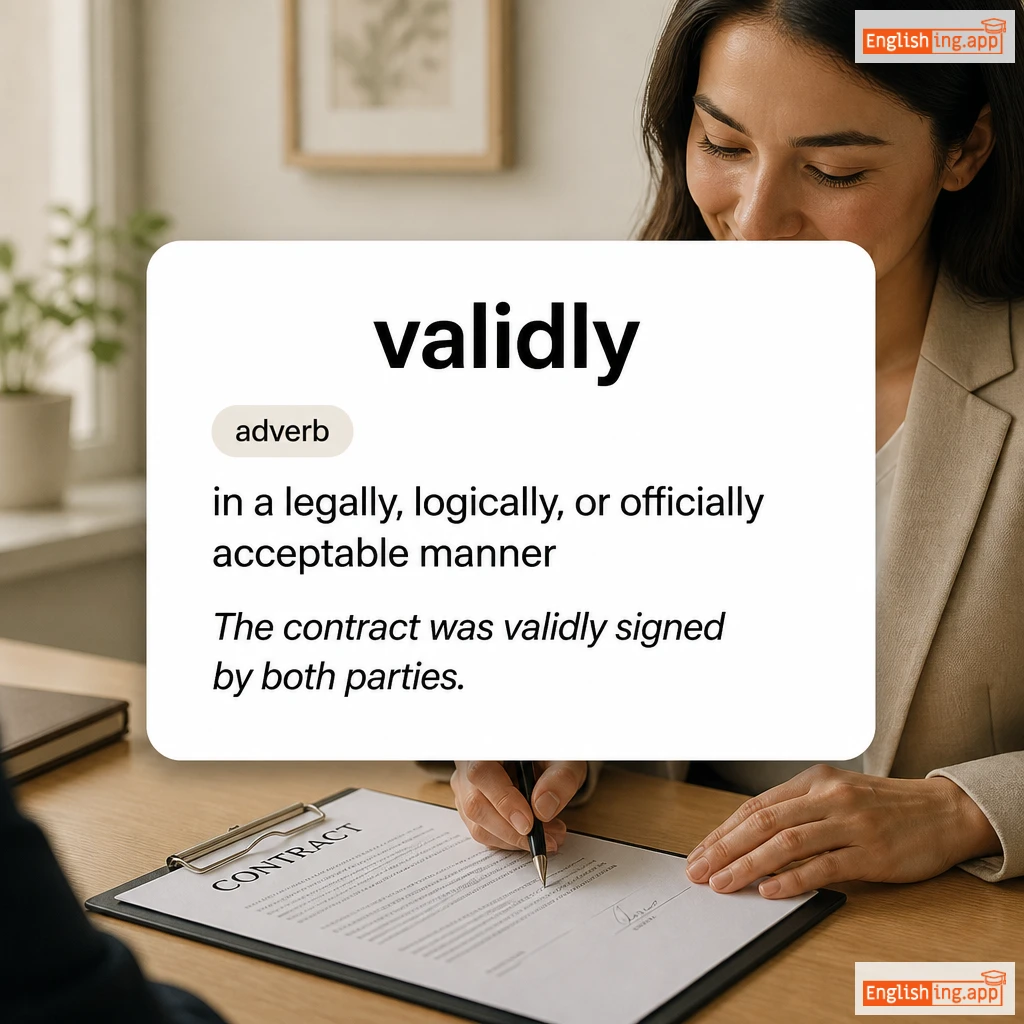
validly definition card — visual illustration of the meaning
adverb C1
/ˈvælɪdli/
有効に (yuukou ni)

in a legally, logically, or officially acceptable manner

"The contract was validly signed by both parties."

"契約は両当事者によって有効に署名されました。" (keiyaku wa ryou toujisha ni yotte yuukou ni shomei saremashita)
noun C1
/ˈvælər/
勇気 (yūki)

Great courage in the face of danger, especially in battle.

"The soldier was honored for his valor during the war."

"その兵士は戦争中の勇気で賞賛されました。" (Sono heishi wa sensō-chū no yūki de shōsan saremashita.)
valuation definition card — visual illustration of the meaning
noun C1
/ˌvæl.juˈeɪ.ʃən/
評価 (hyouka)

the process of deciding how much money something is worth; an estimated value

"The property valuation came in higher than expected."

"不動産の評価は予想より高かった。" (Fudousan no hyouka wa yosou yori takakatta.)
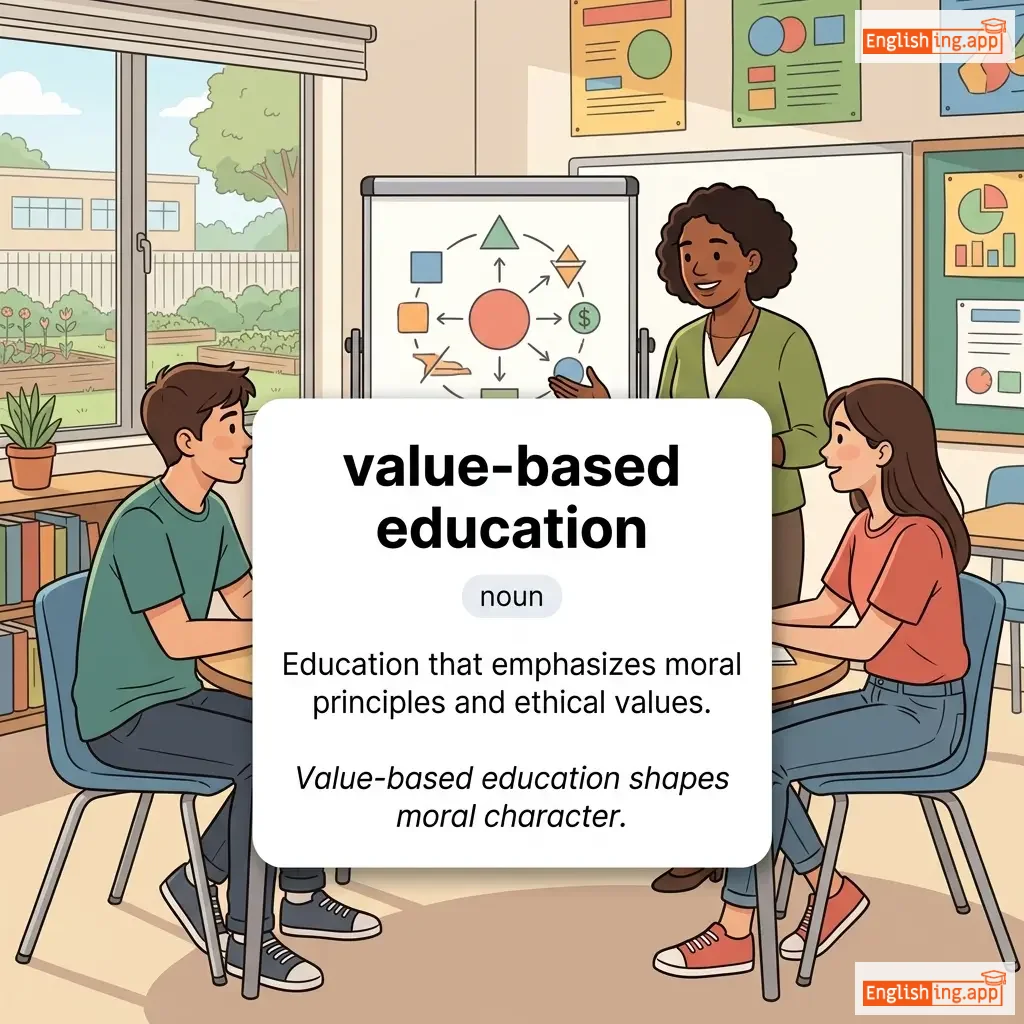
value-based education definition card — visual illustration of the meaning
noun C1
ˈvæljuː beɪst ˌɛdjuːˈkeɪʃən
価値に基づく教育 (kachi ni motoduku kyoiku)

Education that emphasizes moral principles and ethical values.

"Value-based education shapes moral character."

"価値に基づく教育は道徳的な性格を形成します。" (Kachi ni motoduku kyōiku wa dōtoku-teki na seikaku o keisei shimasu.)
adjective C1
/ˈvæljuːləs/
無価値 (mukachi)

having no worth, importance, or usefulness

"The old broken phone was considered valueless."

"壊れた古い電話は無価値だと見なされました。" (Kowareta furui denwa wa mukachi da to minasaremashita.)
noun C1
/ˈvænɡɑːrd/
先駆者 (senkusha)

the forefront of an action, movement, or military force

"The company is at the vanguard of technological innovation."

"その会社は技術革新の先駆者です。" (Sono kaisha wa gijutsu kakushin no senkusha desu.)
verb C1
/ˈvæŋkwɪʃ/
打ち負かす (uchimakasu)

to defeat thoroughly, especially in battle or competition

"The army vanquished its enemies with superior strategy."

"軍隊は優れた戦略で敵を打ち負かしました。" (Guntai wa sugureta senryaku de teki o uchimakashimashita.)
noun C1
/ˈvæntɪdʒ/
有利な位置 (yūri na ichi)

a position or situation that gives an advantage or a good view

"From this vantage, we could see the entire valley."

"この位置から、私たちは谷全体を見ることができました。" (Kono ichi kara, watashitachi wa tani zentai o miru koto ga dekimashita.)
verb C1
/ˈveɪpəraɪz/
蒸発させる (jōhatsu saseru)

to turn into vapor or gas

"The heat of the sun can vaporize water from the surface."

"太陽の熱は水を表面から蒸発させることができます。" (Taiyō no netsu wa mizu o hyōmen kara jōhatsu saseru koto ga dekimasu.)
noun C1
/ˈveɪpəraɪzər/
ベイポライザー (beiporaizā)

a device that turns a liquid into vapor, often for inhalation

"She used a vaporizer to ease her cough."

"彼女は咳を和らげるためにベイポライザーを使いました。" (Kanojo wa seki o yawarageru tame ni beiporaizā o tsukaimashita.)
noun C1
/ˈvɛriəns/
分散 (bunsan)

the state of being different or inconsistent; in statistics, a measure of the spread between numbers

"There is a wide variance in students' performance levels."

"学生のパフォーマンスレベルには大きな分散があります。" (Gakusei no pafōmansu reberu ni wa ōkina bunsan ga arimasu.)
noun/verb C1
/ˈvɑːrnɪʃ/
ニス (nisu)

A liquid that is applied to wood or other materials to form a hard, shiny surface; also to apply such a liquid.

"The carpenter varnished the table to give it a glossy finish."

"大工はテーブルに光沢を与えるためにニスを塗った。" (Daiku wa tēburu ni kōtaku o ataeru tame ni nisu o nutta.)
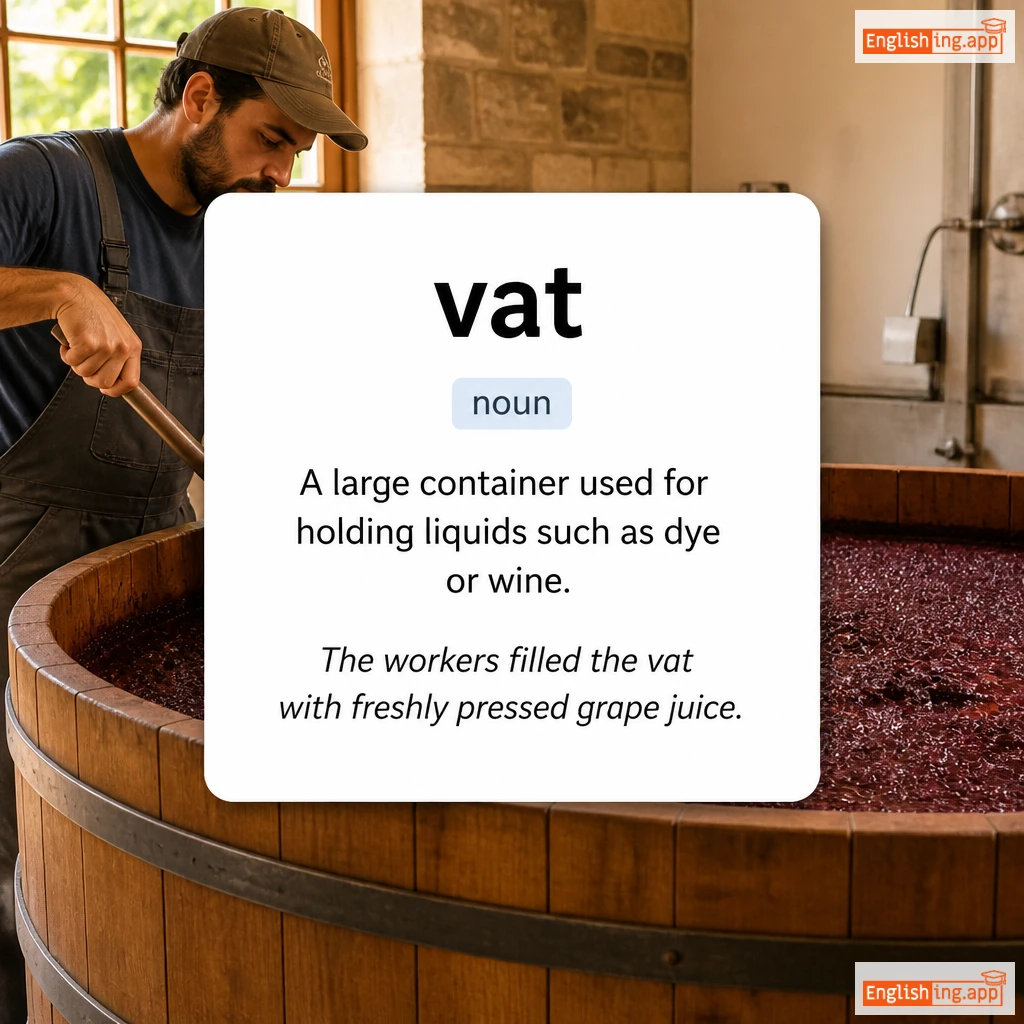
vat definition card — visual illustration of the meaning
🛢️

vat (væt)

noun C1
/væt/
大きな容器 (ookina youki)

A large container used for holding liquids such as dye or wine.

"The workers filled the vat with freshly pressed grape juice."

"作業員たちは新しく絞ったぶどうジュースを大きな容器に入れました。" (Sagyouin-tachi wa atarashiku shibotta budou juusu o ookina youki ni iremashita.)
noun/verb C1
/vɔːlt/
金庫 / 飛び越える (kinko / tobikoeru)

A secure room for storing valuables; also to leap or spring over something.

"The bank kept its gold bars in a secure vault."

"銀行は金の延べ棒を安全な金庫に保管していました。" (Ginkou wa kin no nobebou wo anzen na kinko ni hokan shiteimashita.)
verb C1
/vɪə(r)/
急に方向を変える (kyū ni hōkō o kaeru)

to change direction suddenly

"The car veered off the road to avoid the accident."

"車は事故を避けるために突然道路をそれました。" (Kuruma wa jiko o yokeru tame ni totsuzen dōro o soremashita.)
adjective C1
/ˈvɛdʒɪtətɪv/
成長や生命の基本的なプロセスに関連する、しばしば意識的な思考や活動なしで (seichō ya seimei no kihon-tekina purosesu ni kanren suru, shibashiba ishiki-teki na shikō ya katsudō nashi de)

relating to growth or the basic processes of life, often without conscious thought or activity

"The patient remained in a vegetative state after the accident."

"事故の後、患者は植物状態にとどまっていました。" (Jiko no ato, kanja wa shokubutsu jōtai ni todomatte imashita.)
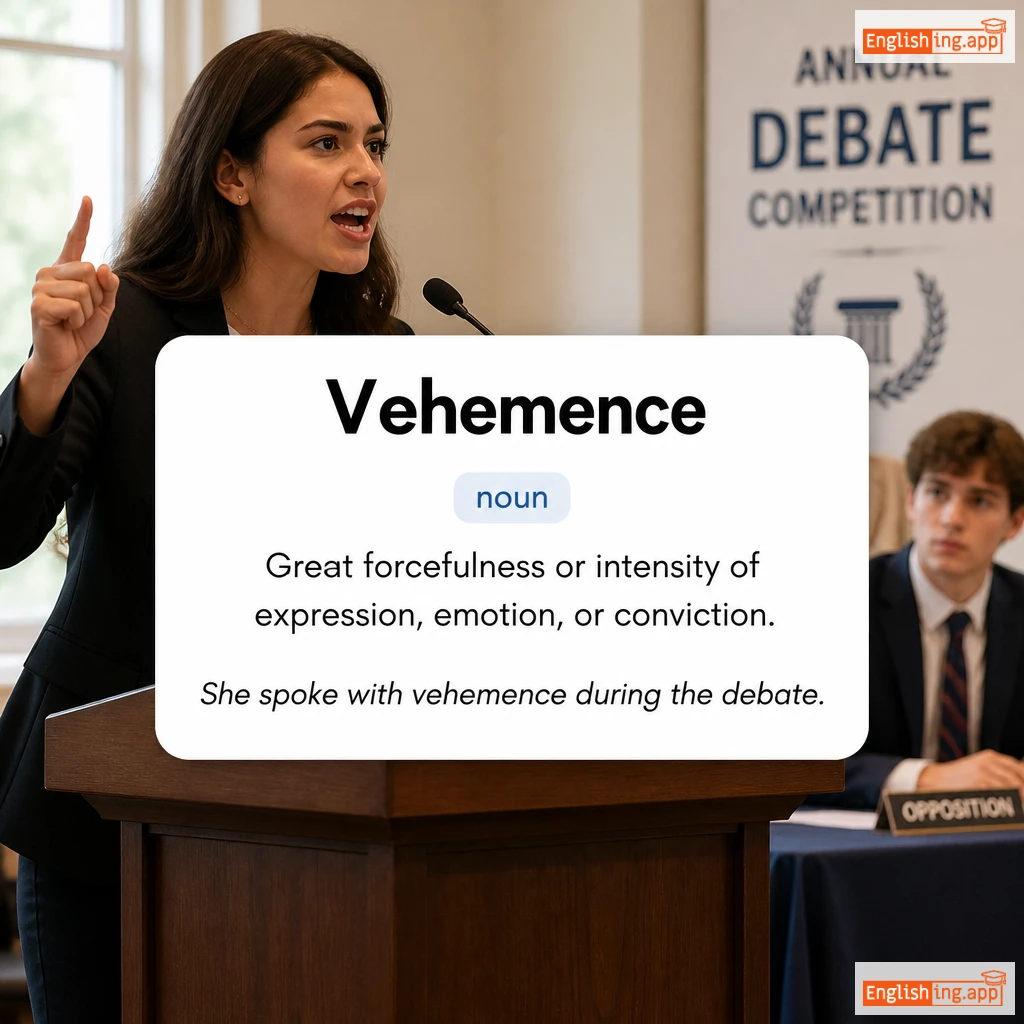
Vehemence definition card — visual illustration of the meaning
noun C1
/ˈviːəməns/
激烈 (gekiretsu)

Great forcefulness or intensity of expression, emotion, or conviction.

"She spoke with vehemence during the debate."

"彼女は討論中に激しく話しました。" (Kanojo wa tōron-chū ni hageshiku hanashimashita.)
adjective C1
/ˈviːəmənt/
激しい (hageshī)

showing strong feeling; forceful, passionate, or intense

"She made a vehement argument against the proposal."

"彼女は提案に対して強い反論をしました。" (Kanojo wa teian ni taishite tsuyoi hanron o shimashita.)