ভোকাবুলারিসমূহ

ইংরেজি শব্দের বাংলা অর্থ | English to Bangla Word Meaning Dictionary

noun C1
/ˈmɒŋ.ɡuːs/
mangosta (mangosta)

a small carnivorous mammal known for its ability to kill venomous snakes

"The mongoose quickly attacked the cobra to protect its young."

"La mangosta atacó rápidamente a la cobra para proteger a sus crías." (La mangosta atacó rápidamente a la cobra para proteger a sus crías.)
noun/adjective C1
/ˈmɒnəkrəʊm/
monocromo (monocromo)

A photograph, painting, or screen image in black and white or varying tones of one color.

"The old film was shot entirely in monochrome."

"La película antigua fue rodada enteramente en monocromo." (La pelicula antigua fue rodada enteramente en monocromo.)
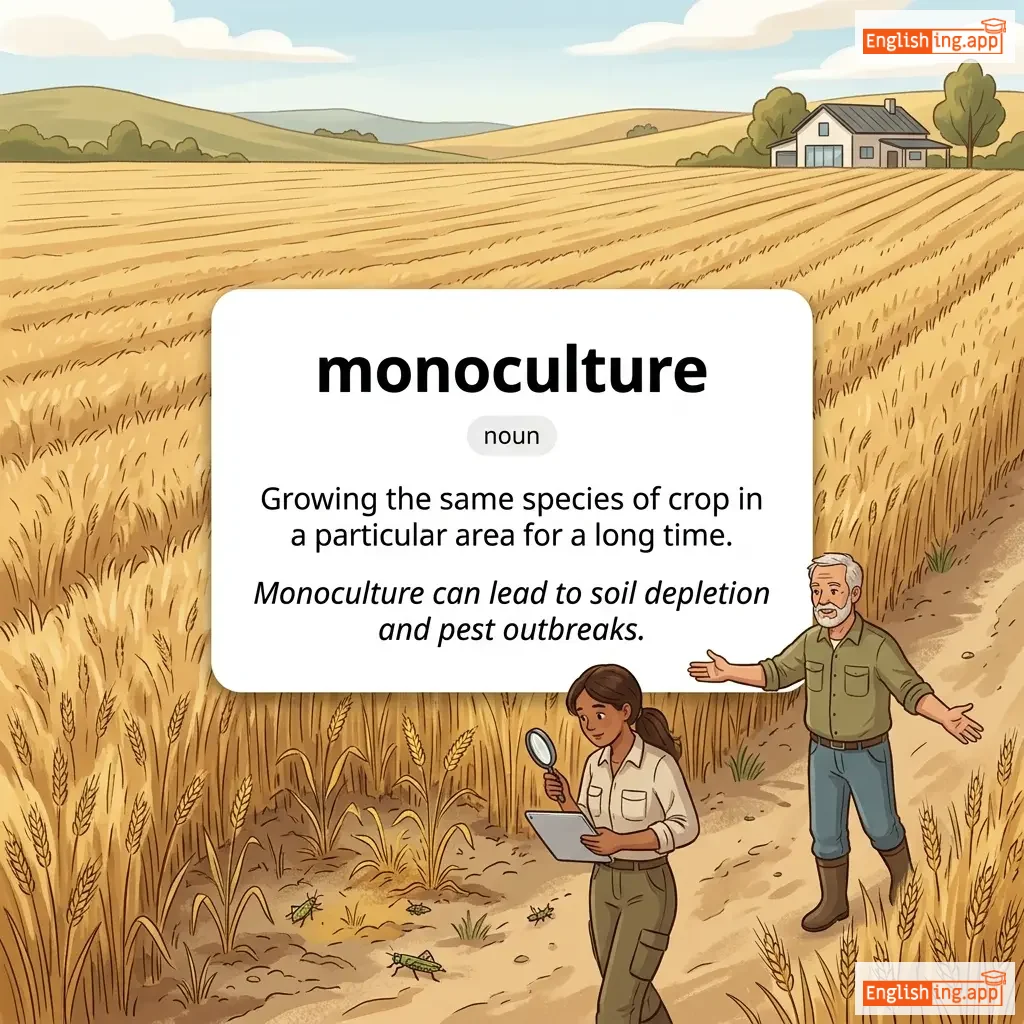
monoculture definition card — visual illustration of the meaning
noun C1
ˈmɒn.əˌkʌl.tʃər
monocultura (monocultura)

Growing the same species of crop in a particular area for a long time.

"Monoculture can lead to soil depletion and pest outbreaks."

"La monocultura puede llevar a la disminución de la fertilidad del suelo y a brotes de plagas." (La monocultura puede llevar a la disminución de la fertilidad del suelo y a brotes de plagas.)
noun C1
/məˈnɒɡəmi/
monogamia (monogamia)

The practice of being married to or in a relationship with only one person at a time.

"Many cultures encourage monogamy as the ideal form of marriage."

"Muchas culturas fomentan la monogamia como la forma ideal de matrimonio." (Muchas culturas fomentan la monogamia como la forma ideal de matrimonio.)
noun C1
/ˈmɒnəlɪθ/
monolito (monolito)

A large single upright block of stone, or a large, powerful, indivisible organization or system.

"The ancient monolith stood in the desert for centuries."

"El antiguo monolito estuvo de pie en el desierto durante siglos." (El antiguo monolito estuvo de pie en el desierto durante siglos.)
adjective C1
/ˌmɒnəˈlɪθɪk/
monolítico (monolitiko)

Massive, uniform, and indivisible; resembling a large single stone or structure.

"The company maintained a monolithic structure resistant to change."

"La compañía mantuvo una estructura monolítica resistente al cambio." (La compania mantuvo una estructura monolitica resistente al cambio.)
noun C1
/ˈmɒnəˌlɒɡ/
monólogo (monologo)

A long speech by one person, often in a play or performance.

"The actor delivered a powerful monologue on stage."

"El actor entregó un poderoso monólogo en el escenario." (El actor entregó un poderoso monólogo en el escenario.)
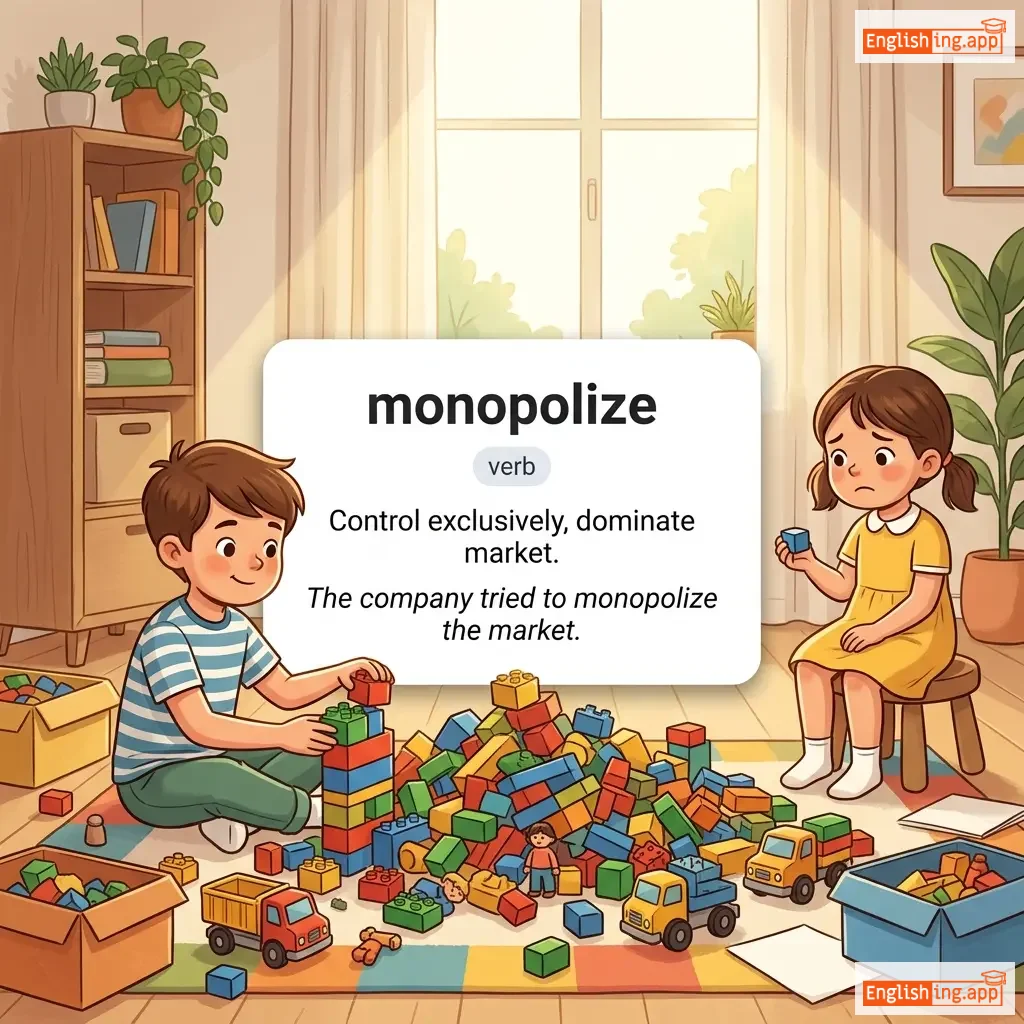
monopolize definition card — visual illustration of the meaning
verb C1
məˈnɒp.ə.laɪz
controlar exclusivamente (controlar exclusivamente)

Control exclusively, dominate market.

"The company tried to monopolize the market."

"La empresa intentó monopolizar el mercado." (La empresa intento monopolizar el mercado.)
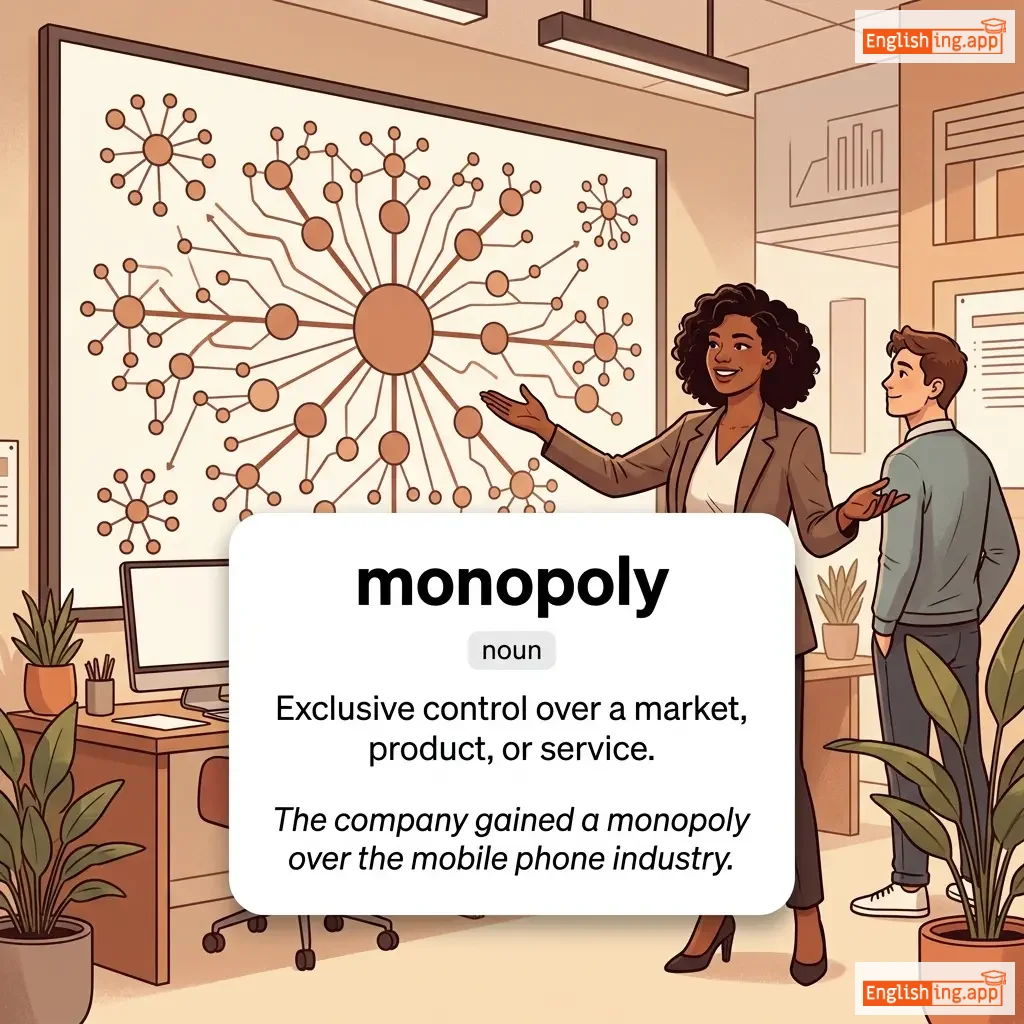
monopoly definition card — visual illustration of the meaning
noun C1
/məˈnɒpəli/
monopolio (monopoly)

Exclusive control over a market, product, or service.

"The company gained a monopoly over the mobile phone industry."

"La empresa obtuvo un monopolio sobre la industria de la telefonía móvil." (La empresa obtuvo un monopolio sobre la industria de la telefonia movil.)
noun C1
/ˈmɒnəˌθiːɪzəm/
monoteísmo (monoteismo)

The belief in the existence of only one God.

"Islam and Christianity are religions based on monotheism."

"El islam y el cristianismo son religiones basadas en el monoteísmo." (El islam y el cristianismo son religiones basadas en el monoteismo.)
noun C1
/ˈmɒn.ə.təʊn/
tono monótono (tono monotono)

A continuous sound, especially of a person's voice, that does not rise and fall in pitch.

"The teacher's monotone made the lecture hard to follow."

"El tono monótono del profesor hizo que la conferencia fuera difícil de seguir." (El tono monotono del profesor hizo que la conferencia fuera difícil de seguir.)
adjective C1
/məˈnɒt.ən.əs/
monótono (monotono)

Dull, tedious, and repetitious; lacking in variety and interest.

"The monotonous routine of office work tired him out."

"La rutina monótona del trabajo de oficina lo agotaba." (La rutina monotona del trabajo de oficina lo agotaba.)
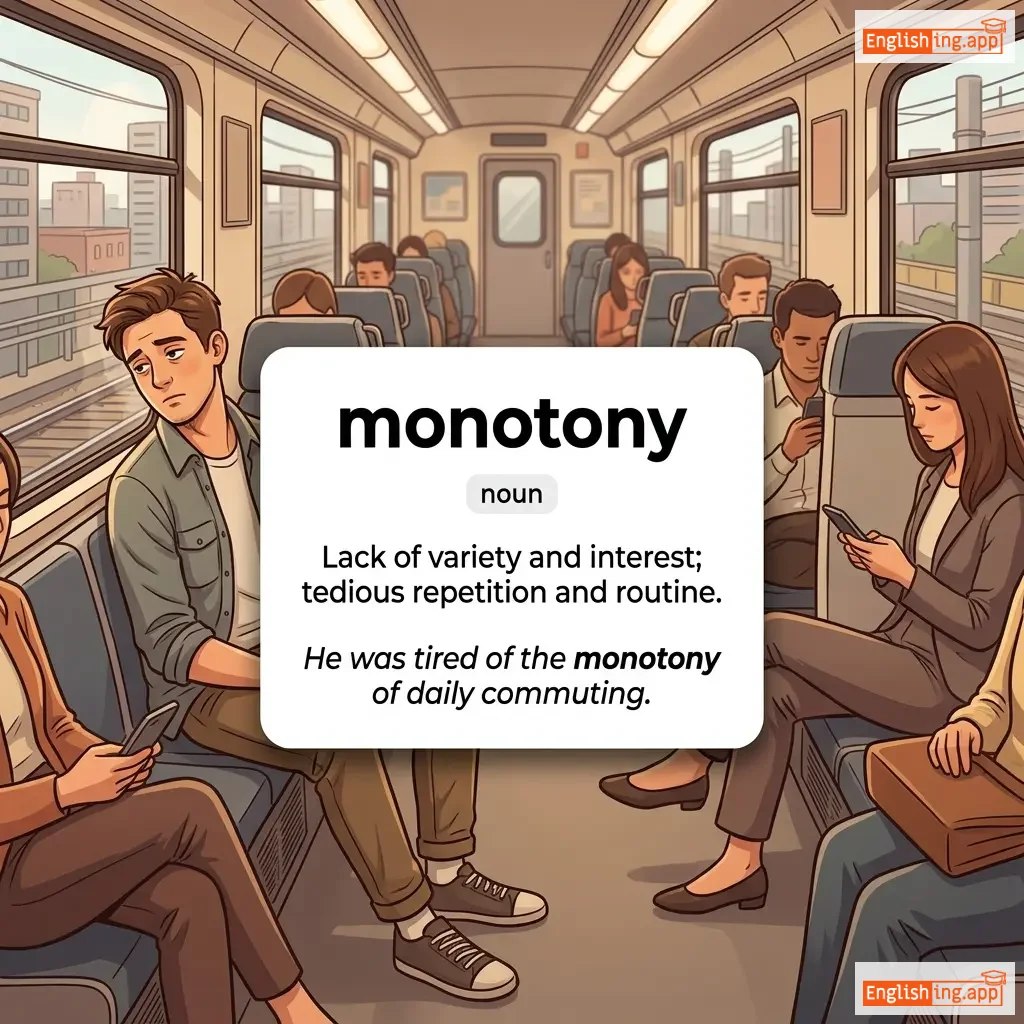
monotony definition card — visual illustration of the meaning
noun C1
/məˈnɒt.ə.ni/
monotonía (monotonia)

Lack of variety and interest; tedious repetition and routine.

"He was tired of the monotony of daily commuting."

"Estaba cansado de la monotonía del viaje diario." (Estaba cansado de la monotonia del viaje diario.)
adjective C1
/ˈmɒnstrəs/
monstruoso; extremadamente grande; chocante o malvado; anormal o antinatural (monstruoso)

extremely large; shockingly evil or wrong; abnormal or unnatural

"The monstrous crime shocked the entire community."

"El crimen monstruoso sorprendió a toda la comunidad." (El crimen monstruoso sorprendió a toda la comunidad.)
noun C1
/mɒnˈtɑːʒ/
montaje (montaje)

A sequence of film editing or a composite image made by combining several separate pictures.

"The film opened with a montage of city life."

"La película comenzó con un montaje de la vida en la ciudad." (La pelicula comenzo con un montaje de la vida en la ciudad.)
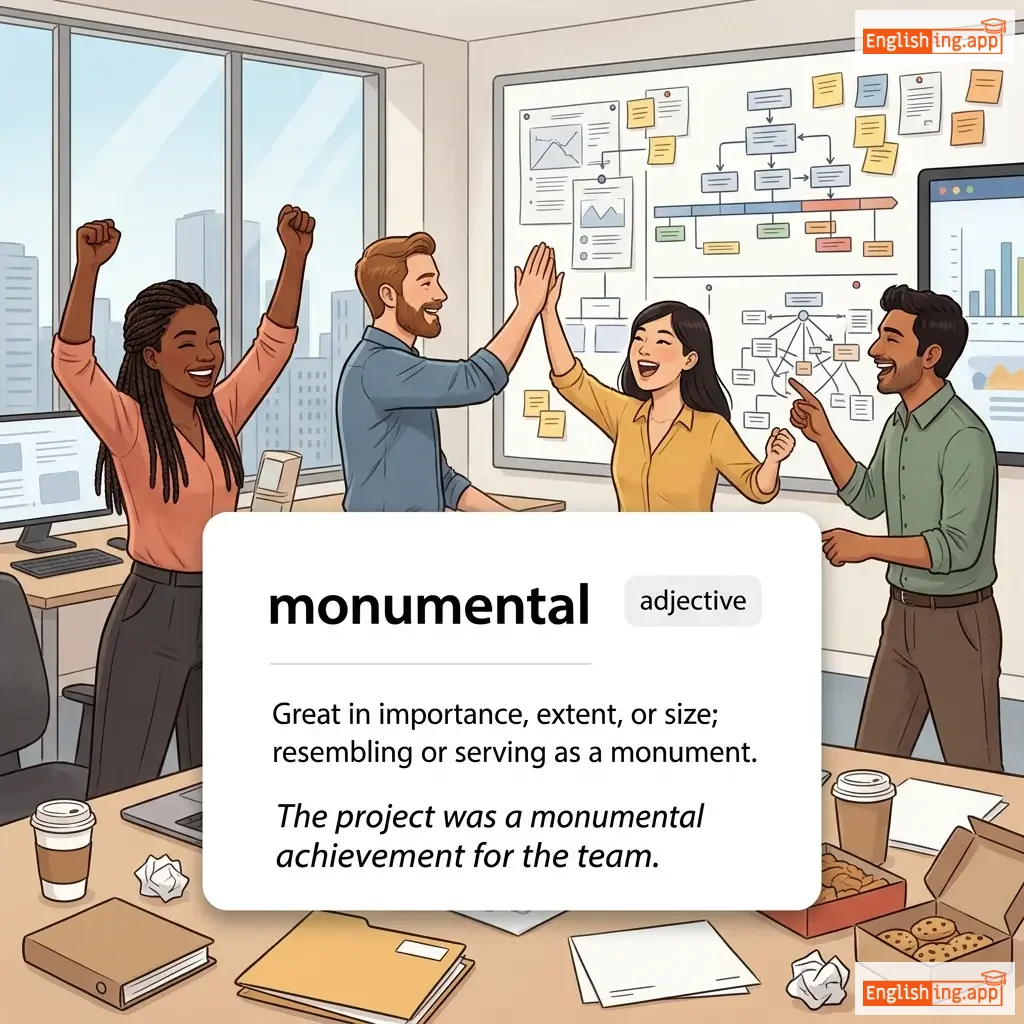
monumental definition card — visual illustration of the meaning
adjective C1
/ˌmɒn.jʊˈmen.təl/
monumental (monumental)

Great in importance, extent, or size; resembling or serving as a monument.

"The project was a monumental achievement for the team."

"El proyecto fue un logro monumental para el equipo." (El proyecto fue un logro monumental para el equipo.)
noun C1
/ˈmuːdi.nəs/
inestabilidad emocional (inestabilidad emocional)

The state of being frequently subject to changes in mood, especially irritability or sadness.

"Her moodiness made it difficult to predict how she would react."

"Su inestabilidad emocional hacía difícil predecir cómo reaccionaría." (Su inestabilidad emocional hacía difícil predecir cómo reaccionaría.)
verb, noun C1
/mʊər/
atar / terreno baldío (atar / terreno baldio)

As a verb: to tie a ship so that it stays in place. As a noun: open, uncultivated land.

"The sailors moored the ship at the dock."

"Los marineros amarraron el barco en el muelle." (Los marineros amarraron el barco en el muelle.)
adjective, verb C1
/muːt/
irrelevante / debatible (irrelevante / debatible)

Adjective: subject to debate or irrelevant. Verb: to suggest an idea for discussion.

"The issue of funding became a moot point after the project was canceled."

"El tema de la financiación se convirtió en un punto irrelevante después de que el proyecto fuera cancelado." (El tema de la financiación se convirtió en un punto irrelevante después de que el proyecto fuera cancelado.)
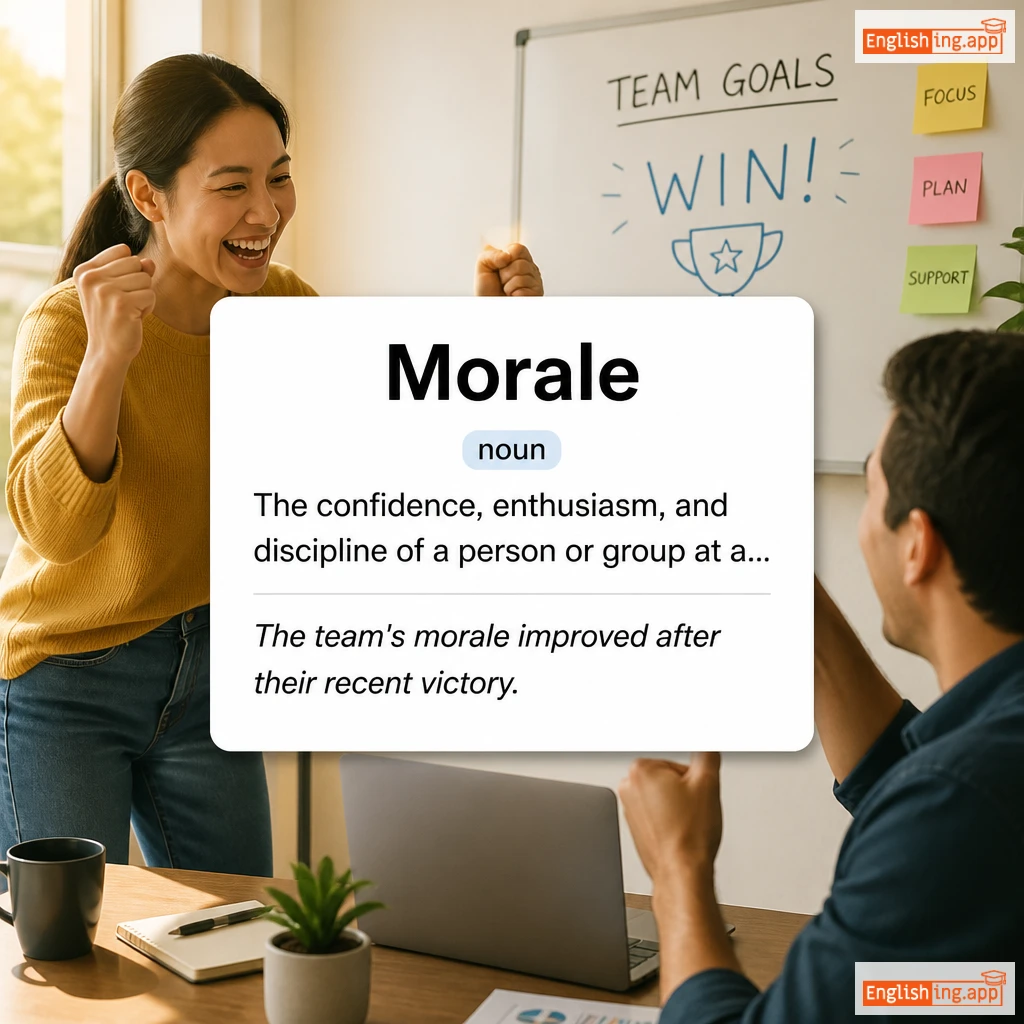
Morale definition card — visual illustration of the meaning
noun C1
/məˈræl/
moral (moral)

The confidence, enthusiasm, and discipline of a person or group at a particular time.

"The team's morale improved after their recent victory."

"La moral del equipo mejoró después de su reciente victoria." (La moral del equipo mejoró después de su reciente victoria.)
noun C1
/ˌmɔːrəˈtɔːriəm/
moratoria (moratoria)

A temporary suspension or delay of an activity, law, or obligation.

"The government announced a moratorium on new mining licenses."

"El gobierno anunció una moratoria sobre las nuevas licencias de minería." (El gobierno anuncio una moratoria sobre las nuevas licencias de mineria.)
adjective C1
/ˈmɔːrbɪd/
interés anormal en temas perturbadores o desagradables (interes anormal en temas perturbadores o desagradables)

Having an abnormal interest in disturbing or unpleasant subjects such as death or disease.

"She had a morbid fascination with crime stories."

"Ella tenía una fascinación mórbida por las historias de crímenes." (Ella tenia una fascinacion morbida por las historias de crimenes.)
noun C1
/mɔːrɡ/
depósito de cadáveres (deposito de cadaveres)

a place where dead bodies are kept, especially to be identified or claimed

"The police took the body to the morgue for identification."

"La policía llevó el cuerpo al depósito de cadáveres para su identificación." (La policia llevo el cuerpo al deposito de cadaveres para su identificacion.)
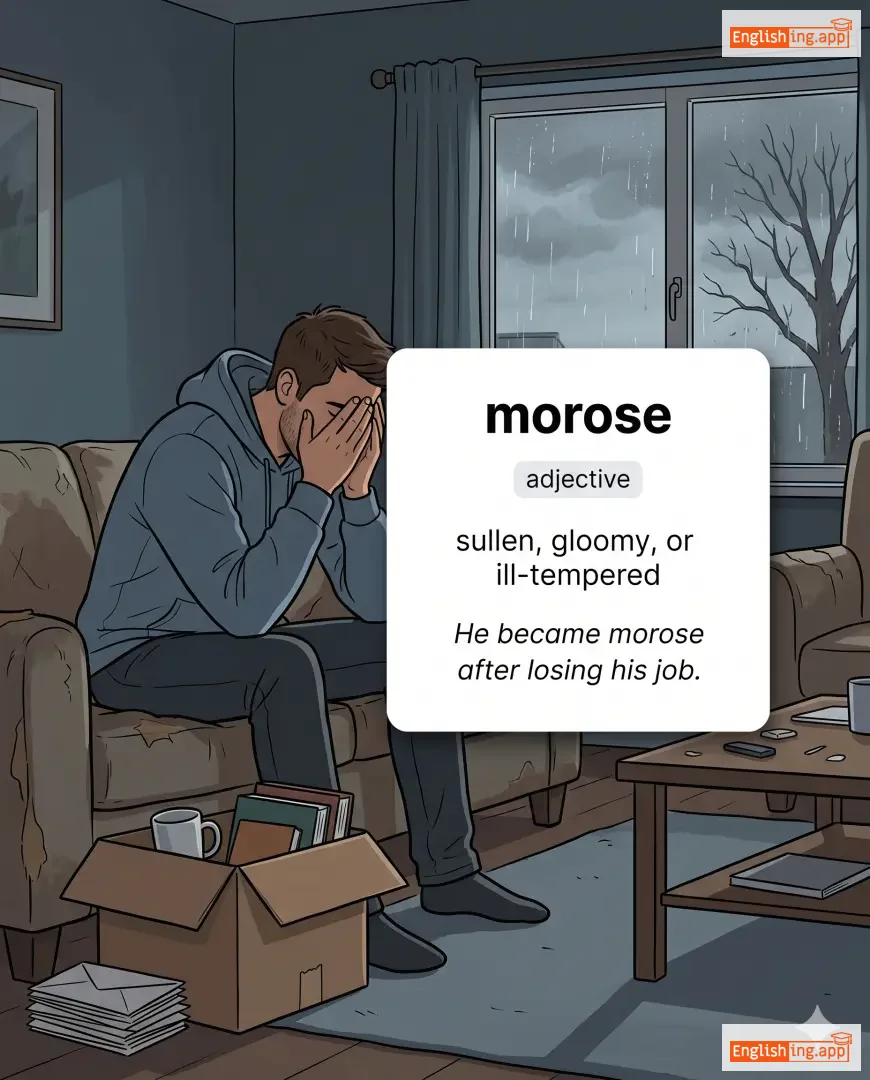
morose definition card — visual illustration of the meaning
adjective C1
/məˈroʊs/
melancólico (melancolico)

sullen, gloomy, or ill-tempered

"He became morose after losing his job."

"Se volvió melancólico después de perder su trabajo." (Se volvio melancolico despues de perder su trabajo.)
verb C1
/mɔːrf/
transformarse (transformarse)

to change smoothly from one form, shape, or character into another

"The caterpillar will morph into a butterfly."

"La oruga se transformará en una mariposa." (La oruga se transformará en una mariposa.)
noun C1
/mɔːrˈfɑːlədʒi/
morfología (morfologia)

the study of the form and structure of things, especially in language and biology

"Morphology studies the structure of words and how they are formed."

"La morfología estudia la estructura de las palabras y cómo se forman." (La morfología estudia la estructura de las palabras y cómo se forman.)
adjective C1
/ˈmɔːtəl/
mortal; perecedero; humano (mortal; perecedero; humano)

subject to death; having a limited lifespan; human

"All human beings are mortal and will eventually die."

"Todos los seres humanos son mortales y eventualmente morirán." (Todos los seres humanos son mortales y eventualmente morirán.)
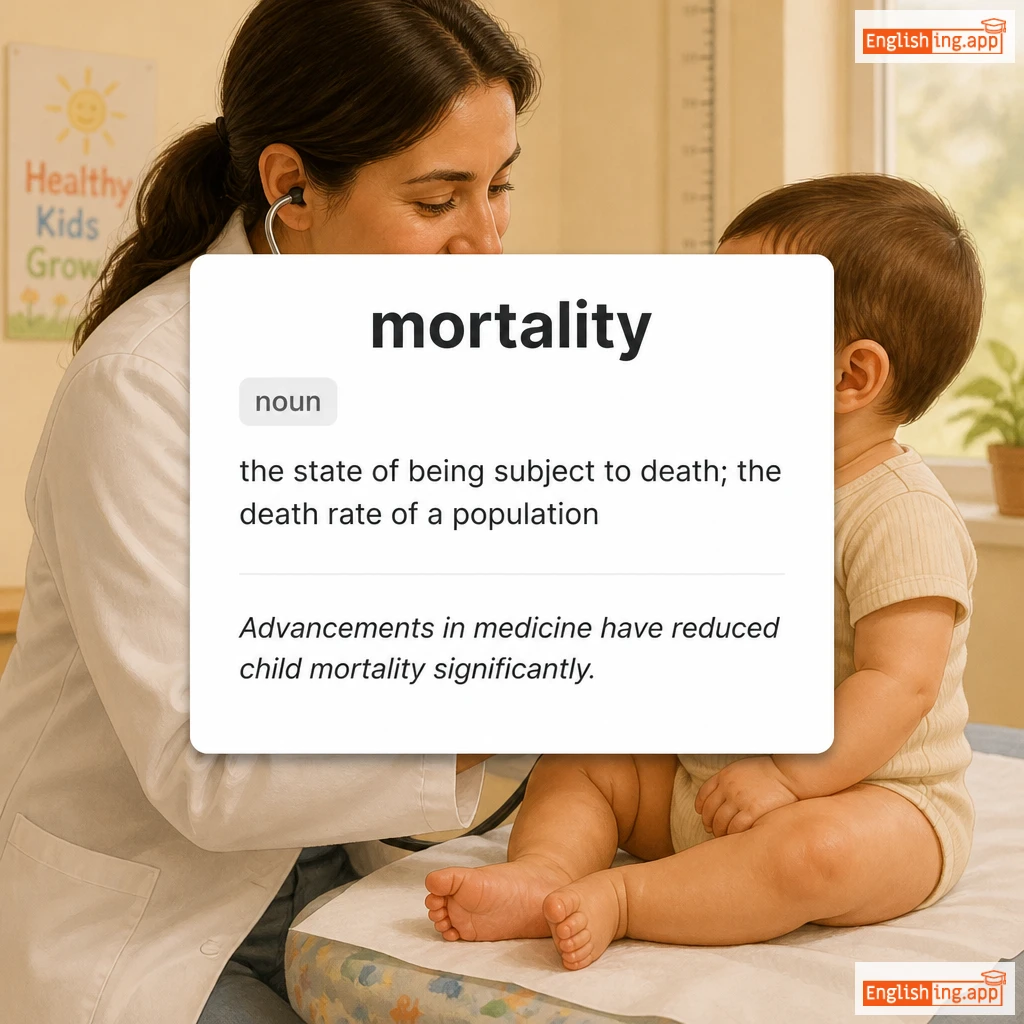
mortality definition card — visual illustration of the meaning
noun C1
/mɔːˈtæləti/
mortalidad (mortalidad)

the state of being subject to death; the death rate of a population

"Advancements in medicine have reduced child mortality significantly."

"Los avances en medicina han reducido significativamente la mortalidad infantil." (Los avances en medicina han reducido significativamente la mortalidad infantil.)
noun C1
/ˈmɔːrtər/
mezcla para juntar ladrillos / pequeño cañón (mezcla para juntar ladrillos / pequeno canon)

a mixture used in building to bond bricks or stones together; also, a small cannon for firing shells

"The workers applied mortar between the bricks."

"Los trabajadores aplicaron mortero entre los ladrillos." (Los trabajadores aplicaron mortero entre los ladrillos.)
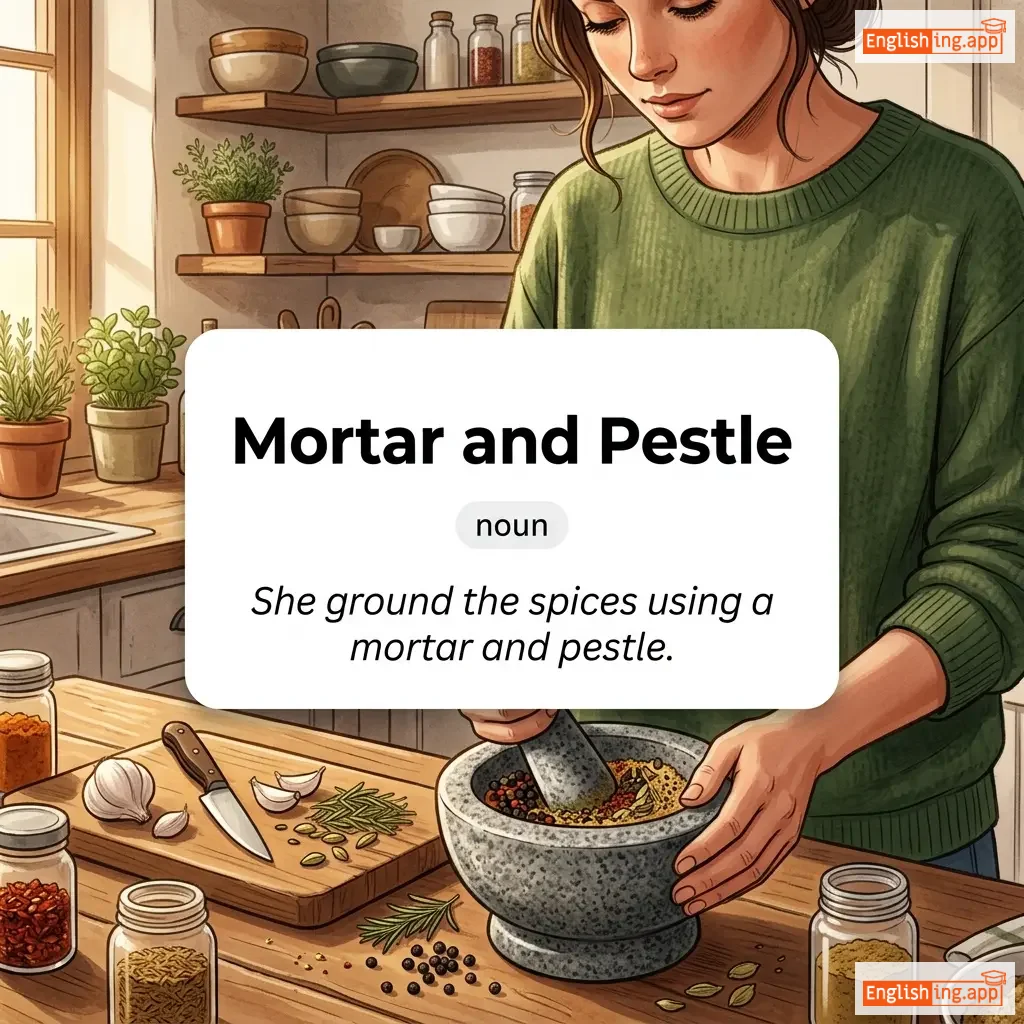
Mortar and Pestle definition card — visual illustration of the meaning
noun C1
/ˈmɔː.tər ænd ˈpes.əl/
mortero y pistilo (mórtar y pistilo)

a bowl and grinding tool used to crush and grind spices, herbs, and other substances

"She ground the spices using a mortar and pestle."

"Ella molió las especias usando un mortero y pistilo." (Ella molió las especias usando un mortero y pistilo.)
Mortgage definition card — visual illustration of the meaning
noun C1
/ˈmɔːrɡɪdʒ/
hipoteca (hipoteca)

a legal agreement where a person borrows money to buy property and pays it back over time

"They applied for a mortgage to buy their new house."

"Solicitaron una hipoteca para comprar su nueva casa." (Solicitaron una hipoteca para comprar su nueva casa.)
noun C1
/moʊˈzeɪɪk/
mosaico (mosaiko)

A picture or pattern produced by arranging together small pieces of stone, tile, or glass.

"The church ceiling was decorated with a beautiful mosaic."

"El techo de la iglesia estaba decorado con un hermoso mosaico." (El techo de la iglesia estaba decorado con un hermoso mosaico.)
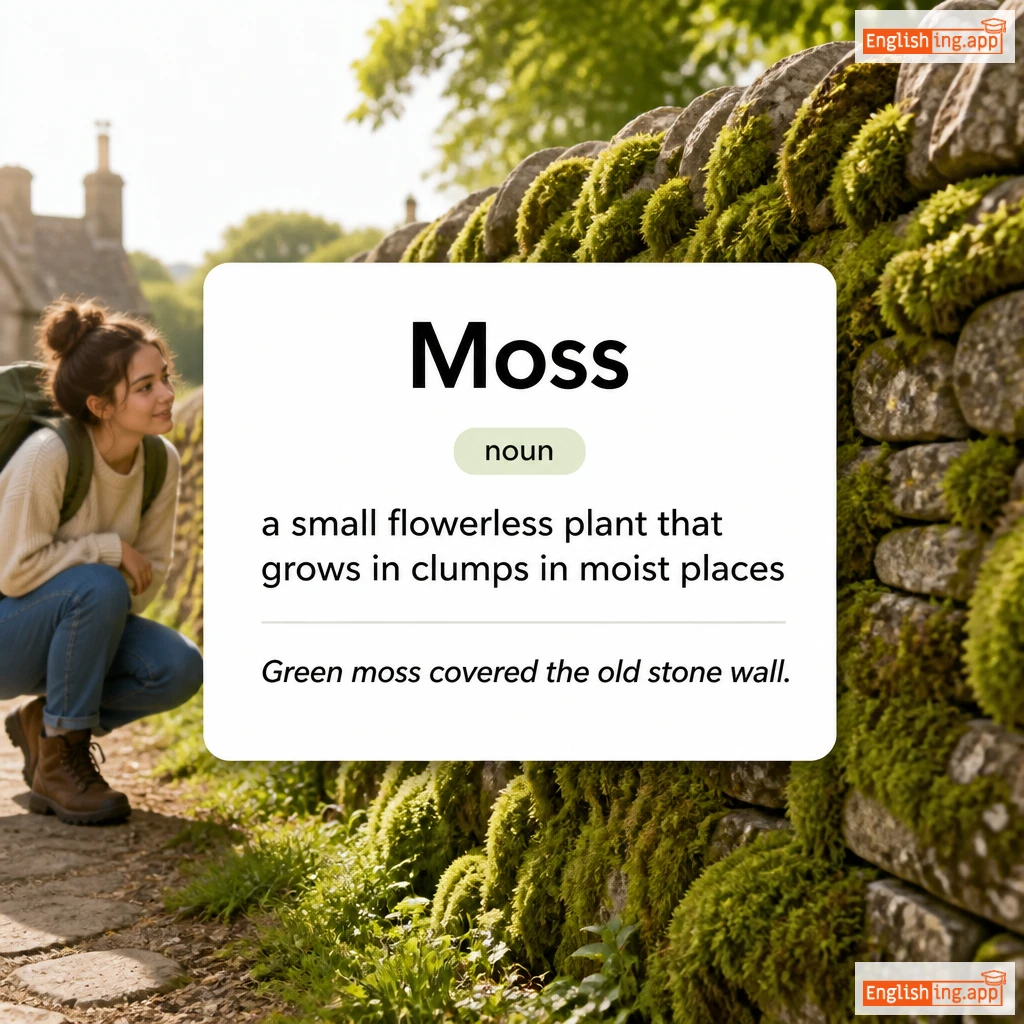
Moss definition card — visual illustration of the meaning
noun C1
/mɔːs/
musgo (musgo)

a small flowerless plant that grows in clumps in moist places

"Green moss covered the old stone wall."

"El musgo verde cubrió la antigua pared de piedra." (El musgo verde cubrio la antigua pared de piedra.)
adjective C1
/ˈmɒsi/
cubierto de musgo; con musgo creciendo en él (cubierto de musgo; con musgo creciendo en él)

covered with moss; having moss growing on it

"The old tree trunk was mossy and covered with green vegetation."

"El tronco viejo del árbol estaba cubierto de musgo y cubierto de vegetación verde." (El tronco viejo del árbol estaba cubierto de musgo y cubierto de vegetación verde.)
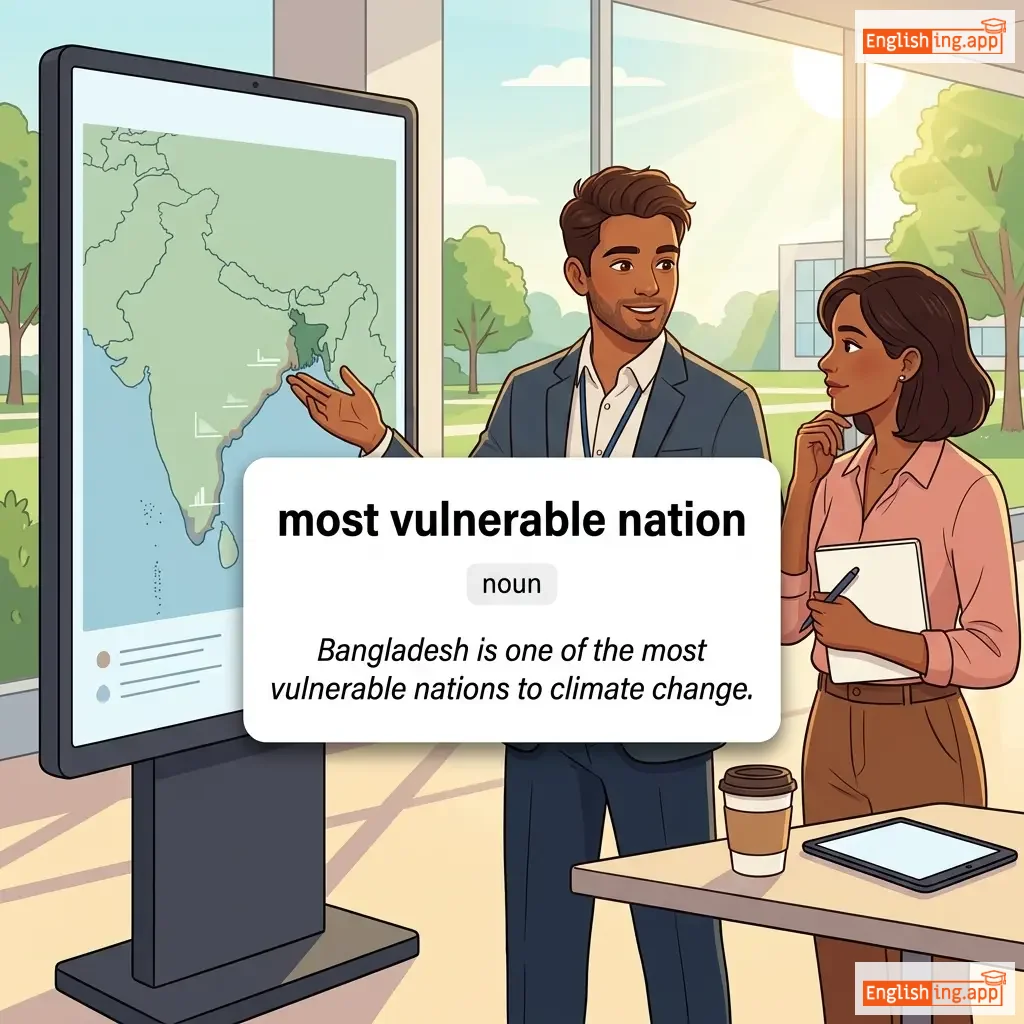
most vulnerable nation definition card — visual illustration of the meaning
noun C1
moʊst ˈvʌlnərəbəl ˈneɪʃən
nación más vulnerable (nacion mas vulnerable)

A country that is highly exposed to risks and lacks adequate protection or resilience.

"Bangladesh is one of the most vulnerable nations to climate change."

"Bangladesh es uno de los países más vulnerables al cambio climático." (Bangladesh es uno de los paises mas vulnerables al cambio climatico.)
👩‍👧‍👦

Motherly (mádərli)

adjective C1
/ˈmʌðərli/
maternal (maternal)

having qualities characteristic of a mother; caring and protective

"She showed motherly care and affection towards all the children."

"Ella mostró cuidado y afecto maternal hacia todos los niños." (Ella mostro cuidado y afecto maternal hacia todos los ninos.)
noun C1
/moʊˈtiːf/
motivo (motivo)

A recurring theme, subject, or idea in a work of art or literature.

"The motif of love is central to the novel."

"El motivo del amor es central en la novela." (El motivo del amor es central en la novela.)
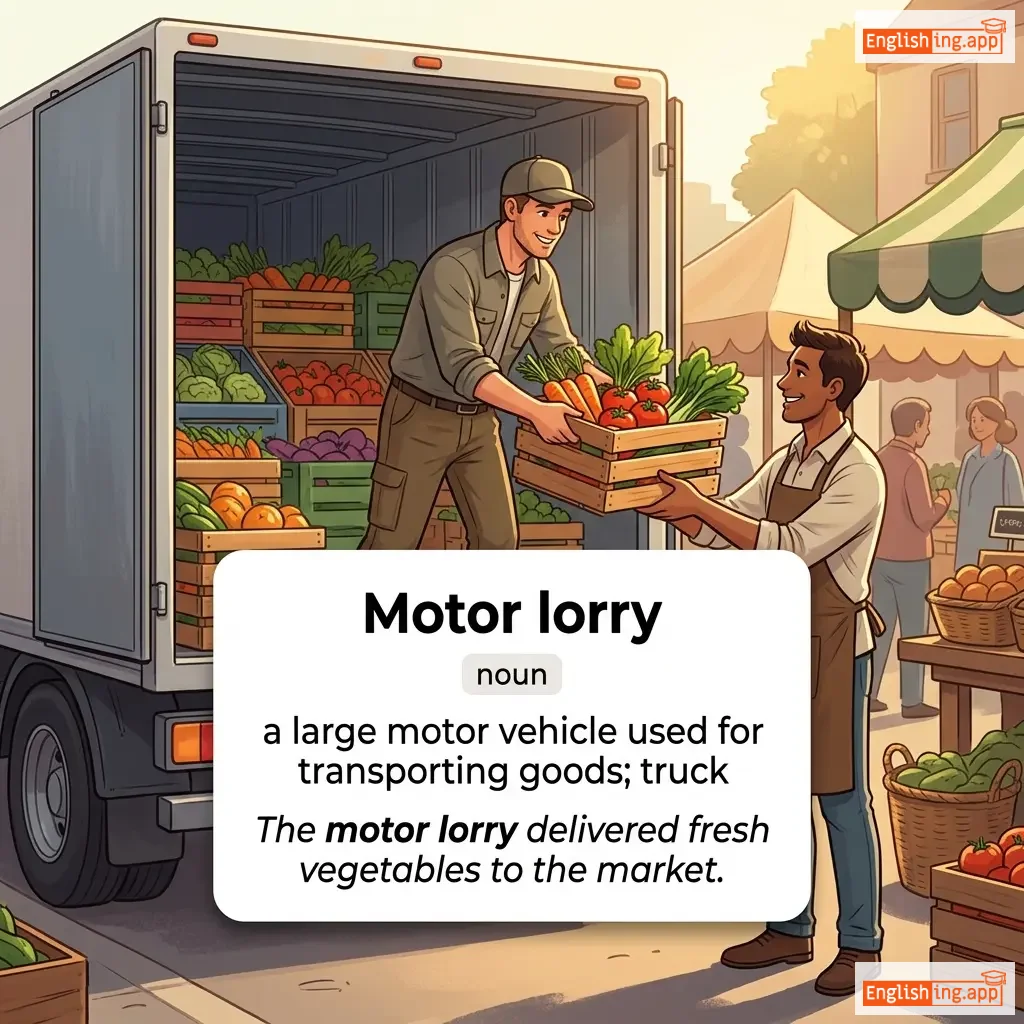
Motor lorry definition card — visual illustration of the meaning
noun C1
/ˈmoʊ.tər ˈlɔː.ri/
camión motorizado (camion motorizado)

a large motor vehicle used for transporting goods; truck

"The motor lorry delivered fresh vegetables to the market."

"El camión motorizado entregó verduras frescas al mercado." (El camion motorizado entrego verduras frescas al mercado.)
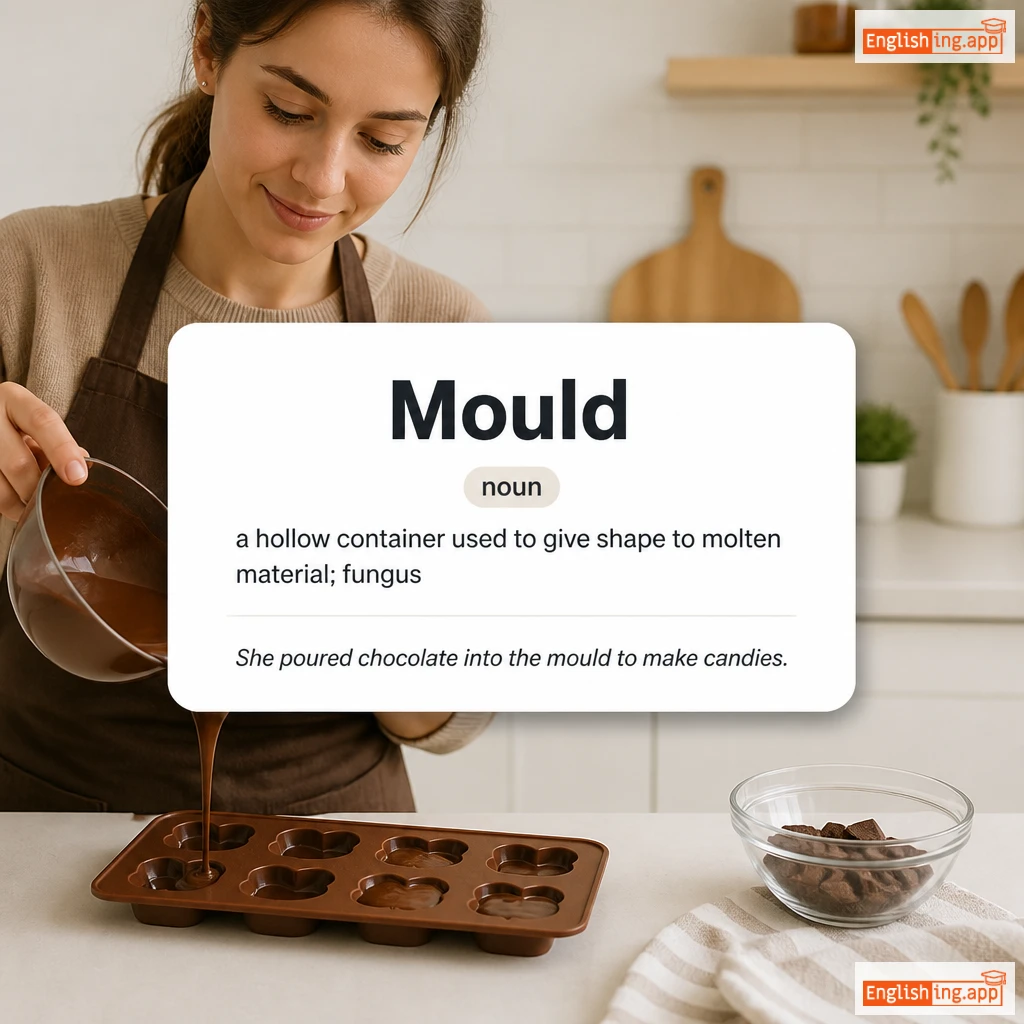
Mould definition card — visual illustration of the meaning
noun C1
/moʊld/
molde; moho (mauld)

a hollow container used to give shape to molten material; fungus

"She poured chocolate into the mould to make candies."

"Ella vertió chocolate en el molde para hacer caramelos." (Ella vertio chocolate en el molde para hacer caramelos)
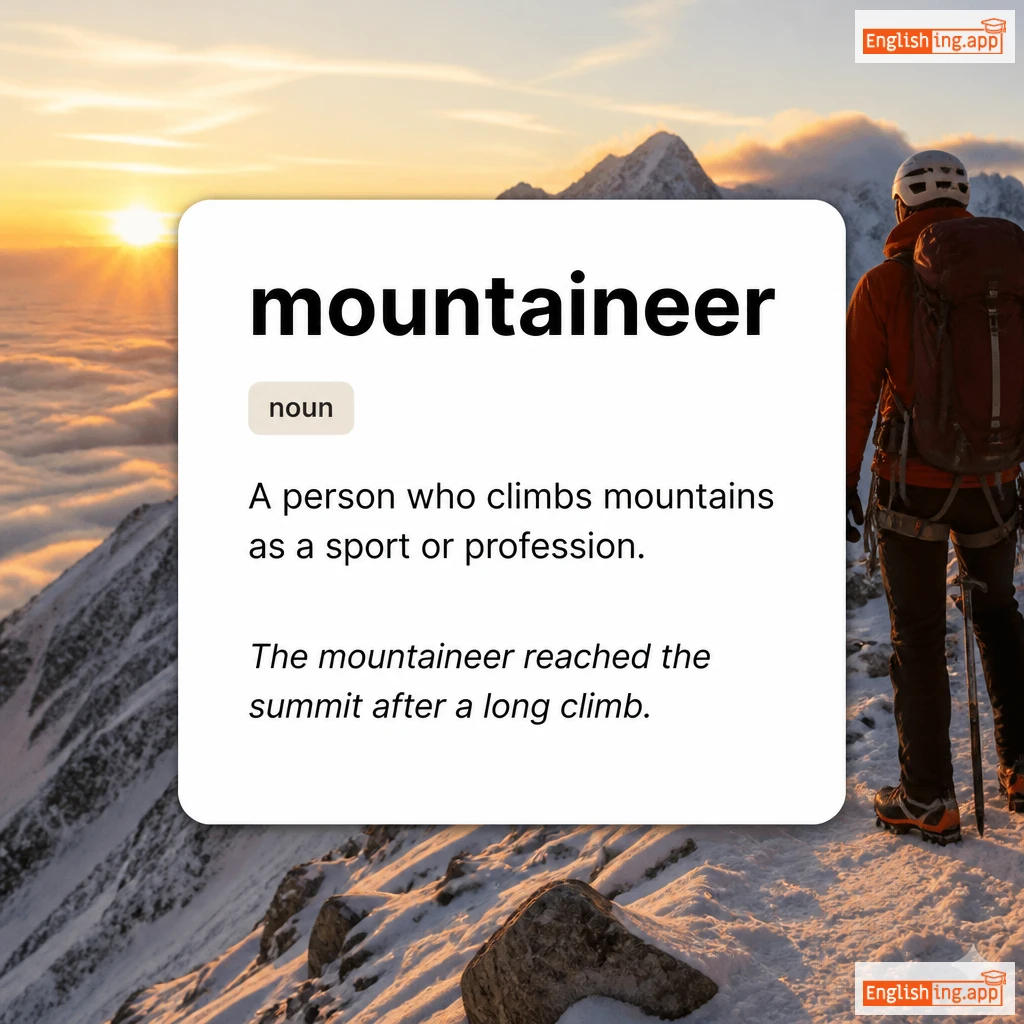
mountaineer definition card — visual illustration of the meaning
noun C1
/ˌmaʊntəˈnɪə/
montañero (montanero)

A person who climbs mountains as a sport or profession.

"The mountaineer reached the summit after a long climb."

"El montañero llegó a la cima después de una larga subida." (El montanero llego a la cima despues de una larga subida.)
adjective C1
/ˈmaʊntənəs/
montañoso (montanoso)

Having many mountains; very large or huge in size.

"They traveled through a mountainous region of Nepal."

"Viajaron a través de una región montañosa de Nepal." (Viajaron a través de una región montañosa de Nepal.)
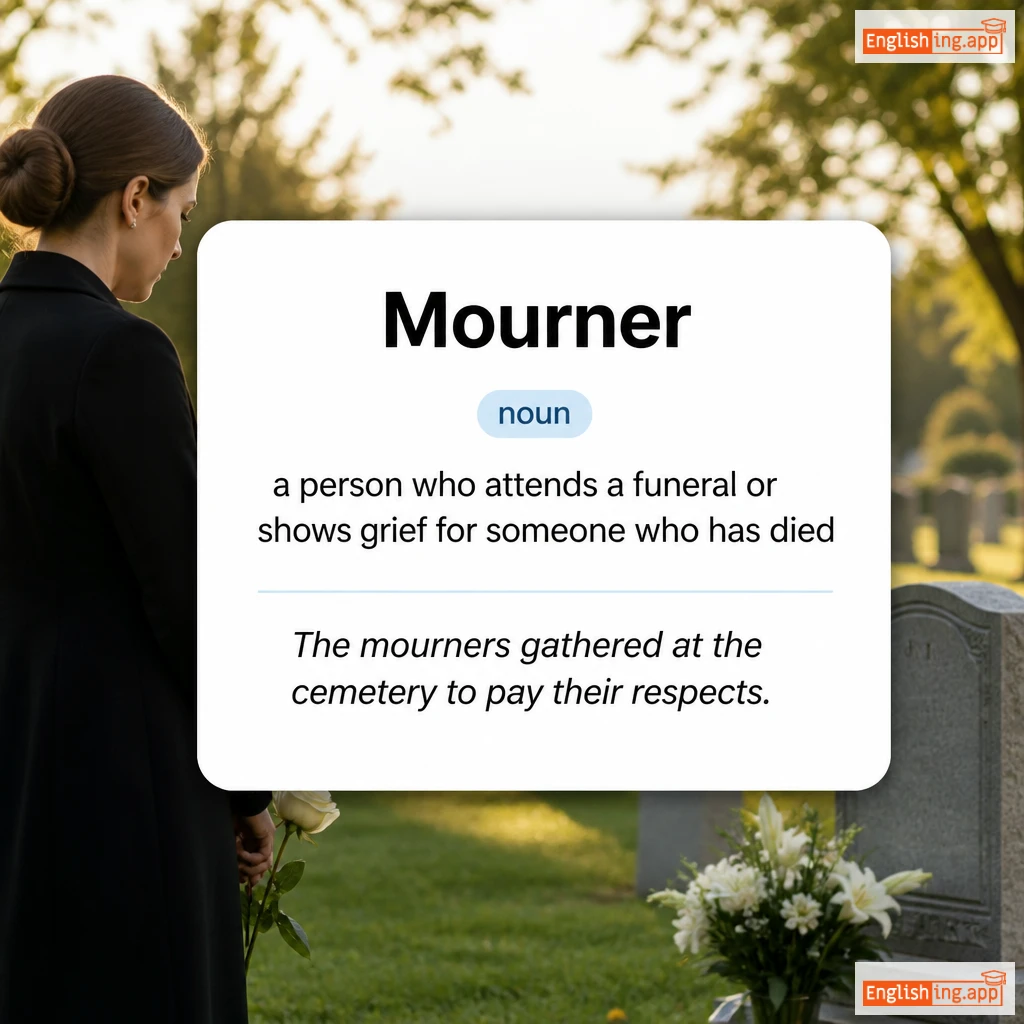
Mourner definition card — visual illustration of the meaning
noun C1
/ˈmɔːr.nər/
persona que asiste a un funeral (persona que asiste a un funeral)

a person who attends a funeral or shows grief for someone who has died

"The mourners gathered at the cemetery to pay their respects."

"Los dolientes se reunieron en el cementerio para rendir sus respetos." (Los dolientes se reunieron en el cementerio para rendir sus respetos.)
adjective C1
/ˈmɔːrn.fəl/
triste (triste)

feeling, expressing, or causing sadness or grief

"The mournful song reminded her of lost loved ones."

"La triste canción le recordó a sus seres queridos perdidos." (La triste canción le recordó a sus seres queridos perdidos.)
noun C1
/ˈmaʊθ.fʊl/
bocado (bocado)

the amount of food or drink that fills the mouth, or a long and difficult word or phrase

"He took a big mouthful of water after the run."

"Él tomó un gran bocado de agua después de la carrera." (Él tomó un gran bocado de agua después de la carrera.)
adjective C1
/ˈmuː.və.bl̩/
movible; portátil; transferible (movible; portatil; transferible)

capable of being moved; not fixed in position

"The furniture is movable so we can rearrange the room easily."

"Los muebles son movibles, por lo que podemos reorganizar la habitación fácilmente." (Los muebles son movibles, por lo que podemos reorganizar la habitacion facilmente.)
verb C1
/ˈmʌd.əl/
desordenar (desordenar)

to mix things up in a confused way or to make a mess of something

"He muddled the papers and couldn’t find the report."

"Él desordenó los papeles y no pudo encontrar el informe." (Él desordenó los papeles y no pudo encontrar el informe.)
Muffler definition card — visual illustration of the meaning
noun C1
/ˈmʌflər/
mofle (mofle)

a device on a vehicle's exhaust to reduce noise; also a scarf worn around the neck for warmth

"The car's muffler needs to be replaced."

"El mofle del coche necesita ser reemplazado." (El mofle del coche necesita ser reemplazado.)
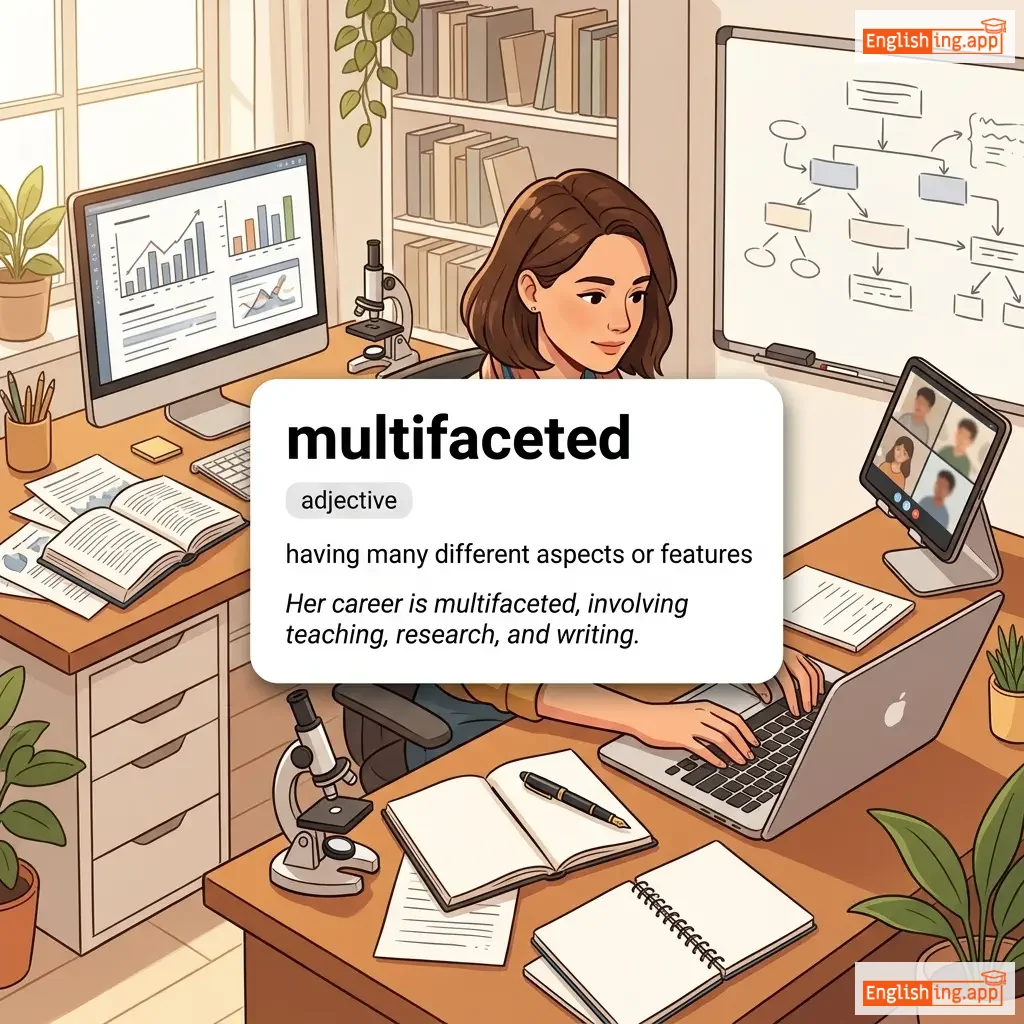
multifaceted definition card — visual illustration of the meaning
adjective C1
/ˌmʌltiˈfæsɪtɪd/
multifacético (multifacetico)

having many different aspects or features

"Her career is multifaceted, involving teaching, research, and writing."

"Su carrera es multifacética, involucrando enseñanza, investigación y escritura." (Su carrera es multifacetica, involucrando ensenanza, investigacion y escritura.)
noun C1
/ˌmʌltɪˈplɪsɪti/
multiplicidad (multiplicidad)

A large number or variety of something.

"The project faced a multiplicity of challenges."

"El proyecto enfrentó una multiplicidad de desafíos." (El proyecto enfrento una multiplicidad de desafios.)
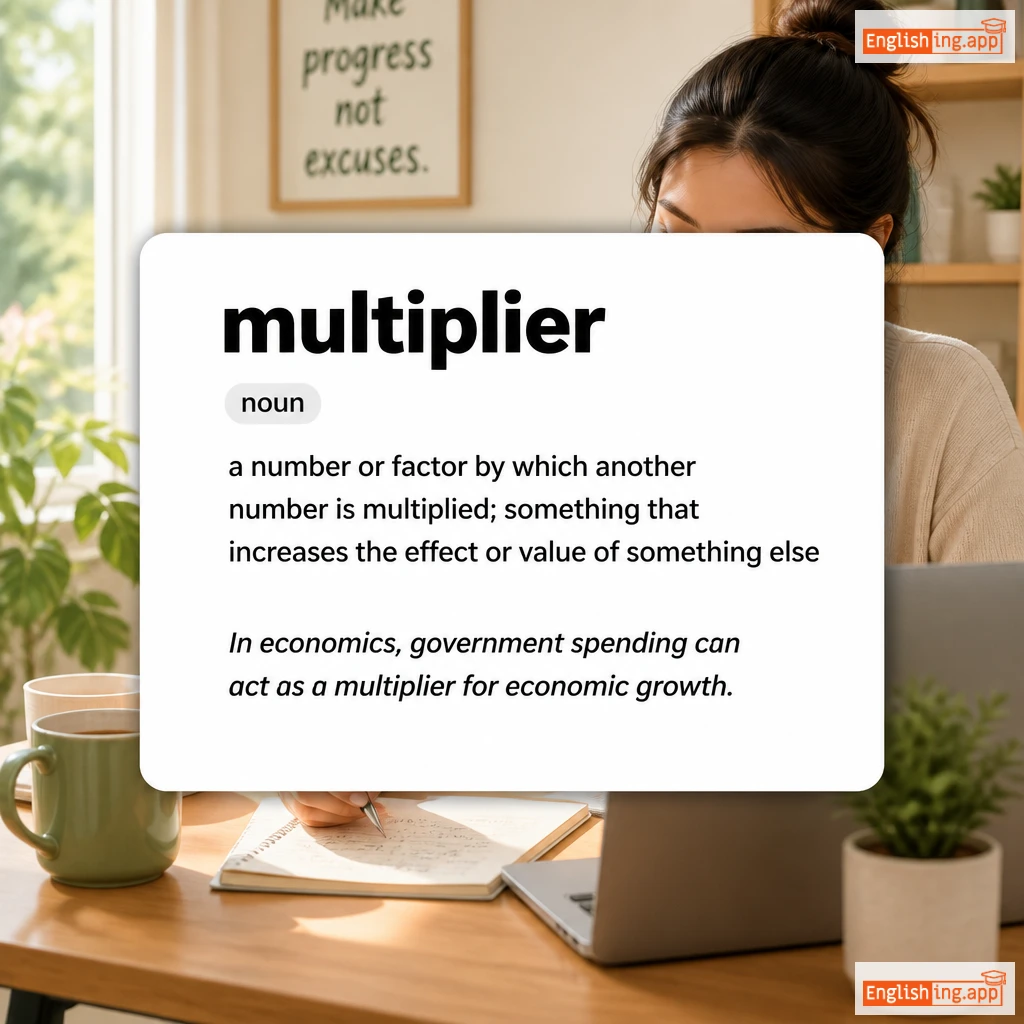
multiplier definition card — visual illustration of the meaning
noun C1
/ˈmʌltɪplaɪər/
multiplicador (multiplicador)

a number or factor by which another number is multiplied; something that increases the effect or value of something else

"In economics, government spending can act as a multiplier for economic growth."

"En economía, el gasto público puede ser un multiplicador del crecimiento." (en economia el gasto publico puede ser un multiplicador del crecimiento)