ভোকাবুলারিসমূহ

ইংরেজি শব্দের বাংলা অর্থ | English to Bangla Word Meaning Dictionary

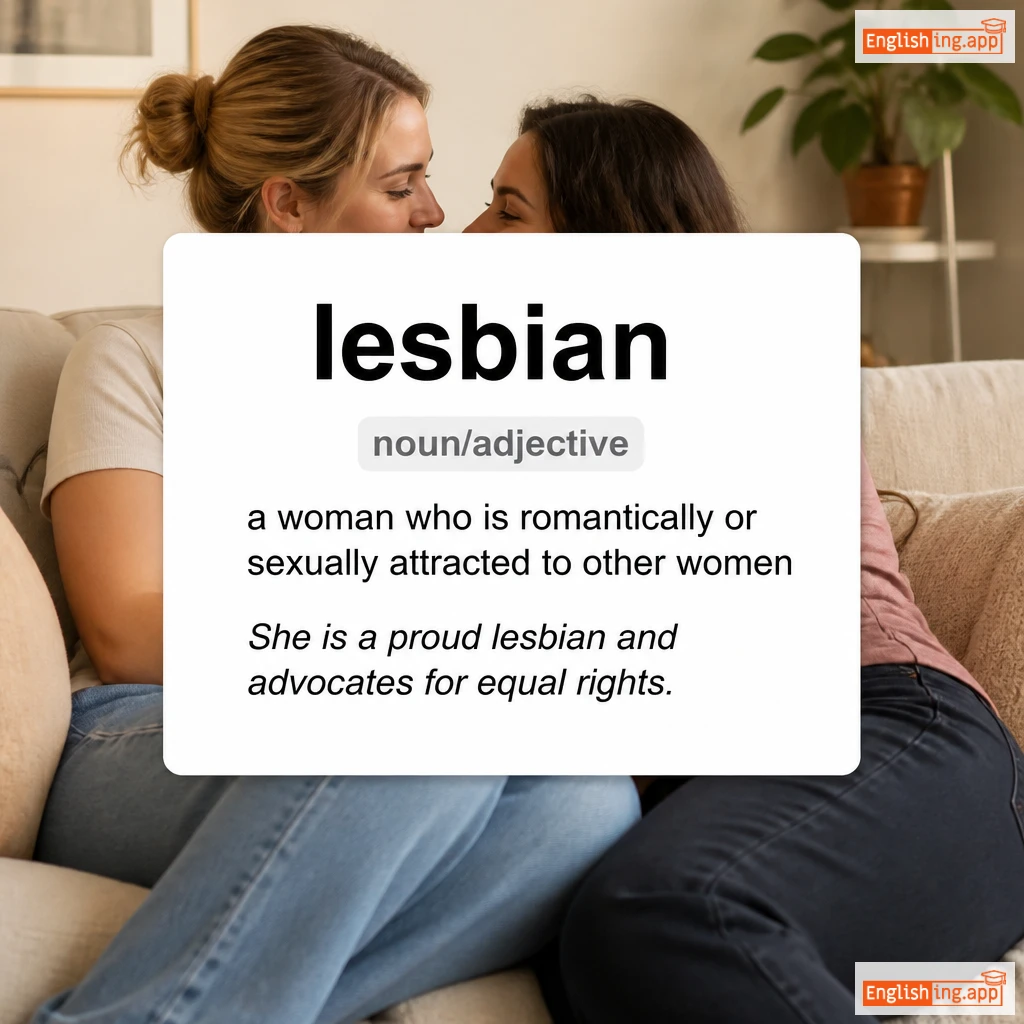
lesbian definition card — visual illustration of the meaning
noun/adjective C1
/ˈlɛzbiən/
レズビアン (rezubian)

a woman who is romantically or sexually attracted to other women

"She is a proud lesbian and advocates for equal rights."

"彼女は誇り高いレズビアンで、平等な権利を支持しています。" (Kanojo wa hokori takai rezubian de, byoudou na kenri wo shiji shiteimasu.)
noun C1
/ˈliːʒən/
(kizu)

An area of damage or abnormal change in the tissue of an organism, often caused by injury or disease.

"The doctor examined the skin lesion carefully."

"医者は皮膚の傷を注意深く調べました。" (Isha wa hifu no kizu wo chūibukaku shirabemashita.)
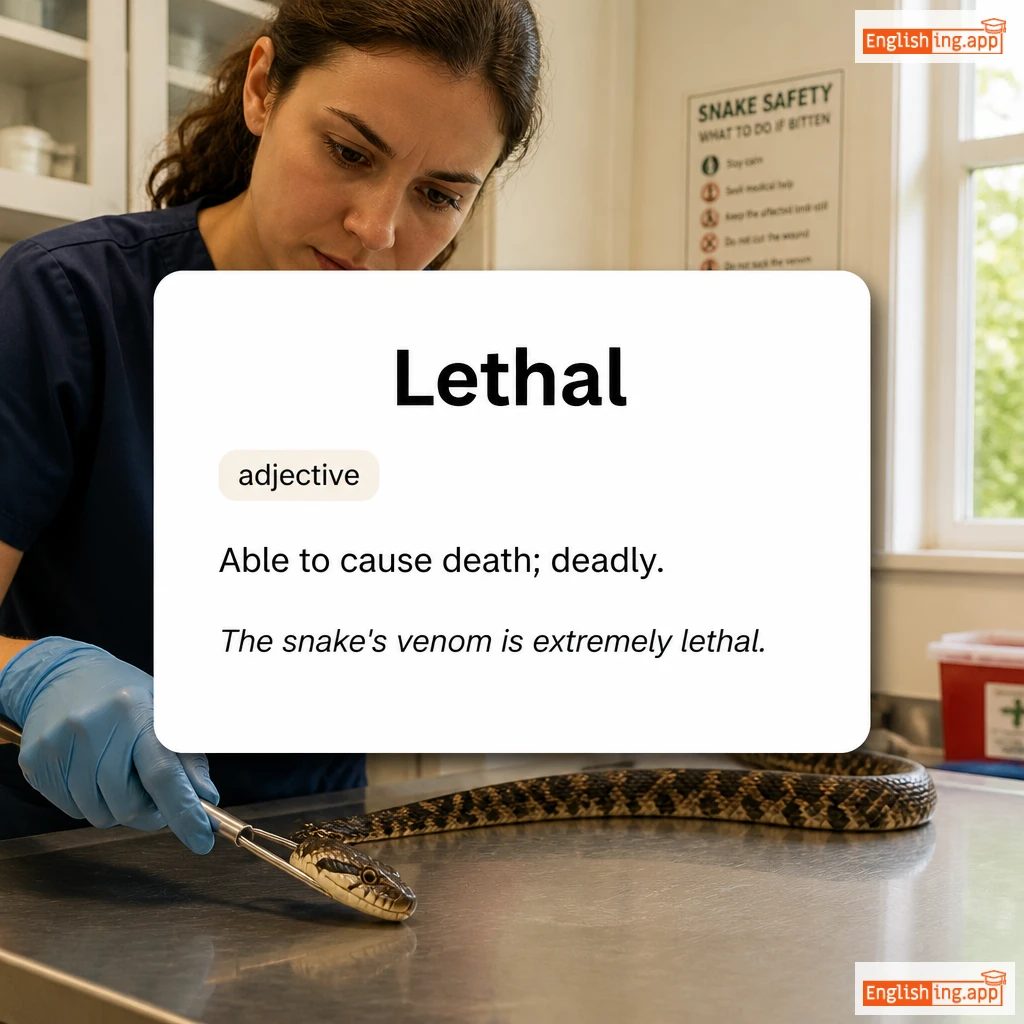
Lethal definition card — visual illustration of the meaning
adjective C1
/ˈliːθəl/
致命的 (chimeiteki)

Able to cause death; deadly.

"The snake's venom is extremely lethal."

"ヘビの毒は非常に致命的です。" (Hebi no doku wa hijō ni chimeiteki desu.)
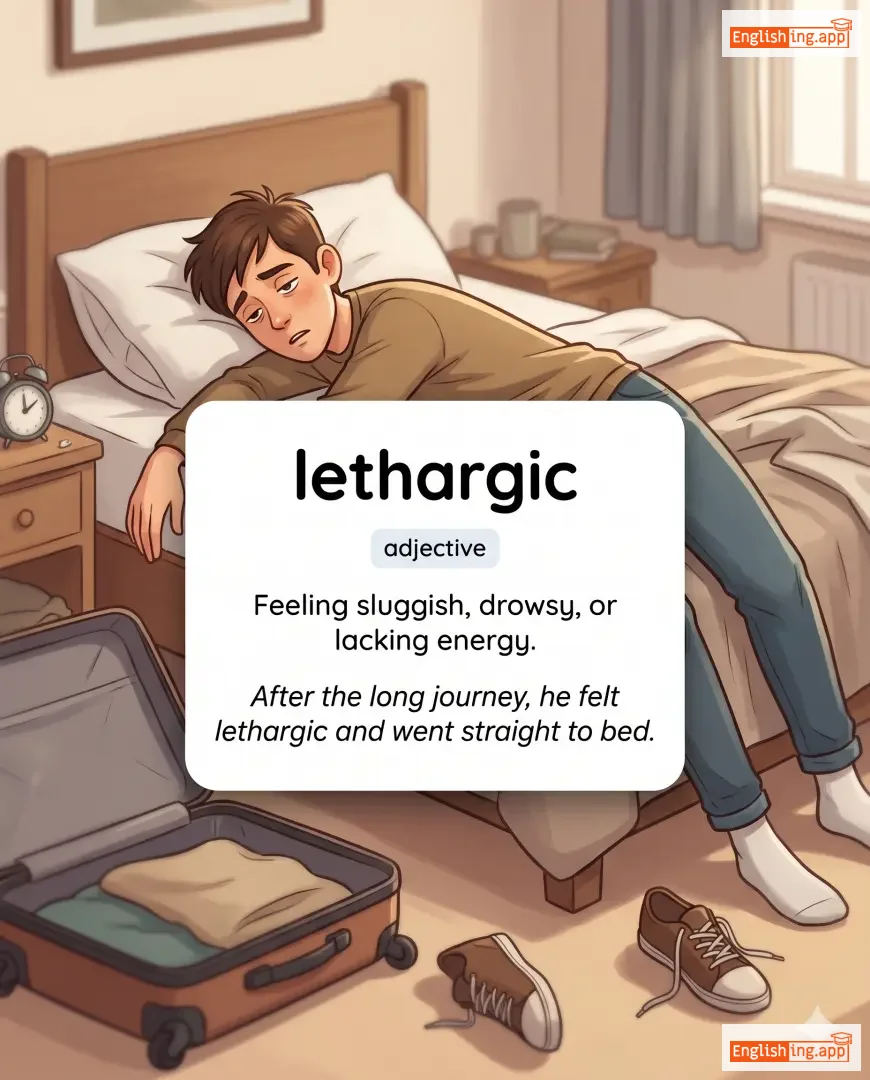
lethargic definition card — visual illustration of the meaning
adjective C1
/ləˈθɑːrdʒɪk/
無気力な (mukiryokuna)

Feeling sluggish, drowsy, or lacking energy.

"After the long journey, he felt lethargic and went straight to bed."

"長旅の後、彼は無気力で、すぐにベッドに行った。" (Nagoyatra no ato, kare wa mukiryokude, sugu ni beddo ni itta.)
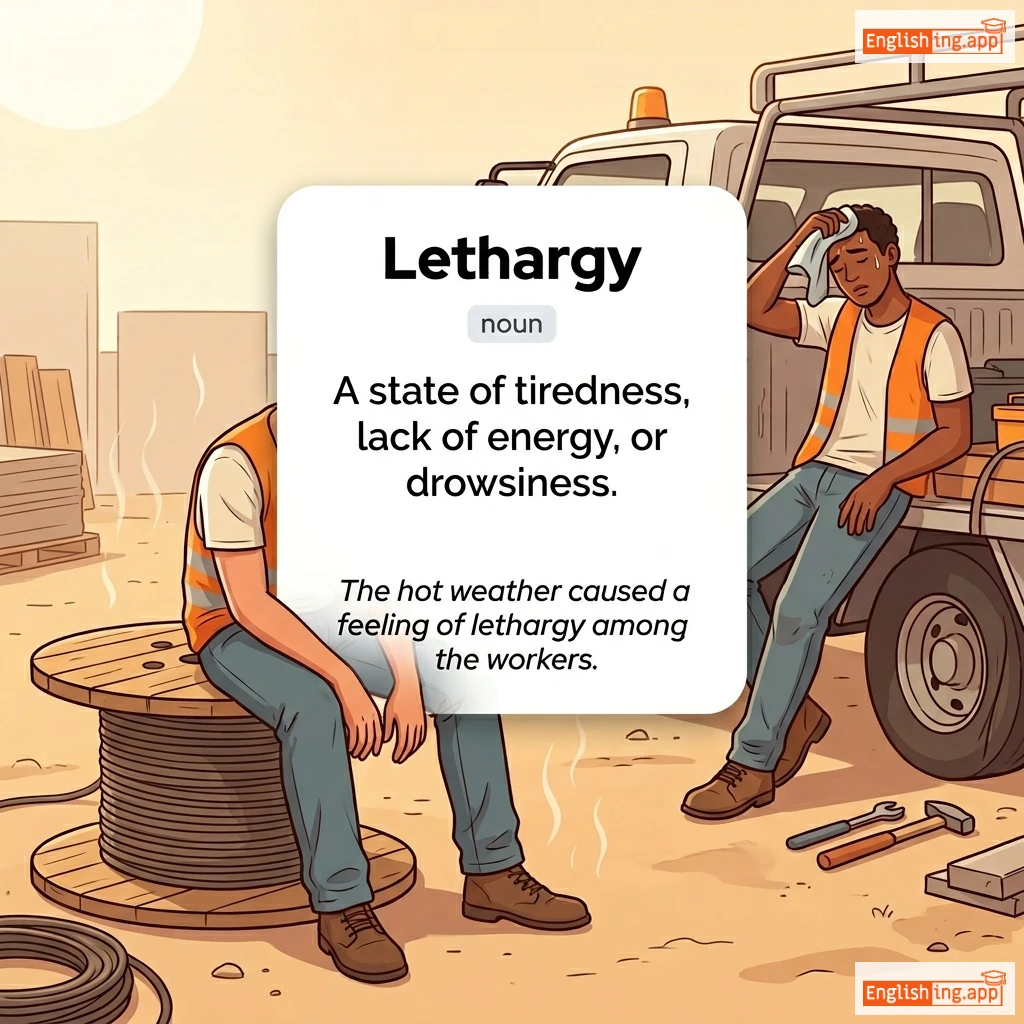
Lethargy definition card — visual illustration of the meaning
noun C1
/ˈleθərdʒi/
無気力 (mukiryoku)

A state of tiredness, lack of energy, or drowsiness.

"The hot weather caused a feeling of lethargy among the workers."

"暑い天気は労働者の間で無気力を引き起こしました。" (Atsui tenki wa roudousha no aida de mukiryoku o hikiokoshimashita.)
noun, verb C1
/ˈliːvər/ or /ˈlɛvər/
てこの原理, かたくなな棒 (tekonogenri, katakuna na bō)

a rigid bar used to move or lift heavy objects; to move something using leverage.

"He used a lever to lift the heavy stone."

"彼は重い石を持ち上げるためにレバーを使いました。" (Kare wa omoi ishi o mochiageru tame ni rebā o tsukaimashita.)
verb C1
/ˈlɛvi/
課税する (kazei suru)

To impose or collect, especially a tax or fine.

"The government decided to levy a new tax on luxury goods."

"政府は高級品に新しい税金を課すことに決めました。" (Seifu wa kōkyūhin ni atarashī zeikin o kasu koto ni kimemashita.)
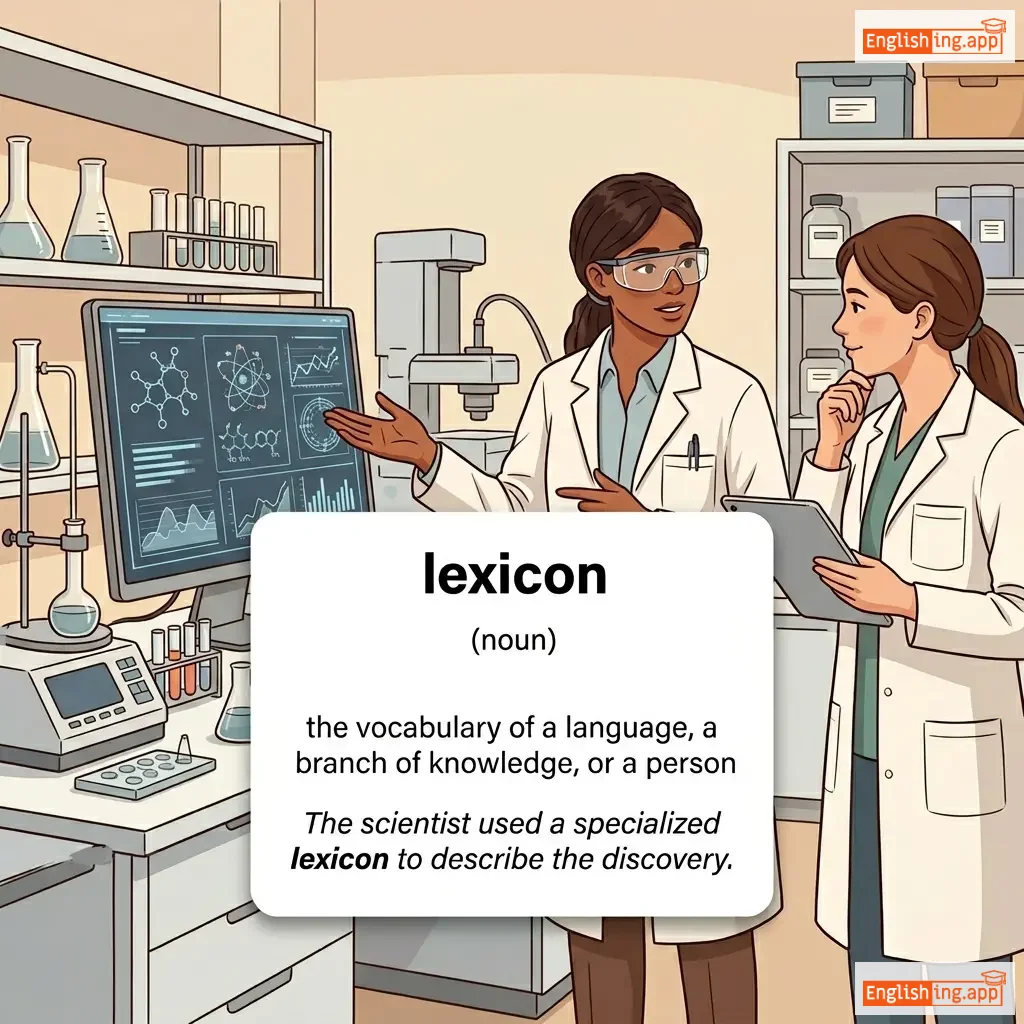
lexicon definition card — visual illustration of the meaning
noun C1
/ˈlɛksɪkən/
語彙集 (goishū)

the vocabulary of a language, a branch of knowledge, or a person

"The scientist used a specialized lexicon to describe the discovery."

"科学者は発見を説明するために専門的な語彙集を使用しました。" (Kagakusha wa hakken o setsumei suru tame ni senmon-tekina goishū o shiyō shimashita.)
liability definition card — visual illustration of the meaning
noun C1
/ˌlaɪəˈbɪləti/
責任 (sekinin)

the state of being legally responsible for something; something that acts as a disadvantage

"The company’s financial liability increased after the lawsuit."

"訴訟後、会社の財務責任は増加しました。" (Sosougo, kaisha no zaimu sekinin wa zouka shimashita.)
noun C1
/liˈeɪzɒn/
連絡係 (renraku gakari)

communication or cooperation between people or groups for a smooth working relationship

"She works as a liaison between the company and its clients."

"彼女は会社と顧客の間のリエゾンとして働いています。" (Kanojo wa kaisha to kokyaku no aida no riezon to shite hataraiteimasu.)
noun C1
/ˈlaɪbəl/
名誉毀損 (meiyokison)

a published false statement that damages a person's reputation

"The newspaper was sued for libel after publishing false claims."

"新聞は虚偽の主張を掲載した後、名誉毀損で訴えられました。" (Shinbun wa kyogi no shuchou o keisai shita ato, meiyokison de utaeraremashita.)
noun C1
/ˈlɪbərəlɪzəm/
リベラリズム (riberarizumu)

a political and social philosophy advocating individual freedoms, democracy, and equality

"Liberalism emphasizes freedom of speech and human rights."

"リベラリズムは言論の自由と人権を強調します。" (Riberarizumu wa genron no jiyū to jinken o kyōchō shimasu.)
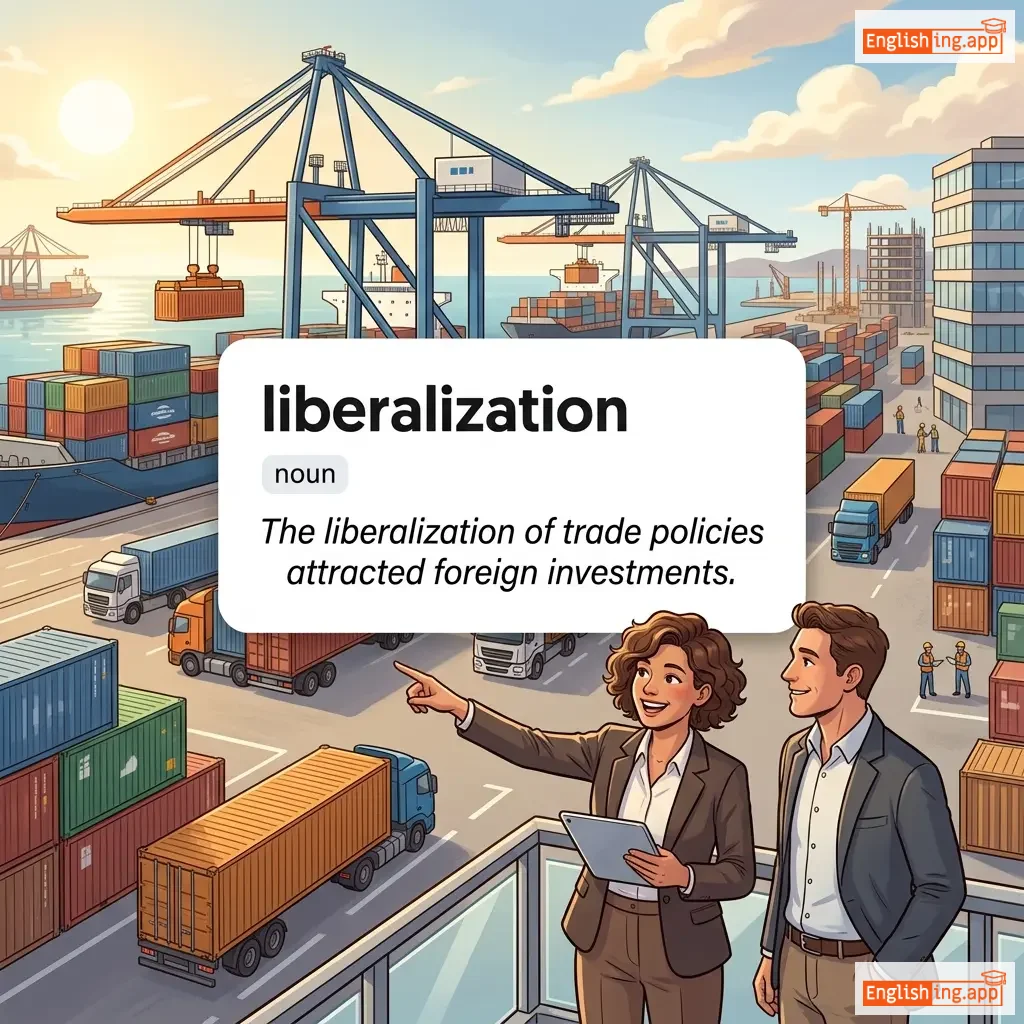
liberalization definition card — visual illustration of the meaning
noun C1
ˌlɪb.ər.ə.laɪˈzeɪ.ʃən
自由化 (jiyūka)

The removal or loosening of restrictions on something, typically an economic or political system.

"The liberalization of trade policies attracted foreign investments."

"貿易政策の自由化が外国からの投資を引き寄せました。" (Bōeki seisaku no jiyūka ga gaikoku kara no tōshi o hikiyosemashita.)
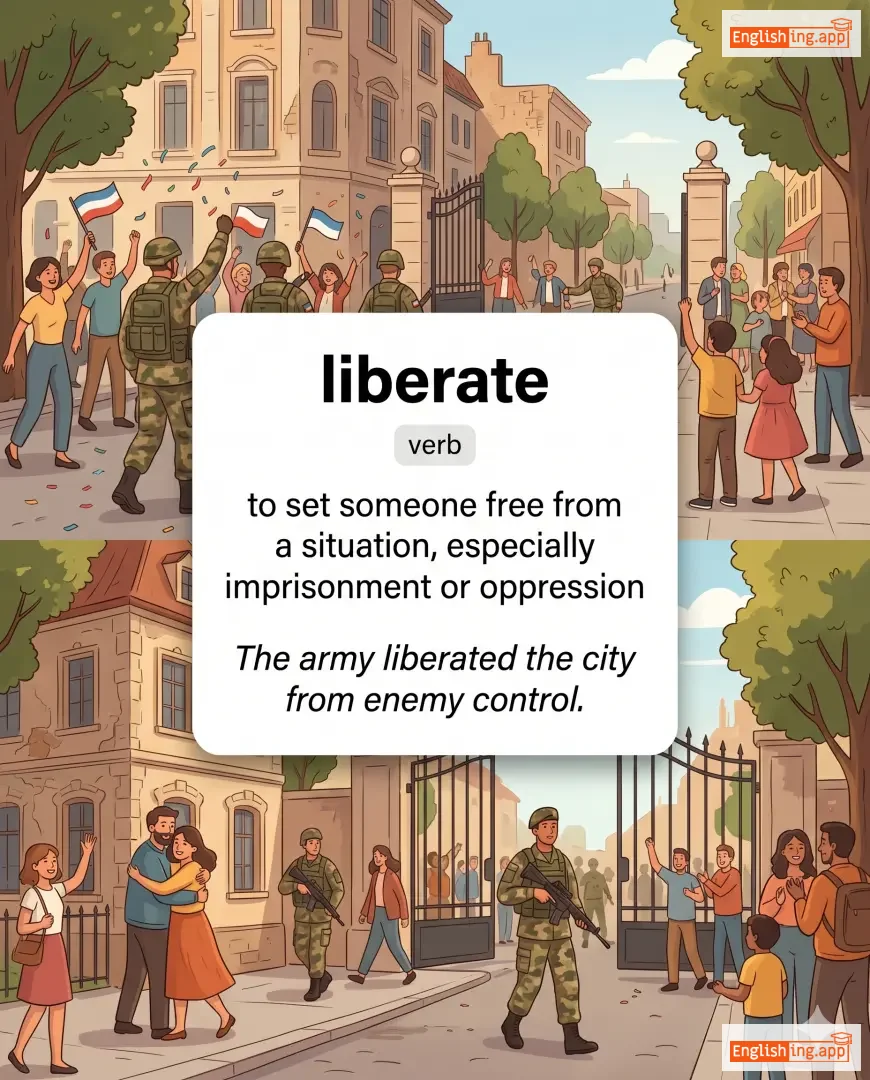
liberate definition card — visual illustration of the meaning
verb C1
/ˈlɪbəreɪt/
解放する (kaihō suru)

to set someone free from a situation, especially imprisonment or oppression

"The army liberated the city from enemy control."

"軍隊は街を敵の支配から解放した。" (Guntai wa machi o teki no shihai kara kaihō shita.)
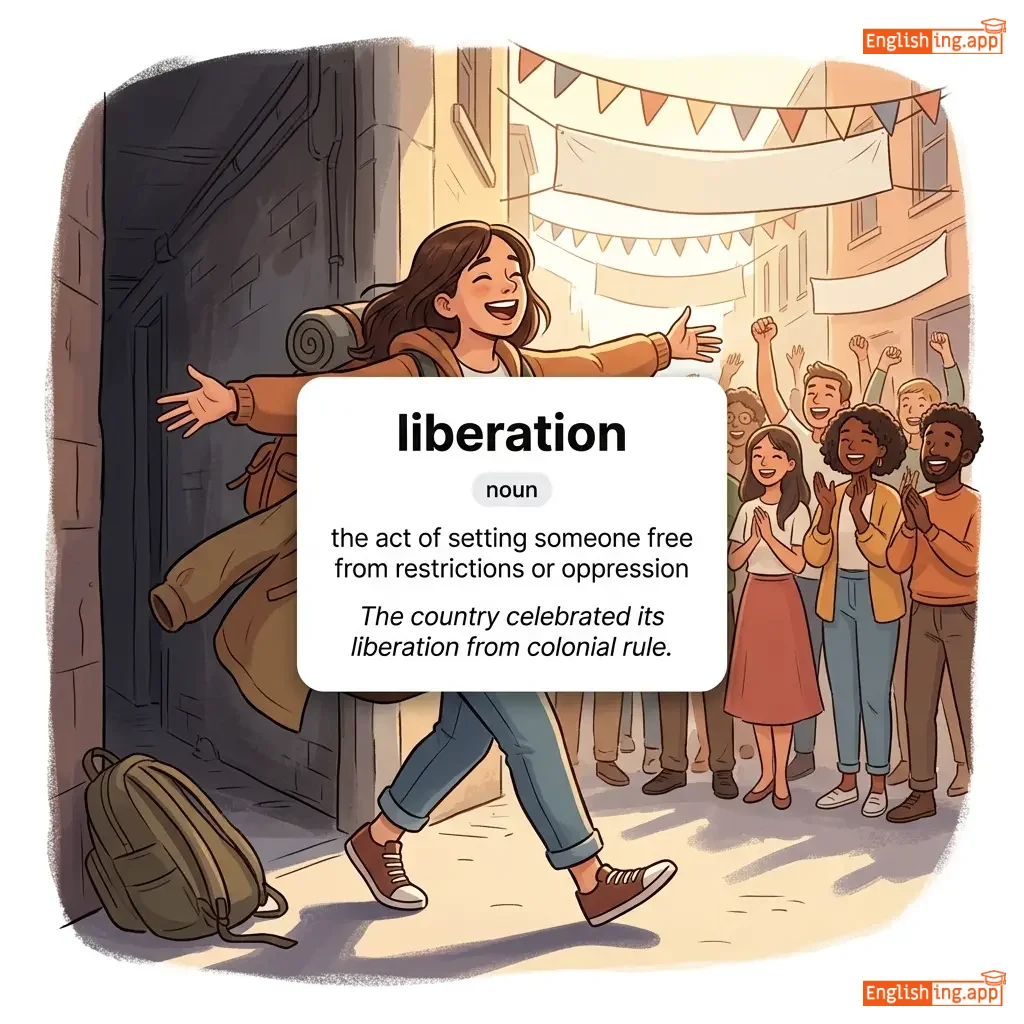
liberation definition card — visual illustration of the meaning
noun C1
/ˌlɪbəˈreɪʃən/
解放 (kaihō)

the act of setting someone free from restrictions or oppression

"The country celebrated its liberation from colonial rule."

"その国は植民地支配からの解放を祝いました。" (Sono kuni wa shokuminchi shihai kara no kaihō o iwai mashita.)
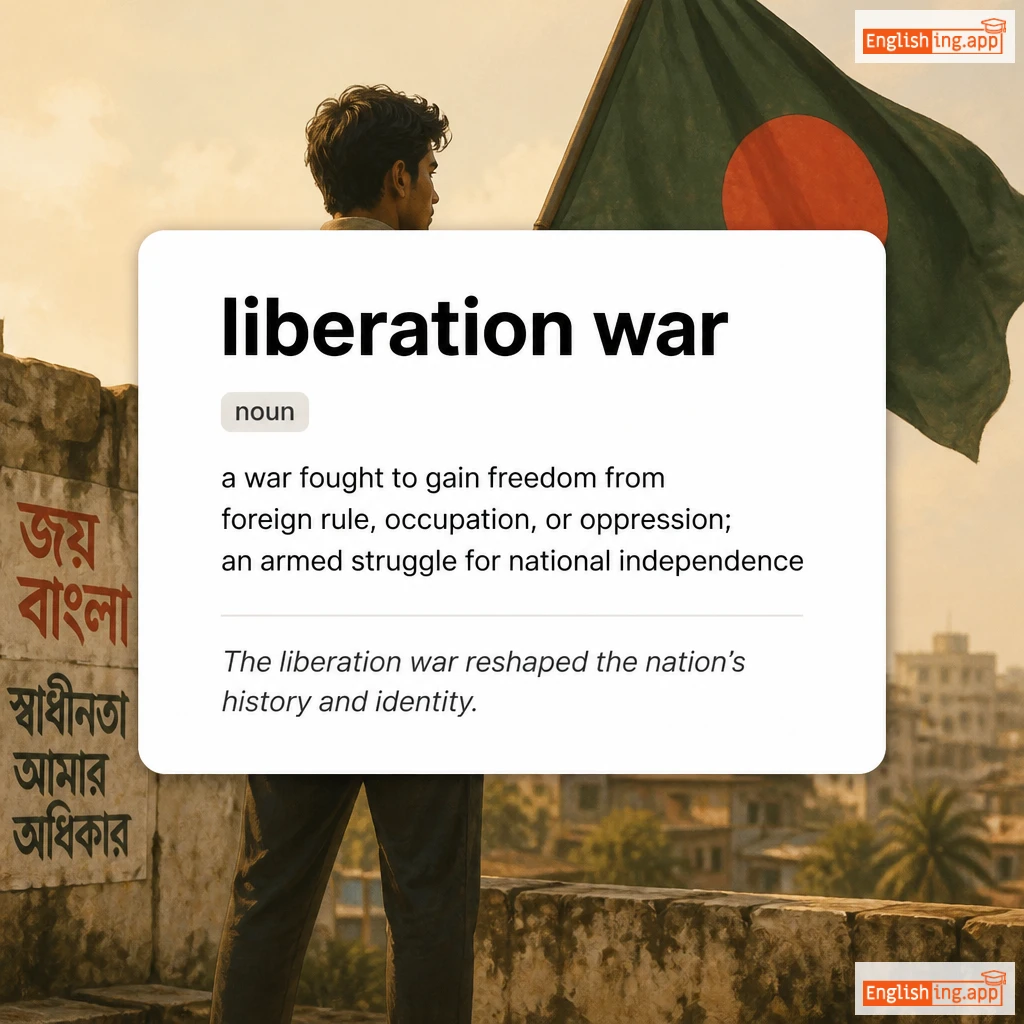
liberation war definition card — visual illustration of the meaning
noun C1
/ˌlɪbəˈreɪʃən wɔːr/
解放戦争 (kaihou sensou)

a war fought to gain freedom from foreign rule, occupation, or oppression; an armed struggle for national independence

"The liberation war reshaped the nation’s history and identity."

"解放戦争は国の歴史を大きく変えた。" (kaihou sensou wa kuni no rekishi o ookiku kaeta)
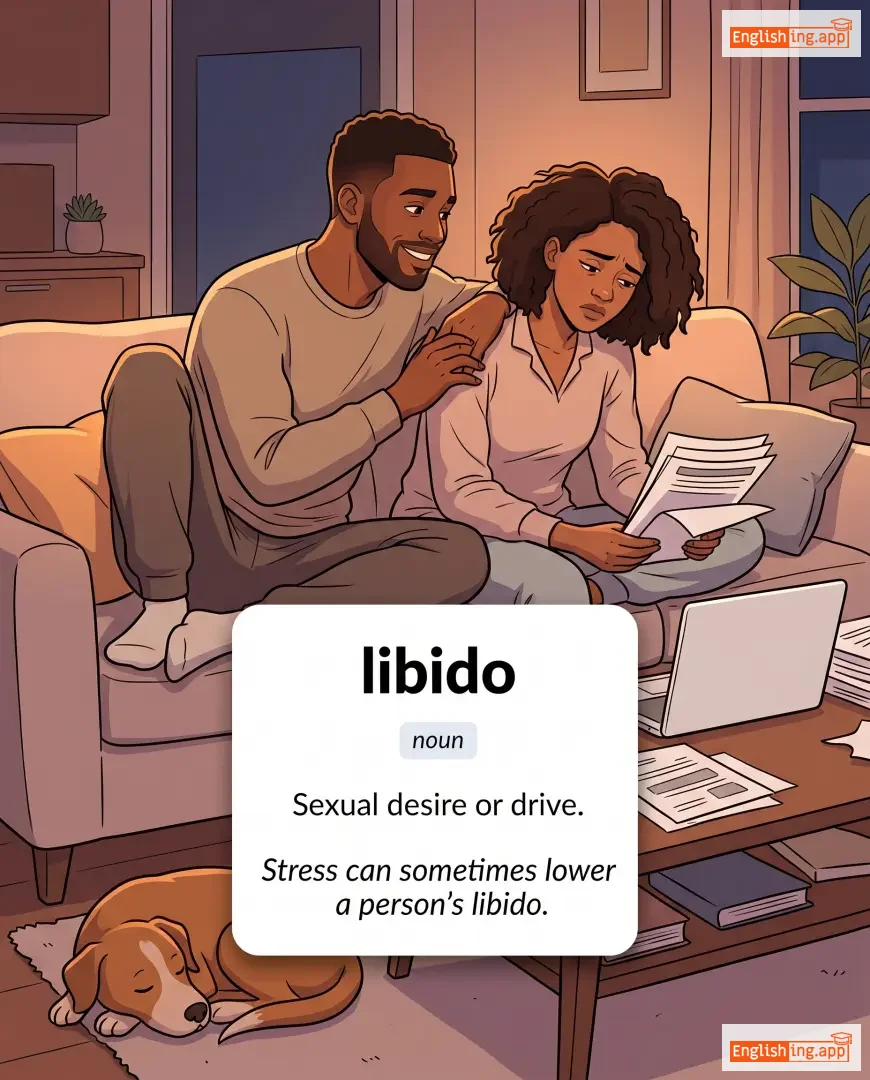
libido definition card — visual illustration of the meaning
noun C1
/lɪˈbiːdoʊ/
性欲 (seiyoku)

Sexual desire or drive.

"Stress can sometimes lower a person's libido."

"ストレスは時々、ある人の性欲を減少させることがあります。" (Sutoresu wa tokidoki, aru hito no seiyoku o genshō saseru koto ga arimasu.)
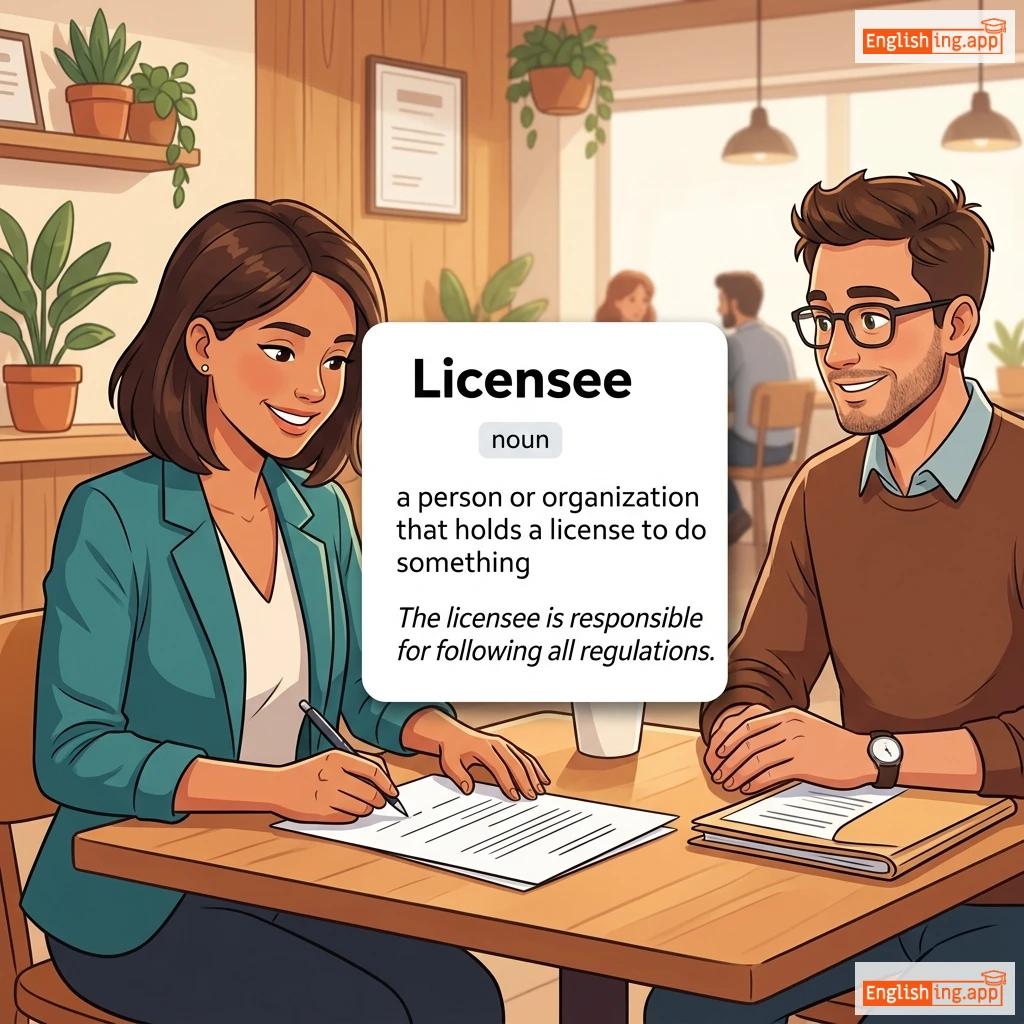
Licensee definition card — visual illustration of the meaning
noun C1
/ˌlaɪ.sənˈsiː/
ライセンス保持者 (raizensu mochi-sha)

a person or organization that holds a license to do something

"The licensee is responsible for following all regulations."

"ライセンス保持者はすべての規制を遵守する責任があります。" (Raizensu mochi-sha wa subete no kisei o junshu suru sekinin ga arimasu.)
noun C1
/luː/
代わりに (kawarini)

Instead of; in place of.

"He gave money in lieu of flowers."

"彼は花の代わりにお金を渡した。" (Kare wa hana no kawarini okane o watashita.)
adjective C1
/ˈlaɪf.laɪk/
リアルに似ている (riaruni niteiru)

Very similar to a real person, object, or scene; realistic.

"The wax figure was so lifelike that people thought it was a real person."

"その蝋人形は非常にリアルに似ていて、人々はそれが本物の人物だと思った。" (Sono rōningyō wa hijō ni riaruni niteite, hitobito wa sore ga honmono no jinbutsu da to omotta.)
noun C1
/ˈlɪɡ.əmənt/
靭帯組織 (Jintai soshiki)

A tough band of tissue that connects bones at a joint.

"He tore a ligament in his knee while playing football."

"サッカーをしているときに膝の靭帯を切った。" (Sakkā o shite irutoki ni hiza no jintai o kitta.)
adjective C1
/ˌlaɪtˈhɑːrtɪd/
軽やかで無頓着な (karoyaka de mutonchaku na)

cheerful, carefree, and not serious

"She gave a light-hearted speech at the party."

"彼女はパーティーで軽快なスピーチをしました。" (Kanojo wa pātī de keikai na supīchi o shimashita.)
verb C1
/ˈlaɪ.kən/
例える (tatoeru)

to compare one thing to another, often in a figurative way

"He likened her voice to sweet music."

"彼は彼女の声を甘い音楽に例えました。" (Kare wa kanojo no koe o amai ongaku ni tatoemashita.)
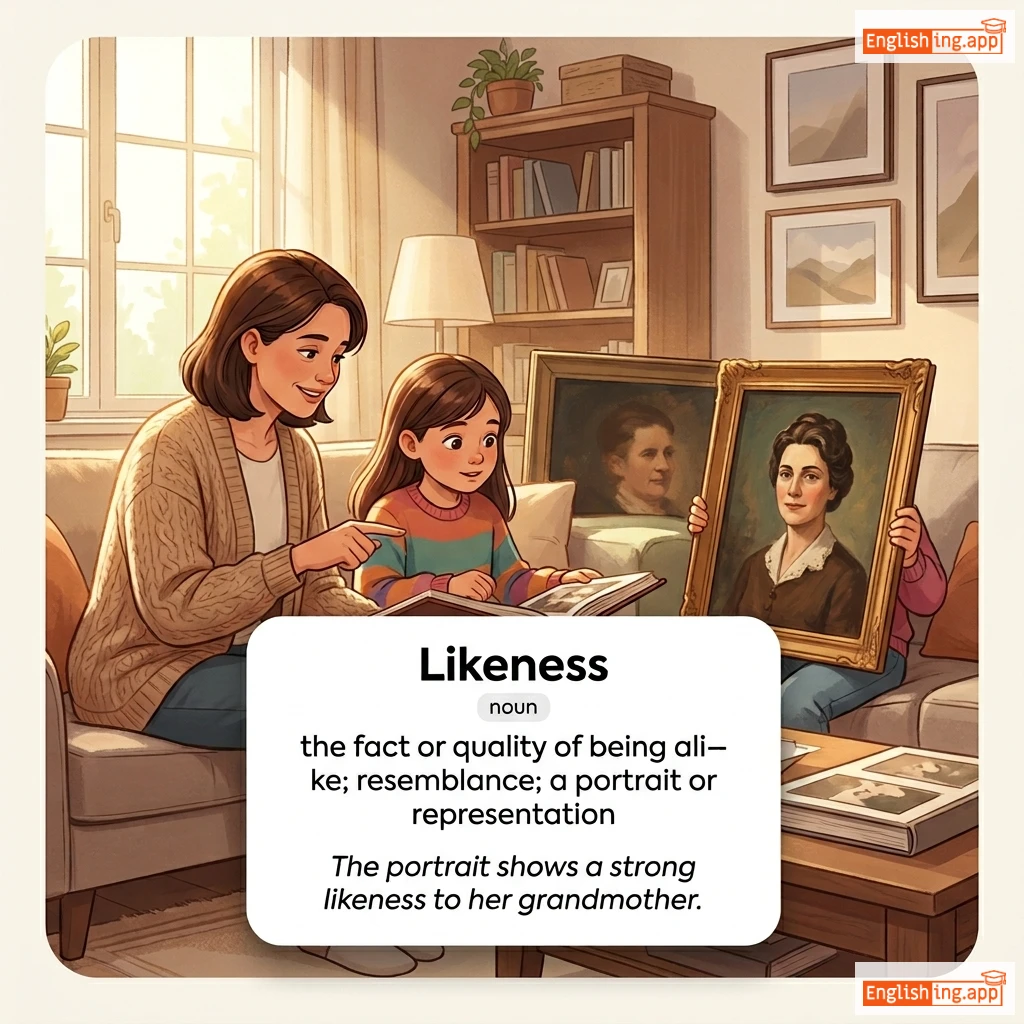
Likeness definition card — visual illustration of the meaning
noun C1
/ˈlaɪk.nəs/
類似性; 似ていること (likeness)

the fact or quality of being alike; resemblance; a portrait or representation

"The portrait shows a strong likeness to her grandmother."

"ポートレートは彼女の祖母に強い類似性を示しています。" (Pōtoretto wa kanojo no sobo ni tsuyoi ruijisei o shimeshiteimasu.)
noun C1
/ˈlɪmboʊ/
不確実性、保留状態 (fukakujitsusei, horyu joto)

A state of uncertainty or neglect; an intermediate or transitional state.

"The project was left in limbo after the funding was withdrawn."

"資金が撤回された後、プロジェクトは不確実性に置かれました。" (Shikin ga tetsukai sareta ato, purojekuto wa fukakujitsusei ni okaremashita.)
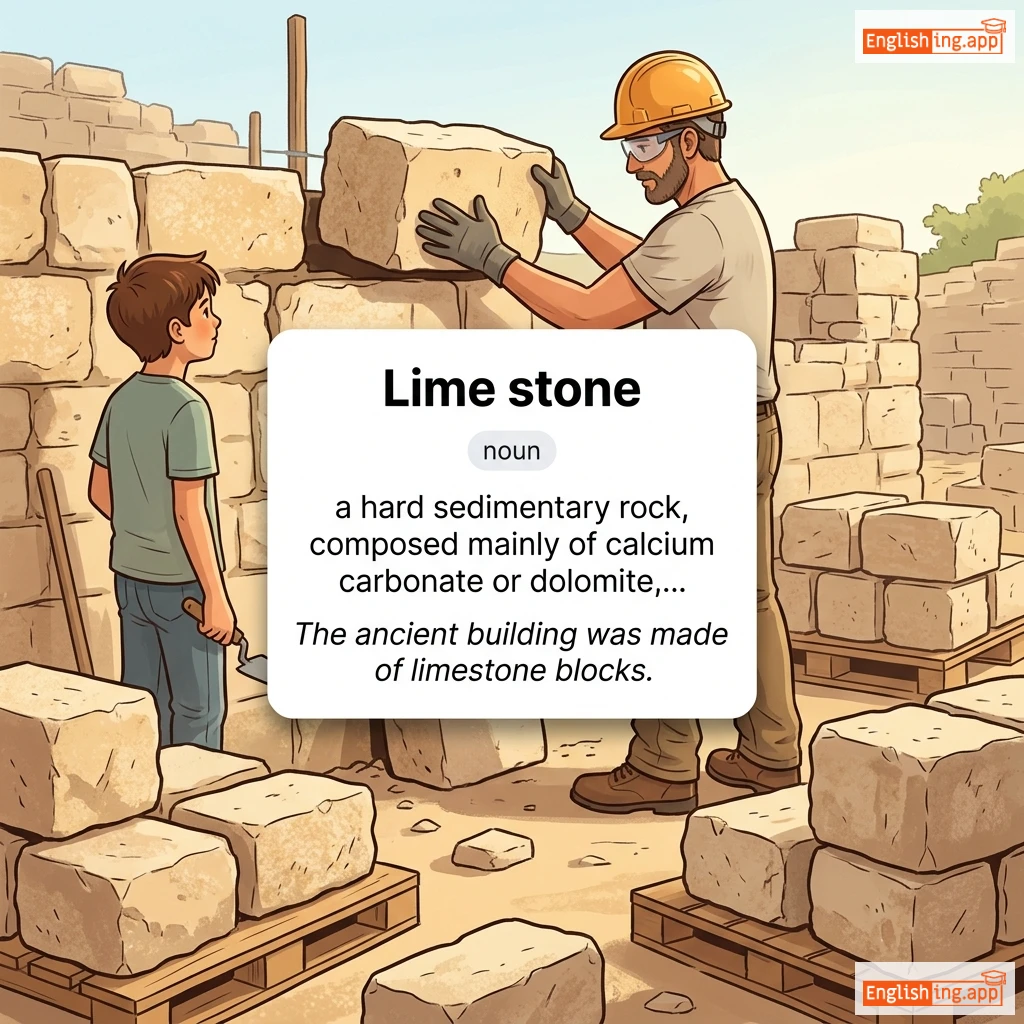
Lime stone definition card — visual illustration of the meaning
noun C1
/ˈlaɪm.stoʊn/
石灰岩 (seki kai gan)

a hard sedimentary rock, composed mainly of calcium carbonate or dolomite, used as building material and in the making of cement

"The ancient building was made of limestone blocks."

"その古代の建物は石灰岩のブロックで作られていました" (sono kodai no tatemono wa seki kai gan no burokku de tsukurarete imashita)
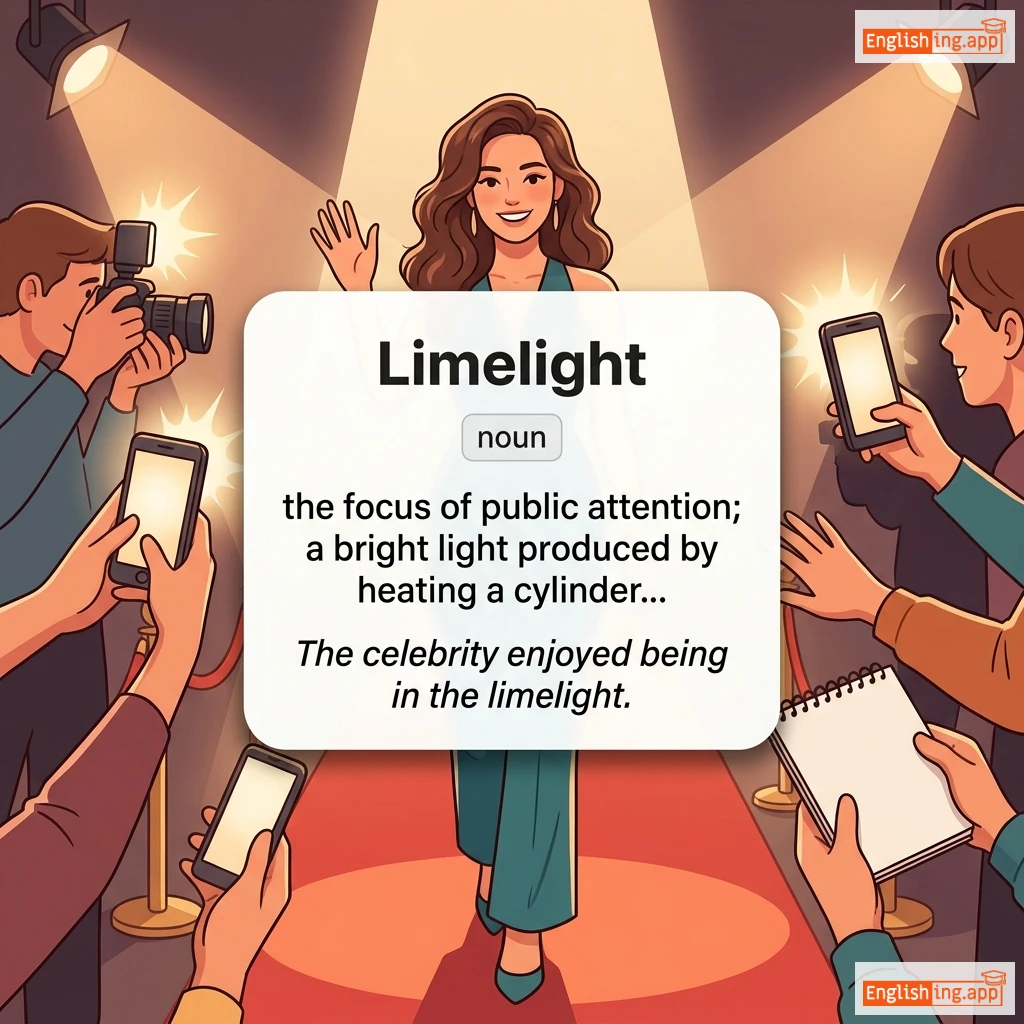
Limelight definition card — visual illustration of the meaning
noun C1
/ˈlaɪm.laɪt/
公衆の注目の中心; ライムのシリンダーを加熱して発生する明るい光 (laimlait)

the focus of public attention; a bright light produced by heating a cylinder of lime

"The celebrity enjoyed being in the limelight."

"有名人はスポットライトの中で楽しんでいました。" (yuumeijin wa supottoraito no naka de tanoshinde imashita)
noun C1
/ˈlɪməˌziːn/
運転手によって運転される大きな豪華な車 (untenshu ni yotte unten sareru ōkina gōka na kuruma)

a large, luxurious car driven by a chauffeur.

"The bride arrived in a white limousine."

"花嫁は白いリムジンで到着しました。" (Hanayome wa shiroi rimujin de tōchaku shimashita.)
verb, adjective, noun C1
/lɪmp/
引きずる / 弱い (hikizuru / yowai)

to walk with difficulty, often due to injury or weakness; lacking strength or firmness.

"He limped after injuring his ankle."

"彼は足首を怪我した後、足を引きずって歩いていた。" (Kare wa ashi-kubi o kega shita ato, ashi o hikizutte aruite ita.)
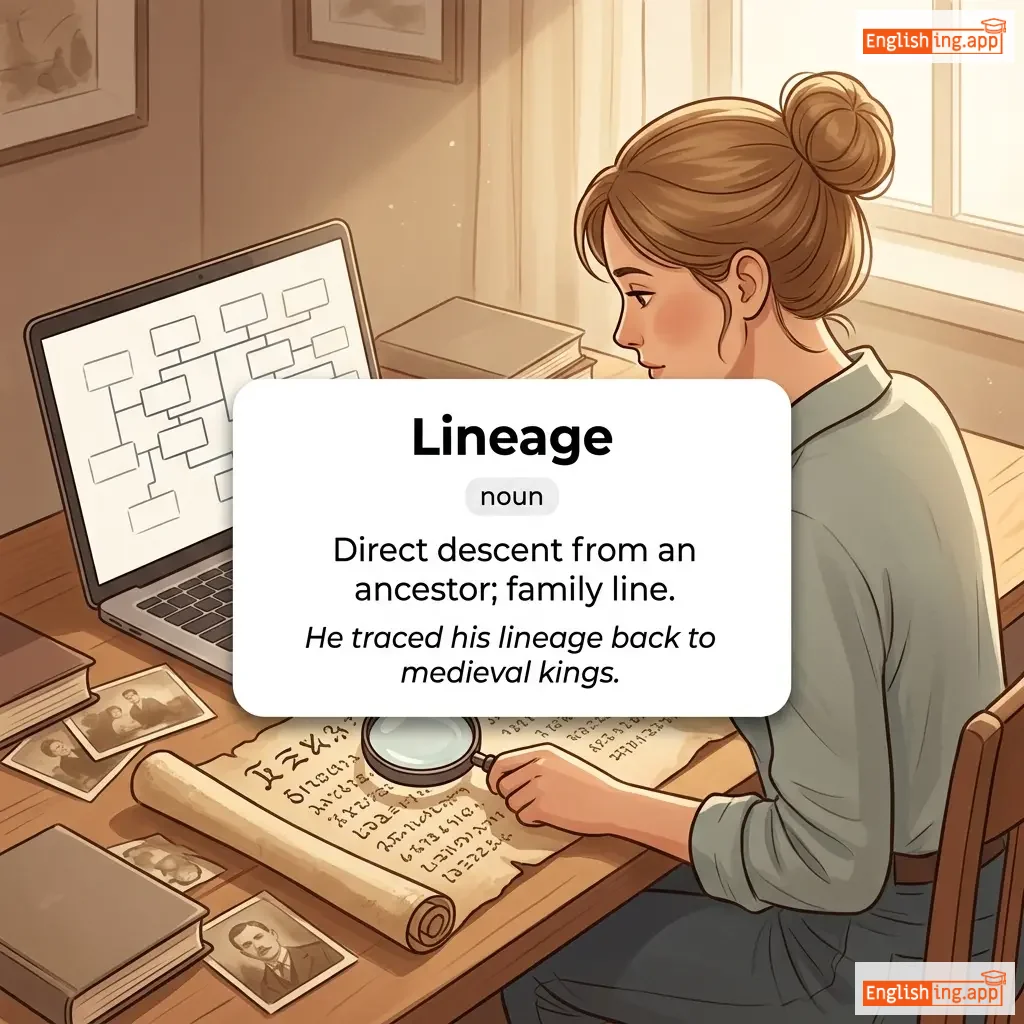
Lineage definition card — visual illustration of the meaning
noun C1
/ˈlɪniɪdʒ/
系譜 (keifu)

Direct descent from an ancestor; family line.

"He traced his lineage back to medieval kings."

"彼は自分の系譜を中世の王たちにまで遡りました。" (Kare wa jibun no keifu o chūsei no ō-tachi ni made sakomorimashita.)
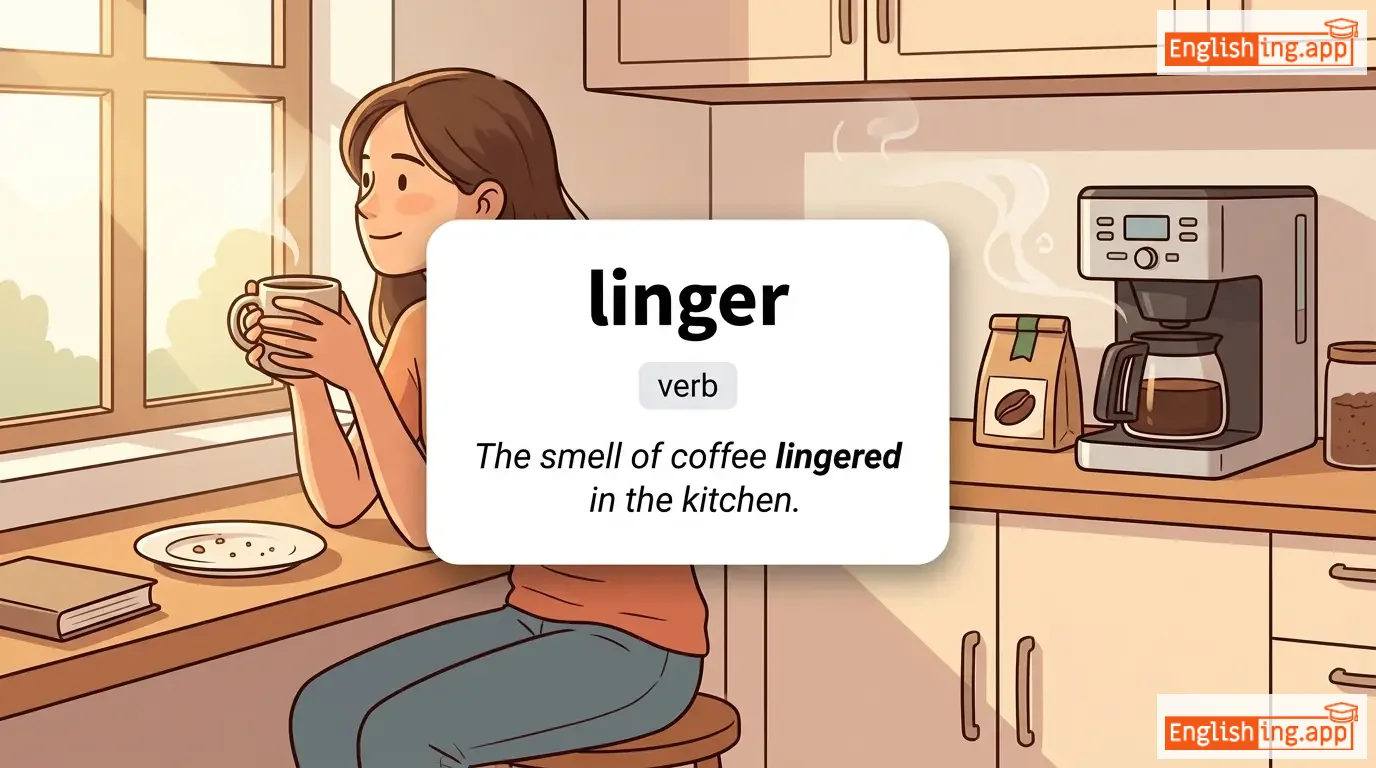
linger definition card — visual illustration of the meaning
verb C1
/ˈlɪŋ.ɡər/
長居する (nagai suru)

To stay in a place longer than necessary, often because of unwillingness to leave.

"The smell of coffee lingered in the kitchen."

"コーヒーの匂いはキッチンに長く linger していた。" (Kōhī no nioi wa kitchin ni nagaku linger shiteita.)
noun C1
/ˈlɪŋɡwɪst/
言語学者 (gengogakusha)

A person skilled in foreign languages or in the scientific study of language.

"She is a linguist who speaks six languages fluently."

"彼女は6か国語を流暢に話す言語学者です。" (Kanojo wa rokkakokugo o ryūchō ni hanasu gengogakusha desu.)
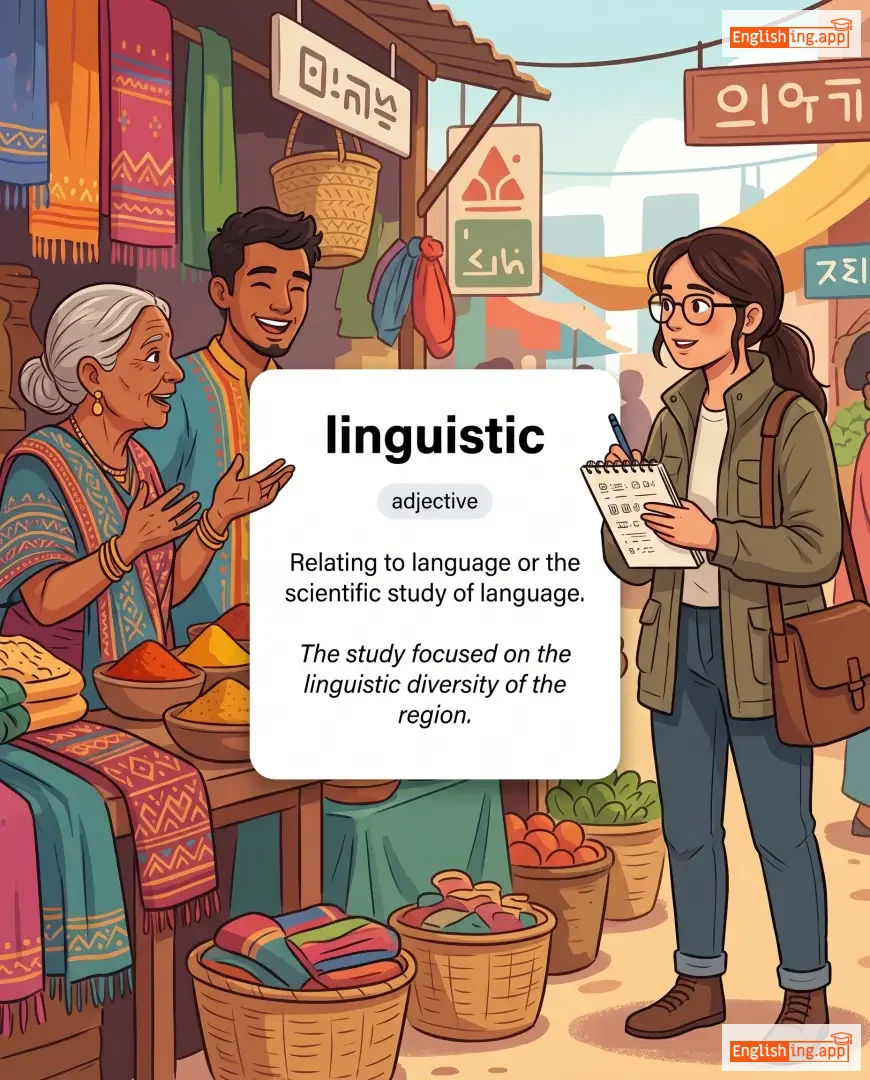
linguistic definition card — visual illustration of the meaning
adjective C1
/lɪŋˈɡwɪstɪk/
言語的 (gengo teki)

Relating to language or the scientific study of language.

"The study focused on the linguistic diversity of the region."

"その研究は地域の言語的多様性に焦点を当てました。" (Sono kenkyū wa chiiki no gengoteki tayōsei ni shōten o atemashita.)
noun C1
/lɪŋˈɡwɪstɪks/
言語学 (gengogaku)

The scientific study of language and its structure.

"She decided to major in linguistics at university."

"彼女は大学で言語学を専攻することに決めました。" (Kanojo wa daigaku de gengogaku wo senkou suru koto ni kimemashita.)
noun C1
/lɪˈkjʊər/
甘いリキュール (amai rikyuuru)

A strong, sweet alcoholic drink flavored with fruits, herbs, or spices.

"She served a small glass of cherry liqueur after dinner."

"夕食後に小さなチェリーリキュールを出しました。" (Yūshokugo ni chiisana chērī rikyuuru o dashimashita.)
verb C1
/ˈlɪkwɪdeɪt/
清算する (seisan suru)

To sell assets in order to pay off debts; to close a business and convert assets into cash.

"The company decided to liquidate its assets to pay creditors."

"会社は債権者に支払うために資産を清算することを決定しました。" (Kaisha wa saiken-sha ni shiharau tame ni shisan o seisan suru koto o kettei shimashita.)
liquidity definition card — visual illustration of the meaning
noun C1
lɪˈkwɪd.ə.ti
流動性 (ryūdōsei)

Cash flow, financial fluidity.

"The company maintains high liquidity."

"会社は高い流動性を維持しています。" (Kaisha wa takai ryūdōsei o iji shiteimasu.)
adjective C1
/ˈlɪstləs/
無気力 (mukiryoku)

lacking energy, enthusiasm, or interest

"She felt listless after working long hours without rest."

"長時間休憩なしで働いた後、彼女は無気力に感じていた。" (Chō jikan kyūkei nashi de hataraita ato, kanojo wa mukiryoku ni kanjite ita.)
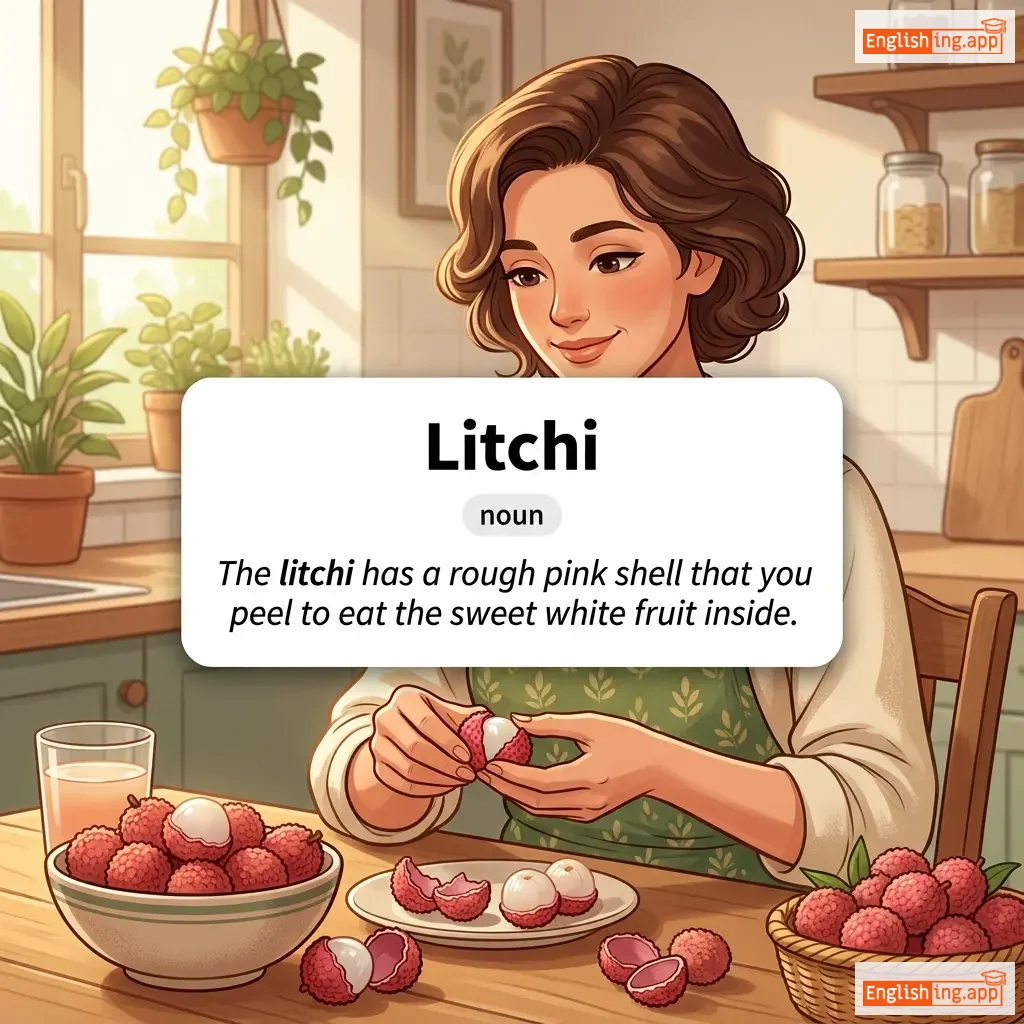
Litchi definition card — visual illustration of the meaning
noun C1
/ˈlaɪtʃi/
ライチ (raichi)

a small oval pink-red tropical fruit with white translucent flesh and sweet taste

"The litchi has a rough pink shell that you peel to eat the sweet white fruit inside."

"ライチは、外側がざらざらしたピンク色の皮で、中に甘くて白い果実が入っています。" (Raichi wa, sotogawa ga zarazara shita pinku-iro no kawa de, naka ni amakute shiroi kajitsu ga haitteimasu.)
verb C1
/ˈlɪtɪˌɡeɪt/
訴訟する (soshou suru)

to engage in legal proceedings or take a dispute to court

"The company decided to litigate the contract dispute."

"その企業は契約の争いを訴えることに決めた。" (Sono kigyō wa keiyaku no arasoi o uttaeru koto ni kimeta.)
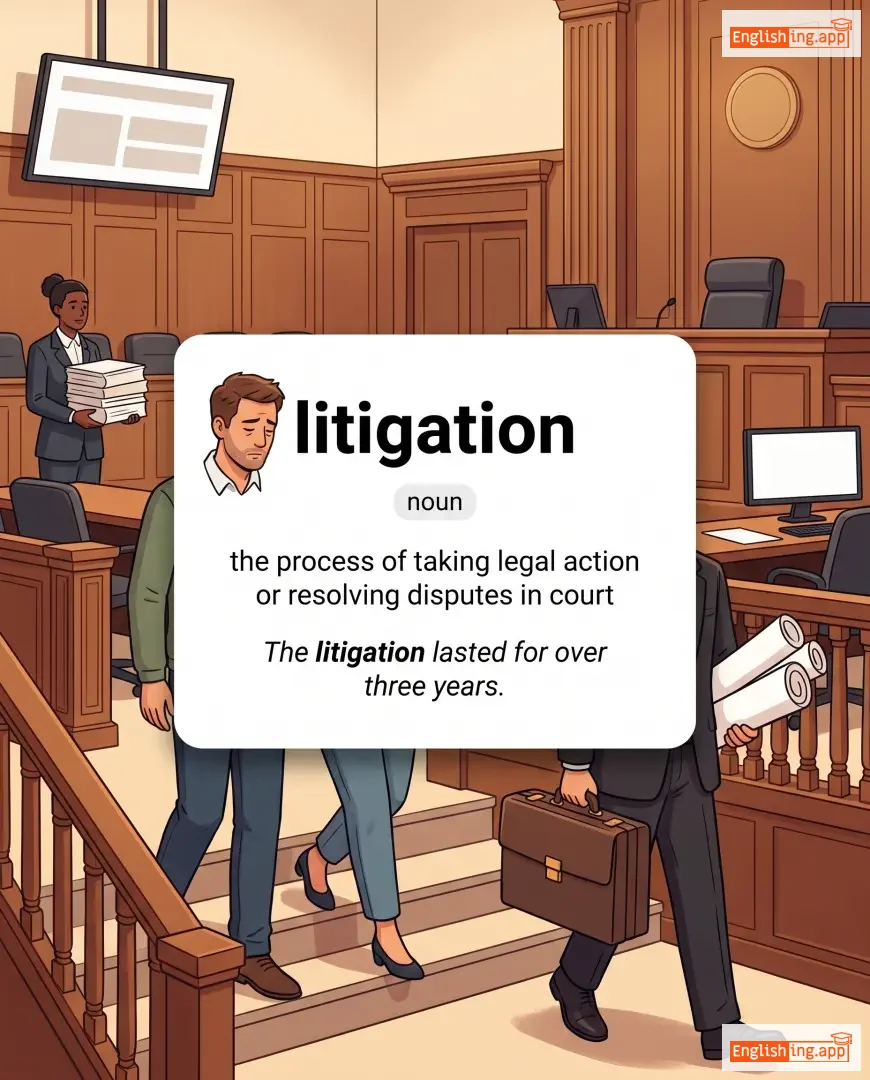
litigation definition card — visual illustration of the meaning
noun C1
/ˌlɪtɪˈɡeɪʃən/
訴訟 (soshō)

the process of taking legal action or resolving disputes in court

"The litigation lasted for over three years."

"訴訟は3年以上続いた。" (Soshō wa 3-nen ijō tsuzita.)
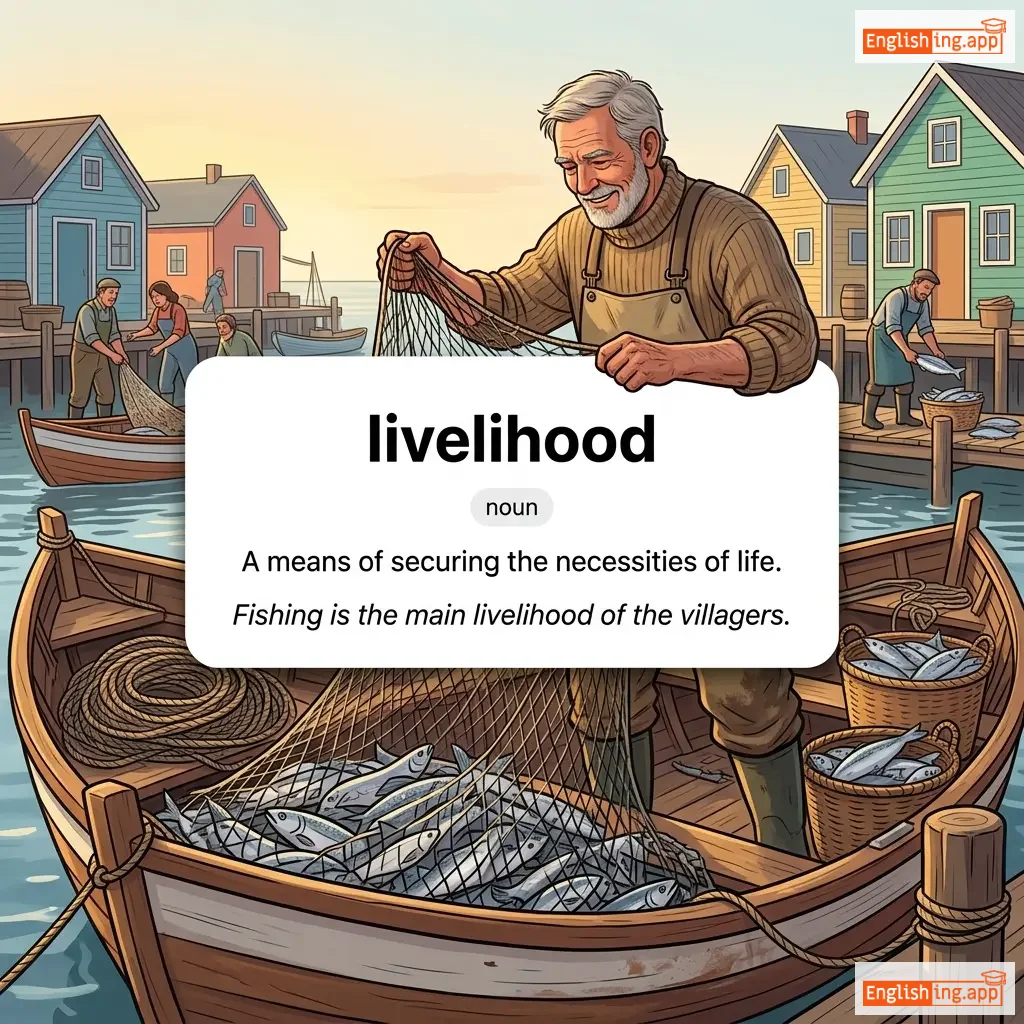
livelihood definition card — visual illustration of the meaning
noun C1
/ˈlaɪvlihʊd/
生計 (seiketsu)

A means of securing the necessities of life.

"Fishing is the main livelihood of the villagers."

"漁業は村人たちの主要な生計です。" (Gyogyo wa murabito-tachi no shuyou na seiketsu desu.)
adjective C1
/ˈlɪvɪd/
怒っている (okotte iru)

Extremely angry; furious.

"She was livid when she found out about the betrayal."

"裏切りを知って彼女は怒っていた。" (Uragiri o shitte kanojo wa okotte ita.)
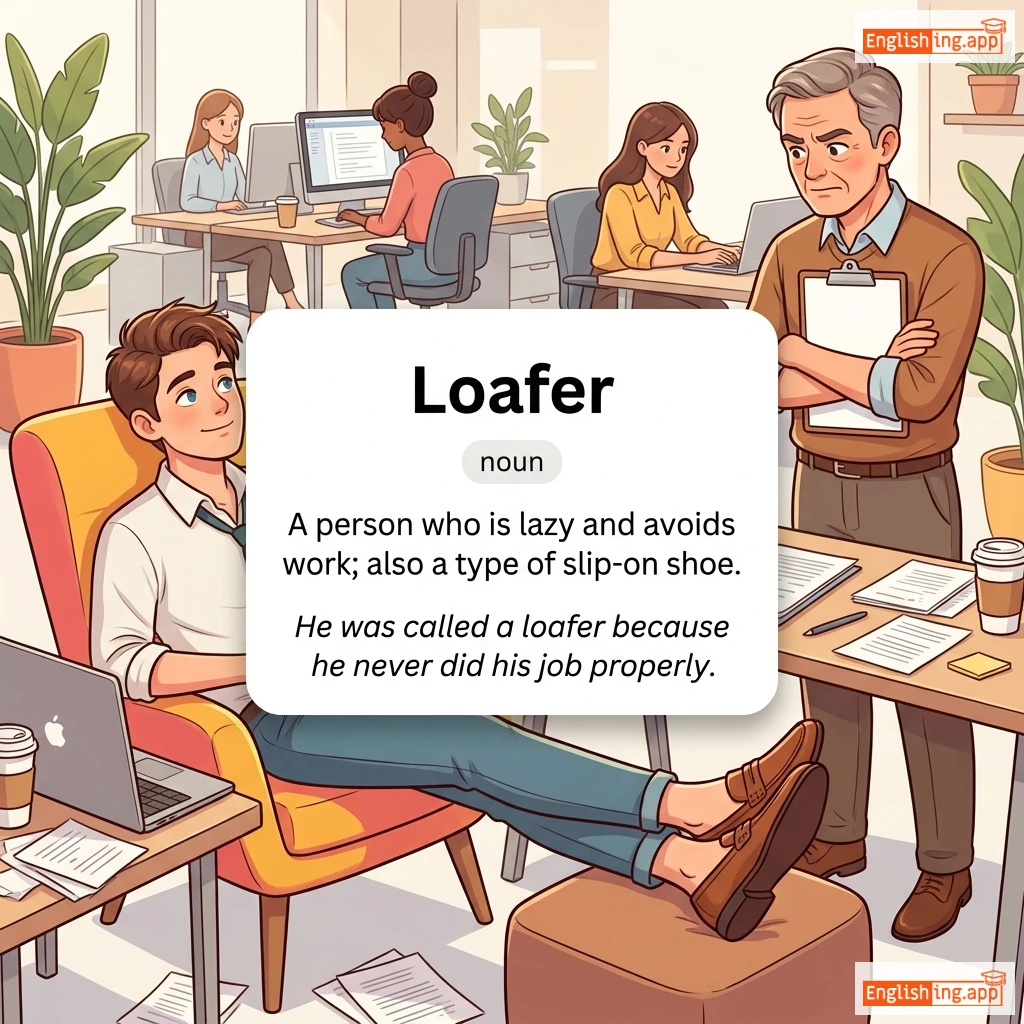
Loafer definition card — visual illustration of the meaning
noun C1
/ˈloʊfər/
怠け者 (namakemono)

A person who is lazy and avoids work; also a type of slip-on shoe.

"He was called a loafer because he never did his job properly."

"彼は仕事をきちんとやらないので、怠け者と呼ばれました。" (Kare wa shigoto o kichinto yaranai node, namakemono to yobaremashita.)
adjective C1
/loʊθ/
嫌がる (iyagaru)

reluctant or unwilling to do something

"She was loath to admit her mistake in front of everyone."

"彼女は皆の前で自分の間違いを認めることを嫌がった。" (Kanojo wa mina no mae de jibun no machigai o mitomeru koto o iyagatta.)
verb C1
/loʊð/
嫌う (kirau)

to feel intense dislike or disgust for

"He absolutely loathes being late to meetings."

"彼は会議に遅れるのが大嫌いです。" (Kare wa kaigi ni okureru no ga daikirai desu.)
noun C1
/ˌloʊkəˈmoʊʃən/
移動 (idou)

movement or the ability to move from one place to another

"Walking is the most common form of human locomotion."

"歩くことは人間の最も一般的な移動の形です。" (Aruku koto wa ningen no mottomo ippanteki na idō no katachi desu.)
noun C1
/ˌloʊ.kəˈmoʊ.tɪv/
機関車 (kikan sha)

A powered rail vehicle used for pulling trains.

"The old steam locomotive was restored for the museum."

"古い蒸気機関車は博物館のために修復されました。" (Furui jōki kikansha wa hakubutsukan no tame ni shūfuku saremashita.)
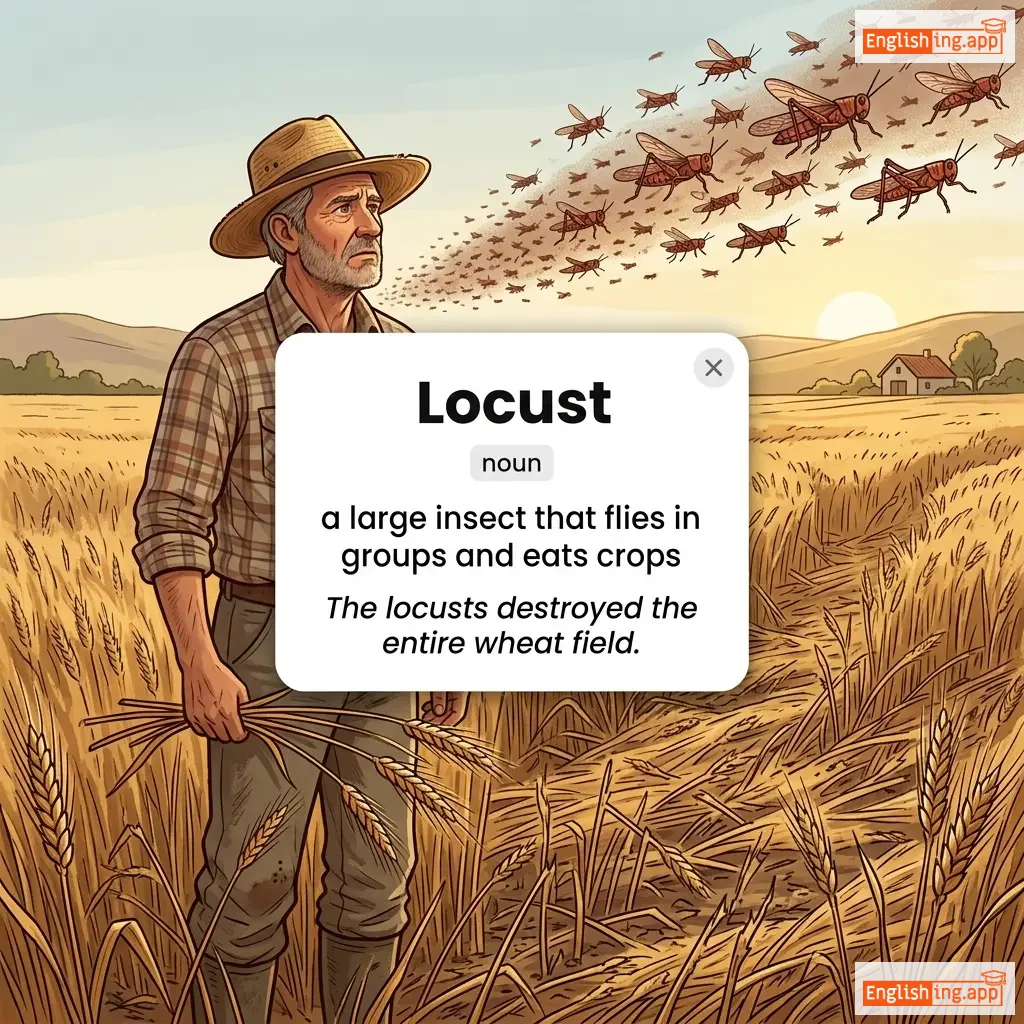
Locust definition card — visual illustration of the meaning
noun C1
/ˈloʊ.kəst/
バッタ (batta)

a large insect that flies in groups and eats crops

"The locusts destroyed the entire wheat field."

"バッタが小麦畑をすべて破壊しました。" (Batta ga komugi hatake o subete hakai shimashita)
noun C1
/lɒft/
ロフト (rofuto)

An upper room or space, often under the roof of a building.

"She converted the old loft into a modern studio."

"彼女は古いロフトを現代的なスタジオに改造しました。" (Kanojo wa furui rofuto wo gendai-teki na sutajio ni kaizou shimashita.)