ভোকাবুলারিসমূহ

ইংরেজি শব্দের বাংলা অর্থ | English to Bangla Word Meaning Dictionary

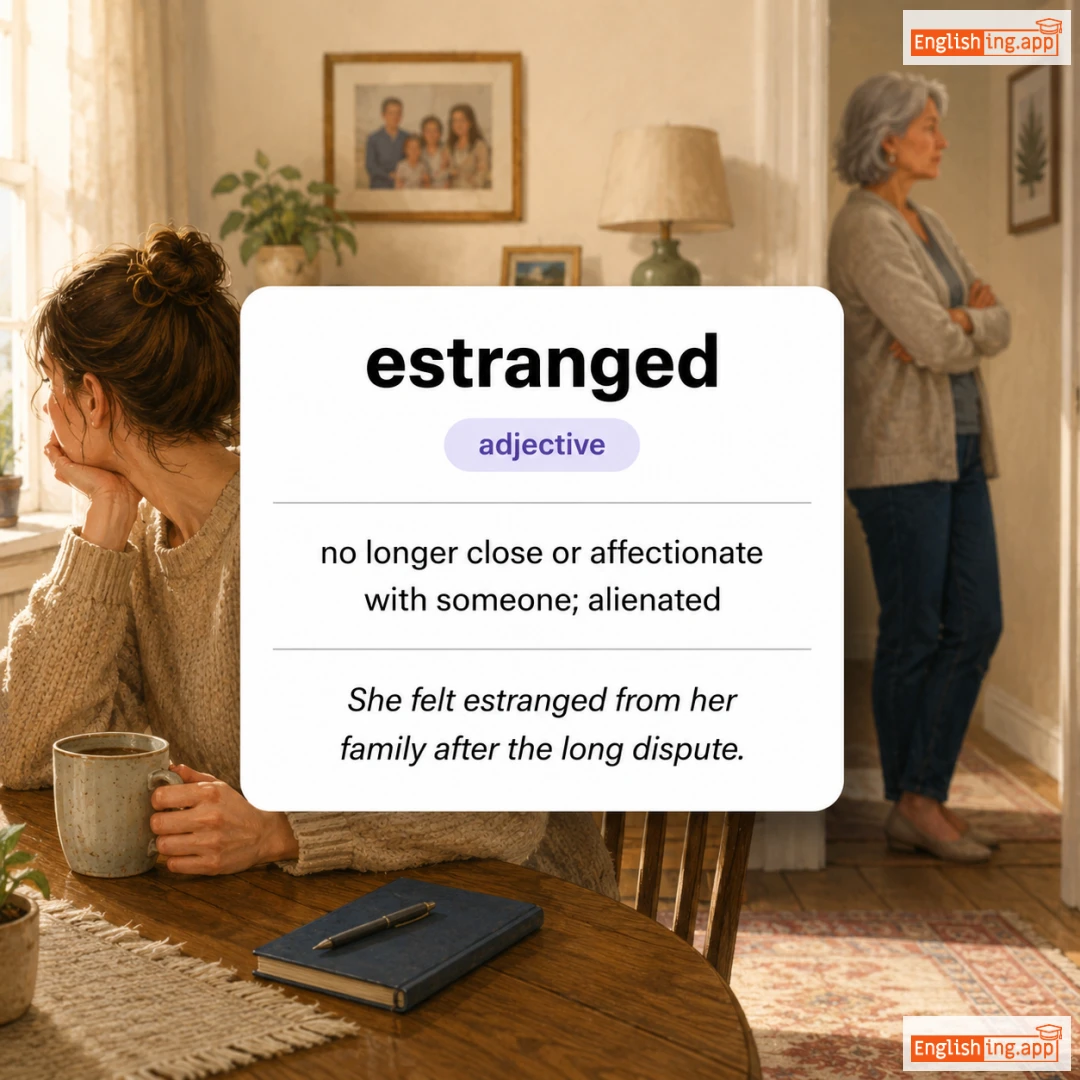
estranged definition card — visual illustration of the meaning
adjective C1
/ɪˈstreɪndʒd/
疎遠 (soen)

no longer close or affectionate with someone; alienated

"She felt estranged from her family after the long dispute."

"彼女は長い争いの後、家族と疎遠に感じた。" (Kanojo wa nagai arasoi no ato, kazoku to soen ni kanjita.)
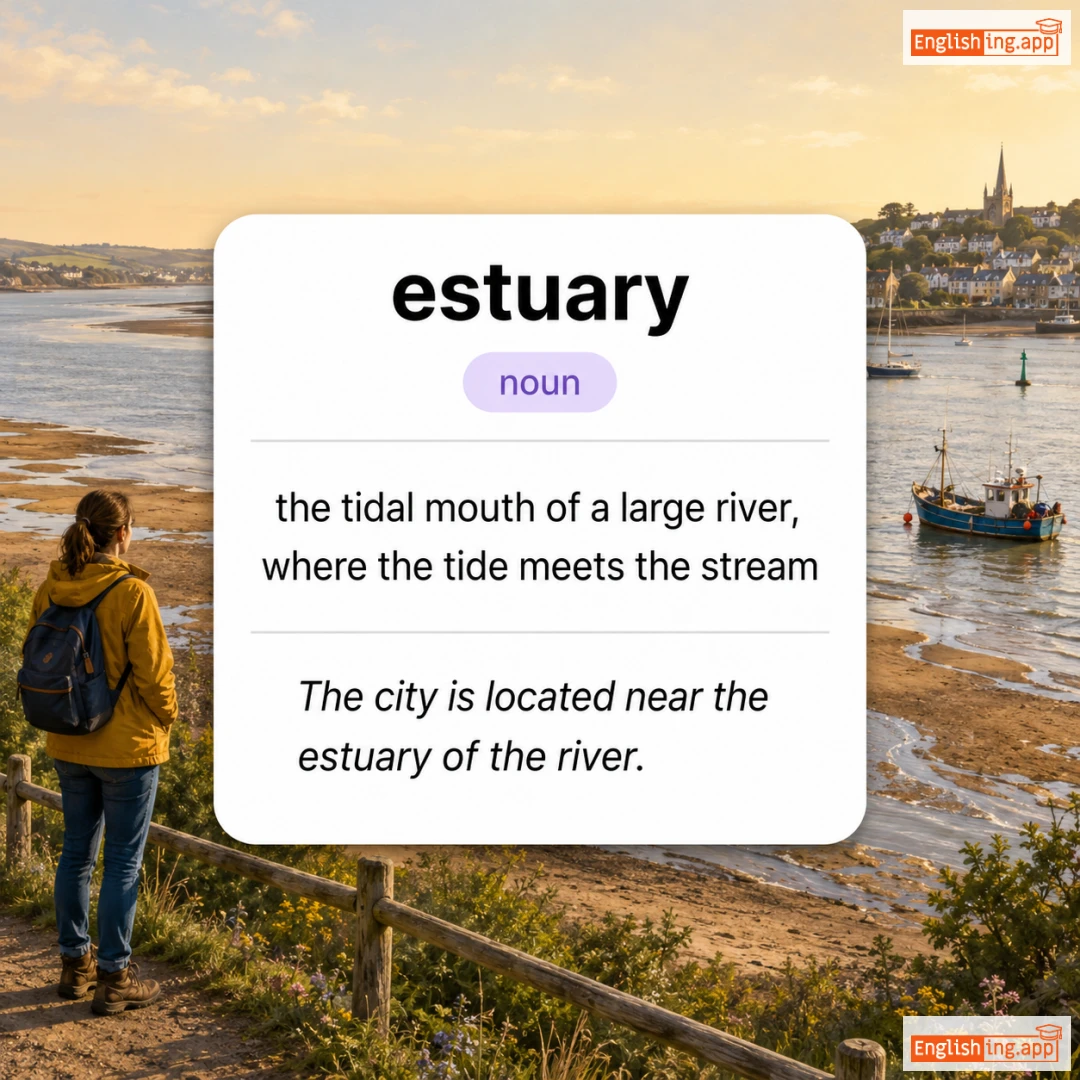
estuary definition card — visual illustration of the meaning
noun C1
/ˈɛstjʊəri/
河口 (kakou)

the tidal mouth of a large river, where the tide meets the stream

"The city is located near the estuary of the river."

"その都市は川の河口の近くにあります。" (sono toshi wa kawa no kakou no chikaku ni arimasu.)
verb C1
/ɛtʃ/
刻む (kizamu)

to cut or carve a design onto a surface

"The artist etched her initials into the glass."

"アーティストはガラスに自分のイニシャルを刻みました。" (Ātisuto wa garasu ni jibun no inisharu o kizamimashita.)
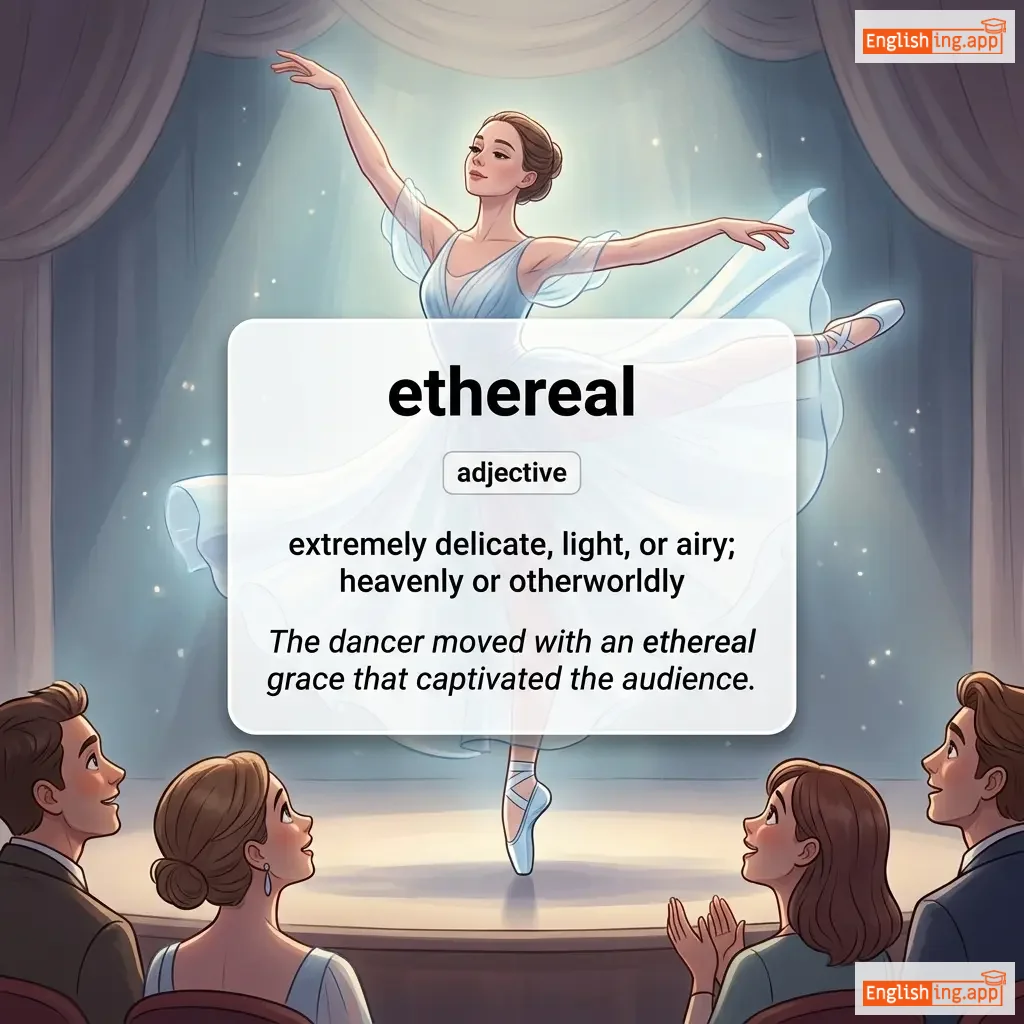
ethereal definition card — visual illustration of the meaning
adjective C1
/ɪˈθɪəriəl/
天上の (tenjō no)

extremely delicate, light, or airy; heavenly or otherworldly

"The dancer moved with an ethereal grace that captivated the audience."

"ダンサーはイセリアルな優雅さで動き、観客を魅了しました。" (Dansā wa iserial na yūgasa de ugoki, kankyaku o miryō shimashita.)
ethos definition card — visual illustration of the meaning
noun C1
/ˈiːθɒs/
エトス (etos)

the characteristic spirit, values, or beliefs of a community, culture, or organization

"The company’s ethos emphasizes innovation and customer service."

"その会社のエトスは、革新と顧客サービスを強調しています。" (Sono kaisha no etosu wa, kakushin to kokyaku sābisu o kyōchō shiteimasu.)
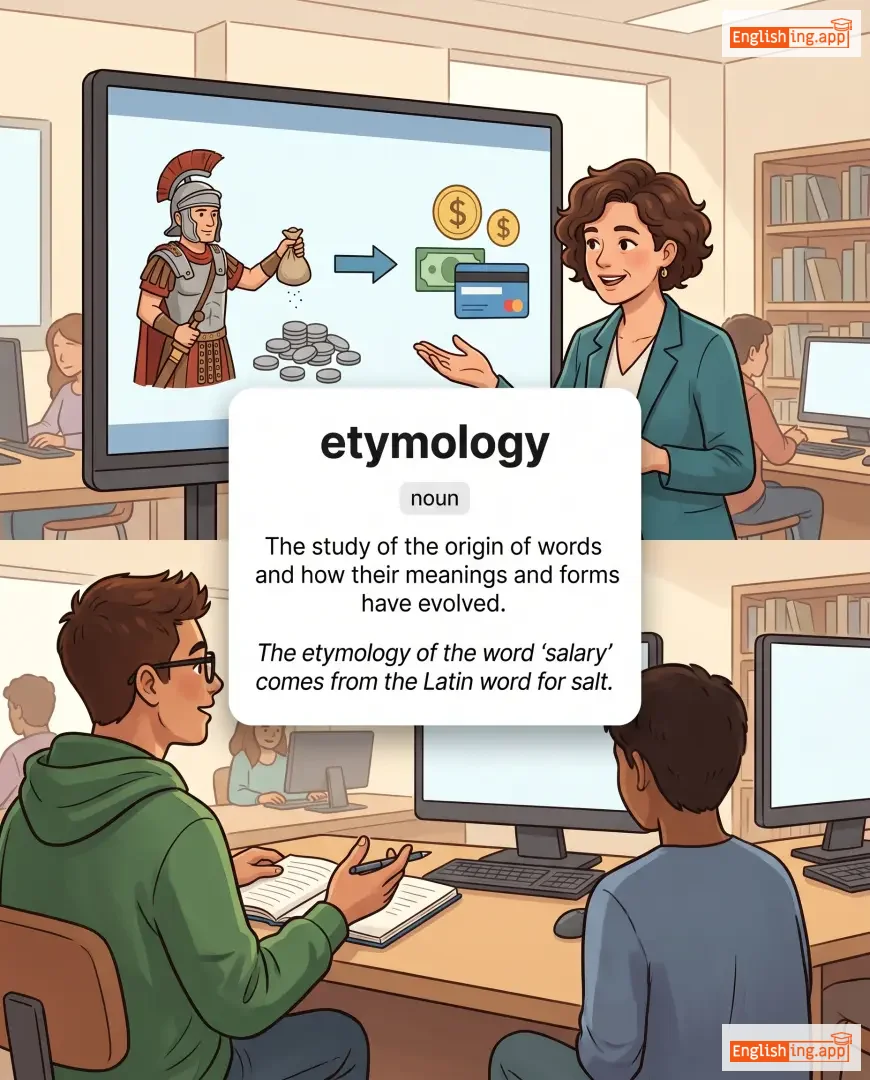
etymology definition card — visual illustration of the meaning
noun C1
/ˌɛtɪˈmɒlədʒi/
語源学 (gogen-gaku)

The study of the origin of words and how their meanings and forms have evolved.

"The etymology of the word 'salary' comes from the Latin word for salt."

"'給与'という言葉の語源は、ラテン語の塩を意味する言葉から来ています。" ('Kyūyo' to iu kotoba no gogen wa, raten-go no shio o imi suru kotoba kara kiteimasu.)
eulogy definition card — visual illustration of the meaning
noun C1
/ˈjuːlədʒi/
弔辞 (chouji)

A speech or piece of writing that praises someone, especially after their death.

"Her brother delivered a heartfelt eulogy at the funeral."

"彼女の兄は葬式で感動的な弔辞を述べました。" (Kanojo no ani wa soushiki de kandouteki na chouji o nobemashita.)
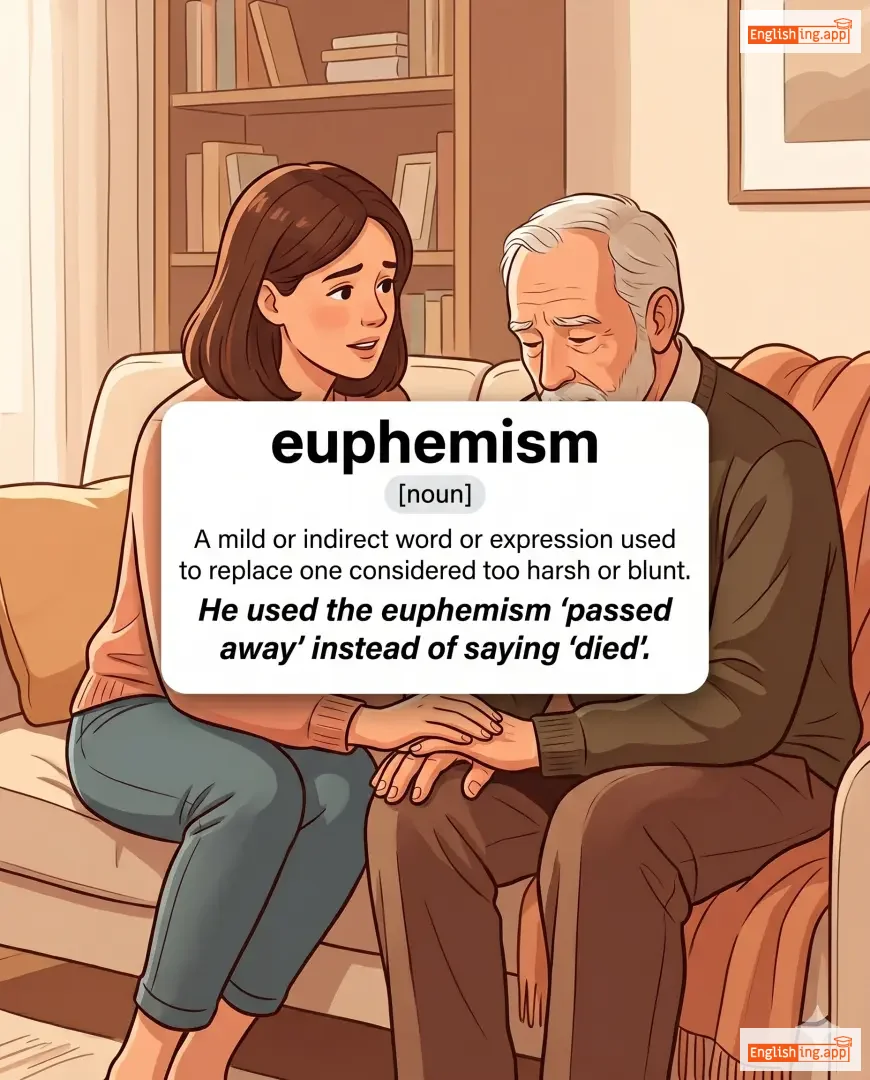
euphemism definition card — visual illustration of the meaning
noun C1
/ˈjuːfəmɪzəm/
婉曲語 (wankyokugo)

A mild or indirect word or expression used to replace one considered too harsh or blunt.

"He used the euphemism 'passed away' instead of saying 'died'."

"彼は「亡くなった」という代わりに「逝った」という婉曲語を使った。" (Kare wa 'nakunatta' to iu kawari ni 'itta' to iu wankyokugo o tsukatta.)
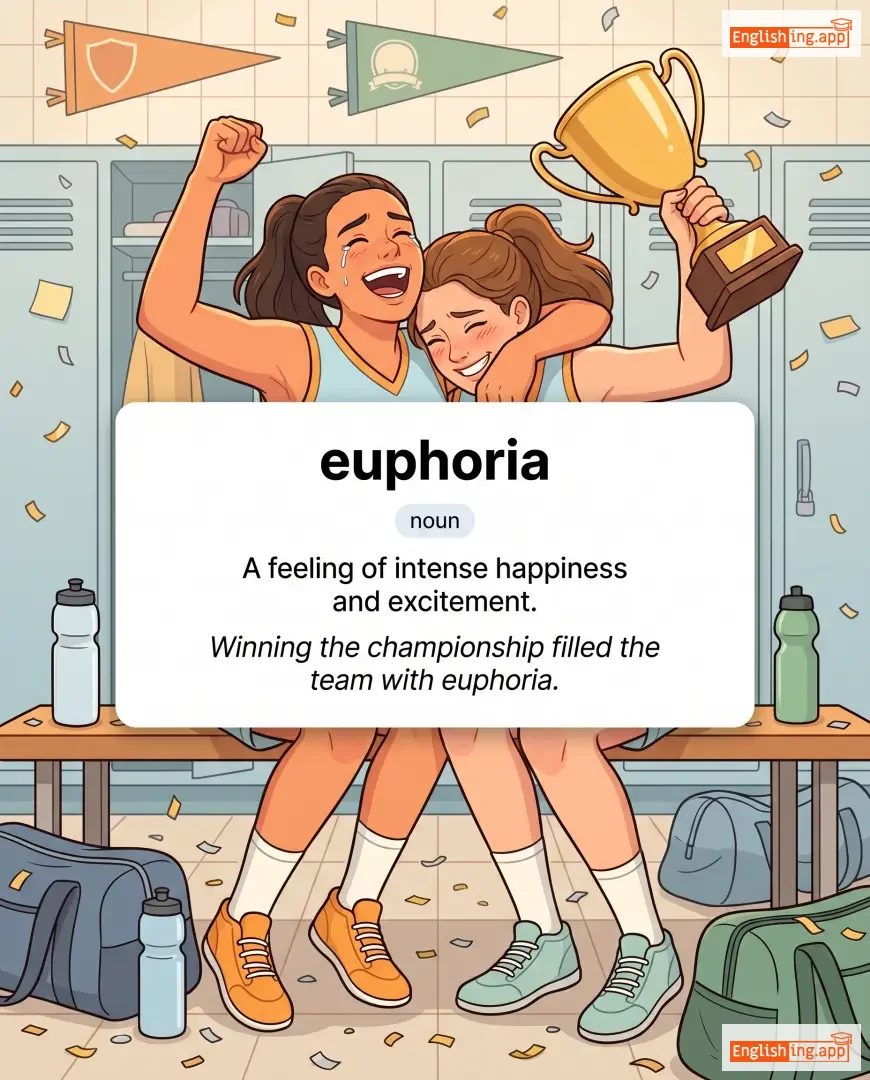
euphoria definition card — visual illustration of the meaning
noun C1
/juːˈfɔːriə/
幸福感 (koufukukan)

A feeling of intense happiness and excitement.

"Winning the championship filled the team with euphoria."

"チャンピオンシップを優勝すると、チームは幸福感で満たされました。" (Chanpionship wo yūshō suru to, chīmu wa kōfukukan de mitasaremashita.)
adjective C1
/juːˈfɔːrɪk/
幸福感に満ちた (kōfukukan ni michita)

Characterized by or feeling intense excitement and happiness.

"The fans were euphoric after their team's victory."

"チームが勝った後、ファンは幸福感に満ちていた。" (Chīmu ga katta ato, fan wa kōfukukan ni michite ita.)
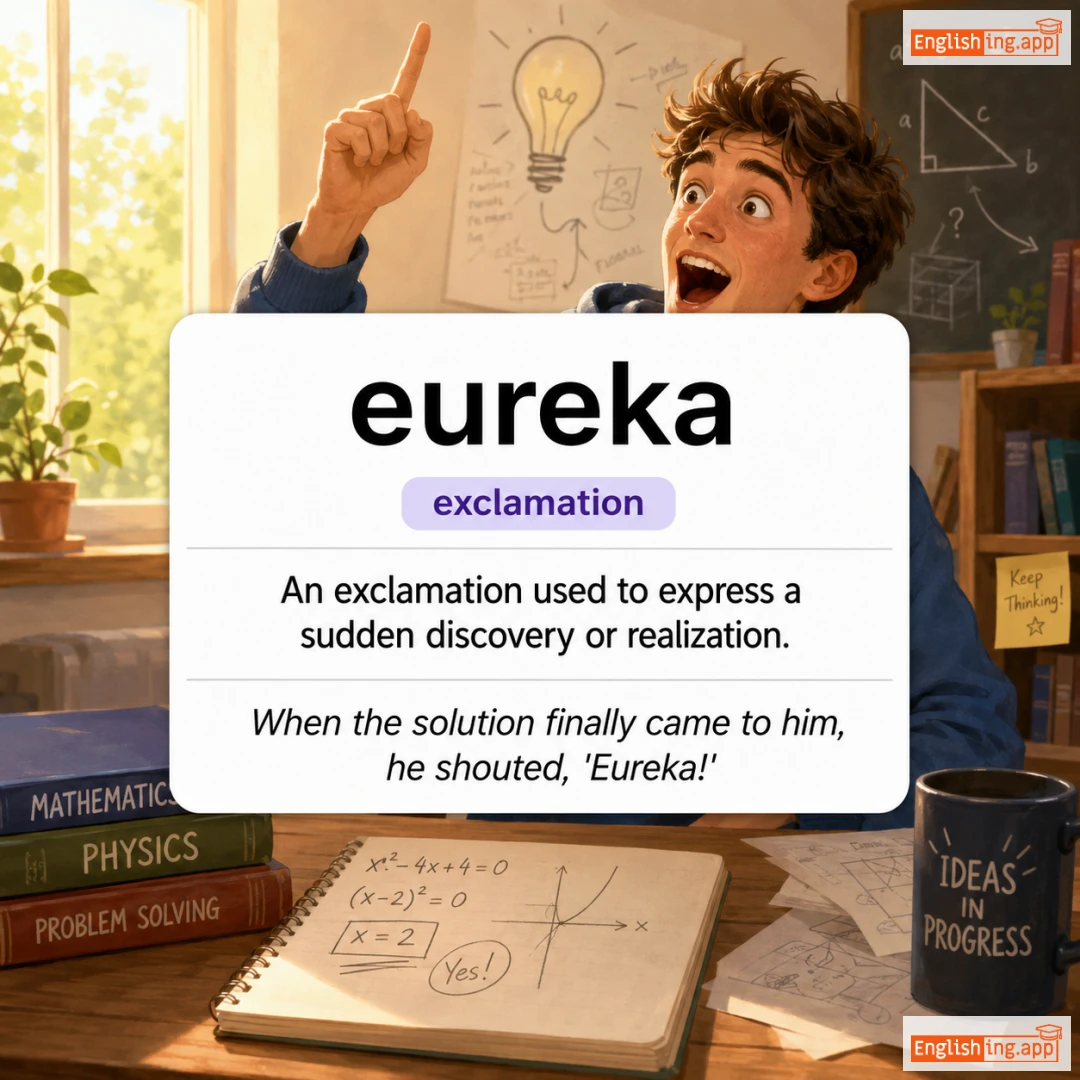
eureka definition card — visual illustration of the meaning
exclamation C1
/juˈriːkə/
ユーレカ! (Yureka!)

An exclamation used to express a sudden discovery or realization.

"When the solution finally came to him, he shouted, 'Eureka!'"

"解決策がついに彼に浮かんだとき、彼は叫んだ。 'ユーレカ!'" (Kaiketsu-saku ga tsuini kare ni ukanda toki, kare wa sakenda. 'Yureka!')
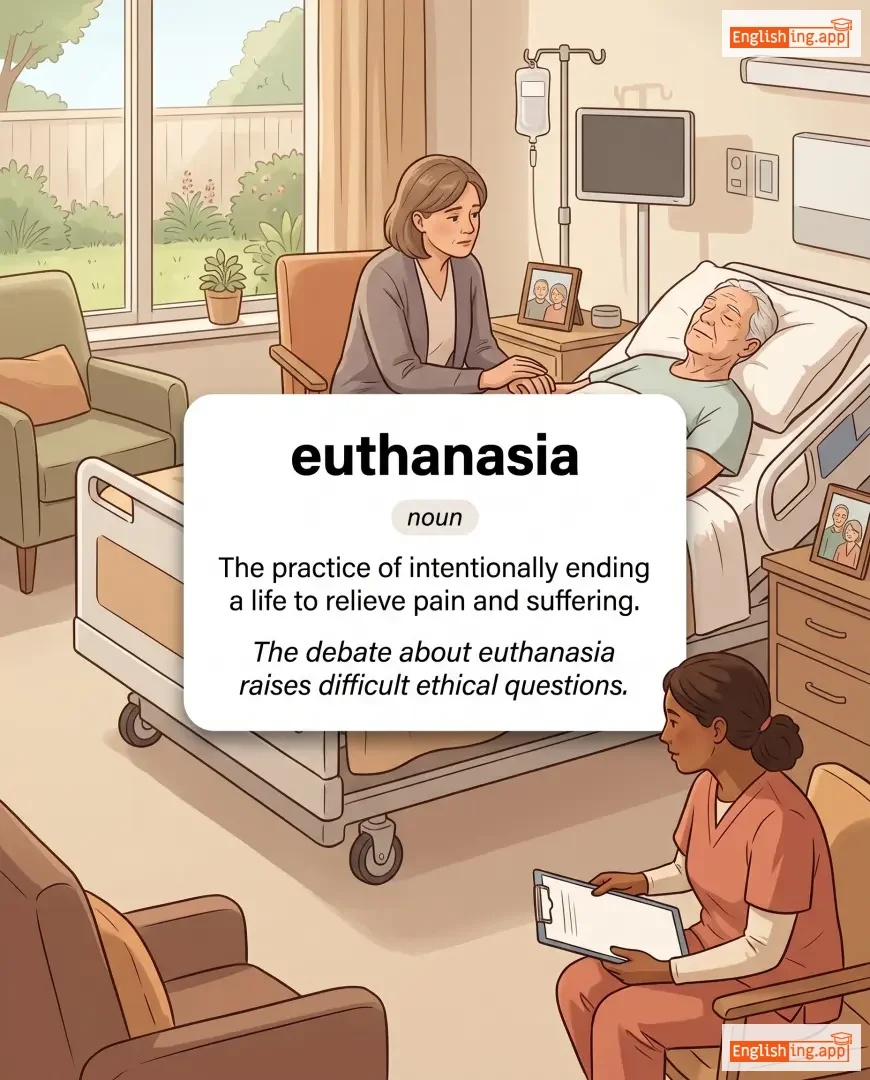
euthanasia definition card — visual illustration of the meaning
noun C1
/ˌjuːθəˈneɪʒə/
安楽死 (anraku shi)

The practice of intentionally ending a life to relieve pain and suffering.

"The debate about euthanasia raises difficult ethical questions."

"安楽死についての議論は、難しい倫理的な問題を提起します。" (Anraku shi ni tsuite no giron wa, muzukashii rinriteki na mondai wo teiki shimasu.)
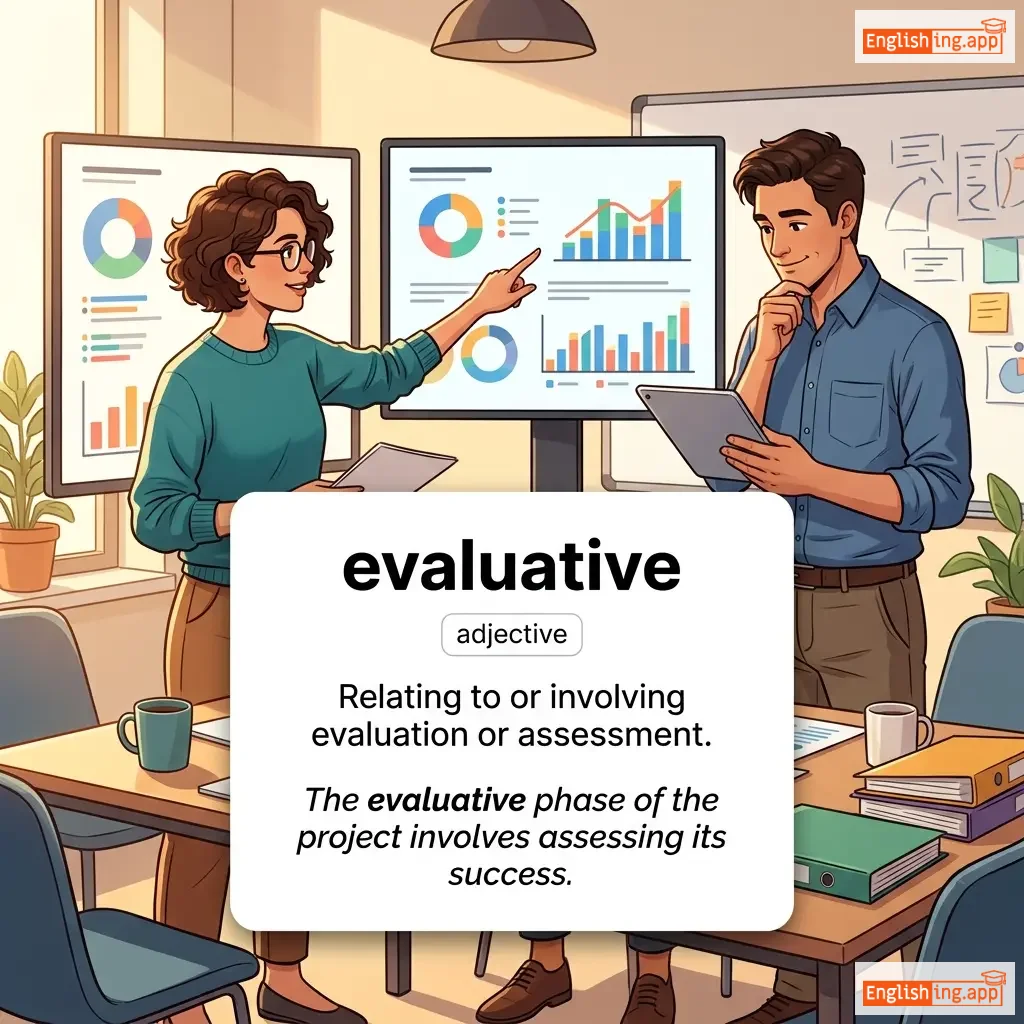
evaluative definition card — visual illustration of the meaning
adjective C1
/ɪˈvæljʊətɪv/
評価的 (hyoukateki)

Relating to or involving evaluation or assessment.

"The evaluative phase of the project involves assessing its success."

"プロジェクトの評価段階は、その成功を評価することを含みます。" (Purojekuto no hyoukadankai wa, sono seikou wo hyoukasuru koto wo fukumimasu.)
evangelical definition card — visual illustration of the meaning
adjective C1
/ˌiːvænˈdʒɛlɪkəl/
福音主義 (fukuin shugi)

Relating to the Christian gospel, especially the teachings that emphasize personal faith and the authority of the Bible.

"She grew up in an evangelical church community."

"彼女は福音主義の教会コミュニティで育ちました。" (Kanojo wa fukuin shugi no kyōkai komyuniti de sodachimashita.)
evangelist definition card — visual illustration of the meaning
noun C1
/ɪˈvændʒəlɪst/
伝道師 (dendōshi)

A person who seeks to convert others to the Christian faith, especially by public preaching.

"The evangelist traveled across the country spreading his message."

"伝道師は全国を旅して自分のメッセージを広めていました。" (Dendōshi wa zenkoku o tabishite jibun no messēji o hiromete imashita.)
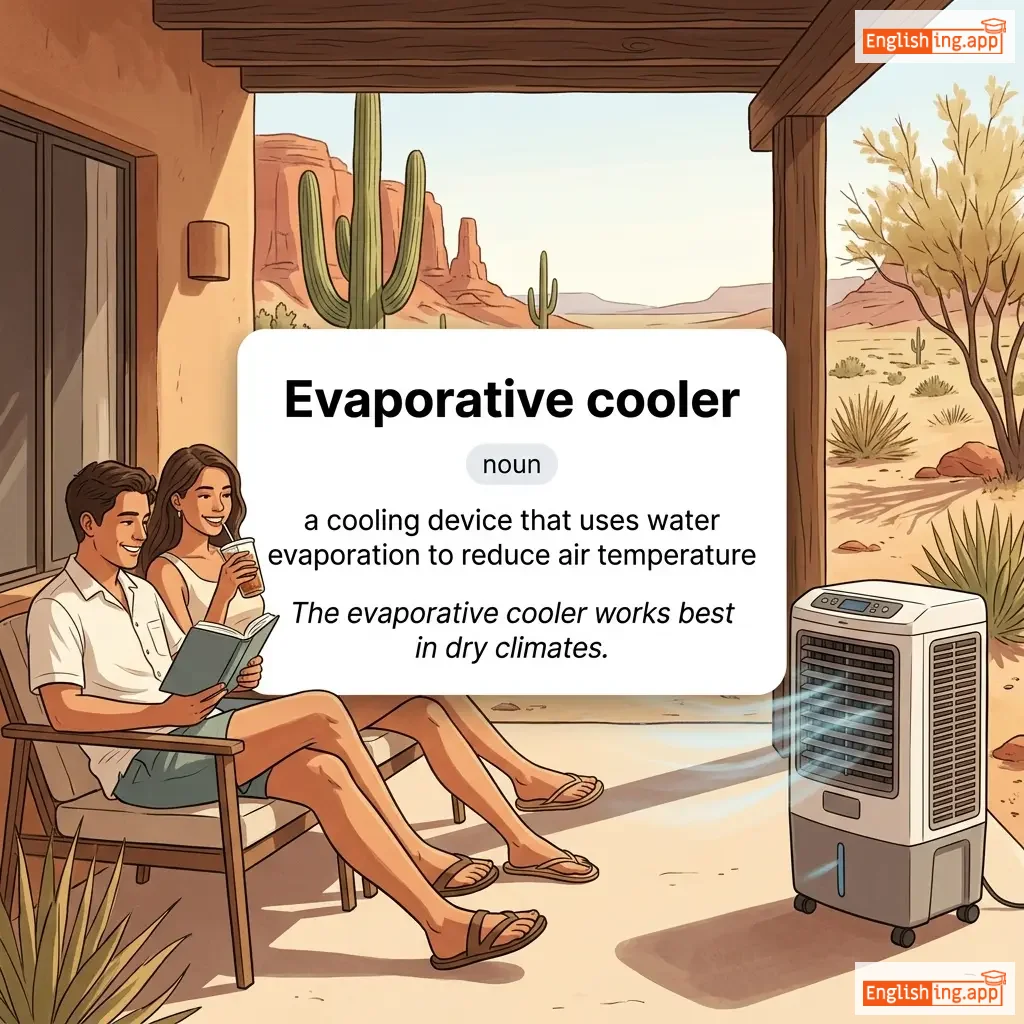
Evaporative cooler definition card — visual illustration of the meaning
noun C1
/ɪˈvæp.ər.ə.tɪv ˈkuː.lər/
蒸発冷却器 (jōhatsu reikyaku ki)

a cooling device that uses water evaporation to reduce air temperature

"The evaporative cooler works best in dry climates."

"蒸発冷却器は乾燥した気候で最も効果的に機能します。" (jōhatsu reikyaku ki wa kansō shita kikō de mottomo kōka-teki ni kinō shimasu)
evasion definition card — visual illustration of the meaning
noun C1
/ɪˈveɪʒən/
回避 (kaibi)

The act of avoiding something, especially by cleverness or trickery.

"He was arrested for tax evasion."

"彼は税金逃れで逮捕された。" (Kare wa zeikin nogare de taiho sareta.)
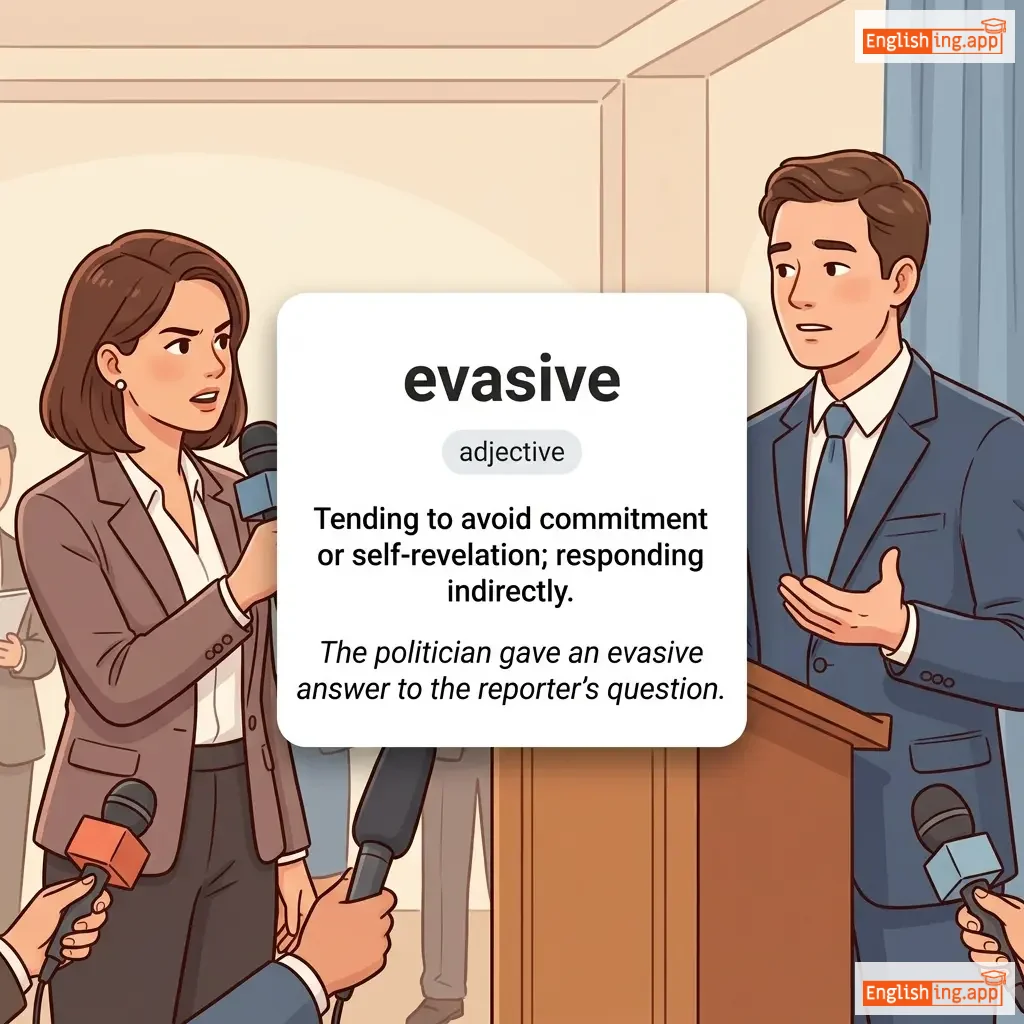
evasive definition card — visual illustration of the meaning
adjective C1
/ɪˈveɪsɪv/
回避的な (kaibiteki na)

Tending to avoid commitment or self-revelation; responding indirectly.

"The politician gave an evasive answer to the reporter's question."

"政治家は記者の質問に対して回避的な答えをしました。" (Seijika wa kisha no shitsumon ni taishite kaibiteki na kotae o shimashita.)
adjective C1
/ˈevər ˈlæstɪŋ/
永遠の; 永続的な; (eien no; eizokuteki na)

eternal; permanent; enduring forever

"Their love is ever-lasting and will never fade."

"彼らの愛は永遠で、決して色あせることはありません。" (karera no ai wa eien de, kesshite iroaseru koto wa arimasen.)
adjective C1
/ˌɛvərˈlæstɪŋ/
永遠の (eien no)

Lasting forever or for an indefinitely long time.

"The poet wrote about his everlasting love for nature."

"詩人は自然に対する永遠の愛について書きました。" (Shijin wa shizen ni taisuru eien no ai ni tsuite kakimashita.)
verb C1
/ɪˈvɪkt/
立ち退かせる (tachinokaseru)

To expel someone from a property, usually by legal process.

"The landlord decided to evict the tenants for not paying rent."

"家主は家賃未払いでテナントを立ち退かせることに決めました。" (Iyanushi wa yachin mibaraide tenant wo tachinokaseru koto ni kimemashita.)
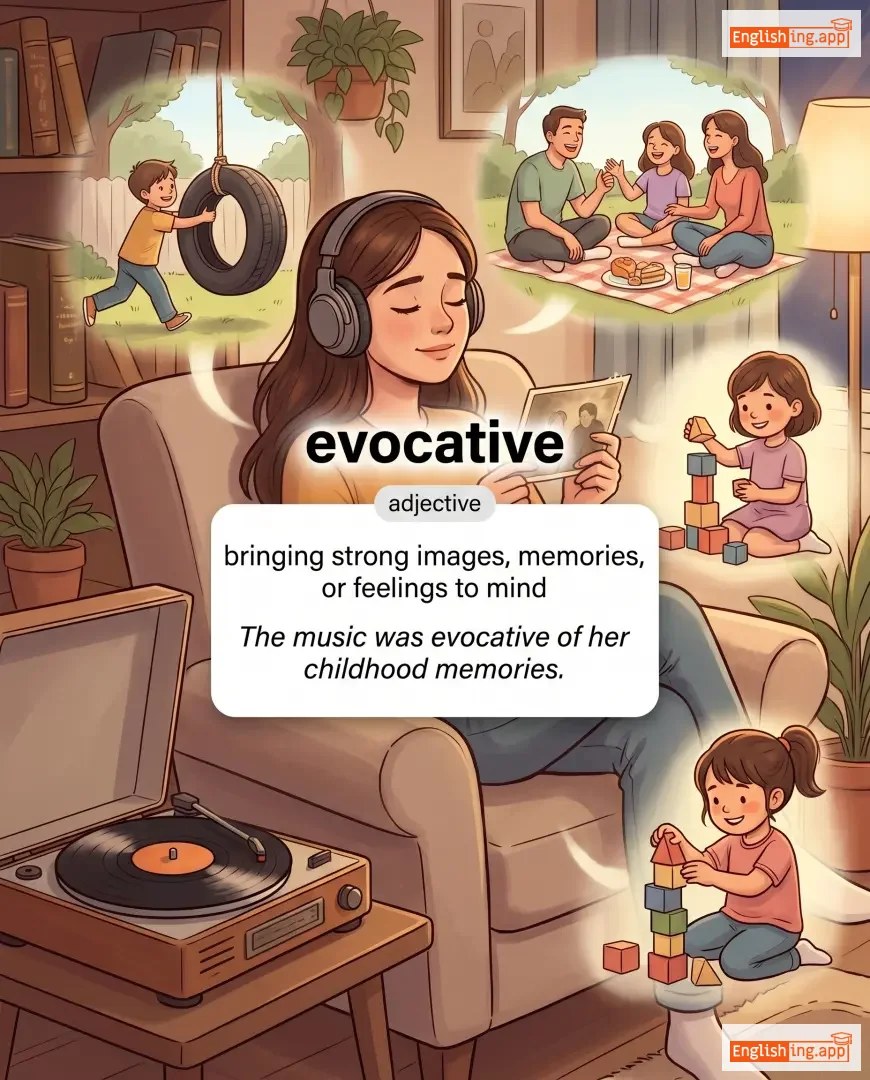
evocative definition card — visual illustration of the meaning
adjective C1
/ɪˈvɒkətɪv/
呼び起こす (yobikokosu)

bringing strong images, memories, or feelings to mind

"The music was evocative of her childhood memories."

"その音楽は彼女の子供時代の記憶を呼び起こしました。" (Sono ongaku wa kanojo no kodomojidai no kioku o yobikokoshimashita.)
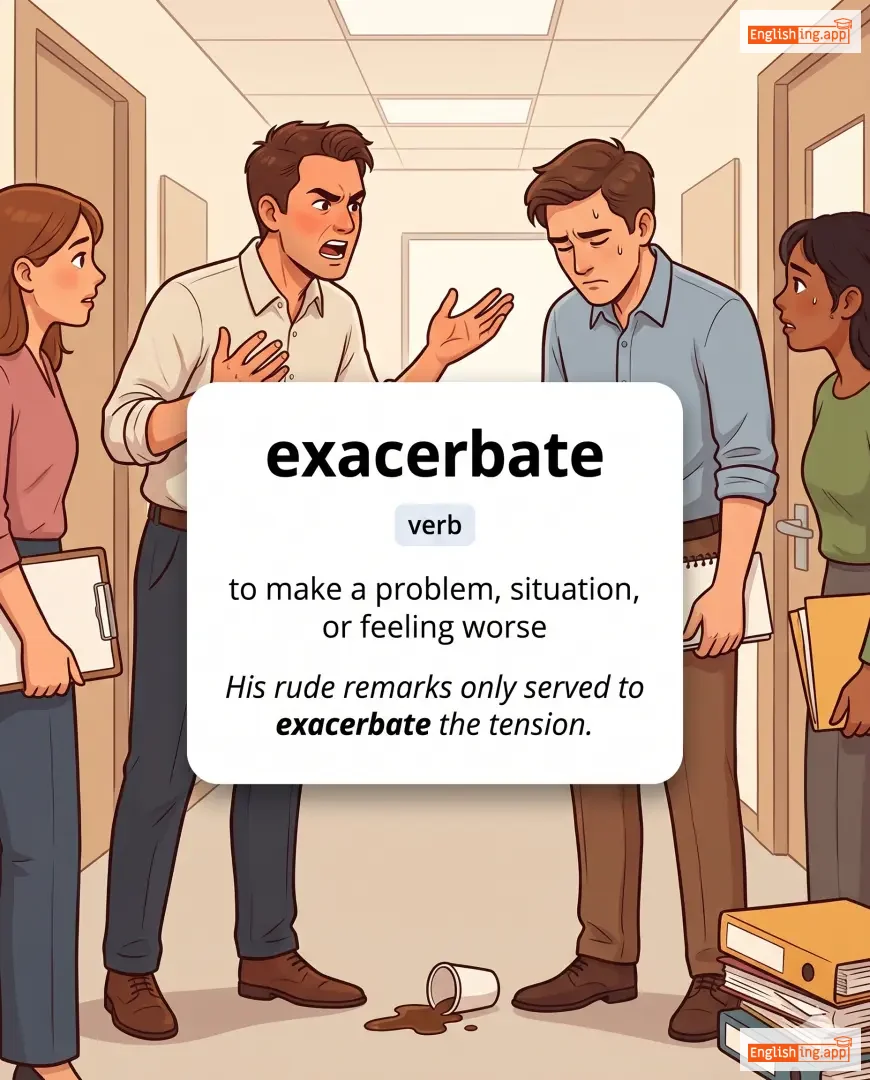
exacerbate definition card — visual illustration of the meaning
verb C1
/ɪɡˈzæsərˌbeɪt/
悪化させる (akka saseru)

to make a problem, situation, or feeling worse

"His rude remarks only served to exacerbate the tension."

"彼の失礼なコメントは、緊張を悪化させるだけだった。" (Kare no shitsurei na komento wa, kinchou wo akka saseru dake datta.)
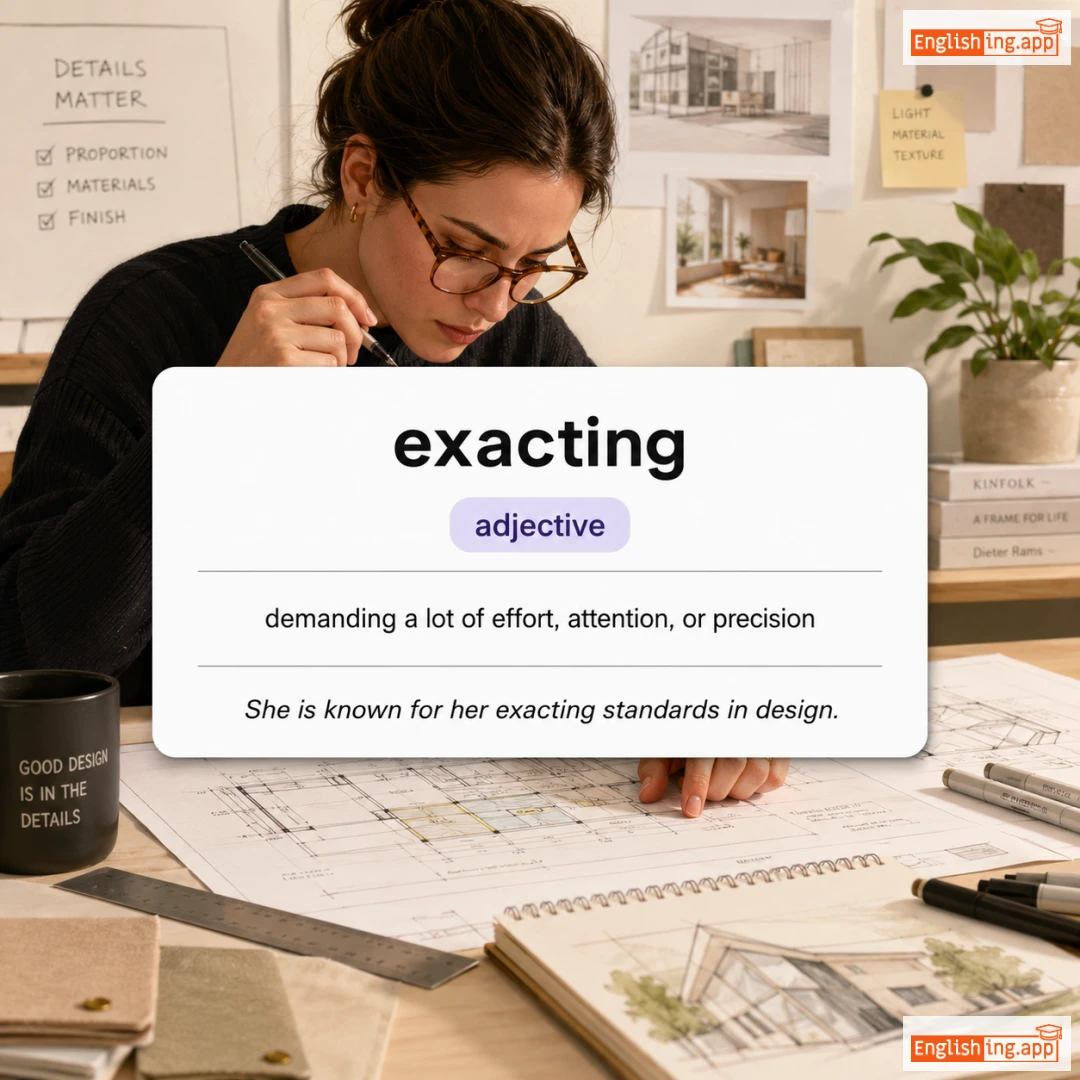
exacting definition card — visual illustration of the meaning
adjective C1
/ɪɡˈzæktɪŋ/
厳格な (genkaku na)

demanding a lot of effort, attention, or precision

"She is known for her exacting standards in design."

"彼女はデザインにおける厳格な基準で知られています。" (Kanojo wa dezain ni okeru genkaku na kijun de shirareteimasu.)
🙌

exalt

verb C1
/ɪɡˈzɔːlt/

to praise highly or raise in rank, honor, or power

"The community exalted the teacher for his dedication."

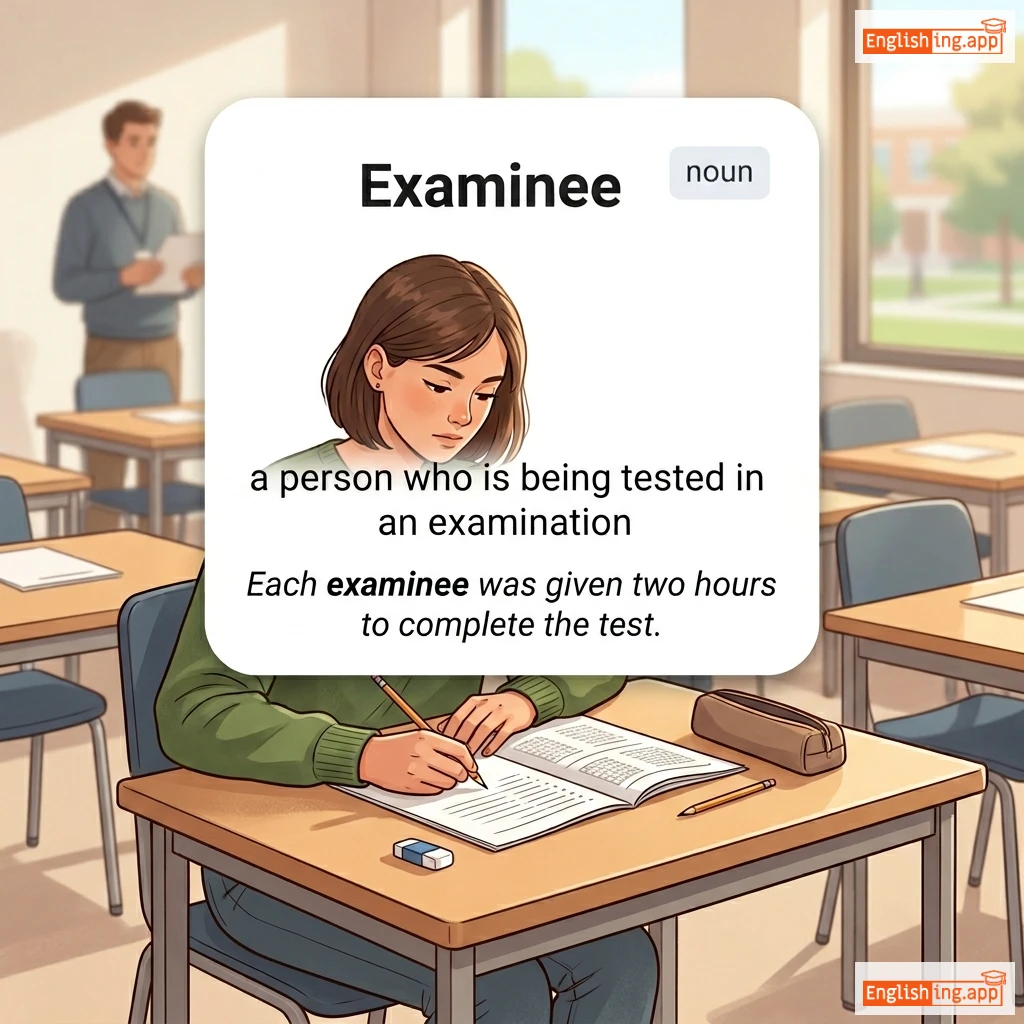
Examinee definition card — visual illustration of the meaning
noun C1
/ɪɡˌzæm.ɪˈniː/
受験者 (juken-sha)

a person who is being tested in an examination

"Each examinee was given two hours to complete the test."

"各受験者には試験を完了するために2時間が与えられました。" (Kaku juken-sha ni wa shiken o kanryou suru tame ni 2 jikan ga ataeraremashita.)
verb C1
/ɪɡˈzæspəˌreɪt/
いらだたせる (iradataseru)

to irritate or annoy intensely

"His constant complaints began to exasperate his coworkers."

"彼の絶え間ない不満は同僚をいらだたせ始めた。" (Kare no taemanai fuman wa doryo o iradatasemeta.)
adjective C1
/ɪɡˈzæspəˌreɪtɪd/
非常にいらいらした (hijou ni iraira shita)

greatly annoyed or irritated

"She gave him an exasperated look after his repeated mistakes."

"彼女は繰り返しのミスの後、彼に非常にいらいらした視線を送った。" (Kanojo wa kurikaeshi no misu no ato, kare ni hijou ni iraira shita shisen wo okutta.)
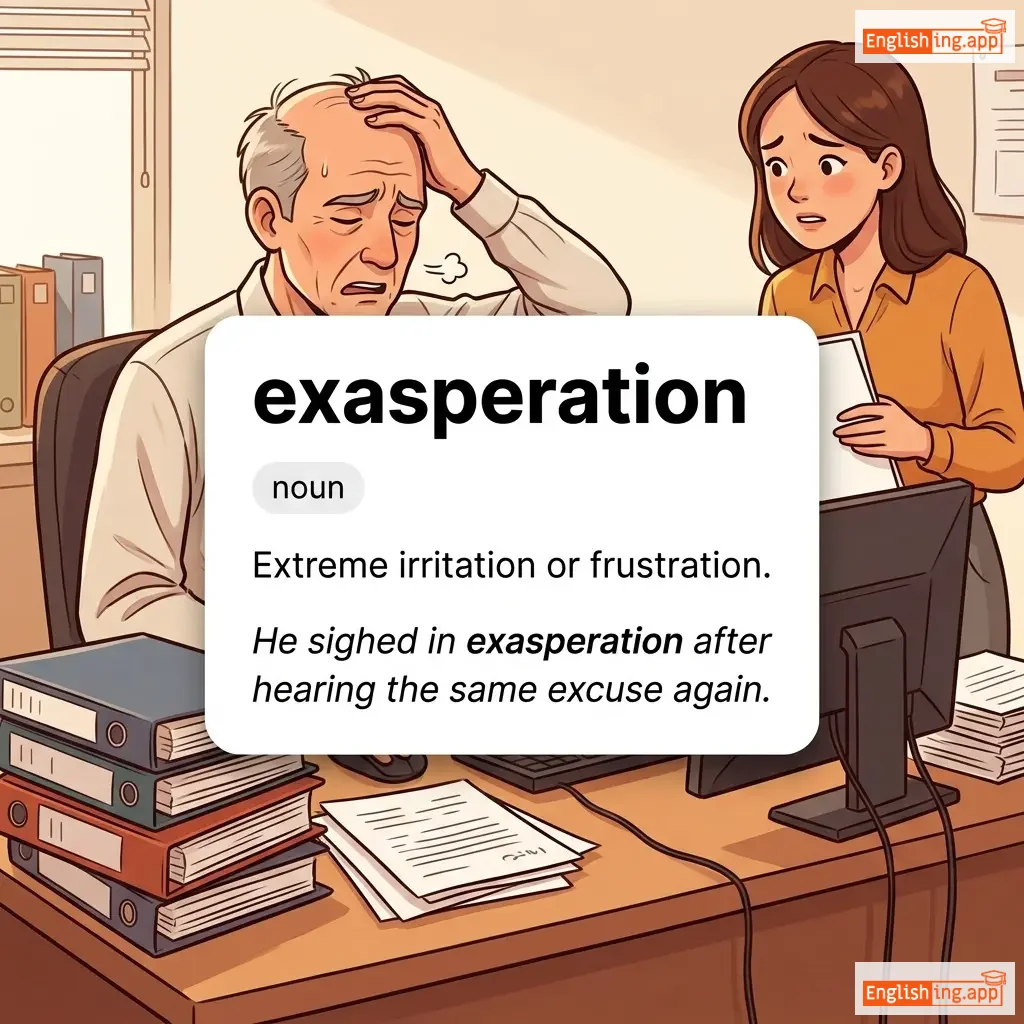
exasperation definition card — visual illustration of the meaning
noun C1
ɪɡˌzæs.pəˈreɪ.ʃən
苛立ち (iradachi)

Extreme irritation or frustration.

"He sighed in exasperation after hearing the same excuse again."

"彼は同じ言い訳をまた聞かされて、苛立ちのあまりため息をついた。" (Kare wa onaji iiwake o mata kikasarete, iradachi no amari tameiki o tsuita.)
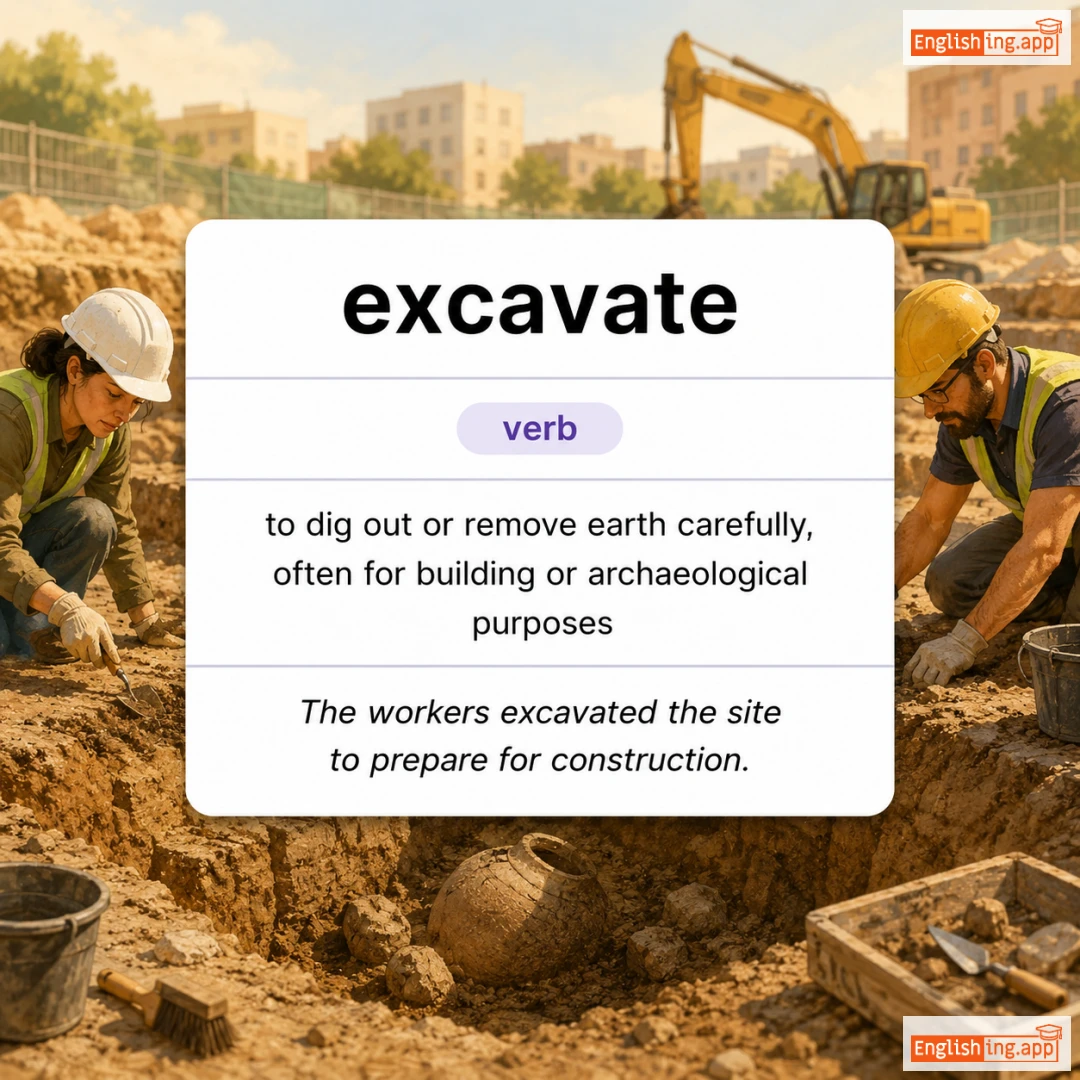
excavate definition card — visual illustration of the meaning
verb C1
/ˈɛkskəˌveɪt/
幸せ (shiawase)

to dig out or remove earth carefully, often for building or archaeological purposes

"The workers excavated the site to prepare for construction."

"彼女は賞を受け取ったとき、自分の幸せを隠すことができませんでした。" (Kanojo wa shō o uketotta toki, jibun no shiawase o kakusu koto ga dekimasen deshita.)
adjective C1
/ɪkˈsiːdɪŋ/
過剰な; 超越した (kajō na; chōetsu shita)

going beyond; surpassing; extremely

"The project was completed with exceeding excellence."

"プロジェクトは極めて優れた成果で完了しました。" (Purojekuto wa kiwamete sugureta seika de kanryou shimashita.)
noun C1
/ˈɛksələnsɪ/
閣下 (kakka)

a title of honor for people of high rank, especially ambassadors or governors

"His Excellency the Ambassador attended the ceremony."

"大使閣下は式典に出席しました。" (Taishi kakka wa shikiten ni shusseki shimashita.)
noun C1
/ˈɛksɜːrpt/
抜粋 (batsui)

A short portion taken from a text, film, or piece of music.

"The teacher read an excerpt from the novel."

"先生は小説から一節を読みました。" (Sensei wa shousetsu kara issetsu o yomimashita.)
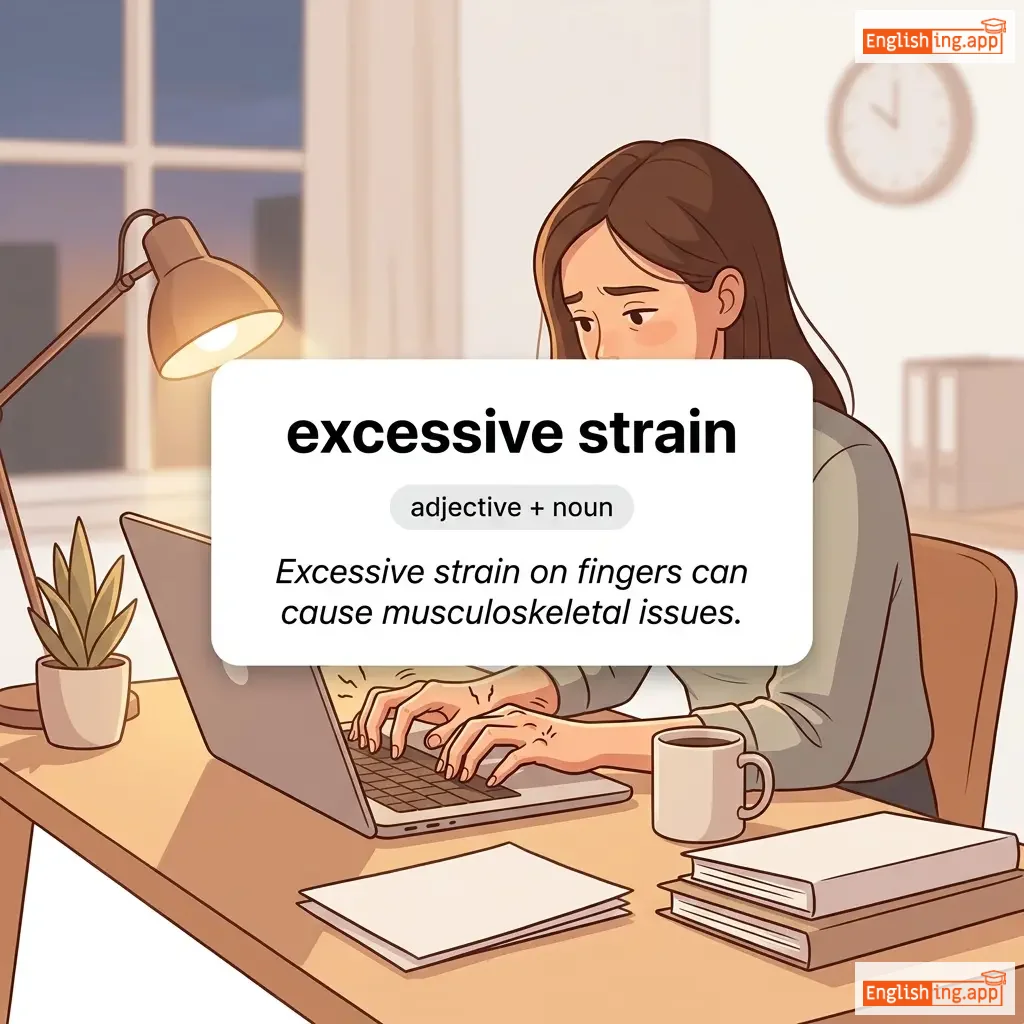
excessive strain definition card — visual illustration of the meaning
adjective + noun C1
এক্সেসিভ স্ট্রেইন
過度のストレス (kado no sutoresu)

An amount of physical pressure or stress that is more than what is normal or acceptable.

"Excessive strain on fingers can cause musculoskeletal issues."

"指に過度のストレスがかかると、筋骨格の問題を引き起こす可能性があります。" (Yubi ni kado no sutoresu ga kakaru to, kinkokkaku no mondai o hikiokosu kanousei ga arimasu.)
verb C1
/ˈɛkˌsaɪz/
切除する (sessuru)

to cut out or remove completely, often by surgery

"The surgeon excised the tumor successfully."

"外科医は腫瘍を成功裏に切除しました。" (Geka-i wa shuyō o seikōri ni sesshō shimashita.)
adjective C1
/ɪkˈsaɪtəbl̩/
興奮しやすい (koufun shiyasui)

easily excited or emotionally aroused

"The child was excitable and laughed at every small thing."

"その子供は興奮しやすく、何でも小さなことで笑っていた。" (Sono kodomo wa koufun shiyasuku, nandemo chiisana koto de waratte ita.)
verb C1
/ɪkˈskriːt/
排泄する (haisetsu suru)

to eliminate waste matter from the body

"Humans excrete carbon dioxide through breathing."

"人間は呼吸を通じて二酸化炭素を排出します。" (Ningen wa kokyū o tōjite ni sankatanso o haishutsu shimasu.)
noun C1
/ɪkˈskriːʃən/
排泄 (haisetsu)

the process of eliminating waste matter from the body

"Excretion is vital for maintaining a healthy body."

"排泄は健康な体を維持するために不可欠です。" (Haisetsu wa kenkou na karada o iji suru tame ni fukaketsu desu.)
adjective C1
/ɪkˈskruːʃieɪtɪŋ/
耐えられない痛み (taerarenai itami)

causing extreme physical or mental pain

"She was in excruciating pain after the accident."

"彼女は事故の後、耐えられない痛みを感じていた。" (Kanojo wa jiko no ato, taerarenai itami o kanjite ita.)
adjective C1
/ɪkˈskjuːzəbl/
許容可能な (kyoryō kanō na)

Able to be forgiven or justified.

"Her mistake was excusable given the circumstances."

"彼女の間違いは状況を考慮すれば許容可能でした。" (Kanojo no machigai wa jōkyō o kōryo sureba kyoryō kanō deshita.)
noun C1
/ˌɛksɪˈkjuːʃənər/
処刑人 (shokeinin)

A person who carries out a death sentence by execution.

"The executioner prepared the gallows for the condemned prisoner."

"処刑人は死刑囚のために絞首台を準備した。" (Shokeinin wa shikeishuu no tame ni koushutai wo junbi shita.)
noun C1
/ɪɡˈzɛkjətər/
遺言執行者 (yigon shikkōsha)

A person appointed to carry out the terms of someone's will after their death.

"The executor managed the estate according to the deceased’s wishes."

"遺言執行者は故人の意志に従って財産を管理しました。" (Yigon shikkōsha wa kojin no ishi ni shitagatte zaisan o kanri shimashita.)
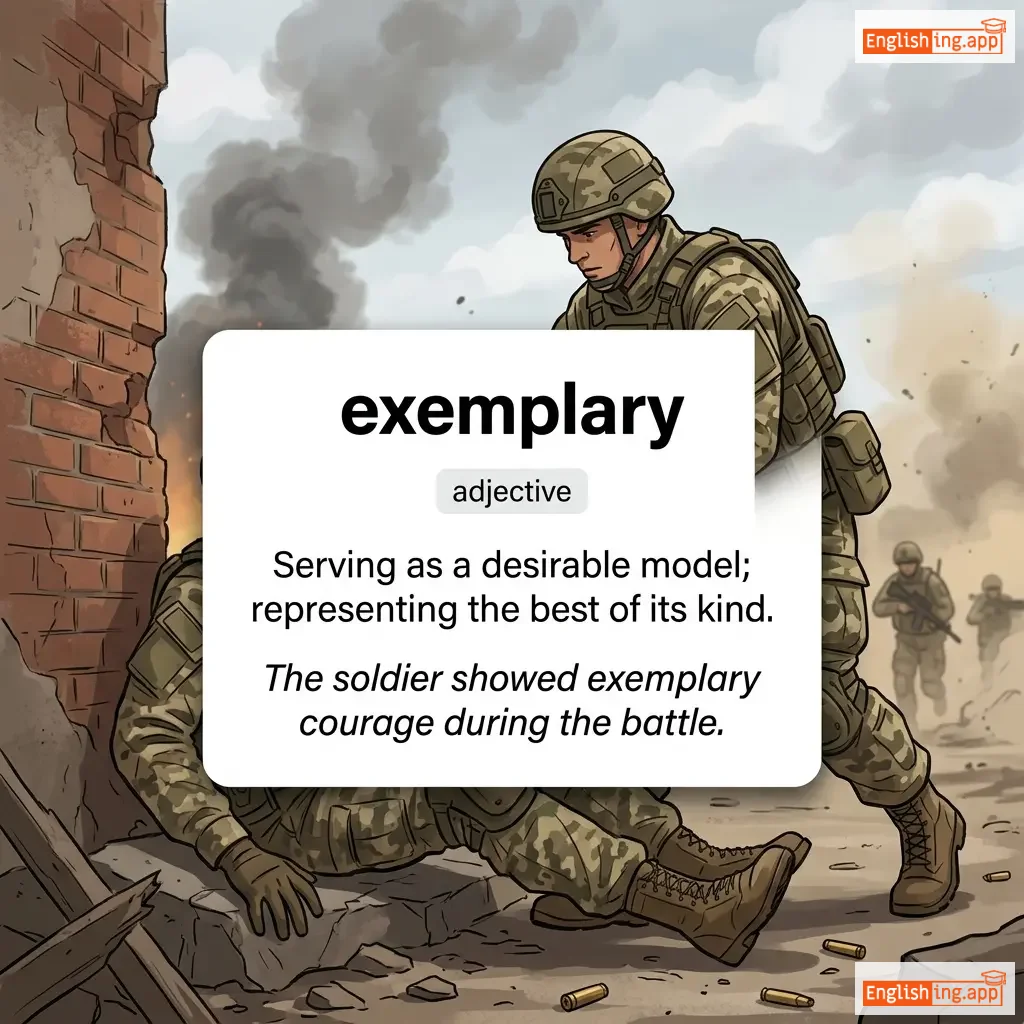
exemplary definition card — visual illustration of the meaning
adjective C1
/ɪɡˈzɛmpləri/
模範的な (mohanteki na)

Serving as a desirable model; representing the best of its kind.

"The soldier showed exemplary courage during the battle."

"兵士は戦闘中に模範的な勇気を示しました。" (Heishi wa sentō-chū ni mohan-teki na yūki o shimeshimashita.)
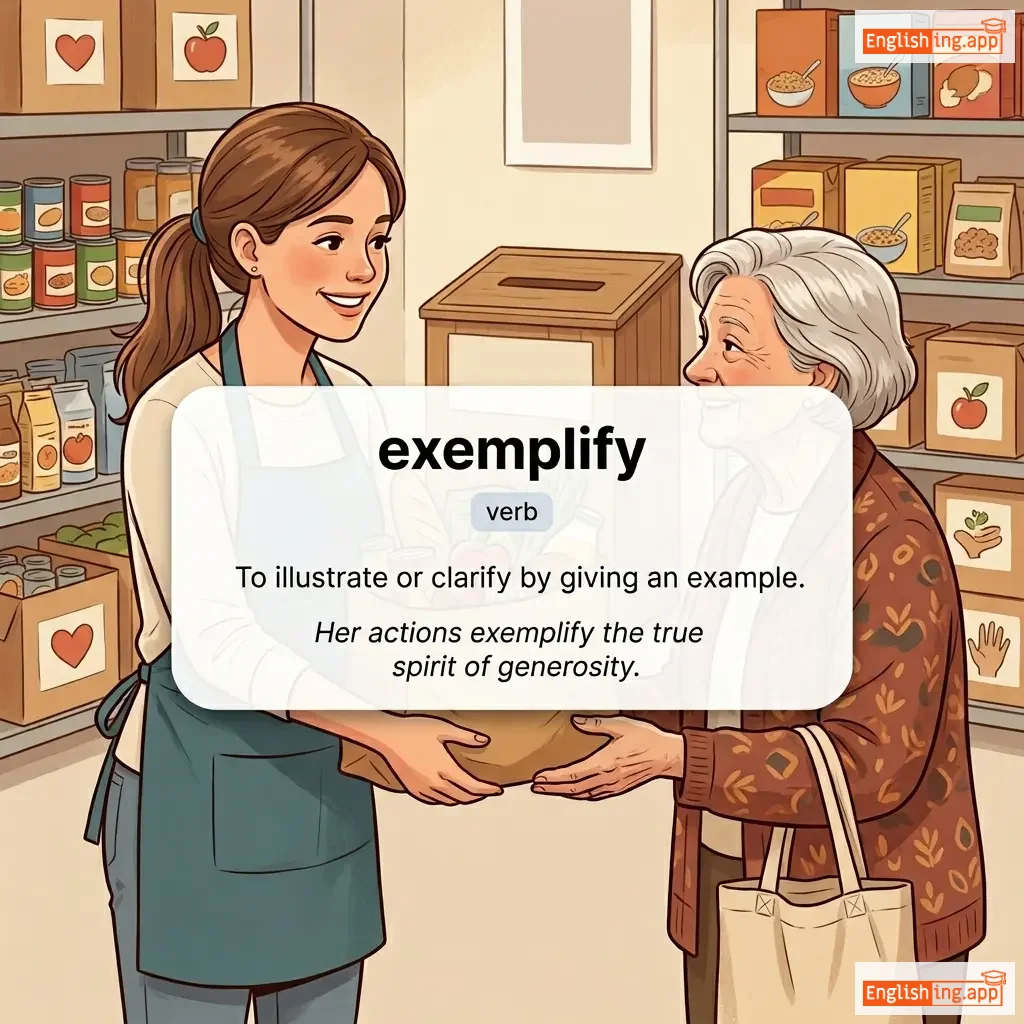
exemplify definition card — visual illustration of the meaning
verb C1
/ɪɡˈzɛmplɪfaɪ/
例を挙げて説明する (rei wo agete setsumei suru)

To illustrate or clarify by giving an example.

"Her actions exemplify the true spirit of generosity."

"彼女の行動は、寛大さの真の精神を例示しています。" (Kanojo no kōdō wa, kandai-sa no shin no seishin o reiji shiteimasu.)
adjective, verb C1
/ɪɡˈzɛmpt/
免除 (menjo)

Free from an obligation or liability imposed on others.

"Students with high grades are exempt from the final exam."

"優秀な成績を収めた学生は、最終試験を免除されます。" (Yūshū na seiseki o osameta gakusei wa, saishū shiken o menjo saremasu.)
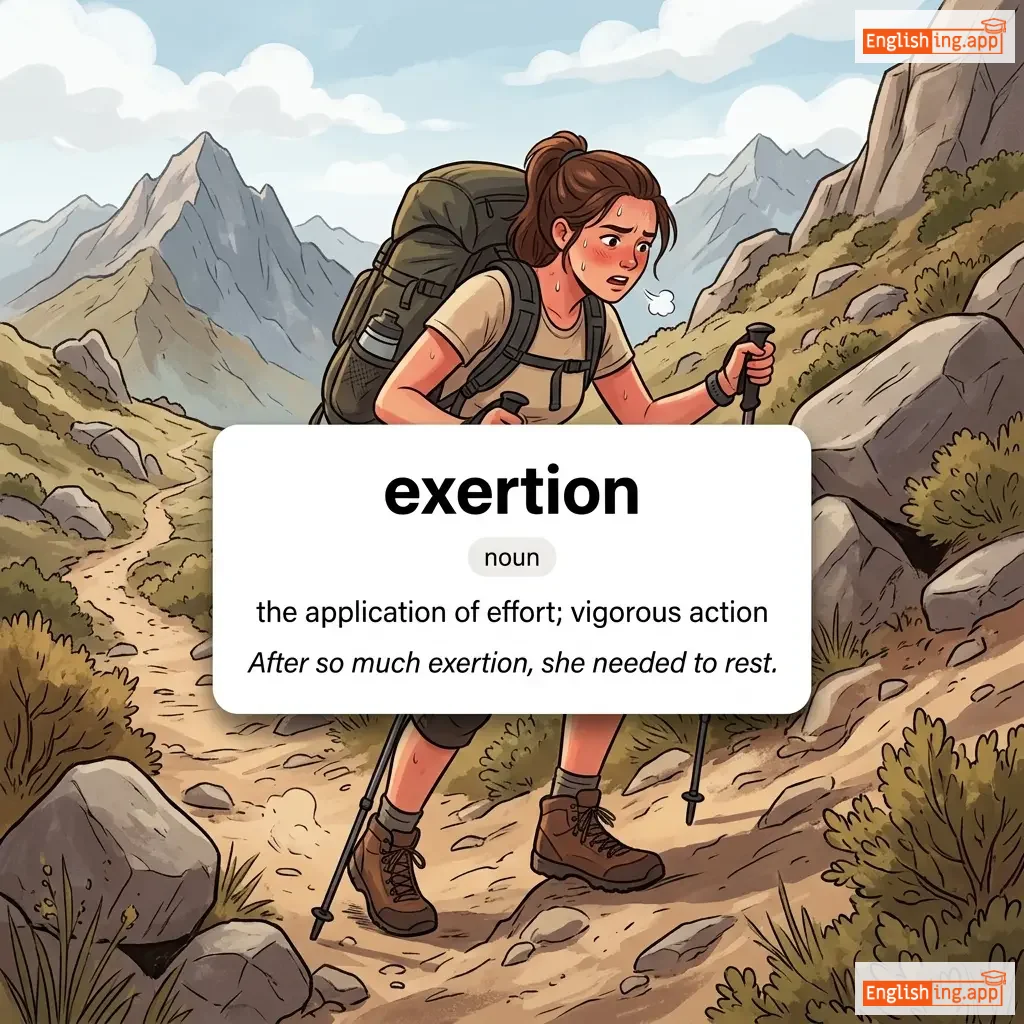
exertion definition card — visual illustration of the meaning
noun C1
/ɪɡˈzɜːrʃən/
努力 (doryoku)

the application of effort; vigorous action

"After so much exertion, she needed to rest."

"これほどの努力の後、彼女は休む必要があった。" (Kore hodo no doryoku no ato, kanojo wa yasumu hitsuyō ga atta.)
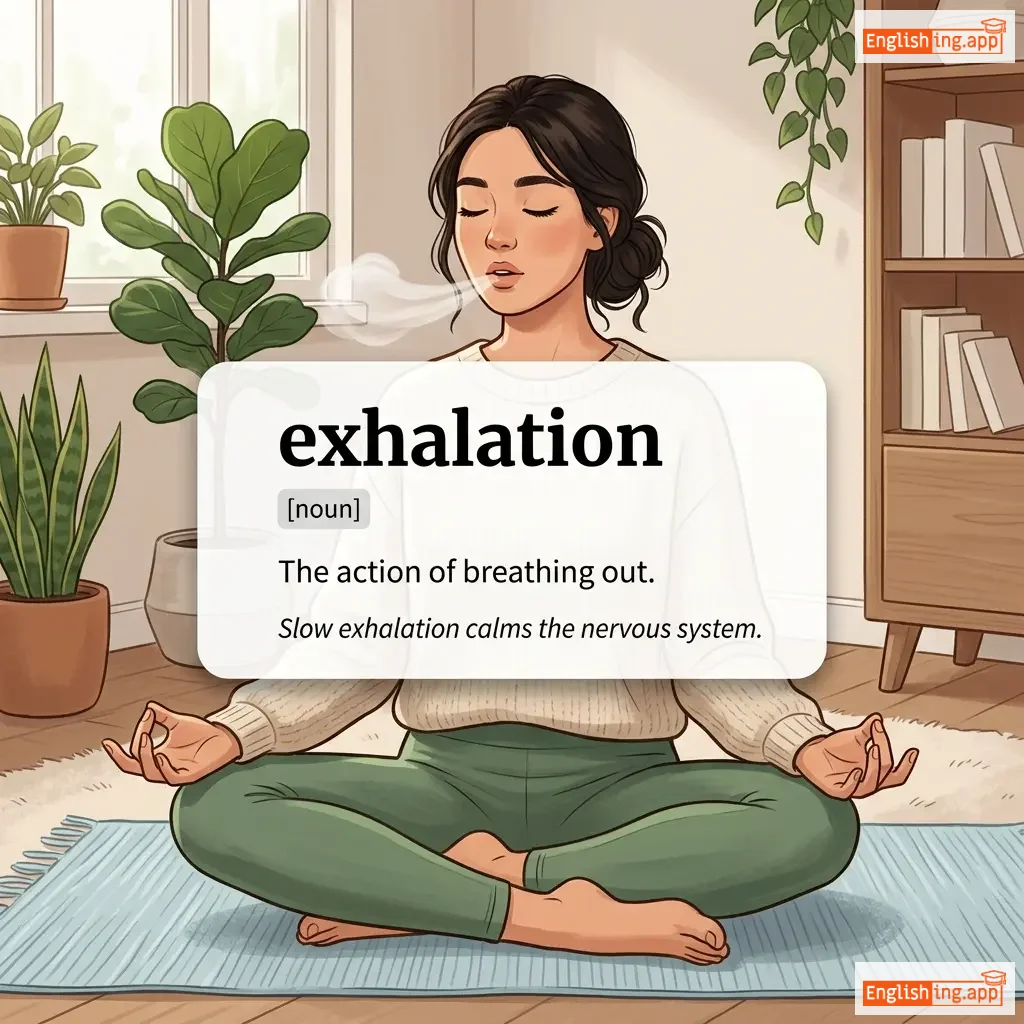
exhalation definition card — visual illustration of the meaning
noun C1
/ˌɛks.həˈleɪ.ʃən/
息を吐くこと (iki wo haku koto)

The action of breathing out.

"Slow exhalation calms the nervous system."

"ゆっくりした息を吐くことは神経系を落ち着かせます。" (Yukkuri shita iki wo haku koto wa shinkei-kei wo ochitsukasemasu.)
adjective C1
/ɪɡˈzɔːstɪv/
包括的で完全な (hōkatsuteki de kanzen na)

Fully comprehensive and including all possibilities.

"The report provides an exhaustive analysis of the issue."

"その報告書は問題に関する包括的な分析を提供します。" (Sono hōkokusho wa mondai ni kansuru hōkatsuteki na bunseki o teikyō shimasu。)
adjective C1
/ɪɡˈzɪləreɪtɪd/
興奮した (koufun shita)

feeling very happy, animated, or elated

"She felt exhilarated after finishing the marathon."

"彼女はマラソンを終えた後、とても興奮していた。" (Kanojo wa marason o oeta ato, totemo koufun shite ita.)
adjective C1
/ɪɡˈzɪləreɪtɪŋ/
興奮させる (koufun saseru)

Making someone feel very excited, happy, or thrilled.

"Skydiving was the most exhilarating experience of his life."

"スカイダイビングは彼の人生で最も興奮する経験でした。" (Sukaidaibingu wa kare no jinsei de mottomo kōfun suru keiken deshita.)