ভোকাবুলারিসমূহ

ইংরেজি শব্দের বাংলা অর্থ | English to Bangla Word Meaning Dictionary

adjective C1
/ˈræb.ɪd/
狂信的 (kyōshinteki)

Having extreme or fanatical support for something; relating to or suffering from rabies.

"He was a rabid fan of the football team."

"彼はサッカーチームの狂信的なファンだった。" (Kare wa sakkā chīmu no kyōshinteki na fan datta.)
noun C1
/ˈreɪ.biːz/
狂犬病 (kyoukenbyou)

A viral disease that causes inflammation of the brain in humans and other mammals, usually transmitted through animal bites.

"The dog was vaccinated against rabies."

"犬は狂犬病のワクチンを接種しました。" (Inu wa kyoukenbyou no wakuchin wo sesshu shimashita.)
adjective C1
/ˈreɪ.si/
刺激的 (shigekiteki)

Lively, entertaining, or slightly shocking (especially in a sexual way).

"The novel was full of racy dialogues."

"その小説は刺激的な対話で満ちていた。" (Sono shōsetsu wa shigekiteki na taiwa de michite ita.)
noun C1
/ˈreɪdiəns/
輝き (kagayaki)

the quality of shining with bright light; a glowing or beaming quality

"Her face was filled with radiance after hearing the good news."

"良いニュースを聞いた後、彼女の顔は輝きで満ちていました。" (Yoi nyūsu o kiita ato, kanojo no kao wa kagayaki de michiteimashita.)
adjective C1
/ˈreɪdiənt/
輝く (kagayaku)

Shining brightly; expressing great happiness.

"She looked radiant in her wedding dress."

"彼女はウェディングドレスで輝いて見えました。" (Kanojo wa ueddingu doresu de kagayaite miemashita.)
verb C1
/ˈreɪdieɪt/
放射する (hōsha suru)

to emit energy or light; to spread out from a center

"The fireplace radiates warmth throughout the room."

"暖炉は部屋全体に暖かさを放射します。" (Danro wa heya zentai ni atatakasa o hōsha shimasu.)
noun/verb C1
/ˈræfəl/
抽選券の販売 (ちゅうせんけんのはんばい)

A means of raising money by selling numbered tickets, one or more of which are drawn at random for a prize; to sell something in such a lottery.

"The charity decided to raffle a bicycle to raise funds."

"チャリティーは資金調達のために自転車を抽選で販売することに決めました。" (Charity wa shikin chōtatsu no tame ni jitensha o chūsen de hanbai suru koto ni kimemashita.)
noun C1
/ˈræftər/
小屋の梁 (koya no hari)

One of the sloping beams that supports a roof.

"The old barn’s rafters were exposed."

"古い納屋の小屋の梁がむき出しになっていました。" (Furui noya no koya no hari ga mukidashi ni natte imashita.)
adjective C1
/ˈræɡɪd/
ボロボロ (boroboro)

torn, worn out, or in poor condition

"The homeless man wore a ragged coat."

"ホームレスの男性はボロボロのコートを着ていた。" (Hōmuresu no dansei wa boroboro no kōto o kite ita.)
adjective C1
/ˈreɪ.kɪʃ/
スタイリッシュで自信に満ち、少し不良っぽい外見 (sutairisshu de jishin ni michi, sukoshi furyō-ppoi gaiken)

having a stylish, confident, and slightly disreputable appearance

"He walked in with a rakish smile and tilted hat."

"彼はレイキッシュな笑顔と傾いた帽子で入ってきました。" (Kare wa reikisshu na egao to katamuita bōshi de haitte kimashita.)
adjective C1
/ræmˈbʌŋk.ʃəs/
騒々しい (sōzōshī)

boisterous, energetic, and difficult to control.

"The rambunctious children filled the house with noise."

"騒々しい子供たちが家を騒音で満たしました。" (Sōzōshī kodomotachi ga ie o sōon de mitashimashita.)
Rambutan definition card — visual illustration of the meaning
noun C1
/ræmˈbuːtən/
ランブータン (ranbutan)

a tropical fruit with red spiky skin and white translucent sweet flesh similar to litchi

"The rambutan looks scary with its hairy skin but tastes very sweet inside."

"ランブータンは毛皮のような皮で怖そうに見えますが、中はとても甘いです。" (Ranbutan wa ke-gara no youna kawa de kowasou ni miemasu ga, naka wa totemo amai desu.)
noun C1
/ˌræm.ɪ.fɪˈkeɪ.ʃən/
結果 (kekka)

a consequence of an action or event, often complex or unwelcome.

"The new law has serious social ramifications."

"新しい法律には深刻な社会的影響があります。" (Atarashii houritsu ni wa shinkoku na shakaiteki eikyou ga arimasu.)
adjective C1
/ˈræmpənt/
蔓延する (man'ensuru)

existing or spreading unchecked, often in an undesirable way

"Corruption was rampant in the city administration."

"腐敗は市の行政で蔓延していた。" (Fuhai wa shi no gyōsei de man'en shite ita.)
noun C1
/ˈræmpɑːrt/
城壁 (jouheki)

a defensive wall of a castle or fort

"The soldiers stood on the rampart, watching the enemy approach."

"兵士たちは城壁に立ち、敵が近づくのを見守っていました。" (Heishi-tachi wa jouheki ni tachi, teki ga chikazuku no o mimamotte imashita.)
adjective C1
/ˈræmʃækəl/
ぼろぼろ (boroboro)

poorly built or maintained; in a state of disrepair

"They lived in a ramshackle old house on the edge of town."

"彼らは町の端にあるぼろぼろな古い家に住んでいました。" (Karera wa machi no hashi ni aru boroboro na furui ie ni sunde imashita.)
adjective C1
/ˈrænsɪd/
腐った (kusatta)

having a bad taste or smell due to being old or spoiled (especially fats or oils)

"The butter had gone rancid after being left out too long."

"バターは外に長時間置かれて腐ってしまった。" (Batā wa soto ni nagajikan okarete kusatte shimatta.)
verb C1
/ˈræn.də.maɪz/
ランダム化する (randamuka suru)

To make something happen in a random order or manner.

"The software can randomize the order of questions."

"ソフトウェアは質問の順番をランダマイズできます。" (Sofutowea wa shitsumon no junban o randamaizu dekimasu.)
verb C1
/ˈræn.sæk/
略奪する (ryakudatsu suru)

to search a place roughly and steal or damage things

"Burglars ransacked the house while the family was away."

"泥棒たちは家族が留守の間に家を荒らした。" (Dorobōtachi wa kazoku ga rusu no aida ni ie o arashita.)
verb C1
/rænt/
怒鳴る (donaru)

to speak or shout in an angry, uncontrolled way

"He ranted about the unfair treatment at work."

"彼は仕事で不公平な扱いについて叫んでいました。" (Kare wa shigoto de fukōhei na atsukai ni tsuite sakendemashita.)
noun C1
/rəˈpɪdəti/
迅速さ (jinsokusa)

The quality of moving or happening quickly; swiftness or speed.

"The rapidity of technological change is astonishing."

"技術的な変化の速さは驚くべきものです。" (Gijutsuteki na henka no hayasa wa odorokubeki mono desu.)
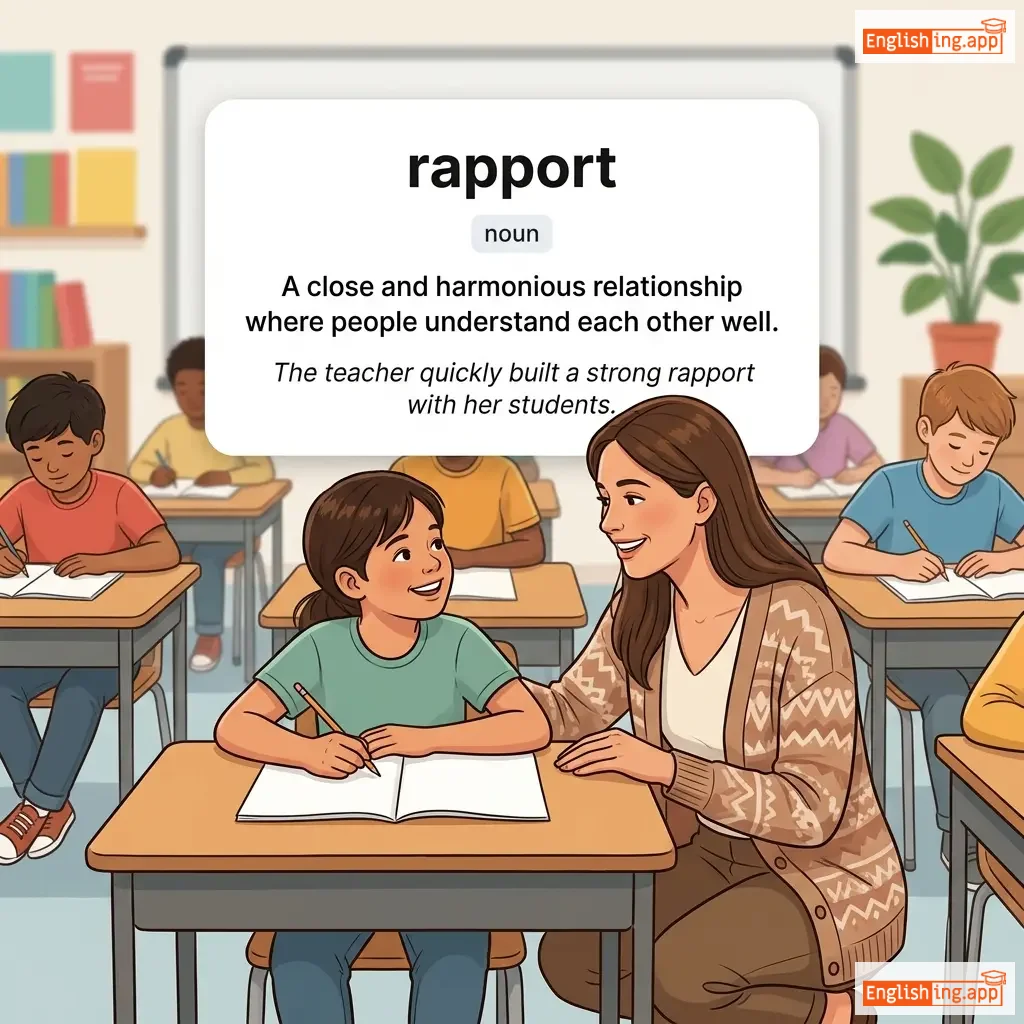
rapport definition card — visual illustration of the meaning
noun C1
/ræˈpɔːr/
関係 (kankei)

A close and harmonious relationship where people understand each other well.

"The teacher quickly built a strong rapport with her students."

"教師は生徒たちと素早く強い関係を築いた。" (Kyōshi wa seito-tachi to subayaku tsuyoi kankei o kizuita.)
adjective C1
/ræpt/
熱中した (necchū shita)

Completely absorbed or fascinated by something.

"She listened with rapt attention to the speaker’s words."

"彼女はスピーカーの言葉を熱心に聞いていた。" (kanojo wa supīkā no kotoba o nesshin ni kiite ita.)
noun C1
/ˈræp.tʃər/
狂喜, 恍惚 (kyouki, kouko)

A feeling of intense joy, delight, or ecstasy.

"She listened to the music in rapture."

"彼女は音楽に没頭して、狂喜していました。" (Kanojo wa ongaku ni bottou shite, kyouki shiteimashita.)
🔧

rasp

verb C1
/ræsp/

to speak in a rough, harsh voice or to scrape with a coarse sound

"He rasped out a warning before collapsing."

adjective C1
/ˈræspi/
ハスキー (hasukī)

having a harsh, rough, or grating sound

"His raspy voice revealed years of smoking."

"彼のハスキーな声は喫煙の年数を明らかにした。" (Kare no hasukī na koe wa kitsuen no nensū o akiraka ni shita.)
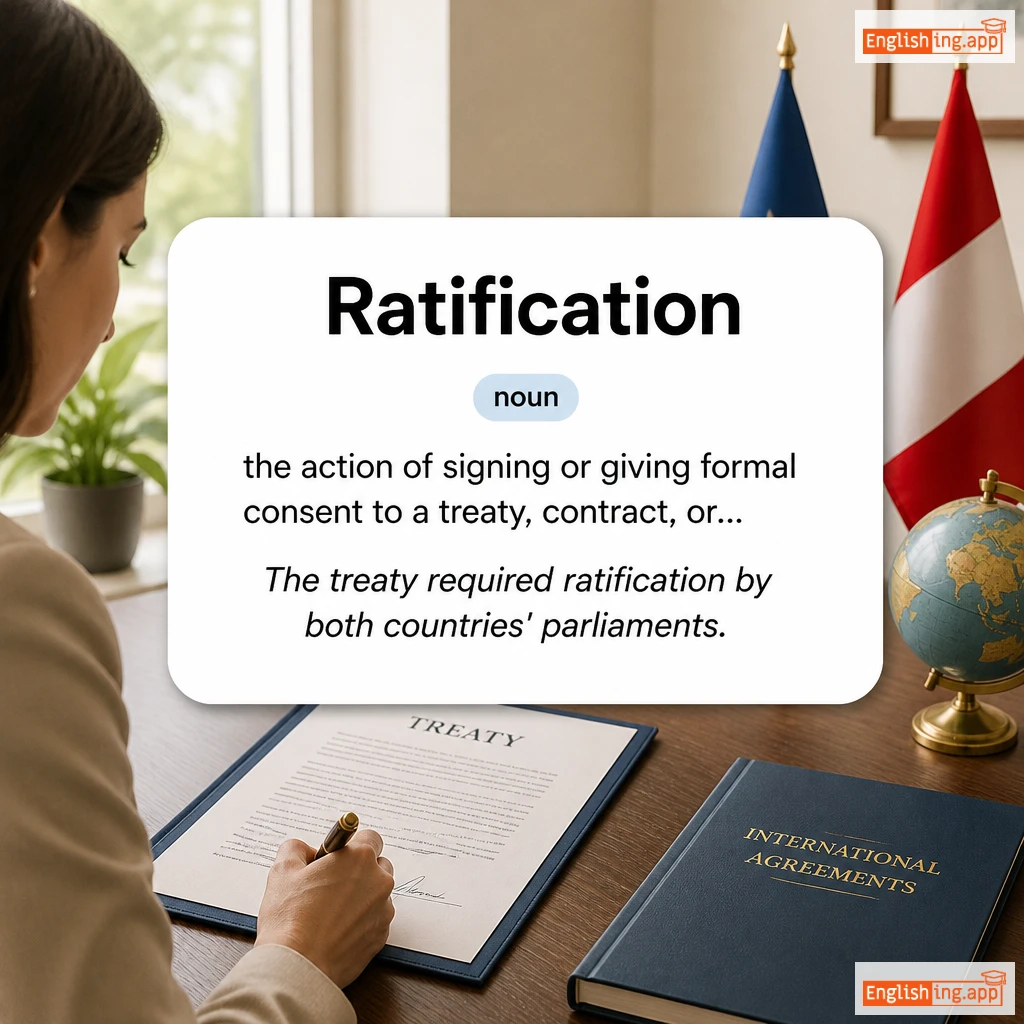
Ratification definition card — visual illustration of the meaning
noun C1
/ˌrætɪfɪˈkeɪʃən/
承認 (shōnin)

the action of signing or giving formal consent to a treaty, contract, or agreement

"The treaty required ratification by both countries' parliaments."

"その条約は両国の議会による批准を必要とした。" (sono jōyaku wa ryōkoku no gikai ni yoru shōnin o hitsuyō to shita.)
verb C1
/ˈrætɪfaɪ/
批准する (hīson suru)

to approve or confirm something officially, usually by law or formal consent

"The government ratified the trade agreement."

"政府は貿易協定を批准しました。" (Seifu wa bōeki kyōtei o hīson shimashita.)
noun C1
/ˈræʃən/
配給 (haiki)

a fixed amount of something, especially food, officially allowed to each person

"During the war, each family received a weekly ration of rice."

"戦争中、各家族は毎週一定量のご飯を配給されました。" (Sensou-chuu, kaku kazoku wa maishuu ittei-ryou no gohan o haiki saremashita.)
noun C1
/ˌræʃəˈnæl/
根本的な理由 (konponteki na riyuu)

the underlying reason or explanation for something

"The rationale behind his decision was clearly explained."

"彼の決断の背後にある理由は明確に説明されました。" (Kare no ketsudan no haigo ni aru riyuu wa meikaku ni setsumei saremashita.)
rationalization definition card — visual illustration of the meaning
noun C1
/ˌræʃənəlaɪˈzeɪʃən/
合理化 (gōrika)

the action of attempting to explain or justify behavior or an attitude with logical reasons, even if these are not appropriate

"His excuse was just a rationalization for his careless mistake."

"彼の言い訳は、彼の不注意な間違いの合理化に過ぎなかった。" (Kare no iiwake wa, kare no fuchūi na machigai no gōrika ni suginakatta.)
verb C1
/ˈræʃənəlaɪz/
合理化する (gōrika suru)

to attempt to explain or justify behavior or decisions with logical reasons, even if they are not true or appropriate

"She tried to rationalize her lateness by blaming the traffic."

"彼女は交通渋滞を責めて、遅刻を合理化しようとした。" (Kanojo wa kōtsū jūtai o semete, chikoku o gōrika shiyō to shita.)
verb C1
/ˈræʃənaɪz/
合理化する (gōrika suru)

to justify or explain something with logical reasons, even if not appropriate or true

"He tried to rationlize his mistake by blaming the system."

"彼はシステムを責めて自分のミスを合理化しようとした。" (Kare wa shisutemu o semete jibun no misu o gōrika shiyō to shita.)
adjective C1
/ˈrɔːkəs/
騒々しい, うるさい (sōzōshī, urusai)

loud, harsh, and unpleasant sound or behavior

"The crowd became raucous after the team scored."

"チームがゴールを決めると、群衆は騒がしくなった。" (Chīmu ga gōru o kimeru to, gunshū wa sawagashiku natta.)
verb C1
/ˈrævɪdʒ/
荒廃させる (kōhai saseru)

to cause severe and extensive damage or destruction

"The hurricane ravaged the coastal villages."

"ハリケーンは沿岸の村を荒廃させた。" (Harikēn wa engan no mura o kōhai saseta.)
verb C1
/reɪv/
絶賛する (zessan suru)

to speak or write about something with great enthusiasm or admiration

"Critics rave about the new movie."

"批評家たちは新しい映画を絶賛しています。" (Hihyōka-tachi wa atarashī eiga o zessan shiteimasu.)
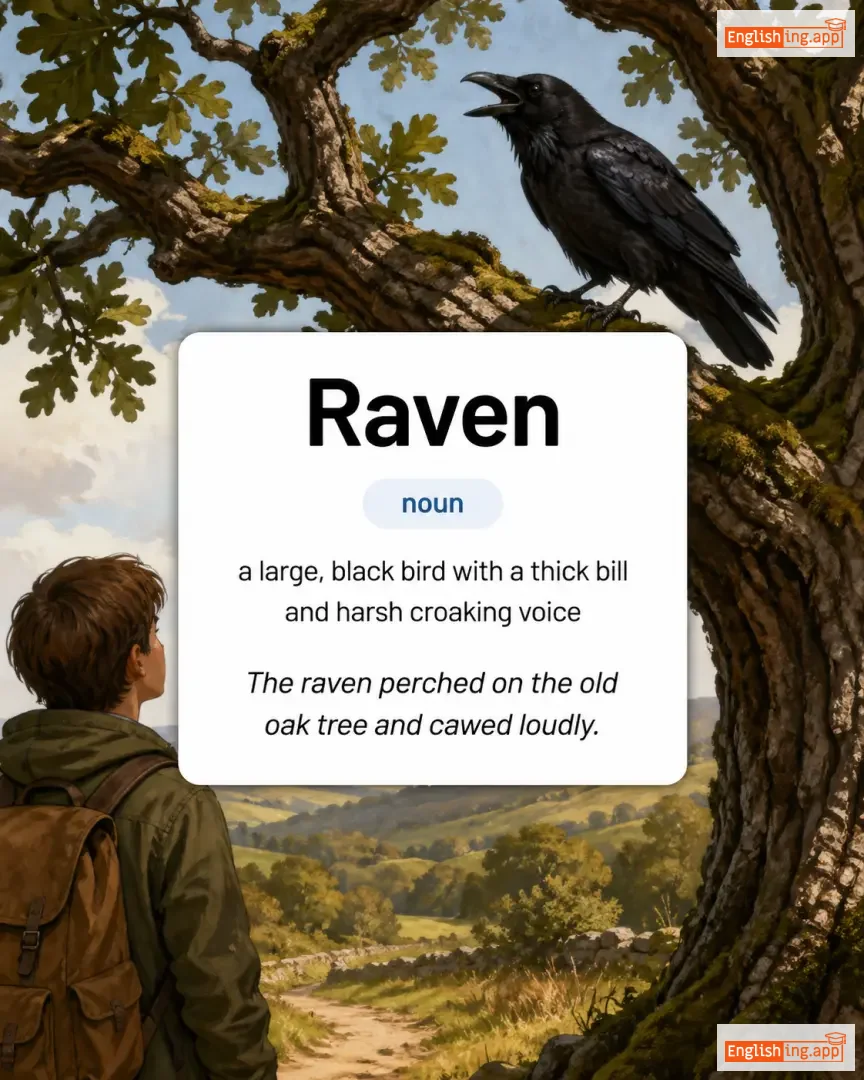
Raven definition card — visual illustration of the meaning
noun C1
/ˈreɪ.vən/
ワタリガラス (watarigarasu)

a large, black bird with a thick bill and harsh croaking voice

"The raven perched on the old oak tree and cawed loudly."

"ワタリガラスが古いオークの木に止まり、大きな声で鳴いた。" (watarigarasu ga furui o-ku no ki ni tomari ookina koe de naita)
adjective C1
/ˈrævənəs/
猛烈にお腹がすいている (mōretsu ni onaka ga suite iru)

Extremely hungry; famished.

"After the long hike, she was ravenous and ate quickly."

"長いハイキングの後、彼女は猛烈にお腹がすいて、すぐに食べました。" (Nagai haikingu no ato, kanojo wa mōretsu ni onaka ga suite, sugu ni tabemashita.)
noun C1
/rəˈviːn/
渓谷 (keikoku)

A deep, narrow valley with steep sides.

"The river carved a deep ravine through the mountains."

"川は山々を通って深い渓谷を作り出した。" (Kawa wa yamayama o tōtte fukai keikoku o tsukuridashita.)
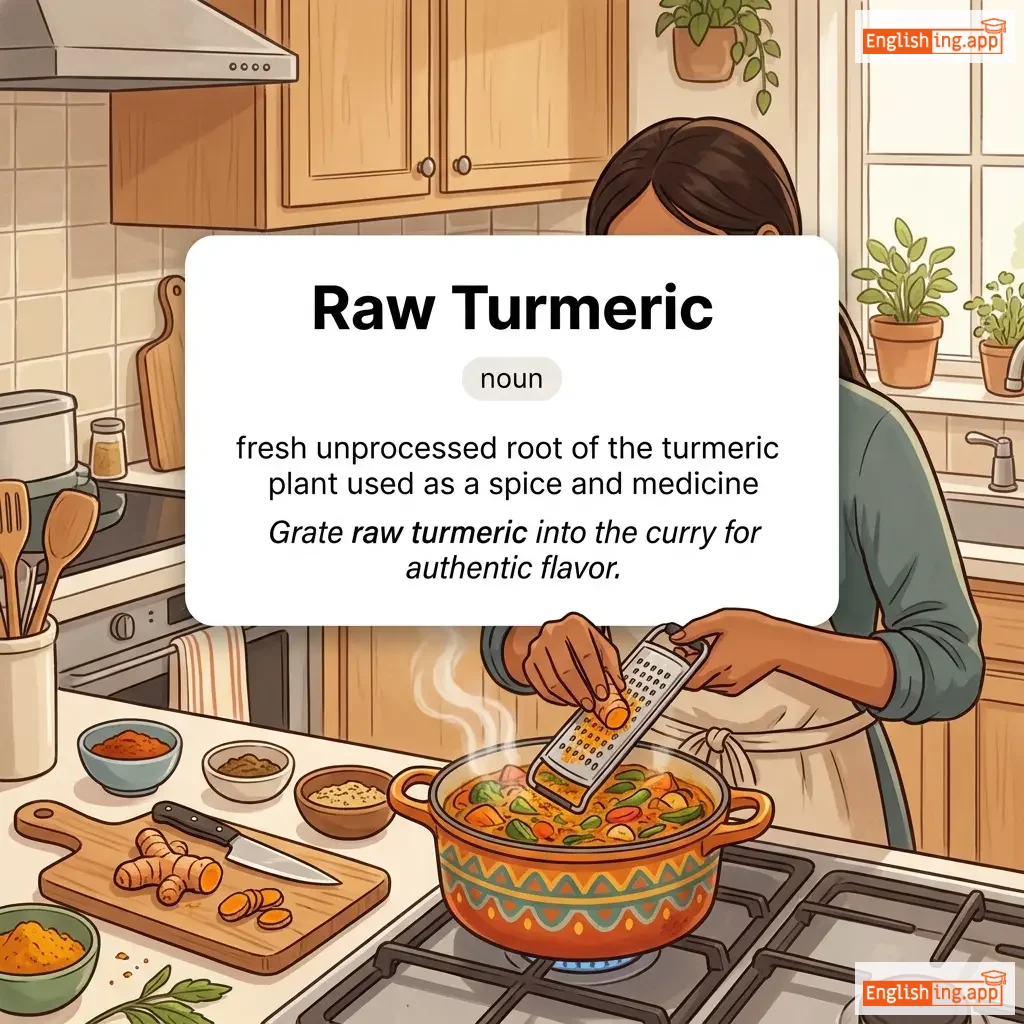
Raw Turmeric definition card — visual illustration of the meaning
noun C1
/rɔ ˈtɜrmərɪk/
生のターメリック (nama no taamerikku)

fresh unprocessed root of the turmeric plant used as a spice and medicine

"Grate raw turmeric into the curry for authentic flavor."

"カレーに生のターメリックをすりおろして、オーセンティックな風味を加えましょう。" (Karee ni nama no taamerikku wo surioroshite, oosentikku na fuumi wo kuwaemashou)
verb C1
/reɪz/
取り壊す (torikowasu)

To completely destroy or demolish something, especially a building.

"The old factory was razed to make way for new apartments."

"古い工場は新しいアパートメントのために取り壊されました。" (Furui kōjō wa atarashī apātomento no tame ni torikowasaremashita.)
⚗️

reactant

noun C1
/riˈæktənt/

A substance that takes part in and undergoes change during a chemical reaction.

"Oxygen is a reactant in the process of combustion."

adjective C1
/riˈækʃəˌneri/
反動的 (handōteki)

Opposing political or social progress or reform; extremely conservative.

"The group took a reactionary stance against the new policies."

"グループは新しい政策に対して反動的な立場を取った。" (Gurūpu wa atarashī seisaku ni taishite handōteki na tachiba o totta.)
adjective C1
/riˈæk.tɪv/
反応的; 化学的に活発 (hannō-teki; kagaku-teki ni kappatsu)

responding to situations rather than initiating them; chemically active

"The company took a reactive approach to customer complaints."

"会社は顧客の苦情に反応的なアプローチを採用しました。" (Kaisha wa kokyaku no kujō ni hannō-teki na apurōchi o sai-yō shimashita.)
verb C1
/ˌriːəˈdʒʌst/
再調整 (saichousei)

To change or move something again in order to achieve a better fit, condition, or balance.

"He readjusted the chair to make it more comfortable."

"彼は椅子をもっと快適にするために再調整しました。" (Kare wa isu wo motto kaiteki ni suru tame ni saichousei shimashita.)
noun C1
/ˌriː.əˈdʒʌst.mənt/

The act of changing or correcting something again to make it suitable or balanced.

"After moving to a new city, he went through a period of readjustment."

verb C1
/ˌriːəˈfɜːrm/
再確認する (saikakunin suru)

To state again strongly; to confirm or strengthen a statement or belief.

"The president reaffirmed his commitment to education reform."

"大統領は教育改革への取り組みを再確認した。" (daitouryou wa kyouiku kaikaku e no torikumi o saikakunin shita.)
noun C1
/ˈriːpər/
作物を刈り取り集める人または機械 (sakumotsu o karitori atsumeru hito mata wa kikai)

a person or machine that cuts and gathers crops

"The reaper moved slowly through the golden fields."

"リーパーは金色の畑をゆっくりと進んでいきました。" (Rīpā wa kiniro no hatake o yukkuri to susunde ikimashita.)
noun C1
/ˈriːbeɪt/
リベート/払い戻し (ribeeto/harai modoshi)

a partial refund given to someone who has paid too much money for something

"The store offered a rebate on bulk purchases."

"その店は大量購入に対してリベートを提供しました。" (Sono mise wa tairyou kounyuu ni taishite ribeeto wo teikyoushimashita.)
adjective C1
/rɪˈbɛljəs/
反抗的な (hankōteki na)

resisting authority or control; showing a desire to rebel

"The rebellious teenager refused to follow the school rules."

"その反抗的なティーンエイジャーは学校の規則に従うことを拒否しました。" (Sono hankōteki na tīneijā wa gakkō no kisoku ni shitagau koto o kyohi shimashita.)