ভোকাবুলারিসমূহ

ইংরেজি শব্দের বাংলা অর্থ | English to Bangla Word Meaning Dictionary

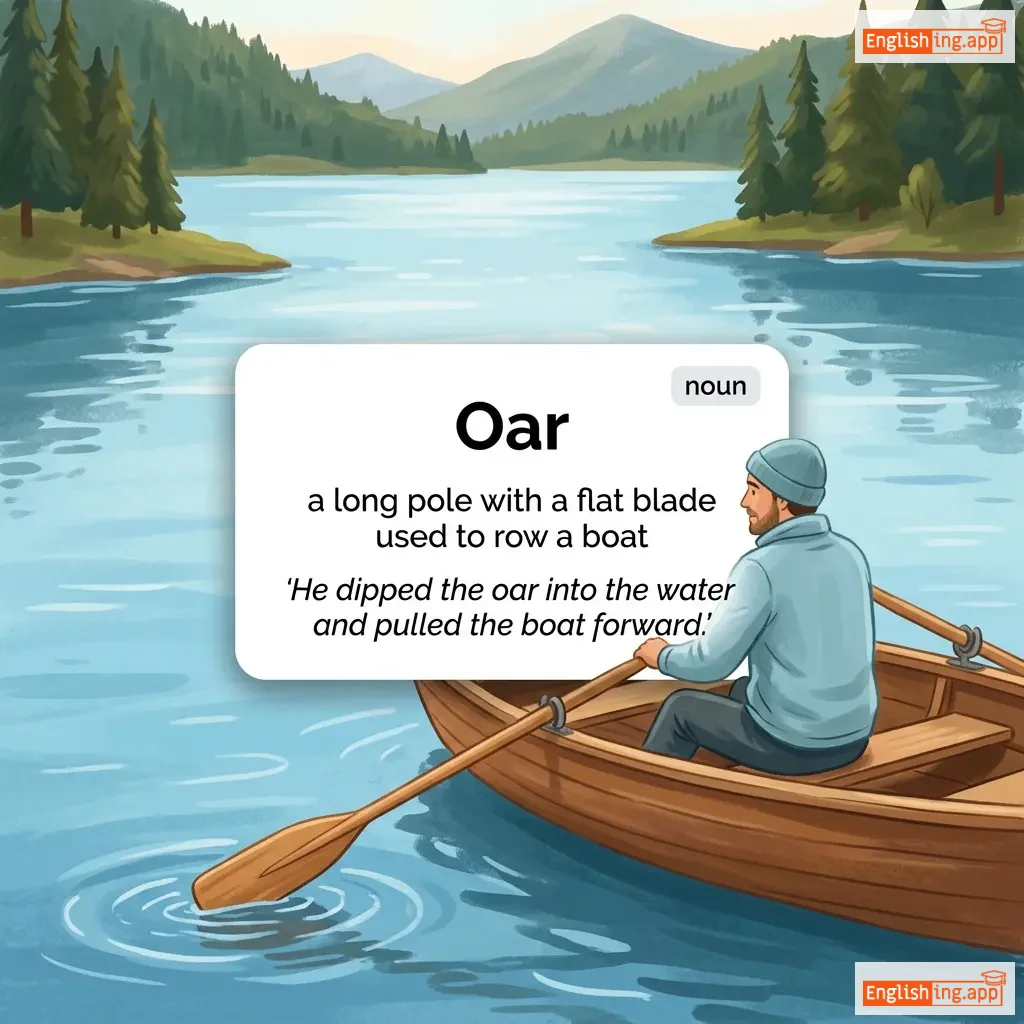
Oar definition card — visual illustration of the meaning
noun C1
/ɔːr/
オール (ōru)

a long pole with a flat blade used to row a boat

"He dipped the oar into the water and pulled the boat forward."

"彼はオールを水に浸し、ボートを前に進めた。" (Kare wa ōru o mizu ni shingashi, bōto o mae ni susumeta.)
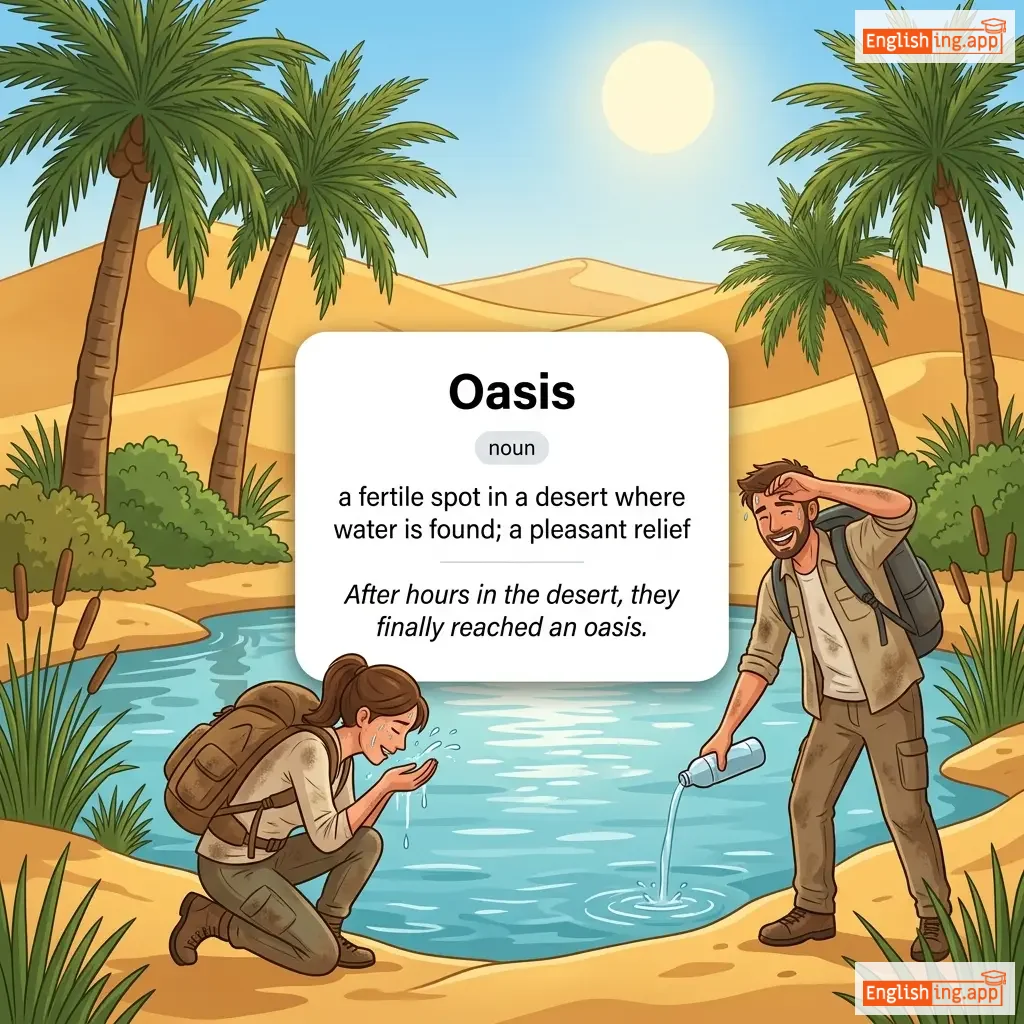
Oasis definition card — visual illustration of the meaning
noun C1
/oʊˈeɪ.sɪs/
オアシス (oasis)

a fertile spot in a desert where water is found; a pleasant relief

"After hours in the desert, they finally reached an oasis."

"砂漠で数時間後、彼らはついにオアシスに到達しました。" (Sabaku de suujikan go, karera wa tsuini oasis ni toutatsu shimashita.)
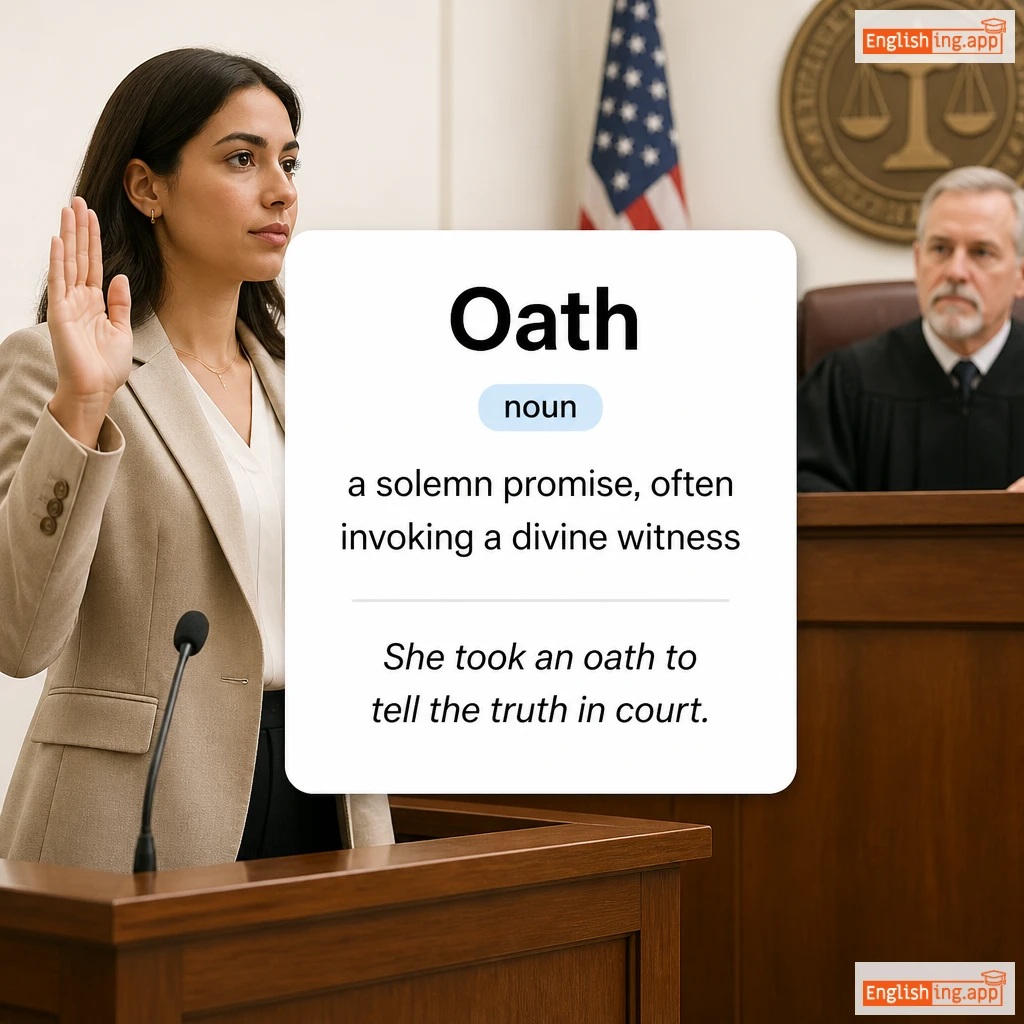
Oath definition card — visual illustration of the meaning
noun C1
/oʊθ/
誓い (chikai)

a solemn promise, often invoking a divine witness

"She took an oath to tell the truth in court."

"彼女は法廷で真実を言う誓いを立てた。" (Kanojo wa hōtei de shinjitsu o iu chikai o tateta.)
adjective C1
/oʊˈbiːs/
肥満 (himan)

Extremely overweight; having an excessive amount of body fat.

"The doctor advised the obese patient to adopt a healthier lifestyle."

"医者は肥満患者に健康的な生活様式を採用するように勧めました。" (Isha wa himan kanja ni kenkou-teki na seikatsu youshiki wo saiyou suru you ni susumemashita.)
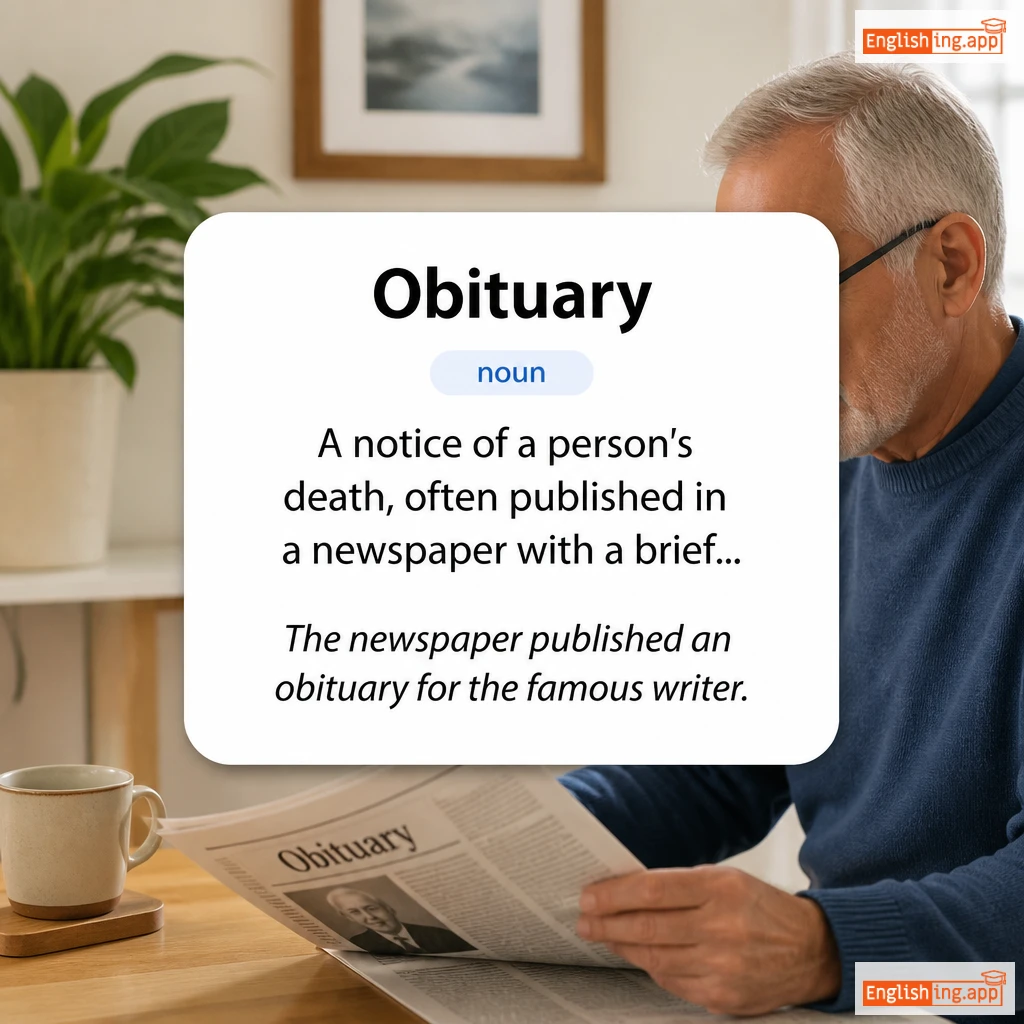
Obituary definition card — visual illustration of the meaning
noun C1
/əˈbɪtʃueri/
訃報 (fuhou)

A notice of a person's death, often published in a newspaper with a brief biography.

"The newspaper published an obituary for the famous writer."

"新聞は有名な作家の訃報を掲載しました。" (Shinbun wa yuumei na sakka no fuhou wo keisai shimashita.)
adjective C1
/əbˈdʒek.ʃən.ə.bəl/
不快な (fukai na)

arousing distaste or opposition; unpleasant or offensive

"His objectionable behavior made everyone uncomfortable."

"彼の不快な行動は、皆を不快にさせた。" (Kare no fukai na kōdō wa, mina o fukai ni saseta.)
noun C1
/əbˈdʒɛktər/
反対者 (hantaisha)

a person who expresses opposition or disapproval to something

"The objector raised his concerns during the town meeting."

"反対者は市議会の会議中に自分の懸念を表明しました。" (Hantaisha wa shigikai no kaigi-chū ni jibun no kennen o hyōmei shimashita.)
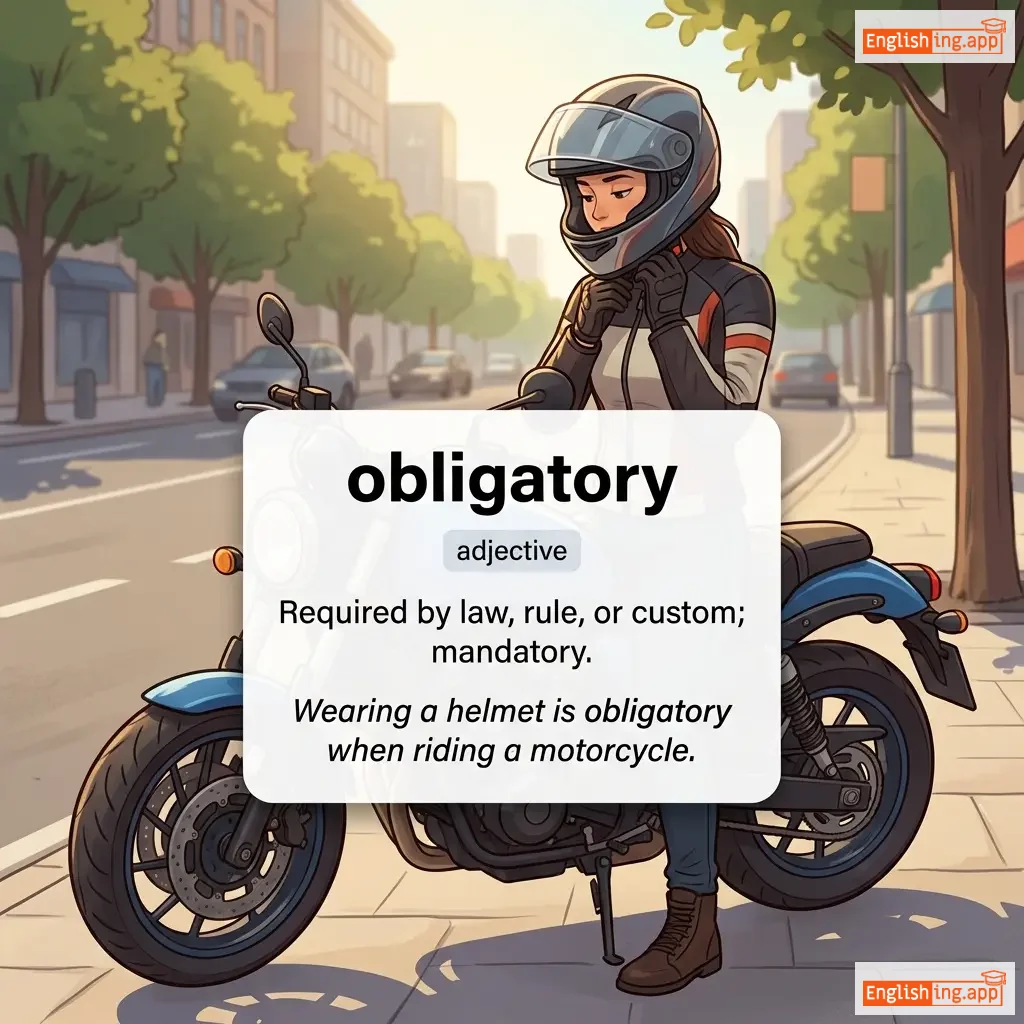
obligatory definition card — visual illustration of the meaning
adjective C1
/əˈblɪɡətɔːri/

Required by law, rule, or custom; mandatory.

"Wearing a helmet is obligatory when riding a motorcycle."

adjective C1
/əˈblaɪdʒɪŋ/
親切な (shinsena)

Willing to help or do favors; accommodating.

"The staff at the hotel were very obliging and friendly."

"ホテルのスタッフはとても親切で友好的でした。" (Hoteru no sutaffu wa totemo shinsen de yuukouteki deshita.)
adjective C1
/əˈbliːk/ or /oʊˈbliːk/
間接的 (kansetsu-teki)

Not explicit or direct in addressing a point; slanting or indirect.

"She made an oblique reference to his past mistakes."

"彼女は彼の過去の間違いに対して間接的な言及をしました。" (Kanojo wa kare no kako no machigai ni taishite kansetsu-teki na genkyu o shimashita.)
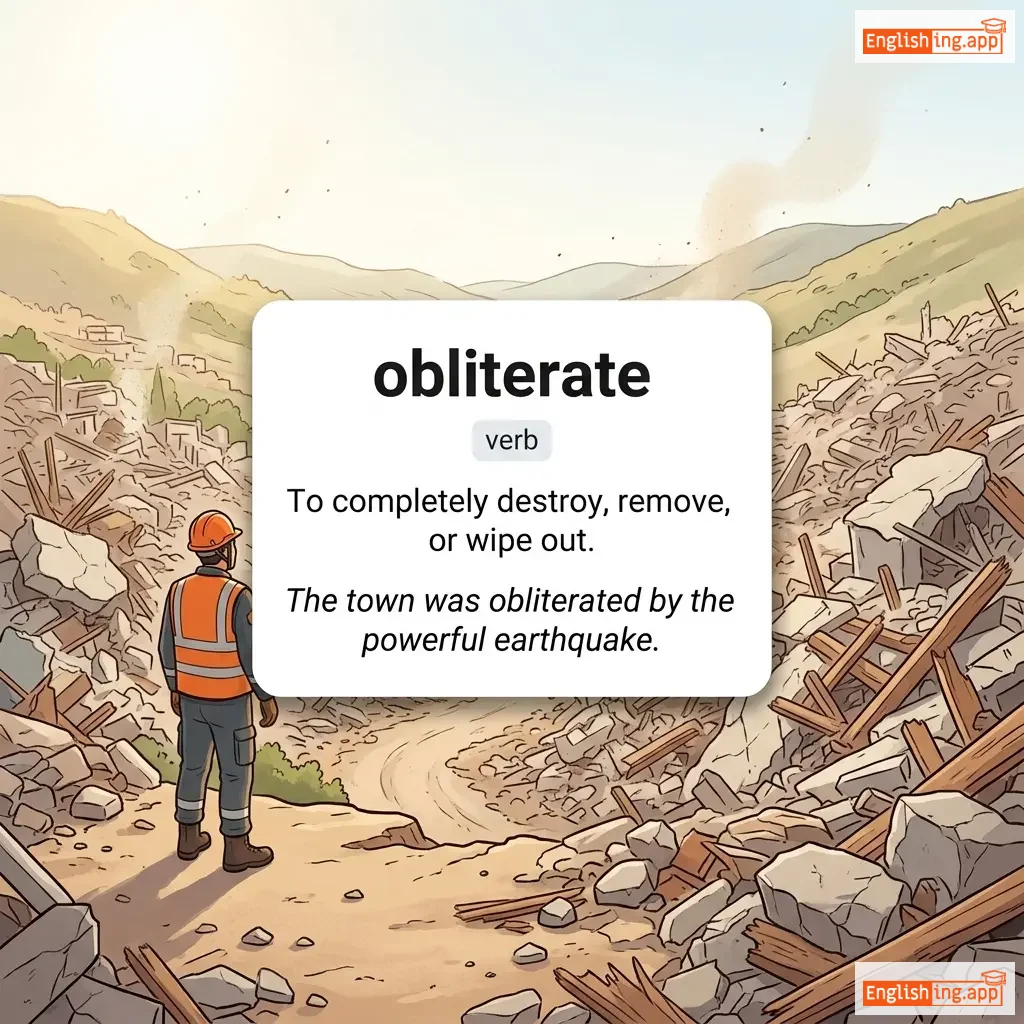
obliterate definition card — visual illustration of the meaning
verb C1
/əˈblɪtəreɪt/
完全に破壊する (kanzen ni hakai suru)

To completely destroy, remove, or wipe out.

"The town was obliterated by the powerful earthquake."

"町は強力な地震によって完全に壊滅しました。" (machi wa kyōryoku na jishin ni yotte kanzen ni kaimetsu shimashita.)
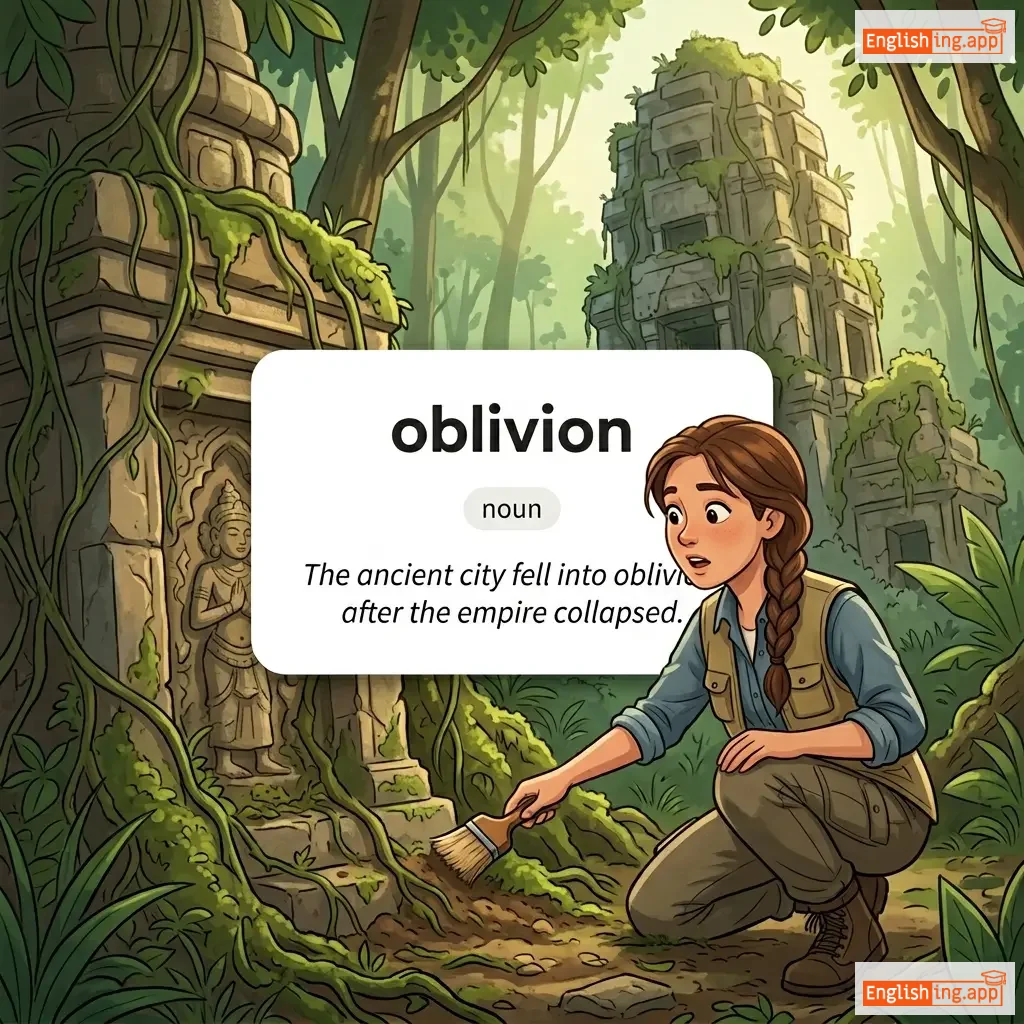
oblivion definition card — visual illustration of the meaning
noun C1
/əˈblɪviən/
忘却 (bōkyaku)

The state of being completely forgotten or unknown; the state of being unconscious or unaware.

"The ancient city fell into oblivion after the empire collapsed."

"古代の都市は帝国の崩壊後、忘却の中に落ちた。" (Kodai no toshi wa teikoku no hōkai-go, bōkyaku no naka ni ochita.)
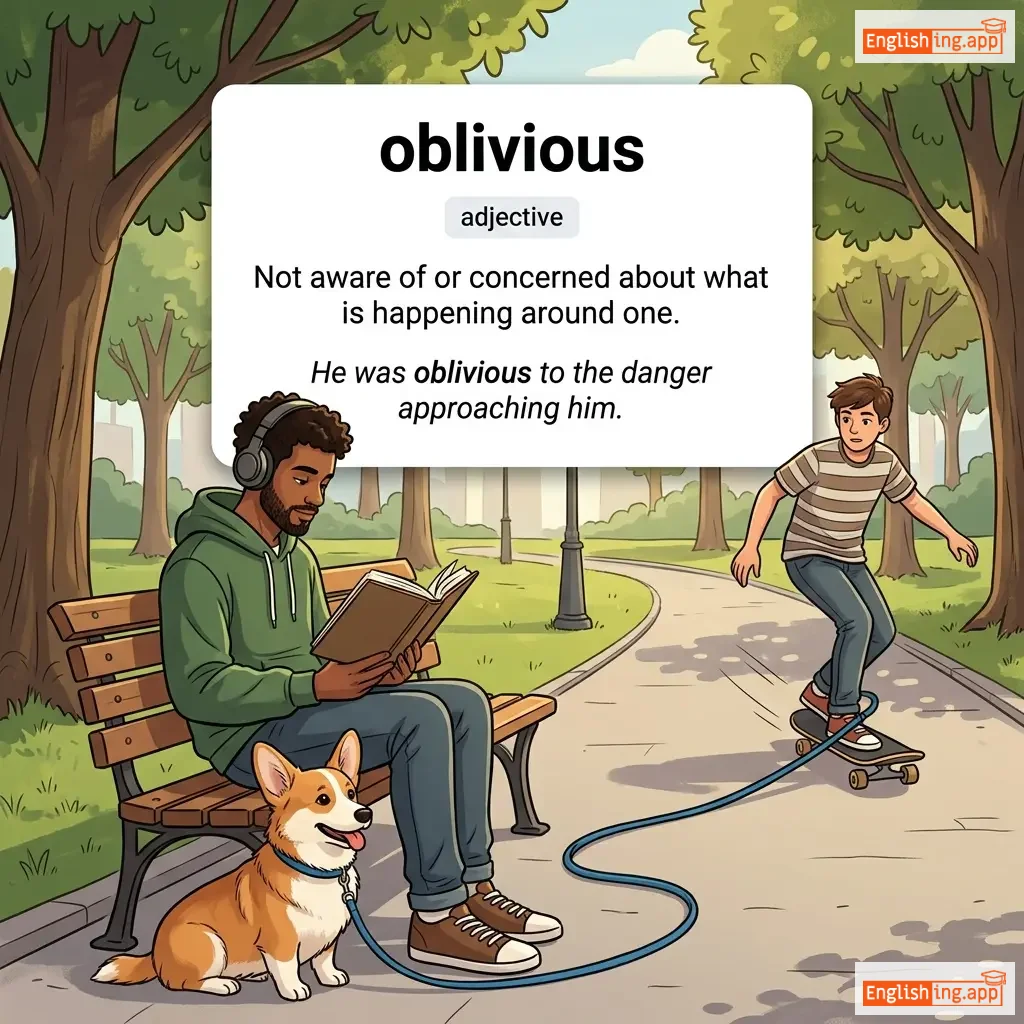
oblivious definition card — visual illustration of the meaning
adjective C1
/əˈblɪviəs/

Not aware of or concerned about what is happening around one.

"He was oblivious to the danger approaching him."

adjective C1
/əbˈnɒkʃəs/
不快な (fukai na)

Extremely unpleasant, offensive, or annoying.

"The obnoxious behavior of the guest ruined the party."

"ゲストの不快な振る舞いがパーティーを台無しにした。" (Gesuto no fukai na furumai ga pātii o dainashi ni shita.)
noun C1
/əbˈzɜːvəns/
遵守 (junshu)

The practice of following a custom, rule, or religious law.

"The festival is held in observance of a centuries-old tradition."

"その祭りは、数世代にわたる伝統を遵守して行われます。" (Sono matsuri wa, suudai ni wataru dentou wo junshu shite okonawaremasu.)
adjective C1
/əbˈzɜːvənt/
注意深い (chūi bukai)

Quick to notice details or attentive to rules and customs.

"She is very observant and rarely misses any detail."

"彼女はとても注意深く、ほとんどの詳細を見逃しません。" (Kanojo wa totemo chūi bukaku, hotondo no shōsai o minogashimasen.)
noun C1
/əbˈzɜːrvətɔːri/
天文台 (tenmondai)

A building equipped for observing astronomical or meteorological events.

"The observatory is open to the public on weekends."

"天文台は週末に一般公開されています。" (Tenmondai wa shuumatsu ni ippan koukai sareteimasu.)
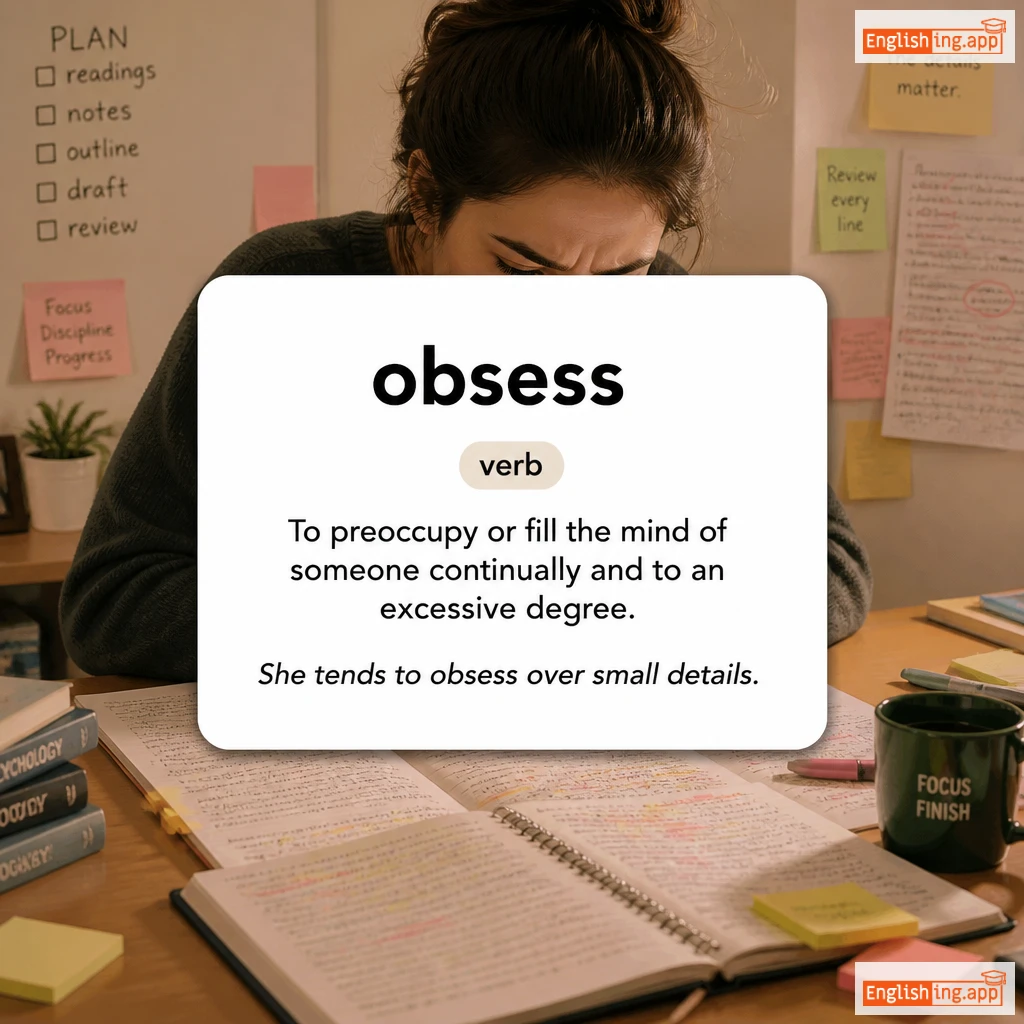
obsess definition card — visual illustration of the meaning
verb C1
/əbˈsɛs/

To preoccupy or fill the mind of someone continually and to an excessive degree.

"She tends to obsess over small details."

adjective C1
/əbˈsɛsɪv/
執着的 (shuchakuteki)

Relating to or characterized by an obsession; thinking about something too much.

"He has an obsessive interest in cleanliness."

"彼は清潔さに執着的な興味を持っています。" (Kare wa seiketsu-sa ni shuchakuteki na kyōmi o motteimasu.)
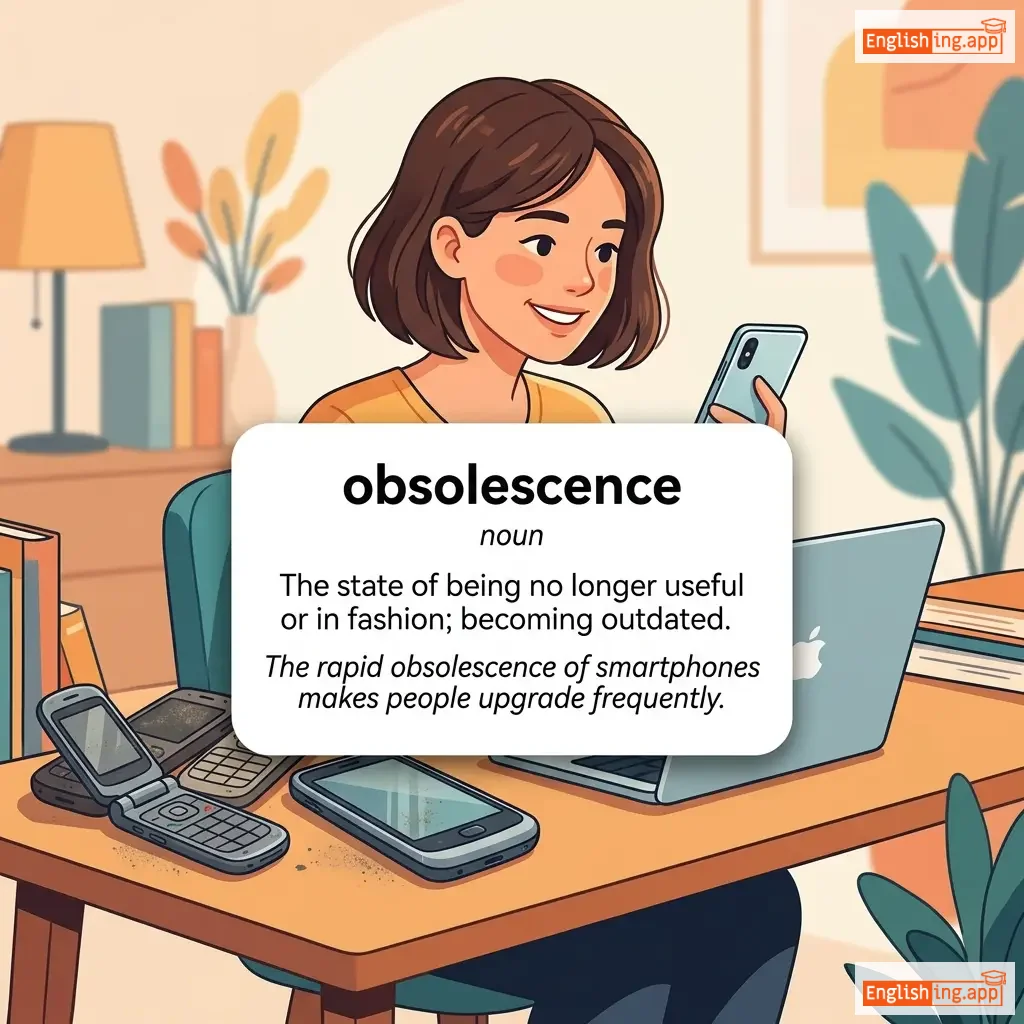
obsolescence definition card — visual illustration of the meaning
noun C1
/ˌɒbsəˈlɛsəns/
陳腐化 (chinpuka)

The state of being no longer useful or in fashion; becoming outdated.

"The rapid obsolescence of smartphones makes people upgrade frequently."

"スマートフォンの急速な陳腐化は人々に頻繁にアップグレードさせます。" (Sumātofon no kyūsokuna chinpuka wa hitobito ni hinpan ni appurēdo sasemasu.)
adjective C1
/ˌɒbsəˈliːt/
時代遅れ (jidaiokure)

No longer in use or out of date.

"Floppy disks are now completely obsolete."

"フロッピーディスクは現在完全に時代遅れです。" (Furoppīdisuku wa genzai kanzen ni jidaiokure desu.)
noun C1
/ˌɒbstəˈtrɪʃən/
産科医 (sanka-i)

A doctor specializing in pregnancy, childbirth, and women's reproductive health.

"The obstetrician monitored the mother’s health throughout the pregnancy."

"産科医は妊娠中の母親の健康を監視しました。" (Sanka-i wa ninshin-chu no hahaoya no kenko o kanshi shimashita.)
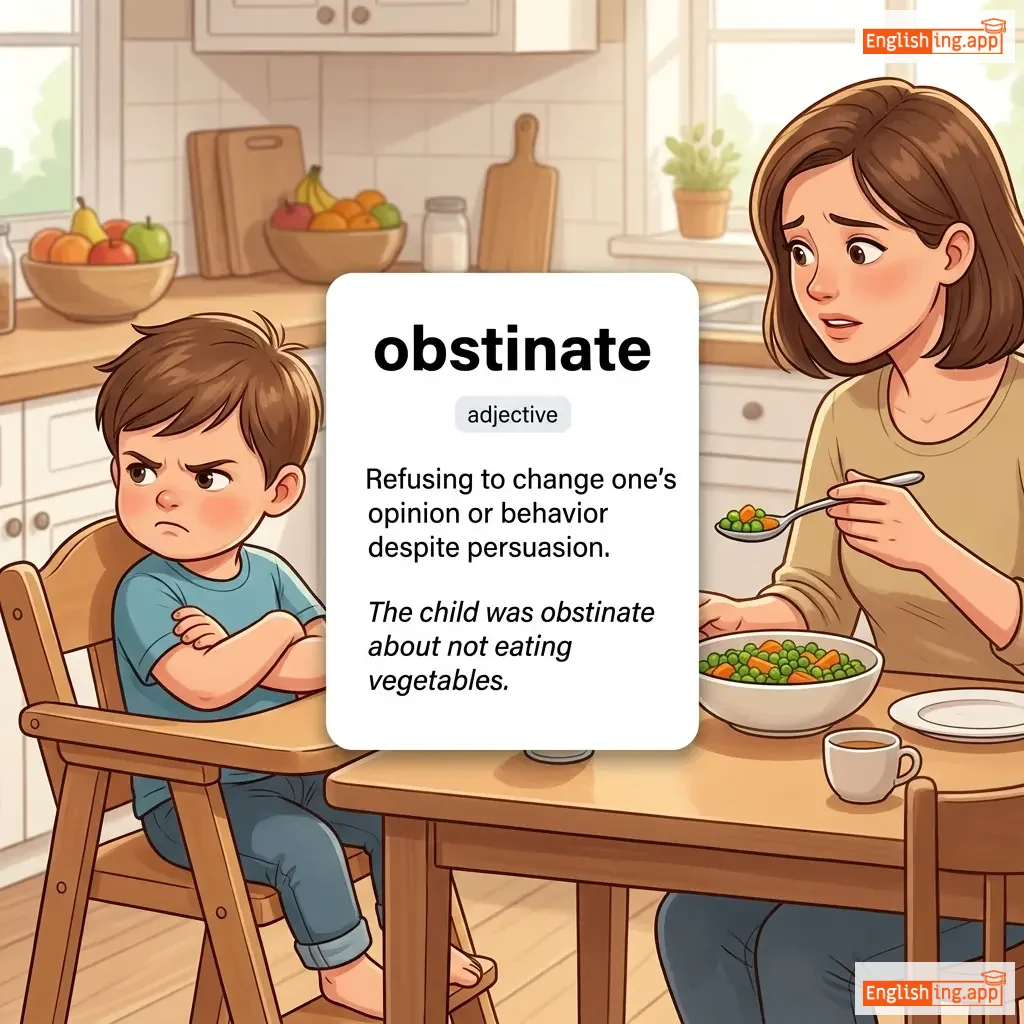
obstinate definition card — visual illustration of the meaning
adjective C1
/ˈɒbstɪnət/
頑固 (ganko)

Refusing to change one’s opinion or behavior despite persuasion.

"The child was obstinate about not eating vegetables."

"子供は野菜を食べないことで頑固だった。" (Kodomo wa yasai o tabenai koto de ganko datta.)
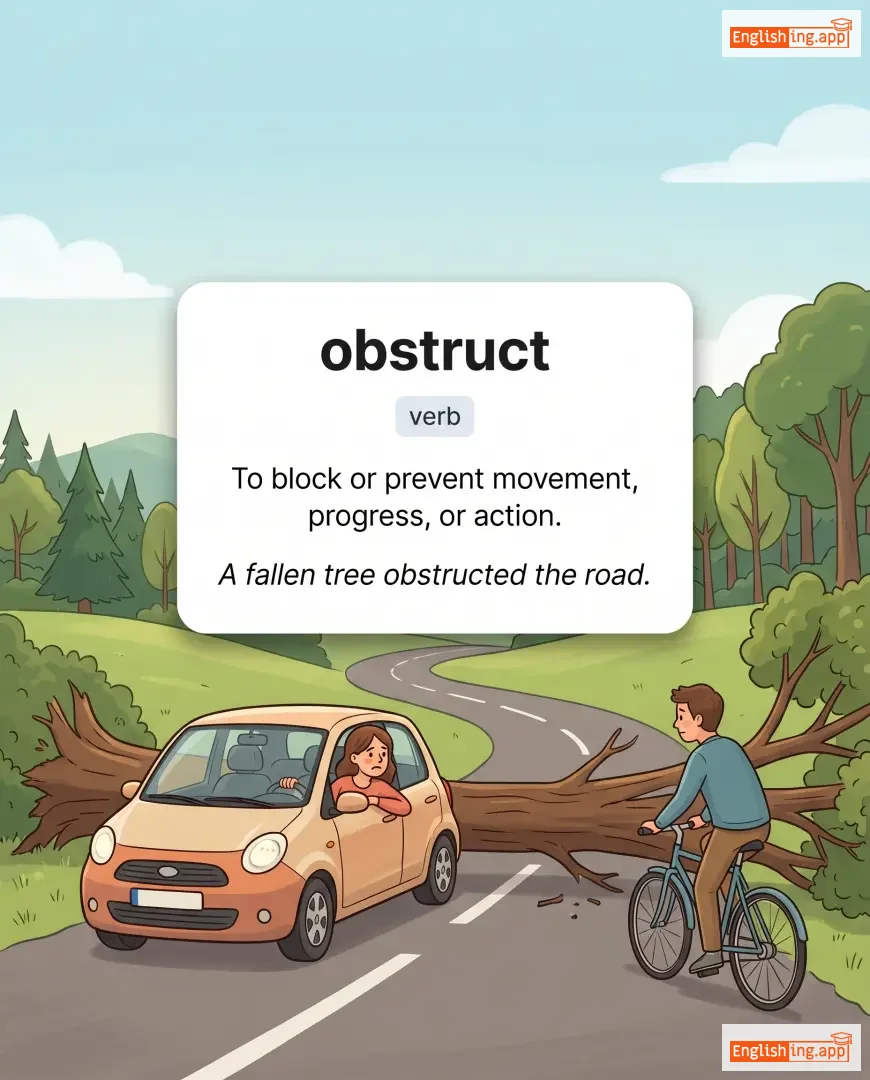
obstruct definition card — visual illustration of the meaning
verb C1
/əbˈstrʌkt/
妨害する (bōgaisuru)

To block or prevent movement, progress, or action.

"A fallen tree obstructed the road."

"倒れた木が道を塞いだ。" (Taoreta ki ga michi o fusaida.)
noun C1
/əbˈstrʌkʃən/
障害 (shougai)

Something that blocks or gets in the way; the action of obstructing.

"There was an obstruction on the railway track."

"鉄道の線路に障害がありました。" (Tetsudou no senro ni shougai ga arimashita.)
adjective C1
/əbˈstrʌk.tɪv/
妨害的な (obstructive)

deliberately creating difficulties or preventing progress; hindering or blocking something

"The obstructive policies hindered economic growth."

"妨害的な政策は経済成長を阻害した。" (bougaitekina seisaku wa keizai seicho o sogai shita)
adjective C1
/əbˈtjuːs/
鈍い (nibui)

slow to understand; annoyingly insensitive; also refers to an angle greater than 90° and less than 180°

"He was too obtuse to realize the insult."

"彼は侮辱を理解するには鈍すぎた。" (Kare wa bukushoku o rikai suru ni wa nibui sugita.)
occult definition card — visual illustration of the meaning
adjective C1
/əˈkʌlt/
オカルト (okaruto)

Relating to mysterious, supernatural, or magical powers and practices.

"She had always been fascinated by the occult and its hidden knowledge."

"彼女は常にオカルトとその隠された知識に魅了されていた。" (Kanojo wa jōni okaruto to sono kakusareta chishiki ni miryō sarete ita.)
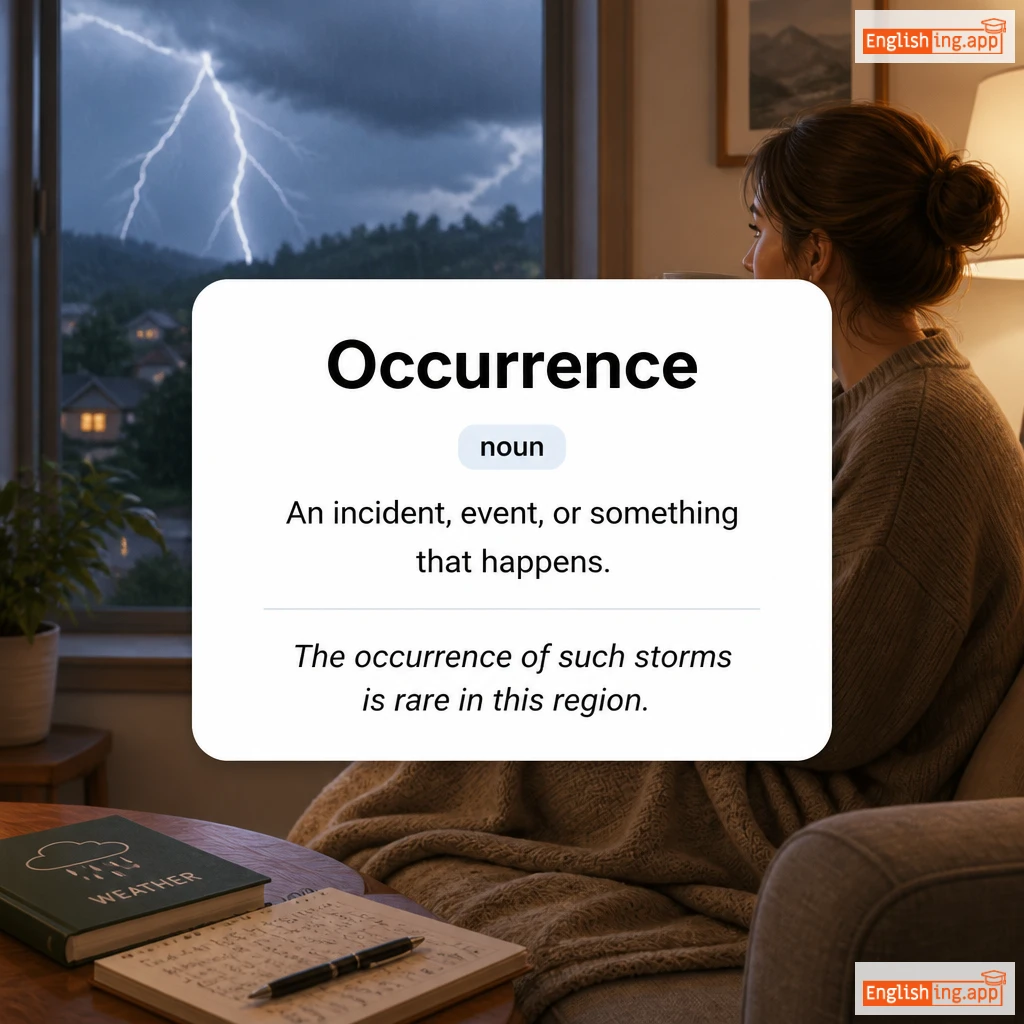
Occurrence definition card — visual illustration of the meaning
noun C1
/əˈkʌrəns/
発生 (hassei)

An incident, event, or something that happens.

"The occurrence of such storms is rare in this region."

"この地域でそのような嵐が発生することはまれです。" (kono chiiki de sonoyou na arashi ga hassei suru koto wa mare desu)
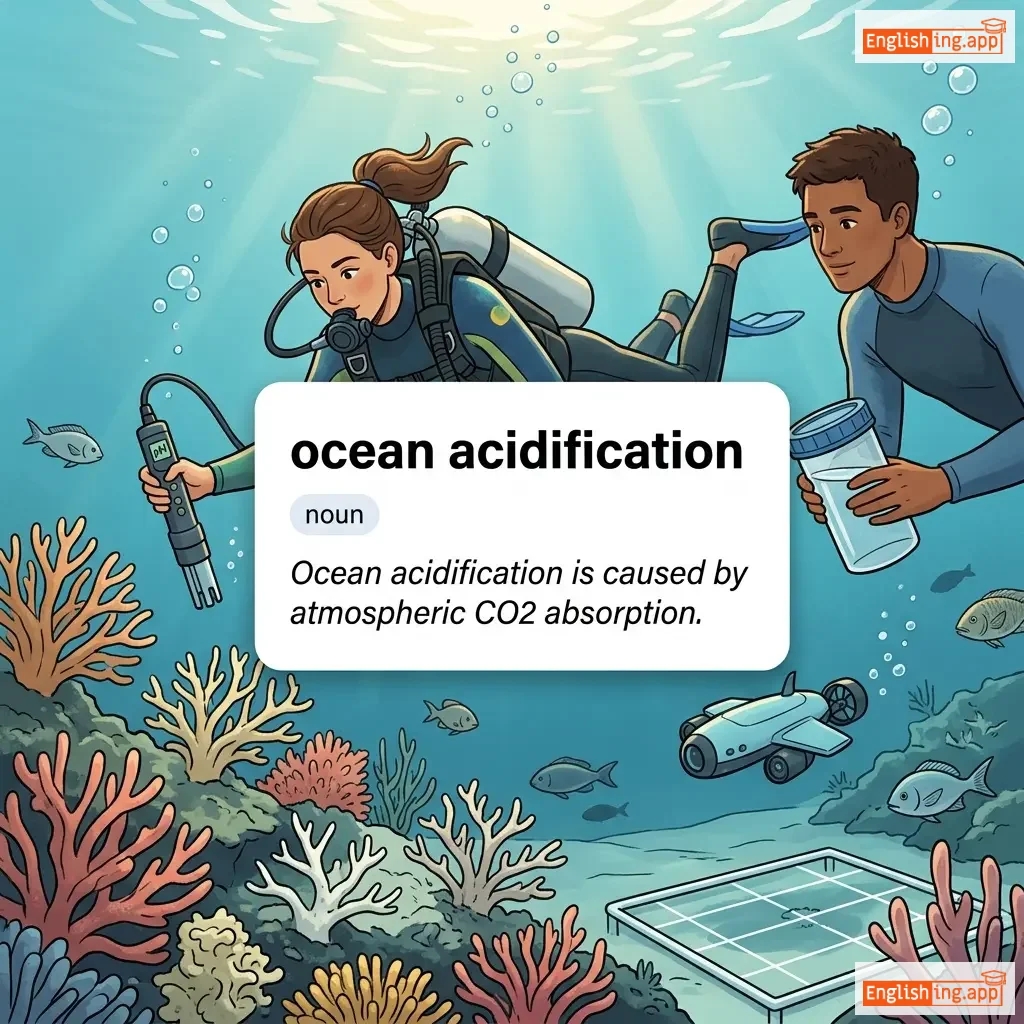
ocean acidification definition card — visual illustration of the meaning
noun C1
ˈoʊʃən əˌsɪdɪfɪˈkeɪʃən
海洋酸性化 (kaiyō sanseika)

The ongoing decrease in the pH of the Earth's oceans, caused by the absorption of carbon dioxide from the atmosphere.

"Ocean acidification is caused by atmospheric CO2 absorption."

"海洋酸性化は、大気中のCO2の吸収によって引き起こされます。" (Kaiyō sanseika wa, taiki-chū no CO2 no kyūshū ni yotte hikiokosaremasu.)
noun C1
/ˈɒktəɡən/
八角形 (hakkakukei)

A polygon with eight sides and eight angles.

"The stop sign is shaped like an octagon."

"ストップサインは八角形をしています。" (Sutoppu sain wa hakkakukei wo shiteimasu.)
noun C1
/ˈɒktɪv/

A series of eight musical notes, or the interval between one musical pitch and another with double its frequency.

"The singer's voice could easily reach the higher octave."

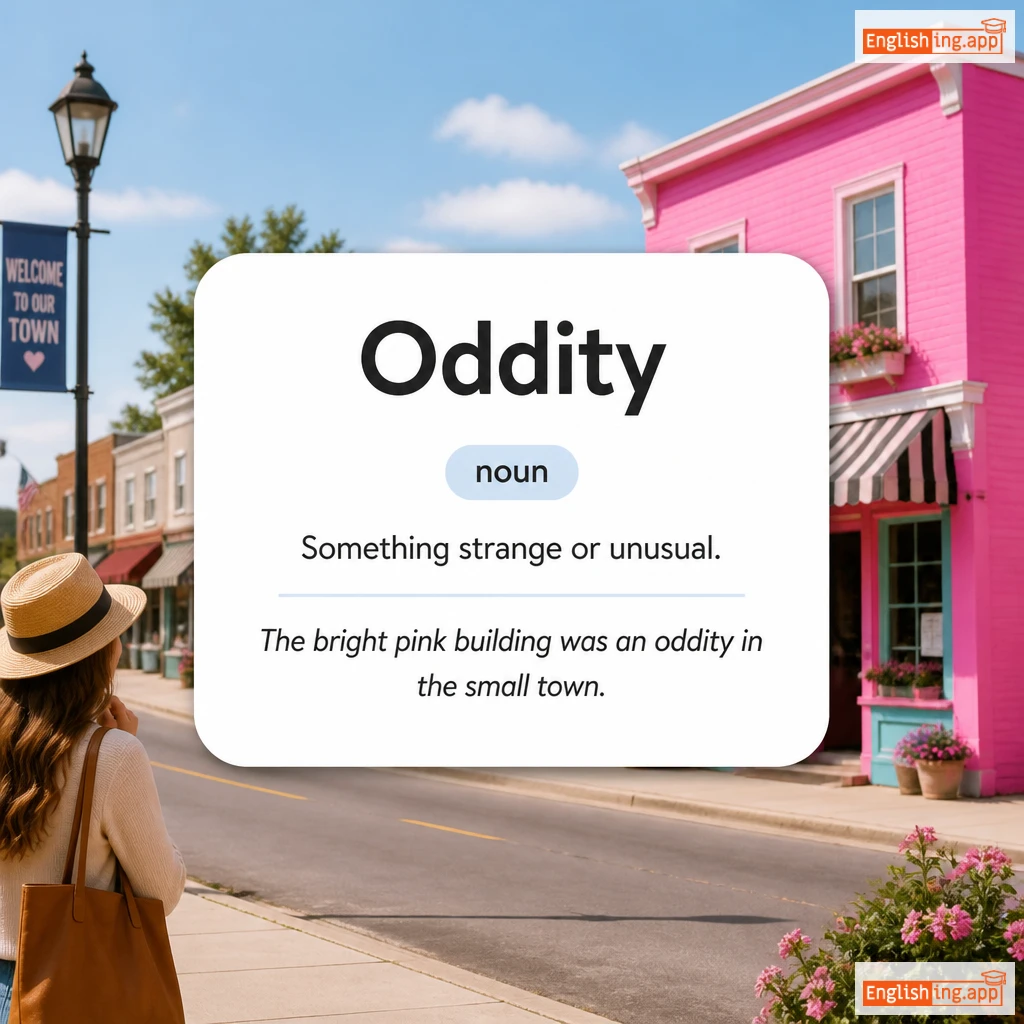
Oddity definition card — visual illustration of the meaning
noun C1
/ˈɒdəti/
奇異 (kii)

Something strange or unusual.

"The bright pink building was an oddity in the small town."

"その明るいピンクの建物は小さな町での奇異な存在でした。" (Sono akarui pinku no tatemono wa chiisana machi de no kii na sonzai deshita.)
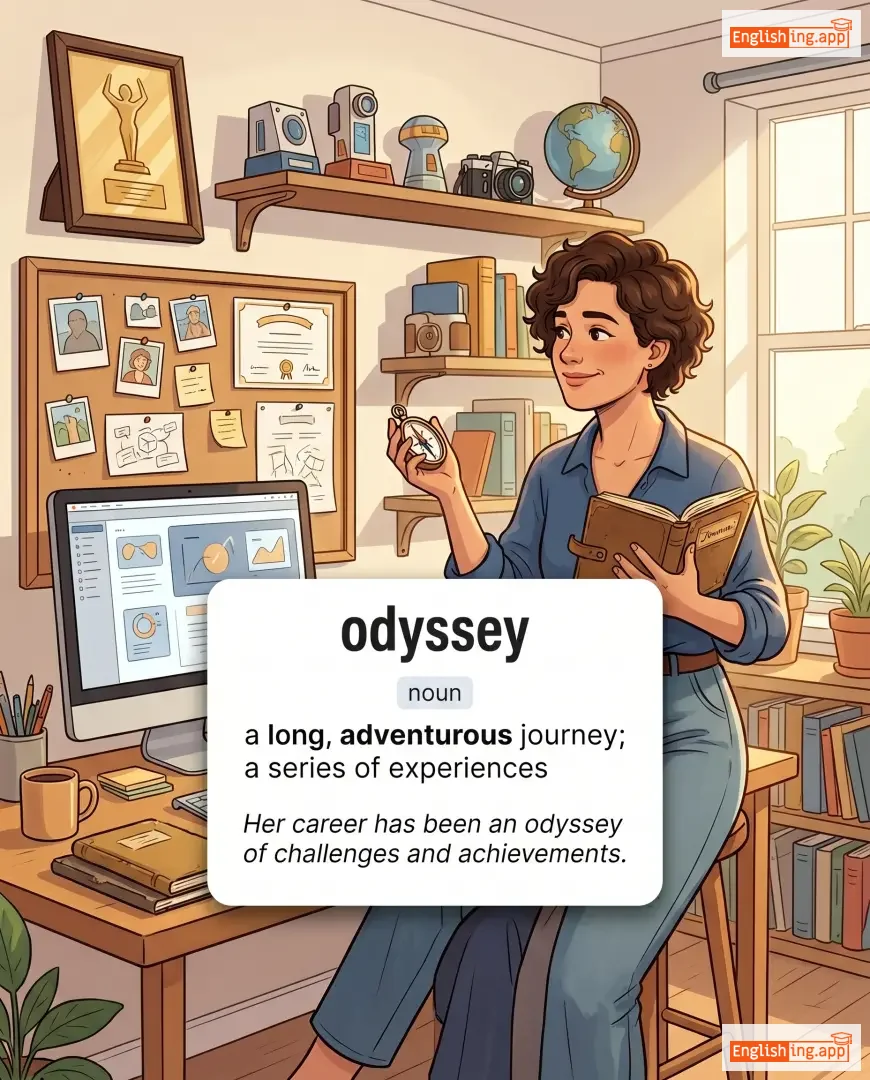
odyssey definition card — visual illustration of the meaning
noun C1
/ˈɑːdəsi/
長い旅 (nagai tabi)

a long, adventurous journey; a series of experiences

"Her career has been an odyssey of challenges and achievements."

"彼女のキャリアは挑戦と成果の長い旅でした。" (Kanojo no kyaria wa chōsen to seika no nagai tabi deshita.)
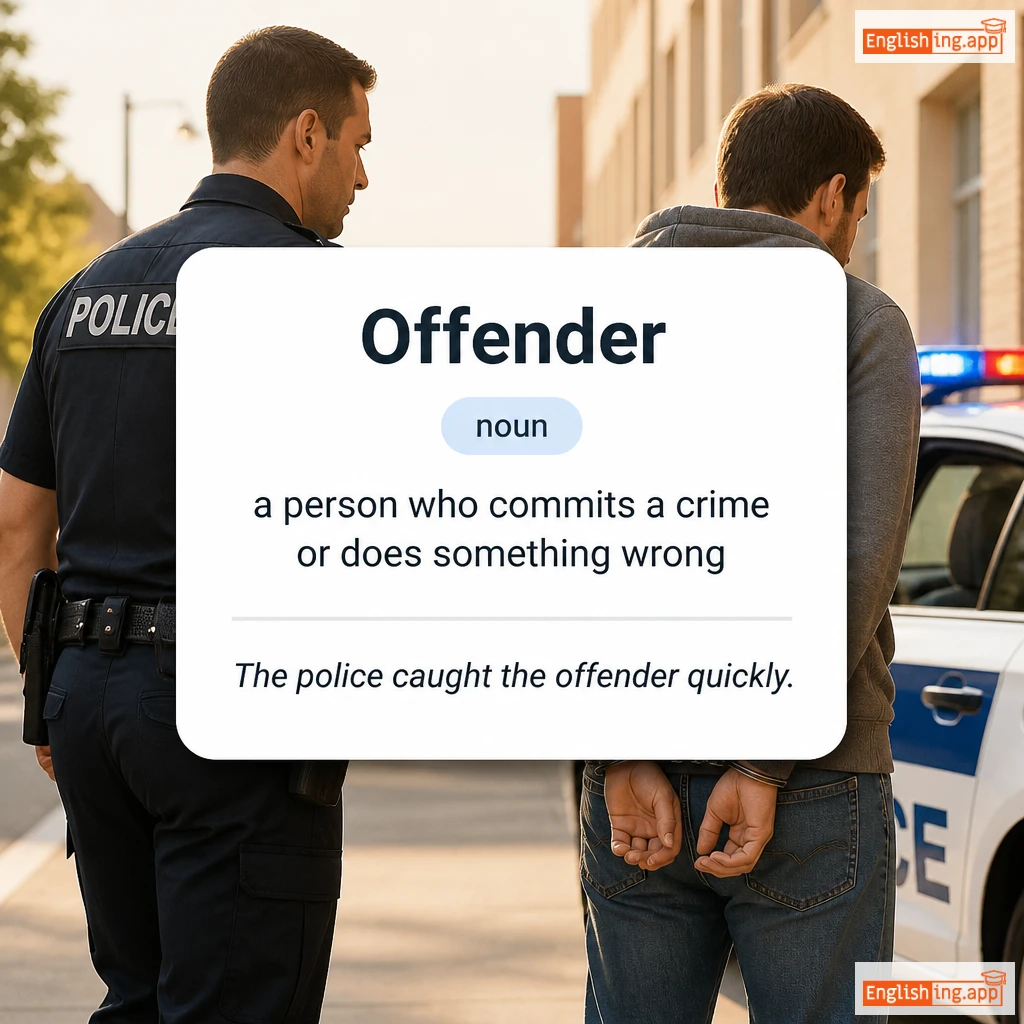
Offender definition card — visual illustration of the meaning
noun C1
/əˈfɛndər/
犯罪者 (hanzai-sha)

a person who commits a crime or does something wrong

"The police caught the offender quickly."

"警察はすぐに犯罪者を捕まえました。" (Keisatsu wa sugu ni hanzai-sha o tsukamaemashita.)
adjective/adverb C1
/ˌɒfˈhænd/
軽率 (keisotsu)

Without previous thought or preparation; casual and sometimes dismissive.

"She gave an offhand reply to his serious question."

"彼女は彼の真剣な質問に対して、軽率な返答をした。" (Kanojo wa kare no shinken na shitsumon ni taishite, keisotsu na hentou wo shita.)
verb C1
/əˈfɪʃieɪt/
執り行う (toriokonau)

To perform official duties, especially in a ceremony or as a referee.

"The priest will officiate the wedding ceremony."

"司祭が結婚式を司る。" (Shisai ga kekkonshiki o toriokonau.)
verb C1
/ˈɒfsɛt/
相殺 (sōsai)

To counterbalance or compensate for something.

"The company's losses were offset by gains in other departments."

"会社の損失は他の部門での利益で相殺されました。" (Kaisha no sonshitsu wa hoka no bumon de no rieki de sōsai saremashita.)
noun C1
/ˈɒfʃuːt/
分岐 (bunki)

A branch or result that develops from something larger or more important.

"The startup was an offshoot of a major tech company."

"そのスタートアップは大手テクノロジー企業からの分岐でした。" (Sono start-up wa oote tekunorojii kigyou kara no bunki deshita.)
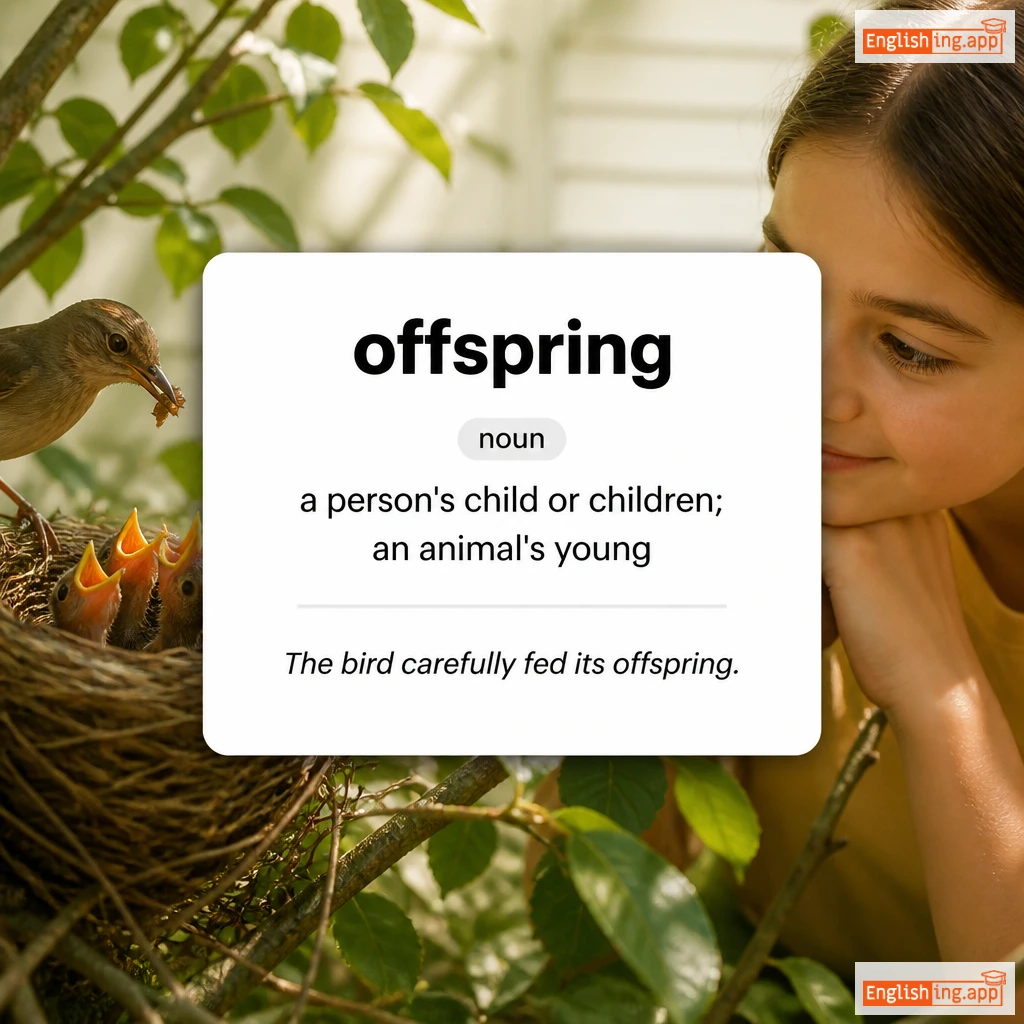
offspring definition card — visual illustration of the meaning
noun C1
/ˈɒf.sprɪŋ/
子孫 (shison)

a person's child or children; an animal's young

"The bird carefully fed its offspring."

"その鳥は注意深く自分の子孫に餌を与えました。" (Sono tori wa chūi bukaku jibun no shison ni esa o ataemashita.)
noun C1
/ˈɔɪntmənt/
軟膏 (nankou)

A smooth, oily substance applied to the skin for healing or soothing.

"The doctor prescribed an ointment for the burn on his arm."

"医師は彼の腕のやけどのために軟膏を処方しました。" (Ishi wa kare no ude no yakedo no tame ni nankou o shohō shimashita.)
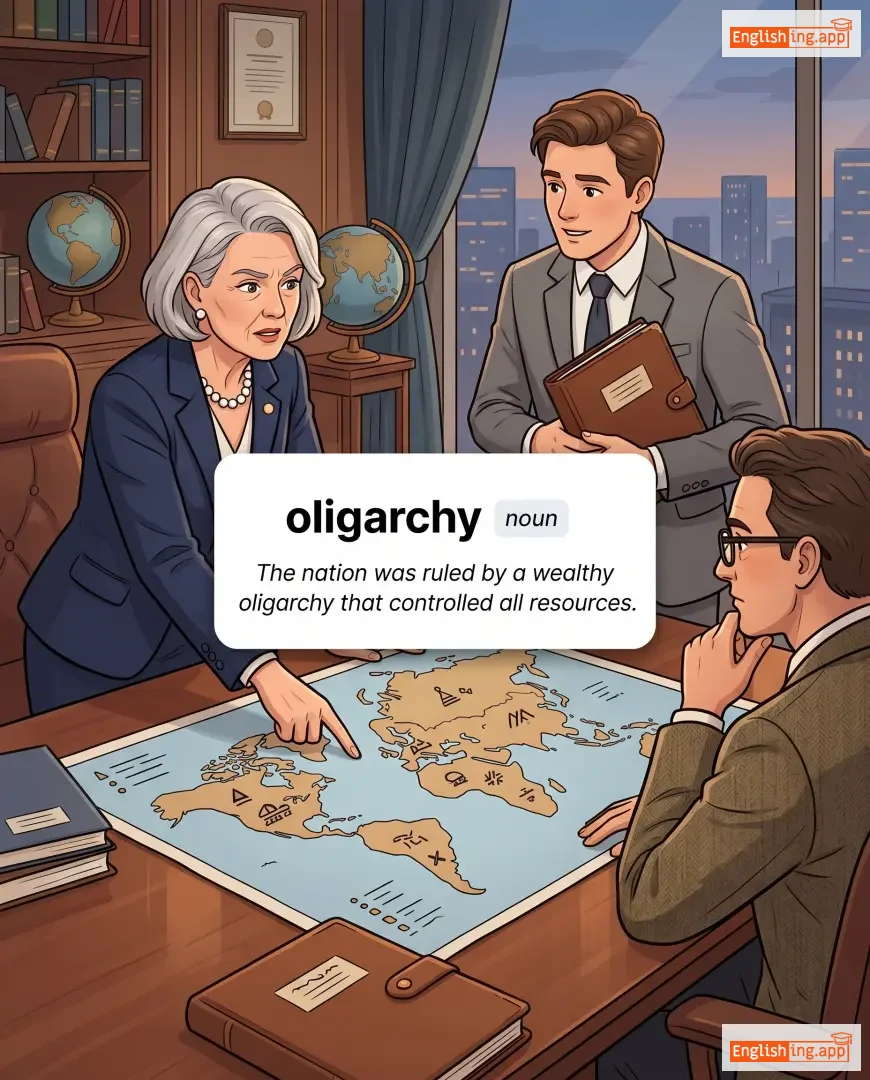
oligarchy definition card — visual illustration of the meaning
noun C1
/ˈɑːlɪˌɡɑːrki/
寡頭政治 (katō seiji)

A small group of people having control of a country, organization, or institution.

"The nation was ruled by a wealthy oligarchy that controlled all resources."

"その国は裕福なオリガーキーによって支配され、すべての資源を支配していました。" (Sono kuni wa yūfukuna origākī ni yotte shihaisa re, subete no shigen o shihai shite imashita.)
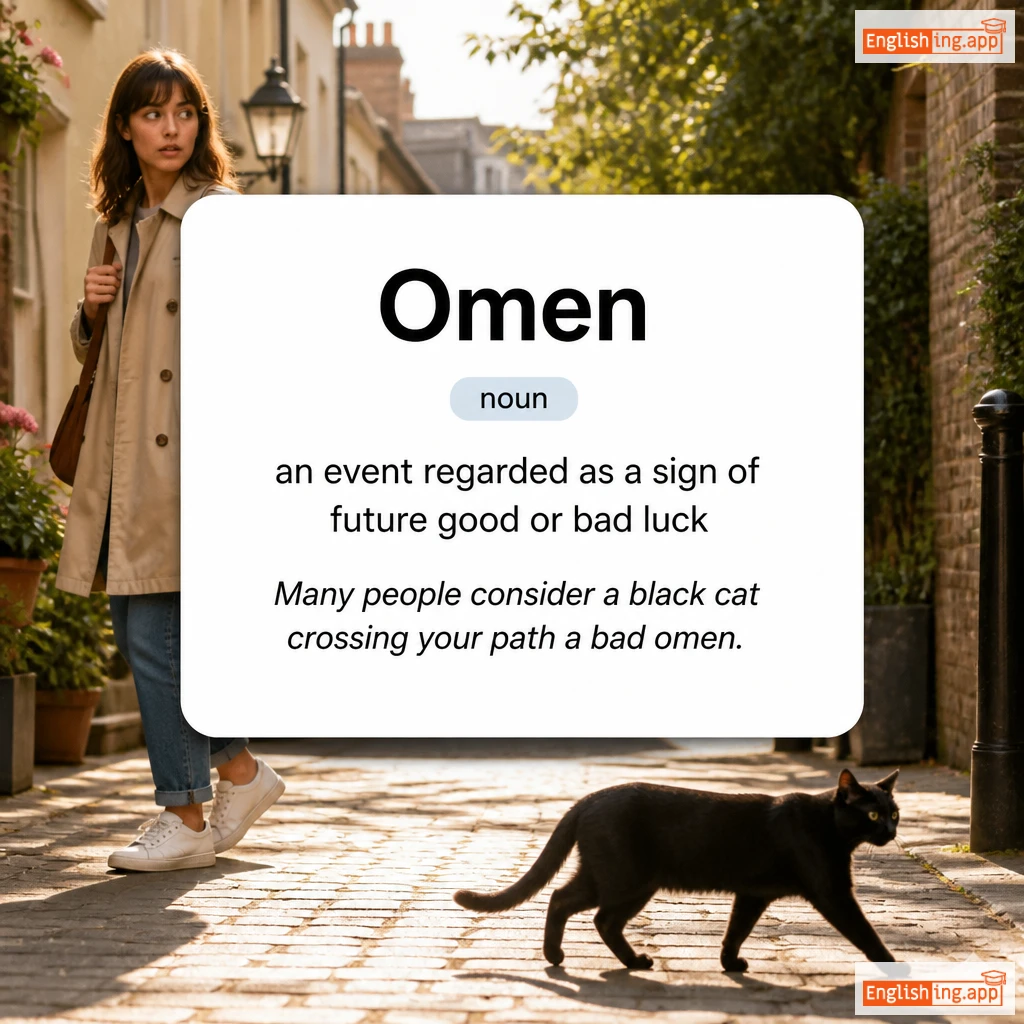
Omen definition card — visual illustration of the meaning
noun C1
/ˈoʊ.mən/
未来の良いまたは悪い運命の兆し (mirai no yoi matawa warui unmei no kizashi)

an event regarded as a sign of future good or bad luck

"Many people consider a black cat crossing your path a bad omen."

"多くの人々は、黒猫が道を横切ることを悪いオーメンだと考えています。" (ooku no hitobito wa, kuroneko ga michi wo yokogiru koto wo warui omen da to kangaeteimasu.)
adjective C1
/ˈɒmɪnəs/
不吉 (fukitsu)

Giving the impression that something bad or unpleasant is going to happen.

"Dark clouds gave an ominous sign of an approaching storm."

"暗い雲が近づく嵐の不吉な兆しを示した。" (Kurai kumo ga chikaduku arashi no fukitsu na kizashi o shimeshita.)
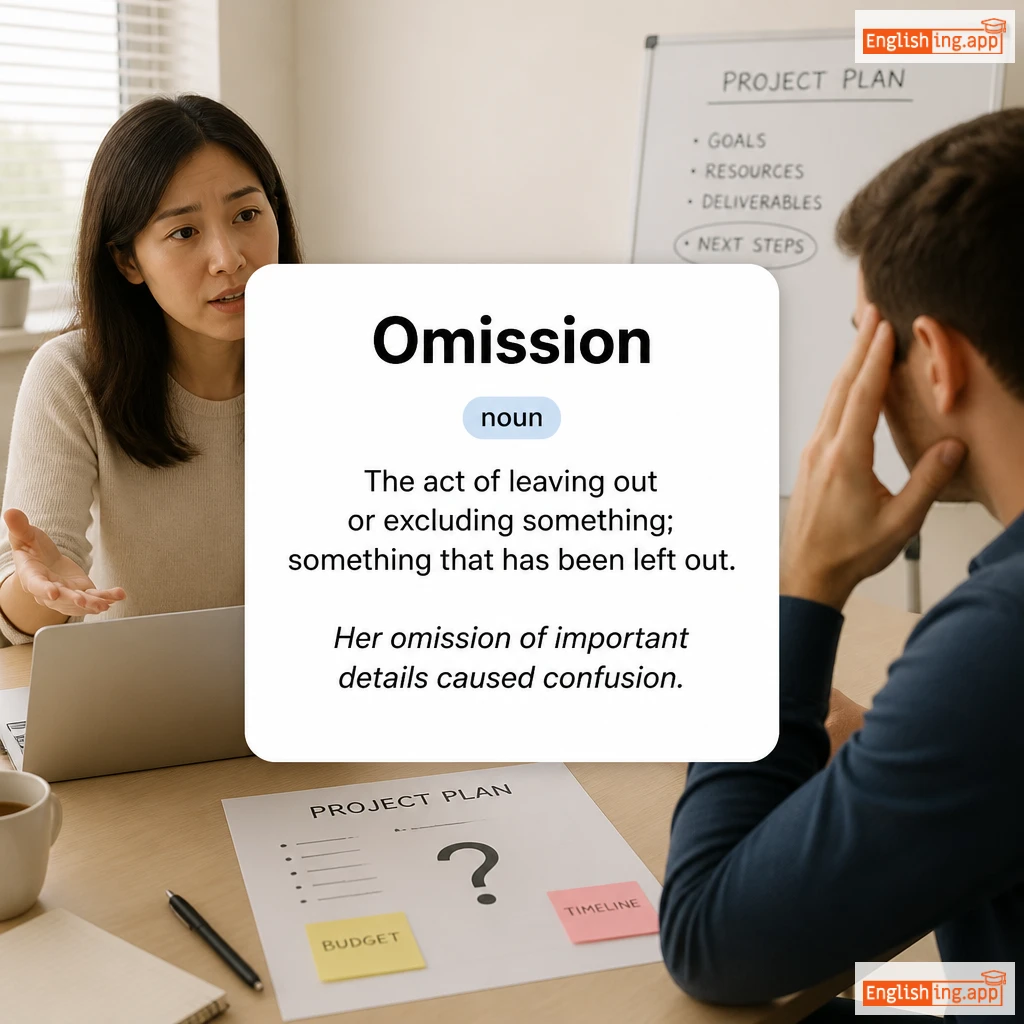
Omission definition card — visual illustration of the meaning
noun C1
/əˈmɪʃən/
省略 (shōryaku)

The act of leaving out or excluding something; something that has been left out.

"Her omission of important details caused confusion."

"彼女の重要な詳細の省略が混乱を引き起こした。" (Kanojo no jūyōna shōryaku ga konran o hikiokoshita.)
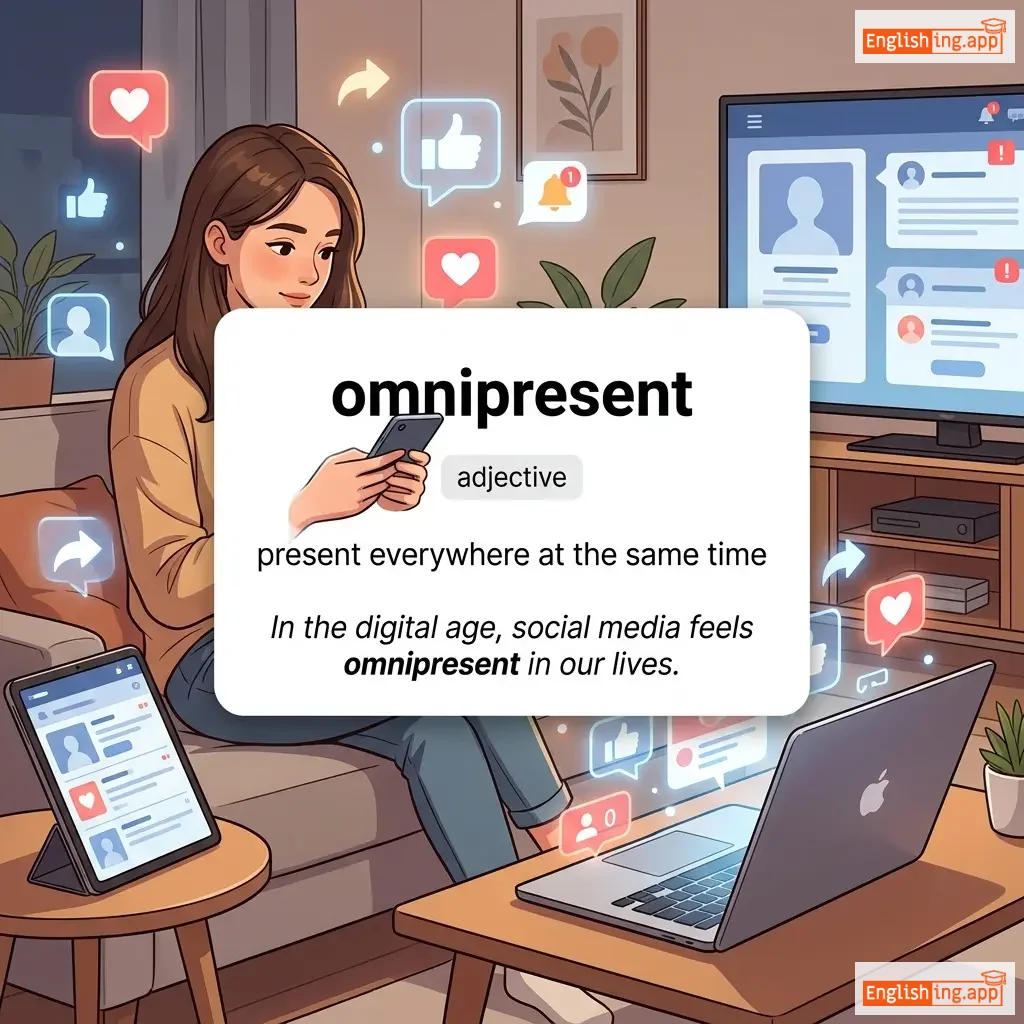
omnipresent definition card — visual illustration of the meaning
adjective C1
/ˌɒmnɪˈprɛzənt/
遍在する (hennzaisuru)

present everywhere at the same time

"In the digital age, social media feels omnipresent in our lives."

"デジタル時代では、ソーシャルメディアは私たちの生活の中で遍在するように感じます。" (Dejitaru jidai dewa, soosharu media wa watashitachi no seikatsu no naka de hennzai suru you ni kanjimasu.)
adjective C1
/ɒmˈnɪvərəs/
雑食性 (zasshokusei)

eating both plants and animals

"Humans are generally considered omnivorous creatures."

"人間は一般的に雑食性の生き物と見なされます。" (Ningen wa ippanteki ni zasshokusei no ikimono to minasarerumasu.)
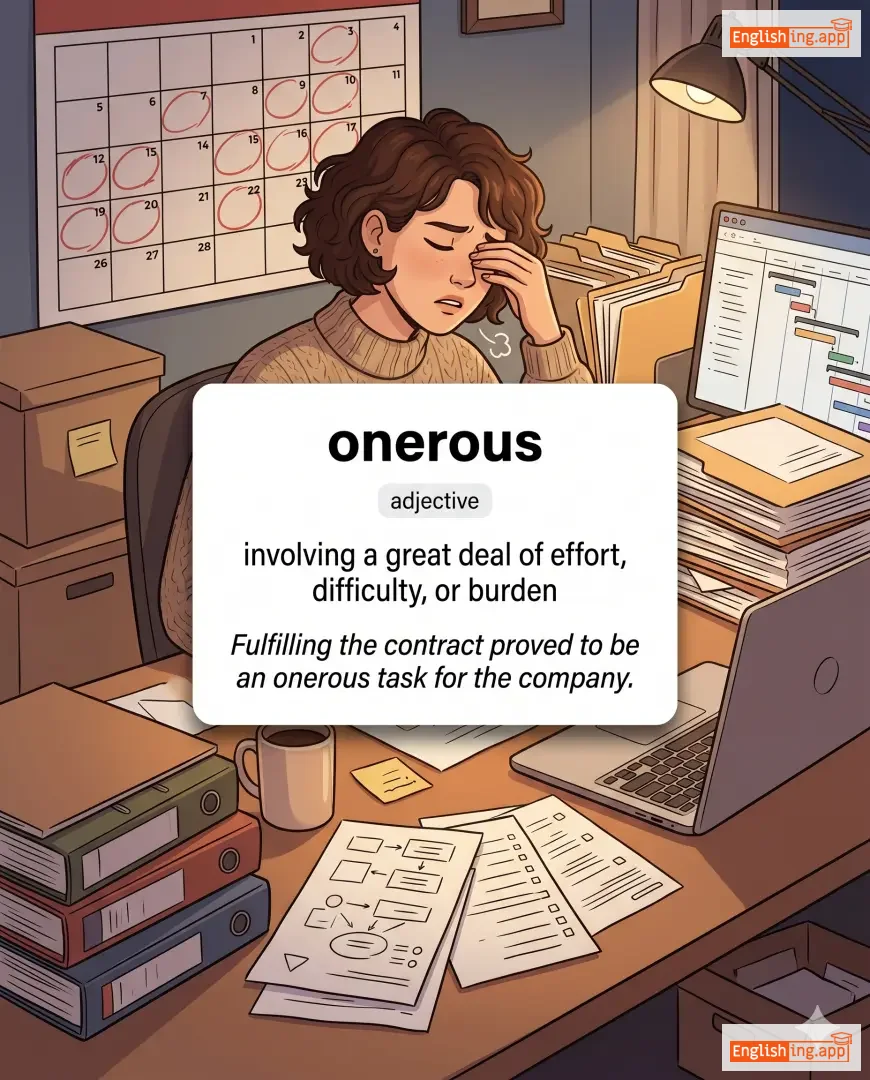
onerous definition card — visual illustration of the meaning
adjective C1
/ˈəʊnərəs/
重い (omoi)

involving a great deal of effort, difficulty, or burden

"Fulfilling the contract proved to be an onerous task for the company."

"契約を履行することは会社にとって負担の大きい仕事だと証明された。" (Keiyaku o rikō suru koto wa kaisha ni totte futan no ōkii shigoto da to shōmei sareta.)
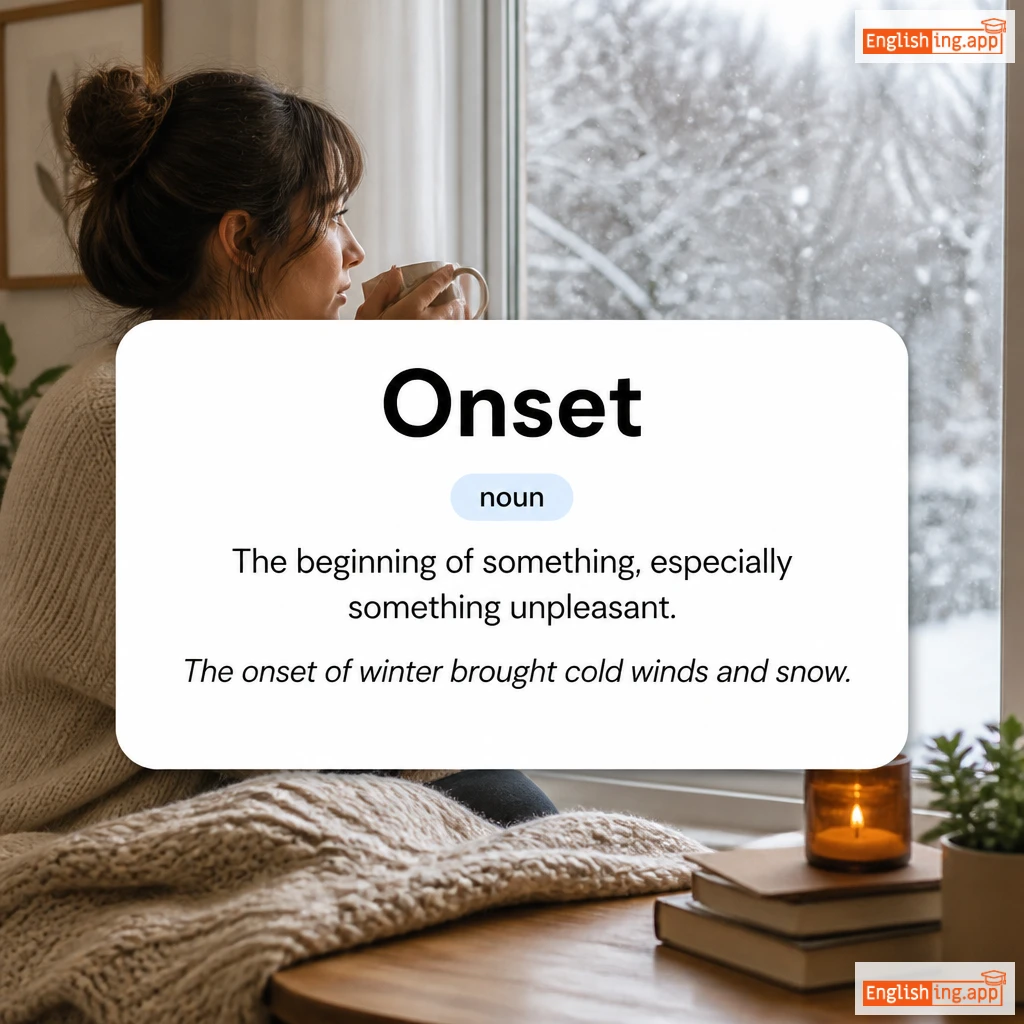
Onset definition card — visual illustration of the meaning
noun C1
/ˈɒn.sɛt/
開始 (kaishi)

The beginning of something, especially something unpleasant.

"The onset of winter brought cold winds and snow."

"冬の開始は冷たい風と雪をもたらした。" (Fuyu no kaishi wa tsumetai kaze to yuki wo motarashita.)
noun C1
/ˈɒn.slɔːt/
猛攻 (mōkō)

A fierce or destructive attack.

"The village faced an onslaught of enemy forces."

"その村は敵軍の猛攻に直面しました。" (Sono mura wa tekigun no mōkō ni chokumen shimashita.)