ভোকাবুলারিসমূহ

ইংরেজি শব্দের বাংলা অর্থ | English to Bangla Word Meaning Dictionary

adjective C1
/ɪˈnænɪmət/
無生物 (museibutsu)

not alive, especially not in the manner of animals and humans; lifeless

"The museum was full of inanimate objects from ancient times."

"博物館には古代の無生物がいっぱいだった。" (Hakubutsukan ni wa kodai no museibutsu ga ippai datta.)
adjective C1
/ˌɪnɑːrˈtɪkjʊlət/
言葉が不明瞭 (kotoba ga fumeiryo)

Unable to express oneself clearly or effectively in speech or writing.

"She became inarticulate with emotion during the speech."

"彼女はスピーチ中に感情で言葉が不明瞭になった。" (Kanojo wa supīchi-chū ni kanjō de kotoba ga fumeiryo ni natta.)
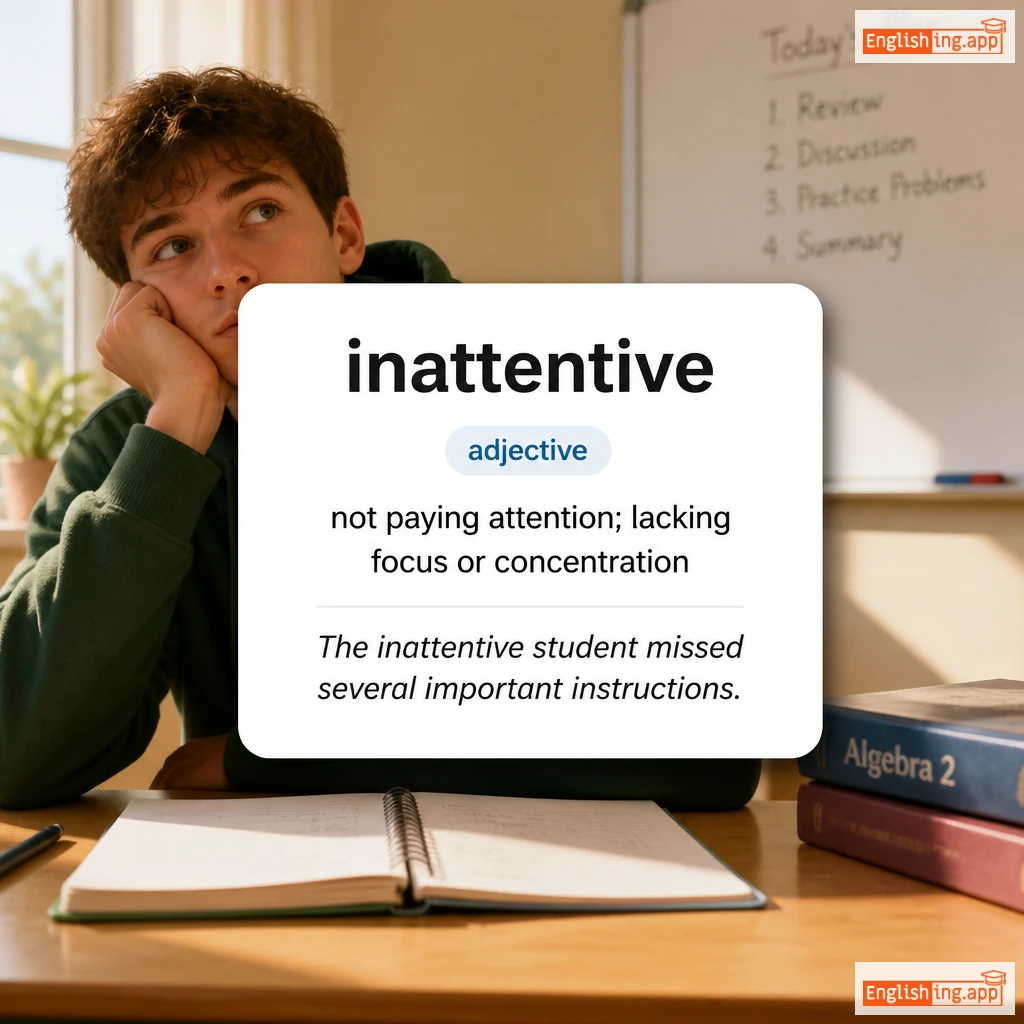
inattentive definition card — visual illustration of the meaning
adjective C1
/ˌɪnəˈtɛntɪv/
不注意な (fuchuui na)

not paying attention; lacking focus or concentration

"The inattentive student missed several important instructions."

"不注意な学生は重要な指示をいくつも逃した。" (fuchuui na gakusei wa juuyou na shiji o ikutsumo nogashita)
adjective C1
/ɪnˈɔːdəbl/
聞こえない (kikoenai)

Unable to be heard.

"Her voice was almost inaudible over the noise."

"その音の中で彼女の声はほとんど聞こえなかった。" (Sono oto no naka de kanojo no koe wa hotondo kikoenakatta.)
adjective C1
/ɪˈnɔːɡjərəl/
開幕 (kaimaku)

marking the beginning of something; first; opening

"The president delivered his inaugural speech."

"大統領は彼の開幕スピーチを行いました。" (Daitōryō wa kare no kaimaku supīchi o okonaimashita.)
verb C1
/ɪˈnɔːɡjʊreɪt/

To formally begin or introduce something, especially with a ceremony.

"The mayor will inaugurate the new bridge tomorrow."

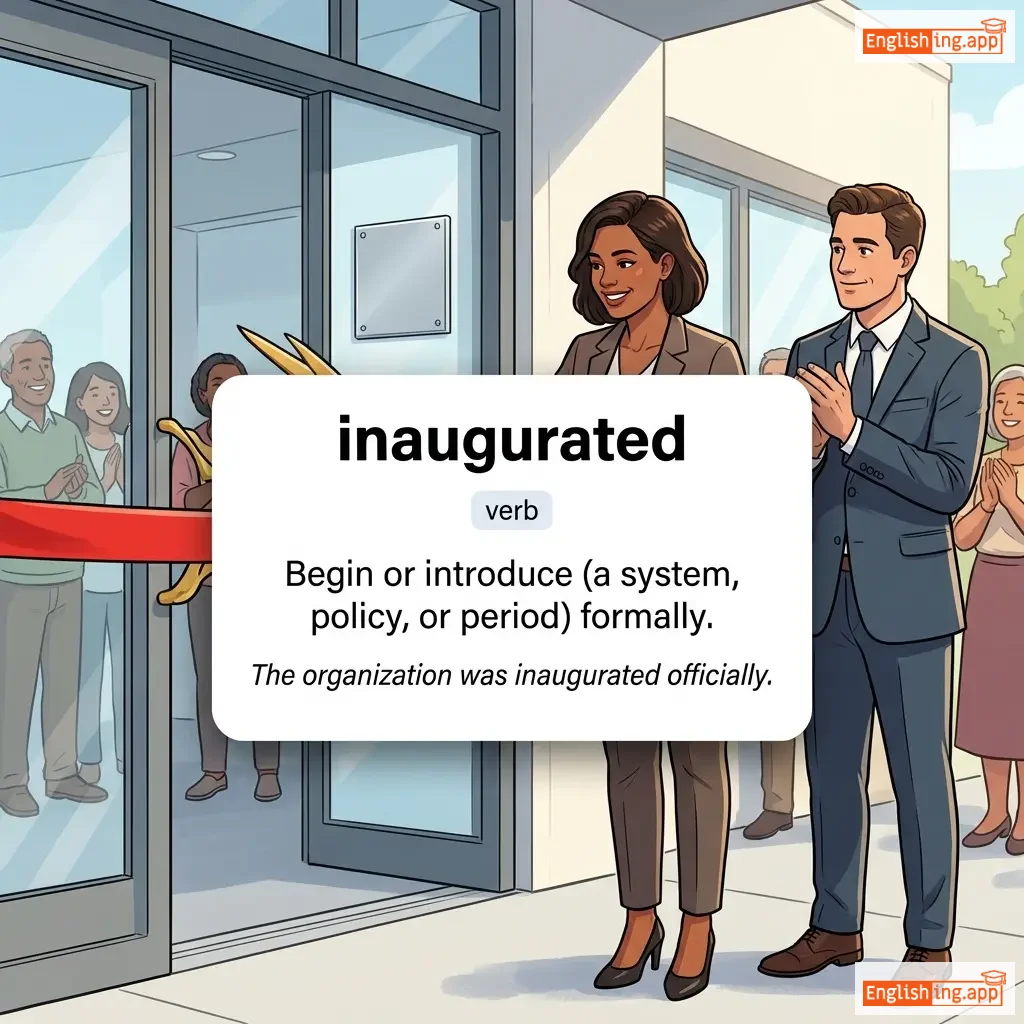
inaugurated definition card — visual illustration of the meaning
verb C1
ɪˈnɔː.ɡjə.reɪ.tɪd
開会 (kaikai)

Begin or introduce (a system, policy, or period) formally.

"The organization was inaugurated officially."

"その組織は正式に開会されました。" (Sono soshiki wa seishiki ni kaikai saremashita.)
adjective C1
/ˈɪnˌbɔːrn/

existing from birth; innate

"She has an inborn talent for music."

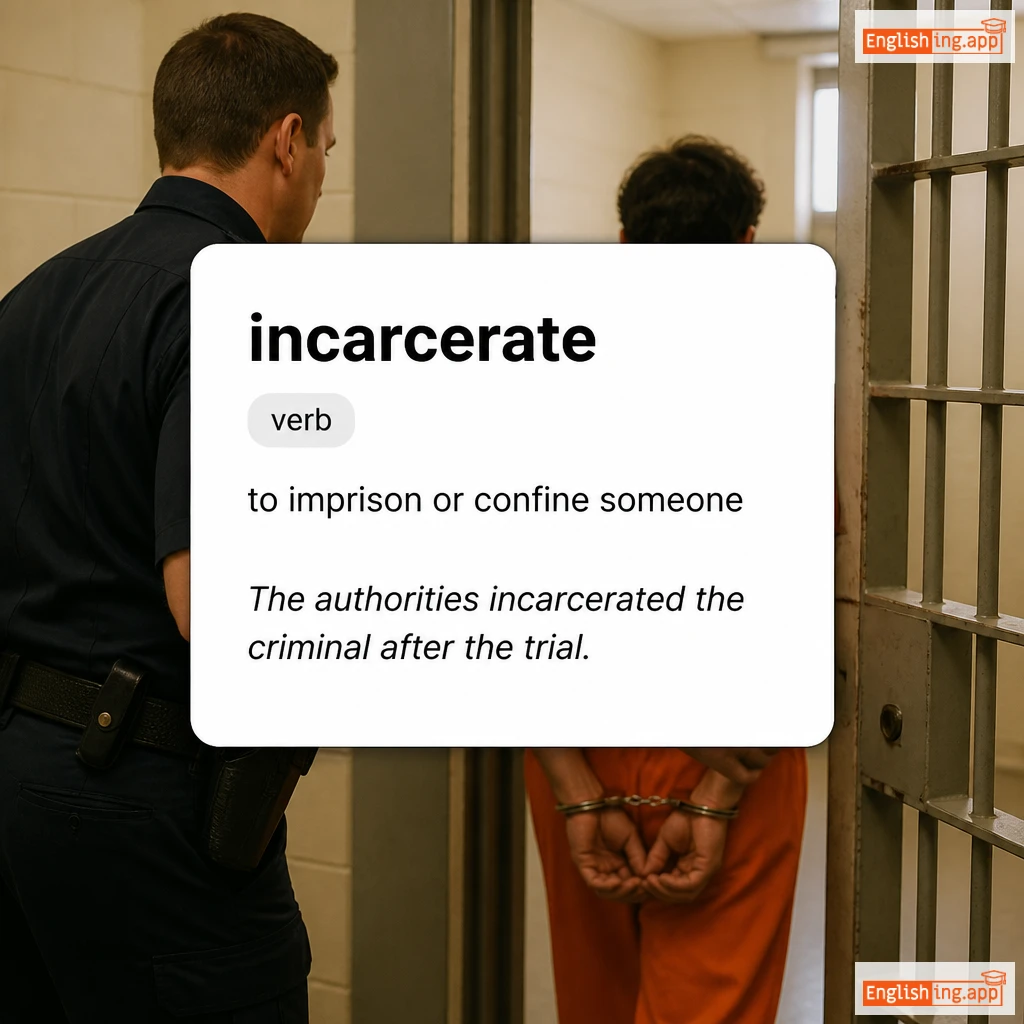
incarcerate definition card — visual illustration of the meaning
verb C1
/ɪnˈkɑːrsəreɪt/
投獄する (tōgoku suru)

to imprison or confine someone

"The authorities incarcerated the criminal after the trial."

"当局は裁判後に犯罪者を投獄しました。" (Tōkyoku wa saiban go ni hanzai-sha o tōgoku shimashita.)
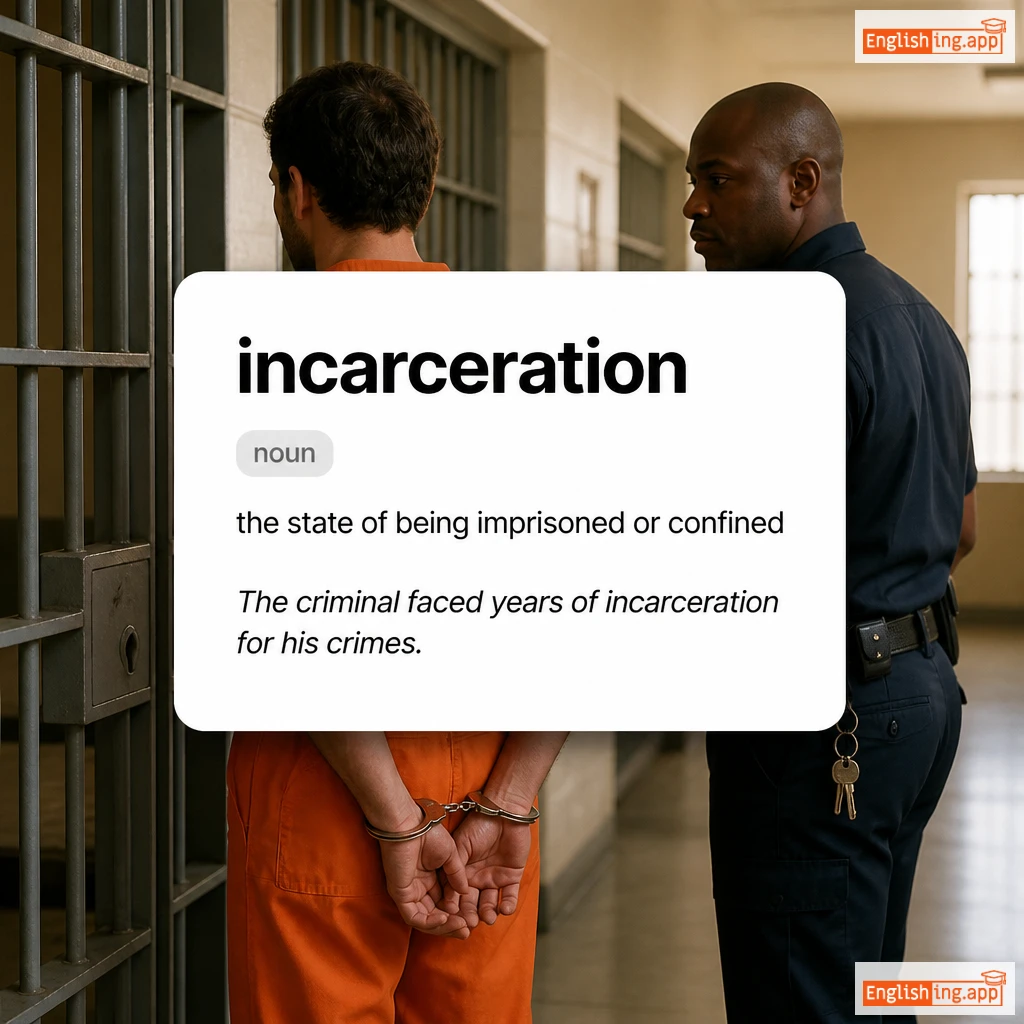
incarceration definition card — visual illustration of the meaning
noun C1
/ɪnˌkɑːsəˈreɪʃən/
投獄 (tōgoku)

the state of being imprisoned or confined

"The criminal faced years of incarceration for his crimes."

"犯人はその犯罪のために長年の投獄を受けた。" (Hannin wa sono hanzai no tame ni naganen no tōgoku o uketa.)
noun C1
/ˌɪnkɑːrˈneɪʃən/
化身 (kashin)

the embodiment of a deity, spirit, or quality in a physical form

"The monk was considered the incarnation of compassion."

"その僧侶は慈悲の化身と見なされていた。" (Sono souryo wa jihi no kashin to minasarete ita.)
noun/verb C1
/ˈɪnsɛns/
お香 / 激怒させる (oko / gekido saseru)

a substance burned for its sweet smell (noun); to make very angry (verb)

"The smell of incense filled the temple, but his rude words incensed her."

"お香の香りが寺院を満たしましたが、彼の失礼な言葉は彼女を激怒させました。" (Oko no kaori ga jiin wo mitashimashita ga, kare no shitsurei na kotoba wa kanojo wo gekido sasemashita.)
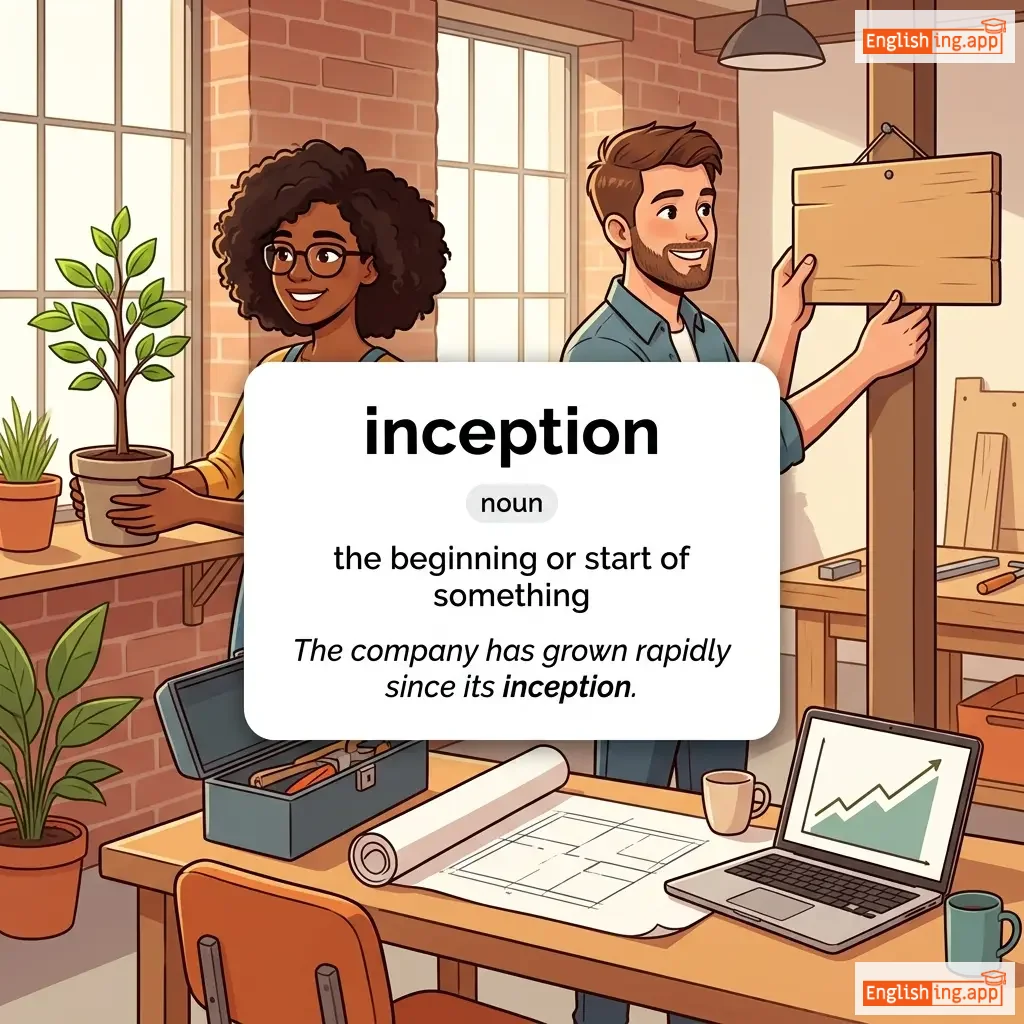
inception definition card — visual illustration of the meaning
noun C1
/ɪnˈsɛpʃən/
始まり (hajimari)

the beginning or start of something

"The company has grown rapidly since its inception."

"その企業は創業以来急速に成長しました。" (Sono kigyou wa sougyou irai kyūsoku ni seichou shimashita.)
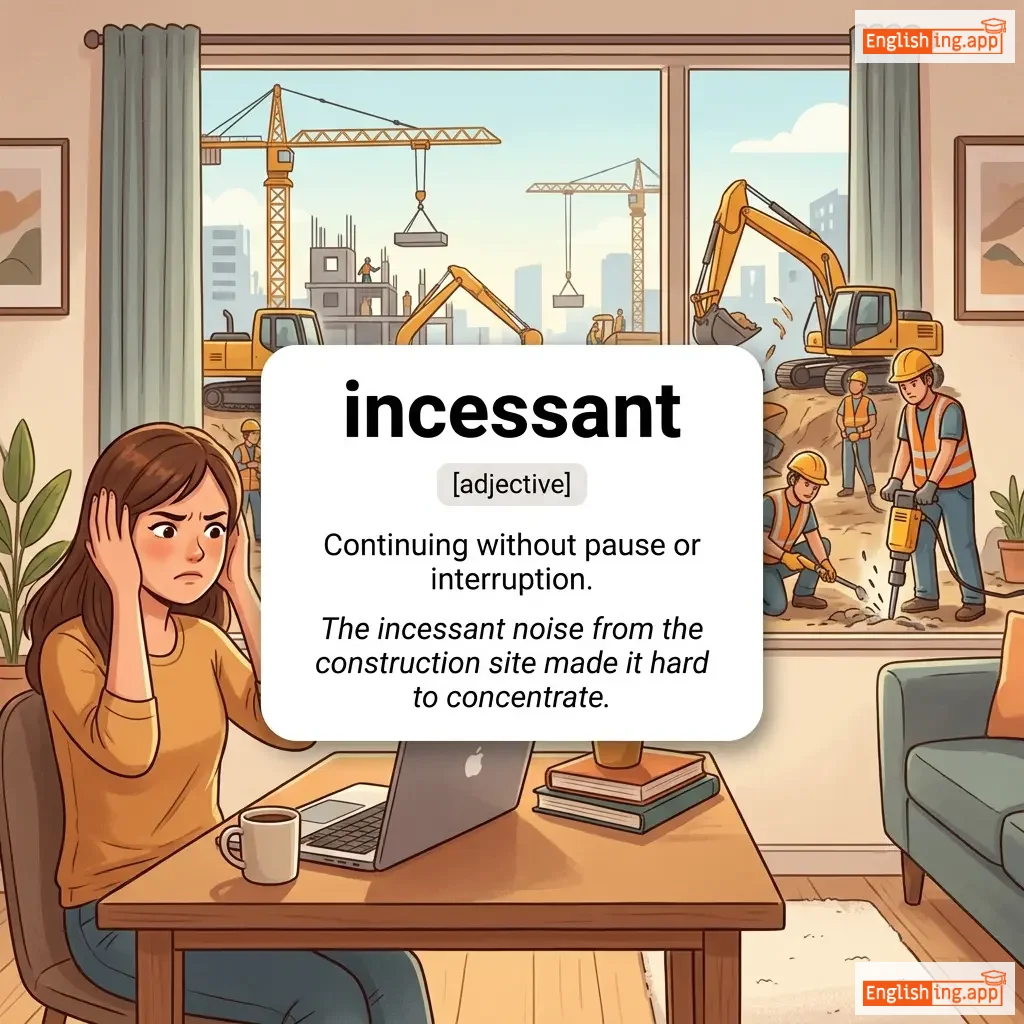
incessant definition card — visual illustration of the meaning
adjective C1
/ɪnˈsɛsənt/
絶え間ない (taemai)

Continuing without pause or interruption.

"The incessant noise from the construction site made it hard to concentrate."

"建設現場からの絶え間ない騒音は、集中するのを難しくさせました。" (Kensetsu genba kara no taemai na sōon wa, shūchū suru no o muzukashiku sasemashita.)
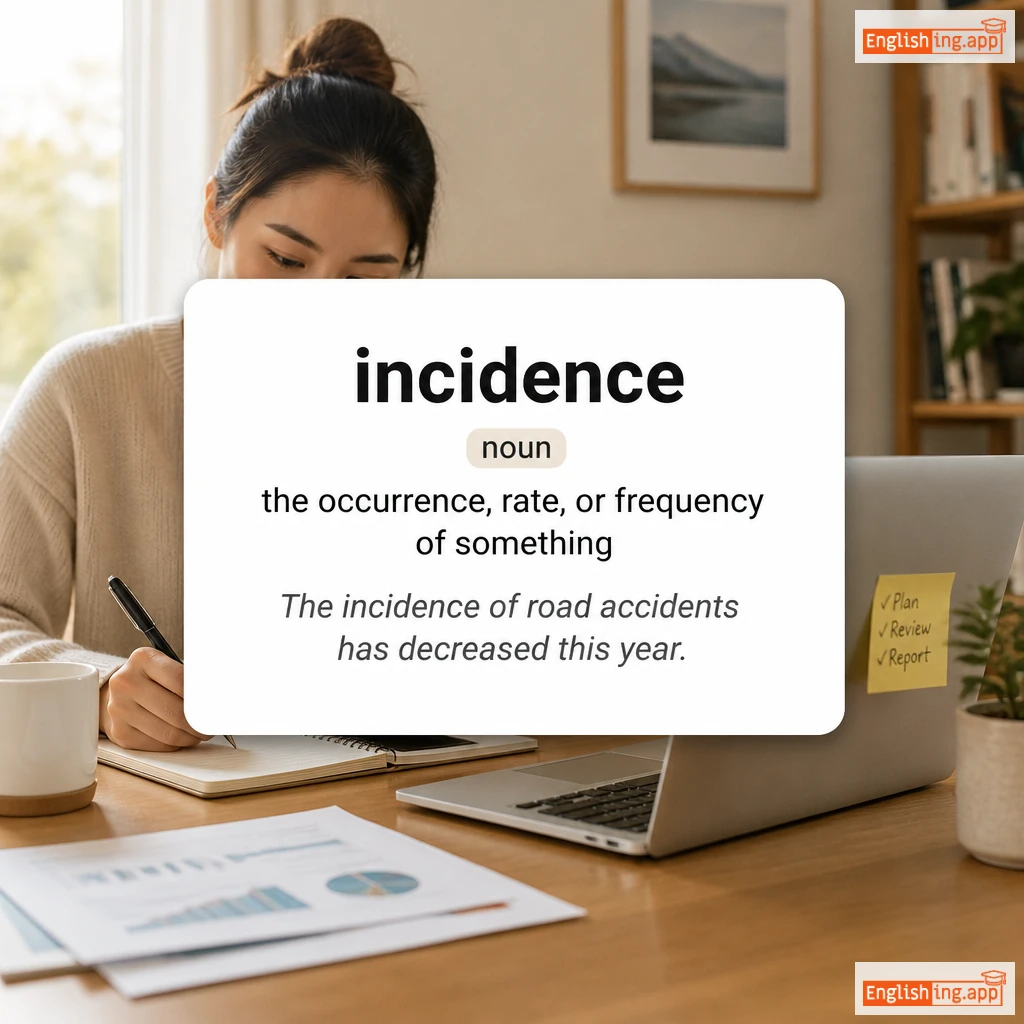
incidence definition card — visual illustration of the meaning
noun C1
/ˈɪnsɪdəns/
発生率 (hatsuseiritsu)

the occurrence, rate, or frequency of something

"The incidence of road accidents has decreased this year."

"今年の道路事故の発生率は減少しました。" (Kotoshi no dōro jiko no hasseiritsu wa genshō shimashita.)
adjective C1
/ˌɪnsɪˈdɛntəl/
付随的 (fuzui-teki)

happening as a minor part or in connection with something else

"Incidental expenses like snacks and tips were included in the bill."

"スナックやチップのような付随的な費用は請求書に含まれていました。" (Sunakku ya chippu no yōna fuzui-teki na hiyō wa seikyū-sho ni fukumarete imashita.)
adverb C1
/ˌɪnsɪˈdɛntəli/
ちなみに (chinami ni)

by the way; used to introduce a remark not directly related to the main subject

"Incidentally, did you know that she studied in Paris?"

"ちなみに、彼女がパリで勉強していたことを知っていましたか?" (Chinami ni, kanojo ga Pari de benkyou shite ita koto wo shitte imashita ka?)
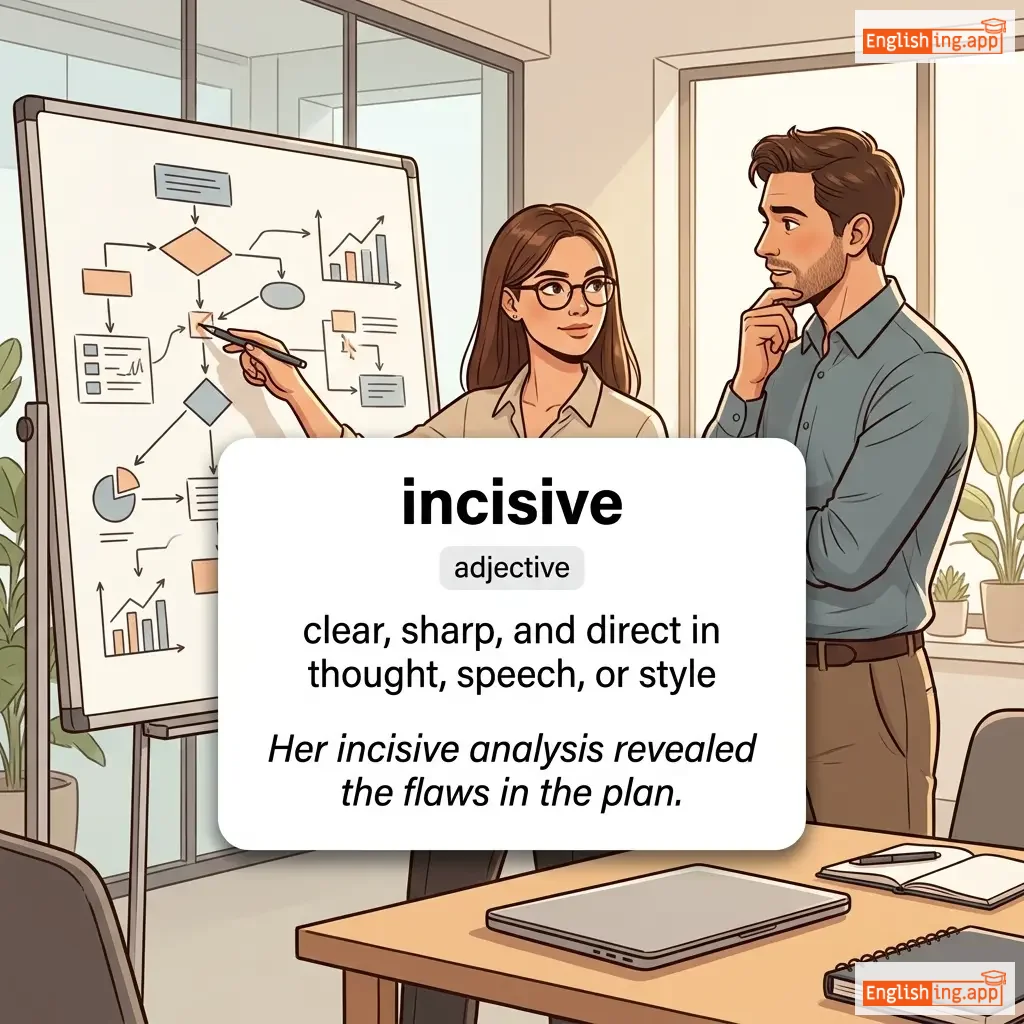
incisive definition card — visual illustration of the meaning
adjective C1
/ɪnˈsaɪsɪv/
鋭い (surudoi)

clear, sharp, and direct in thought, speech, or style

"Her incisive analysis revealed the flaws in the plan."

"彼女の鋭い分析は計画の欠陥を明らかにした。" (Kanojo no surudoi bunseki wa keikaku no kekkan o akiraka ni shita.)
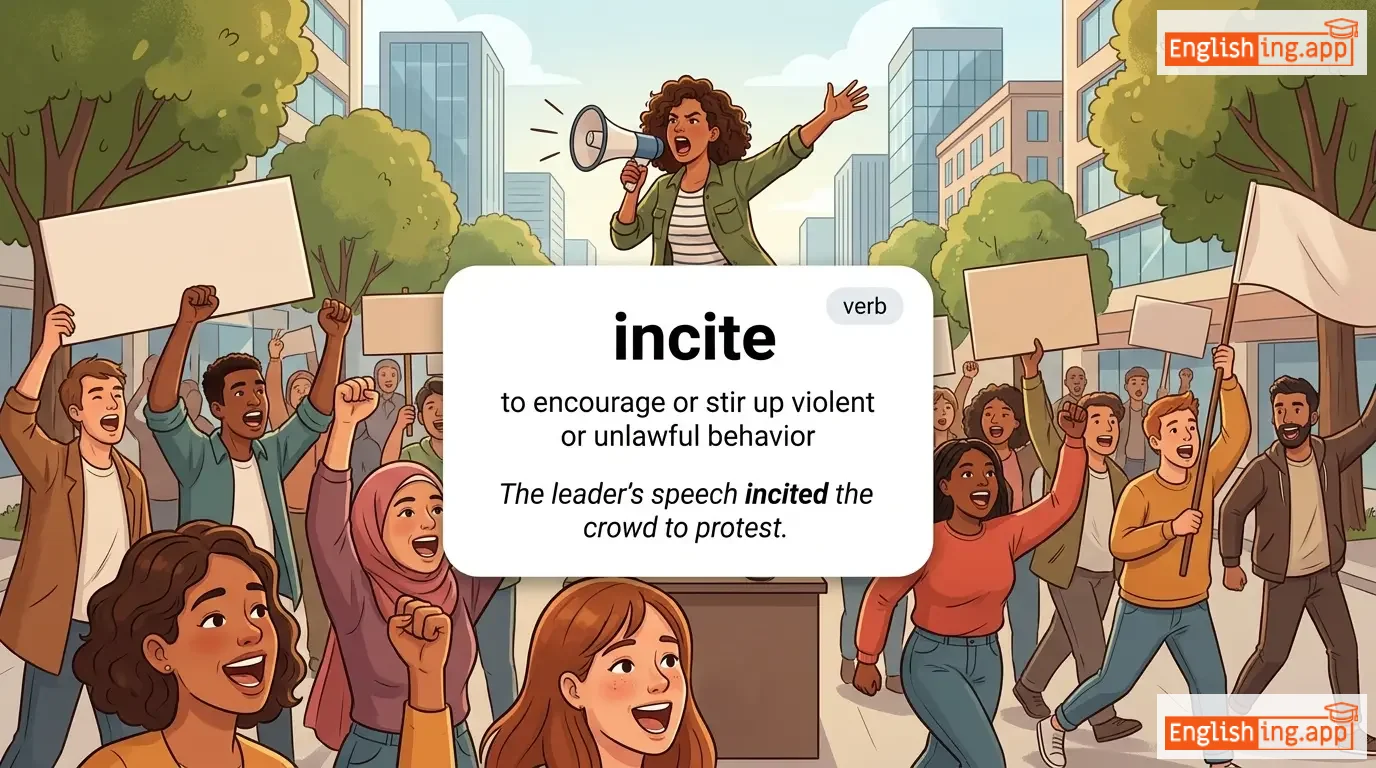
incite definition card — visual illustration of the meaning
verb C1
/ɪnˈsaɪt/
扇動する (sendou suru)

to encourage or stir up violent or unlawful behavior

"The leader's speech incited the crowd to protest."

"リーダーのスピーチは群衆を抗議へと駆り立てました。" (Riidaa no supiichi wa gunshuu o kougi e to karitate mashita.)
noun C1
/ɪnˈsaɪtmənt/
扇動 (sendou)

the action of provoking unlawful or violent behavior

"He was arrested for incitement to riot."

"彼は暴動を扇動した罪で逮捕された。" (Kare wa boudou o sendou shita tsumi de taiho sareta.)
noun C1
/ˌɪnklɪˈneɪʃən/
傾向 (keikou)

A natural tendency or urge to act or feel in a particular way.

"She has an inclination towards helping others."

"彼女は他の人を助ける傾向があります。" (Kanojo wa hoka no hito o tasukeru keikō ga arimasu.)
verb C1
/ɪnˈklaɪn/
傾く (katamuku)

to feel willing or favorably disposed toward something; to bend or tilt

"She is inclined to agree with the proposal."

"彼女は提案に賛成する傾向があります。" (Kanojo wa teian ni sansei suru katamuki ga arimasu.)
adverb, adjective C1
/ˌɪnkɑːɡˈniːtoʊ/
インコグニート (inkongīnīto)

In disguise or with one's identity concealed.

"The celebrity traveled incognito to avoid the paparazzi."

"有名人はパパラッチを避けるためにインコグニートで旅行した。" (Yūmeijin wa paparatchi o sakeru tame ni inkongīnīto de ryokō shita.)
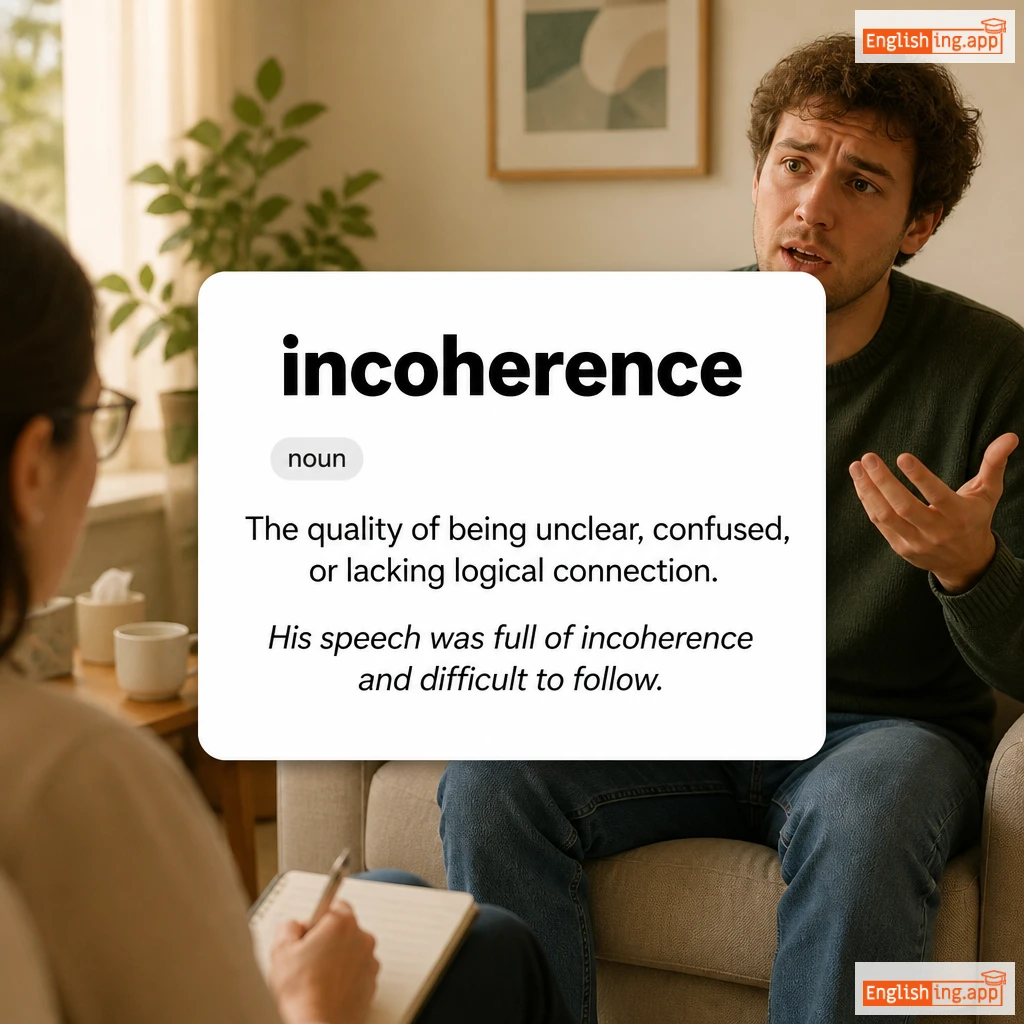
incoherence definition card — visual illustration of the meaning
noun C1
/ˌɪnkoʊˈhɪrəns/
不整合 (fuseigou)

The quality of being unclear, confused, or lacking logical connection.

"His speech was full of incoherence and difficult to follow."

"彼のスピーチは不整合で、理解するのが難しかった。" (Kare no supīchi wa fuseigō de, rikai suru no ga muzukashikatta.)
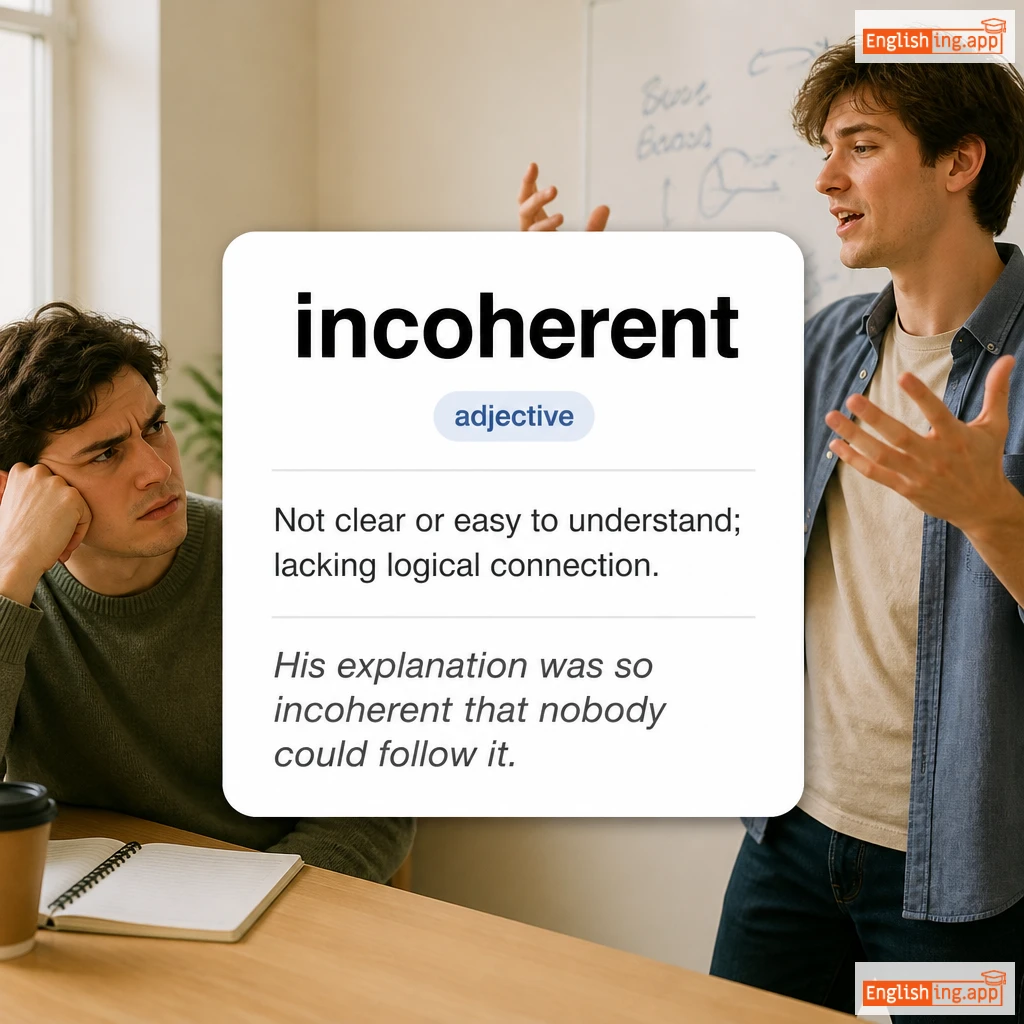
incoherent definition card — visual illustration of the meaning
adjective C1
/ˌɪnkəʊˈhɪərənt/
一貫性のない (ikkansē no nai)

Not clear or easy to understand; lacking logical connection.

"His explanation was so incoherent that nobody could follow it."

"彼の説明はあまりにも一貫性がなく、誰もそれを追うことができませんでした。" (Kare no setsumei wa amarini mo ikkansē ga naku, dare mo sore o ou koto ga dekimasen deshita.)
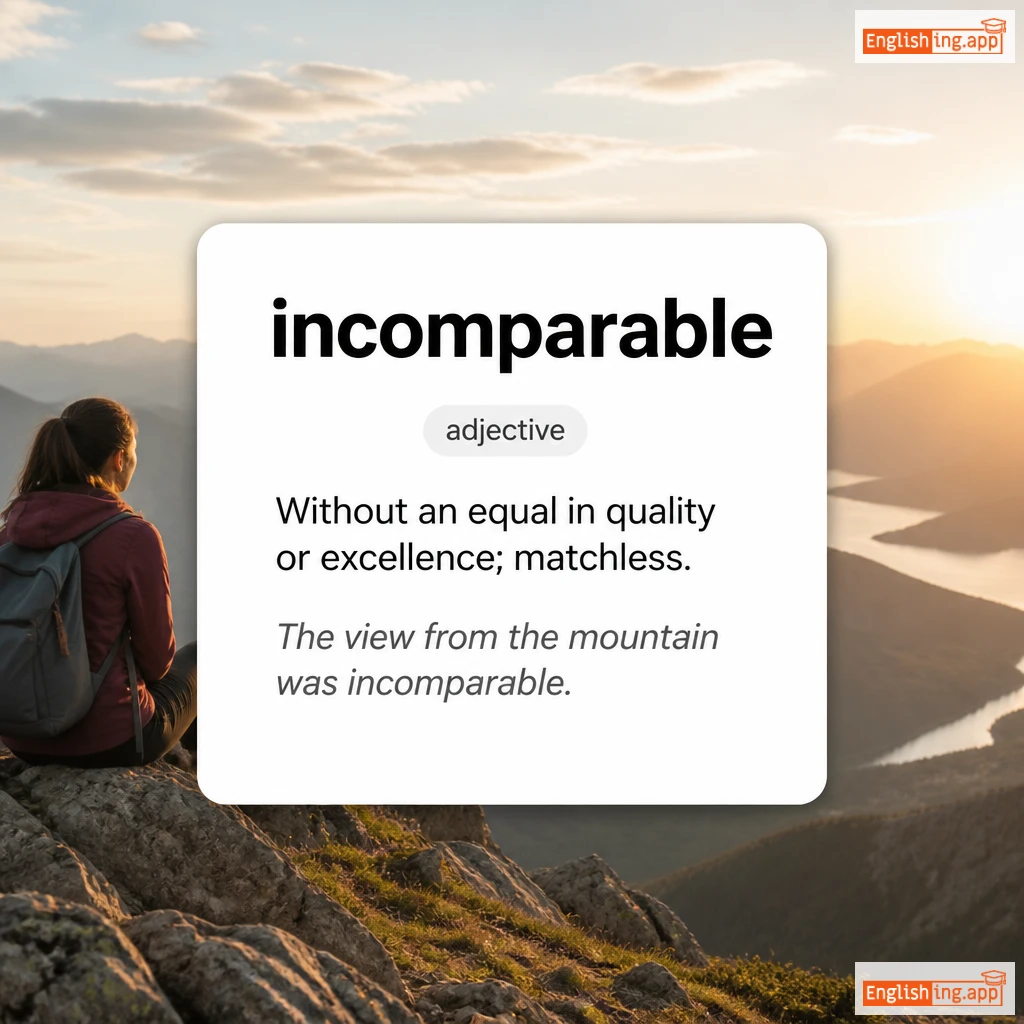
incomparable definition card — visual illustration of the meaning
adjective C1
/ɪnˈkɒmp(ə)rəbl/
比類のない (hirui no nai)

Without an equal in quality or excellence; matchless.

"The view from the mountain was incomparable."

"山からの景色は比類のないものでした。" (Yama kara no keshiki wa hirui no nai mono deshita.)
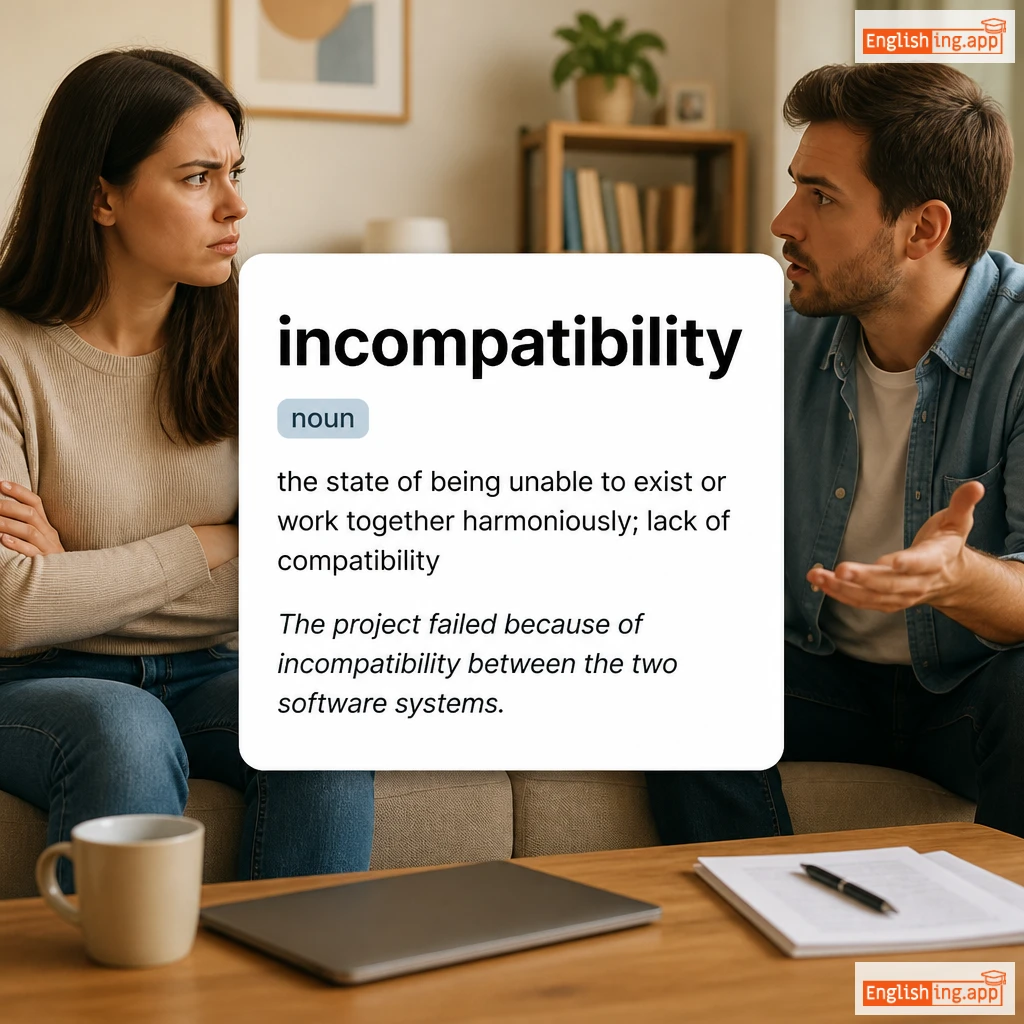
incompatibility definition card — visual illustration of the meaning
noun C1
/ˌɪnkəmˌpætəˈbɪlɪti/
非互換性 (hi gokan sei)

the state of being unable to exist or work together harmoniously; lack of compatibility

"The project failed because of incompatibility between the two software systems."

"2つのソフトウェアシステムの非互換性のため、そのプロジェクトは失敗した。" (futatsu no sofutouea shisutemu no hi gokan sei no tame sono purojekuto wa shippai shita)
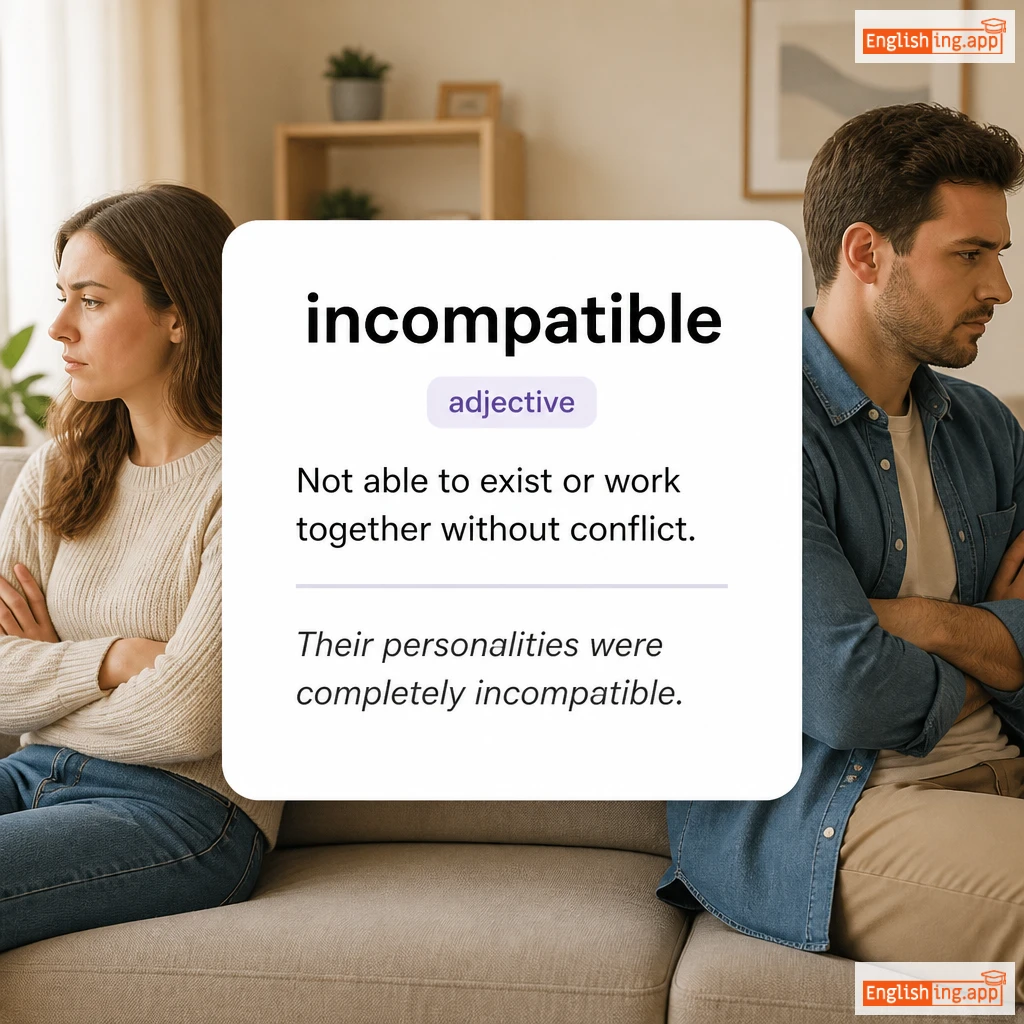
incompatible definition card — visual illustration of the meaning
adjective C1
/ˌɪnkəmˈpætəbl/
互換性がない (gokan-sei ga nai)

Not able to exist or work together without conflict.

"Their personalities were completely incompatible."

"彼らの性格は完全に互換性がなかった。" (Karera no seikaku wa kanzen ni gokan-sei ga nakatta.)
noun C1
/ɪnˈkɒmpɪtəns/
無能 (munou)

Lack of ability, skill, or effectiveness in doing something.

"The project failed due to the manager’s incompetence."

"プロジェクトはマネージャーの無能のため失敗しました。" (Purojekuto wa manējā no munou no tame shippai shimashita.)
adjective C1
/ɪnˈkɒmpɪtənt/

Lacking the necessary ability or skills to do something successfully.

"He was fired because he was incompetent at his job."

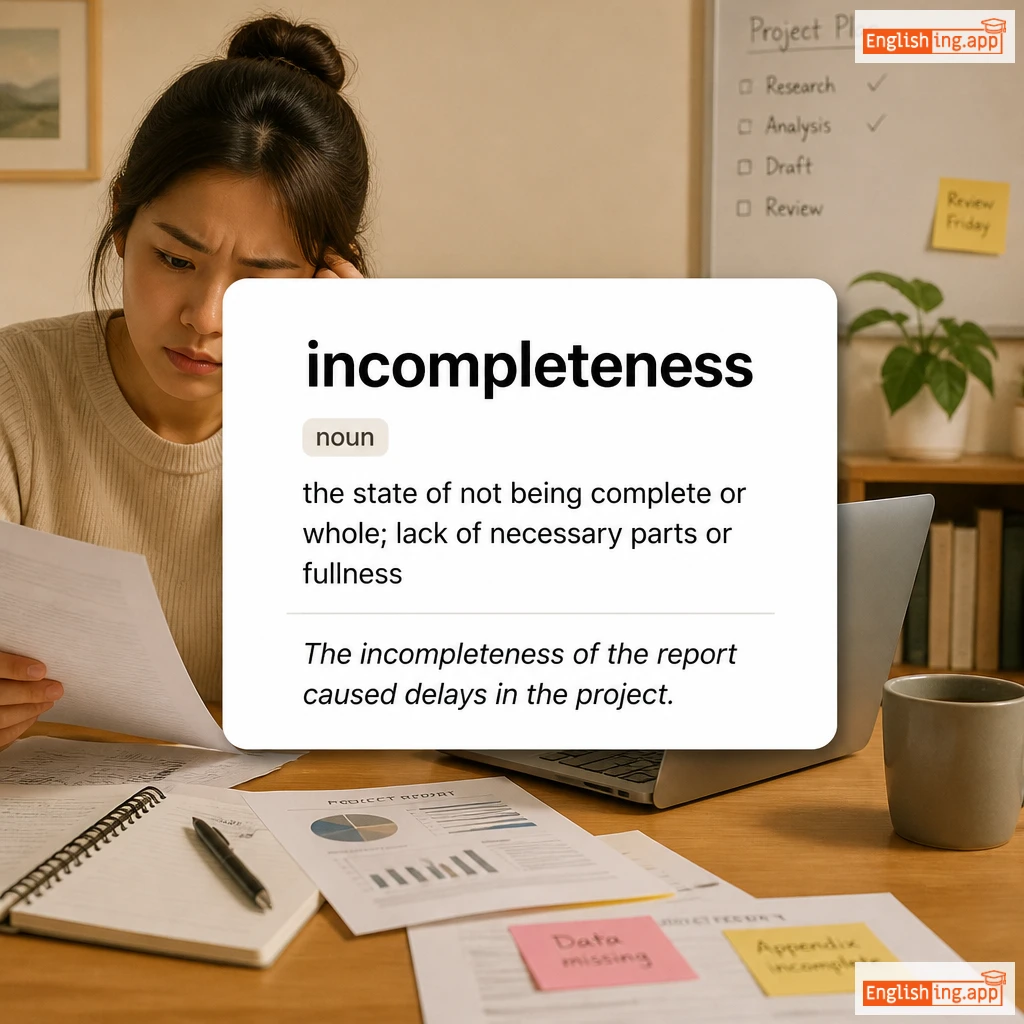
incompleteness definition card — visual illustration of the meaning
noun C1
/ˌɪnkəmˈpliːtnəs/
不完全さ (fukanzen sa)

the state of not being complete or whole; lack of necessary parts or fullness

"The incompleteness of the report caused delays in the project."

"レポートの不完全さがプロジェクトの遅れを引き起こした。" (repooto no fukanzen sa ga purojekuto no okure o hikiokoshita)
adjective C1
/ˌɪnkɒmprɪˈhɛnsəbl/
理解不能 (rikai funou)

Impossible or very difficult to understand.

"The professor’s lecture was so fast it became incomprehensible."

"教授の講義は速すぎて理解不能になった。" (Kyoushu no kougi wa hayasugite rikai funou ni natta.)
adjective C1
/ˌɪnkənˈsiːvəbl̩/
想像できない (souzou dekinai)

Impossible to imagine or believe; beyond comprehension.

"It seemed inconceivable that she could finish the marathon after such little training."

"彼女があれほどのトレーニングでマラソンを完走できるとは想像できなかった。" (Kanojo ga arehodo no toreiningu de marason o kansou dekiru to wa souzou dekinakatta.)
adjective C1
/ˌɪnkənˈkluːsɪv/
結論が出ていない (ketsuron ga dete inai)

Not leading to a definite result or decision.

"The investigation remained inconclusive due to a lack of evidence."

"証拠の不足により、調査は結論が出ていないままでした。" (Shouko no fusoku ni yori, chousa wa ketsuron ga dete inai mama deshita.)
adjective C1
/ɪnˈkɒŋɡruəs/
不調和 (fuchouwa)

Not fitting in with or suitable for the surroundings.

"His jokes were incongruous during the serious meeting."

"彼の冗談は真面目な会議では不調和だった。" (Kare no joudan wa majime na kaigi de wa fuchouwa datta.)
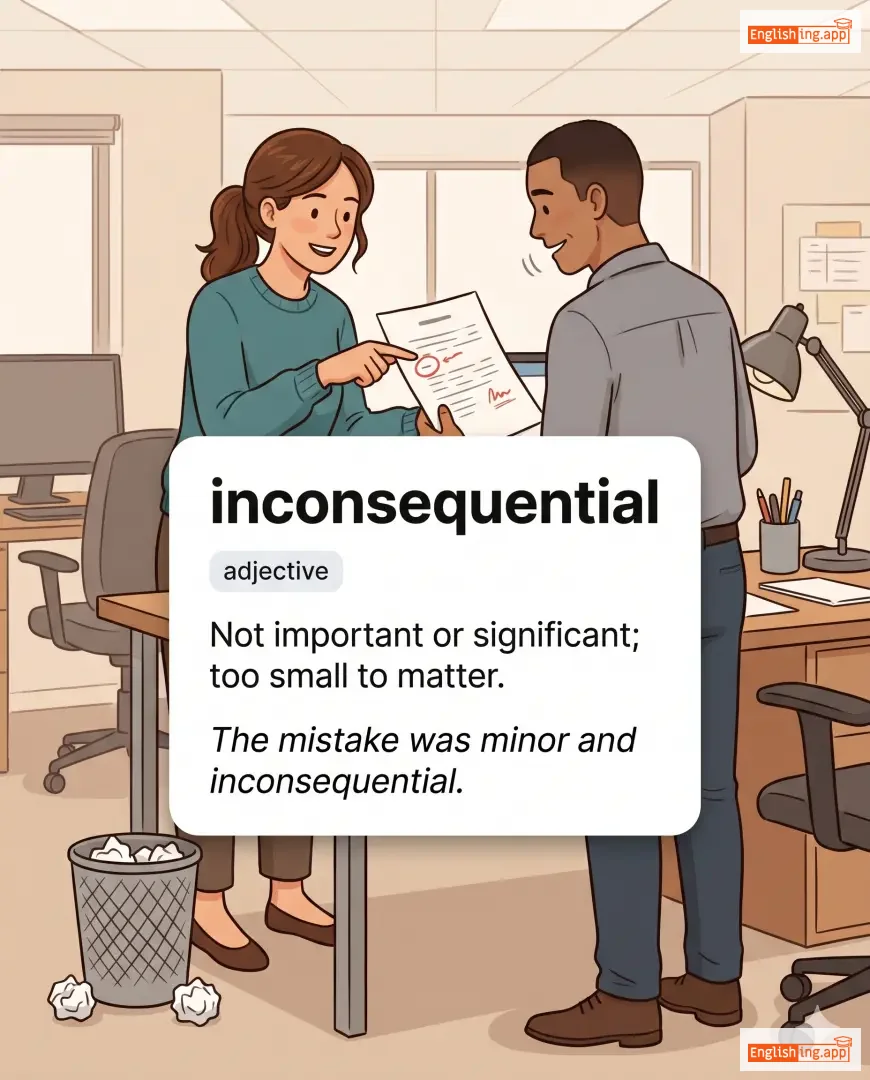
inconsequential definition card — visual illustration of the meaning
adjective C1
/ˌɪnˌkɒnsɪˈkwɛnʃəl/
重要でない (jūyō denai)

Not important or significant; too small to matter.

"The mistake was minor and inconsequential."

"その間違いは小さく、重要ではありませんでした。" (Sono machigai wa chiisaku, jūyō de wa arimasen deshita.)
adjective C1
/ˌɪnkənˈsɪdərət/
思いやりがない (omoiyari ga nai)

Thoughtless; showing a lack of concern for others.

"It was inconsiderate of him to play loud music late at night."

"夜遅くに大きな音で音楽を流すことは、思いやりがない行動でした。" (Yoru osoku ni ookina ondo de ongaku wo nagasu koto wa, omoiyari ga nai kodo deshita.)
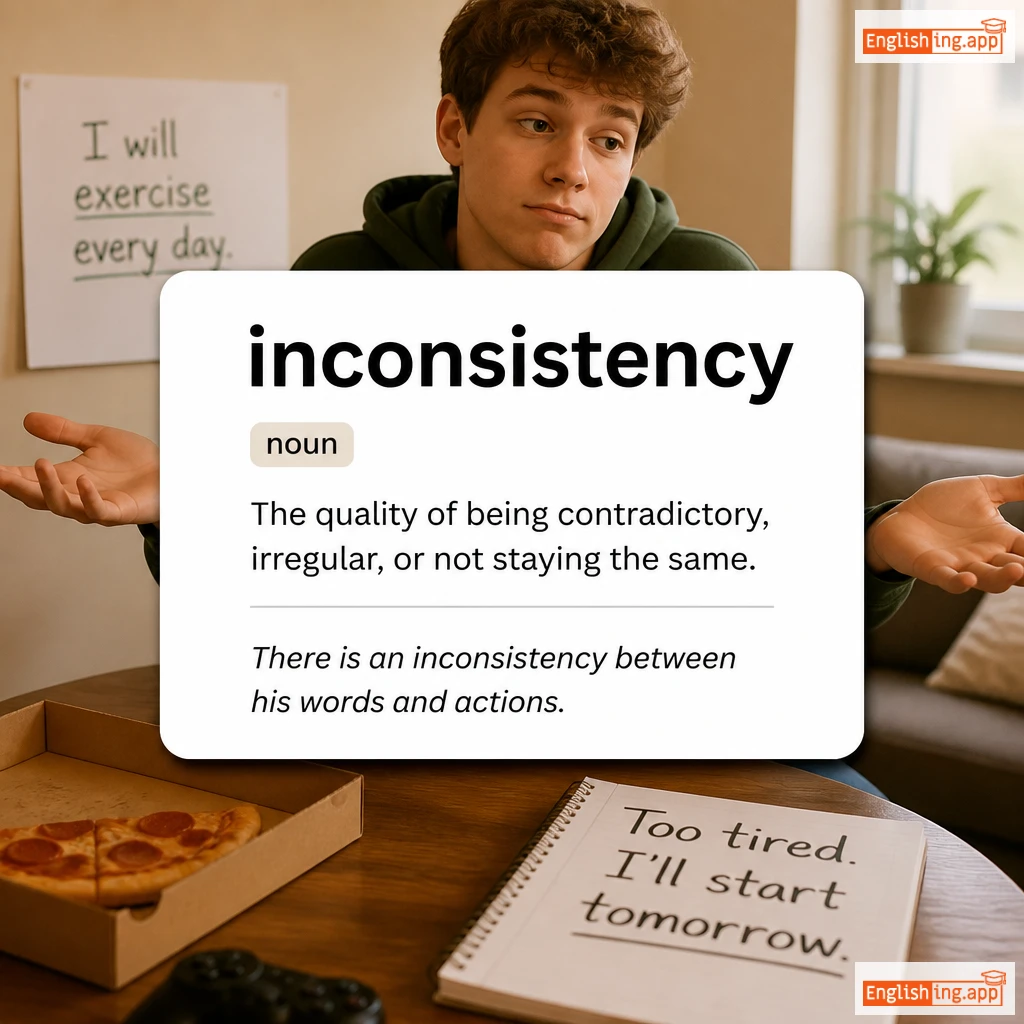
inconsistency definition card — visual illustration of the meaning
noun C1
/ˌɪnkənˈsɪstənsi/
不一致 (fuitchi)

The quality of being contradictory, irregular, or not staying the same.

"There is an inconsistency between his words and actions."

"彼の言葉と行動には不一致があります。" (Kare no kotoba to kōdō ni wa fuitchi ga arimasu.)
adjective C1
/ɪnˈkrɛdjələs/

unwilling or unable to believe something

"He gave her an incredulous look when she claimed she could fly."

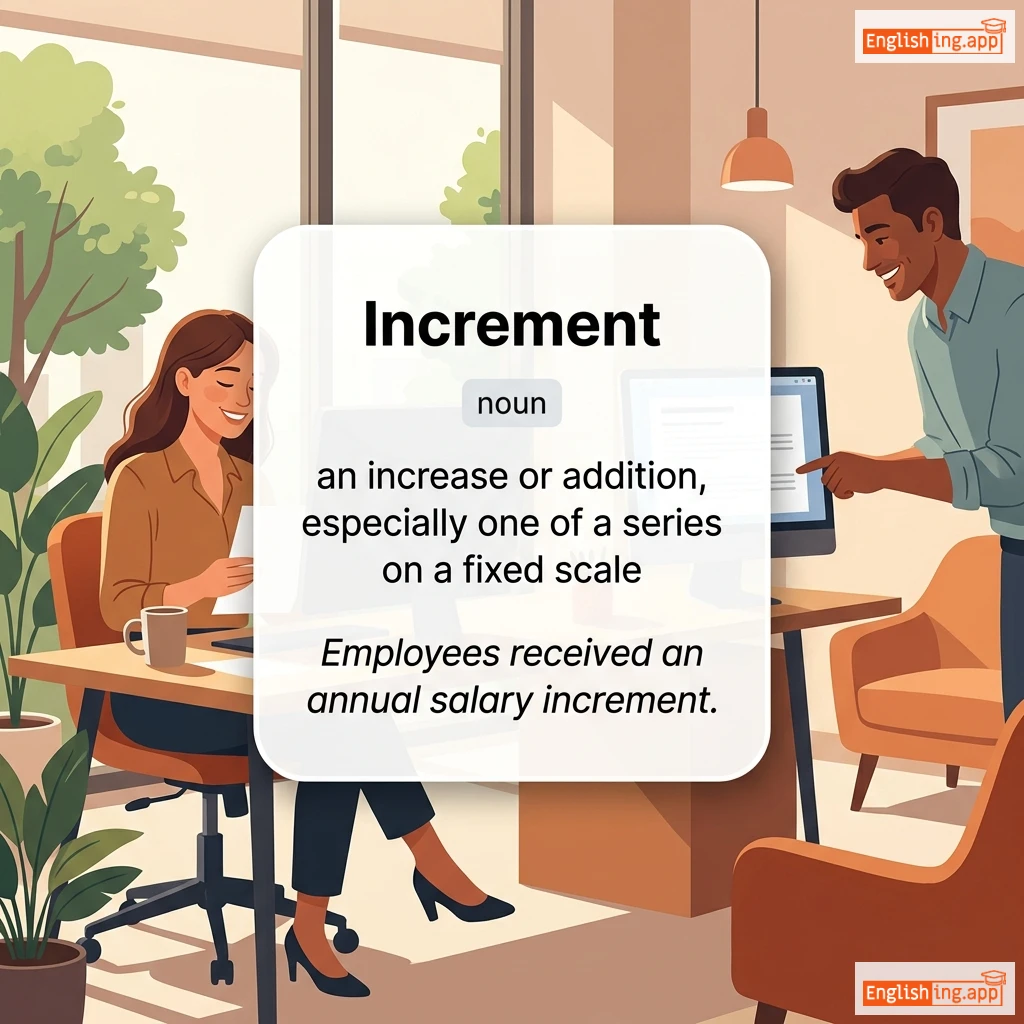
Increment definition card — visual illustration of the meaning
noun C1
/ˈɪŋkrɪmənt/
増加 (zōka)

an increase or addition, especially one of a series on a fixed scale

"Employees received an annual salary increment."

"従業員は年次給与のインクリメントを受け取った。" (Jūgyōin wa nenji kyūyo no inkurimento o ukemotta.)
incremental definition card — visual illustration of the meaning
adjective C1
/ˌɪŋ.krɪˈmen.təl/
段階的 (dankai-teki)

Increasing gradually in small amounts or steps.

"The company made incremental improvements to the software."

"会社はソフトウェアに段階的な改善を行いました。" (Kaisha wa sofutowea ni dankai-teki na kaizen o okonaimashita.)
verb C1
/ɪnˈkrɪmɪˌneɪt/
有罪にする (yūzai ni suru)

to make someone appear guilty of a crime or wrongdoing

"The new evidence could incriminate the suspect in the robbery case."

"新しい証拠がロビー事件の容疑者を有罪にする可能性があります。" (Atarashī shōko ga robī jiken no yōgisha o yūzai ni suru kanōsei ga arimasu.)
verb C1
/ˈɪnkjʊˌbeɪt/
孵化する (fukasu suru)

to keep eggs, cells, or organisms at the right conditions for development

"The hen will incubate the eggs until they hatch."

"そのニワトリは卵が孵化するまでインキュベートします。" (Sono niwatori wa tamago ga fuka suru made inkyubēto shimasu.)
noun C1
/ˌɪnkjʊˈbeɪʃən/
卵、細胞、または生物を適切な条件で発展させるプロセス (tamago, saibou, matawa seibutsu o tekisetsuna jouken de hatten saseru purosesu)

the process of keeping eggs, cells, or organisms in the right conditions for development

"The incubation of the eggs lasted for three weeks."

"卵のインキュベーションは三週間続きました。" (Tamago no inkubeeshon wa san shuukan tsuzukimashita.)
noun C1
/ˈɪnkjʊˌbeɪtər/
インキュベーター (inkyubetā)

a device or environment that provides suitable conditions for eggs, cells, or infants to develop

"The premature baby was placed in an incubator for care."

"未熟児はケアのためにインキュベーターに入れられました。" (Mijukushi wa kea no tame ni inkyubetā ni ireraremashita.)
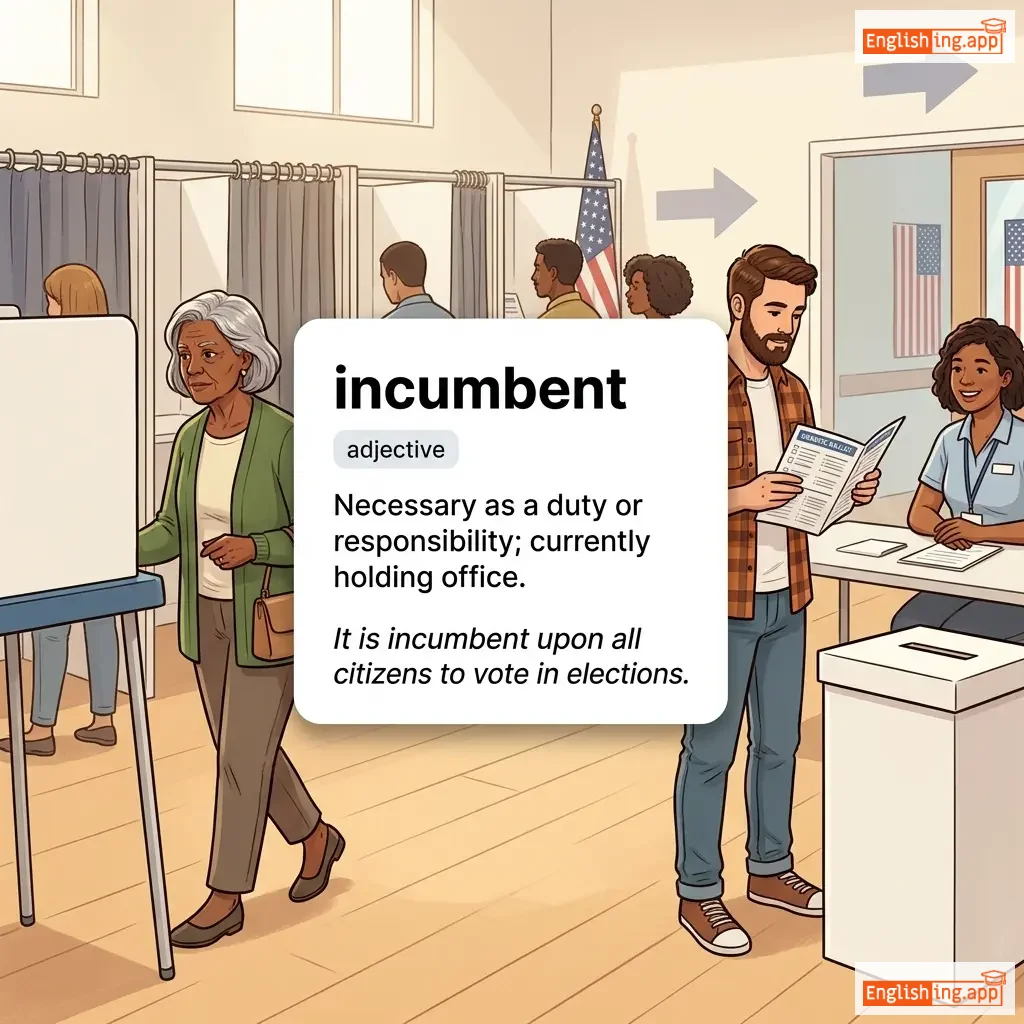
incumbent definition card — visual illustration of the meaning
adjective C1
/ɪnˈkʌmbənt/
現職の (genshoku no)

Necessary as a duty or responsibility; currently holding office.

"It is incumbent upon all citizens to vote in elections."

"すべての市民が選挙で投票する義務がある。" (Subete no shimin ga senkyo de tōhyō suru gimu ga aru.)
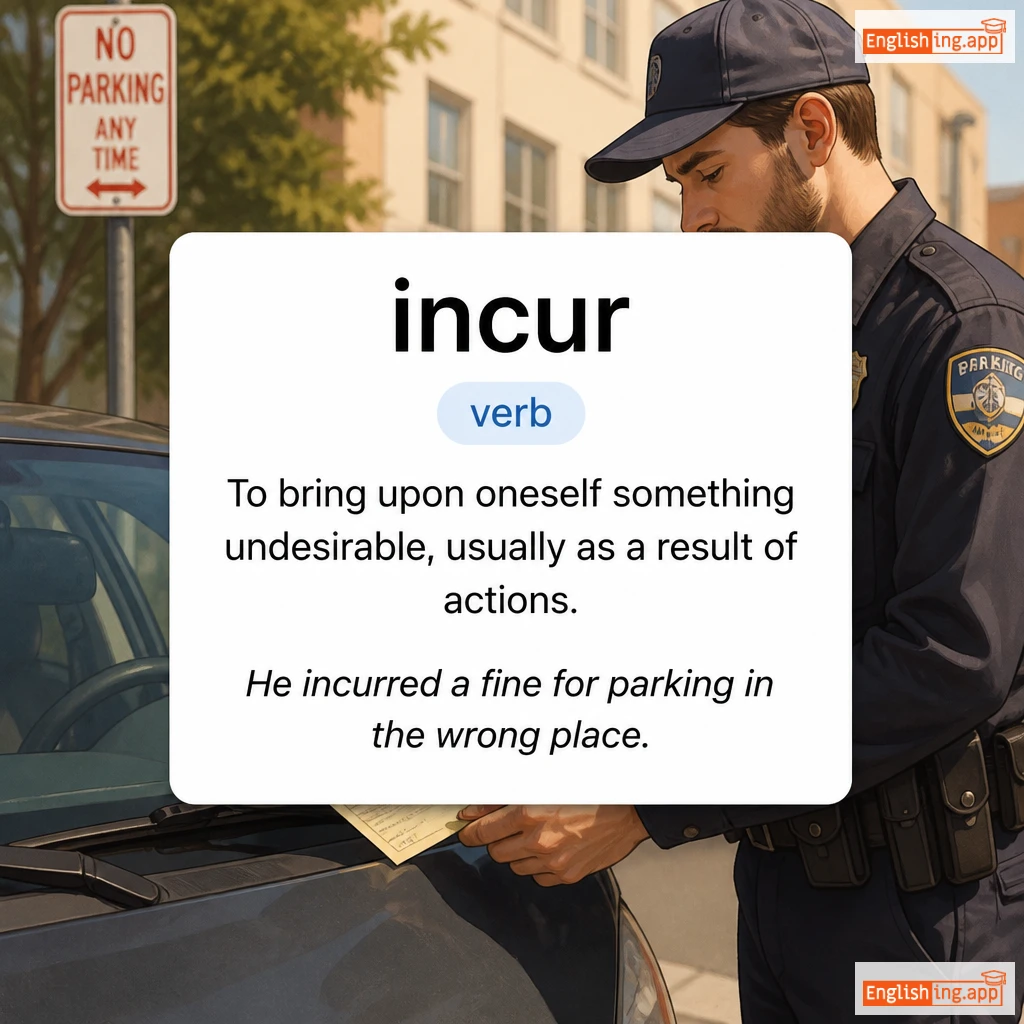
incur definition card — visual illustration of the meaning
verb C1
/ɪnˈkɜːr/
負う (ōu)

To bring upon oneself something undesirable, usually as a result of actions.

"He incurred a fine for parking in the wrong place."

"彼は間違った場所に駐車して罰金を科せられた。" (Kare wa machigatta basho ni chūsha shite bakkin o kaserareta.)
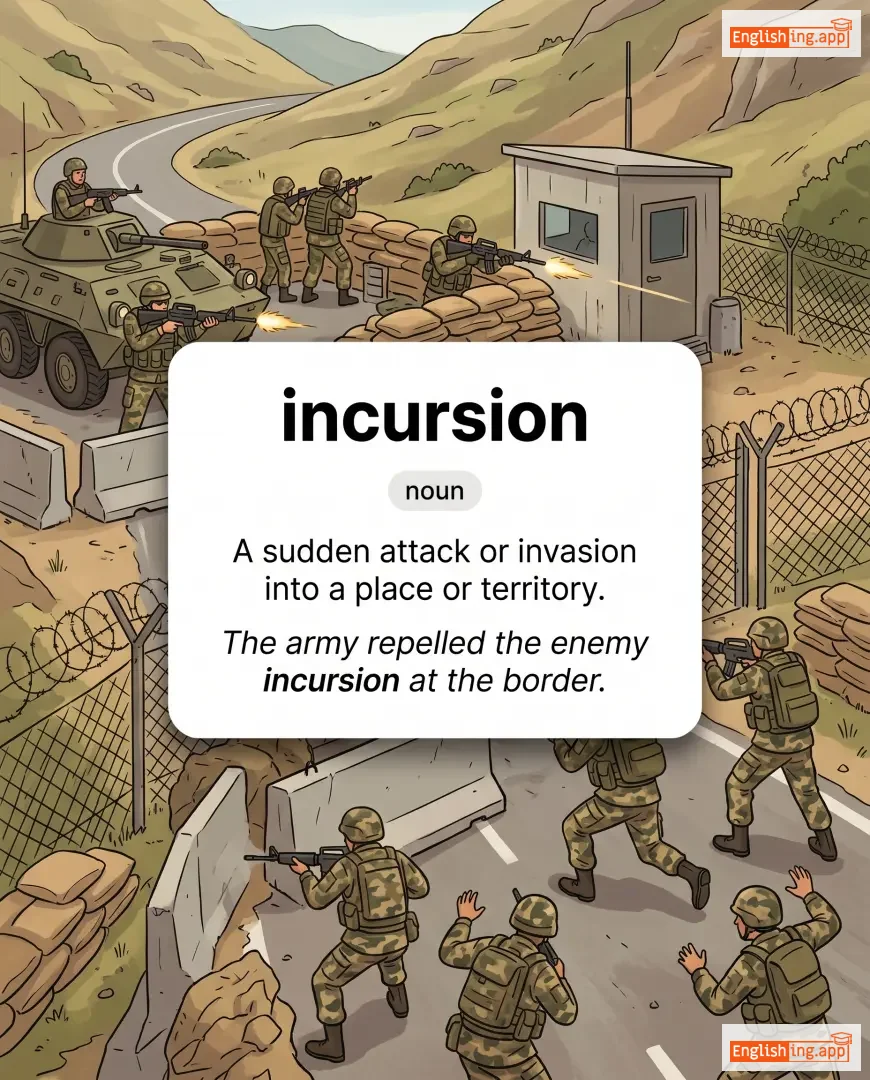
incursion definition card — visual illustration of the meaning
noun C1
/ɪnˈkɜːrʒən/
侵入 (shinnyuu)

A sudden attack or invasion into a place or territory.

"The army repelled the enemy incursion at the border."

"軍隊は国境で敵の侵入を撃退した。" (Guntai wa kokkyō de teki no shinnyū o gekitai shita.)
adjective C1
/ɪnˈdɛtɪd/
借金がある (shakkingaaru)

Owing gratitude or money to someone; obligated.

"I am deeply indebted to my teacher for her guidance."

"私は教師の指導に深く感謝しています。" (Watashi wa kyoushi no shidou ni fukaku kansha shiteimasu.)
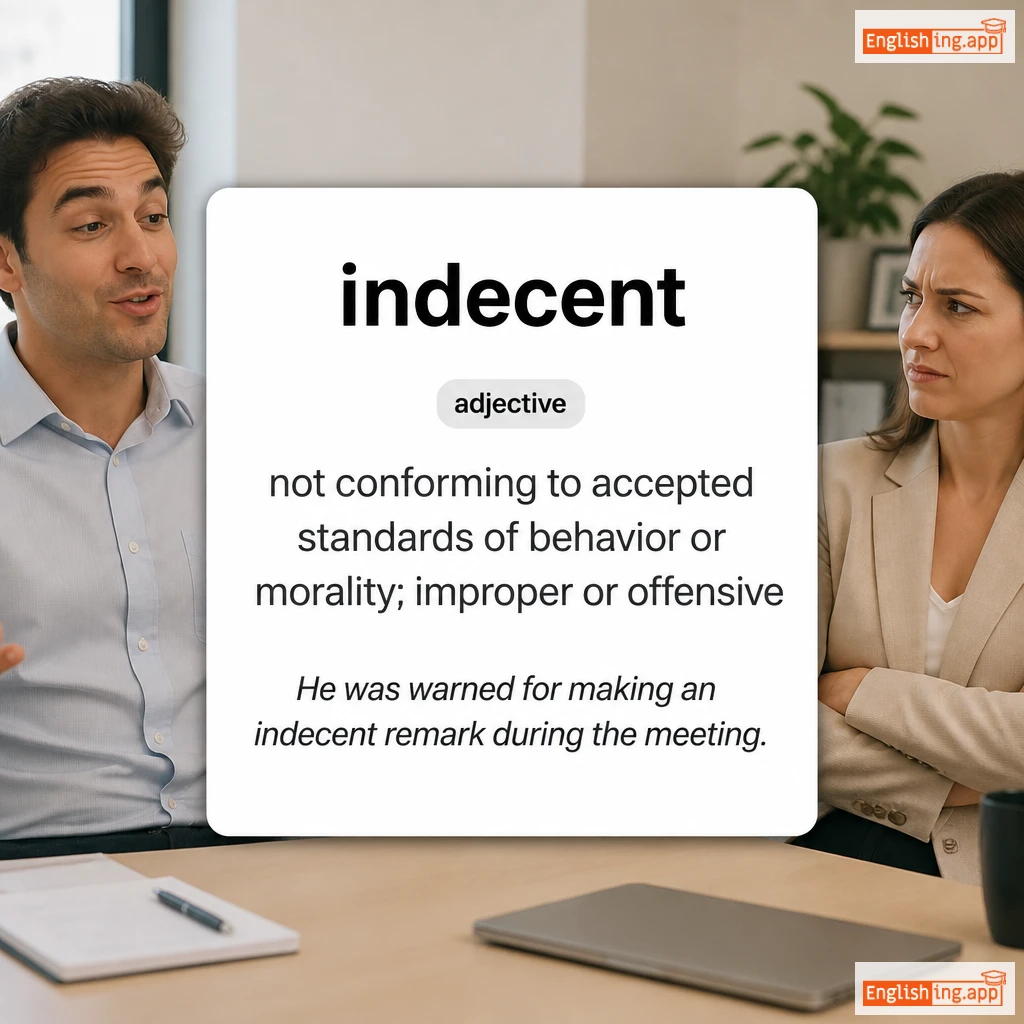
indecent definition card — visual illustration of the meaning
adjective C1
/ɪnˈdiːsənt/
不品な (fuhin na)

not conforming to accepted standards of behavior or morality; improper or offensive

"He was warned for making an indecent remark during the meeting."

"彼は不品な発言で注意された。" (kare wa fuhin na hatsugen de chuui sareta)