|
😲
••••••
|
/əˈbæk/
adverb
••••••
|
-
••••••
|
-
••••••
|
-
••••••
|
-
••••••
|
-
••••••
|
by surprise; unexpectedly
|
I was taken aback by his sudden announcement.
••••••
|
-
••••••
|
-
••••••
|
surprised, startled, shocked
|
prepared, expected, unsurprised
|
taken aback, caught aback, put aback
|
|
🏃
••••••
|
/əˈbændən/
verb
••••••
|
••••••
|
••••••
|
••••••
|
••••••
|
••••••
|
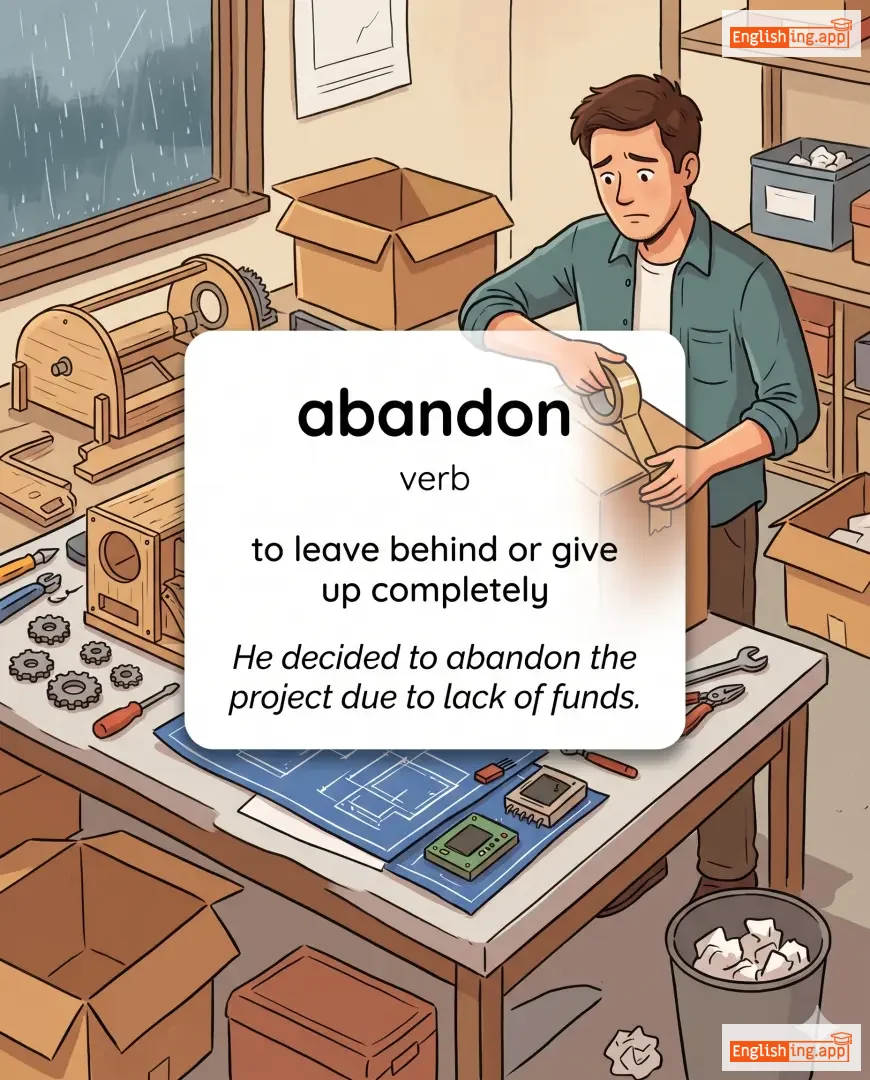
to leave behind or give up completely
|
He decided to abandon the project due to lack of funds.
••••••
|
••••••
|
to leave a failing situation quickly
|
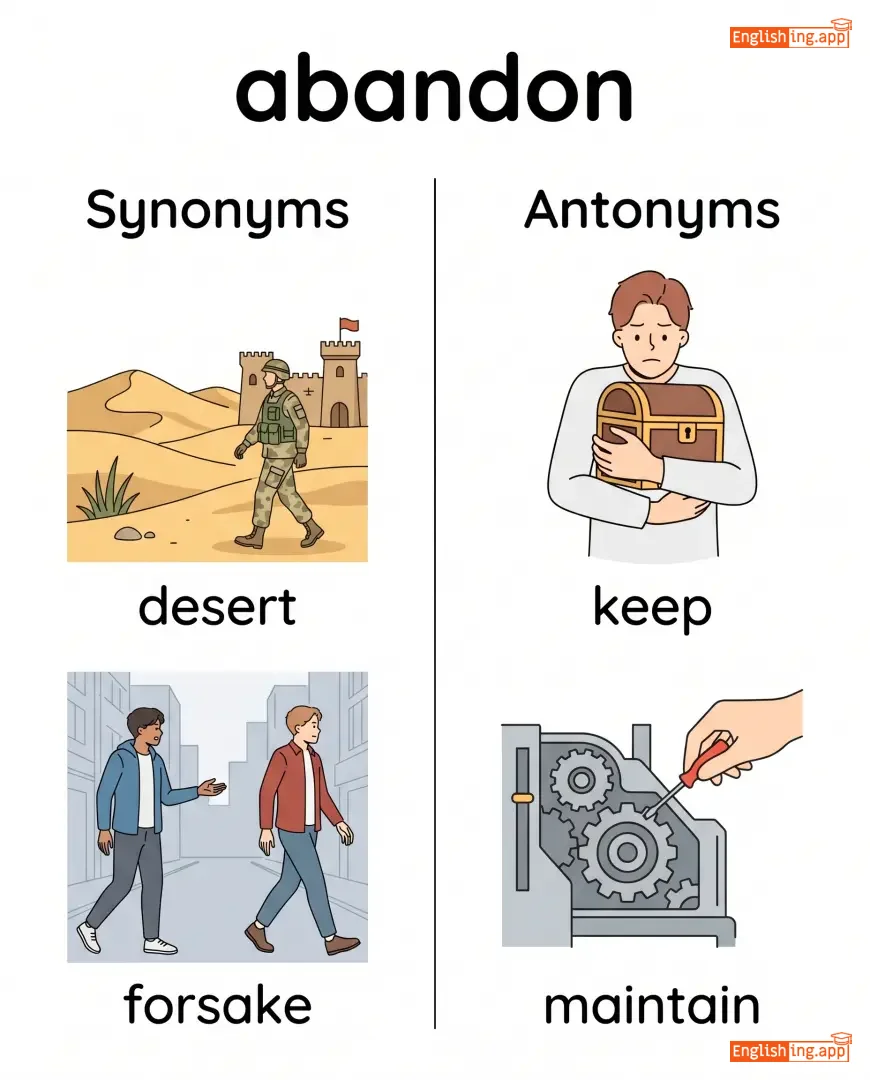
desert, forsake, leave, quit, relinquish
|
••••••
|
abandon hope, abandon plan, abandon effort, abandon project
|
|
🚪
••••••
|
/əˈbændənmənt/
noun
••••••
|
-
••••••
|
-
••••••
|
-
••••••
|
-
••••••
|
-
••••••
|
the act of leaving someone or something behind completely; the state of being deserted
••••••
|
The child suffered deep emotional pain because of abandonment.
••••••
|
-
••••••
|
-
••••••
|
desertion, neglect, forsaking, withdrawal, rejection
••••••
|
care, protection, support
••••••
|
fear of abandonment, emotional abandonment, abandonment issues, child abandonment
••••••
|
|
🌧️
••••••
|
/əˈbeɪt/
verb
••••••
|
••••••
|
••••••
|
••••••
|
••••••
|
••••••
|
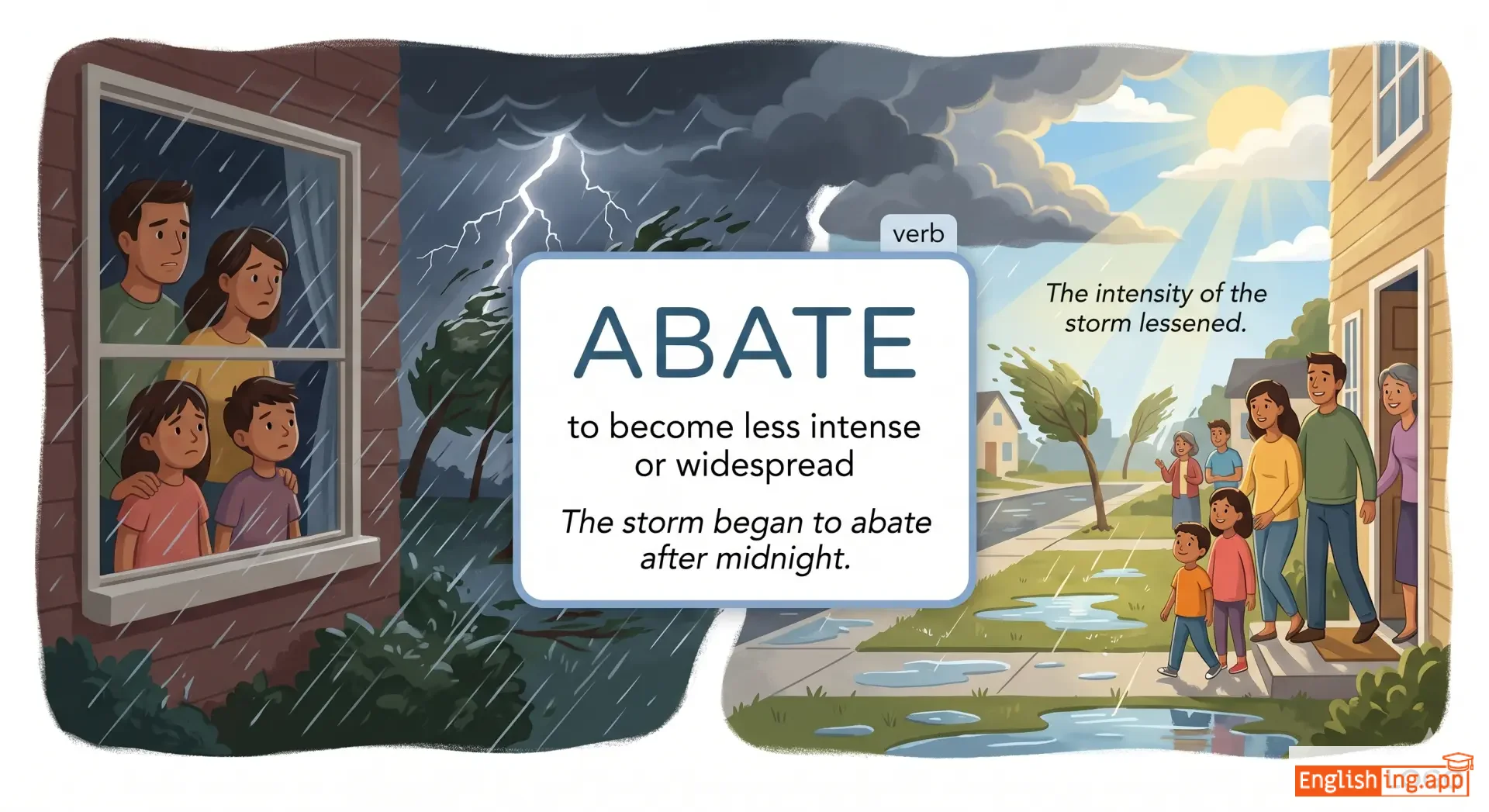
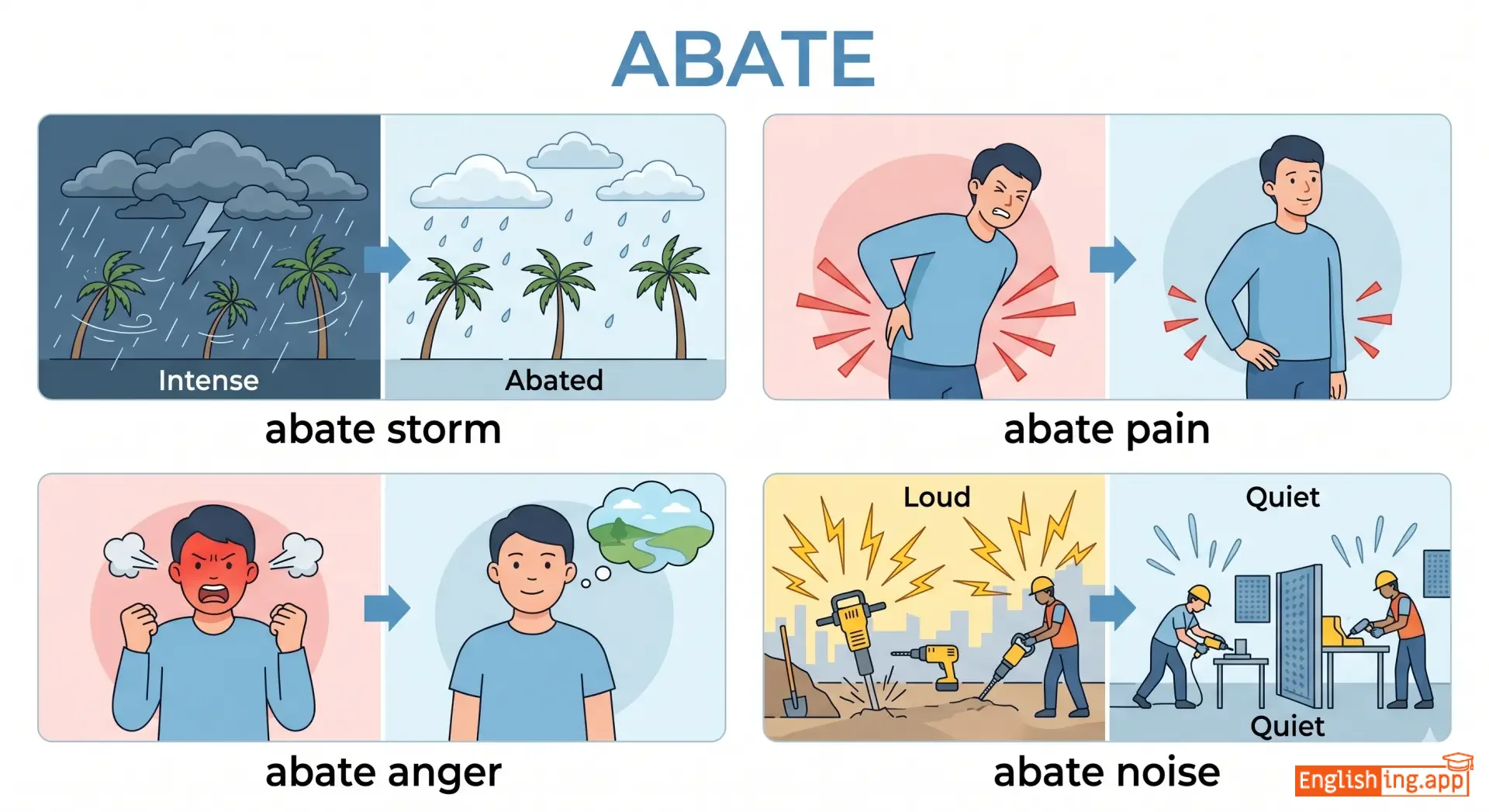
to become less intense or widespread
|
The storm began to abate after midnight.
••••••
|
-
••••••
|
-
••••••
|
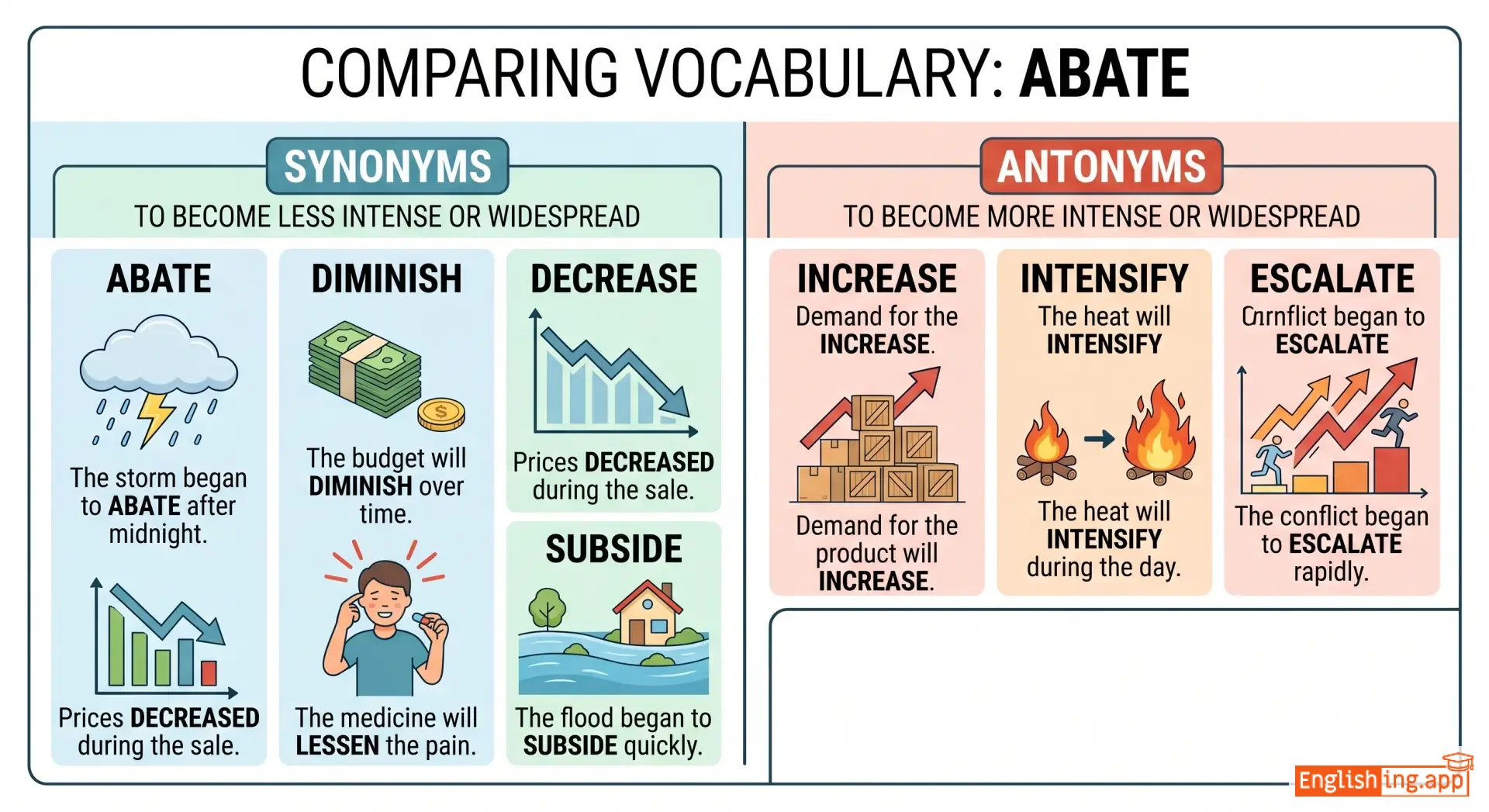
diminish, decrease, lessen, subside
|
increase, intensify, escalate
|
abate storm, abate pain, abate anger, abate noise
|
|
✂️
••••••
|
/əˈbriːvieɪt/
verb
••••••
|
-
••••••
|
••••••
|
••••••
|
••••••
|
••••••
|
To shorten a word, phrase, or text by leaving out letters or parts.
|
We often abbreviate 'Doctor' to 'Dr'.
••••••
|
-
••••••
|
-
••••••
|
shorten, condense, contract, reduce, cut
|
••••••
|
abbreviate words, abbreviate term, abbreviate name, commonly abbreviated
|
|
✂️
••••••
|
/əˌbriːviˈeɪʃən/
noun
••••••
|
-
••••••
|
-
••••••
|
-
••••••
|
-
••••••
|
-
••••••
|
a shortened form of a word or phrase
••••••
|
NASA is an abbreviation for National Aeronautics and Space Administration.
••••••
|
-
••••••
|
-
••••••
|
shortening, contraction, acronym, initialism
••••••
|
expansion, elaboration
••••••
|
common abbreviation, standard abbreviation, written abbreviation, abbreviation for
••••••
|
|
🫃
••••••
|
/ˈæbdəmən/
noun
••••••
|
-
••••••
|
-
••••••
|
-
••••••
|
-
••••••
|
-
••••••
|
The part of the body below the chest and above the hips that contains the stomach and other organs.
|
He complained of pain in his abdomen.
••••••
|
-
••••••
|
-
••••••
|
belly, stomach, tummy, midsection
|
••••••
|
lower abdomen, abdomen pain, abdomen muscles, abdomen cavity
|
|
🚓
••••••
|
/əbˈdʌkt/
verb
••••••
|
-
••••••
|
abducted
••••••
|
abducted
••••••
|
abducts
••••••
|
abducting
••••••
|
to take someone away illegally by force or deception
••••••
|
The criminal tried to abduct the child in broad daylight.
••••••
|
••••••
|
the alleged kidnapping of humans by extraterrestrials
••••••
|
kidnap, seize, snatch, carry off, capture
••••••
|
release, free, liberate
••••••
|
abduct a child, abduct a victim, attempted abduction, mass abduction
••••••
|
|
🕵️
••••••
|
/æbˈdʌk.ʃən/
noun
••••••
|
-
••••••
|
-
••••••
|
-
••••••
|
-
••••••
|
-
••••••
|
the act of taking someone away illegally by force; kidnapping
|
The police are investigating the abduction of the child.
••••••
|
-
••••••
|
-
••••••
|
kidnapping, capture, seizure, snatching, hijacking
|
••••••
|
child abduction, abduction case, abduction victim, abduction report
|
|
🚨
••••••
|
/əbˈdʌktər/
noun
••••••
|
-
••••••
|
-
••••••
|
-
••••••
|
-
••••••
|
-
••••••
|
a person who kidnaps or forcibly takes someone away
••••••
|
The police arrested the abductor after a nationwide search.
••••••
|
-
••••••
|
-
••••••
|
kidnapper, captor, hijacker, snatcher
••••••
|
rescuer, protector
••••••
|
child abductor, suspected abductor, serial abductor
••••••
|
|
🕵️
••••••
|
/əˈbɛt/
verb
••••••
|
-
••••••
|
••••••
|
••••••
|
••••••
|
••••••
|
to encourage or assist someone to commit a crime or wrongdoing
|
He was accused of abetting the criminals in their escape.
••••••
|
••••••
|
to assist someone in committing a crime
|
assist, encourage, support, provoke, incite
|
••••••
|
abet a crime, aid and abet, abet wrongdoing
|
|
🤮
••••••
|
/əbˈhɔːr/
verb
••••••
|
-
••••••
|
••••••
|
••••••
|
••••••
|
••••••
|
to regard with disgust and hatred
|
She abhors cruelty to animals.
••••••
|
-
••••••
|
-
••••••
|
detest, hate, loathe, despise, dislike
|
••••••
|
abhor violence, abhor injustice, abhor cruelty
|
|
😡
••••••
|
/əbˈhɒrəns/
noun
••••••
|
-
••••••
|
-
••••••
|
-
••••••
|
-
••••••
|
-
••••••
|
a feeling of strong disgust or hatred
|
He expressed his abhorrence of racial discrimination.
••••••
|
-
••••••
|
-
••••••
|
hatred, disgust, loathing, detestation
|
••••••
|
abhorrence of violence, express abhorrence, deep abhorrence
|
|
🤮
••••••
|
/æbˈhɔːr.ənt/
adjective
••••••
|
-
••••••
|
-
••••••
|
-
••••••
|
-
••••••
|
-
••••••
|
extremely unpleasant and causing disgust; detestable
|
The idea of animal cruelty is abhorrent to most people.
••••••
|
-
••••••
|
-
••••••
|
detestable, loathsome, repugnant, revolting, disgusting
|
agreeable, pleasant, delightful, appealing
|
abhorrent behavior, abhorrent practice, find abhorrent
|
|
⚖️
••••••
|
/əˈbaɪd/
verb
••••••
|
-
••••••
|
••••••
|
••••••
|
••••••
|
••••••
|
to accept, tolerate, or remain faithful to something
|
Citizens must abide by the laws of their country.
••••••
|
••••••
|
to follow or obey the rules
|
obey, comply, accept, follow, tolerate
|
••••••
|
abide by law, abide by contract, cannot abide
|
|
💡
••••••
|
/əˈbɪləti/
noun
••••••
|
-
••••••
|
-
••••••
|
-
••••••
|
-
••••••
|
-
••••••
|
the power, skill, or capacity to do something
|
Her ability to solve problems quickly impressed everyone.
••••••
|
to the best of one's ability
••••••
|
to do something as well as one possibly can
|
skill, talent, capacity, competence, capability
|
inability, incapacity, weakness
|
natural ability, mental ability, physical ability, ability to learn
|
|
🙅
••••••
|
/æbˈdʒʊər/
verb
••••••
|
••••••
|
••••••
|
••••••
|
••••••
|
••••••
|
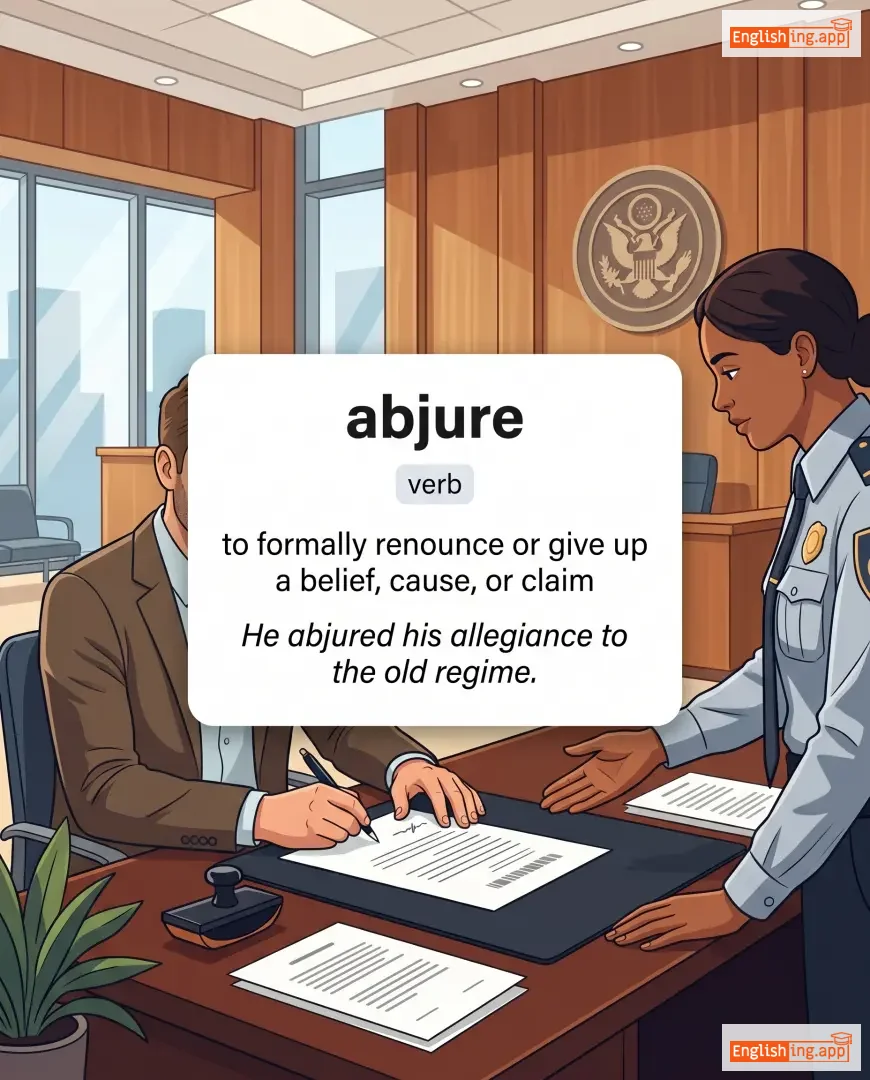
to formally renounce or give up a belief, cause, or claim
|
He abjured his allegiance to the old regime.
••••••
|
-
••••••
|
-
••••••
|
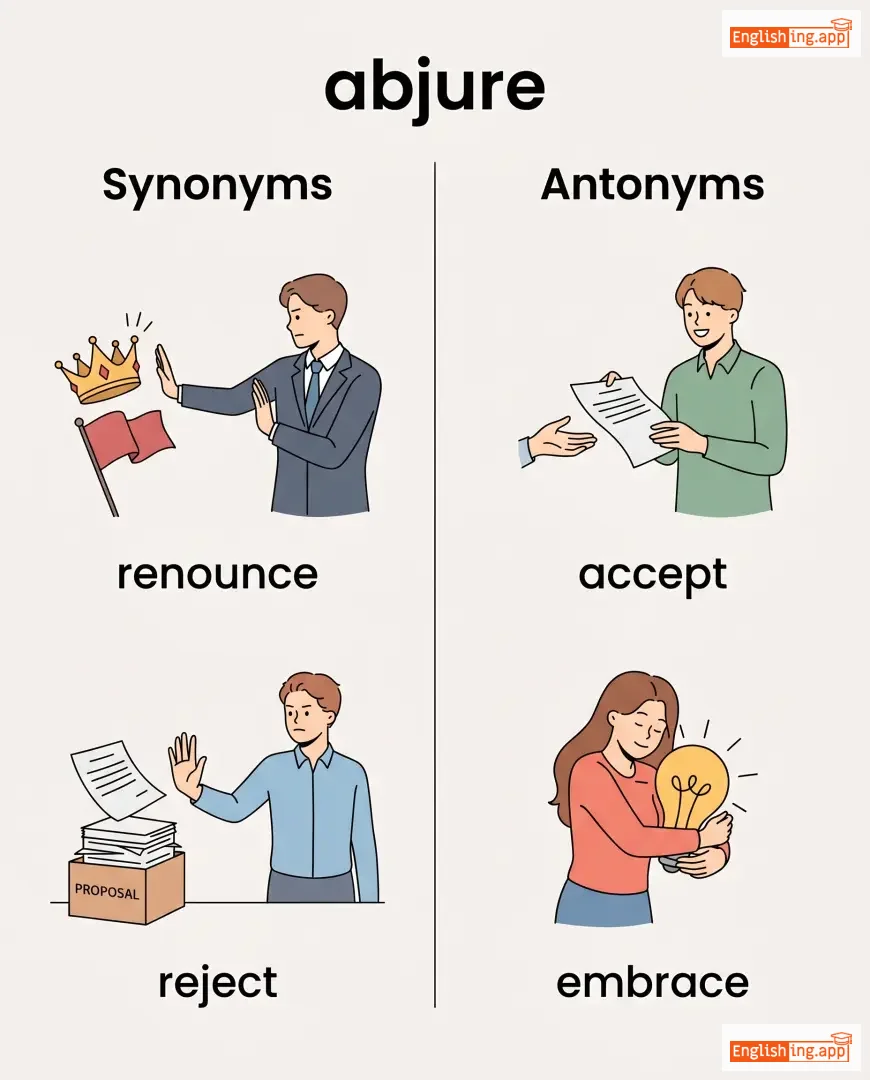
renounce, reject, repudiate, forswear
|
••••••
|
abjure violence, abjure faith, abjure allegiance
|
|
✅
••••••
|
/ˈeɪbl/
adjective
••••••
|
-
••••••
|
-
••••••
|
-
••••••
|
-
••••••
|
-
••••••
|
having the power, skill, or means to do something
|
She is able to speak three languages fluently.
••••••
|
••••••
|
to have the ability to do something
|
capable, competent, skilled, talented
|
••••••
|
able to work, able to help, able leader, highly able
|
|
✂️
••••••
|
/əˈbɑː.lɪʃ/
verb
••••••
|
-
••••••
|
••••••
|
••••••
|
••••••
|
••••••
|
to formally put an end to a system, practice, or institution
|
The government decided to abolish the old tax system.
••••••
|
••••••
|
to officially end the system of slavery
|
end, eliminate, terminate, annul, eradicate
|
••••••
|
abolish slavery, abolish law, abolish practice
|
|
✊
••••••
|
/ˌæbəˈlɪʃən/
noun
••••••
|
-
••••••
|
-
••••••
|
-
••••••
|
-
••••••
|
-
••••••
|
the act of formally ending or eliminating a system, practice, or institution
••••••
|
The abolition of slavery was a major milestone in human rights history.
••••••
|
-
••••••
|
-
••••••
|
elimination, eradication, repeal, termination, annulment
••••••
|
establishment, continuation, preservation
••••••
|
abolition of slavery, abolition movement, abolition act, call for abolition
••••••
|
|
😡
••••••
|
/əˈbɑː.mə.neɪt/
verb
••••••
|
-
••••••
|
••••••
|
••••••
|
••••••
|
••••••
|
to feel hatred or loathing for something
|
She abominates cruelty to animals.
••••••
|
-
••••••
|
-
••••••
|
loathe, hate, detest, despise, dislike
|
••••••
|
abominate violence, abominate cruelty, abominate injustice
|
|
🛑
••••••
|
/əˈbɔːrt/
verb
••••••
|
-
••••••
|
aborted
••••••
|
aborted
••••••
|
aborts
••••••
|
aborting
••••••
|
to stop a process or action before it is completed; to end a pregnancy deliberately
••••••
|
The pilot decided to abort the mission due to bad weather.
••••••
|
••••••
|
to stop a planned operation or activity
••••••
|
cancel, terminate, discontinue, halt, abandon
••••••
|
continue, proceed, complete
••••••
|
abort mission, abort operation, abort procedure, abort launch
••••••
|
|
⚖️
••••••
|
/əˈbɔːrʃən/
noun
••••••
|
-
••••••
|
-
••••••
|
-
••••••
|
-
••••••
|
-
••••••
|
The deliberate termination of a human pregnancy, usually performed during the first 28 weeks.
|
The debate about abortion continues to divide public opinion.
••••••
|
••••••
|
The legal rights of women to have access to abortion procedures.
|
termination, miscarriage, ending, interruption
|
••••••
|
legal abortion, safe abortion, abortion clinic, abortion law
|
|
ℹ️
••••••
|
/əˈbaʊt/
preposition, adverb
••••••
|
-
••••••
|
-
••••••
|
-
••••••
|
-
••••••
|
-
••••••
|
concerning; on the subject of; approximately
|
We talked about the new project yesterday.
••••••
|
••••••
|
active and going to different places
|
regarding, concerning, around, nearly
|
••••••
|
talk about, think about, about time, about 10 o'clock
|
|
⬆️
••••••
|
/əˈbʌv/
preposition, adverb
••••••
|
-
••••••
|
-
••••••
|
-
••••••
|
-
••••••
|
-
••••••
|
at a higher place or position than something
|
The picture hangs above the fireplace.
••••••
|
••••••
|
••••••
|
over, higher than, beyond, atop
|
••••••
|
rise above, above average, above mentioned, above sea level
|
|
🪓
••••••
|
/əˈbreɪd/
verb
••••••
|
-
••••••
|
••••••
|
••••••
|
••••••
|
••••••
|
to scrape or wear away the surface by friction or erosion
|
The rough cloth can easily abrade the skin.
••••••
|
-
••••••
|
-
••••••
|
scrape, rub, wear, chafe, erode
|
••••••
|
abrade the skin, abrade surface, easily abrade
|
|
🌍
••••••
|
/əˈbrɔːd/
adverb
••••••
|
-
••••••
|
-
••••••
|
-
••••••
|
-
••••••
|
-
••••••
|
In or to a foreign country or countries.
|
She studied abroad for two years in Germany.
••••••
|
••••••
|
To travel to another country.
|
overseas, internationally, foreign, away
|
••••••
|
study abroad, travel abroad, live abroad, go abroad
|
|
🚫
••••••
|
/ˈæbrəɡeɪt/
verb
••••••
|
-
••••••
|
••••••
|
••••••
|
••••••
|
••••••
|
To formally repeal, cancel, or abolish a law, agreement, or custom.
|
The government decided to abrogate the outdated treaty.
••••••
|
-
••••••
|
-
••••••
|
repeal, revoke, annul, cancel, abolish
|
enforce, uphold, establish
|
abrogate a law, abrogate a treaty, abrogate an agreement
|
|
🏃♂️
••••••
|
/əbˈskɒnd/
verb
••••••
|
••••••
|
••••••
|
••••••
|
••••••
|
••••••
|
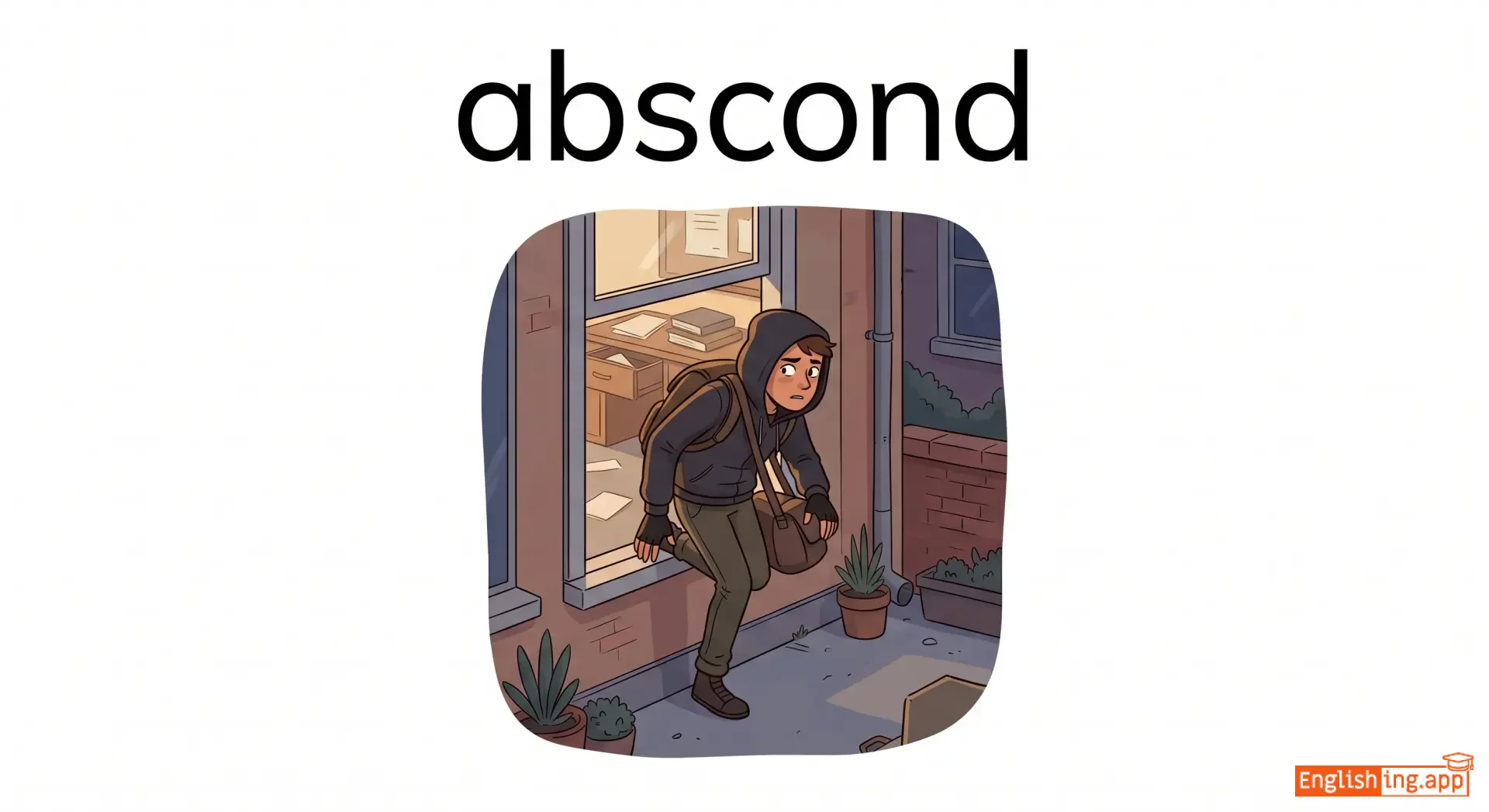
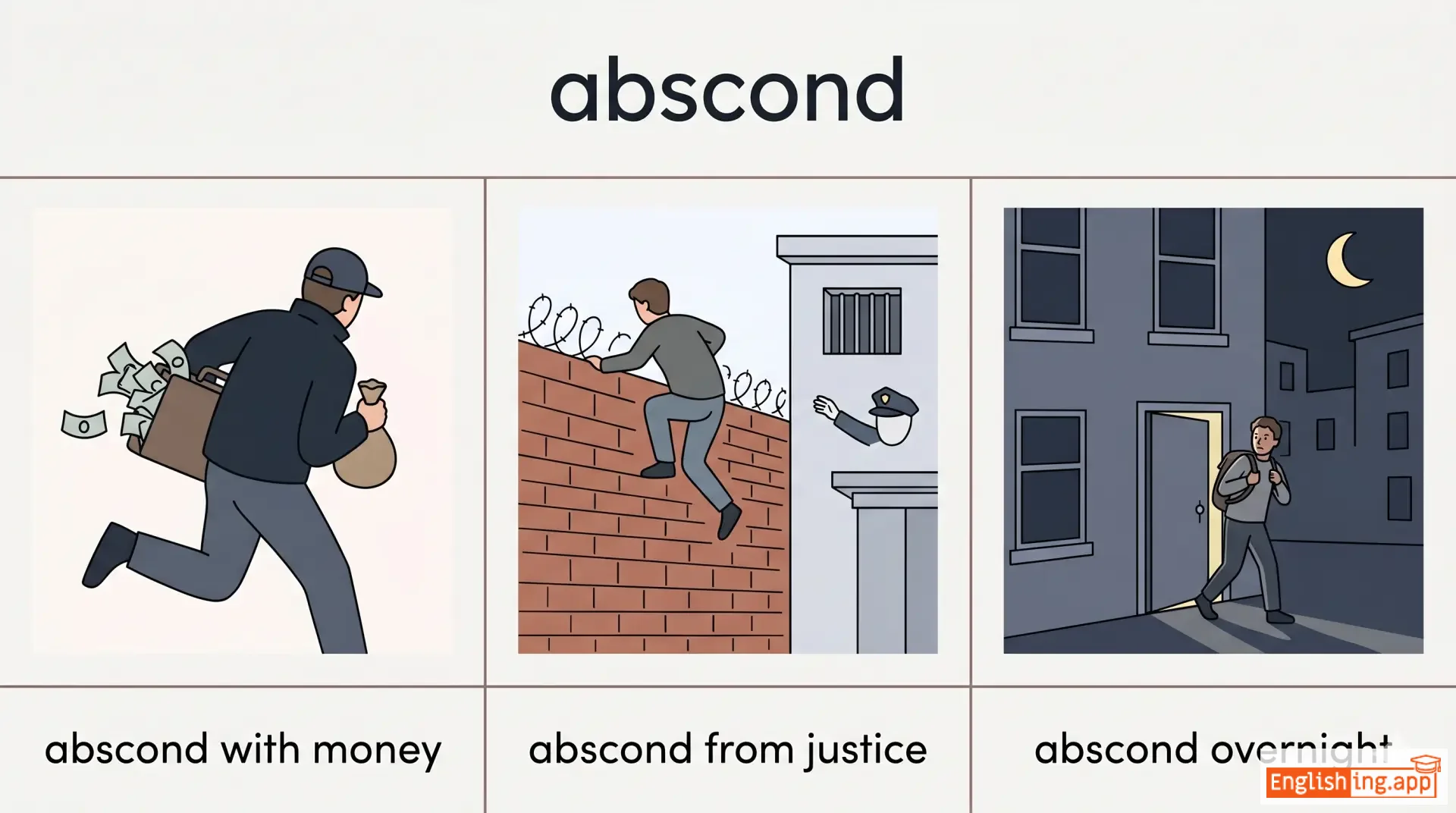
to leave secretly and quickly, often to avoid arrest or punishment
|
The thief tried to abscond with the stolen jewelry.
••••••
|
••••••
|
to take something secretly and escape
|
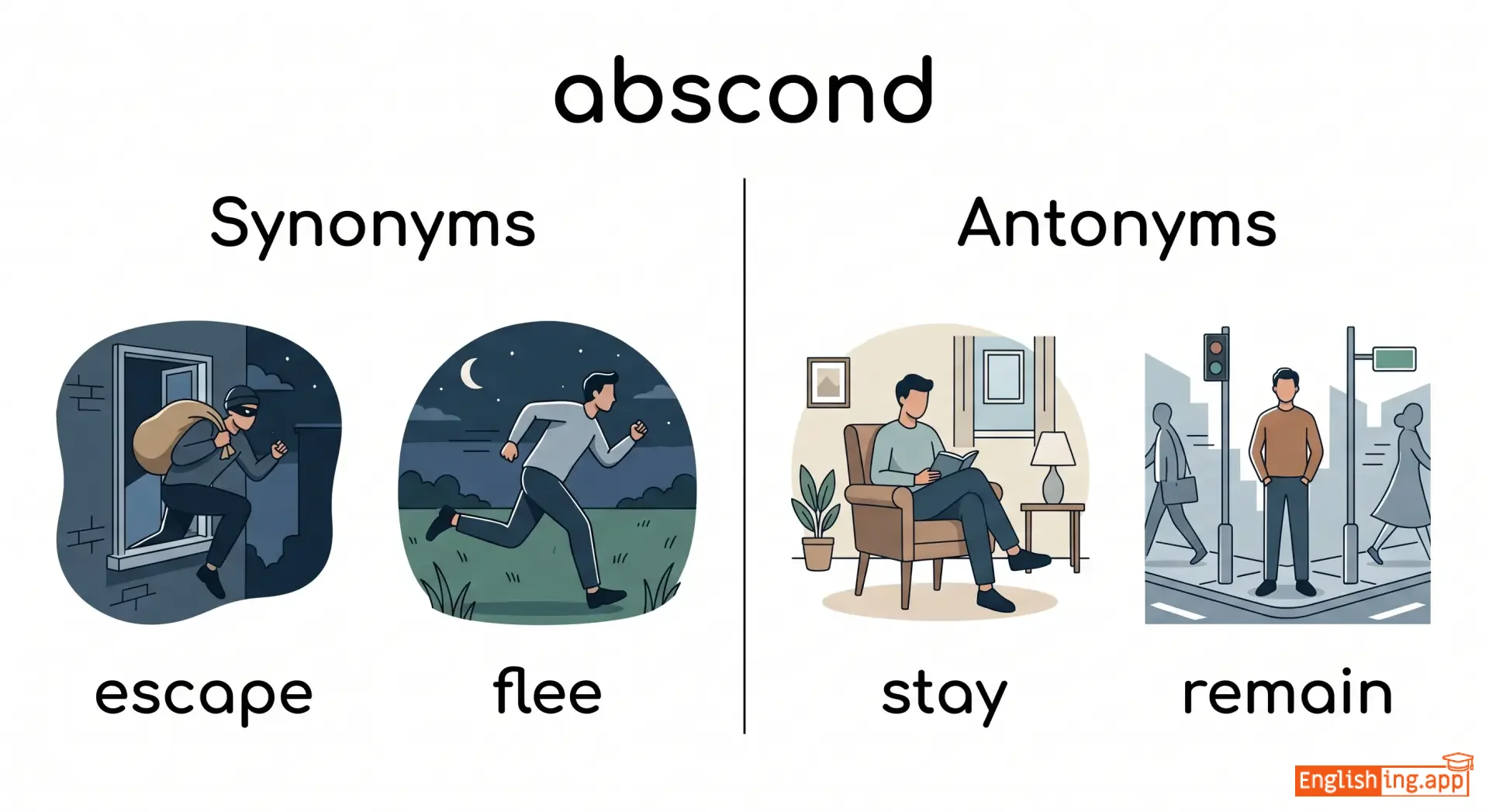
escape, flee, run away, vanish, bolt
|
••••••
|
abscond with money, abscond from justice, abscond overnight
|
|
🚪
••••••
|
/ˈæbsəns/
noun
••••••
|
-
••••••
|
-
••••••
|
-
••••••
|
-
••••••
|
-
••••••
|
the state of being away from a place or person
|
His absence from the meeting was noticed by everyone.
••••••
|
absence makes the heart grow fonder
••••••
|
being away from someone makes you appreciate them more
|
nonappearance, lack, nonexistence, vacancy
|
presence, attendance, appearance
|
long absence, unexplained absence, absence from work
|
|
🚫
••••••
|
/ˈæbsənt/
adjective
••••••
|
-
••••••
|
-
••••••
|
-
••••••
|
-
••••••
|
-
••••••
|
not present at a place or event
|
She was absent from the meeting yesterday.
••••••
|
-
••••••
|
-
••••••
|
missing, away, unavailable, absent-minded
|
••••••
|
absent from class, absent from work, absent due to illness
|
|
💯
••••••
|
/ˈæbsəluːt/
adjective
••••••
|
-
••••••
|
-
••••••
|
-
••••••
|
-
••••••
|
-
••••••
|
total, complete, or without restriction
|
The dictator had absolute power over the nation.
••••••
|
••••••
|
unlimited authority without any checks
|
complete, total, perfect, unconditional, unlimited
|
partial, limited, restricted
|
absolute truth, absolute majority, absolute necessity
|
|
✅
••••••
|
/ˈæbsəluːtli/
adverb
••••••
|
-
••••••
|
-
••••••
|
-
••••••
|
-
••••••
|
-
••••••
|
Completely; without qualification or restriction.
|
I absolutely agree with your decision.
••••••
|
••••••
|
A strong way of saying no.
|
completely, totally, entirely, fully
|
••••••
|
absolutely sure, absolutely necessary, absolutely amazing
|
|
🧽
••••••
|
/əbˈzɔːrb/
verb
••••••
|
-
••••••
|
••••••
|
••••••
|
••••••
|
••••••
|
to take in or soak up a liquid, energy, or information
|
The sponge absorbed all the water.
••••••
|
••••••
|
deeply engaged or preoccupied with one's thoughts
|
soak, consume, engross, assimilate, take in
|
••••••
|
absorb energy, absorb impact, absorb information
|
|
🧽
••••••
|
/əbˈzɔːrbənt/
adjective, noun
••••••
|
-
••••••
|
-
••••••
|
-
••••••
|
-
••••••
|
-
••••••
|
able to soak up liquid, moisture, or energy easily; a material or substance that absorbs
••••••
|
This towel is highly absorbent and dries quickly.
••••••
|
-
••••••
|
-
••••••
|
absorbing, spongy, porous, soakable, permeable
••••••
|
waterproof, nonabsorbent, repellent
••••••
|
absorbent material, highly absorbent, absorbent cloth, absorbent pad
••••••
|
|
🌞
••••••
|
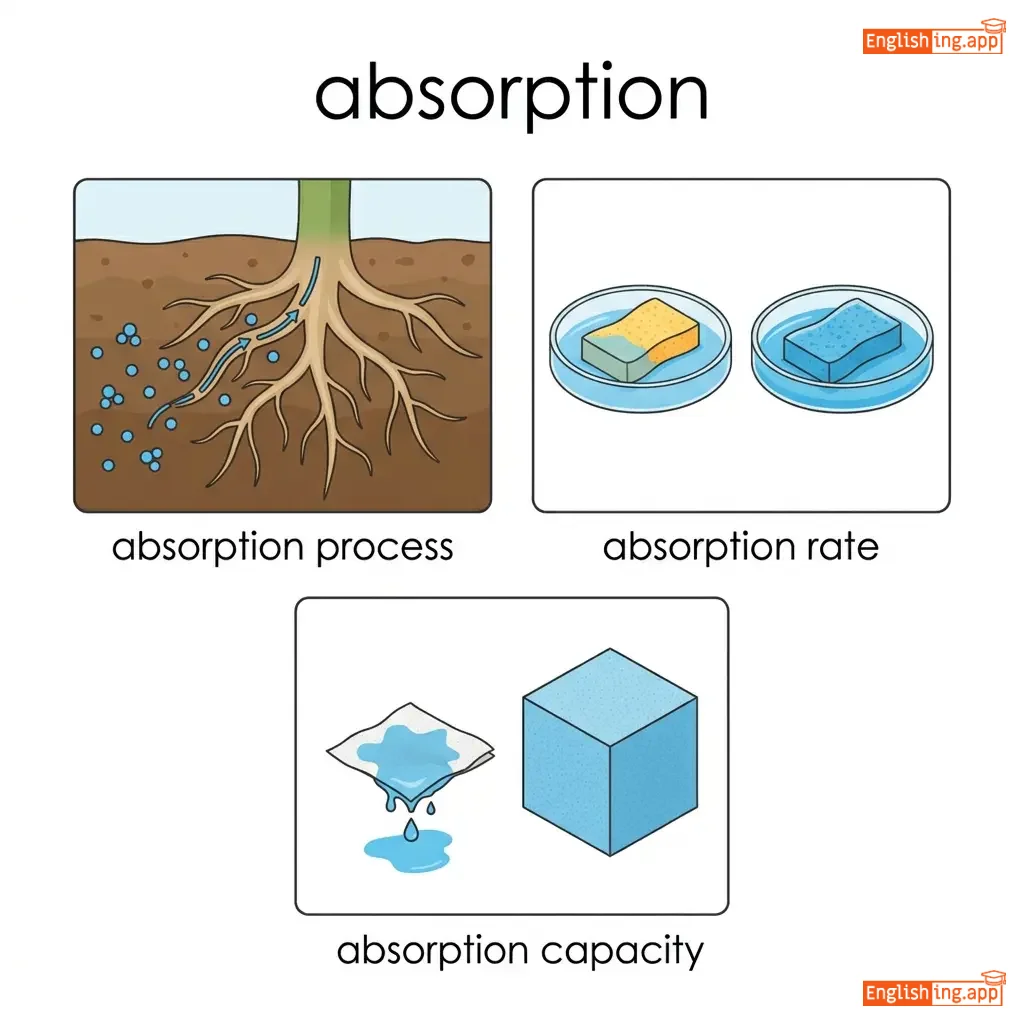
/əbˈzɔːrpʃən/
noun
••••••
|
••••••
|
-
••••••
|
-
••••••
|
-
••••••
|
-
••••••
|
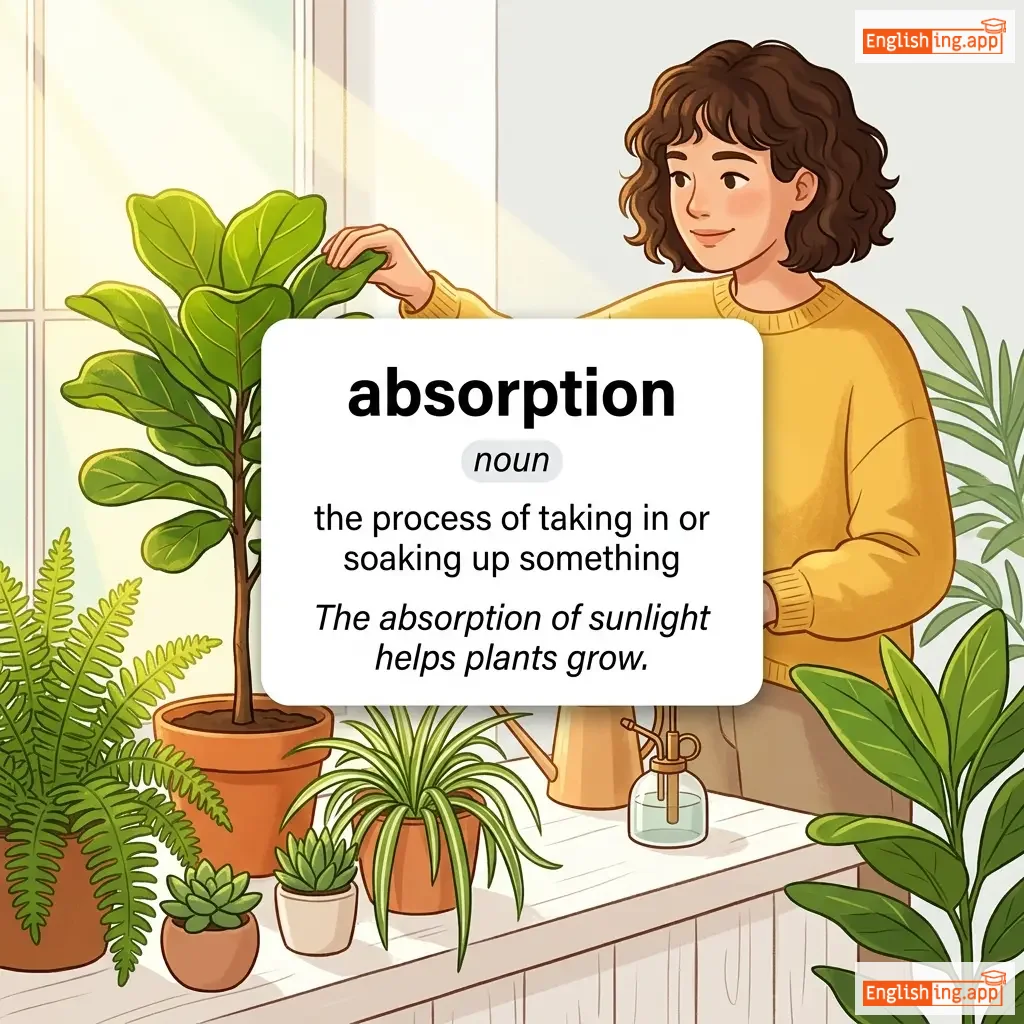
the process of taking in or soaking up something
|
The absorption of sunlight helps plants grow.
••••••
|
-
••••••
|
-
••••••
|
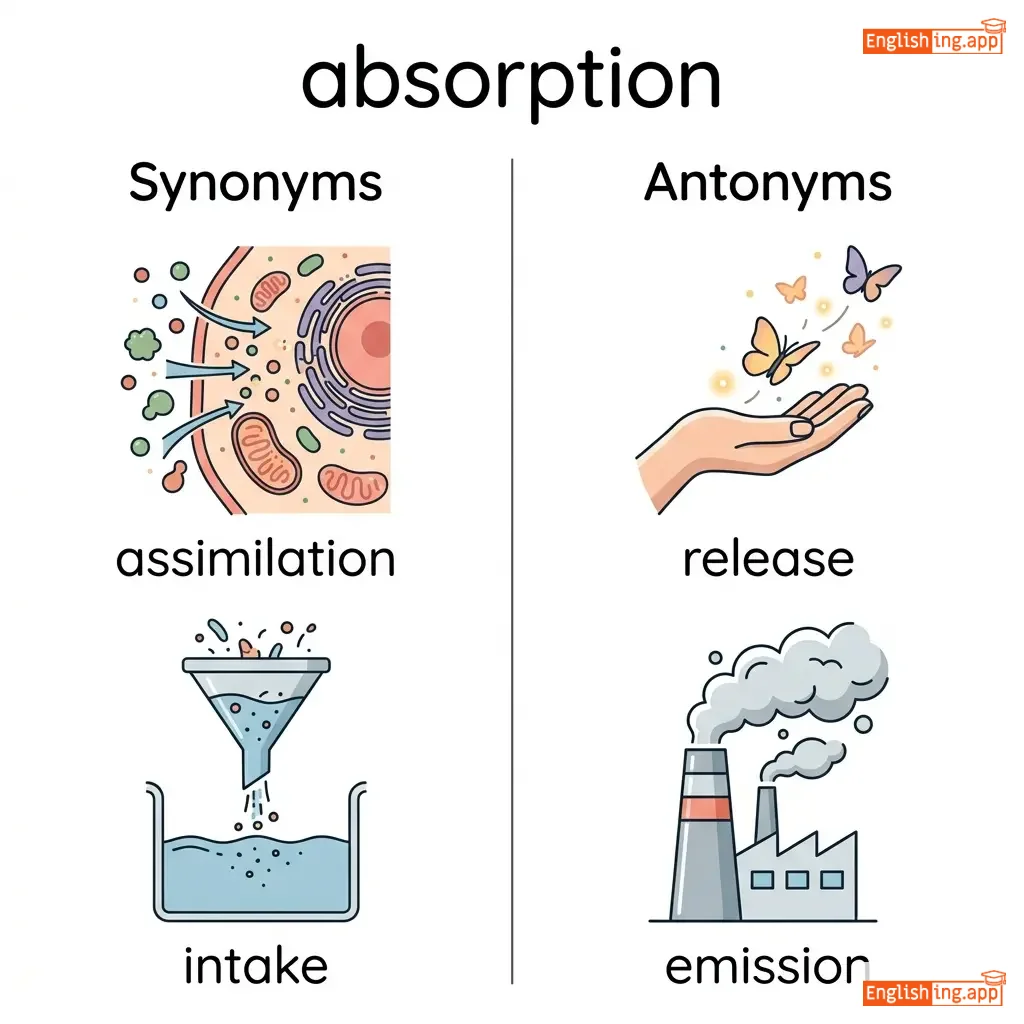
assimilation, intake, immersion, incorporation
|
release, emission, expulsion
|
absorption process, absorption rate, absorption capacity
|
|
🚫
••••••
|
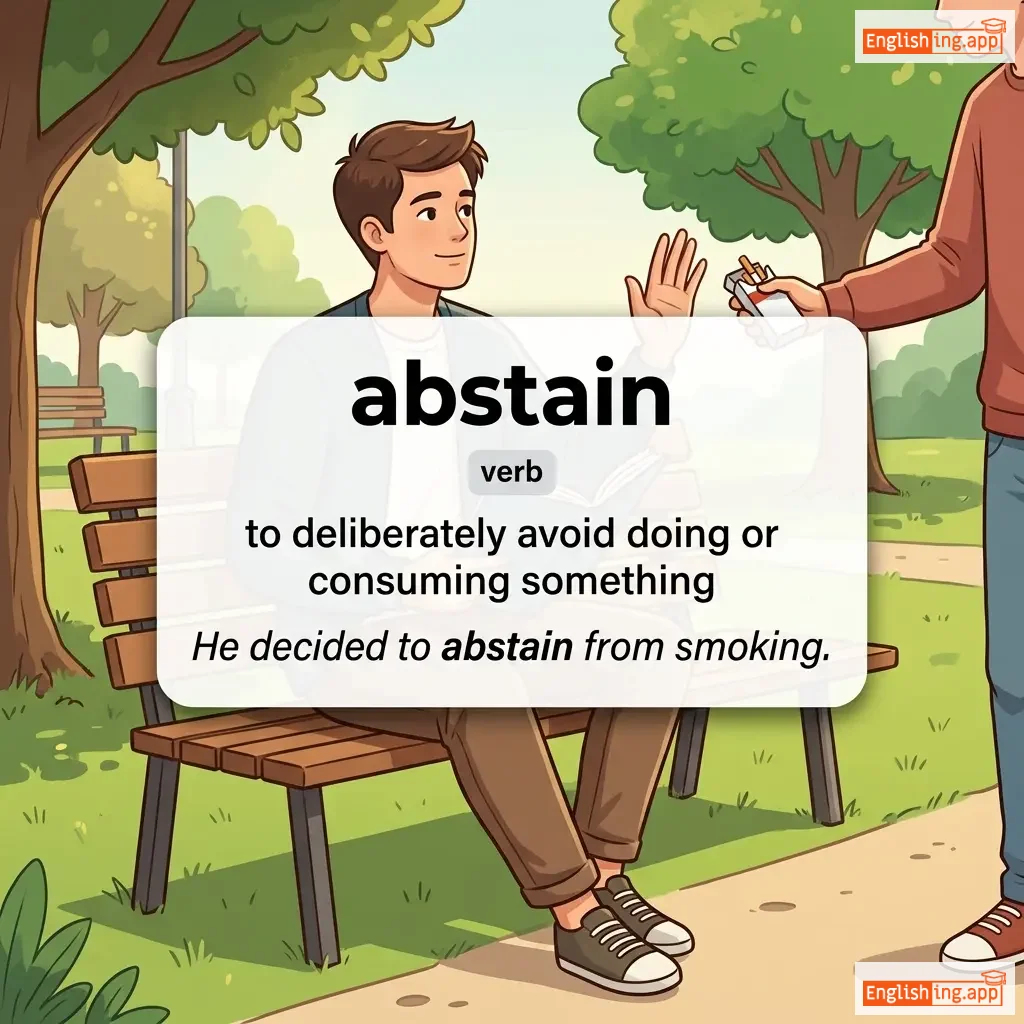
/əbˈsteɪn/
verb
••••••
|
••••••
|
••••••
|
••••••
|
••••••
|
••••••
|
to deliberately avoid doing or consuming something
|
He decided to abstain from smoking.
••••••
|
••••••
|
••••••
|
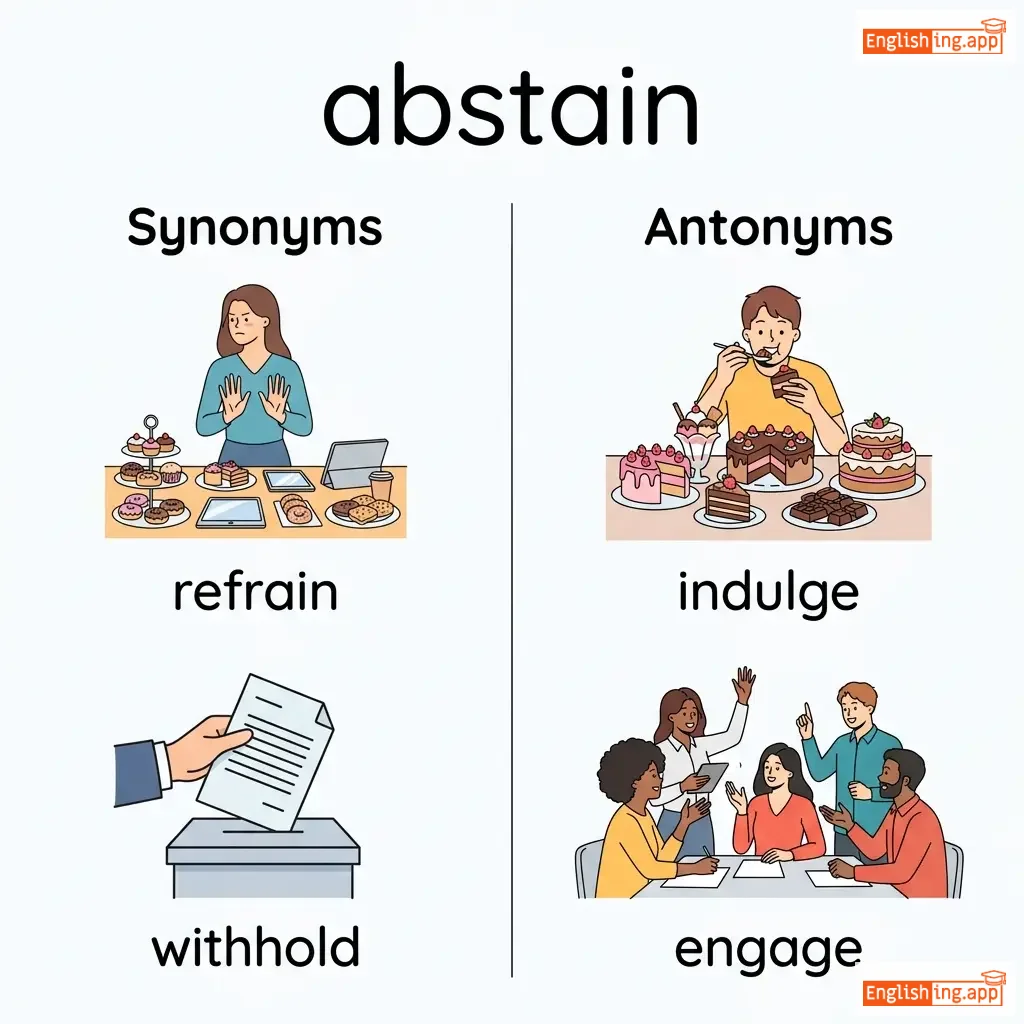
refrain, withhold, avoid, eschew
|
••••••
|
abstain from alcohol, abstain from food, abstain from voting
|
|
🎨
••••••
|
/ˈæb.strækt/
adjective, noun, verb
••••••
|
-
••••••
|
••••••
|
••••••
|
••••••
|
••••••
|
existing in thought or as an idea but not having physical or concrete existence; a summary of a text
|
The artist is known for her abstract paintings.
••••••
|
••••••
|
considered generally, without reference to specific examples
|
conceptual, theoretical, summary, extract
|
concrete, real, practical
|
abstract idea, abstract art, abstract concept
|
|
🧠
••••••
|
/æbˈstrækʃən/
noun
••••••
|
-
••••••
|
-
••••••
|
-
••••••
|
-
••••••
|
-
••••••
|
the process of forming general ideas by removing specific details; an abstract concept or idea
••••••
|
Abstraction allows complex ideas to be represented in a simplified form.
••••••
|
-
••••••
|
-
••••••
|
conceptualization, generalization, simplification, idea, theory
••••••
|
concreteness, reality, specificity
••••••
|
level of abstraction, abstraction process, abstract thinking, degree of abstraction
••••••
|
|
🤡
••••••
|
/əbˈsɜːrd/
adjective
••••••
|
-
••••••
|
-
••••••
|
-
••••••
|
-
••••••
|
-
••••••
|
wildly unreasonable, illogical, or inappropriate
|
It is absurd to think that the earth is flat.
••••••
|
••••••
|
a style of drama emphasizing the absurdity of human existence
|
ridiculous, foolish, nonsensical, ludicrous
|
reasonable, rational, logical
|
absurd idea, utterly absurd, completely absurd
|
|
🌾
••••••
|
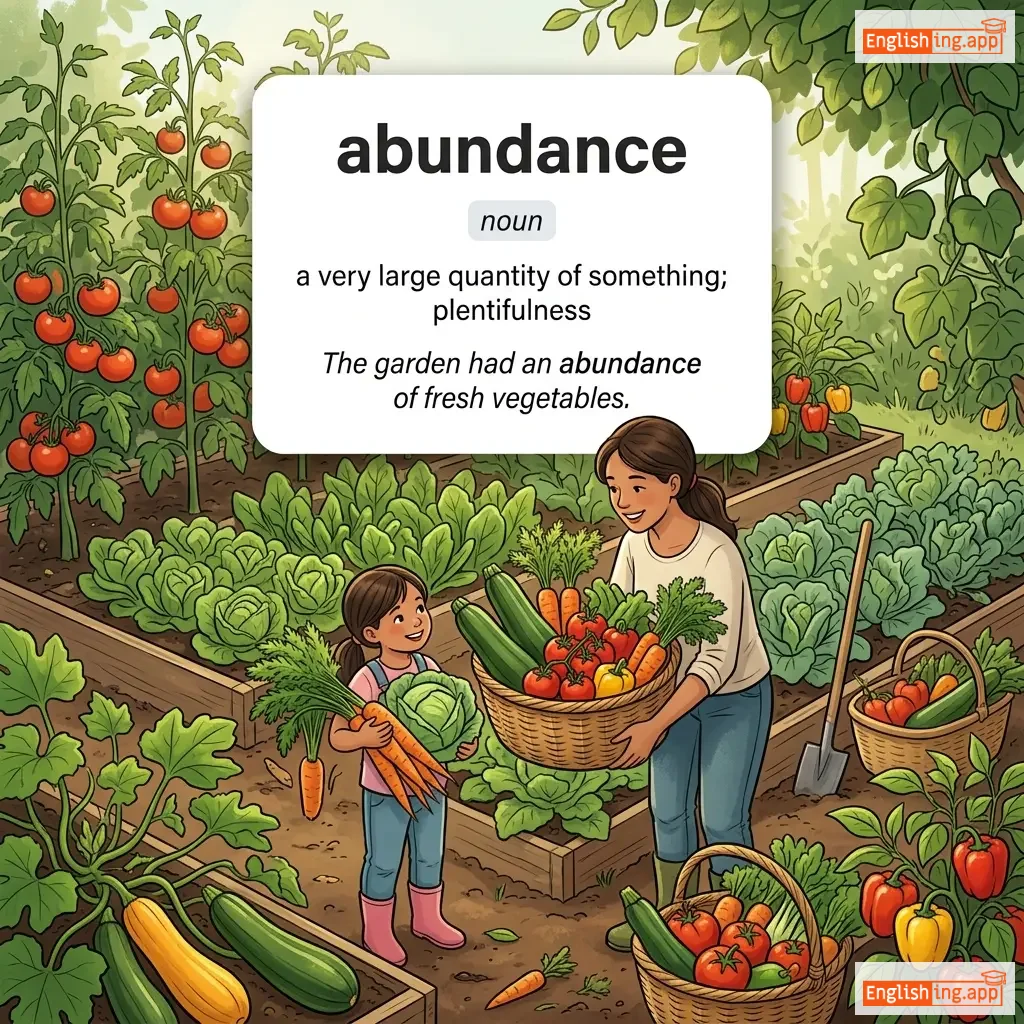
/əˈbʌndəns/
noun
••••••
|
••••••
|
-
••••••
|
-
••••••
|
-
••••••
|
-
••••••
|
a very large quantity of something; plentifulness
|
The garden had an abundance of fresh vegetables.
••••••
|
-
••••••
|
-
••••••
|
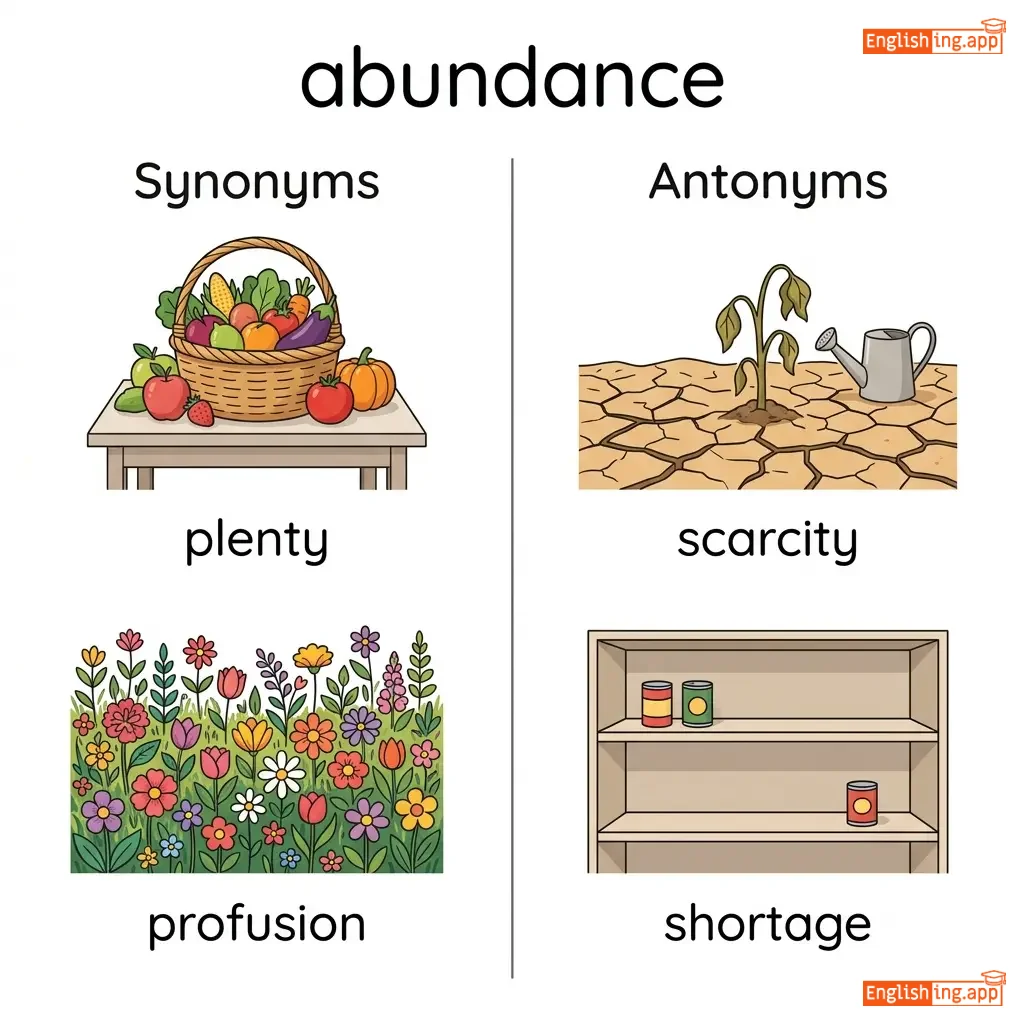
plenty, profusion, wealth, richness
|
scarcity, shortage, lack, dearth
|
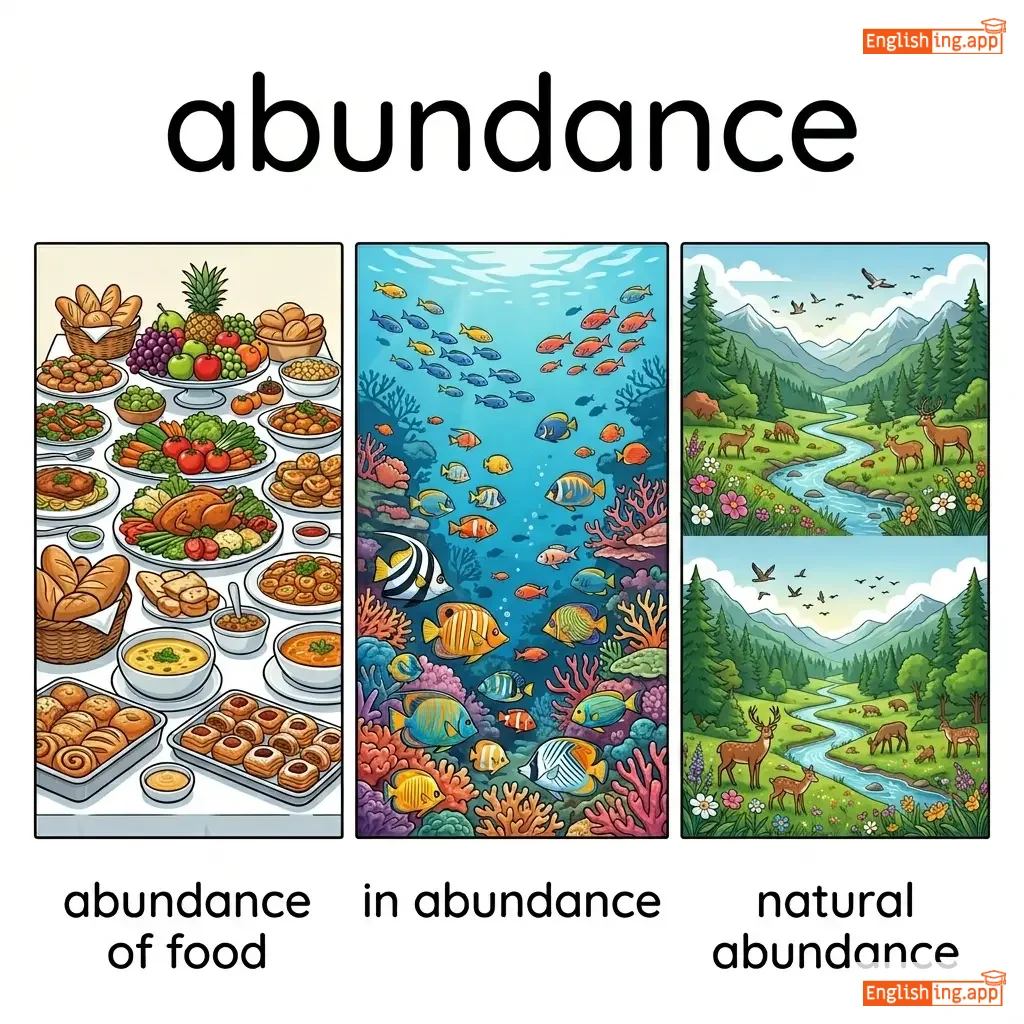
abundance of food, in abundance, natural abundance
|
|
🌸
••••••
|
/əˈbʌndənt/
adjective
••••••
|
-
••••••
|
-
••••••
|
-
••••••
|
-
••••••
|
-
••••••
|
existing or available in large quantities; plentiful
|
The garden was abundant with colorful flowers.
••••••
|
••••••
|
having plenty of something
|
plentiful, ample, bountiful, copious, overflowing
|
scarce, rare, insufficient
|
abundant supply, abundant resources, abundant opportunities, abundant evidence
|
|
🚫
••••••
|
/əˈbjuːs/ (verb), /əˈbjuːs/ (noun)
verb, noun
••••••
|
-
••••••
|
••••••
|
••••••
|
••••••
|
••••••
|
to use something in a harmful way; to treat someone badly or cruelly
|
He was accused of abusing his power.
••••••
|
••••••
|
the harmful or excessive use of drugs or alcohol
|
mistreat, misuse, exploit, harm, oppress
|
respect, protect, cherish
|
child abuse, drug abuse, verbal abuse, abuse of power
|
|
🎓
••••••
|
/ˌækəˈdɛmɪk/
adjective
••••••
|
-
••••••
|
-
••••••
|
-
••••••
|
-
••••••
|
-
••••••
|
related to education, learning, or scholarly activities
|
She has an outstanding academic record.
••••••
|
••••••
|
something theoretical without practical relevance
|
educational, scholarly, intellectual, theoretical
|
••••••
|
academic achievement, academic career, academic institution, academic record
|
|
🏫
••••••
|
/əˈkædəmi/
noun
••••••
|
-
••••••
|
-
••••••
|
-
••••••
|
-
••••••
|
-
••••••
|
an institution of learning or training
|
He enrolled in a military academy.
••••••
|
-
••••••
|
-
••••••
|
school, institute, college, university
|
••••••
|
military academy, sports academy, music academy, national academy
|
|
👑
••••••
|
/əkˈsiːd/
verb
••••••
|
-
••••••
|
••••••
|
••••••
|
••••••
|
••••••
|
to agree to a request, proposal, or demand; to assume an office or position
|
The government finally acceded to the demands of the protesters.
••••••
|
••••••
|
to take up the position of king or queen
|
agree, consent, accept, comply, yield
|
••••••
|
accede to demands, accede to requests, accede to the throne
|
|
⚡
••••••
|
/əkˈsɛləreɪt/
verb
••••••
|
-
••••••
|
••••••
|
••••••
|
••••••
|
••••••
|
to increase speed or make something happen sooner
|
The driver accelerated to overtake the truck.
••••••
|
••••••
|
to make progress or development happen faster
|
hasten, quicken, speed up, advance, expedite
|
slow down, delay, decelerate
|
accelerate development, accelerate progress, accelerate change, accelerate pace
|
|
🚀
••••••
|
/əkˌseləˈreɪʃən/
noun
••••••
|
-
••••••
|
-
••••••
|
-
••••••
|
-
••••••
|
-
••••••
|
the rate at which velocity changes over time; the act of speeding up
••••••
|
The car showed rapid acceleration as it entered the highway.
••••••
|
acceleration due to gravity
••••••
|
the increase in velocity of an object caused by gravitational force
••••••
|
speeding up, increase, quickening, propulsion, boost
••••••
|
deceleration, slowdown, retardation
••••••
|
rapid acceleration, constant acceleration, linear acceleration, angular acceleration
••••••
|
|
🗣️
••••••
|
/ˈæksɛnt/
noun
••••••
|
-
••••••
|
-
••••••
|
-
••••••
|
-
••••••
|
-
••••••
|
a distinctive way of pronouncing a language, especially one associated with a particular country or region
|
She spoke English with a strong French accent.
••••••
|
••••••
|
a way of speaking that shows the influence of another language
|
intonation, pronunciation, tone, inflection
|
••••••
|
strong accent, foreign accent, regional accent, British accent
|
|
✅
••••••
|
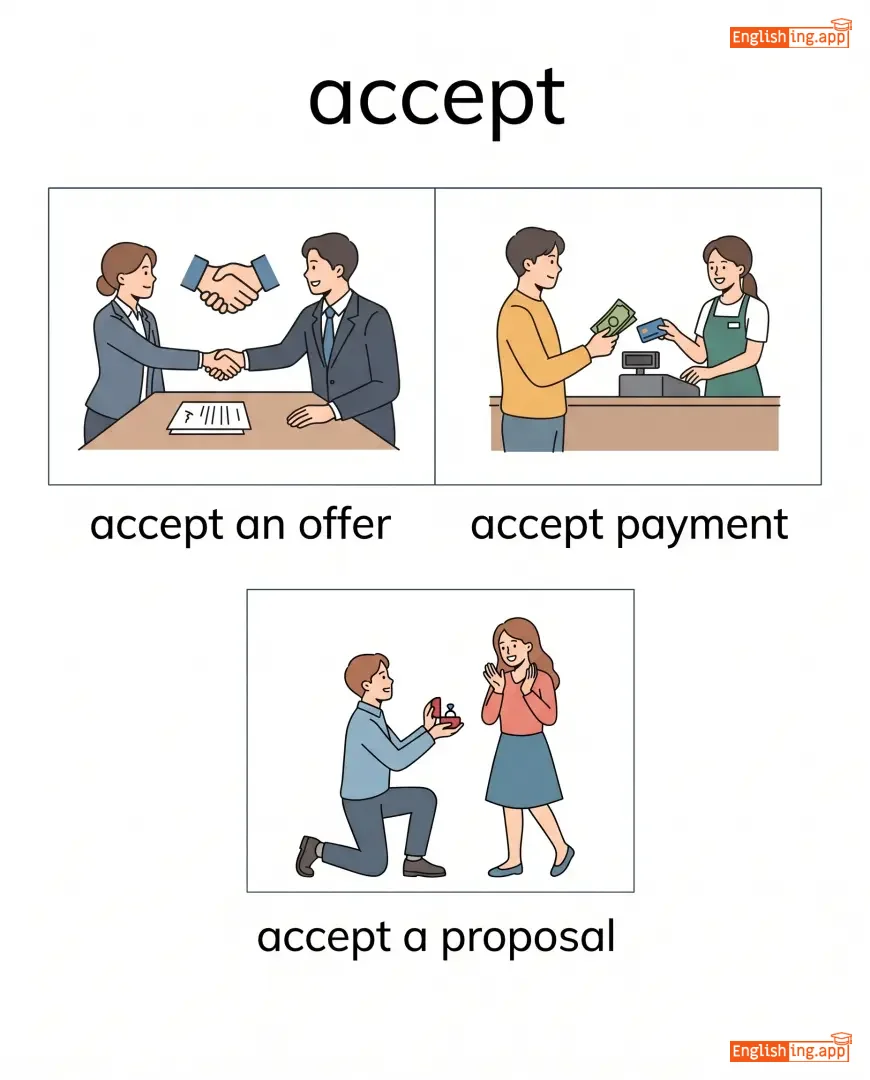
/əkˈsɛpt/
verb
••••••
|
••••••
|
••••••
|
••••••
|
••••••
|
••••••
|
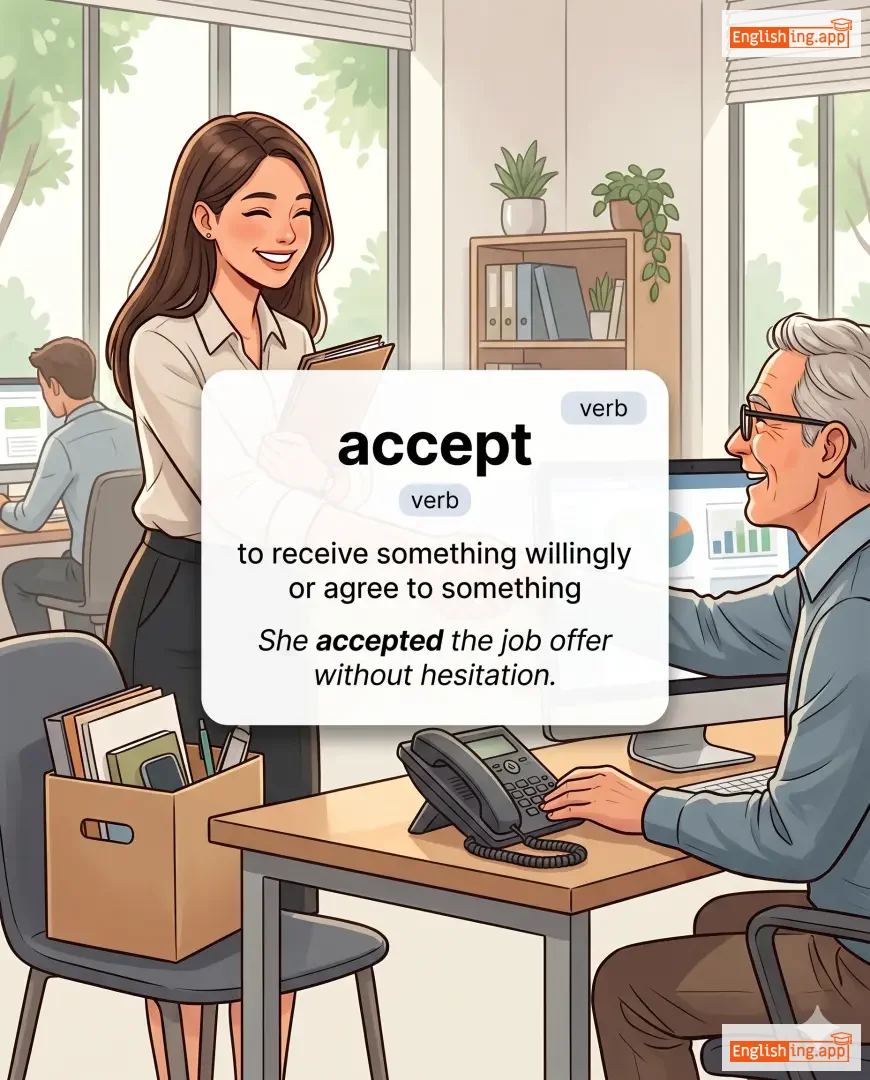
to receive something willingly or agree to something
|
She accepted the job offer without hesitation.
••••••
|
••••••
|
to acknowledge and take responsibility for something
|
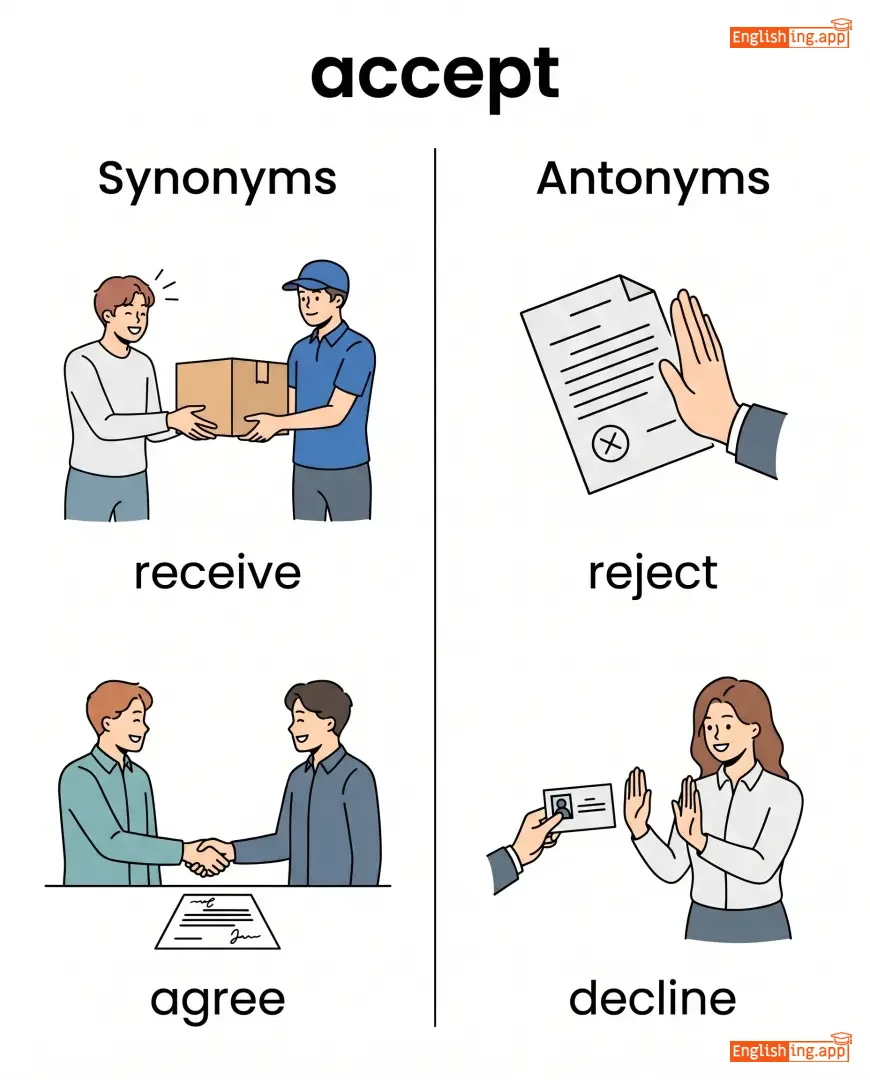
receive, agree, approve, consent
|
••••••
|
accept an offer, accept payment, accept a proposal, accept responsibility
|