Vocabularies

English Vocabulary Dictionary | Word Meanings, Definitions & Examples

adjective C2
/juːˈnɪsənənt/
調和の取れた (chōwa no toreta)

Sounding together or in harmony.

"The unisonant voices created a powerful effect."

"調和の取れた声が強力な効果を生み出した。" (Chōwa no toreta koe ga kyōryoku na kōka o umidashita.)
noun C2
/ˌjuːnɪˈtɛəriən/
ユニタリアン (Unitarian)

A person who believes that God exists as one entity rather than as a Trinity; a member of a religious denomination that emphasizes individual freedom of belief.

"The Unitarian church is known for its inclusive and open-minded approach."

"ユニタリアン教会は、その包括的で開かれた考え方で知られています。" (Yunitarian kyōkai wa, sono hōkatsu-teki de hirakareta kangaekata de shirareteimasu.)
noun C2
/ˈjuːnɪvəˌlɛns/
単価性 (tanka-sei)

The state of having a single valence or combining power, especially in chemistry.

"Hydrogen is characterized by its univalence in chemical reactions."

"水素は化学反応においてその単価性によって特徴づけられています。" (Suiso wa kagaku hannō ni oite sono tanka-sei ni yotte tokuchōdzukerareteimasu.)
adjective C2
/ʌnˈlɛtəd/
識字障害者 (shikiji shougai sha)

lacking education or the ability to read and write; illiterate

"The unlettered villagers relied on oral traditions to preserve their history."

"識字障害者の村人たちは口承伝承に頼って歴史を保存していた。" (Shikiji shougai sha no murabito-tachi wa koushou denshou ni tayotte rekishi wo hozon shite ita.)
adjective C2
/ʌnˈmɪtɪɡeɪtɪd/
完全な (kanzen na)

absolute; not lessened or moderated

"The meeting was an unmitigated disaster."

"会議は完全な災害でした。" (Kaigi wa kanzen na saigai deshita.)
adjective C2
/ˌʌnpriːpəˈzɛsɪŋ/
魅力的でない (miryokuteki de nai)

not attractive or appealing in appearance

"Despite his unprepossessing looks, he was very kind and intelligent."

"彼は魅力的でない外見にもかかわらず、非常に親切で賢かった。" (Kare wa miryokuteki de nai gaiken ni mo kakawarazu, hijō ni shinsetsu de kashikokatta.)
adjective C2
/ˌʌnprəˈpɪʃəs/
不運な (fuunna)

Not giving or indicating a good chance of success; unfavorable.

"The team began their journey under unpropitious weather conditions."

"チームは不運な天候の中で旅を始めました。" (Chiimu wa fuunna tenkou no naka de tabi o hajimemashita.)
adjective C2
/ˌʌn.rɪˈdʒɛn.ər.ət/
頑固 (ganko)

Not reformed or showing no signs of change; stubbornly refusing to reform or repent.

"He remained an unregenerate opponent of progress."

"彼は進歩の頑固な反対者であり続けた。" (Kare wa shinpo no ganko na hantai-sha de ari tsudzuketa.)
adjective C2
/ˌʌnrɪˈmɪtɪŋ/
絶え間ない (taemanai)

Never relaxing or stopping; persistent.

"Her unremitting efforts finally paid off."

"彼女の絶え間ない努力は最終的に報われた。" (Kanojo no taemanai doryoku wa saishūteki ni mukuwarimashita.)
adjective C2
/ʌnˈspɛərɪŋ/
容赦ない (yōsha nai)

Showing no mercy or generosity; harsh or severe.

"The critic was unsparing in his review of the play."

"批評家は彼の演劇レビューで容赦なかった。" (Hihyōka wa kare no engeki rebyū de yōsha nakatta.)
adjective C2
/ʌnˈstɪntɪŋ/
惜しみなく (oshiminaku)

given generously without holding back

"She received unstinting support from her family."

"彼女は家族から惜しみなく支援を受けた。" (Kanojo wa kazoku kara oshiminaku shien wo uketa.)
adjective C2
/ʌnˈsʌlid/
汚れのない (yogore no nai)

not spoiled or made impure; perfectly clean or pure

"His reputation remained unsullied despite the accusations."

"彼の評判は告発にもかかわらず汚れのないままでした。" (Kare no hyōban wa kokuhatsu ni mo kakawarazu yogore no nai mamadeshita.)
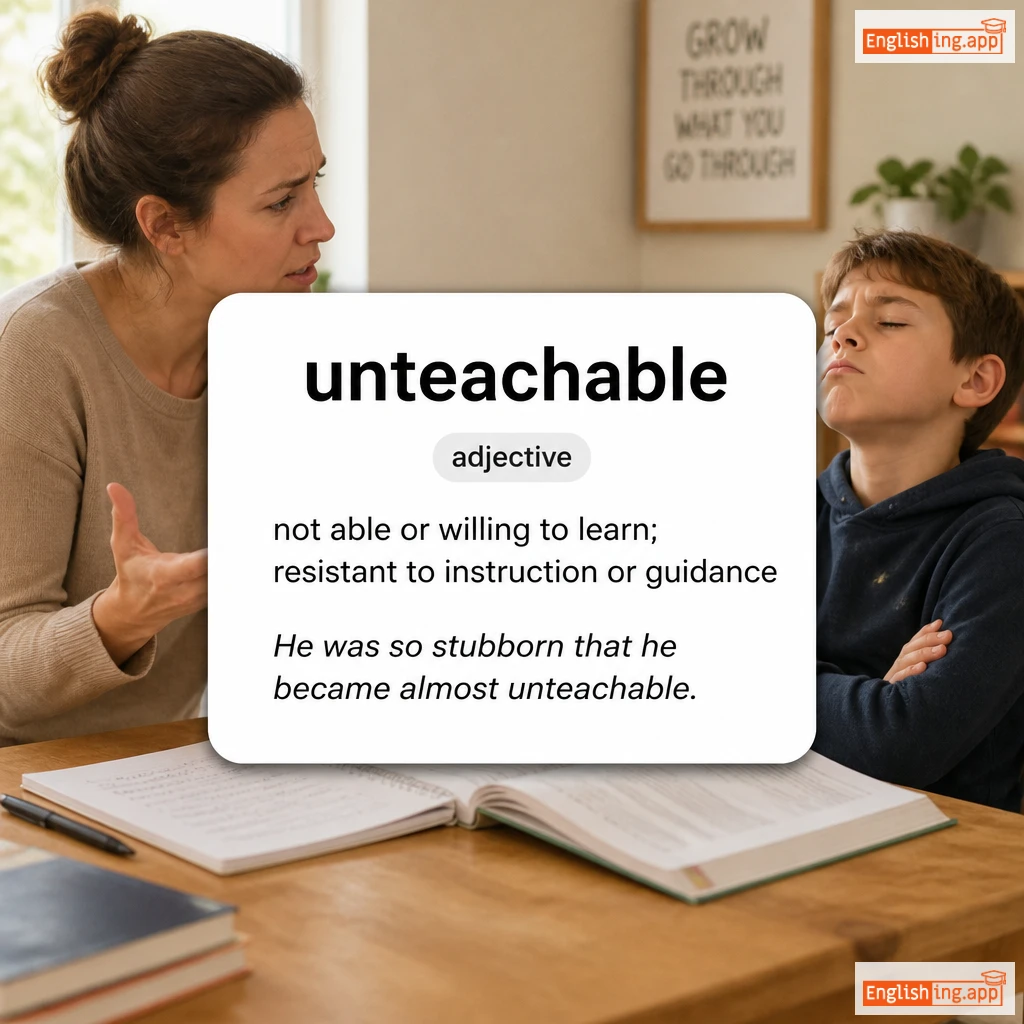
unteachable definition card — visual illustration of the meaning
adjective C2
/ʌnˈtiːtʃəbəl/
教えられない (oshierarenai)

not able or willing to learn; resistant to instruction or guidance

"He was so stubborn that he became almost unteachable."

"彼はとても頑固で、ほとんど教えられない状態だった。" (kare wa totemo ganko de hotondo oshierarenai jotai datta)
adjective C2
/ʌnˈtɛmpərd/
無調整 (muchiōsei)

not moderated or softened; lacking proper balance or control

"The untempered anger of the crowd caused chaos."

"群衆の無調整な怒りが混乱を引き起こしました。" (Gunshū no muchiōsei na ikari ga konran o hikiokoshimashita.)
adjective C2
/ˌʌn.təˈwɔːrd/
予期しない (yokishinai)

Unexpected and inappropriate or inconvenient.

"The meeting ended without any untoward incidents."

"会議は予期しない事件なしで終了しました。" (Kaigi wa yokishinai jiken nashi de shūryō shimashita.)
adjective C2
/ʌnˈtræməld/
制限のない自由 (seigen no nai jiyuu)

Not restricted or hampered; free and unrestricted.

"She enjoyed untrammeled freedom in her new life abroad."

"彼女は海外での新しい生活で制限のない自由を楽しんでいた。" (Kanojo wa kaigai de no atarashii seikatsu de seigen no nai jiyuu o tanoshinde ita.)
adjective C2
/ʌnˈʌtərəbl/
言葉では表現できない (kotoba de wa hyougen dekinai)

Too great, intense, or awful to be expressed or described in words.

"She was filled with unutterable joy at the news of her success."

"彼女は成功の知らせを聞いたとき、言葉では言い表せないほどの喜びで満たされていました。" (Kanojo wa seikou no shirase o kiita toki, kotoba de wa iiarawasenai hodo no yorokobi de mitasareteimashita.)
adjective C2
/ʌnˈwiːldi/
扱いにくい (atsukainikui)

Difficult to carry or move because of its size, shape, or weight.

"The box was too unwieldy to carry up the stairs."

"その箱は階段を上がるには重すぎて扱いにくかった。" (sono hako wa kaidan o agaru ni wa omo sugite atsukainikukatta.)
adjective C2
/ʌnˈwəʊntɪd/
異常 (ijou)

Unusual, uncommon, or out of the ordinary.

"She spoke with an unwonted gentleness that surprised everyone."

"彼女は予想外の優しさで話し、皆を驚かせました。" (Kanojo wa yosougai no yasashisa de hanashi, minna wo odorokasemashita.)
verb C2
/ʌnˈjoʊk/
束縛から解放する (sokubaku kara kaihō suru)

To release from a yoke or to free from restraint or obligation.

"The farmer unyoked the oxen after a long day of work."

"農夫は長い労働の後に牛の首輪を外した。" (Nōfu wa nagai rōdō no ato ni ushi no kubiwa o hazushita.)
verb C2
/ʌpˈbreɪd/
叱る (shikaru)

To scold or criticize someone harshly.

"The teacher upbraided the student for being late again."

"教師は学生がまた遅刻したことを叱りました。" (Kyōshi wa gakusei ga mata chikoku shita koto o shikarimashita.)
noun/verb C2
/ˈʌpˌkæst/
上に投げる (ue ni nageru)

Verb: To cast or throw upward. Noun: Something thrown or directed upward.

"The fisherman upcast his net into the air."

"漁師は彼の網を空中に投げた。" (Ryoushi wa kare no ami o kuuchuu ni nageta.)
verb C2
/ʌpˈhiːv/
持ち上げる (mochiageru)

to lift or raise something forcefully; to cause to rise suddenly

"The workers had to upheave the heavy stone to clear the path."

"作業員たちは道を清掃するために重い石を持ち上げなければならなかった。" (Sagyouin-tachi wa michi o seisou suru tame ni omoi ishi o mochiagenakereba naranakatta.)
adjective C2
/ʌpˈrɔːr.i.əs/
非常に面白い (hijō ni omoshiroi)

Extremely funny or noisy; causing loud laughter or commotion.

"The comedian's jokes were absolutely uproarious."

"コメディアンのジョークは絶対に非常に面白かったです。" (Komedian no jōku wa zettai ni hijō ni omoshirokatta desu.)
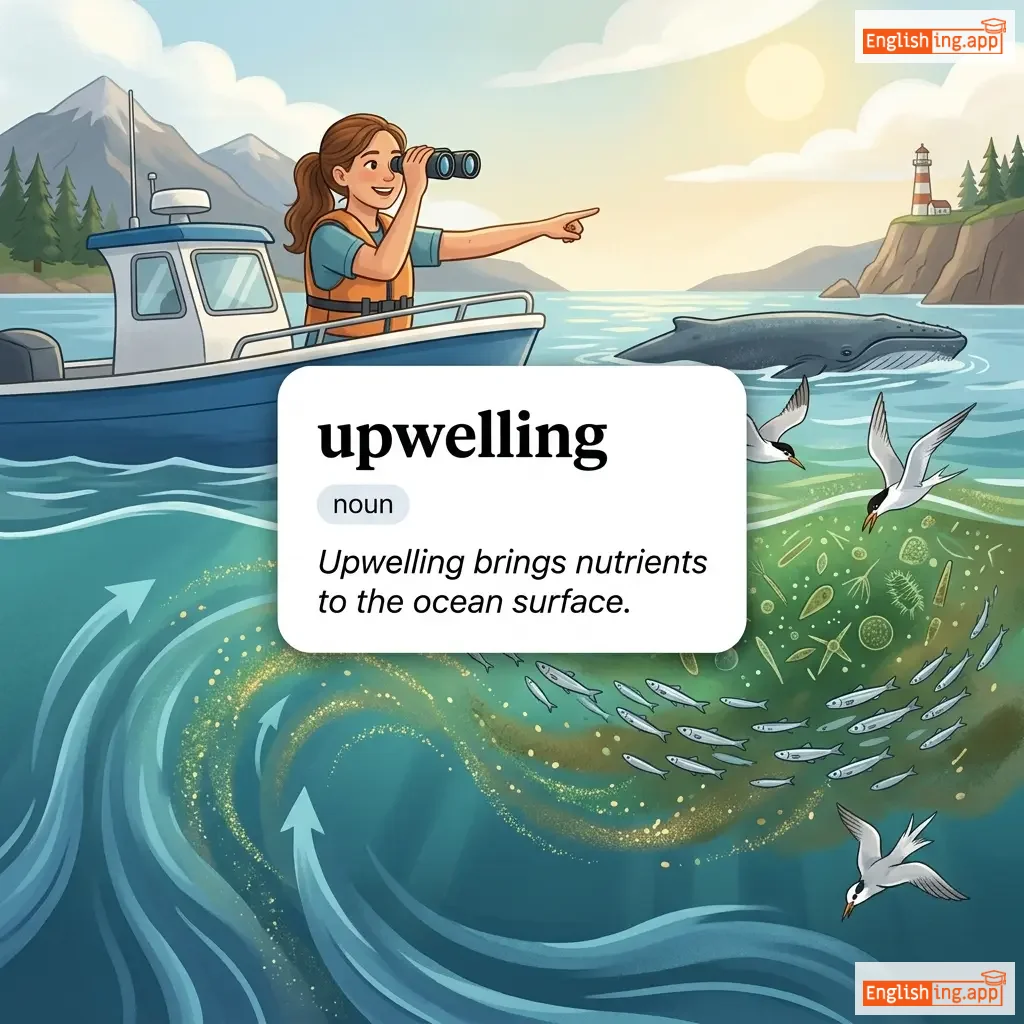
upwelling definition card — visual illustration of the meaning
noun C2
/ˈʌp.wel.ɪŋ/
湧昇流 (youshouryuu)

An oceanographic phenomenon that involves wind-driven motion of dense, cooler, and nutrient-rich water towards the ocean surface.

"Upwelling brings nutrients to the ocean surface."

"湧昇流は海面へ栄養分を運ぶ。" (youshouryuu wa kaimen e eiyou bun wo hakobu)
adjective C2
/ɜːrˈbeɪn/
洗練された (senren sareta)

showing polished manners, refinement, and sophistication

"He was an urbane gentleman who charmed everyone at the party."

"彼はパーティーでみんなを魅了した洗練された紳士だった。" (Kare wa pātii de minna o miryō shita senren sareta shinshi datta.)
noun C2
/ɜːrˈbænɪti/
都会的な気品 (tokai-teki na kihin)

refined courtesy, elegance, and sophistication in manner

"Her urbanity made her popular among diplomats and leaders."

"彼女の都会的な気品は、外交官やリーダーの間で人気を集めました。" (Kanojo no tokai-teki na kihin wa, gaikōkan ya rīdā no aida de ninki o atsume mashita.)
noun C2
/ˈɜːrtʃɪn/
路上の子供 (rojo no kodomo)

a mischievous or poorly dressed child, often from the streets

"The ragged urchins played by the riverbank."

"ぼろぼろの服を着た路上の子供たちが川辺で遊んでいた。" (boroboro no fuku o kita rojo no kodomotachi ga kawabe de asonde ita.)
adjective C2
/ˈɜːrsaɪn/
クマのような (kuma no yō na)

Relating to or resembling a bear.

"The man’s ursine strength amazed everyone."

"その男のクマのような力は、みんなを驚かせました。" (Sono otoko no kuma no yō na chikara wa, minna o odorokasemashita.)
noun C2
/ˈjuːzjuːfrʌkt/
使用権 (shiyouken)

The legal right to use and enjoy the benefits of someone else’s property without owning it.

"The tenant had the usufruct of the land but not its ownership."

"借家人は土地の使用権を持っていたが、所有権はなかった。" (Shakunin wa tochi no shiyouken wo motteita ga, shoyuken wa nakatta.)
adjective C2
/juːˈʒʊəriəs/
高利貸しの (kōrikashi no)

Charging excessively high interest rates on loans.

"The bank was accused of offering loans at usurious rates."

"銀行は高利貸しの金利で融資を提供したとして告発されました。" (Ginkō wa kōrikashi no kinri de yūshi o teikyō shita to shite kokuhatsu saremashita.)
usurp definition card — visual illustration of the meaning
verb C2
/juːˈzɜːrp/
不正に取る (fusei ni toru)

To take someone else's position or power illegally or by force.

"He tried to usurp the throne from the rightful king."

"彼は正当な王から王位を奪おうとした。" (Kare wa seitōna ō kara ōi o ubaō to shita.)
noun C2
/ˌjuːzɜːrˈpeɪʃən/
横領 (Ōryō)

The act of taking someone's power or property illegally or by force.

"The general's usurpation of the presidency led to political unrest."

"将軍の大統領職の横領は政治的混乱を引き起こした。" (Shōgun no daitōryō-shoku no ōryō wa seijiteki konran o hikiokoshita.)
usury definition card — visual illustration of the meaning
noun C2
/ˈjuːʒəri/
高利貸し (kōrikashi)

The practice of lending money at unreasonably high interest rates.

"The law strictly prohibits usury."

"法律は高利貸しを厳しく禁止しています。" (Hōritsu wa kōrikashi o kibishiku kinshi shiteimasu.)
noun C2
/juːˌtɪlɪˈtɛəriənɪzəm/
功利主義 (kōrishugi)

The ethical theory that actions are right if they are useful or for the benefit of the majority.

"Utilitarianism suggests that we should act to maximize overall happiness."

"功利主義は、私たちが全体的な幸福を最大化するために行動すべきだと示唆しています。" (Kōrishugi wa, watashitachi ga zentaiteki na kōfuku o saidaika suru tame ni kōdō subeki da to shisa shiteimasu.)
adjective C2
/ʌkˈsɔːriəs/
妻に対して過度に愛情深い (tsuma ni taishite kadoni aijou fukai)

excessively fond of or submissive to one's wife

"He was so uxorious that he agreed with everything his wife said."

"彼は妻に対してそれほどまでに uxorious で、妻が言ったことすべてに同意しました。" (Kare wa tsuma ni taishite sore hodo made ni uxorious de, tsuma ga itta koto subete ni doui shimashita.)
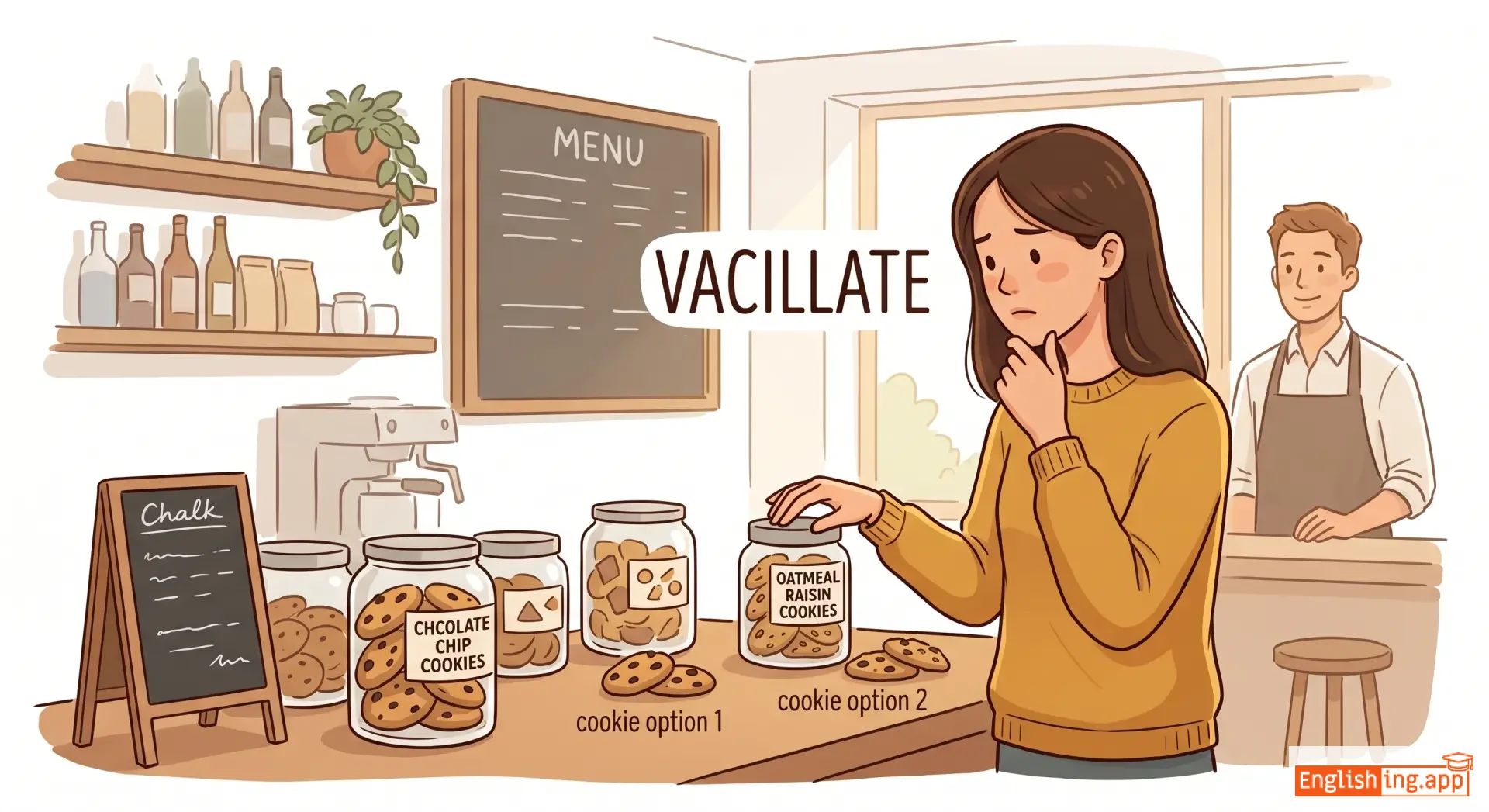
vacillate definition card — visual illustration of the meaning
verb C2
/ˈvæsɪleɪt/
幸せ (shiawase)

to waver between different opinions or actions; be indecisive

"He vacillated between studying law and becoming a writer."

"彼女は賞を受け取ったとき、自分の幸せを隠すことができませんでした。" (Kanojo wa shō o uketotta toki, jibun no shiawase o kakusu koto ga dekimasen deshita.)
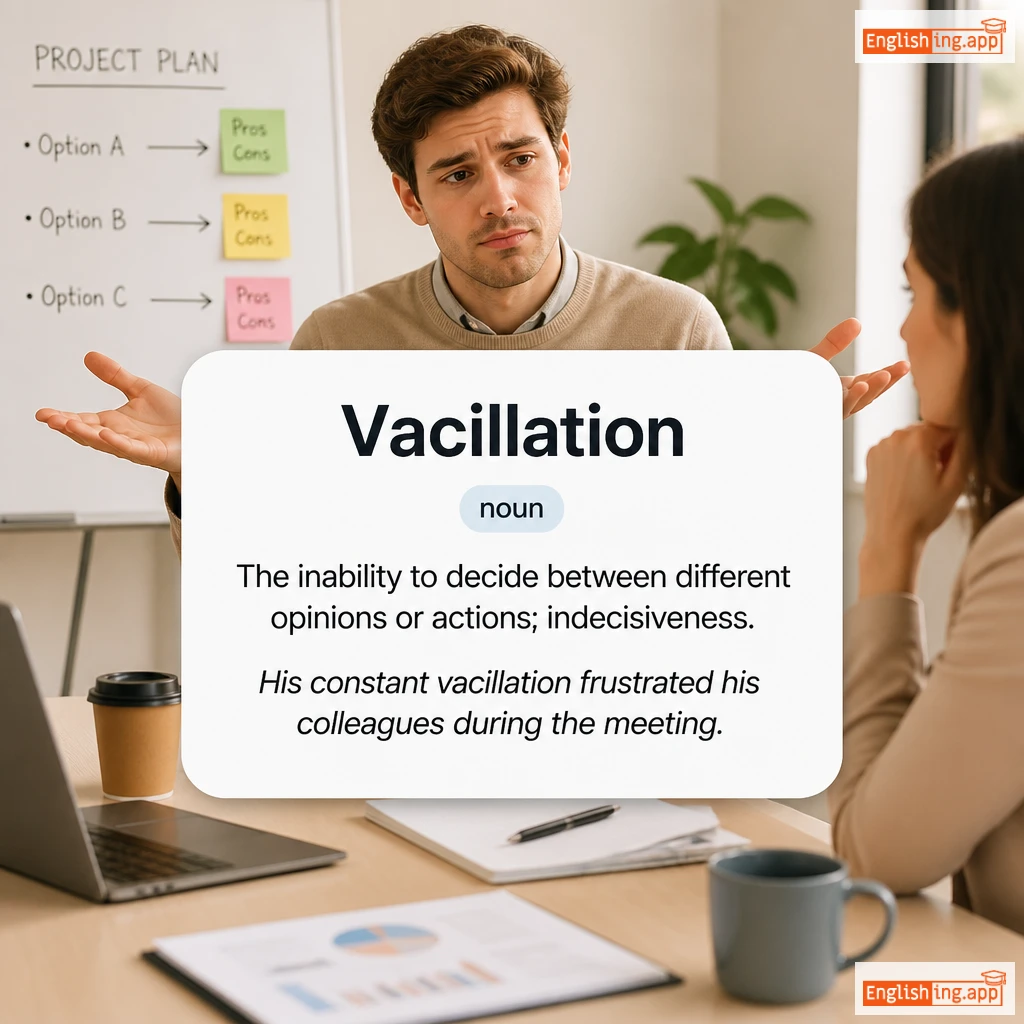
Vacillation definition card — visual illustration of the meaning
noun C2
/ˌvæsɪˈleɪʃən/
揺れ動き (yuredoki)

The inability to decide between different opinions or actions; indecisiveness.

"His constant vacillation frustrated his colleagues during the meeting."

"彼の絶え間ない揺れ動きは会議中、同僚たちを苛立たせた。" (Kare no taemai yuredoki wa kaigichuu, doryou-tachi o iradataseta.)
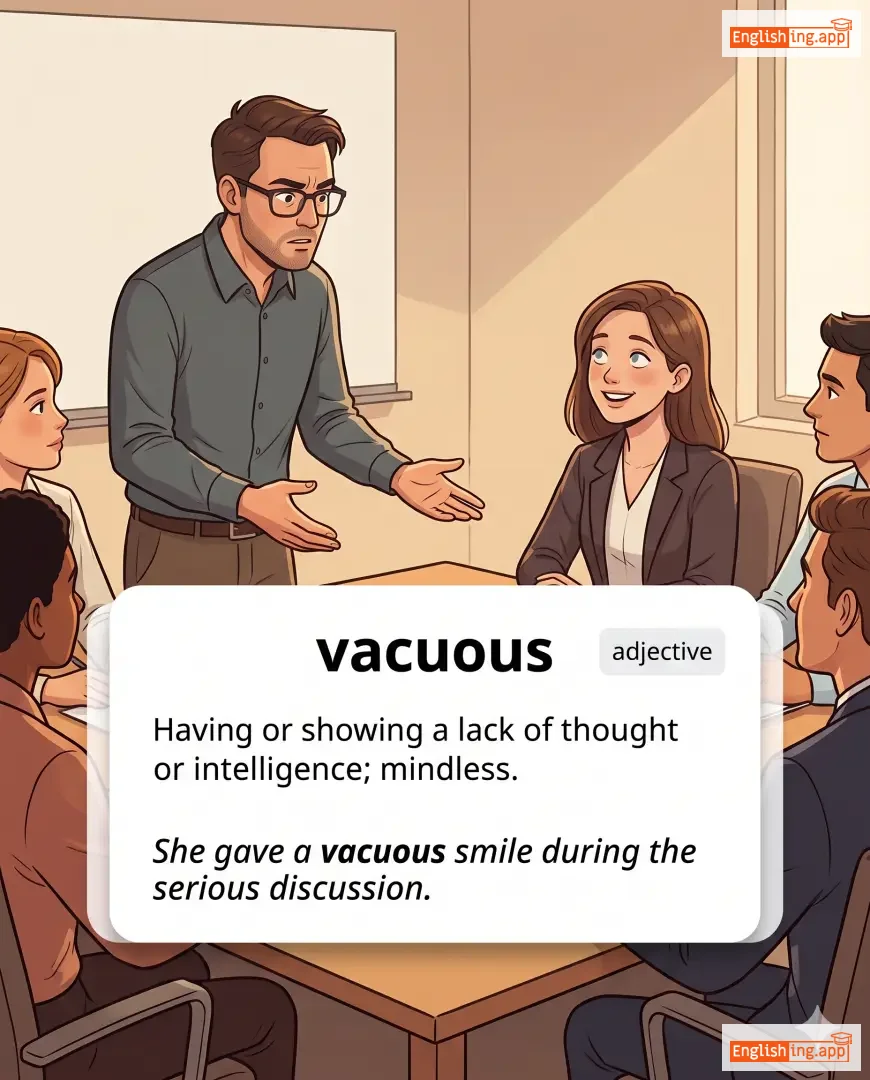
vacuous definition card — visual illustration of the meaning
adjective C2
/ˈvækjuəs/
空虚 (kūkyō)

Having or showing a lack of thought or intelligence; mindless.

"She gave a vacuous smile during the serious discussion."

"彼女は真剣な議論の中で空虚な笑顔を見せた。" (Kanojo wa shinken na giron no naka de kūkyō na egao o miseta.)
noun C2
/ˈveɪɡəri/
予測できない変化 (yosoku dekinai henka)

An unexpected and inexplicable change in a situation or someone's behavior.

"The vagaries of the weather made planning difficult."

"天気の不規則な変化で計画が難しくなった。" (tenki no fukisoku na henka de keikaku ga muzukashiku natta.)
adjective C2
/veɪnˈɡlɔːriəs/
うぬぼれた (unoboreta)

Excessively proud of oneself or one’s achievements; boastful.

"The vainglorious leader boasted about his minor achievements."

"その自惚れたリーダーは自分の些細な成果を自慢していた。" (Sono unoboreta rīdā wa jibun no sasaina seika o jimanshite ita.)
noun C2
/ˈveɪnɡlɔːri/
虚栄心 (kyoueishin)

Excessive vanity or boastfulness about one's achievements.

"His speech was filled with vainglory and self-praise."

"彼のスピーチは虚栄心と自己賛美で満ちていた。" (Kare no supīchi wa kyoeishin to jikosanbi de michite ita.)
noun C2
/ˈvæləns/
装飾用バランス (sōshokuyō baransu)

A decorative drapery hung across the top of a window or bed.

"She chose a floral valance to match the curtains in her bedroom."

"彼女は寝室のカーテンに合うように花柄のバランスを選びました。" (Kanojo wa shinshitsu no kāten ni au yō ni hanagara no baransu o erabimashita.)
noun C2
/ˌvælɪˈdɪkʃən/
別れの言葉 (wakare no kotoba)

The act of saying farewell; a formal goodbye.

"The professor gave a touching valediction at his retirement ceremony."

"教授は退職式で感動的な別れの言葉を述べました。" (Kyōju wa taishoku-shiki de kandō-teki na wakare no kotoba o nobemashita.)
noun C2
/ˌvælədɪkˈtɔːriən/
最優秀学生 (sai yūshū gakusei)

The student with the highest academic achievements in a graduating class, often chosen to give the farewell speech.

"She was honored as the valedictorian of her class."

"彼女はクラスの最優秀学生として表彰されました。" (Kanojo wa kurasu no sai yūshū gakusei to shite hyōshō saremashita.)
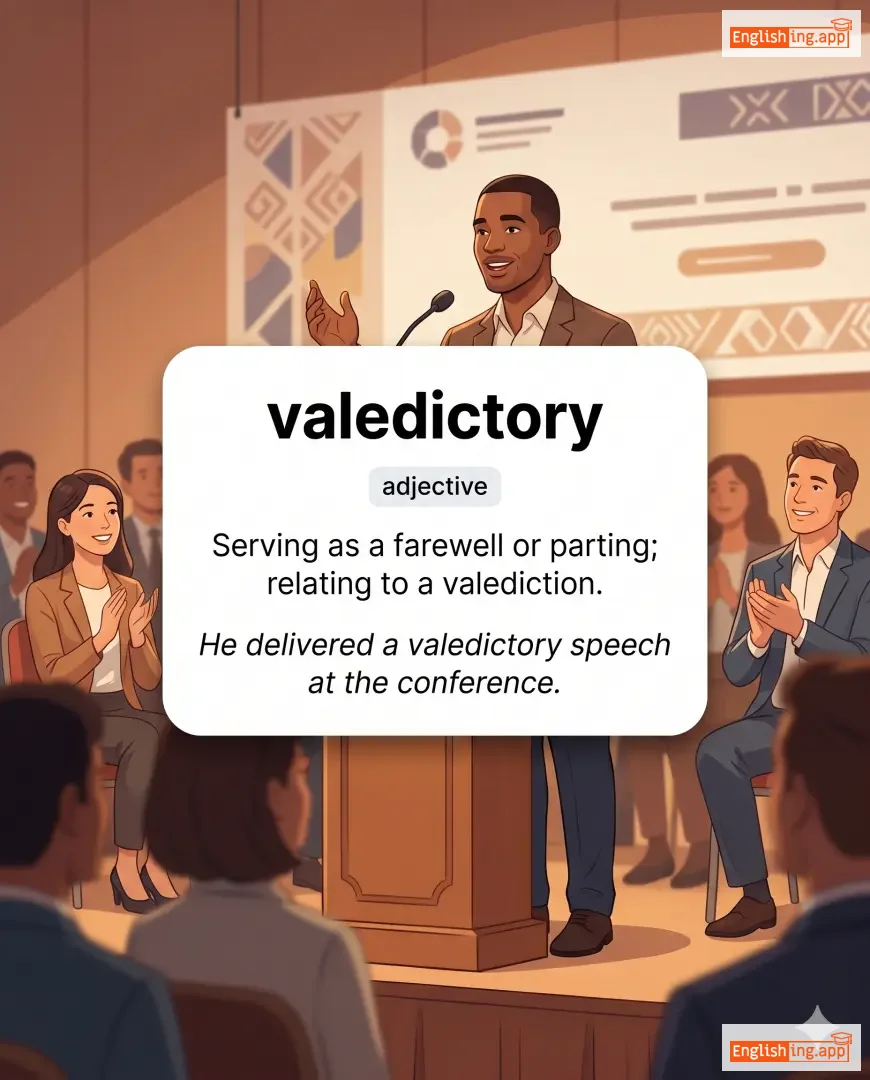
valedictory definition card — visual illustration of the meaning
adjective C2
/ˌvælɪˈdɪktəri/
送別の (soubetsu no)

Serving as a farewell or parting; relating to a valediction.

"He delivered a valedictory speech at the conference."

"彼は会議で送別のスピーチを行った。" (Kare wa kaigi de soubetsu no supīchi o okonatta.)
noun C2
/ˌvælɪˌtjuːdɪˈnɛəriən/
健康気にしすぎな人 (kenkou ki ni shisugi na hito)

A person who is unduly anxious about their health or constantly concerned with minor ailments.

"He was regarded as a valetudinarian, always worrying about his health."

"彼は健康気にしすぎな人として知られていた。" (Kare wa kenkou ki ni shisugi na hito toshite shirarete ita.)
adjective C2
/ˈvælərəs/
勇敢な (yūkan na)

showing great courage and bravery

"The valorous soldier led his troop into battle without hesitation."

"勇敢な兵士はためらうことなく部隊を戦いに導いた。" (Yūkan na heishi wa tamerau koto naku butai o tatakai ni michibita.)
adjective C2
/ˈvæpɪd/
退屈な (taikutsuna)

lacking liveliness, flavor, or interest; dull and uninspired

"The lecture was so vapid that half the audience fell asleep."

"講義は退屈すぎて、観客の半分が寝てしまった。" (Kōgi wa taikutsu sugite, kankyaku no hanbun ga nete shimatta.)
adjective C2
/ˈveɪpərəs/
蒸気のような; 曖昧な (jōki no yō na; aimaina)

consisting of vapor; vague or insubstantial

"The morning air was filled with vaporous mist."

"朝の空気は蒸気のような霧で満たされていました。" (Asa no kūki wa jōki no yō na kiri de mitasarete imashita.)