Vocabularies

English Vocabulary Dictionary | Word Meanings, Definitions & Examples

adjective C2
/rɪˈflɛksəbl/
reflexivo (reflexivo)

Capable of being reflected or bent back.

"The surface was highly reflexible, bouncing light in different directions."

"La superficie era altamente reflexiva, reflejando la luz en diferentes direcciones." (La superficie era altamente reflexiva, reflejando la luz en diferentes direcciones.)
verb C2
/rɪˈfrækt/
refractar (refractar)

To bend light, sound, or heat as it passes through a medium.

"The water refracts light, making the straw look bent."

"El agua refracta la luz, haciendo que la pajilla se vea doblada." (El agua refracta la luz, haciendo que la pajilla se vea doblada.)
noun C2
/rɪˈfrækʃən/
refracción (refraccion)

The bending of light, sound, or other waves when they pass from one medium to another of different density.

"The refraction of light in water makes objects appear bent."

"La refracción de la luz en el agua hace que los objetos parezcan doblados." (La refraccion de la luz en el agua hace que los objetos parezcan doblados.)
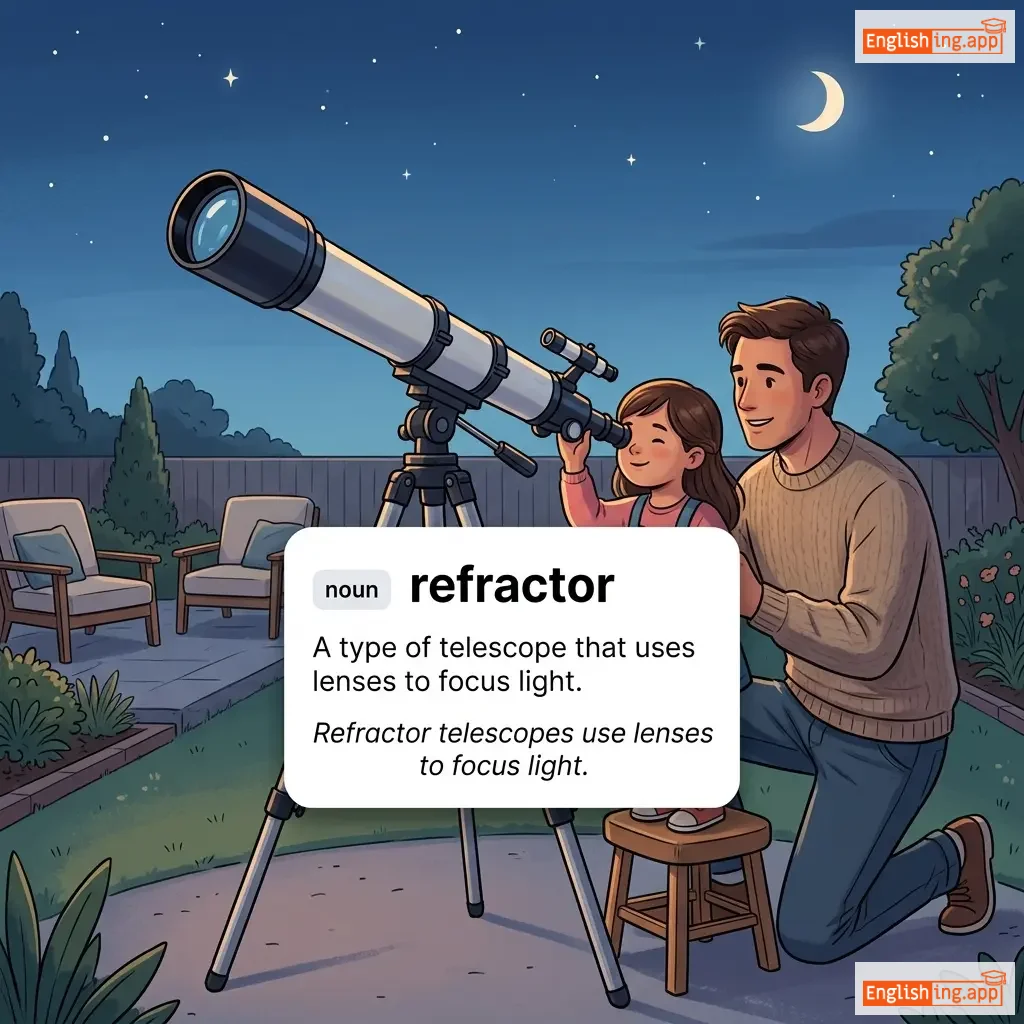
refractor definition card — visual illustration of the meaning
noun C2
/rɪˈfræk.tər/
refractor (refractor)

A type of telescope that uses lenses to focus light.

"Refractor telescopes use lenses to focus light."

"Los telescopios refractores usan lentes para enfocar la luz." (Los teleskopios refractores usan lentes para enfocar la luz.)
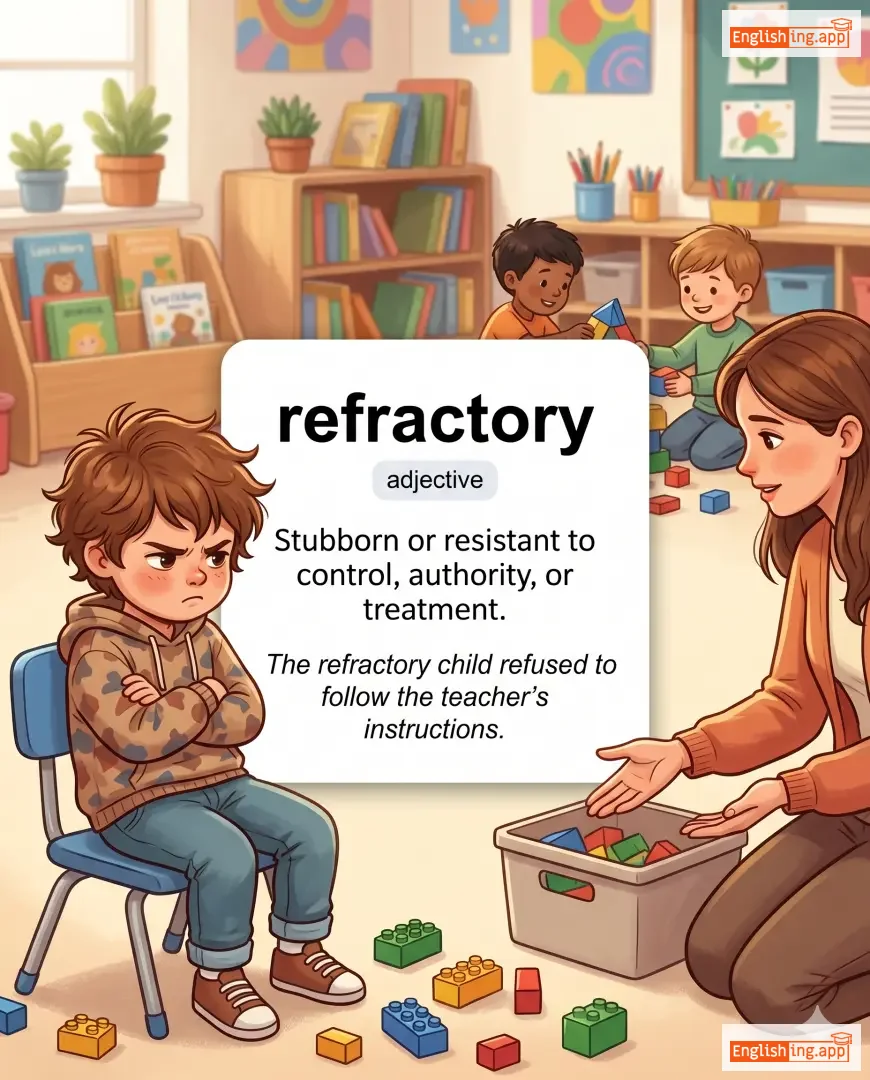
refractory definition card — visual illustration of the meaning
adjective C2
/rɪˈfræktəri/
refractario (refractario)

Stubborn or resistant to control, authority, or treatment.

"The refractory child refused to follow the teacher's instructions."

"El niño refractario se negó a seguir las instrucciones del maestro." (El niño refractario se negó a seguir las instrucciones del maestro.)
adjective C2
/rɪˈfræɡəbəl/
refutable (refutable)

Capable of being refuted or disproved.

"His argument was weak and easily refragable."

"Su argumento era débil y fácilmente refutable." (Su argumento era débil y fácilmente refutable.)
noun C2
/rɪˈfrɪndʒənsi/
refringencia (refringencia)

The ability of a substance to bend light; refractive power.

"Glass has a higher refringency than water."

"El vidrio tiene una mayor refringencia que el agua." (El vidrio tiene una mayor refringencia que el agua.)
adjective C2
/rɪˈfrɪndʒənt/
refractante (refractante)

Capable of refracting light or other waves.

"The refringent properties of the crystal bent the light into a spectrum."

"Las propiedades refractantes del cristal doblaron la luz en un espectro." (Las propiedades refractantes del cristal doblaron la luz en un espectro.)
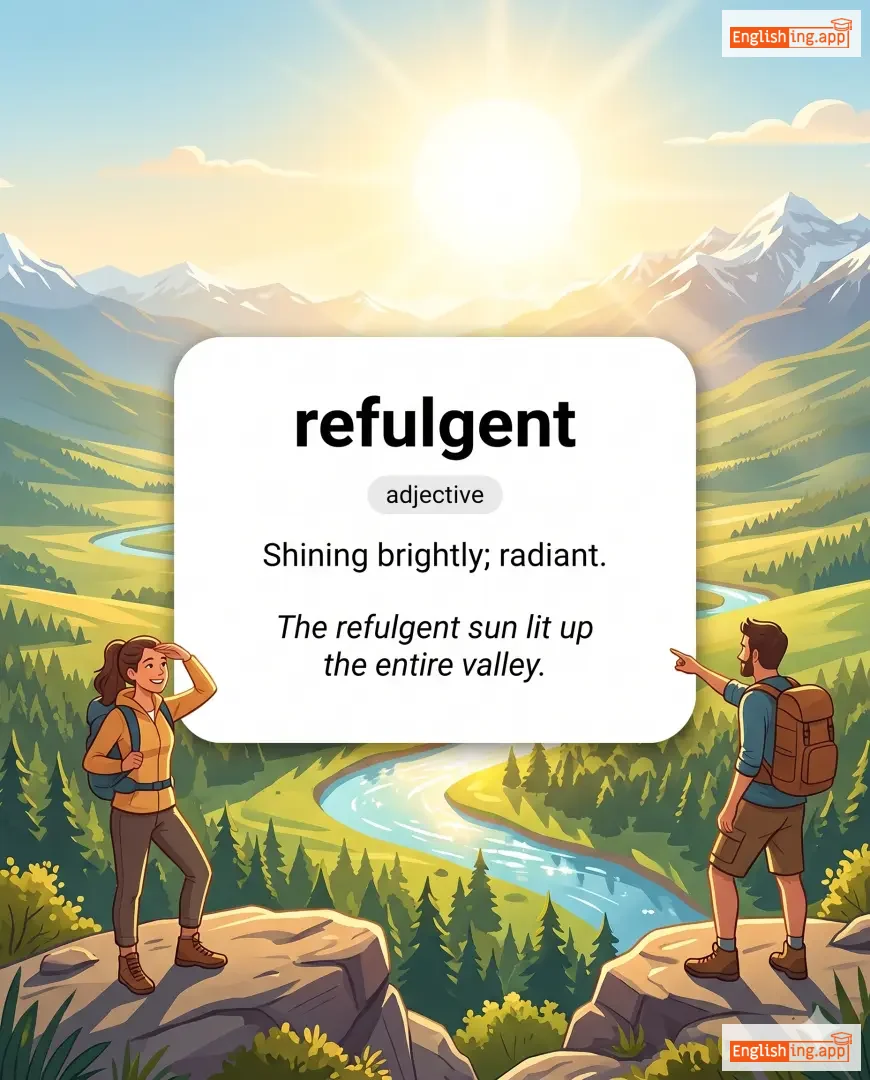
refulgent definition card — visual illustration of the meaning
adjective C2
/rɪˈfʌldʒənt/
resplandeciente (resplandeciente)

Shining brightly; radiant.

"The refulgent sun lit up the entire valley."

"El sol resplandeciente iluminó todo el valle." (El sol resplandeciente iluminó todo el valle.)
adjective C2
/rɪˈfjuː.tə.bəl/
refutable (refutable)

capable of being proven wrong or false; able to be disproved

"His theory was refutable because it could be tested experimentally."

"Su teoría era refutable porque podía ser probada experimentalmente." (Su teoría era refutable porque podía ser probada experimentalmente.)
regale definition card — visual illustration of the meaning
verb C2
/rɪˈɡeɪl/
regalar (regalar)

To entertain or amuse someone with stories, food, or drink.

"He regaled us with stories of his travels around the world."

"Nos regaló con historias de sus viajes alrededor del mundo." (Nos regaló con historias de sus viajes alrededor del mundo.)
noun C2
/rɪˈɡætə/
regata (regata)

A sporting event consisting of a series of boat or yacht races.

"The annual regatta attracted competitors from around the world."

"La regata anual atrajo a competidores de todo el mundo." (la regata anual atrajo a competidores de todo el mundo)
noun C2
/ˈriːdʒənt/
regente (regente)

a person who rules in place of a monarch when the monarch is absent or too young

"The prince acted as regent until the king came of age."

"El príncipe actuó como regente hasta que el rey alcanzó la mayoría de edad." (El príncipe actuó como regente hasta que el rey alcanzó la mayoría de edad.)
noun C2
/ˈrɛdʒɪsaɪd/
regicidio (regicidio)

the act of killing a king

"The conspirators were executed for committing regicide."

"Los conspiradores fueron ejecutados por cometer regicidio." (Los conspiradores fueron ejecutados por cometer regicidio.)
adjective C2
/ˈrɛɡnənt/
regente (regente)

Reigning; currently holding power, authority, or dominance.

"The regnant queen introduced several reforms during her reign."

"La reina regente introdujo varias reformas durante su reinado." (La reina regente introdujo varias reformas durante su reinado.)
noun C2
/rɪˈdʒɔɪndər/
réplica (replika)

a quick or witty reply; a response to a remark or argument

"His sharp rejoinder silenced the crowd."

"Su aguda réplica silenció a la multitud." (su aguda replica silencio a la multitud.)
noun C2
/rɪˌdʒuːvəˈnɛsəns/
rejuvenecimiento (rejuvenecimiento)

the action or process of becoming young or fresh again

"The forest showed signs of rejuvenescence after the rains."

"El bosque mostró señales de rejuvenecimiento después de las lluvias." (El bosque mostró señales de rejuvenecimiento después de las lluvias.)
noun C2
/ˈrɛlɪkwɛri/
relicario (relicario)

a container for holy relics

"The ancient reliquary was decorated with gold and precious stones."

"El antiguo relicario estaba decorado con oro y piedras preciosas." (El antiguo relicario estaba decorado con oro y piedras preciosas.)
adjective C2
/rɪˈmiːdiəbl/
remediable (remediable)

capable of being corrected or cured

"The mistake was serious but still remediable."

"El error fue grave pero aún remediable." (El error fue grave pero aún remediable.)
adjective C2
/rɪˈmɪs/
negligente (negligente)

Negligent in performing a duty or responsibility.

"The manager was remiss in not checking the financial reports carefully."

"El gerente fue negligente al no revisar cuidadosamente los informes financieros." (El gerente fue negligente al no revisar cuidadosamente los informes financieros.)
noun C2
/rɪˈmɒnstrəns/
protesta (protesta)

A forceful protest or objection.

"The workers’ remonstrance against unfair treatment was ignored."

"La protesta de los trabajadores contra el trato injusto fue ignorada." (La protesta de los trabajadores contra el trato injusto fue ignorada.)
noun/adjective C2
/rɪˈmɒnstrənt/
protestante (protestante)

A person who makes a forceful protest (noun); protesting or objecting (adjective).

"He was a remonstrant voice in the assembly."

"Él fue una voz de protesta en la asamblea." (Él fue una voz de protesta en la asamblea.)
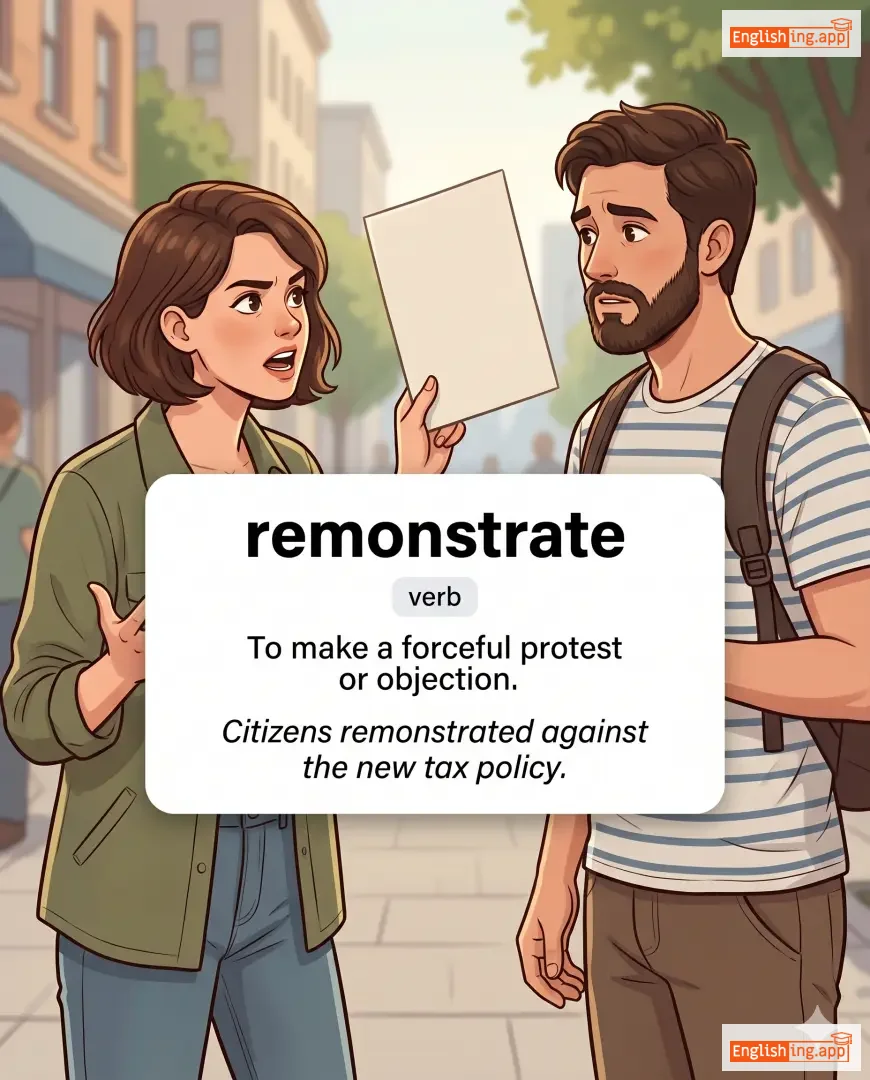
remonstrate definition card — visual illustration of the meaning
verb C2
/rɪˈmɒnstreɪt/
protestar (protestar)

To make a forceful protest or objection.

"Citizens remonstrated against the new tax policy."

"Los ciudadanos protestaron contra la nueva política fiscal." (Los ciudadanos protestaron contra la nueva política fiscal.)
adjective C2
/rɪˈmjuːnərətɪv/
remunerativo (remunerativo)

Financially rewarding or profitable.

"He chose a remunerative career in medicine."

"Eligió una carrera remunerada en medicina." (Eligió una carrera remunerada en medicina.)
verb C2
/rɛnd/
rasgar (rasgar)

to tear something apart violently or forcefully

"The explosion rent the air with a deafening noise."

"La explosión rasgó el aire con un ruido ensordecedor." (La explosión rasgó el aire con un ruido ensordecedor.)
noun C2
/rɪˌnʌnsiˈeɪʃən/
renuncia (renuncia)

the formal rejection or giving up of something, usually a belief, claim, or way of life

"His renunciation of worldly pleasures impressed the monks."

"Su renuncia a los placeres mundanos impresionó a los monjes." (Su renuncia a los placeres mundanos impresionó a los monjes.)
adjective C2
/ˈrɛpərəbəl/
reparable (reparable)

able to be repaired or fixed

"The damage to the car was serious but still reparable."

"El daño al coche fue grave, pero aún reparable." (El daño al coche fue grave, pero aún reparable.)
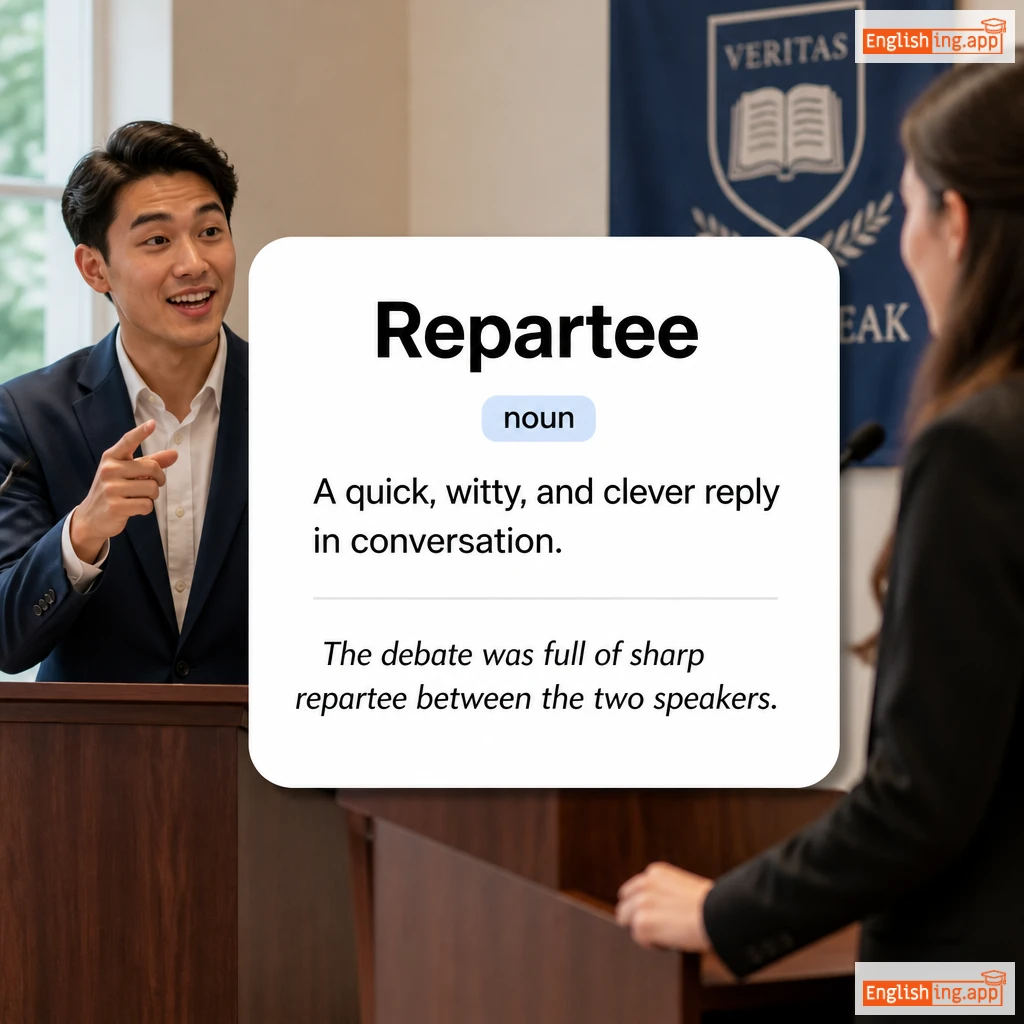
Repartee definition card — visual illustration of the meaning
noun C2
/ˌrɛpɑːrˈtiː/
respuesta ingeniosa (respuesta ingeniosa)

A quick, witty, and clever reply in conversation.

"The debate was full of sharp repartee between the two speakers."

"El debate estuvo lleno de respuestas agudas entre los dos oradores." (El debate estuvo lleno de respuestas agudas entre los dos oradores.)
noun C2
/rɪˈpæst/
comida (comida)

A meal or the food eaten during a meal.

"They enjoyed a delicious repast by the riverside."

"Disfrutaron de una deliciosa comida junto al río." (Disfrutaron de una deliciosa comida junto al río.)
adjective C2
/ˌrɛpərˈtɔːriəl/
repertorial (repertorial)

Relating to or characteristic of a repertoire, especially in journalism or performance contexts.

"The journalist's repertorial style captured every detail of the unfolding story."

"El estilo repertorial del periodista capturó cada detalle de la historia en desarrollo." (El estilo repertorial del periodista capturó cada detalle de la historia en desarrollo.)
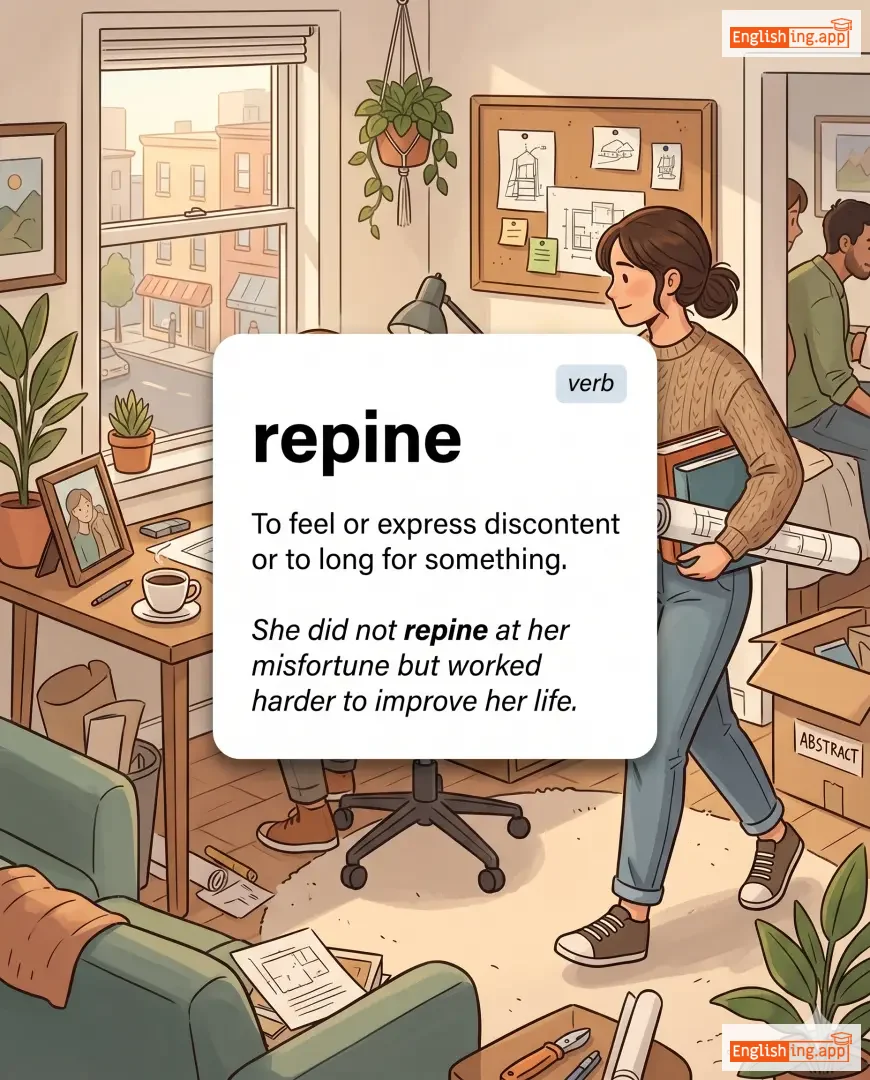
repine definition card — visual illustration of the meaning
verb C2
/rɪˈpaɪn/
lamentarse (lamentarse)

To feel or express discontent or to long for something.

"She did not repine at her misfortune but worked harder to improve her life."

"Ella no lamentó su desgracia, sino que trabajó más duro para mejorar su vida." (Ella no lamentó su desgracia, sino que trabajó más duro para mejorar su vida.)
verb C2
/ˌrɛprɪˈhɛnd/
reprender (reprender)

to express disapproval or criticism of someone or something

"The teacher reprehended the student for being dishonest."

"El maestro reprendió al estudiante por ser deshonesto." (El maestro reprendió al estudiante por ser deshonesto.)
noun C2
/ˌrɛprɪˈhɛnʃən/
reprensión (reprension)

The act of rebuking or criticizing severely.

"The teacher’s reprehension of the student’s behavior was justified."

"La reprensión del comportamiento del estudiante por parte del profesor fue justificada." (La reprension del comportamiento del estudiante por parte del profesor fue justificada.)
adjective C2
/rɪˈprɛsəbl̩/
reprimible (reprimible)

Capable of being restrained or suppressed.

"The movement proved to be hardly repressible."

"El movimiento resultó ser casi reprimible." (El movimiento resultó ser casi reprimible.)
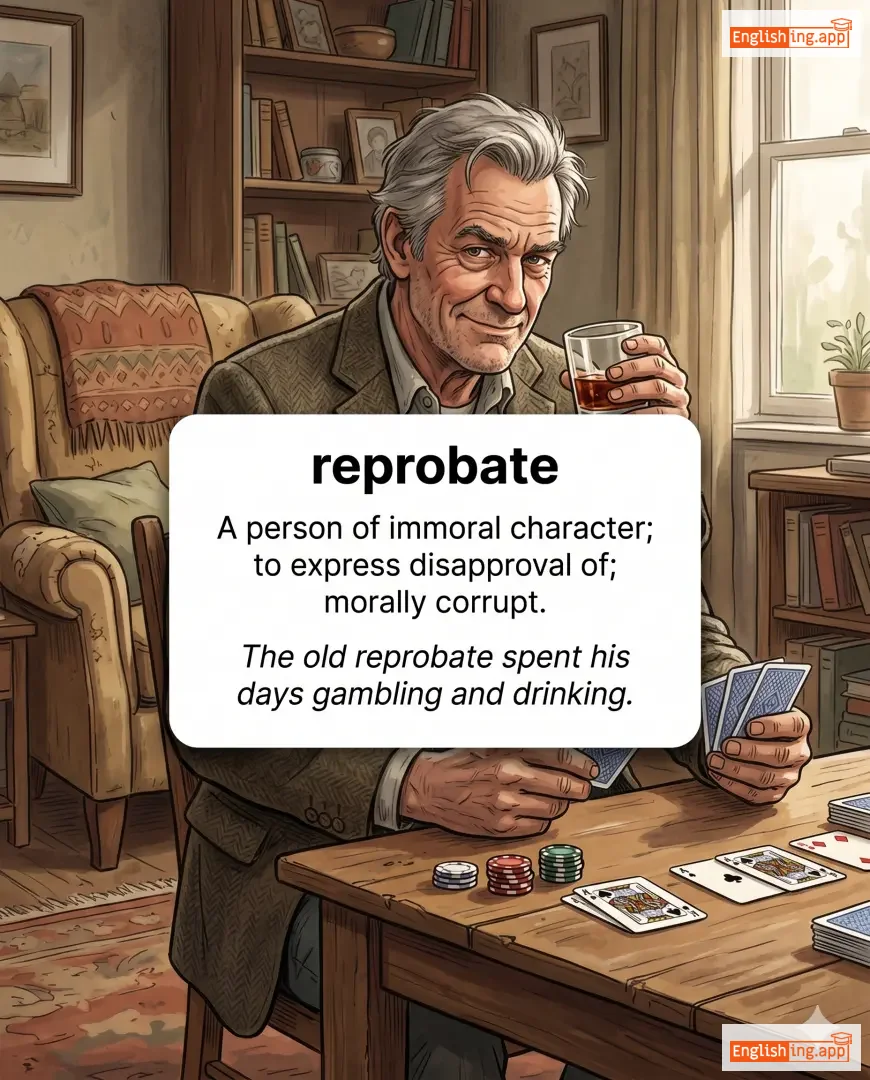
reprobate definition card — visual illustration of the meaning
noun, adjective, verb C2
/ˈrɛprəˌbeɪt/
persona inmoral (persona inmoral)

A person of immoral character; to express disapproval of; morally corrupt.

"The old reprobate spent his days gambling and drinking."

"El viejo reprobado pasó sus días apostando y bebiendo." (El viejo reprobado paso sus dias apostando y bebiendo.)
noun C2
/ˌrɛprəˈbeɪʃən/
reprobación (reprobacion)

Strong disapproval or condemnation; rejection by God as beyond salvation.

"The teacher’s face showed clear reprobation at the student’s rude remark."

"El rostro del profesor mostró una clara reprobación ante el comentario grosero del estudiante." (El rostro del profesor mostro una clara reprobacion ante el comentario grosero del estudiante.)
noun C2
/rɪˈpruːf/
reprobación, censura (reprobacion, censura)

An expression of blame or disapproval.

"His careless words drew a sharp reproof from his mother."

"Sus palabras descuidadas provocaron una fuerte reprobación de su madre." (Sus palabras descuidadas provocaron una fuerte reprobacion de su madre.)
verb C2
/rɪˈpruːv/
reprender (reprender)

to criticize or correct someone gently or disapprove of their actions

"The teacher reproved the student for being late."

"El maestro reprendió al estudiante por llegar tarde." (El maestro reprendió al estudiante por llegar tarde.)
noun C2
/rɪˈpʌɡ.nəns/
repulsión (repulsion)

intense disgust or strong aversion towards something

"She felt deep repugnance at the cruelty of the act."

"Ella sintió un profundo desprecio por la crueldad del acto." (Ella sintió un profundo desprecio por la crueldad del acto.)
noun C2
/ˈrɛkwiəm/
misa de réquiem (misa de requiem)

A mass, music, or ceremony for the repose of the souls of the dead.

"The choir performed a requiem in memory of the late leader."

"El coro realizó un réquiem en memoria del líder fallecido." (El coro realizo un requiem en memoria del lider fallecido.)
noun C2
/rɪˈkwaɪtəl/
retribución (retribucion)

The act of returning something, such as a favor, service, or punishment; repayment or retaliation.

"She offered her time in requital for his kindness."

"Ella ofreció su tiempo como retribución por su amabilidad." (Ella ofreció su tiempo como retribución por su amabilidad.)
verb C2
/rɪˈkwaɪt/
corresponder (corresponder)

to return or repay a favor, service, or feeling

"She requited his kindness with a thoughtful gift."

"Ella correspondió su amabilidad con un regalo pensado." (Ella correspondió su amabilidad con un regalo pensado.)
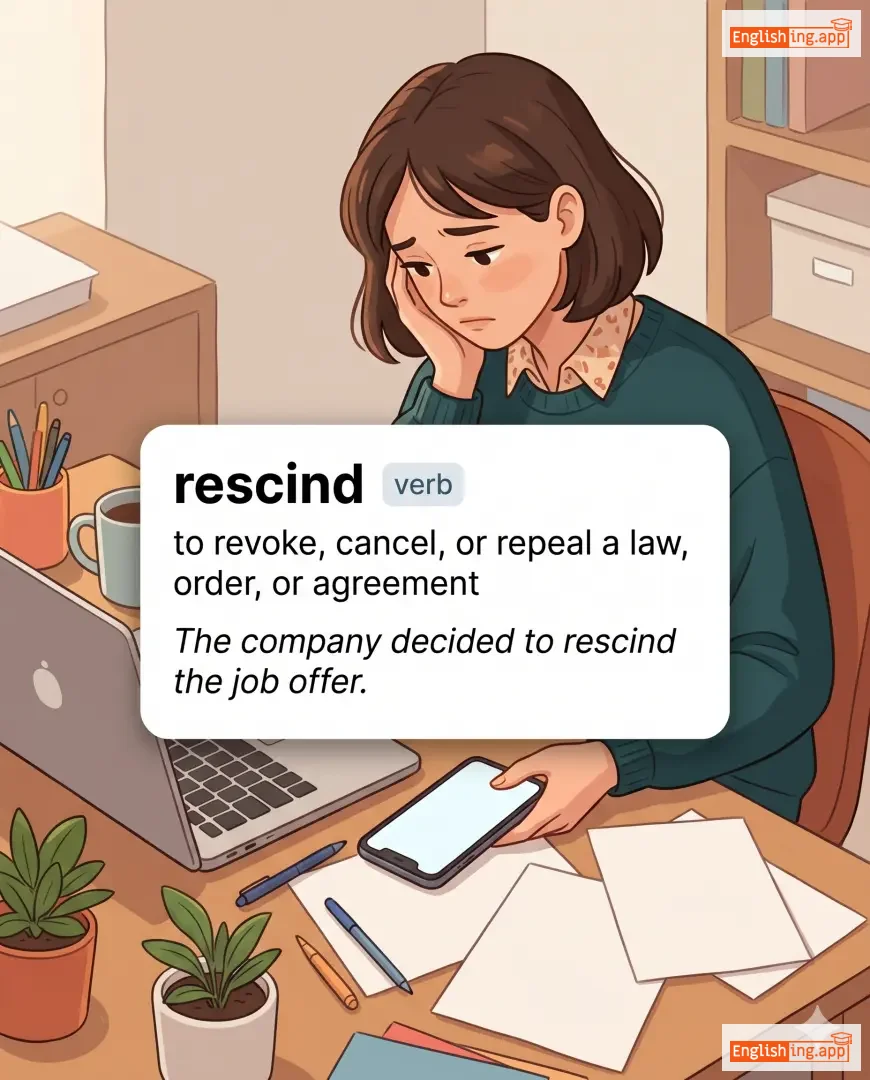
rescind definition card — visual illustration of the meaning
verb C2
/rɪˈsɪnd/
rescindir (rescindir)

to revoke, cancel, or repeal a law, order, or agreement

"The company decided to rescind the job offer."

"La empresa decidió rescindir la oferta de trabajo." (La empresa decidió rescindir la oferta de trabajo.)
noun C2
/rɪˈsɪʒən/
rescisión (rescision)

the cancellation or annulment of a law, contract, or agreement

"The rescission of the contract left both parties disappointed."

"La rescisión del contrato dejó a ambas partes decepcionadas." (La rescision del contrato dejo a ambas partes decepcionadas.)
adjective C2
/rɪˈzɪstləs/
irresistible (irresistible)

Impossible to resist; having an overpowering effect.

"She felt a resistless urge to laugh at the joke."

"Ella sintió un impulso irresistible de reírse de la broma." (Ella sintió un impulso irresistible de reírse de la broma.)
verb C2
/rɪˈspaɪər/
respirar (respirar)

To breathe in and out; to inhale and exhale.

"Plants also respire to release energy."

"Las plantas también respiran para liberar energía." (Las plantas también respiran para liberar energía.)
adjective C2
/rɪˈsplɛndənt/
resplandeciente (resplandeciente)

Shining brilliantly; dazzling in appearance or effect

"The bride looked resplendent in her wedding gown."

"La novia se veía resplandeciente con su vestido de boda." (La novia se veía resplandeciente con su vestido de boda.)
adjective C2
/ˈrɛstɪv/
inquieto (inquieto)

unable to stay still or silent; restless and impatient

"The crowd grew restive as they waited for the concert to begin."

"La multitud se volvió inquieta mientras esperaban a que comenzara el concierto." (La multitud se volvio inquieta mientras esperaban a que comenzara el concierto.)
verb C2
/rɛtʃ/
felicidad (felicidad)

to make the sound and movement of vomiting without bringing anything up

"The smell of spoiled food made him retch violently."

"Ella no pudo ocultar su felicidad cuando recibió el premio." (Ella no pudo ocultar su felicidad cuando recibio el premio.)
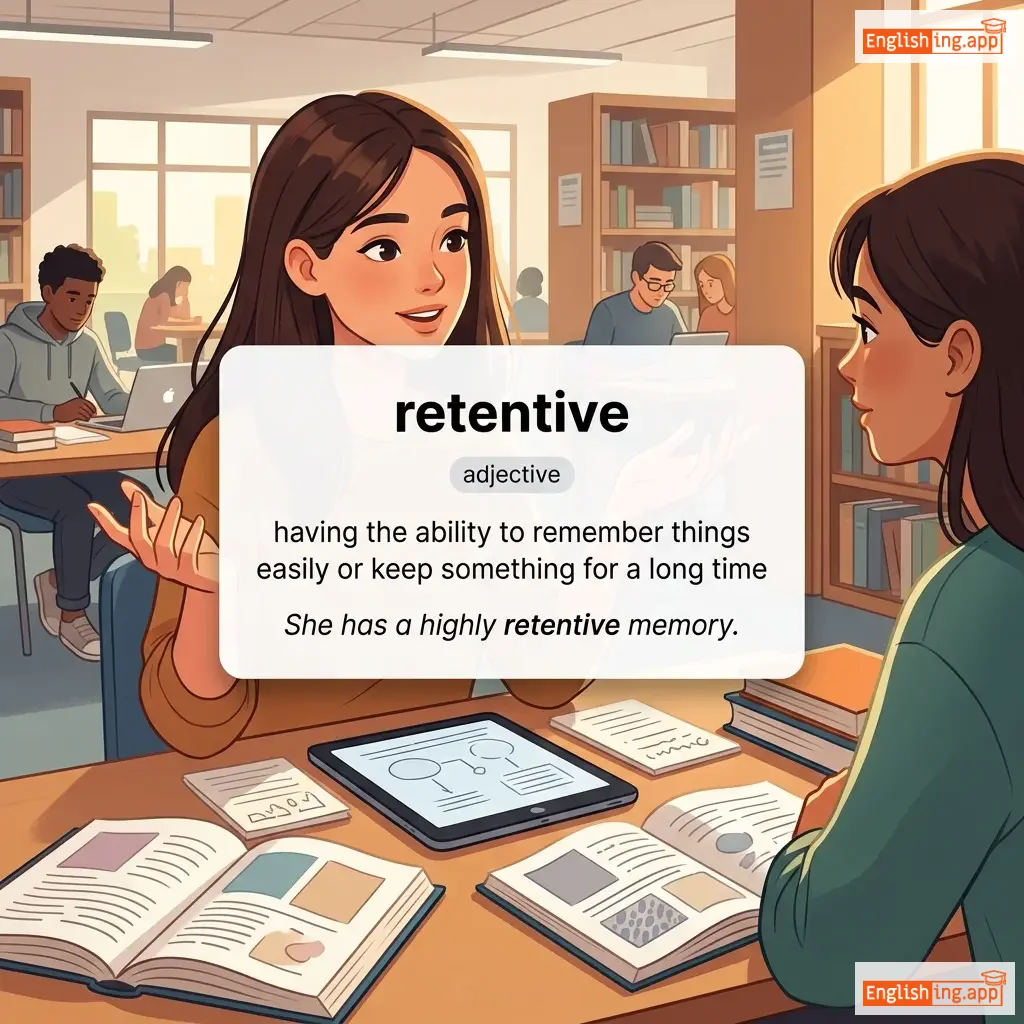
retentive definition card — visual illustration of the meaning
adjective C2
/rɪˈtɛntɪv/
memoria retentiva (memoria retentiva)

having the ability to remember things easily or keep something for a long time

"She has a highly retentive memory."

"Ella tiene una memoria muy retentiva." (Ella tiene una memoria muy retentiva.)