Vocabularies

English Vocabulary Dictionary | Word Meanings, Definitions & Examples

verb C2
/ˌpriːɪˈstæblɪʃ/
事前に設定する (jizen ni settei suru)

To establish or set up beforehand.

"Certain rules were preestablished before the meeting."

"会議の前にいくつかのルールが事前に設定されていました。" (Kaigi no mae ni ikutsuka no rūru ga jizen ni settei sareteimashita.)
verb C2
/ˌpriːɪɡˈzɪst/
前もって存在する (maemotte sonzai suru)

to exist beforehand or before something else

"These customs preexist the arrival of modern technology."

"これらの習慣は、現代技術の到来前に存在していました。" (Korera no shūkan wa, gendai gijutsu no tōrai mae ni sonzai shite imashita.)
noun C2
/ˌpriːɪɡˈzɪstəns/
前存在 (zen sonzai)

the state of existing before something else

"Philosophers often debated the preexistence of the soul."

"哲学者たちは魂の前存在についてよく議論していました。" (Tetsugakusha-tachi wa tamashii no zen sonzai ni tsuite yoku giron shite imashita.)
adjective C2
/ˈprɛfətɔːri/
序文的 (jobun-teki)

serving as an introduction or preface

"He made some prefatory remarks before the lecture began."

"彼は講義が始まる前にいくつかの序文的な発言をした。" (Kare wa kougi ga hajimaru mae ni ikutsuka no jobun-teki na hatsugen o shita.)
noun C2
/prɪˈfɜːrmənt/
昇進 (shoushin)

promotion or advancement in rank, position, or office

"He hoped for preferment in the government office."

"彼は政府のオフィスで昇進を望んでいた。" (Kare wa seifu no ofisu de shoushin wo nozondeita.)
verb C2
/priːˈfɪɡjər/
前兆を示す (zenshou wo shimesu)

to represent, show, or foreshadow something in advance

"The economic reforms prefigure major social changes."

"経済改革は大きな社会変革を予兆しています。" (Keizai kaikaku wa ookina shakai henka wo yochou shiteimasu.)
adjective C2
/prɪˈhɛnsɪbəl/
掴みやすい (tsukami yasui)

capable of being grasped or seized

"The tool has a prehensible handle that improves safety."

"その道具には安全性を高めるために掴みやすいハンドルがあります。" (Sono dougu ni wa anzen-sei o takameru tame ni tsukami yasui handoru ga arimasu.)
adjective C2
/prɪˈhɛnsaɪl/
把握するための適応 (haaku suru tame no tekiou)

adapted for seizing or grasping, especially by wrapping around an object

"The monkey used its prehensile tail to hang from the branch."

"サルはそのプリヘンシル尾を使って枝からぶら下がっていた。" (Saru wa sono purihenshiru o wo tsukatte eda kara burasagatte ita.)
noun C2
/prɪˈhɛnʃən/
つかむ動作; 何かをつかむ能力 (tsukamu dōsa; nanika o tsukamu nōryoku)

the act of grasping or seizing; the ability to take hold of something

"Therapists assessed the patient's prehension during hand therapy."

"セラピストは手の治療中に患者のつかむ能力を評価しました。" (Serapisuto wa te no chiryō-chū ni kanja no tsukamu nōryoku o hyōka shimashita.)
noun C2
/ˈprɛləsi/
教会制度 (kyōkaiseido)

The office, dignity, or system of church government by prelates.

"The medieval church was dominated by prelacy and its traditions."

"中世の教会はプレラシーとその伝統によって支配されていた。" (Chūsei no kyōkai wa purerashī to sono dentō ni yotte shihai sarete ita.)
noun C2
/ˈprɛlət/
高位の聖職者 (kōi no seishokusha)

A high-ranking member of the clergy, especially a bishop or abbot.

"The prelate delivered a sermon to the congregation."

"プレラートは会衆に説教を行った。" (Purerāto wa kaishū ni sekkyō o okonatta.)
adjective C2
/prɪˈmɒnɪtəri/ or /ˌpriːməˈnɪtəri/
予兆 (yochou)

giving a warning or prediction about something, especially something unpleasant

"He ignored the premonitory signs of illness."

"彼は病気の予兆を無視しました。" (Kare wa byouki no yochou wo mushi shimashita.)
verb C2
/ˌpriːɔːrˈdeɪn/
前もって決める (maemotte kimeru)

To decide or determine an outcome in advance, especially by fate or divine will.

"They believed their meeting was preordained by destiny."

"彼らは自分たちの出会いが運命によって前もって決められていると信じていた。" (Karera wa jibuntachi no deai ga unmei ni yotte maemotte kimerarete iru to shinjite ita.)
noun C2
/prɪˈpɒndərəns/
優位性 (yūisei)

The quality or fact of being greater in number, quantity, or importance.

"There was a preponderance of evidence against the defendant."

"被告に対する証拠の優位性があった。" (Hikoku ni taisuru shōko no yūisei ga atta.)
adjective C2
/prɪˈpɒndərənt/
優勢な (yūseina)

Having superior weight, force, influence, or importance.

"The preponderant influence of the media shapes public opinion."

"メディアの優勢な影響は、公共の意見を形成します。" (Media no yūseina eikyō wa, kōkyō no iken o keisei shimasu.)
verb C2
/prɪˈpɒndəreɪt/
優位を占める (yūi o shimeru)

To be greater in influence, weight, or number.

"In the debate, logical arguments preponderated over emotional appeals."

"議論の中で、論理的な議論は感情的な訴えに勝りました。" (Giron no naka de, ronritekina giron wa kanjō-teki na uttae ni kachimashita.)
adjective C2
/ˌpriːpəˈzɛsɪŋ/
魅力的 (miryokuteki)

Attractive or appealing in appearance or manner.

"She had a prepossessing smile that charmed everyone."

"彼女は魅力的な笑顔を持っていて、みんなを魅了した。" (Kanojo wa miryokuteki na egao o motte ite, minna o miryō shita.)
noun C2
/ˌpriːpəˈzɛʃən/
先入観 (sen'nyūkan)

An opinion or feeling formed beforehand; a prejudice or preoccupation.

"His prepossession in favor of tradition made him resist change."

"彼の伝統への先入観は彼を変化に抵抗させました。" (Kare no dentō e no sen'nyūkan wa kare o henka ni teikō sasemashita.)
verb C2
/ˈprɛsɪdʒ/
予兆 (yochou)

to be a sign or warning that something will happen; to foreshadow

"Dark clouds presage a storm."

"暗い雲が嵐を予告する。" (Kurai kumo ga arashi o yokoku suru.)
noun C2
/ˈprɛʃəns/ or /ˈpriːʃəns/
予知 (yochi)

the ability to know or predict what will happen in the future

"Her prescience about market trends saved the company."

"彼女の市場動向に対する予見は会社を救った。" (Kanojo no shijō dōkō ni taisuru yochi wa kaisha o sukutta.)
adjective C2
/ˈprɛʃənt/ or /ˈpriːʃənt/
先見の明がある (senken no mei ga aru)

having or showing knowledge of events before they take place

"The prescient investor sold his shares just before the market crashed."

"先見の明がある投資家は市場が崩壊する前に株を売却しました。" (Senken no mei ga aru tōshika wa shijō ga hōkai suru mae ni kabu o baikyaku shimashita.)
noun C2
/ˈpriːskrɪpt/
規定 (kitei)

An authoritative rule or direction; something laid down as a command.

"The prescript of the organization required strict punctuality."

"その組織の規定は厳格な時間厳守を要求していた。" (Sono soshiki no kitei wa genkaku na jikan genshu o youkyuu shite ita.)
adjective C2
/prɪˈskrɪptɪbəl/
規定可能 (kitei kanou)

Capable of being prescribed or laid down as a rule or directive.

"Certain regulations are prescriptible under the law."

"特定の規則は法律の下で規定可能です。" (Tokutei no kisoku wa hōritsu no moto de kitei kanō desu.)
adjective C2
/prɪˈsɛnʃənt/
予感 (yokan)

Having a feeling or sense of something about to happen; predictive.

"She was presentient of the coming disaster."

"彼女は迫り来る災害を予感していた。" (Kanojo wa semarikuru saigai wo yokan shite ita.)
noun C2
/prɪˈsɛntɪmənt/
予感 (yokan)

An intuitive feeling about the future, especially of something bad about to happen.

"He had a strong presentiment that the plan would fail."

"彼は計画が失敗するという強い予感を持っていた。" (Kare wa keikaku ga shippai suru to iu tsuyoi yokan o motte ita.)
noun C2
/prɪˈzɛntmənt/
正式な提示 (seishiki na teiji)

The act of presenting something formally or officially; a formal statement or document.

"The lawyer made a presentment of the evidence to the court."

"弁護士は証拠を法廷に提示しました。" (Bengoshi wa shōko o hōtei ni teiji shimashita.)
adjective C2
/prɪˈzʌmptɪv/
推定 (suitei)

Based on probability or assumption rather than proof.

"She is the presumptive nominee for the party."

"彼女はその党の推定候補者です。" (Kanojo wa sono tō no suitei kōho-sha desu.)
adjective C2
/ˌpriːtərˈnætʃərəl/
超自然的 (chōshizenteki)

Beyond what is normal or natural; extraordinary or supernatural.

"She had a preternatural ability to remain calm in any crisis."

"彼女はどんな危機にも冷静に保つ超自然的な能力を持っていた。" (Kanojo wa donna kiki ni mo reisei ni tamotsu chōshizenteki na nōryoku o motte ita.)
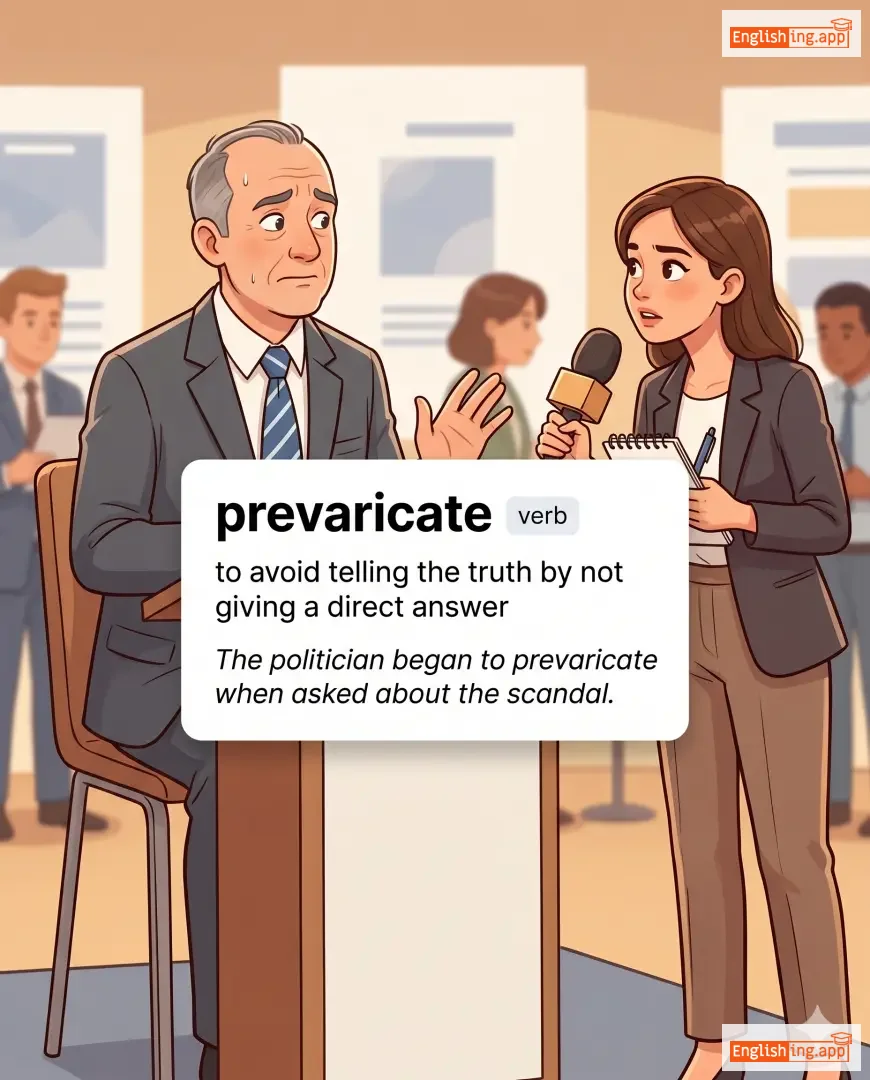
prevaricate definition card — visual illustration of the meaning
verb C2
/prɪˈværɪkeɪt/

to avoid telling the truth by not giving a direct answer

"The politician began to prevaricate when asked about the scandal."

adjective C2
/ˈprɪɡɪʃ/
道徳的で自己満足な (dōtoku-teki de jiko manzoku na)

self-righteously moralistic and superior

"He came across as priggish when correcting everyone's manners."

"彼は皆のマナーを直すとき、プリギッシュに見えた。" (Kare wa mina no manā o naosu toki, purigisshu ni mieta.)
noun C2
/ˌpraɪmoʊˈdʒɛnɪtʃər/
長子継承権 (choushi keishouken)

The right of the firstborn child to inherit the family estate or title.

"Under primogeniture, the eldest son inherited the entire estate."

"長子継承権の下、長男は家族全体の財産を相続しました。" (Choushi keishouken no moto, chounan wa kazoku zentai no zaisan o souzoku shimashita.)
verb C2
/prɪmp/
幸せ (shiawase)

To spend time making minor adjustments to one's appearance.

"She primped in front of the mirror before the party."

"彼女は賞を受け取ったとき、自分の幸せを隠すことができませんでした。" (Kanojo wa shō o uketotta toki, jibun no shiawase o kakusu koto ga dekimasen deshita.)
noun C2
/ˌprɪnsɪˈpæləti/
公国 (koukoku)

a state ruled by a prince

"Monaco is a famous principality in Europe."

"モナコはヨーロッパで有名な公国です。" (Monako wa Yooroppa de yuumei na koukoku desu.)
noun C2
/ˈpraɪəri/
修道院 (shūdōin)

a small monastery or convent governed by a prior or prioress

"The old priory was converted into a museum."

"古い修道院は博物館に改装されました。" (Furui shūdōin wa hakubutsukan ni kaisō saremashita.)
noun C2
/ˌpraɪvəˈtɪə/
私掠船 (shiryaku-sen)

A privately owned armed ship authorized by a government to attack enemy ships during war.

"The privateer captured several enemy vessels during the conflict."

"プライベティアは紛争中にいくつかの敵船を捕らえました。" (Puraibetiya wa funsō-chū ni ikutsuka no teki-sen o toraemashita.)
noun C2
/praɪˈveɪʃən/
欠乏, 貧困 (ketsubou, hinkon)

A state in which things essential for human well-being such as food and warmth are lacking.

"The refugees suffered great privation during the harsh winter."

"難民たちは厳しい冬の間に大きな欠乏に苦しみました。" (Nanmin-tachi wa kibishii fuyu no aida ni ookina ketsubou ni kurushimimashita.)
noun C2
/ˈprɪvɪti/
プライバシー関係、契約関係 (puraibashī kankei, keiyaku kankei)

A close, private, or special relationship; in law, the direct connection between parties to a contract.

"There was no privity of contract between the supplier and the customer."

"供給者と顧客の間には契約関係がなかった。" (kyōkyūsha to kokyaku no aida ni wa keiyaku kankei ga nakatta.)
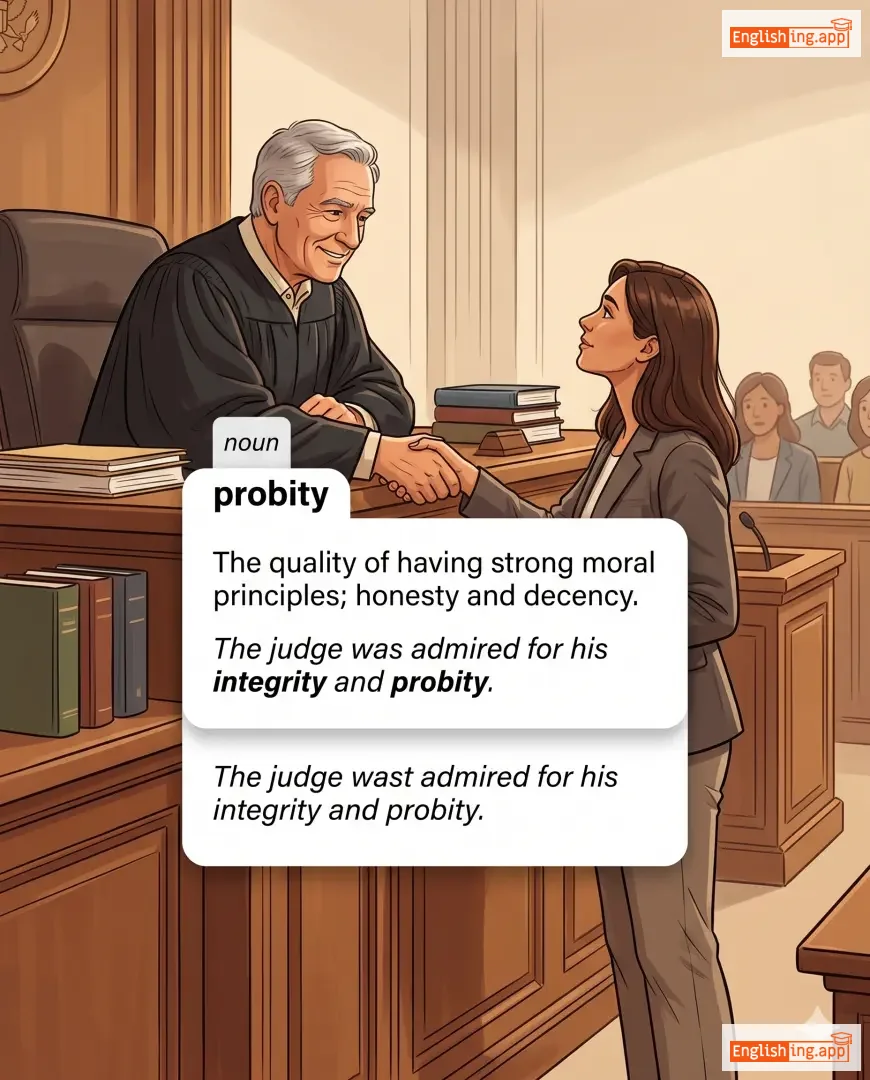
probity definition card — visual illustration of the meaning
noun C2
/ˈproʊbɪti/
誠実 (seijitsu)

The quality of having strong moral principles; honesty and decency.

"The judge was admired for his integrity and probity."

"その裁判官は、誠実さと正直さで賞賛されました。" (Sono saiban-kan wa, seijitsusa to shōjitsusa de shōsan saremashita.)
noun C2
/proʊˈbɑːsɪs/
象の鼻 (zou no hana)

The long, flexible nose of some animals, especially an elephant, or a tubular feeding and sucking organ in insects.

"The elephant used its proboscis to grab food."

"ゾウは食べ物を取るためにその象の鼻を使った。" (Zō wa tabemono o toru tame ni sono zō no hana o tsukatta.)
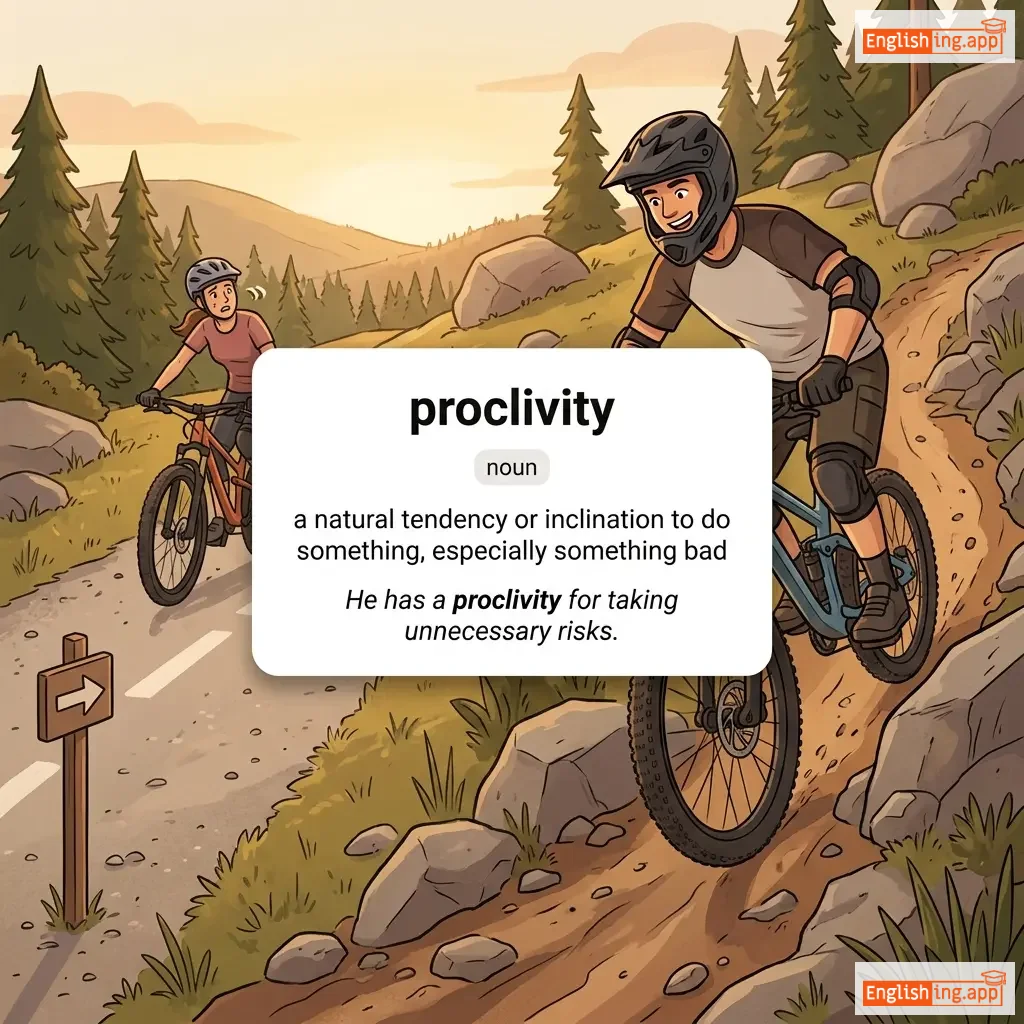
proclivity definition card — visual illustration of the meaning
noun C2
/prəˈklɪvɪti/
傾向 (keikou)

a natural tendency or inclination to do something, especially something bad

"He has a proclivity for taking unnecessary risks."

"彼は不必要なリスクを取る傾向がある。" (Kare wa fuhitsuyou na risuku wo toru keikou ga aru.)
noun C2
/ˌprɒdɪˈɡæləti/
浪費 (rōhi)

the quality of being wastefully extravagant

"His prodigality with money left him bankrupt."

"彼の浪費癖が彼を破産させた。" (Kare no rōhi heki ga kare o hasan saseta.)
noun C2
/ˈprɑːflɪɡəsi/
浪費 (rōhi)

reckless wastefulness or extravagance

"His profligacy with money led him to bankruptcy."

"彼の浪費は彼を破産させました。" (Kare no rōhi wa kare o hasan sasemashita.)
adjective C2
/ˈprɑːflɪɡət/
浪費家 (rouhika)

recklessly extravagant or wasteful in resources

"The king was known for his profligate lifestyle."

"その王は贅沢なライフスタイルで知られていました。" (Sono ō wa zeitaku na raifusutairu de shirarete imashita.)
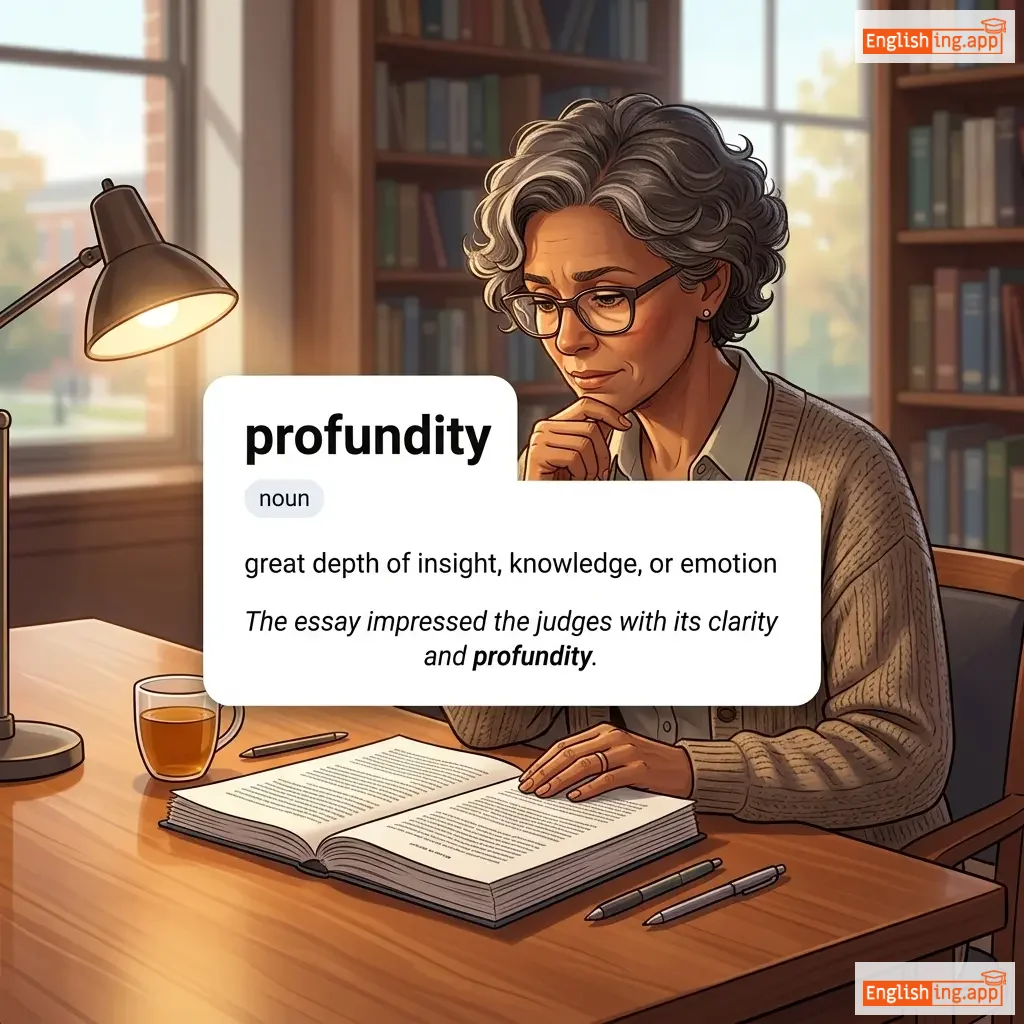
profundity definition card — visual illustration of the meaning
noun C2
/prəˈfʌndɪti/
深さ (fukasa)

great depth of insight, knowledge, or emotion

"The essay impressed the judges with its clarity and profundity."

"そのエッセイは明快さと深さで審査員を感動させた。" (Sono essei wa meikaisa to fukasa de shinsain o kandō saseta.)
noun C2
/prəˈfjuːʒən/
豊富 (hōfu)

an abundance or large quantity of something

"Spring brought a profusion of wildflowers to the valley."

"春は谷に野生の花の豊富さをもたらした。" (Haru wa tani ni yasei no hana no hōfusa o motarashita.)
noun C2
/proʊˈdʒɛnɪtər/
先祖 (senzo)

a direct ancestor; a person or thing that originates something

"Researchers traced the custom back to a common progenitor."

"研究者たちはその習慣が共通の先祖に遡ることを追跡しました。" (Kenkyū-sha-tachi wa sono shūkan ga kyōtsū no senzo ni sakanoboru koto o tsuiseki shimashita.)
adjective C2
/ˈprɒɡnəθəs/
前突顎骨 (zentotsu gakukotsu)

Having jaws that project forward beyond the rest of the face.

"The fossil displayed a distinctly prognathous skull structure."

"化石は明確に前突顎骨の構造を示していた。" (Kaseki wa meikaku ni zentotsu gakukotsu no kōzō o shimeshite ita.)
verb C2
/prɒɡˈnɒstɪkeɪt/
予測する (yosoku suru)

To foretell or predict future events, especially based on current signs.

"Experts attempted to prognosticate the outcome of the election."

"専門家たちは選挙の結果を予測しようとした。" (Senmonkatachi wa senkyo no kekka o yosoku shiyō to shita.)
noun C2
/prɒɡˌnɒstɪˈkeɪʃən/
予言 (yogen)

The act of foretelling or predicting future events.

"The astrologer's prognostication fascinated the audience."

"占星術師の予言は聴衆を魅了した。" (Senseijutsushi no yogen wa chōshū o miryō shita.)
noun C2
/ˌproʊɪˈbɪʃənɪst/
禁酒主義者 (kinshu shugisha)

A person who supports or advocates prohibition, especially of alcohol.

"The prohibitionist campaigned against the sale of liquor in the town."

"禁酒主義者は町での酒の販売に反対するキャンペーンを行った。" (Kinshu shugisha wa machi de no sake no hanbai ni hantai suru kyanpēn o okonatta.)