Vocabularies

English Vocabulary Dictionary | Word Meanings, Definitions & Examples

noun C2
/ˈnʌnəri/
修道院 (shūdōin)

A convent or building where nuns live and work.

"She decided to join the nunnery to devote her life to spiritual practice."

"彼女は精神的な実践に人生を捧げるために修道院に参加することを決めました。" (Kanojo wa seishinteki na jissen ni jinsei o sasageru tame ni shūdōin ni sanka suru koto o kimemashita.)
adjective C2
/ˈnʌpʃəl/
結婚式の (kekkonshiki no)

Relating to marriage or weddings.

"The couple prepared for their nuptial ceremony with great joy."

"そのカップルは喜びと共に結婚式の準備をしました。" (Sono kappuru wa yorokobi to tomo ni kekkonshiki no junbi o shimashita.)
noun C2
/ˈnjuː.trɪ.mənt/
栄養 (eiyou)

Something that nourishes; sustenance or food.

"The soil provides nutriment to the plants."

"土壌は植物に栄養を提供します。" (Dojou wa shokubutsu ni eiyou wo teikyou shimasu.)
adjective C2
/ˈnjuː.trɪ.tɪv/
栄養のある (eiyou no aru)

Relating to nutrition; having nourishing qualities.

"The nutritive value of the fruit is very high."

"果物の栄養価は非常に高いです。" (Kudamono no eiyouka wa hijou ni takai desu.)
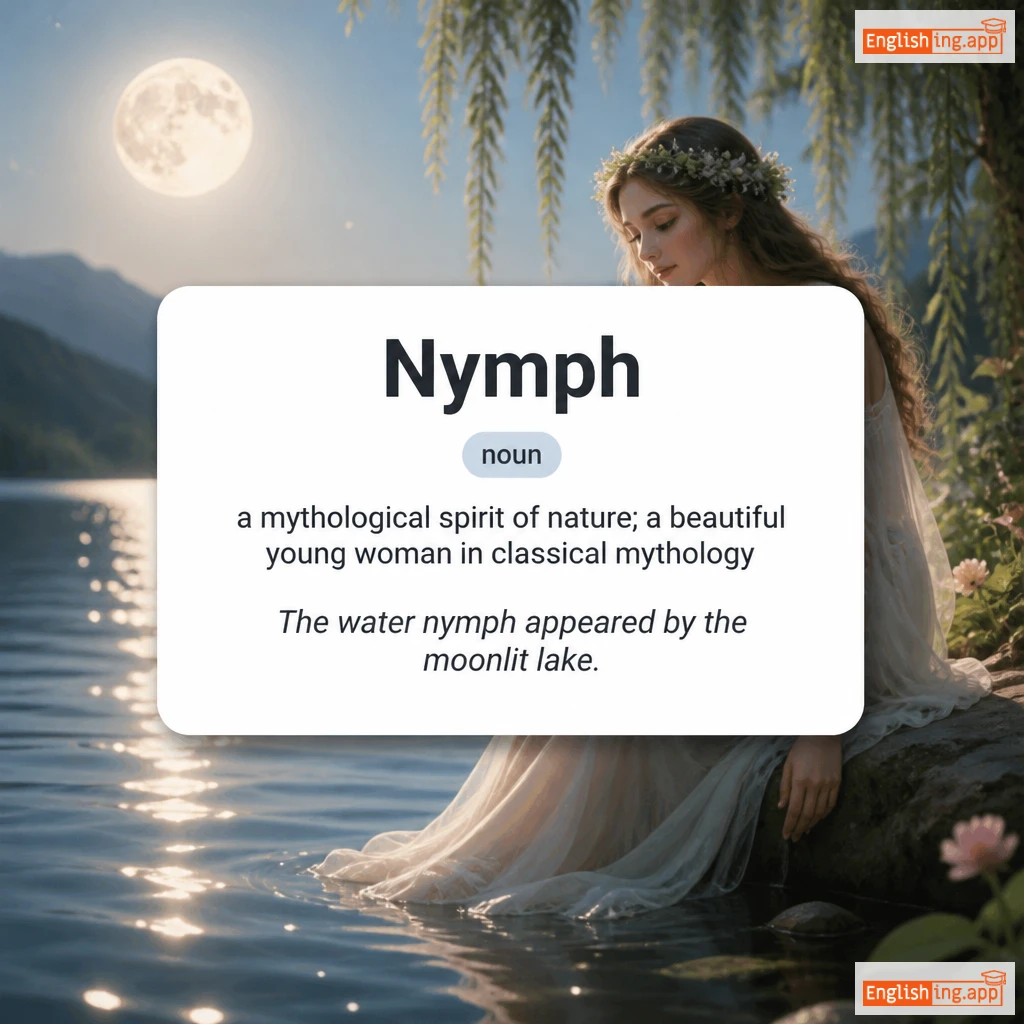
Nymph definition card — visual illustration of the meaning
🧚‍♀️

Nymph (ニンフ)

noun C2
/nɪmf/
ニンフ (ninfu)

a mythological spirit of nature; a beautiful young woman in classical mythology

"The water nymph appeared by the moonlit lake."

"水のニンフが月明かりの湖のそばに現れました。" (Mizu no ninfu ga tsukiakari no mizuumi no soba ni arawaremashita.)
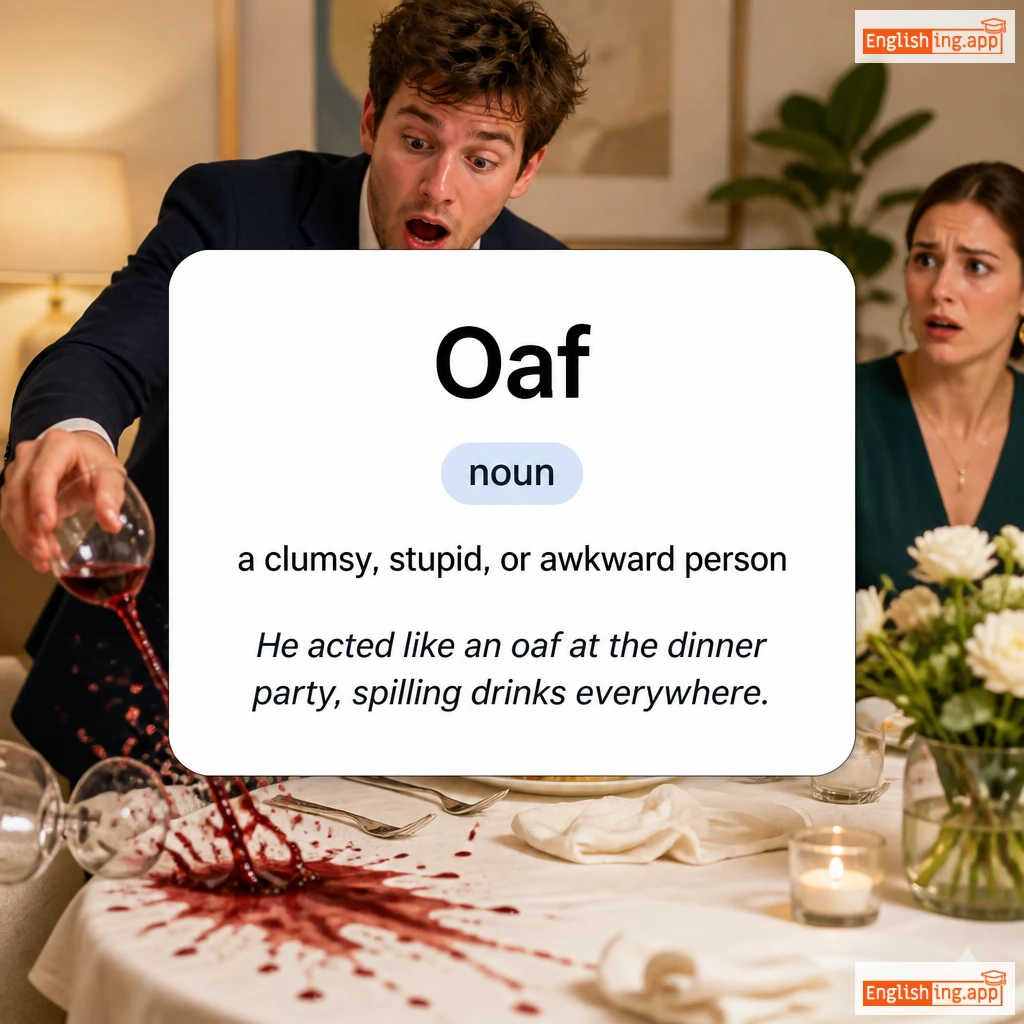
Oaf definition card — visual illustration of the meaning
noun C2
/oʊf/
不器用で愚かな人 (bukiyou de oroka na hito)

a clumsy, stupid, or awkward person

"He acted like an oaf at the dinner party, spilling drinks everywhere."

"彼はディナーパーティーで不器用な人のように振る舞い、あちこちに飲み物をこぼしました。" (Kare wa dinā pāti de bukiyou na hito no yō ni furumai, achikochi ni nomimono o koboshimashita.)
adjective C2
/ˈoʊ.kən/
オーク材で作られた (ooku zai de tsukurareta)

made of or resembling oak wood

"The villagers gathered around the oaken table in the hall."

"村人たちはホールの中のオーク材のテーブルの周りに集まりました。" (Murabito tachi wa hōru no naka no ōku zai no tēburu no mawari ni atsumarimashita.)
noun C2
/ˈoʊ.kəm/
古いロープの繊維 (furui roopu no sen'i)

loose fibers obtained by untwisting old ropes, used for caulking ships

"The shipbuilders used oakum to seal the gaps in the wooden planks."

"船大工たちは木の板の隙間を塞ぐためにオーカムを使いました。" (Funedaiku-tachi wa ki no ita no sukima wo fusagu tame ni okam wo tsukaimashita.)
Oarsman definition card — visual illustration of the meaning
noun C2
/ˈɔːrzmən/
オールマン (ōruman)

a person who rows a boat, especially as a member of a racing crew

"The experienced oarsman rowed the boat across the river."

"経験豊富なオールマンは川を渡るためにボートを漕いだ。" (Keiken hōfu na ōruman wa kawa o wataru tame ni bōto o koida)
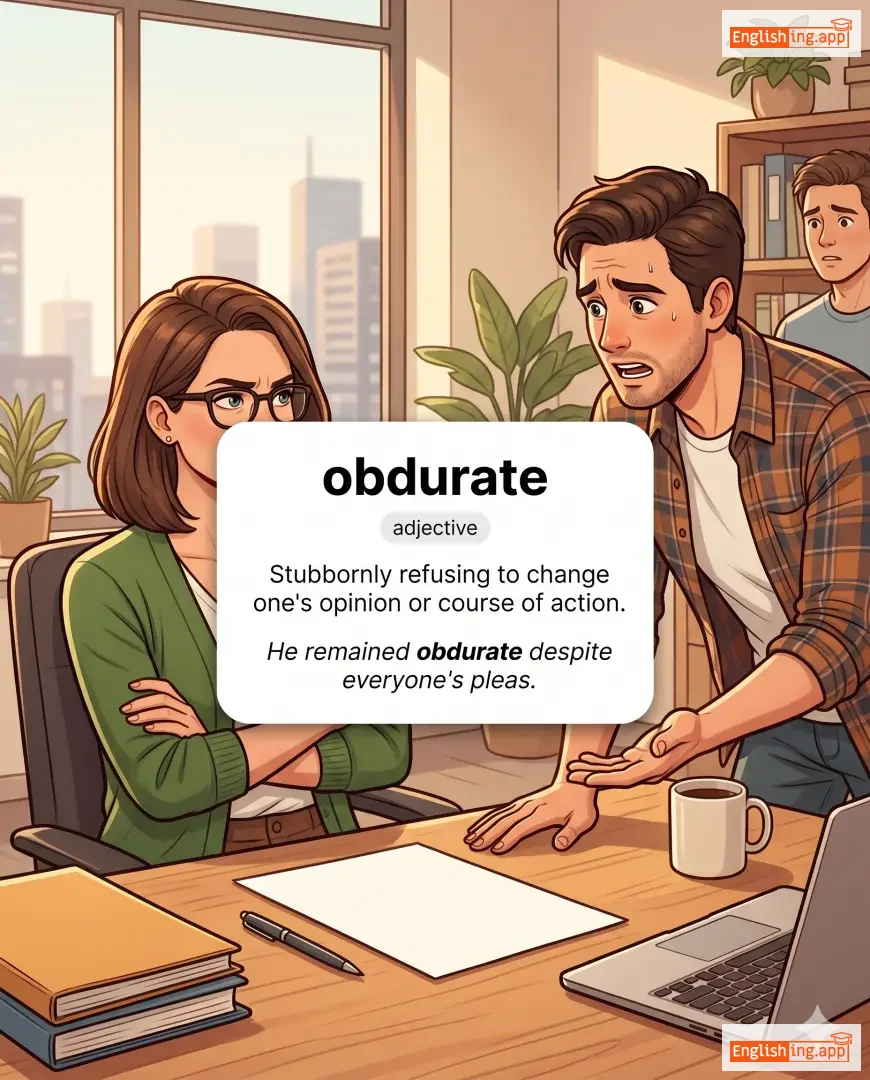
obdurate definition card — visual illustration of the meaning
adjective C2
/ˈɑːbdjʊrət/
頑固 (ganko)

Stubbornly refusing to change one's opinion or course of action.

"He remained obdurate despite everyone's pleas."

"彼は皆の懇願にもかかわらず、頑固なままでした。" (Kare wa mina no kongan ni mo kakawarazu, ganko na mama deshita.)
noun C2
/oʊˈbeɪsəns/
敬意 (keii)

A gesture of respect such as a bow or curtsy.

"They bowed in obeisance to the king."

"彼らは王に対して敬意を示すためにお辞儀をした。" (Karera wa ō ni taishite keii o shimesu tame ni ojigi o shita.)
noun C2
/ˈɑːbəlɪsk/
オベリスク (oberisuku)

A tall, four-sided, narrow tapering monument with a pyramid-shaped top.

"The ancient Egyptians built obelisks to honor their gods."

"古代エジプト人は神々を讃えるためにオベリスクを建てました。" (Kodai Ejiputojin wa kamigami o tataeru tame ni oberisuku o tatemashita.)
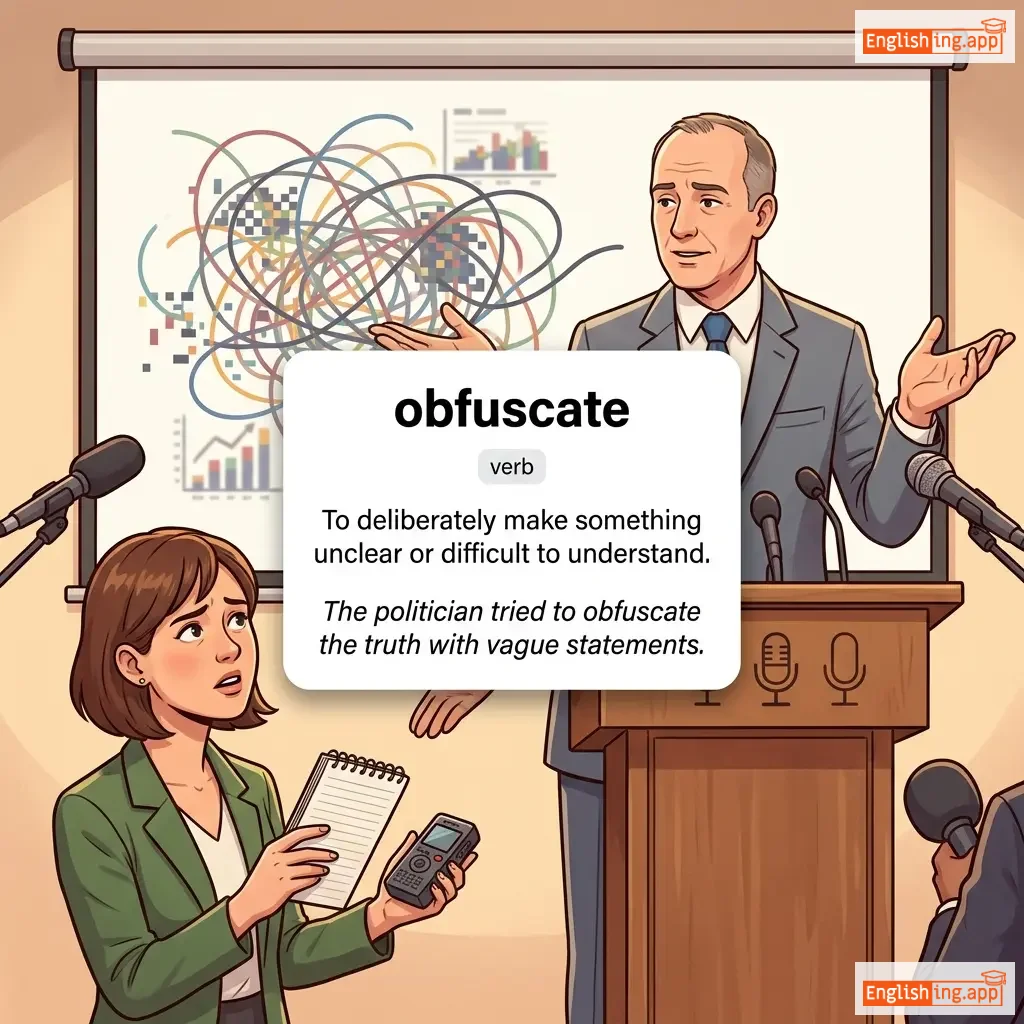
obfuscate definition card — visual illustration of the meaning
verb C2
/ˈɒbfʌskeɪt/
曖昧にする (aimai ni suru)

To deliberately make something unclear or difficult to understand.

"The politician tried to obfuscate the truth with vague statements."

"政治家は曖昧な発言で真実を隠そうとしました。" (Seijika wa aimai na hatsugen de shinjitsu o kakusou to shimashita.)
obfuscation definition card — visual illustration of the meaning
noun C2
/ˌɒb.fʌsˈkeɪ.ʃən/
情報やコードを意図的に不明瞭にすること (jōhō ya kōdo o itoteki ni fumeiryō ni suru koto)

Deliberately making information or code unclear to make it difficult to understand

"Code obfuscation is used to protect software from hackers."

"コードのオブフスケーションは、ソフトウェアをハッカーから保護するために使用されます。" (Kōdo no obufusukēshon wa, sofutowea o hakkā kara hogo suru tame ni shiyō saremasu.)
verb C2
/ˈɑːbdʒərˌɡeɪt/
厳しく叱る (kibishiku shikaru)

to scold or rebuke severely

"The teacher objurgated the student for being dishonest."

"先生は不正直な生徒を厳しく叱った。" (Sensei wa fuseijika na seito wo kibishiku shikatta.)
noun C2
/ˌɑːbdʒərˈɡeɪʃən/
厳しい叱責 (kibishī shisseki)

a harsh scolding or strong rebuke

"His misconduct earned him a severe objurgation from the manager."

"彼の不正行為はマネージャーから厳しい叱責を受けた。" (Kare no fusei kōi wa manējā kara kibishī shisseki o uketa.)
noun C2
/oʊˈbleɪʃən/
奉納 (hounou)

a religious offering, especially of bread or wine to God

"The priest placed the oblation on the altar during the ceremony."

"司祭は儀式の間に祭壇に奉納を置きました。" (Shisai wa gishiki no aida ni saidan ni hounou o okimashita.)
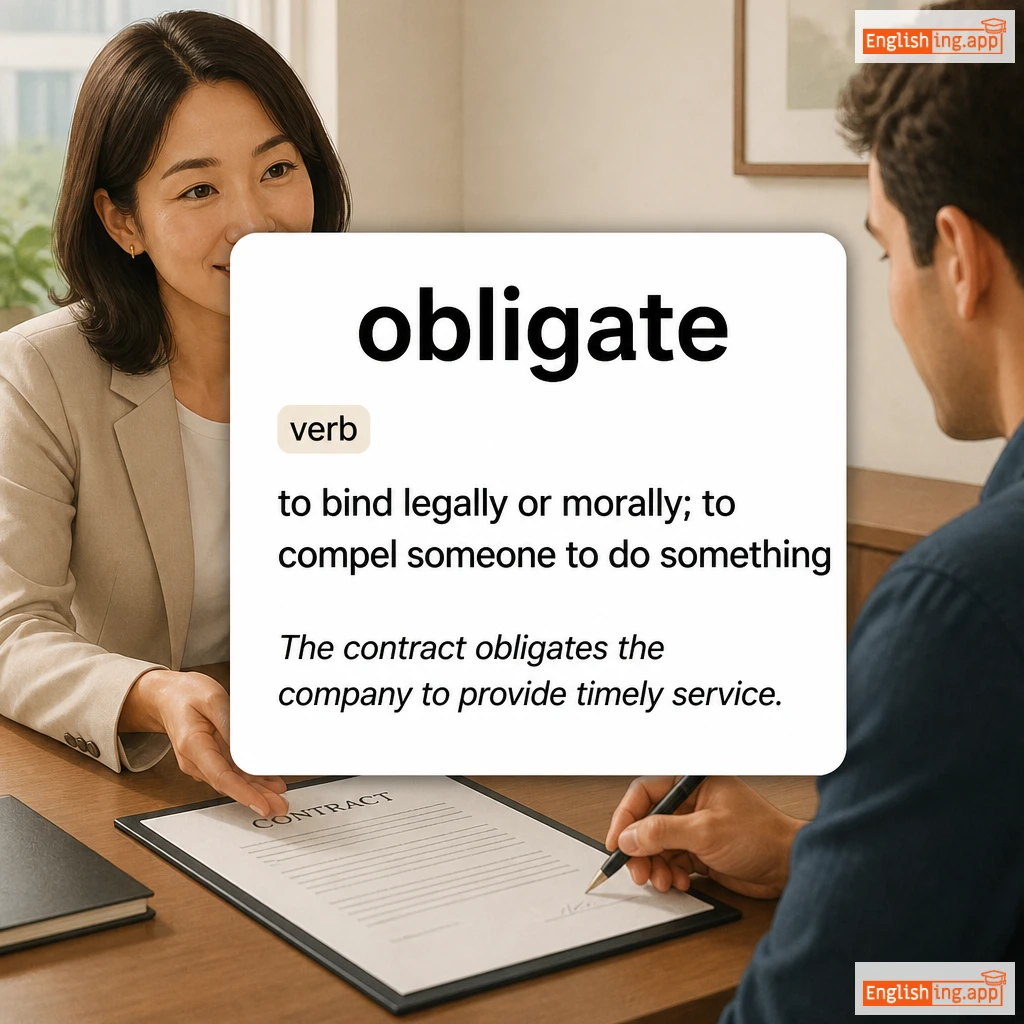
obligate definition card — visual illustration of the meaning
verb C2
/ˈɑːblɪˌɡeɪt/
強制する (kyousei suru)

to bind legally or morally; to compel someone to do something

"The contract obligates the company to provide timely service."

"契約は会社にタイムリーなサービスを提供することを義務付けます。" (Keiyaku wa kaisha ni taimurī na sābisu o teikyō suru koto o gimu zukemasu.)
noun C2
/əˈblɪkwɪti/
歪み (yugami)

Deviation from moral or usual conduct; indirectness or lack of straightforwardness.

"The politician was criticized for the obliquity of his answers."

"その政治家は、彼の答えの歪みについて批判された。" (Sono seijika wa, kare no kotae no yugami ni tsuite hihan sareta.)
Obloquy definition card — visual illustration of the meaning
noun C2
/ˈɒbləkwɪ/
中傷 (chuushou)

Strong public criticism or verbal abuse; disgrace or shame from public condemnation.

"The politician faced obloquy after the scandal was exposed."

"スキャンダルが暴露された後、政治家は中傷に直面しました。" (Sukyandaru ga bakuro sareta ato, seijika wa chuushou ni chokumen shimashita.)
noun C2
/ˈɒbsɪkwiːz/
葬儀儀式 (sōgi gishiki)

Funeral rites or ceremonies.

"The obsequies for the late leader drew thousands of mourners."

"故リーダーの葬儀儀式には、数千人の弔問客が集まりました。" (Ko rīdā no sōgi gishiki ni wa, sūsen-nin no chōmonkyaku ga atsumarimashita.)
obsequious definition card — visual illustration of the meaning
adjective C2
/əbˈsiːkwɪəs/
お世辞 (oseji)

Excessively obedient or attentive in a servile way.

"The waiter gave an obsequious bow to every customer."

"ウェイターは各顧客にお世辞のようなお辞儀をしました。" (Ueitaa wa kaku kokyaku ni oseji no yō na ojigi o shimashita.)
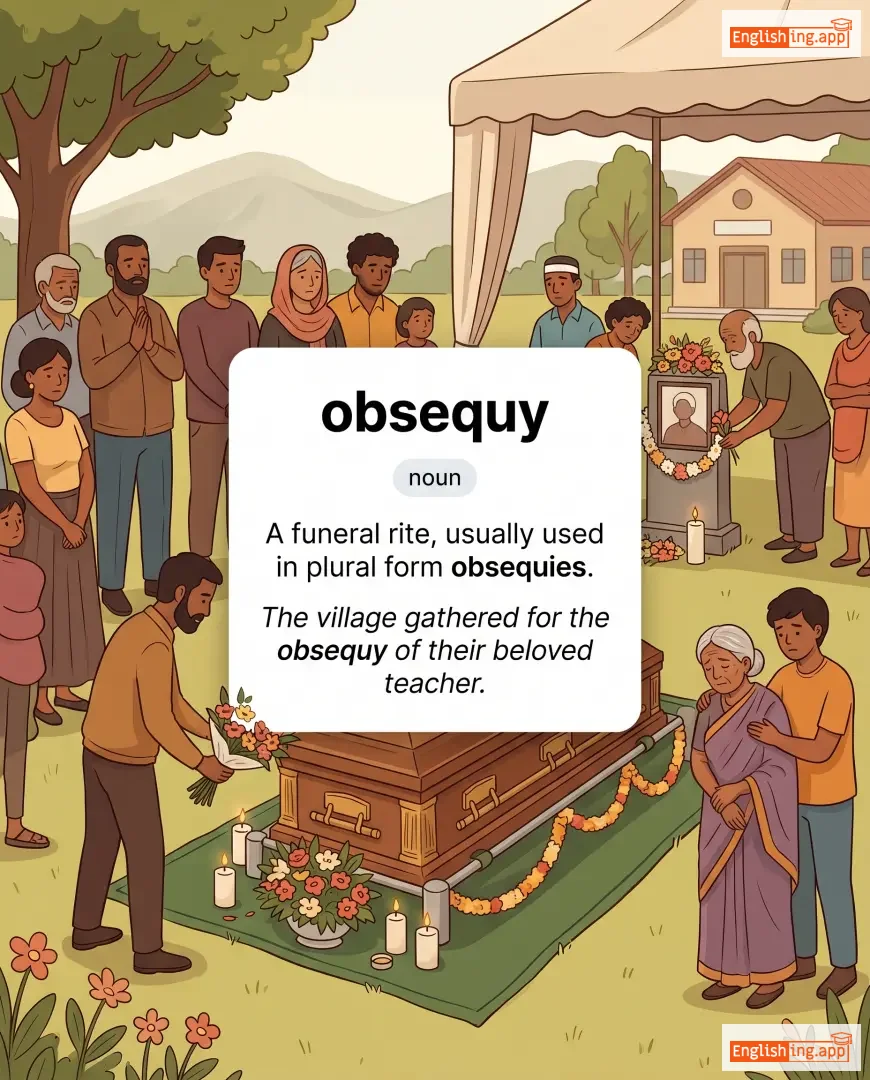
obsequy definition card — visual illustration of the meaning
noun C2
/ˈɒbsɪkwi/
葬儀 (sōgi)

A funeral rite, usually used in plural form obsequies.

"The village gathered for the obsequy of their beloved teacher."

"村人たちは、愛する教師の葬儀のために集まりました。" (Murabito-tachi wa, aisuru kyōshi no sōgi no tame ni atsumarimashita.)
noun C2
/əbˈsɪdiən/
オブシディアン (黒いガラスのような火山岩) (obushidian (kuroi garasu no you na kazan gan))

A hard, dark, glasslike volcanic rock formed by rapid solidification of lava.

"The knife was made from sharp obsidian."

"ナイフは鋭いオブシディアンで作られていた。" (Naifu wa surudoi obushidian de tsukurarete ita.)
adjective C2
/ˌɒbsəˈlɛsnt/
時代遅れの (jidaiokure no)

Becoming outdated or on the way to becoming obsolete.

"The obsolescent technology could not compete with modern devices."

"時代遅れの技術は現代のデバイスには競争できなかった。" (Jidaiokure no gijutsu wa gendai no debaisu ni wa kyousou dekinakatta.)
noun C2
/əbˈstɛtrɪks/
産科 (sanka)

The branch of medicine dealing with childbirth and care of women giving birth.

"She is studying obstetrics to become a specialist in childbirth."

"彼女は産科を学んで、出産専門医になろうとしている。" (Kanojo wa sanka o manande, shussan senmoni ni narou to shite iru.)
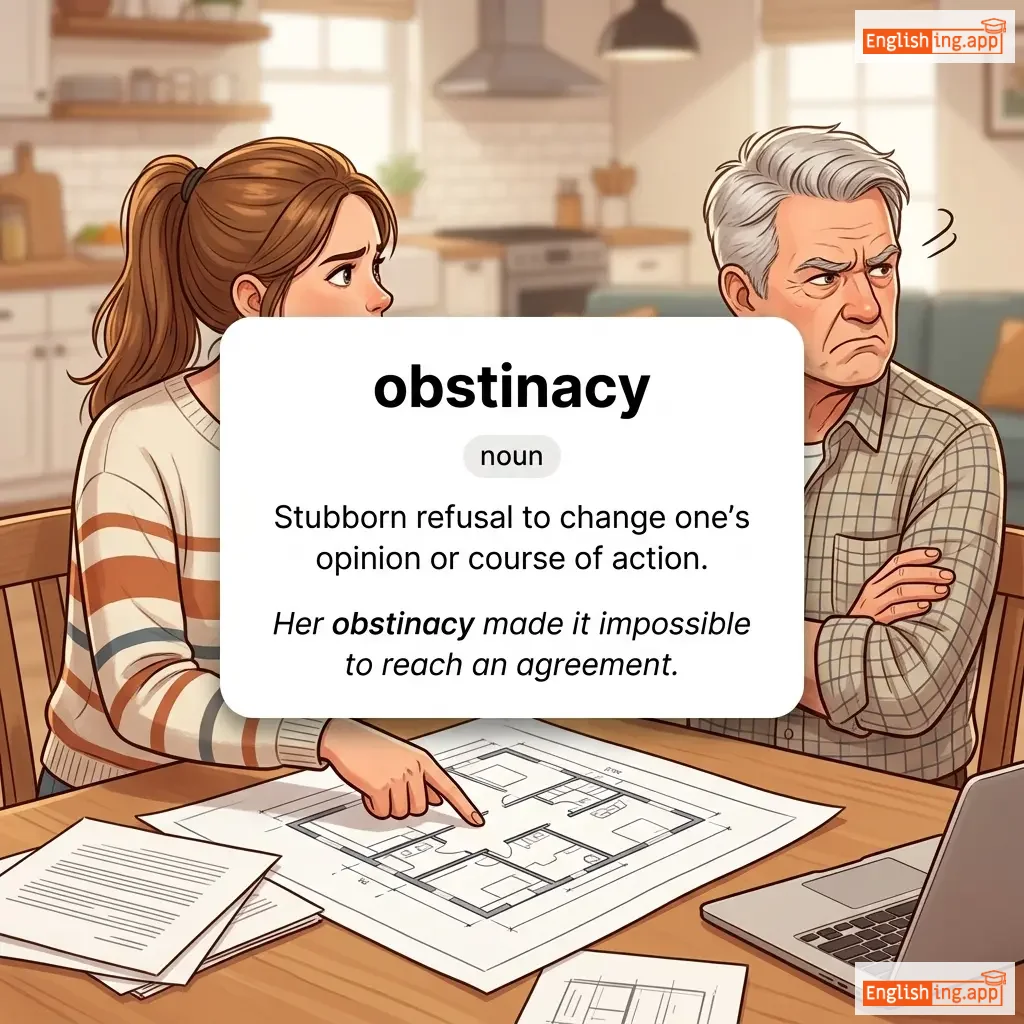
obstinacy definition card — visual illustration of the meaning
noun C2
/ˈɒbstɪnəsi/
頑固 (ganko)

Stubborn refusal to change one’s opinion or course of action.

"Her obstinacy made it impossible to reach an agreement."

"彼女の頑固さは、合意に達することを不可能にしました。" (Kanojo no gankosa wa, goi ni tassuru koto o fukanou ni shimashita.)
adjective C2
/əbˈstrɛpərəs/
騒がしくて制御が難しい (sawagashikute seigyo ga muzukashii)

Noisy and difficult to control.

"The obstreperous students disrupted the class."

"騒がしい学生たちが授業を妨害した。" (Sawagashī gakusei-tachi ga jugyō o bōgai shita.)
noun C2
/əbˈstrʌkʃənɪst/

a person who deliberately delays or prevents progress by being uncooperative or oppositional

"The obstructionist in the committee kept delaying the decision-making process."

verb C2
/əbˈtruːd/
押し付ける (oshitsukeru)

to force oneself or one's ideas into a situation uninvited or inappropriately

"He didn’t want to obtrude into their private conversation."

"彼は彼らのプライベートな会話に押し付けたくなかった。" (Kare wa karera no puraibēto na kaiwa ni oshitsuketakunakatta.)
adjective C2
/əbˈtruːsɪv/
目障りな (meza warina)

noticeable in an unpleasant or unwelcome way; intrusive

"The advertisement was so obtrusive that it ruined the user’s experience."

"その広告はあまりにも目立ちすぎて、ユーザーの体験を台無しにしました。" (Sono kōkoku wa amari ni mo medachisugite, yūzā no taiken o dainashi ni shimashita.)
verb C2
/əbˈvɜːrt/
反転する (hanten suru)

To turn something so as to face in a different direction; in logic, to convert a proposition by negating both subject and predicate.

"The teacher asked the students to obvert the statement for practice."

"先生は生徒たちに練習のためにその声明をオブバートするように頼みました。" (Sensei wa seito-tachi ni renshū no tame ni sono seimei o obu bāto suru yō ni tanomimashita.)
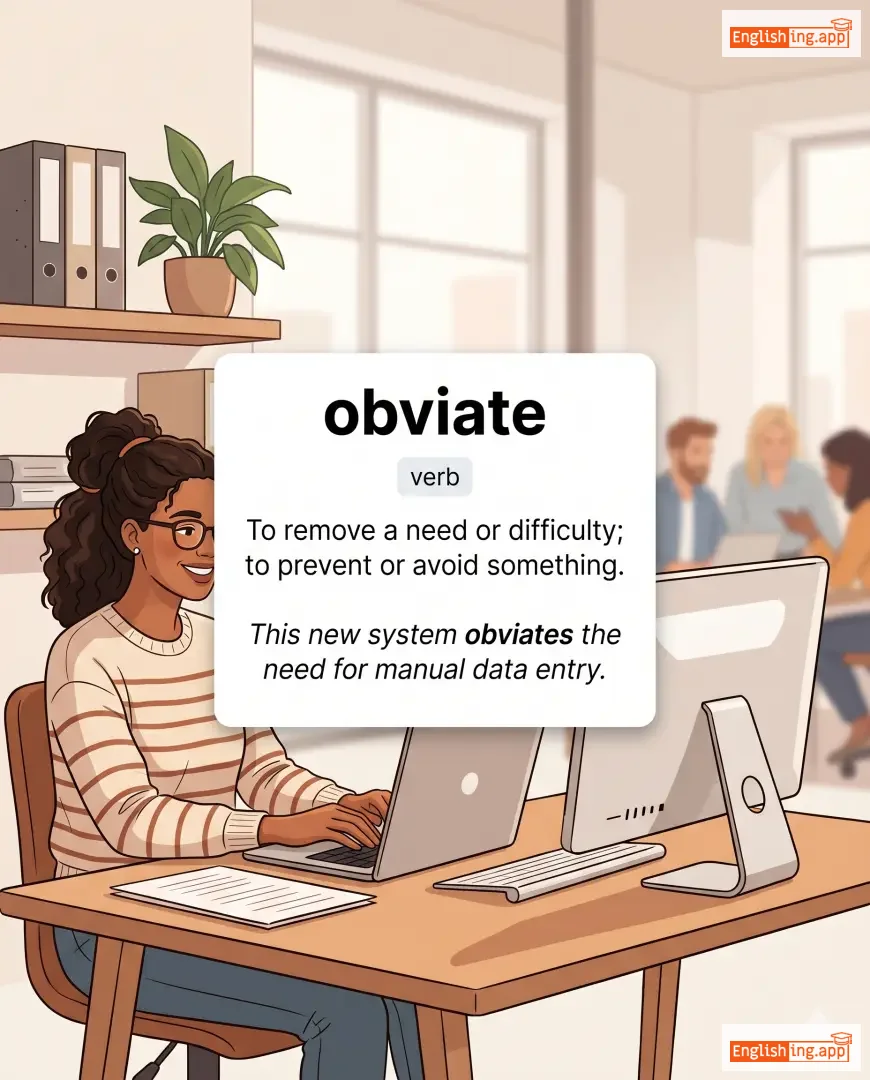
obviate definition card — visual illustration of the meaning
verb C2
/ˈɑːbvieɪt/
排除する (haijo suru)

To remove a need or difficulty; to prevent or avoid something.

"This new system obviates the need for manual data entry."

"この新しいシステムは手動データ入力の必要性を排除します。" (Kono atarashii shisutemu wa shudou deeta nyuuryoku no hitsuyousei o haijo shimasu.)
noun C2
/ˈɒksɪdənt/
西洋 (seiyou)

The countries of the West, especially Europe and America.

"The Occident has a long history of philosophical thought."

"西洋には長い哲学的思考の歴史があります。" (Seiyou ni wa nagai tetsugakuteki shikou no rekishi ga arimasu.)
occlude definition card — visual illustration of the meaning
verb C2
/əˈkluːd/
閉塞する (ヘイソクスル)

To block or close up an opening or passage.

"The pipe was occluded by mineral deposits."

"パイプは鉱物の堆積物で閉塞されていました。" (Paipu wa kōbutsu no taisekimotsu de heisoku sarete imashita.)
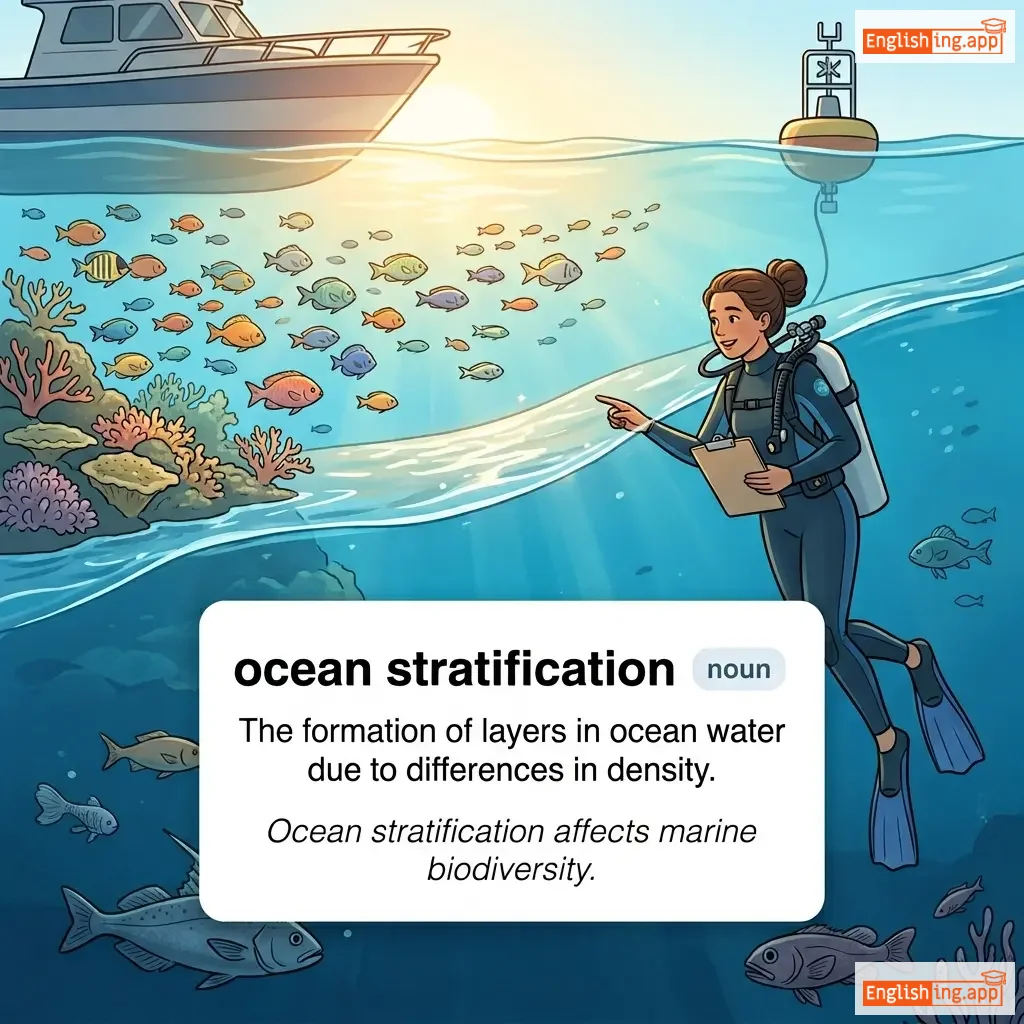
ocean stratification definition card — visual illustration of the meaning
noun C2
ˈoʊʃən ˌstrætɪfɪˈkeɪʃən
海洋の成層 (kaiyō no seisō)

The formation of layers in ocean water due to differences in density.

"Ocean stratification affects marine biodiversity."

"オーシャンストラティフィケーションは海洋生物多様性に影響を与えます。" (Ōshan sutoratifikēshon wa kaiyō seibutsu tayōsei ni eikyō o ataemasu.)
noun C2
/ɒkˈteɪvoʊ/
オクターヴォ (紙を8つに折りたたんで作られた本のサイズ) (okutāvo)

A size of book page resulting from folding a sheet of paper into eight leaves (sixteen pages).

"The old library contained rare octavo editions of Shakespeare."

"古い図書館にはシェイクスピアの珍しいオクターヴォ版がありました。" (Furui toshokan ni wa Sheikusupia no mezurashī okutāvo-ban ga arimashita.)
noun C2
/ˌɒktədʒəˈnɛəriən/
80歳代の人 (80-sai dai no hito)

A person who is between 80 and 89 years old.

"The octogenarian still jogs every morning to stay healthy."

"そのオクトジェネリアンは毎朝健康を維持するためにジョギングをしています。" (Sono okutojenerian wa mai asa kenkou o iji suru tame ni jogingu o shiteimasu.)
adjective C2
/ˈɒkjʊlər/
眼科の (ganka no)

Relating to the eye or vision.

"The patient was referred to a specialist for ocular treatment."

"患者は眼科専門医に紹介されました。" (Kanja wa ganka senmon'i ni shōkai saremashita.)
noun C2
/ˈɒkjʊlɪst/
眼科医 (genka-i)

An old-fashioned term for an eye doctor or ophthalmologist.

"The village oculist was known for treating various eye diseases."

"村のオキュリストは、さまざまな目の病気を治療することで知られていました。" (Mura no okyuristo wa, samazama na me no byōki o chiryō suru koto de shirarete imashita.)
noun C2
/oʊd/
オード (ōdo)

a lyrical poem, often expressing praise or strong emotions

"The poet wrote an ode to the beauty of nature."

"詩人は自然の美に対するオードを書いた。" (Shijin wa shizen no bi ni taisuru ōdo o kaita.)
adjective C2
/ˈoʊdiəs/
忌まわしい (imawashii)

extremely unpleasant or repulsive

"The dictator was remembered for his odious crimes."

"その独裁者は彼の忌まわしい犯罪で記憶されました。" (Sono dokusaisha wa kare no imawashii hanzai de kioku saremashita.)
noun C2
/ˈoʊdiəm/
嫌悪 (ken'o)

general or widespread hatred or disgust directed toward someone as a result of their actions

"The scandal brought public odium on the corrupt minister."

"スキャンダルは腐敗した大臣に対する公衆の嫌悪を引き起こした。" (Sukyandaru wa fuhai shita daijin ni taisuru kōshū no ken'o o hikiokoshita.)
adjective C2
/ˌoʊdəˈrɪfərəs/
芳香のある (hōkō no aru)

having or giving off a smell, especially a strong or pleasant one

"The garden was filled with odoriferous flowers."

"庭は芳香のある花でいっぱいでした。" (Niwa wa hōkō no aru hana de ippai deshita.)
adjective C2
/ˈoʊdərəs/
臭い (nikui)

having or giving off a smell, often unpleasant

"The odorous garbage had to be taken out immediately."

"その臭いゴミはすぐに出さなければならなかった。" (Sono nikui gomi wa sugu ni dasanakereba naranakatta.)
adjective C2
/ˌɔːfˈkiː/
外れた音 (hazureta oto)

out of tune; not in accordance with expected standards

"The singer was slightly off-key during the performance."

"歌手はパフォーマンス中に少し外れた音だった。" (Kashu wa pafōmansu chū ni sukoshi hazureta oto datta.)
noun C2
/ˈɔːfəl/
内臓 (naizou)

the internal organs and entrails of an animal used as food; waste parts

"The butcher prepared sausages using pork offal."

"肉屋は豚の臓物を使ってソーセージを作った。" (Nikuya wa buta no zōmotsu o tsukatte sōsēji o tsukutta.)
adjective C2
/ˈɒf.biːt/
風変わり (fūgawari)

Unusual, unconventional, or different from the norm.

"She has a very offbeat sense of humor."

"彼女はとても風変わりなユーモアを持っています。" (kanojo wa totemo fūgawari na yūmoa o motte imasu.)
noun C2
/ˈɒfərtɔːri/
奉納 (hounou)

The part of a religious service when offerings are collected; the offering itself.

"The offertory was taken during the Sunday service."

"日曜日の礼拝中に奉納が取られました。" (Nichiyoubi no reihai chuu ni hounou ga toraremashita.)
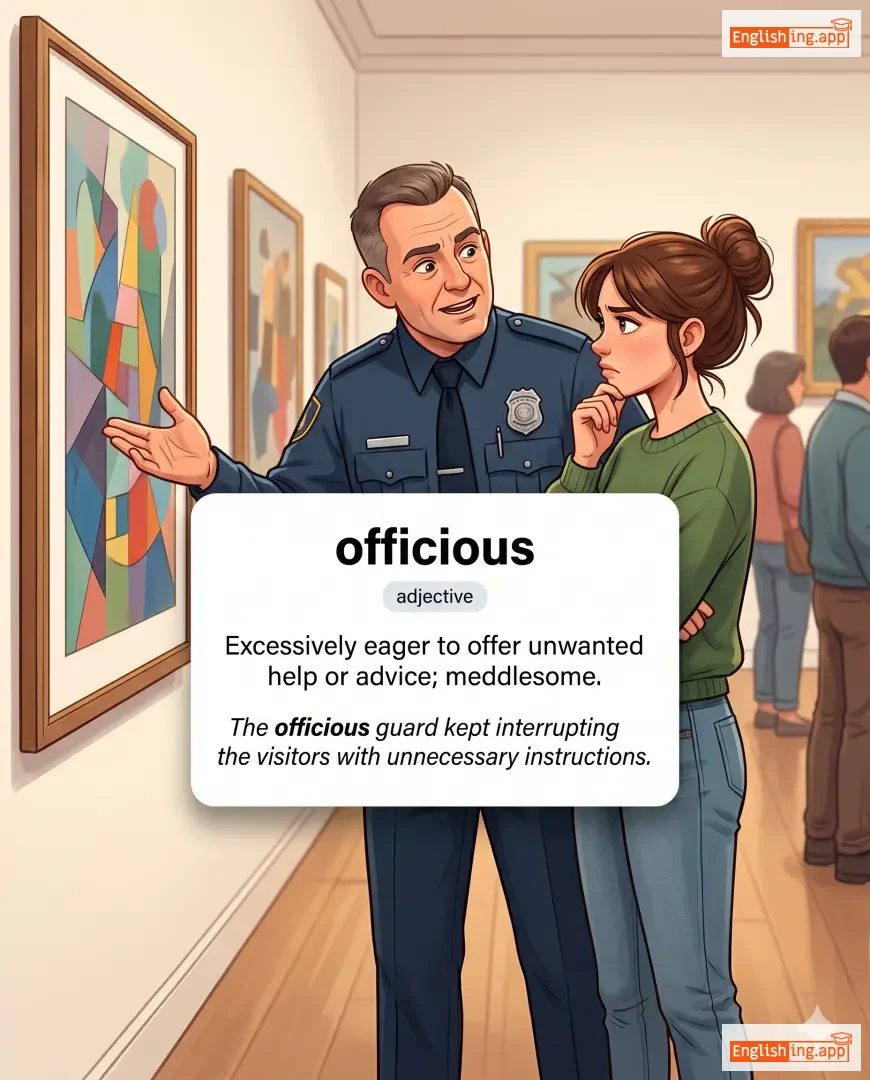
officious definition card — visual illustration of the meaning
adjective C2
/əˈfɪʃəs/
干渉的な (kanshouteki na)

Excessively eager to offer unwanted help or advice; meddlesome.

"The officious guard kept interrupting the visitors with unnecessary instructions."

"その干渉的な警備員は訪問者に不必要な指示で何度も中断させた。" (Sono kanshouteki na keibiin wa houmonsha ni fuhitsuyouna shiji de nando mo chuudan saseta.)