Vocabularies

English Vocabulary Dictionary | Word Meanings, Definitions & Examples

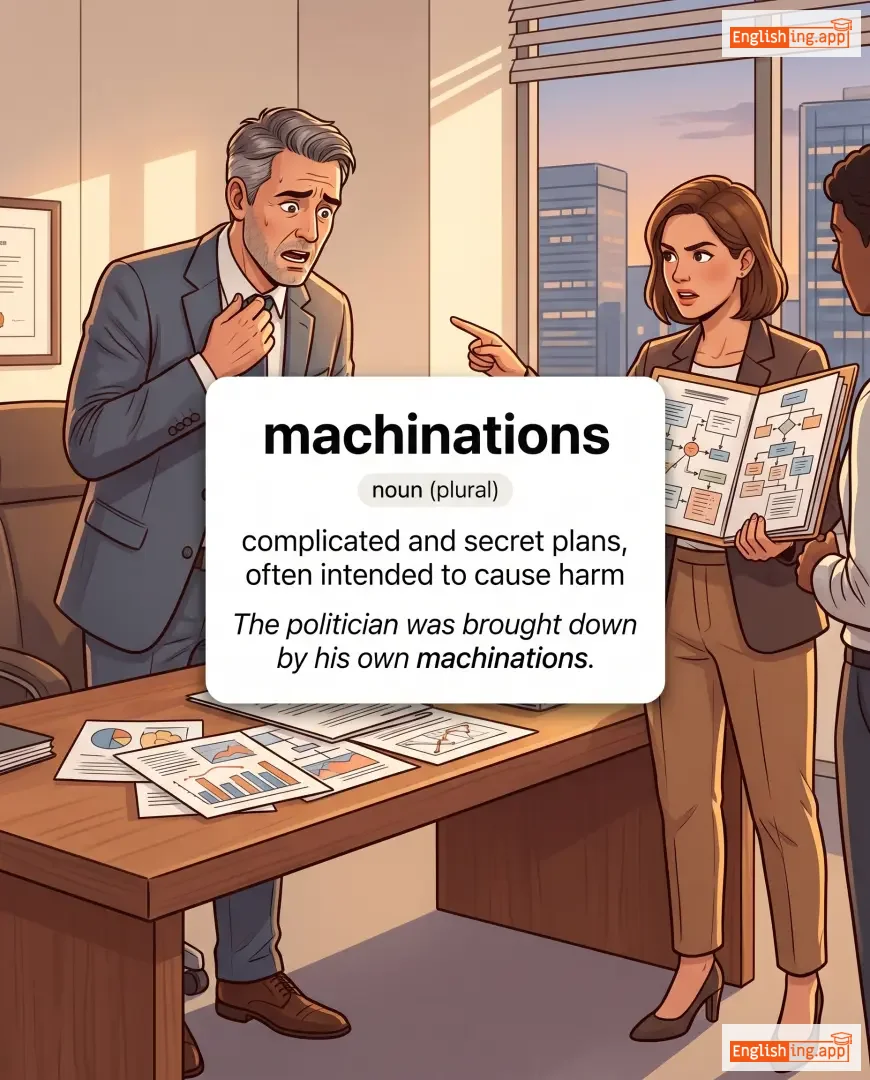
machinations definition card — visual illustration of the meaning
noun (plural) C2
/ˌmæk.ɪˈneɪ.ʃənz/
machinations (machinations)

complicated and secret plans, often intended to cause harm

"The politician was brought down by his own machinations."

"Le politicien a été abattu par ses propres machinations." (Le politicien a été abattu par ses propres machinations.)
noun C2
/məˈʃiː.nɪst/
machiniste (machiniste)

a person who operates machine tools or makes and repairs machines

"The machinist carefully adjusted the gears on the lathe."

"Le machiniste a ajusté soigneusement les engrenages sur le tour." (Le machiniste a ajusté soigneusement les engrenages sur le tour.)
noun C2
/ˈmækɪntɒʃ/
manteau imperméable (manteau impermeable)

a waterproof raincoat, originally made from rubberized fabric

"He wore a mackintosh to stay dry in the rain."

"Il portait un mackintosh pour rester au sec sous la pluie." (Il portait un mackintosh pour rester au sec sous la pluie.)
noun C2
/ˈmæk.rəˌkɒz.əm/
macrocosme (macrocosme)

The whole universe considered as a large, complex system; a large-scale representation of something.

"The macrocosm of the universe reflects the microcosm of human life."

"Le macrocosme de l'univers reflète le microcosme de la vie humaine." (Le macrocosme de l'univers reflète le microcosme de la vie humaine.)
verb C2
/ˈmæk.jʊˌleɪt/
maculer (maculer)

To stain, spot, or pollute something.

"The white cloth was maculated by ink stains."

"Le tissu blanc a été souillé par des taches d'encre." (Le tissu blanc a été souillé par des taches d'encre.)
adjective C2
/ˈmæk.jʊˌleɪ.tɪd/
maculé (macle)

Spotted or stained; marked with blemishes.

"The maculated surface of the old mirror gave it a unique charm."

"La surface maculée du vieux miroir lui donna un charme unique." (La surface maculée du vieux miroir lui donna un charme unique.)
noun C2
/məˈdɒn.ə/
madonna (Vierge Marie) (madonna (Vierge Marie))

An artistic representation of the Virgin Mary; also used as a respectful form of address for a woman in Italian culture.

"The Renaissance painting depicts a Madonna holding child Jesus."

"La peinture de la Renaissance dépeint une Madonna tenant l'enfant Jésus." (La peinture de la Renaissance depeint une Madonna tenant l'enfant Jésus.)
noun C2
/ˈmædrɪɡəl/
madrigal (madrigal)

A short, lyrical poem set to music, typically from the Renaissance period.

"The choir performed a beautiful madrigal from the 16th century."

"Le chœur a interprété un magnifique madrigal du XVIe siècle." (Le coeur a interprete un magnifique madrigal du XVIe siecle)
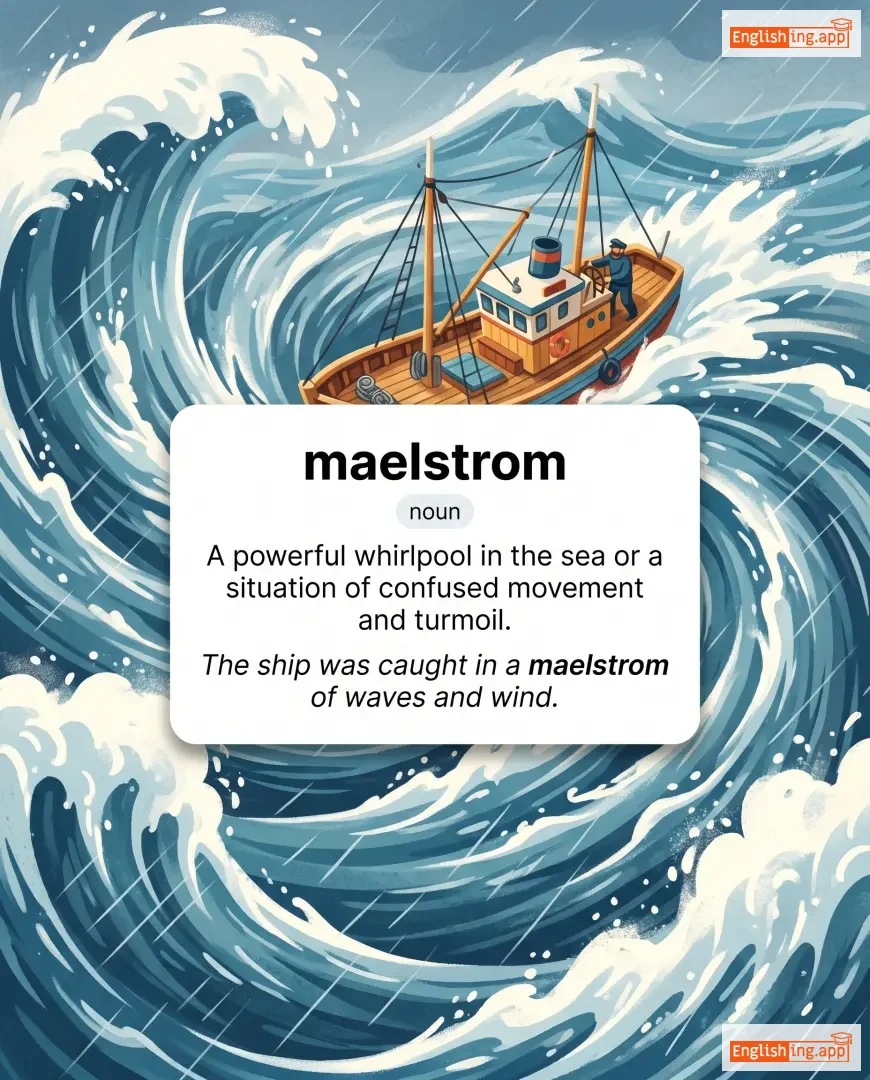
maelstrom definition card — visual illustration of the meaning
noun C2
/ˈmeɪlstrəm/
tourbillon (tourbillon)

A powerful whirlpool in the sea or a situation of confused movement and turmoil.

"The ship was caught in a maelstrom of waves and wind."

"Le navire a été pris dans un tourbillon de vagues et de vent." (Le navire a été pris dans un tourbillon de vagues et de vent.)
adjective C2
/ˌmædʒɪˈstɪəriəl/
magistériel (magisteriel)

Having the characteristics of a master or authority; commanding and dignified.

"The professor spoke in a magisterial tone during the lecture."

"Le professeur a parlé d'une manière magistérielle pendant la conférence." (Le professeur a parle d'une maniere magisterielle pendant la conference.)
noun C2
/ˈmædʒɪstrəsi/
bureau judiciaire (bureau judiciaire)

The office, authority, or district of a magistrate.

"He was proud to serve in the local magistracy for over a decade."

"Il était fier de servir dans le bureau judiciaire local pendant plus d'une décennie." (Il était fier de servir dans le bureau judiciaire local pendant plus d'une décennie.)
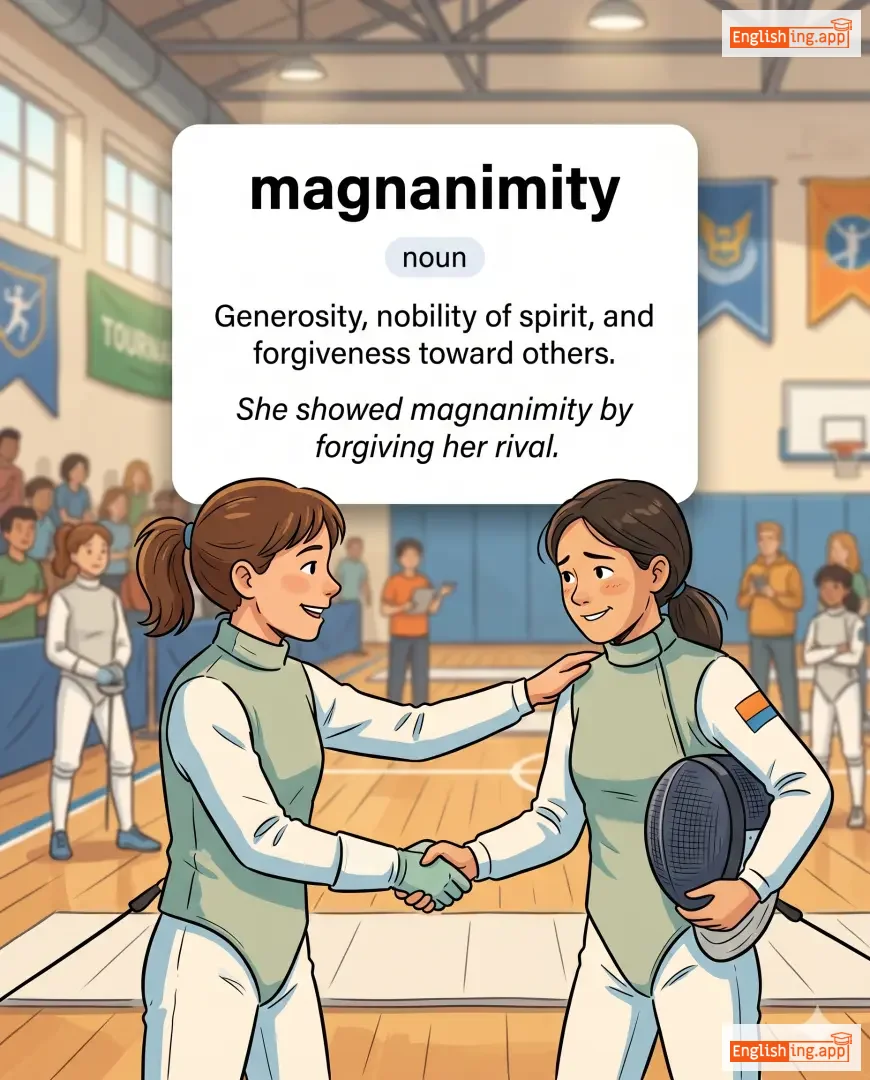
magnanimity definition card — visual illustration of the meaning
noun C2
/ˌmæɡnəˈnɪmɪti/
magnanimité (magnanimite)

Generosity, nobility of spirit, and forgiveness toward others.

"She showed magnanimity by forgiving her rival."

"Elle a montré de la magnanimité en pardonnant à son rival." (Elle a montre de la magnanimite en pardonnant a son rival.)
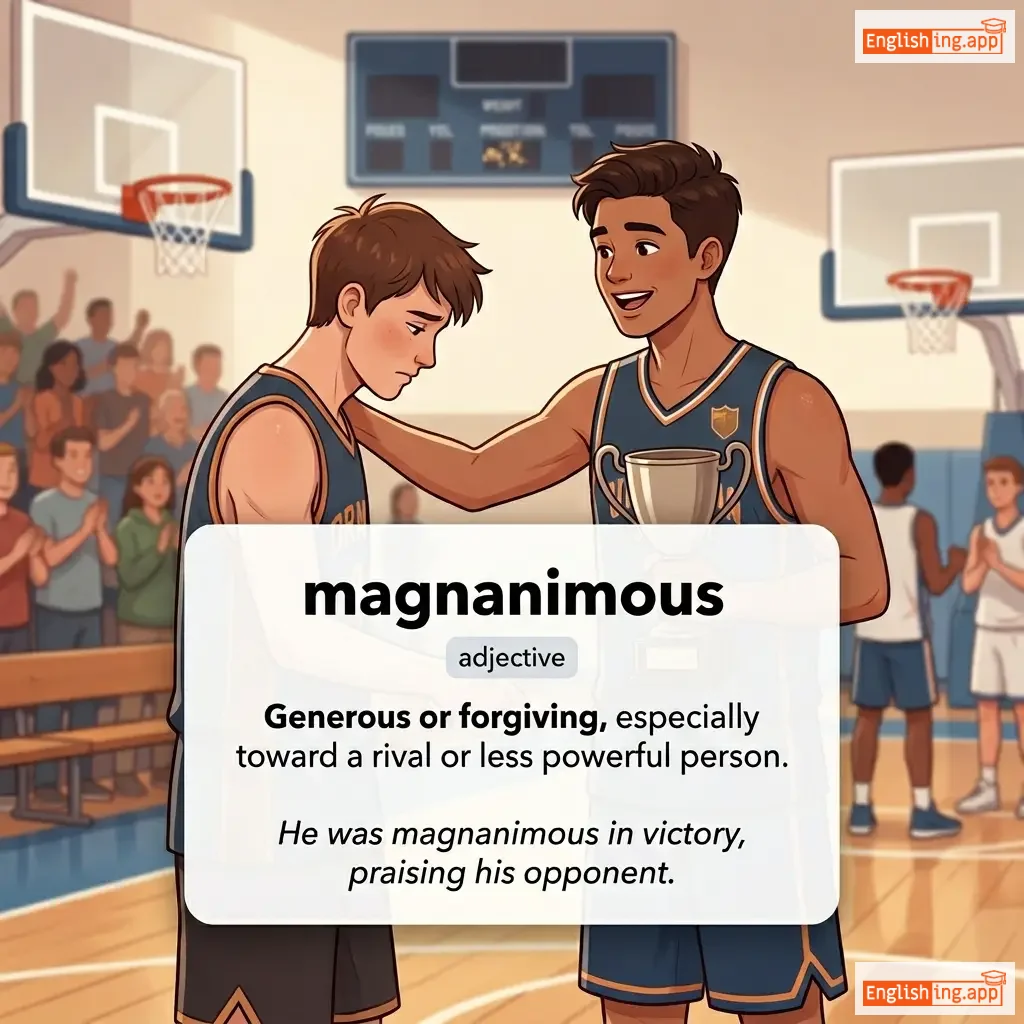
magnanimous definition card — visual illustration of the meaning
adjective C2
/mæɡˈnænɪməs/
magnanime (magnanime)

Generous or forgiving, especially toward a rival or less powerful person.

"He was magnanimous in victory, praising his opponent."

"Il était magnanime dans la victoire, louant son adversaire." (Il etait magnanime dans la victoire, louant son adversaire.)
verb C2
/ˈmæɡnɪtaɪz/
magnétiser (magnetiser)

to make something magnetic or to strongly attract

"The scientist managed to magnetize the iron rod."

"Le scientifique a réussi à magnétiser la tige de fer." (Le scientifique a reussi a magnetiser la tige de fer.)
adjective C2
/mæɡˈnɪləkwənt/
langage pompeux (langage pompeux)

using high-flown or pompous language

"The politician’s magniloquent speech impressed the crowd."

"Le discours pompeux du politicien a impressionné la foule." (Le discours pompeux du politicien a impressionné la foule.)
noun C2
/ˌmɑːhəˈrɑːdʒə/
maharaja (maharaja)

A great king, especially a ruler of one of the principal states in India.

"The maharaja lived in a grand palace surrounded by gardens."

"Le maharaja vivait dans un grand palais entouré de jardins." (Le maharaja vivait dans un grand palais entouré de jardins.)
noun C2
/ˈmeɪdənˌhʊd/
jeunesse (jeunesse)

The state of being a maiden; girlhood or virginity.

"The poem celebrated the innocence of maidenhood."

"Le poème a célébré l'innocence de la jeunesse." (Le poème a célébré l'innocence de la jeunesse.)
verb C2
/meɪm/
estropier (estropier)

To wound or injure someone so that part of the body is permanently damaged.

"The accident maimed several passengers."

"L'accident a estropié plusieurs passagers." (L'accident a estropie plusieurs passagers.)
adjective C2
/ˌmæləˈdrɔɪt/
maladroit (maladroit)

clumsy or awkward in movement or behavior

"His maladroit attempt at fixing the chair made it worse."

"Sa tentative maladroite de réparer la chaise l'a empirée." (Sa tentative maladroite de réparer la chaise l'a empirée.)
noun C2
/ˈmæləprɒˌpɪzəm/
malapropisme (malapropisme)

the mistaken use of a word in place of a similar-sounding one, often with amusing effect

"He is famous for his malapropism when speaking in public."

"Il est célèbre pour son malapropisme lorsqu'il parle en public." (Il est célèbre pour son malapropisme lorsqu'il parle en public.)
adjective, adverb C2
/ˌmæləprəˈpoʊ/
inapproprié (inapproprie)

inappropriate or unsuitable; at an inconvenient or inappropriate time

"His comment was malapropos during the serious discussion."

"Son commentaire était inapproprié pendant la discussion sérieuse." (Son commentaire était inapproprié pendant la discussion sérieuse.)
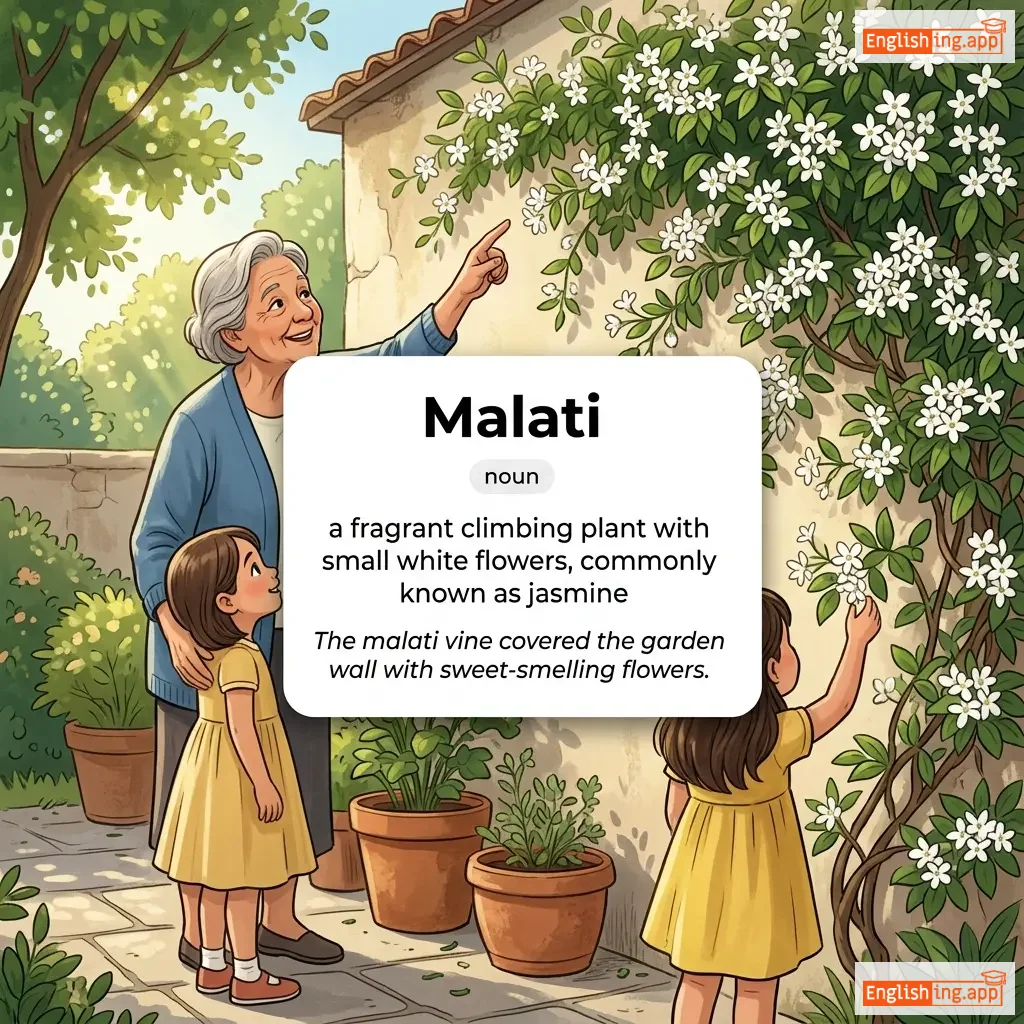
Malati definition card — visual illustration of the meaning
noun C2
/məˈlɑː.ti/
malati (malati)

a fragrant climbing plant with small white flowers, commonly known as jasmine

"The malati vine covered the garden wall with sweet-smelling flowers."

"La vigne de malati a couvert le mur du jardin avec des fleurs au parfum sucré." (La vigne de malati a couvert le mur du jardin avec des fleurs au parfum sucre)
noun C2
/ˈmæl.kənˌtɛnt/
personne mécontente (personne mécontente)

A person who is dissatisfied or rebellious; one who is not content.

"The malcontent voiced his grievances against the government."

"La personne mécontente a exprimé ses plaintes contre le gouvernement." (La personne mécontente a exprimé ses plaintes contre le gouvernement.)
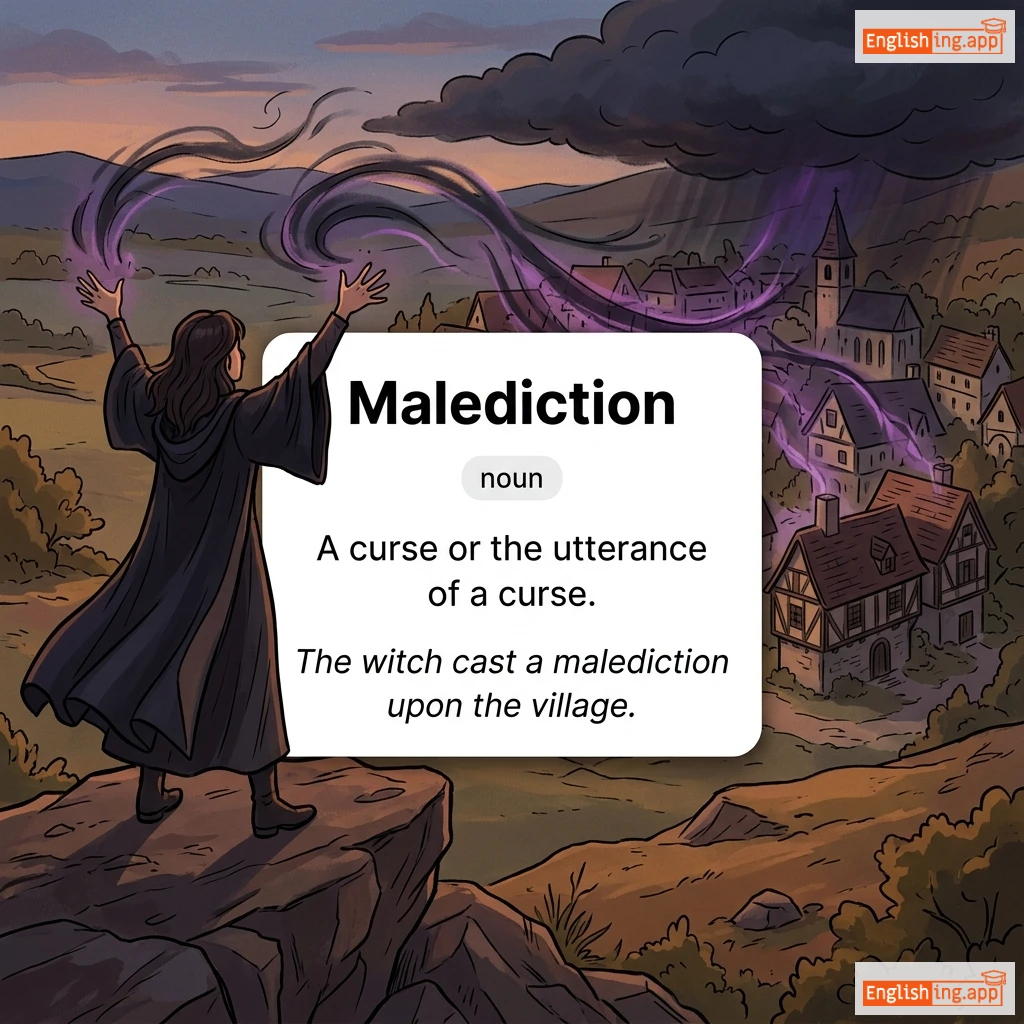
Malediction definition card — visual illustration of the meaning
noun C2
/ˌmæl.əˈdɪk.ʃən/
malédiction (malediction)

A curse or the utterance of a curse.

"The witch cast a malediction upon the village."

"La sorcière a jeté une malédiction sur le village." (La sorcière a jeté une malédiction sur le village.)
noun C2
/ˈmæl.əˌfæk.tər/
criminel (criminel)

A person who commits a crime or does evil.

"The malefactor was arrested for the robbery."

"Le criminel a été arrêté pour le vol." (Le criminel a été arrêté pour le vol.)
adjective C2
/məˈlɛfɪsənt/
maléfique (malefique)

Causing harm or destruction, especially by supernatural means.

"The maleficent witch cursed the young princess."

"La sorcière maléfique a maudit la jeune princesse." (La sorcière malefique a maudit la jeune princesse.)
adjective C2
/ˌmæl.əˈfɪʃ.ənt/
malfaisant (malfaisant)

Doing harm or evil; having a harmful effect.

"The maleficient acts of the tyrant ruined the kingdom."

"Les actes malfaisants du tyran ont ruiné le royaume." (Les actes malfaisants du tyran ont ruiné le royaume.)
noun C2
/məˈlɛvələns/
malveillance (malveillance)

The state or condition of being malevolent; having or showing a wish to do evil to others.

"His malevolence was clear in the cruel way he treated his rivals."

"Sa malveillance était évidente dans la manière cruelle dont il traitait ses rivaux." (Sa malveillance etait evidente dans la maniere cruelle dont il traitait ses rivaux.)
noun C2
/mælˈfiːzəns/
méfait d'un fonctionnaire (mefait d'un fonctionnaire)

Wrongdoing or misconduct, especially by a public official.

"The mayor was accused of malfeasance in office."

"Le maire a été accusé de malfeasance en fonction." (Le maire a ete accuse de malfeasance en fonction.)
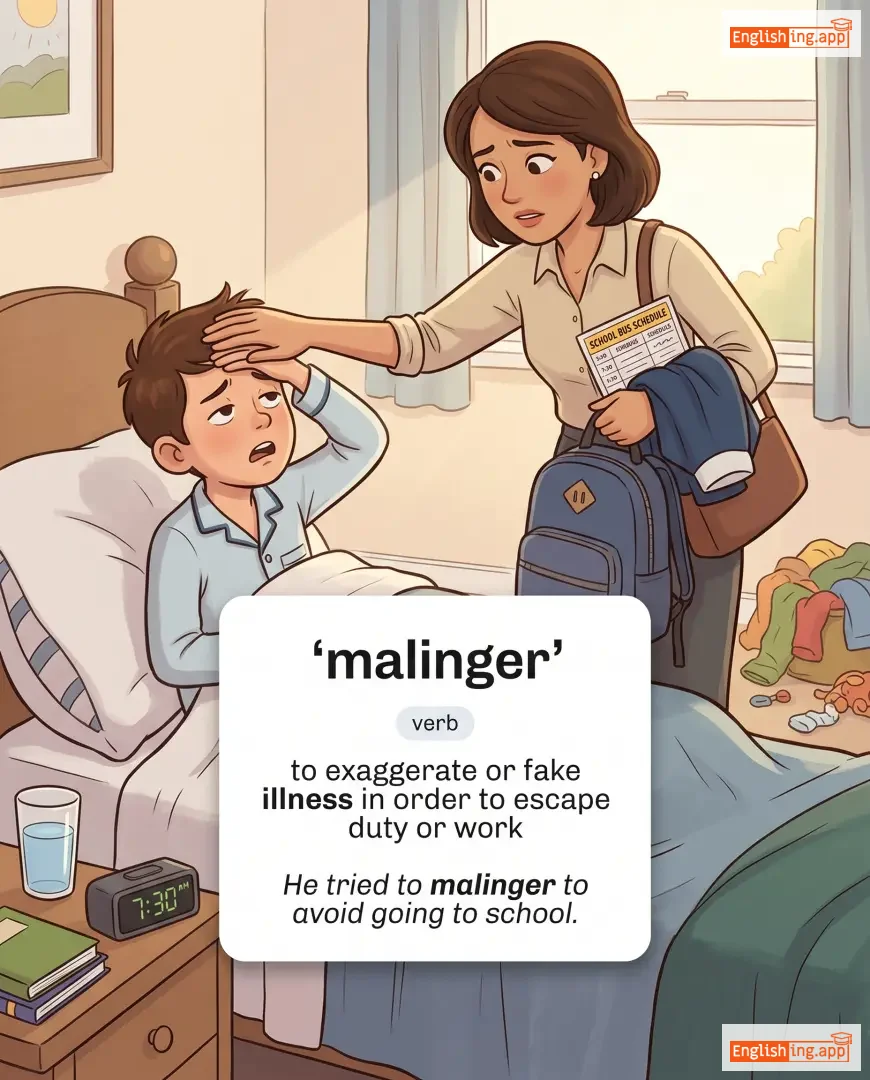
malinger definition card — visual illustration of the meaning
verb C2
/məˈlɪŋɡər/
feindre la maladie (feindre la maladie)

to exaggerate or fake illness in order to escape duty or work

"He tried to malinger to avoid going to school."

"Il a essayé de feindre une maladie pour éviter d'aller à l'école." (Il a essayé de feindre une maladie pour éviter d'aller à l'école.)
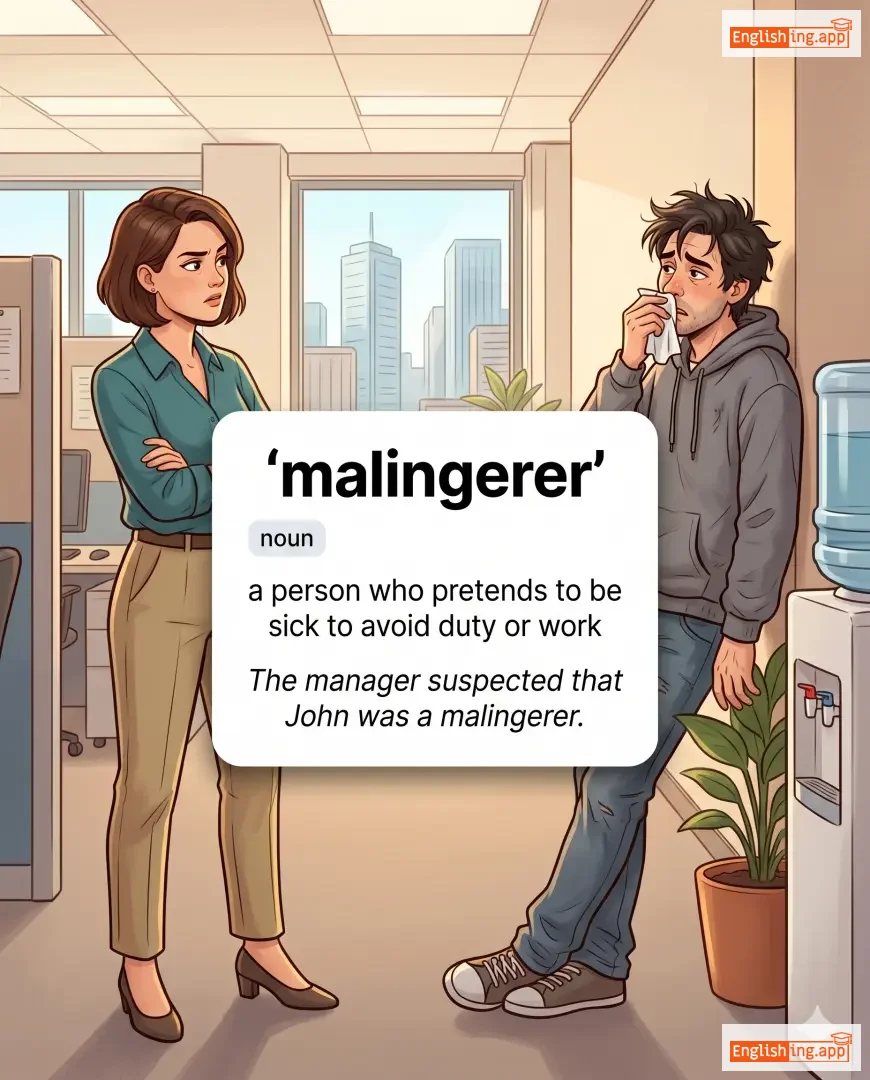
malingerer definition card — visual illustration of the meaning
noun C2
/məˈlɪŋɡərər/
personne qui simule une maladie (personne qui simule une maladie)

a person who pretends to be sick to avoid duty or work

"The manager suspected that John was a malingerer."

"Le responsable soupçonnait que John était un malingerer." (Le responsable soupçonnait que John était un malingerer.)
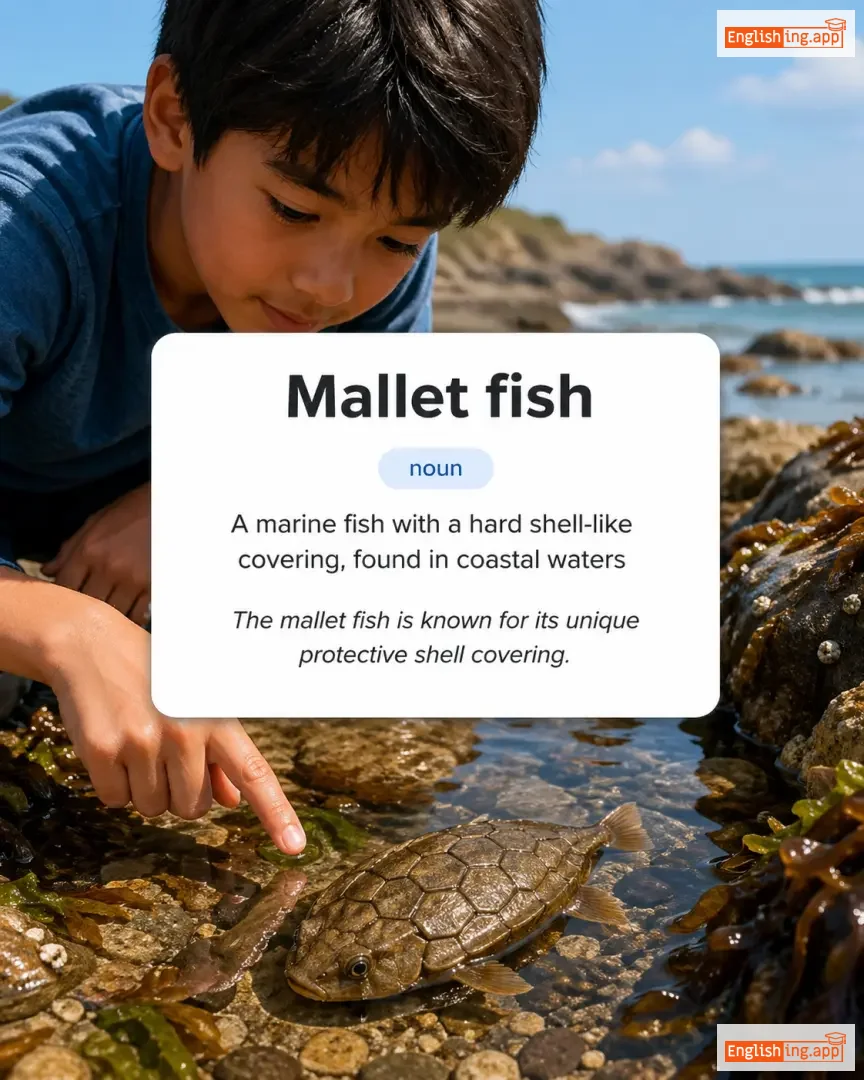
Mallet fish definition card — visual illustration of the meaning
noun C2
/ˈmælɪt fɪʃ/
poisson à coquille (pwason a kokiy)

A marine fish with a hard shell-like covering, found in coastal waters

"The mallet fish is known for its unique protective shell covering."

"Le poisson à coquille est connu pour sa coque protectrice unique." (le pwason a kokiy e konyu pur sa kok protektris unik)
noun C2
/ˌmælˈoʊdər/
mauvaise odeur (mauvaise odeur)

An unpleasant smell; bad odor.

"The garbage bin gave off a terrible malodor."

"La poubelle dégageait une terrible mauvaise odeur." (La poubelle dégageait une terrible mauvaise odeur.)
adjective C2
/ˌmælˈoʊdərəs/
malodorant (malodorant)

Having a very unpleasant smell.

"The malodorous room made everyone leave quickly."

"La pièce malodorante a fait partir tout le monde rapidement." (La pièce malodorante a fait partir tout le monde rapidement.)
verb C2
/ˌmælˈtriːt/
maltraiter (maltraiter)

To treat someone cruelly or unfairly.

"The law punishes those who maltreat animals."

"La loi punit ceux qui maltraitent les animaux." (La loi punit ceux qui maltraitent les animaux.)
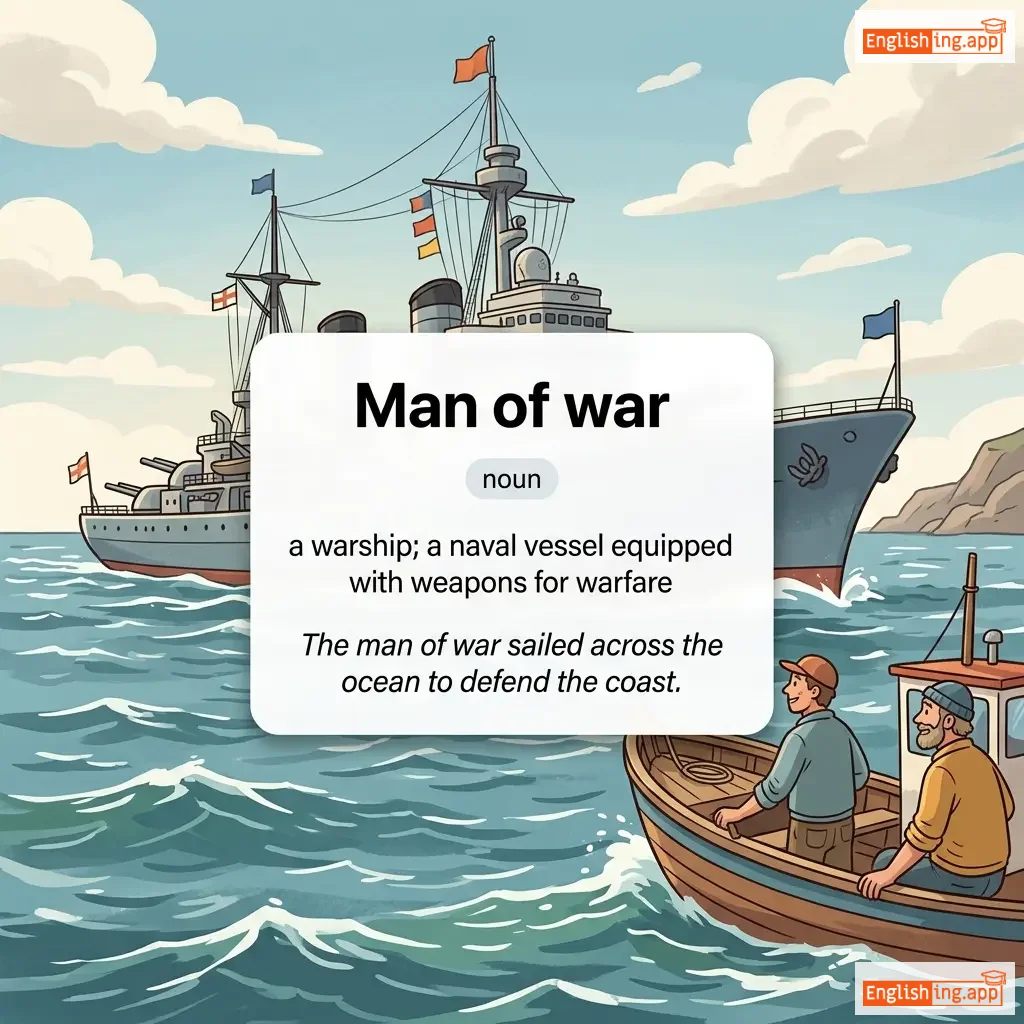
Man of war definition card — visual illustration of the meaning
noun C2
/mæn əv wɔːr/
navire de guerre (navire de guerre)

a warship; a naval vessel equipped with weapons for warfare

"The man of war sailed across the ocean to defend the coast."

"Le navire de guerre a traversé l'océan pour défendre la côte." (Le navire de guerre a traversé l'océan pour défendre la côte.)
noun C2
/ˈmænˌiː.tər/
mangeur d'hommes (mangeur d'hommes)

An animal that kills and eats humans; informally, a woman who is very assertive in relationships.

"The tiger became a notorious man-eater in the village."

"Le tigre est devenu un mangeur d'hommes notoire dans le village." (Le tigre est devenu un mangeur d'hommes notoire dans le village.)
noun C2
/ˈmænˌtræp/
piège à homme (piege a homme)

A trap designed to catch or injure humans; informally, a woman considered dangerously attractive.

"The old castle had a man-trap at the entrance."

"Le vieux château avait un piège à homme à l'entrée." (Le vieux chateau avait un piege a homme a l'entree.)
noun/verb C2
/ˈmæn.ə.kəl/
entrave (entrave)

A metal shackle for fastening someone's hands or ankles; also to restrain with such shackles.

"The prisoner was manacled before being taken to court."

"Le prisonnier a été enchaîné avant d'être emmené au tribunal." (Le prisonnier a été enchaîné avant d'être emmené au tribunal.)
noun C2
/meɪndʒ/
gale (gale)

a skin disease in animals caused by parasitic mites, leading to hair loss and sores

"The stray dog was suffering from mange."

"Le chien errant souffrait de gale." (Le chien errant souffrait de gale.)
verb C2
/ˈmæŋɡəl/
détruire (detruire)

to severely damage or mutilate something, often by tearing or crushing

"The car was mangled in the accident."

"La voiture a été détruite dans l'accident." (La voiture a été détruite dans l'accident.)
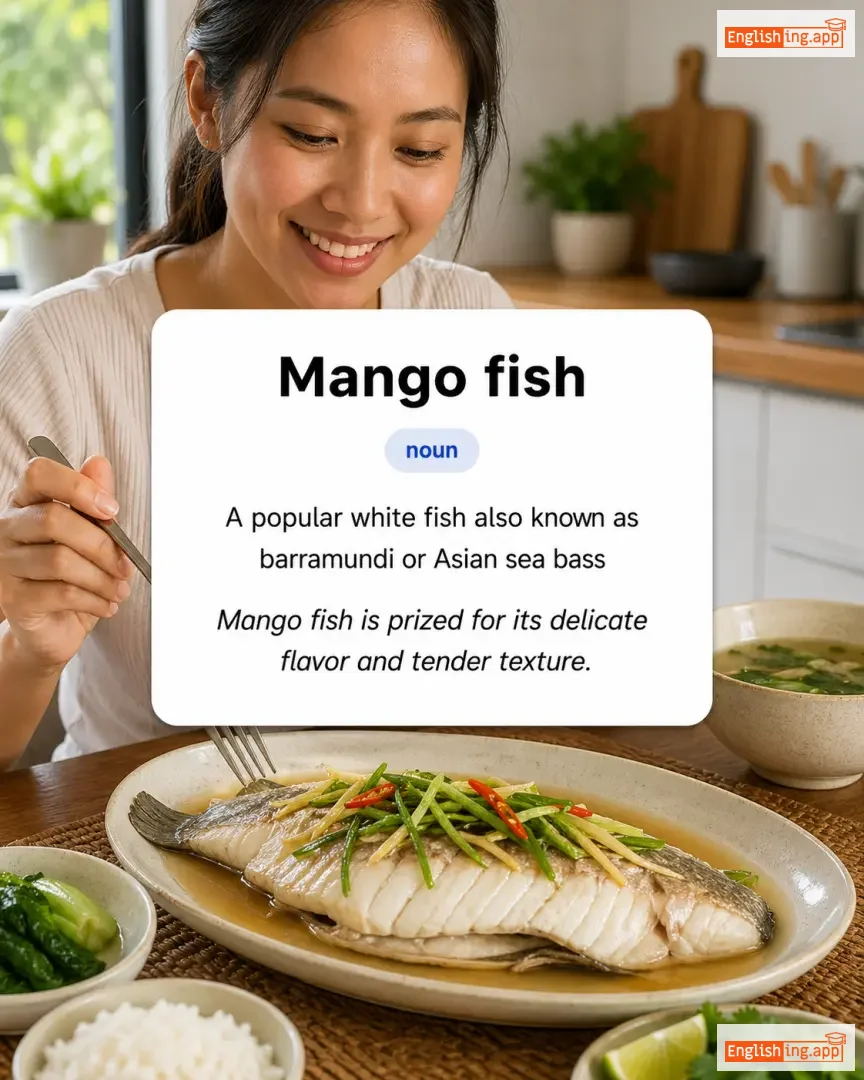
Mango fish definition card — visual illustration of the meaning
noun C2
/ˈmæŋɡoʊ fɪʃ/
poisson barramundi (poisson barramundi)

A popular white fish also known as barramundi or Asian sea bass

"Mango fish is prized for its delicate flavor and tender texture."

"Le poisson barramundi est apprécié pour sa saveur délicate et sa texture tendre." (Le poisson barramundi est apprecie pour sa saveur delicate et sa texture tendre)
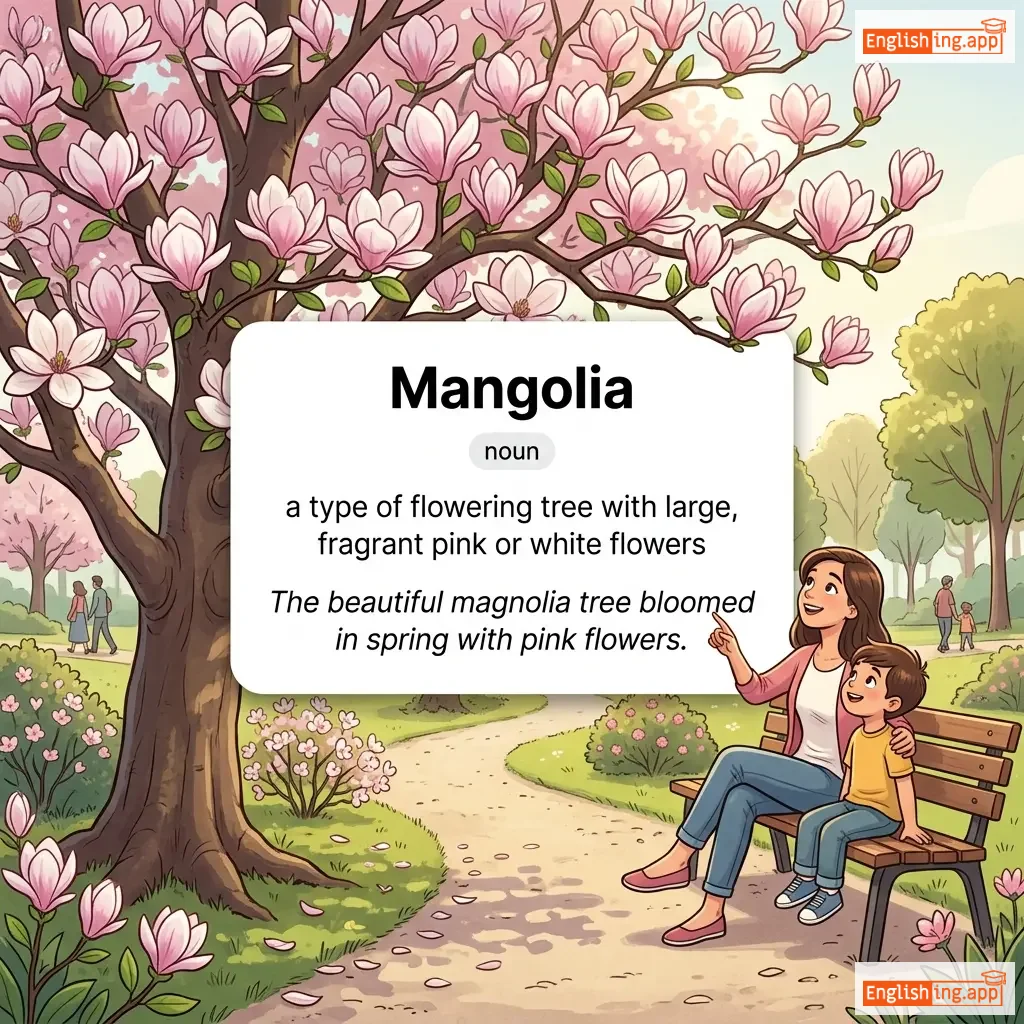
Mangolia definition card — visual illustration of the meaning
noun C2
/mæŋˈɡoʊ.li.ə/
magnolia (magnolia)

a type of flowering tree with large, fragrant pink or white flowers

"The beautiful magnolia tree bloomed in spring with pink flowers."

"Le magnifique arbre de magnolia a fleuri au printemps avec des fleurs roses." (Le magnifique arbre de magnolia a fleuri au printemps avec des fleurs roses)
adjective C2
/ˈmeɪndʒi/
sale et usé (sale et use)

in poor condition, shabby, dirty, or affected by mange

"The stray dog looked mangy and weak."

"Le chien errant avait l'air sale et faible." (Le chien errant avait l'air sale et faible.)
adjective C2
/məˈnaɪəkəl/
maniaque (maniaque)

behaving like a maniac; showing excessive enthusiasm or madness

"He gave a maniacal laugh during the movie."

"Il a éclaté d'un rire maniaque pendant le film." (Il a éclaté d'un rire maniak pendant le film.)
adjective C2
/ˈmæn.laɪk/
masculin (masculin)

Having qualities or characteristics traditionally associated with a man; manly.

"His manlike courage impressed everyone in the village."

"Son courage masculin a impressionné tout le monde dans le village." (Son courage masculin a impressionné tout le monde dans le village.)
noun C2
/ˈmæn.li.nəs/
virilité (virilite)

The quality of being manly; courage, strength, and honor associated with men.

"His manliness was admired by his peers."

"Sa virilité a été admirée par ses pairs." (Sa virilite a ete admiree par ses pairs.)
noun C2
/ˈmæntl̩/
étagère au-dessus de la cheminée (etagere au-dessus de la cheminee)

A shelf above a fireplace, often used for decoration.

"She placed family photos on the mantel above the fireplace."

"Elle a posé des photos de famille sur l'étagère au-dessus de la cheminée." (Elle a pose des photos de famille sur l'etagere au-dessus de la cheminee.)
noun C2
/ˌmænjəˈmɪʃən/
émancipation des esclaves (emansipasion de esklav)

The act of a slave owner freeing their slaves.

"The manumission of the slaves marked a turning point in history."

"L'émancipation des esclaves a marqué un tournant dans l'histoire." (L'émancipation des esclaves a marqué un tournant dans l'histoire.)
verb C2
/ˌmæn.juˈmɪt/
libérer de l'esclavage (libérer de l'esclavage)

to release from slavery or servitude; to set free

"The landowner decided to manumit his slaves."

"Le propriétaire a décidé de libérer ses esclaves." (Le propriétaire a décidé de libérer ses esclaves.)