Vocabularies

English Vocabulary Dictionary | Word Meanings, Definitions & Examples

adjective C2
/ɪmˈpruːdənt/
不注意な (fuchuui na)

Not showing care for the consequences of an action.

"It was imprudent to drive in such stormy weather."

"こんな嵐の天気で運転するのは不注意だった。" (Konna arashi no tenki de unten suru no wa fuchuui datta.)
noun C2
/ˈɪmpjʊdəns/
厚かましさ (atsukamashisa)

Rude and disrespectful behavior.

"The student's impudence shocked the entire class."

"その学生の厚かましさはクラス全体を驚かせた。" (Sono gakusei no atsukamashisa wa kurasu zentai o odorokaseta.)
⚔️

impugn

verb C2
/ɪmˈpjuːn/

to dispute the truth, validity, or honesty of a statement or motive

"The lawyer tried to impugn the credibility of the witness."

noun C2
/ɪmˈpjuːɪsəns/
無力, 無能 (muryoku, munou)

inability to take effective action; helplessness

"The government’s impuissance in the face of crisis frustrated the people."

"危機の前で政府の無力さが人々を失望させた。" (Kiki no mae de seifu no muryokusa ga hitobito o shitsubou saseta.)
noun C2
/ɪmˈpʌlʃən/

a strong urge or drive to act; the act of impelling

"His impulsion to travel made him leave his job suddenly."

🛡️

impunity

noun C2
/ɪmˈpjuːnɪti/

freedom from punishment or harmful consequences for an action

"The dictator ruled with impunity, ignoring international laws."

noun C2
/ˌɪmpjuˈteɪʃən/
非難 (hinan)

an accusation or attribution of blame

"The politician denied the imputation of corruption."

"政治家は腐敗の非難を否定した。" (Seijika wa fuhai no hinan o hitei shita.)
verb C2
/ɪmˈpjuːt/
帰する (kisuru)

to attribute a fault or responsibility to someone

"They imputed the company's success to good leadership."

"彼らは会社の成功を良いリーダーシップに帰属させた。" (Karera wa kaisha no seikou o yoi rīdāshippu ni kisusaseta.)
noun C2
/ˌɪnədˈvɜːrtəns/
不注意 (fuchuui)

Failure to pay attention; carelessness.

"The error happened through sheer inadvertence."

"エラーは単なる不注意で発生しました。" (Erā wa tannaru fuchūi de hassei shimashita.)
adjective C2
/ɪnˈeɪliənəbl/
譲渡不可能 (jōto fukanō)

Unable to be taken away or transferred; absolute and permanent.

"Freedom of speech is an inalienable right."

"言論の自由は譲渡不可能な権利です。" (Genron no jiyū wa jōto fukanō na kenri desu.)
noun C2
/ˌɪnəməˈrɑːtə/

A woman with whom someone is in love; a female lover.

"He wrote a poem dedicated to his inamorata."

noun C2
/ɪˈnænɪti/
馬鹿げたこと, 空虚 (bakageta koto, kuushou)

a nonsensical remark or action; silliness; emptiness

"The speech was full of inanities that bored the audience."

"スピーチは聴衆を退屈させる馬鹿げたことだらけだった。" (Supīchi wa chōshū o taikutsu saseru bakageta koto darake datta.)
adjective C2
/ˌɪnæprɪˈhɛnsəbl/
理解不能 (rikai funou)

not understandable; incomprehensible

"The concept was so abstract that it seemed inapprehensible to most students."

"その概念は非常に抽象的で、ほとんどの学生には理解できないように思えた。" (Sono gainen wa hijō ni chūshō-teki de, hotondo no gakusei ni wa rikai dekinai yō ni moe-ta.)
adjective C2
/ɪnˈæpt/
不適切 (futekisetsu)

not suitable or appropriate in the circumstances

"His inapt choice of words offended many people."

"彼の不適切な言葉の選び方は多くの人々を傷つけました。" (Kare no futekisetsu na kotoba no erabikata wa ōku no hitobito o kizutsukemashita.)
adverb C2
/ˌɪnəzˈmʌtʃ/
〜という点で (〜to iu ten de)

To the extent that; considering that.

"Inasmuch as you are their teacher, you should guide them carefully."

"あなたが彼らの教師である限り、彼らを慎重に指導するべきです。" (Anata ga karera no kyoushi de aru kagiri, karera o shinchou ni shidou suru beki desu.)
conjunction C2
/ˌɪnəzˈmʌtʃ æz/
なぜなら (nazenara)

Because; since.

"He cannot attend, inasmuch as he is unwell."

"彼は出席できません、なぜなら彼は病気だからです。" (Kare wa shusseki dekimasen, nazemara kare wa byouki dakara desu.)
adjective C2
/ˌɪnɔːˈspɪʃəs/
不吉 (fukitsu)

Not conducive to success; unpromising or unlucky.

"The event began under inauspicious circumstances."

"そのイベントは不運な状況で始まりました。" (Sono ibento wa fuun na joukyou de hajimarimashita.)
adjective C2
/ˈɪnˌbrɛd/
生まれつき (umaretsuki)

existing naturally in a person or animal; also related to reproduction within a limited community

"He has an inbred sense of loyalty."

"彼には生まれつきの忠誠心があります。" (Kare ni wa umaretsuki no chūseishin ga arimasu.)
noun C2
/ˌɪnkænˈdɛsəns/
白熱光 (hakunetsu kō)

the emission of light from a hot object; brilliance

"The incandescence of the candle filled the dark room."

"ろうそくの白熱光が暗い部屋を満たしました。" (Rōsoku no hakunetsu kō ga kurai heya o mitashimashita.)
adjective C2
/ˌɪnkænˈdɛsənt/
白熱 (hakunetsu)

emitting light as a result of being heated; extremely bright or passionate

"The incandescent lamp lit up the entire hall."

"白熱灯はホール全体を照らしました。" (Hakunetsu tou wa hooru zentai wo terashimashita.)
noun C2
/ˌɪnkænˈteɪʃən/
呪文 (jumon)

a series of words used as a magic spell or charm

"The wizard chanted an incantation to summon the spirits."

"魔法使いは霊を呼び出すために呪文を唱えました。" (Mahōtsukai wa rei o yobidasu tame ni jumon o tonaemashita.)
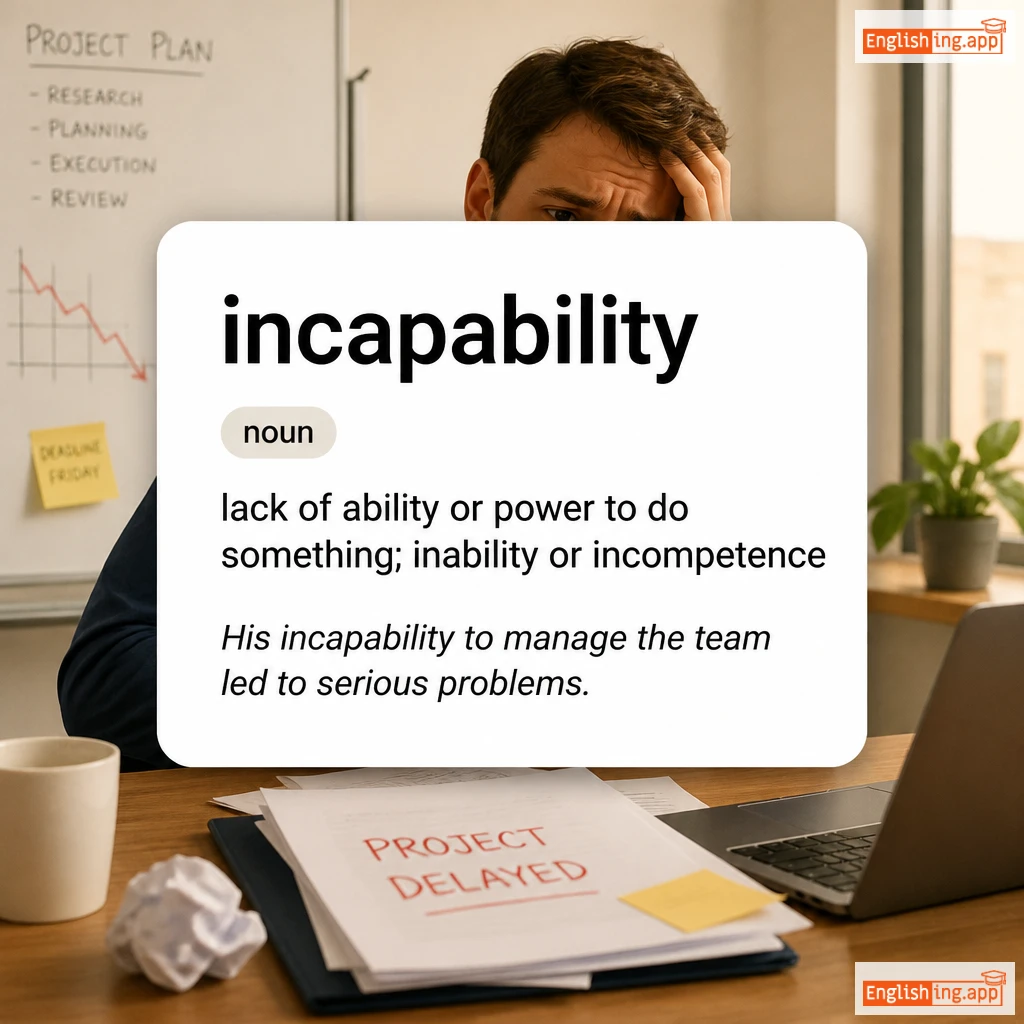
incapability definition card — visual illustration of the meaning
noun C2
/ˌɪnˌkeɪpəˈbɪləti/
無能力 (munouryoku)

lack of ability or power to do something; inability or incompetence

"His incapability to manage the team led to serious problems."

"チームを管理する彼の無能力は深刻な問題を引き起こした。" (chiimu o kanri suru kare no munouryoku wa shinkoku na mondai o hikiokoshita)
verb C2
/ˌɪnkəˈpæsɪteɪt/
無力化する (muryokuka suru)

to deprive someone or something of the ability or strength to function

"The severe injury incapacitated the player for the rest of the season."

"その重傷はプレーヤーをシーズンの残りの期間無力化させた。" (Sono juushou wa pureeaa o shiizun no nokori no kikann muryokuka saseta.)
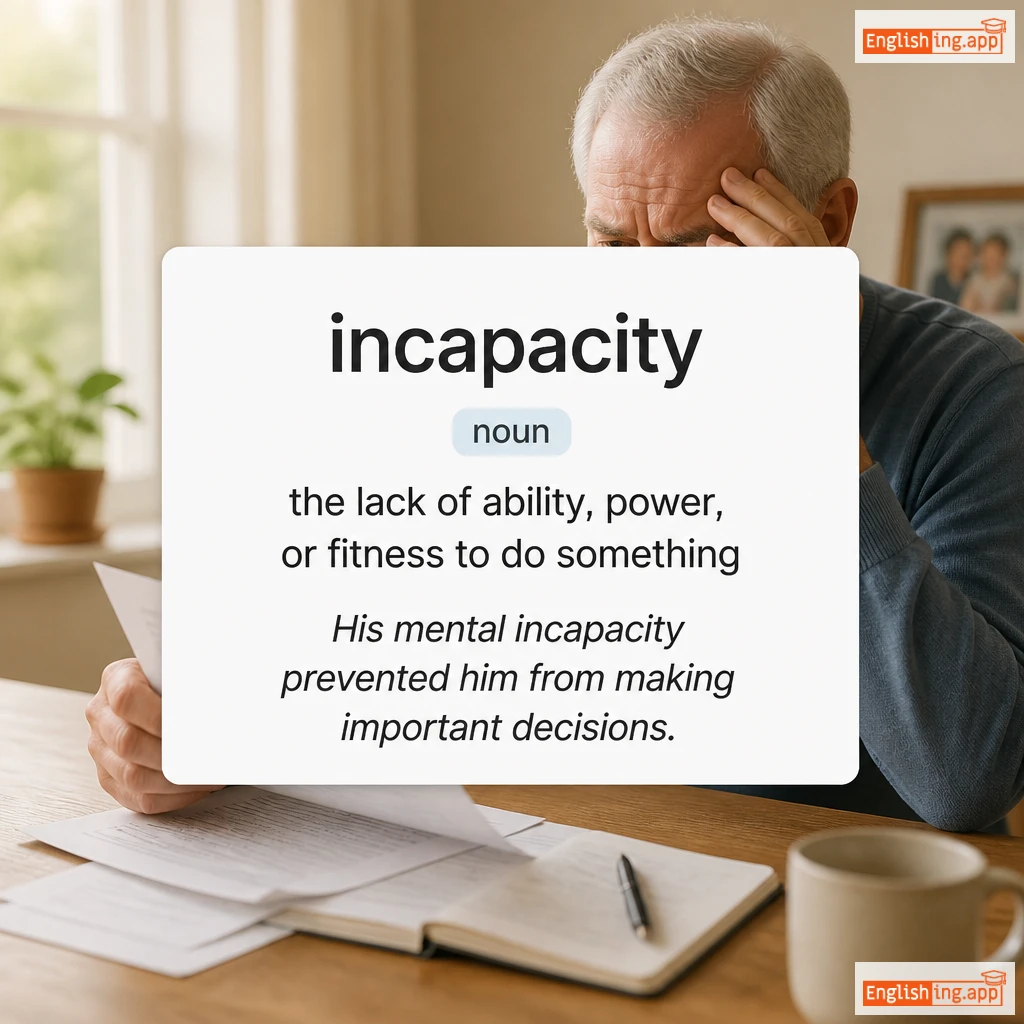
incapacity definition card — visual illustration of the meaning
noun C2
/ˌɪnkəˈpæsəti/
無能力 (munōryoku)

the lack of ability, power, or fitness to do something

"His mental incapacity prevented him from making important decisions."

"彼の精神的無能力は、重要な決定を下すのを妨げました。" (Kare no seishinteki munōryoku wa, jūyōna kettei o kudasu no o samatagemashita.)
adjective/noun C2
/ɪnˈkɑːrnədiːn/
深紅 (shinku)

a bright crimson or pinkish-red color

"The sky turned incarnadine at sunset."

"太陽が沈むと空は深紅色に変わった。" (Taiyō ga shizumu to sora wa shinku shoku ni kawatta.)
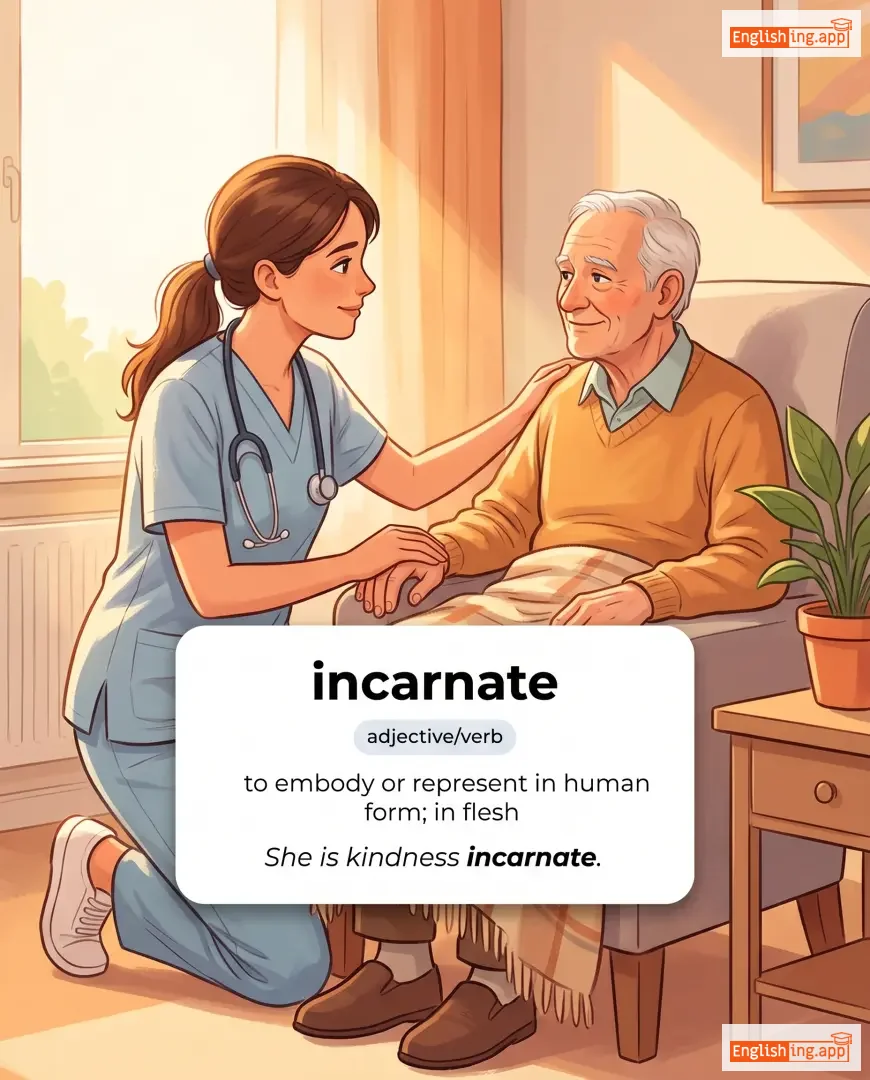
incarnate definition card — visual illustration of the meaning
adjective/verb C2
/ɪnˈkɑːrneɪt/
具現化 (gugenka)

to embody or represent in human form; in flesh

"She is kindness incarnate."

"彼女は親切さの具現化です。" (Kanojo wa shinsetsu sa no gugenka desu.)
adjective C2
/ɪnˈsɛndiˌɛri/
扇動的な / 挑発的な (sendō-teki na / chōhatsu-teki na)

designed to cause fires or stir up conflict

"The politician’s incendiary remarks angered the crowd."

"政治家の挑発的な発言が群衆を怒らせた。" (Seijika no chōhatsu-teki na hatsugen ga gunshū wo okorase ta.)
adjective C2
/ɪnˈsɛptɪv/
初期の (shoki no)

Relating to or marking the beginning or initial stage of something.

"The inceptive phase of the project was marked by enthusiastic planning."

"プロジェクトの開始段階は熱心な計画で特徴づけられました。" (Purojekuto no kaishi dankai wa nesshin na keikaku de tokuchōzukeraremashita.)
adverb C2
/ˈɪntʃmiːl/
少しずつ (sukoshizutsu)

Gradually, little by little.

"The old castle fell inchmeal into ruin."

"その古い城は少しずつ廃墟になった。" (Sono furui shiro wa sukoshizutsu haikyo ni natta.)
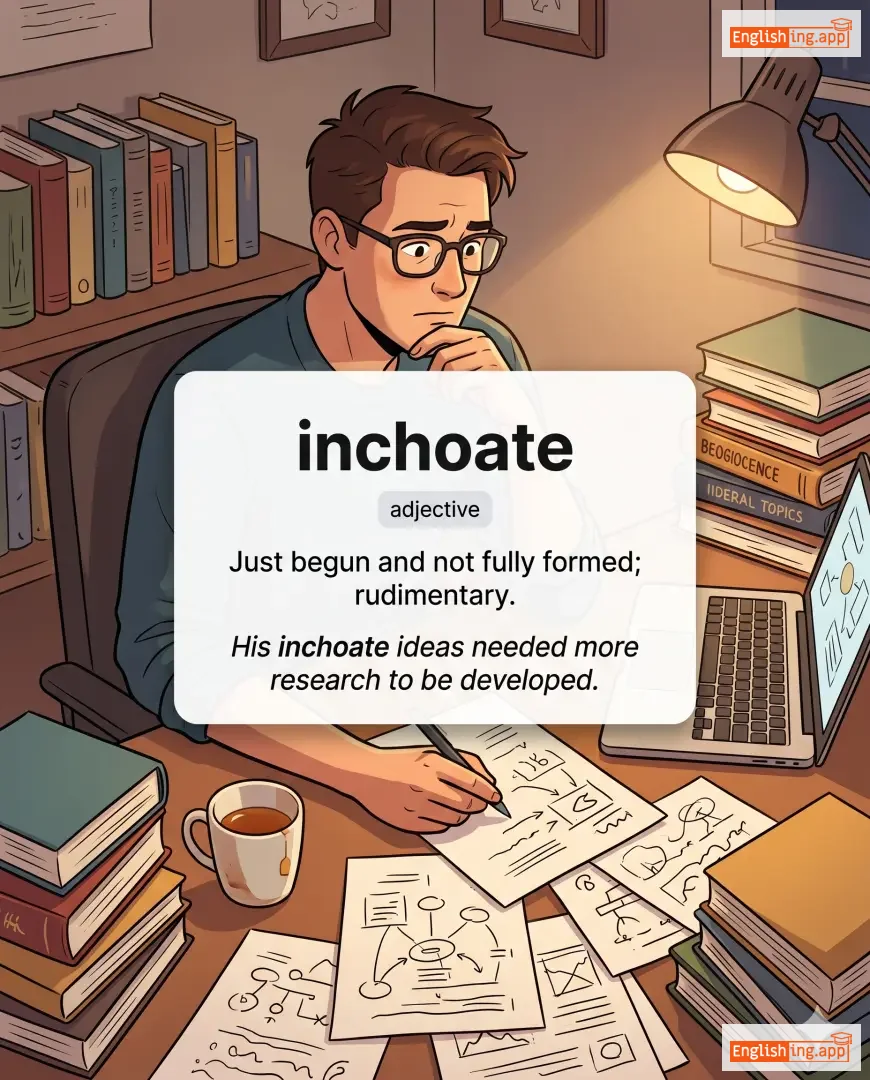
inchoate definition card — visual illustration of the meaning
adjective C2
/ɪnˈkoʊ.ɪt/ or /ɪnˈkoʊ.eɪt/
未完成 (mikansei)

Just begun and not fully formed; rudimentary.

"His inchoate ideas needed more research to be developed."

"彼の未完成のアイデアは、さらに開発するためにもっと研究が必要だった。" (Kare no mikansei no aidea wa, sara ni kaihatsu suru tame ni motto kenkyuu ga hitsuyou datta.)
adjective C2
/ɪnˈkoʊətɪv/
初期の (shoki no)

relating to the beginning of something; in an initial stage

"The poet used inchoative expressions to depict the dawn of creation."

"詩人は創造の夜明けを描くために初期の表現を使いました。" (Shijin wa souzou no yoake wo kaku tame ni shoki no hyougen wo tsukaimashita.)
verb C2
/ɪnˈsɪnəˌreɪt/
焼却する (shōkyaku suru)

to burn something completely until it is reduced to ashes

"The city decided to incinerate the medical waste for safety."

"その都市は安全のために医療廃棄物を焼却することを決定しました。" (Sono toshi wa anzen no tame ni iryō haikimono o shōkyaku suru koto o kettei shimashita.)
noun C2
/ɪnˈsɪpiəns/
始まり (hajimari)

the beginning or initial stage of something

"The project was still in its incipience when funding was approved."

"資金提供が承認された時、プロジェクトはまだその始まりの段階にありました。" (Shikin teikyō ga shōnin sareta toki, purojekuto wa mada sono hajimari no dankai ni arimashita.)
adjective C2
/ɪnˈsɪpiənt/
初期の (shoki no)

in an initial stage; beginning to develop

"The incipient storm made the sky turn dark and heavy."

"初期の嵐が空を暗く重くさせた。" (Shoki no arashi ga sora o kuraku omoku saseta.)
noun C2
/ɪnˈsaɪzər/
切歯 (kesshi)

a narrow-edged tooth at the front of the mouth, adapted for cutting

"The dentist noted that his upper left incisor was chipped."

"歯科医は彼の上の左側の切歯が欠けていることに気づきました。" (Shikai wa kare no ue no hidarigawa no kesshi ga kakete iru koto ni kizukimashita.)
adjective C2
/ɪnˈklɛmɛnt/
悪天候 (akutenkou)

unpleasantly cold, wet, or stormy (usually weather)

"The match was canceled due to inclement weather."

"試合は悪天候のためキャンセルされました。" (Shiai wa akutenkou no tame kyanseru saremashita.)
adjective C2
/ˌɪnkoʊˈɜːrsəbl̩/
強制できない (kyousei dekinai)

Not capable of being forced, compelled, or restrained.

"Her incoercible spirit inspired others to fight for justice."

"彼女の強制できない精神は他の人々に正義のために戦うようにインスパイアした。" (Kanojo no kyousei dekinai seishin wa hoka no hitobito ni seigi no tame ni tatakau you ni insupaia shita.)
adjective C2
/ɪnˈkɑːdʒɪtənt/
無思慮な (musiryona)

Lacking thought; inconsiderate or thoughtless.

"It was incogitant of him to make such a rude comment."

"彼がそんな失礼なコメントをするのは無思慮なことでした。" (Kare ga sonna shitsurei na komento o suru no wa musiryona koto deshita.)
adjective C2
/ˌɪnkəmˈbʌstəbl/
不燃 (funen)

Not capable of catching fire or burning.

"This material is incombustible and safe for construction."

"この材料は燃えません、安全に建設に使用できます。" (Kono zairyō wa moemasu, anzen ni kensetsu ni shiyō dekimasu.)
adjective C2
/ˌɪnkəˈməʊdiəs/
不快な (fukai na)

Uncomfortably small, cramped, or inconvenient.

"We had to stay in an incommodious room during the trip."

"旅行中に不快な部屋に泊まらなければなりませんでした。" (Ryokō-chū ni fukai na heya ni tomarana kereba narimasen deshita.)
adjective C2
/ˌɪnkəmˈprɛsəbl/
圧縮不可能 (asshuku fukanou)

Not able to be pressed or squeezed into a smaller space.

"Liquids are generally considered incompressible."

"液体は通常、圧縮不可能と見なされます。" (Ekita wa tsūjō, asshuku fukanō to minasarerumasu.)
adjective C2
/ɪnˈkɒŋɡruənt/
不一致な (fuicchi na)

Not in harmony or keeping with the surroundings or other aspects.

"His casual outfit looked incongruent at the formal dinner."

"彼のカジュアルな服装は正式なディナーで不一致に見えた。" (Kare no kajuaru na fukusō wa seishiki na dinā de fuicchi ni mieta.)
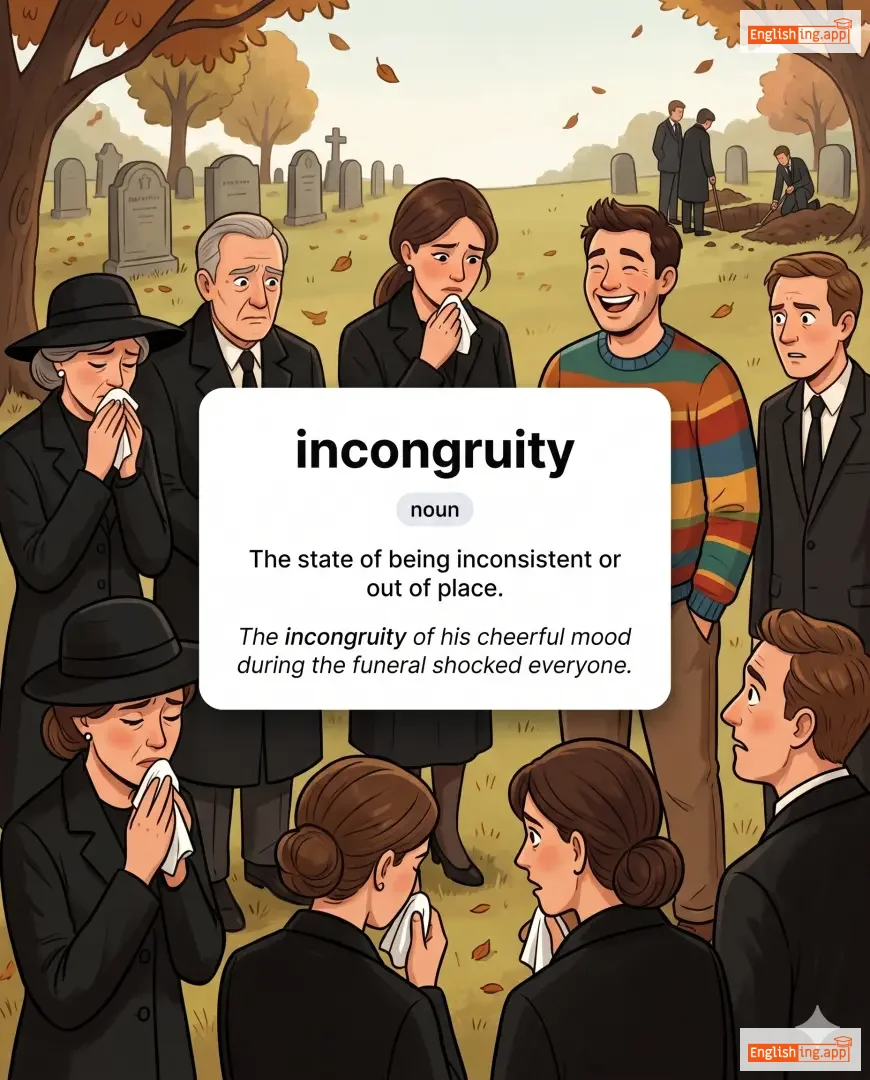
incongruity definition card — visual illustration of the meaning
noun C2
/ˌɪnkənˈɡruːəti/
不一致 (fu ichi)

The state of being inconsistent or out of place.

"The incongruity of his cheerful mood during the funeral shocked everyone."

"葬式の最中に彼の陽気な気分の不一致は、皆を驚かせました。" (Sōshiki no saichū ni kare no yōki na kibun no fu ichi wa, mina o odorokasemashita.)
adjective C2
/ˌɪnkənˈsɪdərəbl/
取るに足らない (toru ni taranai)

Too small or unimportant to be worth considering.

"The donation was not inconsiderable, though smaller than expected."

"寄付は取るに足らなかったが、予想よりも小さかった。" (Kifu wa toru ni taranakatta ga, yosō yori mo chiisakatta.)
noun C2
/ɪnˈkɒnstənsi/
不安定さ (fuantesa)

The quality of changing frequently or being unreliable.

"The inconstancy of the weather makes planning difficult."

"天候の不安定さが計画を難しくします。" (Tenkou no fuantesa ga keikaku o muzukashiku shimasu.)
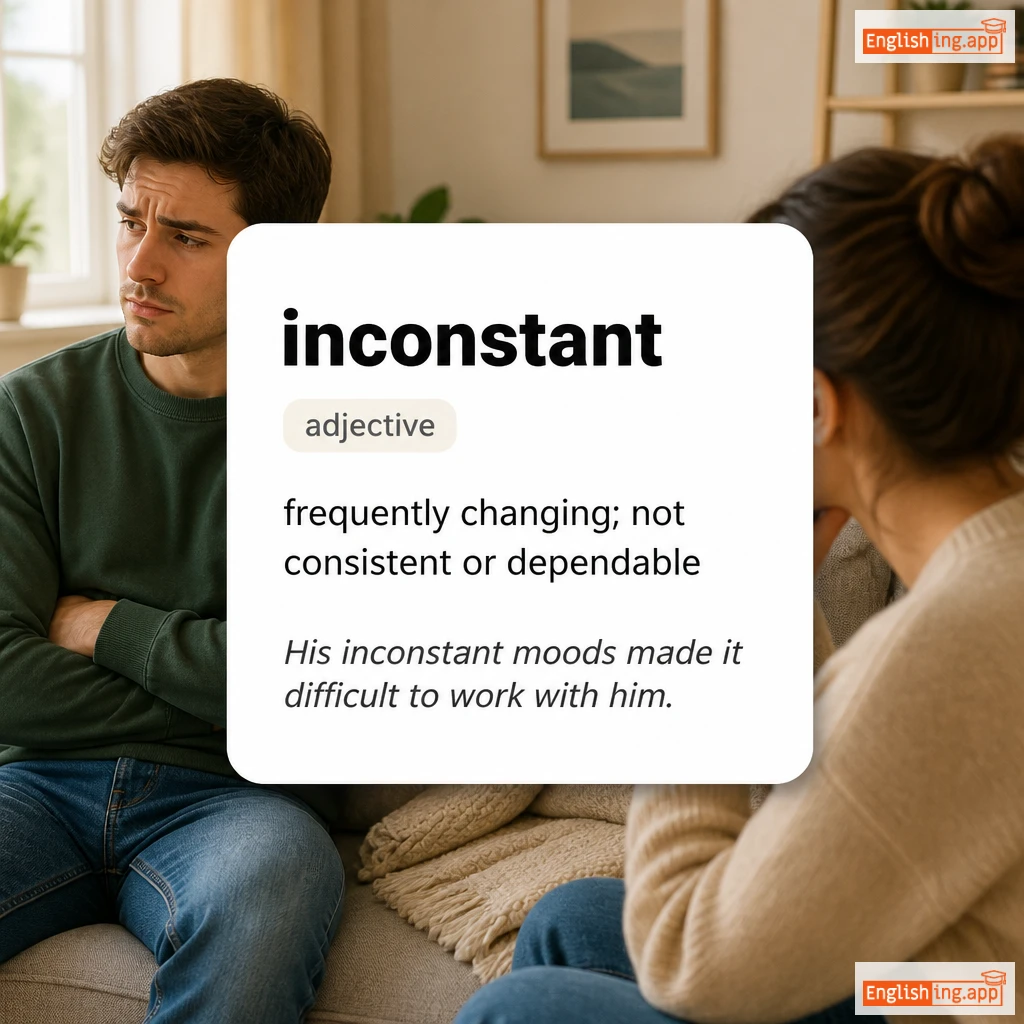
inconstant definition card — visual illustration of the meaning
adjective C2
/ɪnˈkɒnstənt/
不安定な (fuanteina)

frequently changing; not consistent or dependable

"His inconstant moods made it difficult to work with him."

"彼の不安定な気分は彼と仕事をするのを難しくした。" (Kare no fuantei na kibun wa kare to shigoto o suru no o muzukashiku shita.)
adjective C2
/ɪnˈkɒntɪnənt/
失禁 (shitsukin)

lacking control over urination or defecation; lacking self-restraint

"The patient was incontinent after surgery."

"手術後、患者は失禁していた。" (Shujutsu go, kanja wa shitsukin shite ita.)
adjective C2
/ˌɪnkɒntrəˈvɜːtəbl/
論争の余地がない (ronsou no yochi ga nai)

impossible to deny or dispute; unquestionable

"The evidence was incontrovertible and proved his innocence."

"その証拠は論争の余地がなく、彼の無罪を証明しました。" (Sono shouko wa ronsou no yochi ga naku, kare no muzai o shoumei shimashita.)
adjective C2
/ˌɪnkɔːrˈpɔːriəl/
無形 (mukei)

lacking a physical body; not composed of matter; intangible

"Ghosts are often described as incorporeal beings."

"ゴーストはしばしば無形の存在として描かれます。" (Gōsuto wa shibashiba mukei no sonzai toshite egakaremasu.)
adjective C2
/ɪnˈkɒrɪdʒəbəl/
訂正不可能な (teisei fukanō na)

incapable of being corrected, improved, or reformed

"He is an incorrigible optimist who never loses hope."

"彼は決して希望を失わない訂正不可能な楽観主義者です。" (Kare wa kesshite kibō o ushinawanai teisei fukanō na rakkan shugi-sha desu.)