Vocabularies

English Vocabulary Dictionary | Word Meanings, Definitions & Examples

noun C2
/hʌsk/
оболочка (obolochka)

the dry outer covering of some fruits or seeds

"The corn husk was peeled away before cooking."

"Оболочка кукурузы была снята перед готовкой." (Obolochka kukuruzyi byla snyata pered gotovkoy.)
adjective C2
/ˈhʌski/
хриплый (khaski)

deep, rough, and slightly hoarse voice; also refers to a strong and sturdy build

"He spoke in a husky voice after shouting all day."

"Он говорил хриплым голосом после того, как целый день кричал." (On govoril hriplym golosom posle togo kak tseliy den krichal)
noun C2
/hʊˈzɑːr/
гусар (gusar)

a member of a light cavalry regiment in European armies, especially the Hungarian cavalry

"The hussar rode swiftly across the battlefield."

"Гусар быстро ехал по полю битвы." (Gusar bystro yekhal po polyu bitvy.)
noun C2
/ˈhʌstɪŋz/
предвыборная кампания (predvybornaya kampaniya)

the political campaigning and speeches before an election

"The candidate gained popularity during the hustings."

"Кандидат набрал популярность во время предвыборной кампании." (Kandidat nabral popularnost' vo vremya predvybornoy kampanii.)
noun C2
/ˈhaɪdrə/
гидра (gidra)

a many-headed serpent in Greek mythology; a problem that seems to grow worse when attempts are made to solve it

"Corruption is like a hydra, hard to defeat completely."

"Коррупция как гидра, её трудно победить полностью." (Korruptsiya kak gidra, yeye trudno pobedit' polnost'yu.)
noun C2
/ˌhaɪdroʊdaɪˈnæmɪks/
гидродинамика (gidrodinamika)

The branch of science concerned with the motion of fluids, especially liquids, and the forces acting on solid bodies immersed in fluids.

"Hydrodynamics is essential in designing efficient ship hulls."

"Гидродинамика необходима при проектировании эффективных обводов корпуса судна." (Gidrodinamika neobhodima pri proektirovanii effektivnyh obvodov korpusa sudna)
hydrolysis definition card — visual illustration of the meaning
noun C2
/haɪˈdrɒl.ɪ.sɪs/
гидролиз (gidroliz)

A chemical process that breaks down compounds by adding water, splitting complex molecules into simpler forms.

"Hydrolysis breaks down complex molecules into simpler forms."

"Гидролиз разрушает сложные молекулы на более простые формы." (Gidroliz razrushayet slozhnye molekuly na boleye prostye formy.)
noun C2
/ˌhaɪdroʊməˈkænɪks/
гидромеханика (gidromekhanika)

The study of the mechanical properties and behavior of fluids in motion and at rest.

"Hydromechanics provides the foundation for naval architecture."

"Гидромеханика является основой для судостроения." (Gidromekhanika yavlyayetsya osnovoy dlya sudostroyeniya.)
noun C2
/haɪˈdrɒmɪtər/
гидрометр (gidrometr)

An instrument used to measure the density or specific gravity of liquids.

"The brewer used a hydrometer to test the sugar content of the solution."

"Пивовар использовал гидрометр, чтобы измерить плотность сахарного раствора." (Pivovar ispolzoval gidrometr chtoby izmerit plotnost sakharnoho rastvora)
noun C2
/ˌhaɪdroʊˈfoʊbiə/
гидрофобия (gidrofobiya)

Extreme or irrational fear of water; historically, another name for rabies.

"After being bitten by a stray dog, the man was treated for hydrophobia."

"После укуса бродячей собаки мужчину лечили от гидрофобии." (Posle ukusa brodyachey sobaki muzhchinu lechili ot gidrofobii.)
noun C2
/ˌhaɪdrəˈstætɪks/
гидростатика (gidrostatika)

The branch of science concerned with the mechanical properties of fluids at rest.

"Hydrostatics is essential in understanding how dams and reservoirs function."

"Гидростатика важна для понимания того, как работают дамбы и водохранилища." (Gidrostatika vazhna dlya ponimaniya togo, kak rabotayut damby i vodokhranilishcha.)
adjective C2
/ˈhaɪdrəs/
водяной (vodyanoy)

Containing water, especially water of crystallization.

"The mineral is hydrous because it contains water molecules in its structure."

"Этот минерал гидратирован, потому что в его структуре содержатся молекулы воды." (Ehtot mineral gidratiravan, potomu chto v ego strukture soderzhatsya molekuly vody.)
adjective C2
/ˌhaɪpərˈbɔːriən/
гиперборейский (giperboreyskiy)

Relating to the extreme north; very cold or frigid.

"The explorers prepared for the hyperborean climate of the Arctic."

"Исследователи готовились к гиперборейскому климату Арктики." (Issledovateli gotovilis' k giperboreyskomu klimatu Arktiki.)
hyperconnectivity definition card — visual illustration of the meaning
noun C2
ˌhaɪ.pər.kəˈnɛk.tɪ.vɪ.ti
гиперконнективность (giperkonnectivnost)

The use of multiple systems and devices to remain constantly connected.

"The era of hyperconnectivity has led to a digital revolution."

"Эра гиперконнективности привела к цифровой революции." (Era giperkonnectivnosti privedla k tsifrovoy revolyutsii.)
adjective C2
/ˌhaɪpərˈkrɪtɪkl/
гиперкритичный (giperkritichny)

Excessively or unreasonably critical.

"The teacher was often hypercritical of small mistakes."

"Учитель часто был гиперкритичен к небольшим ошибкам." (Uchitel' chasto byl giperkritichen k nebol'shim oshibkam.)
noun C2
/ˌhaɪpəˈkɒndrɪæk/
ипохондрик (ipohondrik)

a person who is excessively worried about having a serious illness

"She is a hypochondriac who visits the doctor every week."

"Она ипохондрик, которая каждую неделю ходит к врачу." (Ona ipohondrik, kotoraya kazhduyu nedelyu khodit k vrachu.)
adjective C2
/ˌhaɪpəˈdɜːrmɪk/
гиподермический (hypodermic)

relating to the region immediately beneath the skin; also refers to a type of needle or syringe used to inject drugs beneath the skin.

"The doctor used a hypodermic needle to administer the vaccine."

"Доктор использовал гиподермическую иглу для введения вакцины." (Doktor ispolzoval gipodermicheskuyu iglu dlya vvedeniya vaktsiny.)
verb C2
/haɪˈpɒθɪkeɪt/

to pledge something, such as property, as security for a debt without giving up possession of it.

"The company hypothecated its assets to secure the loan."

adjective C2
/ˈɪkθiɪk/
ихтиический (ikhtiyicheskiy)

Relating to or resembling fish.

"The artist's painting had an ichthyic quality."

"Картина художника имела ихтиковое качество." (Kartina khudozhnika imela ikhtikovoe kachestvo.)
noun C2
/ˌɪkθiˈɒlədʒɪst/
ихтиолог (ikhtiolog)

A scientist who studies fish.

"The ichthyologist discovered a new species of fish in the river."

"Ихтиолог обнаружил новый вид рыбы в реке." (Ikhtiolog obnaruzhil novyi vid ryby v reke.)
noun C2
/ˌɪkθiˈɒlədʒi/
ихтиология (ikhtiologiya)

The branch of zoology that deals with fish.

"He pursued a degree in ichthyology at the university."

"Он получил диплом по ихтиологии в университете." (On poluchil diplom po ikhtiologii v universitete.)
noun C2
/ˈɪkθiəˌsɔːrz/
иктиозавры (вид вымерших морских рептилий) (ikhtiozavry)

Extinct marine reptiles that resembled fish and dolphins, dominant during the Mesozoic era.

"Ichthyosaurs were swift predators of the ancient seas."

"Иктиозавры были быстрыми хищниками древних морей." (Ikhtiozavry byli bystrymi khishchnikami drevnikh morei.)
adverb C2
/ˈaɪsɪli/
ледяным образом (ledyanim obrazom)

In a very cold, unfriendly, or hostile manner.

"She replied icily to his question."

"Она ответила ледяным образом на его вопрос." (Ona otvetila ledyanym obrazom na ego vopros.)
noun C2
/ˈaɪsinəs/
холодность (kholodnost)

The state of being cold in manner or temperature.

"There was a distinct iciness in his voice."

"В его голосе была явная холодность." (V yego golose byla yavnyaya kholodnost.)
noun C2
/aɪˈkɒnəklæst/
иконокласт (ikonoklast)

A person who attacks or criticizes cherished beliefs, traditions, or institutions.

"He was known as an iconoclast who challenged old traditions."

"Он был известен как иконокласт, который бросал вызов старым традициям." (On byl izvesten kak ikonoklast, kotoryy brosal vyzov starym traditsiyam.)
iconoclastic definition card — visual illustration of the meaning
adjective C2
/ˌaɪ.kə.nəˈklæs.tɪk/
характеризуется нападением или отклонением от устоявшихся верований, традиций или ценностей (ikonoklasticheskij)

Characterized by attacking or rejecting cherished beliefs, traditions, or established values.

"Her iconoclastic views challenged the conventional wisdom of the industry."

"Её иконокластические взгляды бросали вызов традиционной мудрости отрасли." (Eyo ikonoklasticheskie vzglyady brosali vyzov traditsionnoj mudrosti otrasli.)
ideation definition card — visual illustration of the meaning
noun C2
/ˌaɪdiˈeɪʃən/
создание идей (sozdanie idey)

The process of forming ideas or concepts.

"The workshop focused on ideation and brainstorming."

"Мастерская сосредоточилась на создании идей и мозговом штурме." (Masterskaya sosredotochilas' na sozdanii idey i mozgovom shturme.)
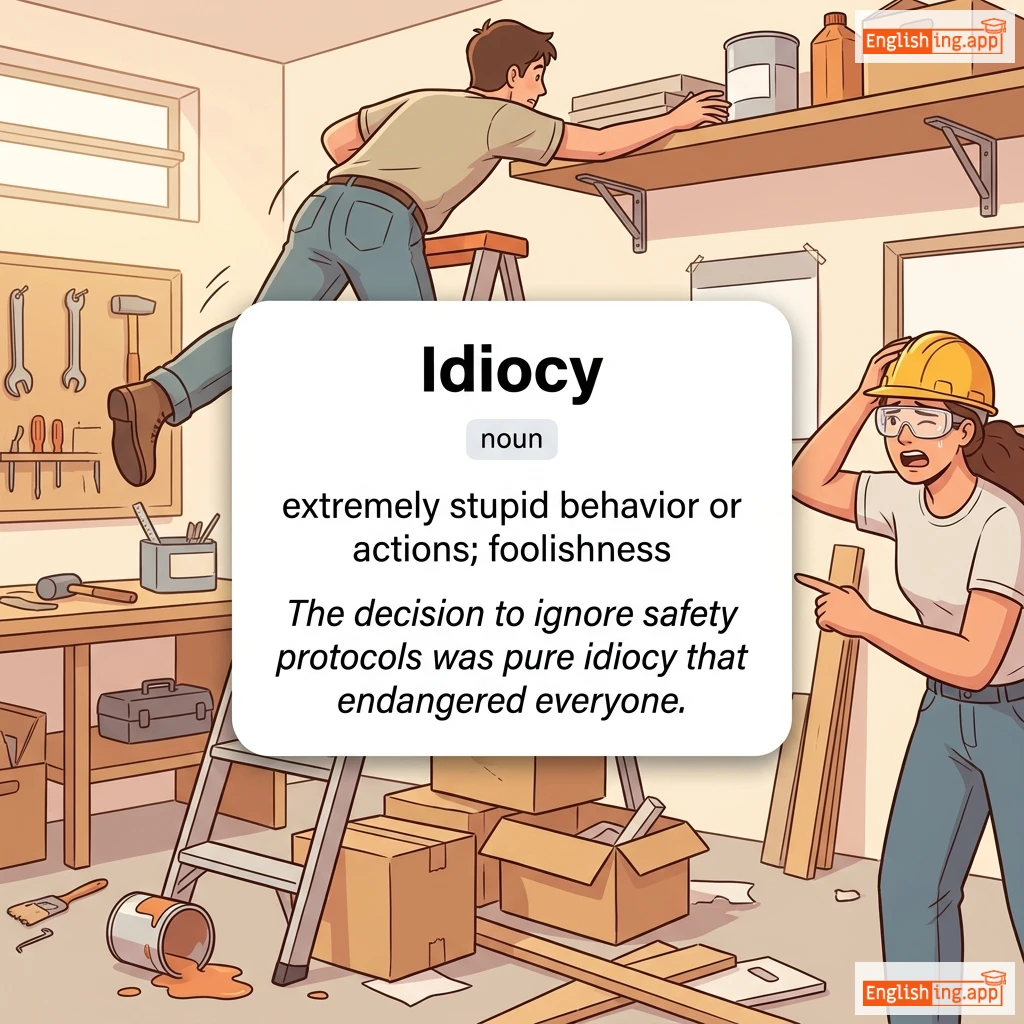
Idiocy definition card — visual illustration of the meaning
noun C2
/ˈɪd.i.ə.si/
идиотизм (idiotizm)

extremely stupid behavior or actions; foolishness

"The decision to ignore safety protocols was pure idiocy that endangered everyone."

"Решение игнорировать протоколы безопасности было чистым идиотизмом, который поставил всех в опасность." (Reshenie ignorirovat' protokoly bezopasnosti bylo chistym idiotizmom, kotoryi postavil vsekh v opasnost'.)
noun C2
/ˌɪdiəˈsɪŋkrəsi/
идиосинкразия (idiosinkraziya)

A distinctive or peculiar characteristic, habit, or mannerism unique to an individual.

"One of her idiosyncrasies was humming while working."

"Одна из ее идиосинкразий заключалась в том, что она напевала, работая." (Odna iz eye idiosinkrazii zaklyuchalas' v tom, chto ona napevala, rabotaya.)
noun C2
/ˈaɪdlər/
лентяй (lentyay)

A person who avoids work or spends time lazily.

"He was known as an idler who wasted his days."

"Он был известен как лентяй, который тратил свои дни впустую." (On byl izvesten kak lentyay, kotoryy tratil svoi dni vpustuyu.)
adjective C2
/ˌaɪdəˈlɑːtrɪəs/
идолопоклоннический (idolopoklonnicheskiy)

Excessively devoted or reverent towards idols or false gods.

"The ancient tribe was known for its idolatrious practices."

"Древнее племя было известно своими идолопоклонническими обычаями." (Drevnee plemya bylo izvestno svoimi idolopoklonnicheskimi obychayami.)
verb C2
/aɪˈdɒləˌtraɪz/
идолопоклонство (idolopoklonstvo)

To worship idols; to regard with excessive devotion or admiration.

"They began to idolatrize the statue as a deity."

"Они начали идолизировать статую как божество." (Oni nachali idolizirovat' statuju kak bozhestvo.)
adjective C2
/aɪˈdɒlətrəs/
идолопоклонник (idolopoklonnik)

Excessively admiring or worshipping someone or something as an idol.

"The king was criticized for his idolatrous devotion to wealth."

"Царя критиковали за его идолопоклонническое поклонение богатству." (Tsarya kritikovali za ego idolopoklonnicheskoe poklonenie bogatstvu.)
idolatry definition card — visual illustration of the meaning
noun C2
/aɪˈdɒlətri/
идолопоклонство (idolopoklonstvo)

The worship of idols or extreme admiration for someone or something.

"The priest condemned the idolatry practiced in the village."

"Священник осудил идолопоклонство, практиковавшееся в деревне." (Svyashchennik osudil idolopoklonstvo, praktikovavsheesya v derevne.)
noun C2
/ˈaɪdɪl/
идиллическая сцена (idillicheskaya stsena)

An extremely happy, peaceful, or picturesque episode or scene, often idealized.

"Their honeymoon was an idyll on a tropical island."

"Их медовый месяц был идиллической сценой на тропическом острове." (Ikh medovy mesyats byl idillicheskoy stsenoiy na tropicheskom ostrove.)
adjective C2
/ɪɡˈnoʊ.bəl/
подлый (podlyi)

Dishonorable, shameful, or lacking nobility.

"His ignoble actions ruined his reputation."

"Его подлые поступки испортили его репутацию." (Ego podlye postupki isportili ego reputatsiyu.)
adjective C2
/ˌɪɡ.nəˈmɪn.i.əs/
позорный (pozorny)

Marked by shame, disgrace, or humiliation.

"The team suffered an ignominious defeat in the finals."

"Команда потерпела позорное поражение в финале." (Komanda poterpela pozornoe porazhenie v finale.)
noun C2
/ˈɪɡ.nəˌmɪn.i/
игноминия (ignominiya)

Public shame, disgrace, or dishonor.

"He lived the rest of his life in ignominy after the scandal."

"Он прожил остаток своей жизни в игноминии после скандала." (On prozhil ostatok svoey zhizni v ignominii posle skandala.)
noun C2
/ˈaɪ.kɒn/
религиозный образ или символ (religioznyy obraz ili simvol)

A religious image or symbol, especially in the Eastern Orthodox Church.

"The church displayed a beautifully painted ikon of the Virgin Mary."

"Церковь выставила красиво написанную икону Богоматери." (Tserkov' vystavila krasivo napisannuyu ikonu Bogomateri.)
noun C2
/ˈɪl.i.æd/
Илиада (Iliada)

An ancient Greek epic poem attributed to Homer, describing the events of the Trojan War.

"Students studied the Iliad to understand Greek mythology and heroism."

"Студенты изучали Илиаду, чтобы понять греческую мифологию и героизм." (Studenty izuchali Iliadu, chtoby ponyat' grecheskuyu mifologiyu i geroizm.)
adjective C2
/ˈɪl bred/
невоспитанный (nevospitannyy)

lacking good manners; rude; showing poor upbringing

"His ill-bred behavior shocked everyone at the dinner party."

"Его хамское поведение шокировало всех на званом ужине." (Ego khamskoe povedenie shokirovalo vsekh na zvanom uzhine.)
adjective C2
/ˌɪlˈneɪ.tʃəd/
злой по натуре (zloy po nature)

Having a bad or unpleasant character; unkind or malicious.

"He made an ill-natured remark about his colleague."

"Он сделал злое замечание о своем коллеге." (On sdelal zloye zamechaniye o svoem kollege.)
Illegibility definition card — visual illustration of the meaning
noun C2
/ɪˌledʒ.əˈbɪl.ə.ti/
неразборчивость (nerazborchivost)

the quality of being impossible or difficult to read; unclear writing or print

"The doctor's handwriting was famous for its illegibility among the pharmacy staff."

"Рукопись врача была известна своей неразборчивостью среди персонала аптеки." (Rukopis' vracha byla izvestna svoey nerazborchivost'yu sredi personala apteki.)
illiberal definition card — visual illustration of the meaning
adjective C2
/ɪˈlɪbərəl/
иллиберальный (illiberalny)

Opposed to liberal principles; restricting freedom of thought or behavior.

"The government was criticized for its illiberal policies."

"Правительство было раскритиковано за свои иллиберальные политики." (Pravitel'stvo bylo raskritikovano za svoi illiberal'nye politiki.)
noun C2
/ˌɪlɪbəˈræləti/
нетерпимость (neterpimost)

The quality of being illiberal; lack of tolerance or generosity.

"The illiberality of the new laws alarmed the citizens."

"Иллиберализм новых законов насторожил граждан." (Illiberalizm novyh zakonov nastorozhil grazhdan.)
adjective C2
/ɪˈlɪmɪtəbl/
безграничный (bezgranichny)

Without limits or bounds.

"The universe is often described as illimitable."

"Вселенная часто описывается как безграничная." (Vselennaya chasto opisivayetsya kak bezgranichnaya.)
noun C2
/ɪˈluːmɪnənt/
освещающий объект (osveshchayushchiy ob'ekt)

A substance or device that produces light.

"The lamp acted as an illuminant in the dark cave."

"Лампа выступала в роли освещающего объекта в темной пещере." (Lampa vystupala v roli osveshchayushchogo ob'yekta v temnoy peshchere.)
noun C2
/ɪˌluːmɪˈnɑːti/
иллюминати (illyuminati)

a group of people claiming to have special enlightenment or secret knowledge, often linked to conspiracies

"Many conspiracy theories involve the Illuminati as a secret world-controlling group."

"Множество теорий заговора включает в себя Иллюминати как секретную мировую контролирующую группу." (Mnozhestvo teory za govora vklyuchayet v sebya Illyuminati kak sekretuyu mirovuju kontroliruyushchuyu gruppu.)
verb C2
/ɪˈluːmɪn/
освещать (osveshchat)

to light up or make clear

"The rising sun illumined the mountain peaks."

"Восходящее солнце осветило вершины гор." (Voskodyashchee solnce osvetilo vershiny gor.)
noun C2
/ˌɪmbəˈsɪləti/
тупость (tupost)

Extreme foolishness, stupidity, or weakness of mind.

"The plan was abandoned due to its sheer imbecility."

"План был заброшен из-за своей абсолютной тупости." (Plan byl zabroshen iz-za svoey absolyutnoy tuposti.)