Vocabularies

English Vocabulary Dictionary | Word Meanings, Definitions & Examples

adjective C2
/ˌdɪskəmˈbɑːbjuleɪtɪd/
混乱した (konran shita)

confused and disoriented; feeling unsettled

"She looked discombobulated after hearing the unexpected news."

"予期しないニュースを聞いた後、彼女は混乱しているように見えた。" (Yoki shinai nyuusu wo kiita ato, kanojo wa konran shite iru you ni mieta.)
discomfit definition card — visual illustration of the meaning
verb C2
/dɪsˈkʌmfɪt/
困惑させる (konwaku saseru)

to make someone feel uneasy, embarrassed, or confused

"The interviewer’s tough questions discomfited the candidate."

"インタビュアーの厳しい質問が候補者を困惑させた。" (Intabyuā no kibishī shitsumon ga kōhosha o konwaku saseta.)
adjective C2
/dɪsˈkʌmfɪtɪŋ/
不快な (fukai na)

Causing unease, embarrassment, or discomfort.

"His discomfiting questions made everyone shift uncomfortably in their seats."

"彼の不快な質問は、皆が座席で不安そうに動かせるようにさせた。" (kare no fukai na shitsumon wa, mina ga zaseki de fuan sou ni ugokaseru you ni saseta)
verb C2
/ˌdɪskəˈmoʊd/
邪魔する (jama suru)

To cause inconvenience or trouble to someone.

"I hope my request does not discommode you."

"私のリクエストがあなたに不便をかけないことを願っています。" (Watashi no rikuesuto ga anata ni fuben o kakenai koto o negatteimasu.)
verb C2
/ˌdɪskəmˈpoʊz/
動揺させる (dōyō saseru)

To disturb the order or calmness of something or someone.

"The unexpected question seemed to discompose her."

"予期しない質問が彼女を動揺させたようだ。" (Yokishinai shitsumon ga kanojo o dōyō saseta yō da.)
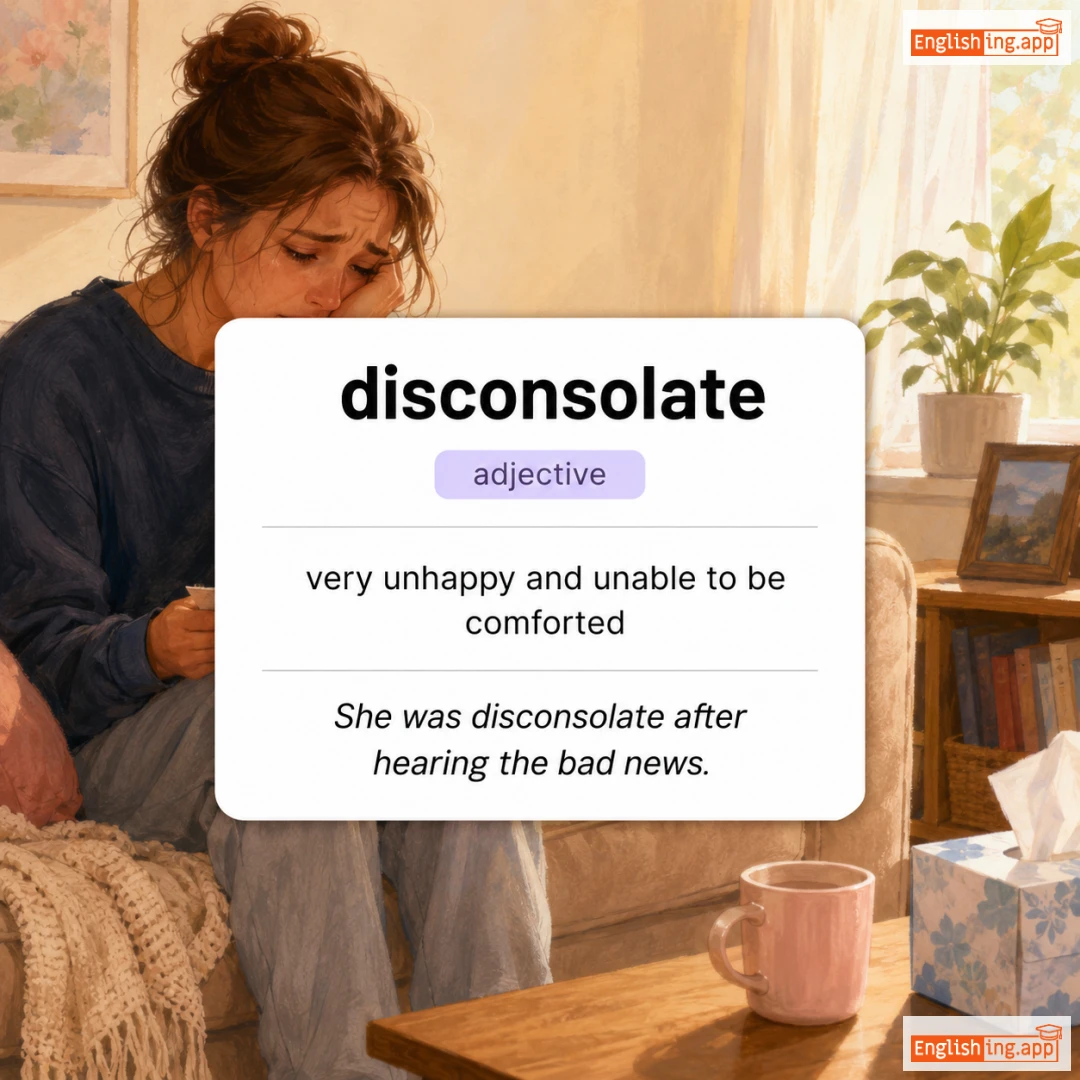
disconsolate definition card — visual illustration of the meaning
adjective C2
/dɪsˈkɒnsələt/
慰めようのない (nagusameyou no nai)

very unhappy and unable to be comforted

"She was disconsolate after hearing the bad news."

"悪い知らせを聞いた後、彼女は慰めようのない状態でした。" (Warui shirase o kiita ato, kanojo wa nagusameyou no nai jōtai deshita.)
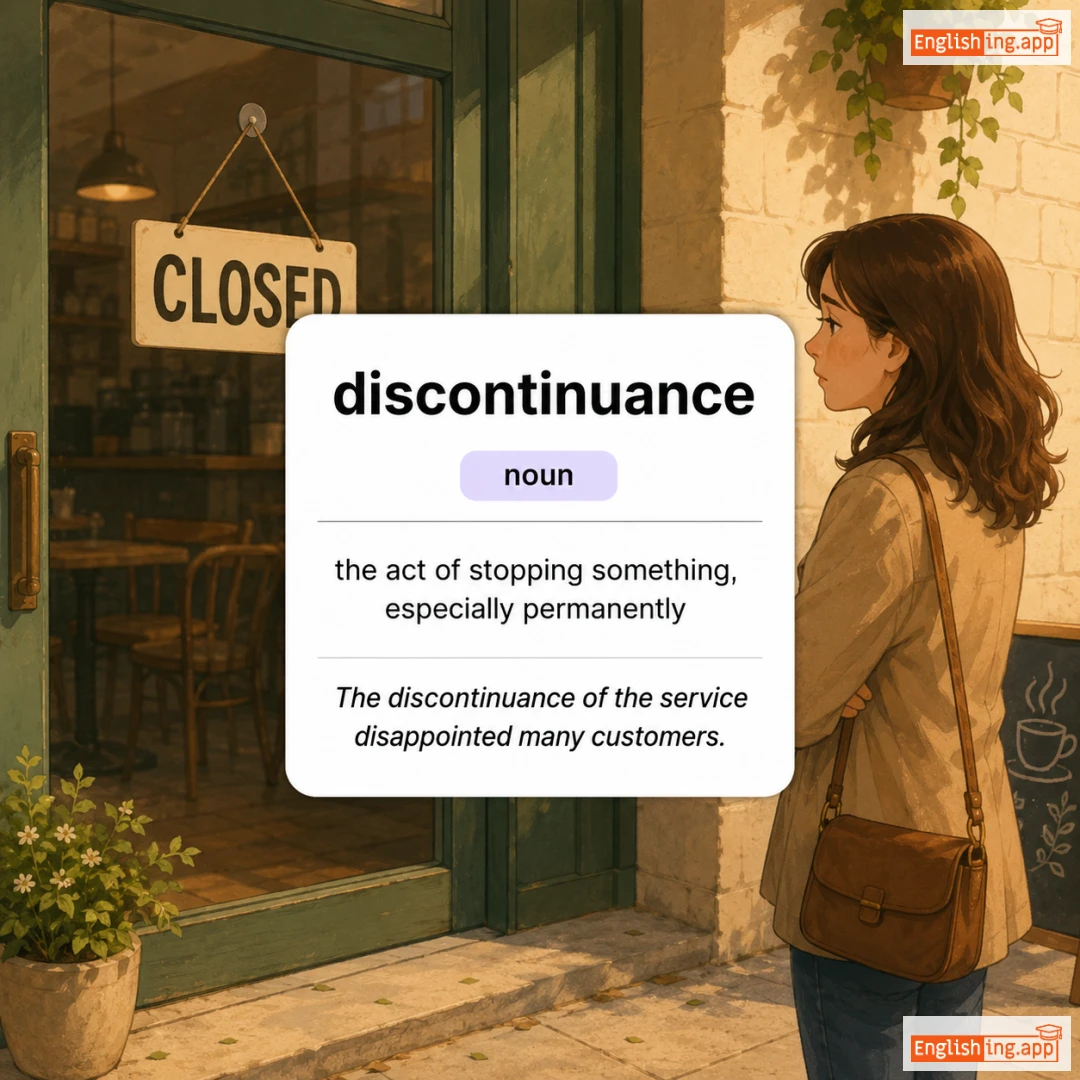
discontinuance definition card — visual illustration of the meaning
noun C2
/ˌdɪskənˈtɪnjʊəns/
中止 (chuushi)

the act of stopping something, especially permanently

"The discontinuance of the service disappointed many customers."

"サービスの中止は多くの顧客を失望させました。" (Saabisu no chuushi wa ooku no kokyaku wo shitsubou sasemashita.)
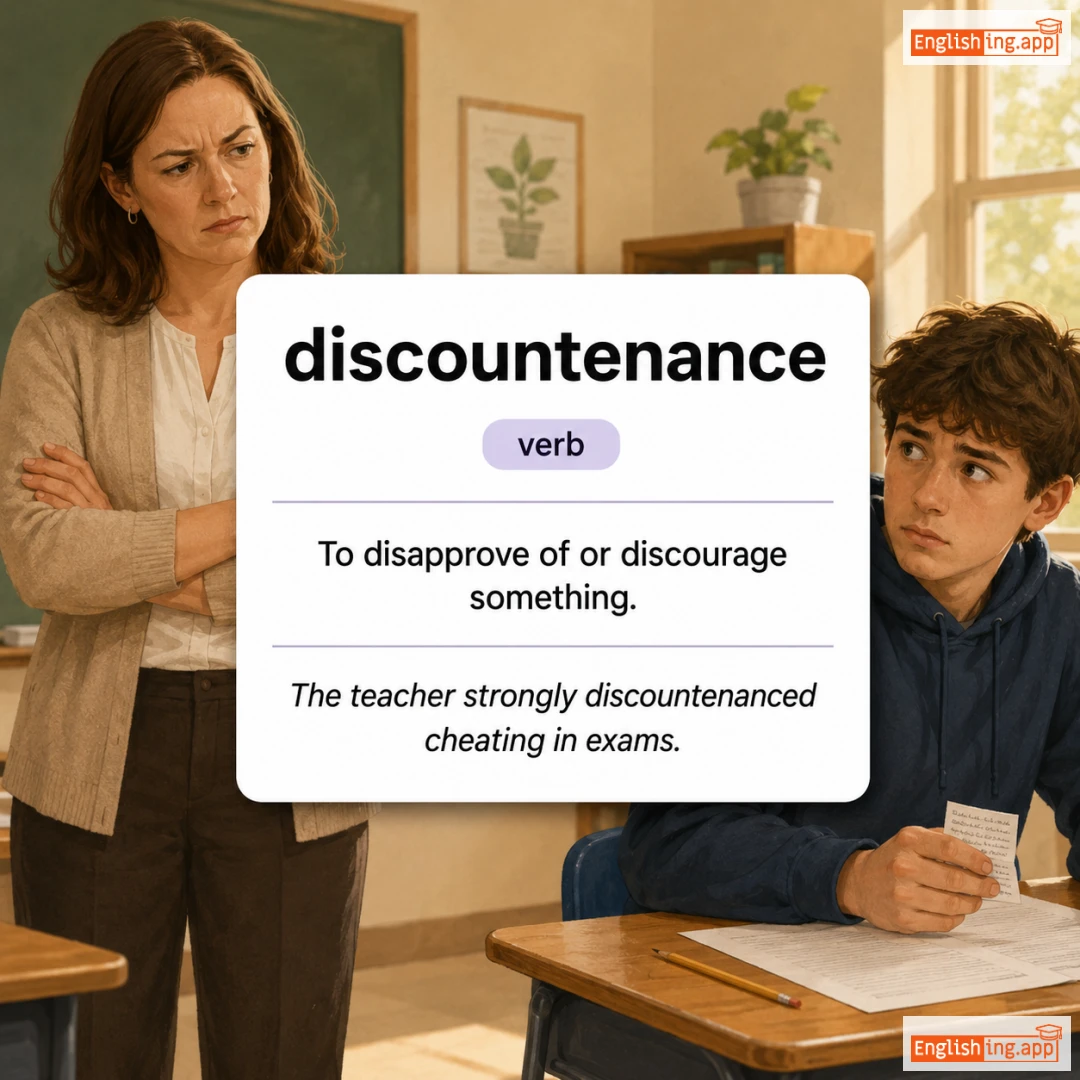
discountenance definition card — visual illustration of the meaning
verb C2
/dɪsˈkaʊntənəns/
非難する (hinan suru)

To disapprove of or discourage something.

"The teacher strongly discountenanced cheating in exams."

"先生は試験でのカンニングを強く非難しました。" (Sensei wa shiken de no kanningu o tsuyoku hinan shimashita.)
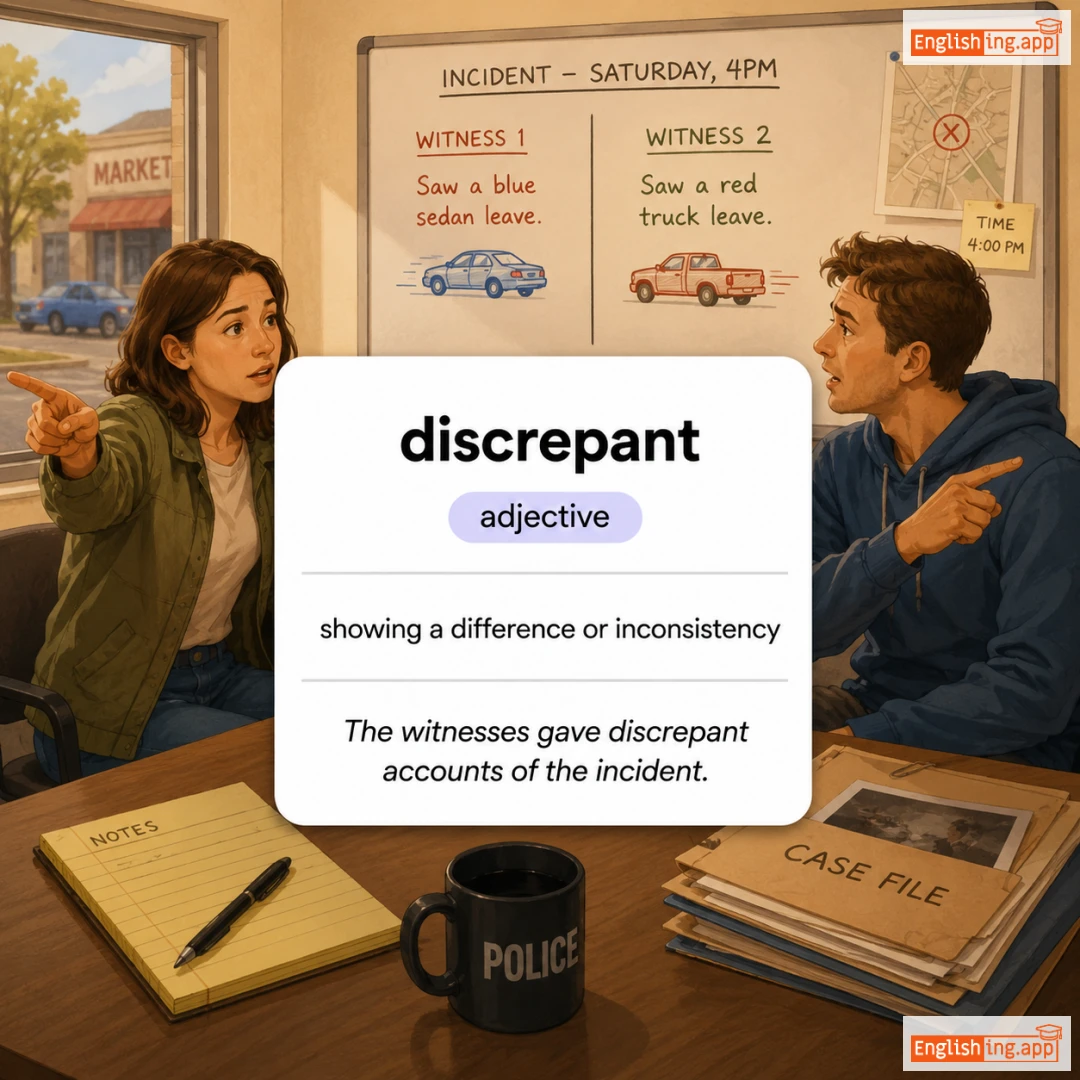
discrepant definition card — visual illustration of the meaning
adjective C2
/dɪˈskrɛpənt/
不一致の (fuchiitsu no)

showing a difference or inconsistency

"The witnesses gave discrepant accounts of the incident."

"目撃者たちは事件について食い違った証言をしました。" (Mokugekisha-tachi wa jiken ni tsuite kuichigatta shōgen o shimashita.)
adjective C2
/dɪsˈkɜrsɪv/
脱線的 (dassen-teki)

Tending to digress or move from topic to topic; lengthy and rambling.

"His discursive style made the lecture hard to follow."

"彼の脱線的なスタイルは講義を追うのが難しかった。" (Kare no dassen-teki na sutairu wa kōgi o ou no ga muzukashikatta.)
verb C2
/ˌdɪsɪnˈfræntʃaɪz/
権利を奪う (kenri o ubau)

To deprive someone of the right to vote or other rights.

"The new law could disenfranchise thousands of voters."

"新しい法律は何千人もの有権者を投票権から外す可能性があります。" (Atarashī hōritsu wa nanzen-nin mono yūken-sha o tōhyōken kara hazusu kanōsei ga arimasu.)
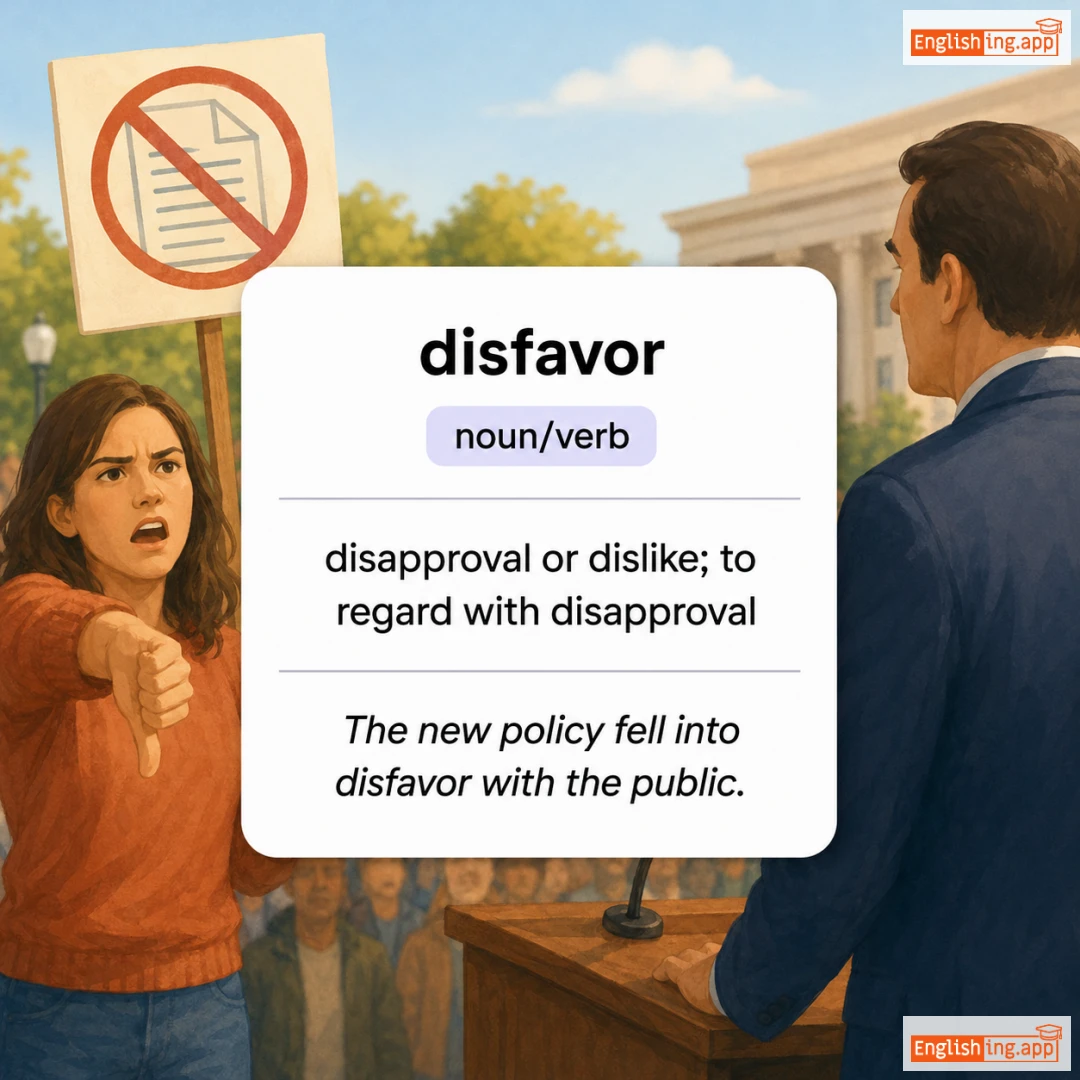
disfavor definition card — visual illustration of the meaning
noun/verb C2
/dɪsˈfeɪvər/
不支持 / 不快 (fushiji / fukai)

disapproval or dislike; to regard with disapproval

"The new policy fell into disfavor with the public."

"新しい政策は一般の人々の間で不評を買いました。" (Atarashii seisaku wa ippan no hitobito no aida de fuhyou wo kaimashita.)
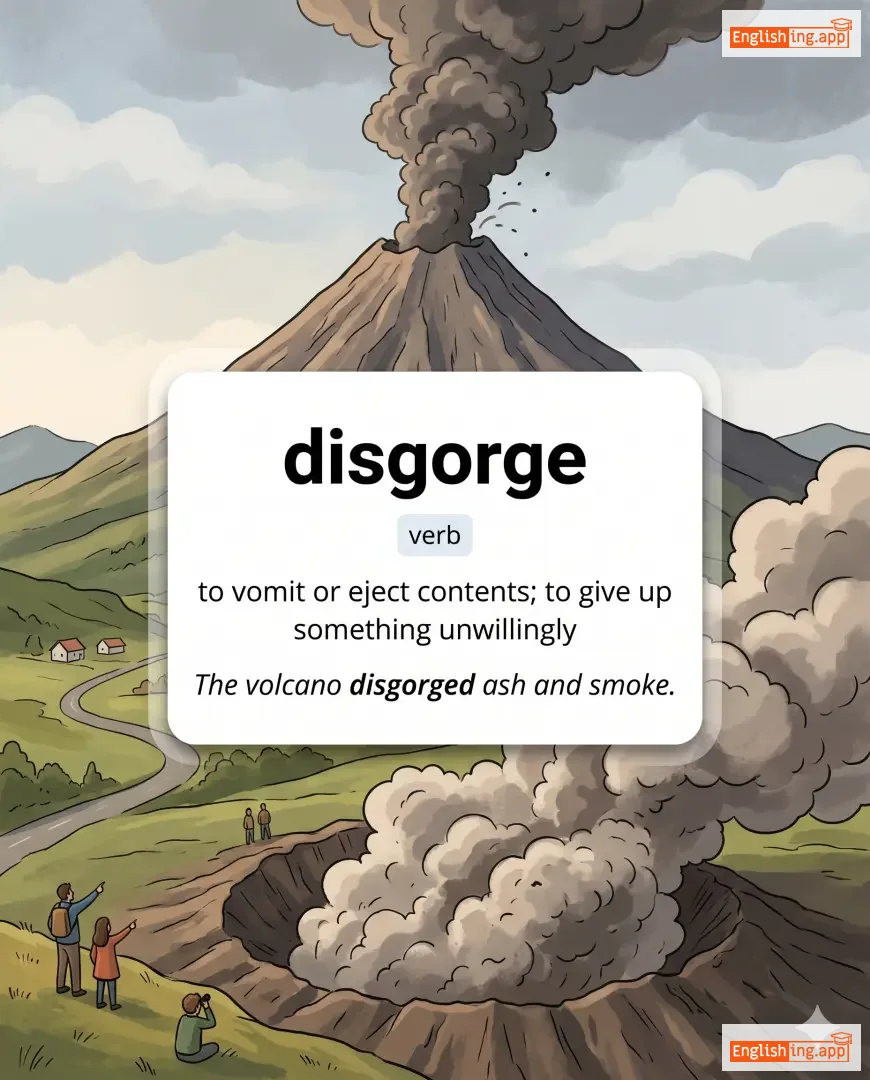
disgorge definition card — visual illustration of the meaning
verb C2
/dɪsˈɡɔrdʒ/
吐く / 強制的に吐き出す (haku / kyouseiteki ni hakidasu)

to vomit or eject contents; to give up something unwillingly

"The volcano disgorged ash and smoke."

"火山が灰と煙を吐き出しました。" (Kazan ga hai to kemuri wo hakidashimashita.)
noun C2
/ˌdɪʃəˈbiːl/
だらしない格好 (darashinai kakkou)

The state of being only partly or loosely dressed; casual or careless attire.

"She answered the door in a state of dishabille, wearing just a robe."

"彼女はだらしない格好でドアに応答した、ローブだけを着て。" (Kanojo wa darashinai kakkou de doa ni outou shita, roobu dake o kite.)
noun C2
/ˌdɪsɪnklɪˈneɪʃən/
不本意 (fuhonni)

a lack of willingness or desire to do something

"She showed a clear disinclination to join the meeting."

"彼女は会議に参加する明確な不本意を示した。" (Kanojo wa kaigi ni sanka suru meikaku na fuhonni o shimeshita.)
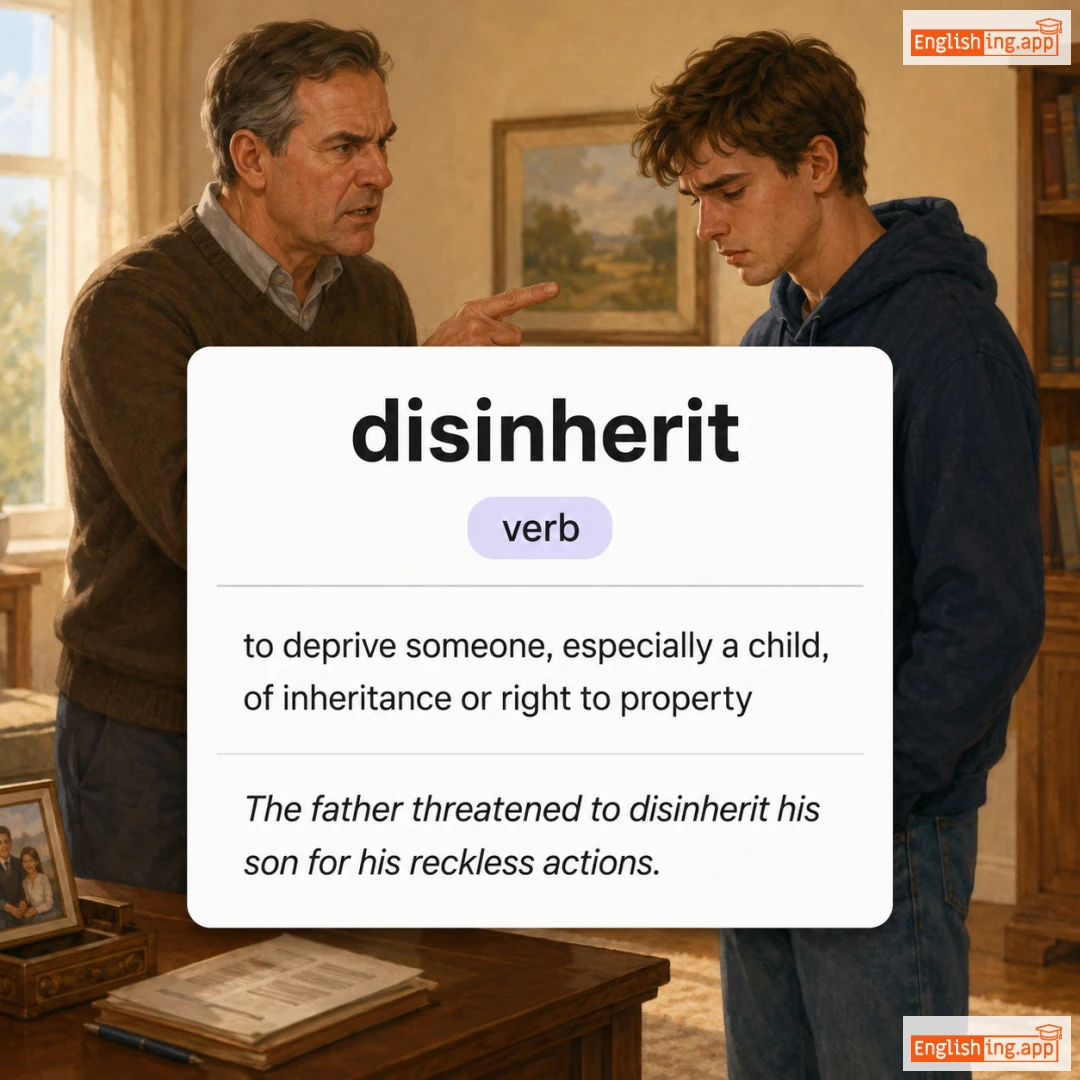
disinherit definition card — visual illustration of the meaning
verb C2
/ˌdɪsɪnˈhɛrɪt/
遺産を剥奪する (isan wo akudatsu suru)

to deprive someone, especially a child, of inheritance or right to property

"The father threatened to disinherit his son for his reckless actions."

"父親は息子の無謀な行動のために遺産を剥奪すると脅した。" (Chichioya wa musuko no mubou na koudou no tame ni isan wo akudatsu suru to odoshita.)
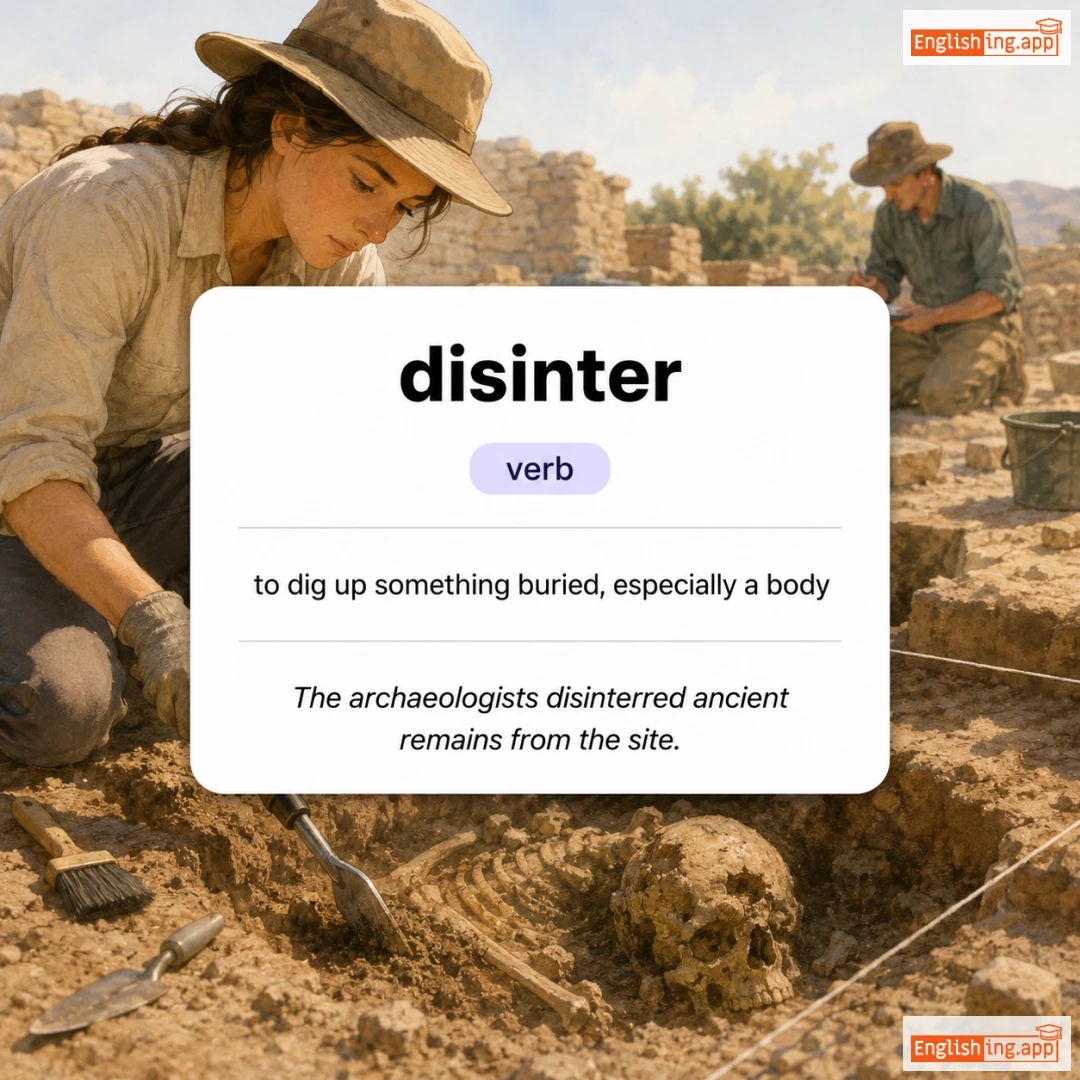
disinter definition card — visual illustration of the meaning
verb C2
/ˌdɪsɪnˈtɜːr/
掘り出す (horidasu)

to dig up something buried, especially a body

"The archaeologists disinterred ancient remains from the site."

"考古学者たちはそのサイトから古代の遺骸を掘り出しました。" (Kōkogakusha-tachi wa sono saito kara kodai no igai o horidashimashita.)
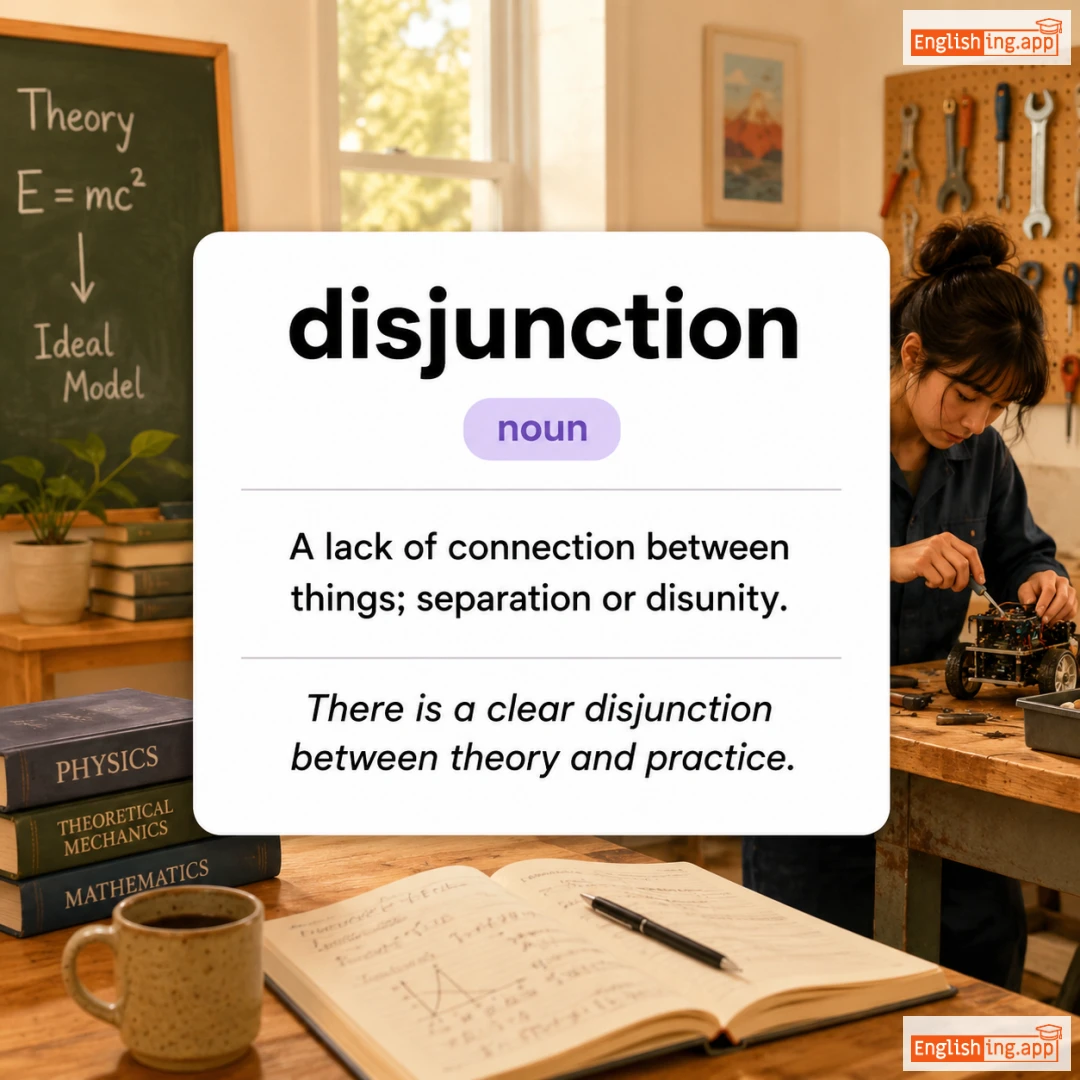
disjunction definition card — visual illustration of the meaning
noun C2
/dɪsˈdʒʌŋkʃən/
分裂 (bunretsu)

A lack of connection between things; separation or disunity.

"There is a clear disjunction between theory and practice."

"理論と実践の間には明確な分裂があります。" (Riron to jissen no aida ni wa meikaku na bunretsu ga arimasu.)
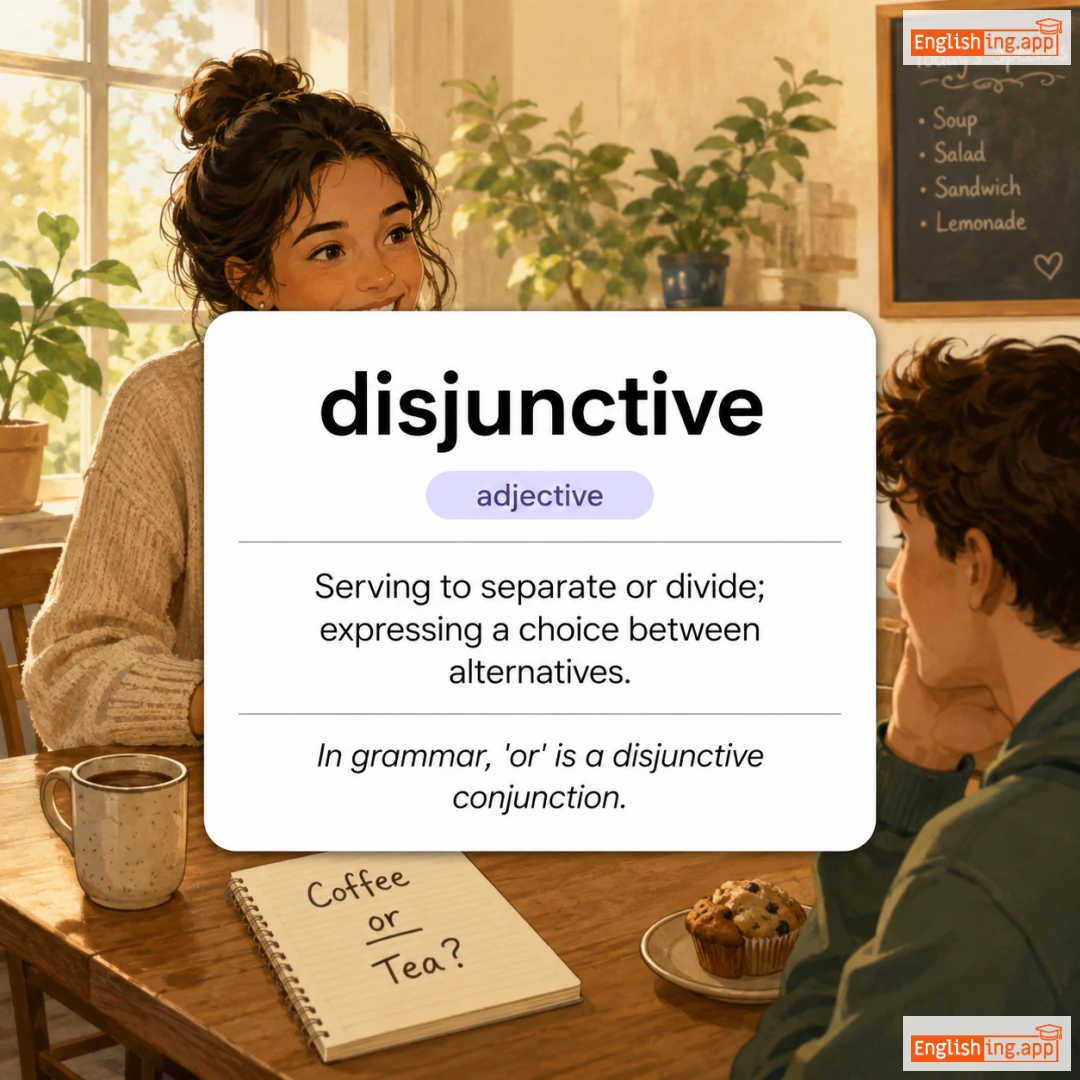
disjunctive definition card — visual illustration of the meaning
adjective C2
/dɪsˈdʒʌŋktɪv/
選択的 (sentakuteki)

Serving to separate or divide; expressing a choice between alternatives.

"In grammar, 'or' is a disjunctive conjunction."

"文法では、'または' は選択的接続詞です。" (Bunpō de wa, 'matawa' wa sentakuteki setsuzokushi desu.)
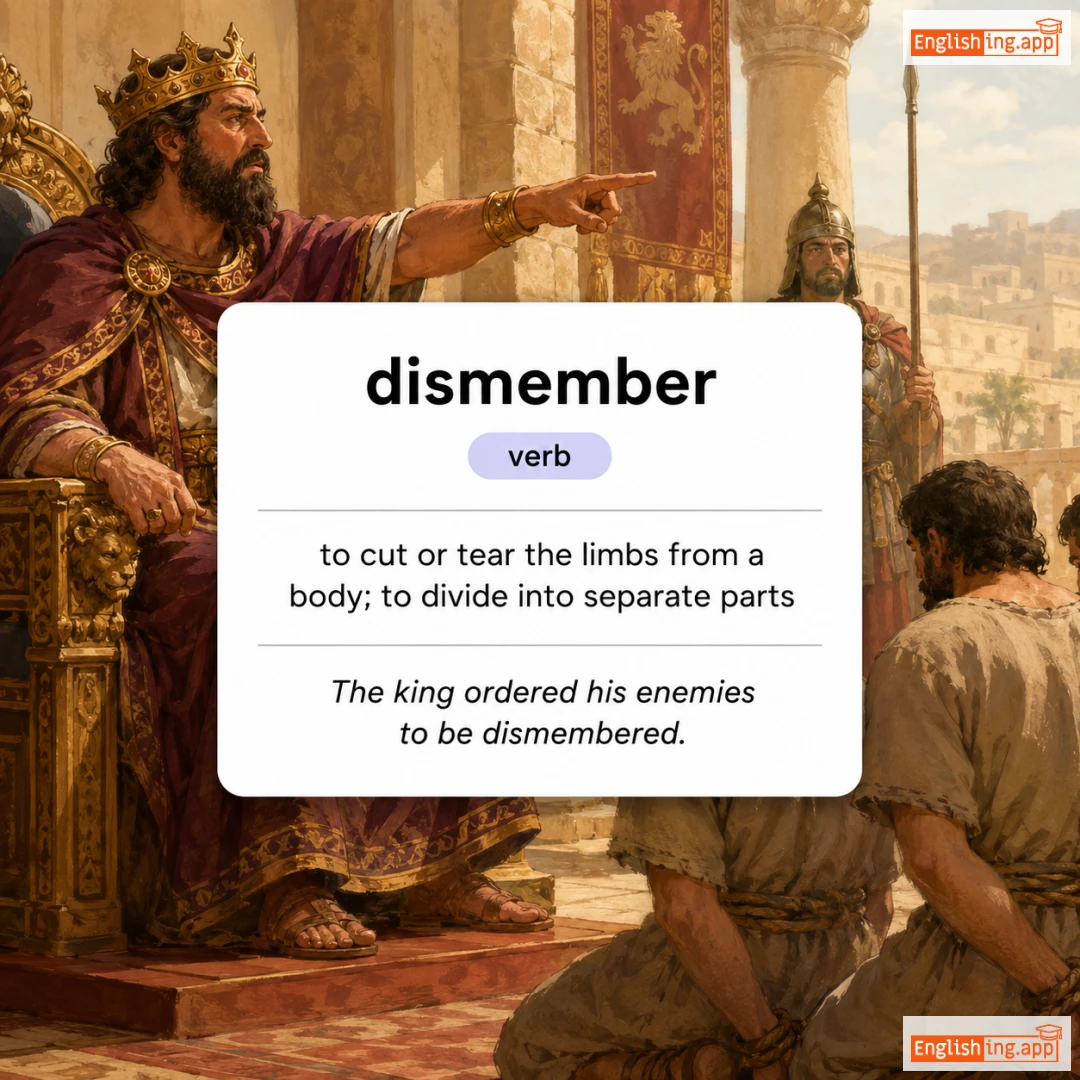
dismember definition card — visual illustration of the meaning
verb C2
/dɪsˈmɛmbər/
切断する (せつだんする)

to cut or tear the limbs from a body; to divide into separate parts

"The king ordered his enemies to be dismembered."

"王は敵を切り刻むよう命じました。" (Ō wa teki o kirikizamu yō meijimashita.)
verb C2
/dɪsˈpɔːrt/
楽しむ (tanoshimu)

To amuse oneself in a lively or playful way.

"The children disported themselves in the garden."

"子供たちは庭で楽しんでいました。" (Kodomotachi wa niwa de tanoshinde imashita.)
verb C2
/ˌdɪspəˈzɛs/
没収する (boshuu suru)

to deprive someone of land, property, or other possessions

"The new law threatened to dispossess many farmers of their land."

"新しい法律は多くの農民から土地を奪うと脅迫していました。" (Atarashii houritsu wa ooku no noumin kara tochi wo ubau to kyouhaku shite imashita.)
noun C2
/ˌdɪsprəˈpɔːrʃən/
不均衡 (fukinkou)

a lack of balance or symmetry; an inequality

"There is a clear disproportion between rich and poor in many societies."

"多くの社会において、富裕層と貧困層の間に明確な不均衡があります。" (Ooku no shakai ni oite, fuyuusou to hinkonsou no aida ni meikaku na fukinkou ga arimasu.)
adjective C2
/dɪˈspjuːtəbl/
議論の余地がある; 疑わしい (gironnoyochi ga aru; utagawashii)

open to debate or argument; questionable

"The facts in the case are disputable and need further investigation."

"その事件の事実は議論の余地があり、さらなる調査が必要です。" (Sono jiken no jijitsu wa gironnoyochi ga ari, saranaru chousa ga hitsuyou desu.)
noun C2
/ˌdɪspjuːˈteɪʃən/
議論 (giron)

a formal debate or argument

"The disputation between the two scholars lasted for hours."

"二人の学者の間での議論は数時間続いた。" (Futari no gakka no aida de no giron wa suū jikan tsuzuita.)
adjective C2
/ˌdɪspjuːˈteɪʃəs/
議論好きな (giron suki na)

fond of or given to argument and debate

"His disputatious nature often led to heated conversations."

"彼の議論好きな性格は、しばしば熱い議論を引き起こす。" (Kare no giron suki na seikaku wa, shibashiba atsui giron o hikiokosu.)
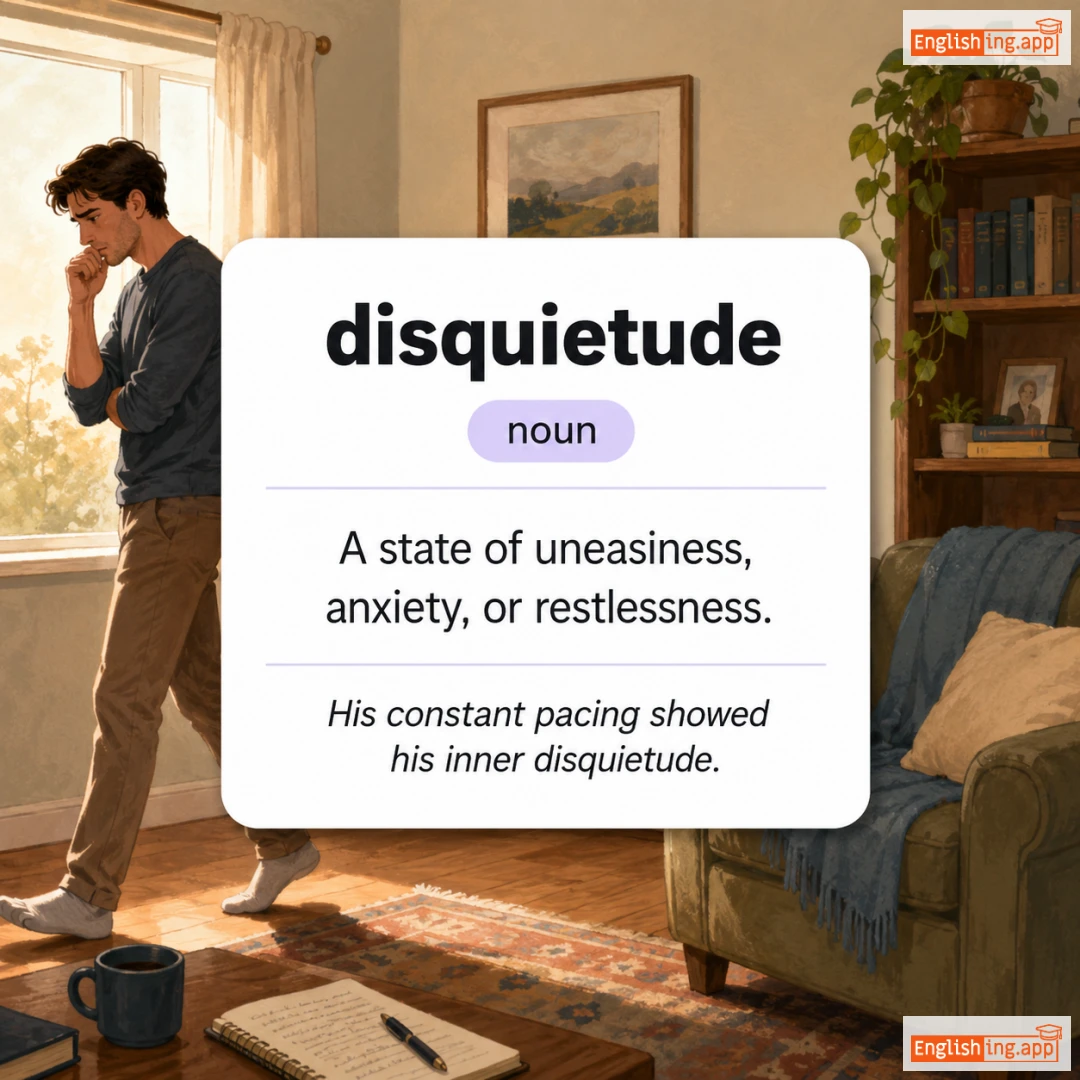
disquietude definition card — visual illustration of the meaning
noun C2
/dɪsˈkwaɪɪtjuːd/

A state of uneasiness, anxiety, or restlessness.

"His constant pacing showed his inner disquietude."

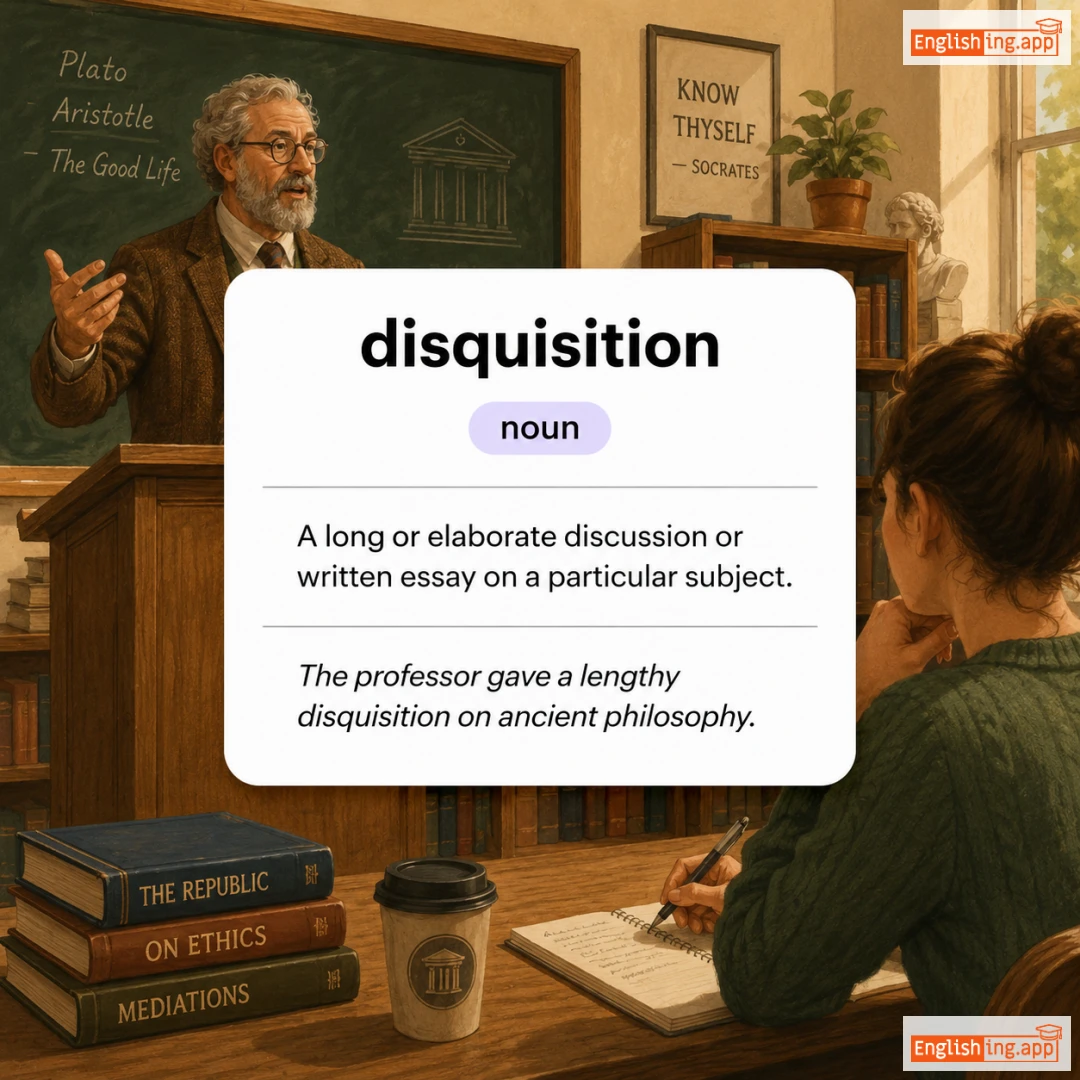
disquisition definition card — visual illustration of the meaning
noun C2
/ˌdɪskwɪˈzɪʃən/
論文 (ronbun)

A long or elaborate discussion or written essay on a particular subject.

"The professor gave a lengthy disquisition on ancient philosophy."

"教授は古代哲学についての長い論文を発表しました。" (Kyōju wa kodai tetsugaku ni tsuite no nagai ronbun o happyō shimashita.)
noun C2
/ˌdɪsrɪˈpjuːt/
悪名 (akumei)

the state of being held in low esteem or having a bad reputation

"The scandal brought the politician into disrepute."

"そのスキャンダルは政治家を悪名に追いやった。" (Sono sukyandaru wa seijika o akumei ni oiyatta.)
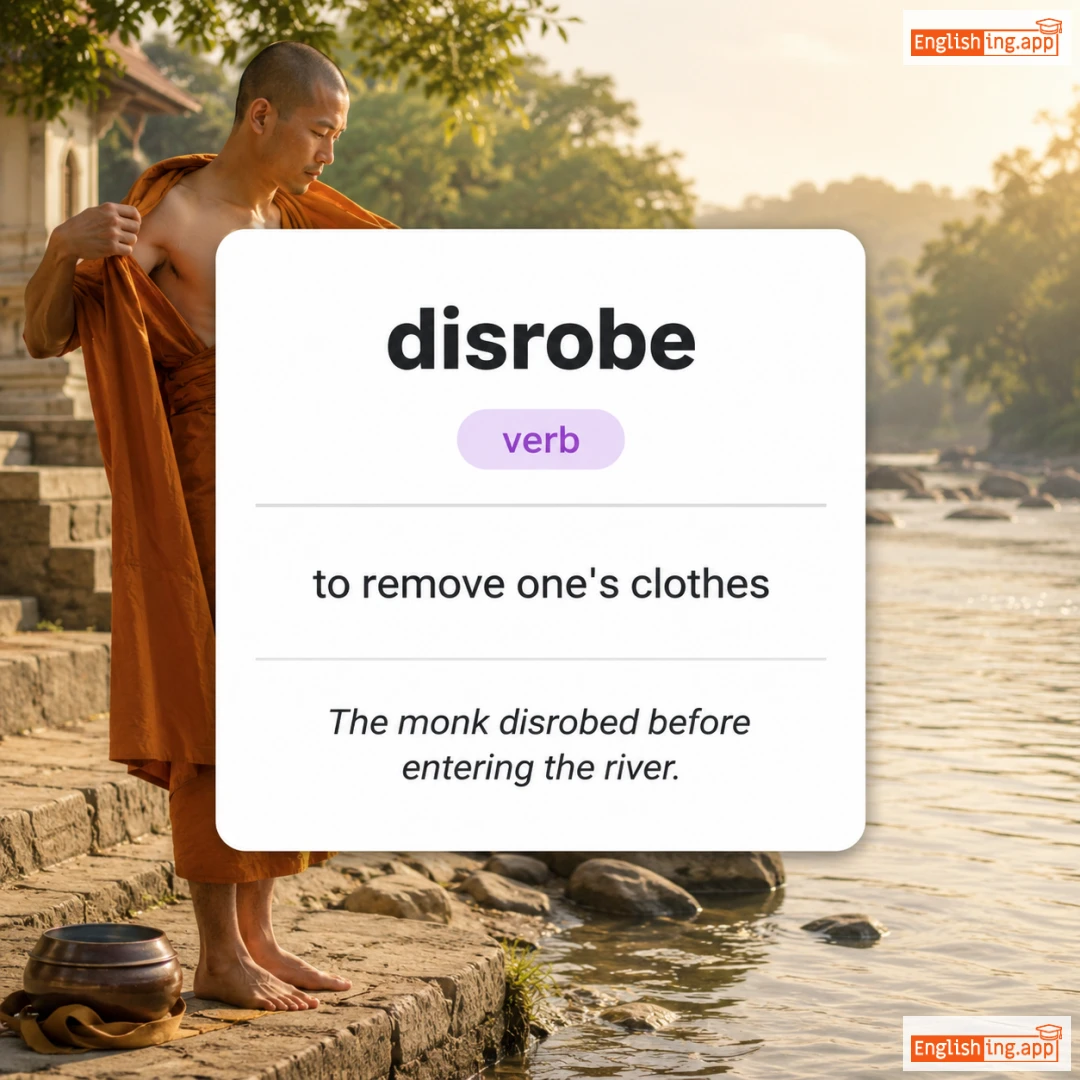
disrobe definition card — visual illustration of the meaning
verb C2
/dɪsˈroʊb/
服を脱ぐ (fuku wo nugu)

to remove one's clothes

"The monk disrobed before entering the river."

"僧侶は川に入る前に衣服を脱いだ。" (Sōryo wa kawa ni hairu mae ni ifuku wo nuida.)
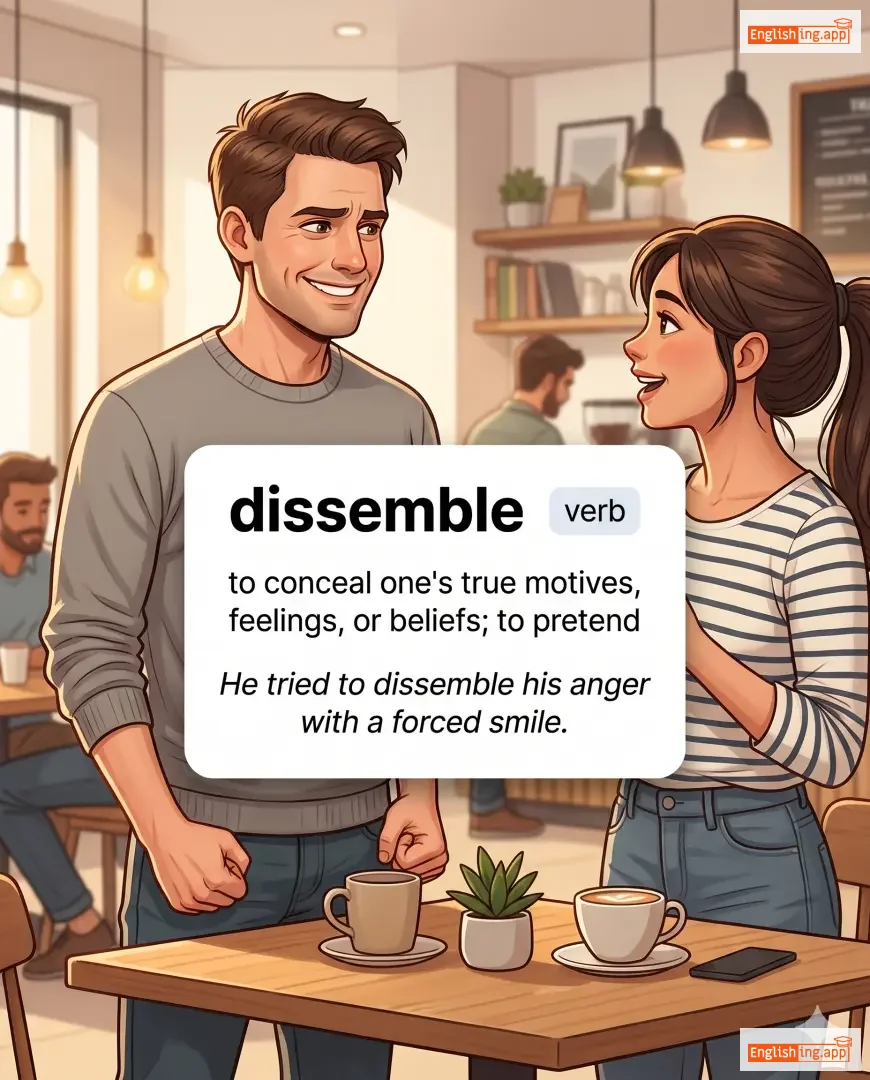
dissemble definition card — visual illustration of the meaning
verb C2
/dɪˈsɛmbəl/
ふりをする (furi o suru)

to conceal one's true motives, feelings, or beliefs; to pretend

"He tried to dissemble his anger with a forced smile."

"彼は強制的な笑顔で怒りを隠そうとした。" (Kare wa kyouseiteki na egao de ikari o kakuso to shita.)
noun C2
/dɪˈsɛmbələr/
偽善者 (gizensha)

a person who conceals their real feelings or intentions; a hypocrite or pretender

"The politician was accused of being a dissembler who never revealed his true plans."

"その政治家は、自分の本当の計画を決して明かさなかった偽善者だと非難された。" (Sono seijika wa, jibun no hontō no keikaku o kesshite akasasanakatta gizensha da to hinansareta.)
noun C2
/dɪˈsɛnʃən/
意見の相違 (iken no soui)

Strong disagreement or difference of opinion, especially leading to discord within a group.

"The meeting ended in dissension among the committee members."

"会議は委員会メンバー間の意見の相違で終了しました。" (Kaigi wa iinkai menbaa kan no iken no soui de shuuryou shimashita.)
adjective C2
/dɪˈsɛnʃənt/
反対意見を持つ人 (hantaiiken o motsu hito)

Expressing or holding opinions that are opposed to the majority or official view.

"Only a few dissentient voices were heard during the debate."

"討論中に反対意見を持つ少数の声だけが聞こえました。" (Tōron-chū ni hantaiiken o motsu shōsū no koe dake ga kikoemashita.)
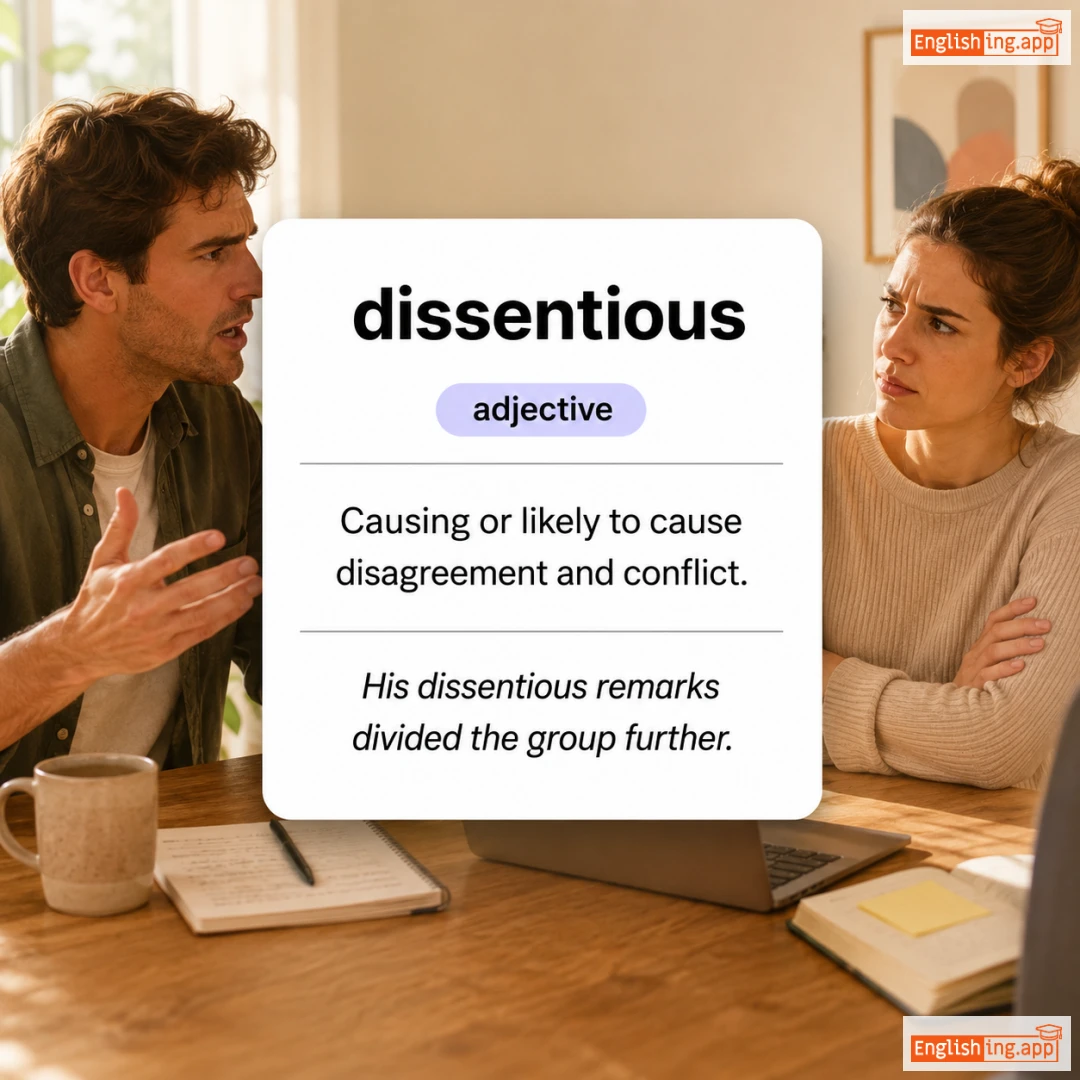
dissentious definition card — visual illustration of the meaning
adjective C2
/dɪˈsɛnʃəs/
対立を引き起こす (tairitsu o hikiokosu)

Causing or likely to cause disagreement and conflict.

"His dissentious remarks divided the group further."

"彼の対立的な発言は、グループをさらに分裂させた。" (Kare no tairitsuteki na hatsugen wa, gurūpu o sara ni bunretsu saseta.)
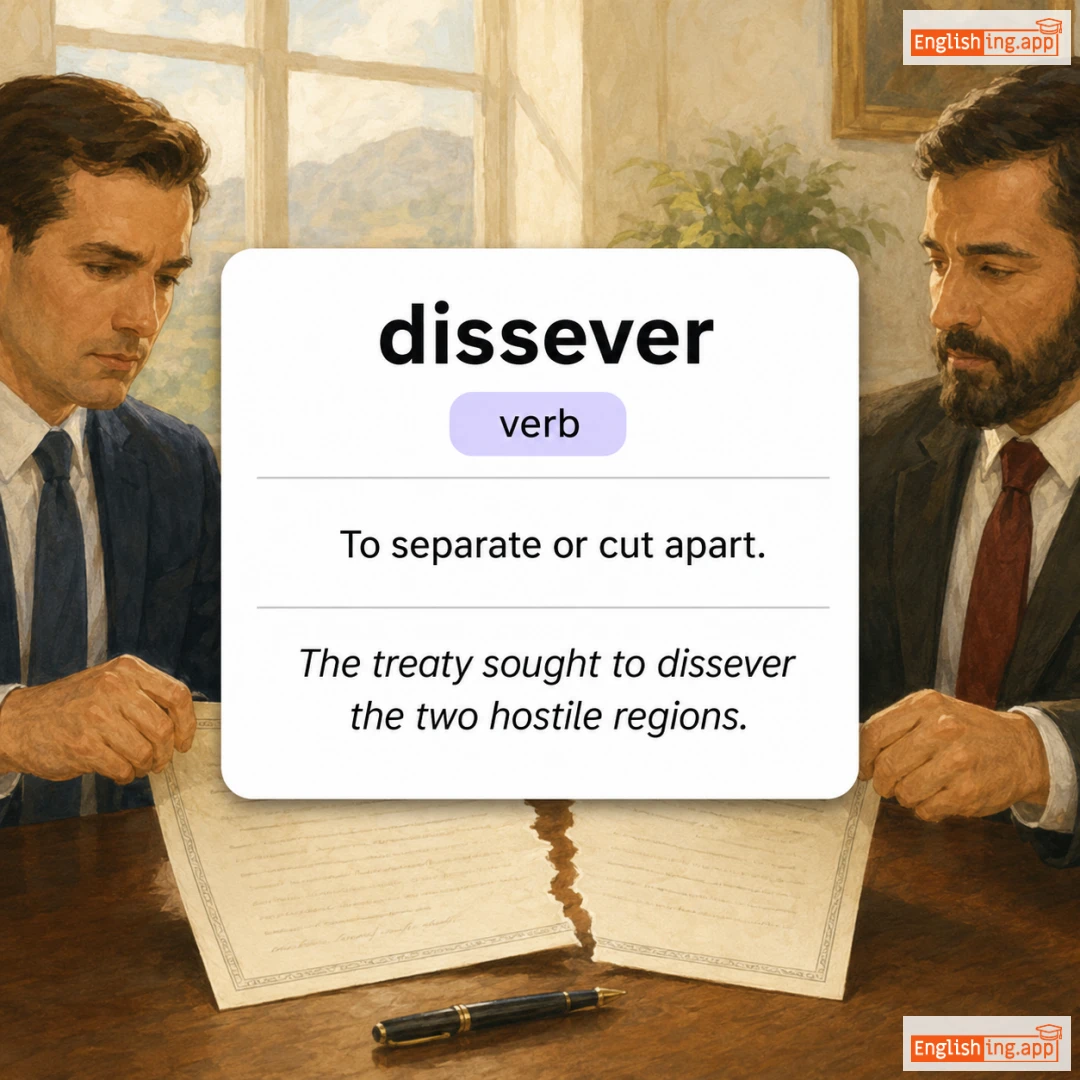
dissever definition card — visual illustration of the meaning
verb C2
/dɪˈsɛvər/
分ける (wakeru)

To separate or cut apart.

"The treaty sought to dissever the two hostile regions."

"条約は二つの敵対的な地域を分割しようとした。" (Jōyaku wa futatsu no teki taiteki na chiiki o bunkatsu shiyou to shita.)
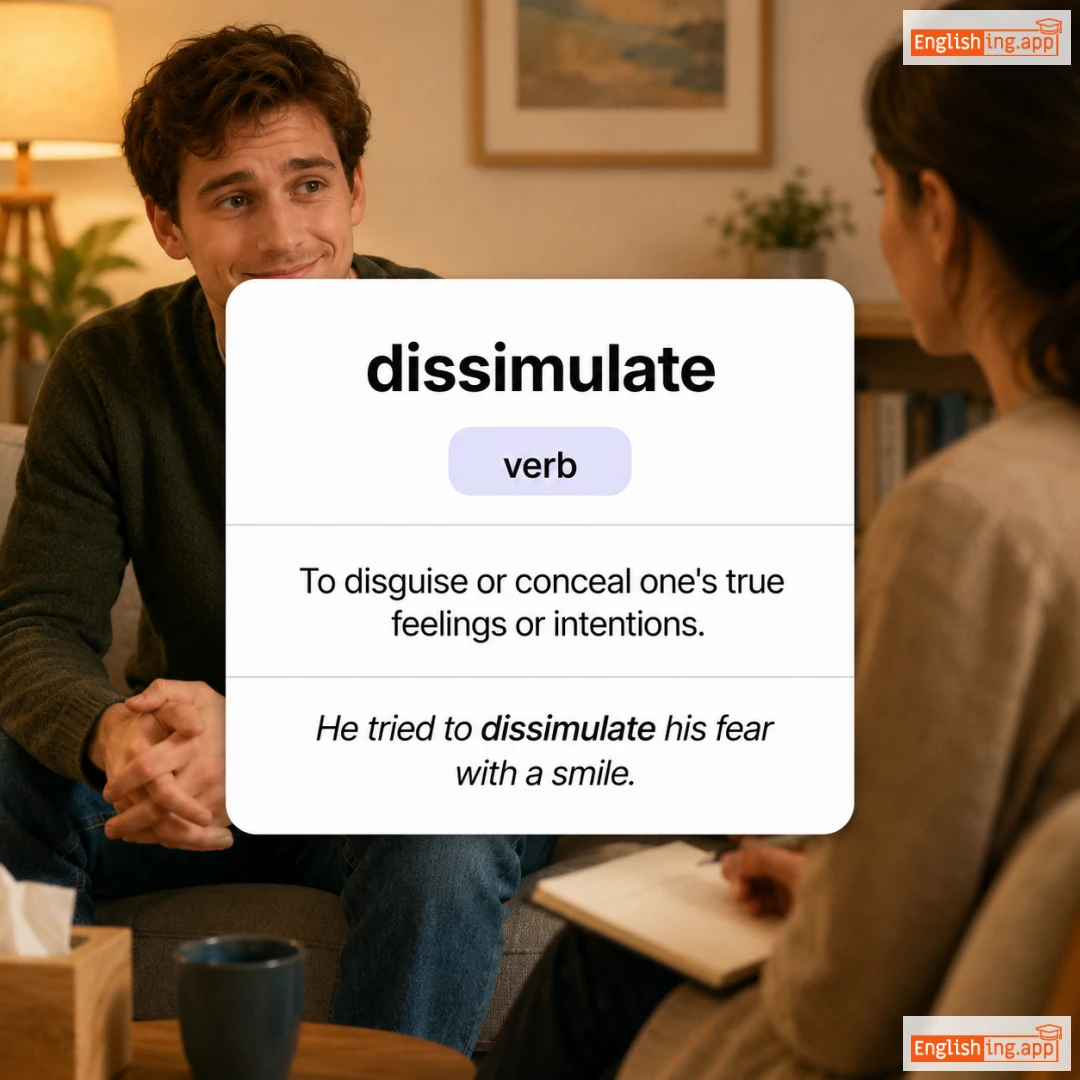
dissimulate definition card — visual illustration of the meaning
verb C2
/dɪˈsɪmjʊˌleɪt/
偽る (itsuwaru)

To disguise or conceal one's true feelings or intentions.

"He tried to dissimulate his fear with a smile."

"彼は笑顔で恐怖を隠そうとした。" (Kare wa egao de kyōfu o kasusou to shita.)
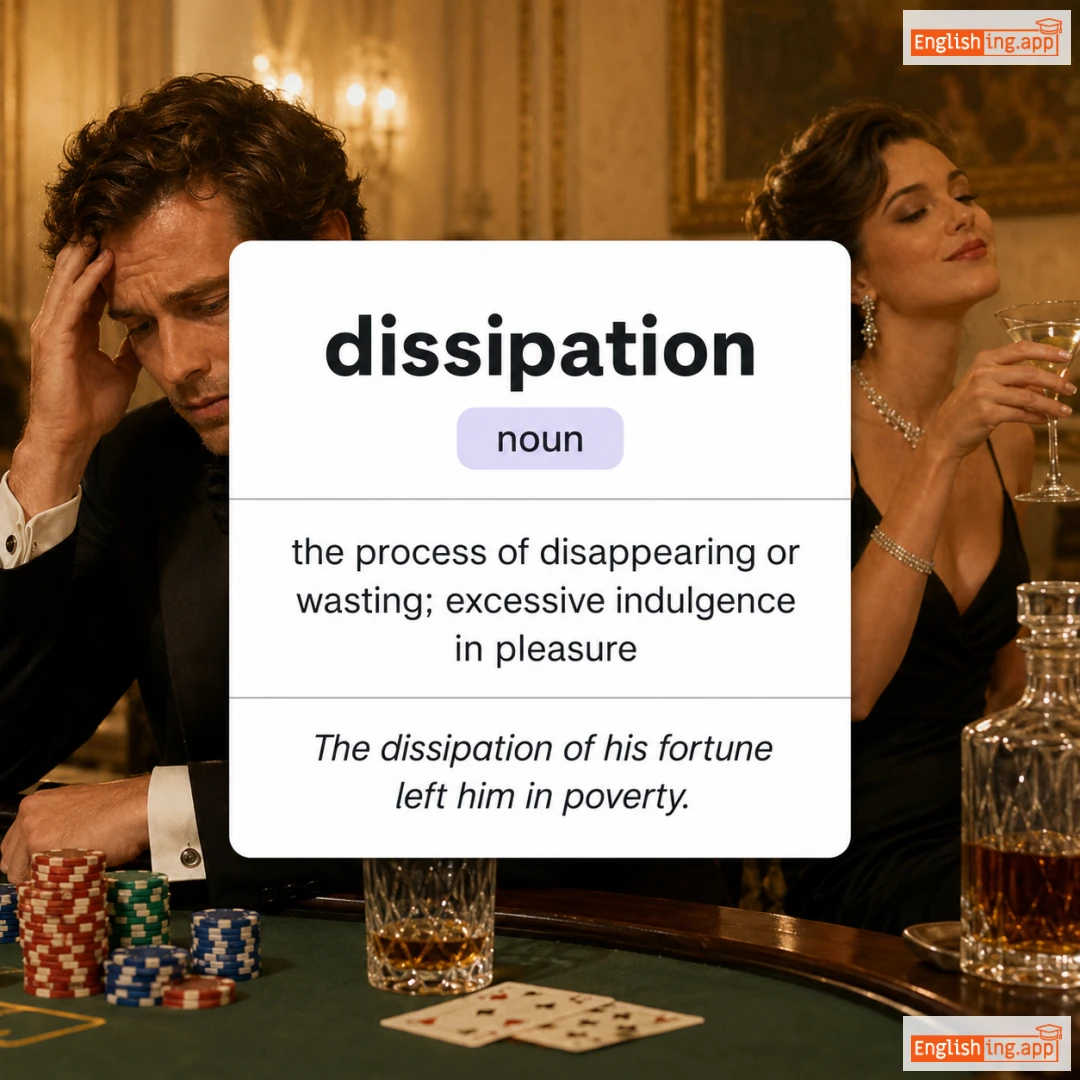
dissipation definition card — visual illustration of the meaning
noun C2
/ˌdɪsɪˈpeɪʃən/
浪費 (rōhi)

the process of disappearing or wasting; excessive indulgence in pleasure

"The dissipation of his fortune left him in poverty."

"彼の財産の浪費は彼を貧困に追いやった。" (Kare no zaisan no rōhi wa kare o hinkon ni oiyatta.)
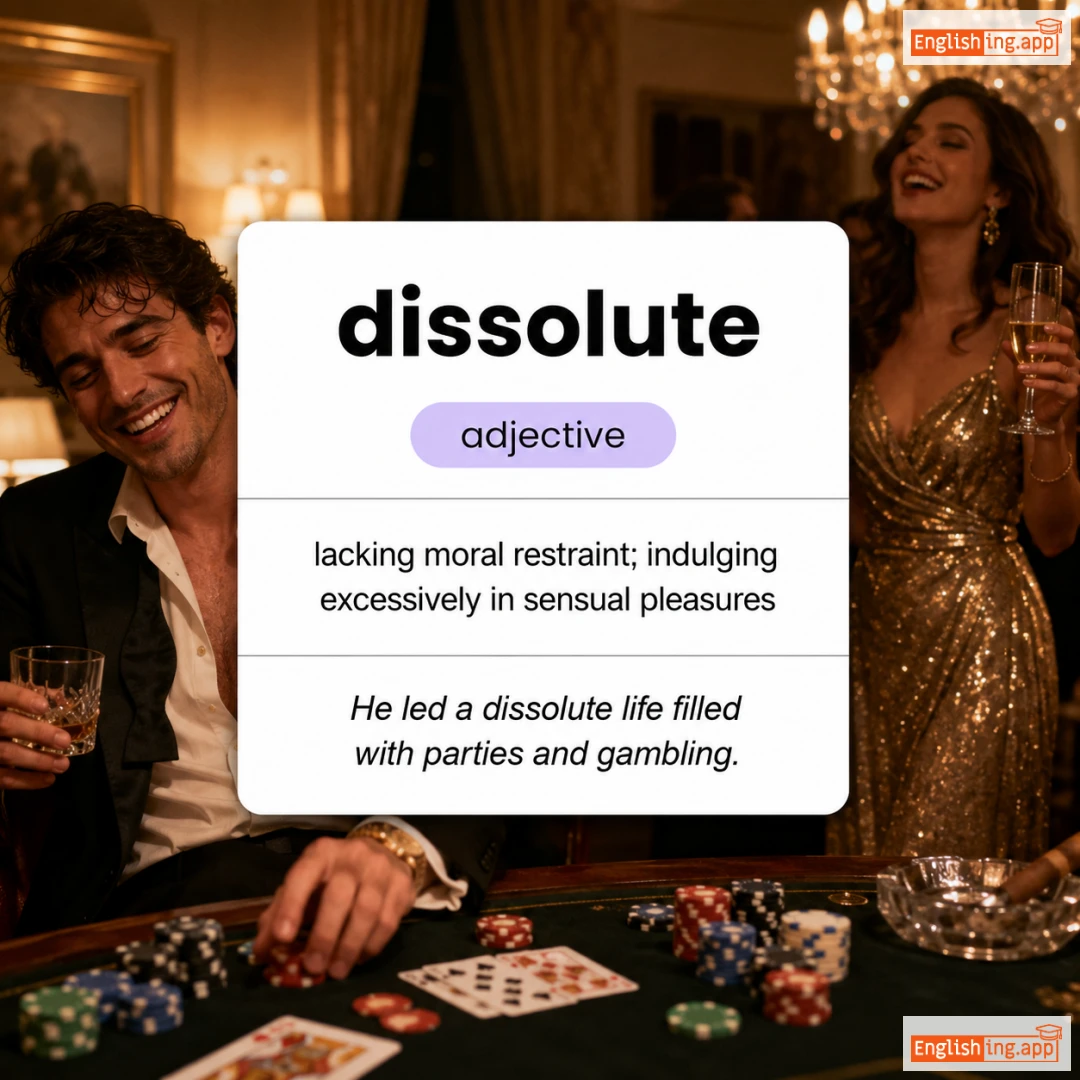
dissolute definition card — visual illustration of the meaning
adjective C2
/ˈdɪsəluːt/
放蕩 (hōtō)

lacking moral restraint; indulging excessively in sensual pleasures

"He led a dissolute life filled with parties and gambling."

"彼はパーティーとギャンブルで満ちた放蕩の生活を送った。" (Kare wa pātii to gyanburu de mitchita hōtō no seikatsu o okutta.)
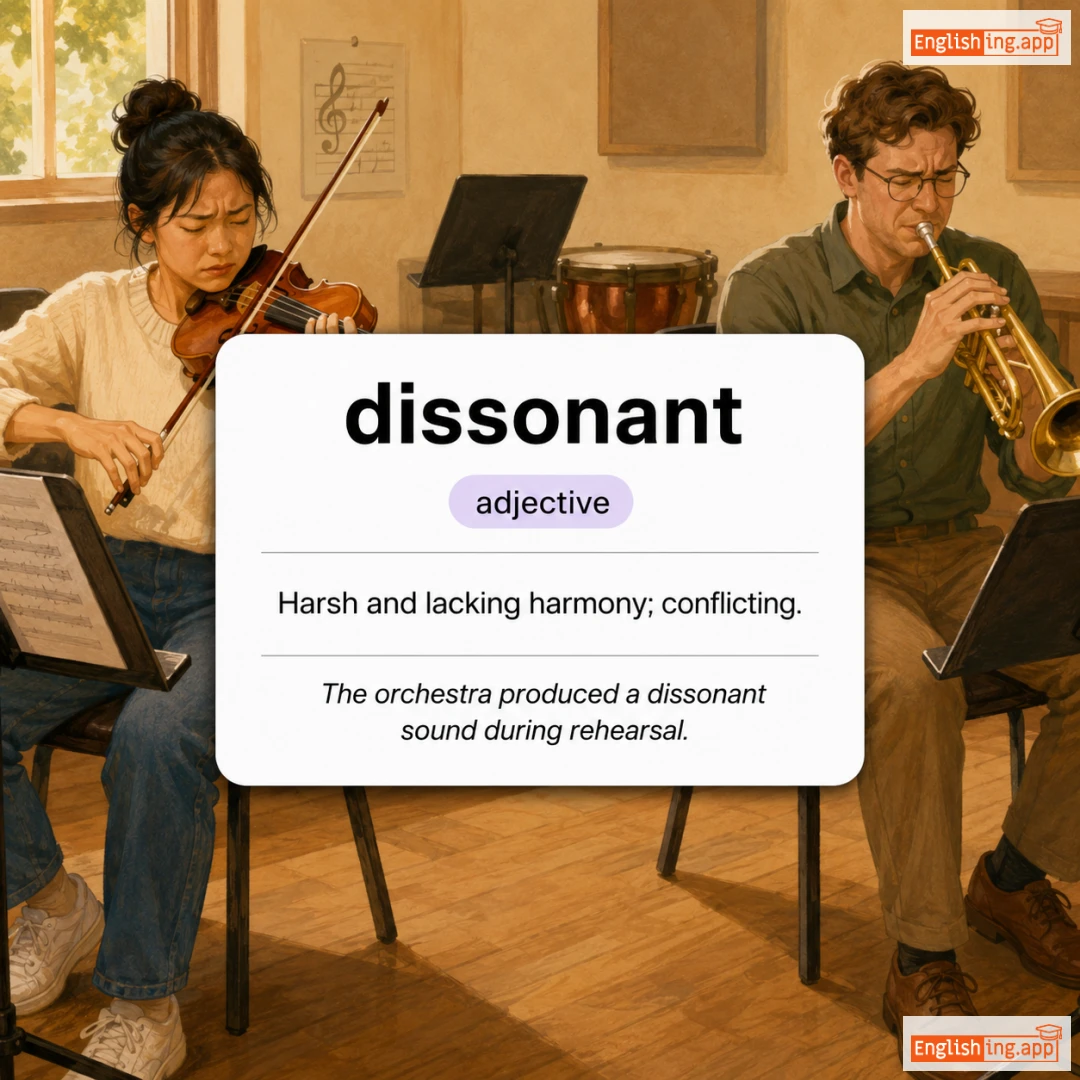
dissonant definition card — visual illustration of the meaning
adjective C2
/ˈdɪsənənt/
不協和音 (fukyouwaon)

Harsh and lacking harmony; conflicting.

"The orchestra produced a dissonant sound during rehearsal."

"オーケストラはリハーサル中に不協和音を発生させました。" (Ōkesutora wa rihāsaru-chū ni fukyouwaon o hassei sasemashita.)
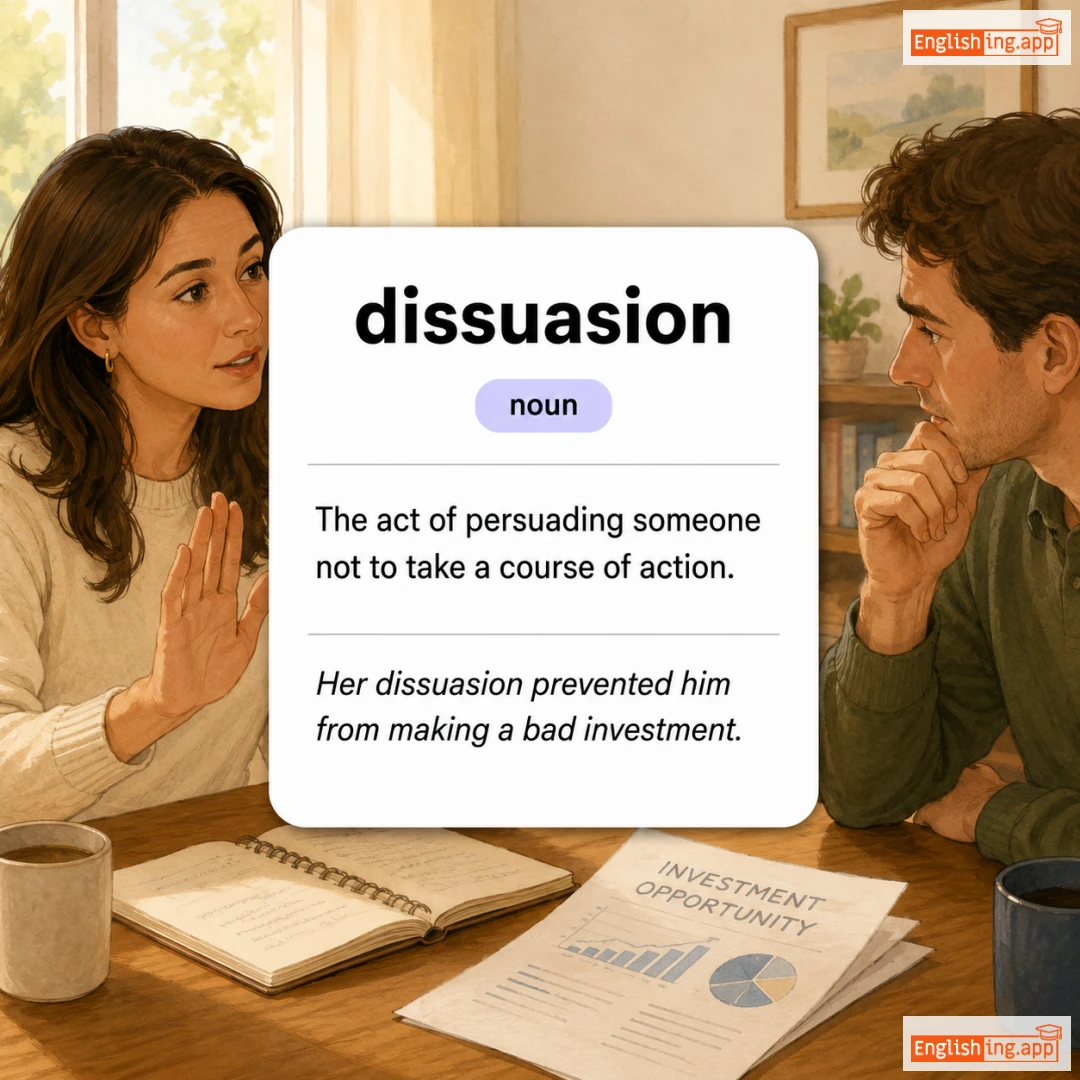
dissuasion definition card — visual illustration of the meaning
noun C2
/dɪˈsweɪʒən/
説得しないこと (settoku shinai koto)

The act of persuading someone not to take a course of action.

"Her dissuasion prevented him from making a bad investment."

"彼女の説得しないことは、彼が悪い投資をしないようにしました。" (Kanojo no settoku shinai koto wa, kare ga warui tōshi o shinai yō ni shimashita.)
noun/adjective C2
/ˈdɪstæf/
女性に関連、母系 (josei ni kanren, bokei)

Relating to women or the maternal side of a family; also a tool for spinning thread.

"She came from the distaff side of a noble family."

"彼女は名家の母系から来た。" (Kanojo wa meika no bokei kara kita.)
verb C2
/dɪsˈteɪn/
軽蔑する (keibetsu suru)

to treat with scorn or contempt (archaic form of disdain)

"He would never distain those who had less fortune than him."

"彼は決して自分より運の悪い者を軽蔑しなかった。" (Kare wa kesshite jibun yori un no warui mono o keibetsu shinakatta.)
adjective C2
/ˈdɪstəl/
遠位 (en'i)

situated away from the center of the body or from the point of attachment

"The doctor examined the distal end of the patient’s arm."

"医者は患者の腕の遠位端を調べました。" (Isha wa kanja no ude no en'i-tan o shirabemashita.)
noun C2
/dɪsˈtɛmpər/
犬に感染するウイルス性疾患 (Inu ni kansen suru uirusu-sei shikkan)

a viral disease affecting animals, especially dogs; also refers to a state of disorder

"The dog was diagnosed with distemper and needed immediate care."

"その犬はディステンパーと診断され、即座の治療が必要でした。" (Sono inu wa disutemupā to shindan sare, sokuzano chiryo ga hitsuyō deshita.)
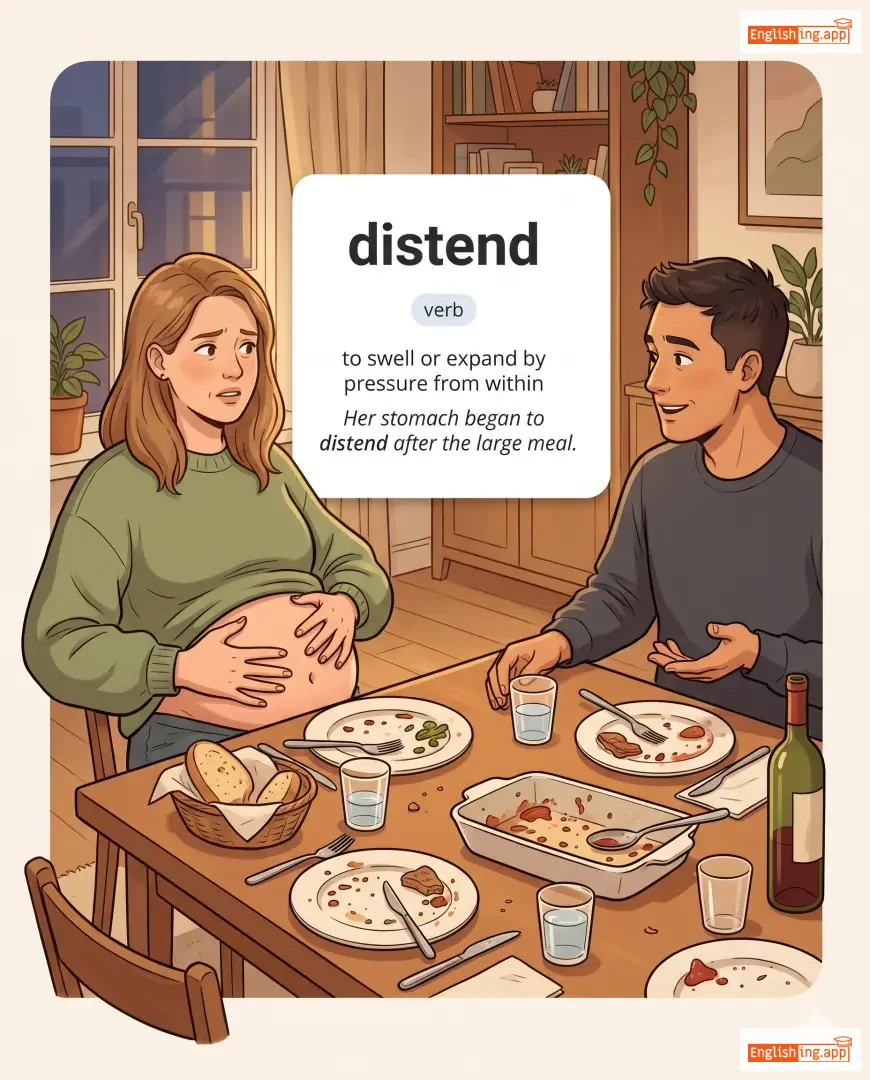
distend definition card — visual illustration of the meaning
verb C2
/dɪsˈtɛnd/
膨張する (bōchō suru)

to swell or expand by pressure from within

"Her stomach began to distend after the large meal."

"大きな食事の後、彼女のお腹は膨らみ始めました。" (Ōkina shokuji no ato, kanojo no onaka wa fukurami hajimemashita.)
adjective C2
/dɪˈstɛnsəbl̩/
伸縮可能な (shīnshuku kanō na)

Capable of being stretched or expanded.

"The stomach is a distensible organ that can expand after eating."

"胃は食後に膨らむことができる伸縮可能な器官です。" (I wa shokugo ni fukuramu koto ga dekiru shīnshuku kanō na kikan desu.)
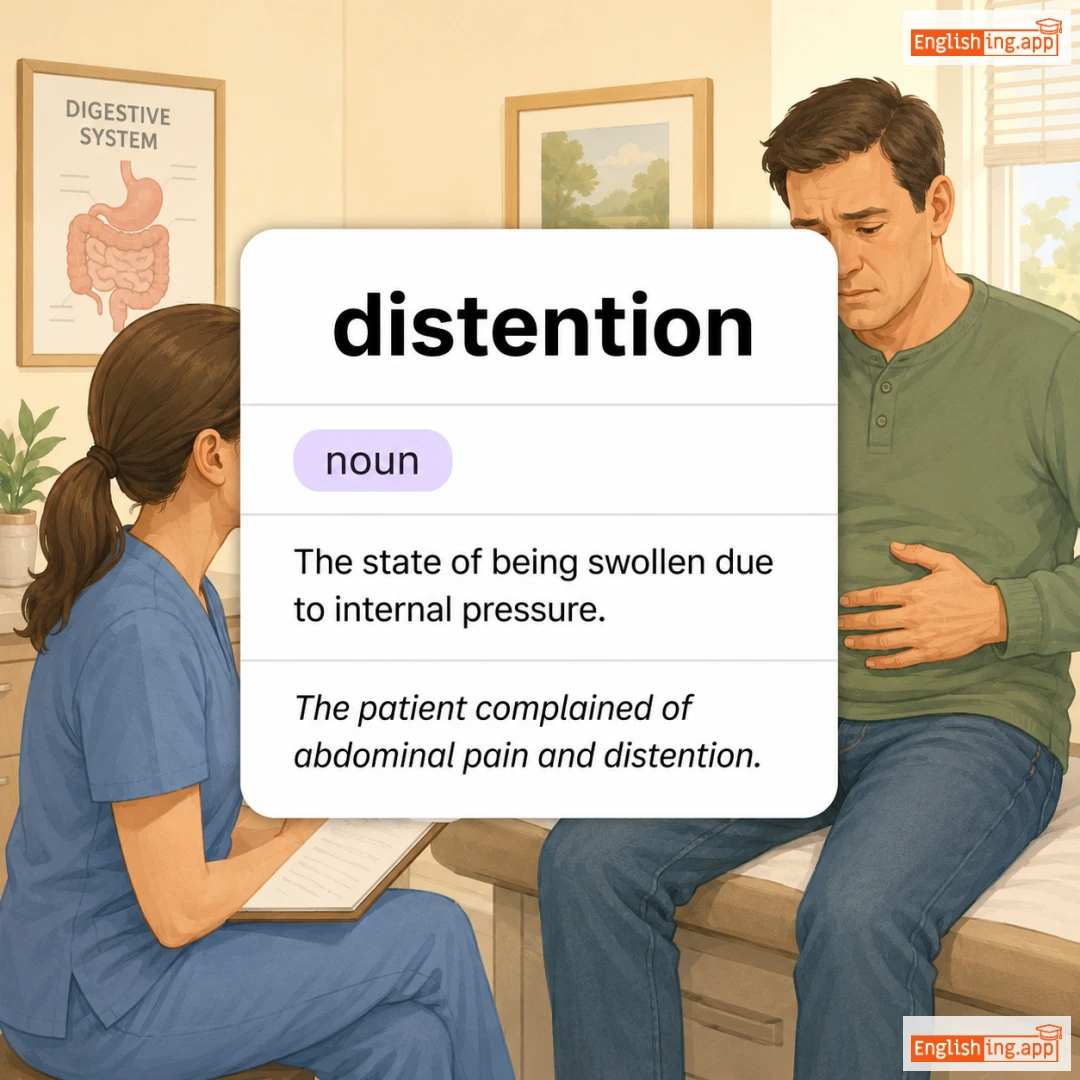
distention definition card — visual illustration of the meaning
noun C2
/dɪˈstɛnʃən/
膨張 (bōchō)

The state of being swollen due to internal pressure.

"The patient complained of abdominal pain and distention."

"患者は腹痛と膨張感を訴えました。" (Kanja wa fukutsū to bōchōkan o uttae mashita.)
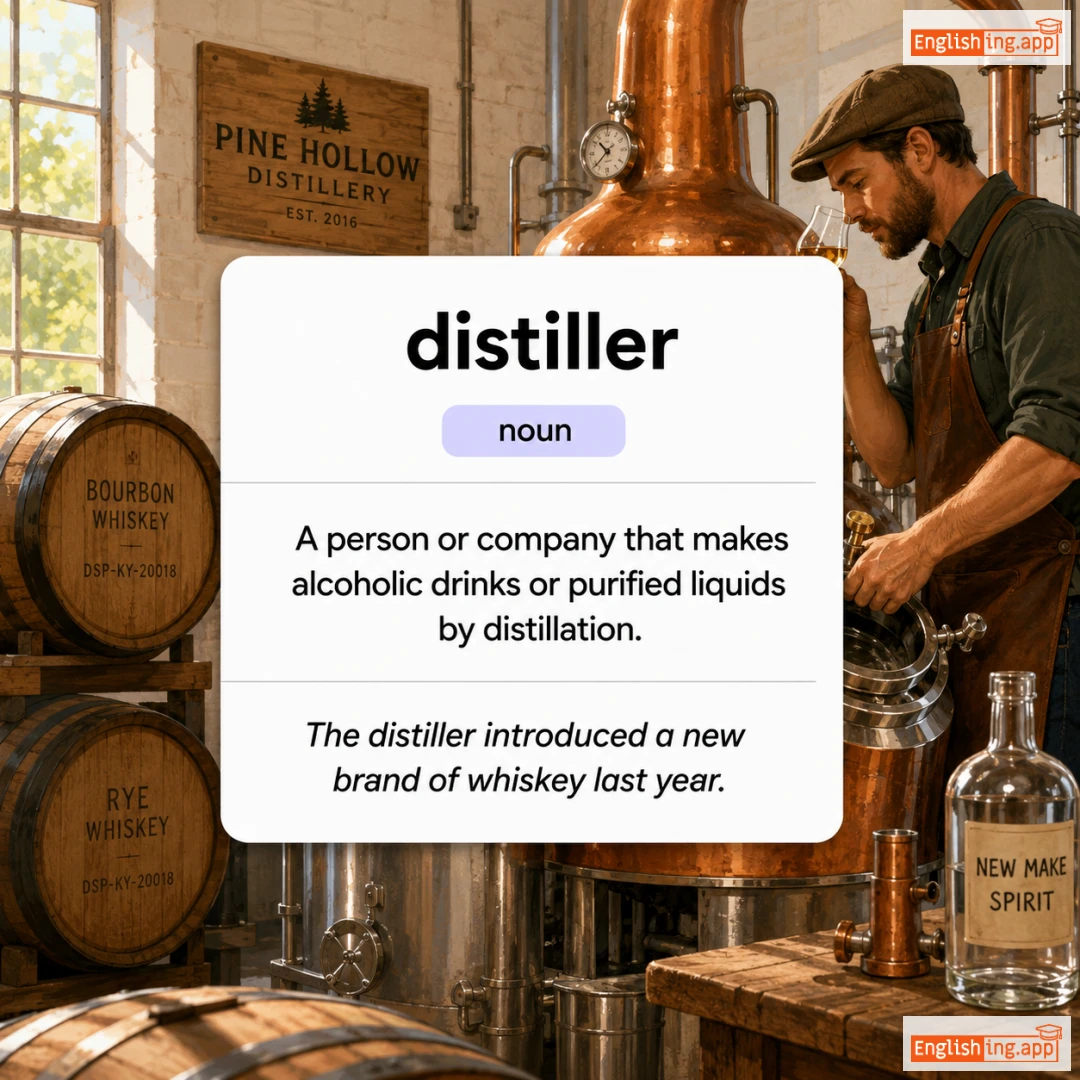
distiller definition card — visual illustration of the meaning
noun C2
/dɪˈstɪlər/
蒸留業者 (jōryū gyōsha)

A person or company that makes alcoholic drinks or purified liquids by distillation.

"The distiller introduced a new brand of whiskey last year."

"蒸留業者は昨年、新しいウイスキーブランドを紹介しました。" (Jōryū gyōsha wa sakunen, atarashī uisukī burando o shōkai shimashita.)
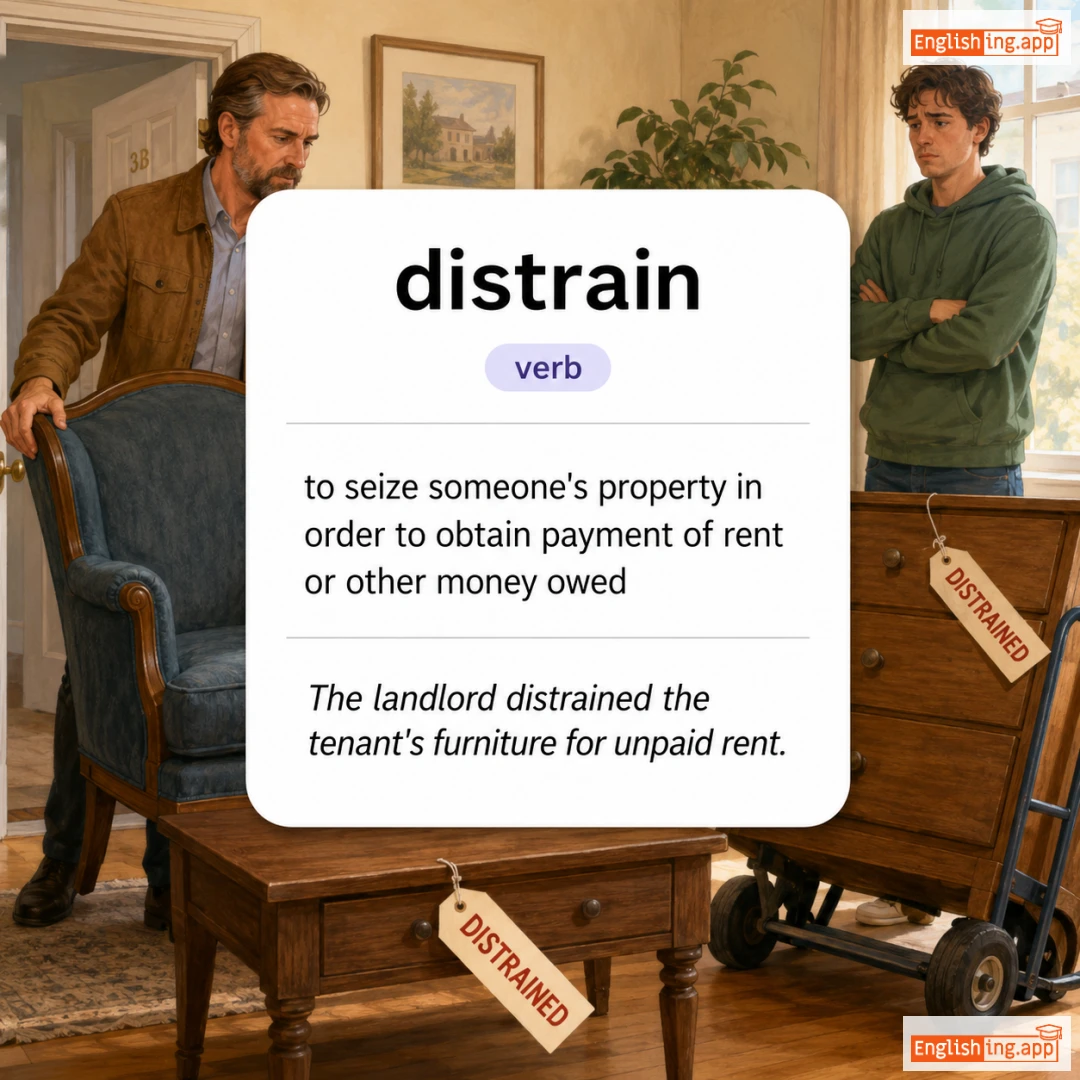
distrain definition card — visual illustration of the meaning
verb C2
/dɪˈstreɪn/
差し押さえる (sashiosaeru)

to seize someone's property in order to obtain payment of rent or other money owed

"The landlord distrained the tenant's furniture for unpaid rent."

"家主は未払いの家賃のために借家人の家具を差し押さえました。" (Yanushi wa mibara no yachin no tame ni shakuyanin no kagu o sashiosaemashita.)