Vocabularies

English Vocabulary Dictionary | Word Meanings, Definitions & Examples

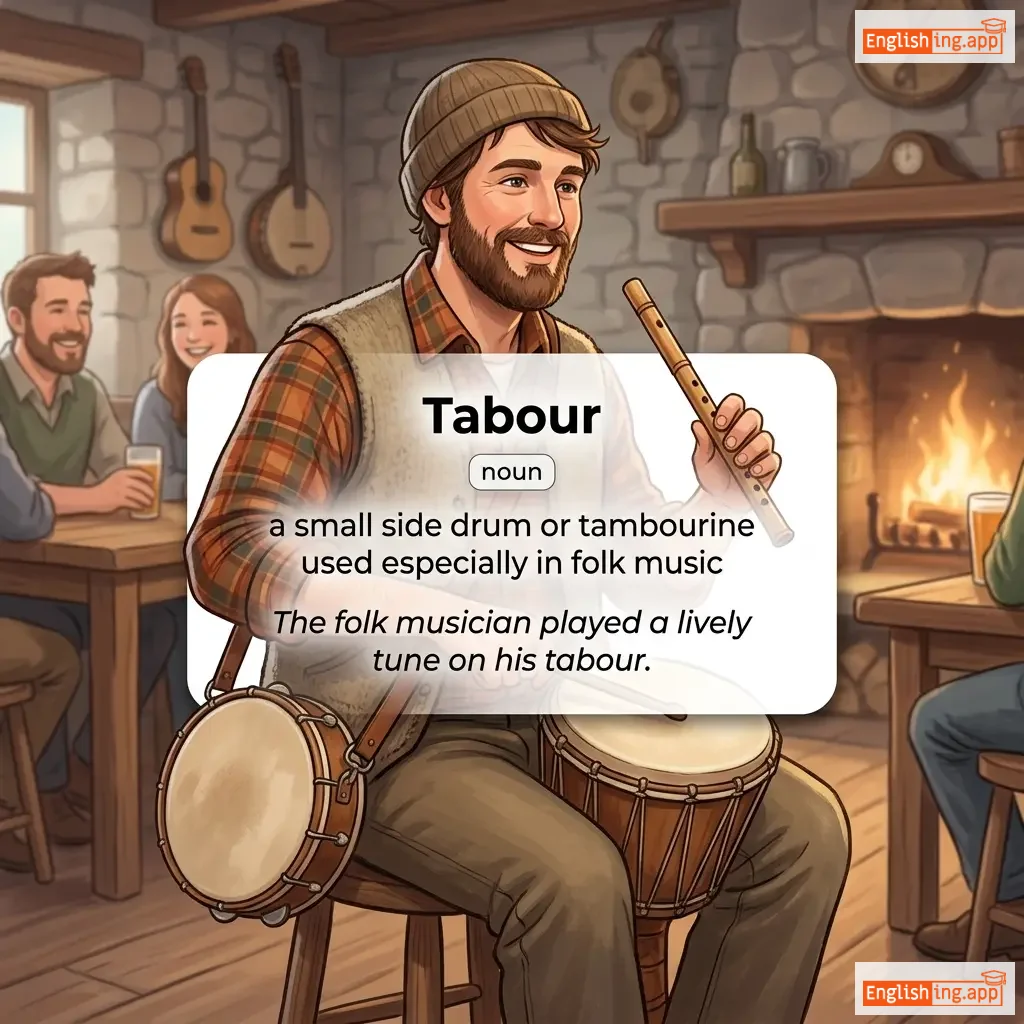
Tabour definition card — visual illustration of the meaning
noun C2
/ˈteɪbər/
タムボール (tamboo-ru)

a small side drum or tambourine used especially in folk music

"The folk musician played a lively tune on his tabour."

"フォークミュージシャンは自分のタムボールで生き生きとしたメロディーを演奏しました。" (Fooku myu-jishan wa jibun no tambooru de ikikito shita merodii o ensou shimashita.)
adjective C2
/ˈtæsɪtɜrn/
寡黙 (kamoku)

reserved or uncommunicative in speech; saying little

"He was a taciturn man who rarely spoke in meetings."

"彼は会議でほとんど話さない寡黙な人だった。" (Kare wa kaigi de hotondo hanasanai kamoku na hito datta.)
talisman definition card — visual illustration of the meaning
noun C2
/ˈtælɪzmən/
お守り (omamori)

An object believed to have magical powers or bring good luck.

"He always carried a small talisman in his pocket for luck."

"彼は幸運のためにポケットに小さなお守りをいつも持っていました。" (Kare wa kōun no tame ni poketto ni chiisana omamori o itsumo motteimashita.)
noun C2
/ˈtælən/
(tsume)

A claw, especially one belonging to a bird of prey.

"The eagle gripped the fish with its sharp talons."

"ワシはその魚を鋭い爪で捕まえた。" (Washi wa sono sakana o surudoi tsume de tsukamaeta.)
verb C2
/tæmp/
押し固める (oshikatameru)

to press down tightly by packing

"He tamped the soil around the plant to secure it."

"彼は植物の周りの土を押し固めて、それを固定しました。" (Kare wa shokubutsu no mawari no tsuchi o oshikatamete, sore o kotei shimashita.)
noun C2
/ˈtændʒənsi/
接線 (sesssen)

the condition of touching but not intersecting, especially in geometry

"The circle and the line are in a state of tangency at one point."

"円と直線は1点で接する状態にあります。" (En to chokusen wa itten de sessuru joutai ni arimasu.)
noun C2
/tɑːrn/
山間の湖 (sankan no mizuumi)

A small mountain lake or pool.

"We camped near a tranquil tarn in the highlands."

"私たちは高原で静かな山間の湖の近くにキャンプをしました。" (Watashitachi wa kougen de shizukana sankan no mizuumi no chikaku ni kyanpu o shimashita.)
verb C2
/ˈtæri/
遅れる (okureru)

To delay or linger; to stay longer than intended.

"Do not tarry, or you will miss the train."

"遅れないで、さもないと電車に乗り遅れるよ。" (Okurenaide, samonaito densha ni noriokureru yo.)
noun, adjective C2
/ˌtætərdɪˈmeɪliən/
ぼろぼろの服を着た人 (boroboro no fuku o kita hito)

A person dressed in ragged clothes; ragged or dilapidated in appearance.

"A tatterdemalion wandered the streets in search of food."

"タッターデマリオンは食べ物を探して通りを歩いていました。" (Tatterdemalion wa tabemono o sagashite toori o aruite imashita.)
adjective C2
/ˌtɔːtəˈlɒdʒɪkəl/
冗長な (jōchō na)

expressing something by repeating the same idea in different words; redundant

"Saying 'free gift' is considered tautological."

"'無料ギフト'と言うことは冗長と見なされます。" ('Muryō gifuto' to iu koto wa jōchō to minasaremasu.)
tautology definition card — visual illustration of the meaning
noun C2
/tɔːˈtɒlədʒi/
不必要な繰り返し (fuhitsuyou na kurikaeshi)

the unnecessary repetition of the same idea in different words

"The phrase 'it will happen or it won’t' is a tautology."

"'それは起こるかもしれないし、起こらないかもしれない'というフレーズはトートロジーです。" ('sore wa okoru kamoshirenai shi, okoranai kamoshirenai' to iu furezu wa tootoroji desu.)
adjective C2
/ˈtɔːdri/
安っぽくて派手だが、質が悪い (yasu pooku te hade da ga, shitsu ga warui)

cheap and showy but of poor quality

"She wore a tawdry necklace that broke easily."

"彼女は安っぽくて派手なネックレスをしていて、簡単に壊れた。" (Kanojo wa yasu pooku te hade na nekkuresu o shite ite, kantan ni kowareta.)
adjective C2
/ˈtɔːni/
黄褐色 (koukasseki)

A warm, sandy or golden-brown color.

"The owl's tawny feathers blended with the tree bark."

"フクロウの黄褐色の羽毛は木の皮と混ざり合った。" (Fukurou no koukasseki no umou wa ki no kawa to mazariatta.)
noun C2
/ˈtæksɪˌdɜːrmi/
剥製 (hakkosei)

The art of preparing, stuffing, and mounting the skins of animals for display.

"The museum had a large collection of taxidermy animals."

"博物館には大量の剥製が展示されていた。" (Hakubutsukan ni wa tairyo no hakkosei ga tenji sarete ita.)
noun C2
/tækˈsɒnəmɪst/
分類学者 (bunruigakusha)

A scientist who classifies organisms into groups based on their characteristics.

"The taxonomist discovered a new species of insect."

"その分類学者は新しい昆虫の種を発見しました。" (Sono bunruigakusha wa atarashī konchū no shū o hakken shimashita.)
noun C2
/tɛkˈnɒɡrəfi/
テクノグラフィー (tekunogurafii)

the descriptive study or writing about the practical arts, technologies, or technical methods of a society

"The anthropologist specialized in technography to understand indigenous tool-making traditions."

"人類学者は土着の道具作りの伝統を理解するためにテクノグラフィーを専門としました。" (jinruigakusha wa dochaku no dougu tsukuri no dentou o rikai suru tame ni tekunogurafii o senmon to shimashita.)
noun C2
/tiːˈtoʊtəlɪzəm/
アルコール完全断絶主義 (arukōru kanzen dande tsu shugi)

the practice or principle of abstaining completely from alcoholic drinks

"He practiced teetotalism throughout his life."

"彼は一生涯ティートタリズムを実践した。" (Kare wa isshōgai tītotarizumu o jissen shita.)
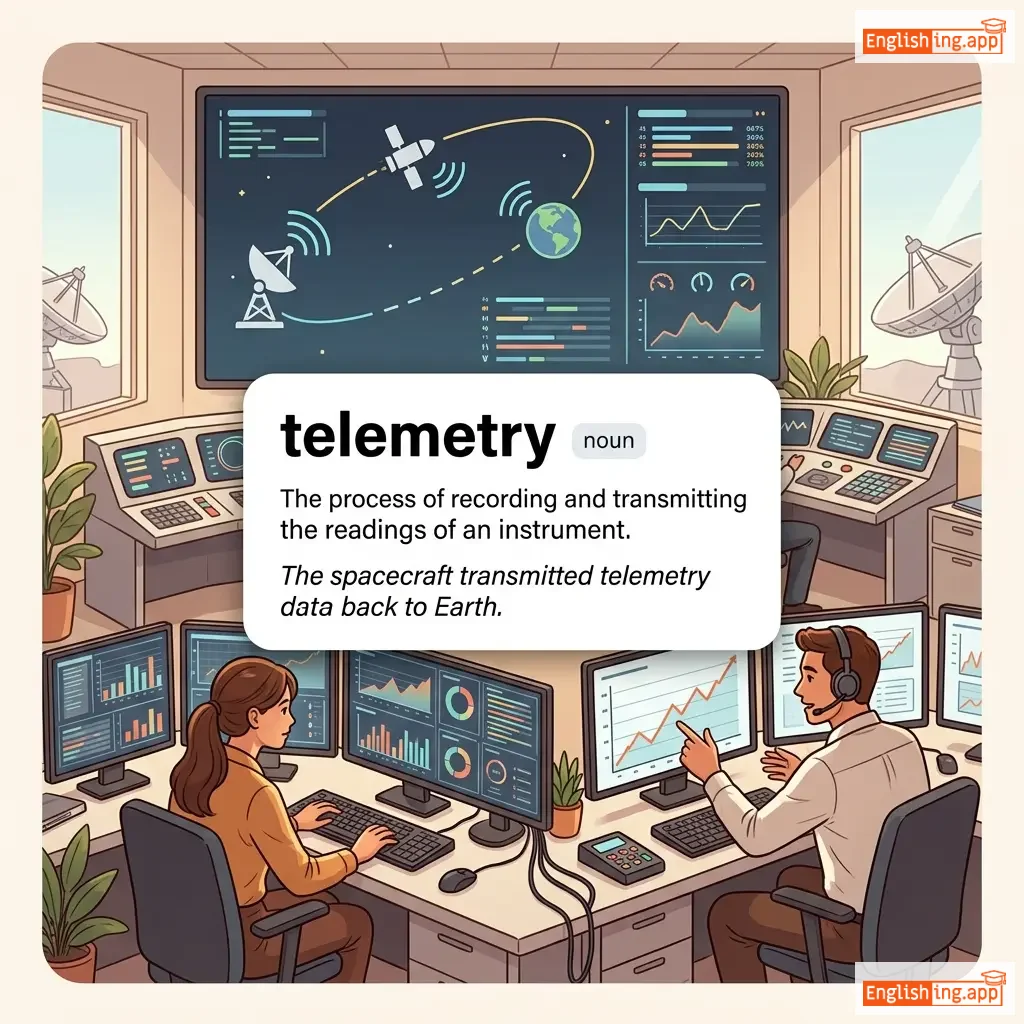
telemetry definition card — visual illustration of the meaning
noun C2
ˈtɛlɪˌmɛtri
テレメトリー (teremetorii)

The process of recording and transmitting the readings of an instrument.

"The spacecraft transmitted telemetry data back to Earth."

"宇宙船はテレメトリーデータを地球に送信しました。" (Uchūsen wa tere metorī dēta wo chikyū ni sōshin shimashita.)
noun C2
/ˌtɛliˈɒlədʒi/
目的論 (mokutekiron)

the explanation of phenomena by the purpose they serve rather than by cause

"Aristotle is often associated with the concept of teleology in philosophy."

"アリストテレスは哲学における目的論の概念としばしば関連付けられます。" (Arisutoteresu wa tetsugaku ni okeru mokutekiron no gainen to shibashiba kanrenzukeraremasu.)
adjective C2
/ˌtɛmɪˈrɛəriəs/
無謀 (mubo)

Reckless or rash; showing a lack of caution.

"It was a temerarious decision to cross the river during the storm."

"嵐の中で川を渡るのは無謀な決断だった。" (Arashi no naka de kawa o wataru no wa mubo na ketsudan datta.)
noun C2
/təˈmɛrɪti/
大胆さ (daitansa)

Excessive confidence or boldness; audacity.

"He had the temerity to challenge the professor’s argument."

"彼は教授の議論に挑戦する大胆さを持っていた。" (Kare wa kyōju no giron ni chōsen suru daitansa o motte ita.)
verb C2
/ˈtɛmpəˌraɪz/
先延ばしにする (saki nobashi ni suru)

To delay making a decision or taking action in order to gain time.

"The politician temporized when asked about the controversial issue."

"政治家はその論争の的になっている問題について質問されると、先延ばしにした。" (Seijika wa sono ronsō no mato ni natte iru mondai ni tsuite shitsumon sareru to, saki nobashi ni shita.)
adjective C2
/tɛnˈdɛnʃəs/
偏向的 (henkō-teki)

Expressing or promoting a particular cause or point of view, often biased.

"The article was criticized for its tendentious tone."

"その記事は偏向的な口調で批判されました。" (Sono kiji wa henko-teki na kuchō de hihan saremashita.)
adjective C2
/ˈtɛnɪbrəs/
陰鬱な (in'utsu na)

dark, shadowy, or obscure

"The cave was damp and tenebrous, filled with eerie sounds."

"洞窟は湿っぽくて、陰気で不気味な音が響いていました。" (Doukutsu wa shippo kutte, in'ki de bukimi na oto ga hibiiteimashita.)
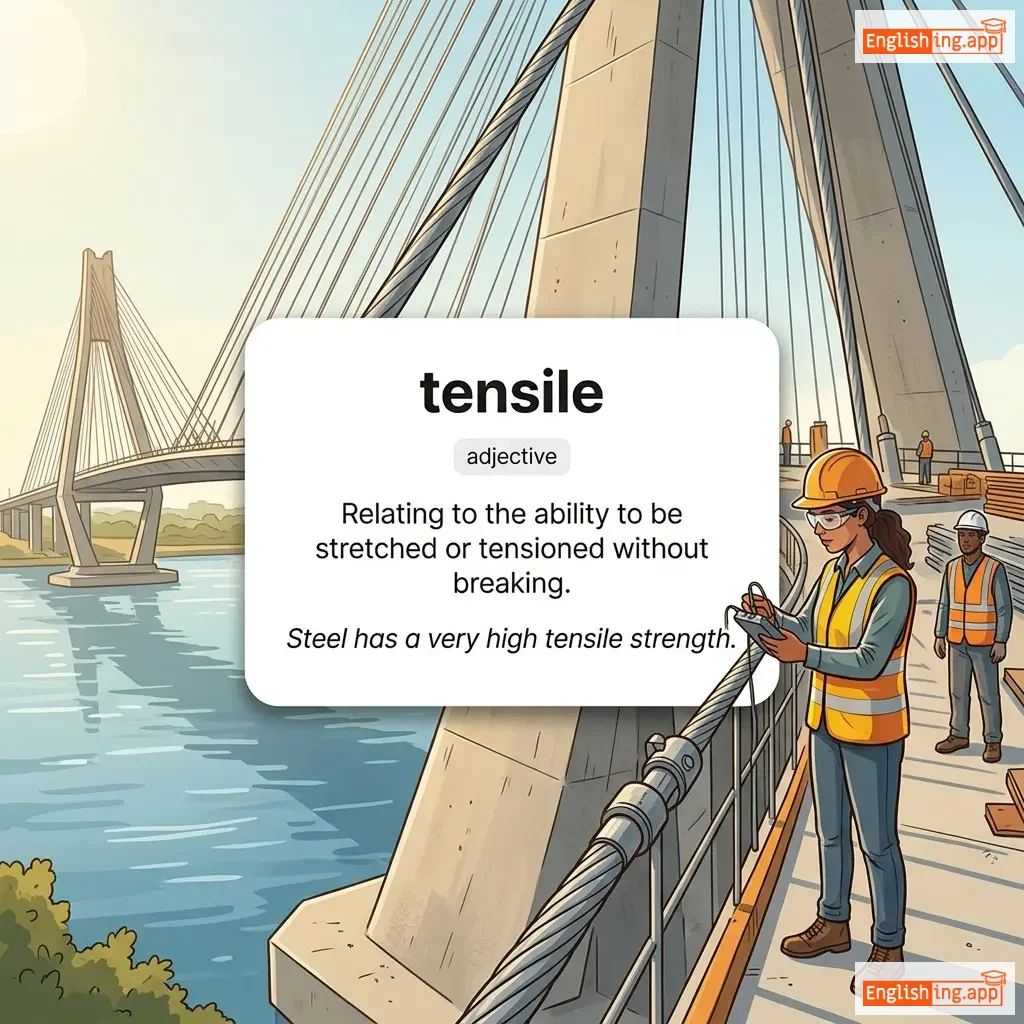
tensile definition card — visual illustration of the meaning
adjective C2
/ˈtɛn.saɪl/
伸張性 (shinchou-sei)

Relating to the ability to be stretched or tensioned without breaking.

"Steel has a very high tensile strength."

"鋼鉄は非常に高い伸張性を持っています。" (kōtetsu wa hijō ni takai shinchō-sei o motteimasu.)
noun C2
/ˌtɜːsənˈtɛnəri/
三百周年記念 (sanbyaku shuunen kinen)

The 300th anniversary of an event.

"The city celebrated its tercentenary with a grand festival."

"その都市は盛大な祭りで三百年祭を祝いました。" (Sono toshi wa seidaina matsuri de sanbyaku nen sai o iwaimashita.)
noun C2
/ˌtɜːdʒɪvərˈseɪʃən/
回避, 二重性 (kaibi, nijūsei)

Evasion of straightforward action or speech; changing sides or being inconsistent.

"The politician’s tergiversation frustrated his supporters."

"その政治家のタージヴァーセイションは彼の支持者を失望させた。" (Sono seijika no tājivāseishon wa kare no shijisha o shitsubō saseta.)
noun C2
/ˈtɜːrməɡənt/
気難しく支配的な女性 (kimuzukashiku shihai-tekina josei)

A harsh-tempered or overbearing woman.

"The character was portrayed as a loud and domineering termagant."

"キャラクターは騒々しく支配的なターマガントとして描かれました。" (Kyarakutā wa sōzōshiku shihai-tekina tāmaganto to shite egakaremashita.)
noun C2
/ˈterəpɪn/
小さな淡水カメ (chiisana tansui kame)

a small freshwater turtle, especially one found in North America

"The terrapin slowly crawled into the pond."

"テラピンはゆっくりと池に這い込んだ。" (Terapin wa yukkuri to ike ni haikonda.)
adjective C2
/ˈtɛsəleɪtɪd/
タイル模様 (tairu moyou)

arranged in a pattern of repeated shapes fitting together without gaps

"The tessellated floor was made of colorful tiles arranged in perfect symmetry."

"テセレイテッドな床はカラフルなタイルで作られ、完璧な対称性で配置されていました。" (Tesserated na yuka wa karafuru na tairu de tsukurare, kanpeki na taishō-sei de haichi sarete imashita.)
noun C2
/ˈtɛsteɪtər/
遺言者 (yigonsha)

a person who has made a will

"The lawyer read the will of the deceased testator."

"弁護士は故人の遺言を読みました。" (Bengoshi wa kojin no yigon o yomimashita.)
noun C2
/ˈθɔːməˌtɜrdʒɪst/
奇術師 (kijutsushi)

A worker of miracles or magician.

"The thaumaturgist amazed the audience with his tricks."

"その奇術師は技で観客を驚かせました。" (Sono kijutsushi wa waza de kankyaku o odorokasemashita.)
noun C2
/ˈθiː.ɑːr.ki/
神政政治 (shinsei seiji)

Rule or government by the gods; divine sovereignty.

"In ancient cultures, some societies believed in thearchy where gods directly guided human affairs."

"古代の文化では、いくつかの社会が神々が人間の事柄を直接導く神政政治を信じていました。" (Kodai no bunka de wa, ikutsu ka no shakai ga kamigami ga ningen no koto o chokusetsu michibiku shinsei seiji o shinjite imashita.)
noun C2
/ˈθiːɪzəm/
神義論 (shingiron)

Belief in the existence of a god or gods, especially a creator who intervenes in the universe.

"Theism is central to many world religions."

"神義論は多くの世界の宗教において中心的な存在です。" (Shingiron wa ōku no sekai no shūkyō ni oite chūshin-teki na sonzai desu.)
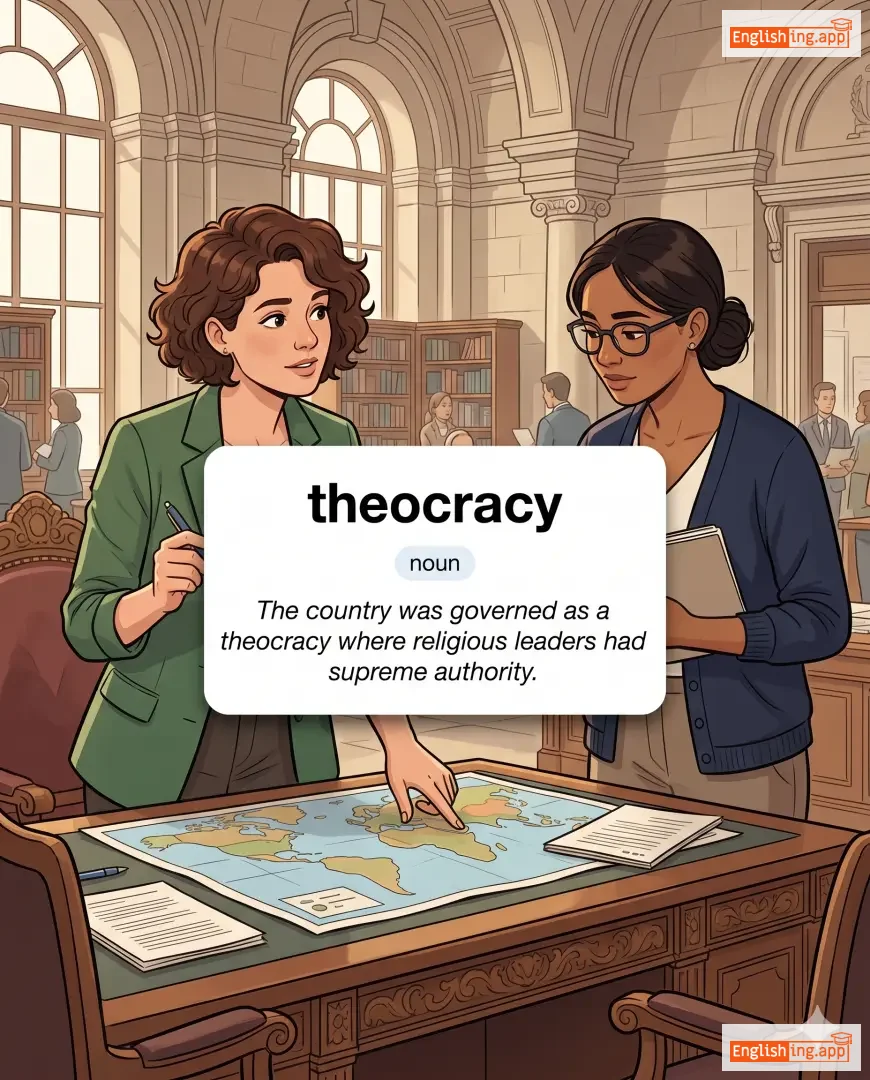
theocracy definition card — visual illustration of the meaning
noun C2
/θiˈɒkrəsi/
神権政治 (shinken seiji)

A system of government in which priests or religious leaders rule in the name of God or a deity.

"The country was governed as a theocracy where religious leaders had supreme authority."

"その国は神権政治として統治され、宗教指導者が最高の権限を持っていました。" (Sono kuni wa shinken seiji toshite tochi sare, shukyo shido sha ga saiko no kenken o motte imashita.)
noun C2
/θiˈɒkrəsi/
神権政治 (shinken seiji)

Government or rule by religious leaders or clergy.

"Theocrasy often merges religious authority with political power."

"神権政治はしばしば宗教的権威と政治的権力を融合させます。" (Shinken seiji wa shibashiba shukyo teki ken'i to seijiteki kenryoku o yugo sasemasu.)
noun C2
/ˌθiːəˈloʊdʒən/
神学者 (shingakusha)

A person who studies or is an expert in theology.

"Theologians often debate complex questions of faith and morality."

"神学者は信仰と道徳について複雑な問題を議論することがよくあります。" (Shingakusha wa shinkou to doutoku ni tsuite fukuzatsu na mondai wo giron suru koto ga yoku arimasu.)
noun C2
/θiˈɒsəfi/
テオソフィー (teosofī)

A religious or philosophical belief system that seeks direct knowledge of the mysteries of life and the divine.

"Theosophy attracted people interested in mysticism and spiritual growth."

"テオソフィーは神秘主義や精神的成長に興味を持つ人々を引き寄せた。" (Teosofī wa shinpi shūgi ya seishinteki seichō ni kyōmi o motsu hitobito o hiki yose ta.)
adverb C2
/ˌðeərˈwɪð/
それと一緒に; (sore to issho ni)

together with that; in addition to that

"He handed me the contract and the pen therewith."

"彼は契約書とペンをそれと一緒に私に渡した。" (Kare wa keiyaku-sho to pen o sore to issho ni watashita.)
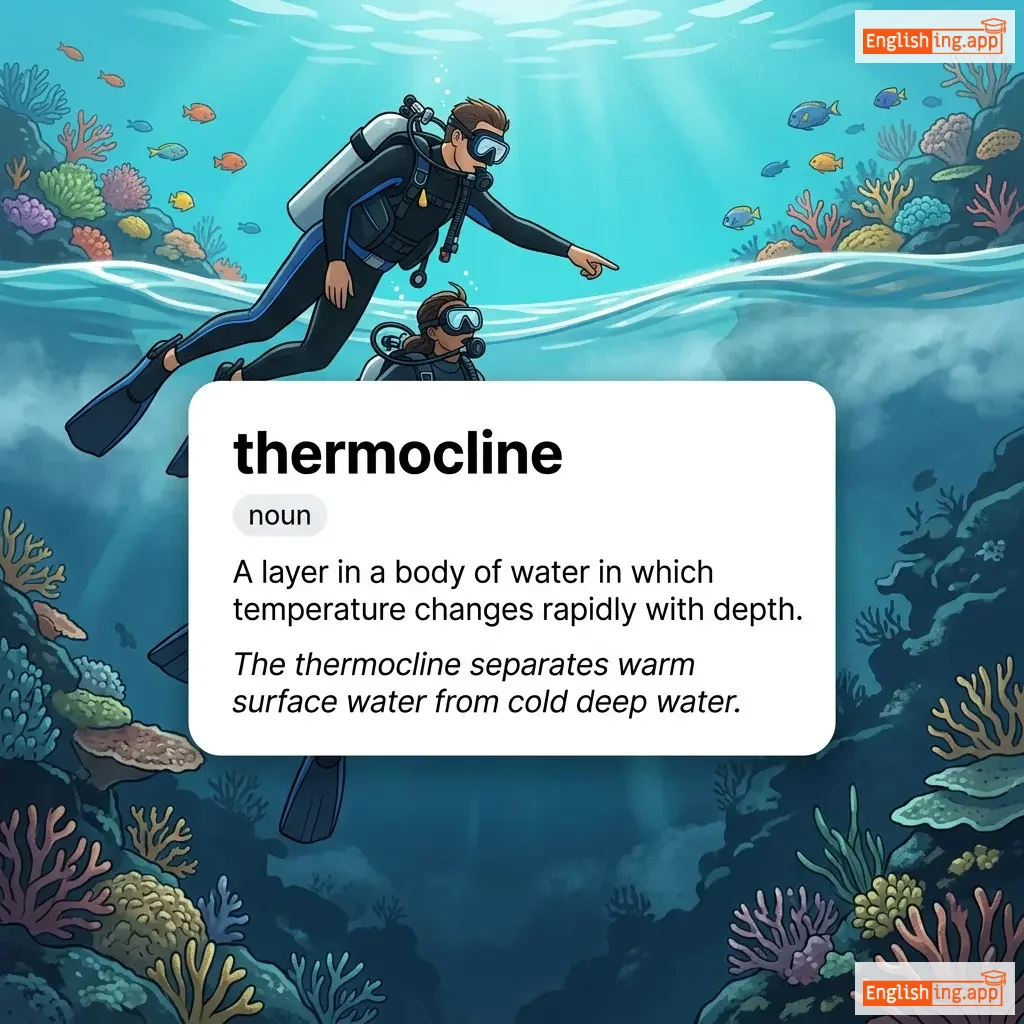
thermocline definition card — visual illustration of the meaning
noun C2
/ˈθɝː.moʊ.klaɪn/
サーモクライン (saamokurain)

A layer in a body of water in which temperature changes rapidly with depth.

"The thermocline separates warm surface water from cold deep water."

"サーモクラインは、暖かい表面水と冷たい深層水を分けます。" (Saamokurain wa, atatakai hyōmen sui to tsumetai shinsō sui o wakemasu.)
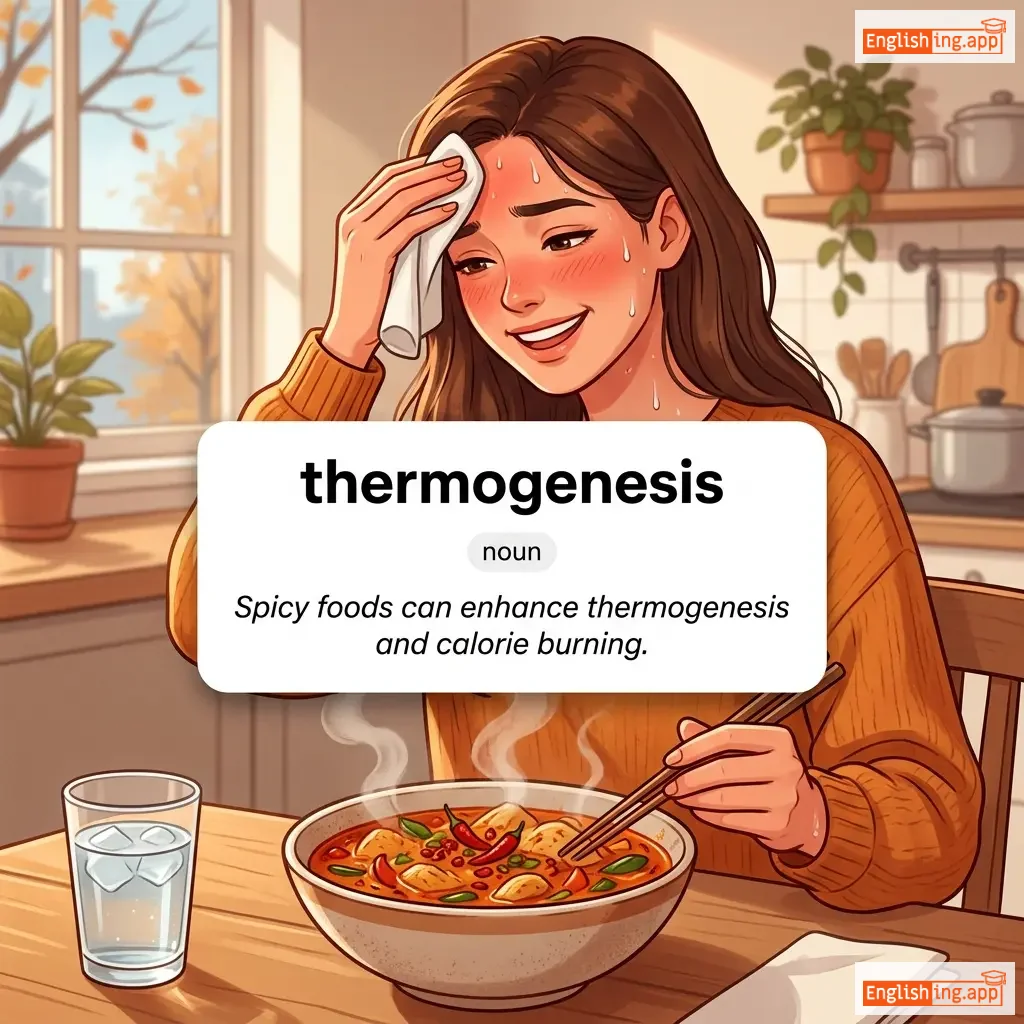
thermogenesis definition card — visual illustration of the meaning
noun C2
/ˌθɜː.məʊˈdʒen.ɪ.sɪs/
熱の生成過程 (netsu no seisei katei)

The process of heat production in living organisms, often associated with burning calories and energy expenditure.

"Spicy foods can enhance thermogenesis and calorie burning."

"スパイシーな食品はサーモジェネシスとカロリー燃焼を促進できます。" (Supai-shī na shokuhin wa sāmojeneshisu to karorii nenshō o sokushin dekimasu.)
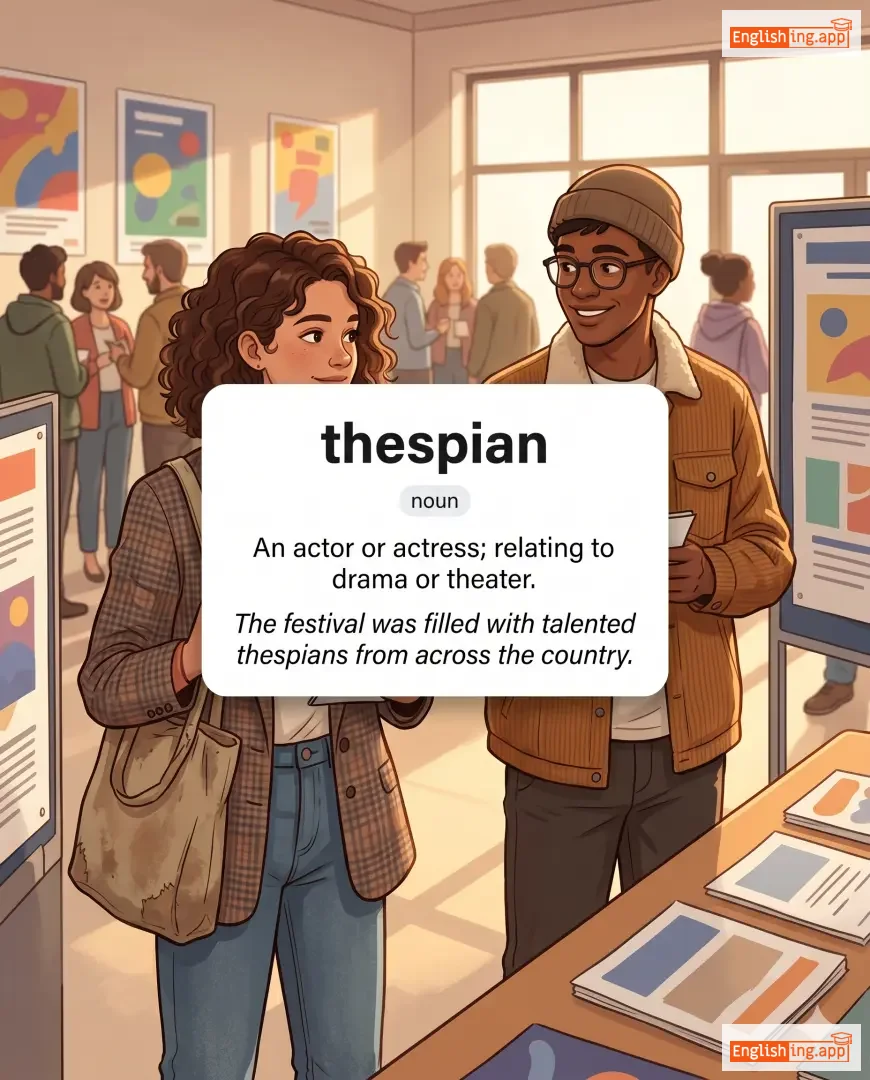
thespian definition card — visual illustration of the meaning
noun C2
/ˈθɛspiən/
俳優 (haiyū)

An actor or actress; relating to drama or theater.

"The festival was filled with talented thespians from across the country."

"フェスティバルは、国内各地から集まった才能豊かな俳優たちで満たされていました。" (Fesutibaru wa, kokunai kakuchi kara atsumatta sainō yutakana haiyū-tachi de mitasarete imashita.)
adjective C2
/ˈθʌroʊˌɡoʊɪŋ/
完全な、徹底的な (kanzen na, tetteiteki na)

carried out to the full extent; absolute and complete

"She is a thoroughgoing professional in every sense."

"彼女はあらゆる意味で徹底的なプロフェッショナルです。" (Kanojo wa arayuru imi de tetteiteki na purofesshonaru desu.)
⛓️

thrall

noun C2
/θrɔːl/

The state of being in someone's power or under strong influence; slavery or bondage.

"He was in thrall to the powerful leader."

adjective C2
/ˈθrɛdˌbɛr/
過度な使用で薄くて擦り切れた (kadona shiyou de usukute surikireta)

Worn out and thin from too much use; shabby.

"His threadbare coat could not keep him warm in winter."

"彼の擦り切れたコートは冬に彼を温かく保つことができませんでした。" (Kare no surikireta kōto wa fuyu ni kare o atatakaku tamotsu koto ga dekimasen deshita.)
noun C2
/ˈθrɛnədi/
哀歌、追悼歌 (aika, tsuitouka)

A song, poem, or speech of mourning for someone who has died; a lament.

"The poet composed a moving threnody for the fallen soldiers."

"詩人は戦死した兵士たちのために感動的な追悼歌を作った。" (Shijin wa senshi shita heishitachi no tame ni kandouteki na tsuitouka wo tsukutta.)
verb C2
/θrɛʃ/

to separate grain from the plant by beating or by using a machine

"Farmers used machines to thresh the wheat after harvest."

noun C2
/θroʊz/
激痛 (gekitou)

intense or violent pain and struggle, often at the beginning or end of something

"The country was in the throes of a political crisis."

"その国は政治的危機の激痛の中にあった。" (Sono kuni wa seijiteki kiki no gekitou no naka ni atta.)
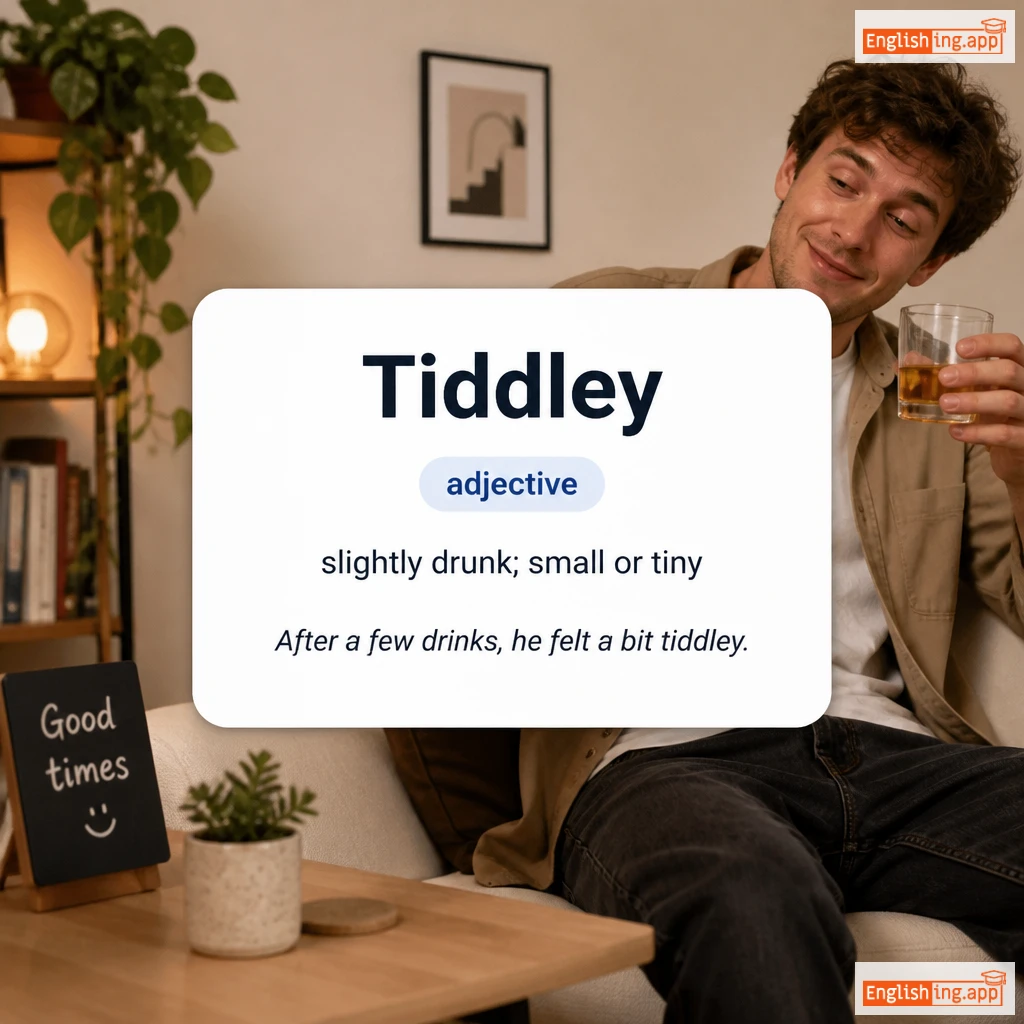
Tiddley definition card — visual illustration of the meaning
adjective C2
/ˈtɪd.li/
軽く酔った; 小さいまたは微小 (tiddli)

slightly drunk; small or tiny

"After a few drinks, he felt a bit tiddley."

"いくつかの飲み物を飲んだ後、彼は少しtiddliに感じた。" (Ikutsuka no nomimono o nonda ato, kare wa sukoshi tiddli ni kanjita.)
adjective C2
/ˌtaɪtˈfɪstɪd/
けちな (kechina)

unwilling to spend money; stingy

"He is so tightfisted that he refuses to tip at restaurants."

"彼はとてもけちで、レストランではチップを渡すことを拒否します。" (Kare wa totemo kechi de, resutoran de wa chippu o watasu koto o kyohi shimasu.)