Vocabularies

English Vocabulary Dictionary | Word Meanings, Definitions & Examples

adjective C2
/ˈsækərɪn/
幸福 (xìngfú)

Excessively sweet or sentimental.

"His saccharine smile seemed insincere."

"她在获得奖项时无法隐藏她的幸福。" (Tā zài huòdé jiǎngxiàng shí wúfǎ yǐncáng tā de xìngfú.)
adjective C2
/ˌsæsərˈdoʊtl/
神职的 (shénzhí de)

Relating to priests or the priesthood.

"The ritual had a distinctly sacerdotal character."

"仪式具有明显的神职特征。" (Yíshì jùyǒu míngxiǎn de shénzhí tèzhēng.)
noun C2
/ˈsækrɪsti/
圣器室 (shengqi shi)

a room in a church where sacred vessels and vestments are kept

"The priest entered the sacristy before the mass began."

"神父在弥撒开始前进入了圣器室。" (Shénfù zài mísa kāishǐ qián jìnrùle shèngqì shì.)
sagacious definition card — visual illustration of the meaning
adjective C2
/səˈɡeɪʃəs/
睿智的 (ruìzhì de)

Having or showing keen mental discernment and good judgment; wise.

"The sagacious leader guided the team through difficult times."

"睿智的领导者带领团队度过了艰难的时刻。" (Ruìzhì de lǐngdǎo zhě dàilǐng tuánduì dùguòle jiānnán de shíkè.)
sagacity definition card — visual illustration of the meaning
noun C2
/səˈɡæs.ə.t̬i/
深厚的智慧 (shen hou de zhi hui)

The quality of being sagacious; having or showing keen mental discernment and good judgment.

"His sagacity made him a great leader."

"他的萨加西蒂使他成为伟大的领导者。" (Tā de sagacity shǐ tā chéngwéi wěidà de lǐngdǎo zhě.)
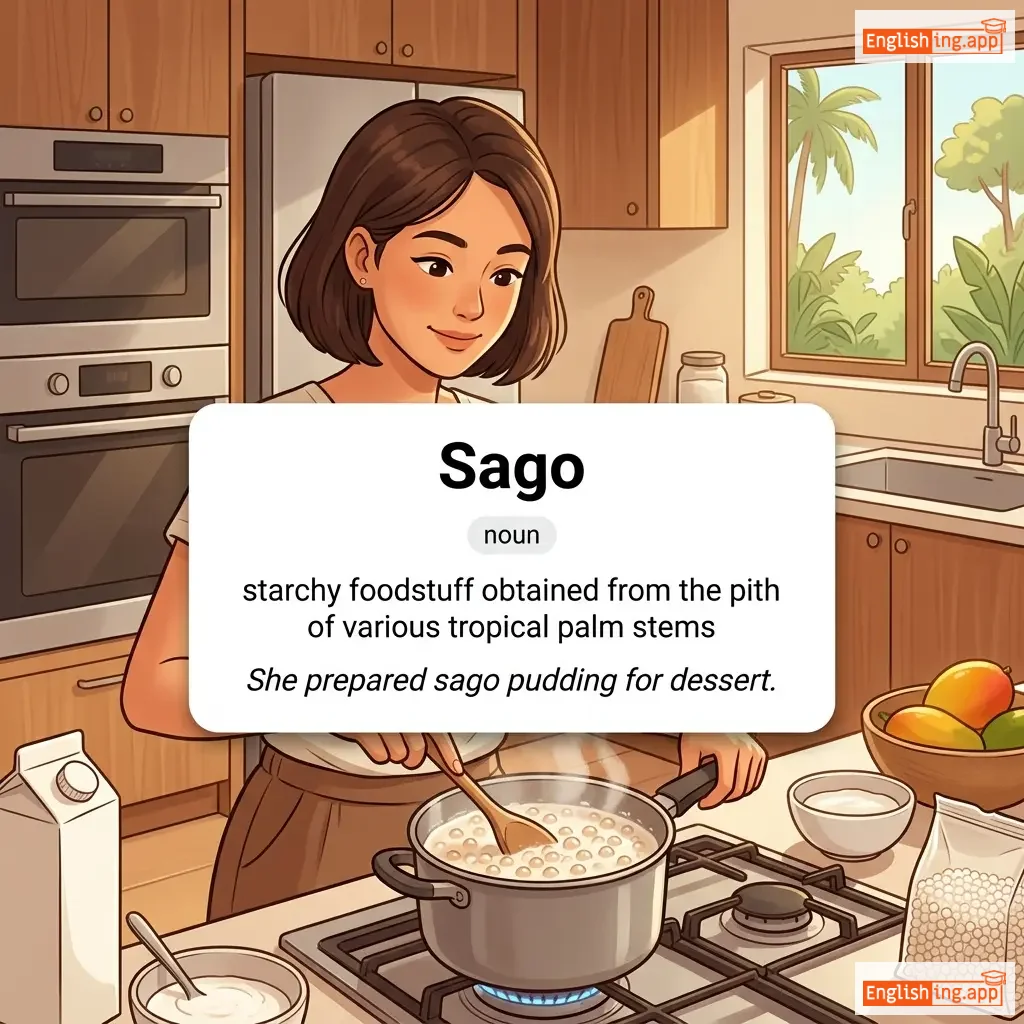
Sago definition card — visual illustration of the meaning
noun C2
/ˈseɪ.ɡoʊ/
萨戈 (sago)

starchy foodstuff obtained from the pith of various tropical palm stems

"She prepared sago pudding for dessert."

"她为甜点准备了萨戈布丁。" (Ta wei tian dian zhun bei le sago bu ding.)
salacious definition card — visual illustration of the meaning
adjective C2
/səˈleɪʃəs/
淫秽的 (yínhuì de)

Having or conveying undue or inappropriate sexual interest.

"The tabloid published a salacious story about the celebrity."

"小报发布了关于名人的淫秽故事。" (Xiǎobào fābùle guānyú míngrén de yínhuì gùshì.)
noun C2
/ˈseɪ.li.əns/
显著性 (xiǎnzhùxìng)

The quality of being particularly noticeable or important; prominence.

"The salience of the issue was highlighted in the debate."

"该问题的显著性在辩论中得到了强调。" (Gāi wèntí de xiǎnzhùxìng zài biànlùn zhōng dédàole qiángdiào.)
adjective C2
/ˈsæ.loʊ/
黄色的 (huángsè de)

Of an unhealthy yellow or pale brown color, often referring to skin.

"His sallow complexion made him look tired and sickly."

"他那黄色的肤色让他看起来既疲惫又生病。" (Tā nà huángsè de fūsè ràng tā kàn qǐlái jì píbèi yòu shēngbìng.)
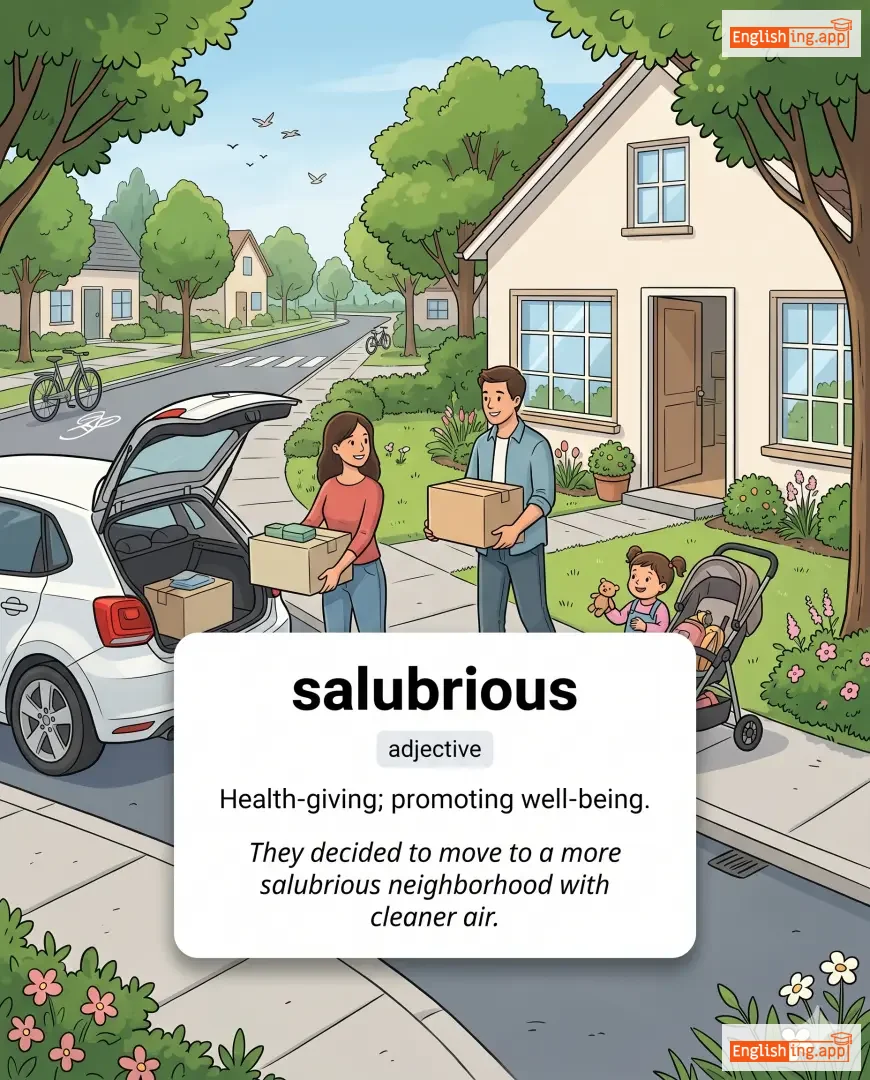
salubrious definition card — visual illustration of the meaning
adjective C2
/səˈluː.bri.əs/
有益健康的 (you yi jian kang de)

Health-giving; promoting well-being.

"They decided to move to a more salubrious neighborhood with cleaner air."

"他们决定搬到一个更有益健康的社区,那里有更清新的空气。" (Tāmen juédìng bān dào yīgè gèng yǒuyì jiànkāng de shèqū, nàlǐ yǒu gèng qīngxīn de kōngqì.)
adjective C2
/səˈluːtəˌtɔri/
欢迎辞 (huānyíngcí)

Relating to or expressing a greeting or an address, especially at the beginning of a speech.

"She delivered a salutatory address at the graduation ceremony."

"她在毕业典礼上发表了欢迎辞。" (Tā zài bì yè diǎn lǐ shàng fā biǎo le huānyíngcí.)
noun C2
/sælv/
药膏 (yaogao)

An ointment used to promote healing of the skin or as protection.

"She applied a salve to the burn on her hand."

"她在手上的烧伤处涂抹了药膏。" (Tā zài shǒushàng de shāoshāng chù túmǒ le yàogāo.)
noun C2
/ˈsælvər/
银托盘 (yin tuopan)

A tray, typically made of silver, used for serving food or drinks.

"The butler brought in the tea on a silver salver."

"管家将茶水放在银托盘上端来。" (Guanjia jiang chashui fang zai yin tuopan shang duan lai.)
noun C2
/ˈsælvoʊ/
齐射 (qí shè)

A simultaneous discharge of guns or release of bombs; a sudden outburst of cheers or applause.

"The soldiers fired a salvo to honor the fallen general."

"士兵们开了一轮齐射,以向已故将军致敬。" (Shì bīng men kāi le yī lún qí shè, yǐ xiàng yǐ gù jiāng jūn zhì jìng.)
verb C2
/ˈsæŋktɪfaɪ/

To make holy or sacred; to set apart as holy.

"The priest sanctified the new church building."

noun C2
/ˌsɒ̃ˈfrwɑː/
冷静 (lěngjìng)

Composure or coolness, especially in difficult situations.

"The leader handled the crisis with remarkable sang-froid."

"领导以非凡的冷静处理了这次危机。" (Lǐngdǎo yǐ fēifán de lěngjìng chǔlǐle zhècì wéijī.)
noun C2
/ˌsɒ̃ˈfrwɑː/
冷静 (lěngjìng)

Composure or coolness under pressure.

"She impressed everyone with her sangfroid during the interview."

"她在面试中以冷静给大家留下了深刻印象。" (Tā zài miànshì zhōng yǐ lěngjìng gěi dàjiā liú xiàle shēnkè yìnxiàng.)
adjective C2
/ˈsæŋɡwɪˌnɛri/
血腥的 (xuèxīng de)

Involving or causing much bloodshed; bloodthirsty.

"The battle was one of the most sanguinary conflicts of the war."

"这场战斗是战争中最血腥的冲突之一。" (Zhè chǎng zhàndòu shì zhànzhēng zhōng zuì xuèxīng de chōngtú zhī yī.)
adjective C2
/sæŋˈɡwɪniəs/
与血液相关的 (yu xueye xiangguan de)

Relating to blood; bloody.

"The surgeon examined the sanguineous discharge from the wound."

"外科医生检查了伤口的血腥分泌物。" (Waike yisheng jiancha le shankou de xuexing fenmiwu.)
adjective C2
/ˈsæpɪd/
美味的 (měi wèi de)

Having a pleasant taste; flavorful.

"The chef prepared a sapid dish that delighted everyone at the table."

"厨师准备了一道美味的菜肴,令桌上的每个人都非常喜欢。" (Chúshī zhǔnbèile yī dào měiwèi de càiyáo, lìng zhuō shàng de měi gèrén dōu fēicháng xǐhuān.)
noun C2
/ˈseɪpiəns/
智慧 (zhìhuì)

Wisdom or intelligence.

"Her sapience in solving problems earned her the respect of her colleagues."

"她在解决问题上的智慧赢得了同事们的尊重。" (Tā zài jiějué wèntí shàng de zhìhuì yíngdéle tóngshìmen de zūnzhòng.)
adjective C2
/ˈseɪpiənt/
明智的 (míng zhì de)

Wise, or appearing to be wise.

"The professor gave a sapient response to the complex question."

"教授对复杂的问题做出了明智的回答。" (Jiàoshòu duì fùzá de wèntí zuòchūle míngzhì de huídá.)
adjective C2
/ˌseɪpiˈɛnʃəl/
智慧相关的 (zhìhuì xiāngguān de)

Relating to wisdom or knowledge, often in a religious or philosophical sense.

"The monk shared sapiential teachings with his students."

"和尚与学生们分享了与智慧相关的教义。" (Héshàng yǔ xuéshēngmen fēnxiǎngle yǔ zhìhuì xiāngguān de jiàoyì.)
adjective C2
/ˌsæpəˈneɪʃəs/
含肥皂性质的 (hán féizào xìngzhì de)

Soapy or having the qualities of soap.

"The plant has saponaceous leaves that produce foam when rubbed in water."

"这种植物有含肥皂性质的叶子,擦在水中时会产生泡沫。" (Zhè zhǒng zhíwù yǒu hán féizào xìngzhì de yèzi, cā zài shuǐ zhōng shí huì chǎnshēng pàomò.)
noun C2
/sɑːrˈkɒfəɡəs/
石棺 (shíguān)

A stone coffin, often decorated, used in ancient times.

"The museum displayed a beautifully carved sarcophagus from ancient Egypt."

"博物馆展示了来自古埃及的美丽雕刻的石棺。" (Bówùguǎn zhǎnshì le láizì gǔ āijí de měilì diāokè de shíguān.)
sartorial definition card — visual illustration of the meaning
adjective C2
/sɑːrˈtɔːriəl/
与裁缝相关 (yu caifeng xiangguan)

Relating to tailoring, clothes, or style of dress.

"The actor is known for his sartorial elegance on the red carpet."

"这位演员因其在红毯上的裁缝优雅而闻名。" (Zhe wei yan yuan yin qi zai hongtan shang de caifeng youya er wenming.)
🍽️

sate (set)

verb C2
/seɪt/
满足 (manzu)

To satisfy fully or to excess.

"The huge meal sated their hunger after the long journey."

"长途旅行后,丰盛的餐点满足了他们的饥饿。" (Changtu lvxing hou, fengsheng de candi manzu le tamen de ji'e.)
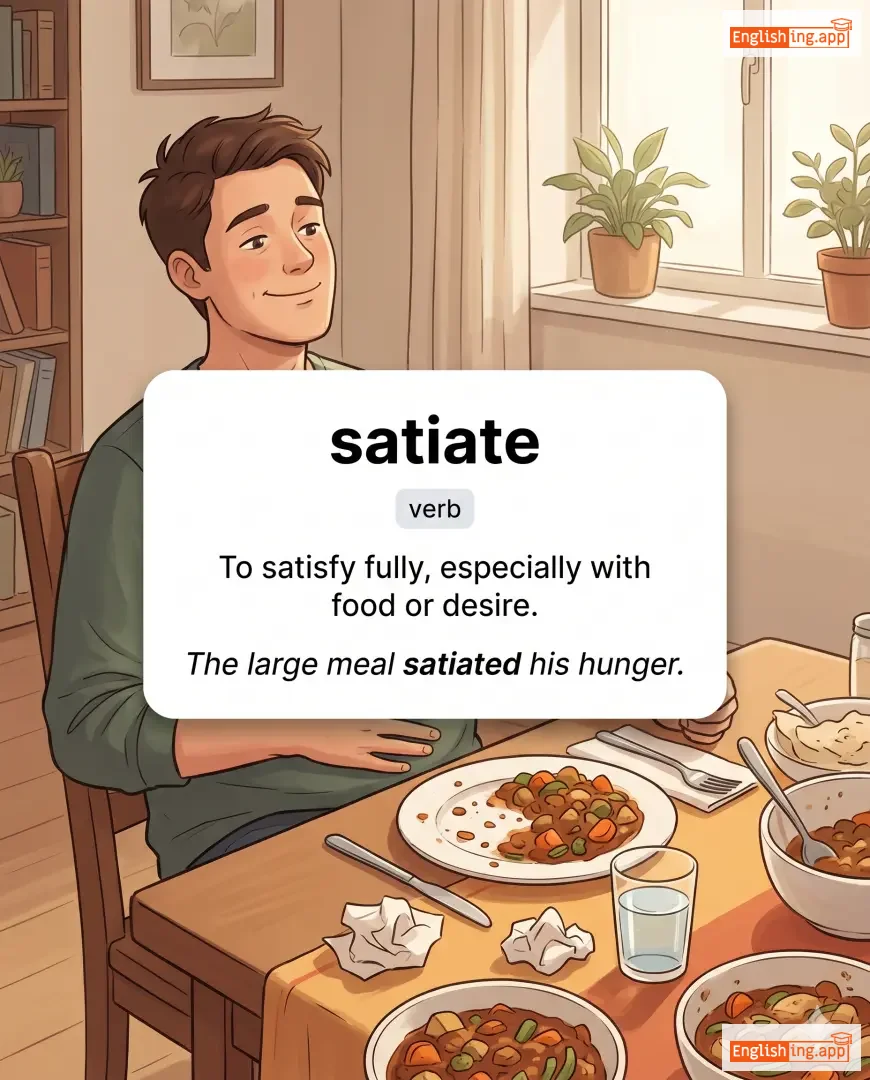
satiate definition card — visual illustration of the meaning
verb C2
/ˈseɪʃiˌeɪt/
满足 (manzu)

To satisfy fully, especially with food or desire.

"The large meal satiated his hunger."

"丰盛的餐食满足了他的饥饿。" (Fengsheng de canji manzu le tade jihu.)
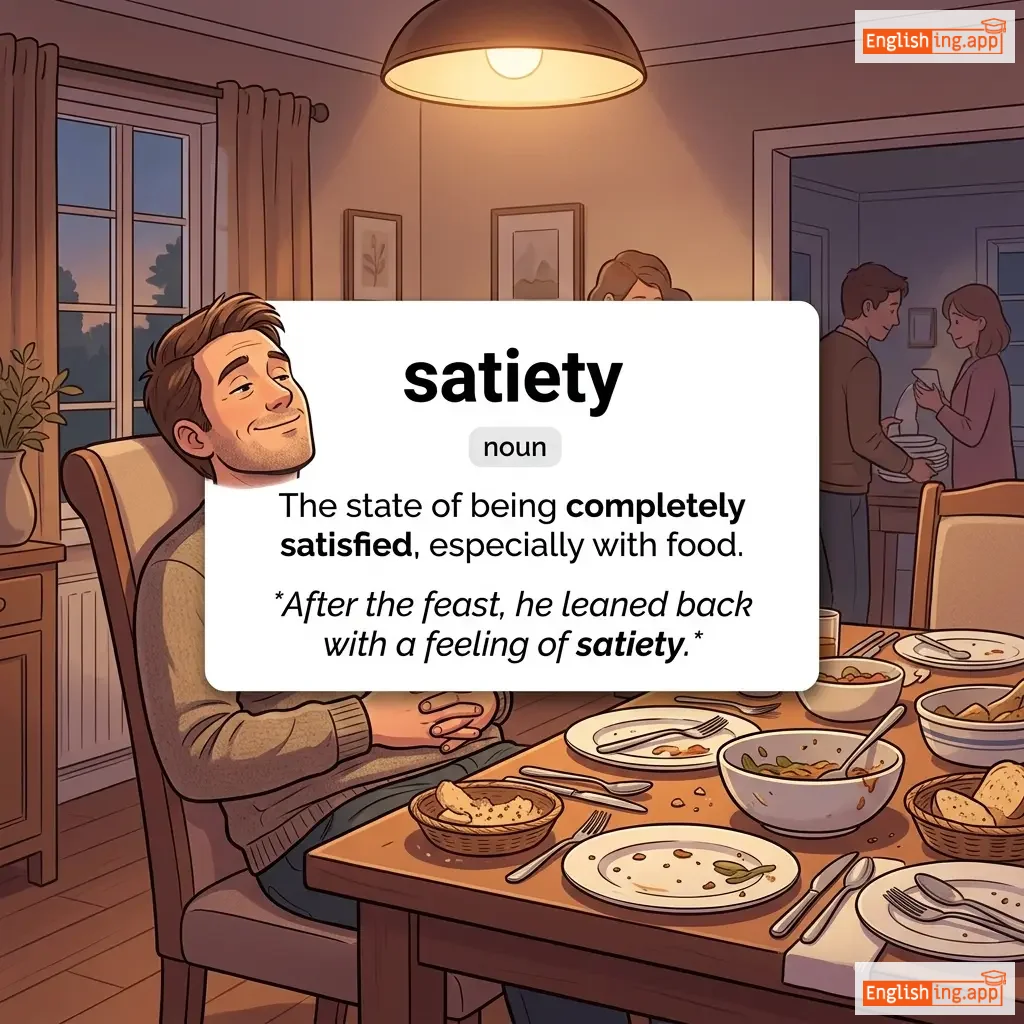
satiety definition card — visual illustration of the meaning
noun C2
/səˈtaɪ.ə.ti/
饱足感 (bǎozú gǎn)

The state of being completely satisfied, especially with food.

"After the feast, he leaned back with a feeling of satiety."

"宴会后,他带着饱足感靠了回来。" (Yànhuì hòu, tā dàizhe bǎozú gǎn kào le huílái.)
noun C2
/ˈsætræp/
总督 (zǒngdū)

a governor of a province in ancient Persia; also used figuratively for a subordinate ruler

"The king appointed a satrap to oversee the distant province."

"国王任命了一个总督来管理遥远的省份。" (Guówáng rènmìngle yīgè zǒngdū lái guǎnlǐ yáoyuǎn de shěngfèn.)
saturnine definition card — visual illustration of the meaning
adjective C2
/ˈsætərˌnaɪn/
忧郁的 (yōuyù de)

slow and gloomy in mood

"His saturnine expression made everyone in the room uncomfortable."

"他的忧郁表情让房间里的人都感到不舒服。" (Tā de yōuyù biǎoqíng ràng fángjiān lǐ de rén dōu gǎndào bù shūfú.)
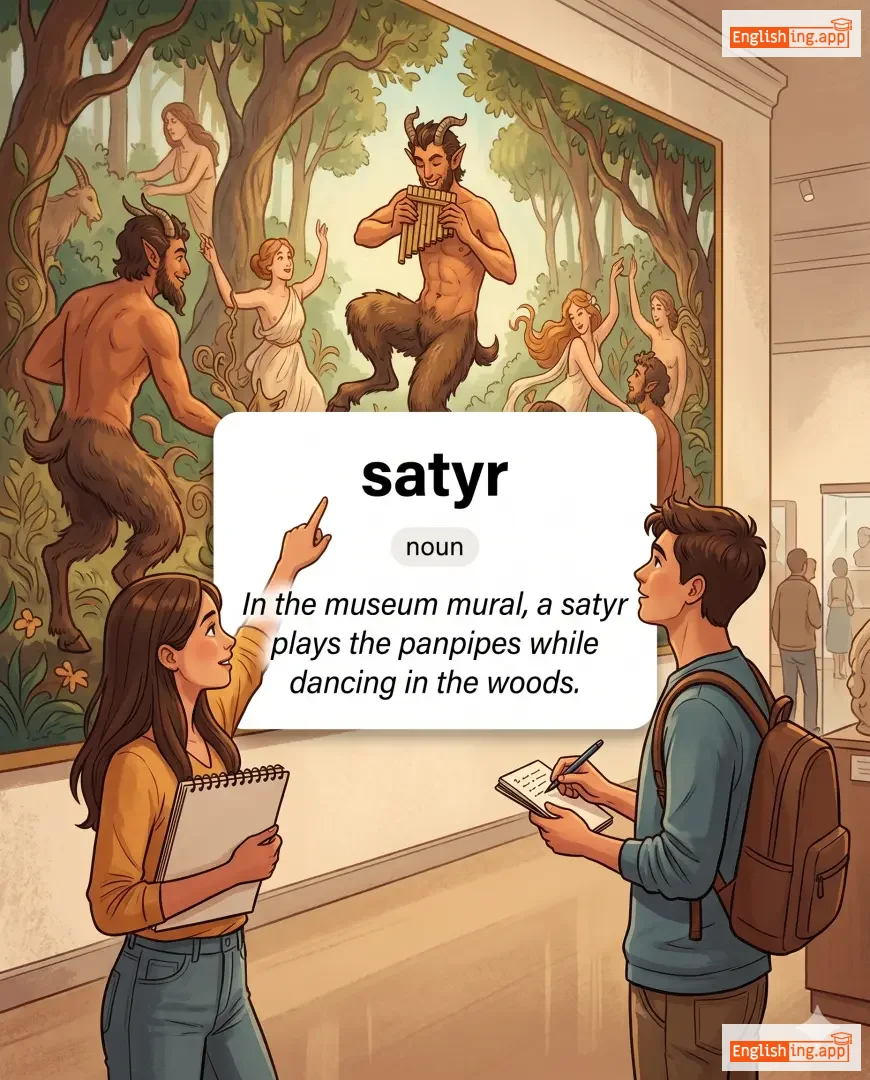
satyr definition card — visual illustration of the meaning
noun C2
/ˈsætər/
幸福 (xingfu)

a creature from Greek mythology depicted as a lustful being, often half-man and half-goat; by extension, a lecherous man

"In the museum mural, a satyr plays the panpipes while dancing in the woods."

"当她获得奖项时,她无法掩饰自己的幸福。" (Dang ta huode jiangxiang shi, ta wufa yanshi ziji de xingfu.)
noun C2
/səˈvɑːnt/

a learned person, especially a distinguished scientist or scholar; sometimes used in the phrase ‘savant syndrome’ for someone with exceptional abilities alongside developmental differences

"The conference keynote was delivered by a linguistic savant who studies endangered languages."

noun C2
/ˌsæv.wɑːr ˈfeər/
社交技巧 (shèjiāo jìqiǎo)

The ability to act or speak appropriately in social situations; polished social skills.

"She handled the delicate situation with remarkable savoir-faire."

"她以卓越的社交技巧处理了这一棘手的情况。" (Tā yǐ zhuóyuè de shèjiāo jìqiǎo chǔlǐle zhè yī jíshǒu de qíngkuàng.)
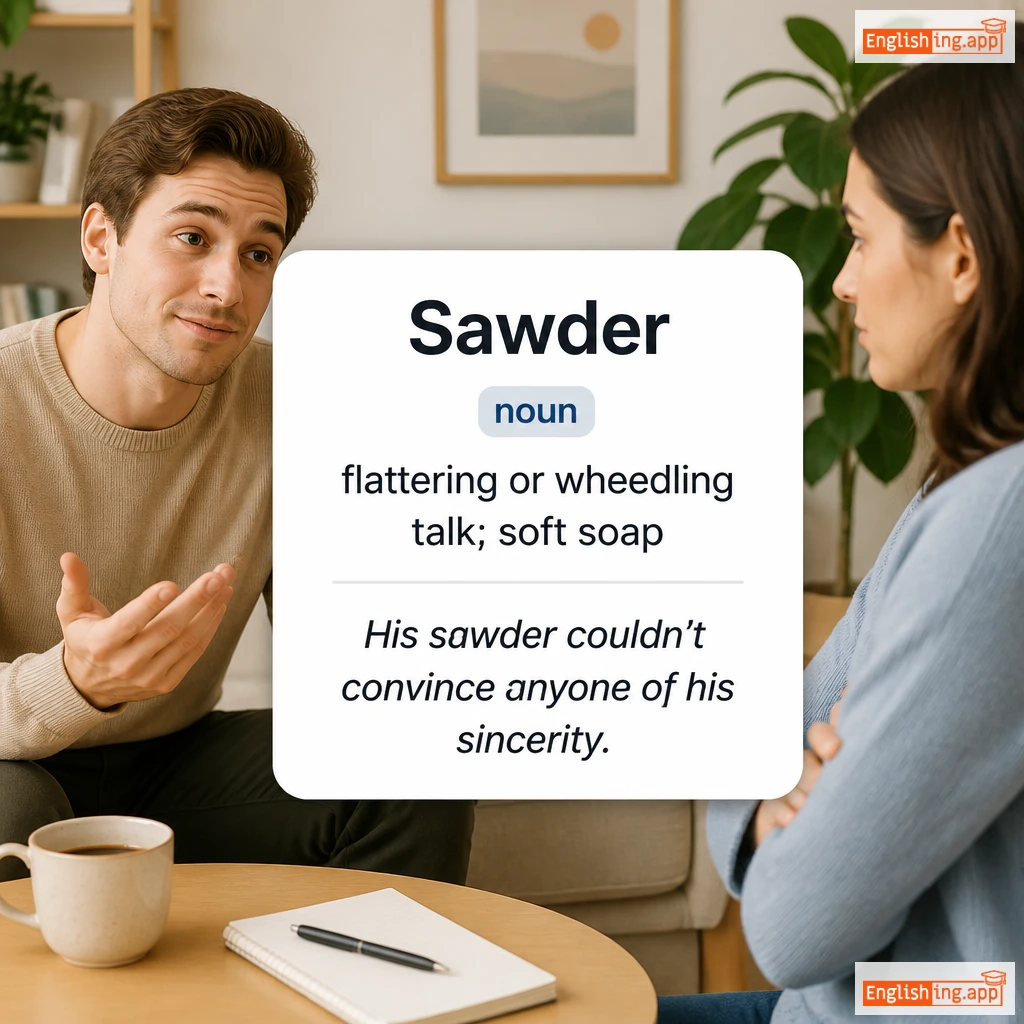
Sawder definition card — visual illustration of the meaning
noun C2
/ˈsɔː.dər/
奉承; 奉承的话 (fèngchéng; fèngchéng de huà)

flattering or wheedling talk; soft soap

"His sawder couldn't convince anyone of his sincerity."

"他的奉承无法说服任何人相信他的真诚。" (Tā de fèngchéng wúfǎ shuōfú rènhé rén xiāngxìn tā de zhēnchéng.)
noun C2
/ˈskæb.ərd/
剑鞘 (jianqiao)

A sheath for the blade of a sword or dagger, typically made of leather or metal.

"The knight drew his sword from the scabbard."

"骑士从剑鞘中拔出了剑。" (Qíshì cóng jiànqiào zhōng bá chūle jiàn.)
noun C2
/skæd/
斯卡德鱼 (Sikade yu)

A type of fish of the jack family; also informally means a large number or quantity.

"The fisherman caught a scad in the net."

"渔夫在网中抓住了一条斯卡德。" (Yufu zai wang zhong zhuazhu le yitiao sikade.)
noun (plural, informal) C2
/skædz/
一大堆 (yi da dui)

A large number or quantity of something (informal).

"She has scads of friends in the city."

"她在城市里有一大堆朋友。" (Tā zài chéngshì lǐ yǒu yī dà duī péngyǒu.)
verb C2
/ˈskærɪfaɪ/
松土 (songtu)

to make shallow cuts or scratches; to loosen the surface of soil

"The farmer scarified the soil before planting seeds."

"农民在种植种子之前松土。" (Nóngmín zài zhòngzhí zhǒngzi zhīqián sōngtǔ.)
noun C2
/ˈʃɑːdənfrɔɪdə/
从他人的不幸中获得的快乐 (cóng tārén de bùxìng zhōng huòdé de kuàilè)

pleasure derived from another person's misfortune

"He felt a sense of schadenfreude when his rival failed."

"当他的对手失败时,他感到一阵沙登弗洛伊德。" (Dāng tā de duìshǒu shībài shí, tā gǎndào yī zhèn shādēng fúluòyīdé.)
noun C2
/ˈskɪz.əm/ or /ˈsɪz.əm/
幸福 (xìngfú)

A division or split between strongly opposed parties, often in religion or organizations.

"The schism in the church led to the formation of two separate groups."

"她在收到奖项时无法掩饰她的幸福。" (Tā zài shōudào jiǎngxiàng shí wúfǎ yǎnshì tā de xìngfú.)
science-desert definition card — visual illustration of the meaning
noun C2
ˈsaɪəns ˈdezət
科学荒漠 (kexue huangmo)

A region or area lacking in scientific development, research facilities, or educational institutions.

"J.C. Bose thrived in a science-desert."

"J.C. Bose 在科学荒漠中茁壮成长。" (J.C. Bose zai kexue huangmo zhong zhuo zhuang chengzhang.)
noun C2
/sɪnˈtɪl.ə/
小小的火花 (xiao xiao de huo hua)

A tiny trace or spark of a specified quality or feeling.

"There wasn’t a scintilla of doubt in her mind."

"她的脑海中没有一丝疑虑。" (Ta de nao hai zhong mei you yi si yi lv.)
verb C2
/ˈsɪn.tɪ.leɪt/
闪烁 (shǎn shuò)

to sparkle or shine brightly; to emit flashes of light

"The diamond ring scintillated under the bright lights."

"钻石戒指在明亮的灯光下闪耀。" (Zuànshí jièzhǐ zài míngliàng de dēngguāng xià shǎnyào.)
noun C2
/ˈsaɪ.ə.lɪz.əm/
表面知识的假装 (biaomian zhishi de jiazhuang)

pretentious show of superficial knowledge

"His speech was full of sciolism, impressing no one."

"他的演讲充满了赛奥利主义,没有打动任何人。" (Tā de yǎnjiǎng chōngmǎnle sài'àolì zhǔyì, méiyǒu dǎdòng rènhé rén.)
noun C2
/ˈsɪʒ.ən/
分裂 (fenlie)

the act of cutting or dividing something

"The political party suffered a scission over ideological disputes."

"政党因意识形态争议而经历了分裂。" (Zhèngdǎng yīn yìshí xíngtài zhēngyì ér jīnglìle fēnliè.)
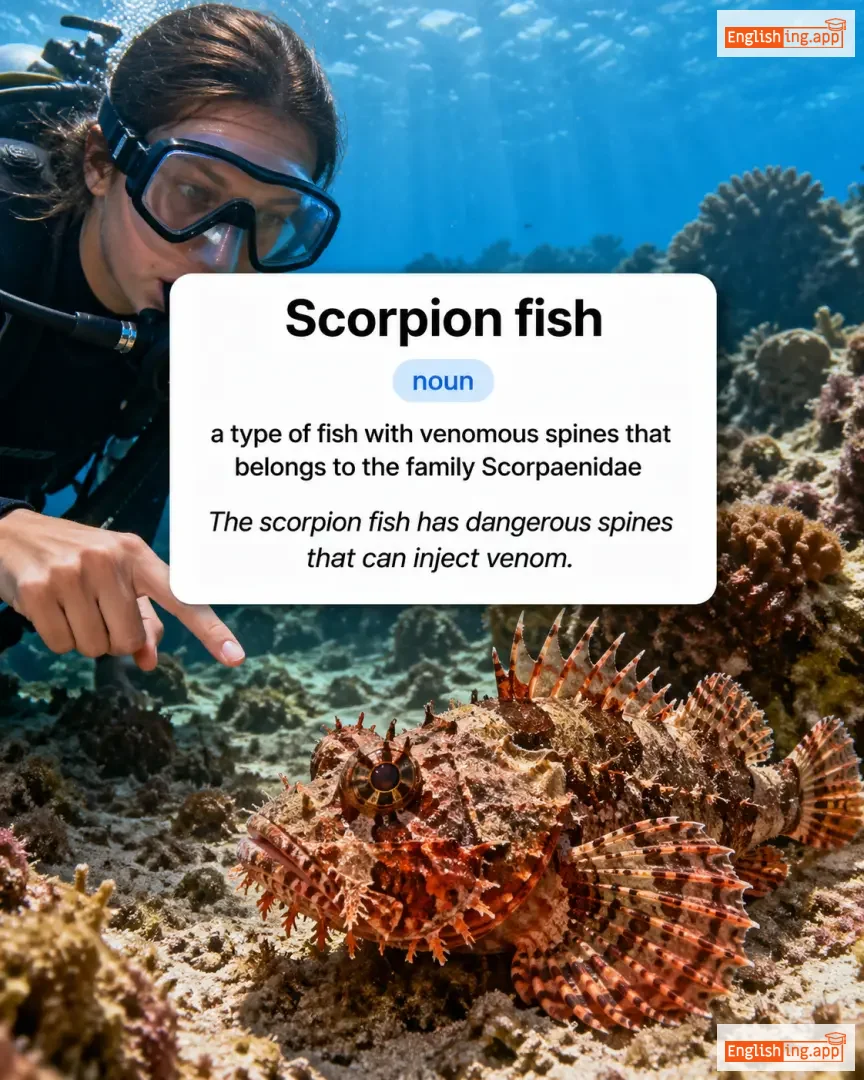
Scorpion fish definition card — visual illustration of the meaning
noun C2
/ˈskɔːrpiən fɪʃ/
蝎子鱼 (xie zi yu)

a type of fish with venomous spines that belongs to the family Scorpaenidae

"The scorpion fish has dangerous spines that can inject venom."

"蝎子鱼有危险的刺,可以注入毒液。" (xie zi yu you wei xian de ci ke yi zhu ru du ye)
noun C2
/skriːd/
冗长而乏味的文章 (rǒngcháng ér fáwèi de wénzhāng)

a long, tedious piece of writing or speech; also a layer of material like cement spread on a surface

"He delivered a long screed against corruption."

"他发表了长篇的关于腐败的演讲。" (Tā fābiǎo le chángpiān de guānyú fǔbài de yǎnjiǎng.)
noun C2
/ˈskʌl.i.ən/
厨房仆人 (chúfáng púrén)

a servant assigned the most menial kitchen tasks

"In medieval times, a scullion was responsible for cleaning pots and pans."

"在中世纪,厨房仆人负责清洁锅碗和煎锅。" (zài zhōngshìjì, chúfáng púrén fùzé qīngjié guō wǎn hé jiānguō.)
adjective C2
/ˈskʌr.ɪ.ləs/
恶意中伤的 (èyì zhōngshāng de)

Using or expressed in coarse, abusive, or slanderous language.

"The politician faced criticism for his scurrilous remarks about his opponent."

"那位政治家因其对对手的恶意中伤言论而面临批评。" (Nà wèi zhèngzhìjiā yīn qí duì duìshǒu de èyì zhōngshāng yánlùn ér miànlín pīpíng.)