Vocabularies

English Vocabulary Dictionary | Word Meanings, Definitions & Examples

⬇️

nadir

noun C2
/ˈneɪdɪər/

The lowest point of a situation or condition.

"The company reached its nadir during the financial crisis."

noun C2
/ˈnæfθə/
石油醚 (shíyóu mǐ)

A flammable oil containing hydrocarbons, obtained from petroleum or coal tar, used as fuel or solvent.

"The factory stored barrels of naphtha for industrial use."

"工厂储存了工业用途的纳夫塔桶。" (gōngchǎng chǔcúnle gōngyè yòngtú de nàfūtǎ tǒng.)
noun C2
/nɑːrˈsɪsəs/
水仙花 (shuǐxiān huā)

A type of flowering plant with yellow or white blooms, often associated with self-love from Greek mythology.

"A narcissus bloomed in the garden during spring."

"春天时,一朵水仙花在花园里盛开。" (Chūntiān shí, yī duǒ shuǐxiān huā zài huāyuán lǐ shèngkāi.)
adjective C2
/ˈneɪtl/
与出生有关的 (yu chusheng youguan de)

Relating to birth or the place of birth.

"She returned to her natal village after many years."

"她在许多年后返回了她的出生村庄。" (Ta zai xu duo nian hou fanhui le ta de chusheng cunzhuang.)
noun C2
/næˈteɪʃən/
游泳 (you yong)

The act or sport of swimming.

"She took lessons in natation to improve her swimming skills."

"她参加了游泳课程,以提高她的游泳技巧。" (Ta canjia le youyong kecheng, yi tigao ta de youyong jiqiao.)
adjective C2
/ˈnæti/
时尚 (shíshàng)

Neat, stylish, and fashionable in appearance.

"He looked very natty in his new suit."

"他在新西装里看起来非常时尚。" (Tā zài xīn xīzhuāng lǐ kàn qǐlái fēicháng shíshàng.)
verb C2
/ˈnɔːzieɪt/
引起恶心 (yǐnqǐ èxīn)

To make someone feel sick, with an inclination to vomit.

"The spoiled food nauseated him quickly."

"坏掉的食物很快让他感到恶心。" (Huài diào de shíwù hěn kuài ràng tā gǎndào èxīn.)
noun C2
/neɪv/
教堂的中央部分 (jiàotáng de zhōngyāng bùfen)

the central part of a church building intended to accommodate the congregation

"The choir sang beautifully in the church nave."

"合唱团在教堂的内夫里唱得非常动听。" (Héchàngtuán zài jiàotáng de nèifū lǐ chàng dé fēicháng dòngtīng.)
noun C2
/ˈneɪˌseɪ.ɪŋ/
负面言论 (fùmiàn yánlùn)

The act of expressing negative or pessimistic views.

"His constant naysaying discouraged the team."

"他不断的负面言论使团队失去了动力。" (Tā bùduàn de fùmiàn yánlùn shǐ tuánduì shīqùle dònglì.)
noun C2
/ˌɛn.biː.esˈpiː/
不间断空格 (bu jian duan kong ge)

a non-breaking space character in HTML used to prevent an automatic line break at its position

"Use   in HTML to add a space that won't break into a new line."

"在HTML中使用 添加一个不会换行的空格。" (zai HTML zhong shiyong  tianjia yige bu hui huanhang de kongge.)
noun C2
/niːp/
低潮 (dīcháo)

A tide just after the first or third quarters of the moon when the difference between high and low tide is least.

"During a neap tide, the water level change is minimal."

"在低潮期间,水位变化最小。" (Zai dīcháo qījiān, shuǐwèi biànhuà zuìxiǎo.)
adjective C2
/ˈnɛbjələs/
朦胧 (ménglóng)

Unclear, vague, or ill-defined; resembling a cloud or haze.

"His plan for the future was still nebulous and hard to understand."

"他对未来的计划仍然是朦胧的,难以理解。" (tā duì wèilái de jìhuà réngrán shì ménglóng de, nán yǐ lǐjiě.)
noun C2
/nɪˈkrɒlədʒi/
讣告 (fugao)

An obituary notice or a list of people who have recently died.

"The newspaper published a necrology of notable figures who passed away that year."

"报纸发布了该年已故知名人物的讣告。" (Baozhi fabulei gai nian yigou zhiming renwu de fugao.)
🧙‍♂️

necromancer

noun C2
/ˈnɛkrəˌmænsər/

a person who practices necromancy; a wizard or magician who claims to communicate with the dead

"The villagers feared the old necromancer who lived at the edge of the forest."

noun C2
/ˈnɛkrəˌmænsi/
死灵法 (sǐlíng fǎ)

the practice of communicating with the dead, often to predict the future

"Ancient texts described rituals of necromancy performed by priests."

"古代的文献描述了由祭司执行的死灵法仪式。" (Gǔdài de wénxiàn miáoshùle yóu jìsī zhíxíng de sǐlíng fǎ yíshì.)
noun C2
/nəˈkrɒpəlɪs/
古代墓地 (gǔdài mùdì)

a large ancient cemetery with elaborate tombs

"The archaeologists discovered artifacts in the necropolis of the ancient city."

"考古学家在古城的内克罗波利斯中发现了文物。" (Kǎogǔxuéjiā zài gǔ chéng de nèikèluōbōlìsī zhōng fāxiànle wénwù.)
noun C2
/nɛˈkroʊsɪs/
坏死 (huàisǐ)

the death of body tissue due to disease, injury, or lack of blood supply

"The doctor explained that the patient’s wound showed signs of necrosis."

"医生解释说,病人的伤口显示出坏死的迹象。" (Yīshēng jiěshì shuō, bìngrén de shāngkǒu xiǎnshì chū huàisǐ de jìxiàng.)
adjective C2
/nɪˈfɛəriəs/
邪恶的,犯罪的,或道德上糟糕的 (xiee de, fanzui de, huo daode shang zaogao de)

Wicked, criminal, or morally bad.

"The police uncovered a nefarious plot to cheat investors."

"警方揭露了一个邪恶的阴谋,试图欺骗投资者。" (Jingfang jielu le yige xiee de yinmou, shitu qipian touzizhe.)
noun C2
/ˌnɛɡlɪˈʒeɪ/
轻薄丝绸睡衣 (qīngbó sīchóu shuìyī)

A woman's light dressing gown, often made of thin or silky material.

"She wore a silk negligee before going to bed."

"她在睡觉前穿上了丝绸睡衣。" (Tā zài shuìjiào qián chuān shàngle sīchóu shuìyī.)
noun C2
/ˌniːoʊˈdɑːrwɪnɪzəm/
新达尔文主义 (xin daerwen zhuyi)

A modern interpretation of Darwin's theory of evolution, integrating genetics and natural selection.

"Neo-Darwinism combines Darwin’s theory of natural selection with modern genetics."

"新达尔文主义将达尔文的自然选择理论与现代遗传学相结合。" (Xin Daerwen zhuyi jiang Daerwen de ziran xuanze lilun yu xiandai yichuanxue xiang jiehe.)
noun C2
/ˌniːoʊˈlætɪn/
新拉丁语 (xin lādīng yǔ)

The use of Latin language for scholarly, scientific, and literary purposes after the medieval period.

"Many scientific names are derived from Neo-Latin."

"许多科学名称来源于新拉丁语。" (Xǔduō kēxué míngchēng láiyuán yú xīn lādīng yǔ.)
noun C2
/niːˈɒkrəsi/
由无经验或新官员领导的政府 (you wu jingyan huo xin guan yuan lingdao de zhengfu)

A government or leadership run by inexperienced or new officials.

"The sudden revolution led to a neocracy with inexperienced leaders."

"突如其来的革命导致了一个新政府,由经验不足的领导人执政。" (Tū rù qí lái de gémìng dǎozhìle yīgè xīn zhèngfǔ, yóu jīngyàn bùzú de lǐngdǎo rén zhízhèng.)
noun C2
/niːˈɒlədʒɪzəm/
新词 (xīn cí)

A newly coined word or expression.

"The internet has given rise to many neologisms like 'selfie' and 'hashtag'."

"互联网催生了许多新词,如“自拍”和“标签”。" (hùliánwǎng cuīshēngle xǔduō xīncí, rú 'zìpāi' hé 'biāoqiān'.)
noun C2
/niˈɒlədʒi/
使用新词或研究其起源 (shǐyòng xīn cí huò yánjiū qí qǐyuán)

The use of new words or the study of their origin.

"The professor specialized in neology, studying the creation of modern slang."

"教授专注于新词学,研究现代俚语的创造。" (Jiàoshòu zhuānzhù yú xīncí xué, yánjiū xiàndài lǐyǔ de chuàngzào.)
noun C2
/ˌniːoʊˈpeɪɡənɪzəm/
新异教主义 (xīn yìjiào zhǔyì)

Modern religious movements influenced by or claiming to be derived from the various historical pagan beliefs of pre-modern Europe.

"Neopaganism has gained popularity as people seek spiritual alternatives to mainstream religions."

"新异教主义已获得越来越多的关注,因为人们正在寻找主流宗教的精神替代品。" (Xīn yìjiào zhǔyì yǐ huòdé yuè lái yuè duō de guānzhù, yīnwèi rénmen zhèngzài xúnzhǎo zhǔliú zōngjiào de jīngshén tìdàipǐn.)
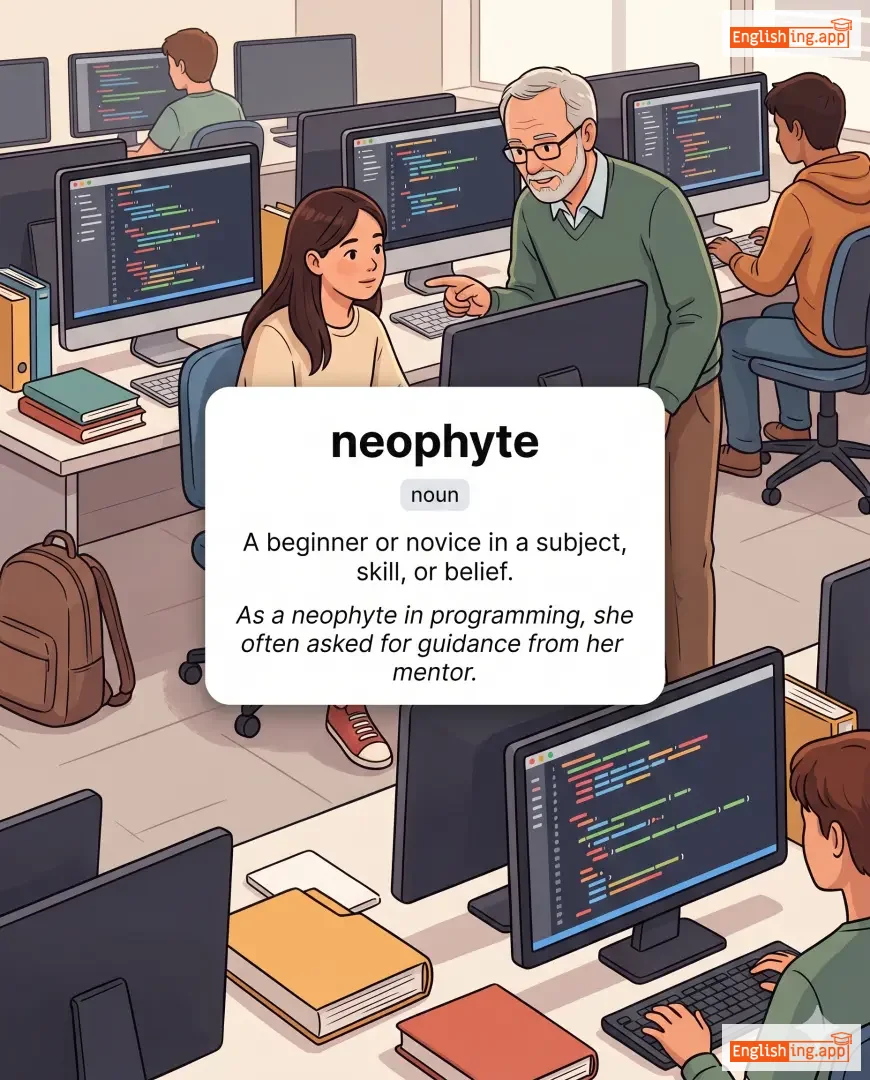
neophyte definition card — visual illustration of the meaning
noun C2
/ˈniːəˌfaɪt/
新手 (xin shou)

A beginner or novice in a subject, skill, or belief.

"As a neophyte in programming, she often asked for guidance from her mentor."

"作为编程的新手,她经常向她的导师请教。" (Zuo wei bian cheng de xin shou, ta jing chang xiang ta de dao shi qing jiao.)
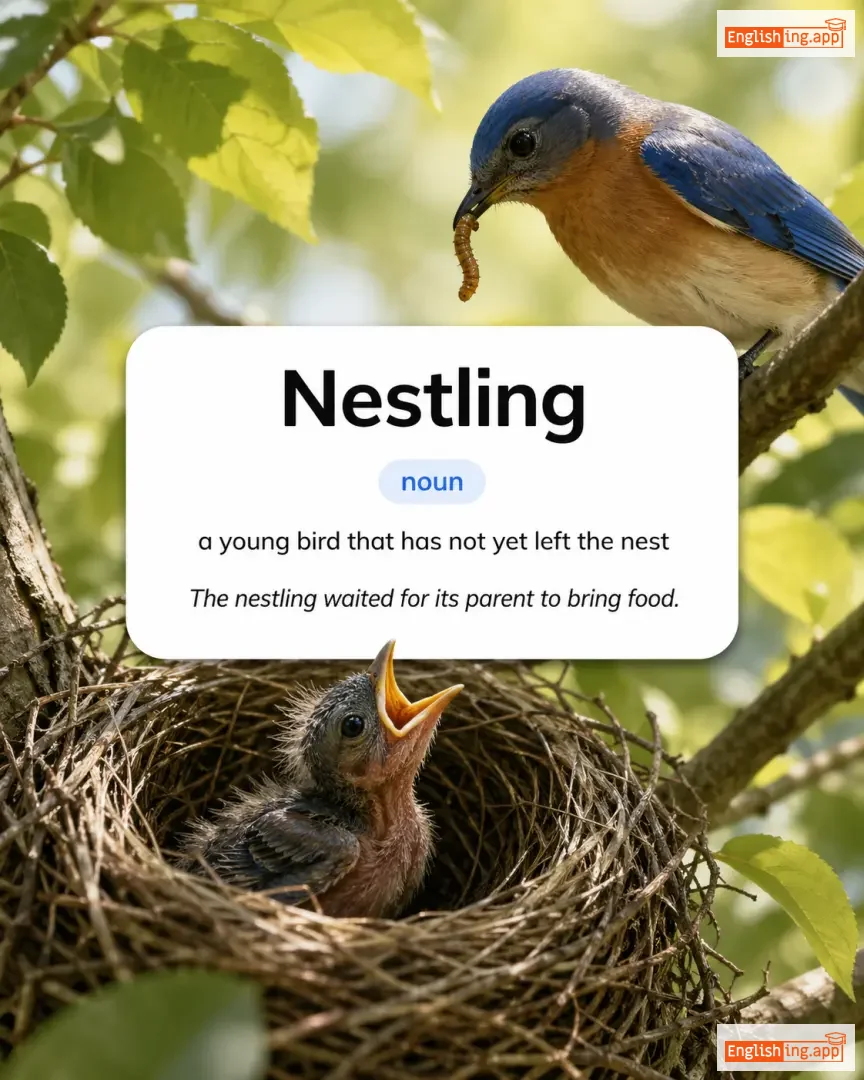
Nestling definition card — visual illustration of the meaning
noun C2
/ˈnɛslɪŋ/
雏鸟 (chuniao)

a young bird that has not yet left the nest

"The nestling waited for its parent to bring food."

"雏鸟等待父母带来食物。" (Chuniao dengdai fumu dali shíwu.)
adjective C2
/ˈnɛðər/
下方的 (xia fang de)

situated down or below; lower

"They explored the nether regions of the cave."

"他们探险了洞穴的下方区域。" (Tamen tanxian le dongxue de xiafang quyu.)
noun C2
/ˈnɛtl̩/
一种触碰时会引起刺激的植物 (yī zhǒng chù pèng shí huì yǐn qǐ cì jī de zhí wù)

a plant with stinging hairs that cause irritation when touched

"He accidentally brushed against the nettle and felt a sharp sting."

"他不小心碰到了荨麻,感到一阵剧烈的刺痛。" (Tā bù xiǎoxīn pèng dào le qiánmá, gǎndào yī zhèn jùliè de cì tòng.)
adjective C2
/ˈnɛtlˌsʌm/
令人烦恼的 (lìng rén fánnǎo de)

Causing irritation, annoyance, or difficulty.

"The nettlesome rules frustrated the workers."

"令人烦恼的规则让工人们感到沮丧。" (Lìng rén fánnǎo de guīzé ràng gōngrén men gǎndào jǔsàng.)
noun C2
/njʊˈrældʒə/
神经痛 (shenjing tong)

intense, often intermittent pain along a nerve pathway

"The patient suffers from neuralgia in her face."

"病人面部患有神经痛。" (Bìngrén miànbù huàn yǒu shénjīng tòng.)
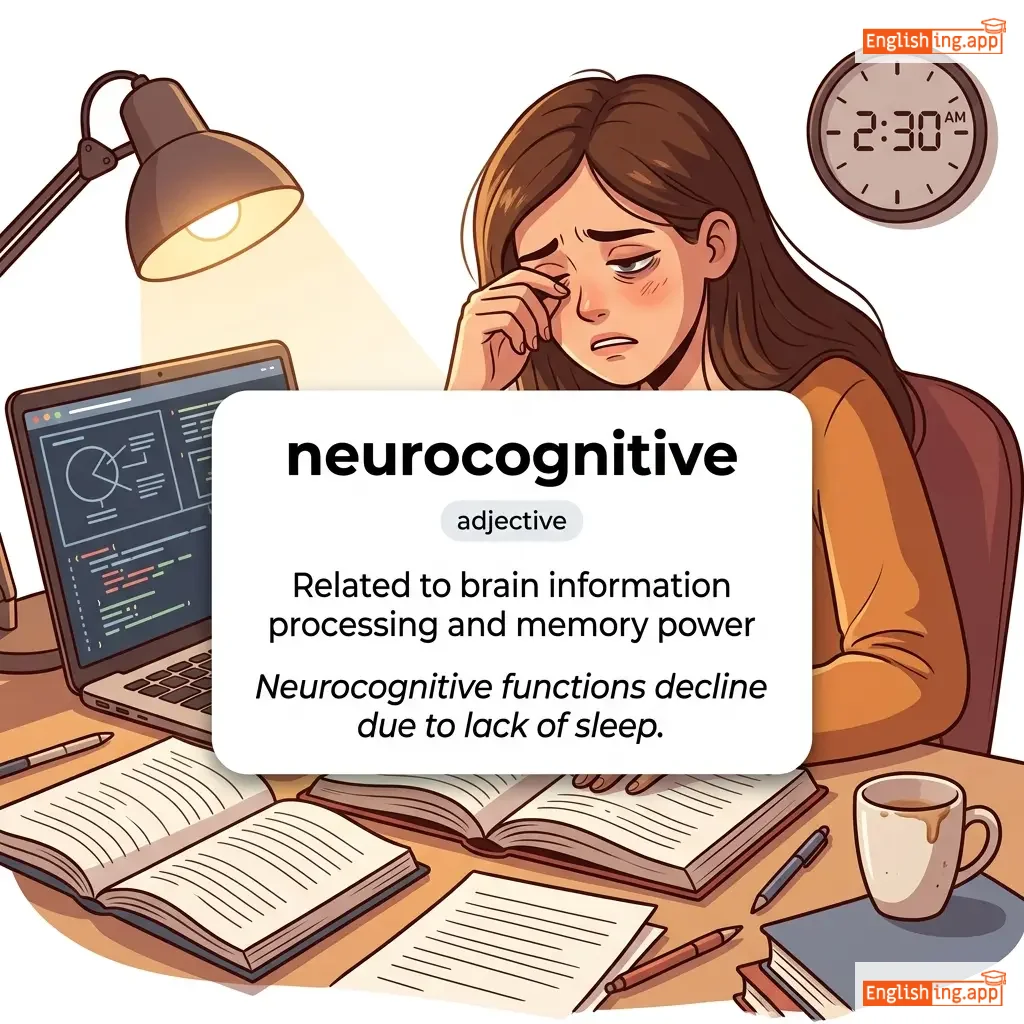
neurocognitive definition card — visual illustration of the meaning
adjective C2
ˌnjʊəroʊˈkɒɡnɪtɪv
神经认知 (shenjing renzhi)

Related to brain information processing and memory power

"Neurocognitive functions decline due to lack of sleep."

"由于缺乏睡眠,神经认知功能下降。" (Yinyu quefa shuimian, shenjing renzhi gongneng xiaciang.)
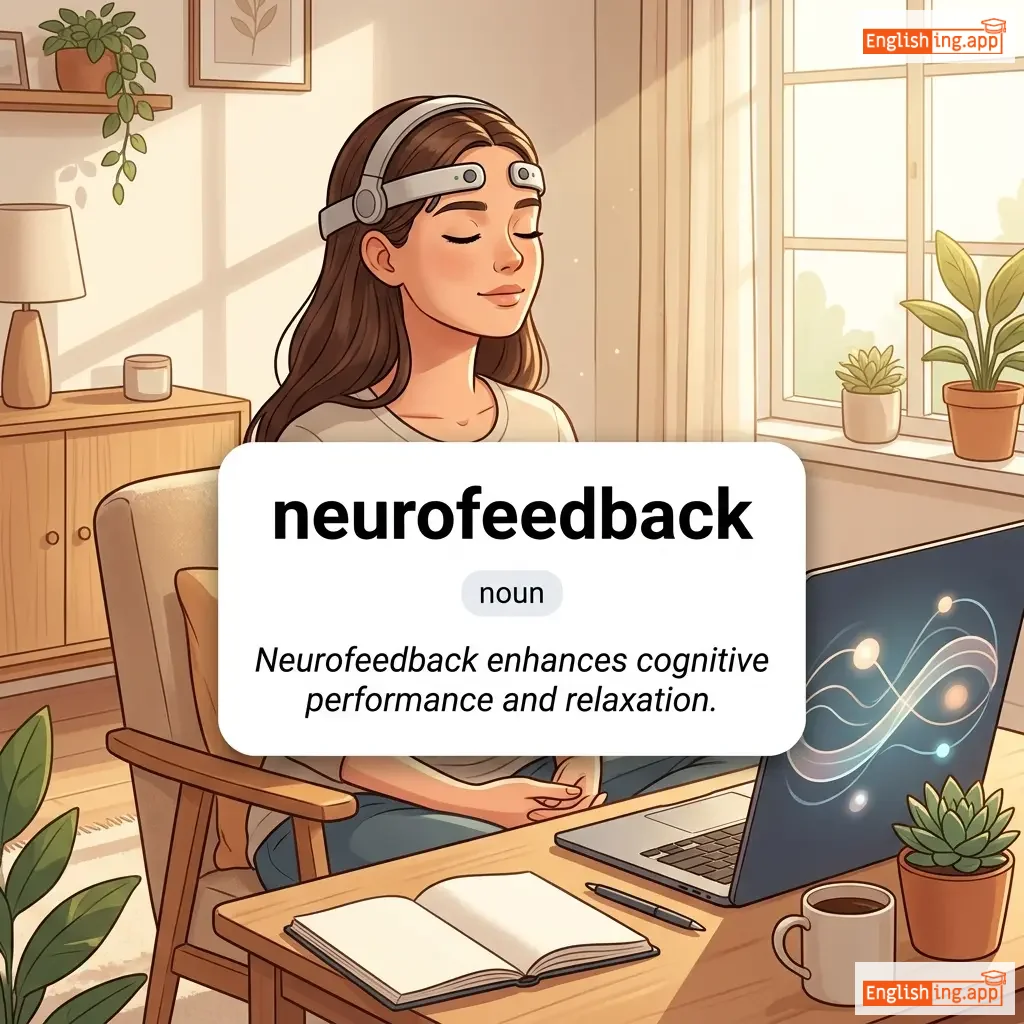
neurofeedback definition card — visual illustration of the meaning
noun C2
ˈnjʊə.rəʊ ˌfiːd.bæk
一种使用实时显示大脑活动来教授大脑功能自我调节的技术 (shenjing fedback)

A technique that uses real-time displays of brain activity to teach self-regulation of brain function.

"Neurofeedback enhances cognitive performance and relaxation."

"神经反馈提高了认知表现和放松。" (Shénjīng fǎnkuì tígāo le rènzhī biǎoxiàn hé fàngsōng.)
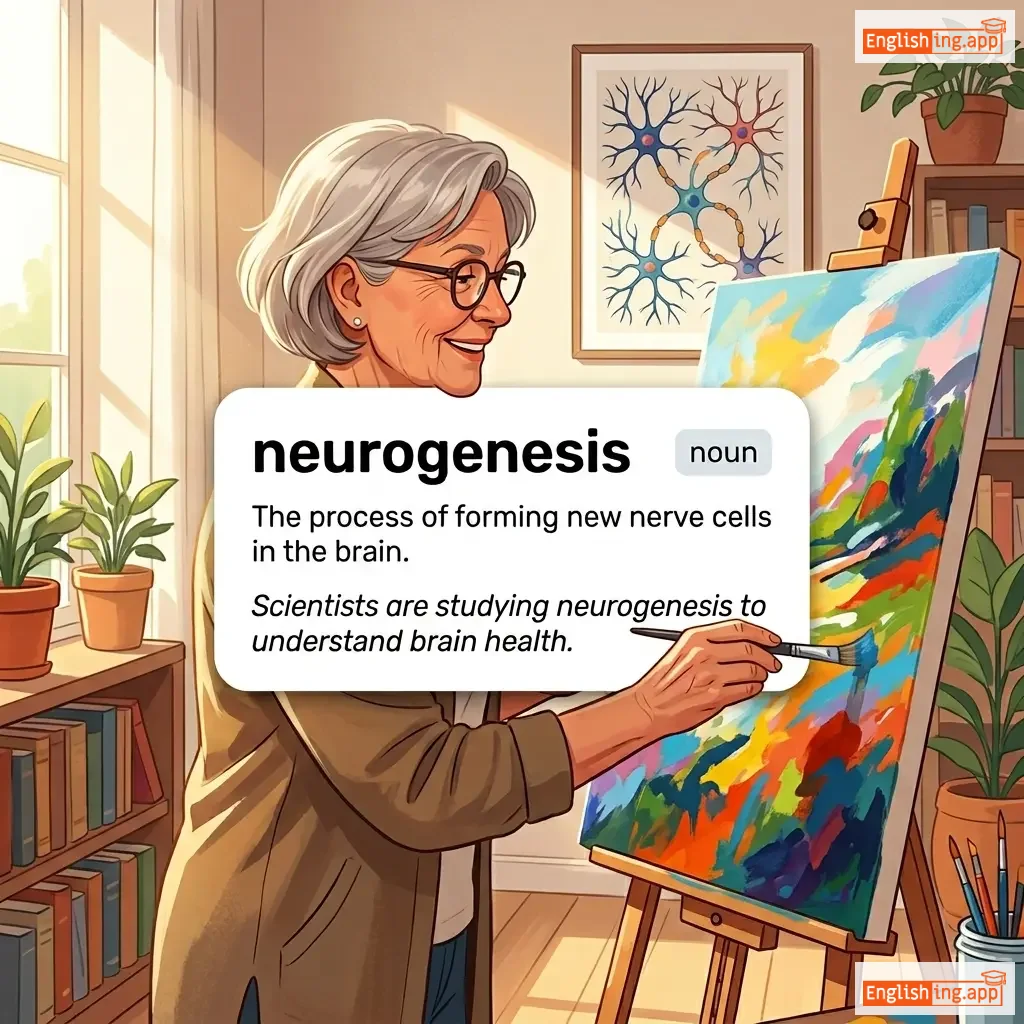
neurogenesis definition card — visual illustration of the meaning
noun C2
/ˌnjʊə.rəʊˈdʒɛn.ɪ.sɪs/
大脑中新神经细胞的形成过程 (dà nǎo zhōng xīn shén jīng xì bāo de xíng chéng guò chéng)

The process of forming new nerve cells in the brain.

"Scientists are studying neurogenesis to understand brain health."

"科学家们正在研究神经发生,以了解大脑健康。" (Kē xué jiā men zhèng zài yán jiū shén jīng fā shēng, yǐ liǎo jiě dà nǎo jiàn kāng.)
neuroprotective definition card — visual illustration of the meaning
adjective C2
ˌnjʊə.rəʊ.prəˈtek.tɪv
神经保护 (shenjing baohu)

Having the ability to protect nerve cells from damage, degeneration, or impaired function.

"Omega-3 fatty acids have neuroprotective benefits."

"欧米伽-3脂肪酸具有神经保护作用。" (Oumeijia-3 zhifang suan juyou shenjing baohu zuoyong.)
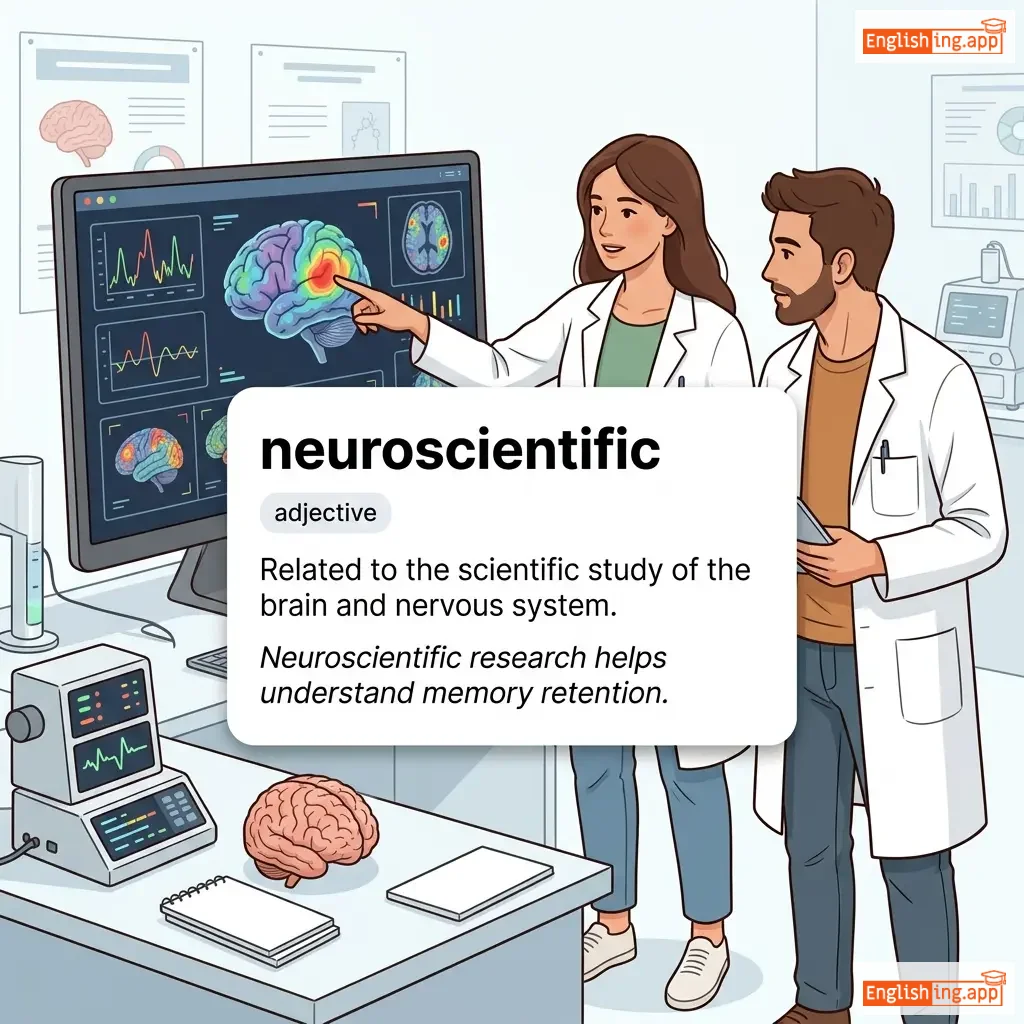
neuroscientific definition card — visual illustration of the meaning
adjective C2
ˌnjʊə.rəʊ.saɪənˈtɪ.fɪk
神经科学的 (shenjing kexue de)

Related to the scientific study of the brain and nervous system.

"Neuroscientific research helps understand memory retention."

"神经科学研究有助于理解记忆保持。" (Shenjing kexue yanjiu you zhu yu lijie jiyi baochi.)
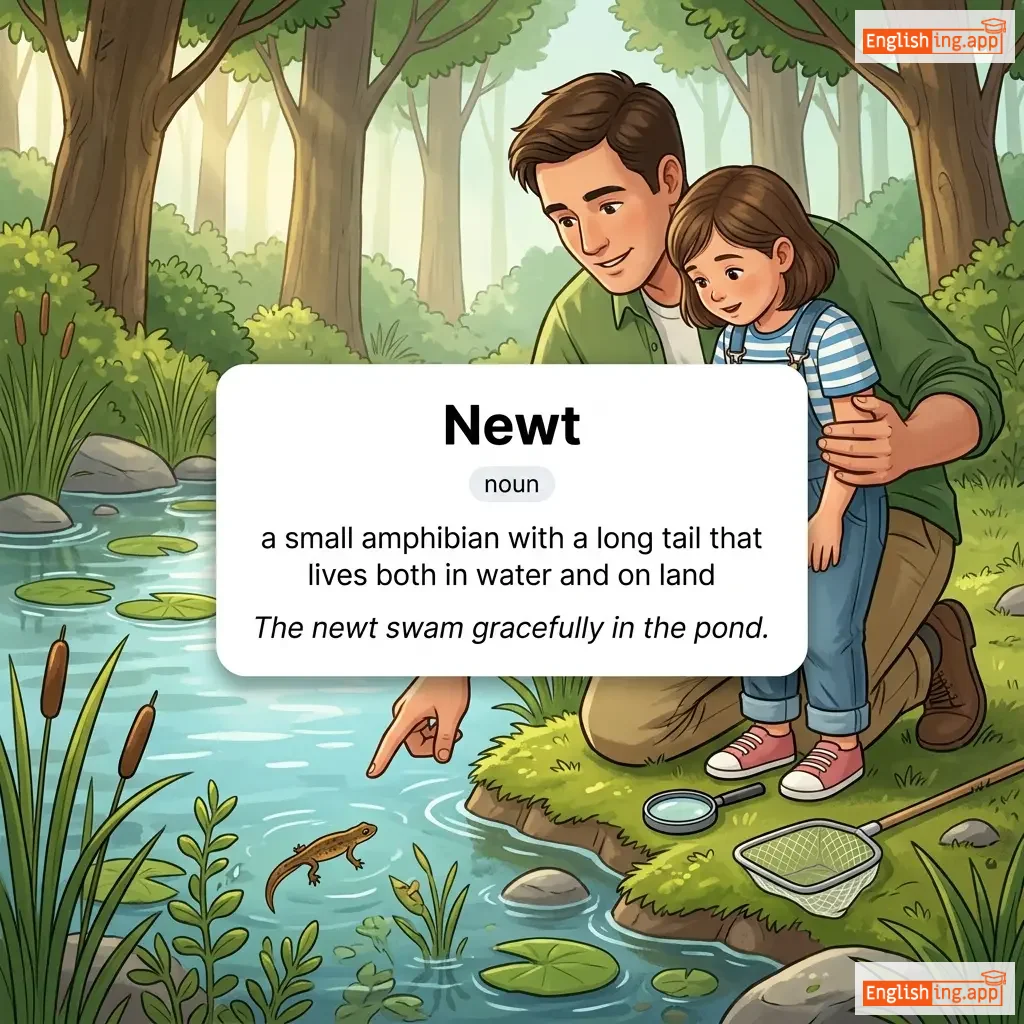
Newt definition card — visual illustration of the meaning
noun C2
/nuːt/
蝾螈 (róngyuán)

a small amphibian with a long tail that lives both in water and on land

"The newt swam gracefully in the pond."

"蝾螈优雅地在池塘里游泳。" (róngyuán yōu yǎ dì zài chítáng lǐ yóu yǒng)
adjective C2
/njuːˈtoʊniən/
与牛顿定律相关 (yu niudun dinglü xiangguan)

relating to the laws of motion and gravitation formulated by Sir Isaac Newton

"The scientist explained the Newtonian laws of motion."

"科学家解释了牛顿的运动定律。" (Kexuejia jieshi le Niudun de yundong dinglü.)
noun C2
/nɪb/
钢笔尖 (gangbi jian)

the pointed end of a pen used for writing or drawing

"He dipped the nib into the ink before writing."

"他在写字之前把钢笔尖浸入墨水中。" (Tā zài xiězì zhīqián bǎ gāngbǐ jiān rù mòshuǐ zhōng.)
noun C2
/ˈnaɪsəti/
细微之处 (xiwei zhichu)

a fine or subtle detail, or a refined, delicate aspect of something

"The lawyer explained the legal niceties of the case."

"律师解释了案件的法律细节。" (Lüshi jiexile anjian de falu xijie.)
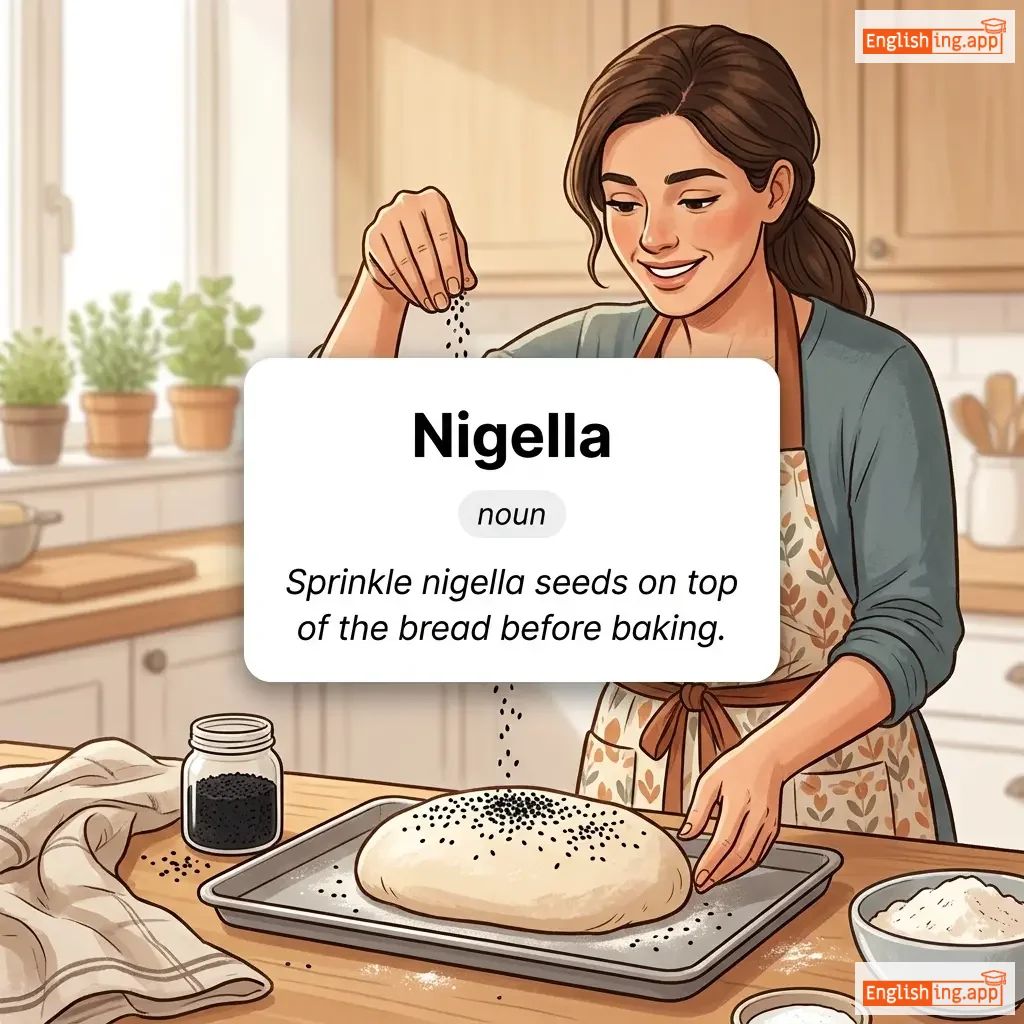
Nigella definition card — visual illustration of the meaning
noun C2
/naɪˈdʒel.ə/
黑孜然 (hei ziran)

small black seeds with a nutty, slightly bitter flavor, also known as black cumin or black seed

"Sprinkle nigella seeds on top of the bread before baking."

"在面包上撒上黑孜然种子,然后烤制。" (Zai mianbao shang sa shang hei ziran zhongzi, ranhou kao zhi.)
adjective C2
/ˈnɪɡərdli/
小气 (xiaoqi)

unwilling to spend or give; stingy or miserly

"He was too niggardly to leave a decent tip."

"他太小气,舍不得给个体面的小费。" (Ta tai xiaoqi, shebude gei ge tianmian de xiaofei.)
verb C2
/ˈnɪɡəl/

to cause slight but persistent annoyance, discomfort, or worry

"A small doubt niggled at her mind."

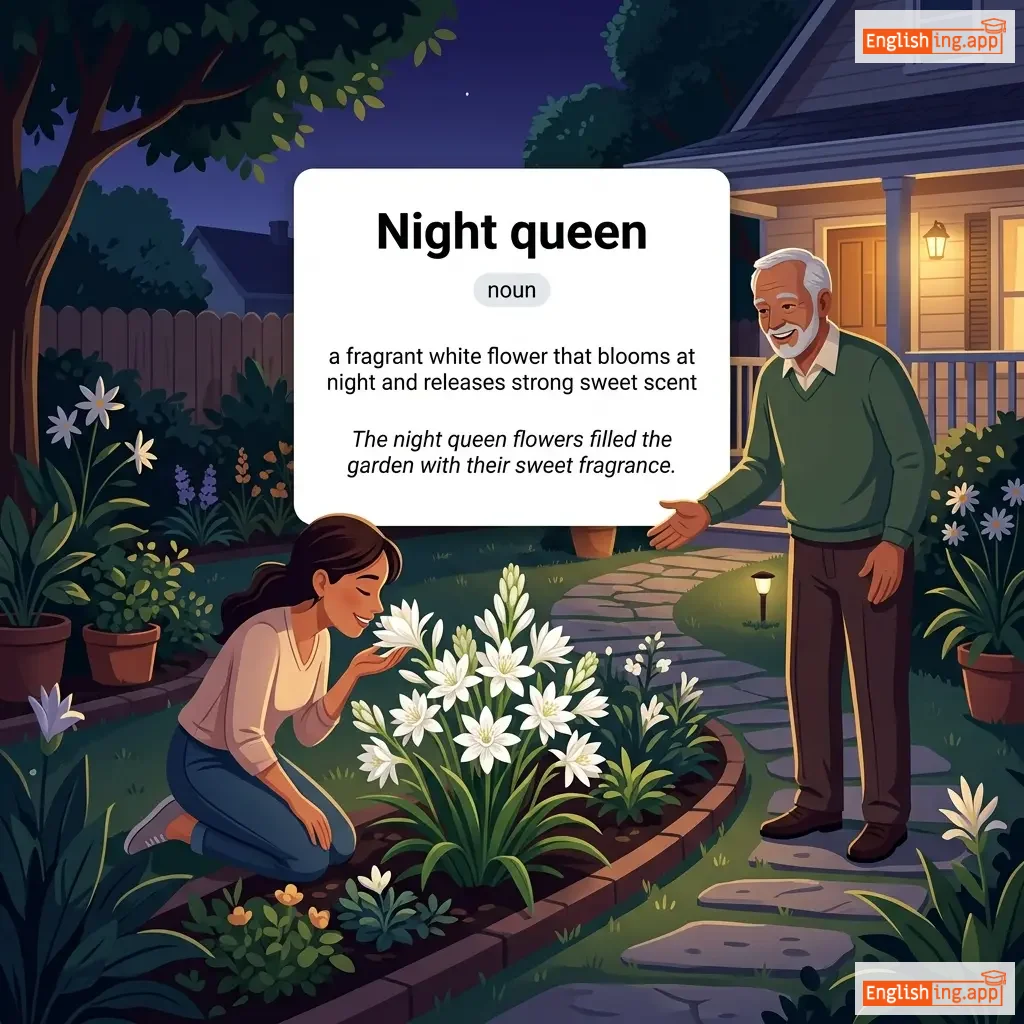
Night queen definition card — visual illustration of the meaning
noun C2
/naɪt kwiːn/
夜来香 (yelai xiang)

a fragrant white flower that blooms at night and releases strong sweet scent

"The night queen flowers filled the garden with their sweet fragrance."

"夜来香花让花园充满了甜美的香气。" (yelai xiang hua rang huayuan chongman le tianmei de xiangqi)
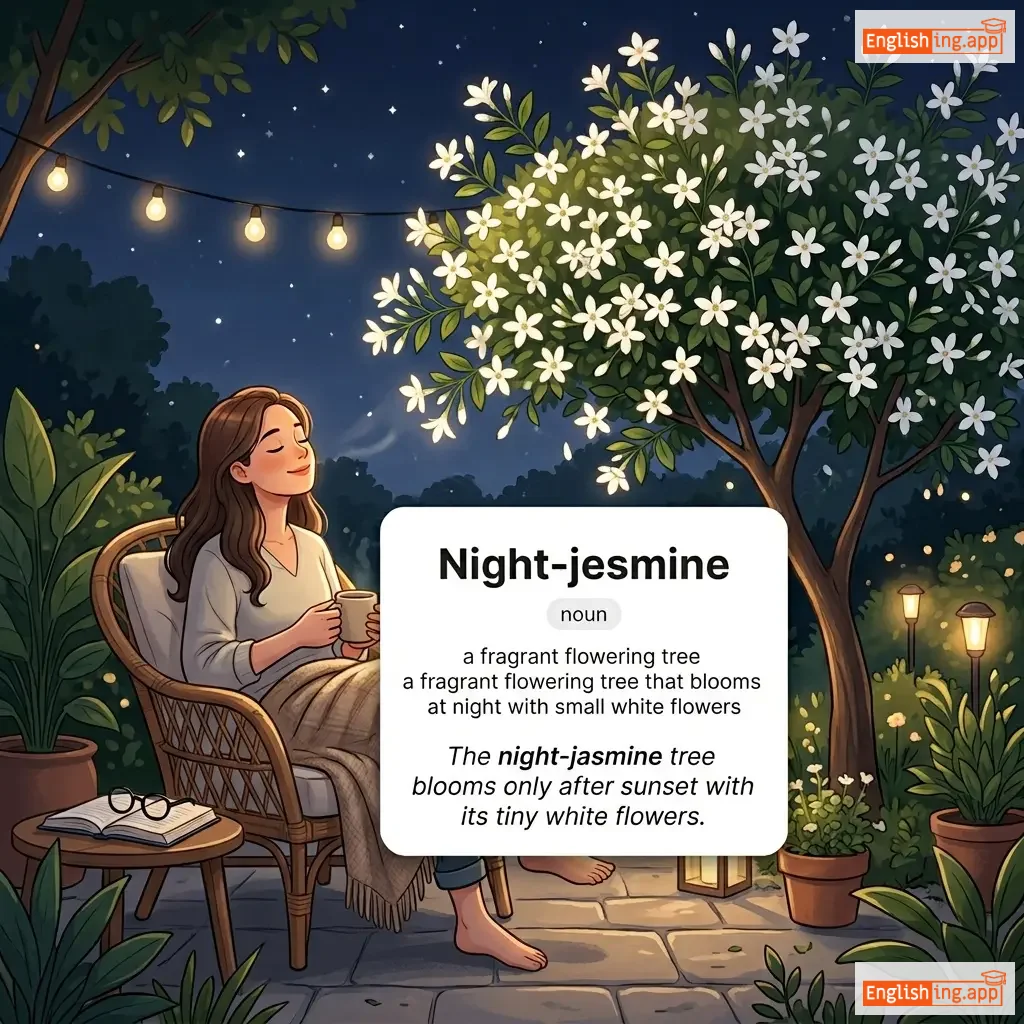
Night-jesmine definition card — visual illustration of the meaning
noun C2
/naɪt ˈdʒæz.mɪn/
夜茉莉 (ye moli)

a fragrant flowering tree that blooms at night with small white flowers

"The night-jasmine tree blooms only after sunset with its tiny white flowers."

"夜茉莉树只在日落后开出它的小白花。" (ye moli shu zhi zai riluo hou kai chu ta de xiao bai hua.)
noun C2
/ˈnaɪɪˌlɪzəm/
虚无主义 (xūwú zhǔyì)

The rejection of all religious and moral principles, often in the belief that life is meaningless.

"The philosopher was criticized for promoting nihilism."

"哲学家因提倡虚无主义而受到批评。" (Zhéxué jiā yīn tíchàng xūwú zhǔyì ér shòudào pīpíng.)
noun C2
/ˈnaɪəlɪst/
虚无主义者 (xū wú zhǔ yì zhě)

A person who rejects all religious and moral principles, often believing that life is meaningless.

"He was called a nihilist for rejecting all social norms."

"因为拒绝所有社会规范,他被称为虚无主义者。" (Yīnwèi jùjué suǒyǒu shèhuì guīfàn, tā bèi chēng wèi xūwú zhǔyì zhě.)
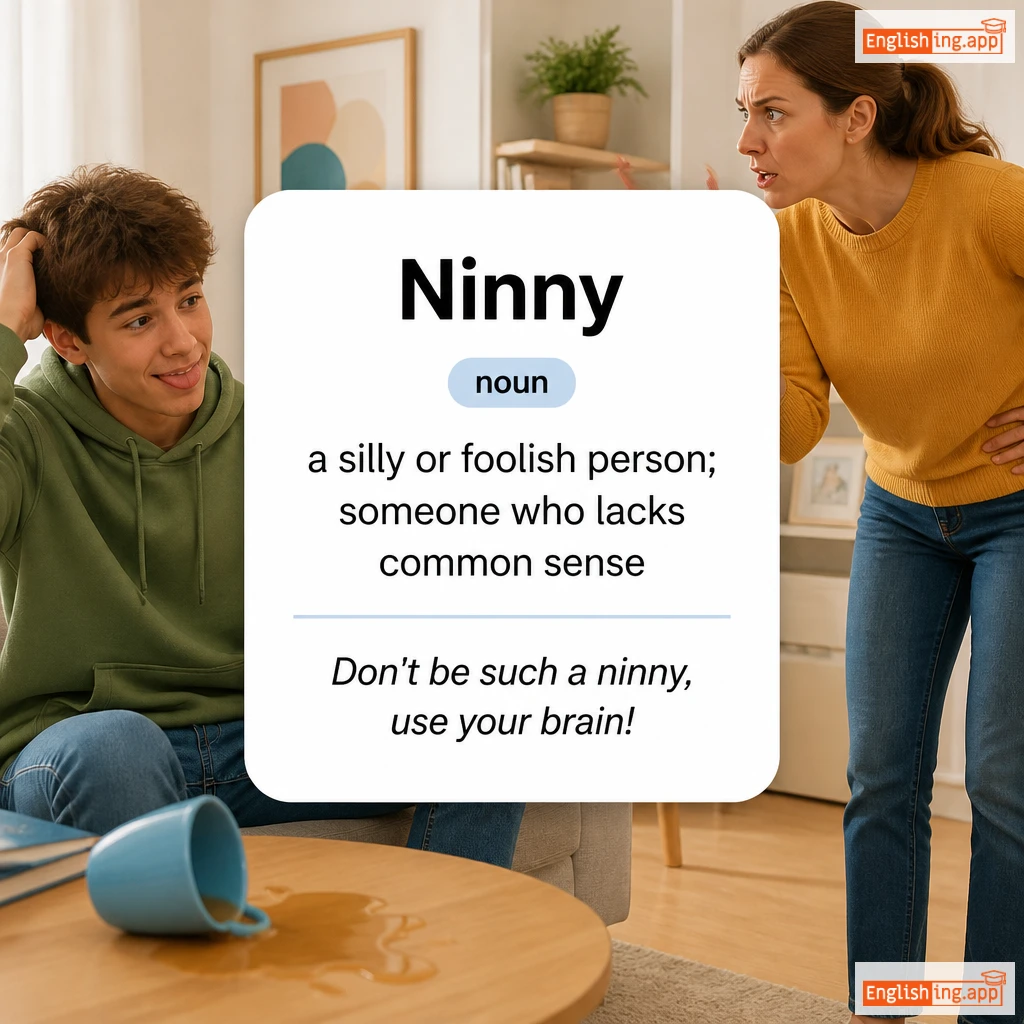
Ninny definition card — visual illustration of the meaning
noun C2
/ˈnɪn.i/
傻瓜 (shagua)

a silly or foolish person; someone who lacks common sense

"Don't be such a ninny, use your brain!"

"不要做傻瓜,动动脑子!" (bùyào zuò shǎguā, dòng dòng nǎozi!)
noun C2
/nɪt/
虱子卵 (shī zi luǎn)

The egg or young form of a louse or other parasitic insect.

"The teacher noticed nits in the child’s hair."

"老师发现了孩子头发里的虱子卵。" (Lǎoshī fāxiànle háizi tóufǎ lǐ de shīzi luǎn.)
verb C2
/ˈnɪtˌpɪk/

To find and criticize small or unimportant faults in someone or something.

"She tends to nitpick about every little detail."