Vocabularies

English Vocabulary Dictionary | Word Meanings, Definitions & Examples

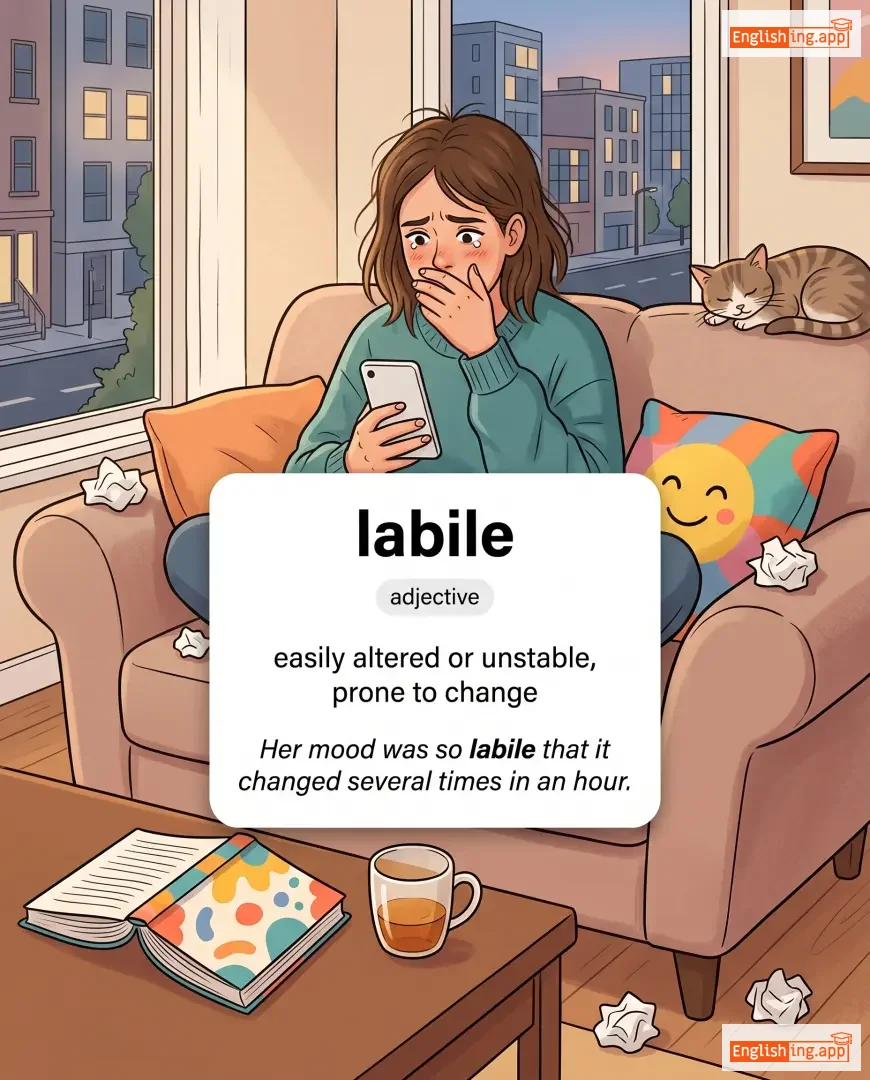
labile definition card — visual illustration of the meaning
adjective C2
/ˈleɪ.baɪl/ or /ˈlæb.aɪl/
不安定な (fuanteina)

easily altered or unstable; prone to change

"Her mood was so labile that it changed several times in an hour."

"彼女の気分は非常に不安定で、1時間で何度も変わりました。" (Kanojo no kibun wa hijō ni fuantei de, 1-jikan de nando mo kawarimashita.)
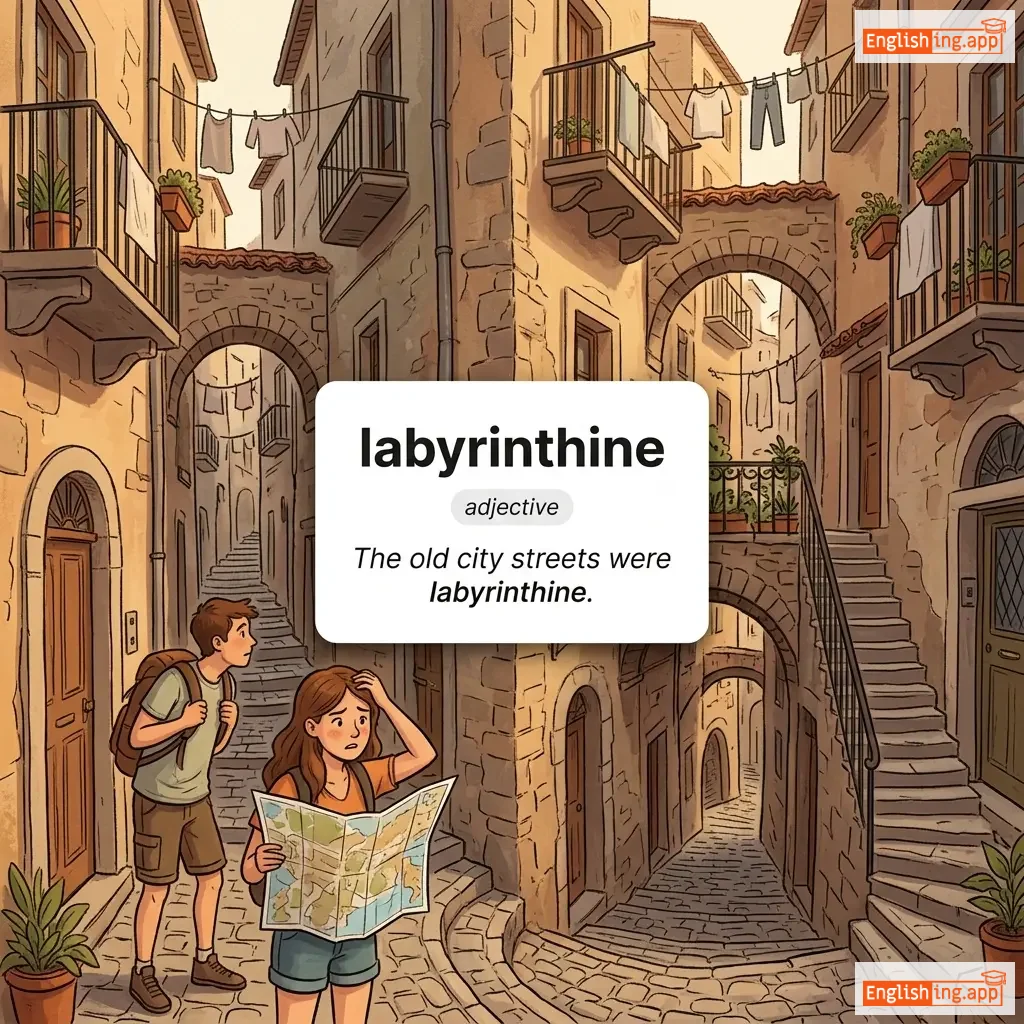
labyrinthine definition card — visual illustration of the meaning
adjective C2
ˌlæb.əˈrɪn.θaɪn
迷路のような (meiro no yō na)

Like a labyrinth; complicated and confusing; having many interconnected paths or passages.

"The old city streets were labyrinthine."

"古い街の通りは迷路のようだった。" (Furui machi no tōri wa meiro no yō datta.)
verb C2
/ˈlæs.ə.reɪt/
裂ける、引き裂く (sakeru, hikisaku)

to tear or cut deeply in the skin or flesh

"The broken glass lacerated his hand."

"壊れたガラスが彼の手を切った。" (Kowareta garasu ga kare no te o kitta.)
noun C2
/ˌlæs.əˈreɪ.ʃən/
深い切り傷 (fukai kirikizu)

a deep cut or tear in skin or flesh

"He needed stitches for a laceration on his leg."

"彼は足の深い切り傷に縫い合わせが必要でした。" (Kare wa ashi no fukai kirikizu ni nui awase ga hitsuyou deshita.)
adjective C2
/ˈlæk.rɪ.moʊs/
涙を流す、悲しむ (namida o nagasu, kanashimu)

tearful or given to weeping; sad and mournful

"The movie's lachrymose ending left the audience in tears."

"映画の悲しい結末は観客を涙で満たしました。" (Eiga no kanashī ketsumatsu wa kankyaku o namida de mitashimashita.)
adjective C2
/ˌlækəˈdeɪzɪkəl/
怠惰または無関心 (taida mata wa mukanshin)

lacking enthusiasm, energy, or determination; careless or lazy

"His lackadaisical attitude toward work annoyed his boss."

"彼の怠惰な態度は、仕事に対する上司の不満を引き起こした。" (Kare no taida na taido wa, shigoto ni taisuru jōshi no fuman o hikiokoshita.)
noun C2
/ˈlæki/
従者 (jūsha)

a person who is overly willing to serve or obey someone else

"He treated his assistant like a mere lackey."

"彼は助手を単なる従者として扱った。" (Kare wa joshu o tannaru jūsha toshite atsukatta.)
laconic definition card — visual illustration of the meaning
adjective C2
/ləˈkɒnɪk/
簡潔な (kanketsu na)

using very few words; concise to the point of seeming rude or mysterious

"His laconic reply ended the conversation quickly."

"彼の簡潔な返答は会話を迅速に終わらせた。" (Kare no kanketsu na hentō wa kaiwa o jinsoku ni owaraseta.)
noun C2
/lækˈteɪʃən/
授乳 (junyu)

the secretion of milk by the mammary glands of female mammals

"The doctor explained that lactation is a natural process after childbirth."

"医者は、出産後の授乳が自然なプロセスであると説明しました。" (Isha wa, shussango no junyu ga shizen na purosesu de aru to setsumei shimashita.)
adjective C2
/ˈlæk.ti.əl/
ミルクに関連するまたはミルクのような (miruku ni kanren suru matawa miruku no yōna)

Relating to or resembling milk; conveying chyle or milky fluid.

"The lacteal vessels in the small intestine absorb dietary fats."

"小腸の乳腺血管が食事の脂肪を吸収します。" (Shōchō no nyūsen kekkan ga shokuji no shibō o kyūshū shimasu.)
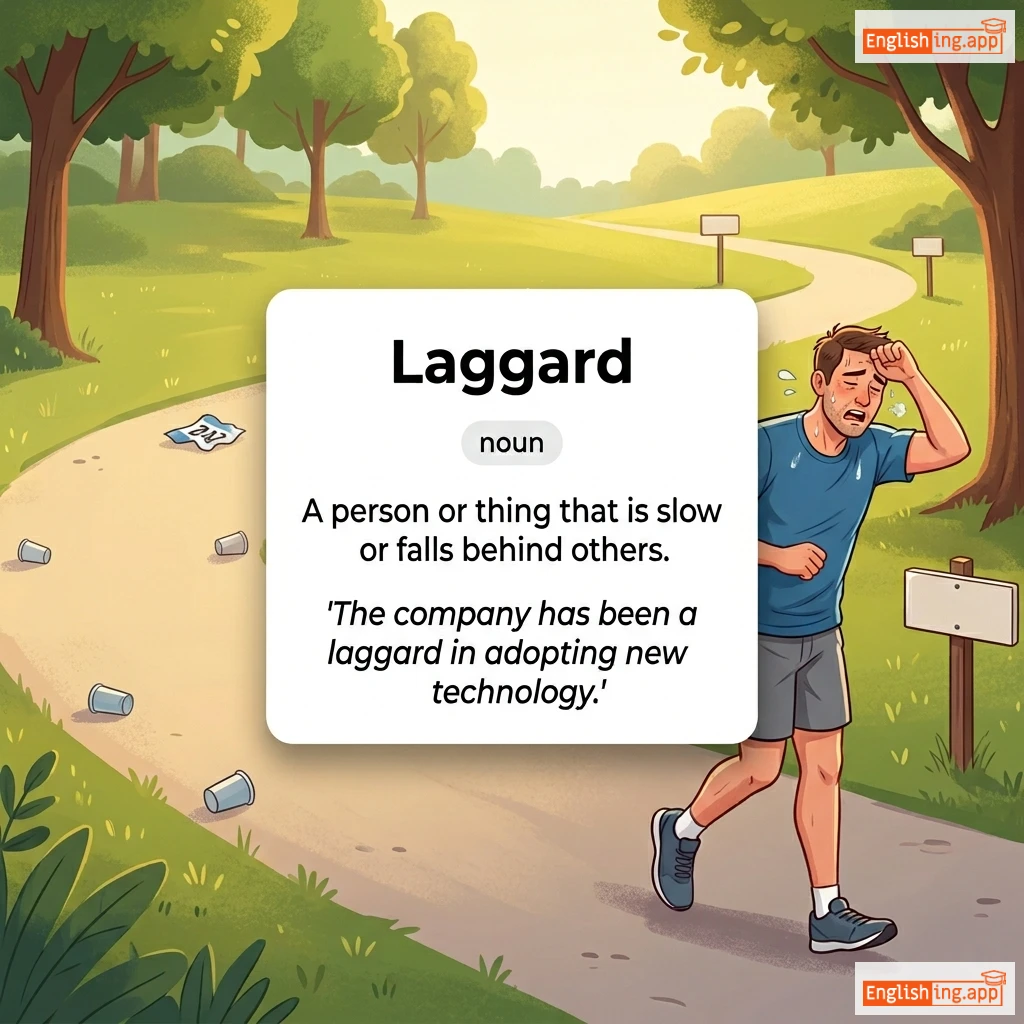
Laggard definition card — visual illustration of the meaning
noun C2
/ˈlæɡərd/
遅れた者 (okureta mono)

A person or thing that is slow or falls behind others.

"The company has been a laggard in adopting new technology."

"その会社は新しい技術の採用に遅れています。" (Sono kaisha wa atarashī gijutsu no saiyō ni okureteimasu.)
noun C2
/ˈlænjæp/
追加の贈り物 (tsuika no okurimono)

A small gift or bonus given by a seller to a customer.

"The shopkeeper offered a piece of candy as a lagniappe."

"店主はおまけとしてキャンディを提供しました。" (Tenshu wa omake toshite kyandi o teikyō shimashita.)
noun C2
/ˈleɪ.ɪ.ti/
信徒 (shintō)

Ordinary members of a religious community who are not clergy.

"The church welcomed the laity to participate in the event."

"教会は信徒を歓迎し、イベントに参加するよう呼びかけた。" (Kyōkai wa shintō o kangei shi, ibento ni sankasuru yō yobikaketa.)
verb C2
/læmˈbæst/
厳しく批判する (kisoku hihan suru)

To criticize harshly or to beat severely.

"The coach lambasted the team for their poor performance."

"コーチはチームのパフォーマンスの悪さを厳しく非難しました。" (Ko-chi wa chi-mu no pafo-mansu no warusa o kibishiku hinan shimashita.)
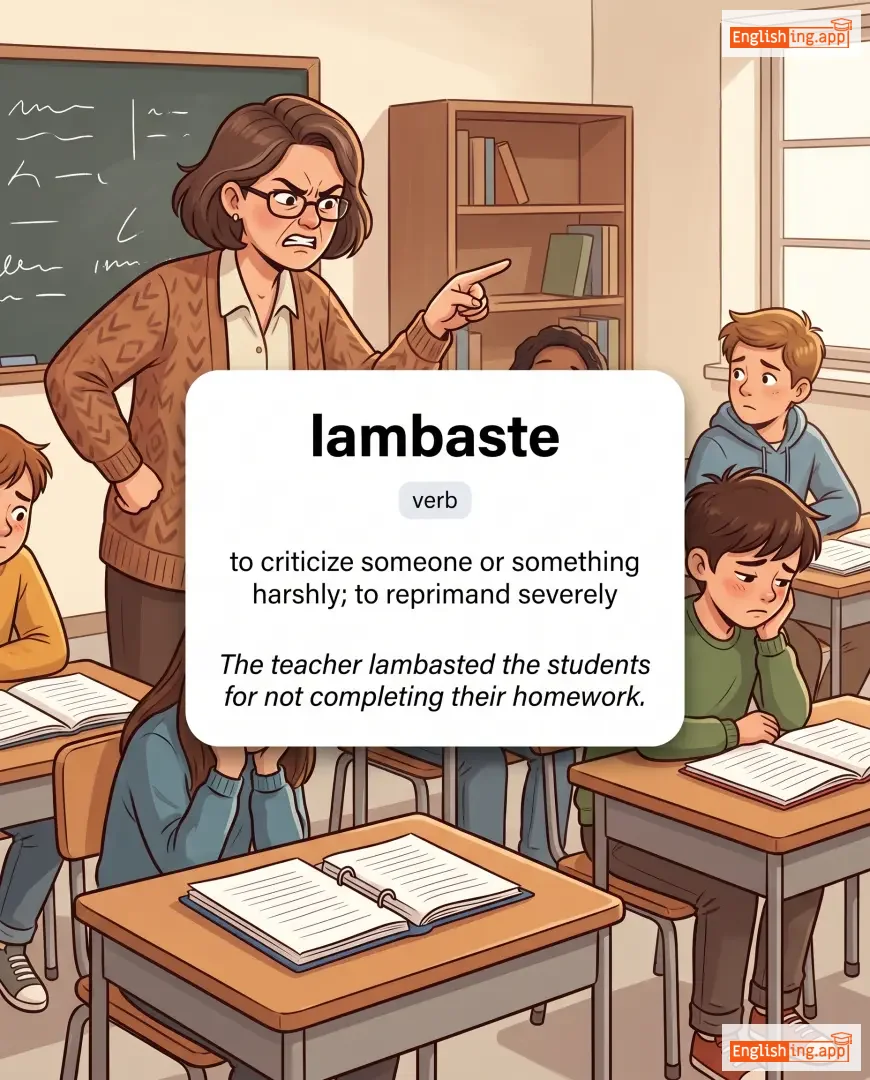
lambaste definition card — visual illustration of the meaning
verb C2
/læmˈbeɪst/
厳しく非難する (kibishiku hinansuru)

to criticize someone or something harshly; to reprimand severely

"The teacher lambasted the students for not completing their homework."

"教師は宿題をやらなかった学生を厳しく叱責しました。" (Kyoushi wa shukudai o yaranakatta gakusei o kibishiku shikkeshi mashita.)
adjective C2
/ˈlæmbənt/
柔らかな輝き (yawarakana kagayaki)

glowing or flickering softly; having a gentle radiance

"The lambent light of the candle filled the room with warmth."

"ろうそくの柔らかな輝きが部屋を暖かさで満たした。" (Rōsoku no yawarakana kagayaki ga heya o atatakasa de mitashita.)
adjective C2
/ˈlæm.ən.tə.bəl/
嘆かわしい (nakanokawashii)

deserving to be criticized or regretted; unfortunate

"The team’s lamentable performance disappointed their fans."

"チームの嘆かわしいパフォーマンスは、ファンを失望させました。" (Chīmu no nakanokawashī pafōmansu wa, fan o shitsubō sasemashita.)
verb C2
/læmˈpuːn/
嘲笑する (choushou suru)

to publicly criticize or ridicule someone or something with humor, irony, or sarcasm

"The cartoonist lampooned the politician for his contradictory statements."

"カリカチュアリストはその矛盾する発言で政治家を嘲笑した。" (Karikachuarisuto wa sono moujun suru hatsugen de seijika wo choushou shita.)
noun C2
/ˈlæn.sɪt/
外科用ナイフ (gekayou naifu)

a small, sharp, two-edged surgical knife used for making small incisions

"The doctor used a lancet to prick the patient’s finger for a blood test."

"医者は血液検査のために患者の指を刺すためにランセットを使用しました。" (Isha wa ketsueki kensa no tame ni kanja no yubi o sasu tame ni ransetto o shiyou shimashita.)
noun C2
/ˈlændˌhoʊl.dər/
土地所有者 (tochi shoyuusha)

a person who owns land, especially in large amounts

"The landholder leased part of his property to local farmers."

"土地所有者は自分の財産の一部を地元の農民に貸しました。" (Tochi shoyuusha wa jibun no zaisan no ichibu o jimoto no nōmin ni kashimashita.)
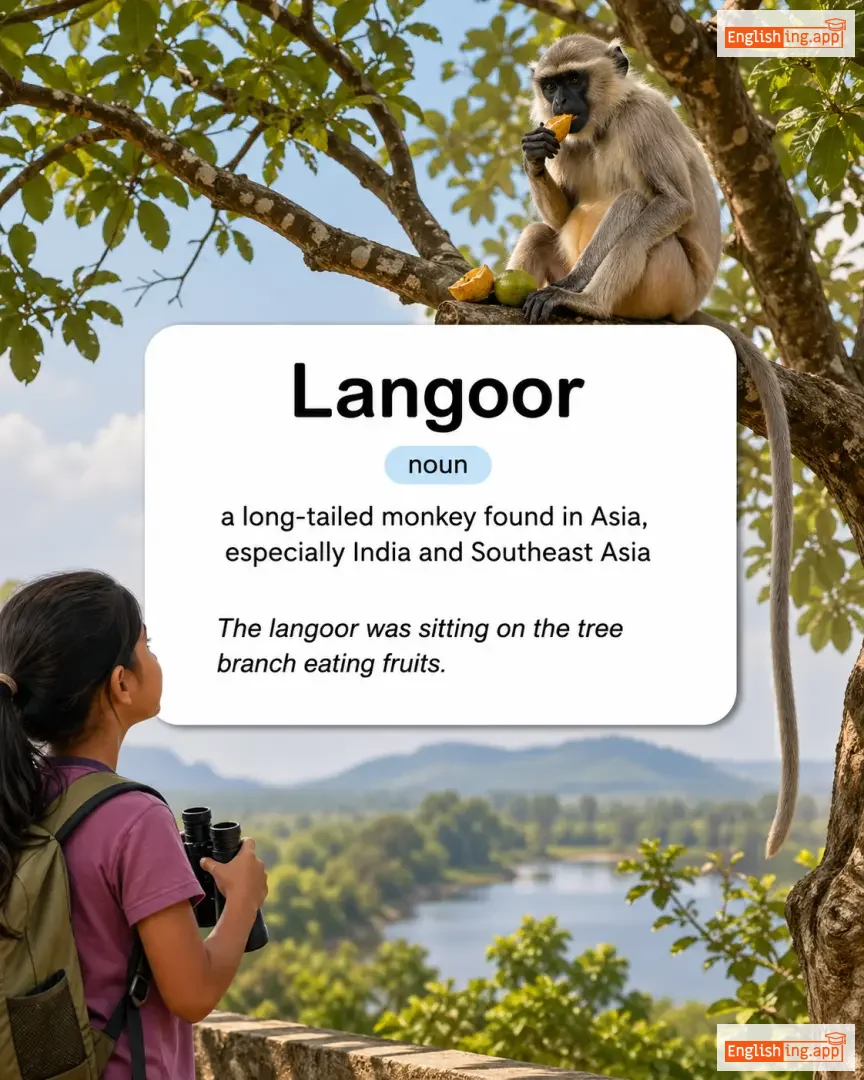
Langoor definition card — visual illustration of the meaning
noun C2
/læŋ'ɡʊər/
オナガザル (ranguru)

a long-tailed monkey found in Asia, especially India and Southeast Asia

"The langoor was sitting on the tree branch eating fruits."

"ラングールは木の枝に座って果物を食べていた。" (ranguru wa ki no eda ni suwatte kudamono o tabeteita.)
adjective C2
/ˈlæŋɡwɪd/
無気力 (mukiryoku)

Displaying or having a disinclination for physical exertion; weak or faint.

"He gave a languid wave before leaving the room."

"彼は部屋を出る前に無気力な手を振った。" (Kare wa heya o deru mae ni mukiryoku na te o futta.)
noun C2
/ˈlæŋɡər/
倦怠 (kentai)

A state of tiredness, inertia, or dreamy relaxation.

"The hot afternoon filled her with languor."

"暑い午後は彼女を倦怠で満たしました。" (Atsui gogo wa kanojo o kentai de mitashimashita.)
adjective C2
/læŋk/
高くて細い (takakute hosoi)

Tall, thin, and often awkward in appearance.

"The lank teenager towered over his classmates."

"その高くて細いティーンエイジャーはクラスメートよりも高かった。" (Sono takakute hosoi tīneijā wa kurasumēto yori mo takakatta.)
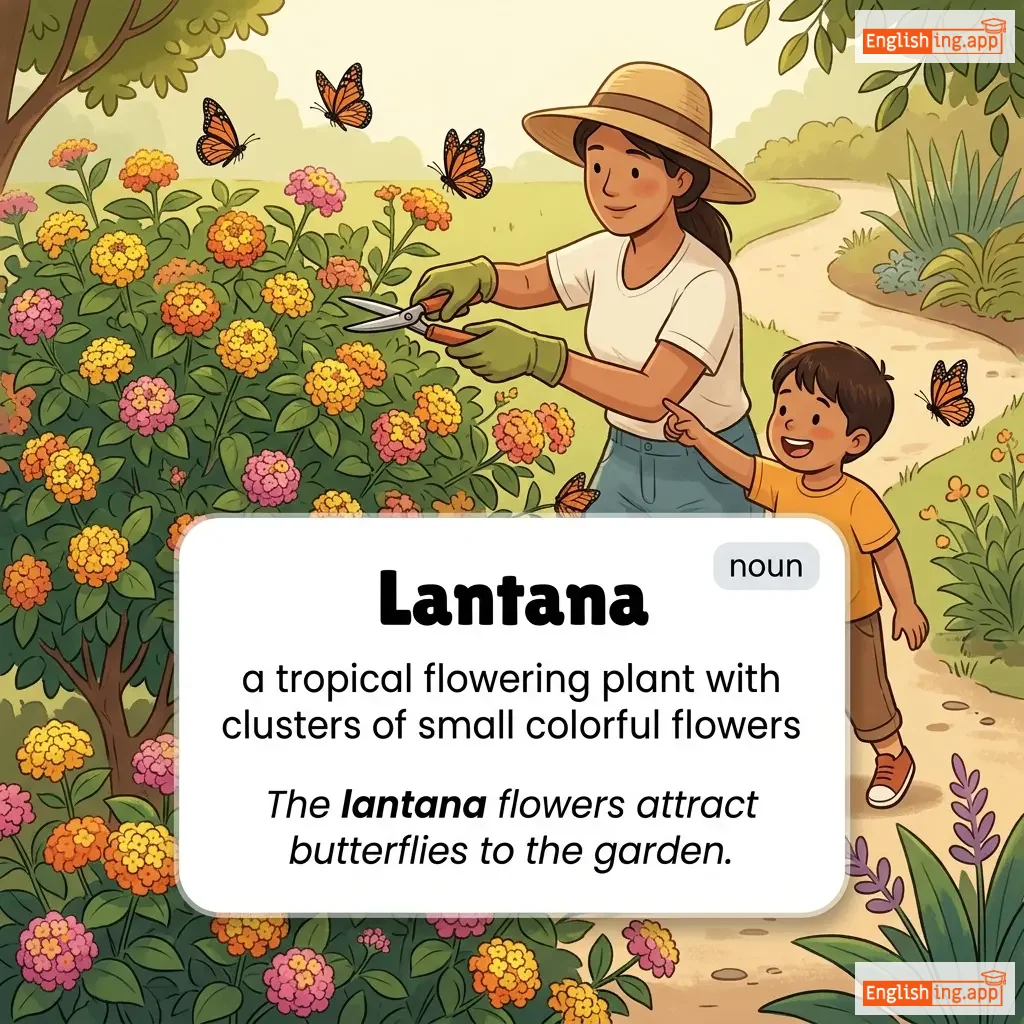
Lantana definition card — visual illustration of the meaning
noun C2
/lænˈtɑː.nə/
ランタナ (lantana)

a tropical flowering plant with clusters of small colorful flowers

"The lantana flowers attract butterflies to the garden."

"ランタナの花は庭に蝶を引き寄せます。" (Rantana no hana wa niwa ni chō o hiki yosemasu.)
noun/adjective C2
/ˈlæpɪˌdɛri/
宝石細工師 (houseki saikushi)

As noun: a person who cuts, polishes, or engraves precious stones; As adjective: relating to such work.

"The museum displayed lapidary tools used in ancient times."

"博物館は古代に使用された宝石細工の道具を展示しました。" (Hakubutsukan wa kodai ni shiyou sareta houseki saiku no dougu o tenji shimashita.)
noun C2
/ˈlɑːrsəni/
窃盗 (settou)

The unlawful taking of personal property with intent to deprive the rightful owner of it.

"He was arrested for committing larceny at the store."

"彼は店で窃盗を行ったため逮捕されました。" (Kare wa mise de settou o okonatta tame taiho saremashita.)
noun C2
/ˈlɑːrdər/
食料庫 (shokuryouko)

A place, such as a pantry, where food is stored.

"The larder was full of fresh bread and cheese."

"食料庫は新鮮なパンとチーズでいっぱいでした。" (Shokuryouko wa shinsen na pan to chīzu de ippai deshita.)
noun C2
/lɑːrˈʒes/
寛大さ (kandaisa)

Generosity in giving gifts or money.

"The foundation survived thanks to the largess of wealthy donors."

"財団は裕福な寄付者の寛大さのおかげで存続しました。" (Zaidan wa yūfukuna kifusha no kandaisa no okage de sonzoku shimashita.)
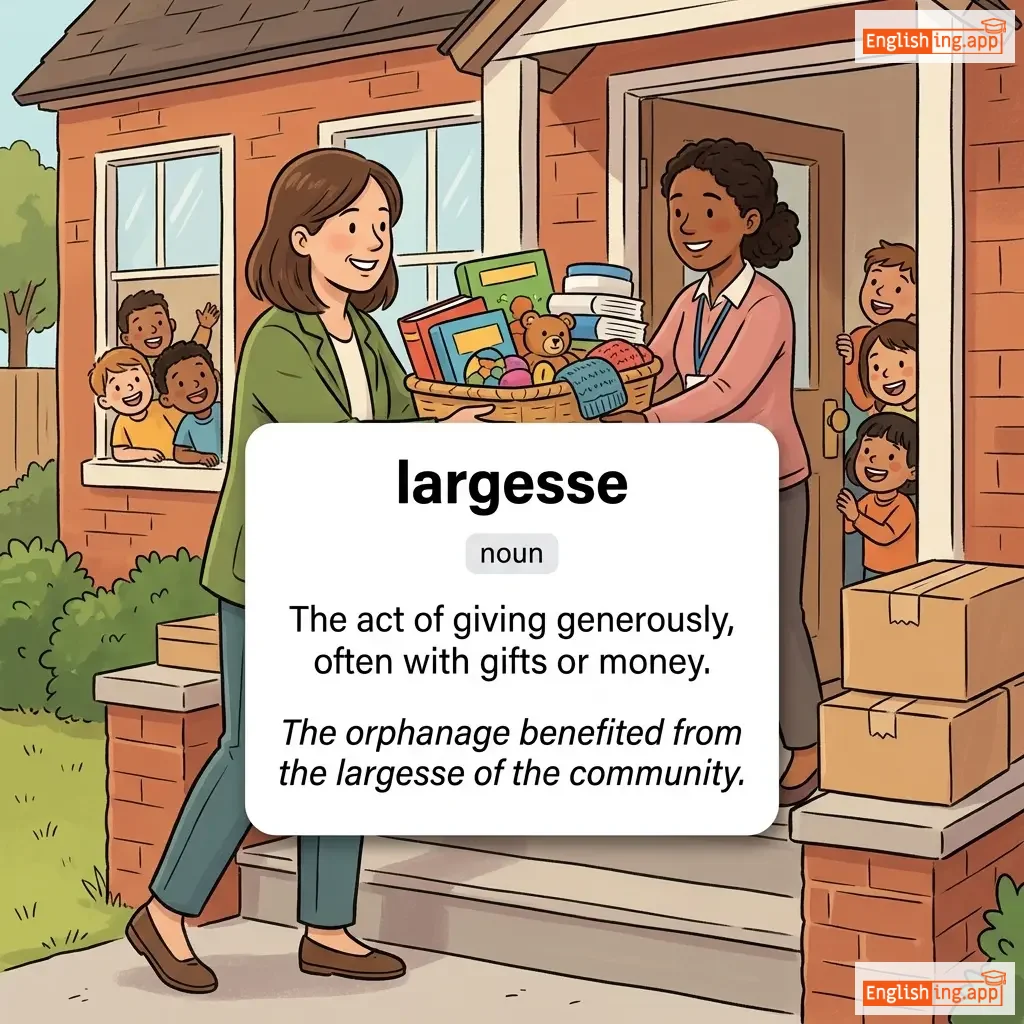
largesse definition card — visual illustration of the meaning
noun C2
/lɑːrˈʒɛs/
寛大さ (kandaisa)

The act of giving generously, often with gifts or money.

"The orphanage benefited from the largesse of the community."

"孤児院は地域社会の寛大さの恩恵を受けた。" (Kojien wa chiiki shakai no kandaisa no onkei o uketa.)
noun C2
/ˈlæriət/
ロープ (roopu)

A long rope with a noose at one end used to catch animals such as cattle or horses.

"The cowboy threw his lariat to catch the stray horse."

"カウボーイは迷子の馬を捕まえるためにロープを投げました。" (Kauboi wa maigo no uma o tsukamaeru tame ni roopu o nagemashita.)
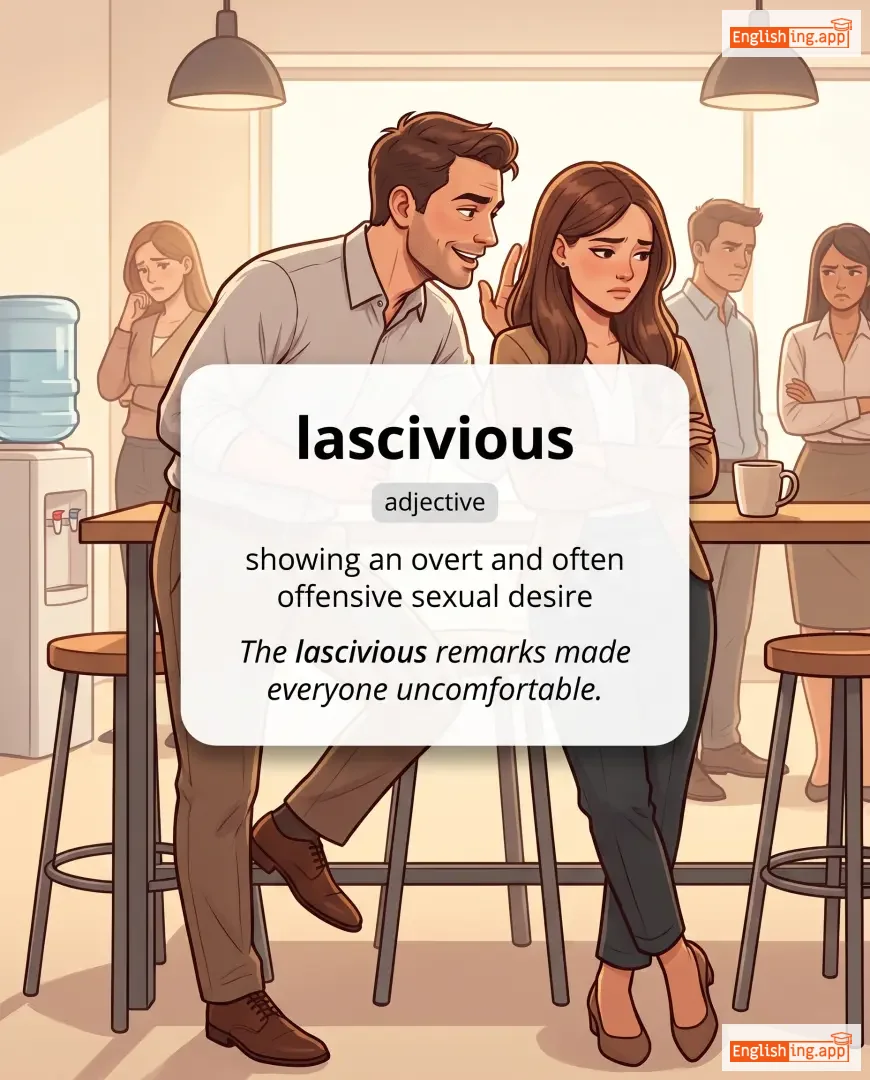
lascivious definition card — visual illustration of the meaning
adjective C2
/ləˈsɪviəs/
好色な (kōshokuna)

showing an overt and often offensive sexual desire

"The lascivious remarks made everyone uncomfortable."

"その好色な言葉がみんなを不快にさせた。" (Sono kōshokuna kotoba ga minna o fukai ni saseta.)
noun C2
/ˈlæsi/
小さな女の子 (chiisana onnanoko)

a young girl (informal, mainly Scottish)

"The old man greeted the little lassie warmly."

"老人は小さな女の子を温かく迎えました。" (rōjin wa chiisana onnanoko o atatakai kaku mukaemashita.)
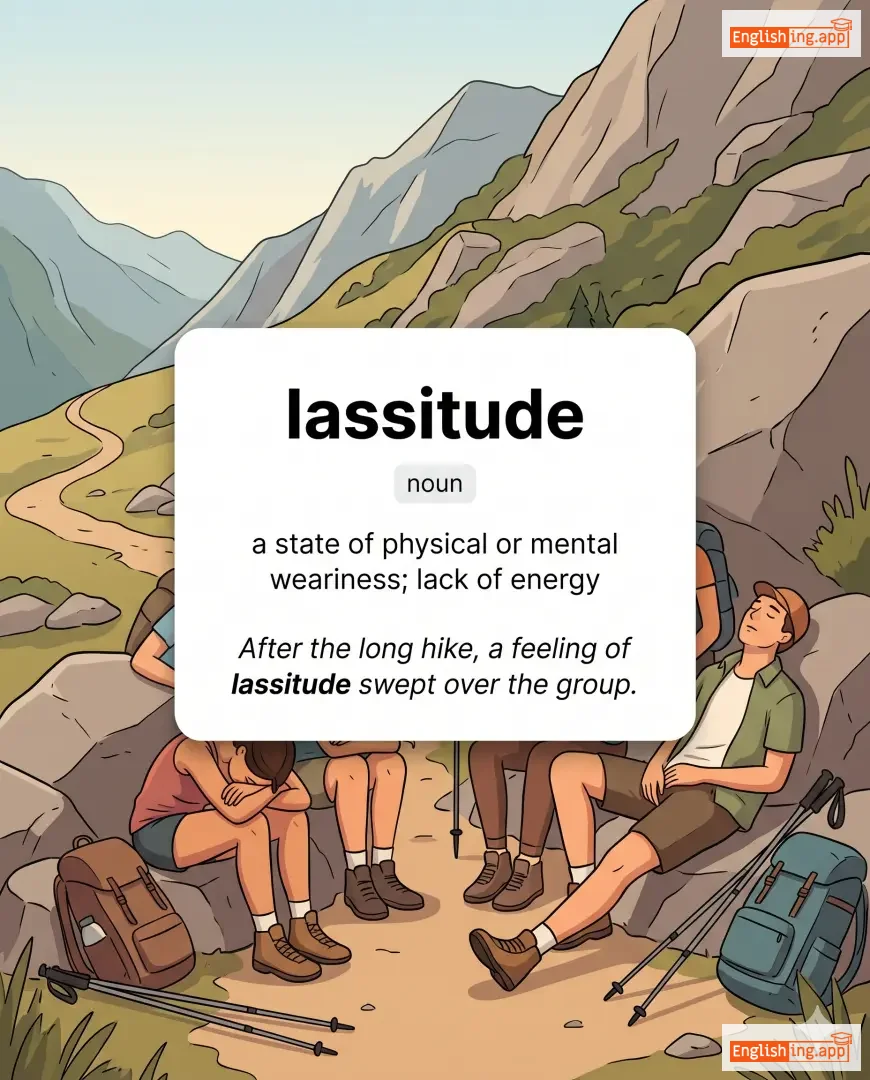
lassitude definition card — visual illustration of the meaning
noun C2
/ˈlæsɪtjuːd/
疲労 (hirou)

a state of physical or mental weariness; lack of energy

"After the long hike, a feeling of lassitude swept over the group."

"長いハイキングの後、疲労感がグループに広がった。" (Nagai haikingu no ato, hiroukan ga gurūpu ni hirogatta.)
noun/verb C2
/læˈsuː/
ロープ (roopu)

a rope with a loop used to catch animals; to catch with such a rope

"The cowboy lassoed the horse quickly."

"カウボーイは素早く馬をラッソしました。" (Kaubōi wa subayaku uma o rassho shimashita.)
noun C2
/leɪð/
旋盤 (senban)

A machine for shaping wood, metal, or other material by rotating it against a cutting tool.

"The carpenter used a lathe to shape the wooden bowl."

"大工は木の器を形作るために旋盤を使いました。" (Daiku wa ki no utsuwa o katachi zukuru tame ni senban o tsukaimashita.)
adjective C2
/ˈleɪ.tɪʃ/
少し遅れて (sukoshi okurete)

Somewhat late; occurring or arriving later than usual but not very late.

"We arrived latish to the party but still caught most of the fun."

"パーティーには少し遅れて到着しましたが、それでもほとんどの楽しみを楽しむことができました。" (Pātī ni wa sukoshi okurete tōchaku shimashita ga, soredemo hotondo no tanoshimi o tanoshimu koto ga dekimashita.)
noun C2
/ˈlætɪs/
格子構造 (kōshi kōzō)

A structure of crossed strips arranged in a grid or crisscross pattern.

"The garden was decorated with a wooden lattice covered in vines."

"庭は、蔦で覆われた木製の格子構造で飾られていました。" (Niwa wa, tsuta de ōwareta mokusei no kōshi kōzō de kazararete imashita.)
laud definition card — visual illustration of the meaning
👏

laud

verb C2
/lɔːd/

To praise someone or something highly, especially in public.

"The critic lauded the actor's performance as a masterpiece."

noun C2
/lɔːˈdeɪʃən/
賞賛 (shōsan)

The act of praising or expressing approval.

"The poet received much laudation for his moving verses."

"その詩人は感動的な詩で多くの賞賛を受けました。" (Sono shijin wa kandō-teki na shi de ōku no shōsan o ukemashita.)
adjective C2
/ˈlɔːdəˌtɔːri/
賞賛の (shōsan no)

Expressing praise or admiration.

"She wrote a laudatory review of the new book."

"彼女は新しい本の賛辞のレビューを書いた。" (Kanojo wa atarashī hon no sanji no rebyū o kaita.)
noun C2
/ˈlɔːndrəs/
ランドレス (randoresu)

A woman whose job is washing clothes and linens.

"The laundress delivered the freshly cleaned clothes to the household."

"ランドレスは新しく洗った衣類を家に届けました。" (Randoresu wa atarashiku aratta irui o ie ni todokemashita)
verb C2
/leɪv/
洗う (arau)

To wash or bathe.

"She laved her face with cool water."

"彼女は冷たい水で顔を洗った。" (Kanojo wa tsumetai mizu de kao o aratta.)
noun C2
/ˈlɔːˌɡɪvər/
立法者 (rippōsha)

A person who creates or enforces laws; a legislator.

"Moses is often regarded as a great lawgiver in history."

"モーセは歴史の中で偉大な立法者と見なされています。" (Mōse wa rekishi no naka de idaina rippōsha to minasareteimasu.)
noun C2
/liː/
草地 (koushi)

An open area of grassy or arable land; a meadow.

"The cottage was surrounded by a quiet lea."

"小屋は静かな草地に囲まれていました。" (Koya wa shizuka na koushi ni kakomarete imashita.)
noun/verb C2
/ˈlɛv.ən/
発酵剤 (hakkōzai)

a substance, typically yeast, that causes dough to rise; to permeate and modify

"A little yeast will leaven the bread dough."

"少しのイーストがパン生地を膨らませる。" (Sukoshi no īsuto ga pan kiji o fukuramaseru.)
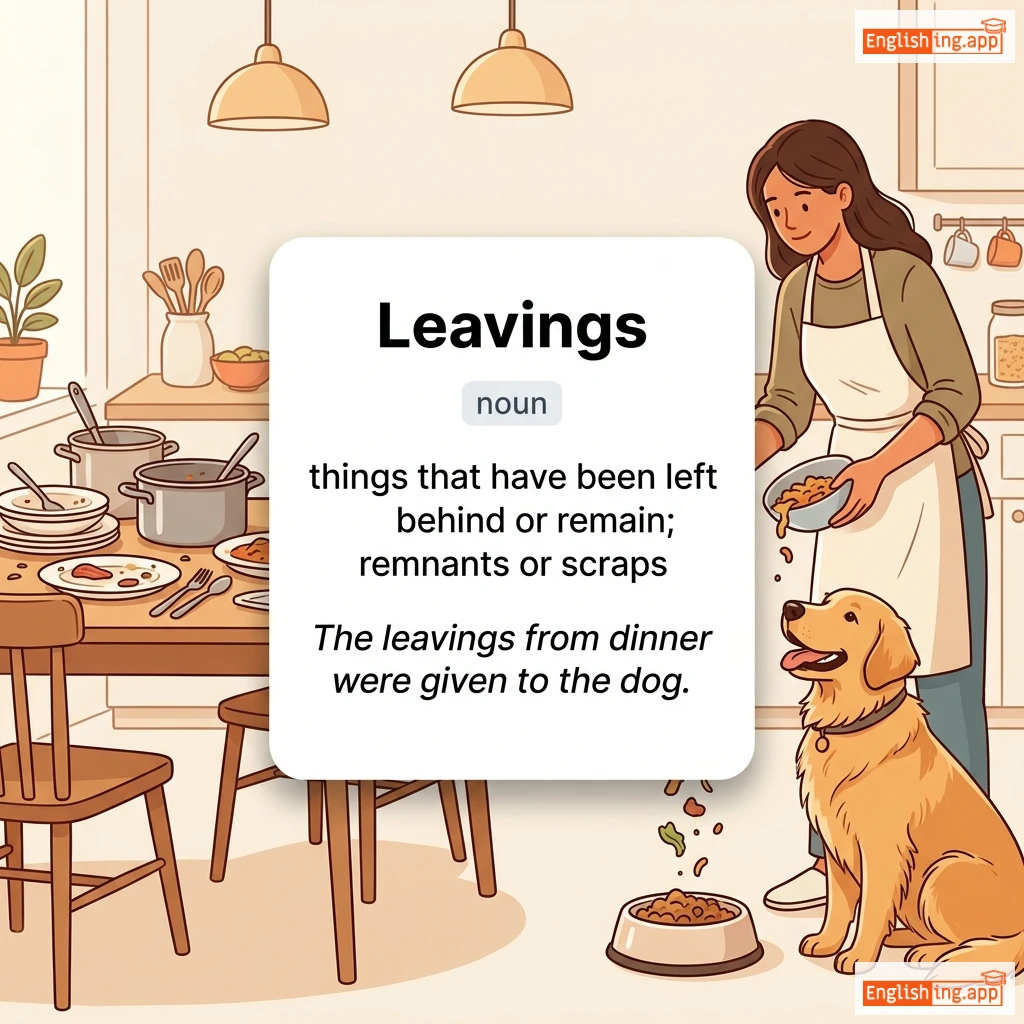
Leavings definition card — visual illustration of the meaning
noun C2
/ˈliː.vɪŋz/
残り物; 余り物 (livings)

things that have been left behind or remain; remnants or scraps

"The leavings from dinner were given to the dog."

"夕食の残り物は犬に与えられました。" (Yūshoku no nokorimono wa inu ni ataemashita.)
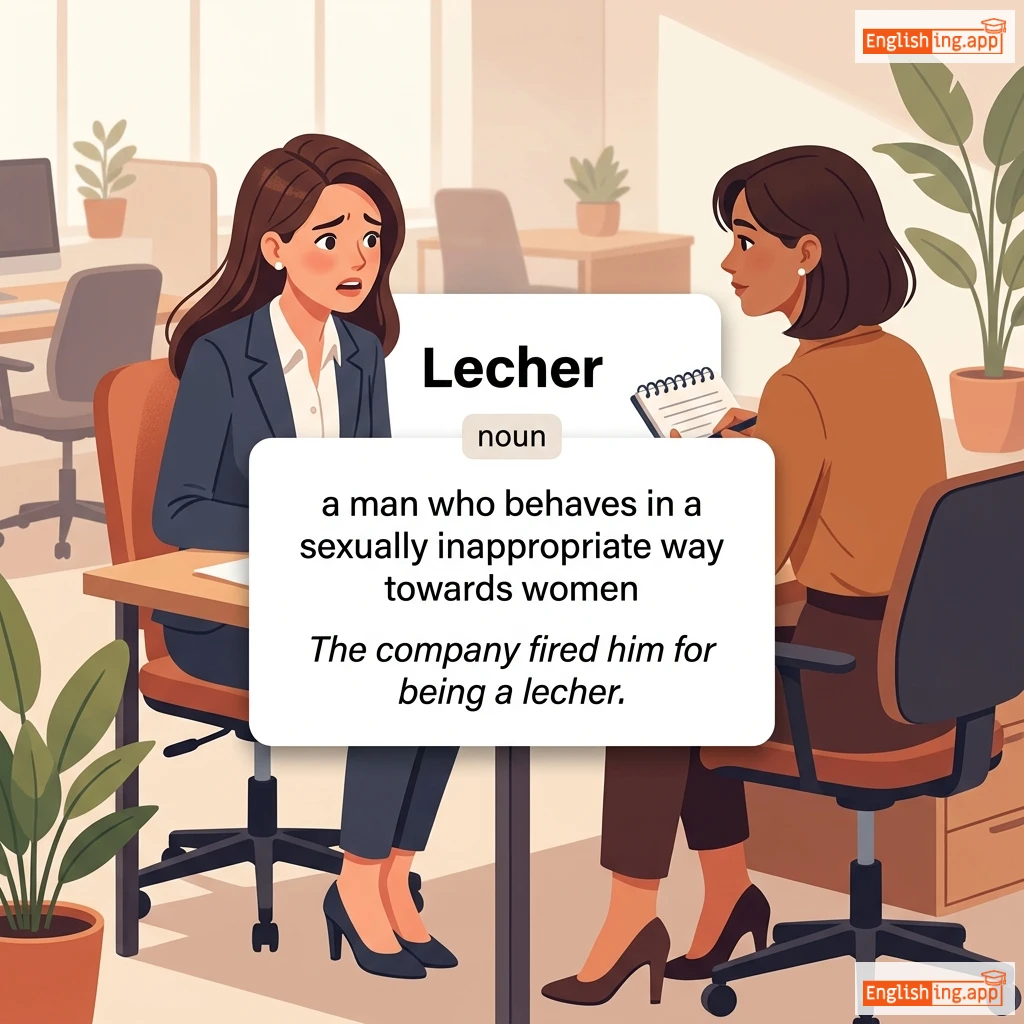
Lecher definition card — visual illustration of the meaning
noun C2
/ˈleʧ.ər/
好色な男 (koshokuna otoko)

a man who behaves in a sexually inappropriate way towards women

"The company fired him for being a lecher."

"会社は彼が好色な男だったため、解雇した。" (kaisha wa kare ga koshokuna otoko datta tame kaiko shita)
adjective C2
/ˈlɛtʃ.ər.əs/
好色 (kōshoku)

having or showing excessive or offensive sexual desire

"The character was portrayed as a lecherous old man."

"そのキャラクターは好色な老人として描かれました。" (Sono kyarakutā wa kōshoku na rōjin toshite egakaremashita.)
noun C2
/ˈlɛtʃ.əri/
淫欲 (inyoku)

excessive or offensive sexual desire; lustfulness

"The novel depicted the lechery of corrupt nobles."

"その小説は堕落した貴族の淫欲を描いていました。" (Sono shōsetsu wa daraku shita kizoku no in'yoku o egaite imashita.)