Vocabularies

English Vocabulary Dictionary | Word Meanings, Definitions & Examples

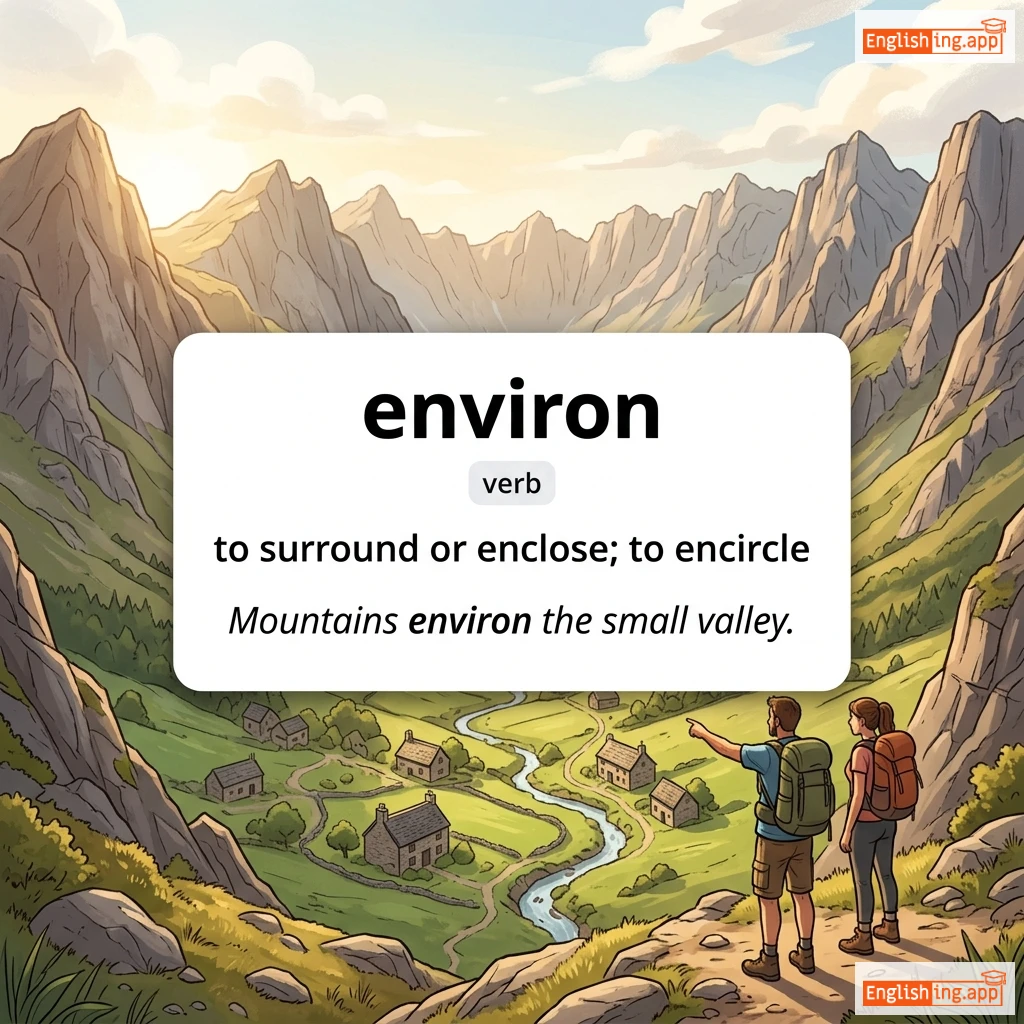
environ definition card — visual illustration of the meaning
verb C2
/ɪnˈvaɪərən/
囲む (kakomu)

to surround or enclose; to encircle

"Mountains environ the small valley."

"山々は小さな谷を囲んでいます。" (Yamayama wa chīsana tani o kakondeimasu.)
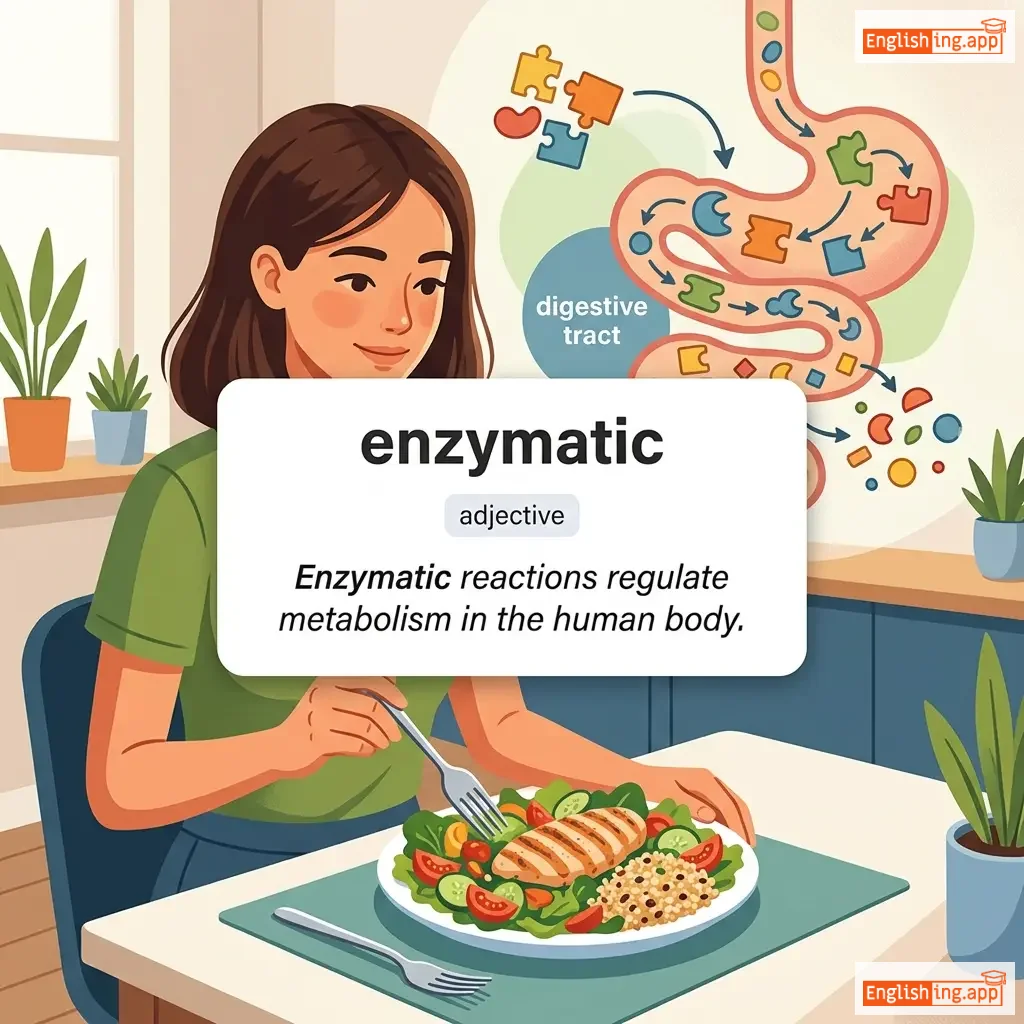
enzymatic definition card — visual illustration of the meaning
adjective C2
/ˌen.zɪˈmæt.ɪk/
酵素に関連する (kōso ni kanren suru)

Relating to or involving enzymes, which are proteins that catalyze biochemical reactions in living organisms.

"Enzymatic reactions regulate metabolism in the human body."

"酵素反応は人間の体内で代謝を調節します。" (Kōso hannō wa ningen no tainai de taisha o chōsetsu shimasu.)
noun C2
/ˈiːən/
エオン (eon)

an indefinitely long period of time; an age

"Dinosaurs lived millions of years ago, in a different eon."

"恐竜は何百万年も前に、異なるエオンで生きていました。" (Kyōryū wa nan byakuman-nen mo mae ni, kotonaru eon de ikite imashita.)
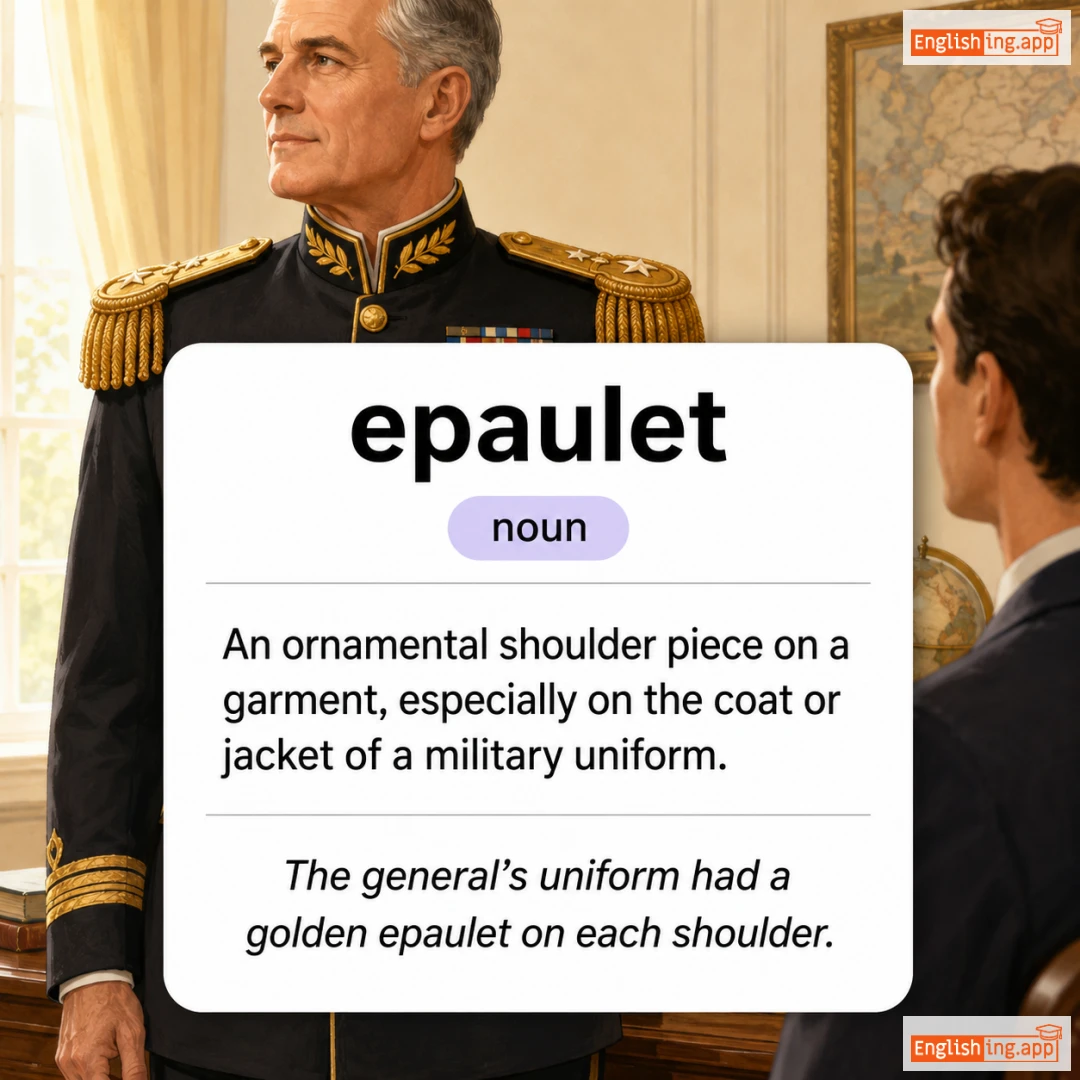
epaulet definition card — visual illustration of the meaning
noun C2
/ˈɛpəlɛt/
肩章 (kashou)

An ornamental shoulder piece on a garment, especially on the coat or jacket of a military uniform.

"The general’s uniform had a golden epaulet on each shoulder."

"将軍の制服は、両肩に金色のエポーレットが付いていた。" (Shougun no seifuku wa, ryōkata ni kin'iro no epōretto ga tsuite ita.)
noun C2
/ˈɛpəlɛt/
肩章 (ken-shou)

A variant spelling of epaulet, also meaning a shoulder ornament, especially on military uniforms.

"The officer’s epaulette shone brightly under the sunlight."

"その将校のエポレットは太陽の下で輝いていました。" (Sono shōkō no eporetto wa taiyō no shita de kagayaite imashita.)
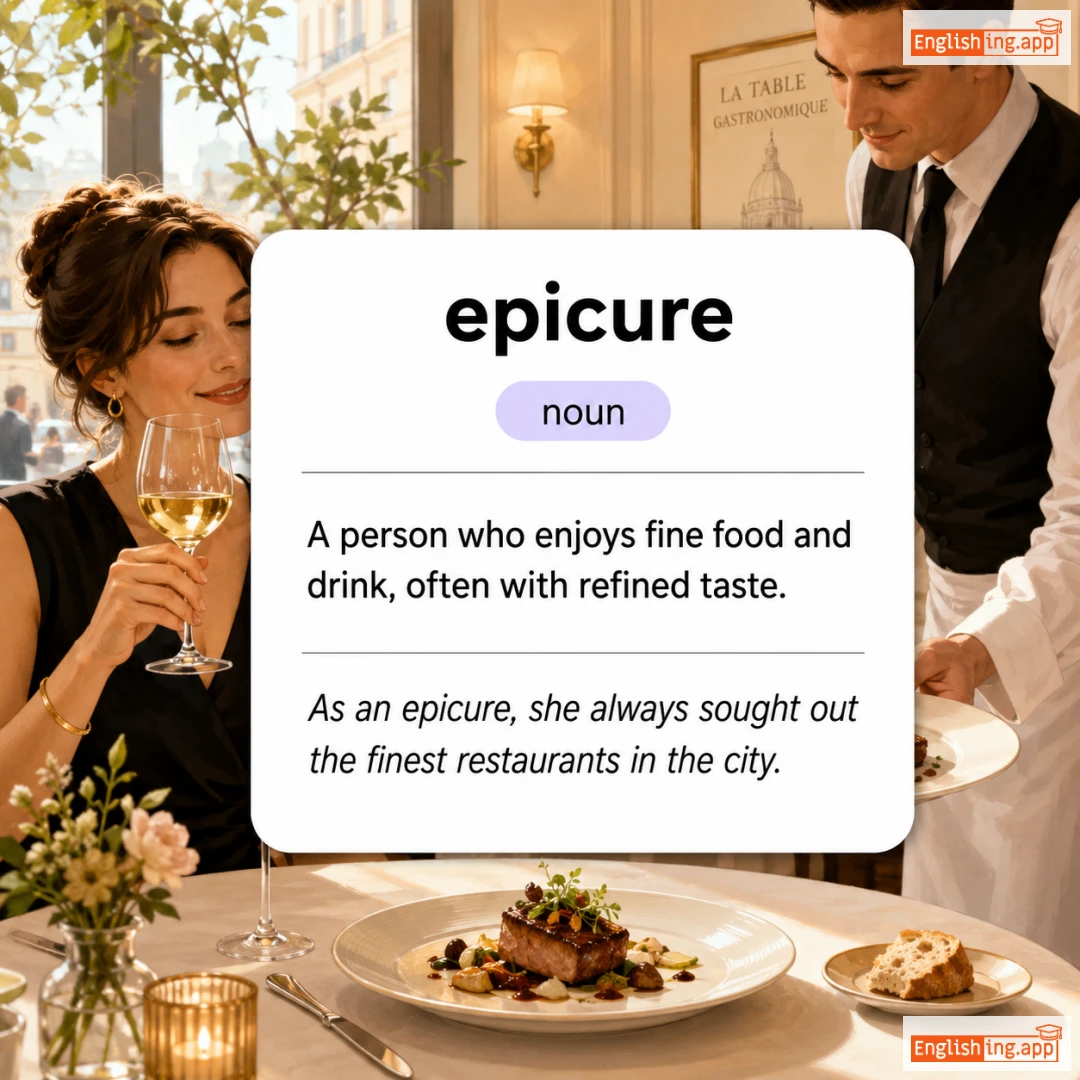
epicure definition card — visual illustration of the meaning
noun C2
/ˈɛpɪkjʊr/
美食家 (bishokka)

A person who enjoys fine food and drink, often with refined taste.

"As an epicure, she always sought out the finest restaurants in the city."

"美食家として、彼女は常に市内で最高のレストランを探していました。" (Bishokka to shite, kanojo wa jōni shinaide saikō no resutoran o sagashite imashita.)
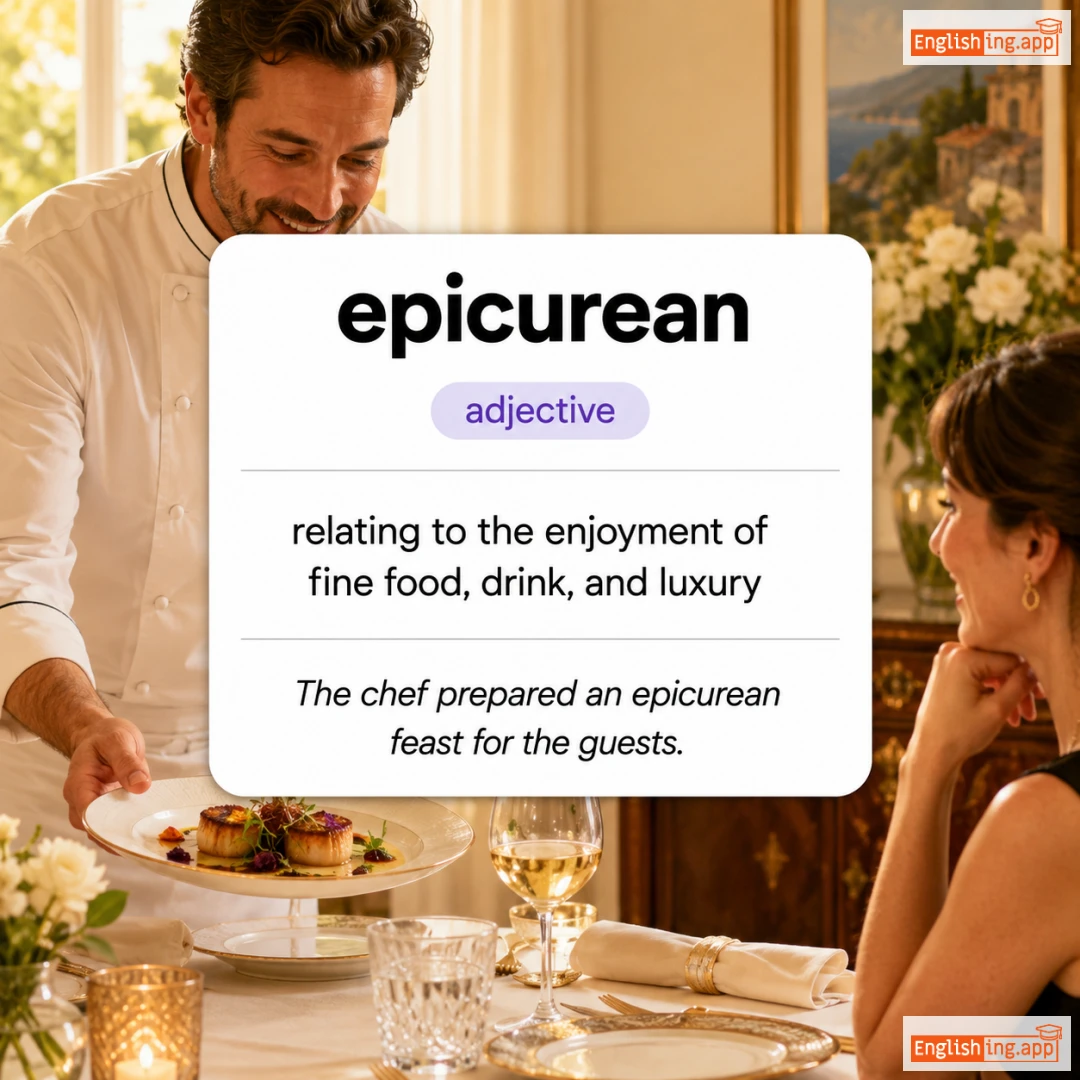
epicurean definition card — visual illustration of the meaning
adjective C2
/ˌɛpɪkjʊˈriːən/
エピキュリアン (epikyurian)

relating to the enjoyment of fine food, drink, and luxury

"The chef prepared an epicurean feast for the guests."

"シェフはゲストのためにエピキュリアンな饗宴を準備しました。" (Shefu wa gesuto no tame ni epikyuriana kyōen o junbi shimashita.)
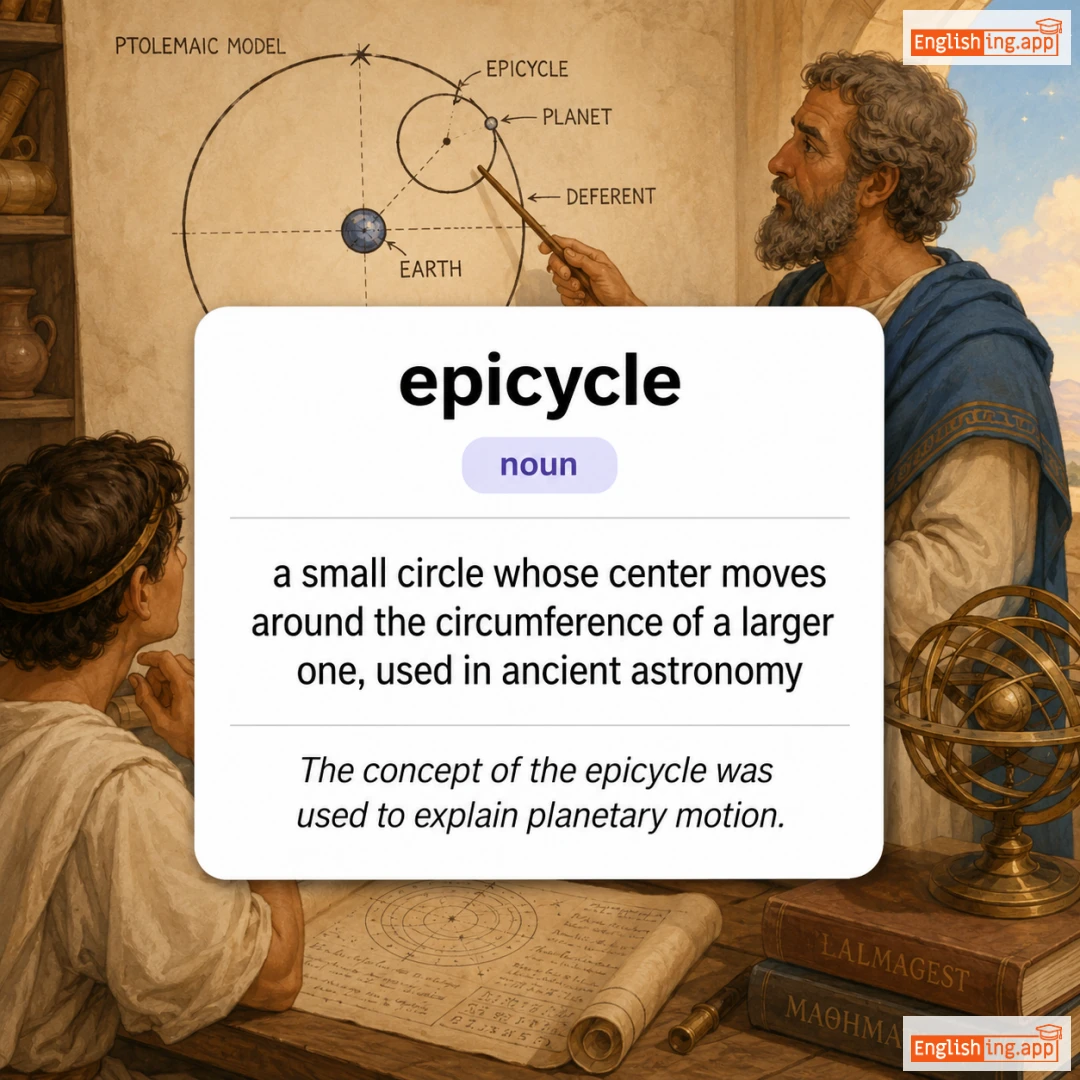
epicycle definition card — visual illustration of the meaning
noun C2
/ˈɛpɪˌsaɪkl/
外周上の小円 (gaishū-jō no shōen)

a small circle whose center moves around the circumference of a larger one, used in ancient astronomy
"The concept of the epicycle was used to explain planetary motion."

"エピサイクルの概念は惑星の運動を説明するために使用されました。" (episykuru no gainen wa wakusei no undō o setsumei suru tame ni shiyō saremashita.)
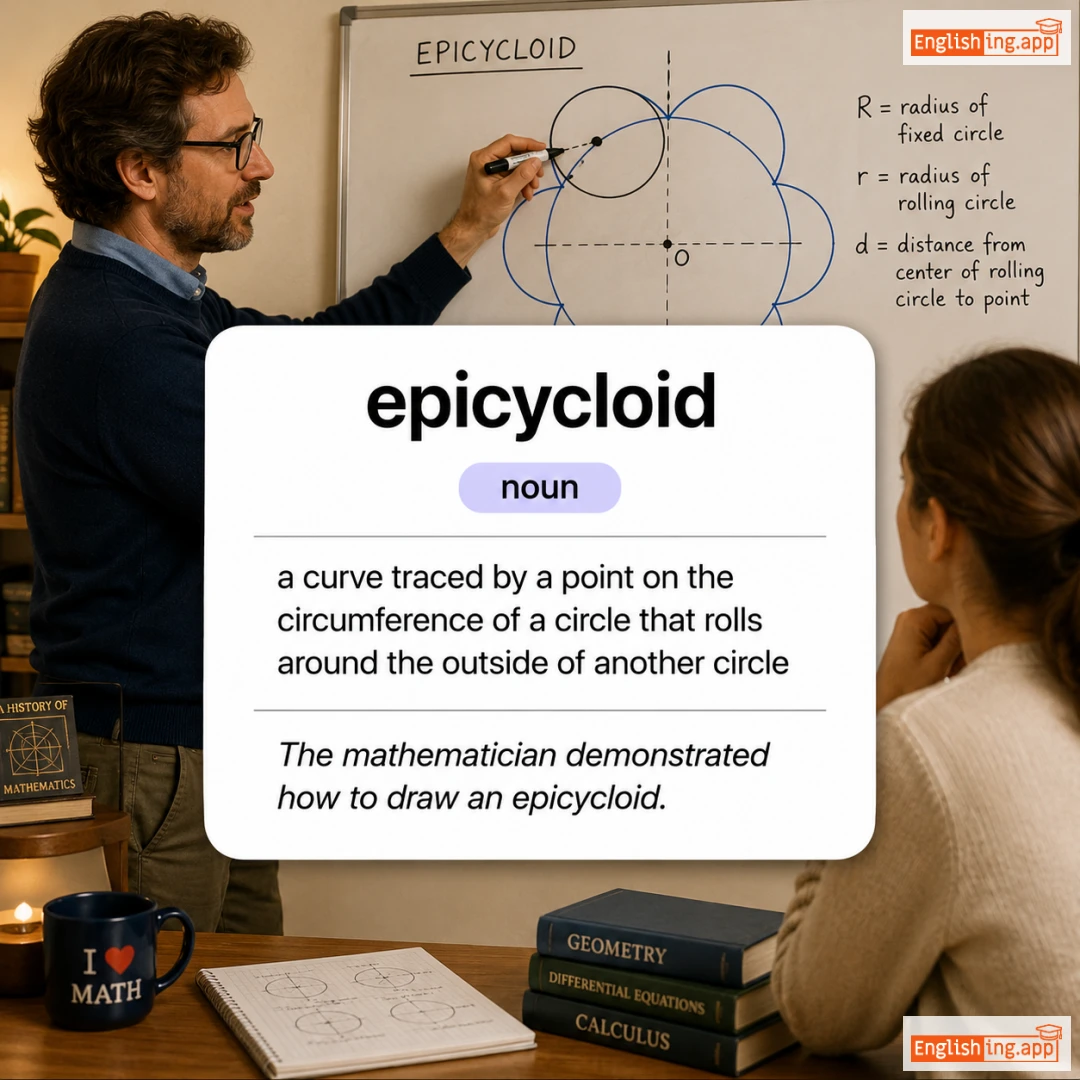
epicycloid definition card — visual illustration of the meaning
noun C2
/ˌɛpɪˈsaɪklɔɪd/
エピサイクロイド (episaykuroido)

a curve traced by a point on the circumference of a circle that rolls around the outside of another circle

"The mathematician demonstrated how to draw an epicycloid."

"数学者はエピサイクロイドの描き方を示しました。" (Sūgakusha wa episaykuroido no egikata o shimeshimashita.)
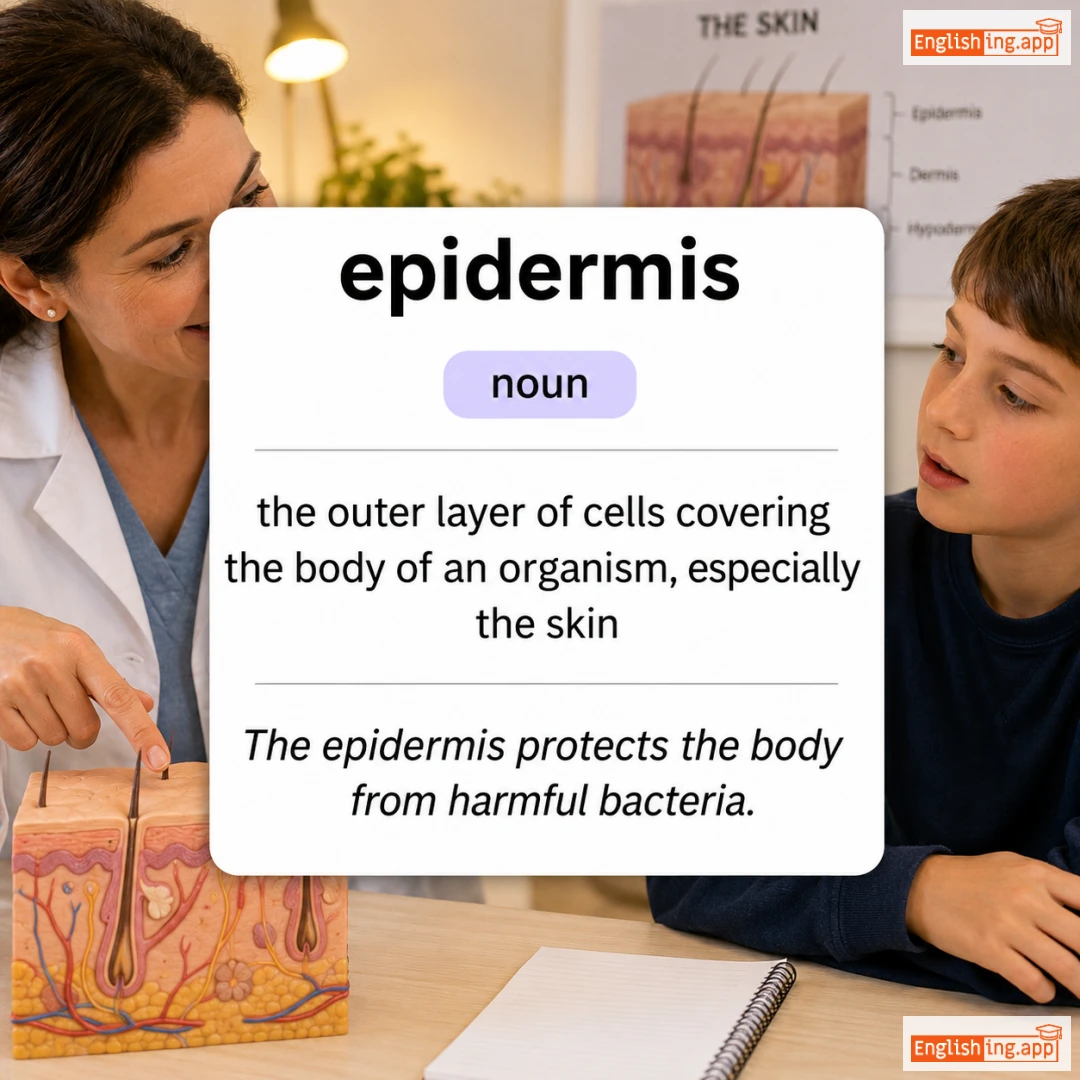
epidermis definition card — visual illustration of the meaning
noun C2
/ˌɛpɪˈdɜːrmɪs/
皮膚の外層 (hifu no gaisou)

the outer layer of cells covering the body of an organism, especially the skin

"The epidermis protects the body from harmful bacteria."

"エピデルミスは有害な細菌から体を守ります。" (Epidermisu wa yūgaina saikin kara karada o mamorimasu.)
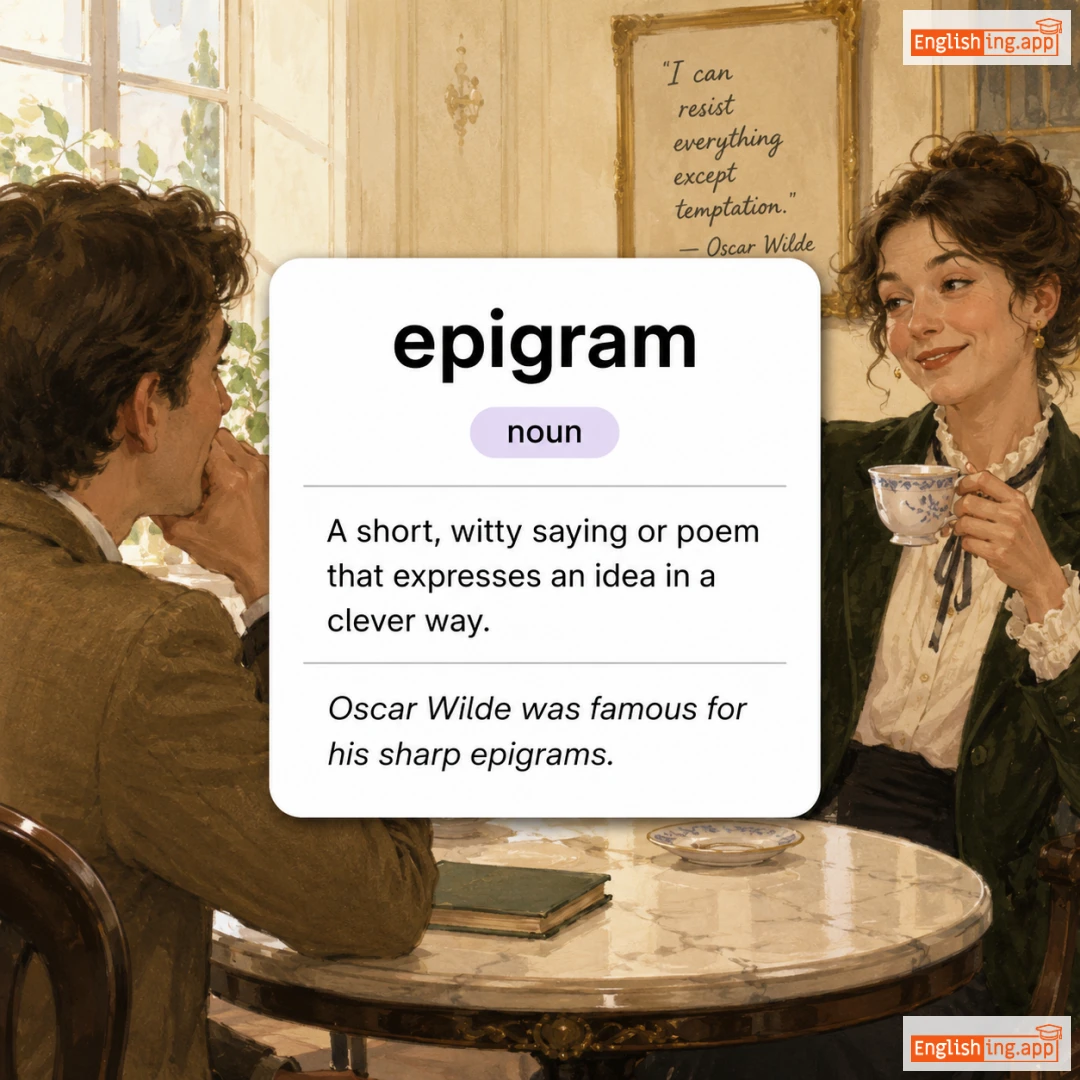
epigram definition card — visual illustration of the meaning
noun C2
/ˈɛpɪɡræm/
エピグラム (epiguramu)

A short, witty saying or poem that expresses an idea in a clever way.

"Oscar Wilde was famous for his sharp epigrams."

"オスカー・ワイルドは鋭いエピグラムで有名でした。" (Osukā Wairudo wa surudoi epiguramu de yūmei deshita.)
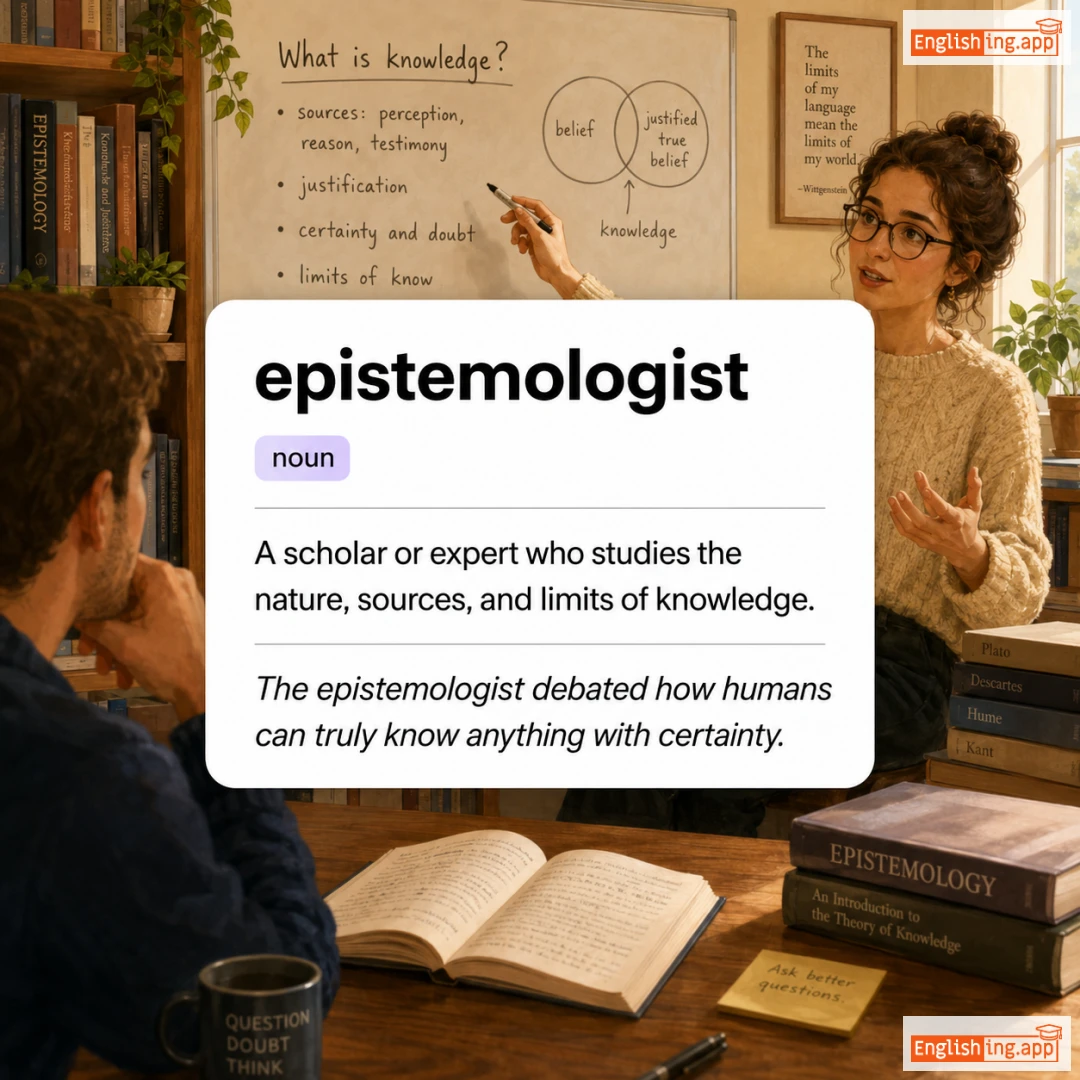
epistemologist definition card — visual illustration of the meaning
noun C2
/ɪˌpɪstəˈmɒlədʒɪst/
認識論者 (ninshikironsha)

A scholar or expert who studies the nature, sources, and limits of knowledge.

"The epistemologist debated how humans can truly know anything with certainty."

"エピステモロジストは、人間がどのようにして確実に何かを知ることができるかについて議論しました。" (Epistemologist wa, ningen ga dono yō ni shite kakujitsu ni nanika o shiru koto ga dekiru ka ni tsuite giron shimashita.)
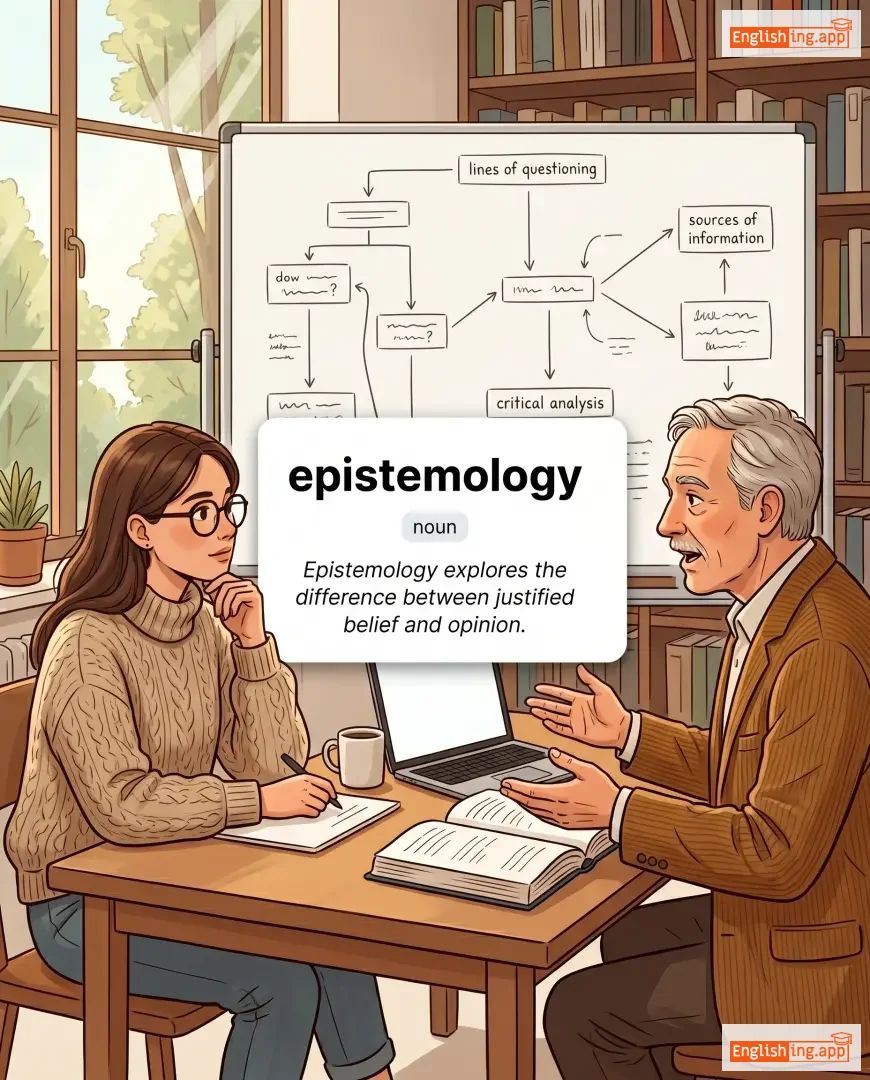
epistemology definition card — visual illustration of the meaning
noun C2
/ɪˌpɪstəˈmɒlədʒi/
認識論 (ninshikiron)

The branch of philosophy that studies the nature, origin, and scope of knowledge.

"Epistemology explores the difference between justified belief and opinion."

"認識論は正当な信念と意見との違いを探求します。" (Ninshikiron wa seitōna shinnen to iken to no chigai o tankyū shimasu.)
noun C2
/ɪˈpɪsəl/
書簡 (shokan)

A letter, especially a formal or didactic one; often used for letters in the New Testament.

"He wrote a long epistle to his friend about his travels."

"彼は自分の旅行について友人に長い手紙を書いた。" (Kare wa jibun no ryokō ni tsuite yūjin ni nagai tegami o kaita.)
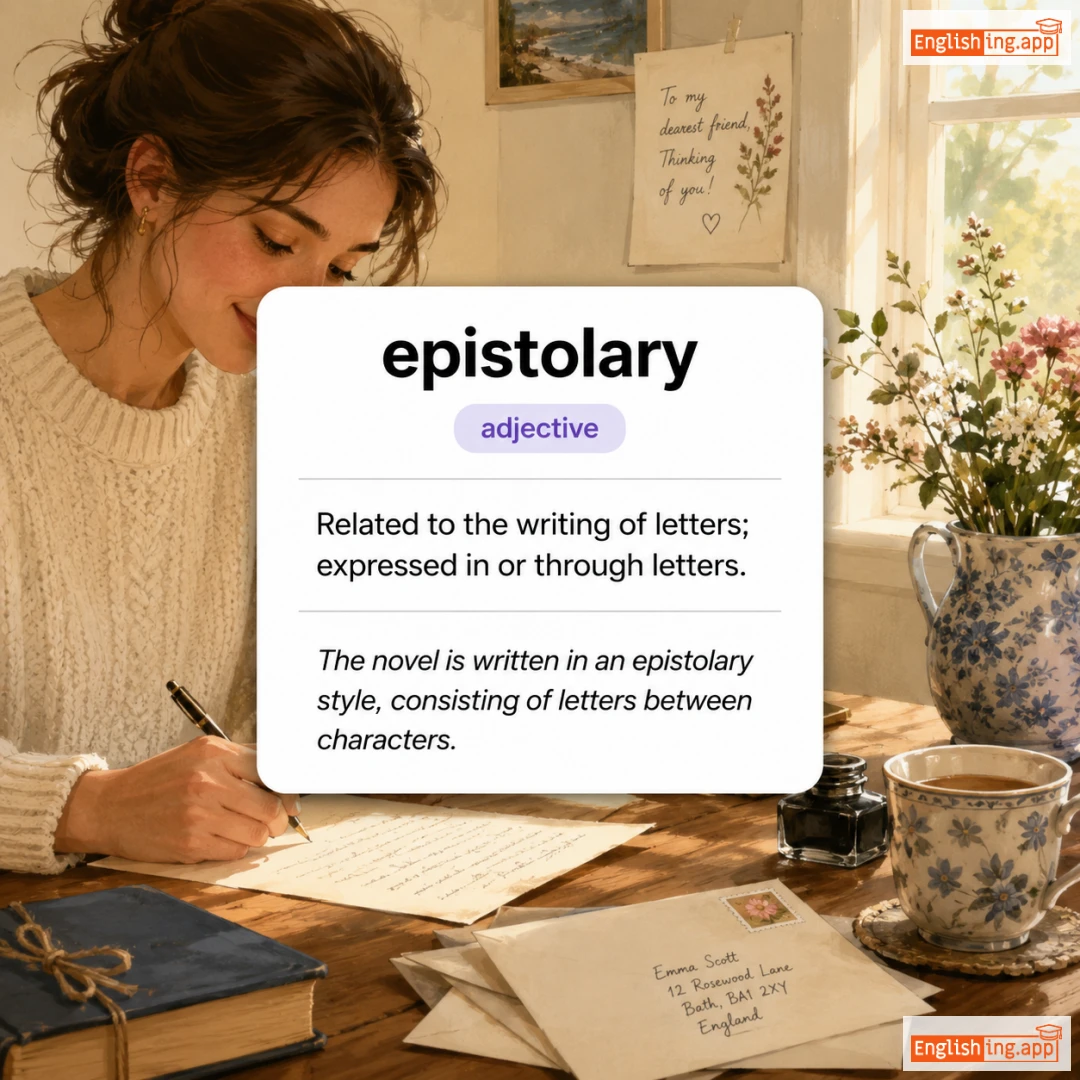
epistolary definition card — visual illustration of the meaning
adjective C2
/ɪˈpɪstələri/
書簡体 (shokantai)

Related to the writing of letters; expressed in or through letters.

"The novel is written in an epistolary style, consisting of letters between characters."

"その小説は書簡体スタイルで書かれており、登場人物間の手紙で構成されています。" (Sono shousetsu wa shokantai sutairu de kakarete ori, toujou jinbutsu kan no tegami de kousei sareteimasu.)
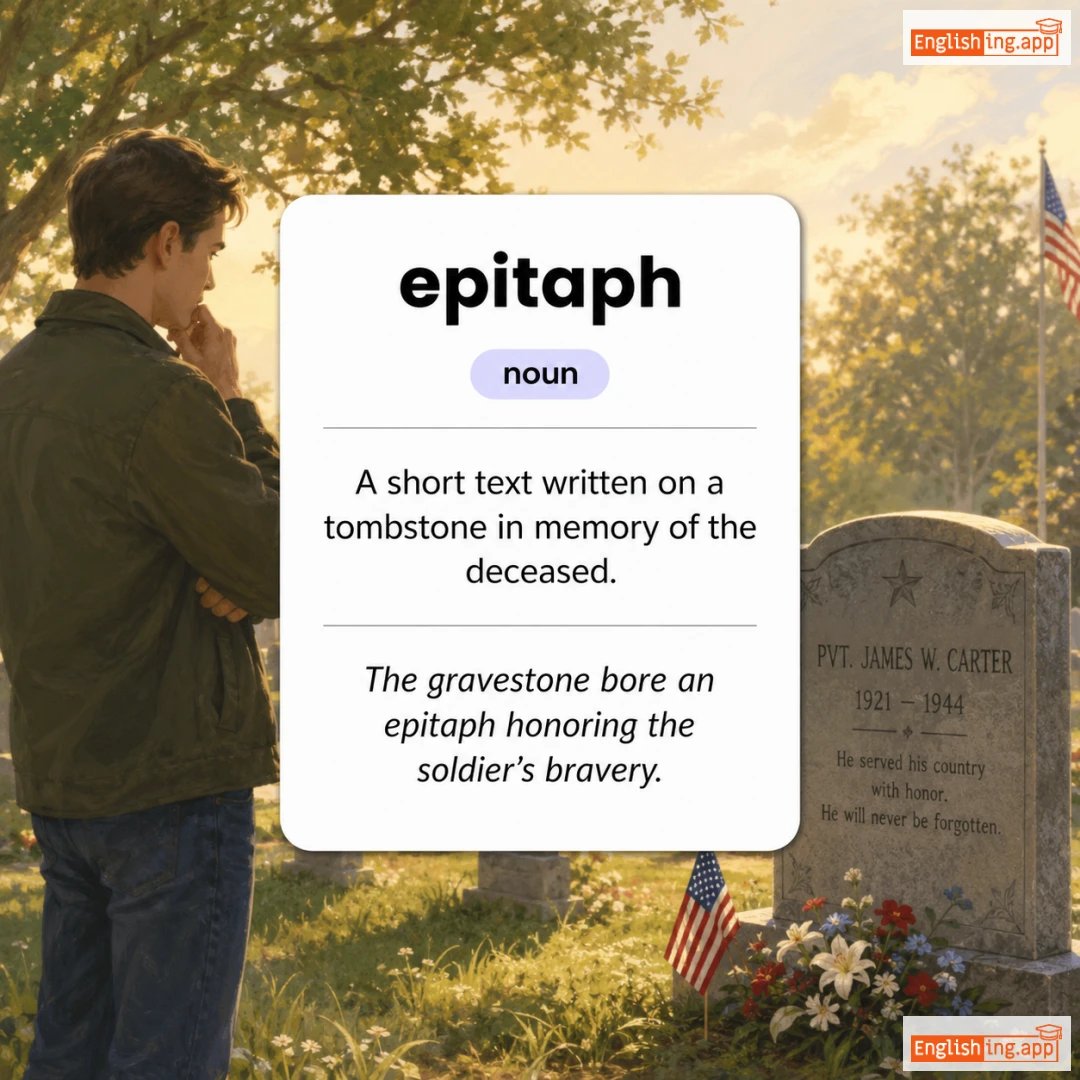
epitaph definition card — visual illustration of the meaning
noun C2
/ˈɛpɪtɑːf/
墓碑銘 (hakamimei)

A short text written on a tombstone in memory of the deceased.

"The gravestone bore an epitaph honoring the soldier’s bravery."

"墓石にはその兵士の勇気を讃える墓碑銘が刻まれていた。" (Hakoseki ni wa sono heishi no yūki o tataeru hakobimei ga kizama rete ita.)
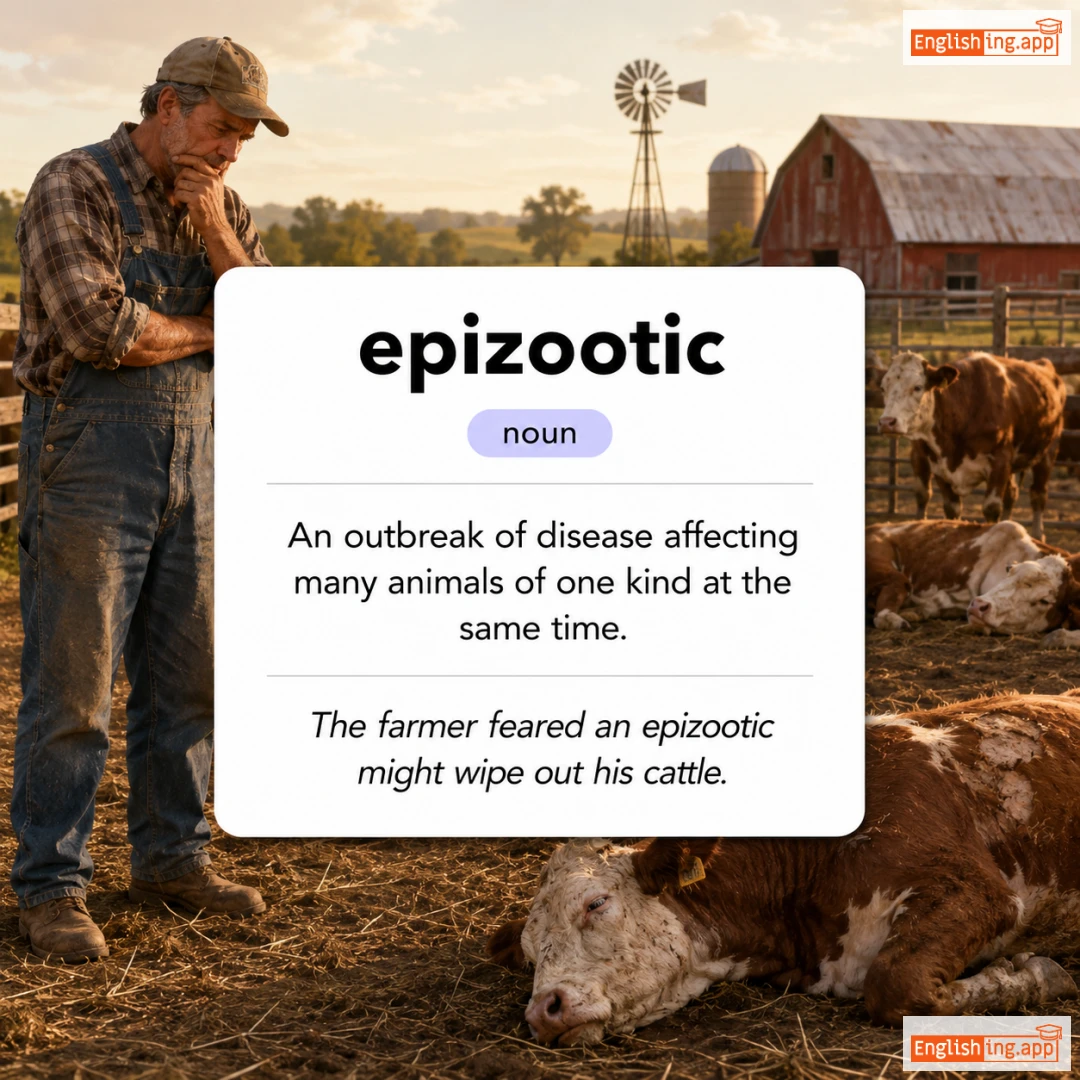
epizootic definition card — visual illustration of the meaning
noun C2
/ˌɛpɪzəʊˈɒtɪk/
動物伝染病 (dōbutsu densenbyō)

An outbreak of disease affecting many animals of one kind at the same time.

"The farmer feared an epizootic might wipe out his cattle."

"農家は、動物伝染病が彼の家畜を壊すかもしれないと恐れていました。" (Nōka wa, dōbutsu densenbyō ga kare no kachiku o kowasu kamoshirenai to osoreteimashita.)
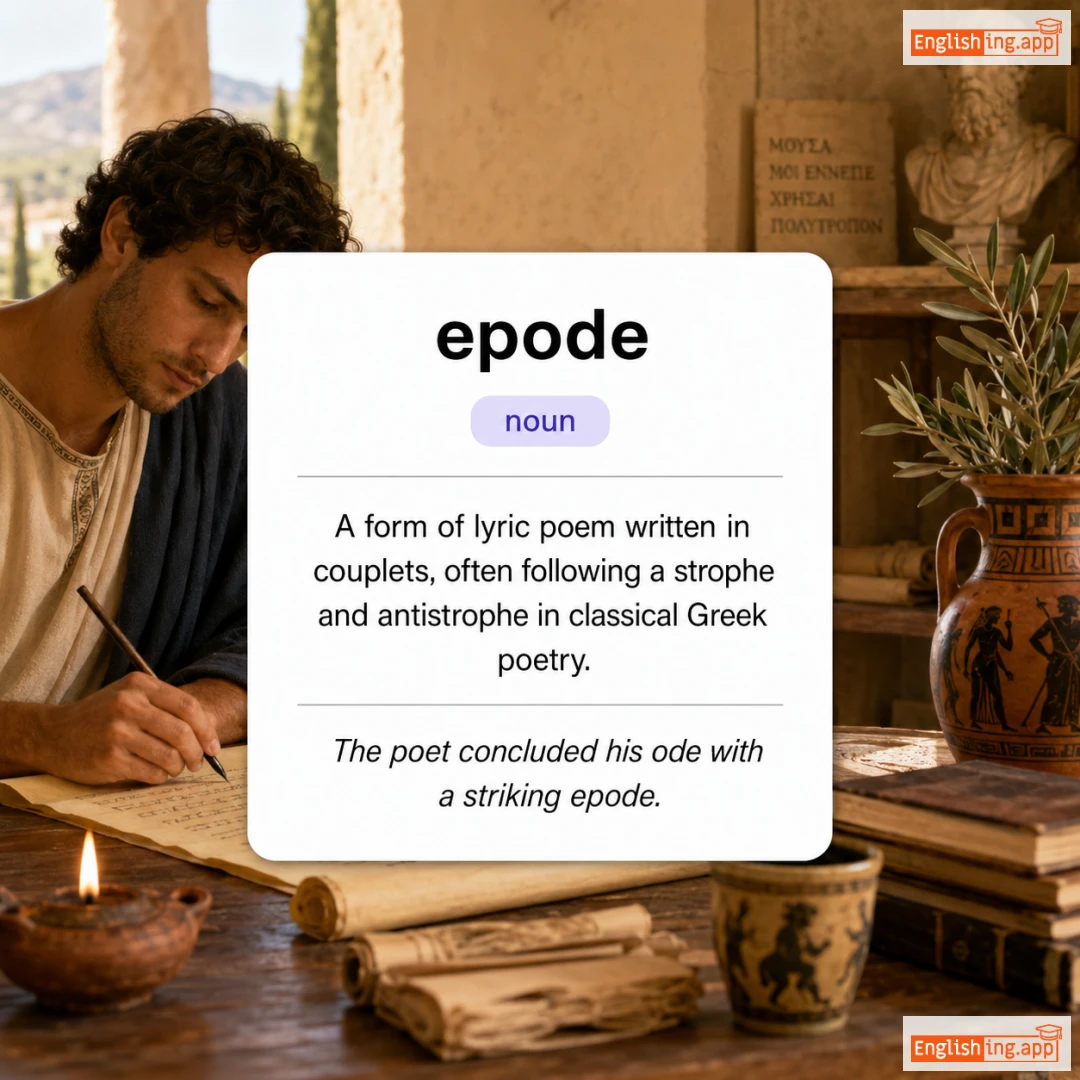
epode definition card — visual illustration of the meaning
noun C2
/ˈɛpəʊd/
抒情詩の一形式 (shūjōshi no ichikeishiki)

A form of lyric poem written in couplets, often following a strophe and antistrophe in classical Greek poetry.

"The poet concluded his ode with a striking epode."

"詩人は印象的なエポードでオードを締めくくった。" (Shijin wa inshō-teki na epōdo de ōdo o shimekutta.)
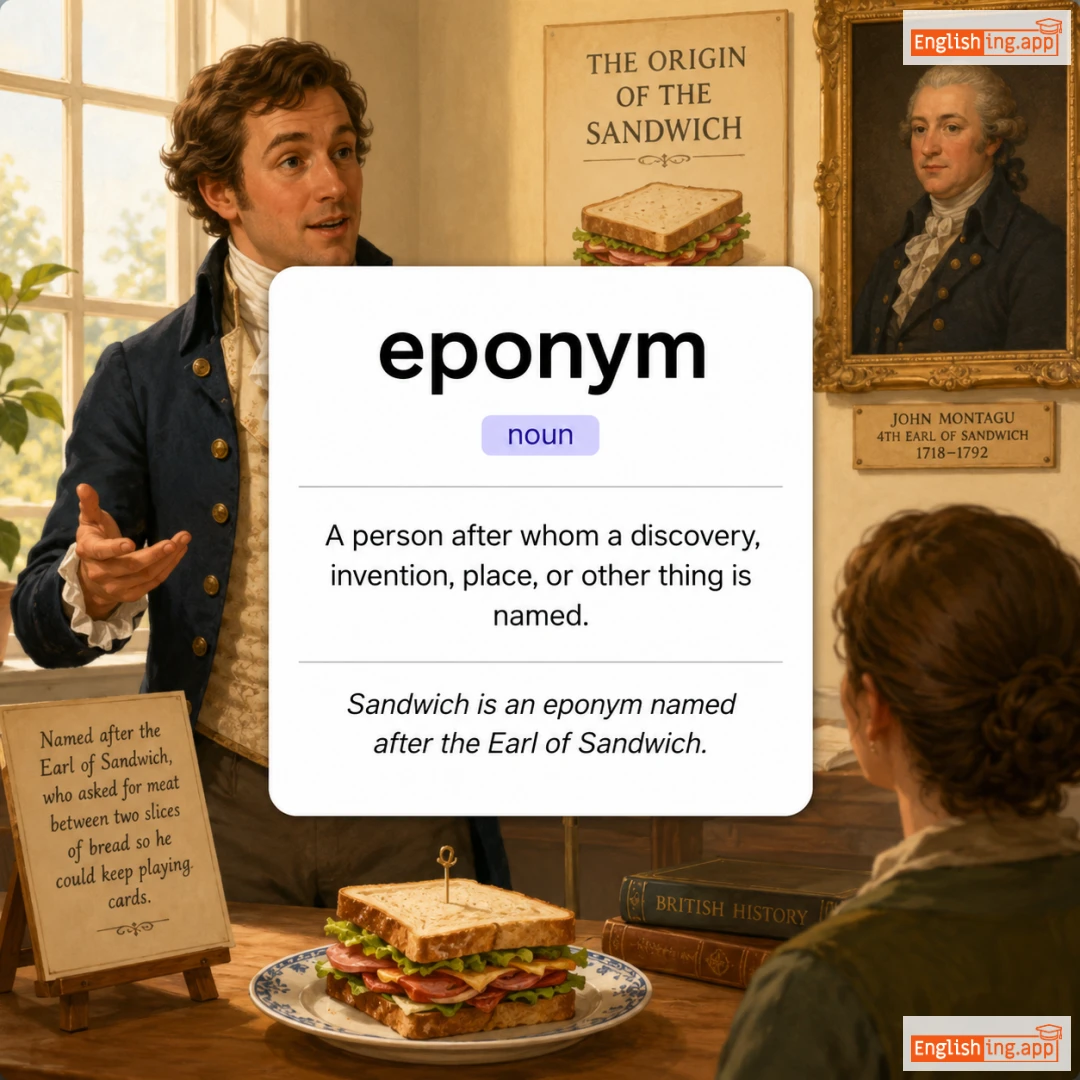
eponym definition card — visual illustration of the meaning
noun C2
/ˈɛpənɪm/
名前の由来となった人 (namae no yurai to natta hito)

A person after whom a discovery, invention, place, or other thing is named.

"Sandwich is an eponym named after the Earl of Sandwich."

"サンドイッチはサンドイッチ伯爵にちなんだエポニムです。" (Sandoicchi wa Sandoicchi Hakushaku ni chinanda eponimu desu.)
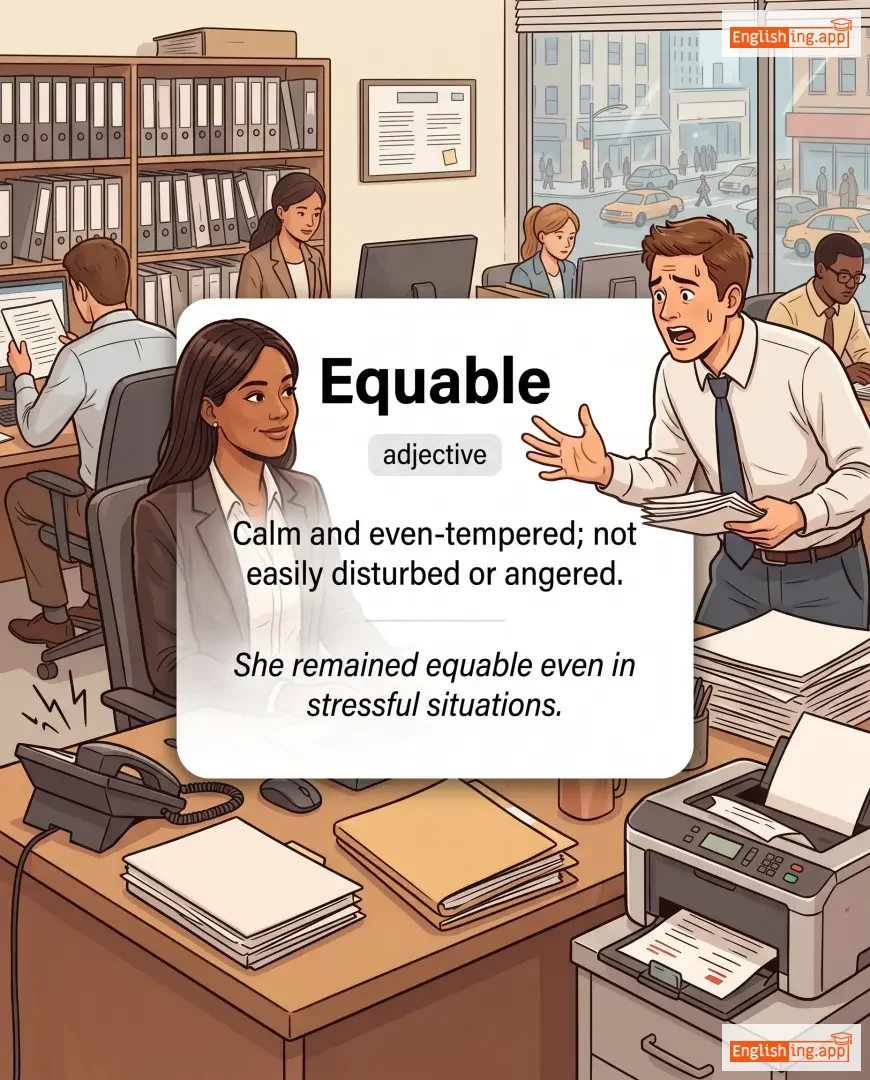
Equable definition card — visual illustration of the meaning
adjective C2
/ˈɛkwəbl̩/
冷静 (reijou)

Calm and even-tempered; not easily disturbed or angered.

"She remained equable even in stressful situations."

"彼女はストレスの多い状況でも冷静でい続けました。" (Kanojo wa sutoresu no ooi joukyou demo reijou de itsuzukemashita.)
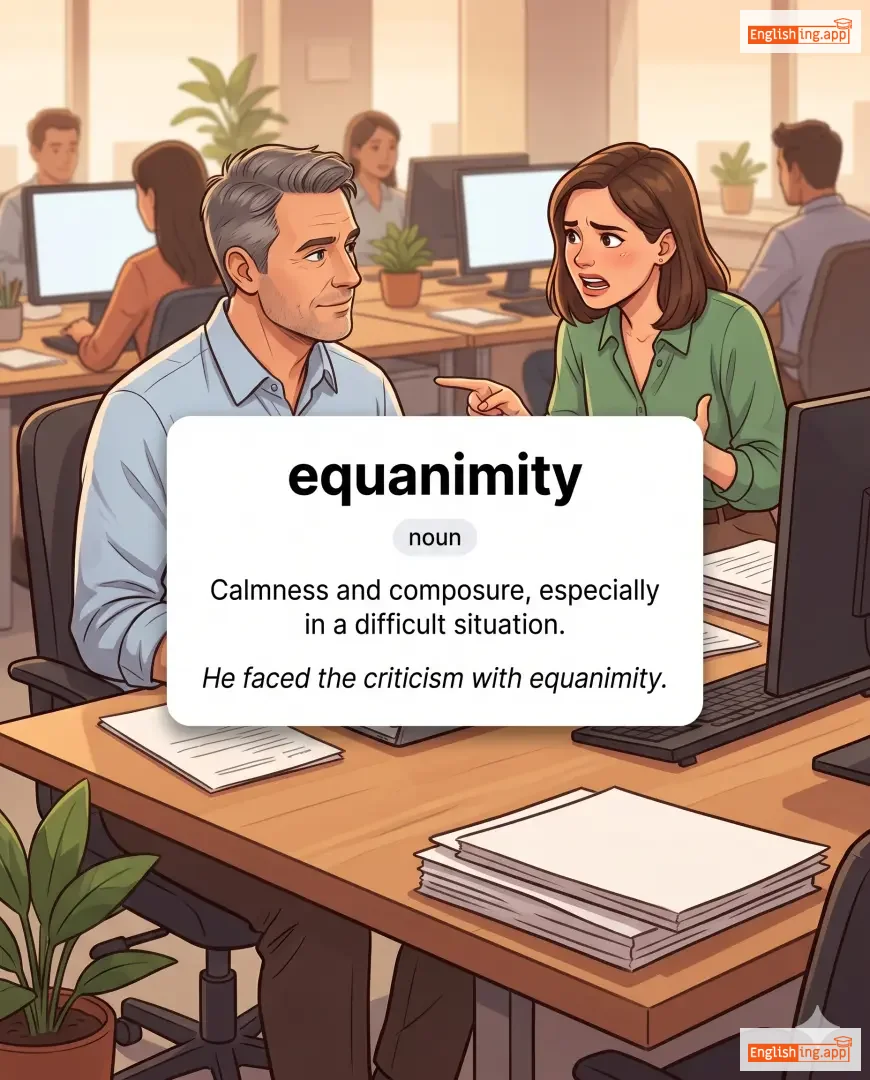
equanimity definition card — visual illustration of the meaning
noun C2
/ˌekwəˈnɪmɪti/
平静 (heisei)

Calmness and composure, especially in a difficult situation.

"He faced the criticism with equanimity."

"彼は批判に対して平静で接した。" (Kare wa hihan ni taishite heisei de sesshita.)
adjective C2
/ˈiːkwaɪn/
馬に関連する (uma ni kanren suru)

Relating to or resembling a horse.

"The veterinarian specialized in equine medicine."

"獣医は馬の医療に専門特化していました。" (Jūi wa uma no iryō ni senmon tokka shite imashita.)
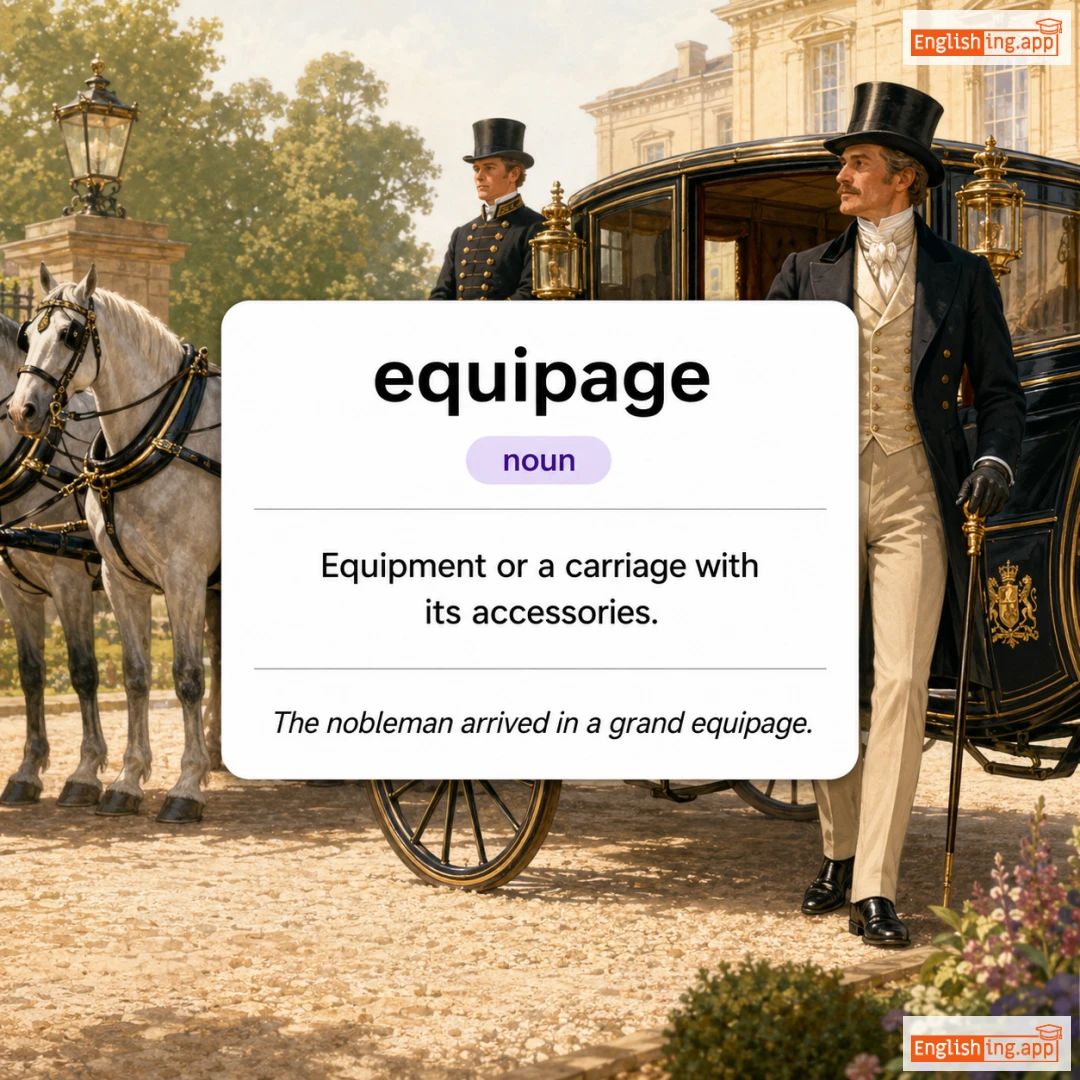
equipage definition card — visual illustration of the meaning
noun C2
/ˈɛkwɪpɪdʒ/
装備またはアクセサリー付きの馬車 (sōbi mata wa akusesarī tsuki no basha)

Equipment or a carriage with its accessories.

"The nobleman arrived in a grand equipage."

"貴族は豪華な馬車で到着しました。" (Kizoku wa gōka na basha de tōchaku shimashita.)
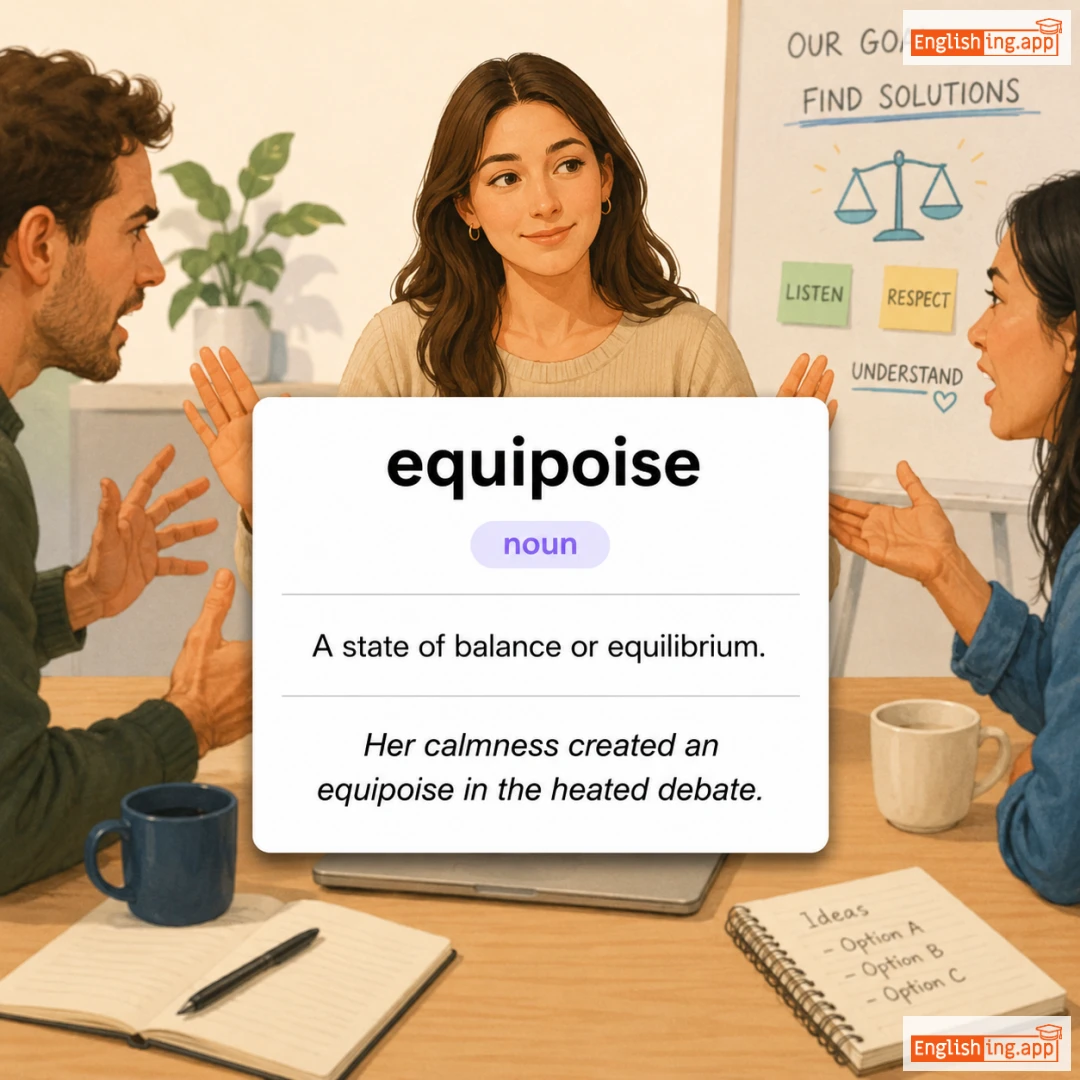
equipoise definition card — visual illustration of the meaning
noun C2
/ˈɛkwɪpɔɪz/
均衡 (kinkou)

A state of balance or equilibrium.

"Her calmness created an equipoise in the heated debate."

"彼女の落ち着きは熱い議論の中で均衡を作り出しました。" (Kanojo no ochitsuki wa atsui giron no naka de kinkou wo tsukuridashimashita.)
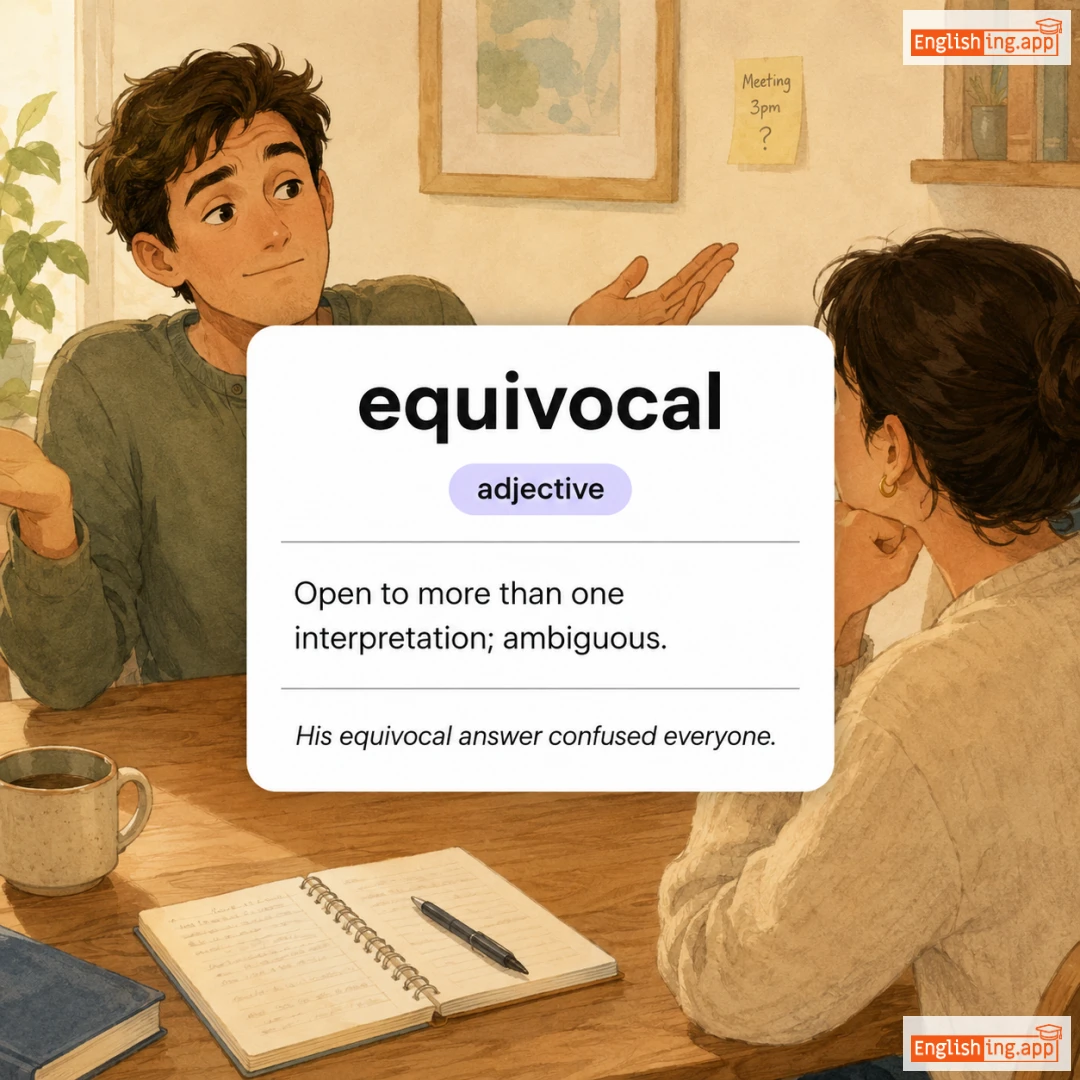
equivocal definition card — visual illustration of the meaning
adjective C2
/ɪˈkwɪvəkəl/
曖昧 (aimai)

Open to more than one interpretation; ambiguous.

"His equivocal answer confused everyone."

"彼の曖昧な答えは皆を混乱させた。" (Kare no aimai na kotae wa mina o konran saseta.)
equivocate definition card — visual illustration of the meaning
verb C2
/ɪˈkwɪvəˌkeɪt/
曖昧に話す (aimai ni hanasu)

To speak ambiguously or avoid giving a clear answer.

"The politician equivocated when asked about the scandal."

"その政治家はスキャンダルについて尋ねられたとき、曖昧に話した。" (Sono seijika wa sukyandaru ni tsuite tazunerareta toki, aimai ni hanashita.)
noun C2
/ɪˌkwɪvəˈkeɪʃən/
あいまいな言葉の使用 (aimai na kotoba no shiyou)

The use of ambiguous language to conceal the truth or to avoid committing oneself.

"The politician’s equivocation frustrated voters who wanted a clear answer."

"政治家のあいまいな言葉は、明確な答えを求めていた有権者を失望させた。" (Seijika no aimai na kotoba wa, meikaku na kotae o motomete ita yūken-sha o shitsubō saseta.)
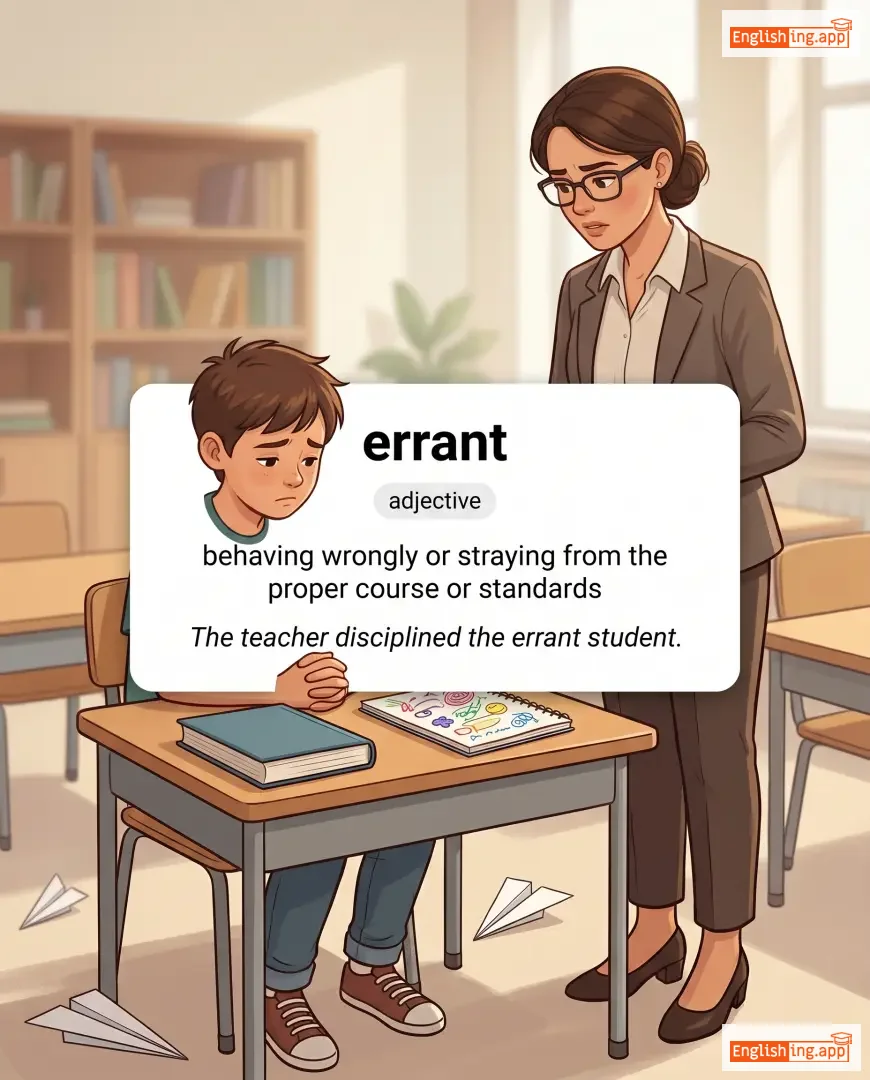
errant definition card — visual illustration of the meaning
adjective C2
/ˈɛrənt/
逸脱した (ittsudatsu shita)

behaving wrongly or straying from the proper course or standards

"The teacher disciplined the errant student."

"教師は逸脱した生徒を罰しました。" (Kyōshi wa ittsudatsu shita seito o basshimashita.)
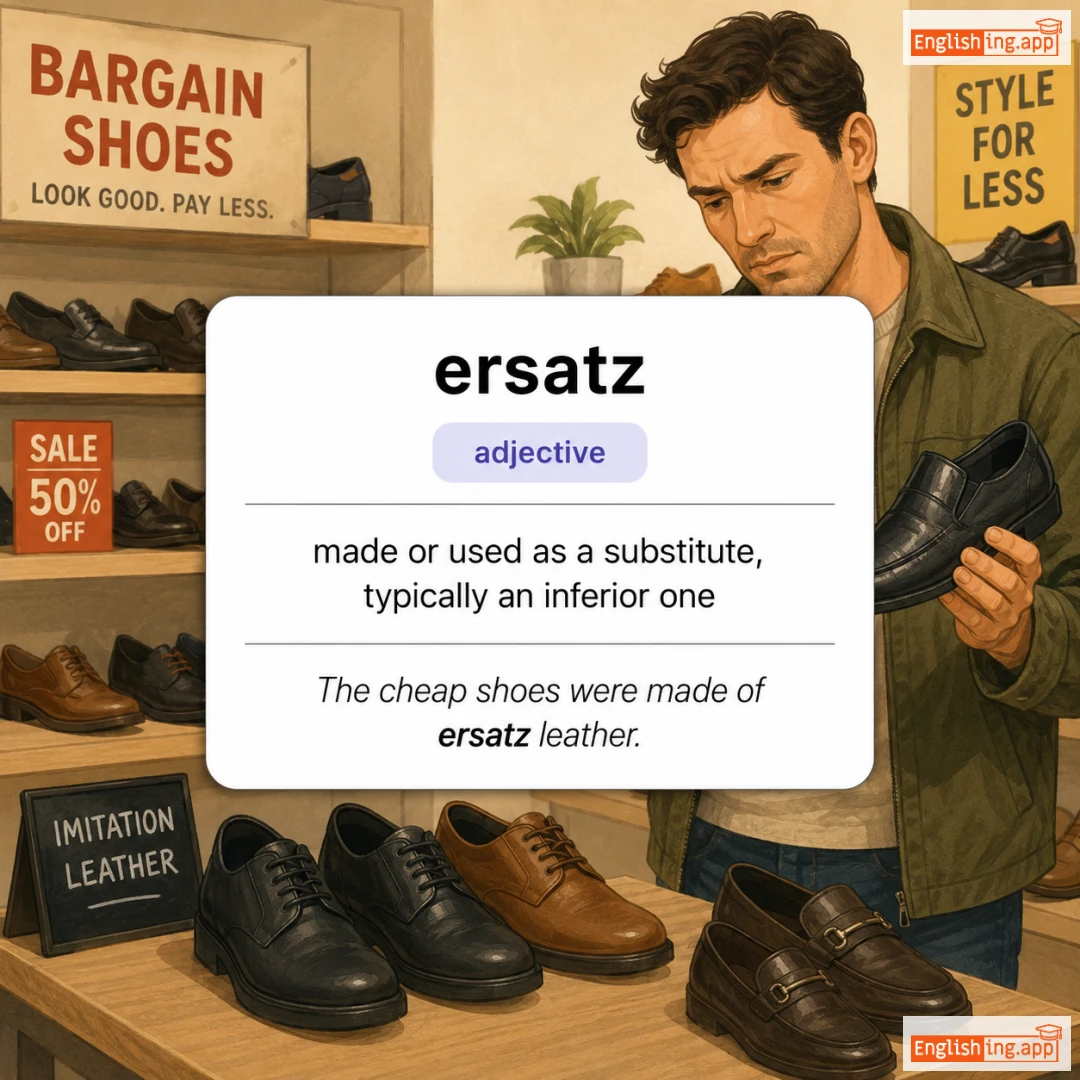
ersatz definition card — visual illustration of the meaning
adjective C2
/ˈɛrzæts/
代用品 (daiyōhin)

made or used as a substitute, typically an inferior one

"The cheap shoes were made of ersatz leather."

"安い靴は代用品の合成皮革で作られていました。" (Yasui kutsu wa daiyōhin no gōsei hikaku de tsukurarete imashita.)
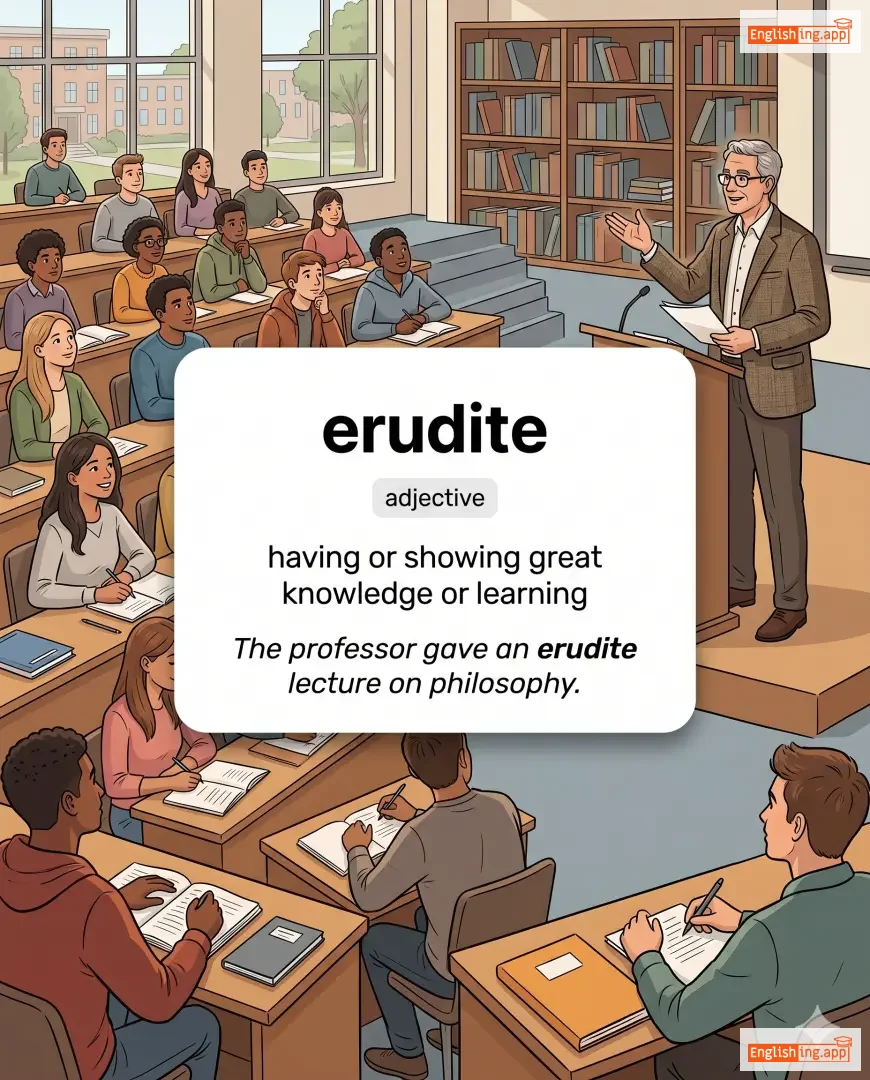
erudite definition card — visual illustration of the meaning
adjective C2
/ˈɛrjʊˌdaɪt/
博識 (hakushiki)

having or showing great knowledge or learning

"The professor gave an erudite lecture on philosophy."

"教授は哲学について博識な講義をしました。" (Kyouju wa tetsugaku ni tsuite hakushiki na kougi o shimashita.)
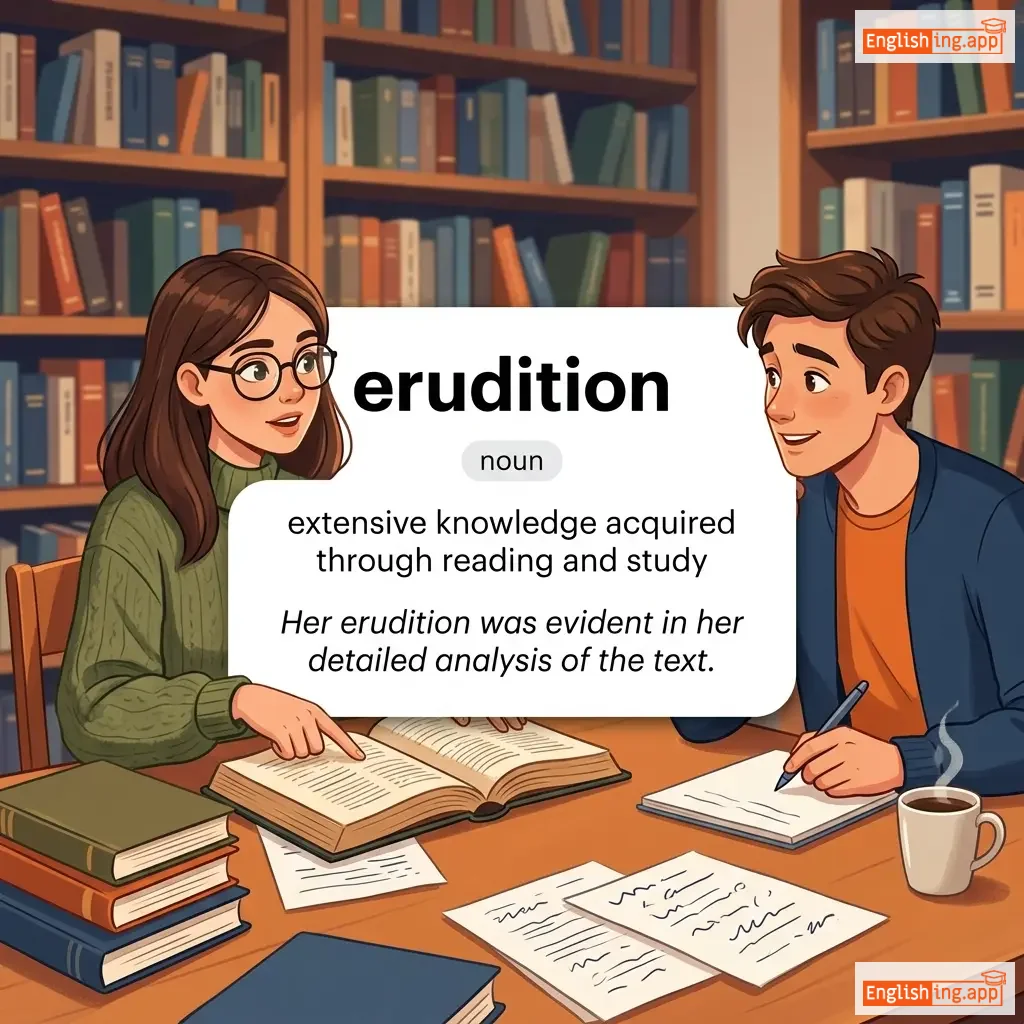
erudition definition card — visual illustration of the meaning
noun C2
/ˌɛrjʊˈdɪʃən/
博識 (hakushiki)

extensive knowledge acquired through reading and study

"Her erudition was evident in her detailed analysis of the text."

"彼女の博識はテキストの詳細な分析に明らかに現れていた。" (Kanojo no hakushiki wa tekisuto no shousai na bunseki ni akirakani arawarete ita.)
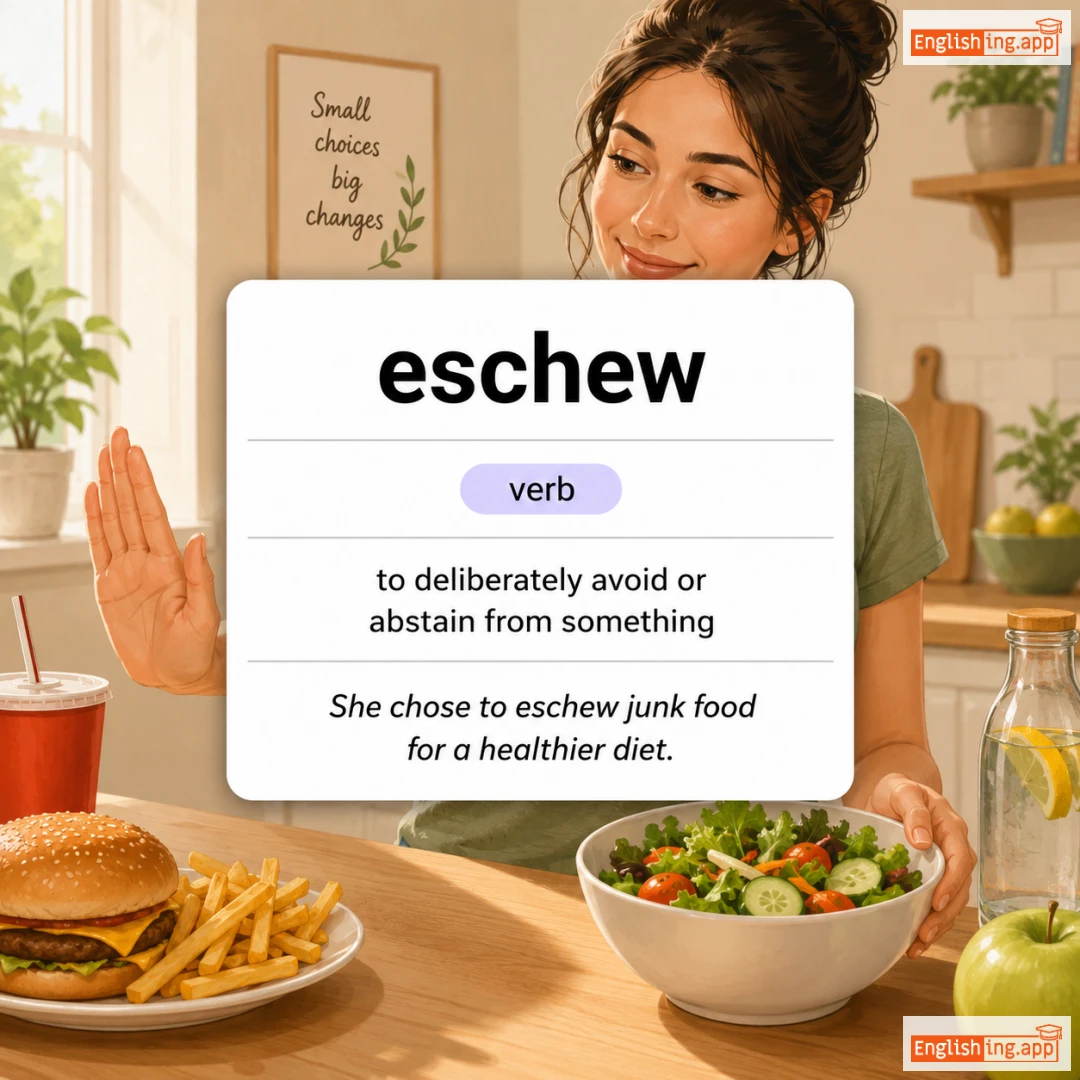
eschew definition card — visual illustration of the meaning
verb C2
/ɪsˈtʃuː/
避ける (sakeru)

to deliberately avoid or abstain from something

"She chose to eschew junk food for a healthier diet."

"彼女は健康的な食事のためにジャンクフードを避けることを選びました。" (Kanojo wa kenko-teki na shokuji no tame ni janku fudo o sakeru koto o erabimashita.)
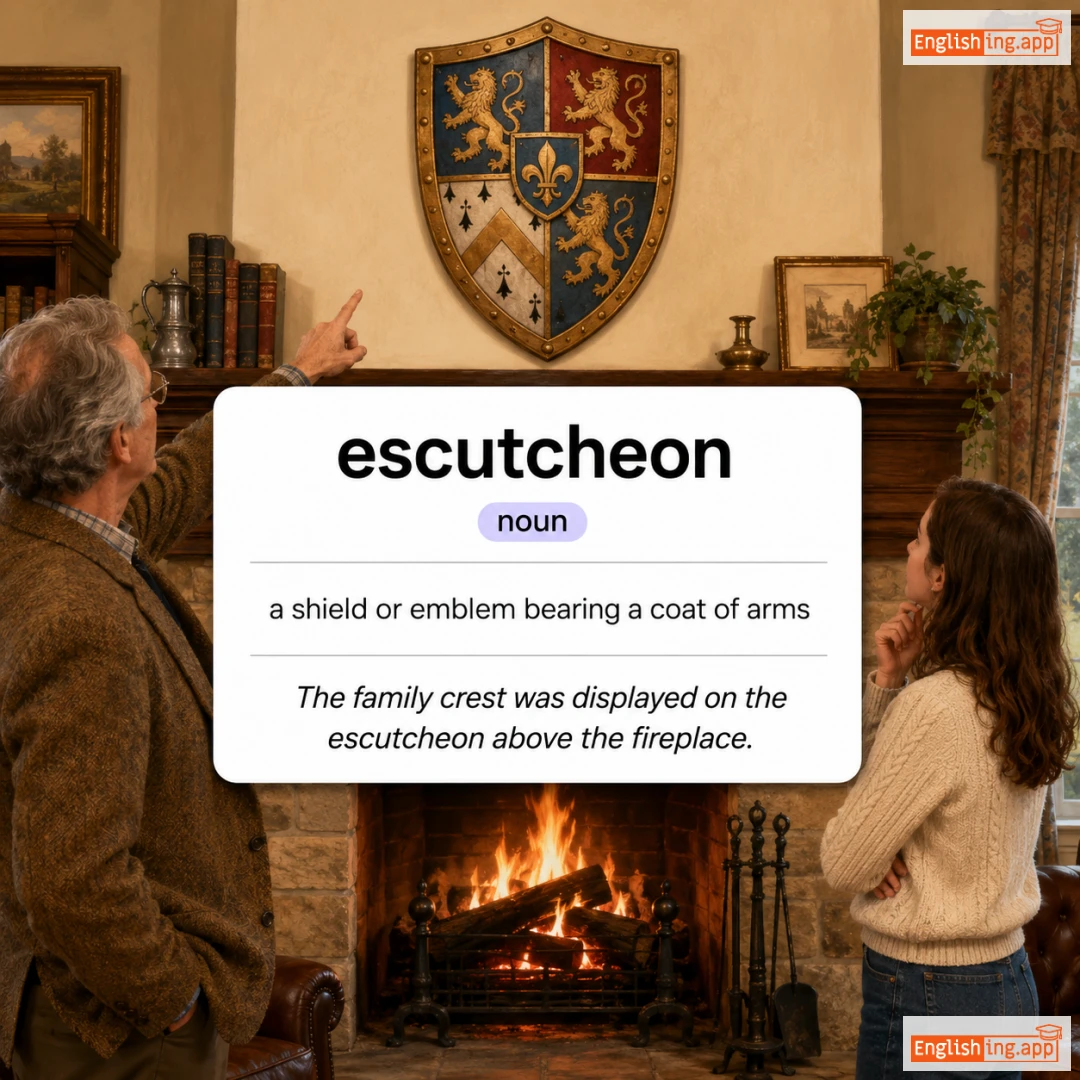
escutcheon definition card — visual illustration of the meaning
noun C2
/ɪˈskʌtʃən/
家族の紋章が描かれた盾 (kazoku no monshō ga egakareta tate)

a shield or emblem bearing a coat of arms

"The family crest was displayed on the escutcheon above the fireplace."

"家族の紋章は暖炉の上の盾に展示されていた。" (Kazoku no monshō wa danro no ue no tate ni tenji sarete ita.)
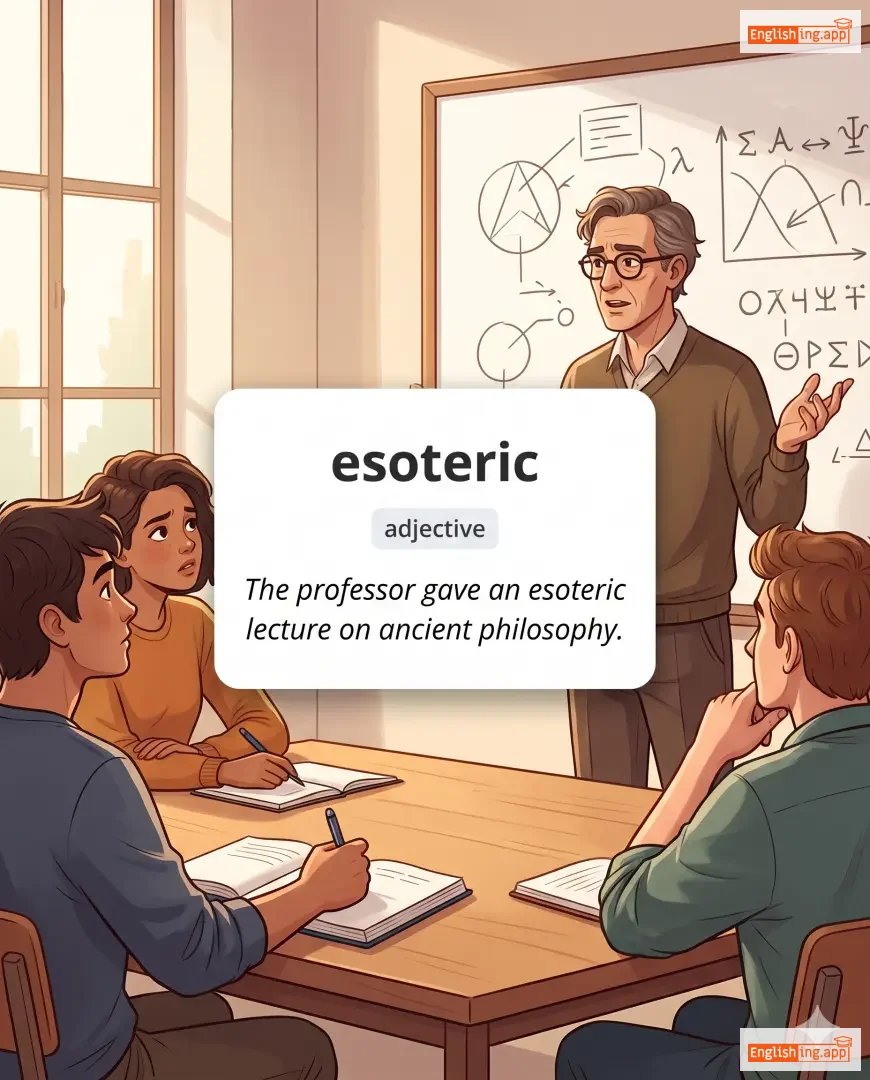
esoteric definition card — visual illustration of the meaning
adjective C2
/ˌɛsəˈtɛrɪk/
秘教的 (hikyou teki)

intended for or understood by only a small number of people with special knowledge

"The professor gave an esoteric lecture on ancient philosophy."

"教授は古代哲学に関する秘教的な講義を行いました。" (Kyouju wa kodai tetsugaku ni kansuru hikyou teki na kougi wo okonai mashita.)
esprit de corps definition card — visual illustration of the meaning
noun C2
/ɛˌspriː də ˈkɔːr/
チームスピリット (chīmusupiritto)

A feeling of pride, fellowship, and loyalty shared by members of a group.

"The team's esprit de corps was evident in their cooperative effort."

"チームのスピリットは、彼らの協力的な努力に明らかに現れていた。" (Chīmu no supiritto wa, karera no kyōryokuteki na doryoku ni akiraka ni arawarete ita.)
verb C2
/ɪˈspaɪ/
見る (miru)

To catch sight of or notice something, especially from a distance.

"From the hilltop, she espied a small village in the valley."

"丘の頂上から、彼女は谷間に小さな村を見つけました。" (Oka no chōjō kara, kanojo wa tani ma ni chiisana mura o mitsukemashita.)
noun C2
/ˈɛskwaɪər/
エスクワイア (esukuwia)

A title of respect often used after a man's name, especially for lawyers in the United States.

"John Smith, Esquire, will be representing the client in court."

"ジョン・スミス、エスクワイア、は法廷でクライアントを代表する予定です。" (Jon Sumisu, Esukuwia, wa hōtei de kuraianto o daihyō suru yotei desu.)
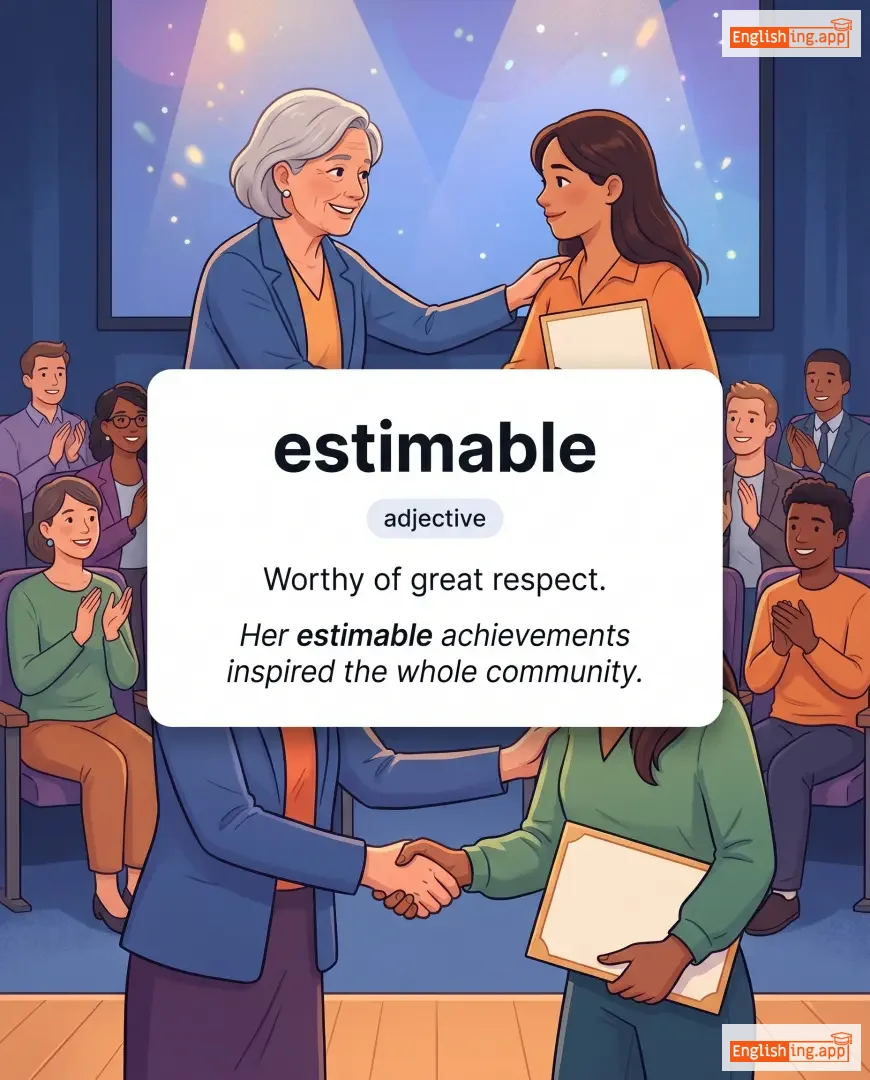
estimable definition card — visual illustration of the meaning
adjective C2
/ˈɛstɪməbl/
尊敬すべき (sonkei subeki)

Worthy of great respect.

"Her estimable achievements inspired the whole community."

"彼女の尊敬に値する業績はコミュニティ全体にインスピレーションを与えました。" (Kanojo no sonkei subeki gyōseki wa komyuniti zentai ni insupirēshon o ataemashita.)
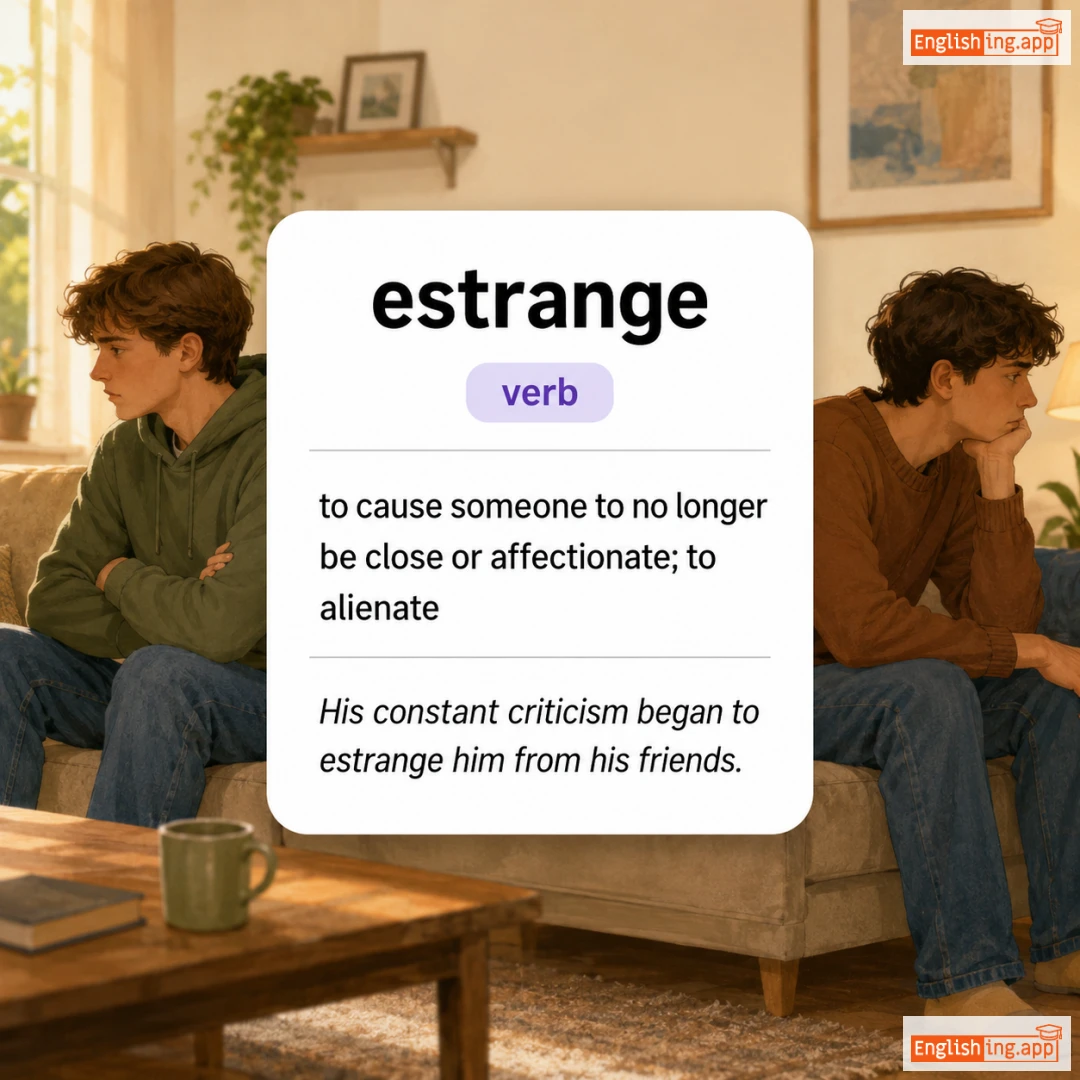
estrange definition card — visual illustration of the meaning
verb C2
/ɪˈstreɪndʒ/

to cause someone to no longer be close or affectionate; to alienate

"His constant criticism began to estrange him from his friends."

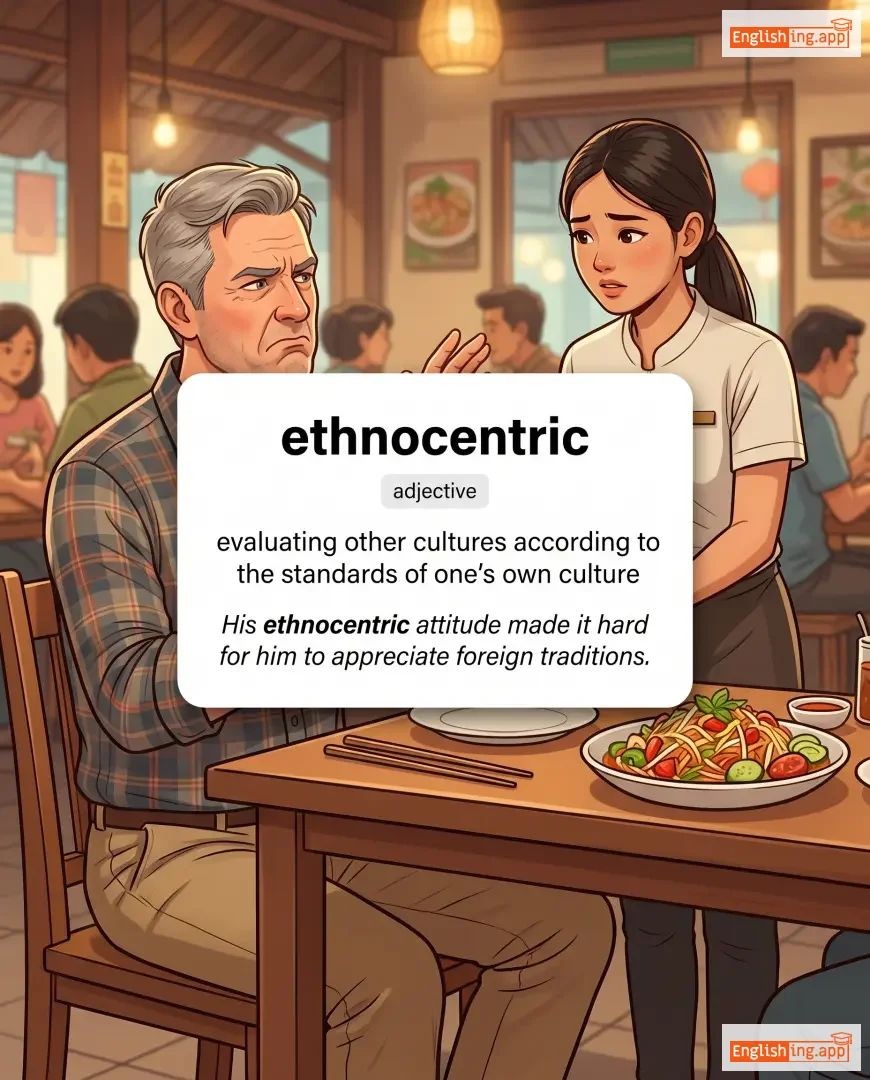
ethnocentric definition card — visual illustration of the meaning
adjective C2
/ˌeθ.noʊˈsen.trɪk/
エスノセントリック (esunosentorikku)

evaluating other cultures according to the standards of one's own culture

"His ethnocentric attitude made it hard for him to appreciate foreign traditions."

"彼のエスノセントリックな態度は、外国の伝統を評価するのを難しくしました。" (Kare no esunosentorikku na taido wa, gaikoku no dentō o hyōka suru no o muzukashiku shimashita.)
noun C2
/ɛθˈnɒlədʒi/
民族学 (minzokugaku)

the study of the characteristics of different peoples and the differences and relationships between them

"She specialized in ethnology to better understand cultural diversity."

"彼女は文化的多様性をよりよく理解するために民族学を専門にしていた。" (Kanojo wa bunkateki tayōsei o yori yoku rikai suru tame ni minzokugaku o senmon ni shite ita.)
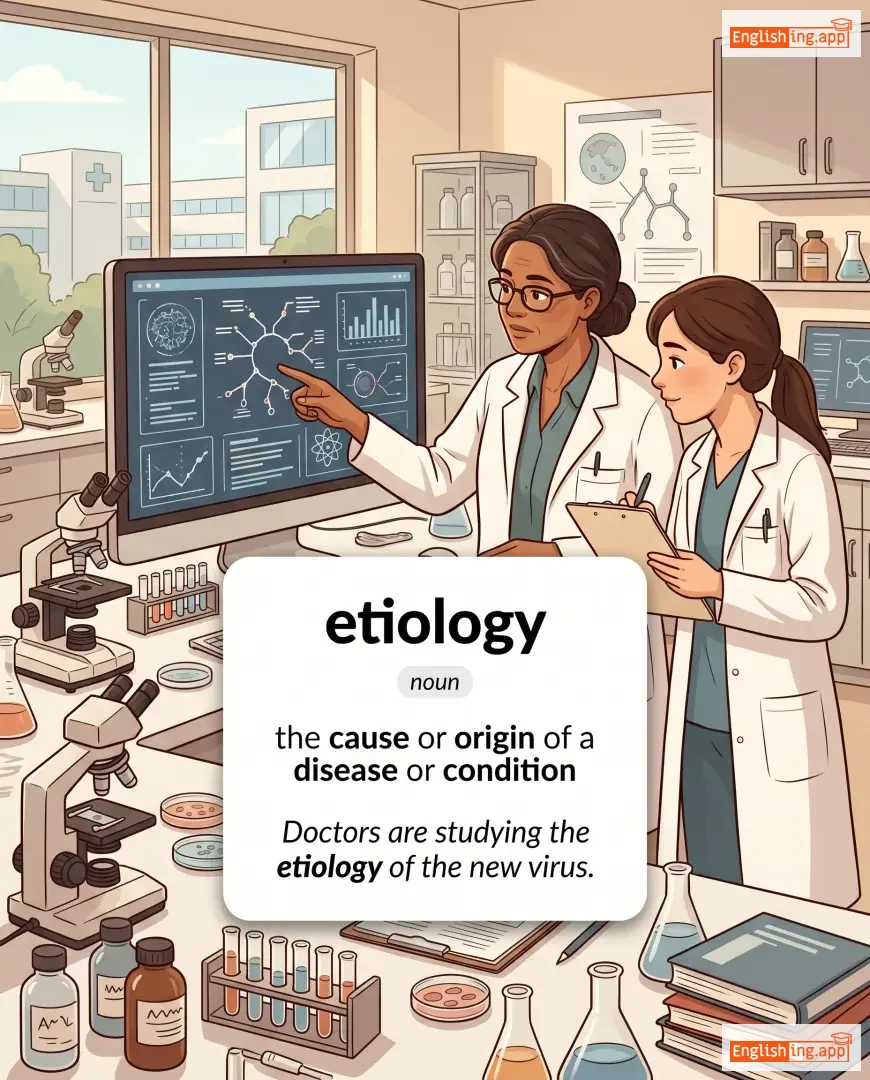
etiology definition card — visual illustration of the meaning
noun C2
/ˌiː.tiˈɒ.lə.dʒi/
病因学 (byōingaku)

the cause or origin of a disease or condition

"Doctors are studying the etiology of the new virus."

"医師たちは新しいウイルスの病因学を研究しています。" (Ishitachi wa atarashī uirusu no byōingaku o kenkyū shiteimasu.)
adjective C2
/juːˈdʒɛnɪk/
優生学的 (yūseigakuteki)

Relating to or aiming at improving the genetic quality of a population.

"In the early 20th century, some scientists supported eugenic policies."

"20世紀初頭、一部の科学者は優生学的な政策を支持した。" (20 seiki shotō, ichibu no kagakusha wa yūseigakuteki na seisaku o shiji shita.)
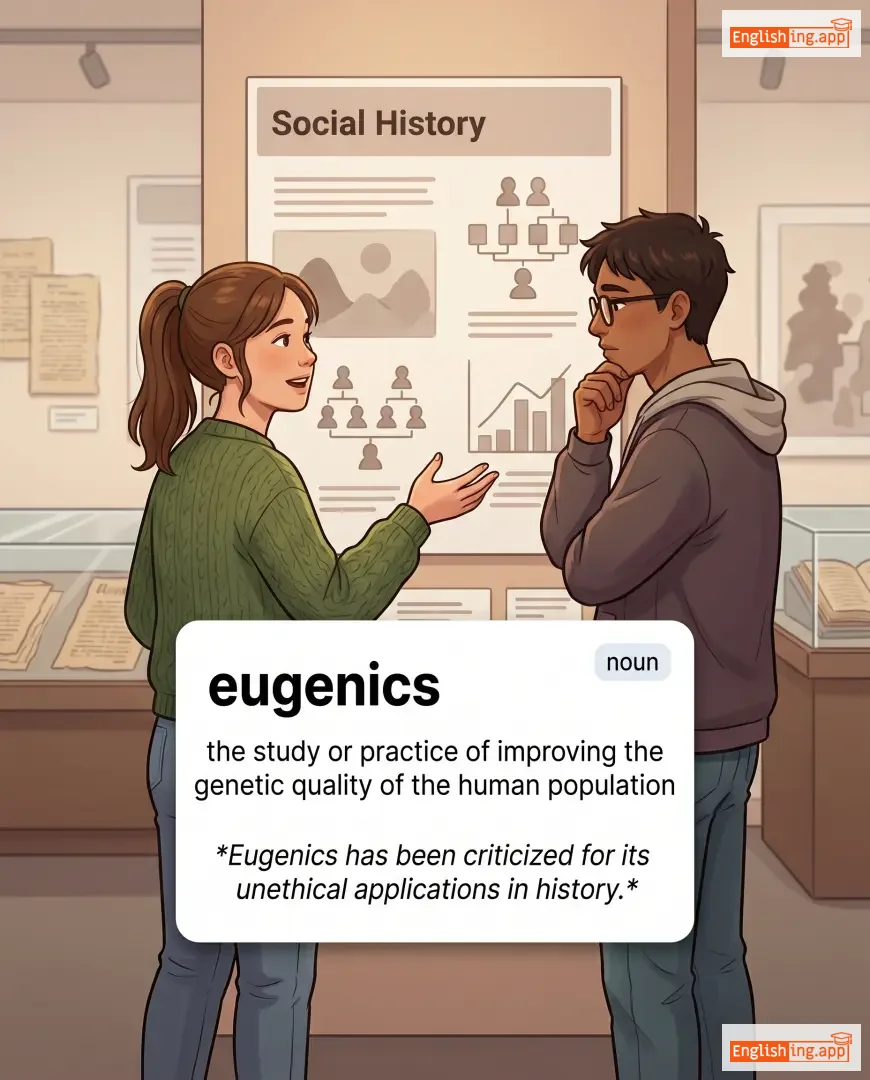
eugenics definition card — visual illustration of the meaning
noun C2
/juːˈdʒen.ɪks/
優生学 (yūseigaku)

the study or practice of improving the genetic quality of the human population

"Eugenics has been criticized for its unethical applications in history."

"優生学は歴史的にその非倫理的な応用について批判されてきました。" (Yūseigaku wa rekishiteki ni sono hinrinteki na ōyō ni tsuite hihan sarete kimashita.)
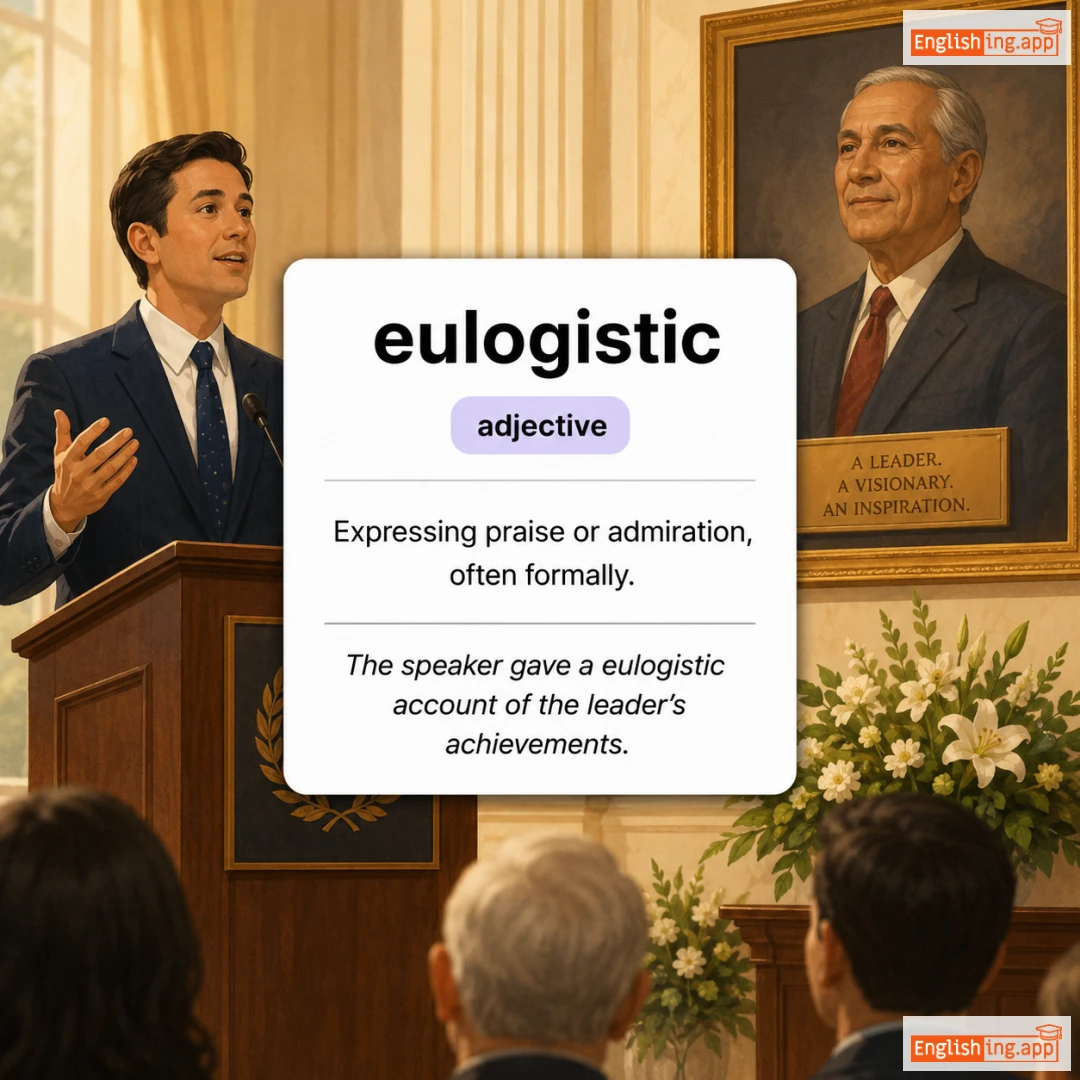
eulogistic definition card — visual illustration of the meaning
adjective C2
/ˌjuːləˈdʒɪstɪk/
賛辞の (sanchi no)

Expressing praise or admiration, often formally.

"The speaker gave a eulogistic account of the leader’s achievements."

"スピーカーはリーダーの業績について賛辞の言葉を述べました。" (Supīkā wa rīdā no gyōseki ni tsuite sanchi no kotoba o nobemashita.)
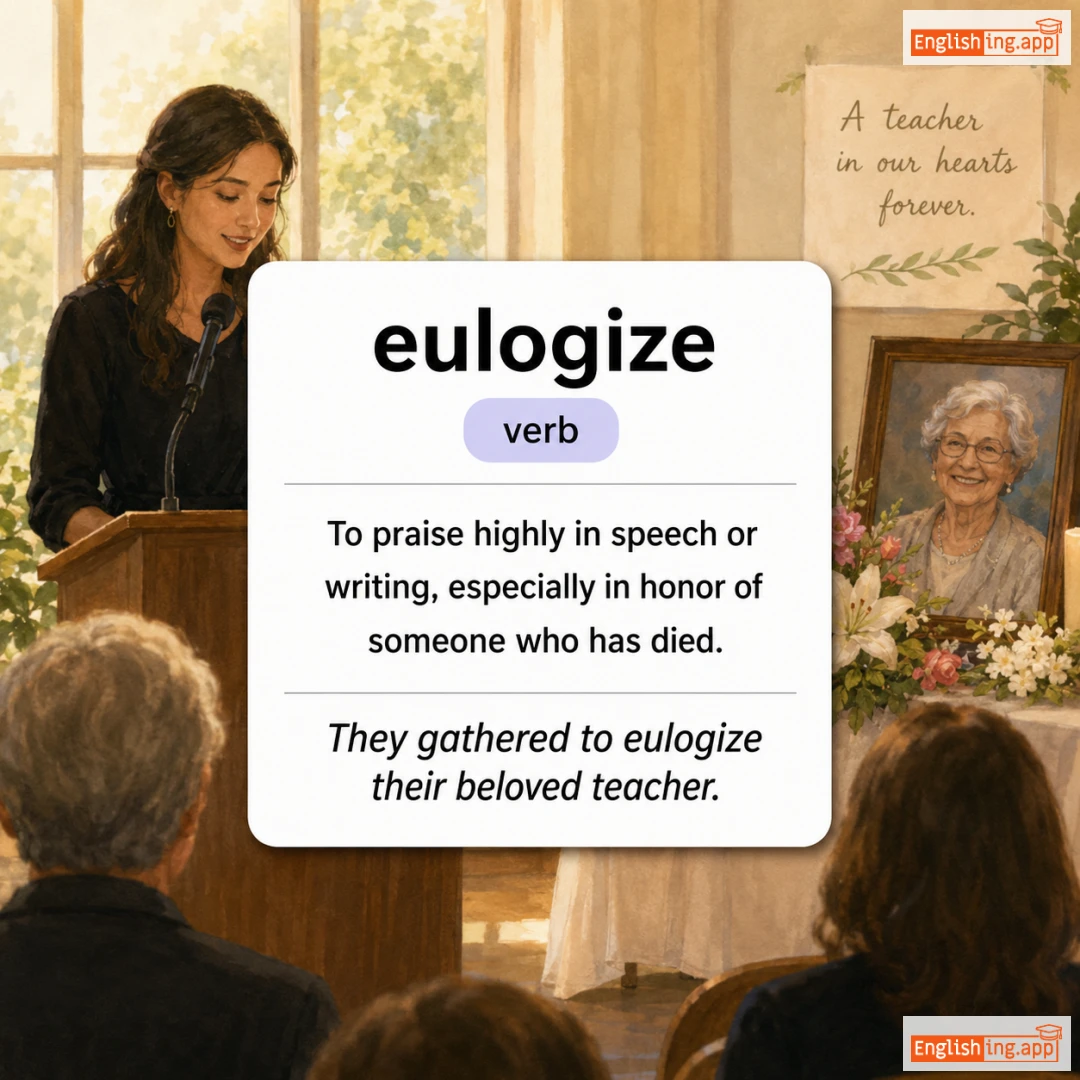
eulogize definition card — visual illustration of the meaning
verb C2
/ˈjuːləˌdʒaɪz/
讃える (tataeru)

To praise highly in speech or writing, especially in honor of someone who has died.

"They gathered to eulogize their beloved teacher."

"彼らは愛する先生を称賛するために集まりました。" (Karera wa aisuru sensei o tataeru tame ni atsumarimashita.)
adjective C2
/juːˈfoʊniəs/
耳に心地よい音 (mimi ni kokochi yoi oto)

Pleasing to the ear; having a sweet sound.

"The poet's euphonious language made the verse a delight to read."

"詩人のユーフォニアスな言葉は詩を読む喜びに変えました。" (Shijin no yūfoniasu na kotoba wa shi o yomu yorokobi ni kaemashita.)
noun C2
/ˈjuːfəni/
ユーフォニー (yuufonii)

The quality of being pleasing to the ear, especially through harmonious combination of words.

"The orator's speech was full of euphony and rhythm."

"演説者のスピーチはユーフォニーとリズムで満ちていた。" (Enzetsusha no supīchi wa yuufonii to rizumu de michite ita.)
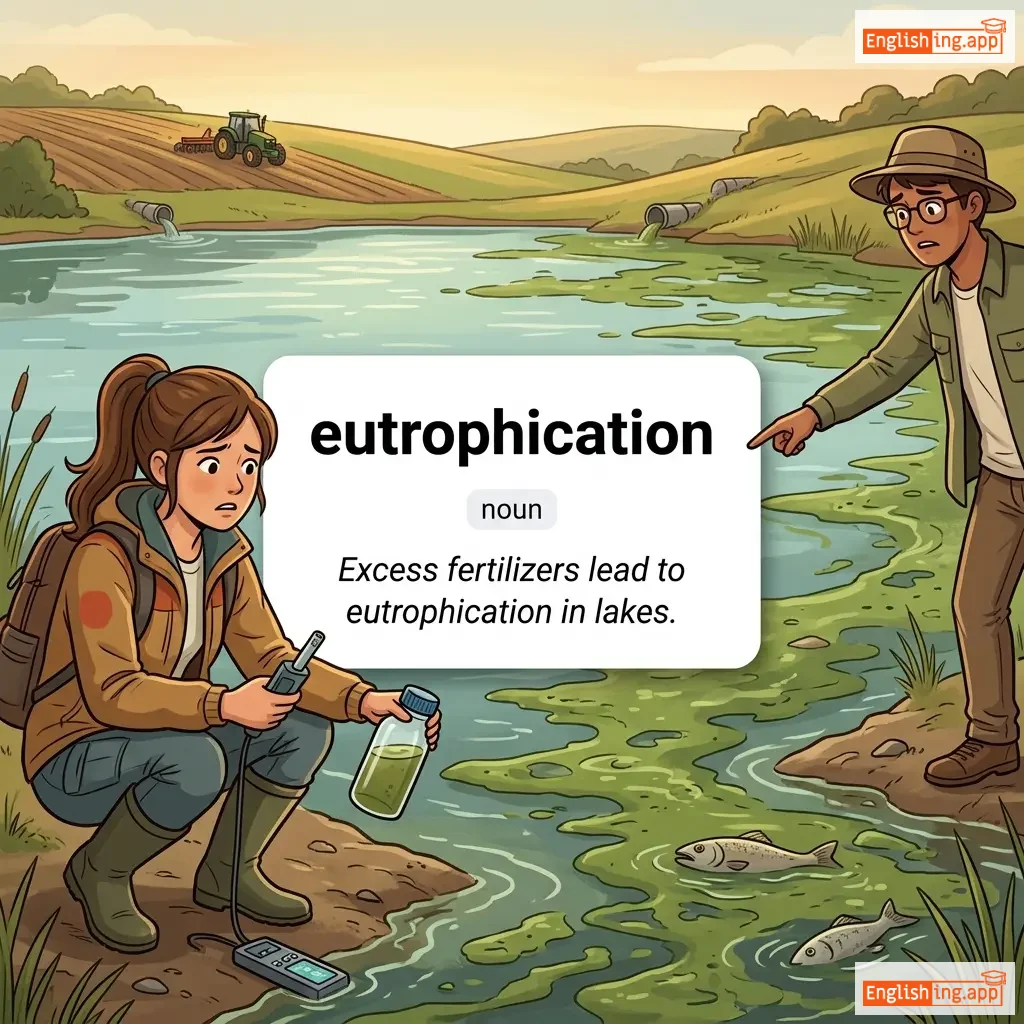
eutrophication definition card — visual illustration of the meaning
noun C2
/juːˌtrɑː.fɪˈkeɪ.ʃən/
湖やその他の水域における栄養素の過剰 (mizuumi ya sonota no suiiki ni okeru eiyōso no kajō)

Excessive richness of nutrients in a lake or other body of water, frequently due to runoff from the land, which causes a dense growth of plant life and death of animal life from lack of oxygen.

"Excess fertilizers lead to eutrophication in lakes."

"過剰な肥料は湖におけるユートロフィケーションを引き起こします。" (Kajōna hiryō wa mizuumi ni okeru yūtorofikēshon o hikiokoshimasu.)
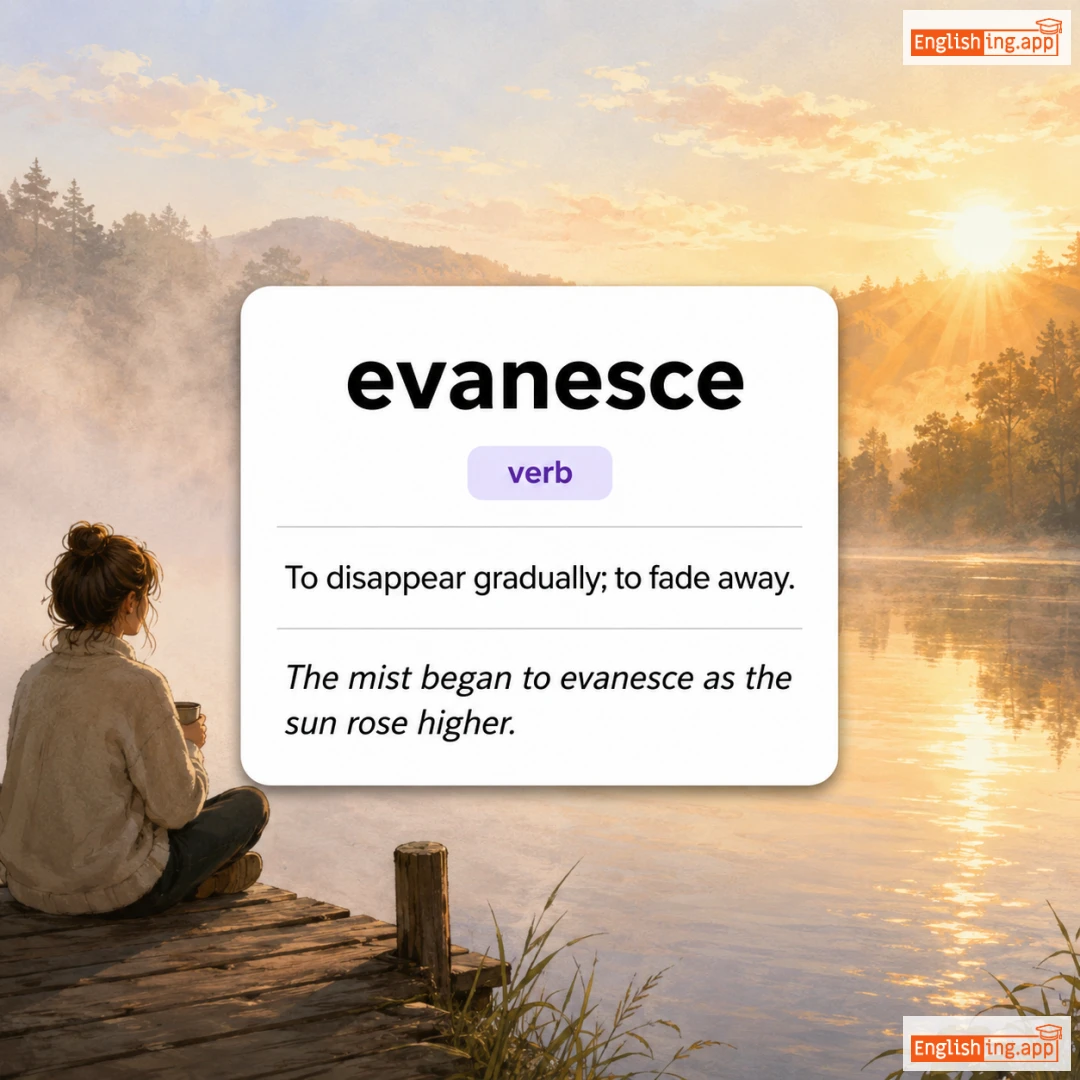
evanesce definition card — visual illustration of the meaning
verb C2
/ˌɛvəˈnɛs/
消える (kieru)

To disappear gradually; to fade away.

"The mist began to evanesce as the sun rose higher."

"霧は太陽が高く昇るにつれて消え始めた。" (Kiri wa taiyō ga takaku noboru ni tsurete kiehajimeta.)