Vocabularies

English Vocabulary Dictionary | Word Meanings, Definitions & Examples

3️⃣

tertiary

adjective C1
/ˈtɜːrʃieri/

third in order, rank, or level

"He is pursuing his tertiary education at the university."

noun C1
/ˈtɛstəmənt/
遺言 / 証拠 (igon / shouko)

a person's will; or strong evidence of something

"His success is a testament to his hard work and dedication."

"彼の成功は彼の努力と献身の証です。" (kare no seikou wa kare no doryoku to kenshin no shouko desu.)
Testimonial definition card — visual illustration of the meaning
noun C1
/ˌtɛstɪˈmoʊniəl/
推薦状 (suishenjō)

A formal statement testifying to someone's character, qualifications, or the quality of a product or service.

"The company shared a glowing testimonial from a satisfied customer."

"その会社は満足した顧客からの輝かしい推薦状を共有しました。" (Sono kaisha wa manzoku shita kokyaku kara no kagayakashī suishenjō o kyōyū shimashita.)
testimonials definition card — visual illustration of the meaning
noun C1
/ˌtɛstɪˈməʊnɪəlz/
推薦状, 証言 (suishenjou, shougen)

Written or spoken statements of praise or recommendation from clients or customers.

"Positive testimonials can enhance a company's reputation."

"ポジティブなテスティモニアルは企業の評判を高めることができます。" (Pojitibu na tesutimoniaru wa kigyou no hyouban wo takameru koto ga dekimasu.)
adjective C1
/ˈtɛsti/
イライラした (iraira shita)

Easily irritated or annoyed.

"He became testy when asked the same question repeatedly."

"同じ質問を繰り返し聞かれると、彼はイライラしてきた。" (Onaji shitsumon o kurikaeshi kikareru to, kare wa iraira shite kita.)
verb C1
/ˈtɛðər/
繋ぐ (tsunagu)

To tie an animal with a rope or chain so it cannot move far.

"The farmer tethered the goat to a post."

"農夫はヤギを柱に繋ぎました。" (Nōfu wa yagi o hashira ni tsunagimashita.)
adjective C1
/θiːˈmætɪk/
テーマ的 (tēmateki)

Relating to or based on a theme.

"The book is organized into thematic chapters."

"その本はテーマごとに章が整理されています。" (Sono hon wa tēma goto ni shō ga seiri sareteimasu.)
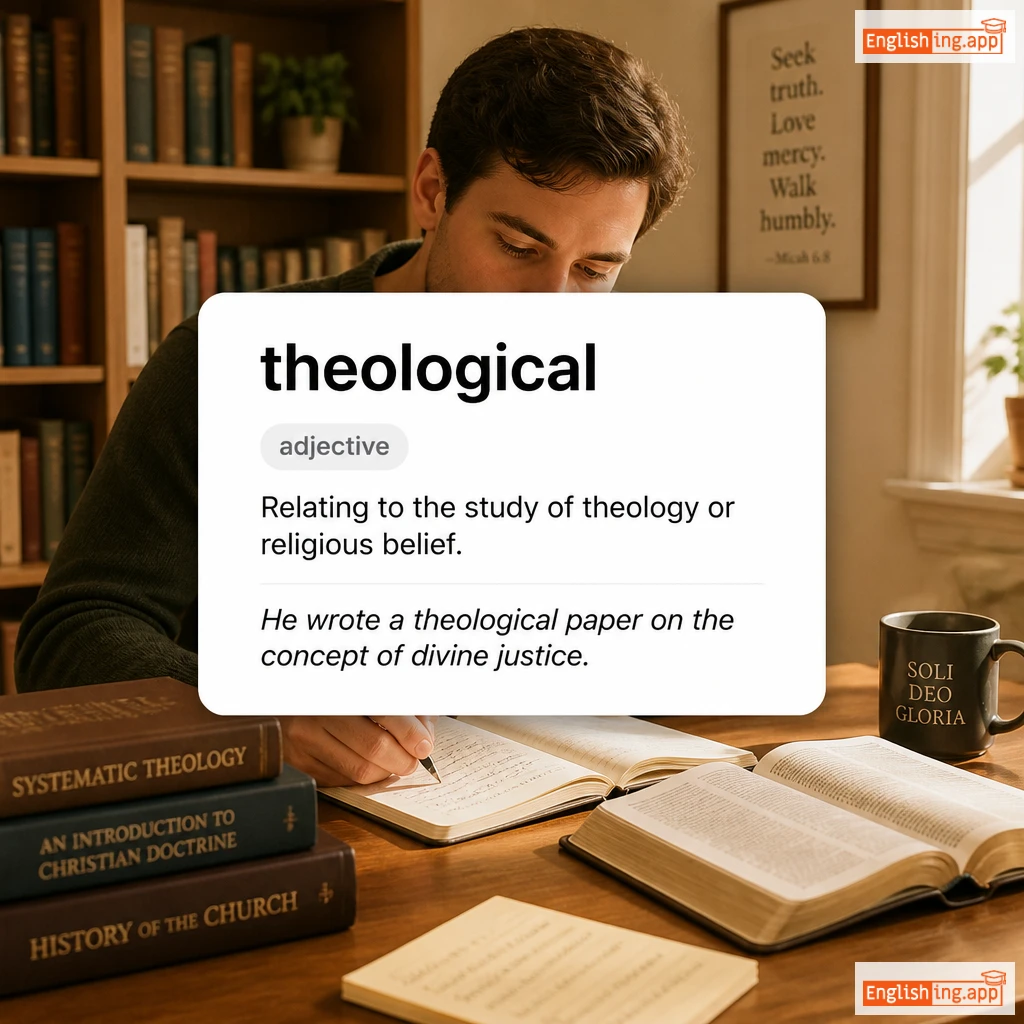
theological definition card — visual illustration of the meaning
adjective C1
/ˌθiːəˈlɒdʒɪkl/
神学的 (shingakuteki)

Relating to the study of theology or religious belief.

"He wrote a theological paper on the concept of divine justice."

"彼は神の正義の概念についての神学的な論文を書いた。" (Kare wa kami no seigi no gainen ni tsuite no shingakuteki na ronbun o kaita.)
theology definition card — visual illustration of the meaning
noun C1
/θiˈɒlədʒi/
神学 (shingaku)

The study of the nature of God and religious beliefs.

"She is pursuing a degree in theology at the university."

"彼女は大学で神学の学位を取得しています。" (Kanojo wa daigaku de shingaku no gakui o shutsudō shiteimasu.)
verb C1
/ˈθiːəraɪz/
理論化する (rironkasuru)

To form a theory or set of ideas to explain something.

"Scientists often theorize about the origins of the universe."

"科学者たちはしばしば宇宙の起源について理論化します。" (Kagakusha-tachi wa shibashiba uchuu no kigen ni tsuite rironka shimasu.)
adverb C1
/ˌðɛrəˈbaʊt/
おおよそ (ooyoso)

Approximately or around that place, amount, or time.

"The repairs will cost five hundred dollars or thereabout."

"修理費は約五百ドルになるでしょう。" (Shuurihi wa yaku gohyaku doru ni naru deshou.)
adverb C1
/ˈðɛərfɔːr/
それに対して (sore ni taishite)

For that or for it.

"He received payment and gave a receipt therefor."

"彼は支払いを受け取り、それに対する領収書を渡しました。" (Kare wa shiharai o uketori, sore ni taishite ryoushuusho o watashimashita.)
adverb C1
/ˌðɛərˈɪn/
その中に; (sono naka ni)

in that place; in that respect

"The box contains many treasures, and therein lies its value."

"箱には多くの宝物があり、その中にその価値がある。" (Hako ni wa ōku no hōmotsu ga ari, sono naka ni sono kachi ga aru.)
adverb C1
/ˌðɛərˈʌv/
それによって (sore ni yotte)

of that; from that

"The contract and all amendments thereof must be signed."

"契約とそのすべての修正はそれによって署名される必要があります。" (Keiyaku to sono subete no shūsei wa sore ni yotte shomei sareru hitsuyō ga arimasu.)
adverb C1
/ˌðɛərˈtu/
それとともに; (sore to tomoni)

to that; in addition to that

"The house and the garden attached thereto were sold."

"家とそれに付随する庭が売却されました。" (Ie to sore ni fuzui suru niwa ga baikyaku saremashita.)
adverb C1
/ˌðeərəˈpɒn/
その後すぐに; (sono ato sugu ni)

immediately after that; following that event

"He finished his speech and thereupon left the stage."

"彼はスピーチを終え、その後すぐにステージを離れました。" (Kare wa supīchi o oe, sono ato sugu ni sutēji o hanaremashita.)
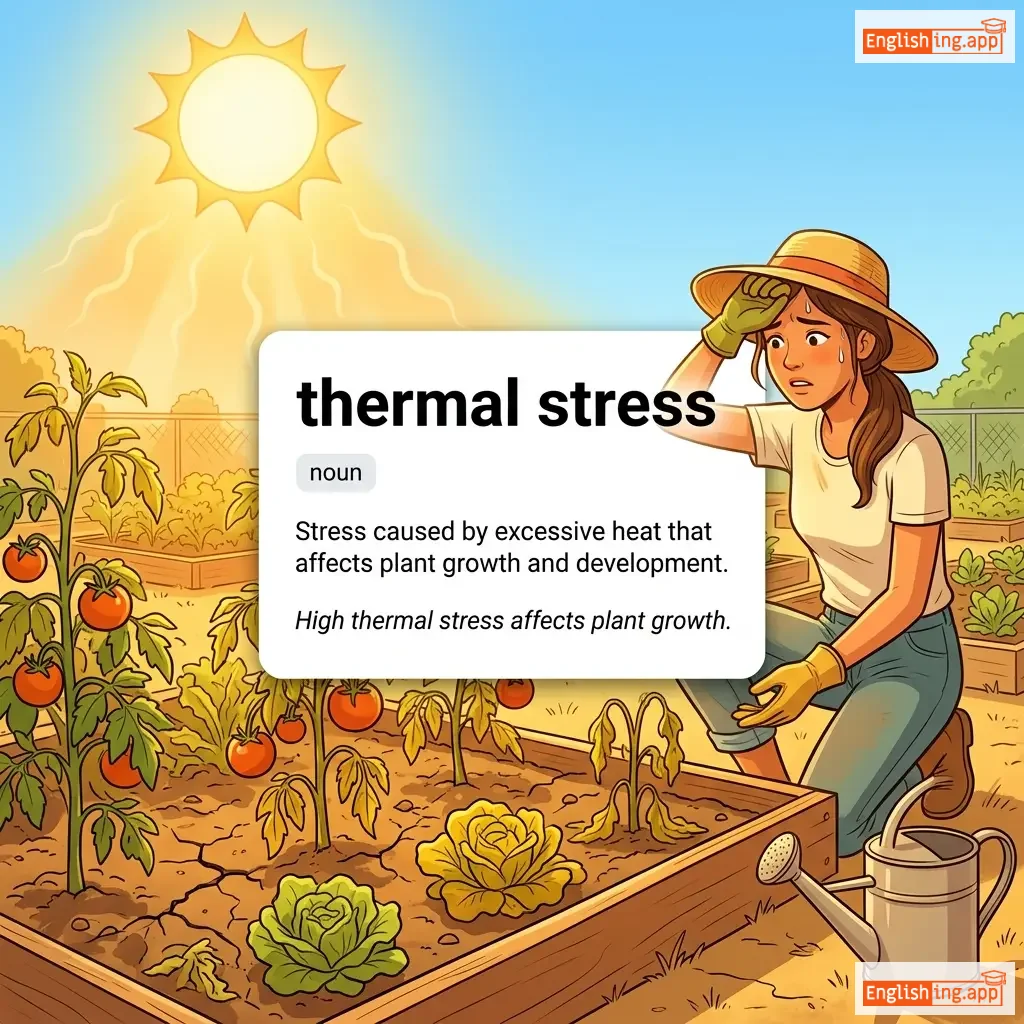
thermal stress definition card — visual illustration of the meaning
noun C1
ˈθɜː.məl stres
熱応力 (netsu ōryoku)

Stress caused by excessive heat that affects plant growth and development.

"High thermal stress affects plant growth."

"高い熱的ストレスは植物の成長に影響を与えます。" (Takai netsuteki sutoresu wa shokubutsu no seichō ni eikyō o ataemasu.)
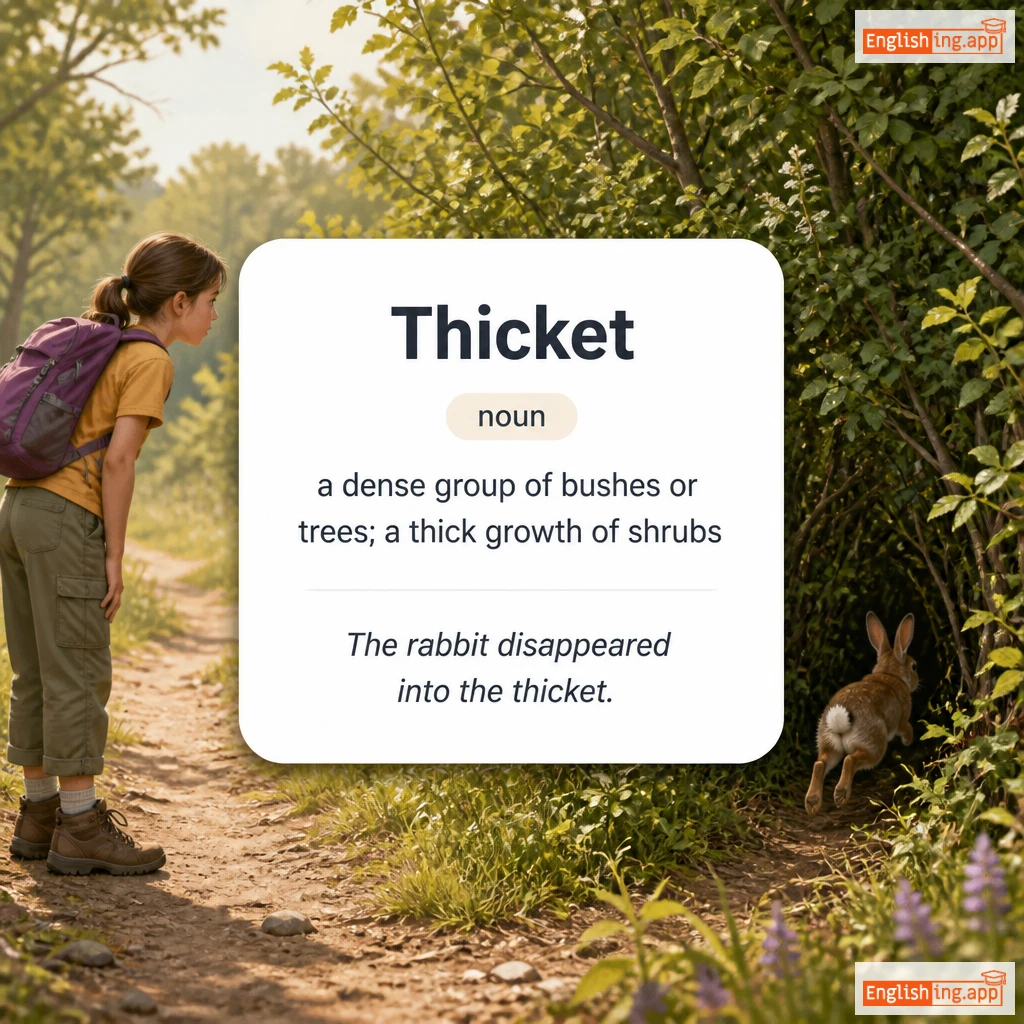
Thicket definition card — visual illustration of the meaning
noun C1
/ˈθɪk.ɪt/
茂み; 低木の成長 (thiket)

a dense group of bushes or trees; a thick growth of shrubs

"The rabbit disappeared into the thicket."

"ウサギは茂みに消えました。" (Usagi wa shigemi ni kiemashita.)
thinkable definition card — visual illustration of the meaning
adjective C1
/ˈθɪŋ.kə.bəl/
考えられる (kangaerareru)

Capable of being imagined or conceived; possible to consider or believe

"It is hard to believe that such an outcome is even thinkable."

"そのような結果が考えられるとは信じがたい。" (Sono you na kekka ga kangaerareru to wa shinjigatai)
noun C1
/ˈθʌroʊˌbrɛd/
純血種の馬 (jun ketsu-shu no uma)

a horse of pure and recognized breed; a person of good breeding or education

"The jockey rode a fast thoroughbred in the race."

"ジョッキーはレースで速いサラブレッドに乗った。" (jokkī wa rēsu de hayai sarabureddo ni notta.)
noun C1
/ˈθʌroʊˌfɛr/
大通り (ōdōri)

a main road or public highway that goes through a place

"The new mall is located along the main thoroughfare."

"新しいショッピングモールは大通り沿いにあります。" (atarashī shoppingu mōru wa ōdōri soi ni arimasu.)
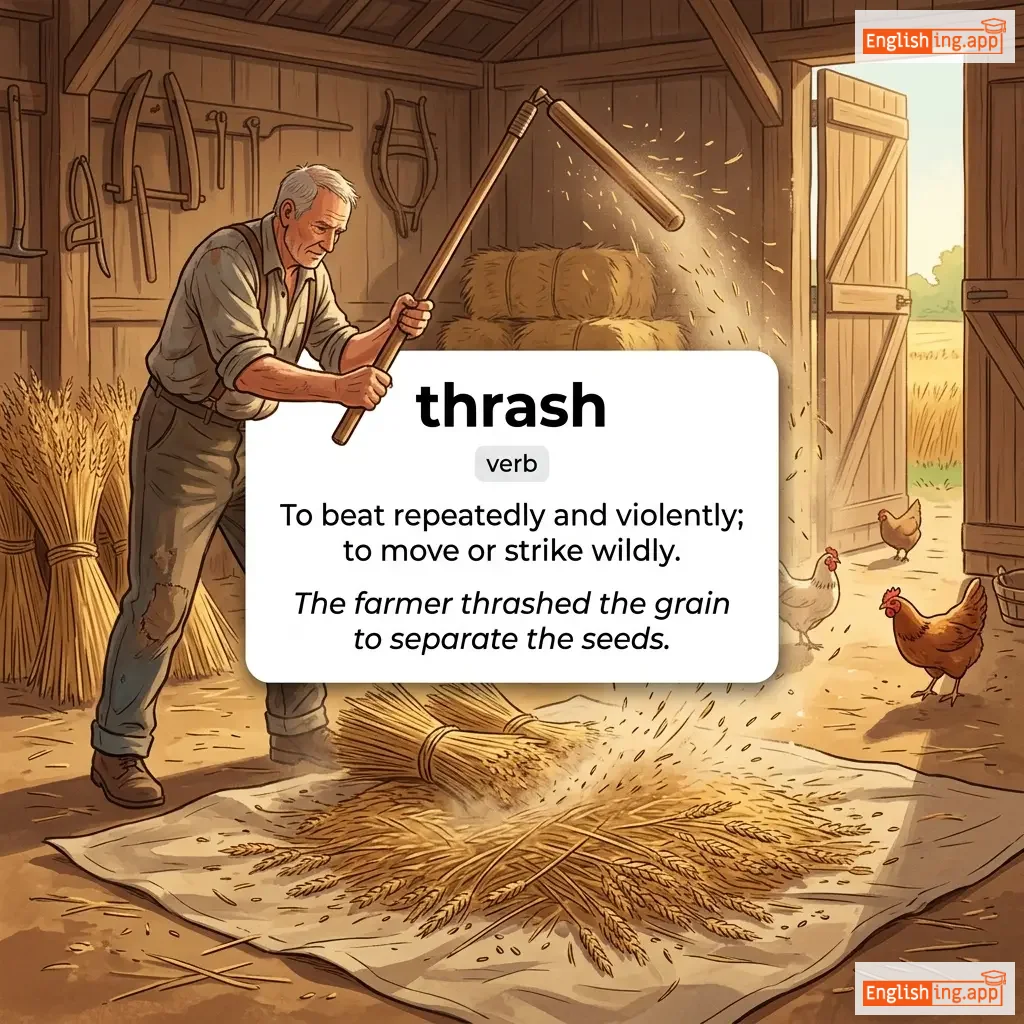
thrash definition card — visual illustration of the meaning
verb C1
/θræʃ/
叩く, 激しく打つ (tataku, hageshiku utsu)

To beat repeatedly and violently; to move or strike wildly.

"The farmer thrashed the grain to separate the seeds."

"農夫は種を分けるために穀物を叩きました。" (Nōfu wa tane o wakeru tame ni kokumotsu o tatakimashita.)
adjective C1
/ˈθrɪfti/
倹約的 (ken'yakuteki)

using money and resources carefully and not wastefully

"She is very thrifty and always saves money for the future."

"彼女は非常に倹約的で、いつも将来のためにお金を貯めています。" (Kanojo wa hijou ni ken'yakuteki de, itsumo shourai no tame ni okane o tameteimasu.)
verb C1
/θrɒb/
脈打つ (myakuutsu)

to beat or pulse strongly, often with pain

"His head began to throb after the long day."

"長い一日の後、彼の頭が脈打ち始めた。" (Nagai ichinichi no ato, kare no atama ga myakuuchi hajimeta.)
noun/verb C1
/θrɒŋ/

A large, densely packed crowd of people or animals; to fill or be present in a place in large numbers.

"Tourists thronged the streets during the festival."

verb/noun C1
/ˈθrɒt.əl/
絞める/速度を制御する (shimeru/sokudo wo seigyo suru)

To choke or strangle; to control the flow of fuel or power in an engine.

"The driver throttled the engine to slow down the car."

"運転手は車を減速させるためにエンジンのスロットルを調整した。" (Untenshu wa kuruma wo gensoku saseru tame ni enjin no surotoru wo chōsei shita.)
verb C1
/θwɔːrt/
妨げる (samatajeru)

To prevent someone from accomplishing something; to oppose successfully.

"The police thwarted the robbery attempt."

"警察は強盗未遂を挫折させた。" (Keisatsu wa gōtō misui o zasetsu saseta.)
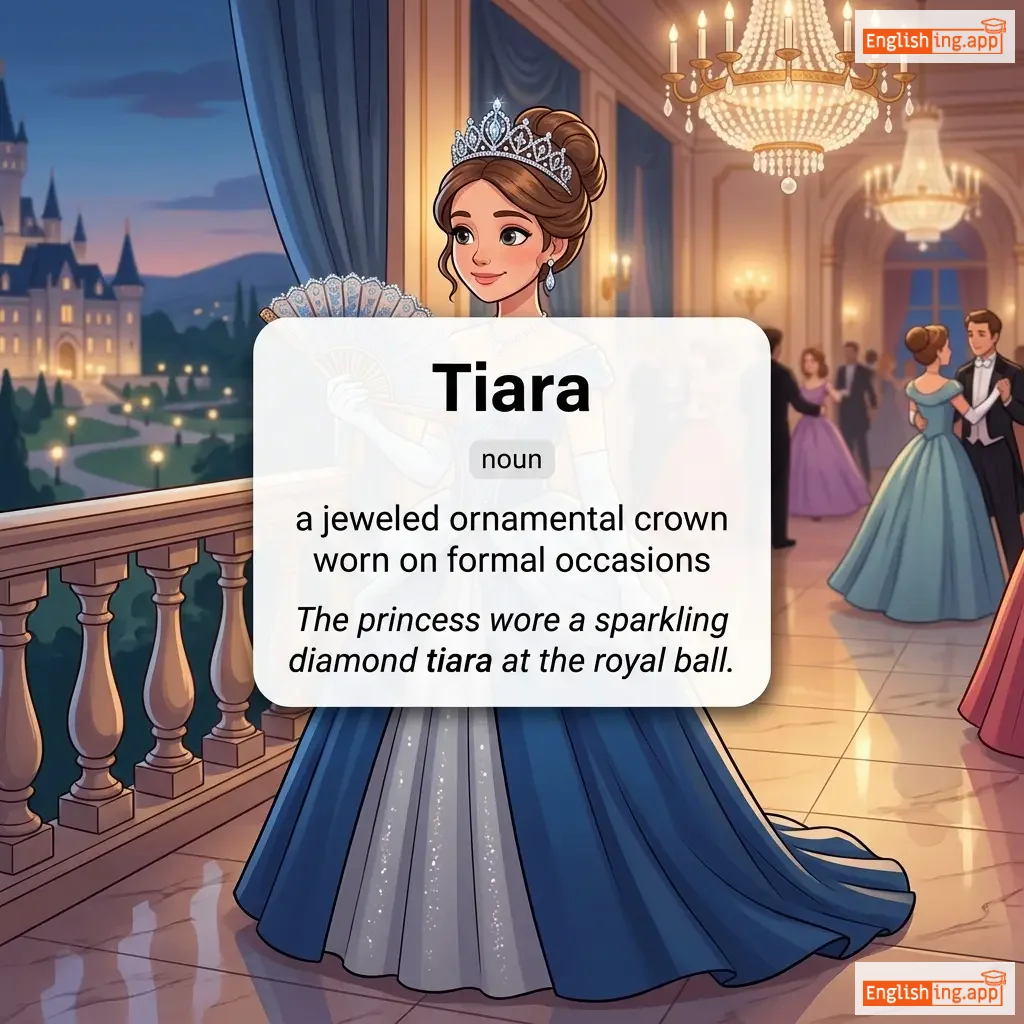
Tiara definition card — visual illustration of the meaning
noun C1
/tiˈɑː.rə/
ティアラ (tiara)

a jeweled ornamental crown worn on formal occasions

"The princess wore a sparkling diamond tiara at the royal ball."

"王女は王宮の舞踏会で輝くダイヤモンドのティアラを身に着けていた。" (Oujo wa oukyuu no butoukai de kagayaku daiyamondo no tiara wo mi ni tsukete ita)
adjective C1
/ˈtɪklɪʃ/

easily made to laugh by being touched lightly; easily upset or sensitive

"She is very ticklish and bursts into laughter when touched on her feet."

noun C1
/tɪf/
口論 (kōron)

a small or petty quarrel or argument

"They had a little tiff over what movie to watch."

"彼らはどの映画を見るかについて小さな口論をした。" (Karera wa dono eiga o miru ka ni tsuite chīsana kōron o shita.)
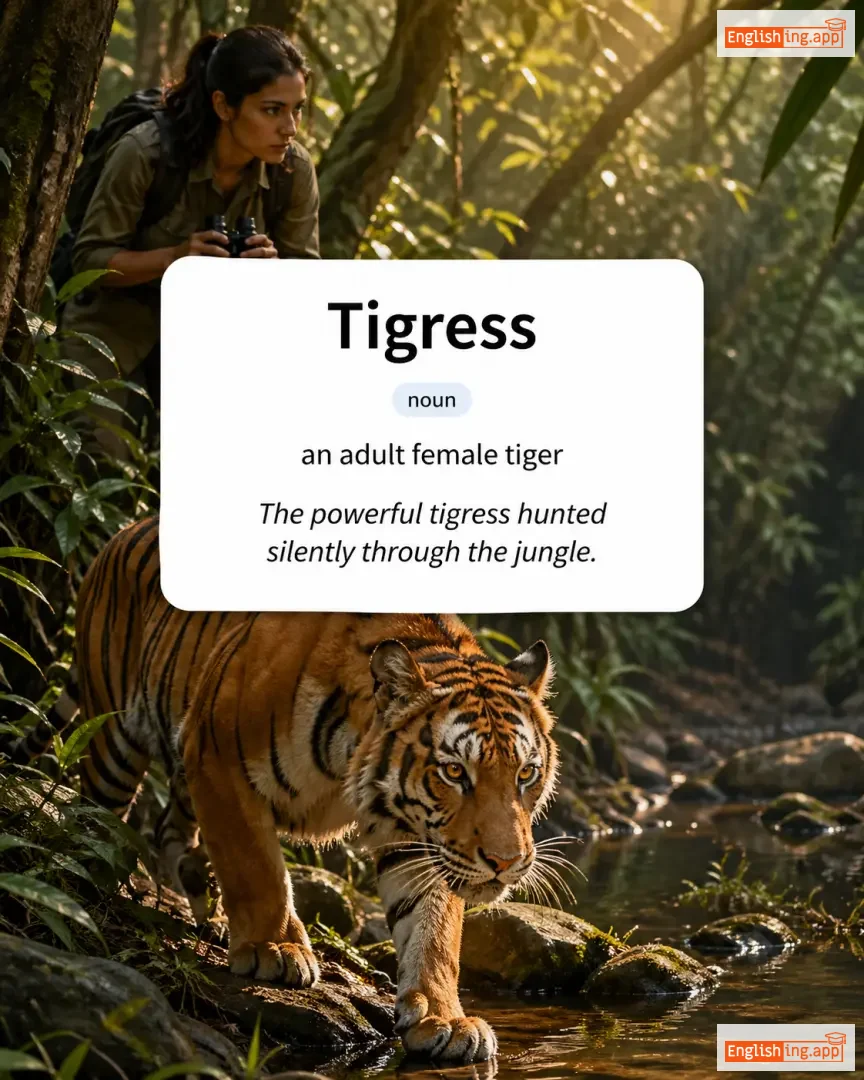
Tigress definition card — visual illustration of the meaning
noun C1
/ˈtaɪ.ɡrəs/
メスのトラ (mesu no tora)

an adult female tiger

"The powerful tigress hunted silently through the jungle."

"強力なメスのトラがジャングルを静かに狩っていた。" (Kyōryoku na mesu no tora ga janguru o shizuka ni katte ita.)
noun C1
/tɪˈmɪdəti/
内気 (uchiki)

lack of courage or self-confidence

"His timidity kept him from speaking up during the meeting."

"彼の内気さは会議で話すことを妨げた。" (Kare no uchikisa wa kaigi de hanasu koto o samatage ta.)
noun, verb C1
/tɪndʒ/
色や味の軽い加え方 (iro ya aji no karui kuwaekata)

a slight added color, flavor, or feeling; to add a slight amount of color or quality

"Her voice was tinged with sadness."

"彼女の声は悲しみでティンジドだった。" (Kanojo no koe wa kanashimi de tinged datta.)
verb C1
/ˈtɪŋkər/
いじる (ijiru)

to make small adjustments or repairs to something, often experimentally or imperfectly

"He likes to tinker with old radios in his garage."

"彼はガレージで古いラジオをいじるのが好きです。" (Kare wa gareji de furui rajio o ijiru no ga suki desu.)
noun C1
/tɪnt/
色合い (iroai)

a slight shade or variation of a color

"The walls were painted white with a slight blue tint."

"壁は白で、少し青いティントで塗られていました。" (Kabe wa shiro de, sukoshi aoi tint de nurareteimashita.)
adjective C1
/ˈtɪpsi/
ほろ酔い (horoyoi)

slightly drunk

"She felt tipsy after just one glass of wine."

"ワインを一杯飲んだ後、彼女は少し酔った気がした。" (Wain o ippai nonda ato, kanojo wa sukoshi yotta ki ga shita.)
adjective C1
/ˈtɪp.tɒp/
最高の; 完璧な状態 (saikou no; kanpeki na joutai)

of the highest quality; excellent; in perfect condition

"The car is in tiptop condition."

"車は最高の状態です。" (Kuruma wa saikou no joutai desu)
noun C1
/taɪˈreɪd/
激しい非難 (hageshii hinan)

a long, angry, or critical speech

"The manager launched into a tirade about poor performance."

"マネージャーは低いパフォーマンスについて長い激しい演説を行った。" (Manējā wa hikui pafōmansu ni tsuite nagai hageshī enzetsu o okonatta.)
adjective C1
/taɪˈtænɪk/
巨大な (kyodaina)

Of exceptional strength, size, or power.

"The company made titanic efforts to expand into new markets."

"その会社は新しい市場に進出するために巨大な努力をしました。" (Sono kaisha wa atarashī shijō ni shinshutsu suru tame ni kyodaina doryoku o shimashita.)
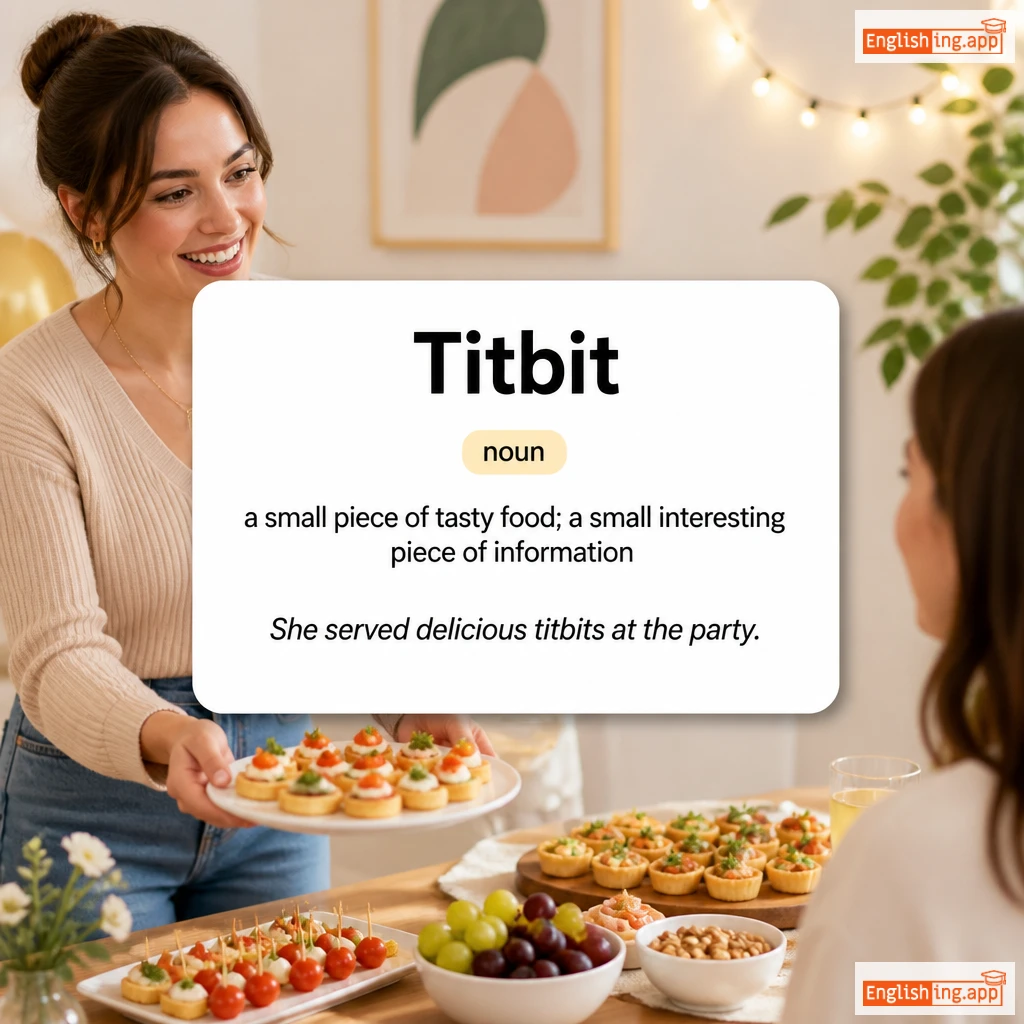
Titbit definition card — visual illustration of the meaning
noun C1
/ˈtɪt.bɪt/
美味しい食べ物の小さな一切れ; 面白い情報の小さな部分 (titbit)

a small piece of tasty food; a small interesting piece of information

"She served delicious titbits at the party."

"彼女はパーティーで美味しいおつまみを出しました。" (kanojo wa paatii de oishii otsumami wo dashimashita)
noun C1
/ˈtoʊɡə/
トーガ (tōga)

A loose outer garment worn in ancient Rome, typically draped over the shoulders and body.

"The senator wore a white toga during the ceremony."

"セネーターは儀式の間に白いトーガを着ていました。" (Senētā wa gishiki no aida ni shiroi tōga o kite imashita.)
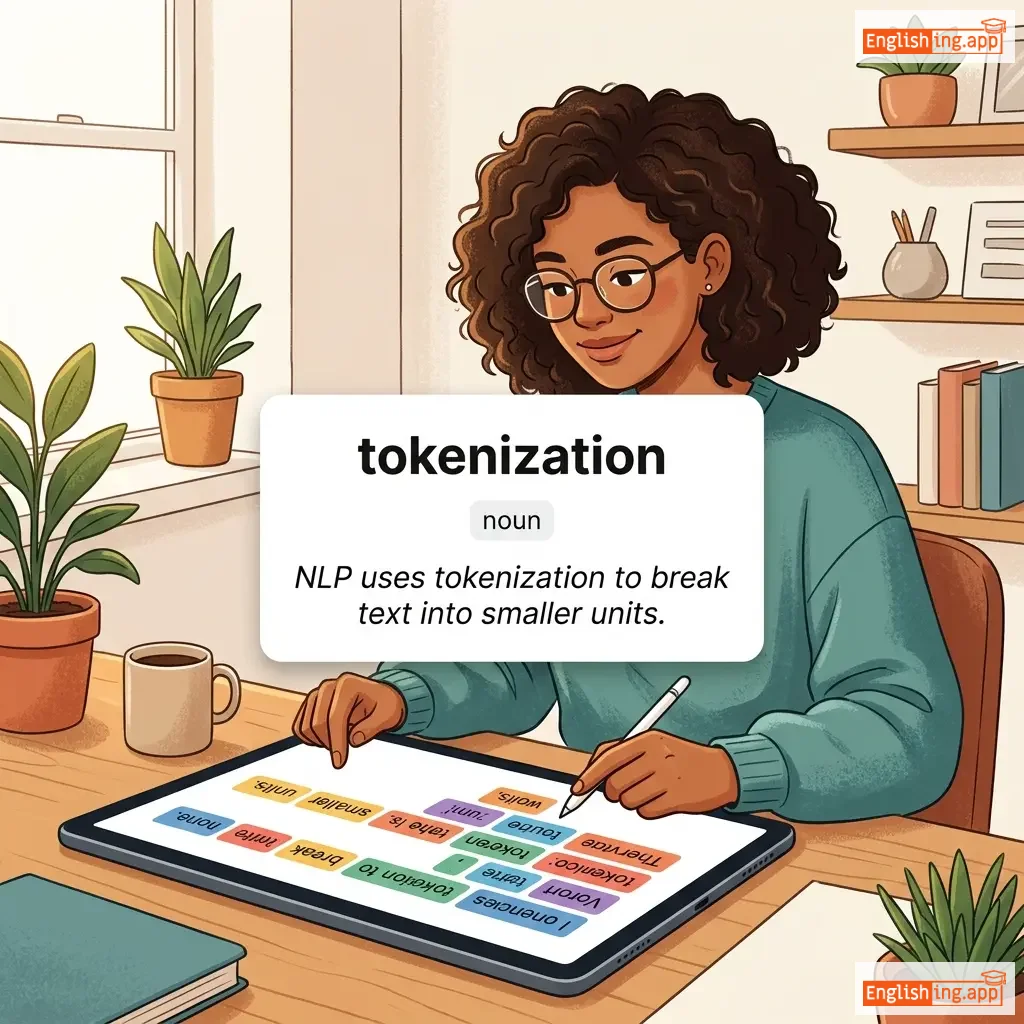
tokenization definition card — visual illustration of the meaning
noun C1
ˌtoʊ.kə.nɪˈzeɪ.ʃən
テキストを分析するために、単語、フレーズ、または記号などの小さな単位に分割するプロセス。 (tokenization)

The process of breaking text into smaller units like words, phrases, or symbols for analysis.

"NLP uses tokenization to break text into smaller units."

"NLPはテキストを小さな単位に分割するためにトークン化を使用します。" (NLP wa tekisuto o chiisana tan'i ni bunkatsu suru tame ni tōkunka o shiyō shimasu.)
noun C1
/ˌtɒləˈreɪʃən/
寛容 (kanyou)

The practice of allowing something that one does not necessarily agree with.

"The government promoted religious toleration."

"政府は宗教的寛容を促進した。" (Seifu wa shūkyō-teki kanyō o sokushin shita.)
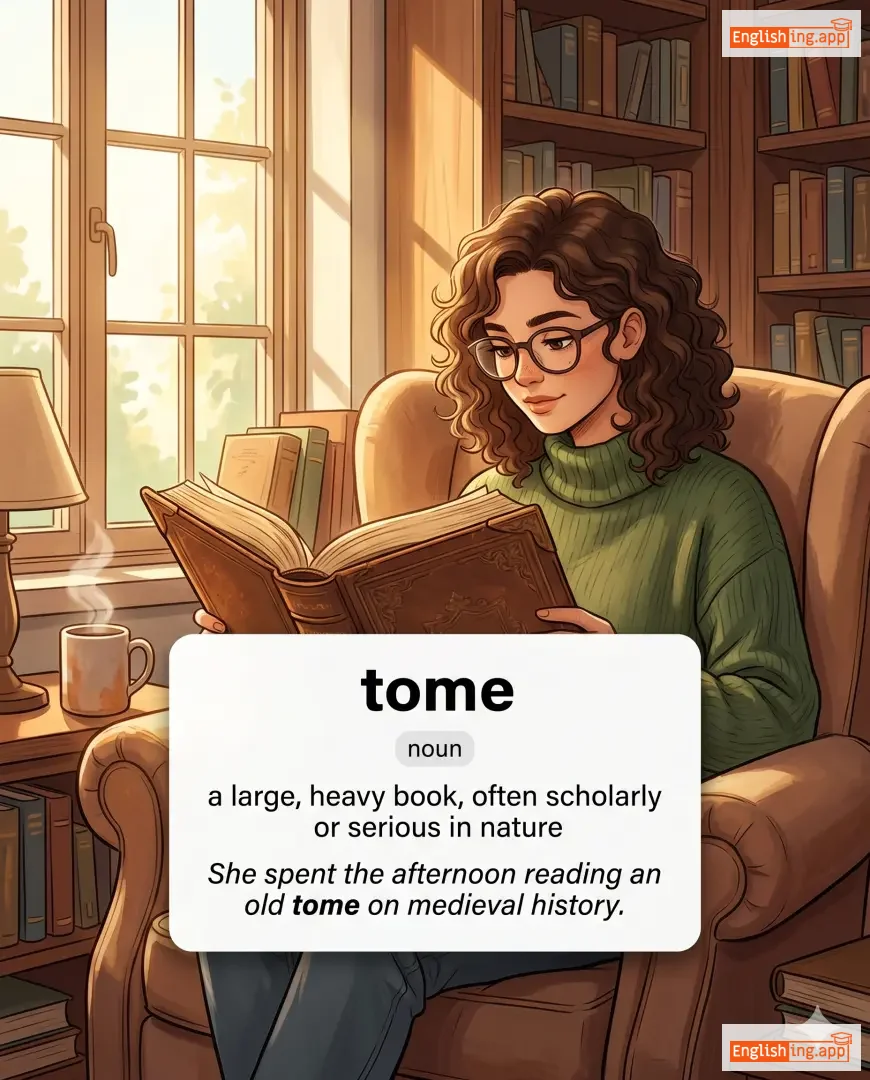
tome definition card — visual illustration of the meaning
noun C1
/toʊm/
重い本 (omoi hon)

a large, heavy book, often scholarly or serious in nature

"She spent the afternoon reading an old tome on medieval history."

"彼女は午後の時間を中世の歴史に関する古い重い本を読んで過ごしました。" (Kanojo wa gogo no jikan o chūsei no rekishi ni kansuru furui omoi hon o yonde sugoshimashita.)
noun C1
/tɒŋ/
トング (tongu)

a tool with two movable arms used to pick up and hold objects

"He used the tong to pick up the hot coal."

"彼は熱い石炭を拾うためにトングを使った。" (Kare wa atsui sekitan o hirou tame ni tongu o tsukatta.)
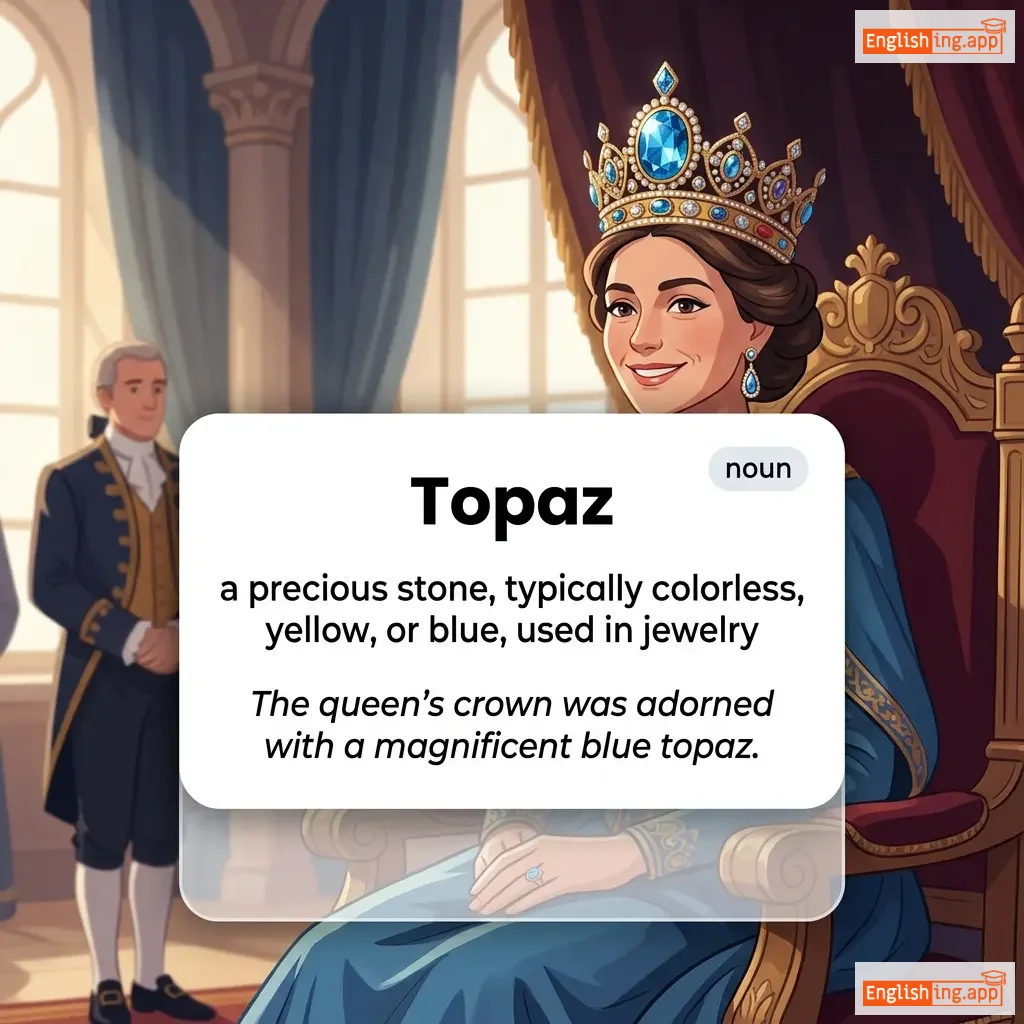
Topaz definition card — visual illustration of the meaning
noun C1
/ˈtoʊ.pæz/
トパーズ (topazu)

a precious stone, typically colorless, yellow, or blue, used in jewelry

"The queen's crown was adorned with a magnificent blue topaz."

"女王の王冠は素晴らしい青いトパーズで飾られていました。" (Joō no ōkan wa subarashī aoi topazu de kazara rete imashita.)
adjective C1
/ˈtɒp.məʊst/
最上部; 最高 (saijōbu; saikō)

highest in position or rank

"The flag was placed on the topmost branch of the tree."

"旗は木の一番高い枝に置かれました。" (ki wa ki no ichiban takai eda ni okaremashita.)
noun C1
/təˈpɒɡrəfi/
地形学 (chikeigaku)

the arrangement of the natural and artificial physical features of an area

"The topography of the region made construction very challenging."

"その地域の地形は建設を非常に困難にしました。" (Sono chiiki no chikei wa kensetsu o hijou ni konnan ni shimashita.)
verb C1
/ˈtɒpl/
倒れる (taoreru)

to fall or cause to fall over; to overthrow

"The earthquake caused the old building to topple."

"地震で古い建物が倒れた。" (Jishin de furui tatemono ga taoreta.)
noun C1
/ˈtɒpˌsɔɪl/
表土 (hyōdo)

the top layer of soil, which is rich in organic matter and nutrients

"Farmers rely on healthy topsoil for good crop yields."

"農家は良い作物の収穫のために健康な表土に依存しています。" (Nōka wa yoi sakumotsu no shūkaku no tame ni kenkōna hyōdo ni izon shiteimasu.)